

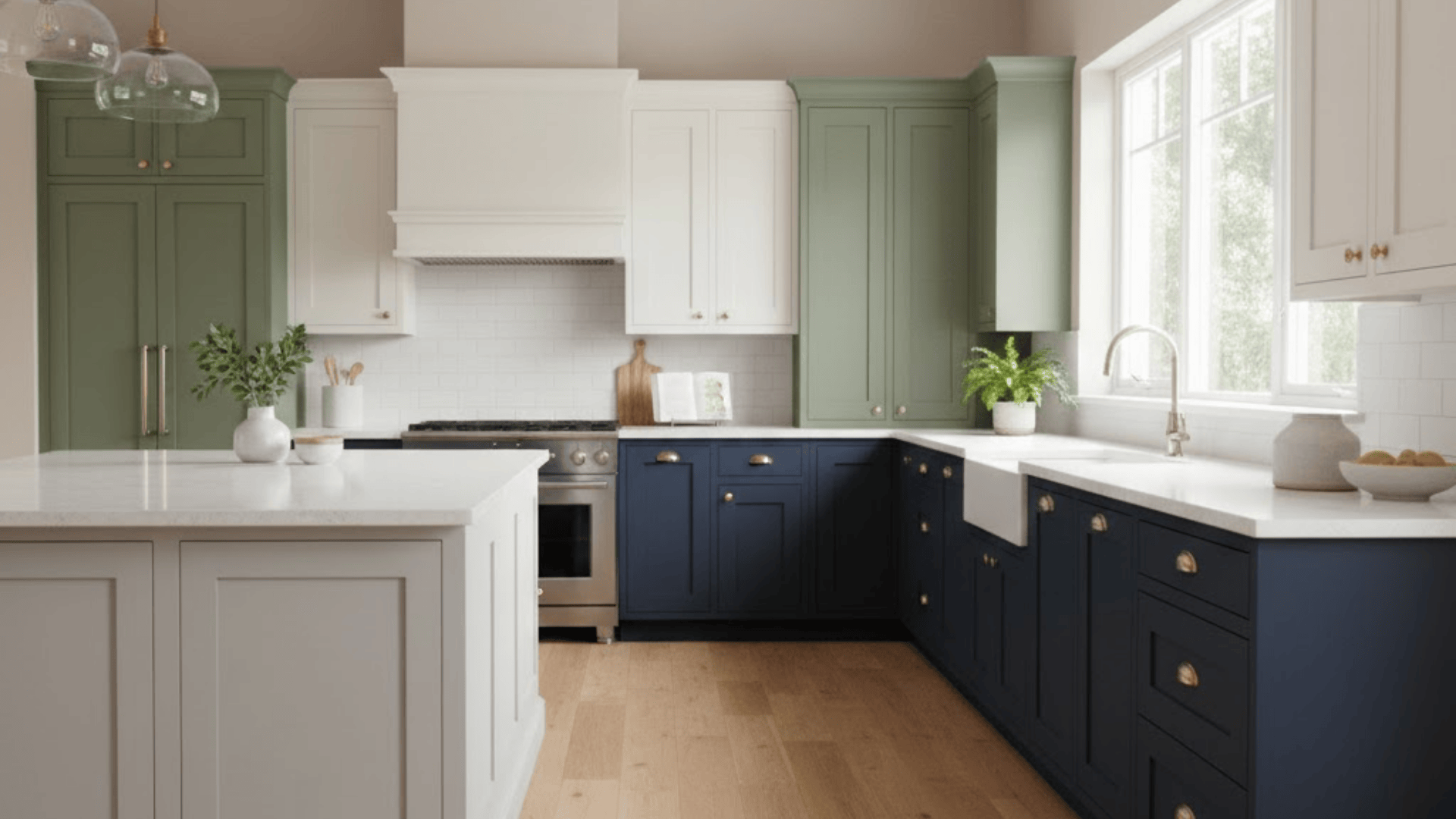


When you update your cabinets, the whole kitchen feels different. It doesn’t matter if the space is small or wide open.
The right shade can shift the mood in a way you notice every day. That’s why looking at popular kitchen cabinet colors and how tones connect across a space through Alabaster coordinating colors.
In this guide, you and I will walk through shades that are loved right now, why they work, and how to decide what fits your space.
You’ll see simple ideas, clear steps, and helpful tips that make the choice easier. By the end, you’ll know which colors make sense for your kitchen.
What Colors Are Trending for Kitchen Cabinets?
Many kitchens are shifting toward colors that feel warm, calm, and grounded. Some shades open up a space, while others add depth and character. Here are the tone groups showing up the most right now:
- Warm whites and soft creams
- Beige, greige, and taupe
- Light gray and mushroom gray-green
- Sage, olive, and forest green
- Navy and deep blue
- Charcoal and soft black
- Warm browns and cocoa tones
- Natural wood and stained wood
- Soft yellow and powder blue
- Deep red and wine tones for bold rooms
These color families work in many styles and tend to hold up well over time.
Popular Kitchen Cabinets Colors that Always Work
Neutrals help a kitchen feel fresh and balanced. They fit almost any layout and match a wide range of counters and floors.
1. Warm White Shaker Cabinets
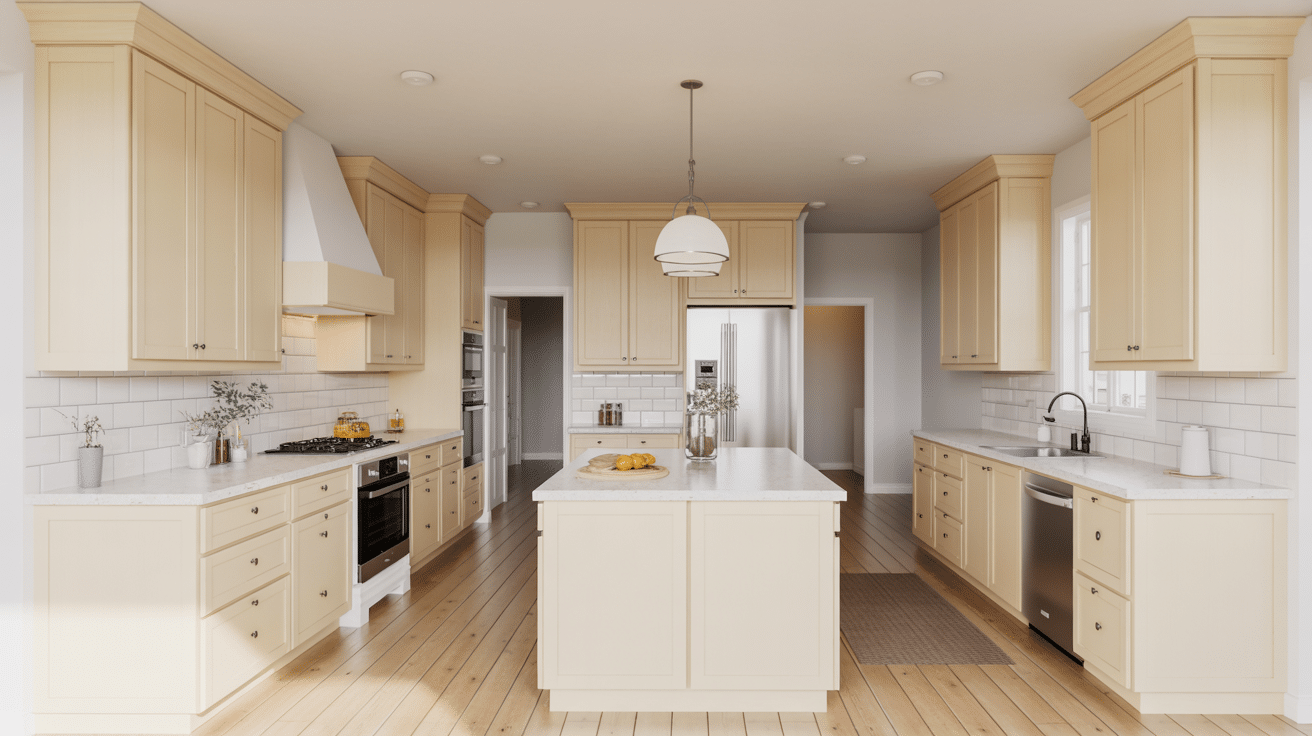
Warm white shaker cabinets fit almost any home. The color feels clean but not harsh, and helps small kitchens feel bigger. You can pair warm white with:
- Light wood floors
- Soft gray or white counters
- Simple black or brass pulls
This idea works well if you want something safe that still feels fresh and bright.
2. Creamy Off-White With Soft Gold Hardware
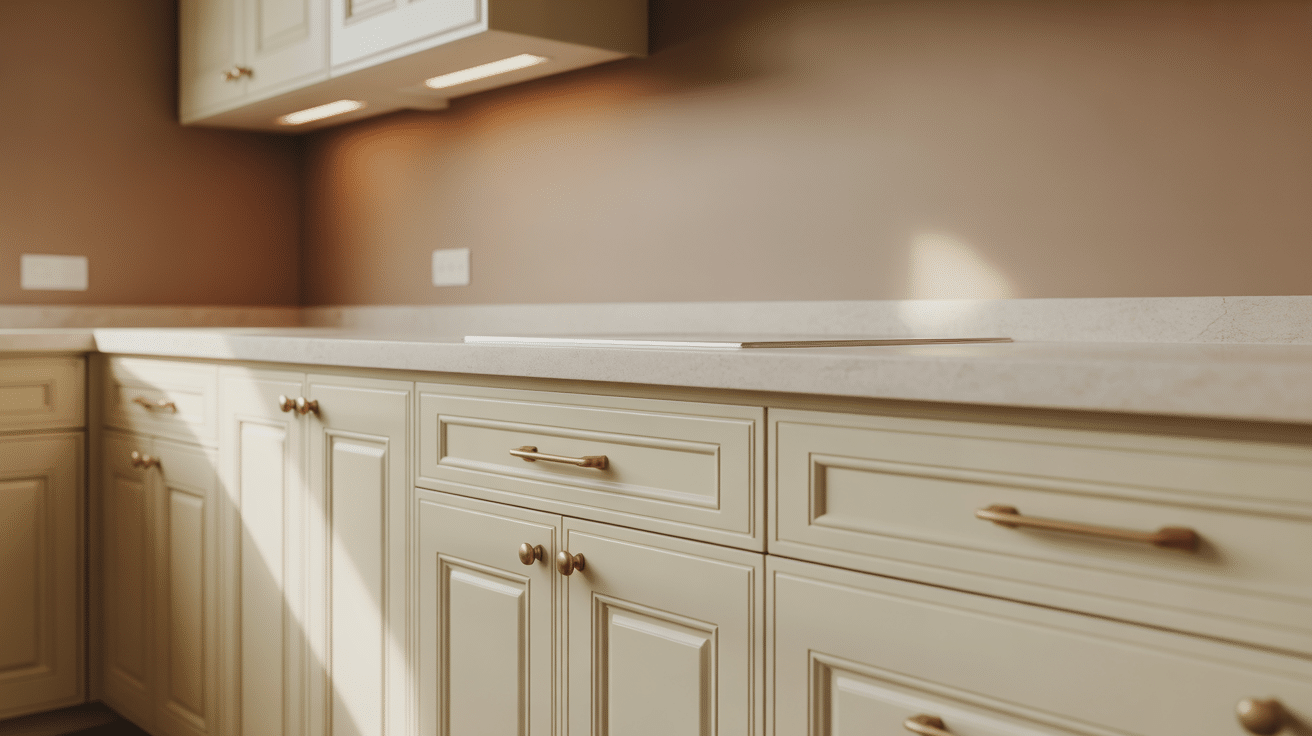
Creamy off-white cabinets give your kitchen a gentle glow. They suit open layouts and blend easily with warm floors. Add:
- Soft gold or brushed brass handles
- Warm white or beige walls
- Light stone or quartz counters
This combo works well if you like a cozy feel without strong contrast.
3. Soft Greige Cabinets in Open Layouts
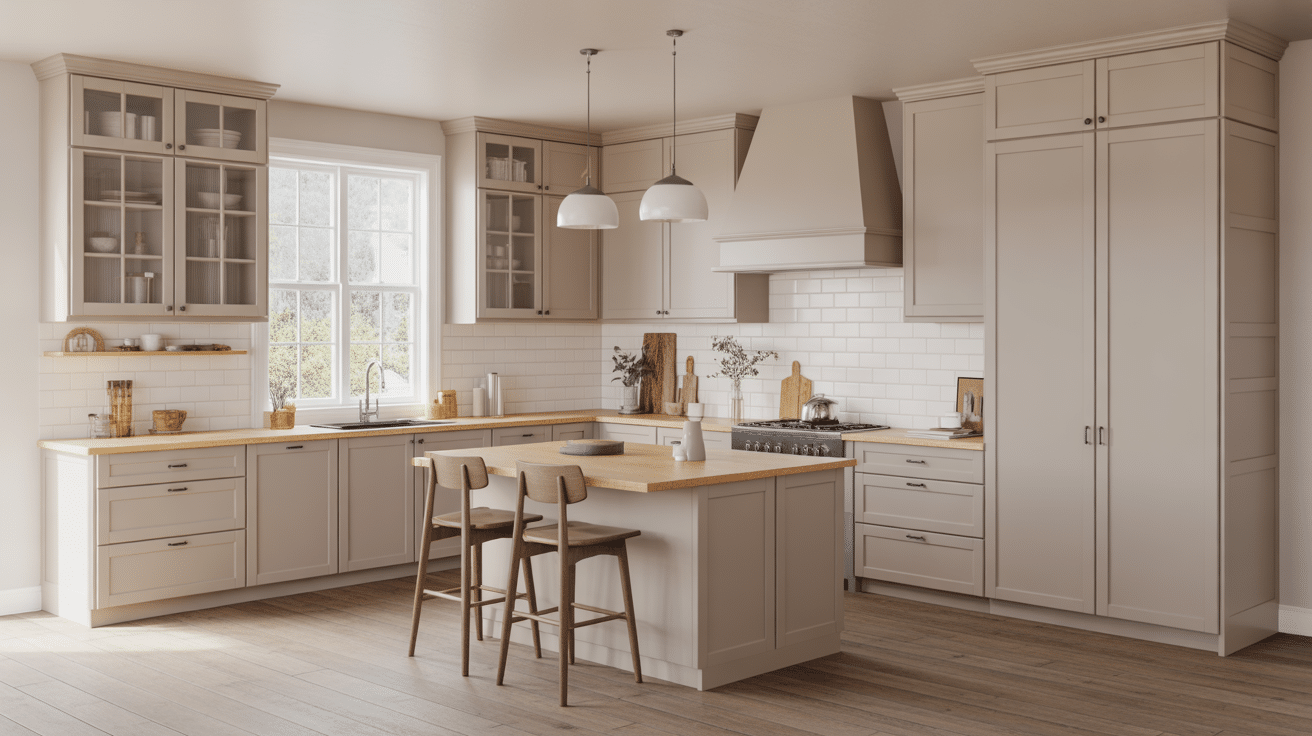
Greige sits between gray and beige, which makes it easy to use with many finishes. It works well in open-plan homes where the kitchen flows into the living room. Try pairing:
- Greige cabinets
- Warm white walls
- Black or bronze hardware
This mix feels calm and steady while still giving your room some depth.
4. Light Gray Cabinets with Black Pulls
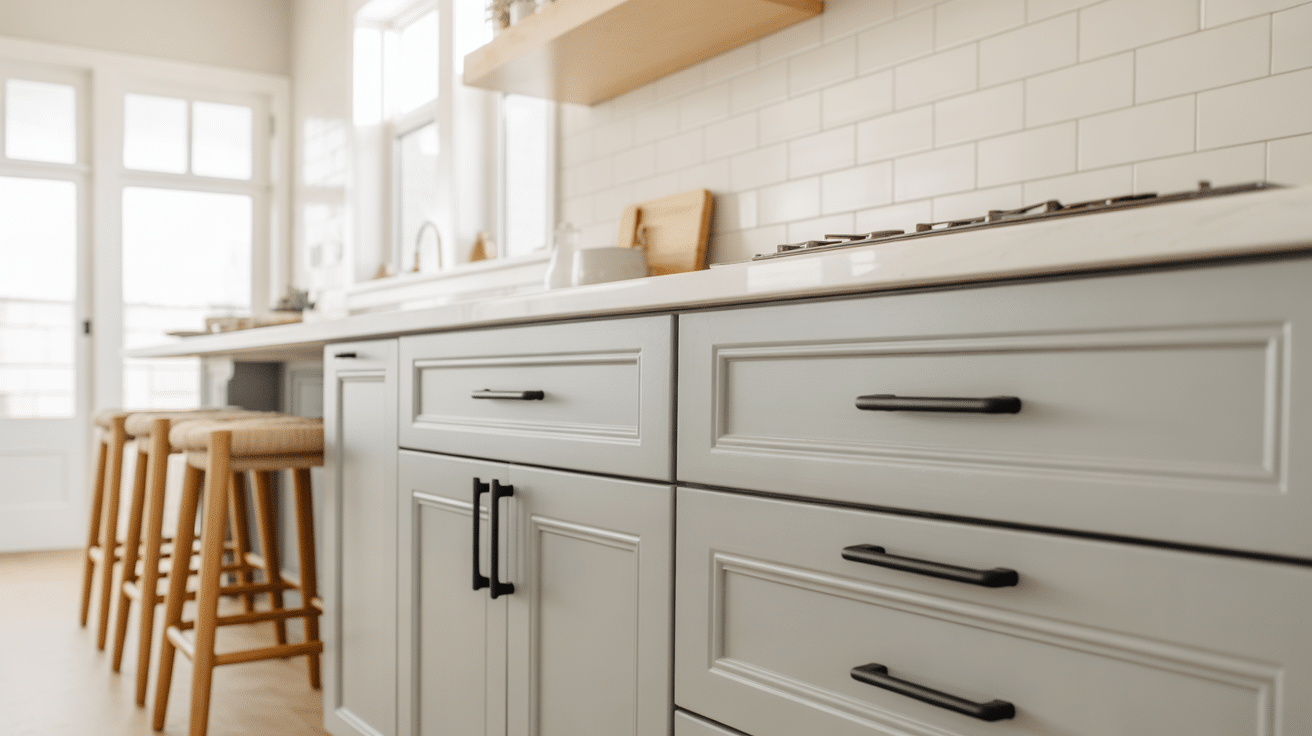
Light gray cabinets bring a neat, simple look to your kitchen. They keep the room feeling open, but add more character than plain white. Pair them with:
- White walls or tiles
- Black pulls and knobs
- Wood stools or shelves
This idea fits well in small and medium kitchens that need a gentle contrast.
5. Mushroom Gray-Green for A Calm Space
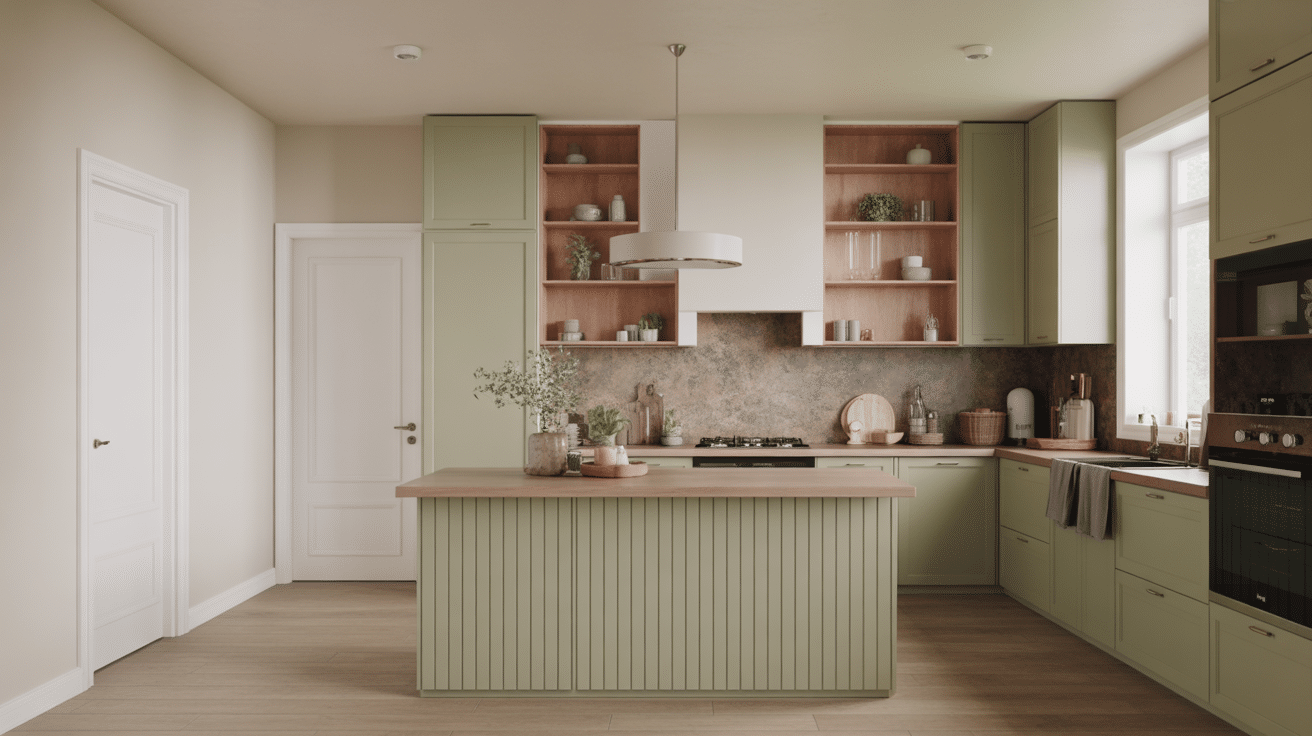
Mushroom gray-green sits between gray, green, and beige. It gives a soft, grounded look. This shade works well with:
- Warm white or cream walls
- Light or medium wood floors
- A stone or stone-look backsplash
Use this idea if you want color that still feels neutral and easy to live with.
6. Sage Green Cabinets with Wood Shelves
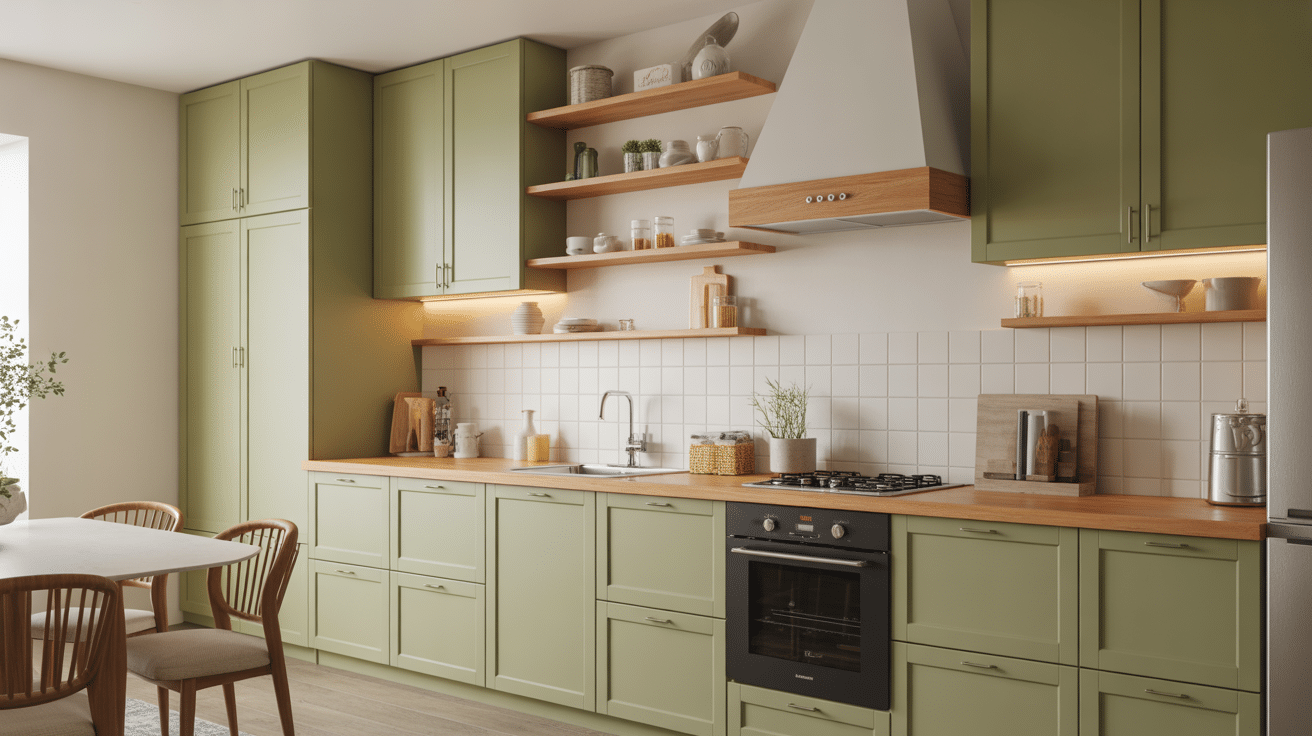
Sage green cabinets bring a nature-inspired feel into your kitchen. Open wood shelves help keep things light and airy. Try:
- Sage bases and uppers
- Oak or maple shelves
- White backsplash tile
This mix is great if you want a relaxed, garden-like mood in your space.
7. Olive Green Lowers and White Uppers
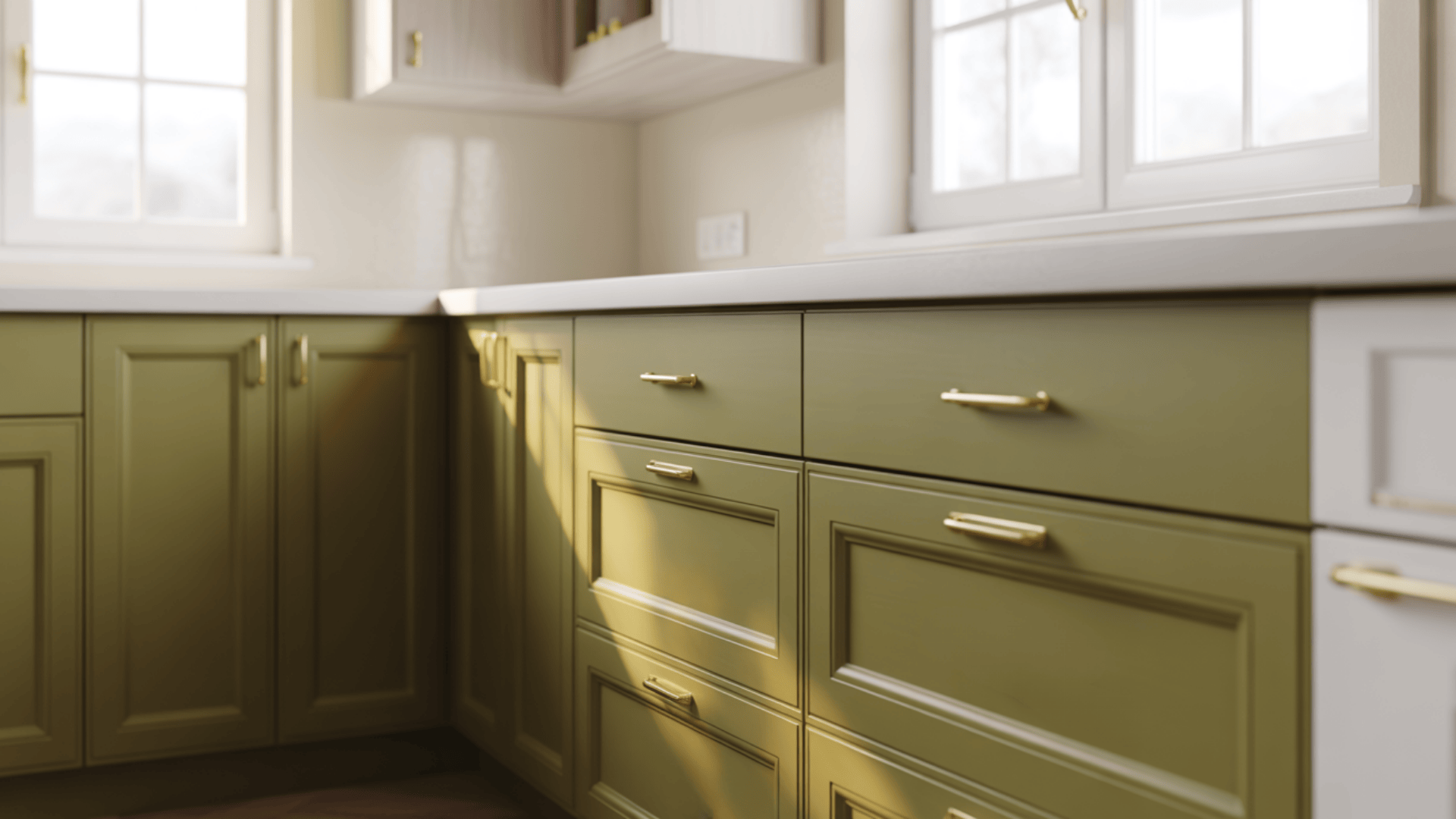
Olive green lowers add depth, while white uppers keep the room bright. This two-tone layout works very well in long galley kitchens or L-shaped layouts. Combine:
- Olive green lower cabinets
- Soft white uppers
- Warm metal hardware
This idea makes your kitchen feel grounded without making it look dark.
8. Deep Forest Green with Stone Counters
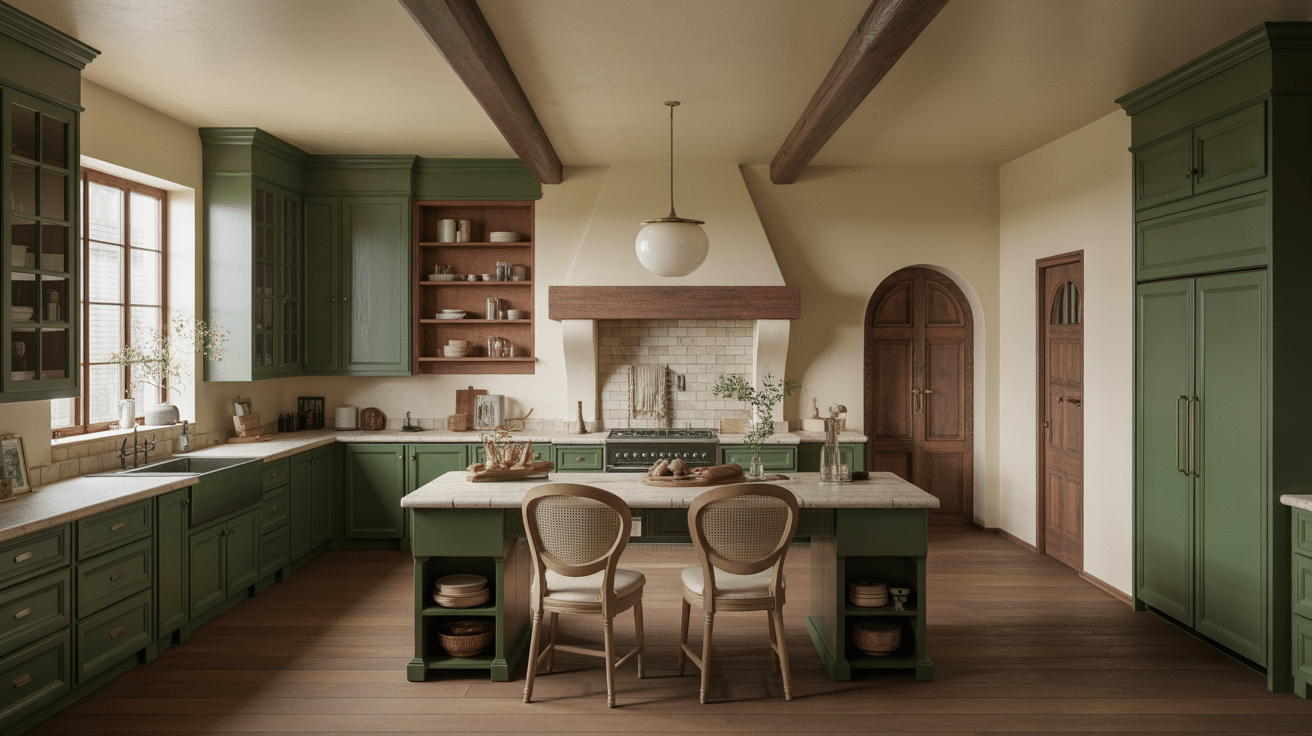
Deep forest green cabinets suit larger or well-lit rooms. They pair nicely with natural stone. Good matches include:
- Cream or warm white walls
- Stone or stone-look counters
- Wood or stone floors
This choice works for homes that want a rich, nature-inspired kitchen with a strong presence.
9. Navy Island in A Mostly White Kitchen
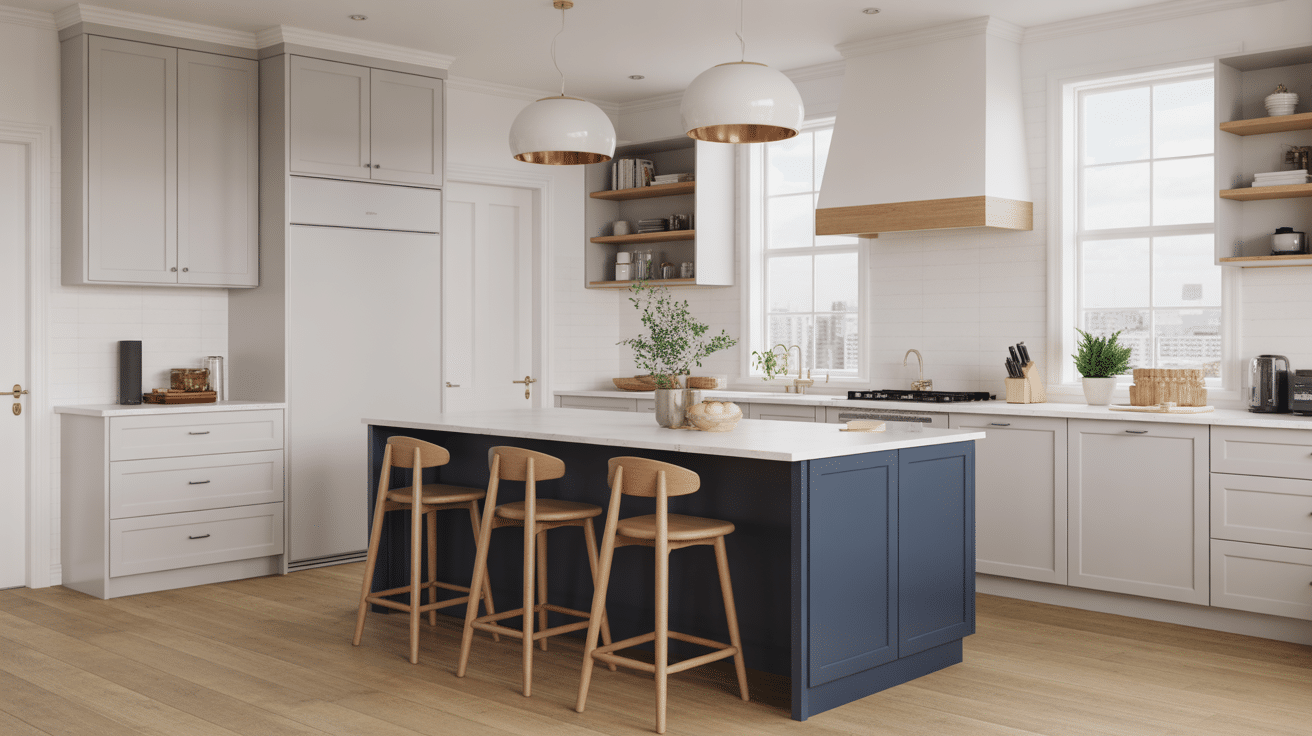
A navy island is a simple way to add color without repainting every cabinet. Keep most cabinets white, then paint the island navy. Pair with:
- White or pale gray uppers
- Warm wood stools
- Gold or black hardware
This idea pulls the eye to the center of the room and makes the island feel special.
10. All-Navy Cabinets with Warm Metal Details
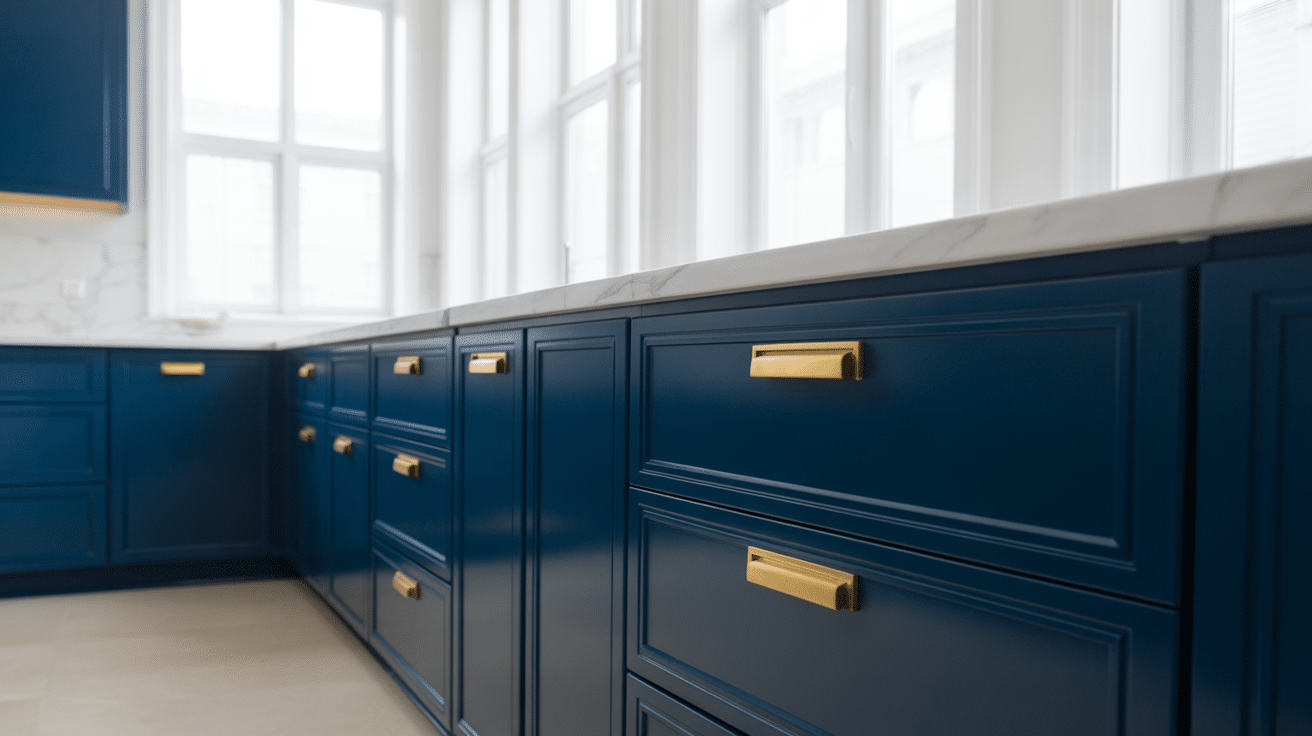
If you love strong color, consider all-navy cabinets. This works best in kitchens with good natural light. Keep the rest of the space light:
- White or cream walls
- Pale counters
- Warm brass or bronze handles
The mix feels deep and steady while the light walls stop the room from feeling heavy.
11. Powder Blue Cottage Cabinets
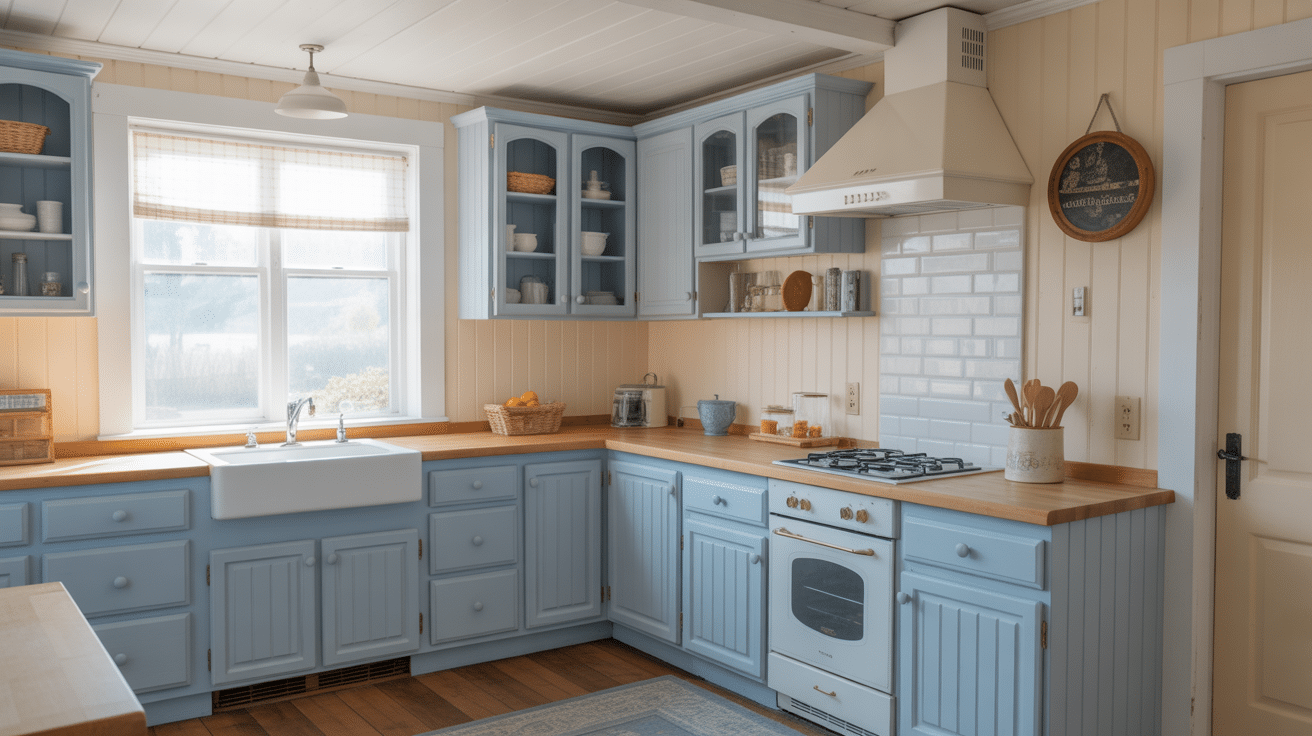
Powder blue cabinets give a soft, cottage-like mood. They work very well in small kitchens or older homes. Try pairing:
- White or off-white walls
- Butcher block or pale stone counters
- Simple black, silver, or brass hardware
This idea helps your kitchen feel bright, friendly, and relaxed.
12. Soft Yellow Cabinets for a Sunny Feel
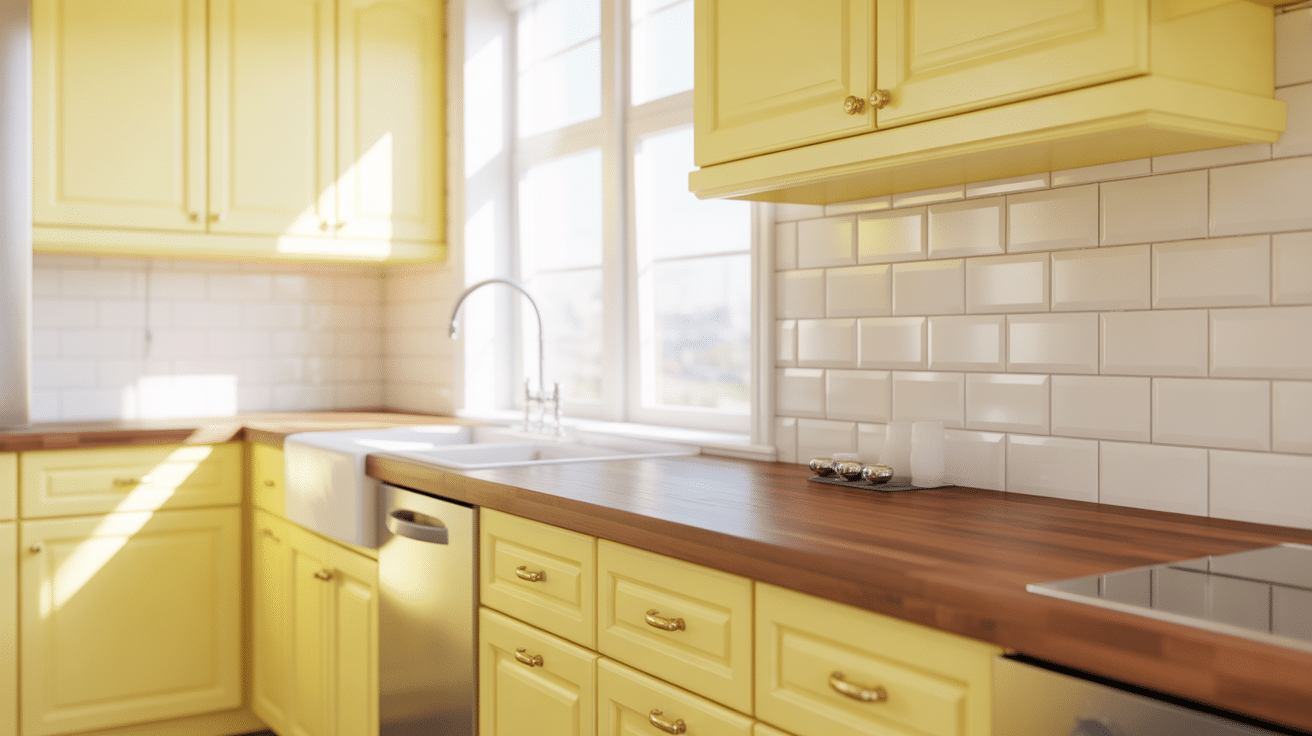
Soft yellow cabinets can make a kitchen feel bright even on cloudy days. To keep things balanced:
- Use white walls and tile
- Choose warm wood or stone counters
- Add simple black or silver pulls
This idea works best in casual, family kitchens that need extra warmth and energy.
13. Charcoal Lowers with Crisp White Walls
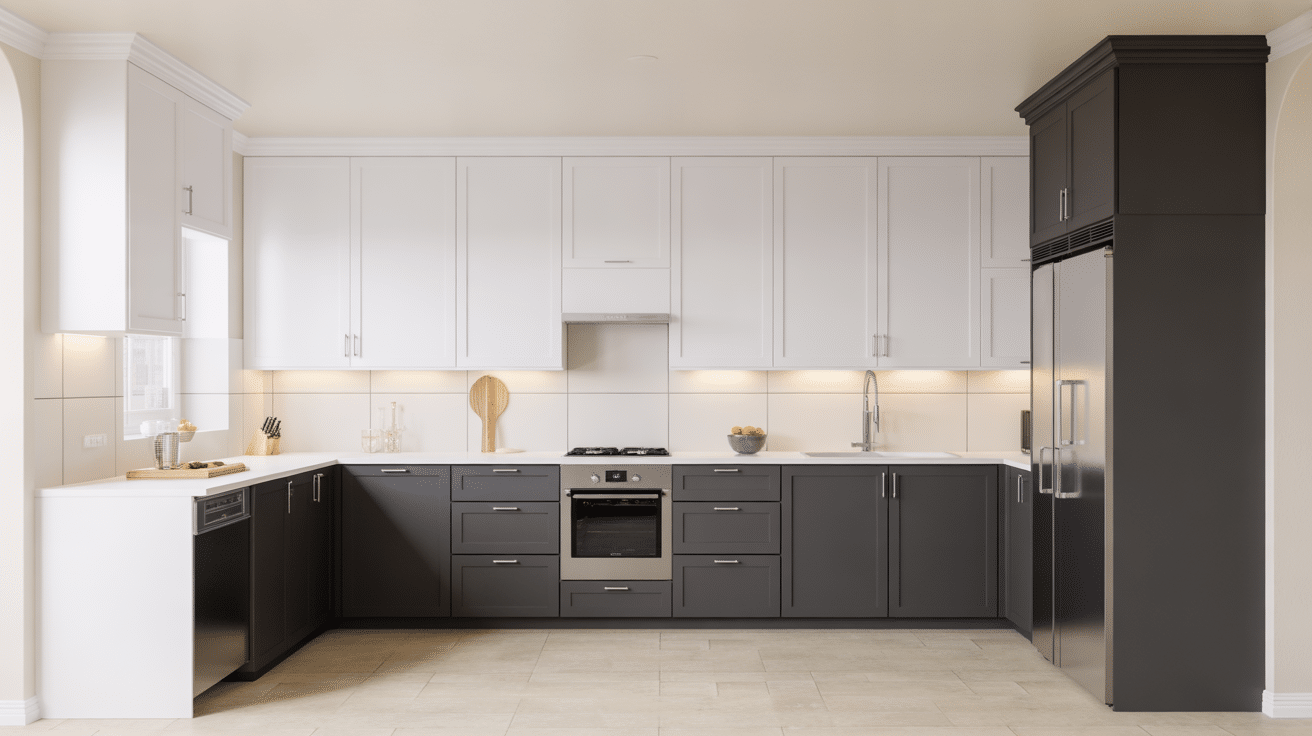
Charcoal lowers give depth while white walls keep the room bright. This layout is great if you like contrast, but do not want full black cabinets. Combine:
- Charcoal base cabinets
- White walls and backsplash
- Light wood or pale tile floors
This idea works in both small and large kitchens when the lighting is strong.
14. Soft Black Cabinets with Wood Accents
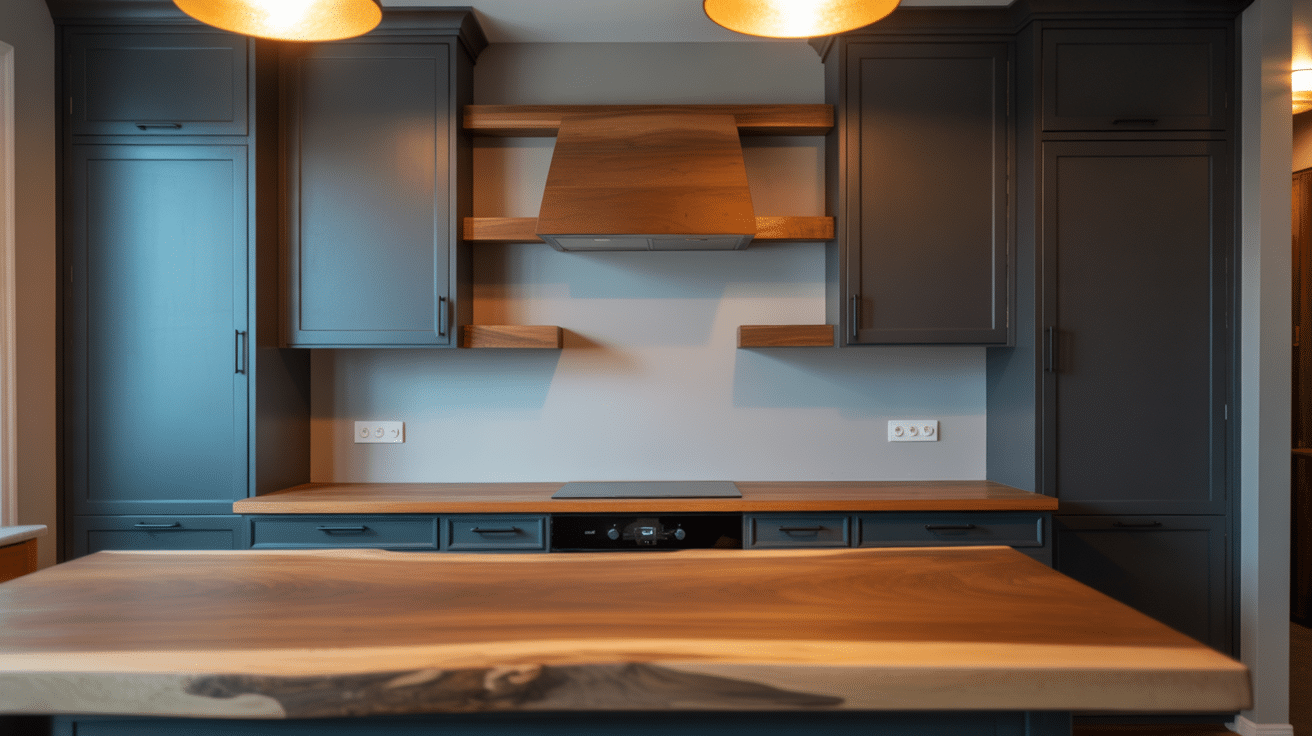
Soft black cabinets feel bold but still homey when paired with warm wood details. Think:
- Soft black bases and uppers
- Wood shelves or a wood island top
- White or light gray walls
This mix suits homes that want a strong, simple look without feeling cold.
15. Two-Tone White and Wood Cabinets
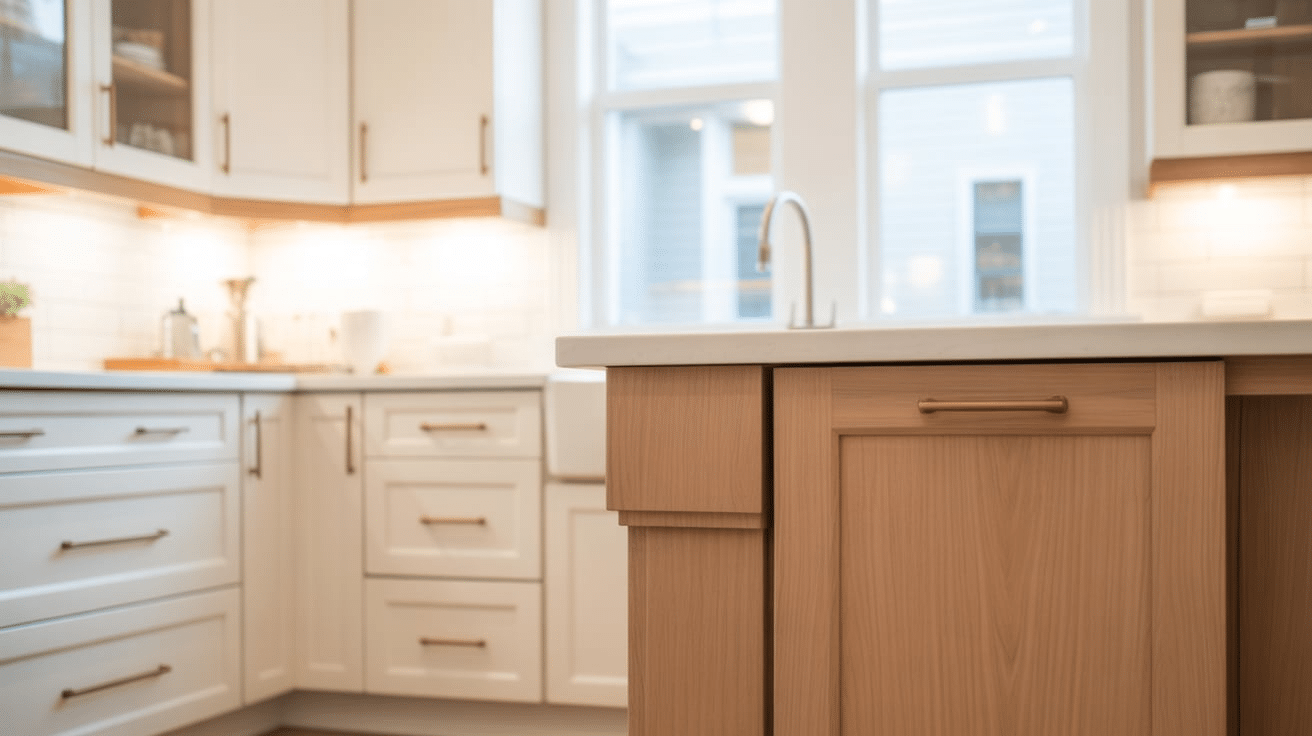
Mixing white cabinets with wood lowers or a wood island gives balance and warmth. Try:
- White uppers
- Light or medium wood lowers
- Black or dark bronze hardware
This idea is great if you like a clean layout but still want some natural texture.
16. Light Oak Cabinets with White Walls
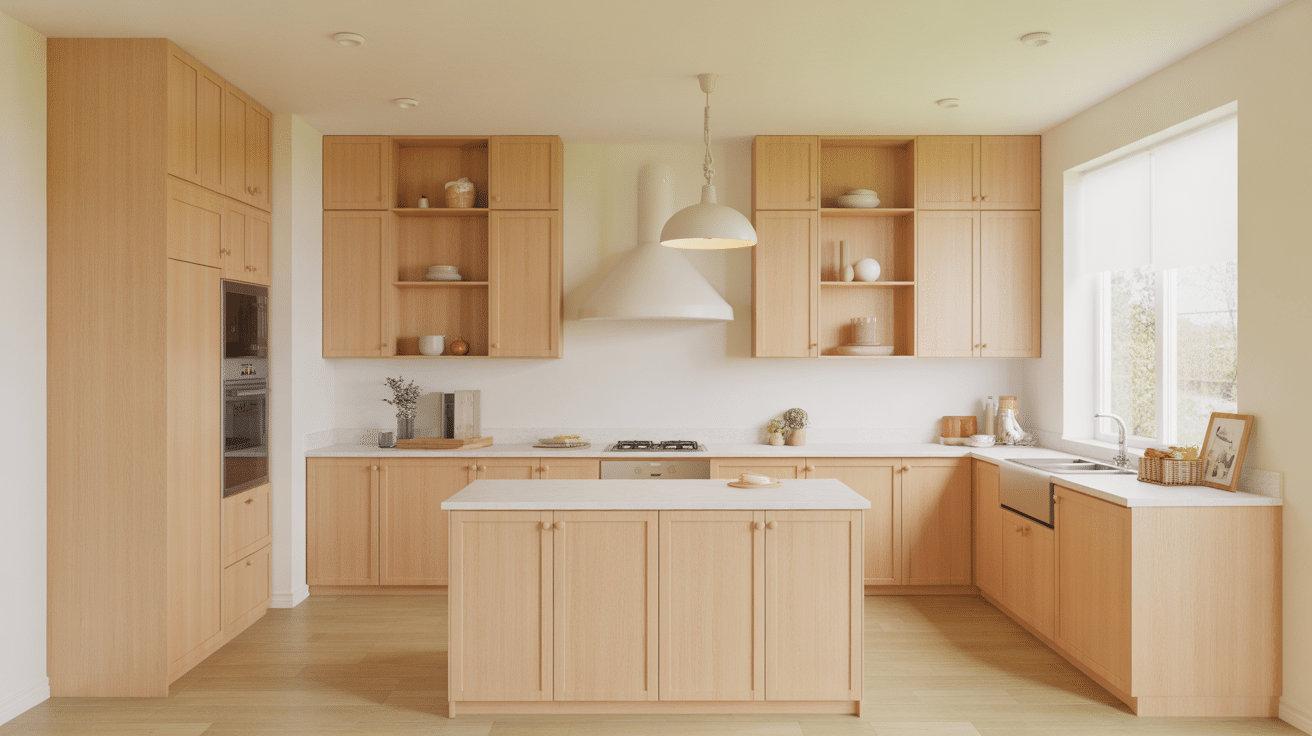
Light oak cabinets are popular again, especially in simple, open kitchens. They bring in gentle warmth and work with many color schemes. Pair with:
- White or off-white walls
- Light stone or quartz counters
- Black, silver, or brass pulls
This idea fits very well in homes that lean toward simple, airy rooms.
17. Medium Walnut Stain with Simple Hardware
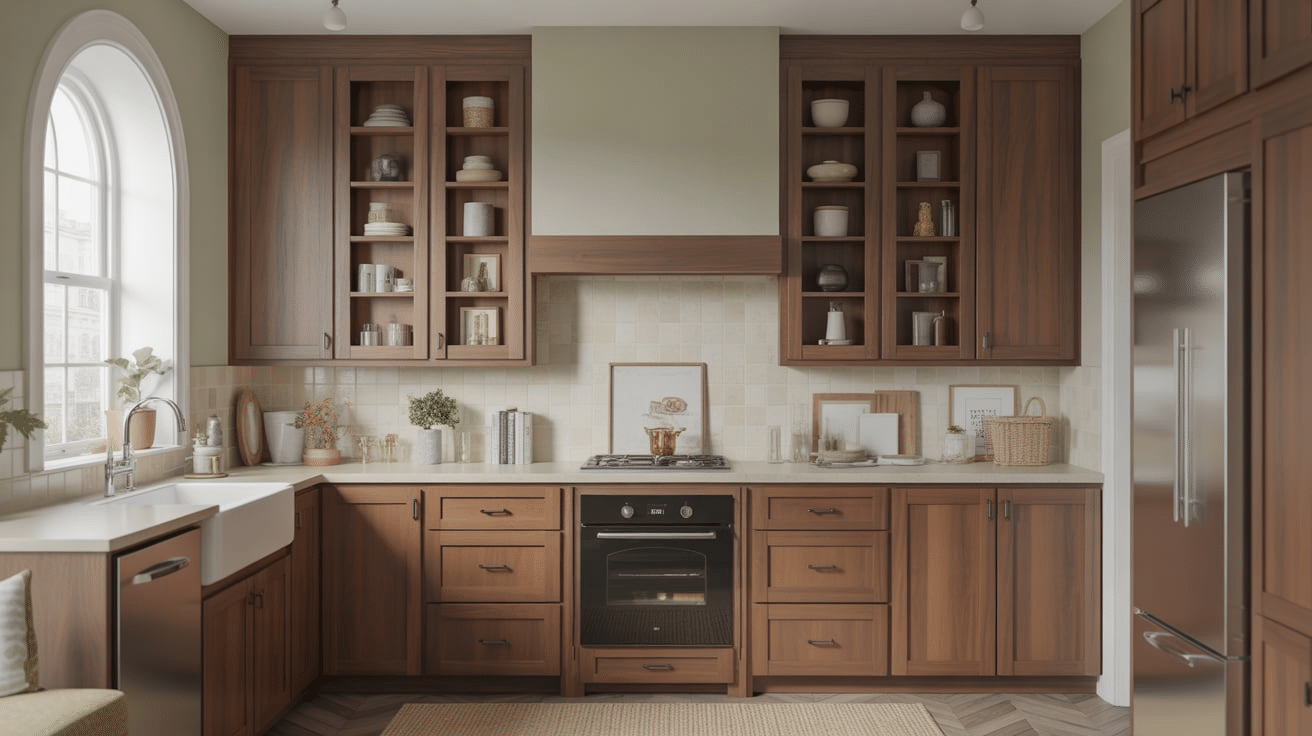
Medium walnut stain adds depth and a classic feel. It suits both older and newer homes. Use:
- Walnut-stained cabinets
- Soft white or pale greige walls
- Simple bar pulls in black or metal
This idea is strong enough to stand alone, so keep backsplashes and counters simple.
18. Mixed Green and Wood Cabinets
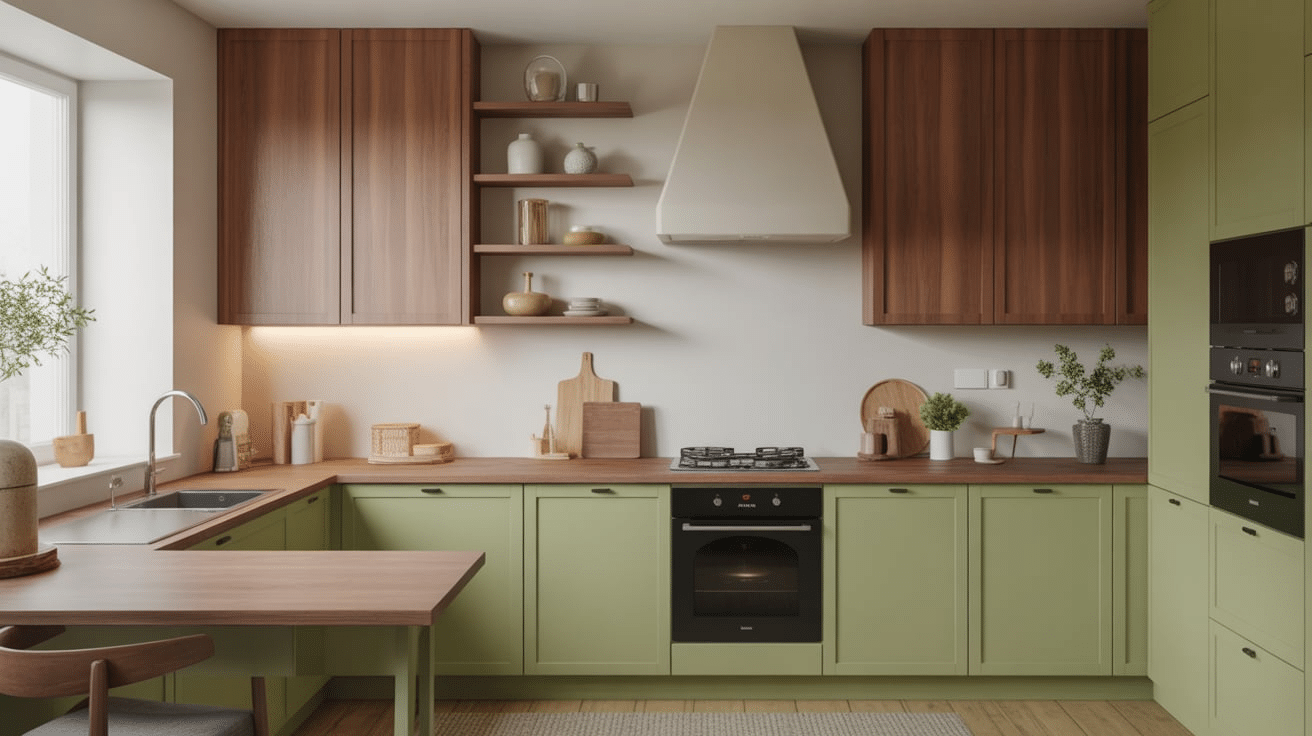
A mix of painted green and wood brings extra character without feeling busy. For example:
- Sage or olive lower cabinets
- Wood uppers or wood island
- White or light gray walls
This layout keeps your kitchen grounded, warm, and full of soft contrast.
19. Warm Brown Cabinets with Cream Walls
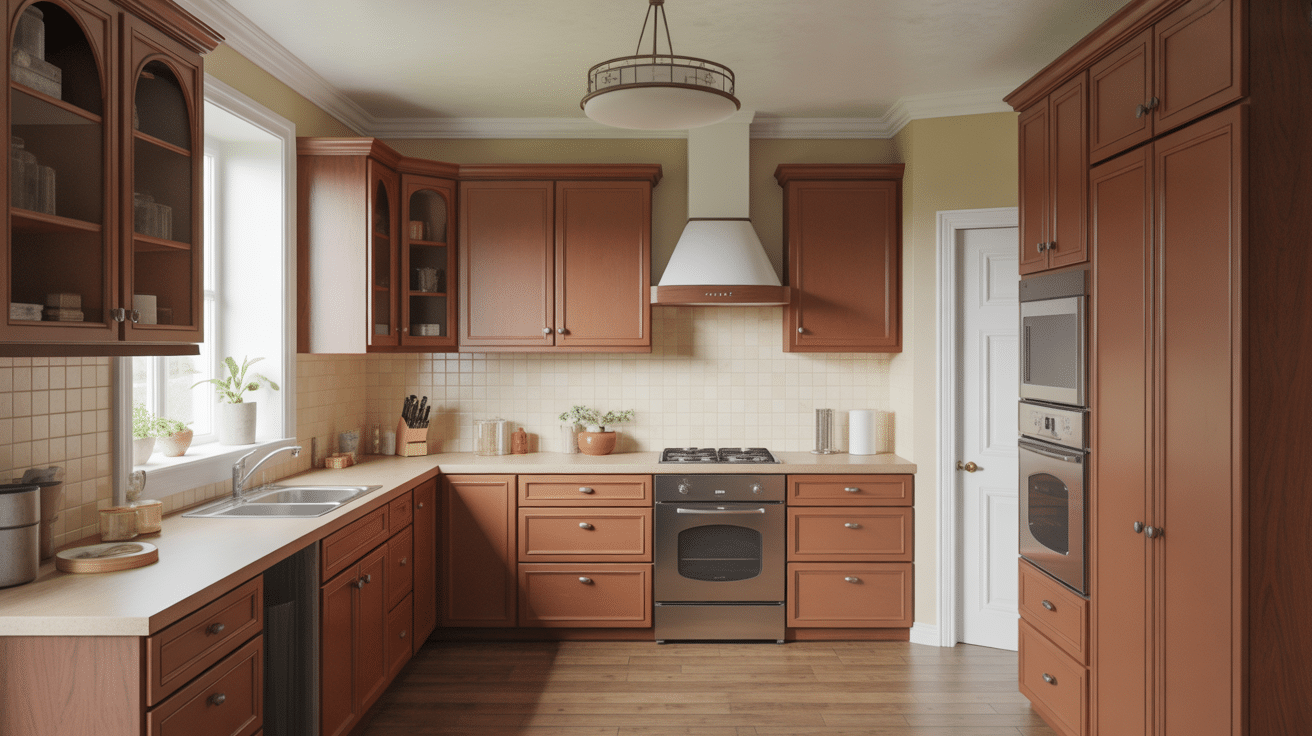
Warm brown cabinets work well if your home already has wood trim or floors. To keep the space from feeling dark:
- Pick cream or soft white walls
- Choose lighter counters
- Add metal or glass lighting
This idea is perfect if you want a kitchen that feels steady and inviting.
20. Wine Red Island as a Statement Piece
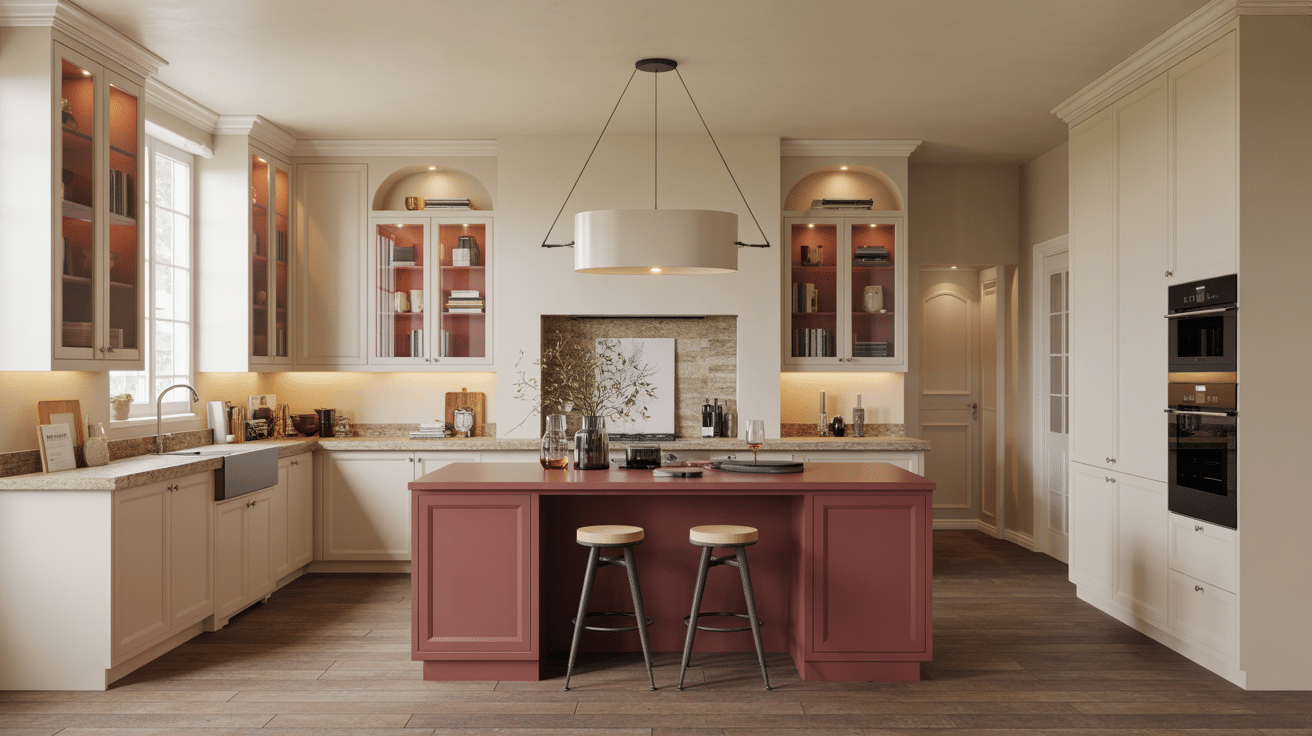
A wine red or deep berry island offers strong color without taking over the whole room. Keep the other cabinets neutral:
- White, cream, or greige surrounds
- Simple stone counters
- Black or brass handles
This is a nice option if you want something bold that still feels balanced.
21. Teal Cabinets with Simple White Counters
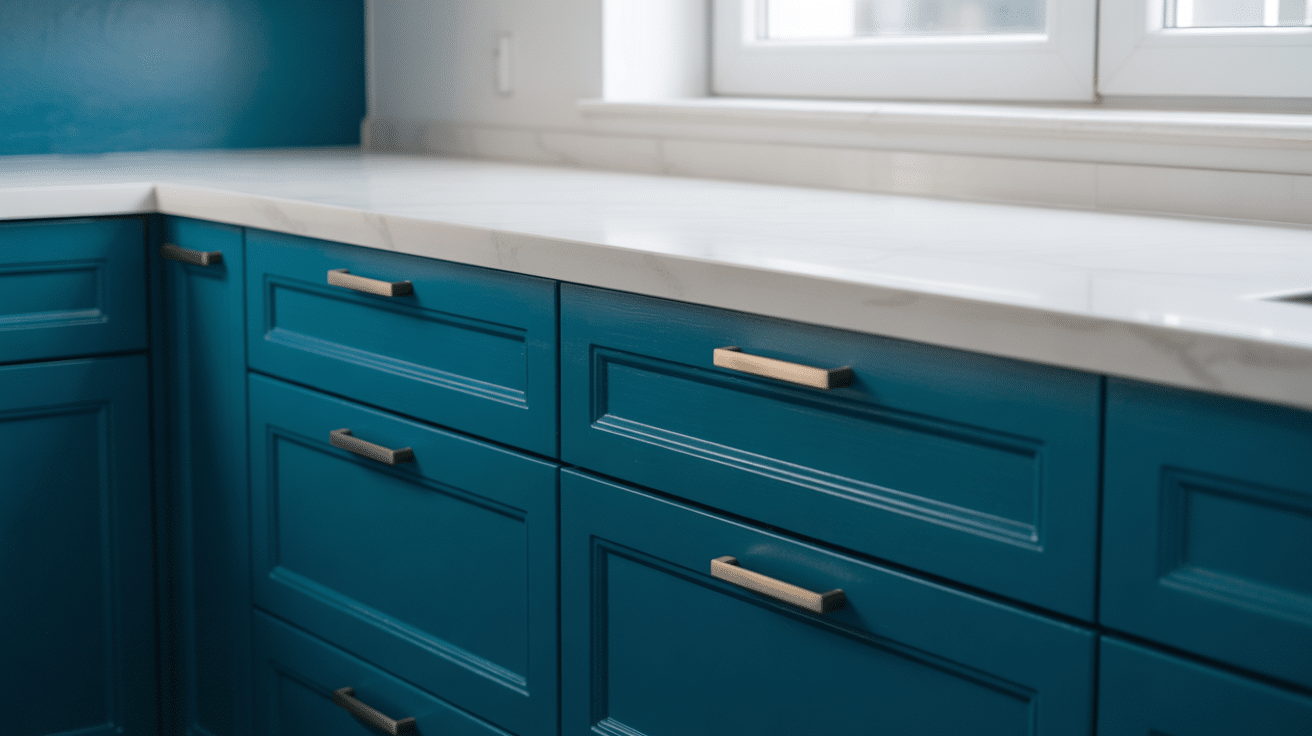
Teal cabinets give the room a lively but grounded tone. To make sure the kitchen stays calm:
- Use white or soft gray counters
- Keep walls light and plain
- Choose simple hardware and lighting
This idea works best in rooms with good light and not too many patterns.
22. Blue-Gray Cabinets with Stone-Look Tile
Blue-gray cabinets sit between blue and gray, which makes them easy to pair. They work well with:
- Stone or stone-look backsplash
- Light or medium wood floors
- Silver or black hardware
This idea suits homes that want a quiet color that still feels a bit different from plain gray.
23. Color Pop Inside Cabinets or On Shelves
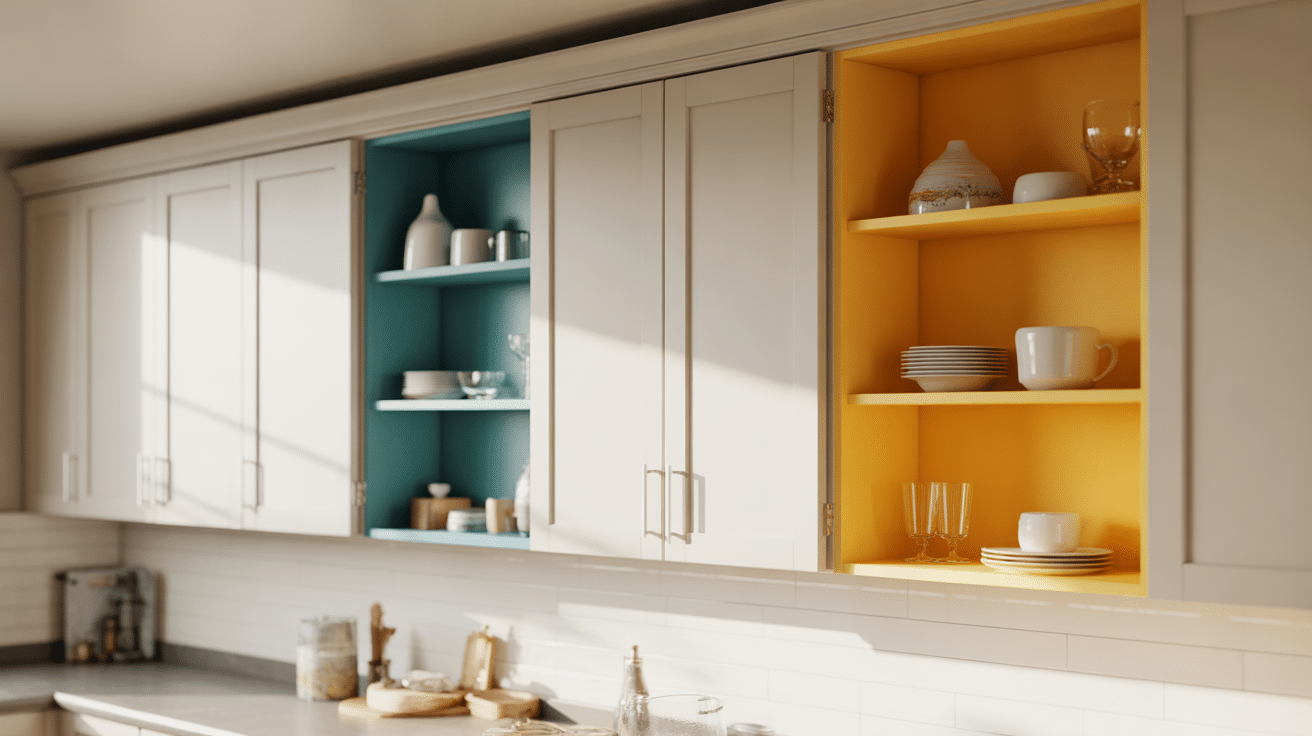
If you are nervous about bold colors on every door, add color inside instead. You can:
- Paint the inside of glass-front cabinets
- Add color to the back of open shelves
- Keep doors and frames neutral
This idea lets you enjoy strong shades like teal, yellow, or red, without locking your whole kitchen into one big color choice.
How to Choose the Best Cabinet Color for Your Kitchen
Choosing the right cabinet color is much easier when you follow a few clear steps.
Step 1: Choose the mood you want: Soft greens and greige create a calm space, white and cream feel bright, and navy or deep green bring a bold tone. Match the mood to your home’s style.
Step 2: Study light and room size: Small or dim kitchens usually look better with light colors, while larger or sunlit rooms can handle deeper shades without feeling tight.
Step 3: Match cabinets to fixed surfaces: Busy stone works best with calm tones. Plain counters can support deeper shades. Make sure the undertones fit your floors.
Step 4: Think about cleaning and wear: Mid-tones and satin or semi-gloss finishes hide marks better than very light or dark shades.
Step 5: Test your top colors: Paint larger samples and check them in morning and evening light. Hold them near your counters and floors before choosing your final shade.
With these steps in mind, picking a cabinet color becomes a simple and confident choice.
Upcoming Trends to Watch: Cabinet Color
Quiet neutrals like gray-green and mushroom bring calm depth to the kitchen without overpowering the space, while rich wine shades add strong, warm color that works well on islands or in moody layouts.
Earth tones such as warm brown and taupe are becoming steady favorites, offering a softer feel than cooler grays. Pastels like powder blue and muted yellow are also appearing more often, especially in small areas where a light pop of color feels right.
To make these trends last, keep soft shades on main cabinets and use deeper, stronger colors only as accents, making sure the undertones match your floors, counters, and lighting.
Common Cabinet Color Mistakes to Avoid
A few small oversights can make a big difference in how your cabinets look and feel. Here are key mistakes to avoid:
- Picking a color only from a tiny swatch: Small chips hide how a color looks on large doors. Always test bigger painted samples.
- Ignoring undertones and lighting: Colors can shift green, yellow, or pink at home. Check samples next to floors, counters, and backsplash in real light.
- Going too dark in a dim room: Deep shades in a low-light kitchen can feel tight. Keep most cabinets light and use dark tones only in small areas.
- Choosing a trend that doesn’t fit the house: Some viral colors fight with your trim and layout. Soften the shade or limit it to an island or feature run.
- Forgetting about finish (sheen): Matte hides flaws but is harder to wipe. Satin or semi-gloss usually cleans better on busy kitchen cabinets.
If you watch for these small issues ahead of time, picking a cabinet color feels clearer and far less stressful.
Bottom Line
Now you’ve seen how many shades can shape a kitchen and how each one creates a different mood.
This guide walked through popular kitchen cabinet colors, ideas that fit many homes, simple steps for choosing a shade, and a few mistakes to avoid.
As you look at your own kitchen, you’ll have a clearer sense of what matches your light, layout, and daily routine. Your choice only needs to make sense for you.
If you want more home ideas or support for your next project, feel free to check out my other posts.