

Standing in the paint aisle with two cans in your hand can feel more confusing than it should.
If you’re trying to decide between milk paint vs chalk paint, you’re likely wondering which one will actually give you the finish you want without turning your project into extra work.
I’ve faced that same choice, especially when working on furniture that I didn’t want to ruin with the wrong product.
In this blog, you’ll get a clear breakdown of how each paint applies, how it looks once dry, how durable it really is, and where it performs best. By the end, you’ll know exactly which option fits your style, surface, and skill level.
Milk Paint: What You Need to Know
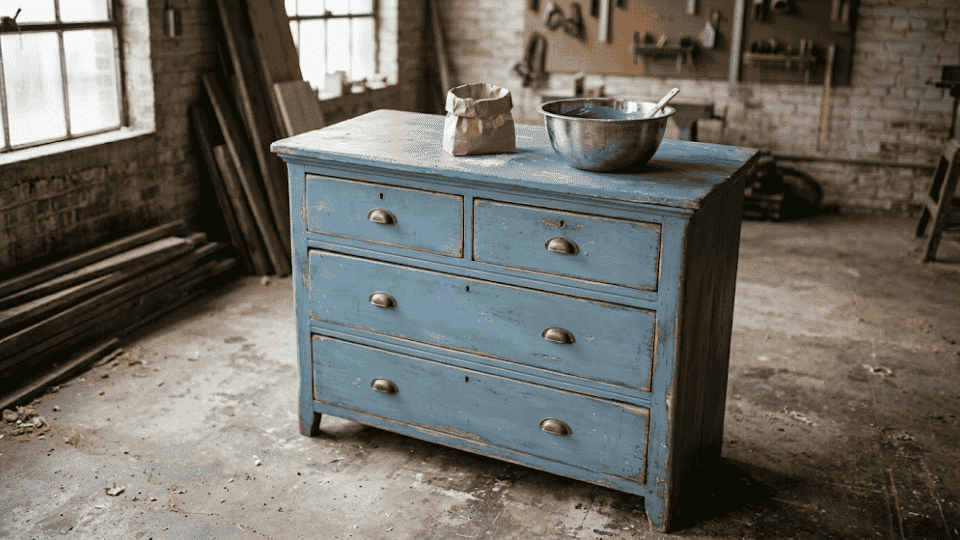
Milk paint is one of the oldest paint formulas still used today, made from simple ingredients like milk protein (casein), lime, and natural pigments. Its history goes back centuries, and it became especially popular in early American homes and furniture.
What makes milk paint stand out is its organic, slightly unpredictable finish. It soaks into raw wood and can create natural variation, subtle texture, and gentle chipping over time. That aged effect happens without heavy sanding or artificial distressing.
However, it often comes in powder form and must be mixed before use. Its rustic appearance works beautifully for antique or farmhouse-style pieces, but may feel too textured for modern, polished projects.
Chalk Paint: What You Need to Know
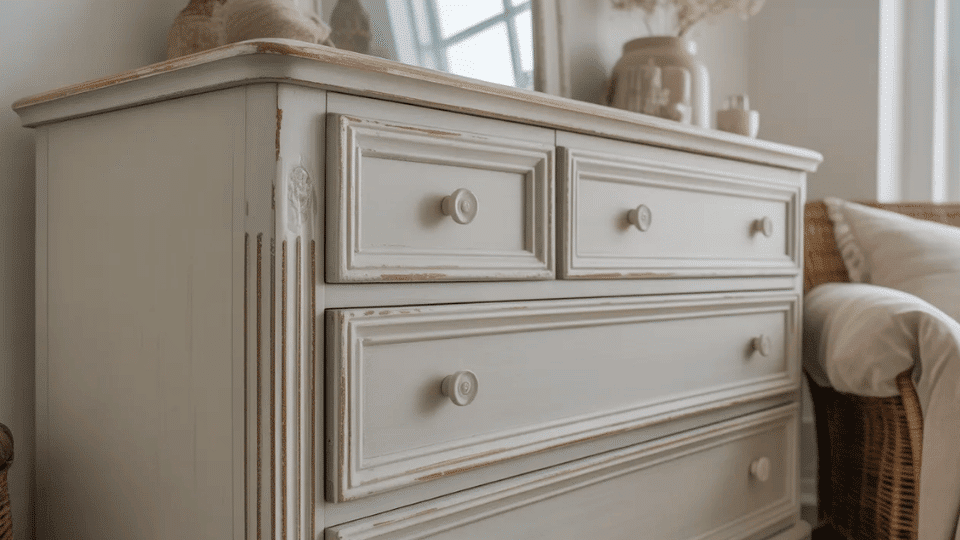
Chalk paint is a modern, water-based paint designed for convenience and smooth coverage. Introduced in the 1990s, it quickly became popular for furniture makeovers because it usually requires little surface preparation.
In many cases, sanding and priming are minimal or unnecessary. Chalk paint dries to a soft, matte finish that looks velvety and uniform. It adheres well to wood, metal, laminate, and even some sealed surfaces.
Because it sits on top of the material rather than soaking in, the finish feels more controlled and consistent. To improve durability, a wax or clear sealer is typically applied. This extra step protects the surface and extends the life of the finish.
Milk Paint vs Chalk Paint: Key Differences
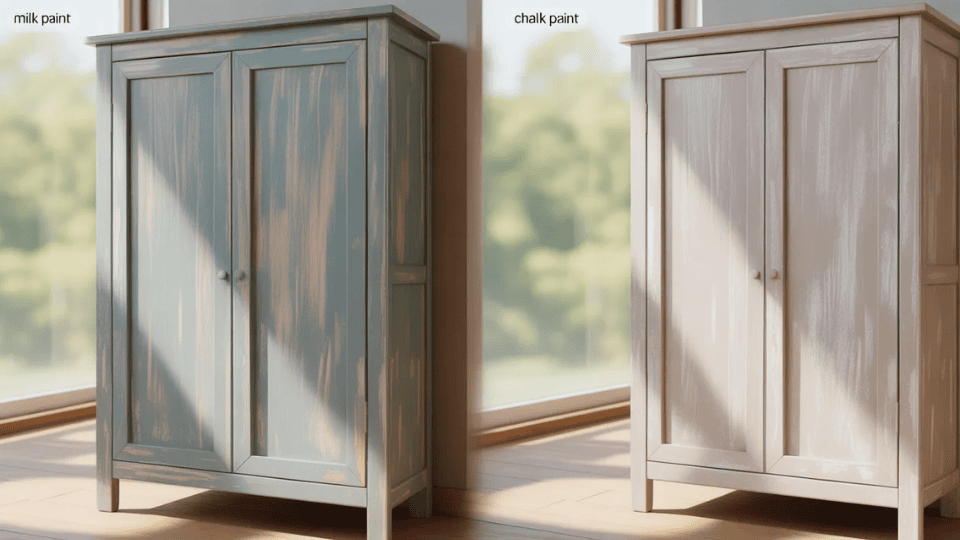
When you compare milk paint vs chalk paint, the biggest differences show up in how they apply, how they look, and how they hold up over time. Below, I’ll break each one down clearly so you can decide what fits your project best.
1. Application & Prep
Milk paint usually comes in powder form and must be mixed with water before use. Achieving the right consistency can take practice. It adheres well to raw wood, but glossy or sealed surfaces often require a bonding agent.
Chalk paint is ready to use straight from the can. It requires minimal preparation and often does not need sanding or priming. For beginners or quick projects, chalk paint is generally easier to apply.
2. Finish & Appearance
Milk paint creates a soft, matte look with natural variation. It can dry with a slight texture and may chip in an organic way, making it ideal for rustic or vintage styles.
Chalk paint dries to a smooth, matte finish with a more uniform appearance. Edges can be distressed manually, but it does not chip naturally like milk paint. The final look is more controlled and even.
3. Durability & Maintenance
Milk paint can chip easily if left unsealed, especially on frequently used surfaces. Applying a topcoat significantly improves durability and longevity.
Chalk paint also requires protection. Without wax or a sealant, it may scratch or scuff. Wax provides a soft finish but may require maintenance, while polyurethane sealers offer stronger protection. Proper sealing is essential for both options.
4. Surface Compatibility
Milk paint performs best on raw, unfinished wood because it penetrates and bonds naturally. On previously painted or slick surfaces, additional prep or bonding agents are often needed.
Chalk paint is more versatile and adheres well to wood, laminate, metal, glass, and some plastics with minimal preparation. It typically performs better on sealed or glossy surfaces.
5. Cost & Availability
Milk paint is often slightly more affordable per package and can be mixed as needed. However, bonding agents and sealers may increase overall cost.
Chalk paint generally costs more per quart, particularly specialty brands. It is widely available in craft stores and home improvement centers, making it easier to purchase locally.
Pros and Cons: Milk Paint vs Chalk Paint
Before choosing between milk paint vs chalk paint, it helps to see the strengths and drawbacks side by side. This quick comparison makes decision-making easier and more practical.
| Type | Advantages | Disadvantages |
|---|---|---|
| Milk Paint | Natural ingredients, low VOCs, and eco-friendliness create an authentic aged finish, bond well to raw wood, and have a lightweight formula. | Requires mixing, a less predictable finish, may chip without a topcoat, and a bonding agent is needed for glossy surfaces. |
| Chalk Paint | Ready to use, minimal prep, beginner-friendly, smooth matte finish, strong coverage, works on many surfaces. | Needs wax or sealant for durability, can scratch if unsealed, thicker texture, slightly higher cost. |
Both paints have clear benefits and trade-offs. Your choice depends on surface type, desired finish, and how much prep work you’re comfortable handling.
Community Discussion: Milk or Chalk Paint?

Milk or chalk paint? A Reddit user on the HomeImprovement forum asked for advice on choosing between milk or chalk paint for a distressed look on built-in bookshelves.
Some replies recommended a glossy finish for a more timeless, classic look, especially for a vintage-style home like theirs.
Others mentioned that milk paint offers a more authentic vintage look but can be difficult to work with, while chalk paint might be easier to apply.
The discussion emphasized considering long-term durability and the current trends in finishes.
When to Choose Milk Paint
Milk paint works best when you want an authentic, old-world finish with natural variation. It’s ideal for raw-wood furniture, antique pieces, or projects where light chipping adds character rather than looking like damage.
If your style leans toward rustic, farmhouse, primitive, or vintage, milk paint delivers a naturally worn, layered appearance. It performs especially well when you want a breathable, low-VOC option with simple ingredients.
However, it does require mixing and sometimes a bonding agent, so a bit of patience helps. It suits DIYers who don’t mind prep work and appreciate slightly unpredictable results.
If you enjoy texture, depth, and a finish that feels aged rather than polished, milk paint is a strong choice.
When to Choose Chalk Paint
Chalk paint is a better option when convenience and speed matter most. It works well for furniture makeovers, cabinets, and decorative pieces where you want minimal prep and reliable results.
If sanding and priming feel overwhelming, chalk paint simplifies the process because it adheres to many surfaces with little preparation. It’s ideal for beginners or quick weekend projects.
Style-wise, it suits both modern matte finishes and lightly distressed vintage looks. The final appearance is smoother and more controlled compared to milk paint.
If you need predictable coverage, easy application, and wide surface compatibility, chalk paint provides a practical and efficient solution.
Final Thoughts
Now you understand the real differences between milk paint and chalk paint, including how they apply, how they age, and how they hold up over time.
You’ve seen that milk paint offers a natural, textured finish with authentic character, while chalk paint gives you smoother coverage and easier application. I’ve also covered durability, prep work, cost, and when each one makes the most sense.
With this clarity, you can choose based on your project needs instead of guessing at the store. Trust your style and the surface you’re working with.
Try a small sample first if you’re unsure. When you finish your project, share what you used and how it turned out. I’d love to hear about your results.