
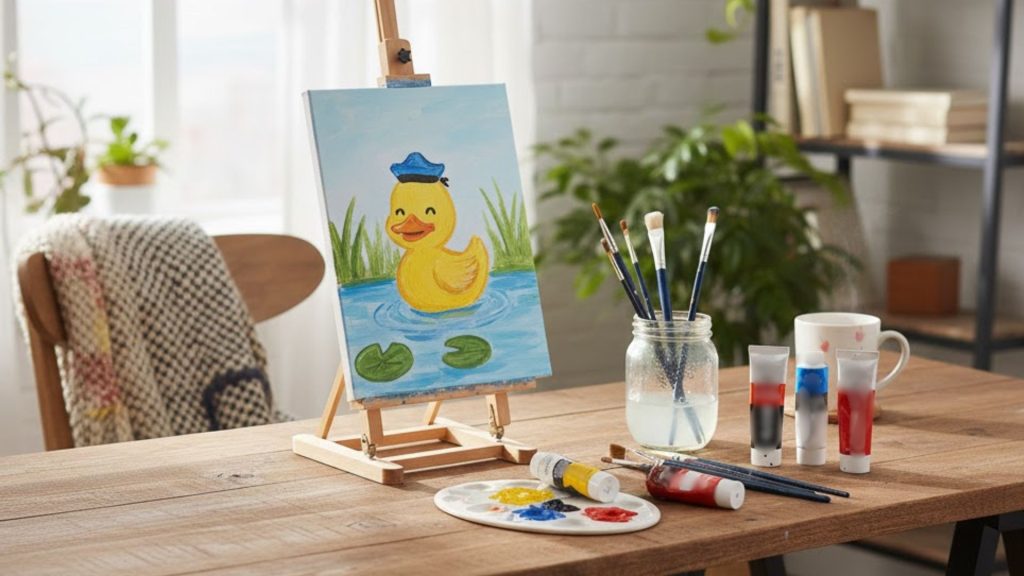

Want to start painting but feel overwhelmed by all the techniques and rules out there? I get it completely. When I first picked up a brush, I had no clue where to begin, either.
Simple painting ideas changed everything for me. They helped me build confidence without feeling stressed about creating perfect art.
You don’t need expensive supplies or years of practice to make something beautiful. Acrylics are super forgiving and let you experiment freely. I’ll walk you through easy projects that actually look impressive.
Each idea teaches you something new while keeping the fun alive. Grab your brushes and let your creativity flow.
Getting Started with Acrylic Paints
When I first started painting, acrylics made everything so much easier to learn. They dry super fast, which means you can finish projects quickly.
If you mess something up, wait a few minutes and paint right over it; no big deal. Acrylics work on almost any surface you can think of. Canvas, paper, wood, and even cardboard all work perfectly fine.
You can mix colors easily and layer them without waiting forever. The paints are affordable, too, so you won’t break the bank trying new techniques.
You can experiment freely without worrying about ruining your work. Acrylics are seriously forgiving, making them ideal for anyone just starting their painting tour. They let you focus on learning rather than stressing about mistakes.
Essential Tools and Materials You’ll Need
When I started painting, I had no idea what supplies I actually needed. Here’s a simple breakdown of the essentials that got me through my first few projects:
| Tool/Material | What You Need | Practical Notes |
|---|---|---|
| Basic Brushes | Flat, round, and filbert brushes | Start with a basic brush set that covers most beginner painting needs |
| Acrylic Paints | Primary colors (red, blue, yellow, black, and white) | Begin with student-grade paints; they’re affordable and great for learning |
| Canvas or Paper | Canvas, acrylic paper, or watercolor paper | Pre-stretched canvases are easiest since they’re ready to use right away |
| Palette and Mixing Tools | Palette or palette paper for mixing colors | Clean your mixing tools after each session to prevent dried paint buildup |
| Water and Media | Water for thinning, gesso for priming, and glazing medium for layers | Water creates transparency; mediums add special effects and improve paint flow |
You don’t need to buy everything at once or spend a fortune on fancy brands. Start with these basics and add more tools as you find what you enjoy painting most.
Simple Acrylic Painting Ideas for Beginners
I’ve put together a list of painting ideas that worked really well when I was starting. These are simple, fun, and don’t require any advanced skills to create. Here are some easy projects to try:
1. Abstract Color Blocks
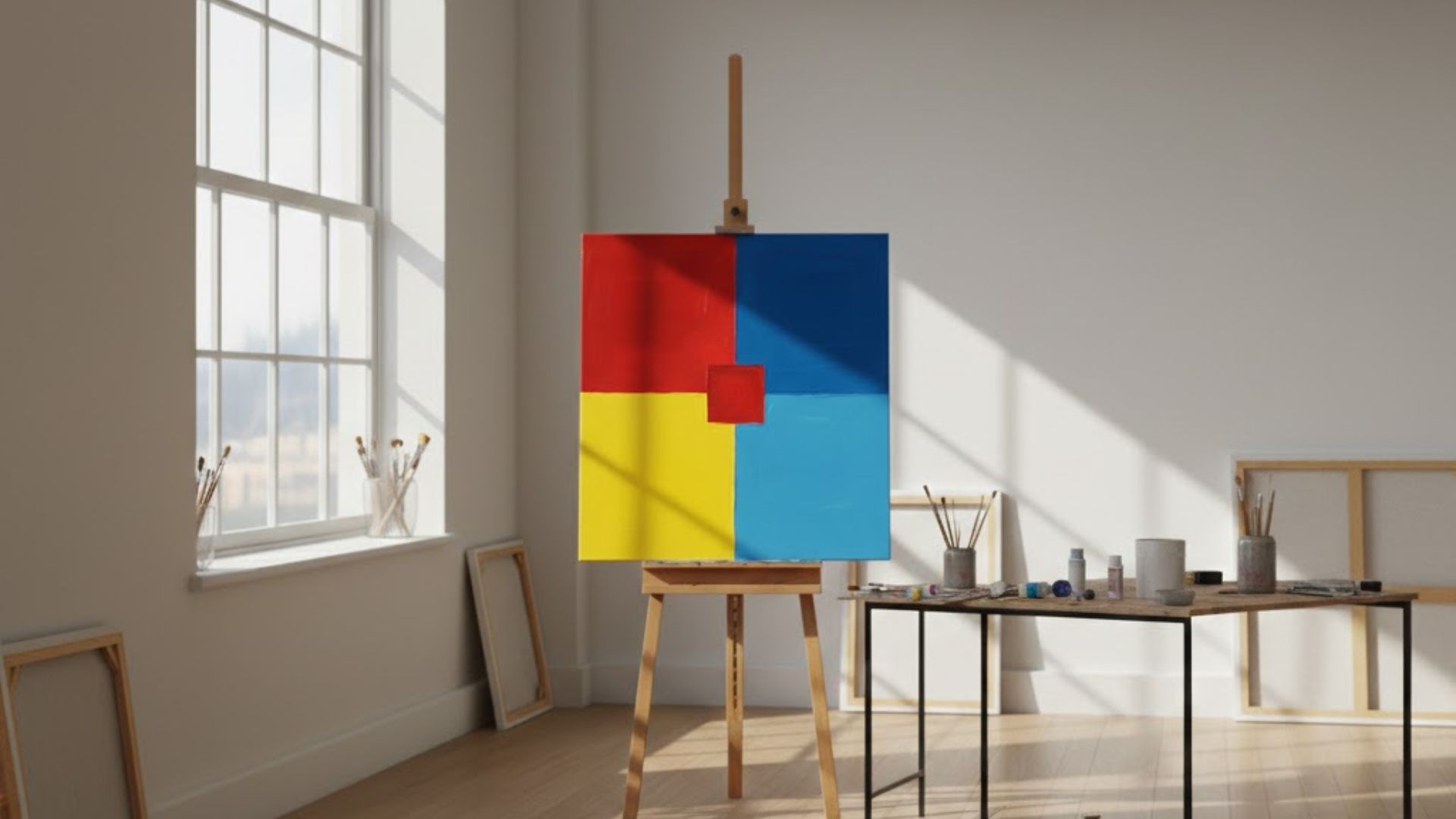
This one’s like playing with a creative puzzle on canvas. You start by choosing bold shapes in bright, contrasting colors that really pop against each other. Each shape gets its own space to shine.
The whole piece comes together with that clean, minimalist vibe that feels super modern. It’s honestly one of the easiest ways to make something that looks gallery-worthy without needing fancy painting skills.
2. Sunset Over the Ocean
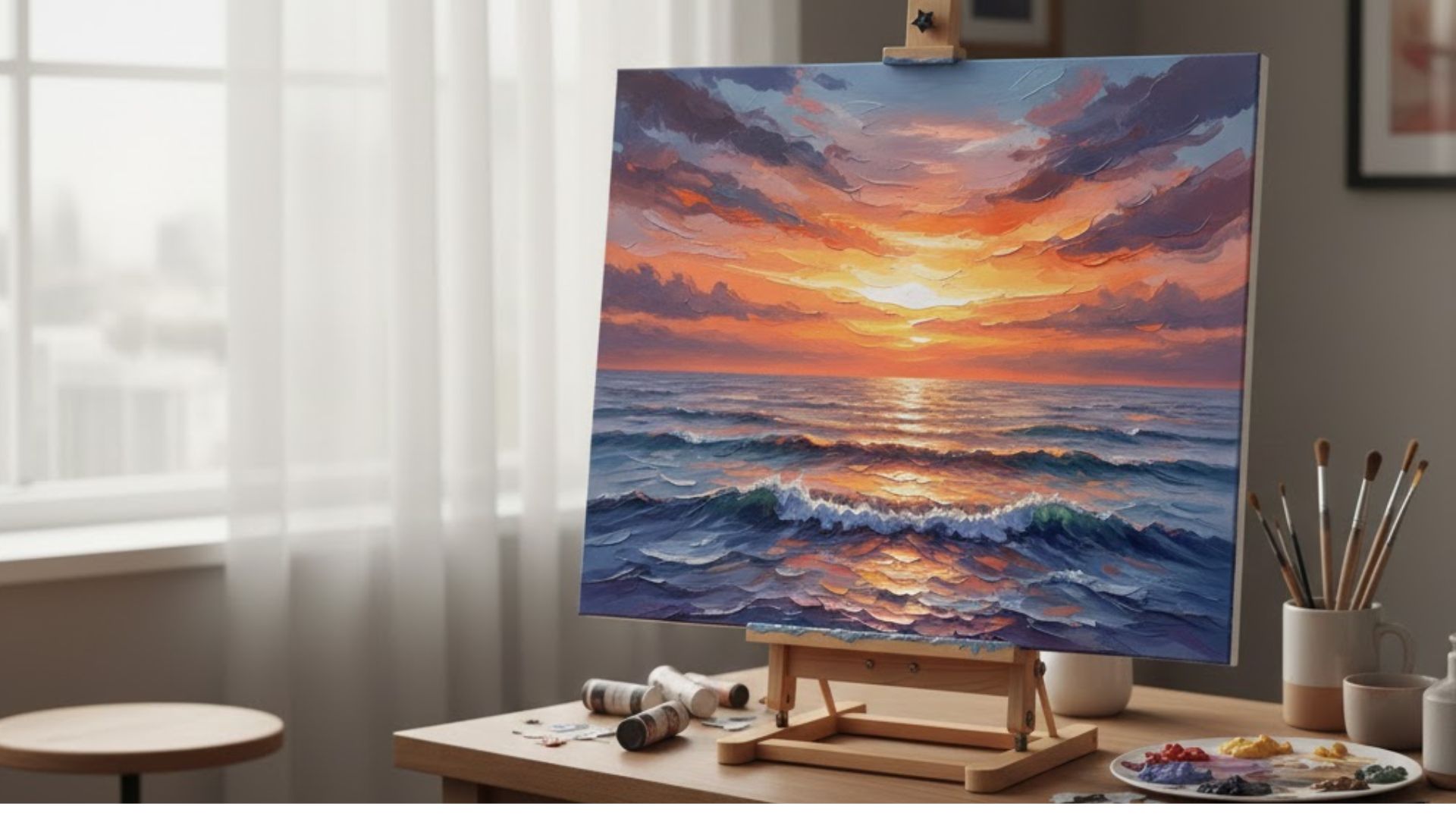
Imagine yourself standing on the beach watching the sun dip below the horizon. This painting captures that exact peaceful moment through mixed oranges, pinks, and purples.
The colors flow into one another smoothly, creating soft transitions with no harsh lines. It’s almost like watching ice cream melt in the most beautiful way possible. Hanging this on your wall brings instant calm to any room.
3. Tree Silhouette Against a Gradient Sky
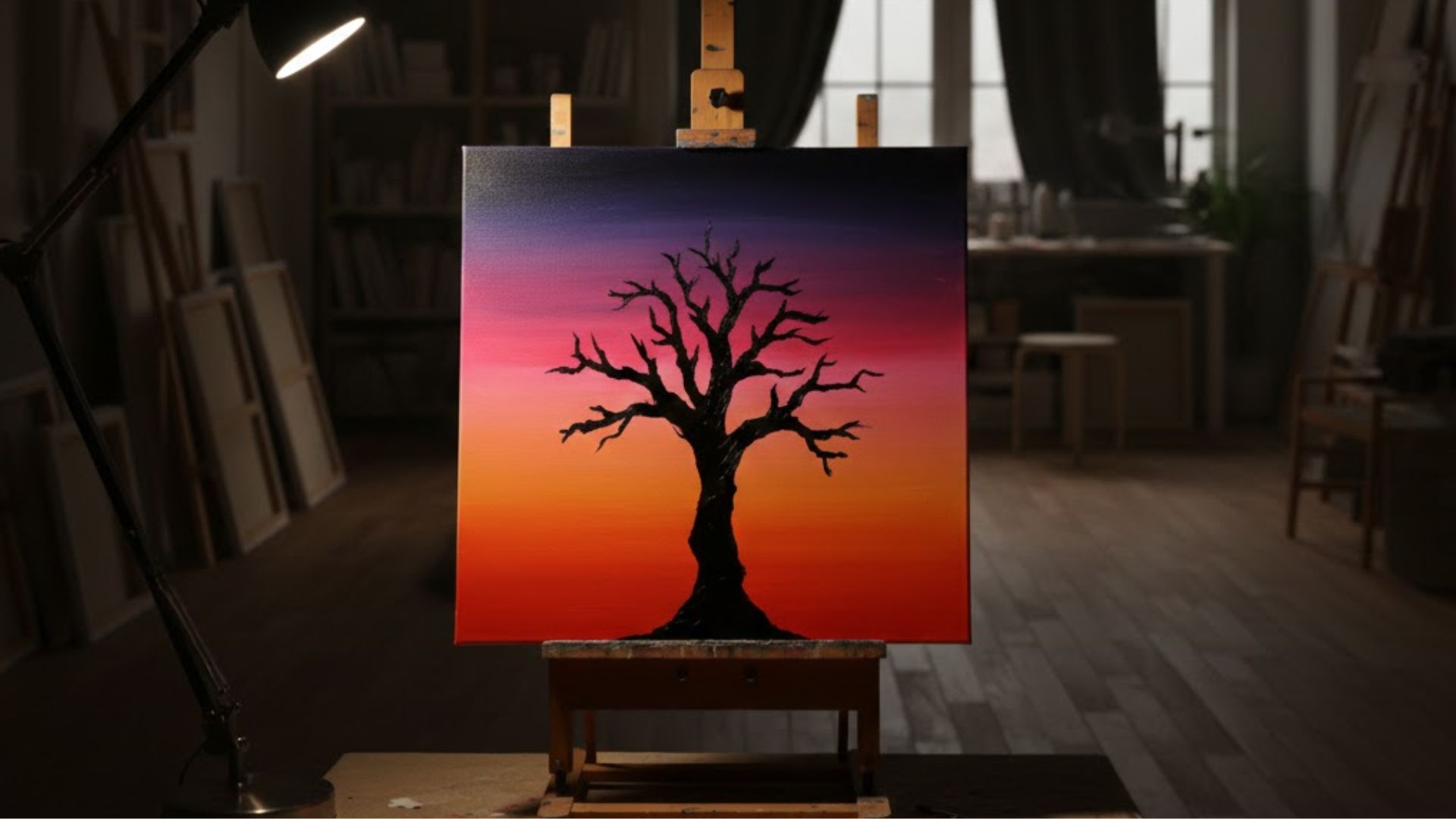
A vibrant, colorful sky forms the foundation of this piece. Once that background is ready, a simple black tree silhouette goes right on top. The tree doesn’t need intricate details; just a basic outline works perfectly.
That dark shape against bright colors creates a striking visual contrast. The impressive final result requires way less effort than it appears.
4. Geometric Pattern
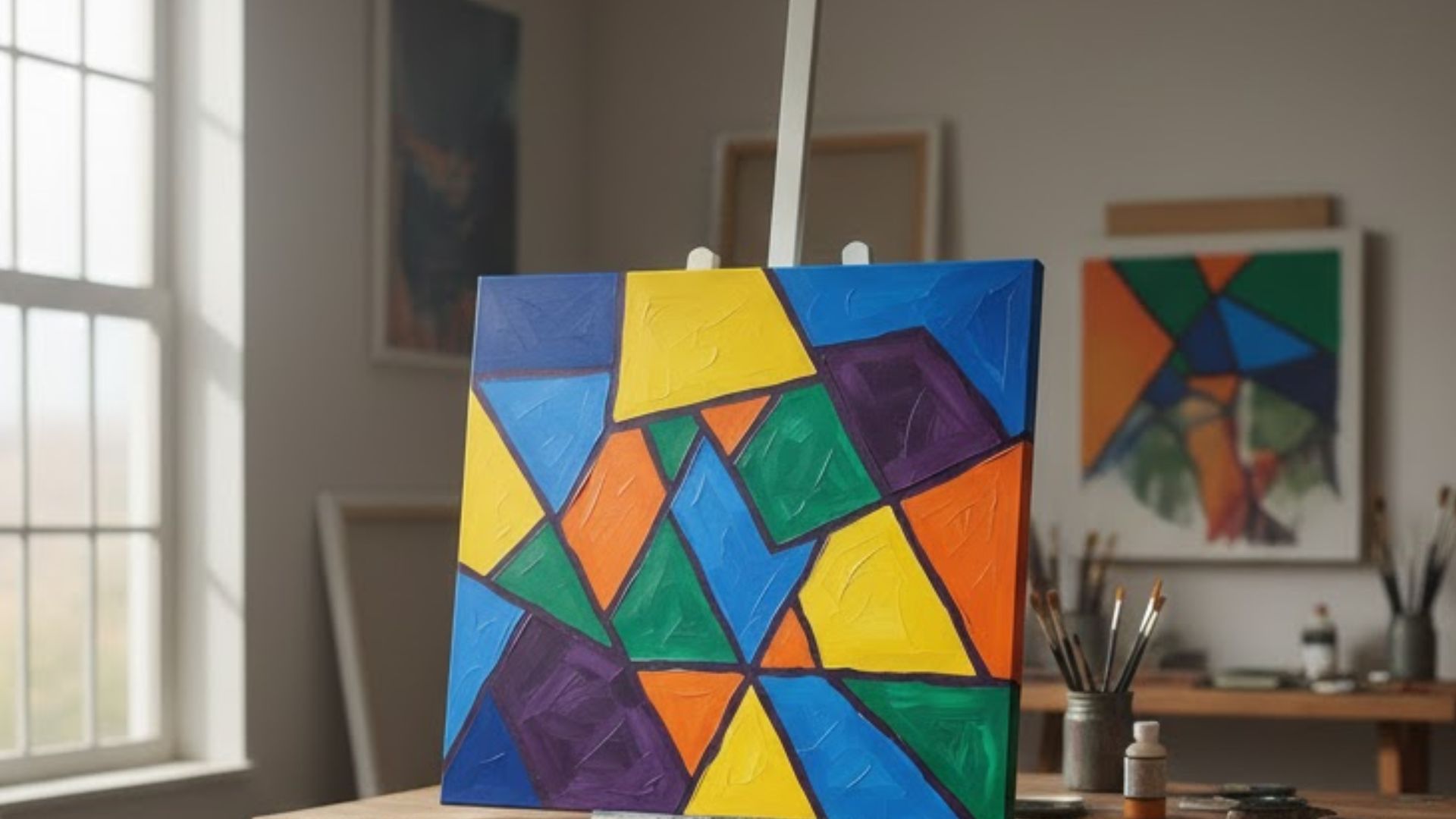
Repeating shapes and colors come together to create a visual rhythm in this design. Triangles, circles, and squares get arranged in patterns that feel fresh and contemporary. Each shape carries its own color while contributing to the overall harmony.
Painter’s tape becomes your best friend for achieving those crisp, clean edges. The finished painting could easily pass for something found in a modern art gallery.
5. Mountain Range in the Distance
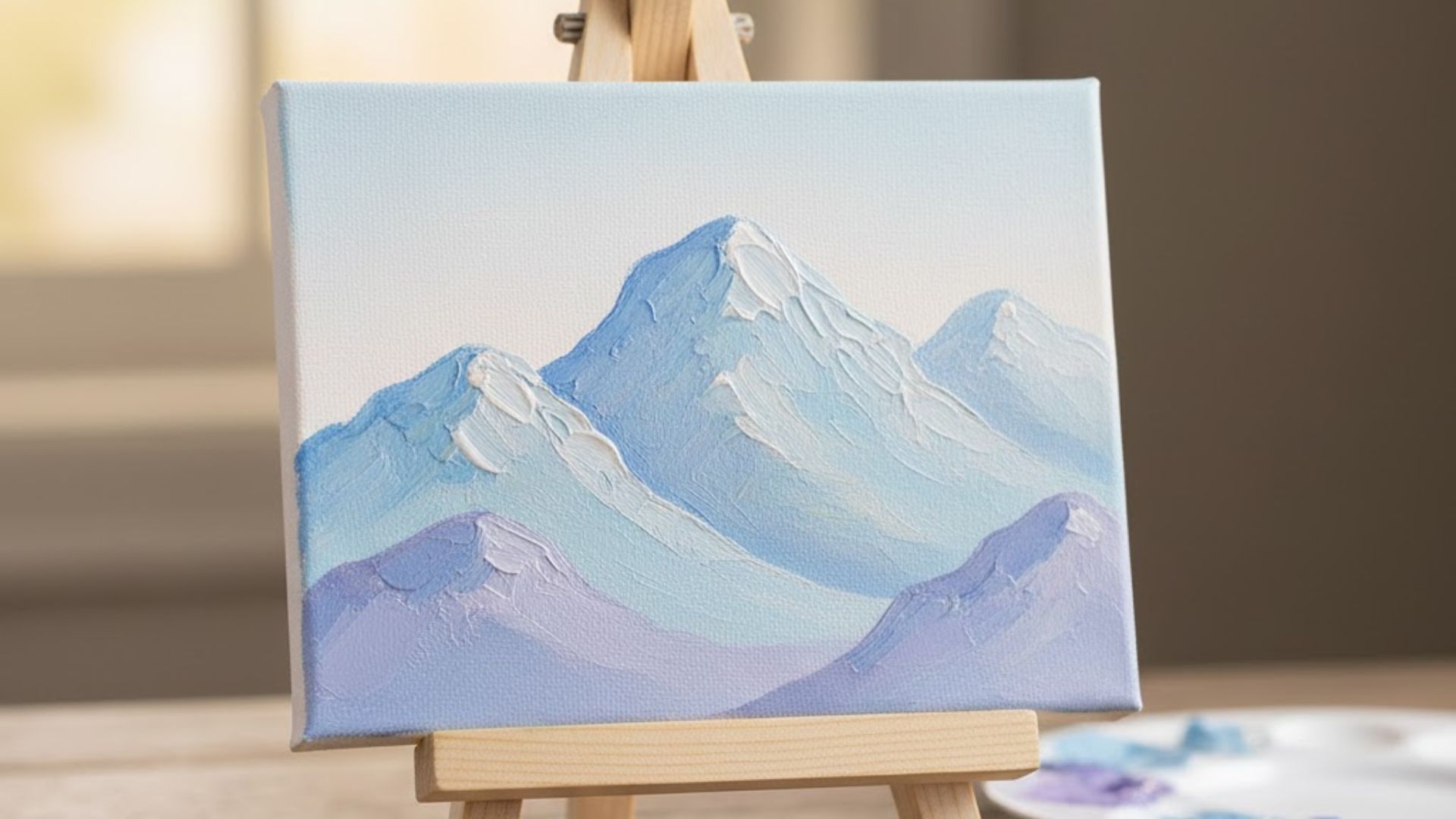
Sarah and I painted this after coming back from that incredible hiking trip. Layers of mountains build up from bottom to top, starting dark and gradually getting lighter.
Each new layer becomes more faded than the one before it. This technique creates that hazy, distant effect where peaks seem to disappear into the sky. The dreamy quality reminds me of standing at that viewpoint together.
6. A Single Flower
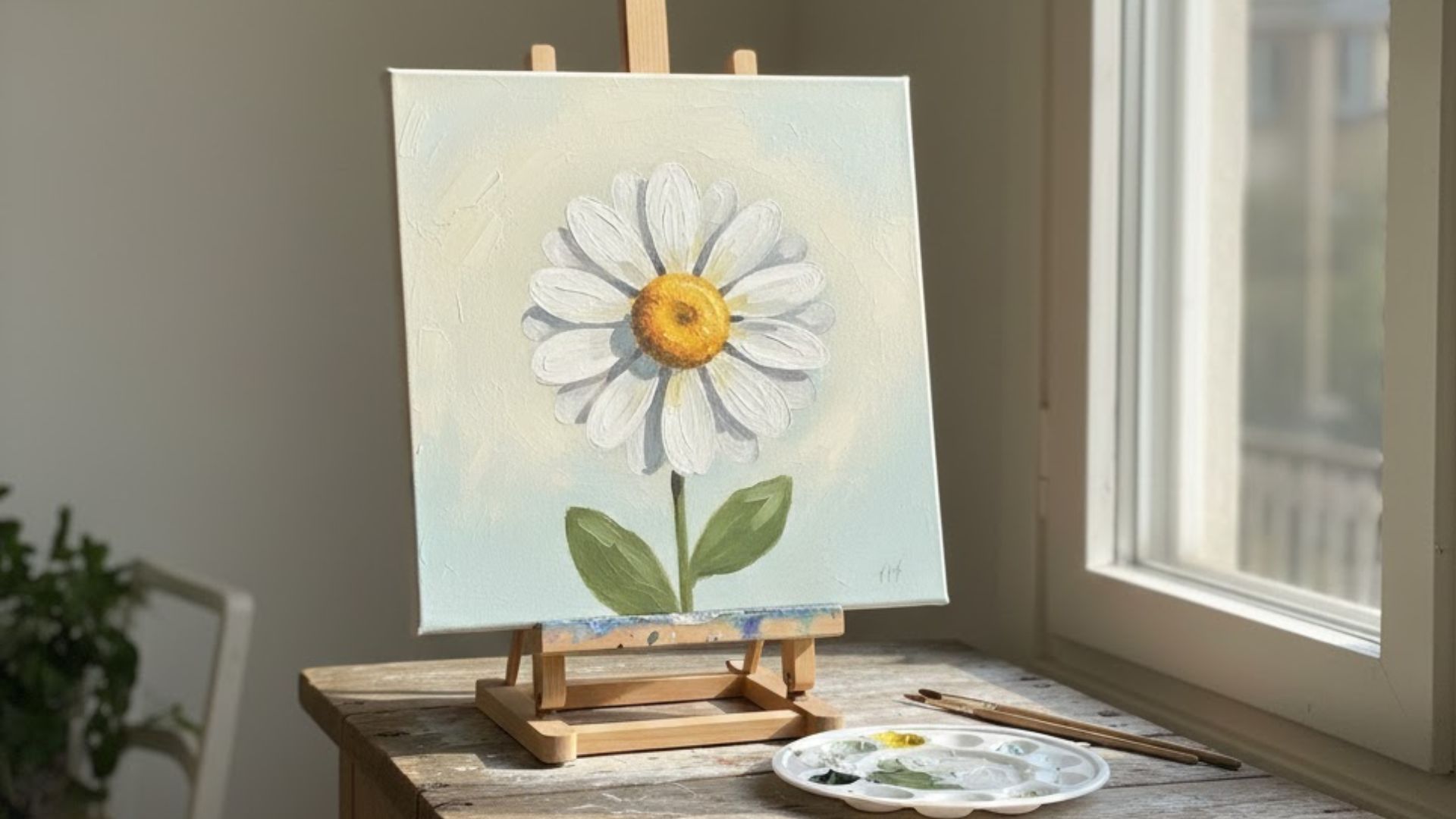
Focusing on just one bloom lets you give it your complete attention. Simple, flowing lines form the petals without requiring advanced technique. Choose whatever flower speaks to you, whether daisy, tulip, or something else entirely.
A plain background ensures your flower remains the undisputed focal point. This approach makes practicing brush control feel manageable rather than overwhelming.
7. Polka Dots on a Solid Background
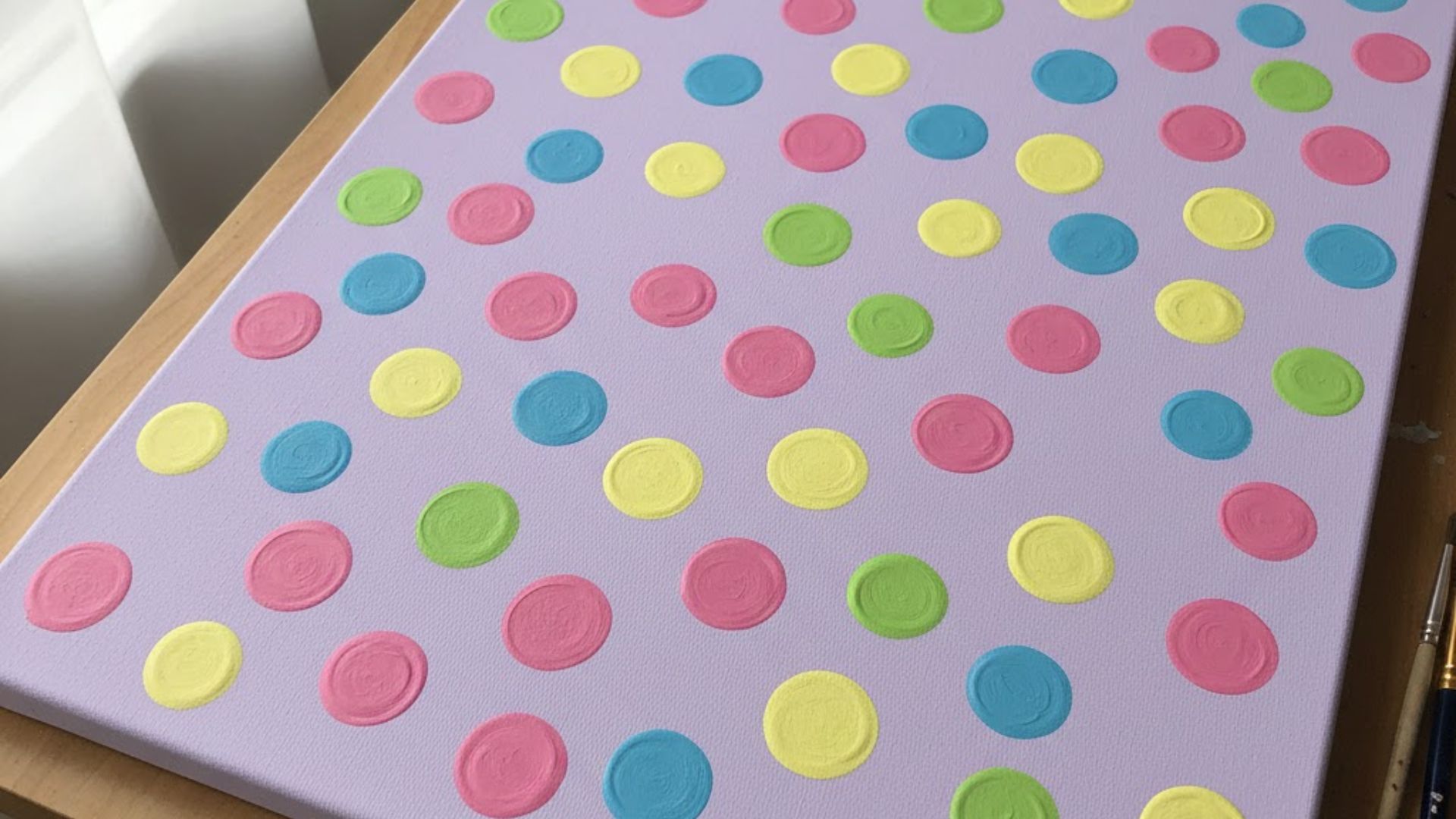
Few paintings bring this much pure joy to the creation process. Large, cheerful dots get scattered across a bright background; however, it feels right. Sponges, bottle caps, or even fingertips can create those circular shapes.
Colors can match beautifully or clash wildly based on your current mood. The playful energy makes mistakes literally impossible.
8. Citrus Fruit Slice
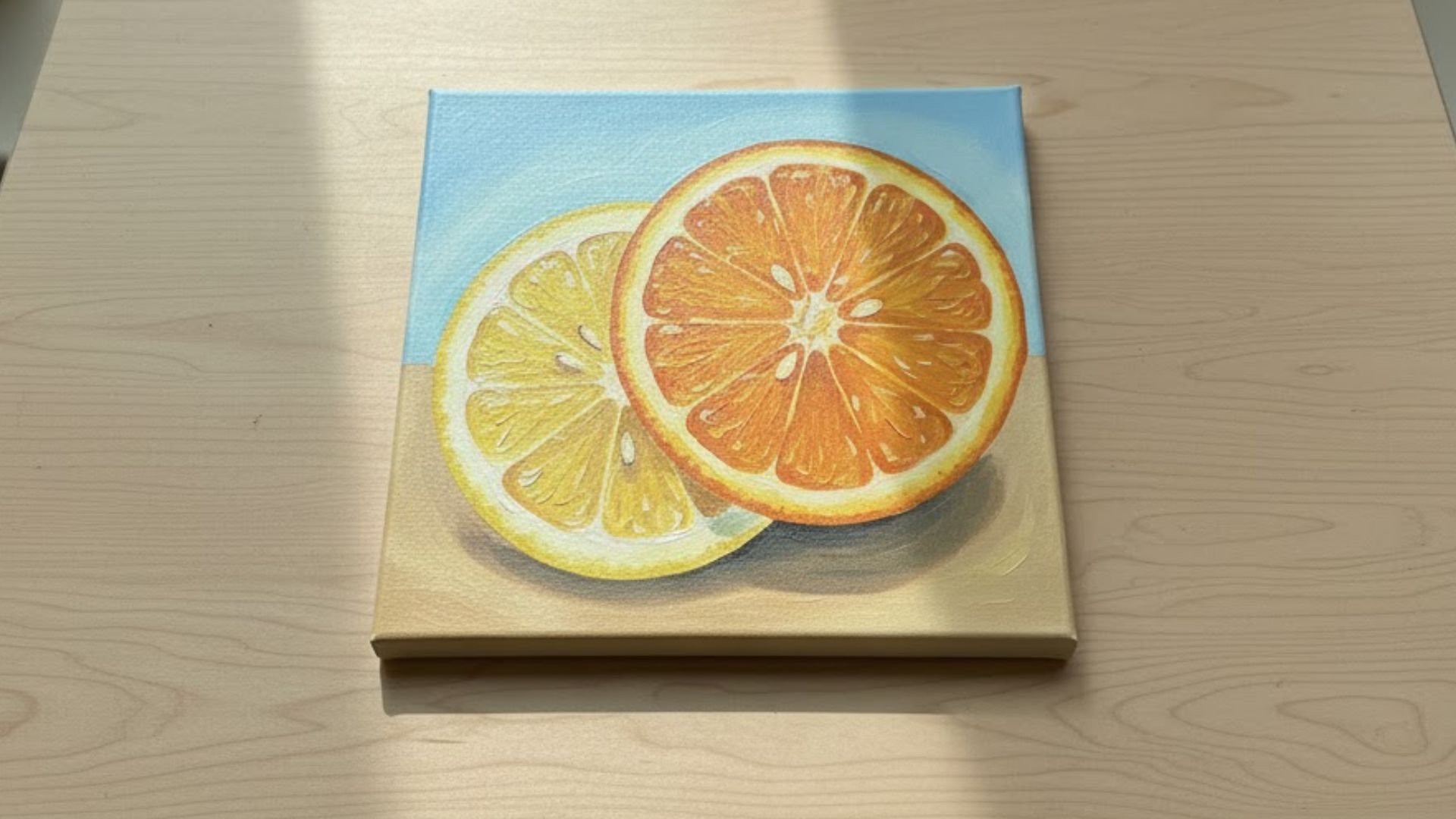
A lemon or orange gets sliced perfectly in half to reveal juicy segments inside. Those segments look tricky, but become doable with some careful, patient brushwork.
Vibrant yellows and oranges practically jump off the canvas. Small white highlights add shine that makes the fruit look almost edible. The fresh, summery vibe works beautifully in kitchens or bright spaces.
9. Cloudy Sky
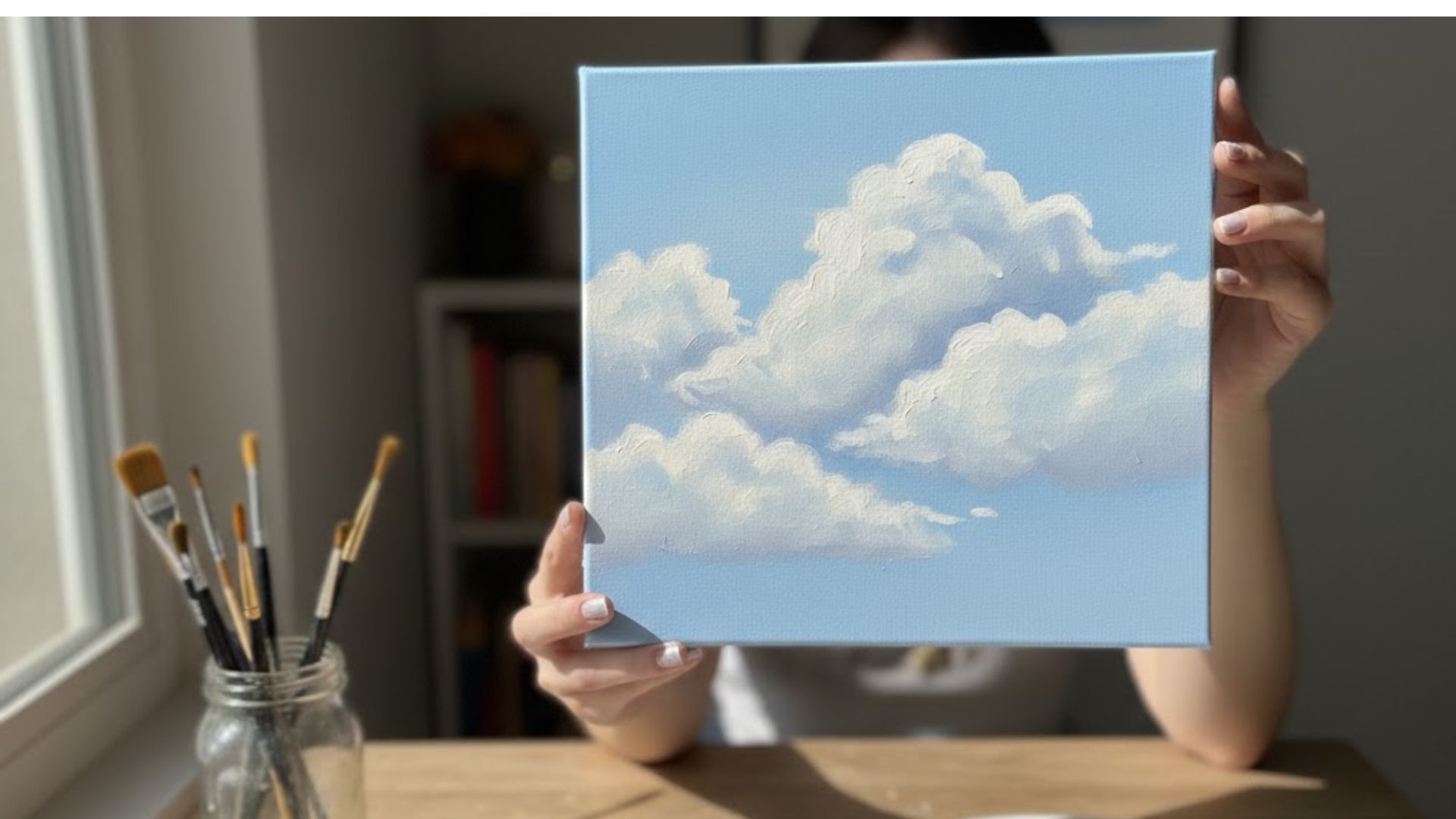
When Sarah showed me her blending technique for clouds, everything clicked. Soft, puffy formations emerge as white paint is gently worked into the blue sky. Light, gentle strokes almost smudge the colors together rather than keeping them separate.
Every cloud naturally turns out different, which actually helps hide any imperfections. The peaceful, airy atmosphere it creates makes the practice worthwhile.
10. Underwater Scene with Fish
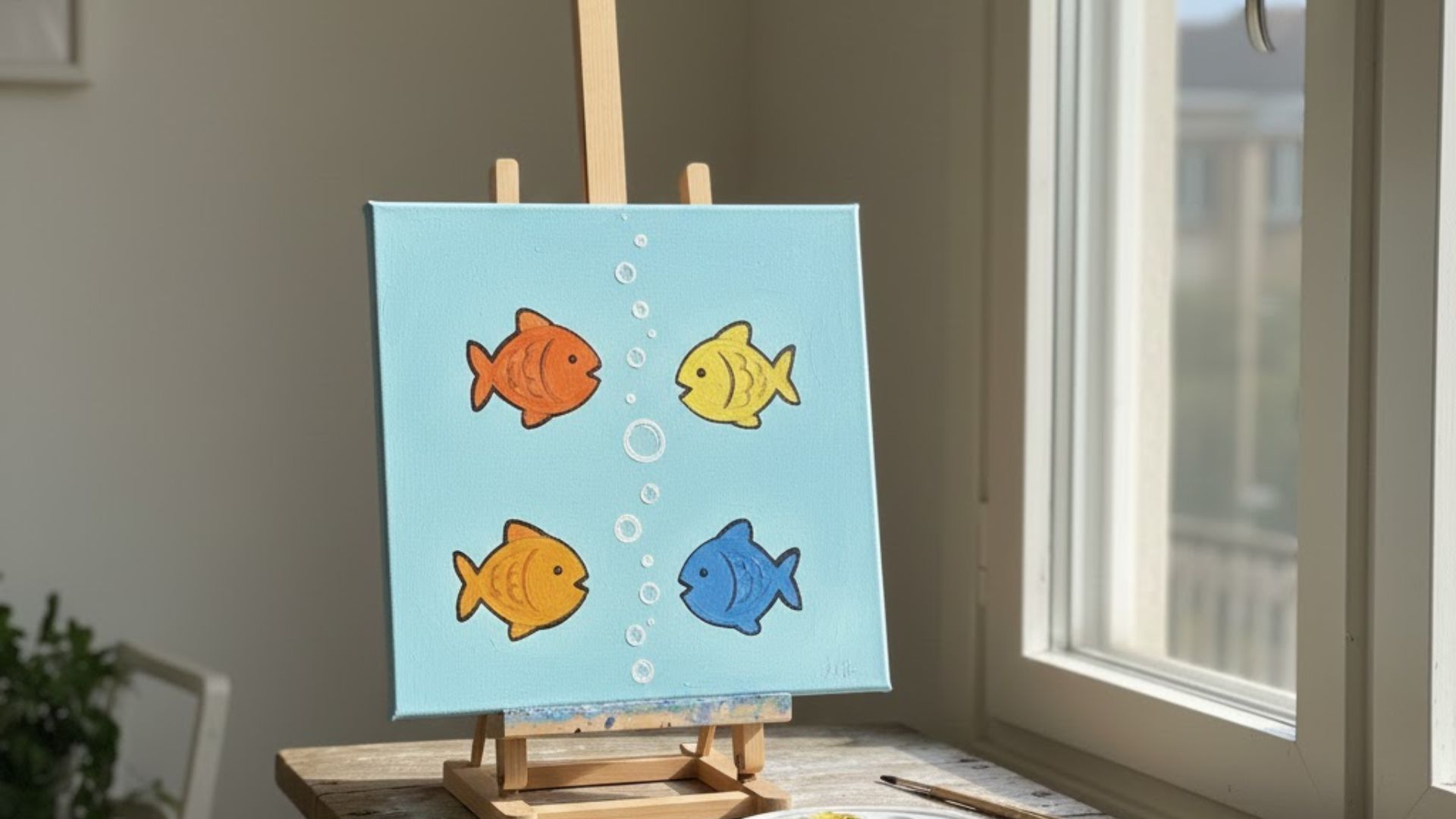
Imagine peering through glass into an aquarium full of life. Watery blues form the background, perhaps with light rays filtering through water. Simple fish shapes swim across this underwater world you’re building.
Detailed scales aren’t necessary since basic outlines convey the idea perfectly. Bubbles or seaweed complete the mini ecosystem living on your canvas.
11. Abstract Lines
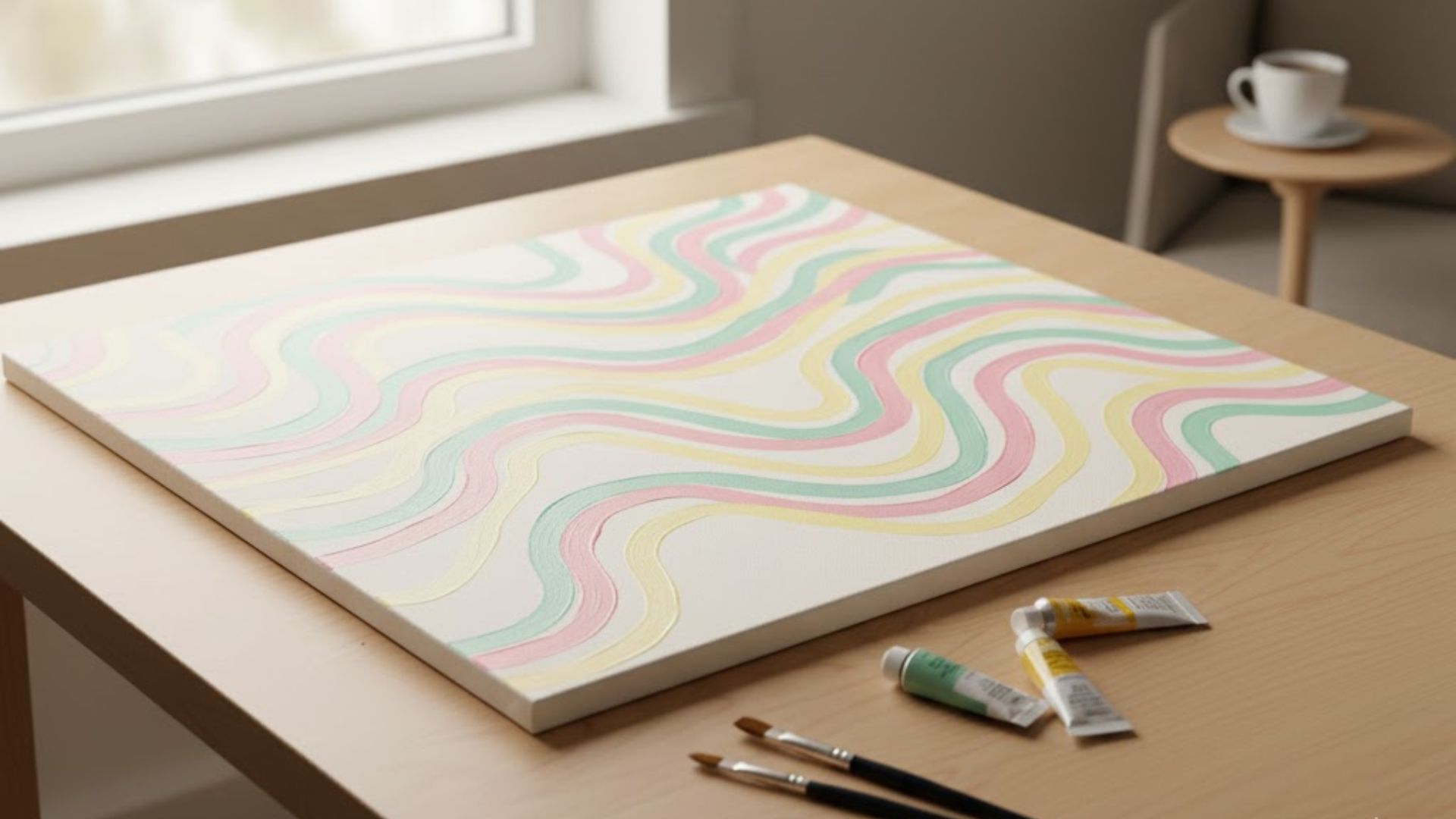
Freedom defines this painting from start to finish. Your brush flows wherever it wants, creating curves, straight paths, and swirls spontaneously.
Different colors naturally cross over and weave between each other. No rules exist here since pure creative expression guides the process. Whatever emerges will be one-of-a-kind and visually captivating.
12. Misty Forest Path
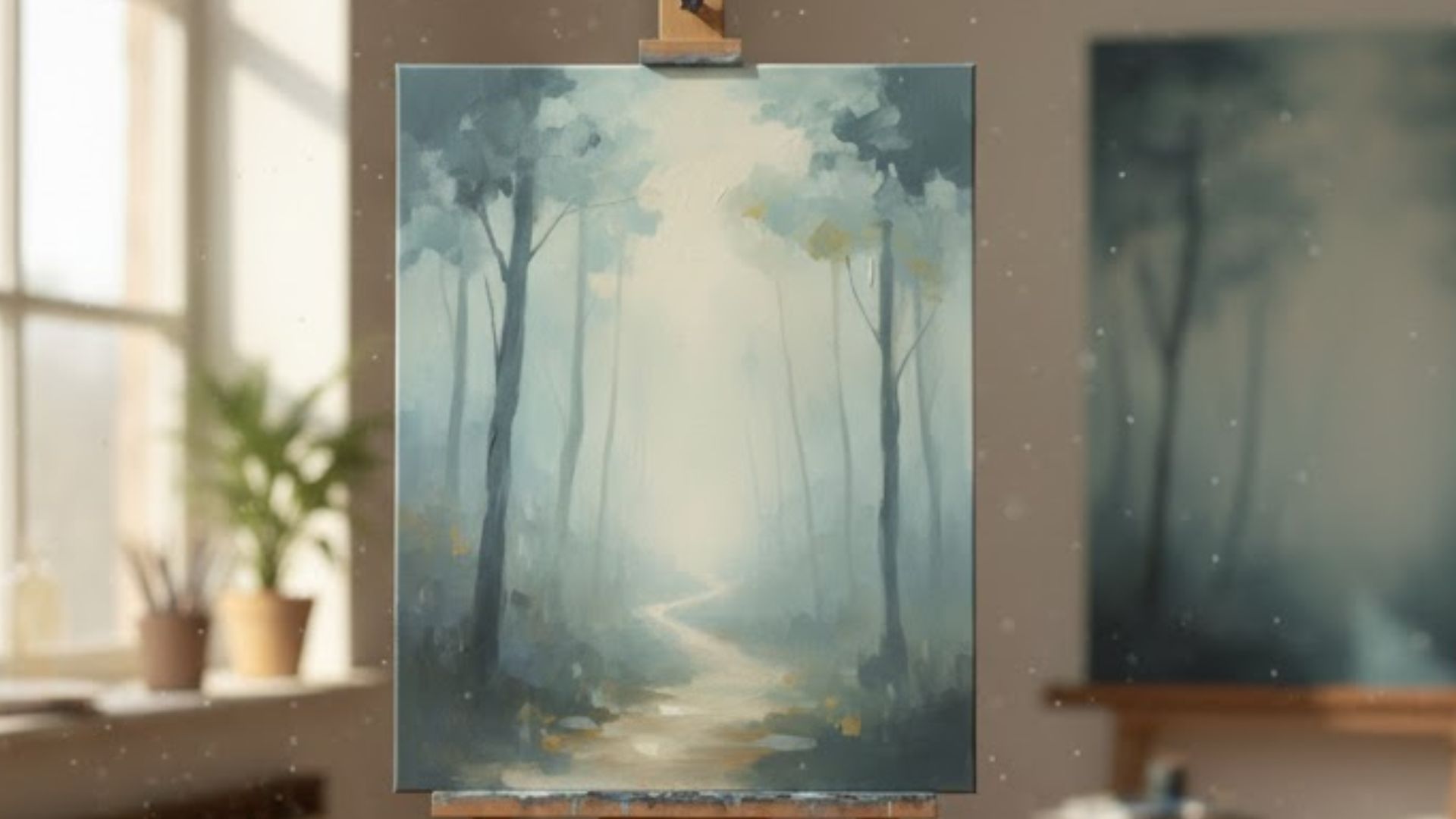
Foggy mornings inspire the mysterious, dreamy quality of this scene. Blurred edges make everything appear soft and slightly out of focus intentionally.
A path winds through hazy trees before fading into the misty distance. Muted greens and grays help create that early-morning fog atmosphere. The contemplative, peaceful mood settles over anyone viewing it.
13. Rainbow Stripes
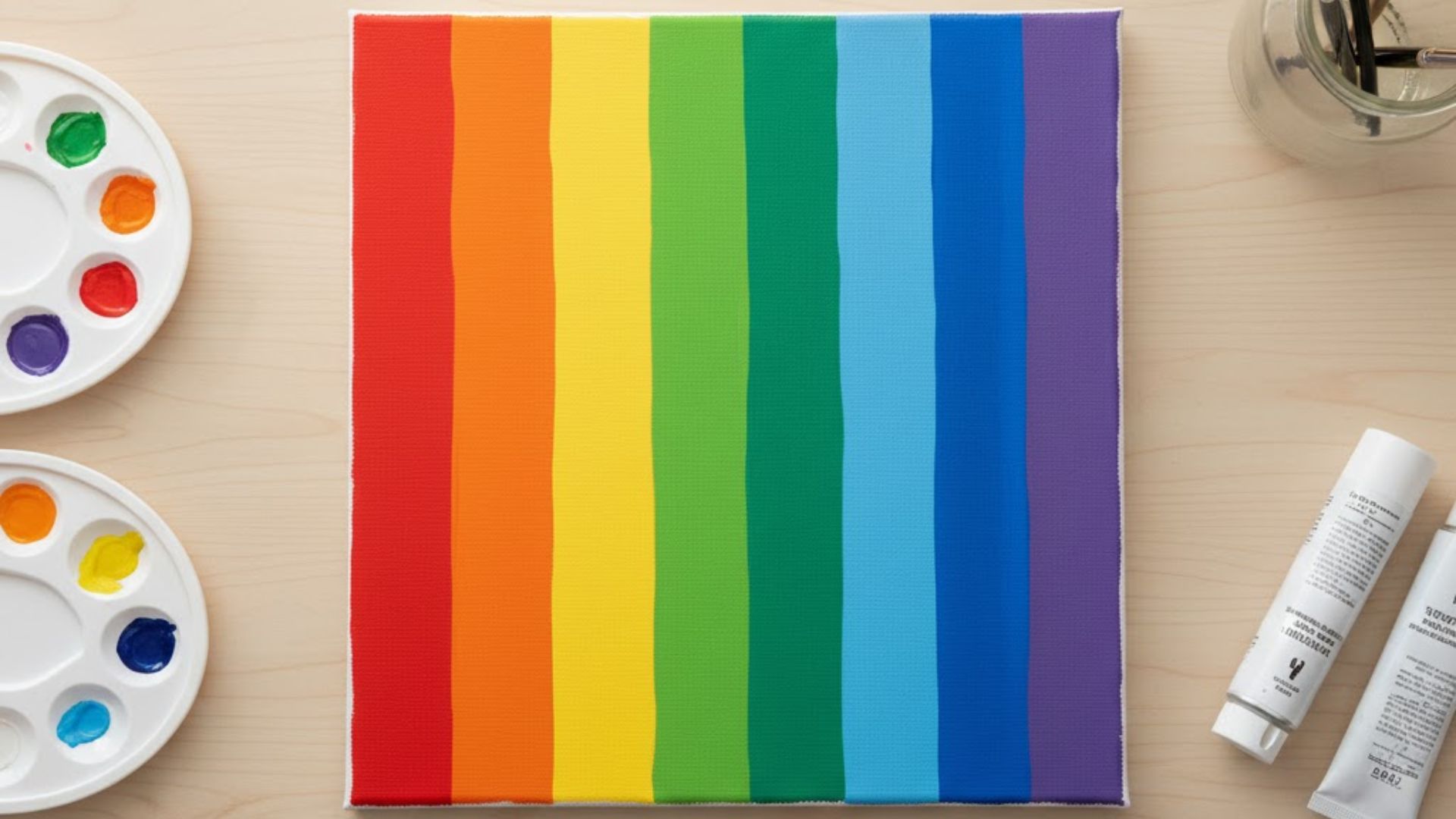
My friend and I challenged each other to create something beautifully simple. Clean vertical stripes march across the canvas in every imaginable rainbow color.
Painter’s tape guarantees perfectly straight lines without requiring steady hands. Bold and cheerful, it celebrates color at its most direct and honest. Sometimes the simplest concepts deliver the most potent visual punch.
14. Leafy Vines
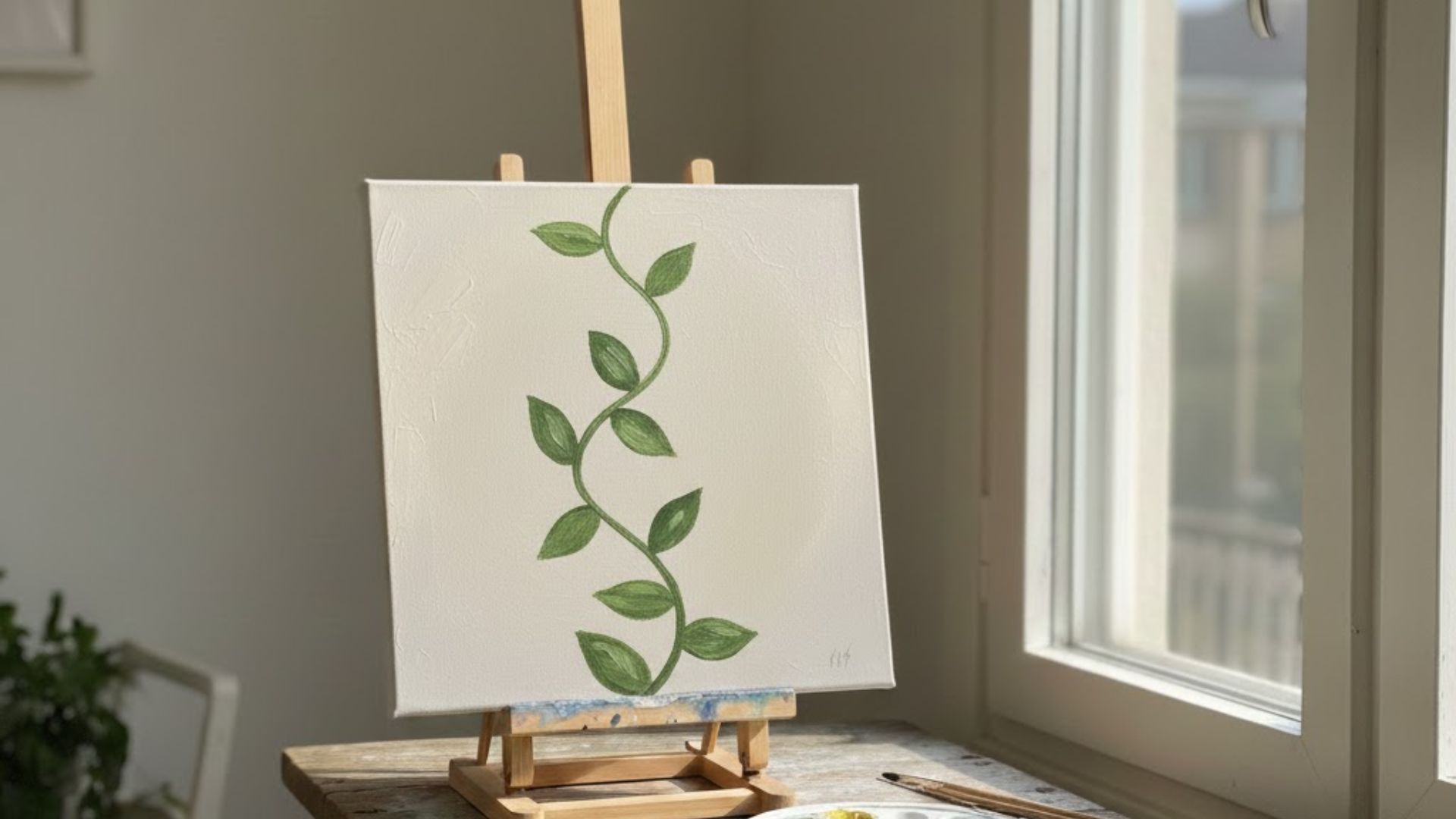
Green vines twist upward across the canvas like climbing a garden wall. Simple leaf shapes repeat along curving stems as they wind toward the top. The style can lean toward realism or become more decorative based on preference.
Natural, organic movement brings outdoor freshness into indoor spaces. Repetitive elements simplify the work while flowing lines maintain visual interest.
15. Bird on a Wire
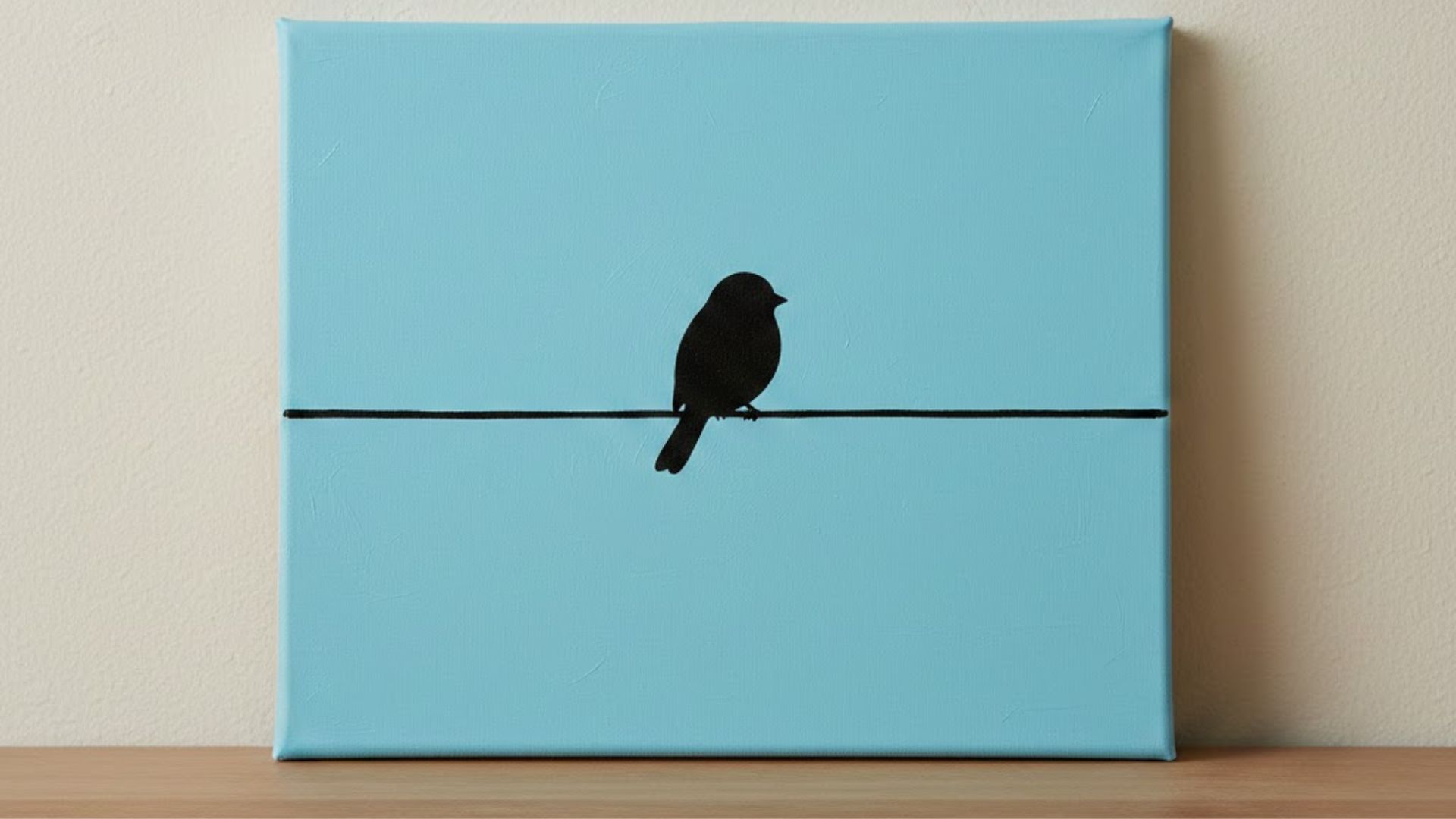
Simplicity demonstrates its power through this graceful composition. One horizontal line stretches across the canvas, representing a telephone wire.
A single tiny bird silhouette sits perched on that line. The background remains one solid, bold color to emphasize the minimal shapes. Empty space becomes just as important as the bird itself in the final image.
16. Silhouette of a Person
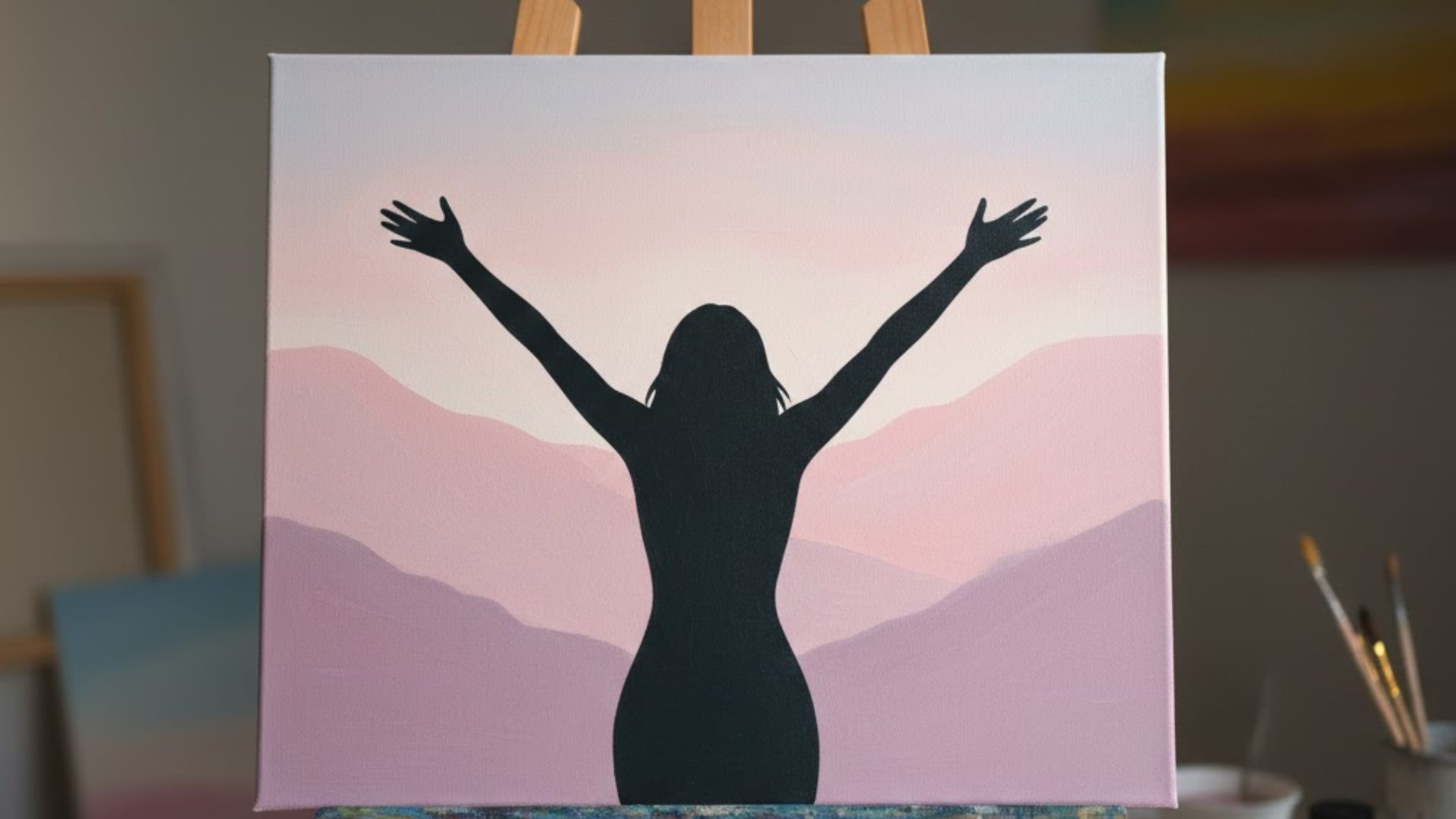
A single figure stands in solid black against soft pastel colors behind it. The person needs no facial features or clothing details, just a recognizable human shape.
Pastel pinks, blues, or lavenders create a dreamy backdrop that contrasts beautifully. The simplicity lets viewers project their own stories onto the mysterious figure. This style feels both modern and classic.
17. Abstract Triangle Composition
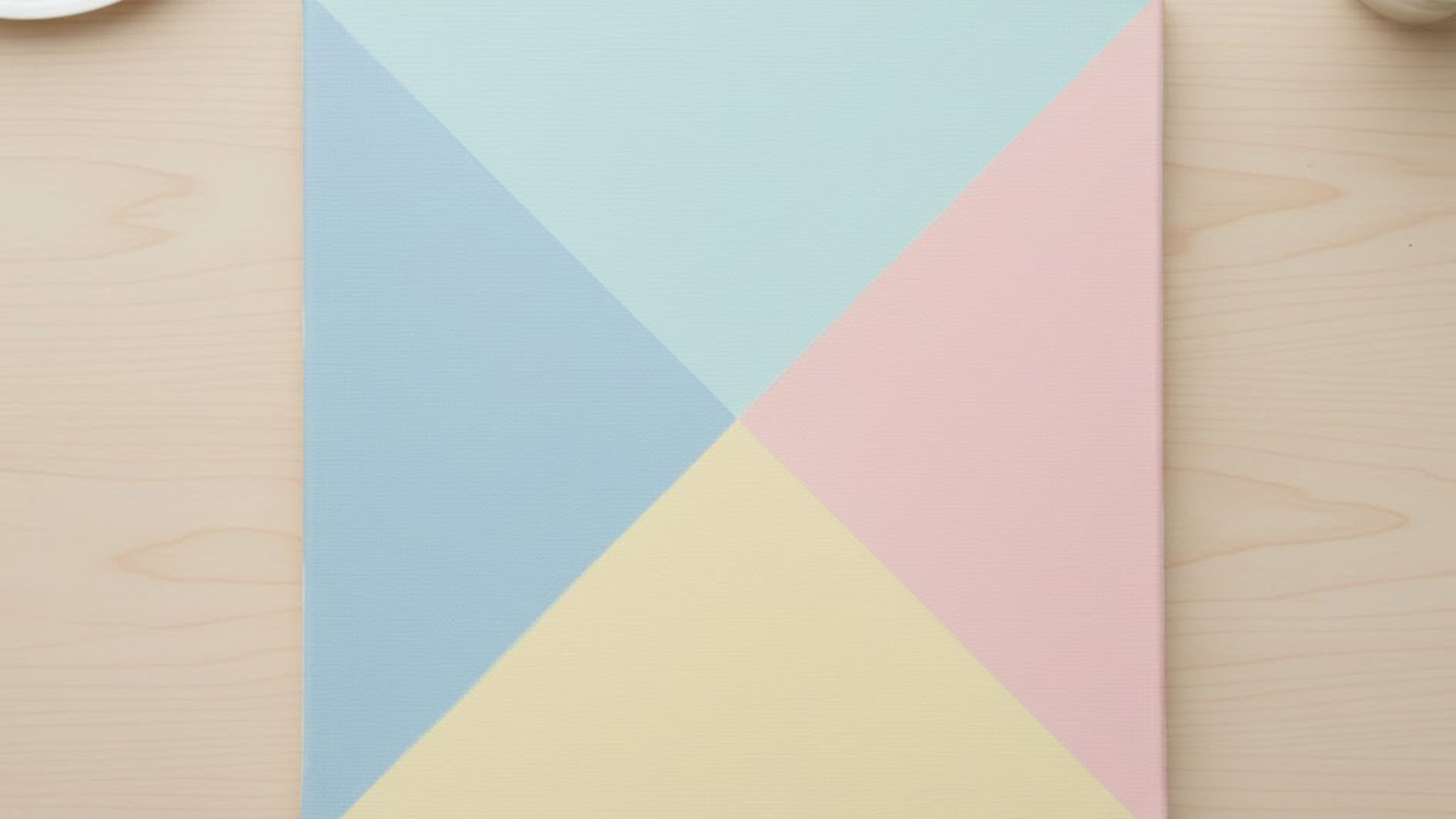
Triangles overlap and intersect across the canvas in complementary color pairs. Blue triangles might cross over orange ones, or purple over yellow combinations. The overlapping areas create new colors where shapes meet and mix.
Geometric precision meets artistic expression in this contemporary design. Sharp angles and bold colors make a confident statement on any wall.
18. Simple Cup of Coffee
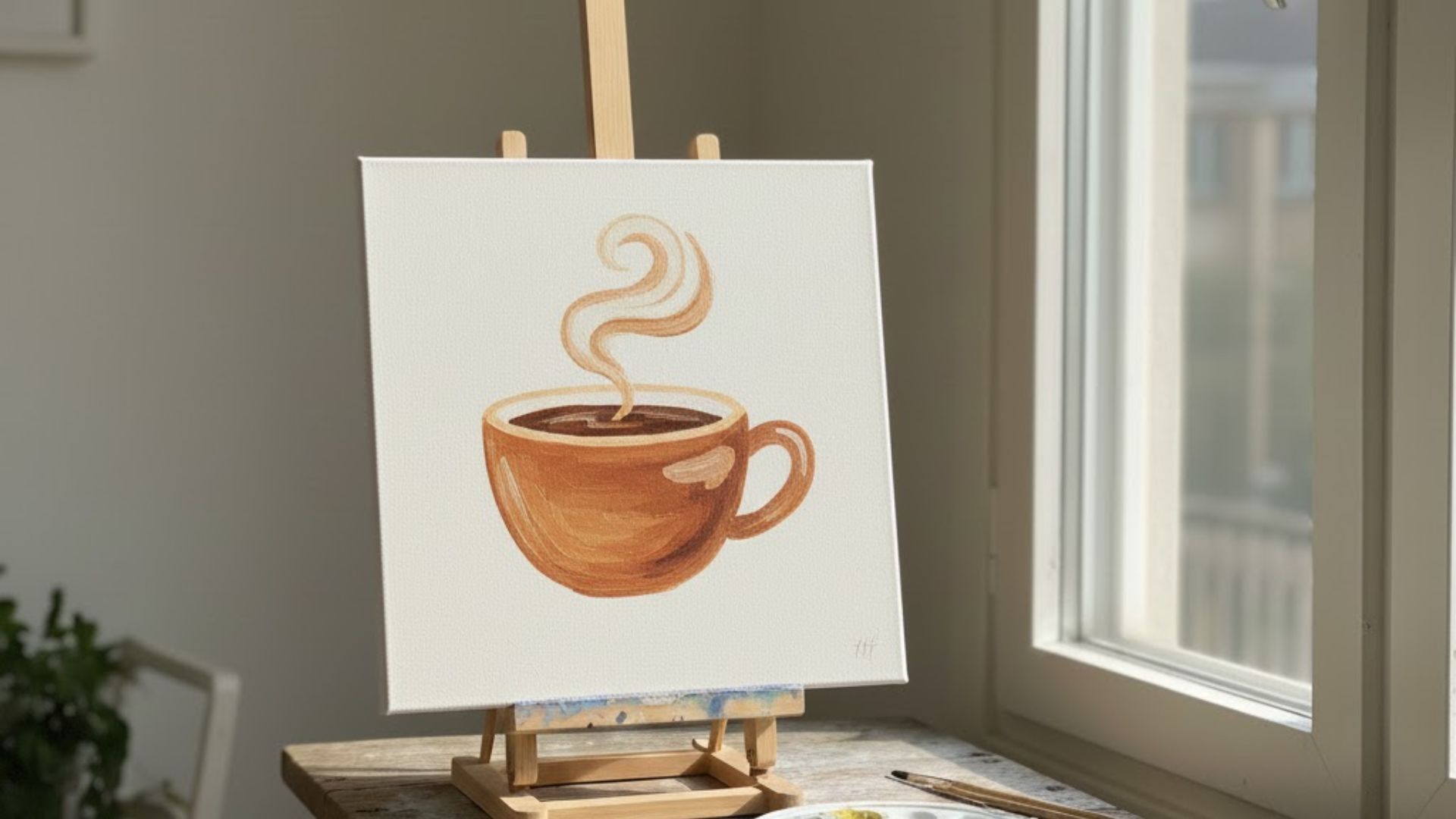
A minimalist coffee mug sits at the center with light steam swirls rising upward. The mug itself uses just a few brushstrokes to suggest its shape. Curving lines above indicate hot steam dancing into the air.
Warm browns and creams dominate the cozy color palette. This painting practically makes you smell fresh coffee every time you see it.
19. Fruit Bowl
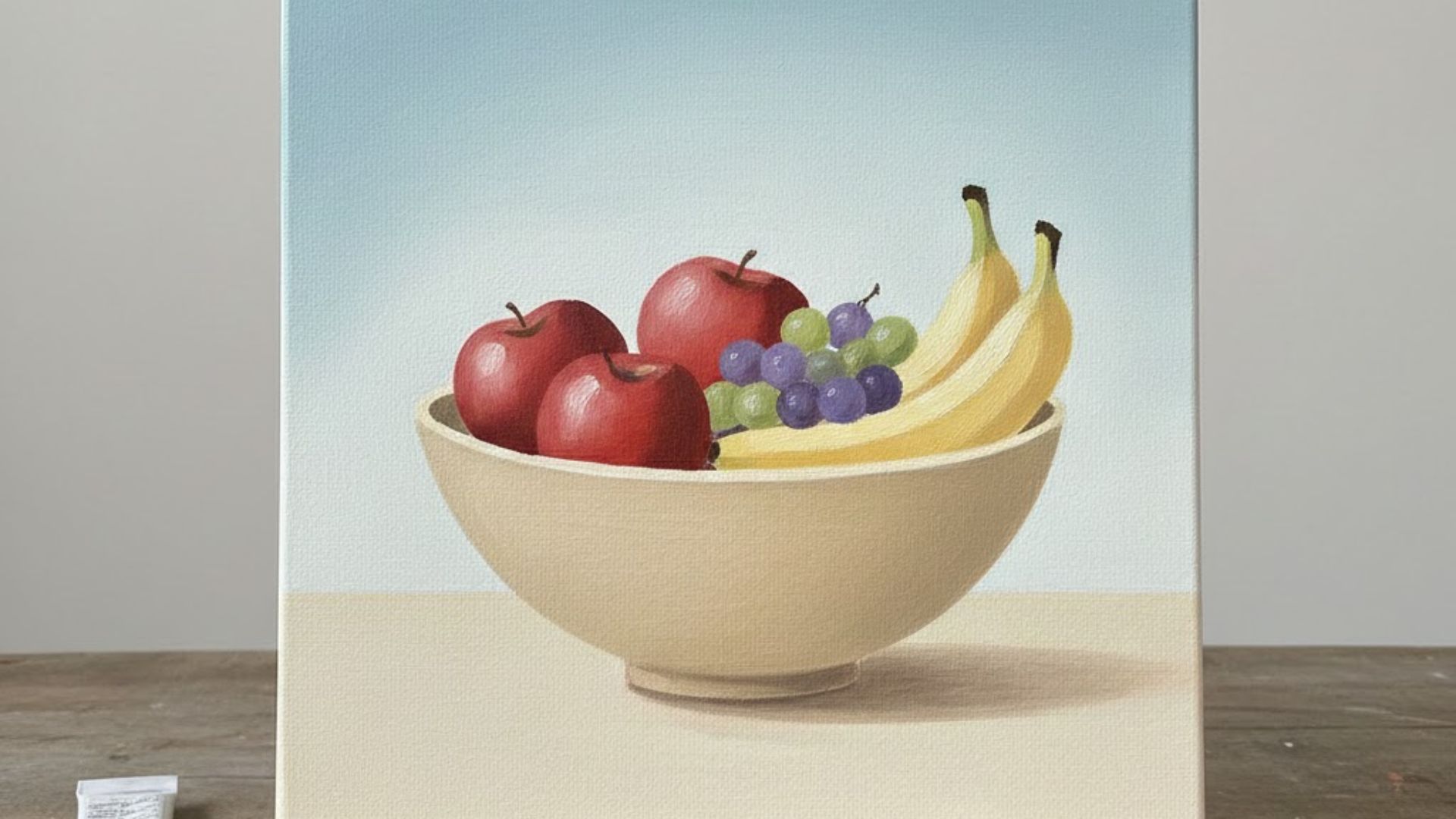
Basic fruit shapes pile into a simple bowl for a classic still life. Apples, bananas, and grapes get simplified into their most recognizable forms. Each fruit needs just enough detail to be identifiable without going overboard.
The composition feels balanced and naturally appealing to the eye. It brings that timeless kitchen art feeling without requiring perfect realism.
20. Wooden Texture
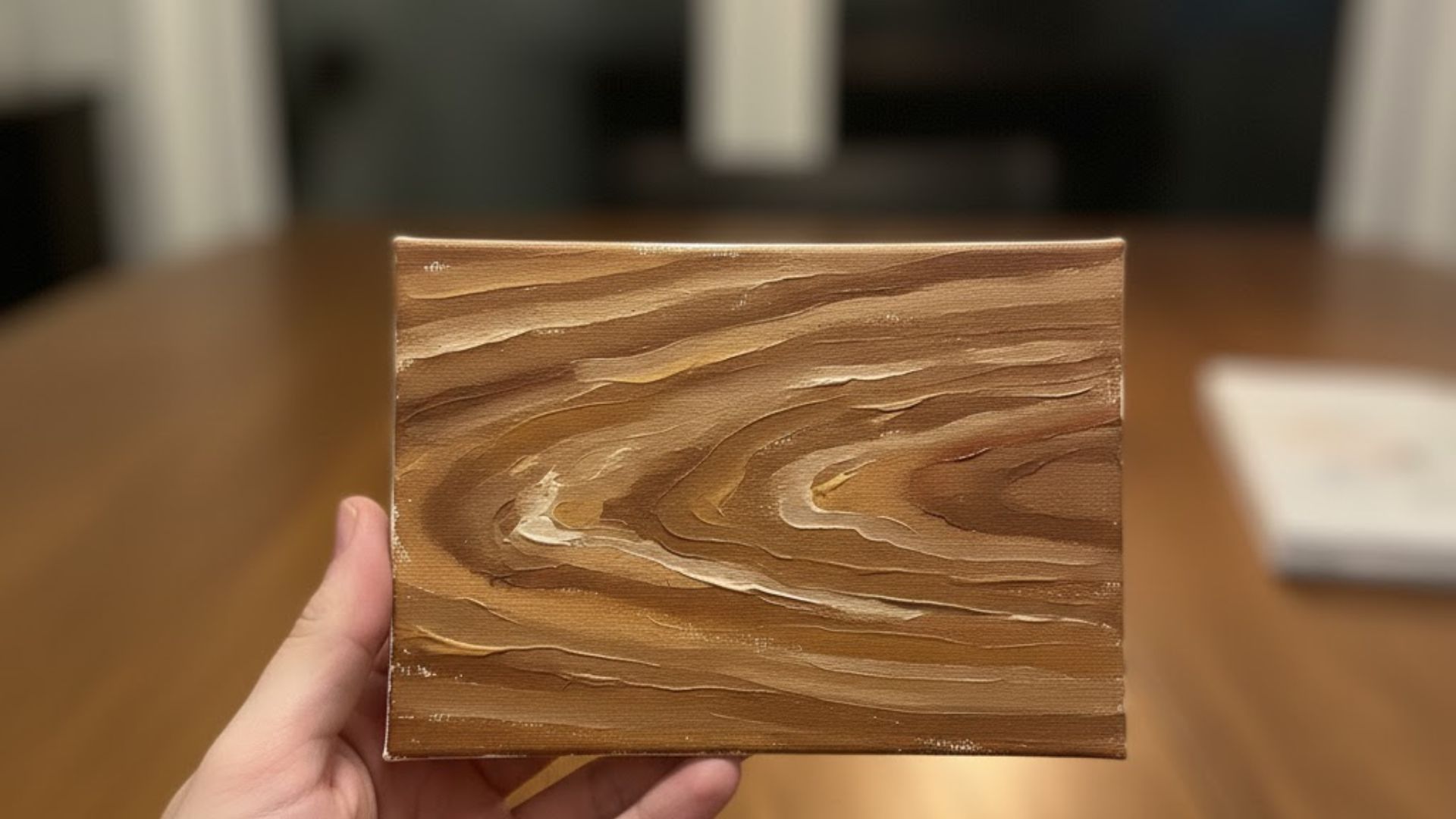
I spent way too long perfecting the wood grain technique on this one. Light browns, dark browns, and everything in between get mixed in long strokes.
The grain flows in natural, slightly wavy lines as real wood does. Subtle variations in tone create depth and authentic texture. Once you nail this technique, you can add wooden elements to any future painting.
21. Raindrops on Glass
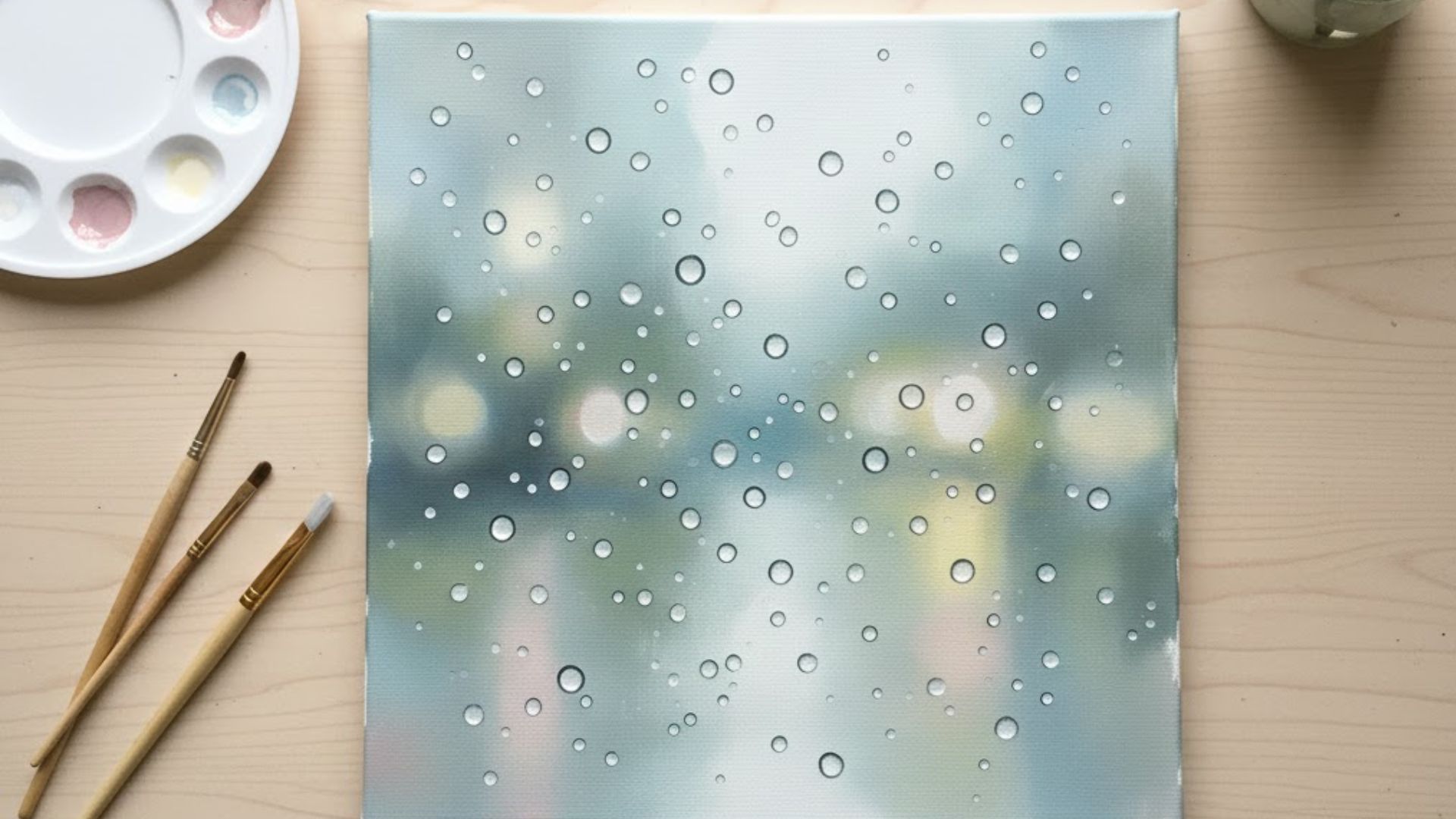
Transparent droplets cling to an invisible glass surface with blurred colors behind them. Each raindrop catches and distorts the background colors in its curved surface.
The background stays intentionally fuzzy to mimic looking through wet glass. Blues, greens, and grays suggest a rainy day atmosphere. The effect feels peaceful, like watching rain from a cozy indoor spot.
22. Autumn Leaves
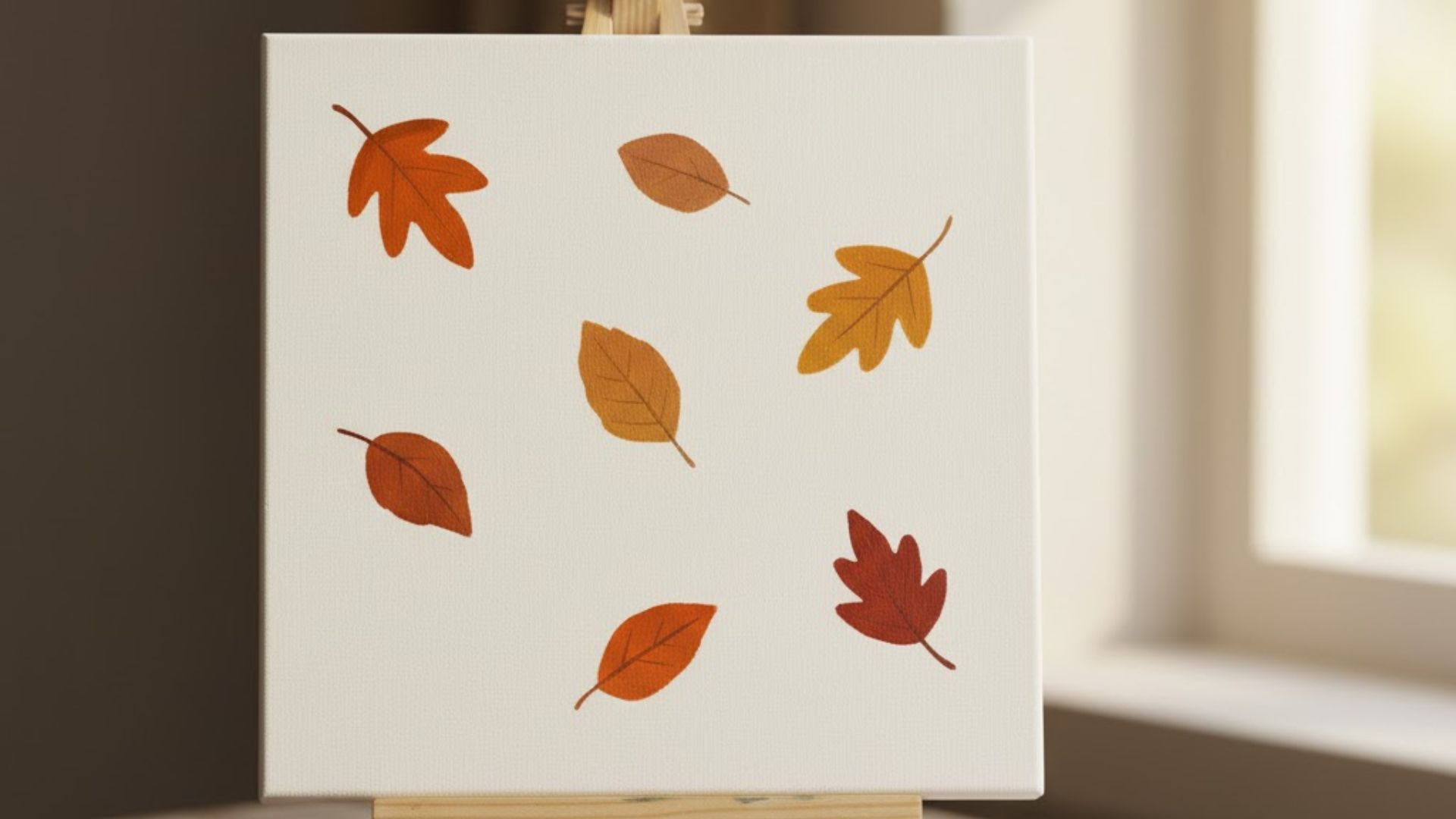
Falling leaves drift across the canvas in warm reds, oranges, and yellows. Each leaf is a simple shape without intricate vein details or perfect symmetry. Some leaves appear closer while others fade toward the background.
The warm color palette instantly evokes crisp fall days. It captures that brief, beautiful moment when trees shed their summer green.
23. Polaroid-style Landscape
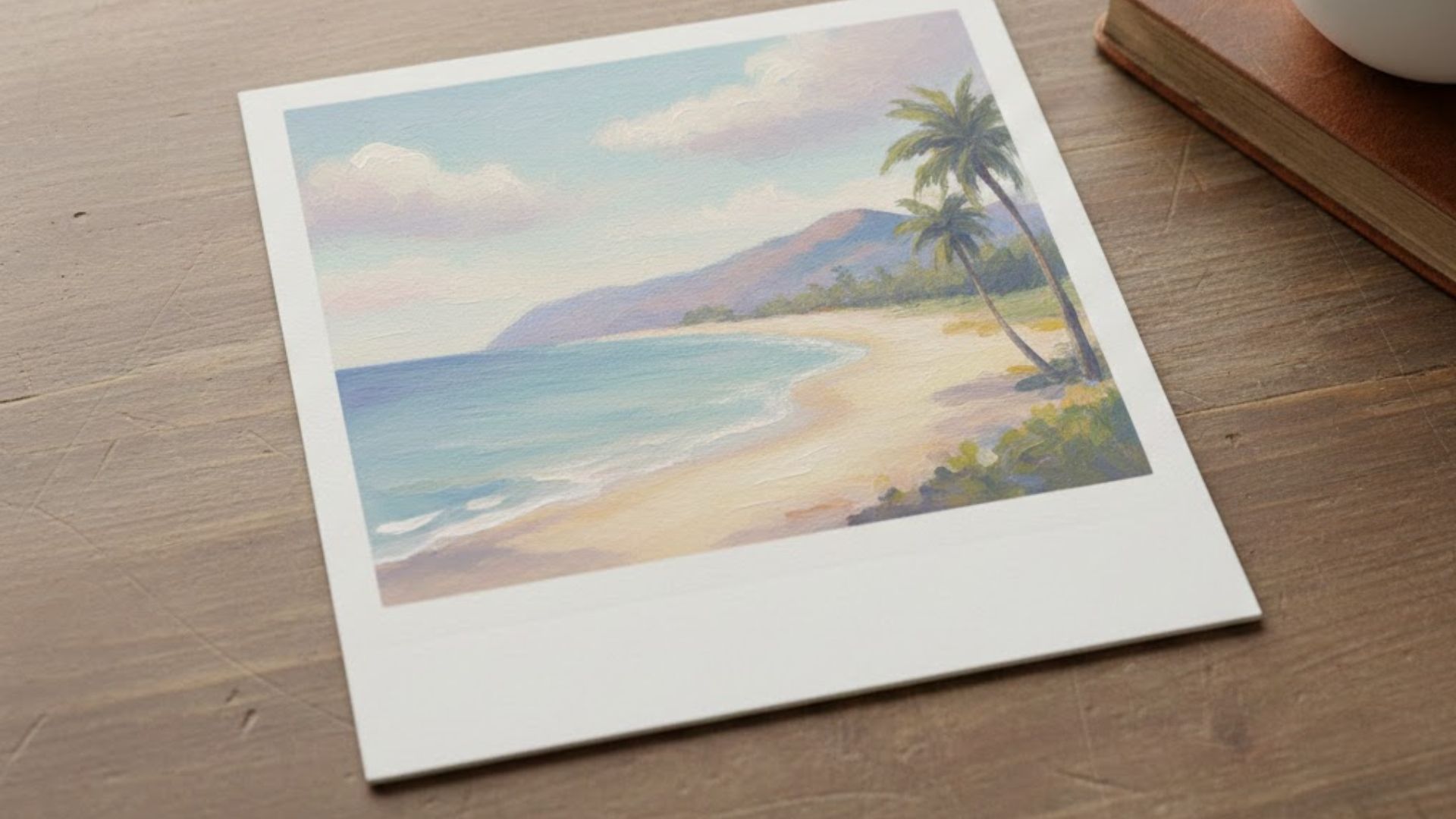
This painting mimics the square format and vintage feel of old Polaroid photos. A small scenic moment gets captured within that iconic white-bordered square. The colors might look slightly faded or warm-toned, as aged photographs do.
Maybe it’s a tiny mountain view or a simple tree against the sky. The nostalgic format makes even simple scenes feel special and memory-like.
24. Animal Paw Print
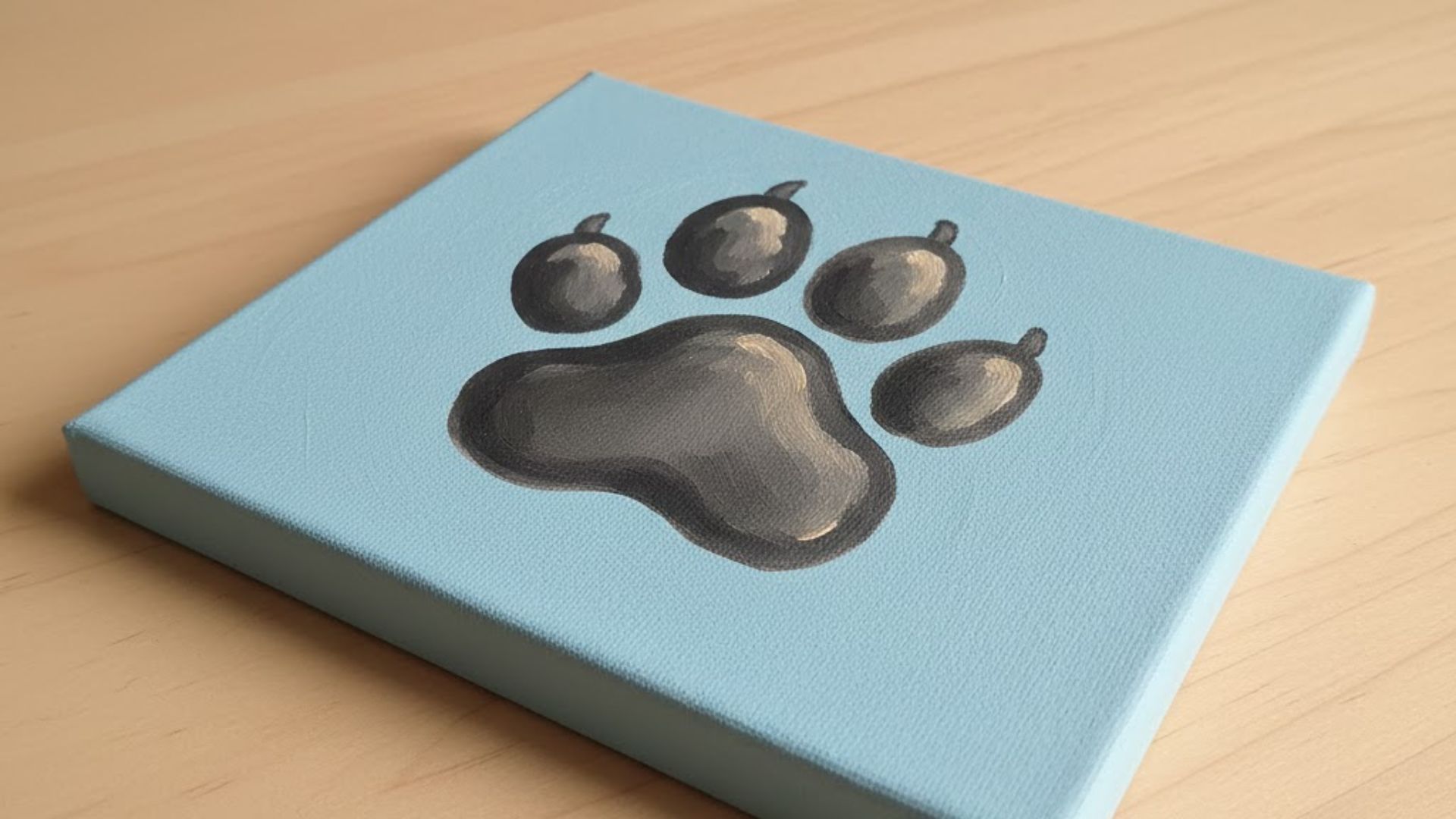
A single paw print sits boldly in the center with soft colors radiating around it. The print itself could belong to a dog, cat, or bear, depending on size and shape.
Gentle washes of color create a halo effect around the central print. It’s playful and perfect for animal lovers or kids’ spaces. The simplicity makes it approachable yet instantly recognizable.
25. Simple Vase of Flowers
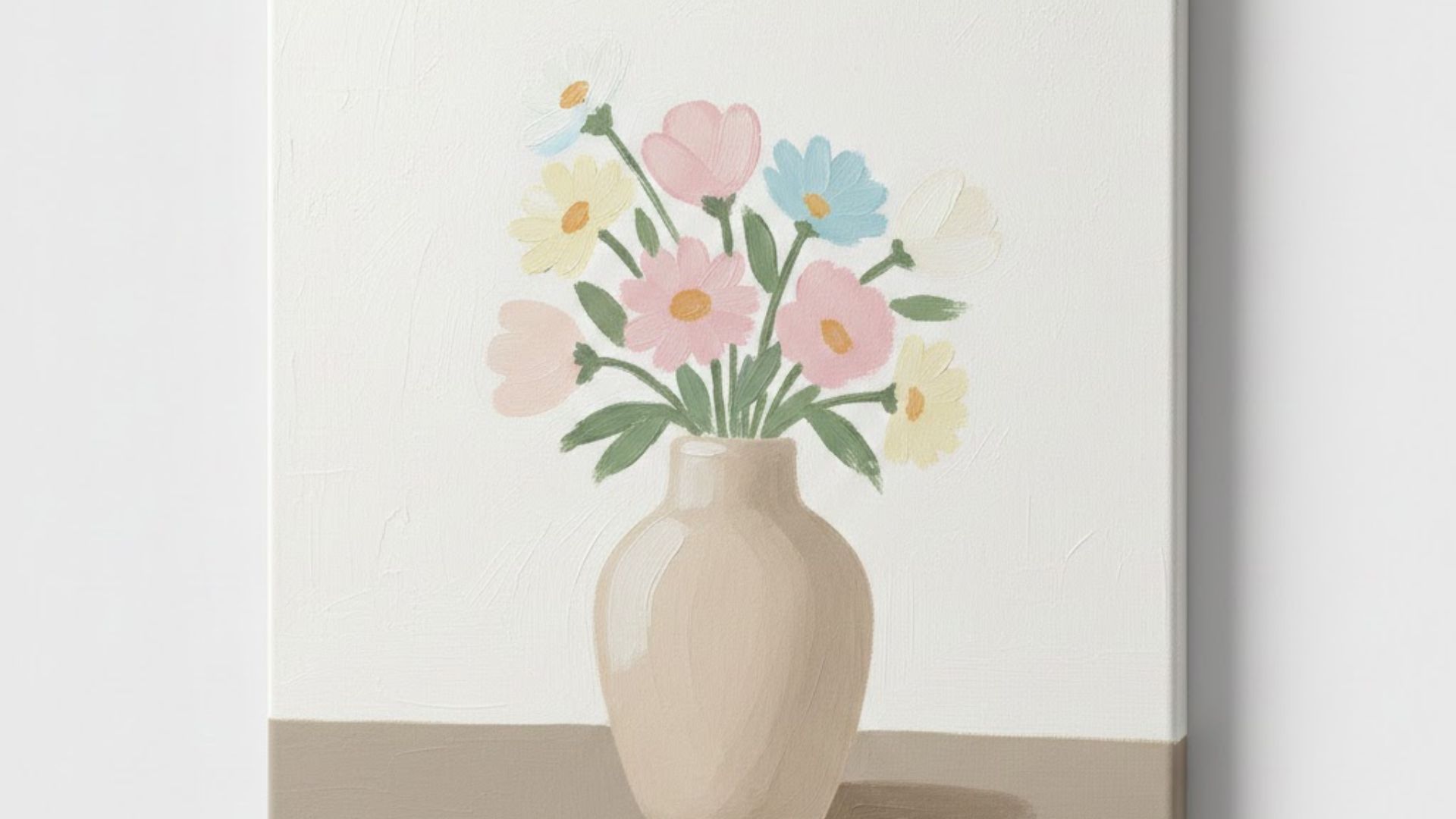
My friend painted this after buying fresh flowers from the farmer’s market. A minimal vase holds a small bouquet painted with loose, soft brushstrokes. The flowers don’t need botanical accuracy, just suggested shapes and colors.
Stems disappear into the vase with just a few green lines. The gentle, impressionistic approach creates a calm, happy feeling.
26. Horizon Line and Ocean Waves
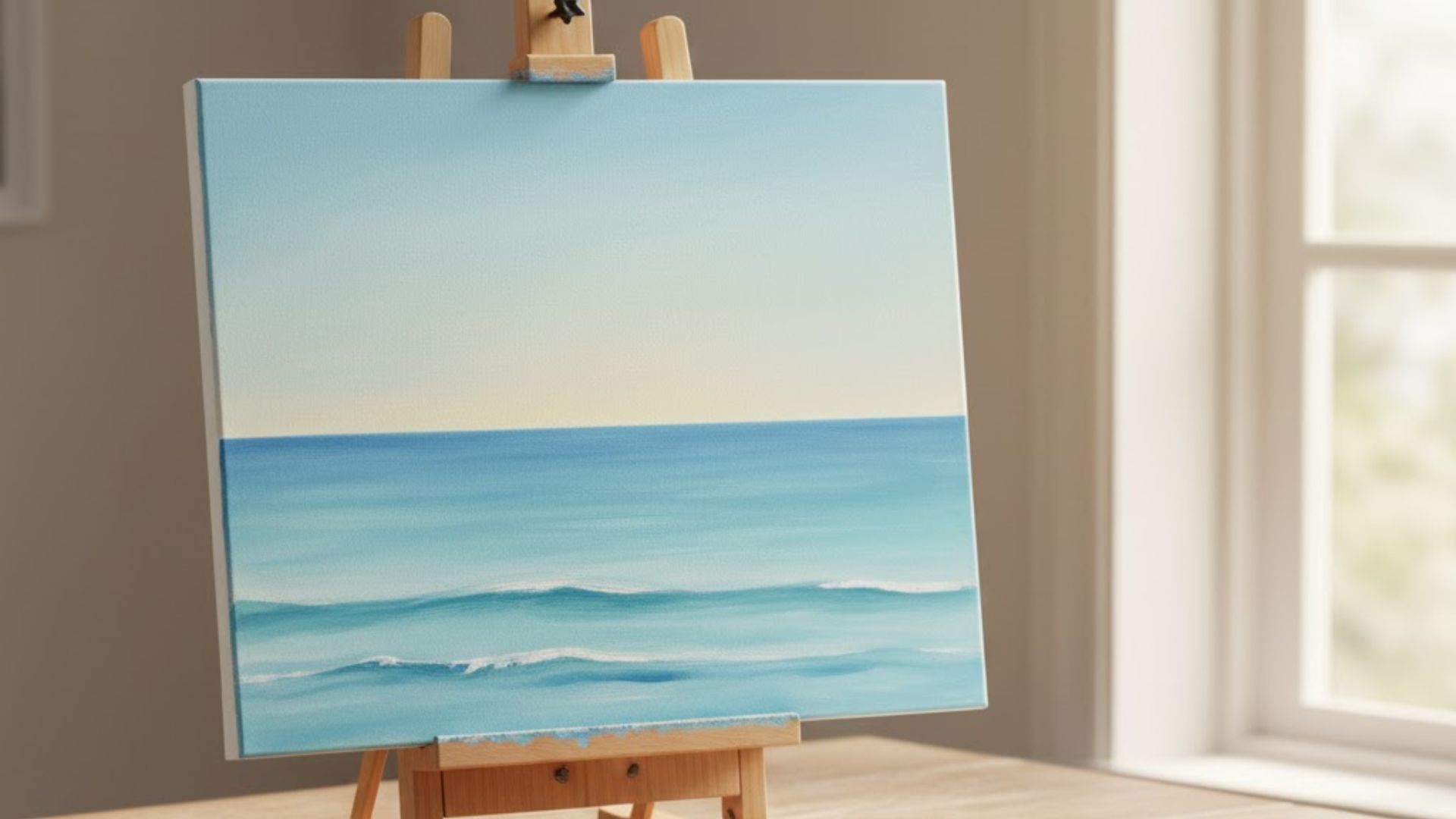
A straight horizon line divides sky from sea in this peaceful composition. Gentle waves roll toward an invisible shore with simple curved lines. Blues dominate but shift in tone from light sky to deeper water.
The minimalist approach captures ocean serenity without complicated details. It brings that beach vacation feeling home with you.
27. Abstract Face with Minimal Features
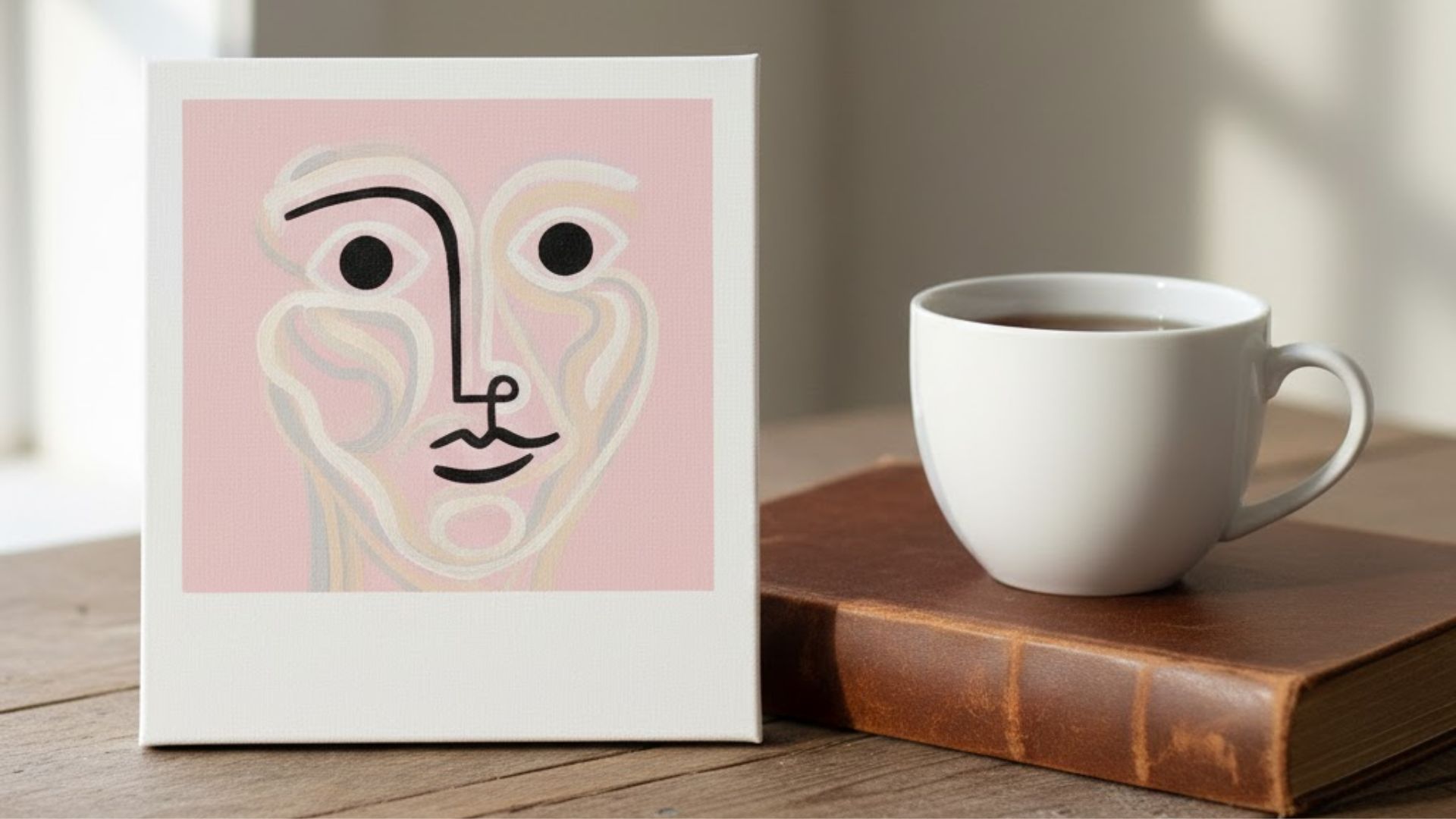
Lines and soft shapes suggest a human face without traditional realism. Maybe two curves for eyes, a line for a nose, and another for lips. The face emerges from abstract elements rather than careful portrait work.
Colors can be natural skin tones or completely imaginative and wild. This style feels artistic and expressive while remaining wonderfully simple.
28. Mountain Reflection in a Lake
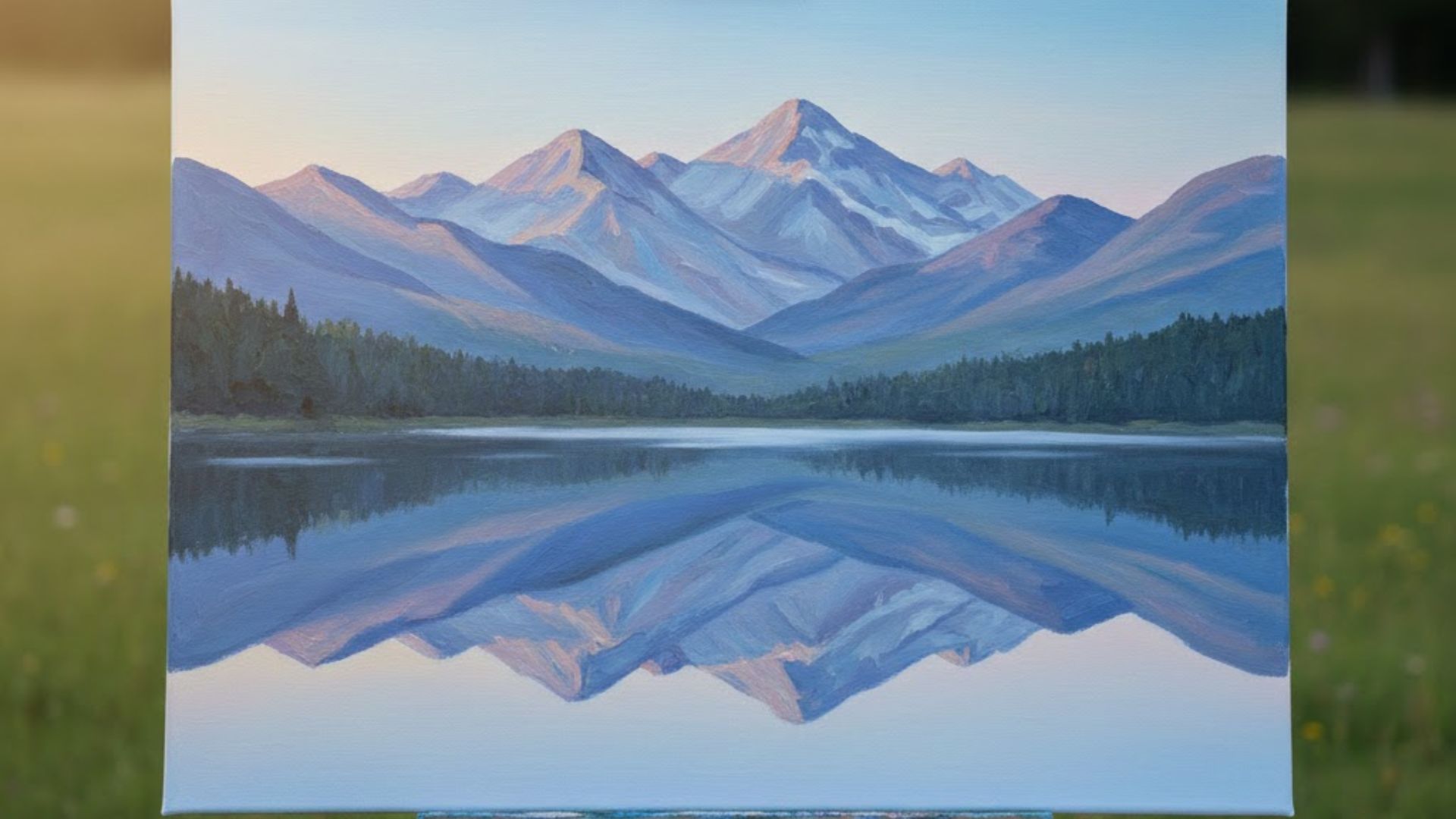
Majestic mountains rise along the top half while their mirror image appears below. A perfectly still lake creates that flawless reflection effect in the bottom portion. The symmetry between the top and bottom halves makes the composition naturally balanced.
Subtle color shifts between the mountain and the reflection add realistic depth. It captures nature’s ability to create perfect beauty in stillness.
29. Pine Tree Forest
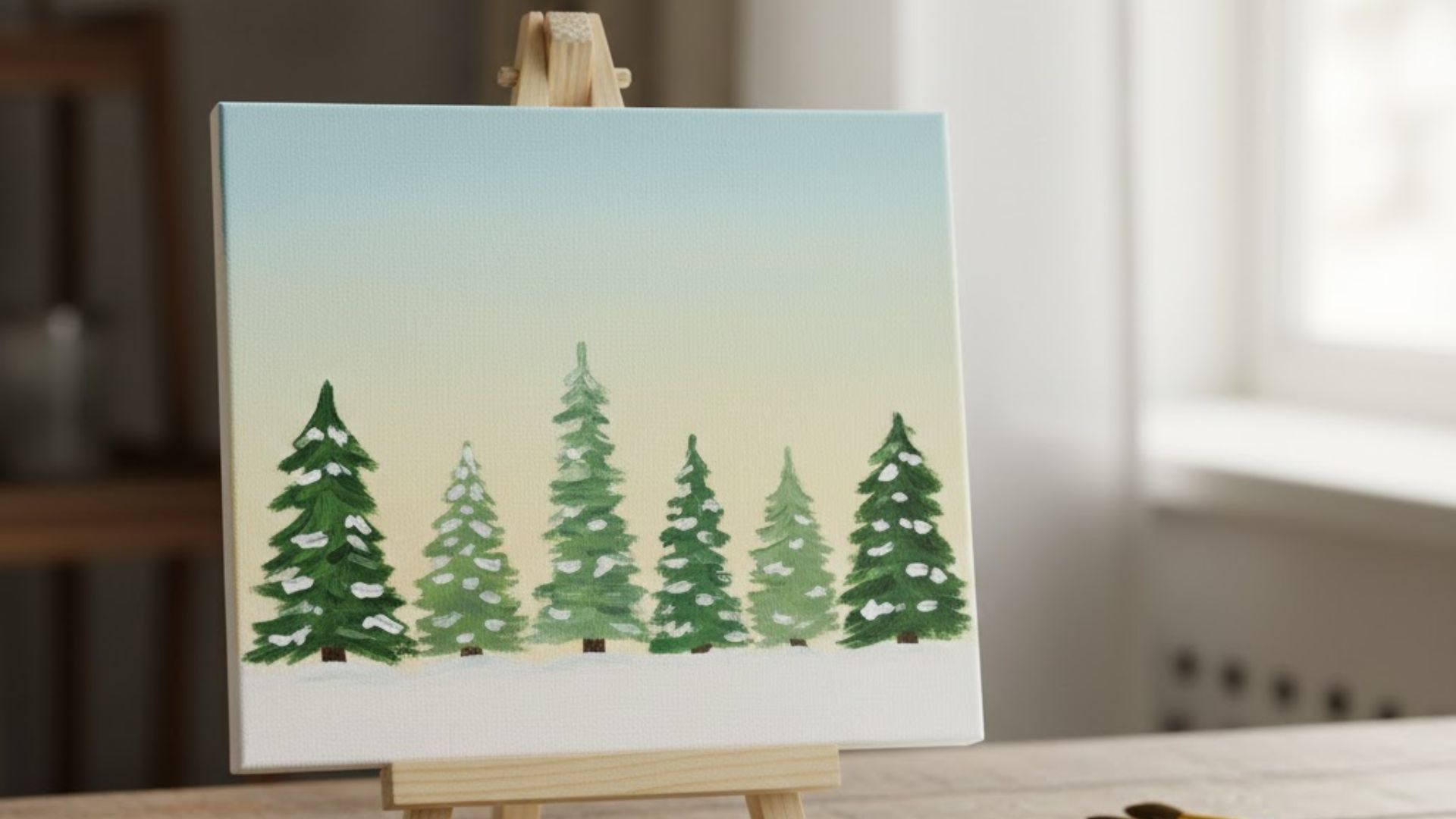
Simple triangular pine trees stand in a row like soldiers against the gradient sky. Each tree is basically a green triangle with a brown trunk underneath. The sky behind them shifts from light to dark or warm to cool.
Repetition of the same basic shape easily creates a forest feeling. The minimalist approach to trees makes this surprisingly quick to complete.
30. Pineapple Shape
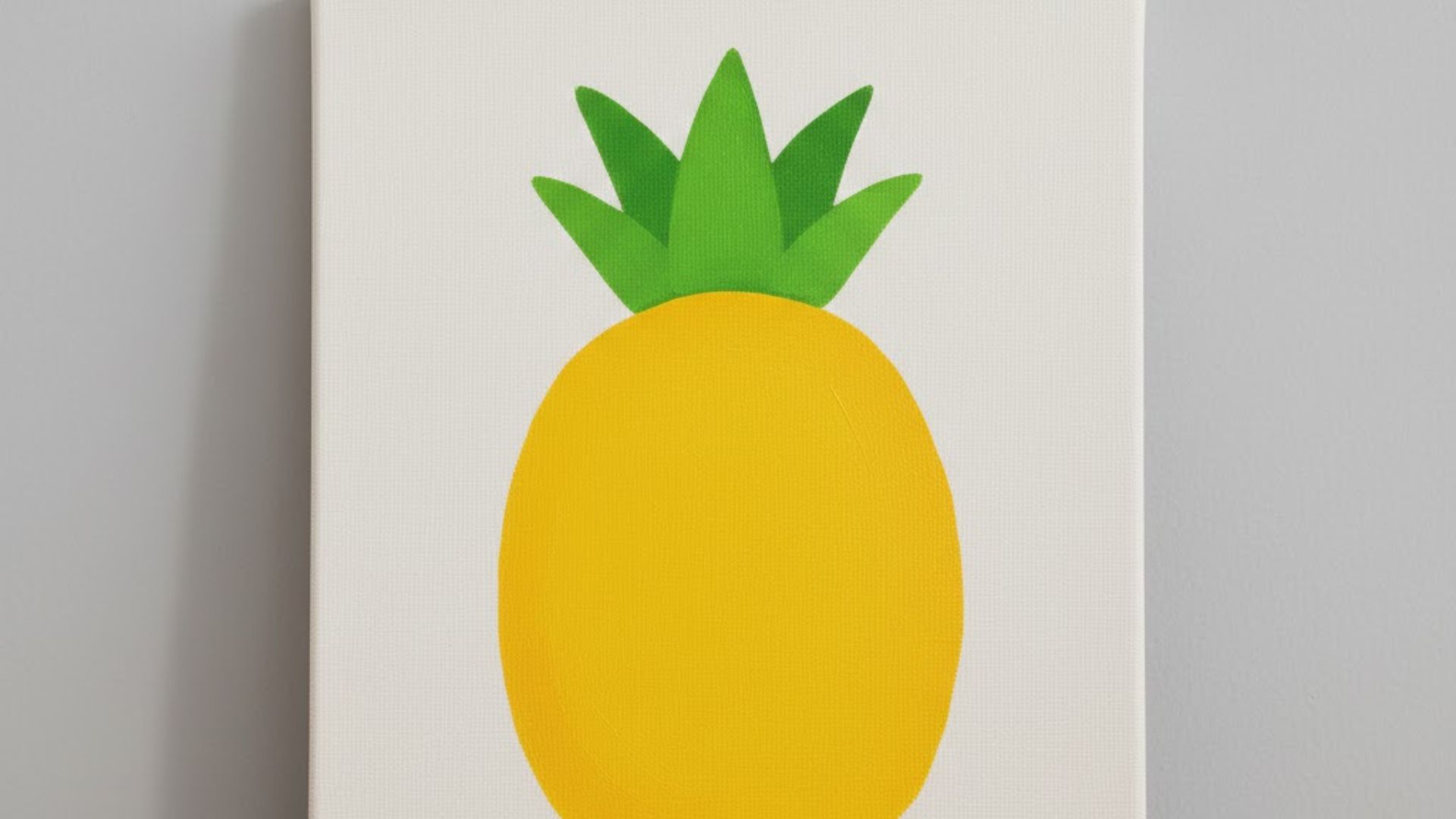
A basic pineapple outline gets filled with bright, bold colors, suggesting texture. The diamond pattern across the fruit doesn’t need perfect precision to read correctly.
Yellows and golds make up the body, while green spikes crown the top. Some painters add small details while others keep it super graphic. Either way, the tropical vibe comes through loud and clear.
31. Bird in Flight
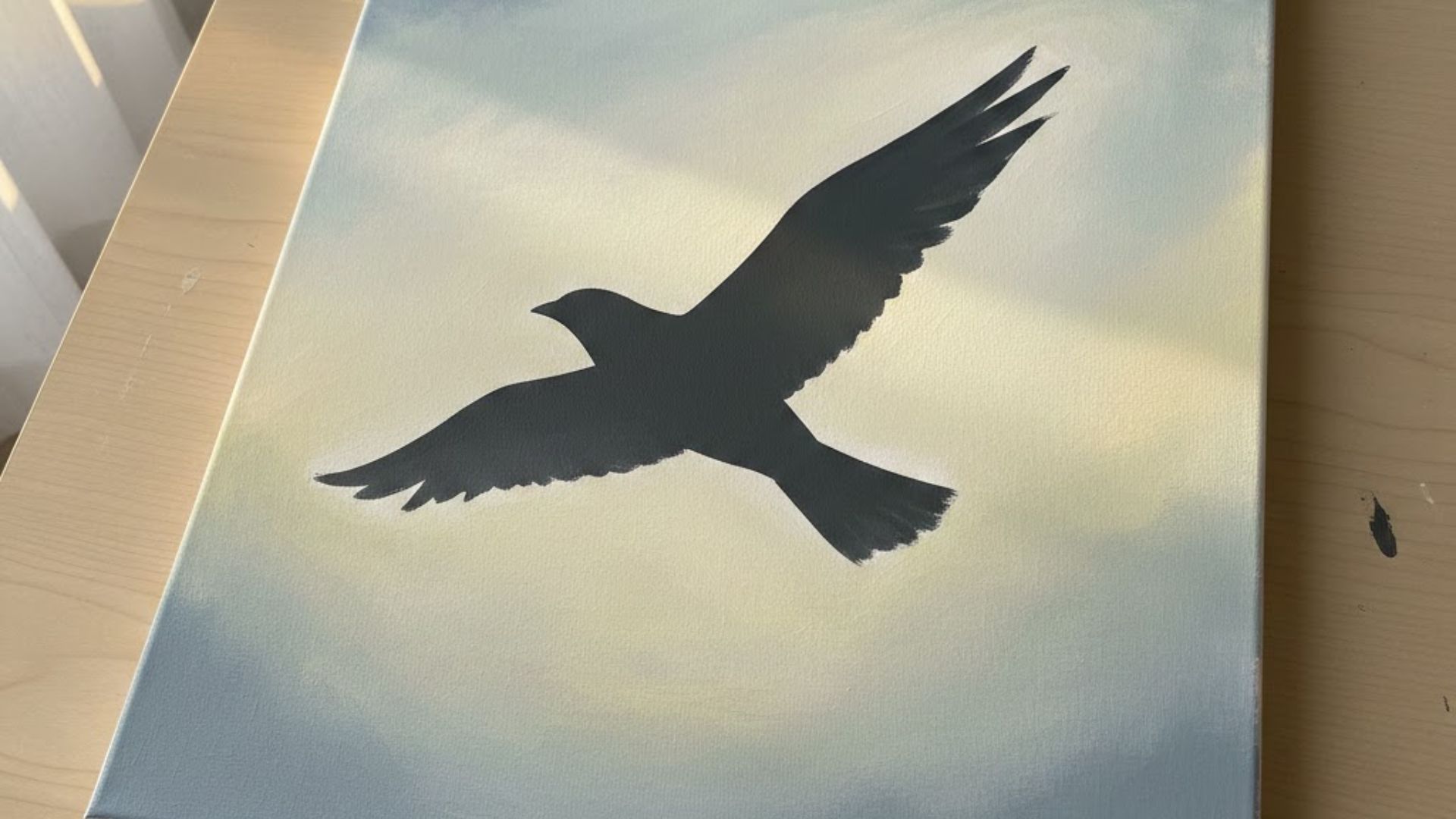
A single bird soars across the canvas in solid black silhouette form. Wings spread wide mid-flight, capturing that graceful moment of motion frozen in time. The background stays smooth and straightforward, maybe a soft blue or warm sunset tone.
No feather details are needed since the recognizable shape tells the whole story. This minimal approach creates surprising classiness and freedom in one image.
32. Starry Night Sky
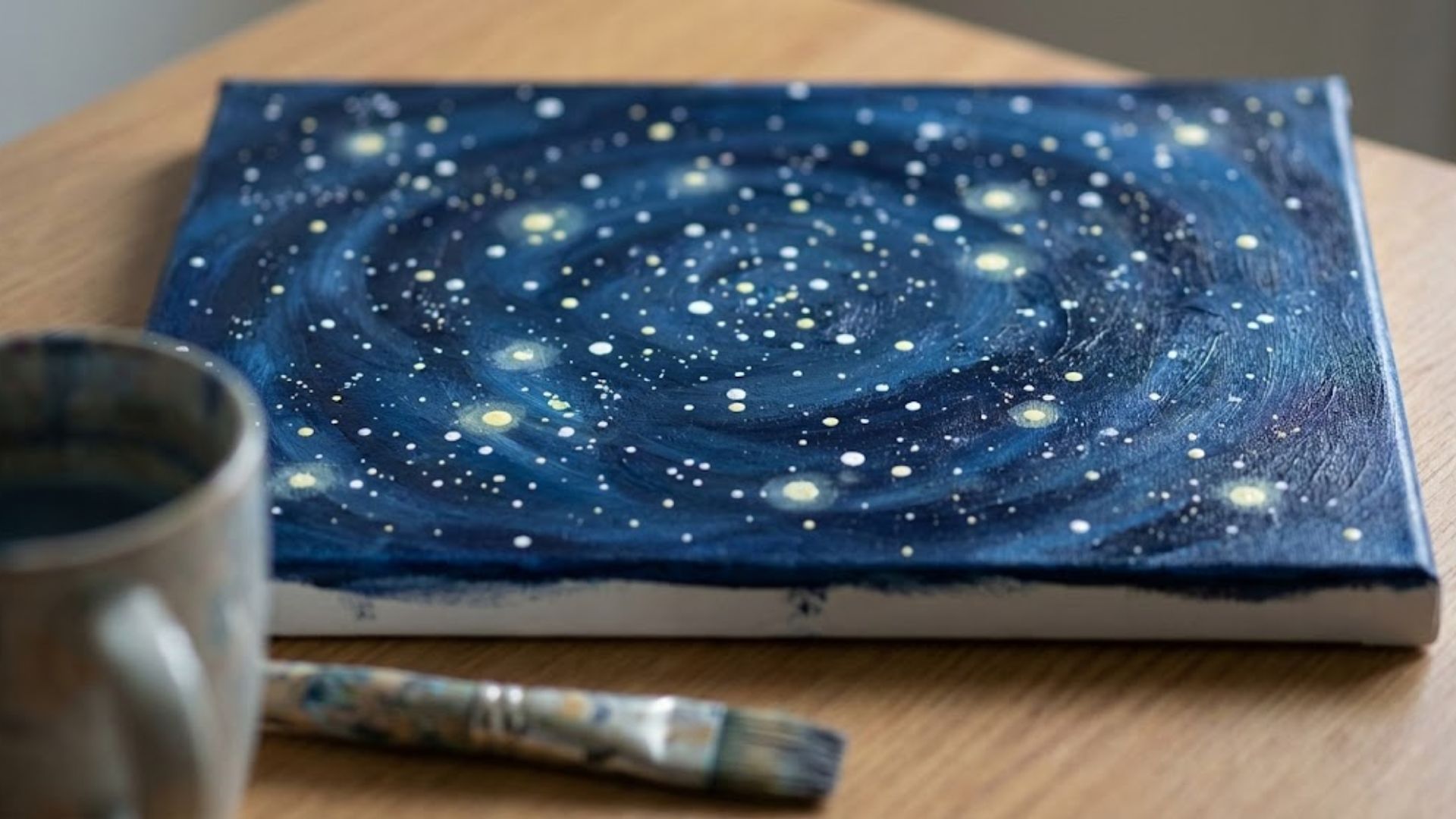
Countless stars get scattered across a deep, dark sky background. Each star is just a small dot or tiny sparkle of white or yellow paint. Some stars appear brighter while others fade into the darkness more subtly.
The random placement mimics how real stars fill the night sky naturally. It brings that peaceful, awe-inspiring feeling of stargazing right onto your wall.
33. Simple Cupcake
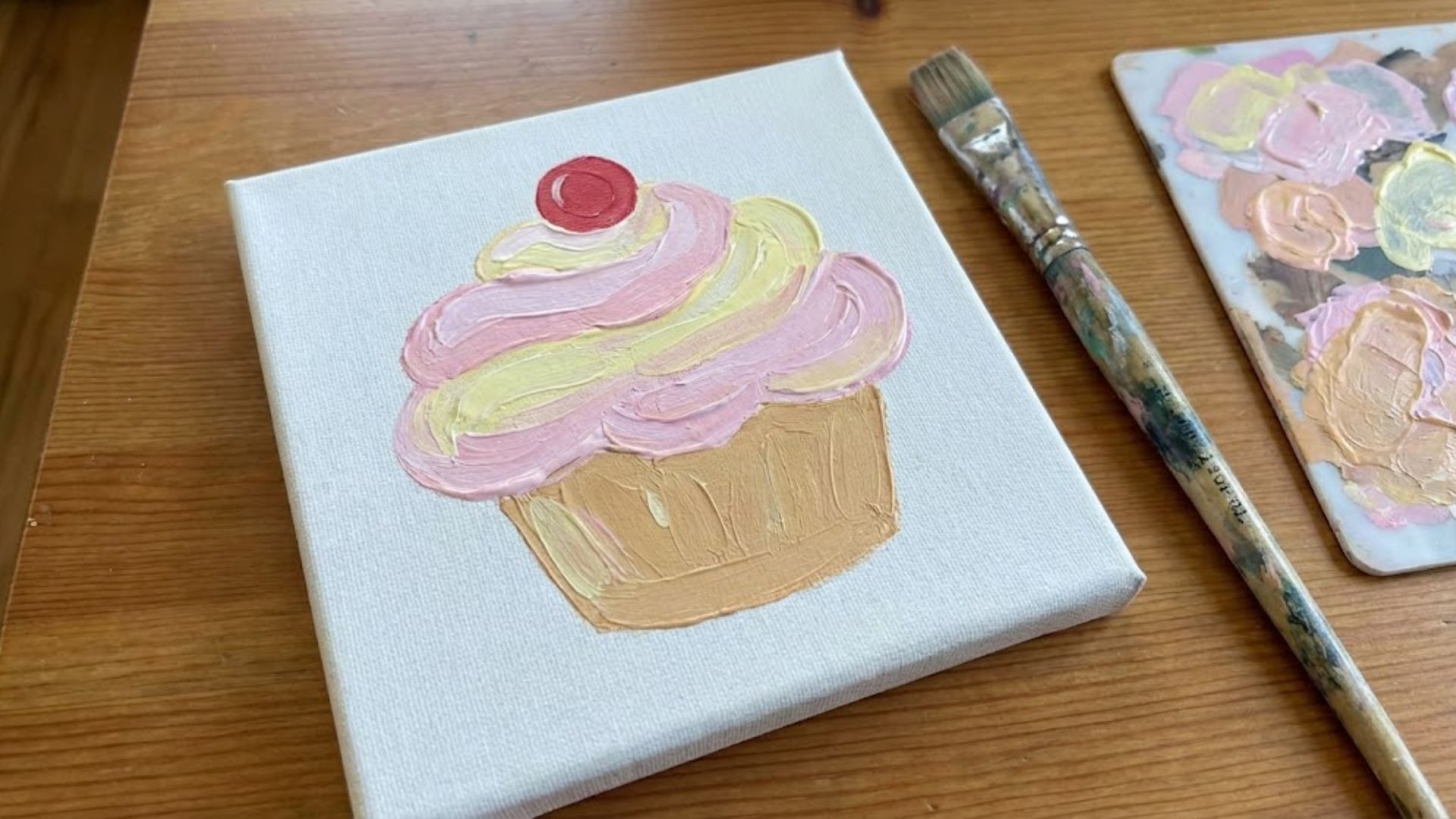
Sarah and I had this debate about whether the cherry should be red or pink. A cute cupcake sits with perfectly swirled frosting piled on top in soft curves. That classic cherry gets placed right at the peak of the frosting swirl.
The cupcake wrapper uses simple lines to suggest its ridged texture. Sweet colors like pastels or bright primary shades make it feel cheerful and delicious-looking.
34. Simple Boat on Water
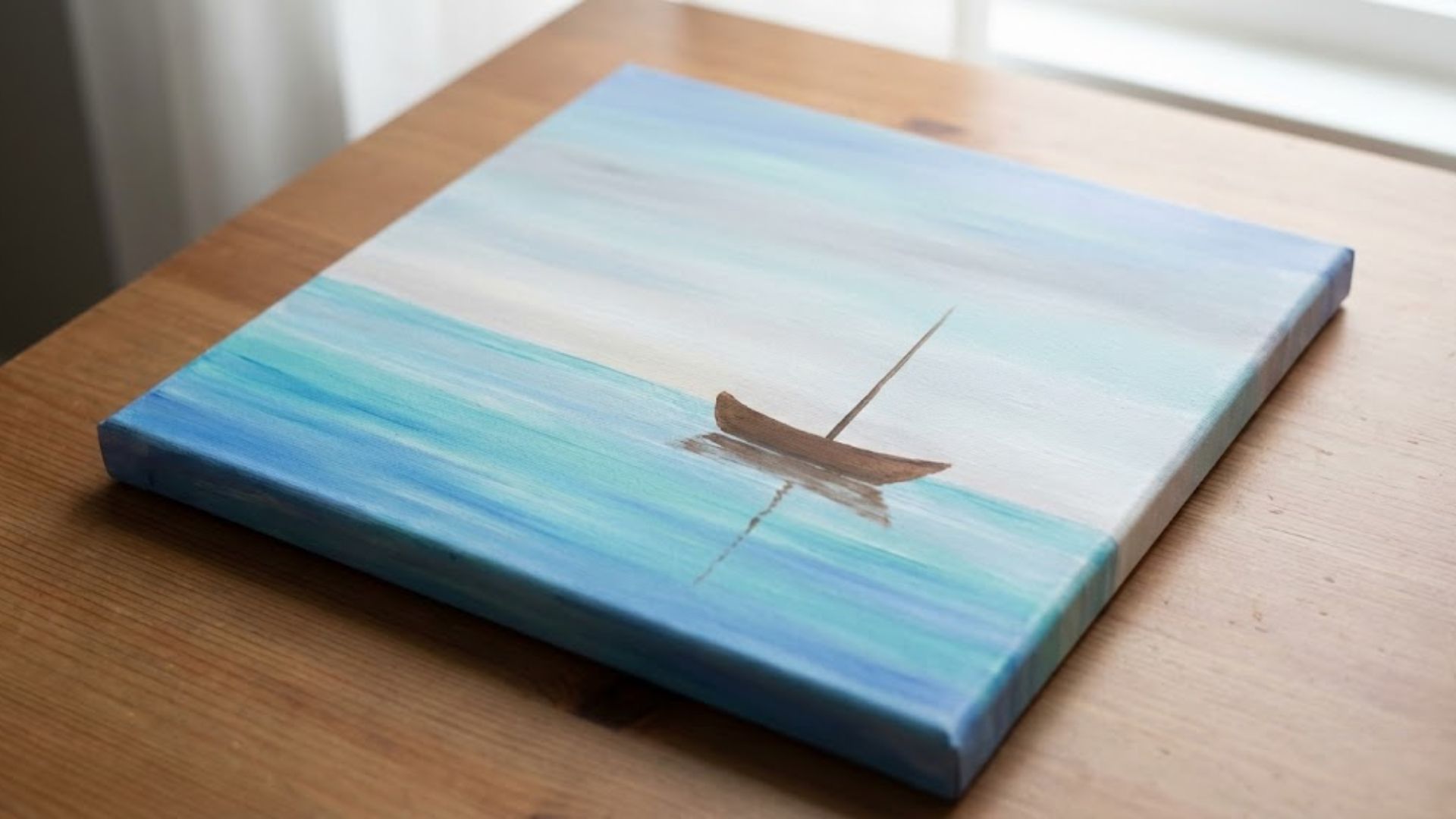
A small boat floats peacefully on calm water with gentle reflections below. The boat itself needs just basic shapes to suggest its hull and form. Soft ripples in the water distort the boat’s reflection in subtle ways.
Blues and whites dominate the tranquil color scheme throughout. The whole scene radiates quiet simplicity and peaceful solitude.
35. Cactus in a Pot
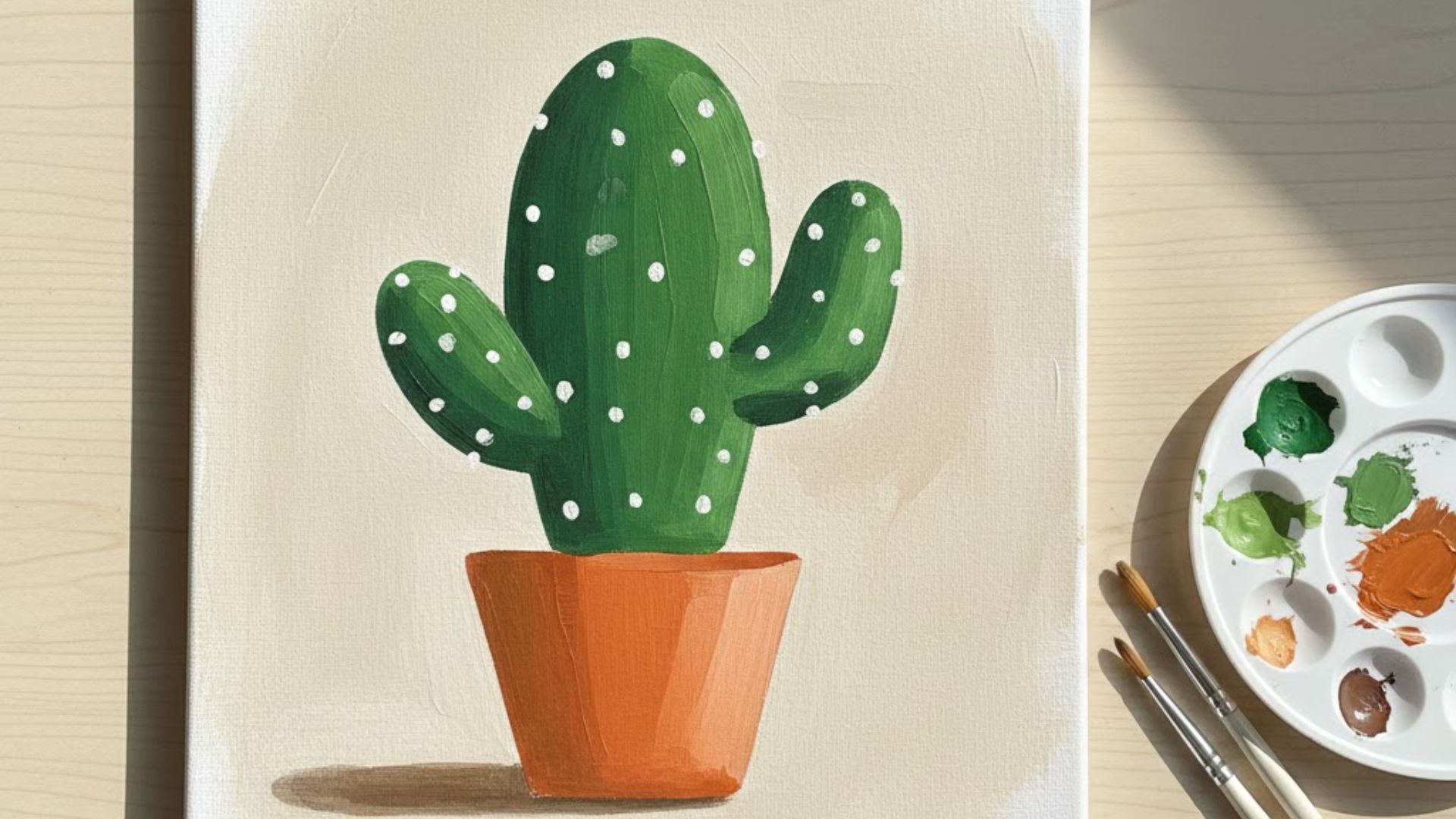
A simple cactus stands upright in a plain terracotta-style pot below. The cactus texture gets suggested through small lines or dots representing spines. Maybe the cactus has one or two arms reaching out to the sides.
The pot uses basic earth tones and simple shading for dimension. Desert vibes come through without needing a complicated southwestern landscape background.
Tips for Beginner Painters to Improve Their Acrylic Art
I wish someone had told me these things when I first started painting with acrylics. They would’ve saved me from so many frustrating moments and wasted canvases. Here’s what I learned along the way:
- Work with Light Layers – Start with thin layers and gradually build up your painting instead of loading too much paint at once.
- Practice Color Mixing – Experiment with mixing primary colors to create new shades, and use white or black to adjust the tone.
- Don’t Fear Mistakes – Treat every mistake as a chance to learn something new since acrylics let you paint over errors easily.
- Keep Your Palette Organized – Arrange your colors neatly on your palette and maintain a tidy workspace for smoother painting sessions.
These habits might feel small, but they really add up over time. The more you paint, the more natural these practices become.
Final Thoughts
Simple painting ideas prove that art doesn’t have to be complicated or intimidating at all. You’ve got plenty of projects now to keep you busy and excited about painting.
Start with whatever catches your eye and don’t worry about making it perfect. Every brushstroke teaches you something, even the messy ones.
I still go back to these basic ideas when I need inspiration or just want to relax. Your painting journey is yours alone, so enjoy every moment of it.
The canvas is waiting for you to bring it to life. Which painting idea will you try first? Drop a comment below and let me know!