


Planning a whole home remodeling feels overwhelming when you’re staring at six-figure estimates. I get it, the numbers seem impossible to predict.
But here’s what contractors won’t tell you upfront: your budget blows up because of planning gaps, not because renovations are inherently expensive.
Most projects run $100–$300 per square foot, depending on scope, but that range means nothing without context.
I’m breaking down real costs, the factors that push prices higher or lower, and a bulletproof budgeting system that prevents overruns. With inflation still affecting materials and labor, guessing your numbers isn’t an option anymore.
How Much Does a Whole House Remodel Cost?
National averages give you a starting point, but remember, square footage alone won’t tell your story. Projects vary wildly based on scope, not just size.
| Home Size | Light Remodel ($100–$150/sq ft) | Mid-Range ($150–$250/sq ft) | High-End ($250–$350/sq ft) |
|---|---|---|---|
| 1,500 sq ft | $150,000–$225,000 | $225,000–$375,000 | $375,000–$525,000 |
| 2,000 sq ft | $200,000–$300,000 | $300,000–$500,000 | $500,000–$700,000 |
| 2,500 sq ft | $250,000–$375,000 | $375,000–$625,000 | $625,000–$875,000 |
| 3,000 sq ft | $300,000–$450,000 | $450,000–$750,000 | $750,000–$1,050,000 |
Light remodels keep existing layouts and upgrade systems. Mid-range adds some layout changes and better finishes.
High-end means custom everything. Your location, home age, and material choices can shift these numbers ±30% easily. Use these as checkpoints, not promises.
What Impacts the Cost of a Whole Home Remodel?
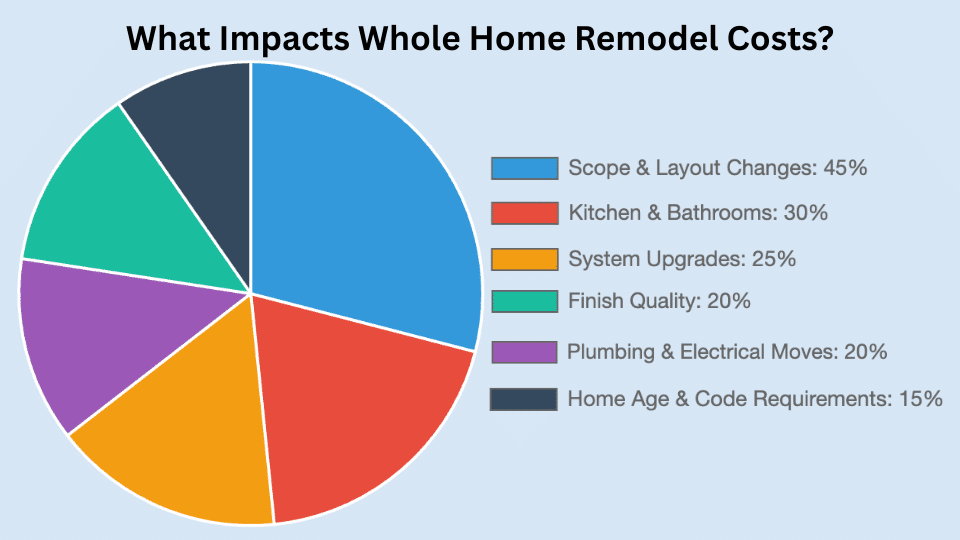
Seven factors control where your budget lands. Some you can manage, others you can’t, knowing the difference saves money.
1. Scope and Layout Changes
Moving walls, adding square footage, or changing room locations eats budget fast. Each structural change adds engineering fees, permits, and labor hours that compound quickly across your project timeline.
Keep the footprint and major systems where they are. Prioritize must-haves and challenge every “nice-to-have” requiring structural work. This is your biggest cost control lever.
2. Kitchen and Bathroom Count
These rooms cost more per square foot than any other space. Expect $25,000–$75,000 per bathroom and $50,000–$150,000+ per kitchen. The number in your project directly impacts your bottom line significantly.
You can’t reduce existing bathrooms easily, but you can phase work across multiple years to spread costs. Updating two bathrooms this year and one next year helps cash flow.
3. Plumbing and Electrical Moves
Every pipe or wire you relocate requires opening walls and rerouting systems. Moving a kitchen island with a sink adds $3,000–$8,000 just for plumbing. Electrical panel relocations cost even more with permits.
Keeping sinks, toilets, and panel locations where they are saves thousands. Design around existing infrastructure whenever possible. This decision alone can drop costs by 15% or more.
4. System Upgrades
HVAC, electrical panels, and water heaters over 20 years old often require replacement for code compliance. Budget $15,000–$40,000 for major system overhauls depending on home size and system complexity chosen.
You can’t skip aging system replacements, but you control efficiency levels. A basic furnace costs half what high-efficiency heat pumps do. Choose system tiers that match your budget and needs.
5. Home Age and Code Requirements
Older homes hiding knob-and-tube wiring, asbestos, or foundation issues force expensive upgrades. Once walls open, inspectors require current code compliance regardless of your original budget or scope plans.
Homes built before 1980 need an automatic 20% contingency for surprises. You can’t skip code work, but planning for it prevents mid-project financial panic and contractor disputes.
6. Finish Quality
Builder-grade cabinets, laminate counters, and vinyl floors cost 50-70% less than custom cabinetry, quartz, and hardwood. Finish selections create the widest price gap between identical layouts in similar-sized homes.
This is your biggest control lever. Pick three rooms for high-end finishes and go mid-range everywhere else. Most guests can’t distinguish quality in hallways or secondary spaces anyway.
7. Location and Labor Rates
Urban contractors charge $75–$150 per hour, while rural areas run $50–$85. Coastal markets cost 40% more than Midwest cities. Material delivery fees and permit costs also vary significantly by region and jurisdiction.
You can’t change your location, but timing helps. Winter brings lower contractor demand and better availability, creating negotiating room. Off-season scheduling can save 10-15% on labor costs.
How to Budget for a Whole House Remodel
Smart budgeting happens in stages. Skip one, and you’re guessing. Follow all six, and you’ll sleep through demo day without financial nightmares.
Step 1: Lock Your Scope First. Write every must-have before discussing money. Separate needs (safety, function) from wants (aesthetics). This stops mid-project upselling.
Step 2: Allocate by Priority Buckets. Kitchen: 25-30%. Bathrooms: 20-25%. Systems: 15-20%. Structure/permits: 10-15%. Finishes: 20-30%. Adjust based on scope.
Step 3: Build a 15-20% Contingency Fund. Hidden rot and code upgrades hit 80% of projects. Set money aside separately for genuine surprises only.
Step 4: Account for Soft Costs. Permits run 2-5%. Temporary housing: $5,000–$15,000. Design fees: 8-15%. These aren’t in construction bids.
Step 5: Compare Three Scope-Matched Quotes. Use identical scope documents. Compare line items, not bottom-line numbers. One bid might exclude demolition or trim.
Step 6: Create a Cash Flow Timeline. Map payments to milestones: 10% upfront, 40% midpoint, 40% completion, 10% walkthrough. Decide on a phasing strategy.
These six steps prevent budget chaos. Lock your numbers before signing contracts, and surprises become manageable instead of catastrophic.
Common Mistakes to Avoid and Their Fixes
| Issue | Fix |
|---|---|
| Chasing the Lowest Bid | Low quotes often mean missing work; demand itemized quotes showing labor, materials, and tasks. Compare line items, not totals. |
| Unrealistic Material Allowances | Visit showrooms before signing contracts. Pick actual products, then add 15% to prices for waste and installation complexity. |
| Scope Creep During Construction | “While walls are open, let’s add…” adds 30-50% markup for rescheduling and rush orders. Lock all decisions pre-construction. |
| Demolishing Before Selections Are Final | Order long-lead items (cabinets, tile, windows) 8-12 weeks before demo. Delays mean contractors move to other jobs and timelines collapse. |
| Ignoring Value Engineering | Find savings in aesthetics (paint vs wallpaper), not systems. Cheap HVAC or electrical systems create repair bills within years. |
Avoid these mistakes, and your budget stands a fighting chance. Most overruns come from preventable decisions, not bad luck.
The Bottom Line
I’ve walked you through the real numbers behind a whole house remodel, from $100–$300 per square foot ranges to the seven factors that control costs.
Your success doesn’t come from finding magical, cheap contractors. It comes from defining scope precisely, budgeting a 15-20% contingency automatically, and avoiding mistakes that sink projects before they start.
The difference between budget disasters and smooth renovations isn’t luck. It’s preparation.
Start today by writing your must-have list and getting three detailed, scope-matched quotes. Don’t demo a single wall until your numbers and scope are completely locked in writing.
What’s your biggest budget concern going into a project? Drop a comment below, I’d love to hear what’s keeping you up at night and help you work through it.