

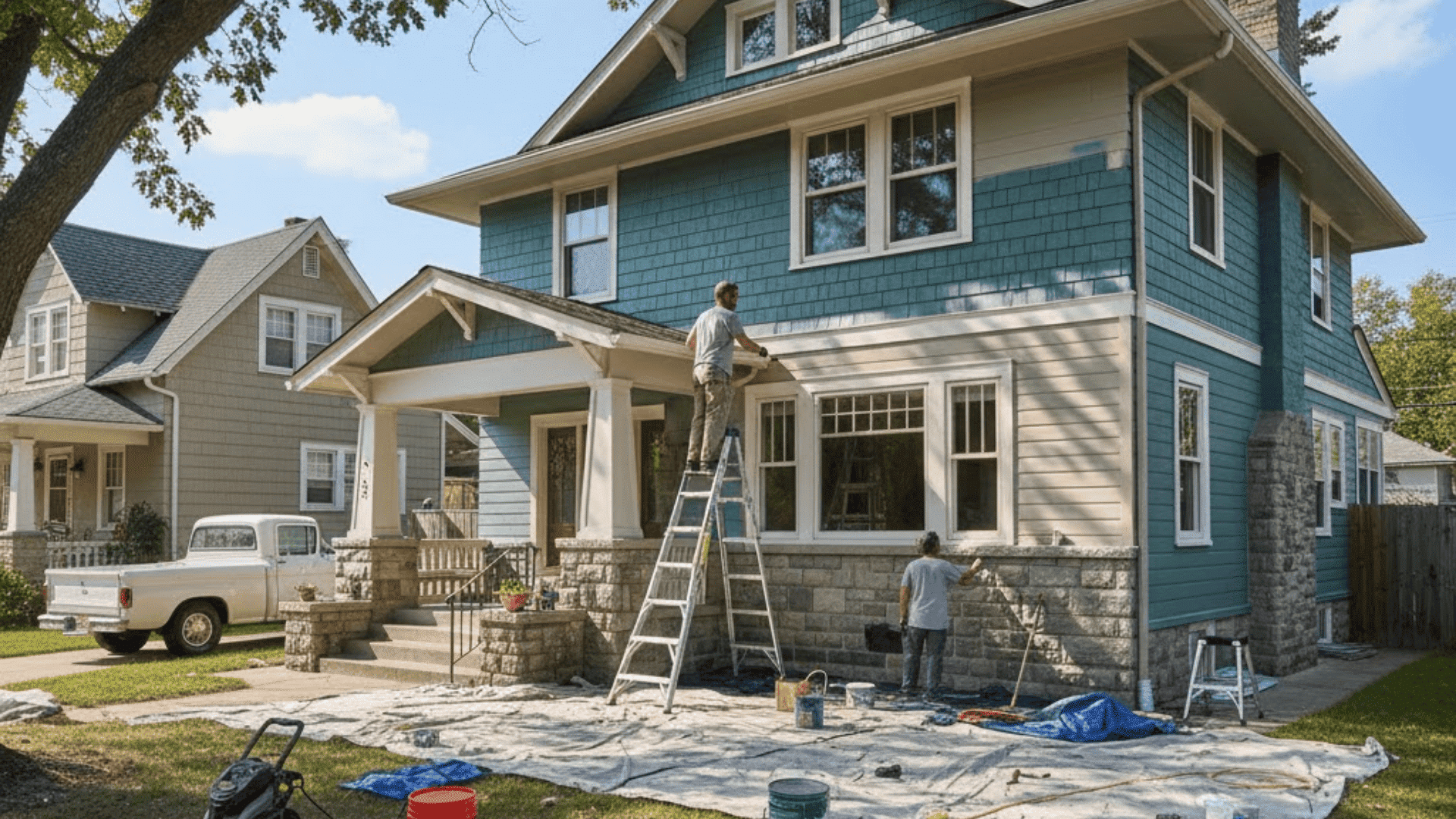


Ever look at your faded siding and think, “Okay… but what’s this actually going to cost me?”
In this guide, I’ll walk you through the real cost to paint the exterior of a house in simple terms. You’ll see how your home’s size, siding, stories, and prep work change the final price.
You’ll also learn basic price ranges by siding type and home size, plus how to estimate your own budget before you call a painter.
We’ll compare DIY vs. hiring a pro, share easy ways to save money, and discuss how often you really need to repaint your exterior so you can plan ahead with confidence.
A Simple Way to Estimate Your Budget for the Exterior Paint
A good estimate starts with a few basic steps. These steps help you get close to the cost even before you speak with a contractor.
Step 1: Estimate Your Paintable Square Footage. Paintable area is not the same as indoor square footage. It includes walls, trim, and any areas that need coating.
A quick way to estimate:
- Measure the length of each side of the home
- Multiply by the height of each wall
- Subtract large windows and doors
If the home has many bump-outs or angles, the final number may be a little higher.
Step 2: Choose a Cost Range. Exterior paint jobs fall into three basic levels. Pick the range that matches the home’s condition.
| Level | What It Includes | Cost Range (Per Sq Ft) |
|---|---|---|
| Basic | Light prep, simple siding, single coat | Low range |
| Standard | Normal prep, two coats, average siding | Mid range |
| Premium | Heavy prep, tall homes, detailed trim | High range |
Higher ranges often reflect more prep time, taller walls, or detailed trim work.
Step 3: Example Cost Estimates by Home Size
As the home gets larger, you can expect the total cost to rise because painters need more time, more paint, and more setup.
- 1,500 sq ft: One-story stays mid-range, while two-story costs more due to extra ladder work.
- 2,000 sq ft: One-story lands in a moderate range, and two homes rise because the upper walls take longer.
- 2,500 sq ft: One story runs higher overall, and two stories reach the top range due to access and setup time.
A second story raises the cost because painters must move carefully on ladders, follow safety steps, and spend more time reaching upper areas.
Complete Breakdown: Cost to Paint the Exterior of Your House
Before comparing quotes, it helps to see how the total price is divided. The table below shows the main cost areas and the typical share each one adds to the project:
| Category | What It Covers | Typical Cost Share |
|---|---|---|
| Labor | Prep work, scraping, caulking, masking, painting, ladder work | 50%–70% of the total cost |
| Paint & Materials | Primer, exterior paint, caulk, and patching products | 15%–25% of the total cost |
| Supplies & Equipment | Tape, plastic, rollers, sprayers, ladders, lifts | 5%–10% of the total cost |
| Add-Ons | Power washing, small repairs, painting shutters, doors, railings | Varies by home and extras |
These pieces shape most of the final price, and seeing them in one place makes each quote easier to understand and compare.
Key Factors that Change Exterior Paint Cost
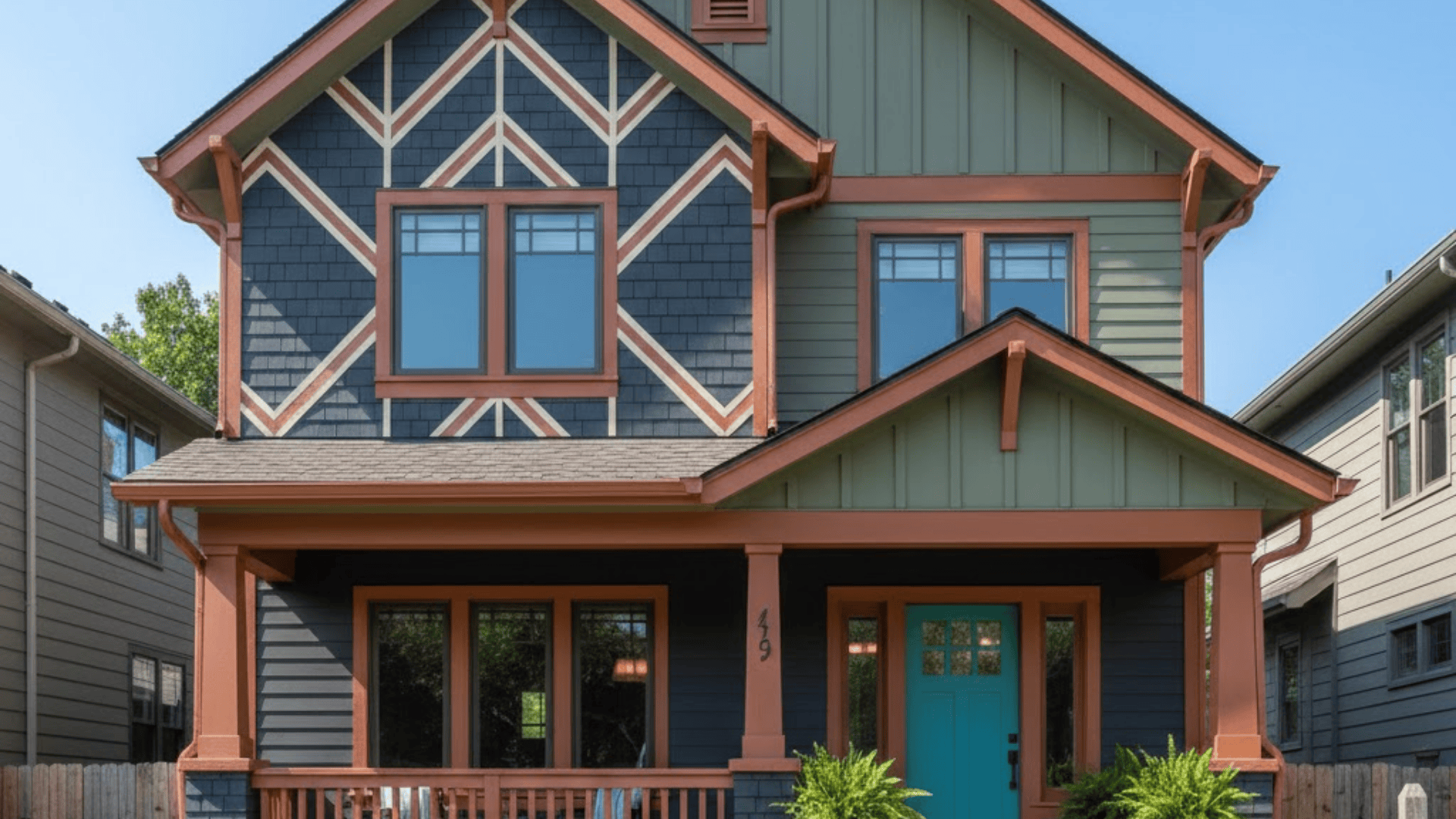
Many things can change how much you pay to paint the outside of a home. Painters look at these details during the walkthrough, and each one plays a part in the final number.
The points below help you understand what affects your budget the most:
1. Size of the Home
The size of the home is one of the biggest cost factors because larger surfaces need more paint and more hours of labor.
Extra corners, added sections, and long walls can increase time on ladders and slow down the crew. Bigger projects also need more coats to get full, even coverage.
2. Number of Stories and Access
A taller home costs more because painters must work from ladders or lifts. This slows the pace and increases safety steps.
Tight side yards, fences, and nearby trees can also make areas harder to reach. When access takes extra time, the final cost usually increases as well.
3. Siding Material
Different siding types need different prep and paint methods, which affects price.
- Vinyl, wood, and fiber cement often fall in the lower or moderate range
- Brick needs special coatings and extra prep
- Stucco takes longer due to cracks and its rough surface
These small differences can shift the total cost of the project.
4. Condition of the Current Paint
Worn or damaged paint adds more prep time, which raises the final price. Peeling spots must be scraped, sanded, and primed before painters can start.
If the surface has cracks, soft wood, or rot, repairs must be made first. Better prep leads to smoother results and longer-lasting paint.
5. Trim, Windows, and Details
Homes with more trim and windows take longer because each edge must be brushed by hand. Shutters, porch rails, and columns add even more time.
These small items seem simple, but they increase the level of detail and slow down progress, which raises the project cost.
6. Number of Coats
Most homes need two coats for solid coverage, and that extra layer raises both labor and paint use.
A home with dark colors or patchy areas may also need primer. More coats mean more drying time and longer setup, which leads to a higher overall total.
7. Paint Type and Quality
Higher-quality exterior paint lasts longer and handles sun, rain, and moisture better. These products cost more, but they also hold color and resist wear.
Some coatings are made for specific siding types. Better paint helps delay the next repaint, which can save money over time.
8. Location and Local Labor Rates
Prices change from one area to another. Regions with higher living costs often have higher labor rates.
Weather also plays a part because harsh heat, sun, or storms can limit painting seasons and raise demand. When demand is higher, painting prices usually rise as well.
9. Repairs, Power Washing, and Extras
Extra tasks add to the final number. These may include:
- Power washing
- Patch repairs
- Fixing trim or siding issues
- Painting shutters, doors, or porch rails
Each item adds time to the job. When crews spend more hours preparing the surface, the final cost goes up.
10. Contractor Experience and Warranty
Experienced painters may charge more because they offer steady quality, clear prep steps, and strong warranties.
A good crew follows a proven process that gives better results and fewer issues later. Very low prices may mean skipped prep work, weak coverage, or no support if problems appear.
Exterior Paint Cost by Siding Type
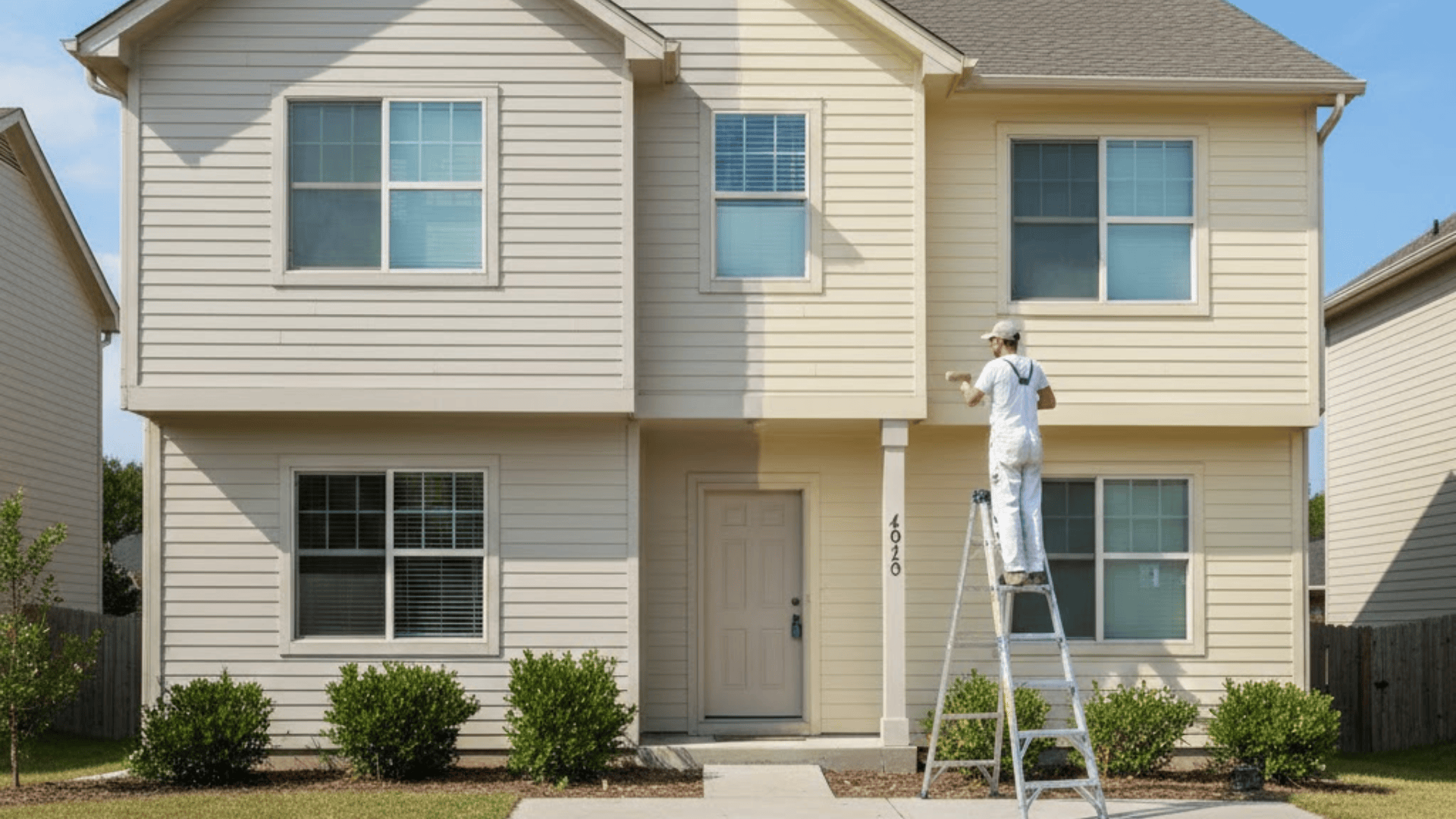
The siding on a home has a big effect on the final price because each surface needs a different amount of prep and paint. Some materials are quick to coat, while others take more time, skill, and product.
- Vinyl or aluminum:$1.50–$3.00 per sq ft (lighter prep and smooth surfaces)
- Wood:$2.00–$4.00 per sq ft (scraping, priming, and repairs add time)
- Brick:$2.50–$4.50 per sq ft (needs masonry coatings and careful prep)
- Stucco:$2.50–$5.00 per sq ft (cracks, texture, and heavy coverage raise cost)
- Fiber cement:$2.00–$4.00 per sq ft (holds paint well but needs two solid coats)
These ranges help you understand why quotes vary so much. Each siding type requires its own process, and the right prep makes the finish last longer.
Exterior House Painting Cost by Home Size
You can use these examples to understand how size and height change the total cost.
| Home Size | Expected Workload |
|---|---|
| 1,000 sq ft | Light workload |
| 1,500 sq ft | Moderate workload |
| 2,000 sq ft | Higher workload |
| 2,500 sq ft | Larger job with more prep |
| 3,000+ sq ft | Long project needing full setup |
If you’d like, this section can also include real dollar ranges for each home size.
These examples are general ranges, not exact quotes, because every home has different siding, prep needs, trim details, and access conditions. Actual costs may go higher or lower based on those factors.
DIY Exterior Painting or Hiring a Professional
DIY exterior painting can save money on small homes, but it takes a lot of time and effort. You need to handle scraping, patching, taping, and ladder work on your own.
The cost of paint, tools, and rentals can also add up fast. Many homeowners struggle to get a smooth finish while dealing with weather changes and long drying times.
Hiring a professional removes most of that pressure. A crew manages prep, repairs, equipment, and safety, which leads to steady progress and a cleaner final look.
Pros move faster, especially on homes with tall walls, peeling paint, or detailed trim. While the upfront price is higher, the results usually last longer and require less work from you.
Budget Tips to Lower Your Exterior Paint Cost
Small steps can make a noticeable difference in your total cost. A few tasks done ahead of time and some smart planning can help keep the project within your budget without lowering the quality of the finish.
- Handle simple prep, like light cleaning, trimming shrubs, or moving outdoor furniture
- Schedule the project during slower seasons when crews may be more flexible
- Choose mid-range paints that offer solid coverage and last across many seasons
- Combine siding, trim, and door painting to reduce setup time and improve efficiency
These small choices help the painter work faster, use time wisely, and focus on areas that matter most, which can reduce your overall cost while keeping the results looking clean and fresh.
How Often Should You Repaint Your Exterior?
Repaint timing depends on the siding and the weather your home faces. Each material ages at a different pace, so the timeline can vary from home to home.
- Wood: every 3–7 years, depending on sun and moisture
- Vinyl or aluminum: every 5–10 years, mostly due to fading
- Stucco: every 5–7 years, since cracks and texture show faster
- Fiber cement: every 7–10 years, thanks to strong paint hold
- Brick coatings: every 10–15 years, based on climate and surface condition
These timelines are general guidance, and checking your siding once a year helps you spot early signs that it may be time to repaint.
Wrapping Up
Understanding the cost to paint the exterior of the house gives you a clearer path forward. You now know how size, siding, prep work, and labor all play a part in the final price.
You also learned how to estimate your own budget, compare quotes, and decide if DIY or a pro makes more sense for your home.
I hope this helps you feel more sure about your next steps. Your home’s exterior is a big part of your daily view, and getting it painted the right way can make planning much easier.
If you want more tips, guides, or simple ideas for your home, feel free to check out my other posts on the website.