

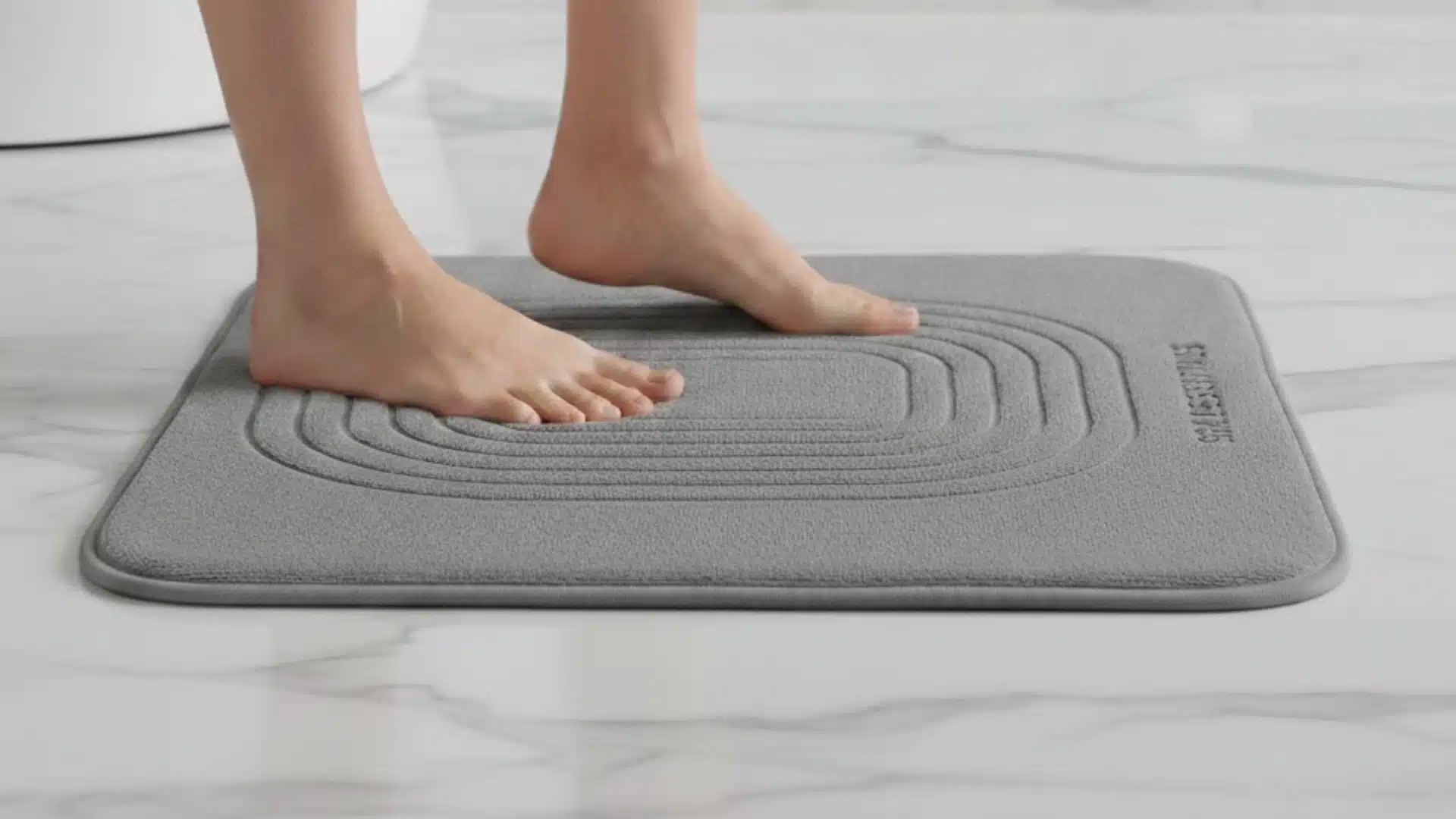


When I first searched for how to clean a stone bath mat, I thought it would be a long and tricky process. But after learning how these diatomaceous earth mats work, I realized the cleaning routine is actually quick and simple if you follow the right steps.
Because the surface is porous and highly absorbent, you can’t treat it like a regular fabric bath mat. Using too much water or strong cleaners can clog the pores and reduce how well it dries.
Here, I’ll walk you through the safest step-by-step cleaning method, how to remove stains, how to restore absorbency, what mistakes to avoid, and easy tips to keep your mat fresh for years.
Why Stone Bath Mats Need Special Cleaning
Stone bath mats need special cleaning because they are not made from cloth or rubber. Most stone mats are made from diatomaceous earth, a natural material filled with tiny holes you cannot see.
These small holes absorb water quickly, which is why the mat dries your feet so quickly. Over time, soap, body oil, and hard-water minerals can get trapped in those holes, slowing the mat down.
If you wash the mat in a normal bath or soak it in a lot of water, you can damage the surface and block the pores even more. That’s why gentle cleaning and proper drying help the mat stay absorbent and last much longer.
Step-by-Step: How to Clean a Stone Bath Mat Properly
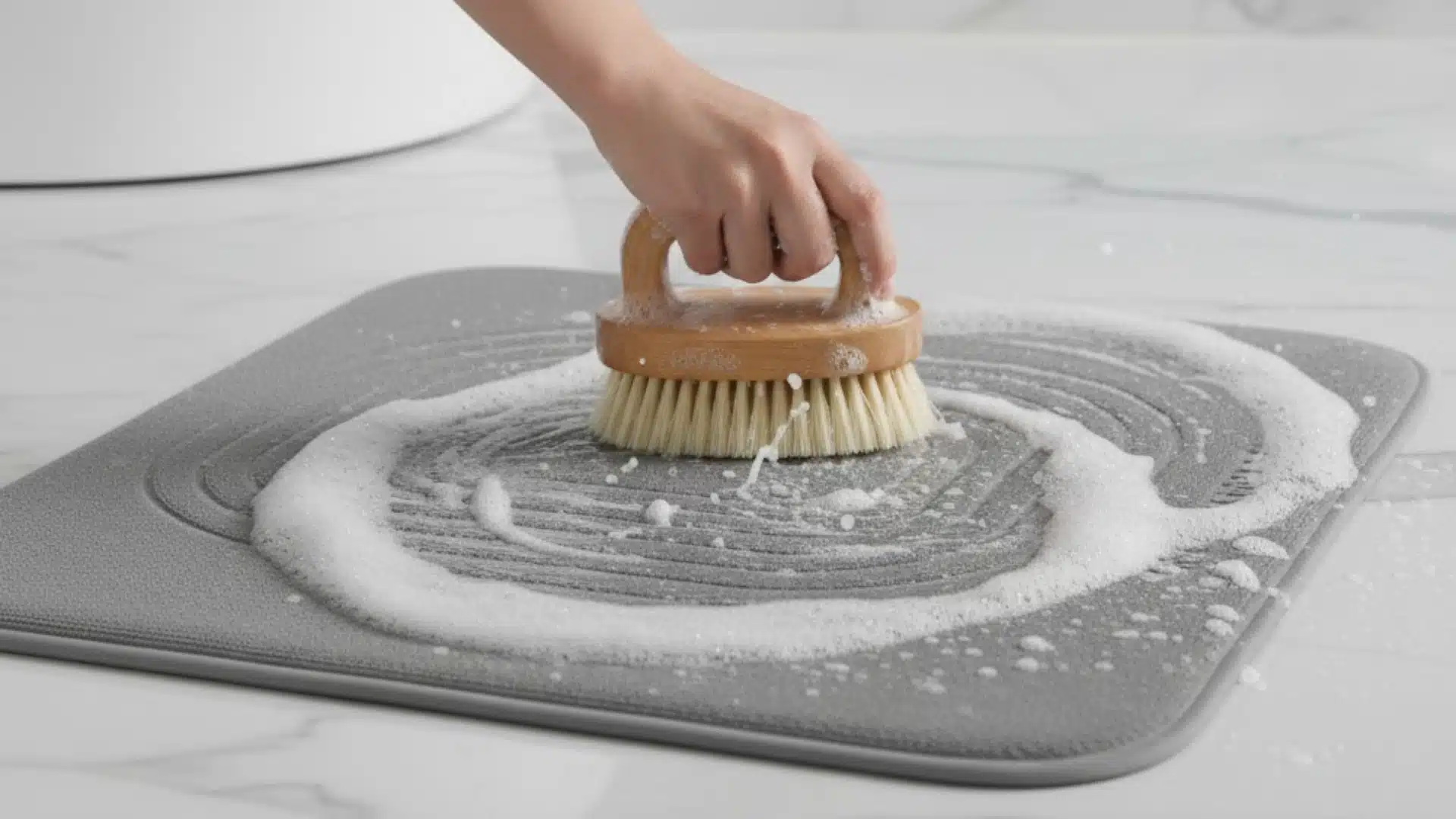
Cleaning a stone bath mat is actually very simple when you follow these small steps in order.
Step 1: Remove Loose Dirt and Hair
Start with a quick dry clean. I like to shake the mat gently or wipe it with a dry cloth first. This removes hair, dust, and loose dirt sitting on the surface.
If you skip this step, the dirt can turn into muddy spots once you add water. A microfiber cloth works great because it picks up small particles easily. This step only takes a few seconds but makes the rest of the cleaning much easier.
Step 2: Rinse With Warm Water
Next, rinse the mat with a small amount of warm running water. You only need a short rinse to wash away surface dirt. Do not soak the mat in a tub or bucket.
Stone bath mats are very porous, and soaking them can damage the material or slow their water absorption later. Think of this step as a quick shower for the mat, not a long bath.
Step 3: Gently Scrub the Surface
If you see marks or greasy spots, gently scrub the area using a soft brush or sponge. I usually add just a tiny drop of mild dish soap for oily stains.
Scrub lightly so you do not scratch the surface. The goal is to lift dirt, not grind it in. Most stains come off quickly with gentle pressure, so there’s no need to scrub hard.
Step 4: Rinse Again Thoroughly
After scrubbing, rinse the mat again with warm water to remove any soap left behind. Leftover soap can clog the tiny pores in the stone and make the mat less absorbent.
Make sure the surface feels clean and smooth before moving to the drying step.
Step 5: Let It Air Dry Completely
Finally, stand the mat upright in a well-ventilated area so air can reach both sides. I prefer to place it near a wall or a rack so it can dry evenly. Avoid strong direct sunlight, since too much heat can cause cracks over time.
Let it dry fully before putting it back on the bathroom floor. A completely dry mat will absorb water much faster the next time you use it.
How to Deep Clean a Stone Bath Mat: For Stains or Smell
If your stone bath mat has stains, smells, or stops absorbing water well, these deeper cleaning methods can help restore the surface and keep it working properly.
| Cleaning Method | When to Use It | What to Do | Helpful Tip |
|---|---|---|---|
| Sandpaper Refresh | Use this when water starts sitting on top instead of soaking in quickly. | Take fine sandpaper (120–180 grit) and rub the surface gently in one direction. Wipe away the powder after sanding. | Do not press hard. Light sanding is enough to reopen the tiny pores. Always let the mat dry fully before using. |
| Vinegar Spray | Best for white spots, dull areas, or hard-water mineral buildup. | Mix equal parts white vinegar and water. Spray lightly on the area, wait a few minutes, then wipe and rinse quickly. | Do not soak the mat. A light spray works better and keeps the stone safe. |
| Hydrogen Peroxide Spot Clean | Good for strong stains that normal rinsing or wiping cannot remove. | Pour a small amount of diluted hydrogen peroxide onto the stain, or dab it with a cloth. Rinse after a short wait. | Only use this for stubborn stains. Always stand the mat upright and let it air dry completely. |
After using one of these methods, I always make sure the mat dries completely before putting it back, because a fully dry surface helps it absorb water faster and stay fresh longer.
Shared Experience and Advice
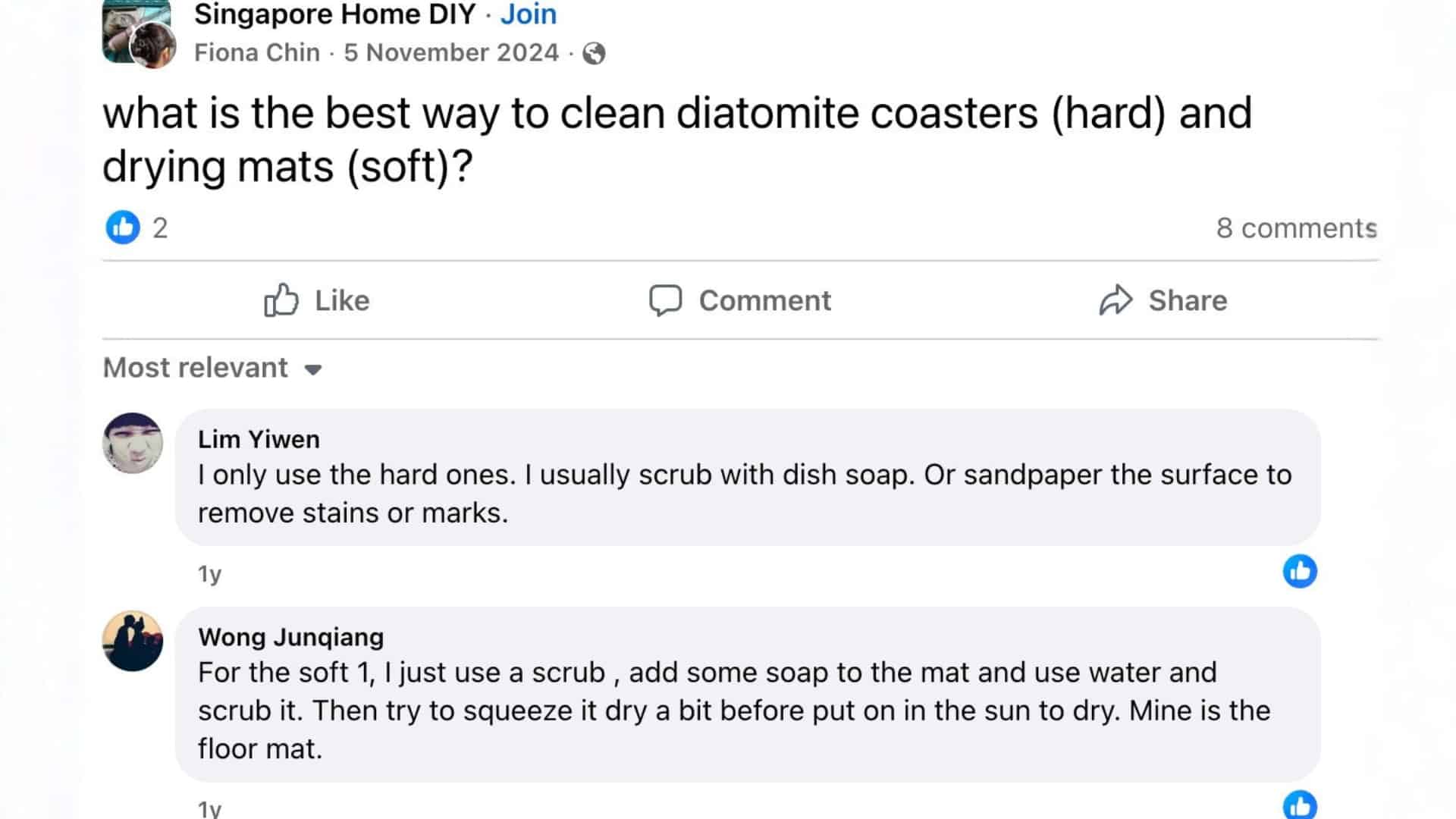
In a Facebook home DIY group, a member asked how to clean hard diatomite coasters and soft drying mats. People replied with simple home methods.
One user said they scrub hard stone items with dish soap and sometimes sand the surface to remove stains. Another suggested washing soft mats with soap and water, then squeezing them slightly and leaving them in the sun to dry.
Personally, I think these community tips are helpful, but need a bit of caution. In my experience, when cleaning stone bath mats, gentle rinsing, light scrubbing, and careful drying work best, but too much sun or soaking can damage the mat. Simple methods are good, as long as they’re done the right way.
When to Clean Your Stone Bath Mat
Knowing when to clean your stone bath mat makes it much easier to keep it fresh, absorbent, and working properly. A simple routine, along with watching for warning signs, will help it last longer.
How Often Should You Clean a Stone Bath Mat?
I like to follow a simple cleaning routine so the mat stays fresh and dries fast. I wipe the surface every few days to remove hair, dust, and soap marks.
About once or twice a week, I rinse it with warm water to clear away buildup inside the pores. Every couple of months, I lightly sand the top to refresh the surface and help it absorb water better again. If the bathroom gets heavy use, I clean it a little more often.
Signs Your Stone Bath Mat Needs Cleaning
Sometimes the mat shows clear signs that it needs cleaning, even if it hasn’t been long since the last wash. When I notice water sitting on the surface instead of soaking in quickly, I know the pores are clogged.
Dark spots, visible stains, or rough patches are also strong signals. A mat that feels slippery, dries more slowly than usual, or starts to smell slightly musty should be cleaned right away so it keeps working properly.
What NOT to Do When Cleaning a Stone Bath Mat
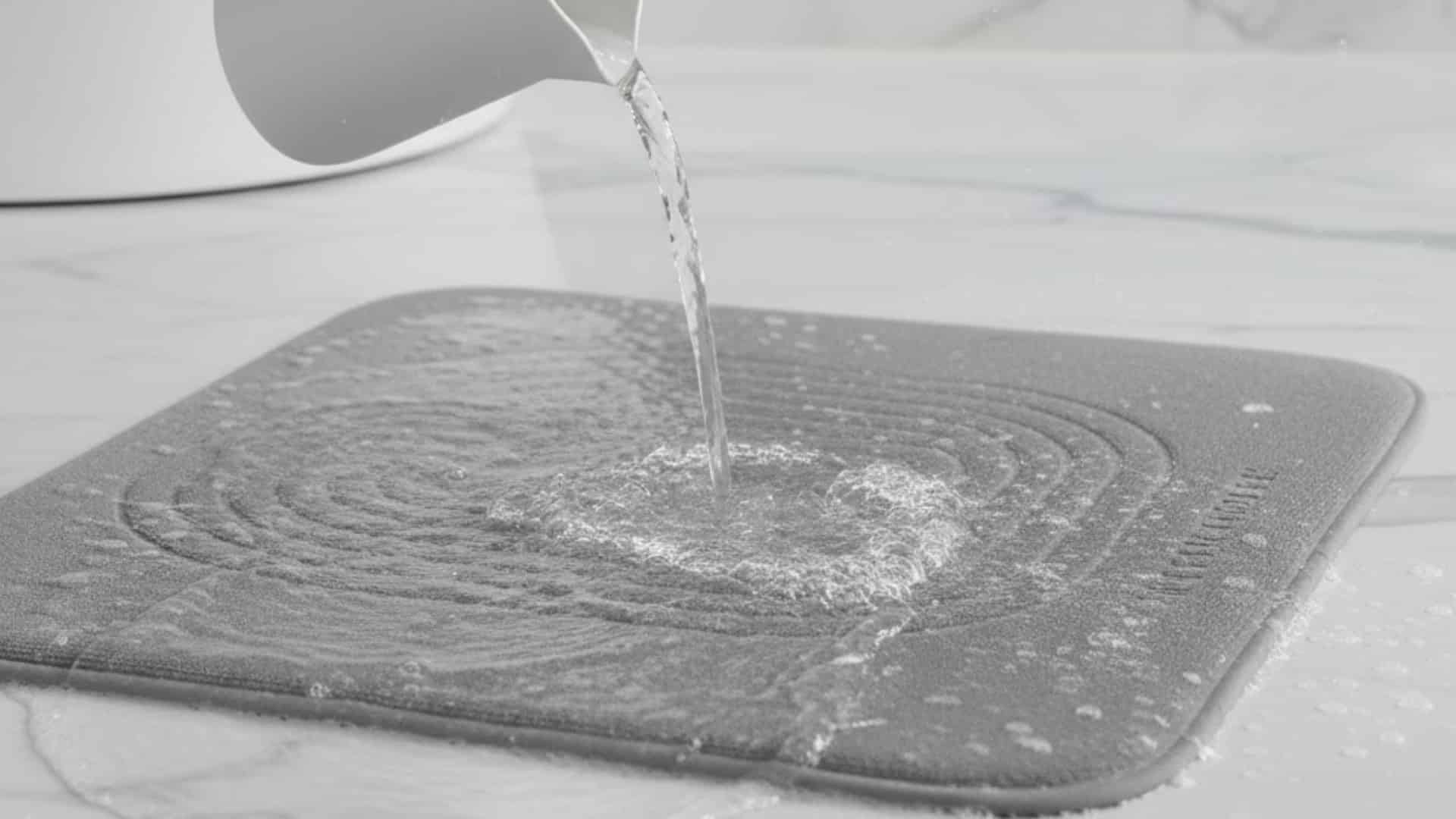
Avoiding a few common mistakes will help your stone bath mat stay absorbent, durable, and looking new for much longer.
- Never soak the mat: Stone bath mats are very porous, so soaking them in a bucket or tub can damage the material and reduce their water absorption later.
- Avoid strong bleach: Harsh bleach can weaken the surface and cause fading or rough spots. If you ever use it, only use a very small, highly diluted amount for tough stains.
- Skip harsh chemicals: Strong bathroom cleaners, acids, or heavy sprays can clog the tiny pores and reduce the mat’s drying power. Mild soap or gentle cleaners are always safer.
- Do not use a high-pressure hose: Powerful water pressure can chip, crack, or wear down the stone surface over time. A gentle rinse under normal running water works best.
- Avoid strong direct sunlight: Leaving the mat in very hot sunlight for long hours can dry it too fast and may cause small cracks. Always let it dry in a shaded, airy place instead.
When I avoid these mistakes, my stone bath mat stays clean and absorbs water much faster. Small care habits really help the mat last for years.
How to Keep Your Stone Bath Mat Clean Longer
To keep your stone bath mat clean for a long time, I follow a few simple habits that really help. First, I stand the mat upright once a week so both sides can dry fully and no moisture stays trapped underneath.
I also keep the bathroom well ventilated, since fresh air helps the mat dry faster and prevents musty smells.
Another helpful step is to avoid stepping on the mat with oily or lotion-covered feet, because oils can clog the tiny pores that absorb water.
If I notice a lot of soap or residue building up, I give the mat a quick rinse in warm water and let it air-dry completely. These small steps take only minutes but help the mat stay absorbent, fresh, and working properly much longer.
The Bottom Line
After learning how to clean a stone bath mat the proper way, I realized that keeping one fresh doesn’t require much time at all. Most of the work comes down to simple habits like quick rinsing, gentle scrubbing, and letting the mat dry fully before using it again.
When you clean it correctly and refresh the surface when needed, the mat stays absorbent and keeps your bathroom looking neat. If you ever forget how to clean a stone bath mat, you can always return to these steps for a quick refresher.
If this guide helped you, bookmark it for later, share it with a friend, and check out my other home care guides for more easy cleaning tips.