

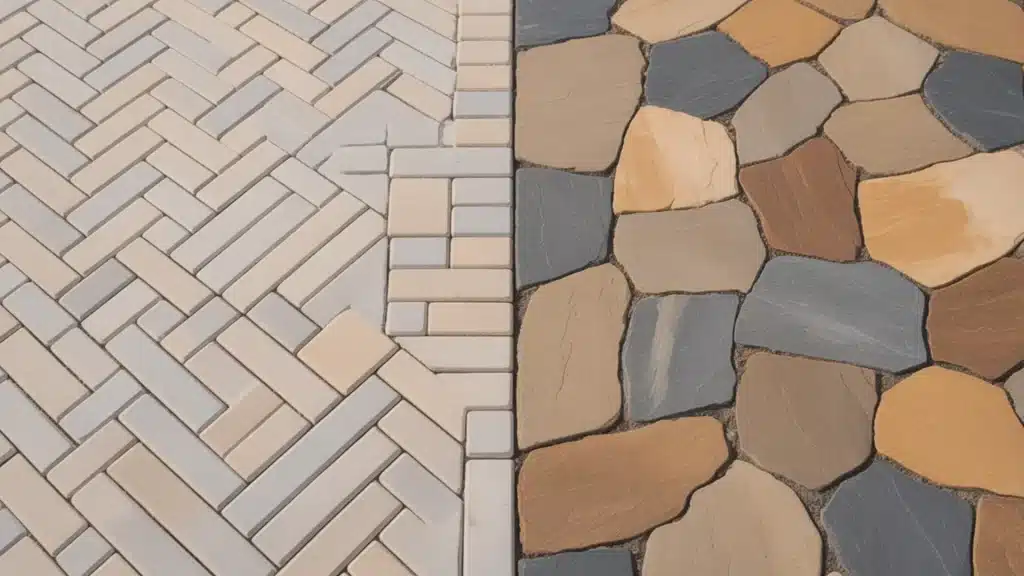


Planning an outdoor upgrade gets exciting fast, until the budget questions show up. When I started pricing out my patio, the first thing I searched was, “Is stamped concrete cheaper than pavers?”
If you’re looking at driveways, walkways, or patios, you’re likely asking the same thing right now. The short answer is yes: stamped concrete usually costs less up front, but the full picture goes deeper than the initial price per square foot.
I’ll walk you through installation costs, labor differences, maintenance expenses, durability, climate performance, and long-term value.
By the time you finish reading, you’ll have a clear understanding of what each option truly costs and which one fits your budget, climate, and long-term plans
Is Stamped Concrete Cheaper Than Pavers?
When it comes to upfront cost, yes, stamped concrete is usually cheaper than pavers, especially for larger outdoor surfaces like patios and walkways.
Most stamped concrete installations range from roughly $8 to $28 per square foot, depending on design complexity and coloring.
Pavers, on the other hand, typically cost $20 to $40 per square foot or more because each piece must be laid, leveled, and fitted individually, which increases both material and labor costs.
However, initial pricing isn’t the whole story. While stamped concrete saves you money up front, pavers often offer better long-term durability and easier, lower-cost repairs.
Because individual pavers can be replaced if damaged, they may save you money over the long term.
Choosing the right option depends on your budget, climate, maintenance preferences, and how long you expect the surface to last.
Installation Cost Breakdown: Where Your Money Goes
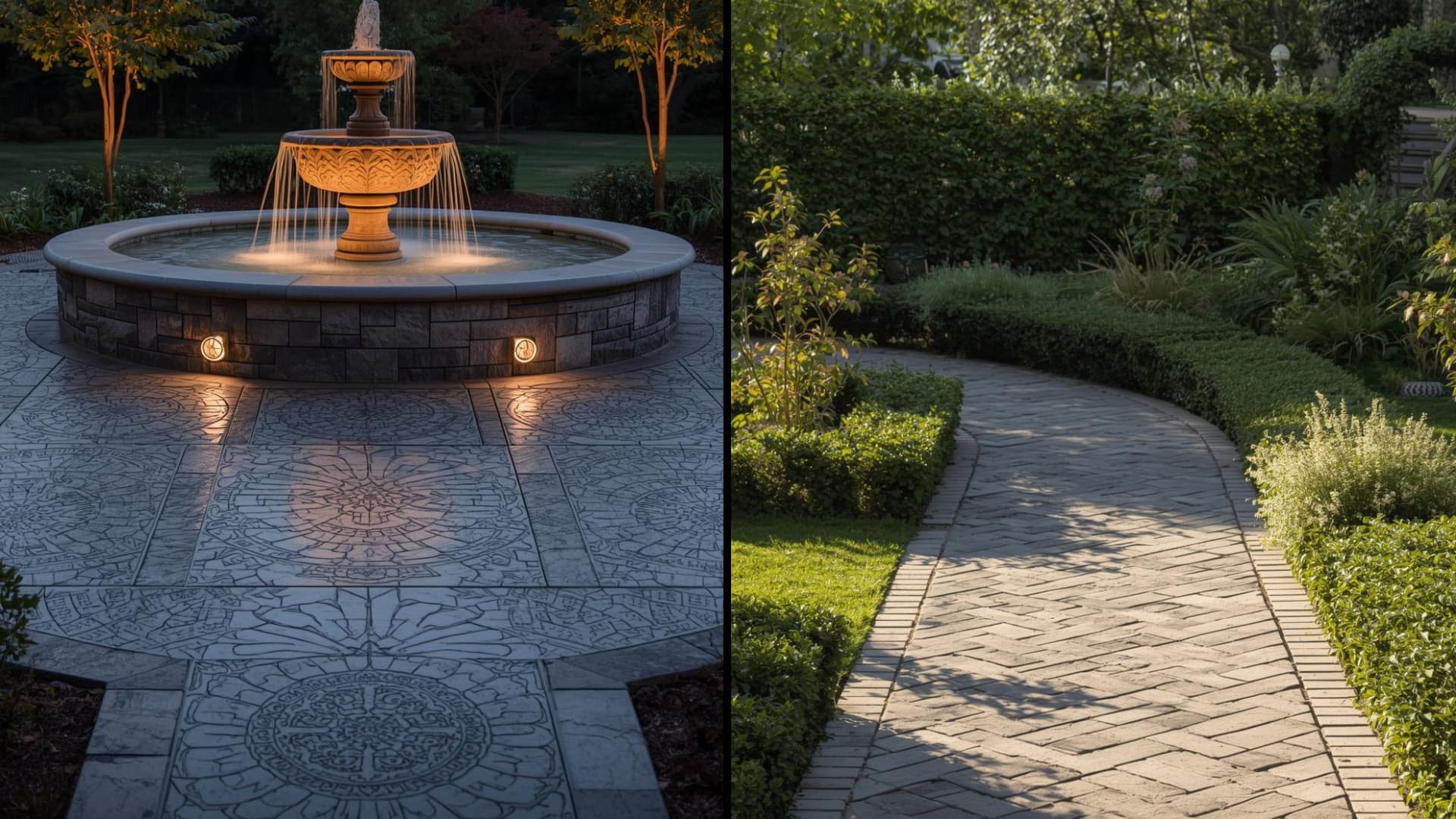
Understanding installation differences explains why stamped concrete and pavers have noticeable price gaps beyond the cost of materials alone.
Material Costs
Material costs start with the surface itself. Stamped concrete uses poured concrete, color hardeners, release agents, and stamping tools to create patterns. The materials are delivered in bulk and installed as one continuous slab.
Pavers, on the other hand, require individual units, joint sand, edge restraints, and often a thicker gravel base. Because each paver is manufactured separately and transported in pallets, material costs increase.
The added base layers also contribute to higher overall expenses compared to a single concrete slab.
Labor Costs
Labor plays a major role in the overall price difference. Stamped concrete is poured, leveled, colored, and stamped in a coordinated process that happens within a short time frame. Once the slab is finished, curing begins.
Pavers require individual placement, alignment, spacing, leveling, and compacting. Each piece must be adjusted to maintain pattern consistency and structural stability. This careful placement takes significantly more time.
Because installation requires precision and extended labor hours, paver projects typically cost more in workforce expenses.
Base Preparation
Base preparation is one of the biggest hidden cost factors. Stamped concrete requires soil compaction and a stable base before pouring a single slab on top. While proper compaction is critical, the structure remains one solid piece.
Pavers require multiple base layers, including compacted gravel and a bedding sand layer to support flexibility and drainage. This layered foundation improves long-term durability and reduces cracking from ground movement.
However, the additional materials and labor required for proper layering increase installation costs compared to stamped concrete.
Stamped Concrete vs Pavers: Pros and Cons
Before choosing between stamped concrete and pavers, it helps to compare their strengths and weaknesses side by side. This makes the trade-offs much clearer.
| Feature | Stamped Concrete | Pavers |
|---|---|---|
| Upfront Cost | Lower upfront cost | Higher upfront cost |
| Installation Speed | Faster installation | Longer installation time |
| Design Options | Many decorative patterns | Wide variety of shapes and styles |
| Durability | Can crack over time | Extremely durable and flexible |
| Repairs | Repairs are more visible | Easy to replace single pieces |
| Climate Performance | May struggle in freeze-thaw cycles | Handles freeze-thaw cycles well |
| Maintenance | Needs resealing every 2–3 years | Occasional sand replenishment is needed |
| Surface Safety | Can be slippery when wet | Better grip with joint texture |
| Resale Value | Moderate property value boost | Adds stronger resale value |
Stamped concrete works well if you want decorative appeal at a lower cost. Pavers require more upfront investment but often offer greater durability and easier long-term maintenance.
Long-Term Value: Which Saves More Money?
The initial price is only one part of the story. Let’s examine the total cost over the years to determine which option truly saves you money.
1. Maintenance Costs Over Time
Stamped concrete needs resealing every 2–3 years to prevent fading and damage, at a cost of about $1–$2 per square foot. Over 20 years, maintenance can reach roughly $3,000–$5,000.
Pavers are simpler to maintain; you may only refill the joints with sand and clean them, with sealing optional. Long-term costs are usually $1,000–$2,000 lower than concrete.
Repairs are also easier, since single pavers can be replaced cheaply, whereas repairing cracked concrete is harder and more expensive.
2. Lifespan and Long-Term Value
Lifespan is where the real value difference appears. Stamped concrete generally lasts between 15 and 25 years when properly maintained. Pavers typically last 30 to 50 years, or even longer, because their modular design better handles ground movement.
When you spread total costs over the full lifespan, the yearly cost difference becomes much smaller. Although pavers cost more initially, their extended durability often improves long-term value and reduces the need for full replacement.
3. Return on Investment
Both options add curb appeal, but pavers typically add more property value. Pavers return 60-80% of their cost at resale, while stamped concrete returns 50-65%. Buyers see pavers as a premium feature that won’t need replacing soon.
Here’s the cost per year for a 400 sq ft patio over 20 years:
- Stamped Concrete: Initial cost $6,000 + Maintenance $4,000 = $10,000 total ($500/year)
- Pavers: Initial cost $10,000 + Maintenance $1,500 = $11,500 total ($575/year)
The difference is only $75 per year. Since pavers last 10-20 years longer, your cost per year drops even more over time.
Durability in Different Climates
Climate plays a major role in how stamped concrete and pavers perform over time, especially when weather extremes and ground movement are involved.
- Warm climates: Stamped concrete performs well because temperature shifts are minimal and slab stress is lower.
- Freeze-thaw regions: Pavers perform better since their flexible structure adjusts to soil expansion and contraction.
- Heavy vehicle traffic: Pavers distribute weight more evenly, reducing stress cracks under driveways.
- Pool areas: Pavers stay cooler under sunlight and provide better slip resistance around water.
Ground movement affects solid slabs more severely than modular paver systems, especially in shifting soil conditions.
Design Differences Between Stamped Concrete & Pavers
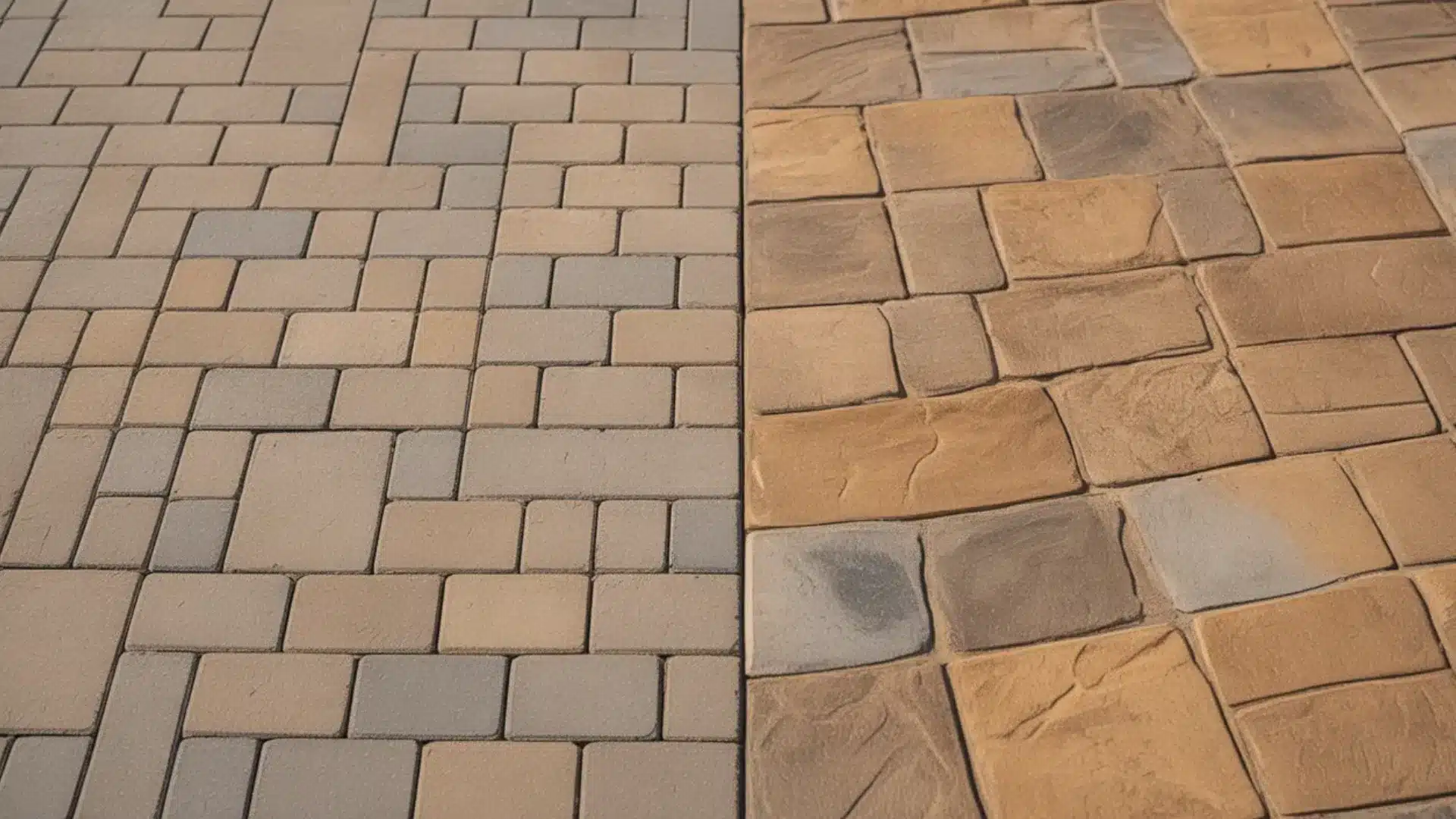
Both options offer design flexibility, but they create very different visual effects and overall impressions in outdoor spaces.
Stamped Concrete Design Features
Stamped concrete focuses on creating a continuous decorative surface that mimics higher-end materials at a lower cost.
- Custom-stamped patterns replicate stone, brick, tile, or wood textures with consistent surface detailing.
- Seamless look creates a smooth, uninterrupted finish across patios and driveways.
- Mimics natural materials without individual piece installation or joint spacing.
- Continuous surface appearance offers clean lines and modern simplicity.
Stamped concrete provides strong decorative value while keeping installation costs more affordable.
Paver Design Features and Premium Appearance
Pavers create a modular, textured surface that often feels more dimensional and upscale in finished outdoor spaces.
- Modular patterns allow creative layouts using various shapes and arrangement styles.
- Wide color variety offers deeper tone options and blended finishes.
- More dimensional texture adds shadow lines and natural variation.
- Premium visual perception often increases curb appeal and resale attraction.
Pavers typically deliver a higher-end appearance that improves long-term property value.
When to Choose Stamped Concrete or Pavers
Choosing between stamped concrete and pavers really depends on your priorities. Stamped concrete makes more sense if you need a lower upfront cost, live in a warm climate, or want faster installation.
It works especially well for large patios where keeping expenses under control matters. The seamless design also appeals to homeowners who prefer a smooth, continuous look.
Pavers are worth the extra cost if you want maximum lifespan and stronger long-term durability. They perform better in freeze-thaw regions, handle heavy loads like driveways, and allow easier repairs by replacing single pieces.
If resale value and long-term performance matter most, pavers often provide better overall value.
Final Thoughts
After comparing the upfront costs and long-term value, I’ve realized that when people ask, is stamped concrete cheaper than pavers, the honest answer depends on what matters most to you.
Stamped concrete usually wins if you’re working with a tight budget and want a decorative surface right away. You can often save 10–15% on installation, which can amount to hundreds or even thousands of dollars on larger projects. But if you can handle the higher initial investment, pavers often make more sense long term.
They last longer, make repairs easier, and reduce the risk of costly crack repairs later. Think about your climate, your budget, and how long you plan to stay in your home before deciding.
Planning a project soon? Drop your question in the comments, share this guide with someone renovating, or save it to compare costs when you’re ready.