

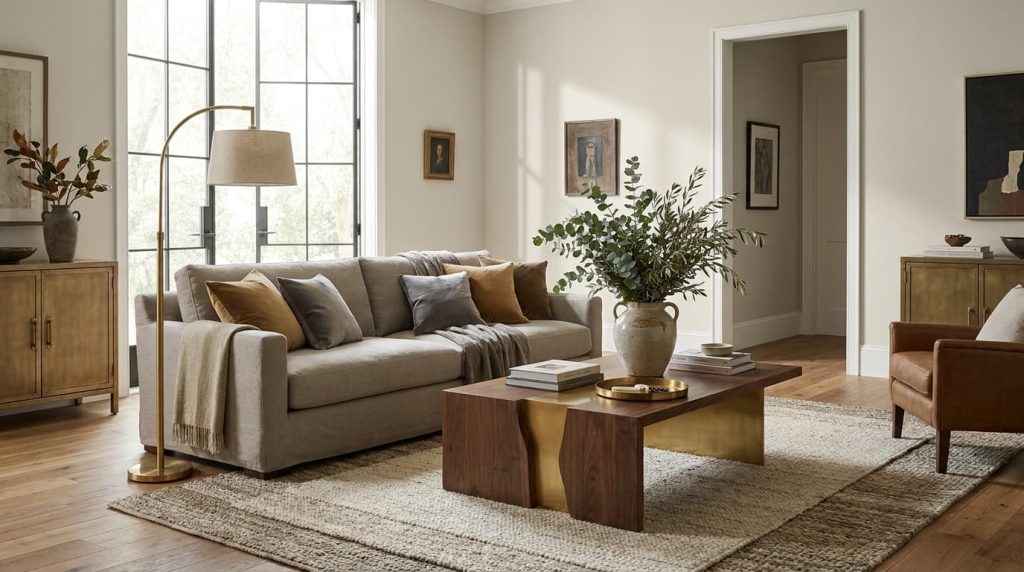


Pale Oak shows up on nearly every designer shortlist, and yet it quietly disappoints in more homes than most people admit.
There is a good chance you have stood in a freshly painted room and felt something was slightly off, but couldn’t name it, and I have seen that happen more times than I can count with this exact color.
Knowing when not to use Pale Oak matters as much as knowing where it works, because it responds strongly to light, undertones, and the elements already in the room.
What follows covers every condition where it fails, the lighting situations, the undertone clashes, and the open-plan mistakes, so the right call gets made before the paint goes on the wall.
What Is Pale Oak and Why Is It So Popular?
Pale Oak (Benjamin Moore OC-20) is a soft greige, a carefully balanced mix of gray and beige with faint pink undertones that surface depending on the light.
It sits in a middle ground that feels neither too warm nor too cold, which is exactly why it became one of Benjamin Moore’s most reached-for neutrals. Its LRV of 68.64 places it in the mid-range, light enough to keep walls receding in a well-lit room, warm enough to add depth without feeling heavy.
Those drawn to this balance often find themselves comparing it to Alpaca by Sherwin-Williams , a similarly warm greige that handles undertone shifts similarly.
It works well in spaces with balanced natural light, warm wood floors, and cohesive interiors, the kind of conditions where its undertone stays quiet, and the color reads as a clean, considered neutral. The problem starts when those conditions aren’t present.
When NOT to Use Pale Oak in Your Home
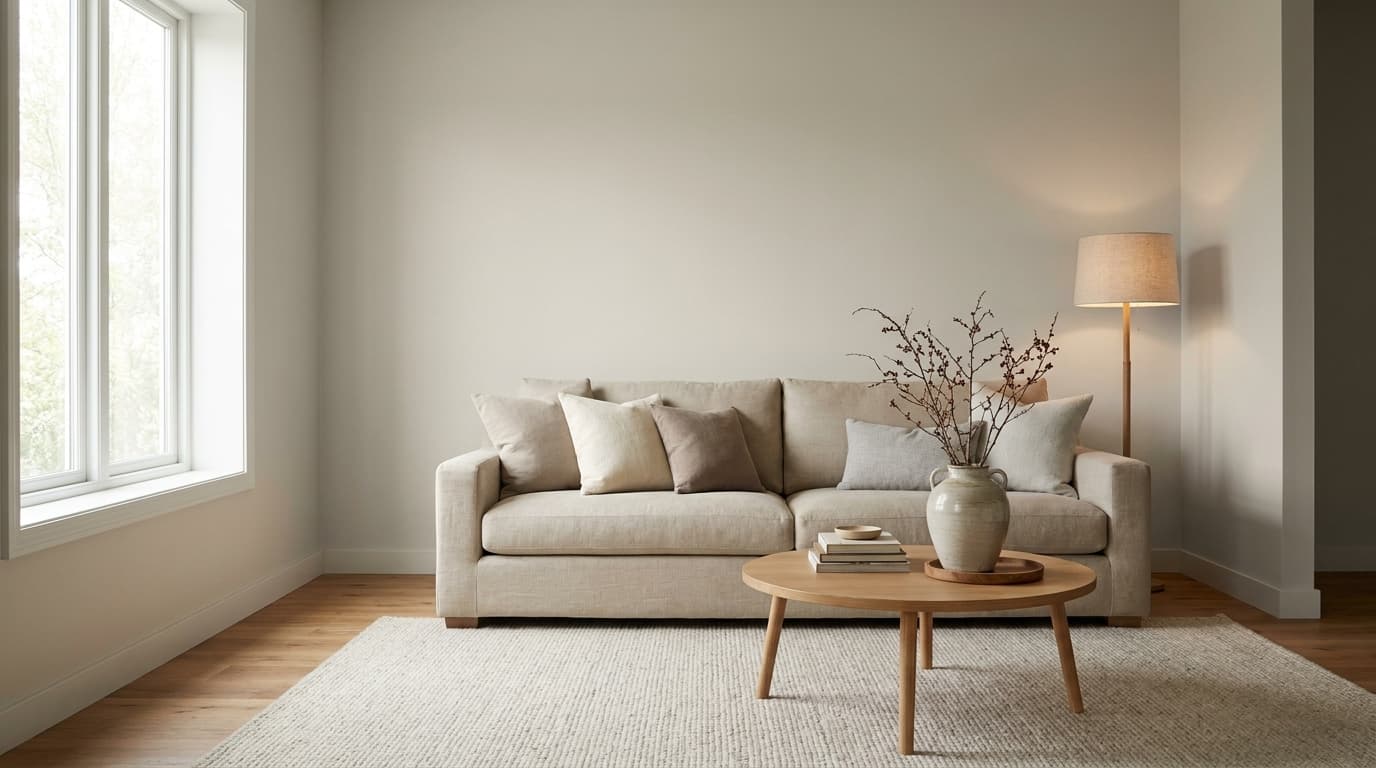
Pale Oak is forgiving, until it isn’t. These are the six situations where it works against the room rather than with it.
1. Rooms with Low Natural Light
In a north-facing or enclosed room, Pale Oak stops looking like a greige and starts looking like a mistake. It loses its warm balance and pulls toward a flat, slightly muddy tone that neither reads as gray nor beige, just dull.
The color needs light to activate its warmth, and without it, the walls feel unfinished rather than neutral. Small enclosed bathrooms and basement rooms are the most common casualties, a problem rarely seen with colors that consistently perform regardless of light conditions.
2. Spaces with Strong Cool-Toned Elements
Pale Oak and cool-toned spaces are a quiet conflict waiting to happen. Cool gray floors, blue-undertone tile, and chrome or silver fixtures all pull against its warm pink-beige base. The result isn’t a clash, it’s something subtler and harder to fix.
The color reads slightly pink and slightly off, and the room never feels cohesive, regardless of how carefully everything else is chosen.
3. Open Floor Plans Without Color Flow Planning
Pale Oak doesn’t shift subtly across an open plan; it shifts noticeably. One end of the room reads warm greige. The other reads faint pink. The color hasn’t changed, the light has.
In a connected space where natural light enters from different directions, Pale Oak behaves like two different colors in the same room, and the inconsistency is impossible to unsee once noticed.
4. Rooms with Heavy Warm Lighting
Warm artificial lighting does to Pale Oak what strong sun does to butter: it pushes everything in one direction. Under 2700K bulbs, the beige and pink undertones surface, and the color reads heavier and slightly dated.
What looked like a balanced greige in the showroom feels noticeably warmer at night. The effect is most pronounced in rooms that rely entirely on artificial light after dark.
5. Spaces Where You Want a Crisp, Clean Look
Pale Oak is soft. It is not sharp, and it was never designed to be. If the goal is bright, clean contrast, the kind that makes trim pop and rooms feel freshly finished, Pale Oak will fall short every time.
It sits in a muted register that feels considered in the right space and simply flat in the wrong one. For crisp, clean results, a warm white with a higher LRV will always outperform it.
6. Rooms with Bold or Busy Decor
In a room that’s visually busy, Pale Oak disappears rather than anchors. Dark furniture, strong patterns, and statement pieces need a wall color with enough presence to hold its own.
Pale Oak is too soft to provide that contrast; it gets absorbed into the room rather than grounding it, and the walls end up looking like an afterthought rather than a deliberate choice.
None of these are edge cases. They are the exact conditions most homes operate in, which is why testing before committing is non-negotiable.
Common Mistakes People Make with Pale Oak
These five mistakes account for most of the “I hate my paint color” moments that happen after Pale Oak goes on the wall.
- Not testing in their own lighting: store lighting tells you nothing about how it behaves on your wall
- Pairing with wrong undertones: cool gray floors and warm pink-beige walls create an immediate conflict
- Using it across an entire home: Pale Oak shifts in every room with different light sources
- Assuming it works with every trim: stark white pulls the pink out and makes both colors look worse
- Treating it as a universal neutral: Pale Oak is more condition-dependent than most colors in its category
Every one of these is avoidable. The fix in each case is the same; test it in your actual space before the decision is final.
Better Alternatives When Pale Oak Doesn’t Work
When Pale Oak fails, it’s rarely the category that’s wrong, just the specific color. These four alternatives stay in the same family but sidestep the conditions where Pale Oak falls short.
| Alternative | Best Colors | The Problem It Solves |
|---|---|---|
| Soft warm white | BM Chantilly Lace (OC-65) , SW Alabaster (SW 7008) | Brighter and cleaner without the pink risk, it works in low light where Pale Oak goes flat |
| Neutral greige with less pink | SW Accessible Beige (SW 7036) , BM Balboa Mist (OC-27) | Same greige family, more stable undertone, less condition-dependent |
| Light taupe | BM Revere Pewter (HC-172) | More depth without the softness, holds its own against bold decor and dark furniture |
| Muted green or blue | SW Evergreen Fog (SW 9130) , BM Horizon (1478) | Sidesteps the undertone conflict entirely in cool-toned spaces where greige never lands right |
None of these is a compromise. Each one solves a specific problem that Pale Oak creates in the wrong conditions.
How to Test Pale Oak Before Committing
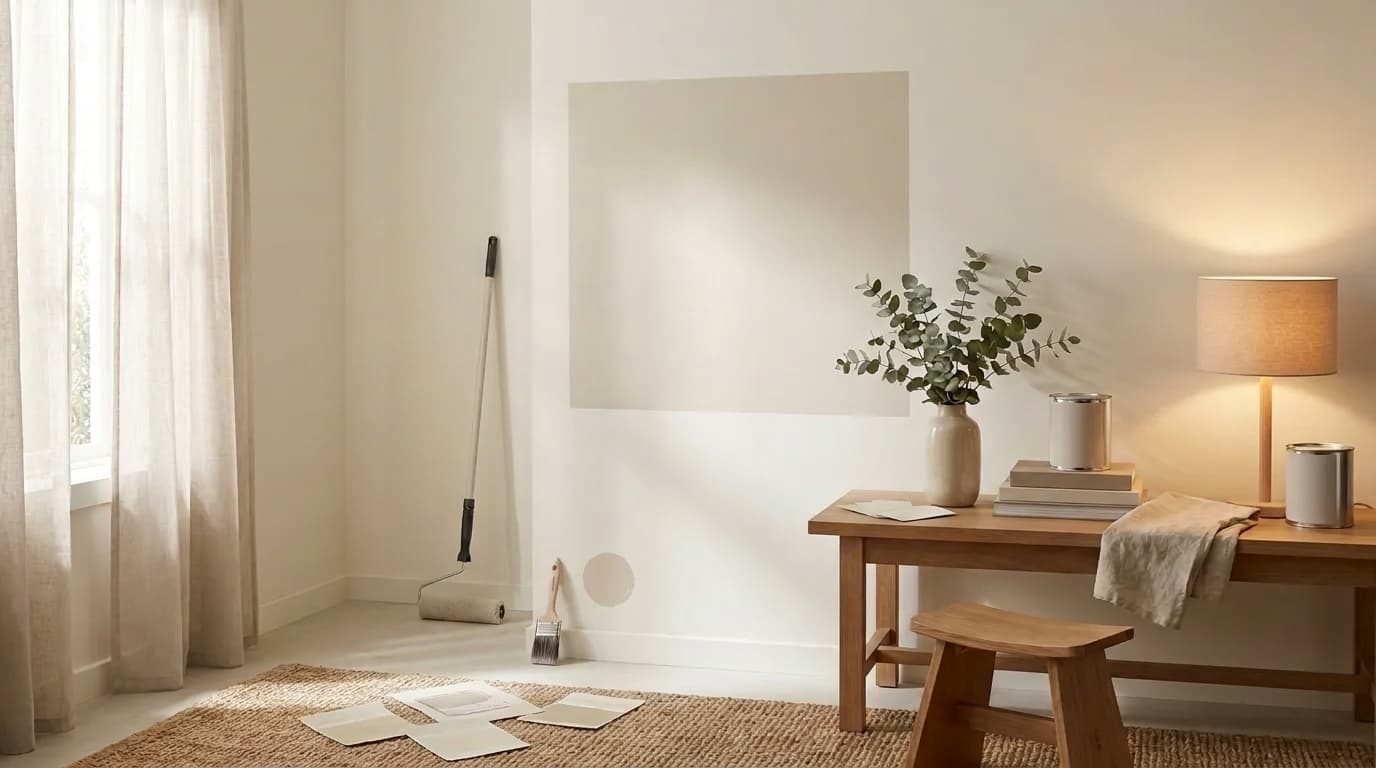
Most paint regrets come down to one skipped step. Here is exactly how to test Pale Oak before the decision is final.
- Get a large swatch, not a chip: Paint a 12×12-inch swatch directly on the wall. A small chip tells you nothing at scale.
- Check it at three times of day: morning, afternoon, and evening, with your actual bulbs on. The evening reading is usually the most revealing.
- Hold it against everything in the room: flooring , trim, and fixtures simultaneously. Undertone conflicts only show up when colors sit next to each other.
- View it from the doorway. Distance changes how the color reads entirely.
- Live with it for 48 hours. One viewing is never enough.
The sample costs a few dollars. The repaint costs significantly more. There is no good reason to skip it.
Tips for Making Pale Oak Work If You Still Want It
Pale Oak doesn’t need to be ruled out entirely; it needs the right conditions. Get these four things right before committing, and the color performs exactly the way it should.
- Pair with warm wood tones: they share the same undertone family and keep the color balanced
- Use consistent warm lighting across the entire space: inconsistent bulbs create inconsistent readings
- Choose soft white trim like BM White Dove or SW Alabaster: they sit in the same undertone register
- Test in every connected room before committing: light shifts across spaces, and so does the color
Get these four right and Pale Oak performs exactly the way it should, quiet, warm, and considered rather than pink, flat, or mismatched.
Final Thoughts
Pale Oak has earned its reputation, but a popular color used in the wrong conditions will always disappoint. I hope what you read here made that distinction clear.
Knowing when not to use Pale Oak is what separates a room that looks considered from one that gets repainted.
You now know the lighting conditions that work against it, the undertone conflicts to avoid, the open-plan mistakes to avoid, and exactly what to reach for instead.
That is everything you need to make a confident call before the paint goes on the wall. If you have tried Pale Oak in your home or have a question about your specific space, drop it in the comments.
Frequently Asked Questions (FAQs)
Does Pale Oak Look Pink or Beige?
It depends entirely on your light. Warm conditions read beige, cool or north-facing light pulls out the pink noticeably.
What Is the Best Trim Color to Use With Pale Oak?
White Dove and Alabaster are the most consistent performers, as both carry warm undertones that sit in the same register as Pale Oak.
Can You Use Pale Oak in a Bathroom?
Yes, but only in bathrooms with good natural light, warm fixtures, and no cool-toned tile working against it.