

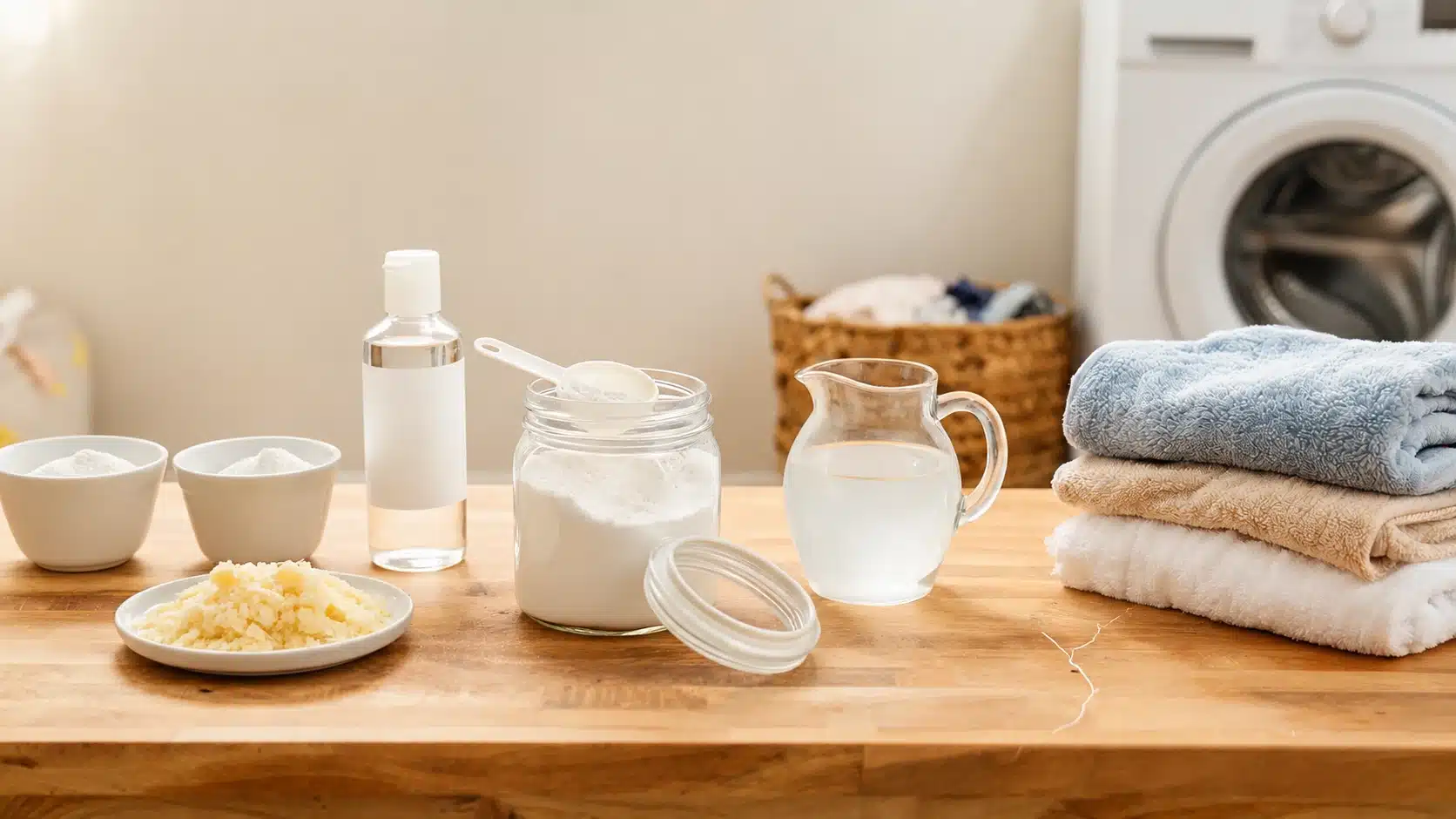


The first batch of homemade laundry detergent I made came out of the washer in soap flakes. I’d grated the bar too coarsely, used too much, and my dark shirts had a white film across the shoulders.
Not the win I was hoping for. The second batch, after I figured out the right grate size, the right amount, and the right recipe for my water type, worked well enough that I haven’t bought store detergent in two years.
This guide covers three DIY laundry detergent recipes I’ve actually tested: powder, liquid, and a Castile soap version that skips borax entirely. I’ll tell you what went wrong each time and what I changed.
| Difficulty | 2 out of 5 |
| Time | 10–30 minutes per batch depending on recipe |
| Cost per batch | $5–$10 for ingredients yielding 60–100+ loads |
| Tools Needed | Fine grater or food processor, large bowl or bucket, measuring cups, airtight storage container |
| Skill Required | Beginner – if you can follow a recipe, you can make this |
Before picking a recipe, one thing will shape everything else: your water hardness. It determines how well any of these formulas rinse out, and skipping this step is why most people run into residue problems on the first batch.
Why Water Hardness Matters Before You Mix Anything
The US Geological Survey estimates roughly 85% of US homes have hard water at some level, meaning water high in calcium and magnesium minerals.
That matters because soap reacts with those minerals instead of rinsing cleanly. The result is stiff towels, dull whites, and a waxy film building inside the washer drum over time. None of that is a recipe problem. It’s a water problem.
If your home has hard water, and there’s a good chance it does use less detergent than any recipe suggests, wash in warm rather than cold water where possible, and consider adding a tablespoon of washing soda to the drum on stubborn loads as a water softener.
The same principle applies to other porous or mineral-sensitive surfaces around the house: matching the method to the material always matters, whether you’re doing laundry or cleaning a stone bath mat and restoring its absorbency.
Once you know your water situation, choosing between powder, liquid, or Castile soap becomes straightforward.
What You Need to Make DIY Laundry Detergent
Most of these ingredients cost very little and are available at any grocery or hardware store. Having everything measured and in one place before starting saves a mid-batch run to the pantry.
| Ingredients | Tools and Storage |
| Washing soda | Fine grater or food processor for bar soap |
| Borax | Large mixing bowl for powder batches |
| Bar laundry soap: Fels-Naptha or Zote | Large bucket or jug for liquid batches |
| Liquid Castile soap | Measuring cups and a tablespoon scoop |
| Baking soda | Airtight container with a tight-fitting lid |
| Coarse salt | Gloves if skin is sensitive to washing soda or borax |
| Optional: oxygen cleaner, essential oils | Label or marker to date and identify the batch |
Once everything is in front of you, pick the recipe that fits how you actually do laundry. The powder recipe is the fastest to make and takes the least storage space, start here if you’ve never made homemade laundry detergent before.
The liquid version takes more time upfront but produces a big batch that gets you through months of washes. The Castile soap version skips borax entirely and suits anyone with sensitive skin or soft water at home.
How to Make Powder DIY Laundry Detergent
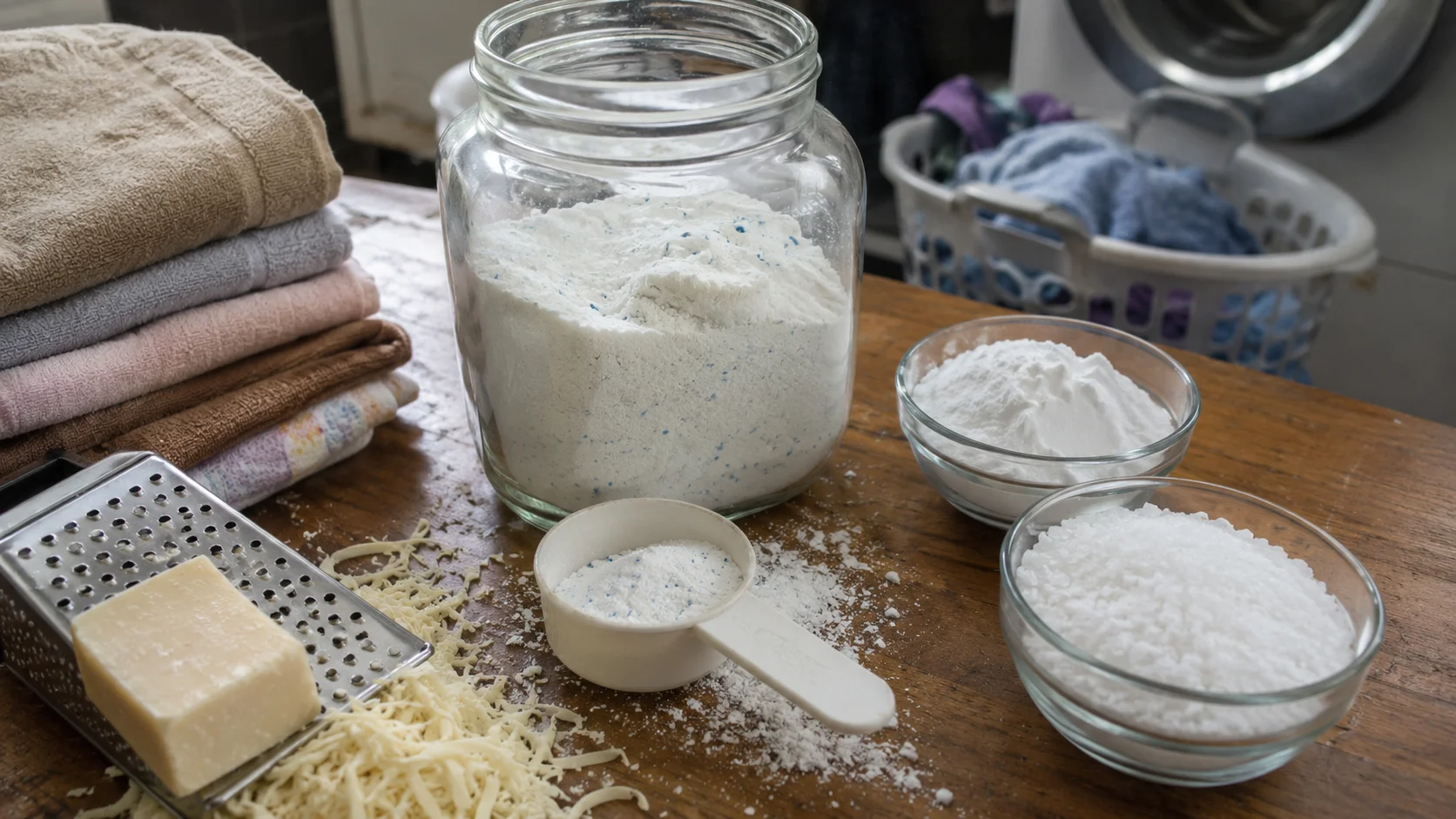
Powder is the recipe I go back to most often. It mixes in under ten minutes, stores in a mason jar on the shelf, and cleans everyday cotton loads reliably.
The one failure mode I hit early on was grating the bar soap on the large side of a cheese grater. That produces flakes, not powder, and they don’t dissolve in the drum before the spin cycle starts.
Use the fine side, or run the soap through a food processor. Get the consistency right and you won’t see residue.
What You Need
- 1 cup washing soda
- 1 cup borax
- 1 bar laundry soap, Fels-Naptha or Zote, finely grated
- Optional: a few drops of essential oil for scent
Step 1: Grate the Soap
Grate the bar soap as finely as possible using the small holes of a cheese grater or pulse it in a food processor until it looks like coarse powder. This step matters more than people expect large flakes are the main cause of residue on dark fabric.
Step 2: Combine the Dry Ingredients
Add the grated soap, washing soda, and borax into a large mixing bowl. These three are the whole recipe. The washing soda loosens dirt and oils, the borax handles odor and whitening, and the soap breaks down grime on the fabric itself.
Step 3: Mix Until Even
Stir thoroughly until the three ingredients are evenly distributed. There should be no visible clumps of grated soap sitting at the bottom of the bowl.
Step 4: Add Scent (Optional)
If using essential oils, add 10–15 drops and stir once more. Lavender, lemon, and eucalyptus all work well without being overpowering after drying.
Step 5: Store It
Pour into an airtight container and store in a cool, dry location away from laundry room steam. Label it with the date — the batch stays fresh for up to six months. Keep a tablespoon scoop inside the container so measuring takes seconds each load.
| Dosage: 1 tablespoon for small and regular loads; 2 tablespoons for large or heavily soiled loads. In HE machines, start with 1 tablespoon and check how clothes feel after drying before increasing. |
Powder works best on cotton shirts, towels, sheets, and everyday fabrics washed in warm water. Cold water loads can sometimes leave undissolved soap if the grate is too coarse.
If that happens, pre-dissolve the powder in a cup of hot water before adding it to the drum. That one fix solved the cold-wash problem for me without changing the recipe.
If you want a larger batch that you pour rather than scoop, the liquid version dissolves faster in cold water and covers months of loads from a single session.
How to Make Liquid DIY Laundry Detergent
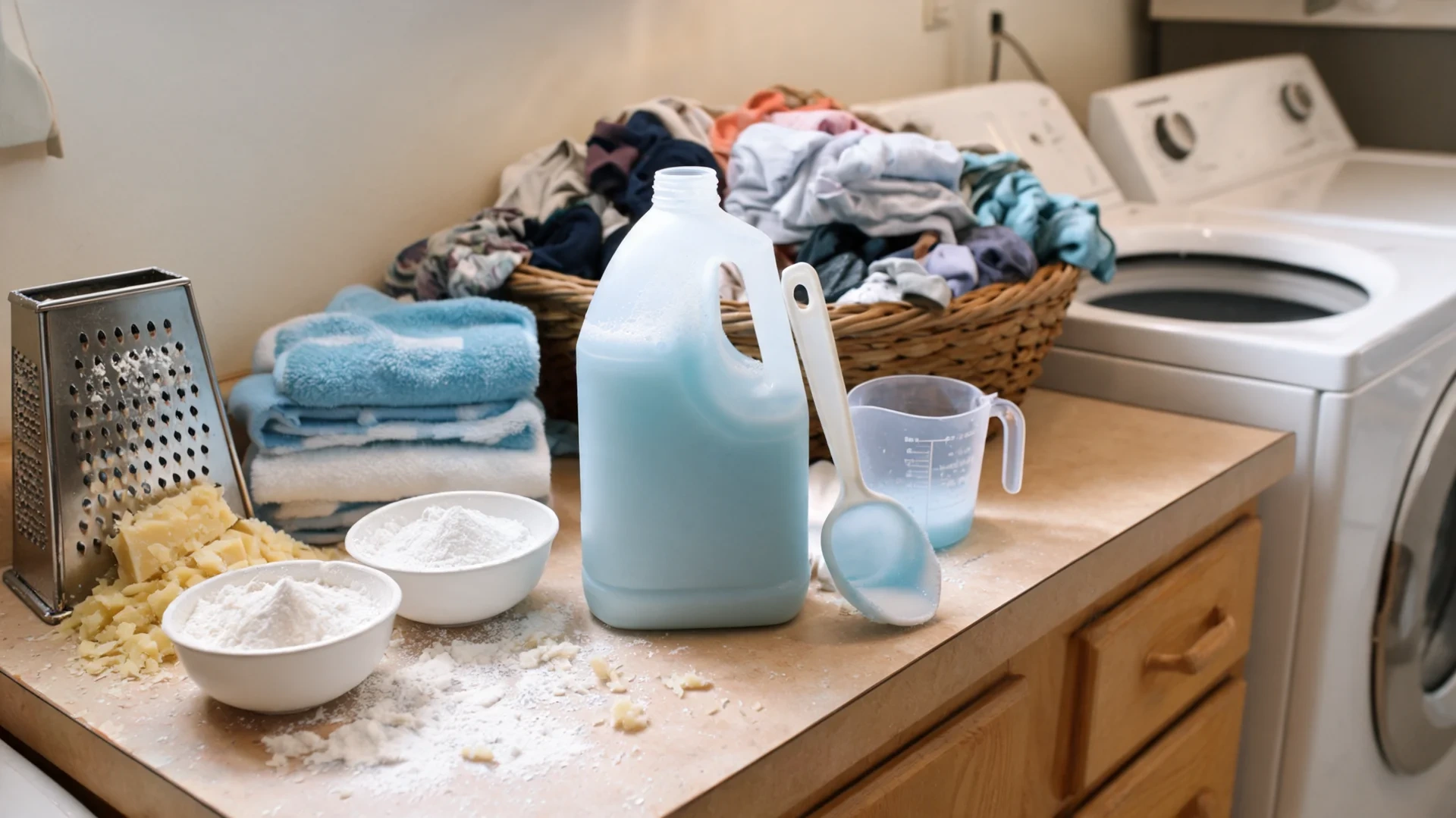
Liquid detergent takes about 30 minutes plus an overnight cooling time, but the payoff is roughly 5 gallons — enough for 60+ loads from a single batch. It’s the best option for households doing several loads a week who want to make it once and forget about it for two months.
What You Need
- 1 bar laundry soap — Fels-Naptha or Zote — finely grated
- 1 cup washing soda
- 1 cup borax
- Hot water — about 4 cups for melting, plus enough to fill a large bucket to approximately 5 gallons
Step 1: Melt the Soap
Heat 4 cups of water in a pot over medium heat until hot but not boiling. You want it hot enough to melt soap, not hot enough to scorch it.
Step 2: Stir Until Smooth
Add the grated soap slowly, stirring continuously. Keep going until the mixture is fully smooth with no visible flakes — this takes 5–8 minutes of steady stirring. Rushing this step leaves chunks that won’t blend properly into the full batch.
Step 3: Move to the Bucket
Pour the melted soap into a clean 5-gallon bucket and let it settle for a minute before adding anything else.
Step 4: Add the Remaining Ingredients
Add the washing soda and borax directly to the bucket and stir well until both are dissolved.
Step 5: Top Up and Cool Overnight
Fill the bucket nearly to the top with hot water, stir thoroughly for another two minutes, then leave it overnight to cool and thicken. By morning it will have set to a gel-like consistency; that’s normal.
Stir or shake before every use, as the mixture separates between washes.
| Yield and Dosage: One batch of 1 bar soap + 1 cup washing soda + 1 cup borax typically yields about 5 gallons — enough for approximately 64 loads at ¼ cup per load. Use 2–3 tablespoons per HE load. |
Store in a labeled, sealed jug or bucket. The texture may thicken further or separate after a few days, give it a stir and it comes back together. For a version that skips the stovetop and borax entirely, the Castile soap recipe is up next.
How to Make Castile Soap Laundry Detergent (Borax-Free)
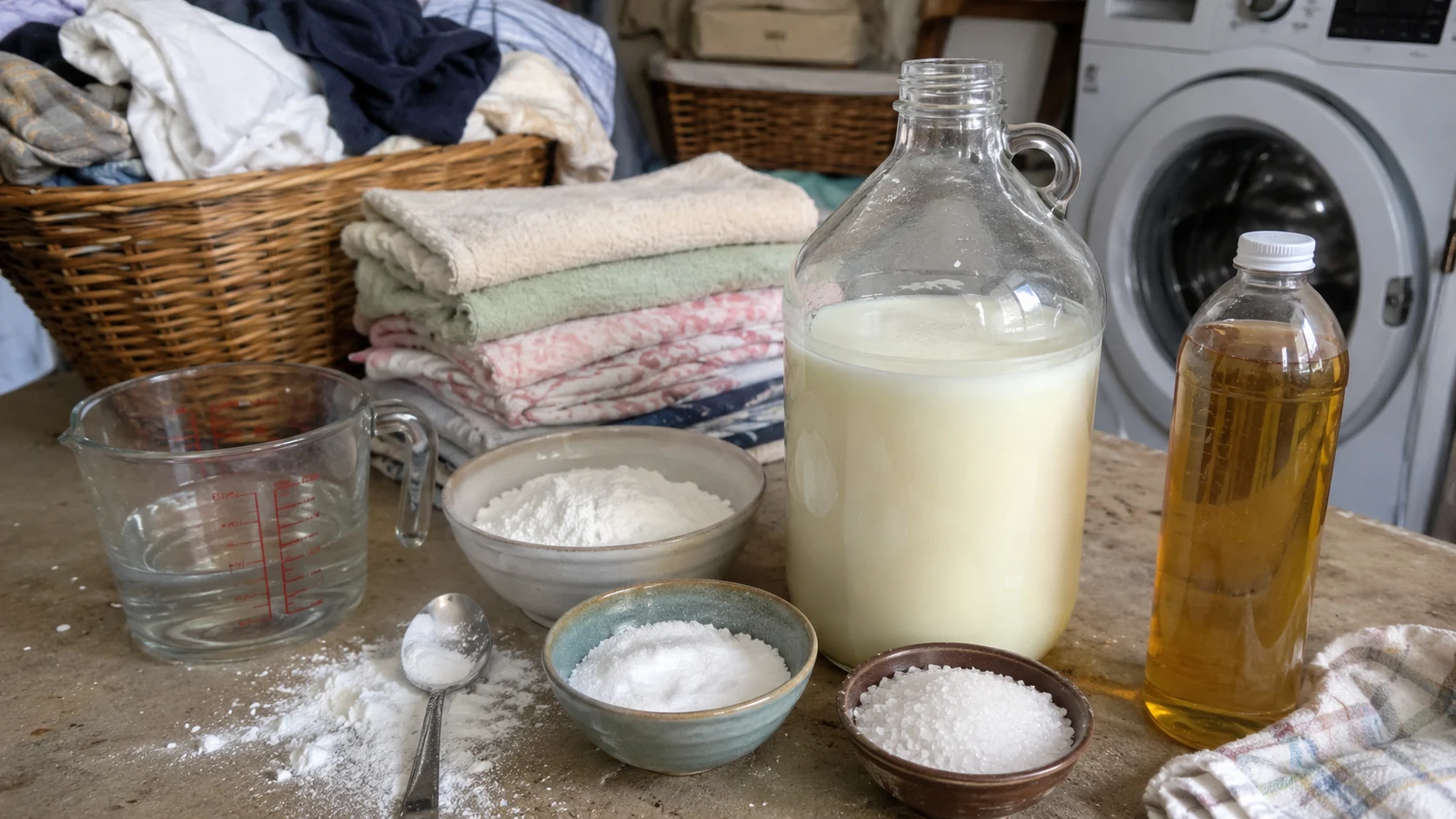
This is the simplest recipe of the three, no heating, no melting, no borax.
It uses plant-based Castile soap as the cleaning base, and I use it for lighter loads and delicates. The catch is hard water: in homes with high mineral content, Castile soap forms a film on fabric instead of rinsing cleanly, which shows up as a greasy feel on clothes after drying.
That’s the water, not the recipe. The coarse salt in the formula helps soften water slightly and slows the soap-mineral reaction, but it won’t fully compensate for very hard water.
What You Need
- ½ cup liquid Castile soap
- ½ cup washing soda
- ½ cup baking soda
- ¼ cup coarse salt
- 1 gallon warm water
Step 1: Add Water First
Pour 1 gallon of warm water into a clean jug or large container before adding anything else. Adding soap to an empty container first turns the whole thing into a foam situation, learned that one the hard way.
Step 2: Dissolve the Dry Ingredients
Stir in washing soda, baking soda, and coarse salt until fully dissolved. Take your time here, undissolved washing soda sinks to the bottom and doesn’t distribute evenly through the load.
Step 3: Add Castile Soap Last
Pour in the liquid Castile soap last and stir gently to keep foam at a minimum. Vigorous stirring here creates a mess that takes a while to settle.
Step 4: Label and Store
Seal and label the container with the date. Store in a cool location away from direct sunlight. Shake before every use, the mixture settles between washes.
| Dosage: ¼ cup per standard load; 1–2 tablespoons per HE load. For towels and workout clothes used repeatedly, an enzyme-based store detergent handles those loads more reliably. Castile soap can reduce absorbency in fabrics washed many times without an occasional warm rinse cycle. |
This recipe works best for light everyday fabrics and cotton clothing in soft to moderate water. It’s a good starting point for anyone making homemade laundry detergent for the first time because there’s nothing to heat and nothing that can go seriously wrong. The borax-free powder version below is similar in simplicity but stores even longer.
How to Make DIY Laundry Detergent Without Borax
Not every household wants borax in the mix. Leaving it out still produces a functional powder for everyday light loads. This version relies on washing soda and baking soda as the primary cleaners instead.
Borax-free powder recipe: Combine 1 cup washing soda, ½ cup baking soda, ¼ cup coarse salt, and 1 finely grated bar of Castile soap. Stir and store in an airtight container. Use 1–2 tablespoons per load.
This version works best for:
- People with sensitive skin who react to borax
- Families who want fewer mineral additives in regular laundry
- Anyone making a first test batch before committing to a larger recipe
- Light everyday laundry in soft to moderate water conditions
| Pro Tip: If eczema or contact dermatitis is a concern, a fragrance-free and dye-free store detergent is a safer starting point before testing any homemade recipe on a full laundry load. Natural doesn’t automatically mean gentle for every skin type. |
Once you’ve settled on a recipe, how much you use matters as much as which formula you chose. Overuse is where most people run into problems, and it’s the easiest thing to fix.
DIY Laundry Detergent vs Store-Bought: What Actually Matters
Both options clean laundry. The real question is which one makes sense for the specific laundry situation in your home.
| DIY Laundry Detergent | Store-Bought Detergent | |
| Cost per load | $0.05 to $0.10 | $0.20 to $0.35 |
| Heavy stains and grease | Limited without enzyme cleaners | More effective with enzyme formulas |
| Hard water performance | Can leave residue and buildup | Formulated to perform in all water types |
| Cold water use | Powder may not dissolve fully | Dissolves reliably in all temperatures |
| High-efficiency washer safety | Safe with careful dosing | Optimized and certified for HE use |
| Prep time | 10 to 30 minutes per batch | Ready to use |
| Best suited for | Regular everyday loads, soft water homes | Heavy stains, hard water, HE machines |
The savings are real. At $0.05–$0.10 per load versus $0.20–$0.35 for most commercial brands, a household doing six loads a week saves roughly $50–$80 per year on detergent alone.
Store-bought holds the clearest advantage on stain removal: enzyme-based formulas consistently outperform soap-based homemade recipes on grease, blood, and grass stains.
Using both isn’t a compromise; it’s the practical answer for most households doing a mix of everyday loads and tougher washes. The other variable that determines how well any version performs is buildup, and that comes down to dose.
Preventing Buildup on Clothes and in the Washer
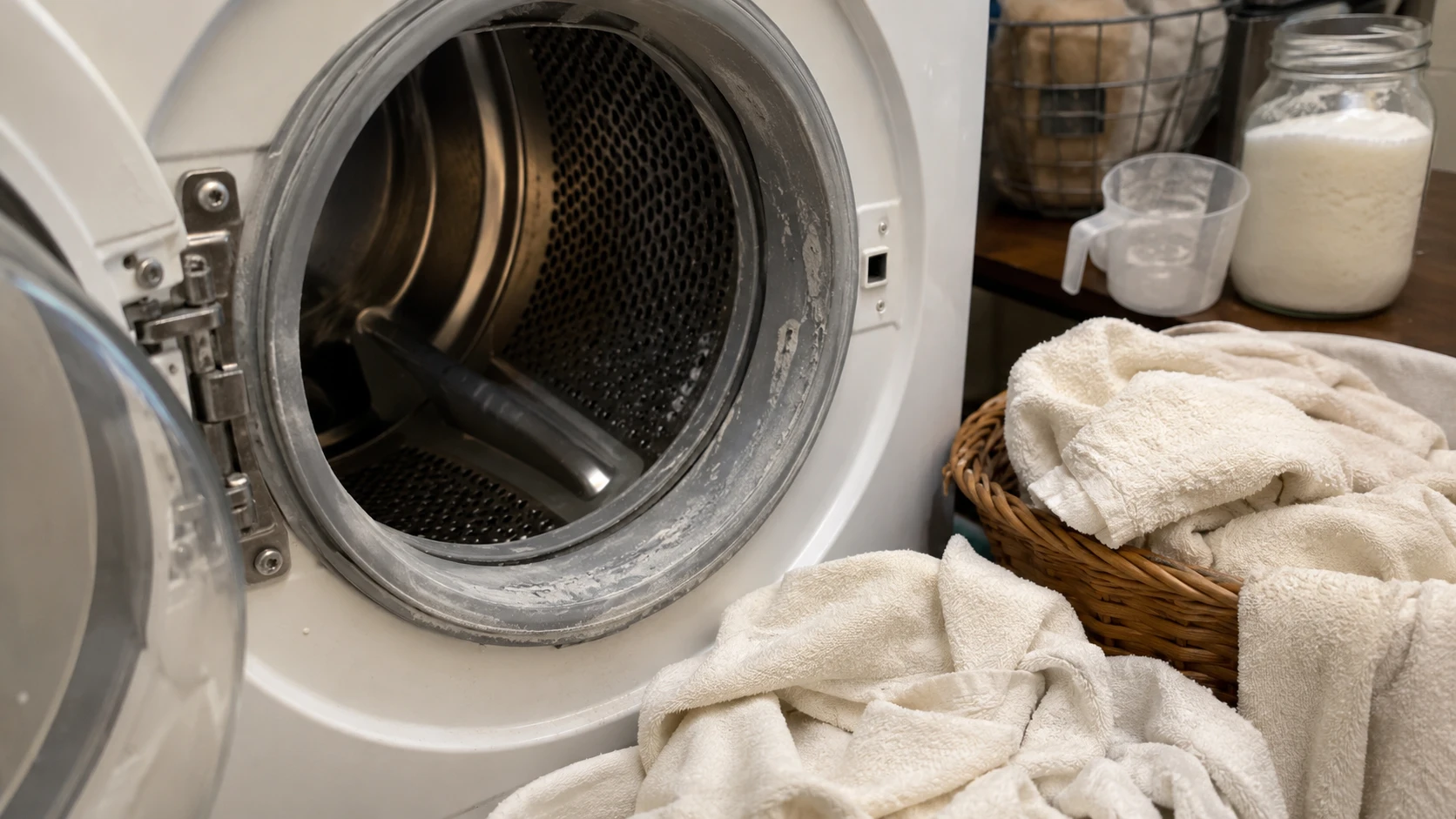
You’ll find strong opinions online about homemade detergent ruining washers. The truth is more straightforward than that. Buildup happens when soap, hard water, and overuse stack on top of each other, and reducing the amount used solves most of it.
Going from 2 tablespoons down to 1 tablespoon per load resolved the stiffness in my towels within three washes. The recipe didn’t need changing. The dose did.
Warning Signs That Something Is Off
- Towels feel stiff after drying
- Clothes smell sour after storage
- White fabric is turning dull or grayish
- A waxy feel inside the washer drum
How Soap and Hard Water Work Against Each Other
Soap reacts with calcium and magnesium minerals in hard water. Instead of rinsing cleanly, soap particles cling to fabric and drum surfaces, leaving a film that stiffens towels and traps odors.
If clothes feel rough after washing, water hardness is usually the cause rather than the recipe. Test your water with an inexpensive hard water test strip before assuming the formula is wrong.
How to Use Homemade Laundry Detergent Safely in HE Machines
Start with 1 tablespoon of powder or 1–2 tablespoons of liquid per HE load. Don’t increase until several washes confirm how the machine and laundry respond.
Add detergent directly to the drum rather than the dispenser drawer, this gets it into the water before the cycle begins. Finely grated soap dissolves better than coarse flakes and reduces residue marks on dark fabric.
If you see white marks on dark clothes, run a warm rinse cycle without any detergent and cut your next dose by half. That typically clears the problem within one or two washes.
The same patience that makes other household DIY projects succeed, using the right amount of the right product, not just reaching for more applies directly here.
If you’ve ever worked through a project like painting a bathroom tile floor, you know that prep and product control matter more than effort.
Mistakes That Make Homemade Laundry Detergent Fail
Most problems with homemade laundry detergent come from a short list of repeated mistakes. I made several of them in the first three months. Fixing one at a time, starting with the amount per load, usually resolves the issue without changing the recipe itself.
Using Too Much Per Load
Excess soap leaves a film on clothes and inside the machine. Start with 1 tablespoon and increase only if loads come out visibly dirty after drying.
Grating the Soap Too Coarsely
Large soap flakes don’t dissolve fully in the drum. Use a fine grater or food processor and aim for a powder-like consistency — close to the texture of coarse flour.
Storing Powder Without Sealing It
Moisture causes clumping, which makes the powder hard to measure and uneven in the wash. Use an airtight container in a dry location away from laundry room steam.
Skipping the Rinse Check on Dark Clothes
White marks on dark fabric indicate overuse or hard-water buildup. Run a warm rinse cycle and reduce the amount by half on the next load before assuming the recipe is wrong.
Ignoring Water Hardness
Hard water reduces how well soap rinses out and causes residue to build over time. Start with less detergent than recommended if you don’t know your water type, and test with warm water before committing to cold-wash loads.
These five errors account for nearly every complaint I’ve heard from people who tried a homemade detergent recipe and said it didn’t work.
In most cases it did work, it was the dose or the grate size that needed adjusting, not the formula. The same lesson applies across DIY home projects: the first attempt teaches you what to do differently the second time around.
Common Questions About DIY Laundry Detergent
These are the questions I get most from people who’ve already gathered the ingredients and are second-guessing themselves before the first batch.
Does homemade laundry detergent actually work in HE washers?
Yes, with careful dosing. Use 1 tablespoon of powder or 1–2 tablespoons of liquid per HE load and add it directly to the drum. Homemade recipes produce less foam than commercial detergents, which is actually an advantage. Start low and adjust only after checking results.
Is borax safe to use in laundry detergent?
Borax is a naturally occurring mineral salt used in laundry products for over a century. It’s safe for most adults when used as directed. If you have young children, sensitive skin, or prefer to avoid it, the borax-free powder or Castile soap recipe in this guide cleans everyday loads effectively without it.
Why does my homemade laundry detergent leave white residue?
Almost always one of two causes: too much detergent per load, or hard water causing soap to leave a mineral film on fabric. Cut the dose in half first. If residue persists, try washing in warm rather than cold water, or add a tablespoon of washing soda to the drum as a water softener.
How long does homemade laundry detergent last?
Powder keeps well for up to six months in an airtight container stored away from moisture. Liquid versions are best used within 1–2 months, as separation and mild bacterial growth can become issues over longer storage. Label each batch with the date.
Can I use Castile soap laundry detergent in a front-loading washer?
Yes, but use a small amount — 1 to 2 tablespoons maximum. Front-loaders are low-water machines and more sensitive to soap buildup than top-loaders. Add it directly to the drum. If you notice a soap smell on clothes after washing, reduce the amount before changing the recipe.
Does DIY laundry detergent work in cold water?
Liquid versions work in cold water reliably. Powder can leave undissolved flakes in cold cycles if the soap is grated too coarsely. To use powder in cold water loads, pre-dissolve 1 tablespoon in a cup of hot water first, then pour the solution into the drum before loading clothes.
What’s cheaper to make: powder or liquid homemade laundry detergent?
Powder costs slightly less per load because the recipe makes more concentrated doses. A batch using one bar of soap, 1 cup washing soda, and 1 cup borax runs about $4–$6 in ingredients and yields 60–100 loads. The liquid version costs similar upfront but requires more storage space for the same number of washes.
Does homemade laundry detergent work on tough stains like grease or grass?
Not reliably. Homemade soap-based recipes lack the enzymes that commercial detergents use to break down protein and oil-based stains. For grease, blood, or grass stains, treat with an enzyme-based product before washing. Use the homemade detergent for the wash cycle itself.
Final Verdict: Which DIY Laundry Detergent Recipe Is Worth Making?
If I were starting from scratch, I’d make the powder first. It takes ten minutes, stores in a mason jar, and costs $0.05–$0.08 per load, not theoretical savings, actual ones.
The single change I’d make from day one is going straight to a fine grater or food processor for the soap. That adjustment alone eliminated the residue problem I spent three weeks troubleshooting.
Once you’ve confirmed the powder works in your water type and with your machine, the liquid version is worth making for the batch size alone. For anyone avoiding borax, start the Castile soap recipe on a single low-stakes load before committing to a full gallon. The recipe isn’t complicated.
It just needs to match your home, and now you know how to find out if it does. Make the first batch, check the towels after the third wash, and adjust from there.