


When you start planning a kitchen update, it is easy to feel lost in all the sink choices.
You want something that looks good, works hard, and fits your space without extra stress. That is where the apron sink vs. farmhouse sink question really, truly matters.
In this guide, I’ll walk you through both options in plain language. You will see how they differ in size, style, cost, and daily use, so you are not guessing.
When you’re tired after cooking, you want the cleanup to feel simple, not annoying.
My goal is to help you think about your kitchen, your habits, and your budget, so you can pick the sink that feels right for you.
What is an Apron Sink?
An apron sink is a deep sink with a front panel that extends a little past the countertop. This front edge helps protect the cabinet from splashes and lets you stand closer to the bowl without leaning as much, which can make long kitchen tasks feel easier on your back.
Key features:
- Exposed front panel
- Works with many kitchen styles
- Can be installed as undermount, top-mount, or flush-mount
Everyday benefits: An apron sink offers many sizes and material options, making it simple to match with different layouts. The forward design reduces leaning, and the wide range of sizes helps it fit into small or mid-size kitchens.
Best fit: Homes that want a standout sink without major cabinet changes and kitchens built around modern or mixed-style designs.
What is a Farmhouse Sink?
A farmhouse sink is a deep, wide sink with an exposed front panel. This style comes from older European kitchens where large bowls were needed for cooking tasks and hand-washing clothes.
Its roomy design still works well today, especially in busy kitchens that handle big cookware.
Key features:
- Deep bowl for large items
- Usually made from fireclay or cast iron
- Rounded corners for comfort
Everyday benefits: The extra depth makes washing pots and pans easier, and the bold front panel creates a strong focal point in the room. The design also helps keep water inside the bowl, reducing splashes on surrounding surfaces.
Best fit: Larger kitchens and homes that prefer a warm, classic style with a sink that stands out.
Apron Sink vs. Farmhouse Sink Comparison
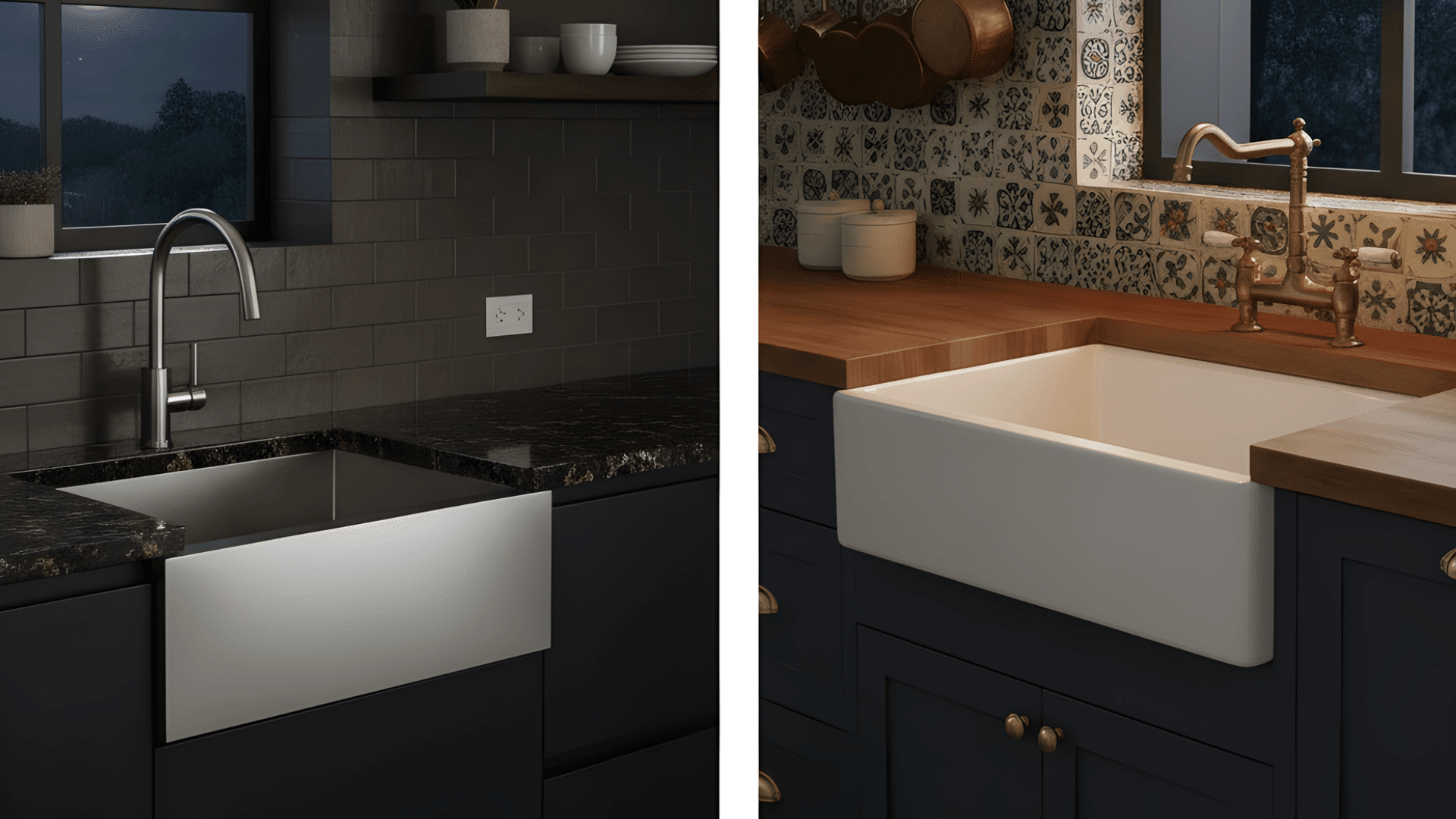
Choosing between an apron sink and a farmhouse sink becomes much easier when you see how they differ side by side. The table below highlights the features that matter most in real kitchens, from size to cost to installation needs.
| Feature | Apron Sink | Farmhouse Sink |
|---|---|---|
| Front Panel | Exposed | Exposed |
| Typical Size | Many options | Usually large and deep |
| Installation | Often fits standard cabinets | Often needs cabinet changes |
| Style Range | Modern or classic | Mostly traditional |
| Cost | More flexible | Higher cost |
| Best For | Small or medium kitchens | Large kitchens and heavy use |
With these differences in mind, it becomes easier to decide which sink matches your space, your routine, and the look you want in your kitchen.
Installation Differences You Need to Know
Installing either sink takes planning, and the steps can look very different once you get to the cabinet and countertop stage.
Apron sink installation:
- Fits into a cutout in the cabinet
- Can sometimes use the same cabinet base already in place
- Can be mounted in three ways: undermount, top-mount, or flush
- Lighter materials make support easier
Farmhouse sink installation:
- Often needs a special base cabinet made for farmhouse sinks
- Must support heavy weight, especially when the bowl is full of water
- The cabinet front needs a clean, exact cut that matches the sink front
- Usually works best when a pro handles the measuring and install
These differences matter most when you are working with existing cabinets, so it helps to match the sink style to how much change the kitchen can handle.
Common Materials Used in Apron and Farmhouse Sinks
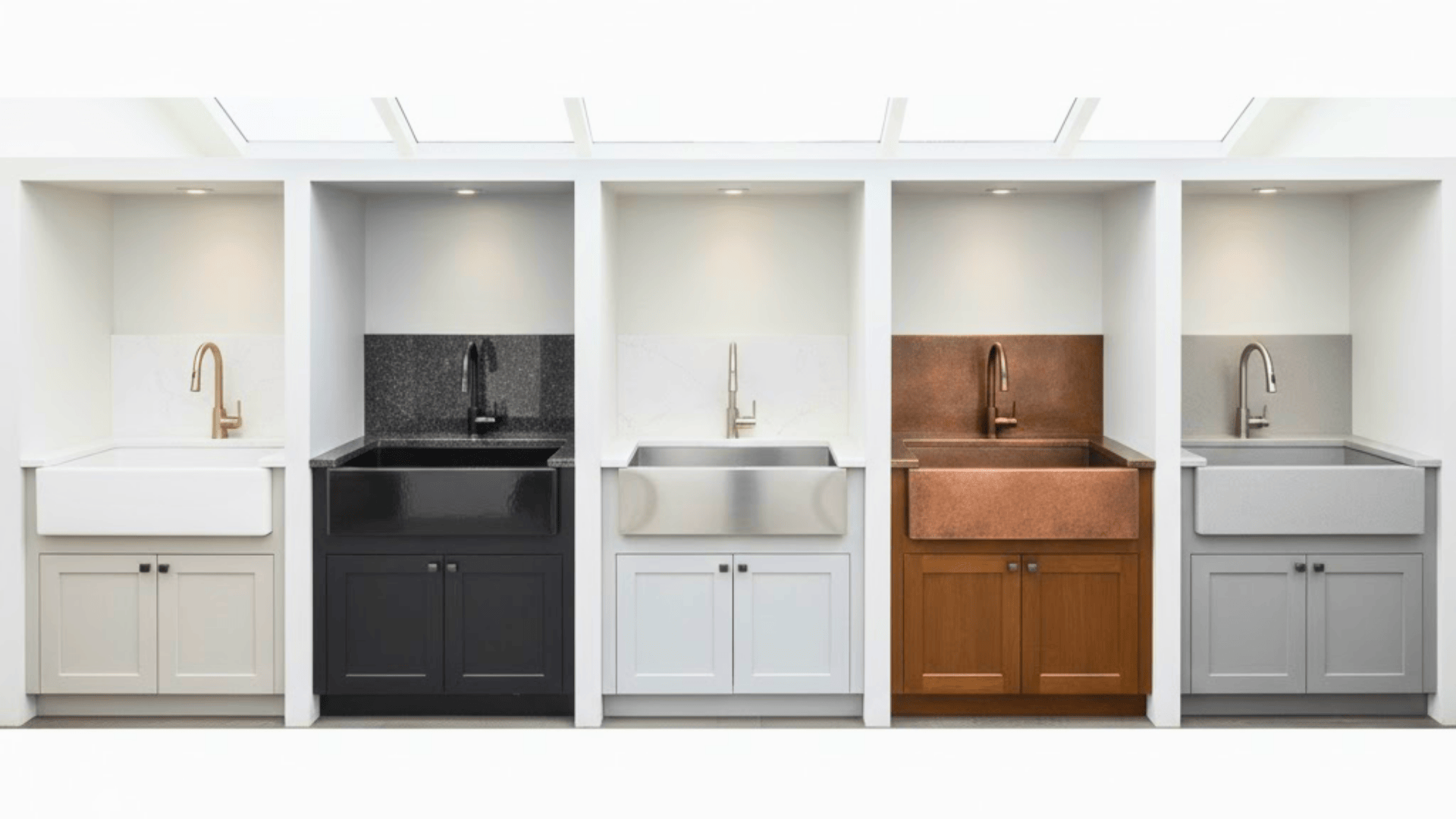
Both apron and farmhouse sinks come in several materials, and each one changes how the sink looks, feels, and holds up over time.
- Fireclay: Fireclay has a smooth, strong surface that works well in busy kitchens. It keeps a bright, clean look and holds up against daily use, which makes it a common pick for classic and modern spaces.
- Cast iron (with enamel finish): Cast iron is very sturdy and comes with a glossy enamel coating. This coating wipes clean with little effort and gives the sink a polished look that fits many kitchen styles.
- Stainless steel: Stainless steel fits naturally in modern kitchens. It is light, simple to maintain, and handles regular wear without much trouble. Its clean look also works well with many faucet and hardware finishes.
- Copper: Copper brings a warm color that stands out in the room. Over time, the surface changes naturally, giving it a lived-in look. It does need gentle cleaning, but many homeowners enjoy the character it develops.
- Stone or composite: Stone and composite sinks have a soft, matte appearance that blends well with natural materials. They are resistant to dents and scratches, making them a steady option for kitchens that want strength without a shiny finish.
Each material offers its own mix of comfort, care, and style, so the best choice depends on how you use your kitchen and the look you want to create.
Pros and Cons of Apron Sinks vs. Farmhouse Sinks
Understanding the strengths and limits of each sink style helps you match the right option to your kitchen size, cooking routine, and budget. The table below shows the key points that matter most during daily use.
| Sink Type | Pros | Cons |
|---|---|---|
| Apron Sink | – Many sizes for different kitchens – Wide range of materials – Easier installation in most remodels – Comfortable working position |
– Some models have smaller bowls – The front surface can show marks if the material is soft |
| Farmhouse Sink | – Deep, wide bowl holds large cookware – Strong visual feature in the kitchen – Smooth surfaces are simple to clean |
– Needs strong cabinet support – Reduces base cabinet storage – Higher cost for sink and installation |
With these points in mind, it becomes easier to see which sink offers the comfort, look, and setup that match your kitchen and the way you work in it every day.
Kitchen Design Ideas with Apron and Farmhouse Sinks
Once you know the basics of apron sinks and farmhouse sinks, it helps to see how they actually look in real kitchens. These ideas show how each sink style can shape the mood of your space and match the way you use your kitchen every day.
1. Classic Farmhouse Look
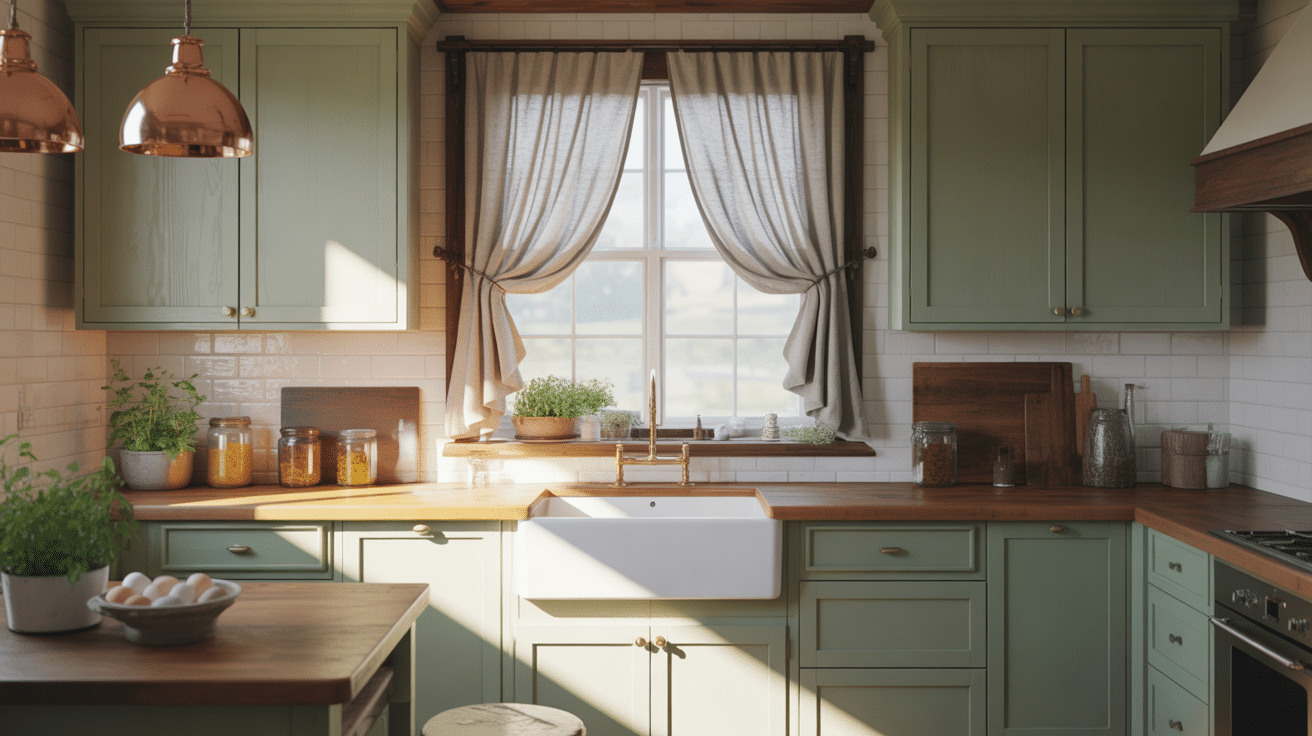
A farmhouse sink made from fireclay pairs well with shaker cabinets and warm metal fixtures. Soft, neutral colors help the sink stand out without overpowering the space.
This style is a strong match for kitchens that want a cozy, lived-in look with gentle details and simple finishes.
2. Modern Apron-Front Look
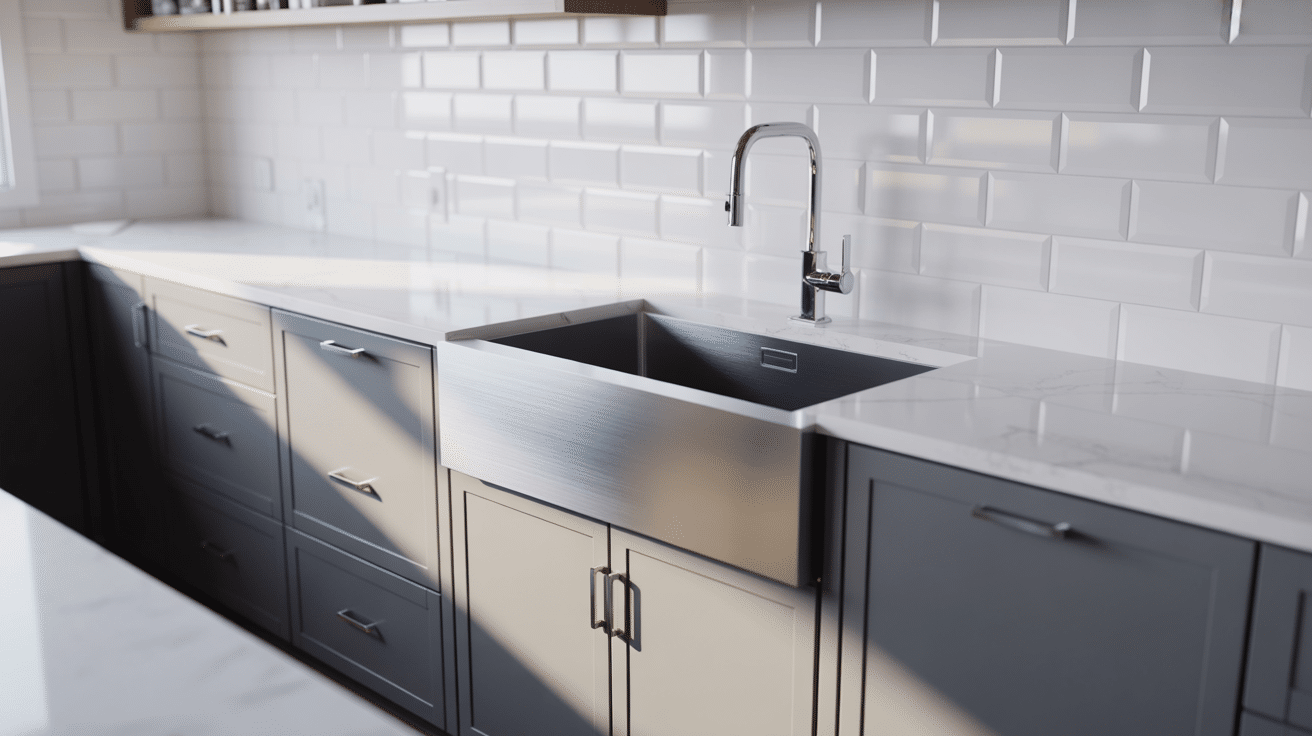
A stainless apron sink fits nicely with flat-panel cabinets and clean hardware. Straight lines and smooth fronts give the room a clear, modern feel.
This setup works best in kitchens that prefer simple shapes, open counters, and a layout that feels organized without extra design details.
3. Light Coastal Look
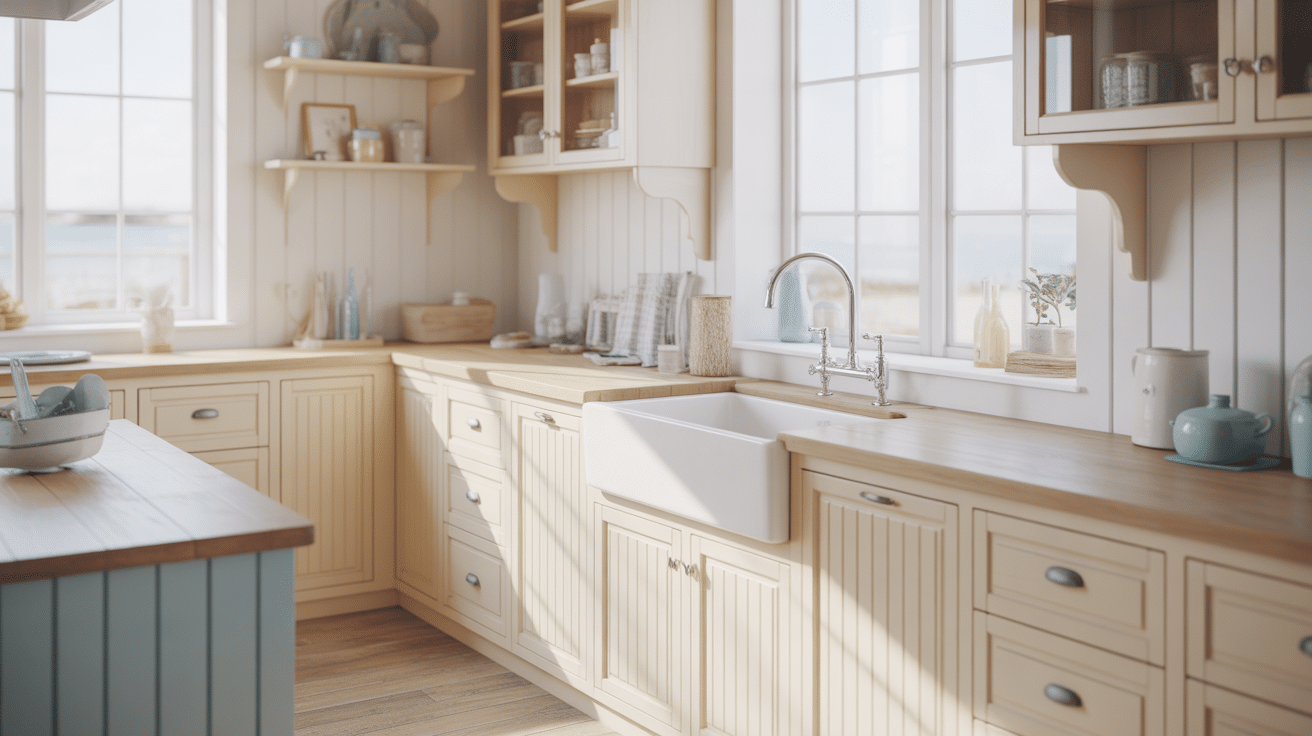
A white apron or farmhouse sink works well with light-colored cabinets and soft accents. Pale blue, cream, or sand tones add a gentle coastal touch without making the space too themed.
This look suits kitchens that want a bright, relaxed feel with plenty of natural light.
4. Transitional Look
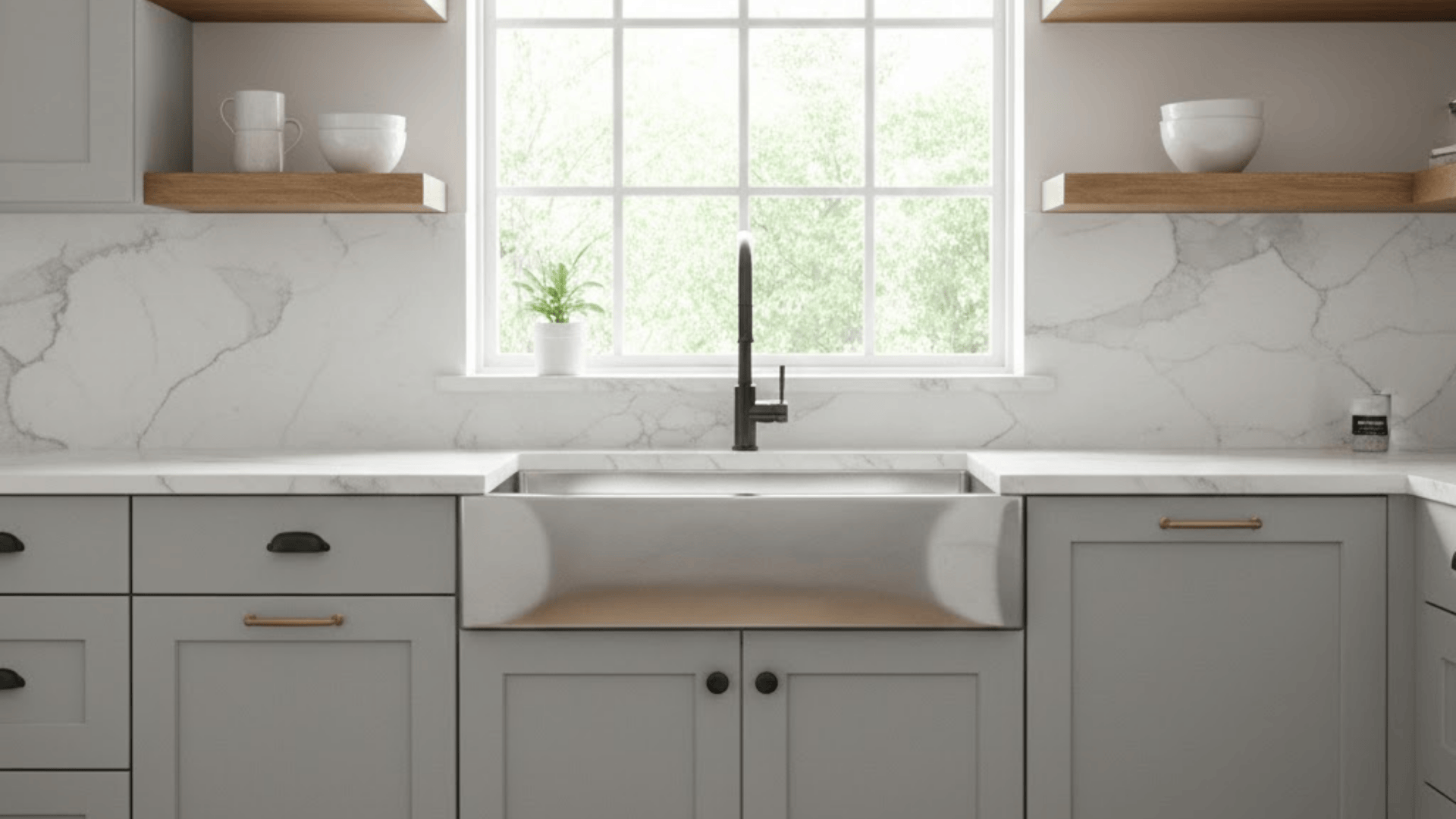
An apron sink blends smoothly into a transitional kitchen that mixes classic and modern features. Simple cabinet doors, natural wood touches, and mixed metal finishes help tie everything together.
This design fits homes that like warm, comfortable details balanced with clean, current elements.
How to Choose Between an Apron Sink and a Farmhouse Sink
To pick the right sink, it helps to look at the main factors side by side. This way, you can match each option with your kitchen size, routine, and cleaning style.
| Factor | Choose an Apron Sink | Choose a Farmhouse Sink |
|---|---|---|
| Kitchen size | The kitchen is small or medium, and the space feels tight. | The kitchen is large and has room for a deep, wide bowl. |
| Daily use | Cooking is light, and dish loads stay fairly small most days. | Cooking is frequent, and you often wash large pots, pans, or baking sheets. |
| Budget | You want something that fits a mid-range budget and works in a remodel. | You can spend more for a feature sink that changes the feel of the whole room. |
| Cleaning style | You prefer low-effort care with materials like stainless steel or fireclay. | You are okay with extra care for materials like copper or certain stone sinks. |
Looking at each row, think about which column sounds closer to your kitchen and your habits. The sink that matches most of your answers is usually the best fit.
Common Mistakes to Avoid
Before you order or install an apron or farmhouse sink, watch out for these easy-to-miss mistakes.
- Choosing the wrong size: Buying a sink wider or deeper than the cabinet can force expensive changes, so always measure the inside of the base first.
- Ignoring weight and support: Heavy fireclay or cast iron sinks need extra bracing; without it, the cabinet can sag or crack over time.
- Misjudging faucet space: Tall faucets need room to move; check that the handle and spout clear the backsplash and wall behind the sink.
- Forgetting storage loss: These sinks use more room inside the cabinet, so plan ahead for where cleaners, bins, and supplies will go.
- Picking a hard-to-care-for material: Stainless steel and fireclay suit low-effort cleaning, while copper and some stone options need gentle, regular care.
- Skipping pro help on tricky cuts: Cutting the cabinet front and countertop for the apron edge must be precise, and a pro can prevent gaps and chips.
Keeping these points in mind helps your new apron or farmhouse sink feel like a smart upgrade instead of a stressful project.
Bottom Line
Now that you’ve worked through the apron sink vs farmhouse sink comparison, you have a clearer sense of how each one will behave in your kitchen.
You’ve seen the differences in size, style, cost, and daily use, so your choice does not have to be a guess.
As you look at your own layout, think about how you cook, how much space you have, and how much care you want to give your sink. Those details point you toward the option that fits your routine and your home.
If you’d like a bit more help planning your kitchen, you can check out my other posts, too. You and your space deserve ideas that actually make everyday cooking feel easier.