


A fireplace should make a living room feel warm and inviting. But more often than not, it ends up making everything feel off, the sofa lands in a weird spot, the TV competes for attention, and the whole room just feels like a puzzle with missing pieces.
I’ve looked at countless before-and-after awkward living room layouts with fireplace fixes, and the good news is that most of these rooms are very fixable. You don’t need to renovate or buy all new furniture.
This blog covers real layout problems, corner fireplaces, off-center placements, narrow rooms, and the actual fixes that worked.
From TV placement to rug sizing, there’s a lot to get into. Let’s start with why fireplaces cause so many layout headaches in the first place.
Why Fireplaces Create Awkward Living Room Layouts?
Fireplaces are beautiful, but they’re also one of the hardest design elements to work around. Most rooms weren’t built with both a fireplace and modern furniture placement in mind.
Off-center fireplaces throw off the whole wall. One side feels heavy, the other feels empty. Corner fireplaces are even trickier; they pull the eye in a direction that furniture just doesn’t naturally follow.
Then there’s the TV problem. Two focal points in one room create a constant tug-of-war for attention. Narrow walls make it worse by limiting options. And if traffic flow isn’t carefully planned, even a good layout can feel cramped and cut off.
Before and After Awkward Living Room Layout With Fireplace
Most awkward fireplace rooms share the same core problems. Here are four common scenarios and what actually helped fix them.
1. Corner Fireplace Layout Fix
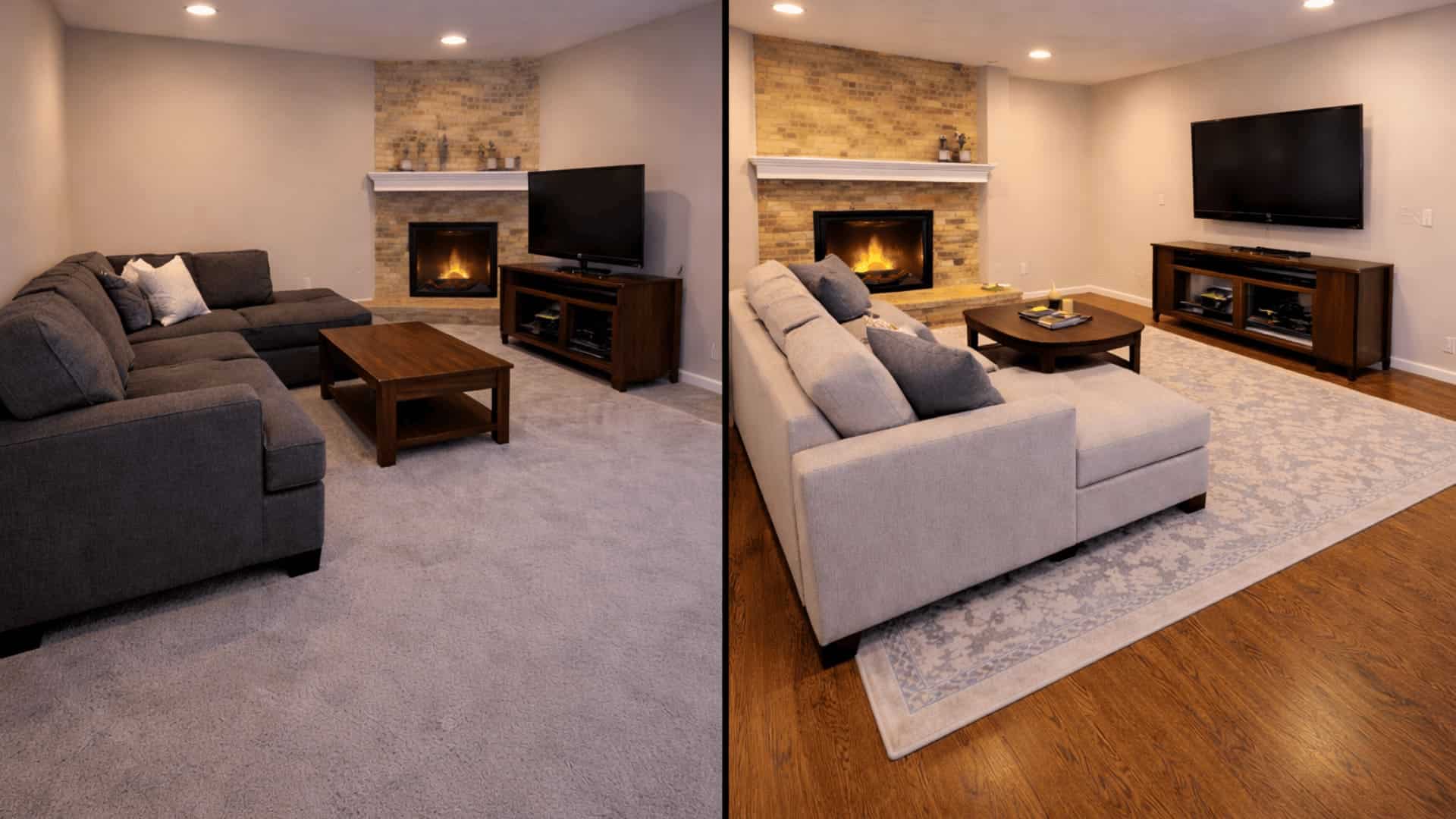
A corner fireplace sounds like a great idea until the furniture goes in. Getting the seating, the TV, and the fireplace to all work together in one corner-focused room is genuinely tricky.
Before: The sofa was pushed flat against the wall, the TV was crammed into the corner, and there was no real spot to sit and talk comfortably. The room felt disconnected.
After: An angled sectional faced the fireplace directly. The TV moved to the adjacent wall. A rug anchored the whole seating area, and the furniture floated away from the walls.
Why it works: The layout creates a clear focal zone, improves sight lines to both the fireplace and TV, and balances the visual weight across the room.
2. Fireplace and TV on Different Walls
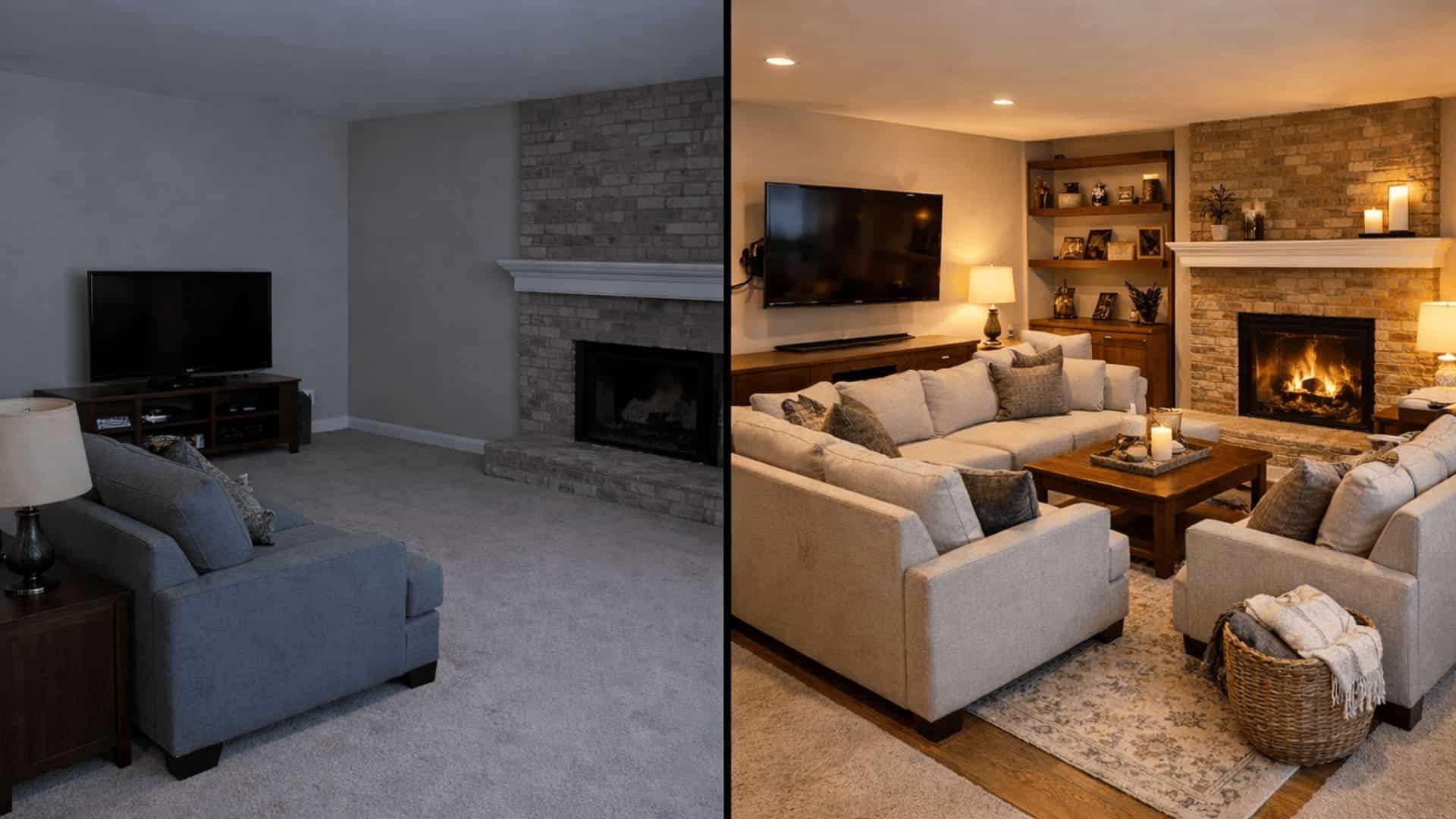
Two focal points on opposite walls might be the most common complaint about fireplaces out there. The room ends up serving neither well, and the seating always feels like a compromise.
Before: Seating faced only one focal point, so it was constantly turning to see the other. One side of the room felt like a dead zone with no real purpose.
After: A swivel mount TV brought flexibility without a full renovation. L-shaped seating naturally covered both focal points, and the conversation area finally felt intentional rather than accidental.
Why it works: Flexible seating and a movable screen remove the either-or problem. The room serves two functions without feeling pulled in two directions.
3. Narrow Living Room With Fireplace
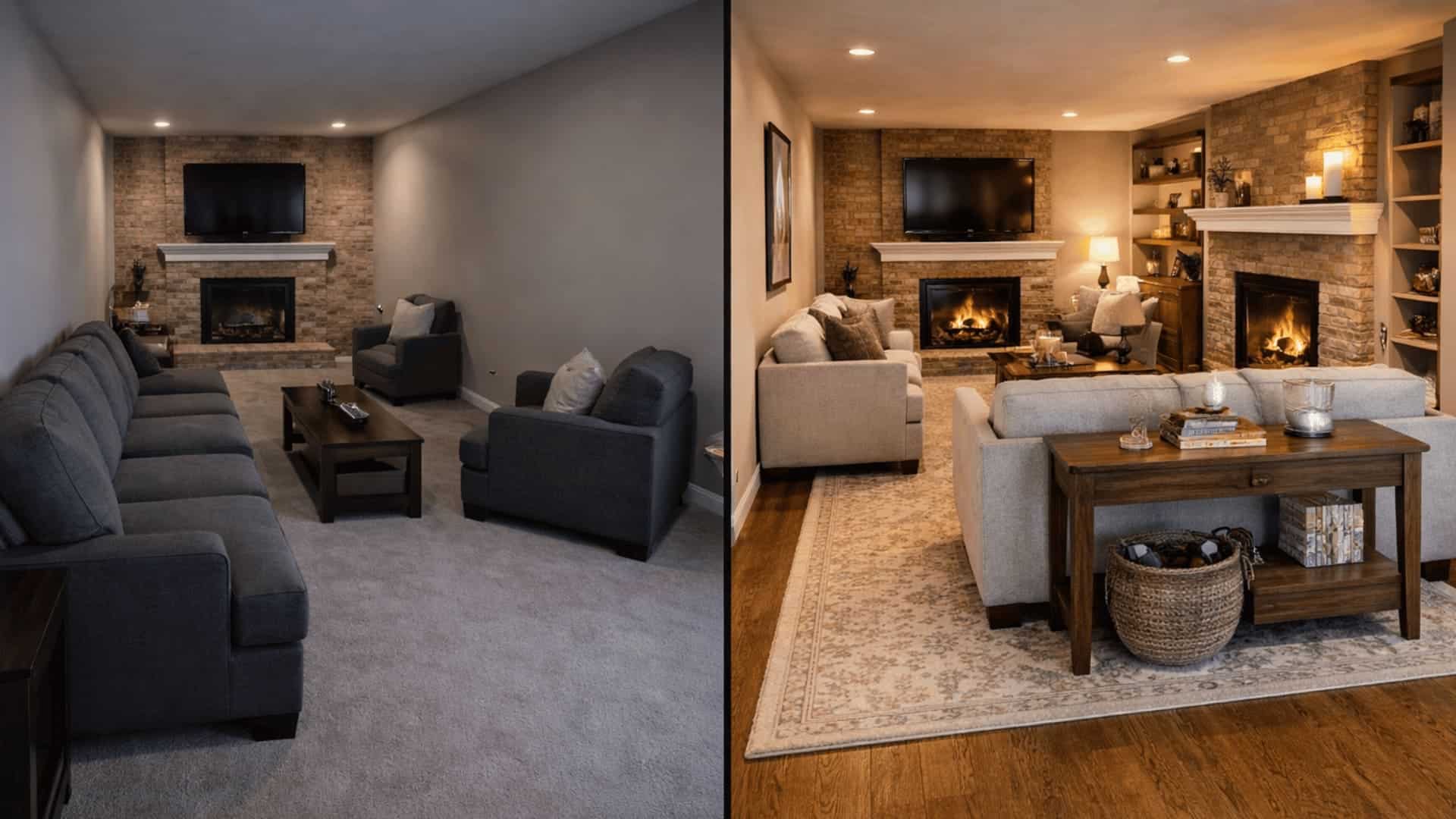
Long, narrow rooms are hard enough on their own. Add a fireplace into the mix, and the layout options start to feel very limited, very fast.
Before: Furniture lined every wall like a waiting room. The room felt long, flat, and impossible to make cozy, a classic bowling alley layout with no clear center.
After: The sofa floated away from the wall with a console table placed behind it. A defined walkway was kept clear on one side. Two smaller chairs replaced a bulky sectional, opening up the floor.
Why it works: Floating furniture breaks the tunnel effect. Smaller pieces give the room breathing room without sacrificing seating.
4. Off-Center Fireplace Fix
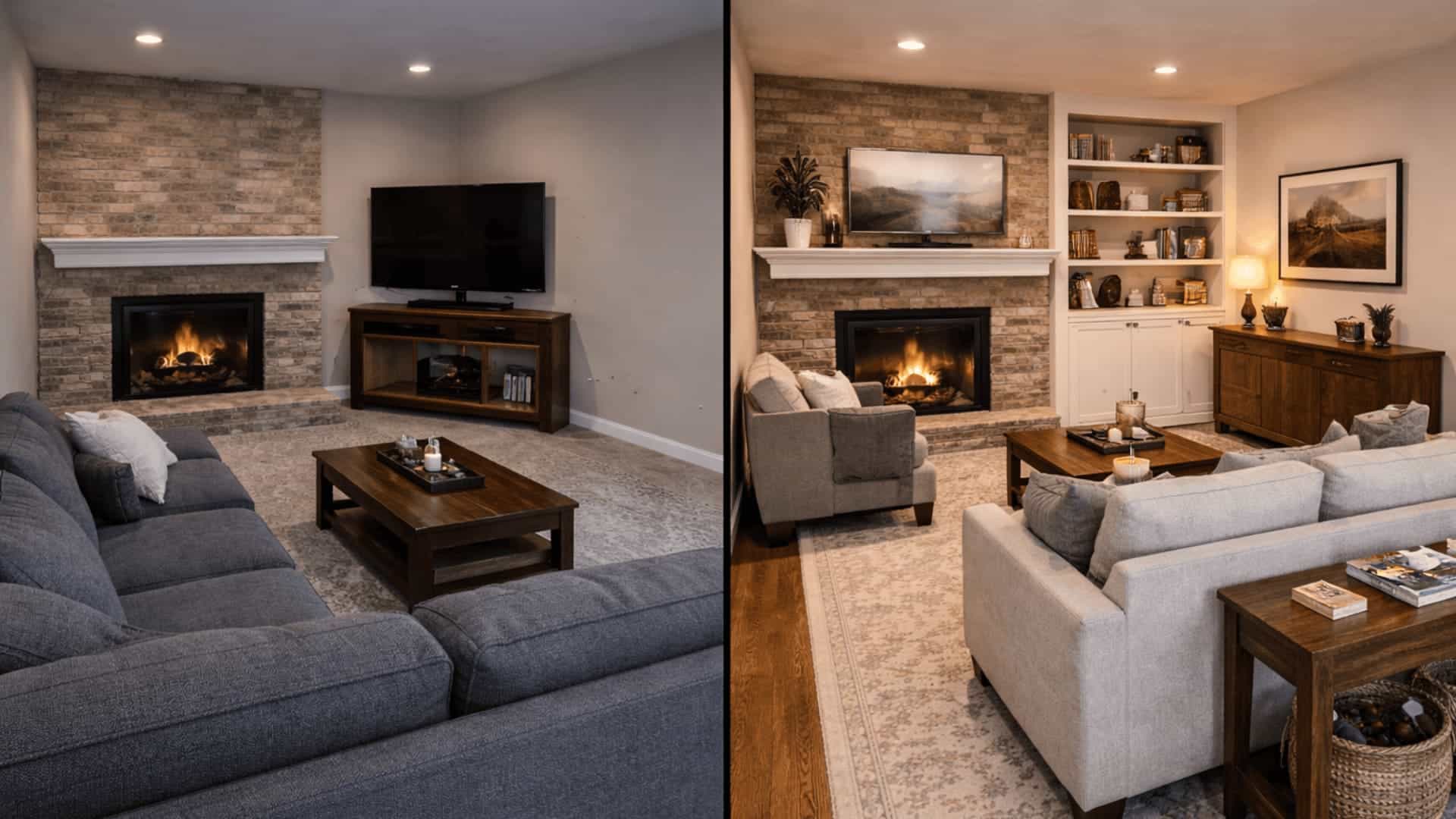
An off-center fireplace throws off the whole room without being obvious. It just feels wrong, and it takes a minute to figure out why.
Before: The fireplace sat off to one side, making the wall feel lopsided. One side looked heavy and busy while the other felt bare and unfinished.
After: Built-ins or open shelving were added on the empty side to balance the visual weight. Art was placed strategically. Furniture was offset intentionally rather than forced into a symmetrical position.
Why it works: Accepting the asymmetry and designing around it, rather than fighting it, makes the room feel considered instead of accidental.
5. The “Fireplace in the Middle of a Long Wall” Fix
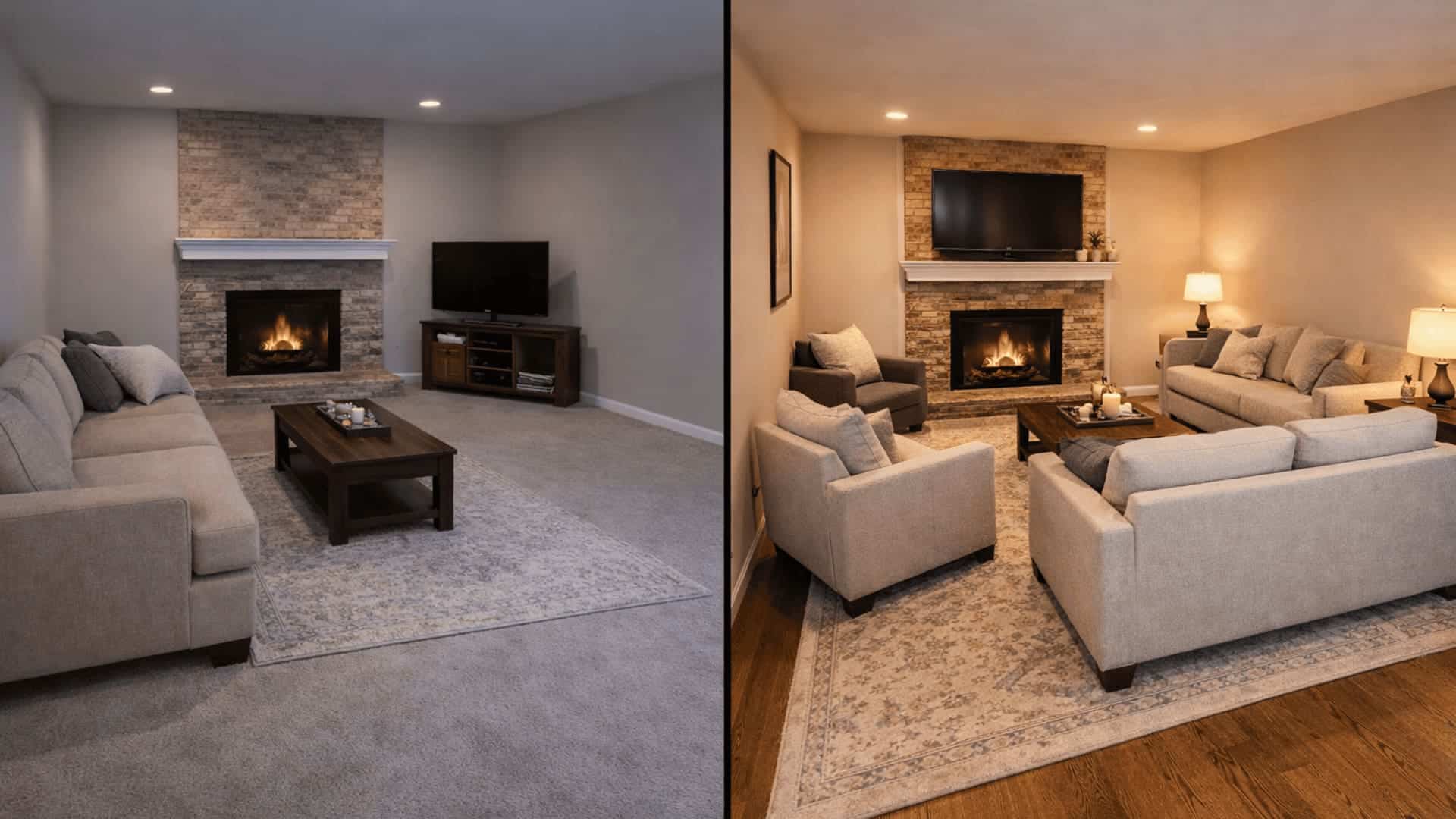
A centered fireplace sounds balanced, but it often splits the room into two disconnected halves with no clear gathering point.
Before: The fireplace sat centered on the long wall, the TV was squeezed into a random corner, and the sofa floated too far back. The room felt stretched with no real anchor.
After: The TV mounted above the fireplace or on a side panel. The sofa pulled closer to tighten the seating zone. Two chairs opposite formed a U-shape, and a large rug grounded the entire conversation area.
Why it works: The visual length of the room shortens, and one clear gathering space replaces two awkward halves.
6. The “Fireplace Between Two Doorways” Layout
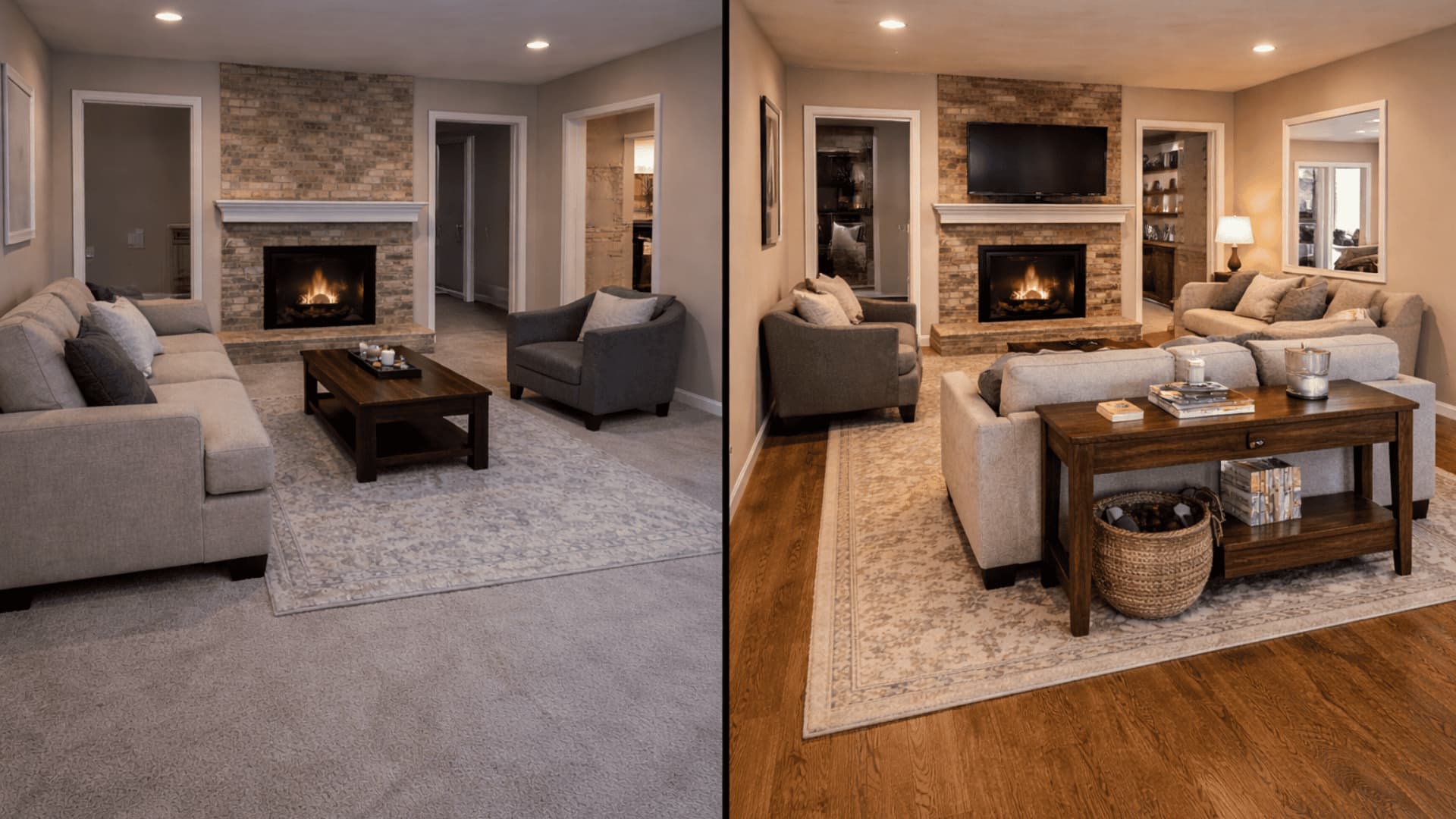
A fireplace flanked by two openings leaves almost no solid wall to work with, which makes the whole room feel like a pass-through.
Before: The fireplace sat between two doorways with no solid wall for the sofa. Traffic constantly cut through the seating area, making the room feel restless and unsettled.
After: The sofa floated in the center, facing the fireplace. A console table behind it defined the walkway. Accent chairs are angled near the fireplace with a clear 36-inch path kept behind the seating.
Why it works: Designing around the traffic flow instead of fighting it keeps the room functional without sacrificing comfort.
7. The “Tiny Living Room With Corner Fireplace” Reset
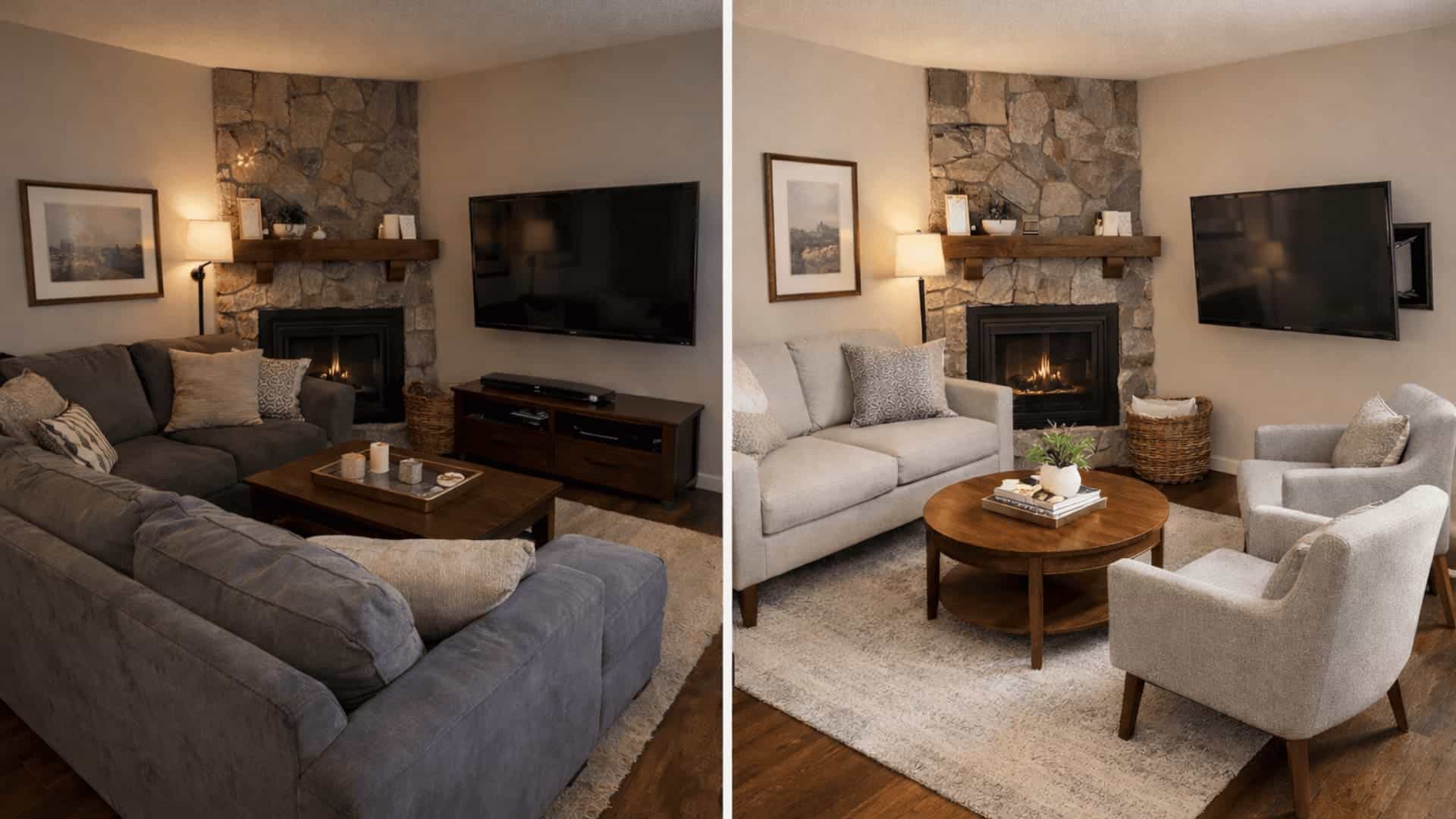
Small rooms with corner fireplaces are easy to over-furnish. One piece too many, and the whole space feels impossible to move through.
Before: A bulky sectional was crammed into the corner, the coffee table blocked the walkway, and the TV dominated the room. Everything competed for the same limited floor space.
After: A smaller sofa replaced the sectional opposite the fireplace. Two slim armchairs took up less visual weight. A round coffee table improved flow, and the TV was mounted on a swivel bracket for flexibility.
Why it works: Choosing the right scale opens the room without removing anything essential.
8. The “Open Concept With Fireplace Off to the Side” Solution
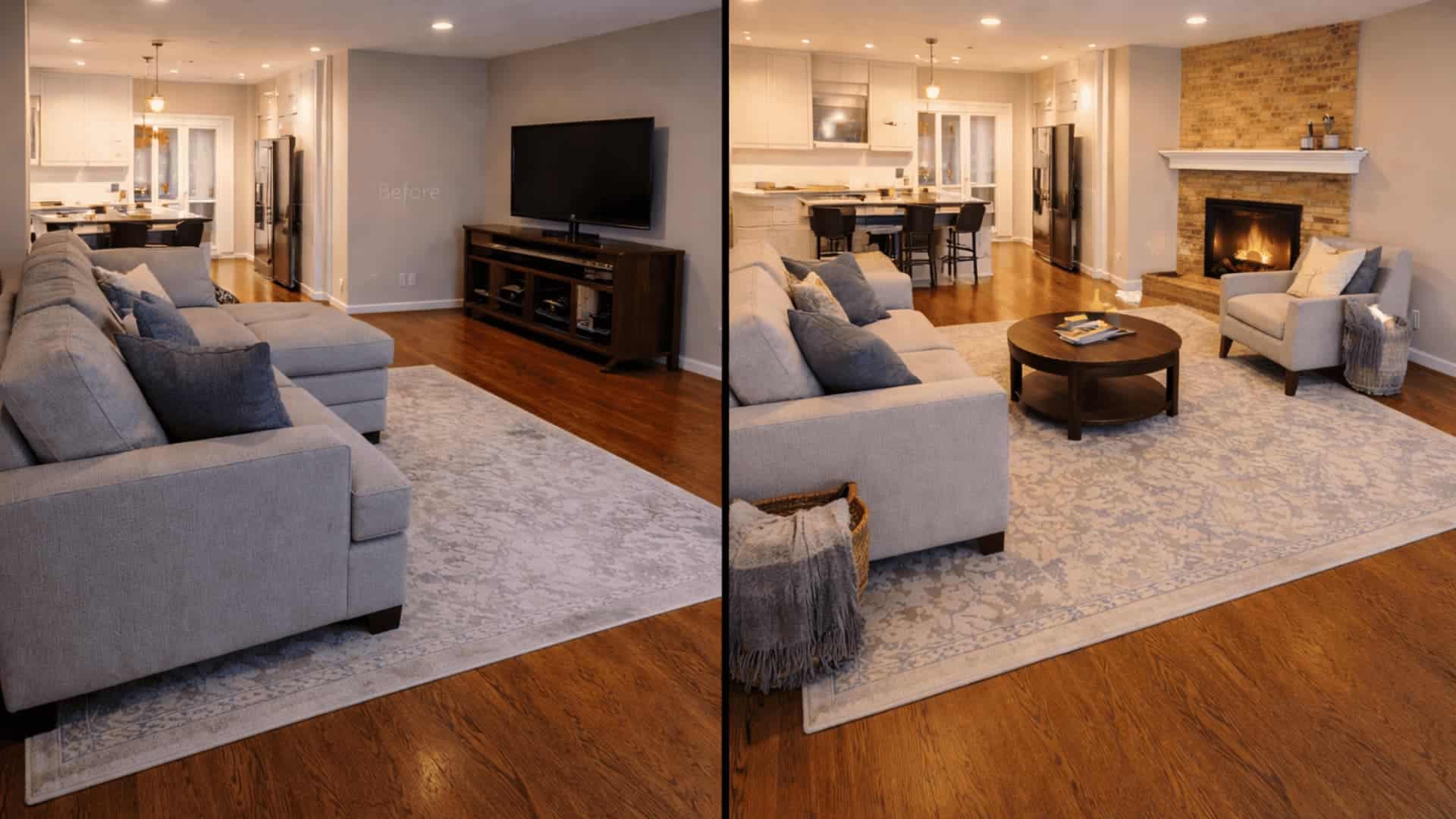
In open concept spaces, a fireplace that sits off to the side can feel like it belongs to a different room entirely.
Before: The fireplace wasn’t aligned with the kitchen or dining area. Seating faced the TV only, and the living space felt disconnected from the rest of the home, with no defined zone.
After: The sofa angled slightly toward the fireplace. A secondary chair faced the kitchen to balance the visual. An area rug clearly defined the living area, and the fireplace served as a visual anchor.
Why it works: The rug and angled seating create a defined zone inside the open space, making the fireplace feel like it belongs.
9. The “Two Focal Points Fighting Each Other” Fix
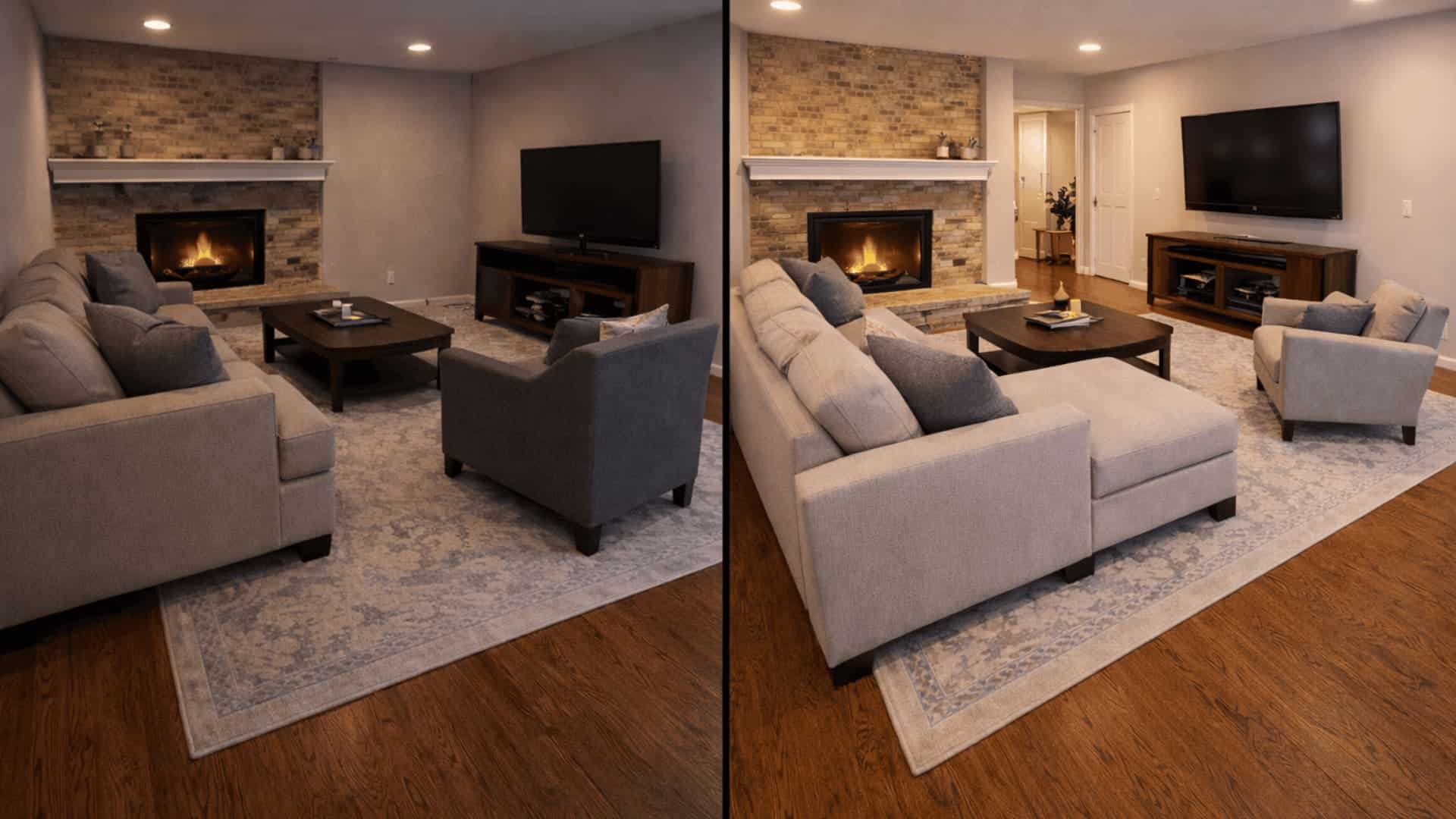
When a large fireplace and a big TV sit on opposite walls, the seating ends up serving neither, and the room never quite settles.
Before: Seating split awkwardly between the fireplace and TV on opposite walls. Constant head-turning made the space uncomfortable, and the coffee table was not centered on either of the focal points.
After: A sectional positioned to see both the fireplace and TV. The TV moved adjacent to the fireplace or onto a swivel mount. The coffee table centered on the seating group rather than the walls.
Why it works: Seating becomes the priority, and both focal points support it rather than compete with each other.
Step-by-Step Formula to Fix Your Own Awkward Living Room Layout
Fixing an awkward fireplace layout doesn’t require starting from scratch. Follow these five steps in order, and the room will start to make sense.
Step 1: Measure the Room: Measure every wall, window, doorway, and open walkway before moving anything. Write the numbers down so you can plan with confidence. When you know your exact dimensions, you avoid crowding the space with furniture that feels too large.
Step 2: Pick One Focal Point: Decide if the fireplace or the TV will lead the room. When both compete, the layout feels unsettled. Choosing one main focal point helps you arrange seating with purpose and keeps the entire room visually calm.
Step 3: Place the Largest Piece First: Start with your sofa or sectional since it anchors the space. Position it to clearly face your chosen focal point. Avoid automatically pushing it against a wall unless the room size truly requires it.
Step 4: Define the Seating Zone: Add chairs and a coffee table to form a clear conversation area. Keep at least 36 inches open for walkways so people can move comfortably. This keeps your layout functional without feeling cramped or blocked.
Step 5: Balance and Test: Sit in each seat and check what you see. Walk through every path in the room. If something feels tight or off balance, adjust the placement slightly until the space feels comfortable and easy to move through.
The whole process gets easier once there’s a clear starting point. Most awkward fireplace rooms just need a logical order, not a full renovation.
The 2/3 Rule for Living Room Layout
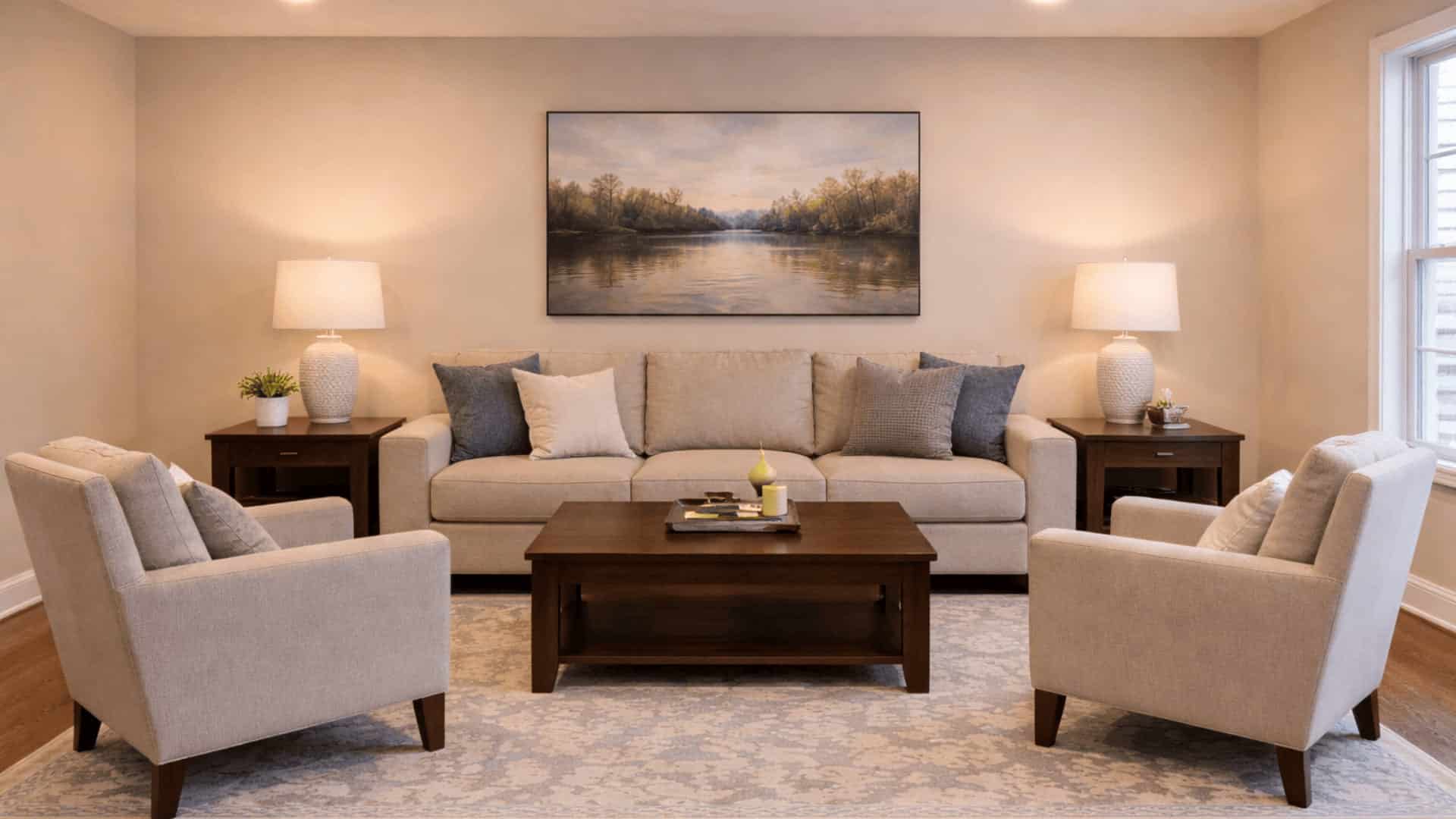
Most rooms that feel “off” aren’t missing furniture; they’re missing proportion. The 2/3 rule is one of the simplest ways to fix that without hiring a designer.
The idea is straightforward. The sofa should take up roughly two-thirds of the focal wall it sits against. Not the whole wall, not half, about two-thirds. That one guideline alone prevents the most common sizing mistakes.
Art follows the same logic. Whatever hangs above the sofa should span about two-thirds of the sofa’s width. Too wide and it overwhelms. Too narrow and it looks lost.
Applied consistently, this rule creates visual balance that feels natural without looking calculated. The room just feels right, and that’s exactly the point.
Mistakes to Avoid as A Beginner
Small layout mistakes can make even a well-furnished room feel wrong. Here are the most common ones to watch out for.
| Mistake | Why It’s a Problem |
|---|---|
| Furniture against all walls | Creates a hollow, disconnected center with no defined gathering zone |
| Ignoring scale | Oversized or undersized pieces throw off the entire room’s proportion |
| TV is mounted too high | Forces neck strain and pulls the eye away from the natural sightline |
| Blocking the fireplace | Cuts off the room’s main focal point and disrupts traffic flow |
| Rug too small | Makes the seating area look unanchored, and the room feel unfinished |
Getting these details right costs nothing; it just takes a second look before finalizing any layout decision.
Budget Fixes If You Can’t Renovate
Not every awkward fireplace layout needs a contractor. These small, low-cost fixes can change how the whole room feels.
- Symmetry tricks: Add matching lamps, plants, or shelves on either side of the fireplace to create visual balance without moving walls.
- Console table divider: Place a slim console behind the sofa to define the seating zone and separate it from the rest of the room.
- Mirrors to shift focus: A well-placed mirror can redirect attention, add light, and make an off-center fireplace feel more intentional.
- Built-in illusion: Floating shelves flanking the fireplace mimic the look of built-ins at a fraction of the cost.
Most awkward fireplace rooms just need a few intentional additions. A small change in the right spot goes a long way.
Key Takeaway
Fireplace layouts have stumped some of the most beautifully furnished rooms I’ve seen. The space looks great on paper, but the moment furniture goes in, something feels off.
I’ve been there, and so have most people searching for before-and-after awkward living room layout with fireplace solutions.
The good news? You don’t need a designer or a renovation budget. In most cases, a floating sofa, a better rug, and one clear focal point are enough to turn the whole room around.
Start small. Pick one fix from this guide and try it this weekend. Even moving the sofa a few feet can completely change how a room feels.
Drop a comment below and share what’s not working. Let’s figure it out together.