


When I started looking into bathroom upgrades, I quickly realized that one of the easiest ways to refresh the space is by replacing the vanity.
But the first question that came to my mind was simple: what is the real cost to replace a bathroom vanity? The price can vary a lot depending on the size of the vanity, the materials used, and whether you install it yourself or hire a professional.
In some cases, it can cost just a few hundred dollars, while larger or custom vanities can cost several thousand.
In this guide, I’ll walk you through the average costs, labor fees, material options, and extra expenses you should expect so you can plan your bathroom project with confidence.
Average Cost to Replace a Bathroom Vanity
The cost to replace a bathroom vanity usually ranges from $300 to $4,000, depending on the size of the vanity, the materials used, and whether you hire a professional installer.
On average, most homeowners in the U.S. spend around $1,600 for a vanity and installation combined. A small prefabricated vanity with basic installation can cost as little as $300 to $900, while larger double-sink or custom-built vanities can cost $2,000 to $4,000 or more.
Labor, plumbing adjustments, and countertop materials can also increase the total price. If you choose to install the vanity yourself and reuse existing plumbing, the total cost can be significantly lower.
Signs It’s Time to Replace Your Bathroom Vanity
Over time, a bathroom vanity can start to show wear and tear. If you notice certain problems, it may be a good sign that it’s time to replace it.
Common signs include:
- Water damage or swelling: Cabinets may swell, warp, or peel after long exposure to moisture.
- Mold or mildew around the base: Moisture buildup can cause mold or mildew to grow near the bottom of the vanity.
- Cracked or damaged countertop: Chips or cracks in the countertop can make the vanity look worn and harder to clean.
- Outdated design: An old-style vanity can make the whole bathroom look dated.
- Limited storage space: Older vanities often have less storage and may not meet your current needs.
One signal people often overlook: if the vanity cabinet doors no longer close flush or the drawer slides are broken, that’s a functional failure that affects daily use more than any cosmetic issue.
A vanity that works poorly every single day justifies replacement even before it shows visible wear.
If you notice several of these issues, replacing the vanity can improve both the appearance and functionality of your bathroom.
Bathroom Vanity Replacement Cost Breakdown
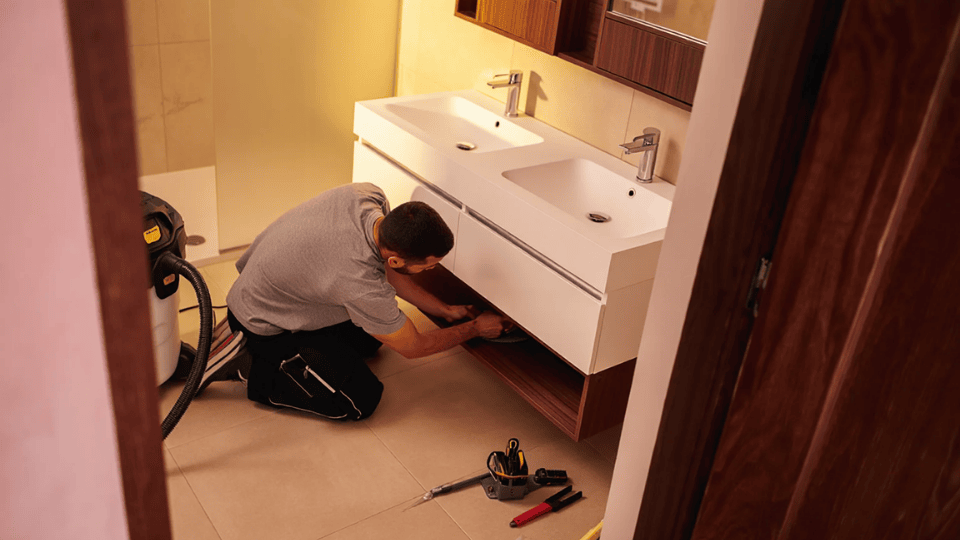
When I looked into replacing a bathroom vanity, I learned that the total price is made up of several costs. The vanity itself is usually the biggest expense, but labor and removal of the old unit can also add to the final bill.
1. Cost of the Vanity Unit
The vanity unit is the cabinet, sink, and sometimes the countertop. Prices can vary a lot depending on the style and materials.
- Prefabricated vanity: $100 – $2,600
- Custom vanity: $500 – $3,500+
A few things can change the price:
- Size: Larger vanities cost more.
- Materials: Solid wood and stone tops are more expensive than laminate.
- Storage features: Extra drawers or shelves can increase the price.
- Sink type: Double sinks or special sink designs usually cost more.
|
Before buying a vanity unit, measure the exact rough-in width of the existing space, not just the old vanity’s face. Also, measure the door clearance. Barn doors and pocket doors have different swing requirements than hinged doors. A vanity that’s even 2 inches wider than your opening requires drywall work and potentially baseboard trimming, which adds $200–$500 to the project. Confirm the plumbing drain centerline location as well, since moving it adds $450–$800 in plumbing costs. |
2. Labor Cost to Install a Bathroom Vanity
If you hire a professional, you’ll also pay for installation. Labor costs depend on the complexity of the job.
- Professional installation: $200 – $1,000
- Plumber hourly rate: $45 – $200 per hour
- Total labor for a full replacement: $665 – $3,300
If plumbing lines need to be moved or repaired, the labor cost can go up.
|
Who should handle the install? For a straightforward like-for-like swap (same size, same plumbing locations), a skilled handyperson ($50–$80/hour) can often handle the job and costs less than a licensed plumber or contractor. If the project involves new plumbing, drain relocation, or moving supply lines, hire a licensed plumber. Unpermitted plumbing work can create problems when selling your home and may not be covered by homeowner’s insurance if something goes wrong. |
3. Cost to Remove and Dispose of the Old Vanity
Before the new vanity can be installed, the old one needs to be removed. Some contractors include this in their price, but sometimes it’s a separate cost.
Typical removal and disposal cost comes to around $150 – $400. This usually covers disconnecting the plumbing, taking out the old vanity, and hauling it away.
Cost by Bathroom Vanity Size
The total cost to replace a bathroom vanity can also vary depending on the size. Typical installed price ranges are shown below:
|
Vanity Type |
Typical Width |
Typical Cost Installed |
What’s Typically Included |
|
Small single vanity |
18″–30″ |
$300 – $900 |
Prefab cabinet, integrated sink top, basic installation |
|
Mid-size vanity |
31″–48″ |
$600 – $1,700 |
Cabinet, separate or integrated top, standard installation |
|
Double sink vanity |
49″–72″ |
$700 – $2,600 |
Cabinet, two sinks, countertop; may need plumbing for a second drain |
|
Custom luxury vanity |
Any size, built to spec |
$2,000 – $5,000+ |
Custom cabinetry, premium countertop, full installation with plumbing |
These estimates include the vanity unit and basic installation, but the final price can be higher if you choose premium materials or need additional plumbing work.
Cost of Different Vanity Materials
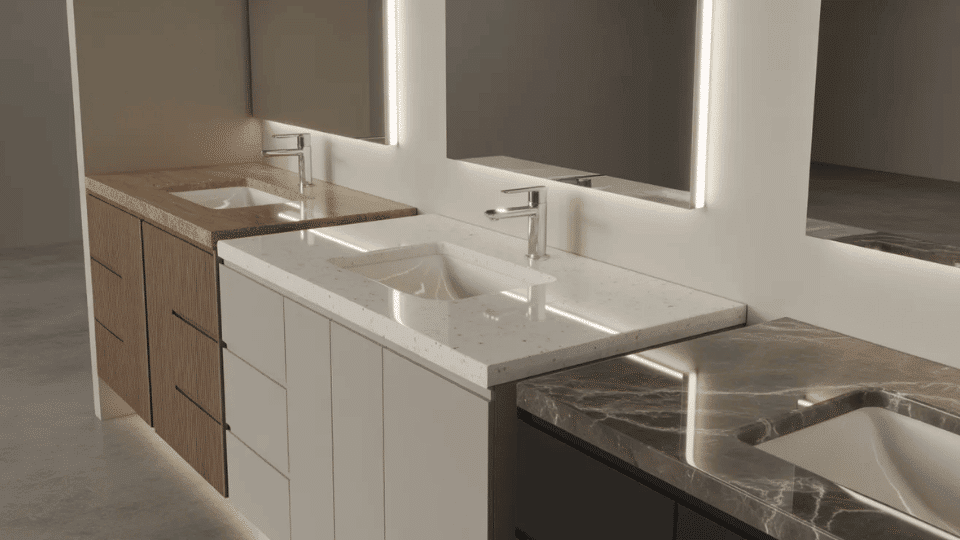
The material you choose for your bathroom vanity can significantly affect the final price. Some materials are simple and budget-friendly, while others are stronger, more stylish, and more expensive.
1. Budget Materials
Budget materials are great if you want a quick upgrade without spending too much money. They are common in prefabricated vanities and work well for smaller bathrooms or guest bathrooms. Common budget materials include:
- Laminate
- MDF (medium-density fiberboard)
- Cultured marble tops
These materials are affordable and easy to find, but they may not last as long as higher-end options.
Typical cost:$100 – $500
|
MDF durability: MDF vanities are the most budget-friendly but are the most vulnerable to water damage at the base and around the sink cutout. If you choose MDF, seal all exposed edges before installation and ensure the plumbing connections are watertight. A small, slow leak onto an MDF vanity base can cause swelling within weeks. |
2. Mid-Range Materials
Mid-range materials offer a good balance between price, durability, and appearance. Many homeowners choose these options because they look nicer than basic materials but still stay within a reasonable budget. Common mid-range materials include:
- Solid wood cabinets
- Ceramic sinks
- Quartz composite countertops
These materials are stronger and usually last longer than budget options.
Typical cost:$500 – $1,500
3. Luxury Materials
Luxury materials are used in high-end bathrooms and custom vanities. They often have a premium look and can increase the value of your bathroom. Common luxury materials include:
- Granite countertops
- Marble tops
- Custom hardwood cabinetry
These materials are durable and beautiful, but they also cost much more than basic options.
Typical cost:$1,500 – $4,000+
Countertop Material Cost Comparison
The countertop is often the biggest single cost variable in a vanity replacement. Here’s how common materials compare:
|
Material |
Cost per Sq. Ft. |
Durability |
Best For |
|
Laminate / cultured marble |
$10–$40 |
Low–moderate; scratches easily |
Guest baths, budget renovations |
|
Ceramic / porcelain tile |
$7–$20 + $13–$28 labor |
Good; grout lines require maintenance |
Mid-range bathrooms, classic look |
|
Quartz composite |
$50–$200 |
Excellent; non-porous, moisture-resistant |
Primary baths, high-use vanities |
|
Granite |
$5–$100 (varies by slab) |
Very good; requires annual sealing |
Mid-to-high end bathrooms |
|
Marble |
$40–$150+ |
Moderate; etches with acidic products |
High-end primary baths; low-traffic use |
|
Concrete |
$75–$135 |
Good; heavy, requires strong cabinet support |
Industrial or custom aesthetic |
Quartz has overtaken granite as the most popular vanity countertop material among homeowners, largely because it’s non-porous, doesn’t require sealing, and resists the moisture and cleaning products that bathrooms are exposed to daily.
Additional Costs That Can Increase the Price
When replacing a bathroom vanity, the price is not always limited to the vanity and installation. In some cases, extra repairs or upgrades may be needed, which can increase the total project cost. Some of the most common additional expenses include:
- Plumbing repairs or upgrades: $450 – $1,800
- Countertop replacement: $300 – $5,400
- Faucet installation: $60 – $600
- Flooring or wall repairs: $500 – $2,000
- Electrical or lighting adjustments: $150 – $800
|
Permit requirement: Replacing a vanity in the same location with no plumbing changes typically does not require a permit. However, if you’re moving the drain, adding a second sink, or making any changes to supply lines, most jurisdictions require a plumbing permit ($50–$300). Working without a required permit can cause issues when selling your home and may void homeowner’s insurance coverage on related claims. When in doubt, call your local building department; it’s a quick call that can save significant headaches later. |
DIY vs Professional Vanity Replacement Cost
Before deciding how to replace your vanity, it helps to compare the cost and benefits of doing the job yourself versus hiring a professional. The table below shows the main differences between the two options:
| Factor | DIY Bathroom Vanity Replacement | Hiring a Professional |
|---|---|---|
| Average Cost | $150 – $800 | $400 – $1,700+ |
| Labor Cost | None (you do the work) | $200 – $1,000 depending on the job |
| Skill Level Needed | Basic DIY and plumbing knowledge | No skills needed from the homeowner |
| Installation Time | May take longer if you are learning | Usually completed in a few hours |
| Risk Level | Higher risk of plumbing or installation mistakes | Lower risk due to professional experience |
| Best For | Simple vanity swaps with existing plumbing | Complex installs or plumbing changes |
Both options can work well, depending on your budget, skills, and the type of vanity replacement you plan.
|
DIY time estimate: A first-time DIY vanity replacement on a simple like-for-like swap typically takes 4–8 hours. That includes shutting off the water, disconnecting the old plumbing, removing the vanity, setting and leveling the new one, reconnecting the drain and supply lines, and caulking. If you’ve never worked with P-traps or compression fittings, budget toward the higher end and watch a full installation video for your specific vanity type before you start. |
Shared Experiences on Vanity Replacement
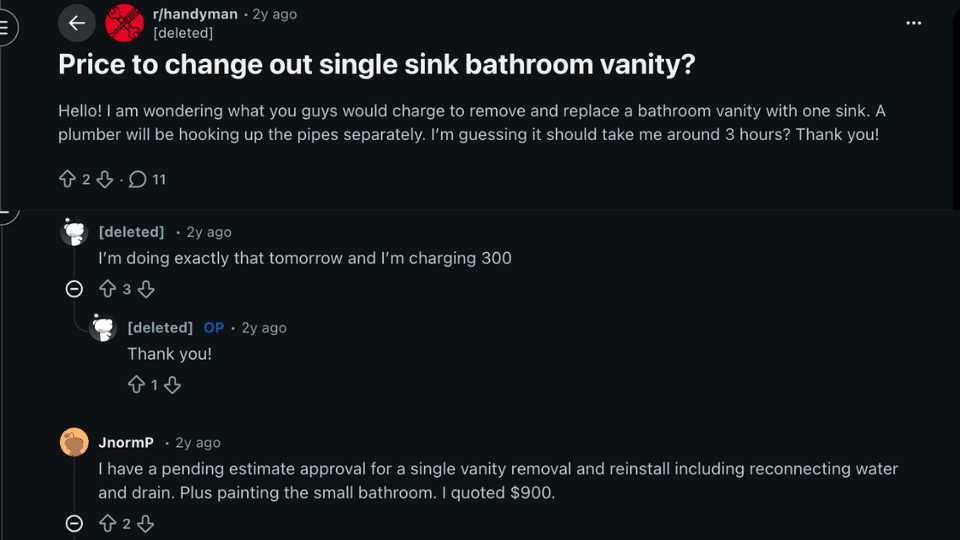
In a Reddit thread, a user asked how much professionals usually charge to remove and replace a single-sink bathroom vanity.
The poster mentioned that a plumber would handle the pipe connections separately and estimated the work would take about 3 hours. One commenter replied that they were doing a similar job the next day and planned to charge about $300.
Another user shared a higher quote, estimating around $900 for removing and reinstalling the vanity, reconnecting the water and drain lines, and painting the small bathroom.
The $300–$900 range in that thread is consistent with what I’ve seen for straightforward single-sink replacements where plumbing stays in place.
The moment you add plumbing work, wall repairs, or a larger vanity, quotes climb quickly. Always get at least three written quotes for any job over $500; the spread between contractors for identical work can be $300–$600, which is significant at this project scale.
Tips to Save Money on Bathroom Vanity Replacement
Replacing a bathroom vanity can get expensive, but there are a few simple ways to keep the cost lower. Small choices during the project can make a big difference in the final price.
- Choose prefabricated vanities: These are usually much cheaper than custom-built vanities and are widely available in stores.
- Reuse existing plumbing: Keeping the sink and pipes in the same place helps avoid costly plumbing changes.
- Keep the same vanity size: Installing a vanity with the same dimensions prevents extra work on walls, floors, or countertops.
- Install the vanity yourself: If the plumbing setup is simple, doing the installation on your own can save labor costs.
- Shop seasonal sales: Many home improvement stores offer discounts during holiday sales or clearance events.
- Buy the vanity cabinet and countertop separately: Many retailers bundle these together at a premium. Buying a solid wood cabinet from one source and a quartz top from a fabricator often costs 15–25% less than a pre-bundled unit of equivalent quality. This requires a bit more coordination, but the savings on a mid-range project can be $200–$400.
Planning ahead and comparing options can help you upgrade your bathroom while staying within your budget.
Does a New Bathroom Vanity Add Value to Your Home?
If you’re replacing a vanity partly with resale in mind, it helps to understand the actual return. Industry data on bathroom remodels consistently shows that midrange updates (new vanity, updated fixtures, fresh tile) return roughly 65–75% of their cost at resale.
That means a $1,500 vanity replacement might add $975–$1,125 in home value on a national average basis.
A floating vanity with a quartz countertop is one of the specific upgrades most often cited by real estate professionals as contributing to buyer appeal.
Modern vanities signal a well-maintained, updated bathroom, which reduces the buyer’s negotiating leverage on price.
Key context on ROI:
- Minor cosmetic updates (new vanity, fixtures, lighting) tend to recoup the highest percentage of cost, often 70–85%, because the investment is smaller.
- Upscale custom vanities with premium stone recoup a lower percentage (50–60%) because the cost is high relative to what buyers are willing to pay.
- Double vanities are consistently cited by real estate professionals as a high-appeal feature in primary bathrooms, particularly for buyers with families or couples sharing a space.
- ROI varies significantly by local market. In high-demand areas, bathroom updates are more directly rewarded in the sale price. In slower markets, returns the more indirect, with improved days-on-market and reduced buyer concessions.
Is Replacing a Bathroom Vanity Worth the Cost?
Replacing a bathroom vanity is often worth the cost because it can quickly improve both the look and function of the space.
A new vanity can provide better storage, a cleaner sink area, and a more comfortable layout for everyday use. It is also one of the easiest ways to modernize an outdated bathroom without doing a full remodel.
Many homeowners choose this upgrade because it can make the bathroom feel fresh and more organized in just a few hours of work.
In addition, a stylish, well-installed vanity can enhance the home’s overall appeal, potentially increasing resale value if you plan to sell in the future.
From my own experience overseeing these projects, the satisfaction-to-cost ratio of a vanity replacement is genuinely high compared to most home upgrades.
It’s visible every single day, it directly affects morning and evening routines, and a well-chosen vanity can even make a dated bathroom feel current.
It’s one of the few upgrades where the functional improvement and the aesthetic improvement happen simultaneously, which is hard to match at this price point.
Final Thoughts
Replacing a bathroom vanity is one of the easiest ways I’ve found to upgrade a bathroom without doing a full remodel.
The cost to replace a bathroom vanity can range from a few hundred dollars for a simple DIY swap to several thousand for a custom installation.
The final price usually depends on the vanity size, materials, and whether plumbing changes are needed. Planning ahead and understanding the cost breakdown can help you avoid surprises and stay within budget.
With the right choice, a new vanity can make your bathroom more functional, organized, and stylish.
Ready to upgrade your bathroom? Start searching vanity options and estimate your project cost today, and share them in the comments below.