


Want to finally park your car in an actual garage instead of playing Tetris with storage boxes? You just need smart garage addition ideas and a solid plan.
I love having space that fits real life. A garage can do more than hold a car. It can store tools, support hobbies, or even double as a workspace. That flexibility makes daily life easier.
When I talk to contractors, I slow down. Their ideas might be good, but I want to understand my options first. Making an informed choice feels better than rushing in.
I’ve seen neighbors skip planning and regret it. The right garage addition ideas balance practical needs with creative solutions and can even increase your home’s value
Why I Think You Should Consider a Garage Addition
I’ll be honest with you, adding a garage wasn’t on my radar until I realized how much stuff I was cramming into every corner of my house. The benefits go way beyond just having a place to park.
Extra storage space means you can finally clear out that spare bedroom you’ve been using as a junk room. Your home becomes more functional overnight. I’ve noticed that properties with good garage space sell faster in my neighborhood, which makes sense. Buyers want turnkey homes that work for modern life.
If you work from home, having a separate workspace above your garage can significantly improve productivity and mental health. The physical separation between home life and work life matters more than I ever expected.
Plus, if you’re into cars, woodworking, or any hobby that needs space, a garage addition gives you room to actually pursue those interests without taking over the entire house.
Types of Garage Additions
Each option I’m about to share works for different situations and budgets. I’ll give you the facts so you can decide what works best for your property.
1. Attached Garage Extension
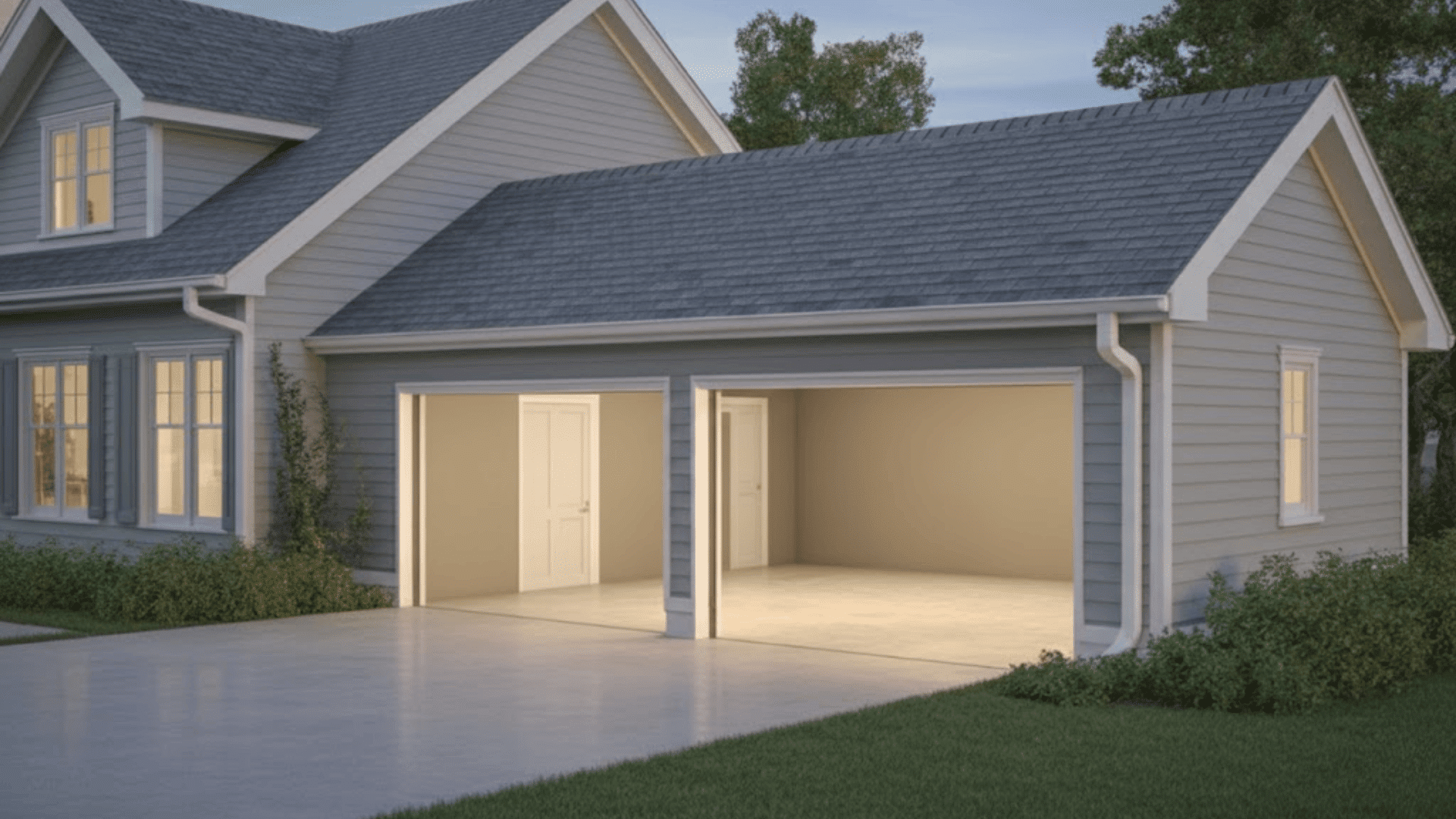
Sometimes the simplest answer is the best one: just make your existing garage bigger. Here’s what you need to know:
- Expands current footprint for additional vehicle or storage capacity
- Costs typically range from $20,000 to $50,000, depending on size
- Maintains roof connection with existing structure for seamless integration
- Works well for homes with adequate side yard space
- Can accommodate extra parking, workshop area, or dedicated storage zones
- Often, the most cost-effective option, since foundation and walls already exist
This approach makes sense if you already like where your garage sits and just need more room to work with.
2. Above-Garage Living Space
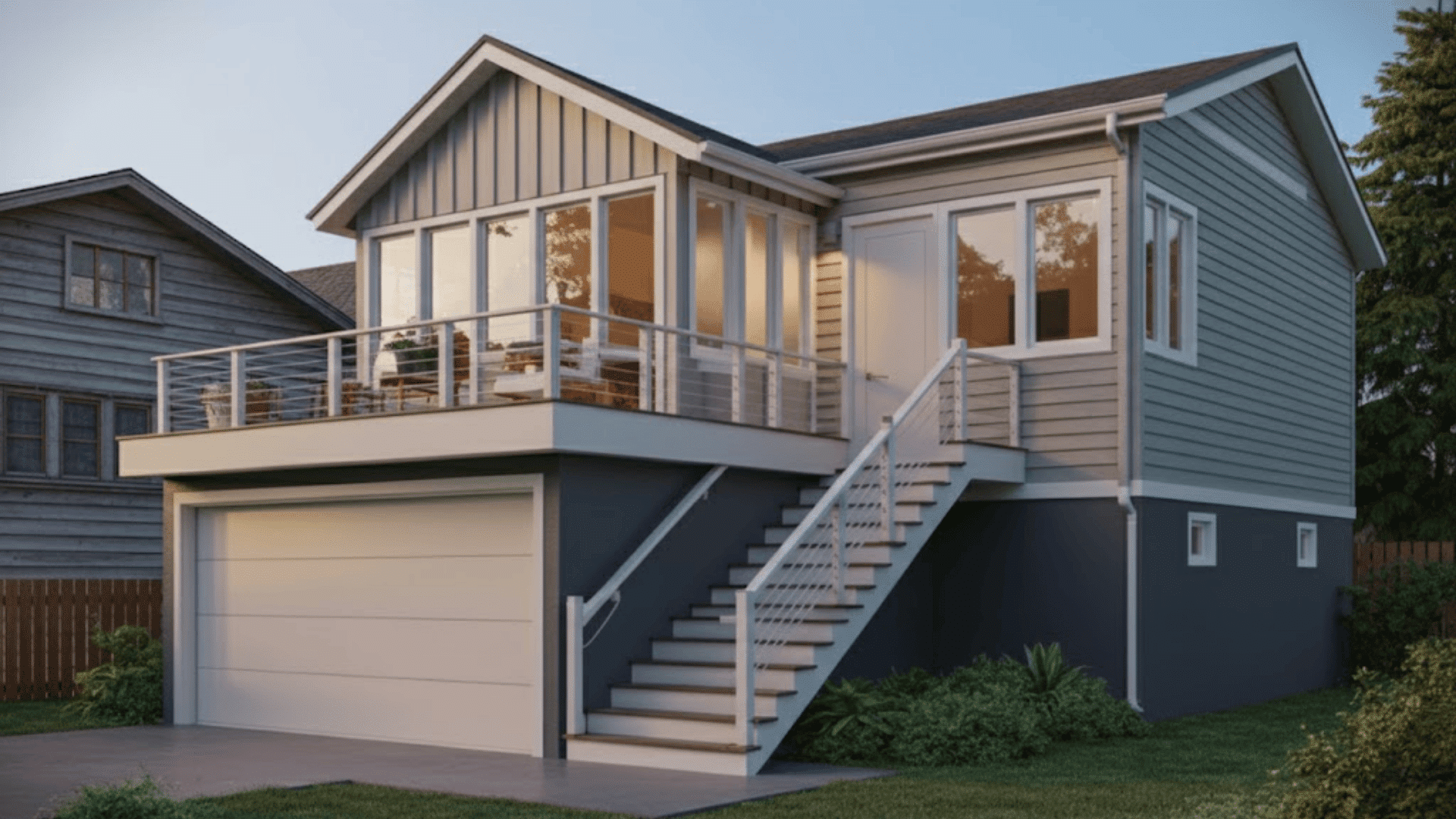
I find this option fascinating because you’re building up instead of out, which is perfect for smaller lots. Let me break down the details:
- Creates a bonus room above the existing or new garage structure
- Investment ranges from $60,000 to $200,000 based on finish level
- Perfect for a home office, studio apartment, or guest suite with a private entrance
- Requires structural support calculations for the second-story weight load
- Adds significant value since you’re essentially adding livable square footage
- Provides rental income potential if designed as a separate apartment
- Needs proper insulation to separate the living space from the garage temperature fluctuations
You’re getting two improvements in one: parking below and a living space above that serves multiple purposes over time.
3. Detached Garage Addition
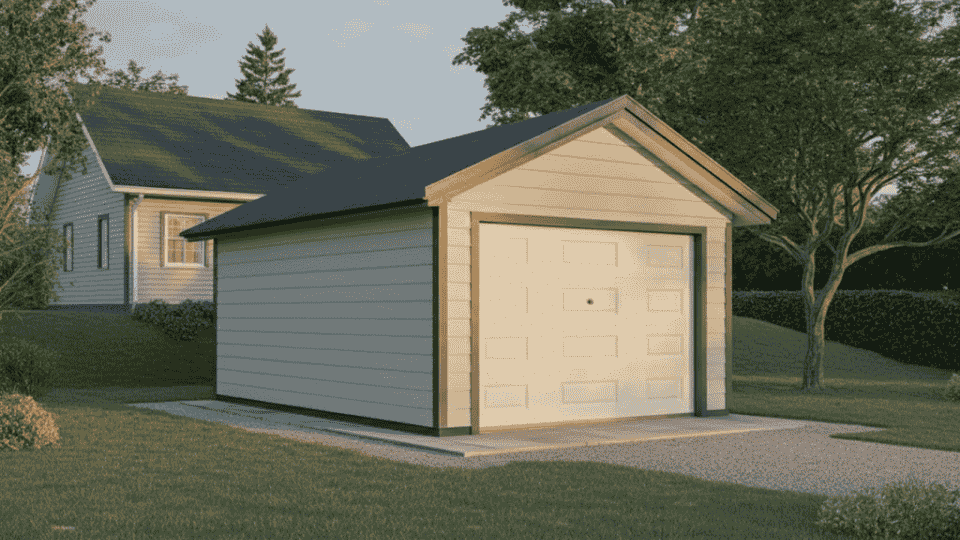
Sometimes you want the garage completely separate from your main house, and that’s perfectly fine. Here’s what makes this option work:
- Stands alone from the primary residence with an independent structure
- Costs generally range from $20,000 to $50,000 for basic construction
- Ideal for RV storage, workshop, or hobby space without noise concerns
- Offers flexibility in placement based on property layout and access needs
- Can serve as a future guest house or rental with proper planning
- Requires separate utility connections if you want power and water
I like this option when you want a clear separation between your living areas and workspace, or when the property layout favors it. Building any of these takes planning, but I’ve seen homeowners successfully complete each type.
Creative Ideas for Your Garage Space
Let me share some approaches that go beyond basic parking and storage. These are real solutions I’ve seen work:
1. Multi-Functional Garage Spaces
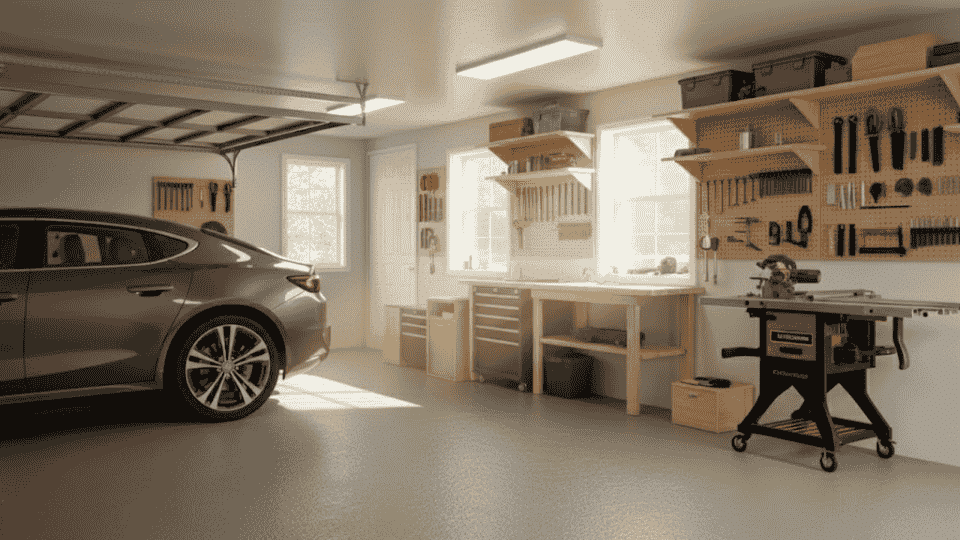
The best garage additions I’ve toured do double or triple duty, and that’s where the real value comes in. You might park your car there at night, but use half the space as a home gym during the day.
I’ve set up my garage so one bay holds the car while the other serves as my woodworking shop. The key is proper organization, and maybe some portable equipment you can move around.
2. Home Office and Workspace Solutions
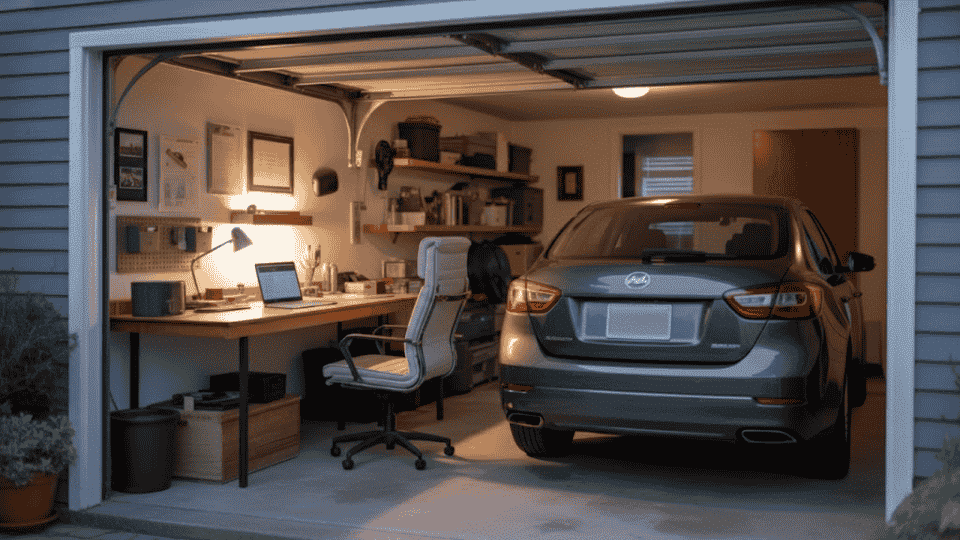
You can add a desk in your garage during business hours, then park your car there in the evening, so you can just roll into the office chair to the side. It’s about being creative with layout.
Install good climate control if you’re spending real time out there, because working in extreme temperatures gets old fast. Think about what you actually do with your time, then design space that supports those activities.
3. Smart Storage That Maximizes Every Inch
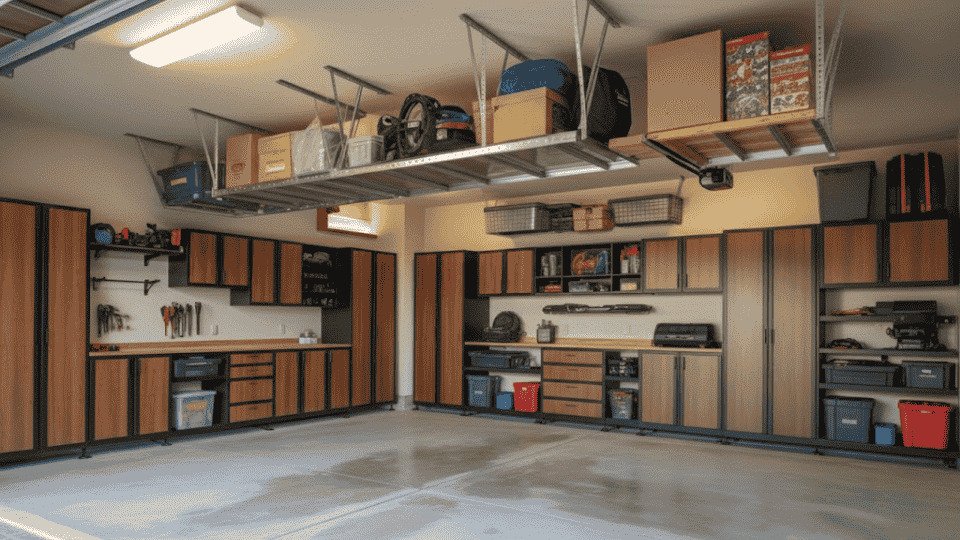
Vertical space is your secret weapon in any garage, and most people completely waste it. You should install some ceiling-mounted racks that can hold all your camping gear, holiday decorations, and other stuff you need only twice a year.
That will free up wall space for tools and equipment you use weekly. Custom cabinetry isn’t cheap, but it makes such a difference when everything has a designated spot.
4. Organizing Awkward Items and Equipment
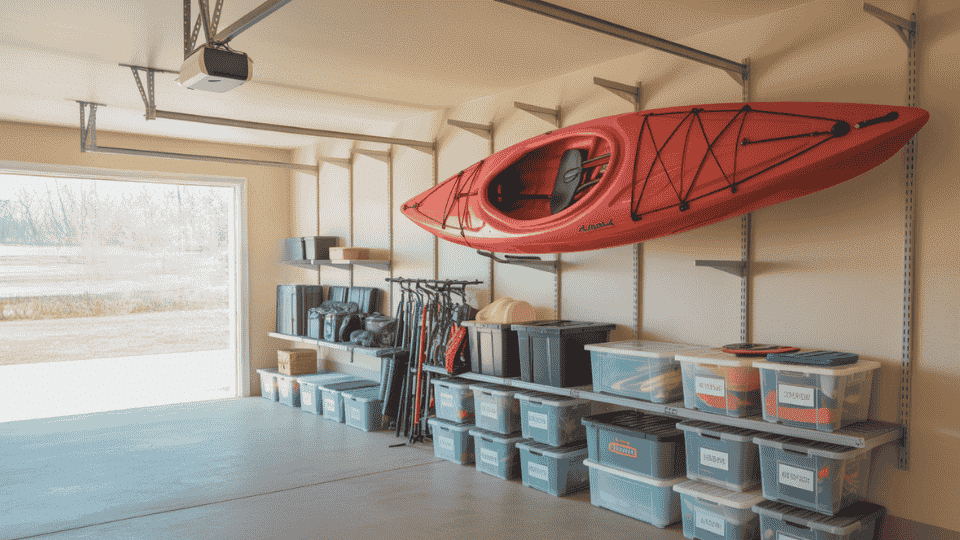
You can find garage-specific storage systems that handle awkward items like ladders, bikes, and sports equipment. Install heavy-duty wall hooks to keep large items off the floor and free up valuable space.
Magnetic strips hold small metal tools right where you need them. The goal is to get as much as possible off the floor so you keep the space open and usable.
5. Building Green with Eco-Friendly Features
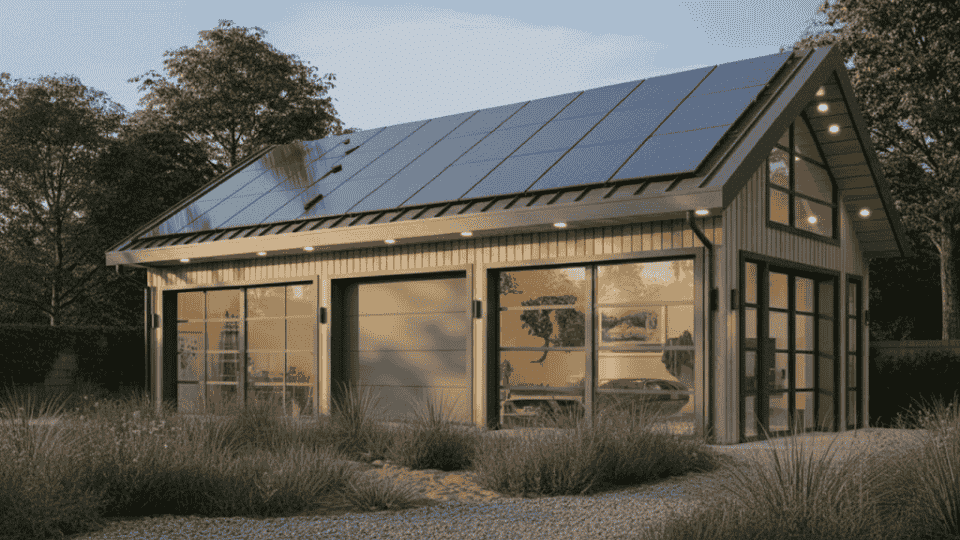
Garage additions create good opportunities to build more sustainably. Solar panels on the garage roof can help offset energy costs without affecting the look of your main living areas.
Proper insulation matters more than most people expect. It keeps the space comfortable year-round and reduces heating and cooling waste. Use LED lighting throughout since it lasts longer and uses less power.
Smart building choices today lower long-term energy use and reduce environmental impact.
Design Considerations that Actually Matter
Before you start building, I want you to think through these practical elements that make or break a garage addition. Good design isn’t about making things fancy, it’s about making them work:
Lighting and Electrical Setup
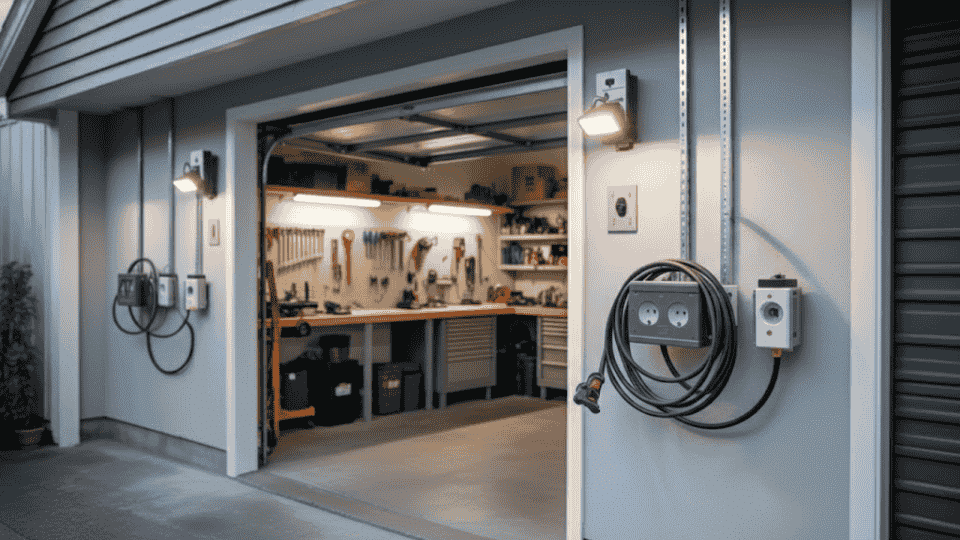
Getting the power and lighting right from the start makes your garage actually usable for real work and projects year-round. Here’s what I recommend focusing on:
- Install multiple outlets along walls at workbench height for power tools and chargers
- Consider LED shop lights for bright, energy-efficient workspace illumination throughout the space
- Add motion-sensor lights near entries for hands-free convenience when carrying items
- Plan for 240V outlets, in case you might want electric vehicle charging capability later
These electrical choices seem minor now, but they make a huge difference in how you actually use the space daily.
Structural and Storage Solutions
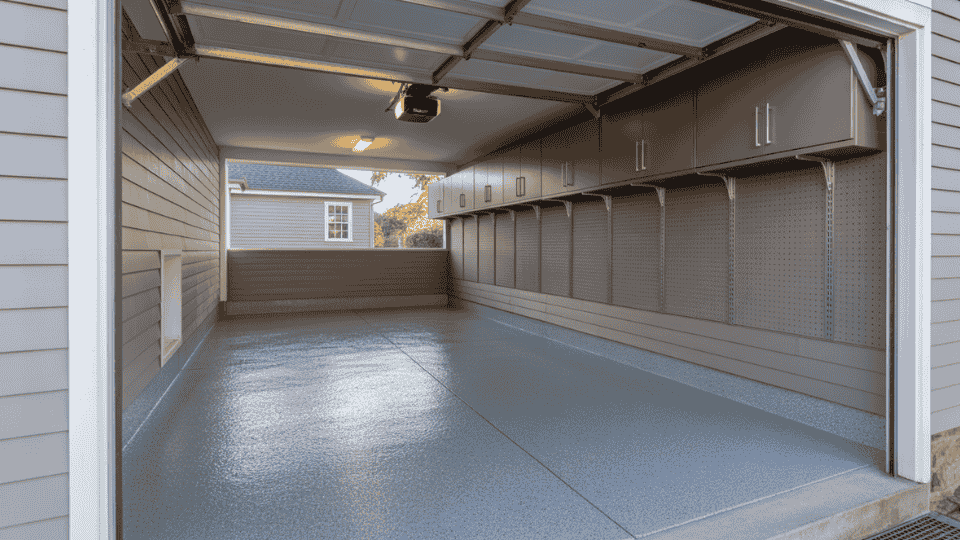
The physical details determine whether your garage looks like part of your home or an obvious add-on that hurts value. Here’s what will help you:
- Match siding materials and colors so the addition looks original to your house
- Coordinate rooflines carefully to avoid awkward transitions that scream afterthought
- Install epoxy-coated floors that resist stains and clean up easily with simple mopping
- Build in wall-mounted storage before you move anything in to maximize usable floor space
I’ve learned that getting these details right from the start saves you from expensive fixes later. Don’t cut corners on the basics that you’ll interact with every single day.
Key Considerations Before You Start
Getting the planning right prevents expensive mistakes and legal headaches down the road. I learned these lessons by watching others struggle, so let me save you the trouble. Here’s what you need to know:
- Check local zoning laws for setback requirements and obtain all necessary permits before construction starts
- Schedule required inspections at appropriate project stages and verify HOA rules if applicable
- Interview at least three licensed contractors with garage addition experience, and actually call their references
- Verify current insurance coverage and contractor licensing before signing any agreements
- Research property value impact, garage additions typically return 65-80% of investment at resale
- Keep documentation of all permits and work for future sale and property tax assessment purposes
- Get detailed written quotes breaking down materials and labor separately, never pay more than 10-20% upfront
Planning takes time but saves money and stress when done right. I spent weeks researching before breaking ground, and looking back, that preparation made all the difference in how smoothly everything went.
Budgeting and Cost Breakdown
I know talking about money can feel uncomfortable, but having real numbers helps you plan properly. Here’s what different garage additions actually cost:
| Addition Type | Cost Range | What Affects the Price | Timeline |
| Attached Extension | $20,000 – $50,000 | Square footage, foundation work, materials | 4-8 weeks |
| Above-Garage Living Space | $60,000 – $200,000 | Finish level, plumbing, HVAC systems | 8-16 weeks |
| Detached Garage | $20,000 – $50,000 | Foundation type, utility connections, and distance | 6-12 weeks |
| Foundation Work | $3,000 – $12,000 | Soil conditions, drainage, and size | 1-2 weeks |
| Electrical & Lighting | $1,500 – $8,000 | Outlet quantity, 240V circuits, fixtures | 3-5 days |
| Premium Doors & Windows | $2,000 – $15,000 | Door type, window count, insulation rating | 1-2 weeks |
| Built-In Storage Systems | $1,000 – $12,000 | Custom vs. prefab, materials, complexity | 1-3 weeks |
| Site Preparation | $2,000 – $15,000 | Grading needs, tree removal, drainage fixes | 1-4 weeks |
These numbers reflect what I’ve seen in the current market, though your actual costs depend on location and specific choices. I financed mine through a home equity line of credit for flexibility.
Common Mistakes to Avoid When Adding a Garage
Here are mistakes you’d better avoid:
- Skipping required permits creates serious problems when you sell or need insurance claims processed later.
- Underestimating total costs is incredibly common. Always add 15-20% to your budget for unexpected issues.
- Choosing the cheapest contractor often results in lower-quality work that requires expensive repairs within just a few years.
- Poor ventilation systems lead to moisture problems and rust that damage stored items.
- Not matching your home’s style significantly hurts the addition’s resale value.
- Blocking natural light to the main living areas creates regrets people face daily.
- Forgetting about future needs, such as electric vehicle charging, means missing the chance to install capacity while walls are open.
These mistakes cost real money and create lasting problems you’ll regret. Think long-term about how this changes your property’s flow and function. Planning ahead prevents regrets that last for decades.
Wrapping Up
Your home is definitely missing something if you haven’t considered a garage addition yet. The extra space and functionality are the foundation, but without proper planning, your addition might stay just average.
I’ve learned that homeowners who don’t settle for shortcuts end up with spaces that serve them for decades. Take time to think through which garage addition ideas fit your actual lifestyle. Work with experienced professionals who understand local codes and quality construction methods.
Get multiple quotes and don’t rush the planning phase. Years from now, your family will thank you for creating a space that adds real value to daily life. Drop a comment below and tell me what you’re planning for your property.