


Creating a modern minimalist living room sounds easy, but most design guides I’ve come across don’t help much. They either get lost in abstract ideas or push expensive furniture without showing you how to actually use it.
This guide does neither. Instead, you’ll get a clear picture of:
- What minimalism really means today
- A breakdown of several distinct concepts organized by visual strategy and function
- A simple step-by-step framework
- Practical choices for furniture, color, and layout that work in real homes
- Some hard-won lessons from spaces I’ve styled myself
You don’t have to clear out your whole room. You just have to make better decisions, one at a time. That’s what turns your cluttered space into one that finally feels calm.
What Makes a Living Room Modern Minimalist Today?
A modern minimalist living room finds the balance between restraint and warmth. It removes what doesn’t need to be there, extra furniture, clashing patterns, and visible clutter, while keeping the space functional and comfortable to live in.
Modern design features low-profile seating, open floor plans, and materials such as light wood, matte metal, and neutral fabrics. Minimalism then does the editing.
Choose one impactful decorative piece instead of five small ones. Use hidden storage instead of cluttered open shelves. Empty space isn’t wasted; it allows the room to breathe.
Minimalist rooms don’t follow rigid rules, but they do follow one consistent principle: every element earns its place.
Books, plants, and personal items should be placed with intention, not habit. Modern minimalist design fosters calm through curated items, emphasizing quality and purpose over quantity and display.
One thing I’ve noticed working with clients on minimalist spaces is that the hardest part isn’t removing things; rather, it’s resisting the urge to fill the space back up.
A freshly edited room feels unfamiliar at first. Give it two weeks. The calm becomes the point.
The Foundation: Color, Texture, & Light in a Minimalist Living Room
Before you think about concepts or layouts, these three elements determine whether your minimalist room feels serene or sterile. Getting them right makes everything else easier.
Color
A neutral base (whites, warm creams, soft grays, and earthy beiges) is the most reliable starting point. These tones create a sense of spaciousness and let natural light do real work.
That said, minimalism doesn’t require colorlessness. A single saturated accent, whether on a single wall, a single chair, or a large piece of art, adds identity without visual noise.
The rule I use: one dominant neutral, one secondary tone, one intentional accent. Three colors, chosen before you shop for anything.
Texture
In a room with a limited palette, texture prevents flatness. Woven throws, matte plaster walls, a nubby area rug, rough-grain wood; these create depth through material rather than pattern or color.
When I style a minimalist room that feels “too bare,” the fix is almost always texture, not more objects.
Light
Natural light is non-negotiable. Keep window treatments minimal or sheer to let light flood in. For artificial lighting, avoid overhead fixtures that wash everything flat.
A single sculptural pendant over the seating area, plus one or two warm floor lamps, provides both function and atmosphere.
Dimmable bulbs in the 2700K–3000K range keep the room feeling warm in the evening rather than clinical.
| Element | What to Do | What to Avoid |
|---|---|---|
| Color | 1 neutral base + 1 secondary tone + 1 accent | More than 3 active colors; overly cool, stark white |
| Texture | Mix matte, woven, and natural grain finishes | All-smooth surfaces; shiny lacquer throughout |
| Light | Sheer window treatments + warm pendant or floor lamp | Heavy drapes that block light; cold overhead fluorescents |
| Pattern | One subtle geometric (rug or throw), if needed | Multiple competing patterns; busy textiles |
Minimalist Living Room Furniture: What to Choose & Why
Furniture selection is where most people make the costliest mistakes in a minimalist room, either buying too many pieces or choosing the wrong ones first. Here’s how to approach it.
Start with The Sofa
It’s the room’s largest piece and sets the scale for everything else. In a minimalist living room, a low-profile sofa with clean lines and simple upholstery (linen, boucle, or tight-weave cotton in a neutral) works in almost every layout.
Avoid high backs, tufting, and ornate frames; these compete with the room rather than receding into it.
Choose a Coffee Table that Earns Its Place
A streamlined table with hidden storage, or a single sculptural piece in concrete, wood, or glass, gives the center of the room a focal point without clutter.
Coffee tables should sit 14 to 16 inches high; use that as your proportional guide for surrounding furniture, too.
Storage that Disappears
Sideboards with doors, ottomans with lids, and floating shelves with minimal depth. These handle real-life storage needs without broadcasting them.
Visible clutter is the fastest way to undermine a minimalist room, so plan for concealment before you plan for display.
Accent Seating as Sculpture
One well-chosen accent chair can do more for a minimalist room than a second sofa. A statement chair in a warm material or unexpected shape introduces visual interest while the rest of the room stays spare.
I’ve found that one distinctive accent piece also gives the room a personality that pure neutrals alone can’t.
A Simple Framework for a Minimalist Living Room
Creating a minimalist living room does not require perfection. It requires order, clarity, and a few smart decisions made in the right sequence.
- Declutter by category. Gather books first, then cords, decor, and textiles. Finish one group before starting another to avoid shifting clutter around.
- Choose two or three colors before shopping. Pick one neutral base and one accent to keep the room visually consistent.
- Plan your layout with clear walking space. Keep 30 inches between pieces and 14 to 18 inches between the sofa and the table.
- Buy large furniture first. Seating, tables, storage, and lighting should come before decorative items.
- Add texture and one focal point. Before finishing, check that you have at least two different textures in the room (a rug, a throw, a woven cushion) and one clear focal point that draws the eye. Without these, the room feels sterile rather than serene.
- Build simple habits. Do a five-minute nightly reset and a weekly surface check to prevent clutter from returning.
Minimalism stays simple when decisions are intentional. Follow the order, keep only what serves the space, and your living room will stay calm and functional.
Core Modern Minimalist Living Room Concepts
These foundational approaches define the space primarily through living room function, with distinct visual strategies that shape atmosphere and use.
1. Moody Living Room
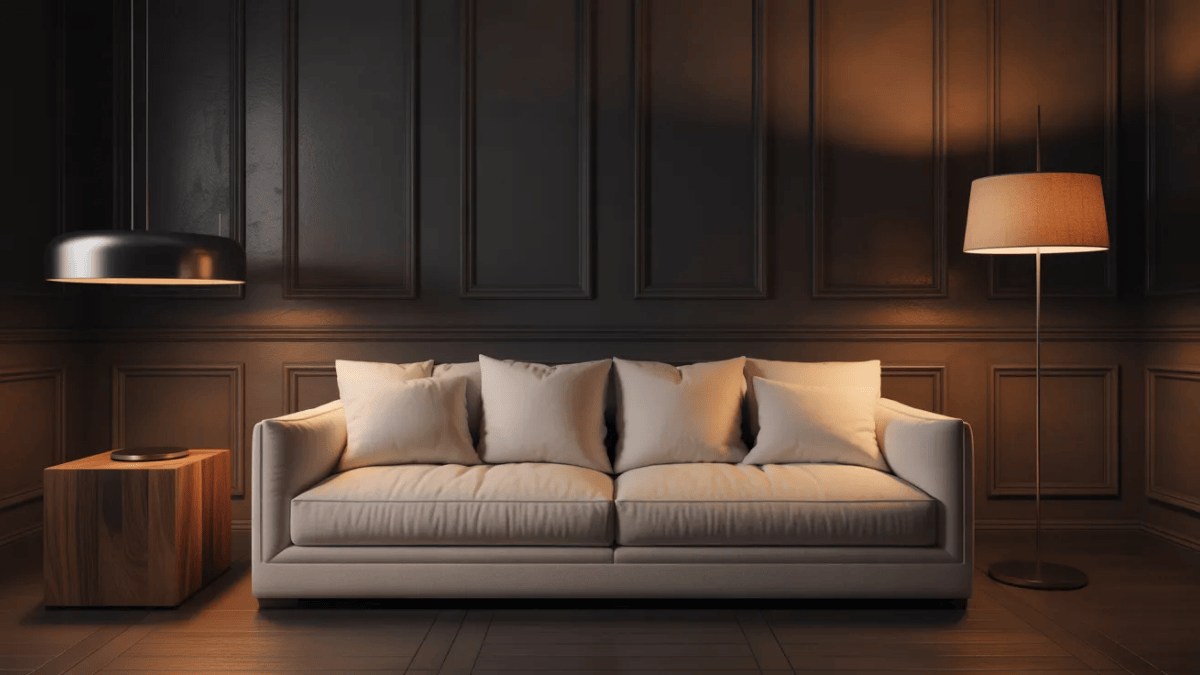
Dark rooms work when lighting does the heavy lifting. Swap overhead lights for floor lamps and warm pendants placed low; this creates a mood instead of killing it.
Shadows shift naturally throughout the day, doing the decorating for you, which means you need far fewer objects to make the space feel considered.
Add one light surface, like a cream rug or linen sofa, so the room doesn’t feel completely sealed in. Warm wood furniture keeps it from tipping into cold or gloomy.
Make It Work:
- Place lamps low, overhead light flattens everything a dark room is trying to do
- One light-toned surface stops the room from feeling sealed shut
- Wood furniture is non-negotiable; metal alone reads too cold
2. Living Room Gallery Wall
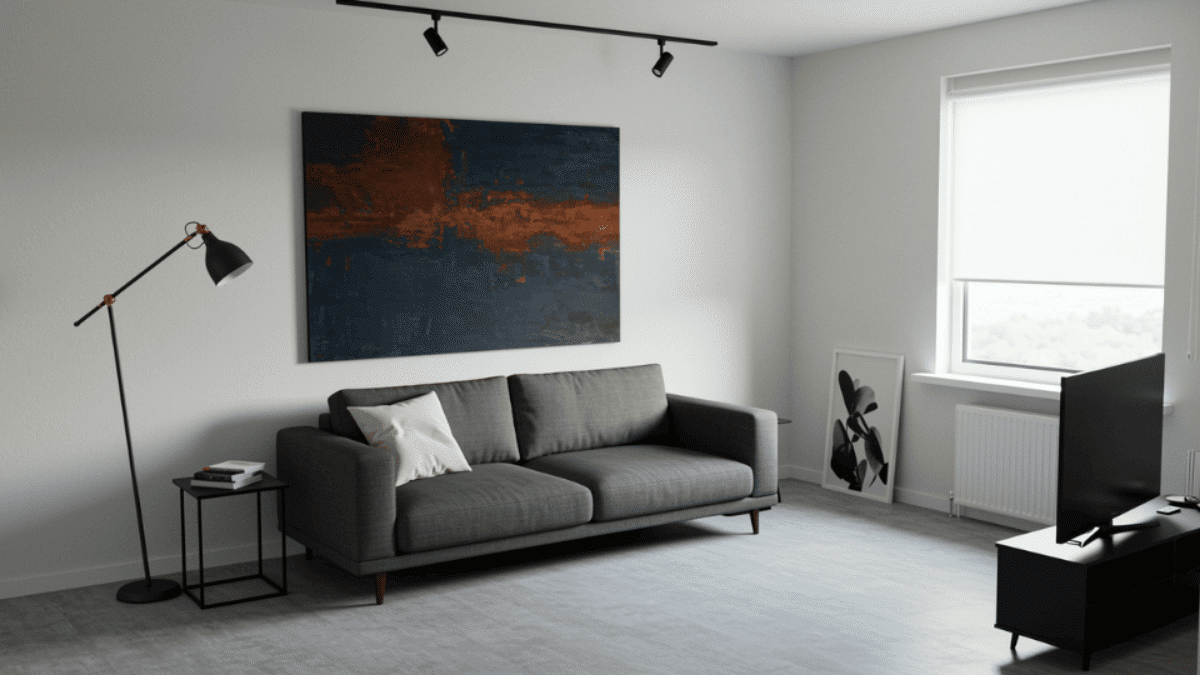
A gallery room works when art has a clear hierarchy over everything else. The moment furniture competes, the art loses, so every decision in the room should ask one question: Does this help the art or fight it?
Keep seating low-profile and neutral, light it with a directional fixture rather than an ambient wash, and resist the urge to fill walls with multiple pieces.
One large work creates presence the way five smaller ones arranged together never can, arrangements create noise, scale creates silence.
Make It Work:
- Seating below the artwork’s midpoint, height competition kills hierarchy instantly
- One large piece beats five smaller ones every single time
- Directional picture lighting only, ambient wash flattens everything
3. Living Rooms Where the Floor Steals Attention
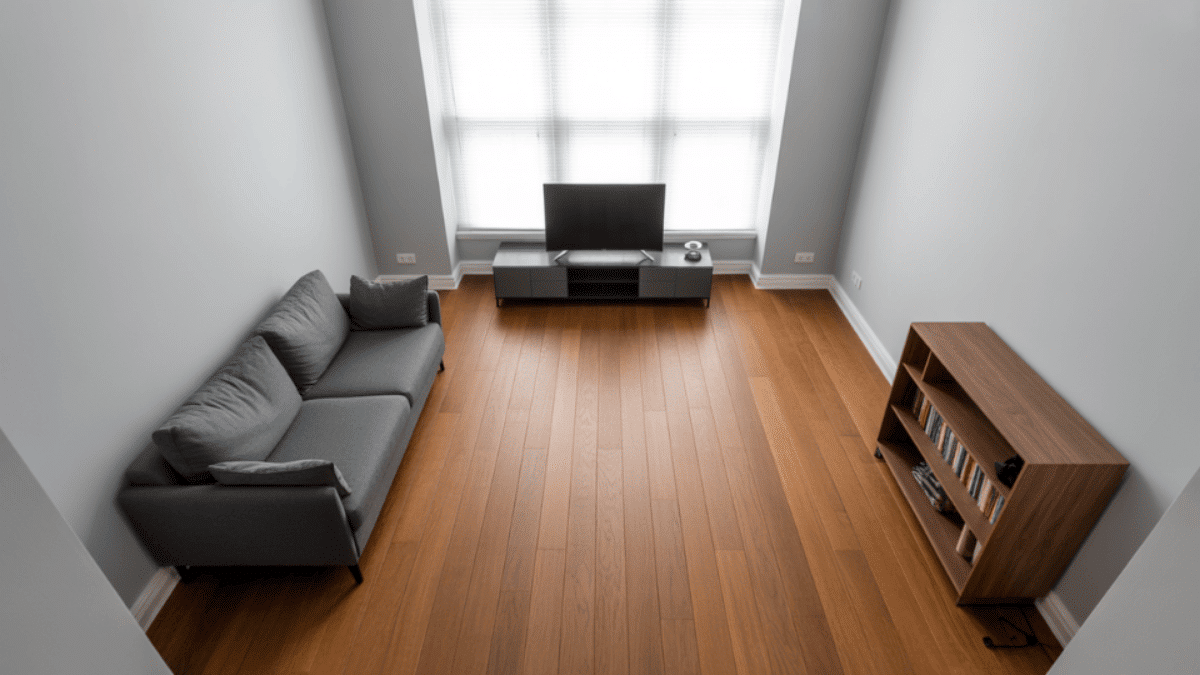
When the floor is the feature, everything else exists to not compete with it. Keep furniture low-profile and sparse so the ground reads as one continuous, uninterrupted plane.
The material does the work, whether that’s warm wood grain, cool stone, or patterned tile, the floor carries the visual weight that most rooms hand to walls or furniture.
A bright light source reveals texture and lets shadows define the surface throughout the day, making the floor feel different at noon than at dusk.
Make It Work:
- Furniture legs over solid bases, solid pieces block the floor’s continuity entirely
- Fewer rugs, not more, a rug competes with what you’re trying to show
- Overhead light positioned to cast shadows that reveal floor texture
4. Low Furniture Living Room
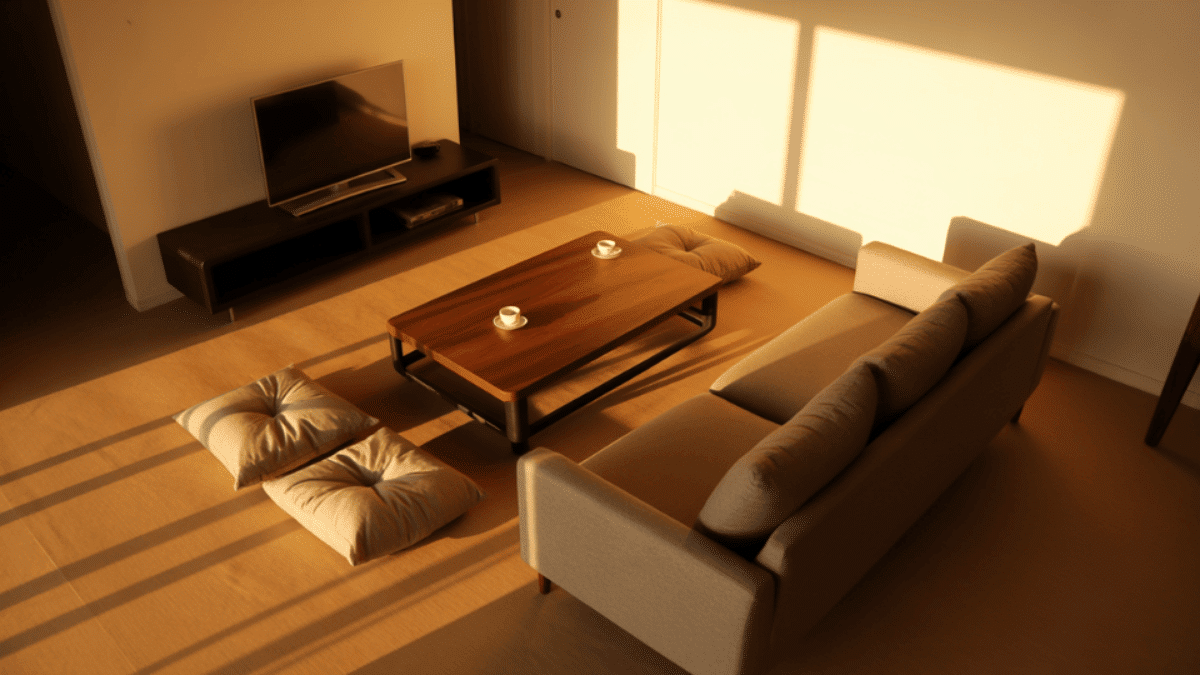
Lowering everything creates the illusion of more ceiling without changing a single structural element. A low sofa, floor cushions, and a coffee table under knee height shift the entire sightline downward, making the vertical space above feel generous and open.
The room breathes upward instead of feeling packed in. This works especially well in smaller rooms where height is the only dimension you haven’t fully used. Keep walls bare, with everything sitting low; any wall decor reads as floating and disconnected.
Make It Work:
- Coffee table under 14 inches, anything higher breaks the horizontal emphasis
- Wall decor should be minimal or absent; height contrast looks unresolved
- Floor cushions alongside a low sofa add flexibility without adding bulk
5. One Material Living Room
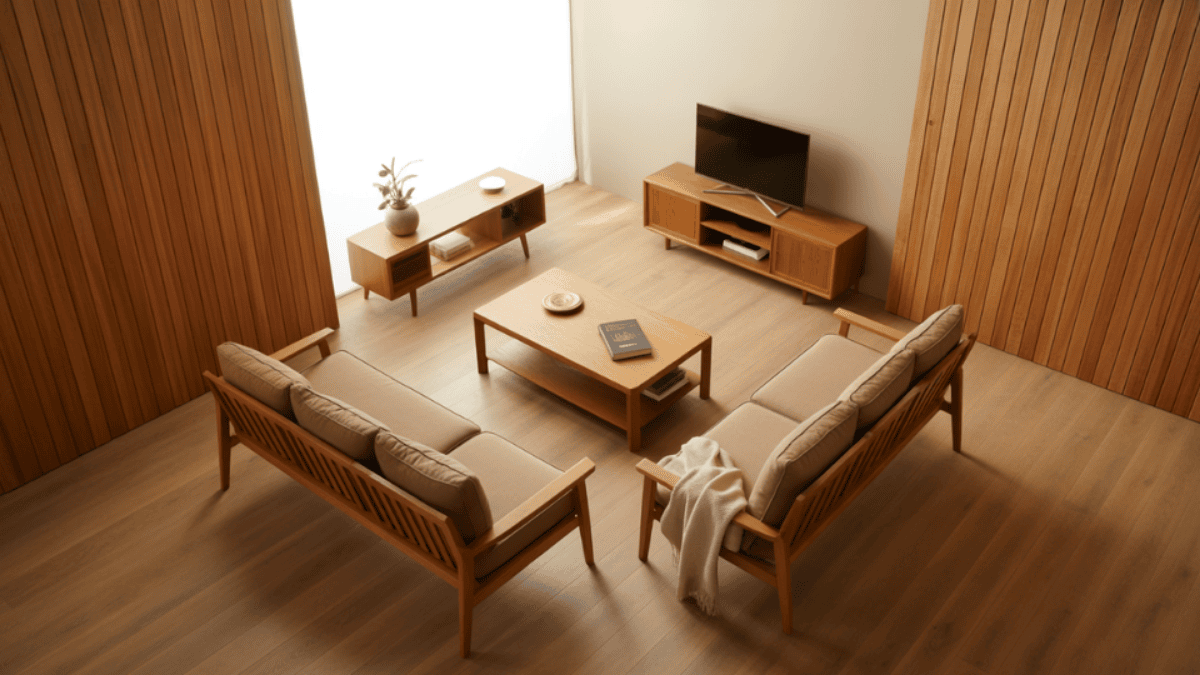
Building a room around a single material, wood, concrete, or plaster, sounds restrictive, but actually removes every decision that usually creates visual noise.
Variation comes from texture, tone, and finish rather than contrast. The uniformity feels intentional, not monotonous, because light reveals the material differently across surfaces and throughout the day.
The key is committing fully; one material used halfway reads as unfinished, not minimal. The room’s entire character comes from how well you understand the material you’ve chosen.
Make It Work:
- Commit fully, mixing in a second material breaks the whole effect
- Texture variation within the same material stops it from feeling flat
- Light placement matters most here; shadows reveal what color cannot
6. Living Room with Home Office
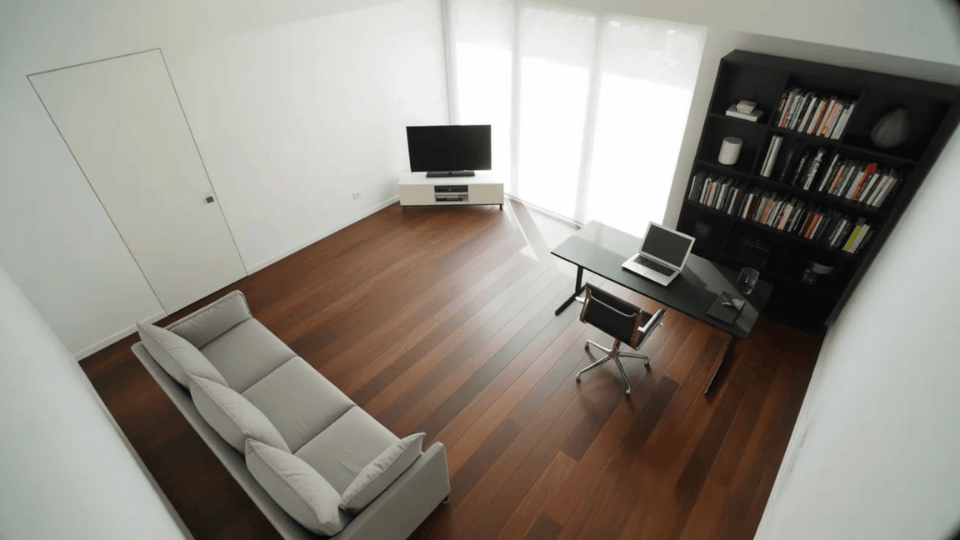
Two functions in one room work when each zone has a clear visual identity. Here, the living area anchors one end, the work zone the other, and the floor itself becomes the dividing line.
A dedicated bookshelf behind the desk keeps work materials contained without needing a separate room. The living space stays dominant in scale and tone, so the room reads as a living room first.
The key is that both zones feel deliberate rather than accidental, same room, two completely different purposes, zero visual confusion.
Make It Work:
- Let floor space physically separate the zones; no rug is needed when the distance does the work
- Bookshelf stays in the work zone only; crossing it into the living area blurs everything
- Keep the living side lighter in tone; contrast reinforces the boundary naturally
7. Living Room with Dining Corner
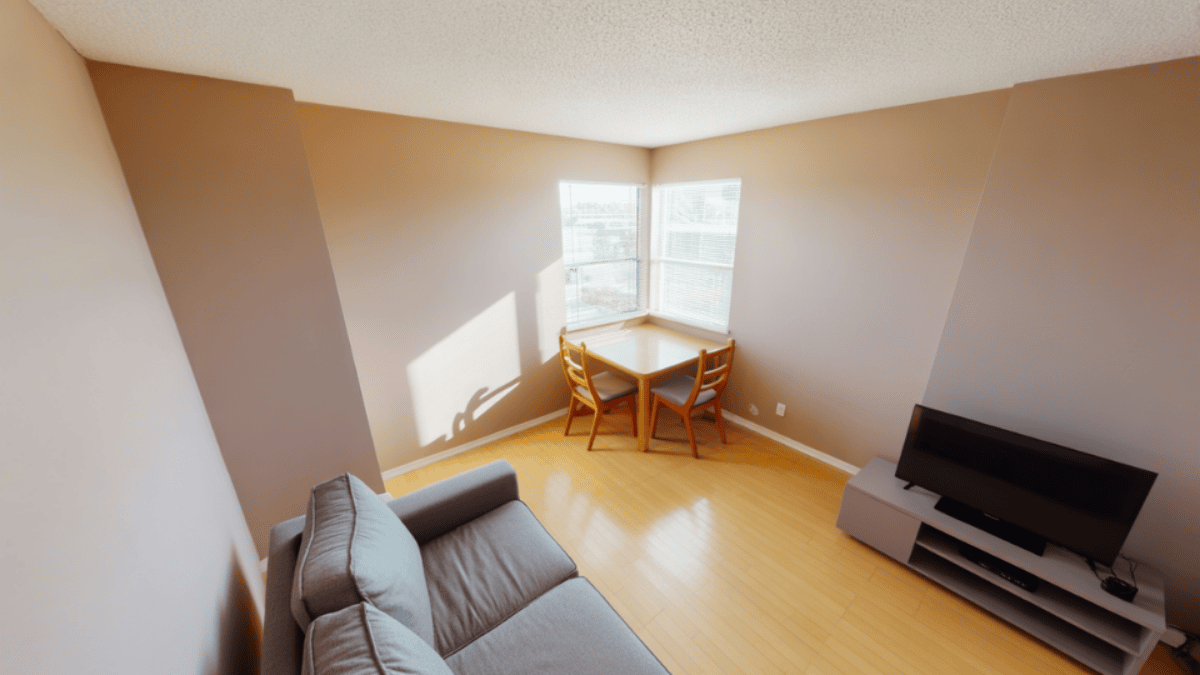
Tucking the dining table into a corner frees the entire center of the room without sacrificing function. Two walls act as a natural backdrop, doing the work of definition without extra furniture or decoration.
The corner placement creates intimacy around the table that a centrally placed dining set never achieves; meals feel contained and deliberate rather than exposed.
Keep the living area clearly dominant in scale so the dining corner reads as a considered addition, not a compromise forced by limited space.
Make It Work:
- A pendant directly above the corner table separates it from the living zone visually
- Dining chairs that tuck fully under the table, bulk is the enemy of a small corner
- Two walls as a backdrop means you need nothing hanging in that zone
8. Living Rooms Designed Around Light
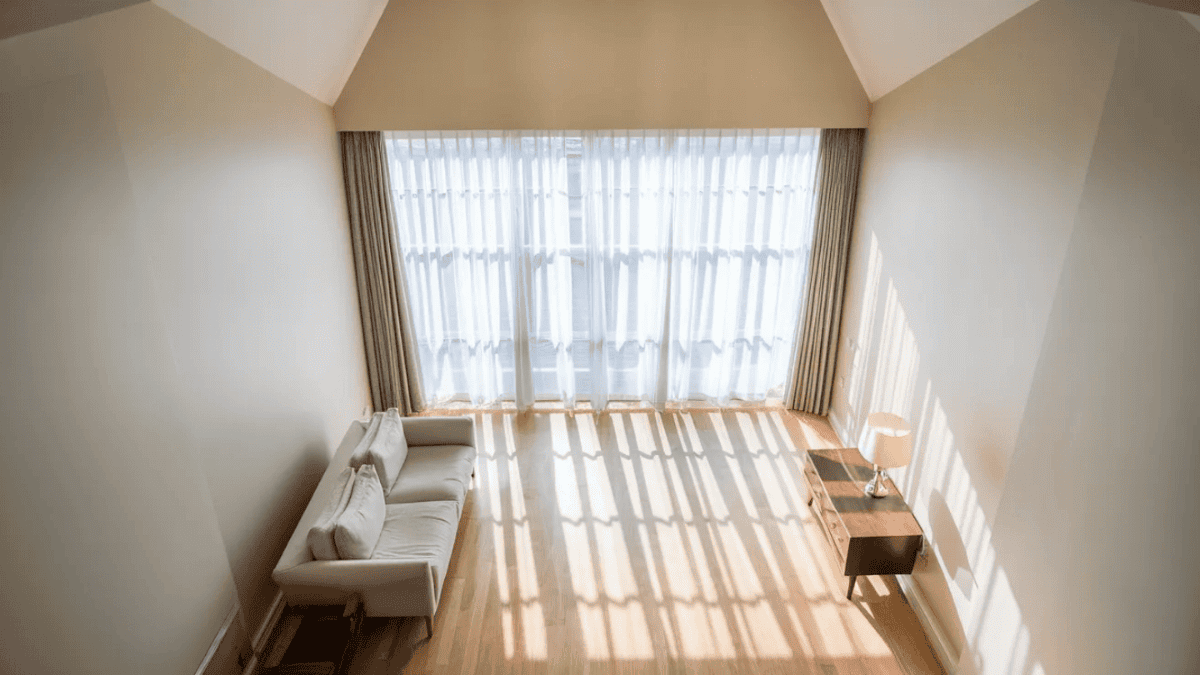
Most rooms treat light as an afterthought. Building around it means every decision, layout, color, and furniture placement responds to how light actually moves through the space.
Window treatments disappear or go sheer, reflective surfaces multiply brightness, and furniture never blocks a light path.
The room changes character naturally from morning to evening without a single adjustment. Artificial lighting supplements rather than replaces, meaning fewer fixtures doing more considered work rather than overhead lights washing everything flat.
Make It Work:
- Sheer or no window treatments, anything heavier fights the whole concept
- Reflective surfaces opposite windows double the natural light available
- One sculptural fixture only, this room doesn’t need much artificial help
9. Living Room with a Cozy Corner
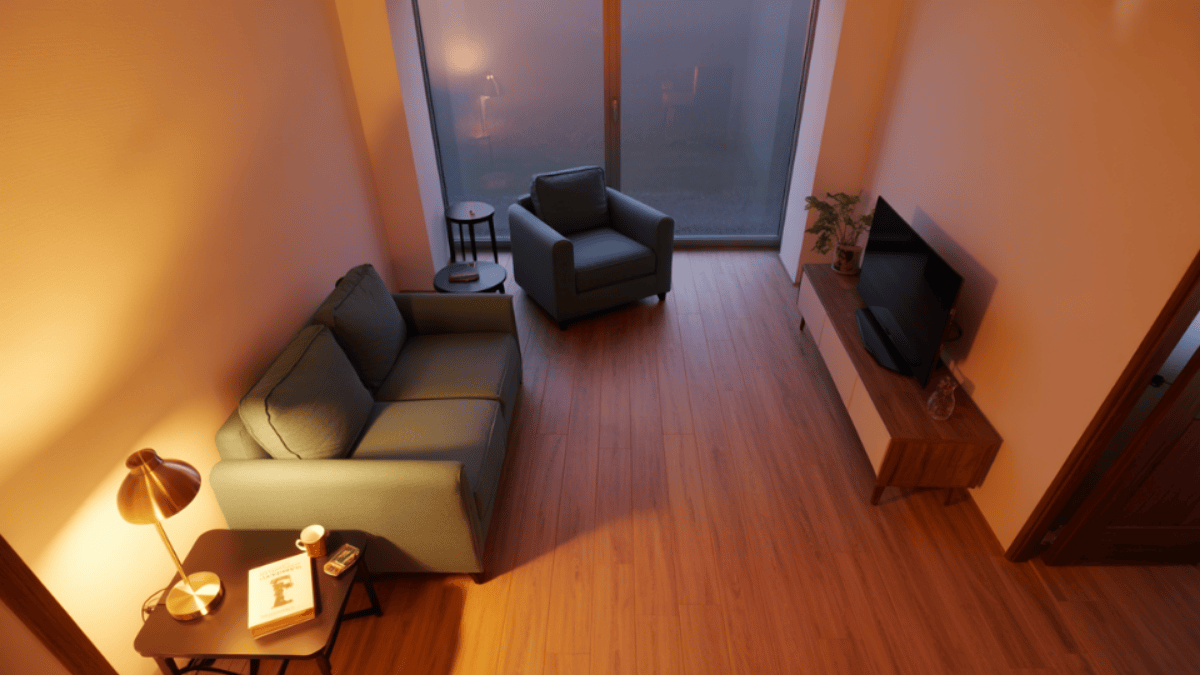
A cozy corner works because it gives the room an emotional center, not just a functional one. Cluster seating tightly in one zone and leave the rest of the room lightly furnished; the contrast between the dense corner and the open space around it makes both feel intentional.
The corner should feel like a room within a room, warm and enclosed, while the surrounding emptiness gives it breathing room. Without that contrast, it’s just furniture pushed together.
Make It Work:
- One rug defines the corner; outside it, the room stays sparse
- Focused lighting over the corner only, ambient light elsewhere kills the intimacy
- Soft textures concentrated here, harder surfaces everywhere else
10. Lighting as the Only Decor
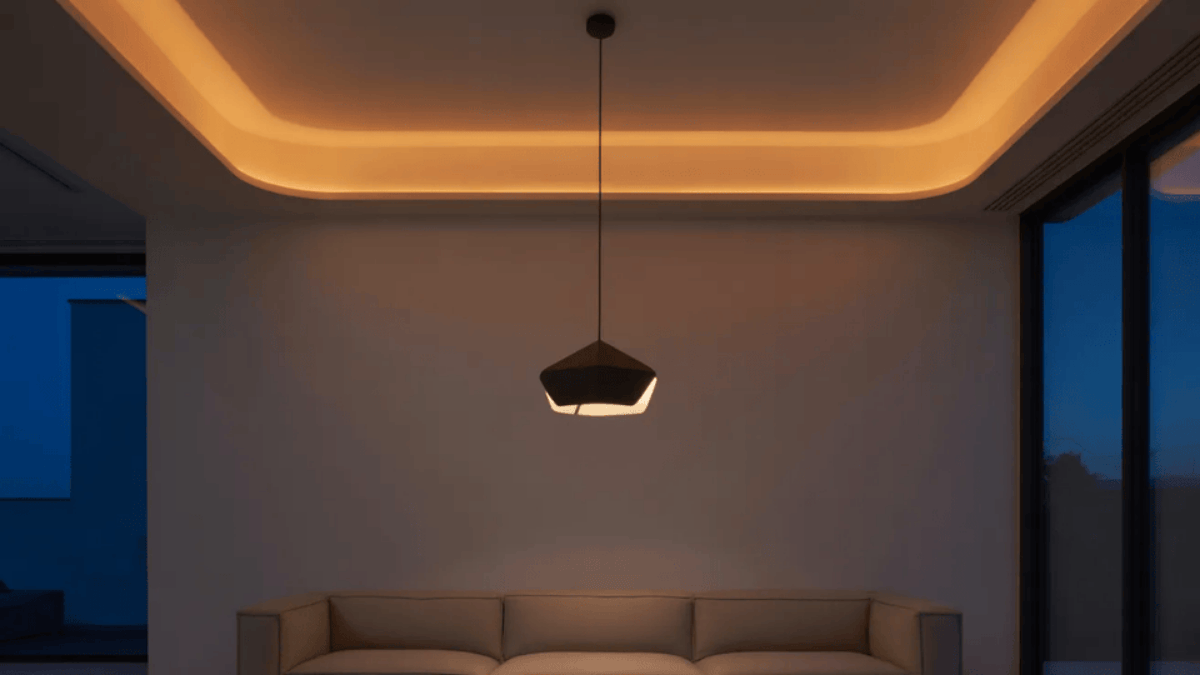
When a single fixture does what most people try to do with shelves and accessories, the room no longer needs decoration. A sculptural pendant or a considered floor lamp becomes the focal point, the personality, and the atmosphere all at once.
The fixture earns the emptiness around it the same way a statement artwork does; everything else recedes because there’s nothing competing.
This only works when the fixture is genuinely remarkable; an average light in an empty room just looks unfinished.
Make It Work:
- One fixture, chosen last, needs to respond to the room, not the other way around
- Wall sconces count as decoration, and keep artificial light sources to a minimum
- The fixture should be visible from the entrance, and it needs to land immediately
11. Plants as Room Dividers
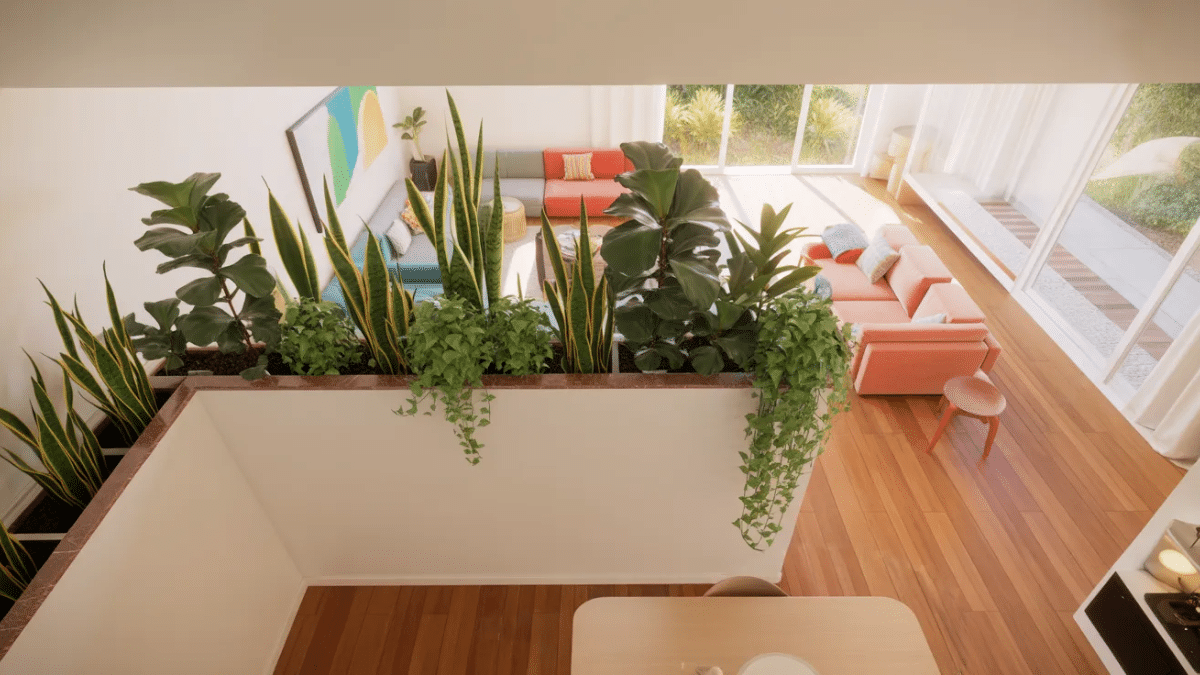
Large plants create zones the way walls do, without closing the space off. A tall fiddle leaf fig or a cluster of varying heights between the living and dining area defines a boundary that feels organic rather than architectural.
The room gains structure without losing openness; you understand where one zone ends, and another begins, without a single hard edge.
Unlike furniture dividers, plants add volume at different heights simultaneously, which fills vertical space in a way nothing else in a minimal room does.
Make It Work:
- Group plants at varying heights; a single height reads as a row, not a divider
- Position near natural light sources, a divider that dies defeats the purpose
- Large specimens only, small plants cluster without ever creating real mass
Common Minimalist Living Room Mistakes & How to Fix Them
Most people don’t fail at minimalism because they have too much stuff. They fail because they make one of these specific errors.
Mistake 1: Removing everything and calling it done.
A room stripped of all objects isn’t minimalist, it’s unfinished. Minimalism requires a few deliberate, well-placed pieces that justify their presence. Without them, the space reads as empty rather than intentional.
Mistake 2: Buying minimal-looking furniture that isn’t functional.
A beautiful low-slung sofa with no back support gets replaced within a year. Minimalist design has to live in the real world. Prioritize comfort and durability, then refine the aesthetic.
Mistake 3: Ignoring storage.
Hidden storage is what makes minimalism sustainable. Without it, everyday objects end up on surfaces, and the whole effect collapses. Build in more storage than you think you need before you worry about decor.
Mistake 4: Too many textures in too many colors.
Texture adds depth to a minimal room, but it only works when the colors stay cohesive. Five different textures in five different tones create noise, not calm.
Mistake 5: Choosing the wrong scale.
Undersized furniture in a large room looks out of place. Oversized pieces in a small room feel oppressive. In minimalist spaces, scale relationships are especially visible because there’s nothing else to distract from them.
Final Thoughts
Rooms you build on intentional choices hold up far better than ones you fill with impulse purchases. The framework I’ve laid out here breaks the cycle you’ve probably been stuck in: decorate, clutter, start over.
In the rooms I’ve styled that held up best over time, the common thread wasn’t the most expensive pieces or the most dramatic gestures.
It was restraint exercised consistently, with fewer things, each chosen slowly and deliberately. That patience is what makes a minimalist room feel earned rather than assembled.
Keeping things simple takes far less energy than constantly fixing chaos. I’ve seen it firsthand, the work you put in up front pays off every single day after.
Notice what stays peaceful in your space. Adjust what doesn’t. Let your room grow with your actual needs, not with trends. Drop a comment if something clicked.