


The driveway is often the first thing visitors notice about a home, yet it frequently gets overlooked in design conversations.
I’ve seen how modern driveway ideas have changed ordinary entrances into stunning focal points that genuinely improve the curb’s appeal.
I’ve covered sleek concrete installations, natural stone patterns, eco-conscious permeable pavers, and creative lighting solutions.
I’ll walk through material comparisons, budget considerations, maintenance realities, and design tricks that work across different architectural styles. You’ll see how texture, color, and layout choices can dramatically shift your home’s first impression.
A thoughtfully designed driveway does more than provide parking; it bridges the gap between street and front door with intention, setting the tone for everything beyond.
What Makes a Driveway Look Modern?
Modern driveways share certain defining characteristics that separate them from traditional designs. Clean lines and simple layouts create visual clarity, while minimal color palettes, think gray, charcoal, black, and white tones, provide a polished foundation.
The magic often happens when mixing materials like concrete with gravel or pavers with grass, adding texture without clutter. Integrated lighting changes functionality into ambiance, and smooth connections to landscaping blur boundaries between hardscape and garden.
Above all, modern driveway designs prioritize both durability and function, ensuring beauty that lasts through daily use and changing seasons.
These elements combine to create driveways that feel intentional, cohesive, and refreshingly contemporary.
Modern Driveway Ideas for Every Style and Budget
Today’s driveway designs prove that curb appeal and smart engineering go hand in hand. Here’s what modern construction looks like at its best:
1. Large Concrete Slab Driveway
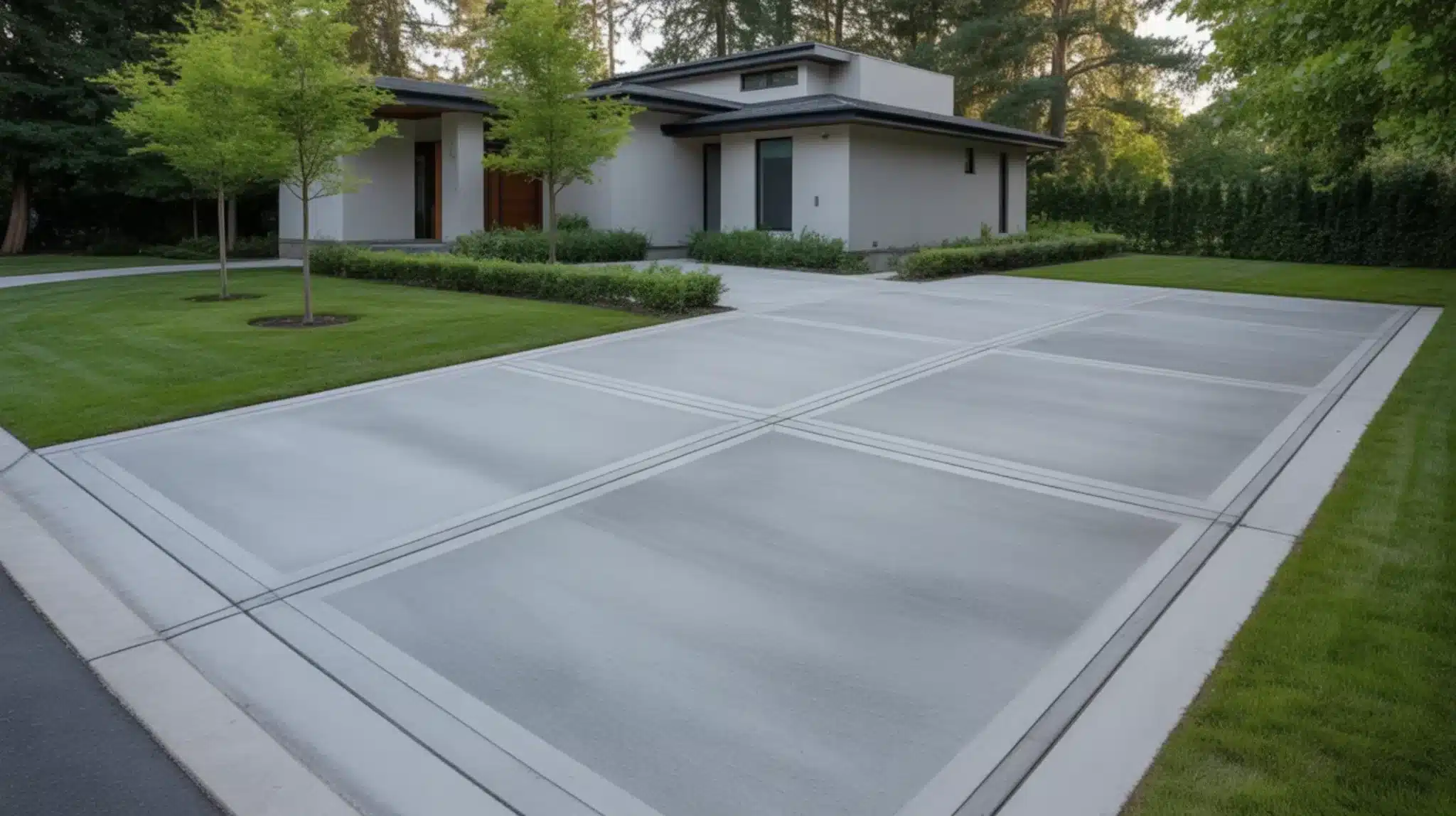
The ultimate minimalist statement, a poured concrete slab offers clean, uninterrupted surfaces that complement contemporary architecture beautifully.
This approach creates visual spaciousness while providing a durable, long-lasting foundation. When finished with a smooth trowel or subtle broom texture, the result feels both refined and practical for everyday use.
Notable Features:
- Control joint patterns add subtle geometric interest to expansive concrete surfaces
- Light gray finishes soften the appearance while hiding minor stains effectively
- Seamless integration with modern home exteriors creates cohesion throughout
2. Concrete and Gravel Combo
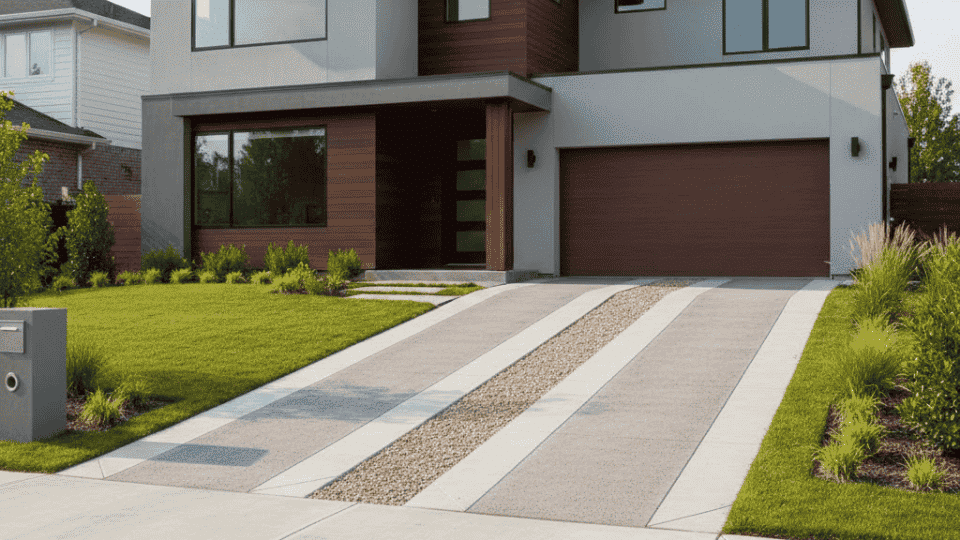
This two-material design balances affordability with visual appeal while improving drainage naturally. Concrete tire tracks provide solid driving surfaces, while gravel fills center or side sections, reducing impervious coverage.
The textural contrast between smooth and loose materials adds dimension without overwhelming the space.
Notable Features:
- Cost-effective solution uses less concrete while maintaining a professional appearance
- Improved water management allows rainwater to permeate through gravel sections
- Customizable gravel colors coordinate with home exteriors and landscaping palettes
3. Permeable Paver Driveway
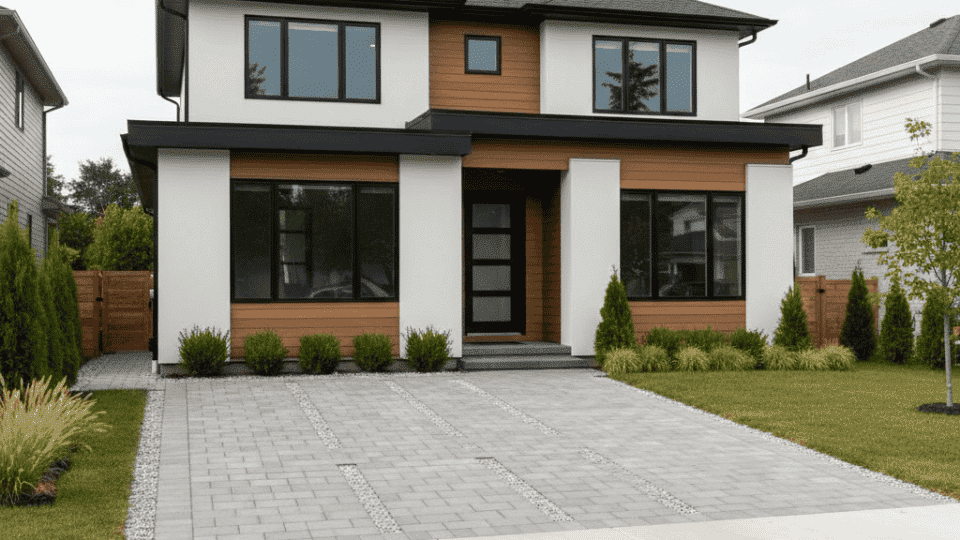
Environmentally conscious and visually striking, permeable pavers allow water to filter naturally into the ground below.
These specially designed units feature wider joints filled with gravel or planted groundcover, managing stormwater while maintaining structural strength. The variety of available shapes, sizes, and colors enables extensive customization.
Notable Features:
- Eco-friendly drainage reduces runoff and supports local groundwater systems naturally
- Design flexibility ranges from industrial-modern to warm, textured appearances
- Long-term durability withstands heavy vehicle traffic while remaining environmentally responsible
4. Exposed Aggregate Concrete
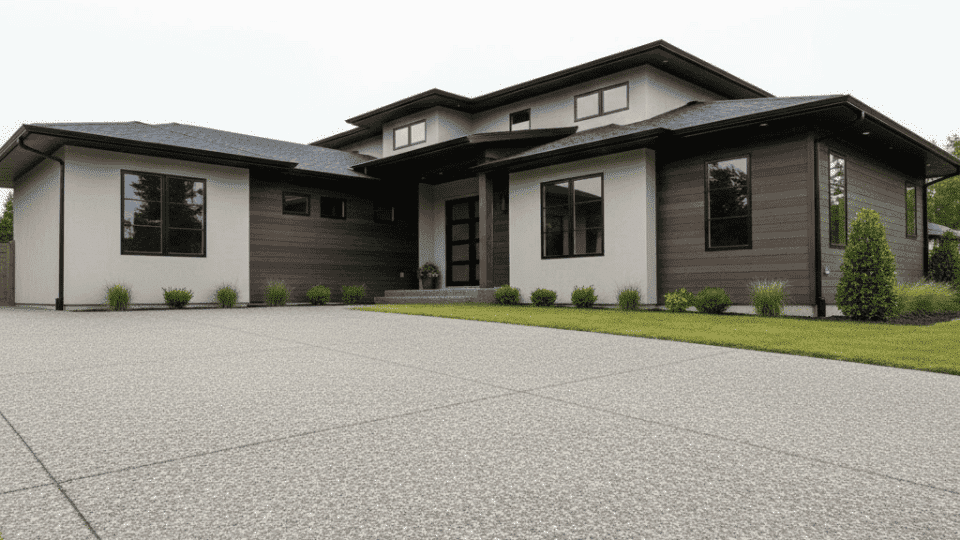
Revealing the natural beauty of embedded stones, exposed aggregate creates slip-resistant surfaces with organic color variation.
After concrete sets, the top cement layer is removed to showcase decorative aggregate beneath. This finish weathers gracefully in various climates while maintaining its textured appeal over decades.
Notable Features:
- Customizable stone colors match home exteriors from cool grays to warm earth tones
- Superior traction provides safety in wet conditions without harsh textures
- Freeze-thaw resistance makes this ideal for northern climates with temperature fluctuations
5. Porcelain Slab Driveway
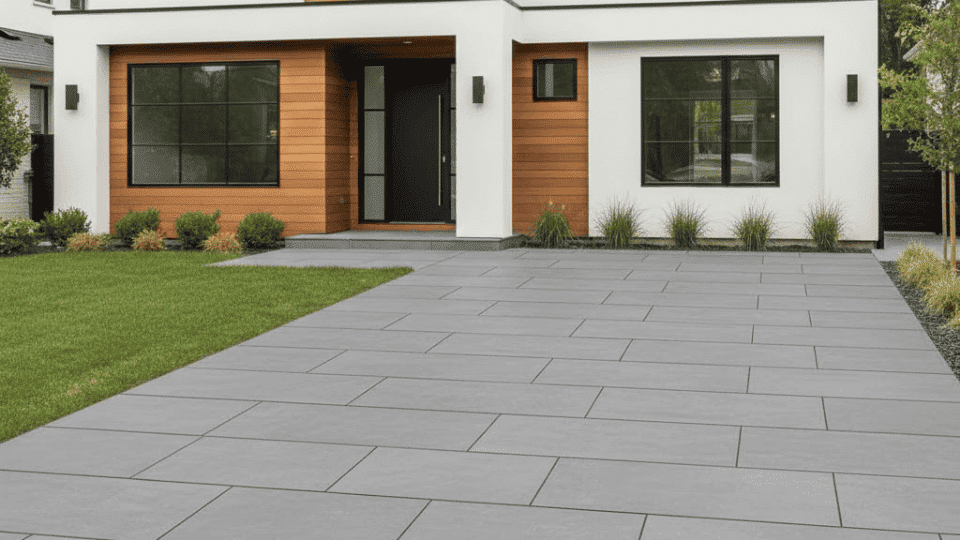
Large-format porcelain slabs bring luxury interior design outdoors with dramatic impact. These oversized tiles, often 3 feet by 5 feet or larger, create sleek surfaces with minimal grout lines.
Porcelain offers exceptional stain resistance and color permanence while mimicking concrete or natural stone beautifully.
Notable Features:
- Minimal maintenance requirements eliminate sealing needs common with natural stone
- Consistent coloring maintains appearance without fading from sun exposure
- Contemporary grace improves properties with high-end modern styling
6. Floating Concrete Squares with Gravel
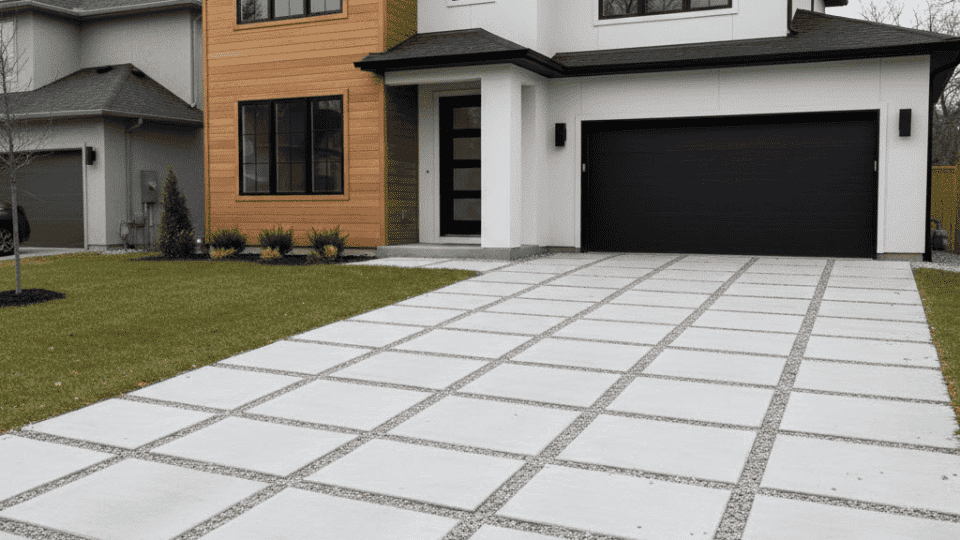
Individual concrete pavers spaced evenly across gravel beds create sculptural rhythm and visual interest. The squares appear to float above textured surfaces while naturally guiding traffic flow. Proportions can be customized to vehicle wheelbases, and excellent drainage occurs between each unit.
Notable Features:
- Artistic functionality changes practical needs into landscape design features
- Natural drainage paths prevent water pooling while maintaining structural integrity
- Flexible spacing accommodates different vehicle sizes and traffic patterns
7. Grass Strip Driveway
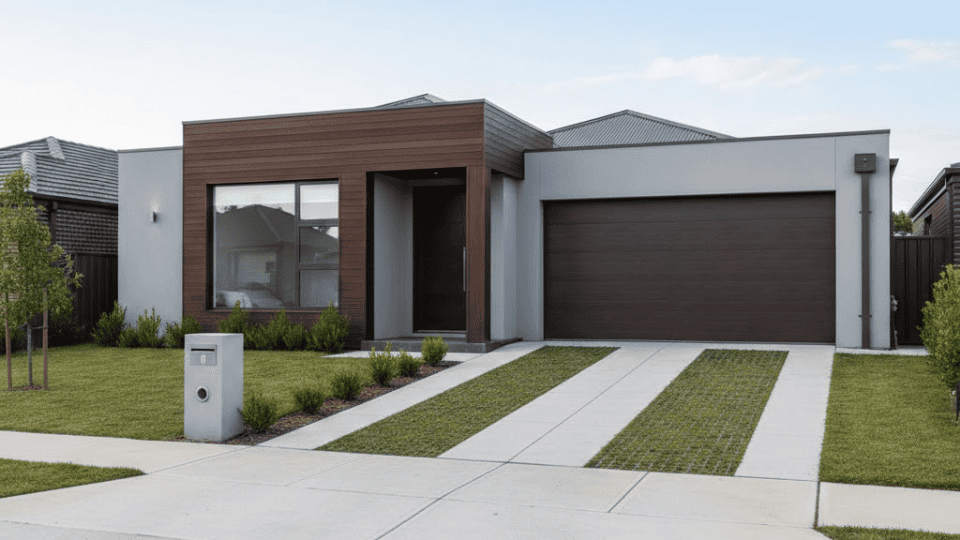
Concrete or paver tracks with living grass strips growing between them offer environmentally friendly beauty. This permeable design allows rainwater to soak naturally while softening hardscape with greenery.
Reinforced grass pavers in high-traffic areas prevent rutting while maintaining the natural appeal.
Notable Features:
- Reduced heat island effect keeps surfaces cooler than solid concrete installations
- Natural stormwater filtration supports healthy soil and reduces municipal drainage burden
- Living landscape integration connects the driveway seamlessly with the surrounding gardens
8. Stamped Concrete with Geometric Pattern
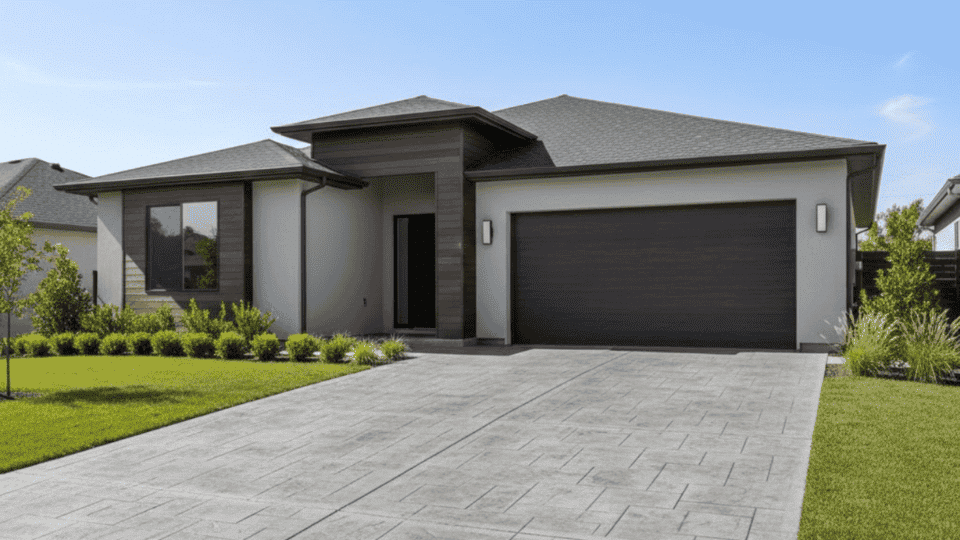
Contemporary geometric patterns change standard concrete into striking design statements at reasonable costs.
Rather than imitating traditional materials, modern stamping creates bold rectangles, hexagons, or linear designs. Monochromatic color schemes maintain refinement while adding surface dimension and visual movement.
Notable Features:
- Cost-effective upgrade delivers designer looks without high-end material expenses
- Pattern customization matches styles from mid-century to ultra-contemporary
- Durable surface resists fading and wears better than painted alternatives
9. LED-Lit Driveway Edges
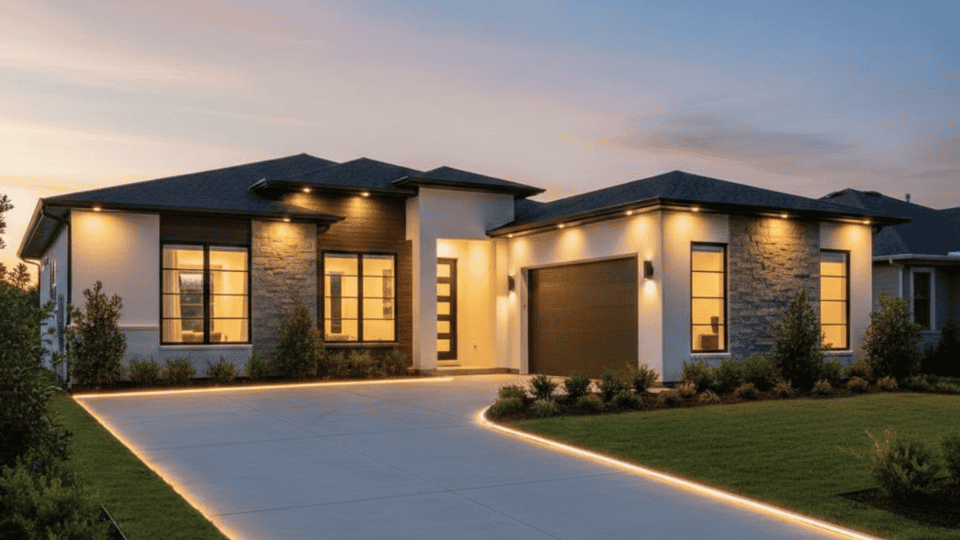
Integrated LED lighting along driveway borders creates functional illumination with architectural drama. Recessed lights or LED strips guide vehicles safely while changing the space after dark.
Low-voltage systems offer energy efficiency and can be programmed for various lighting effects and timing.
Notable Features:
- Better nighttime safety clearly defines driving boundaries in all weather conditions
- Energy-efficient operation minimizes electrical costs with modern LED technology
- Design flexibility allows color temperature choices from warm to cool white
10. Driveway with Built-In Planters
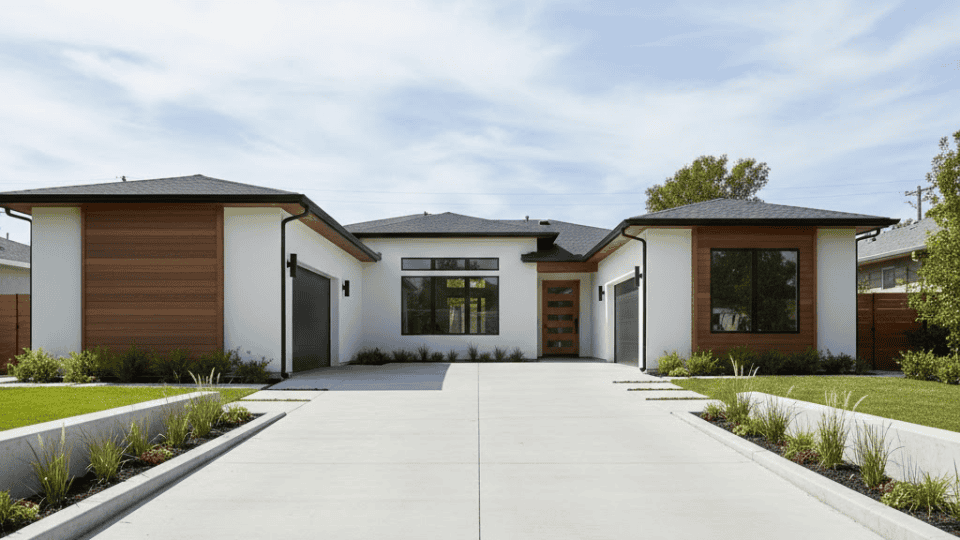
Incorporating planter boxes or strips directly into driveway design softens the hardscape with strategic greenery.
These integrated garden beds break up large paved areas while adding color and texture. Plants can be chosen for seasonal interest, creating year-round visual appeal at the entrance.
Notable Features:
- Softened appeal balances hard materials with natural elements seamlessly
- Strategic placement frames the driveway without obstructing vehicle movement
- Seasonal variety allows changing plantings for evolving color and texture
11. Stepped Modern Driveway (for Slopes)
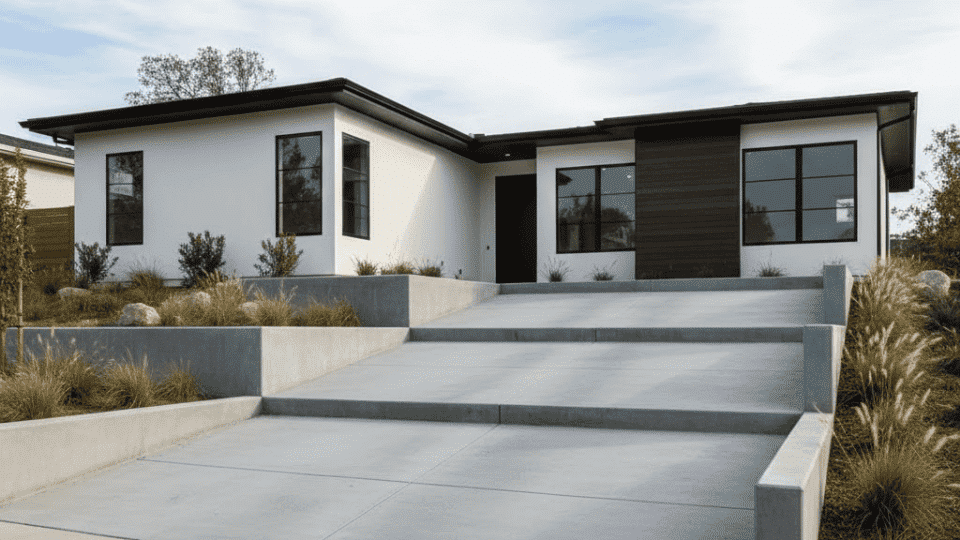
Sloped properties benefit from stepped driveway designs that manage grade changes with architectural intention.
Terraced sections connected by angled ramps create visual interest while improving drainage and traction. The stepping can incorporate lighting, planters, or material flow between levels.
Notable Features:
- Improved vehicle traction on steep grades through intentional level changes
- Structural drama changes challenging topography into design features
- Better drainage control prevents water from rushing and erosion on slopes
12. Concrete Driveway with Metal Inlays
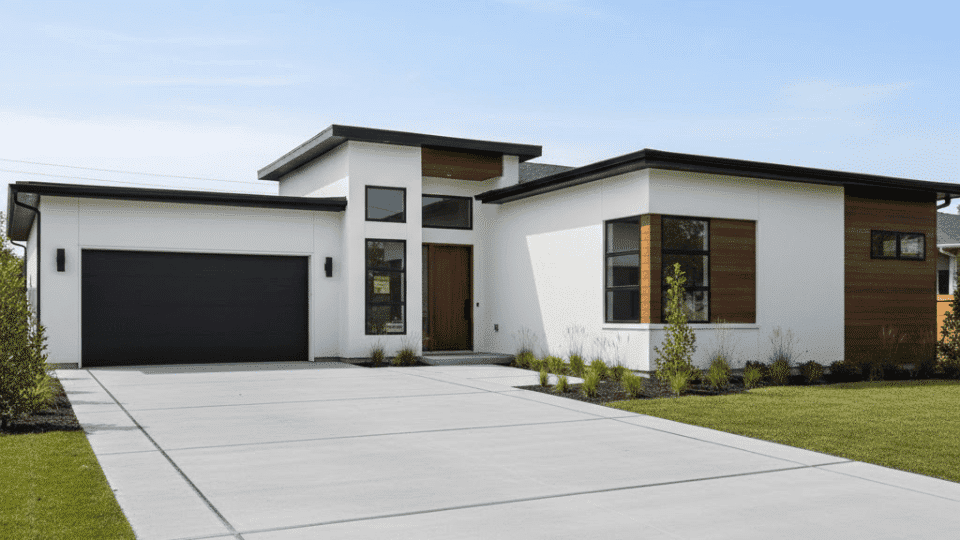
Metal strips or geometric inlays add industrial classiness to concrete surfaces with exceptional contrast. Stainless steel, corten steel, or aluminum elements create visual interest while serving as expansion joints. The metal develops natural patina over time, adding character and depth to the design.
Notable Features:
- Industrial-modern aesthetic appeals to contemporary and mid-century home styles
- Functional expansion joints prevent concrete cracking while adding design detail
- Weather-resistant materials develop beautiful patina without structural deterioration
13. Eco-Friendly Grid System
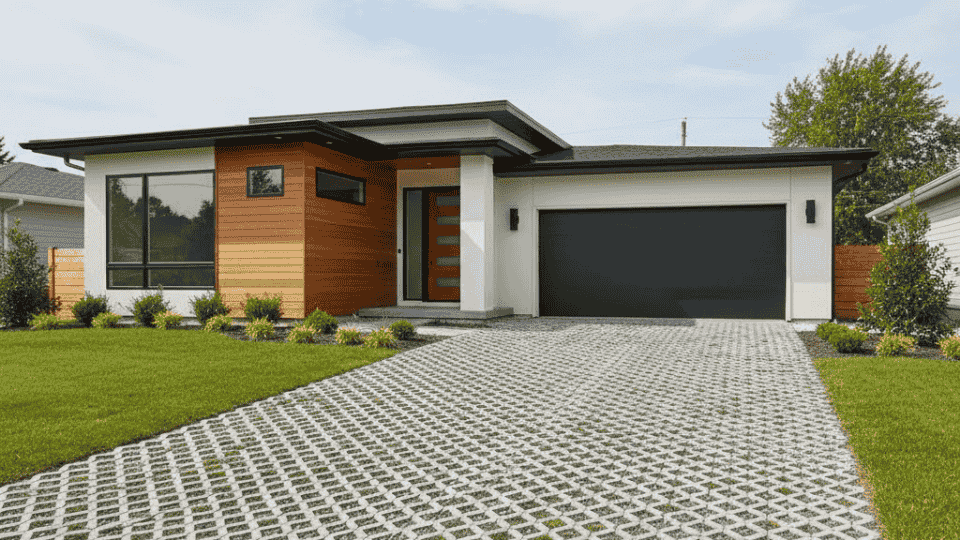
Plastic or concrete grid systems filled with gravel or grass provide load-bearing surfaces with maximum permeability.
These honeycomb structures distribute vehicle weight while allowing water and oxygen to reach the soil. The result combines durability with environmental responsibility in one innovative system.
Notable Features:
- Maximum permeability achieves the highest water infiltration rates among all options
- Strong load capacity supports heavy vehicles without compromising environmental benefits
- Low maintenance requirements reduce long-term care compared to traditional surfaces
14. Driveway-to-Walkway Design
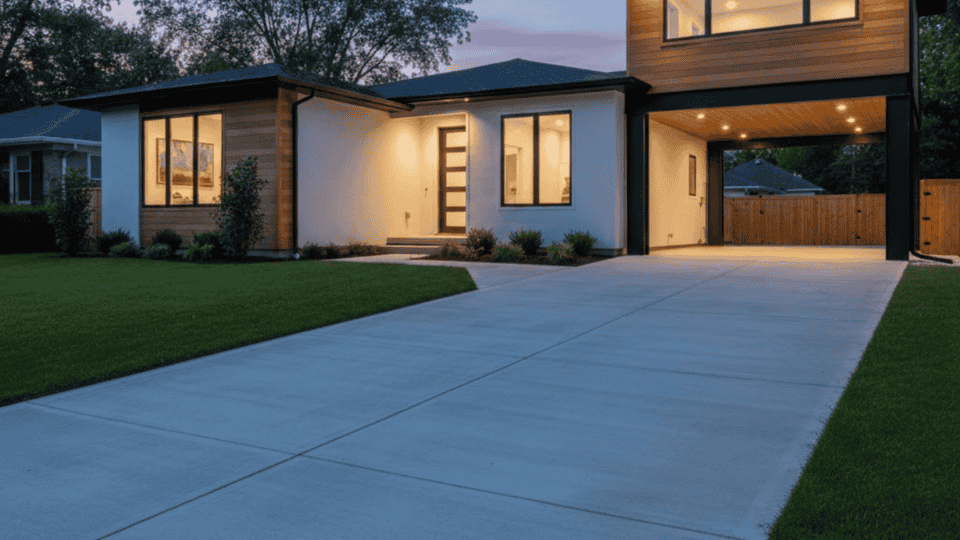
Unified material palettes and thoughtful transitions blur boundaries between driveway and walkway spaces. This approach creates cohesive flow from street to front door, making the entire entry sequence feel intentional. Consistent colors, textures, and patterns throughout establish visual balance.
Notable Features:
- Cohesive site design eliminates jarring transitions between different surface areas
- Material continuity simplifies maintenance and creates an urbane appearance
- Visual flow guides visitors naturally from the parking to the entrance
15. Wide Entry Driveway with Statement Gate
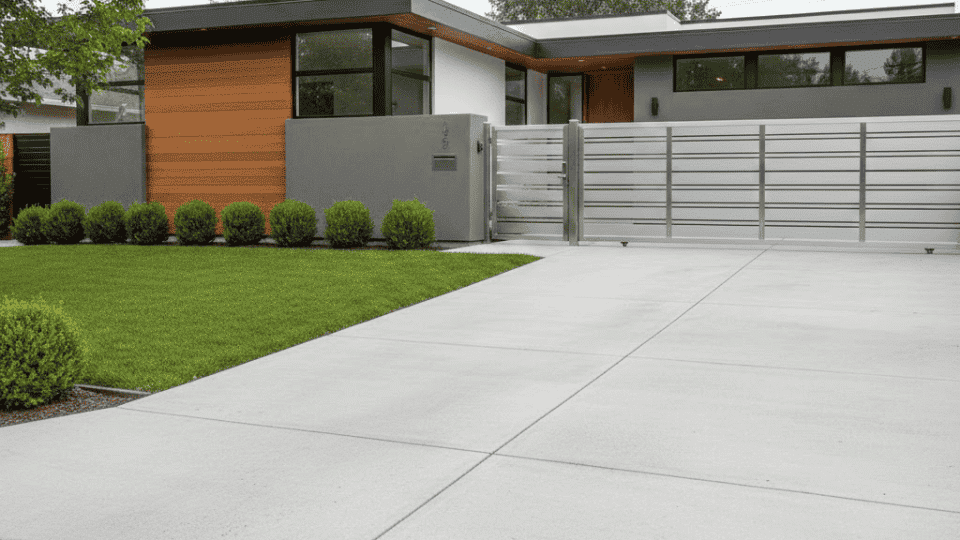
Generous driveway widths paired with gates create grand, welcoming entrances with security. Modern gate designs in metal, wood, or composite materials set the tone while providing privacy.
The width accommodates multiple vehicles and creates impressive first impressions for visitors.
Notable Features:
- Better security controls property access while maintaining visual appeal
- Architectural focal point establishes home’s design from the street
- Practical width allows easy maneuvering for multiple or larger vehicles
16. Circular Modern Driveway
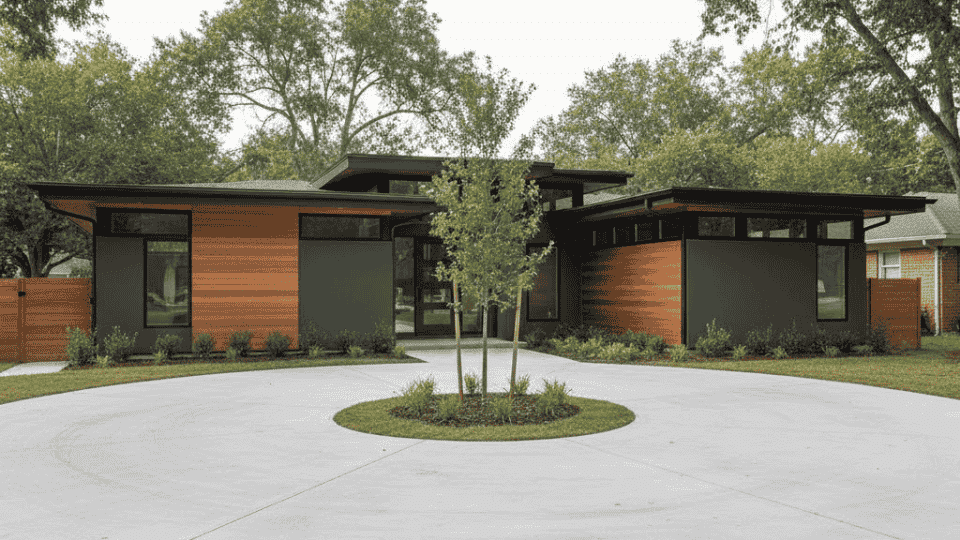
Breaking from linear traditions, circular or curved layouts add grace and improved functionality to larger properties.
The rounded design creates natural turnaround space while framing central landscaping features. This layout works particularly well with modern homes that emphasize organic shapes and flowing lines.
Notable Features:
- Easy vehicle turnaround eliminates backing onto busy streets safely
- Central landscape opportunity showcases specimen trees, sculptures, or gardens
- Structural softness balances angular modern home designs beautifully
17. Heated Modern Driveway
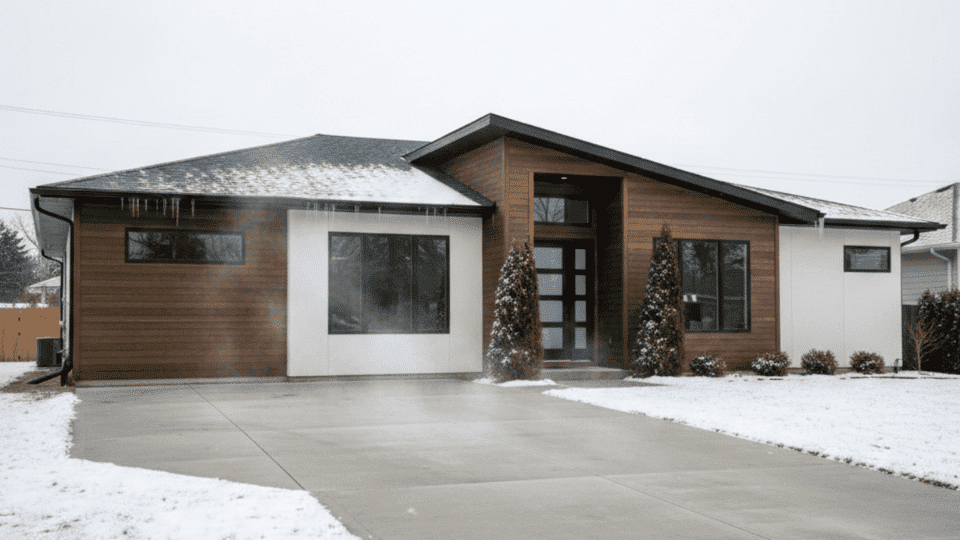
Radiant heating systems embedded beneath driveway surfaces automatically melt snow and ice in cold climates.
This luxury feature provides year-round convenience while protecting surface materials from freeze-thaw damage. Hydronic or electric systems can be installed during construction or renovation.
Notable Features:
- Winter convenience eliminates manual snow removal and ice scraping
- An extended surface life prevents freeze-thaw damage to materials
- Safety enhancement maintains clear, slip-free surfaces throughout the winter months
How to Choose the Right Modern Driveway Design
Follow these steps to find a driveway that works for your home and lifestyle:
Step 1: Assess Your Home’s Architecture: Examine your home’s style first. Ultra-modern homes pair well with sleek concrete or porcelain, while softer contemporary styles benefit from mixed materials that add warmth.
Step 2: Evaluate Climate and Drainage: Consider local weather patterns. Areas with heavy rainfall need permeable options, while freeze-thaw climates require durable materials that withstand temperature fluctuations.
Step 3: Set Your Budget: Calculate costs for materials, installation, and long-term maintenance. Basic concrete offers affordability, while porcelain or heated systems require larger investments.
Step 4: Match Maintenance to Lifestyle: Decide on upkeep commitment. Low-maintenance options like stamped concrete suit busy schedules better than natural stone.
The Bottom Line
Modern driveway design blends style with smart construction. Today’s modern driveway ideas range from clean concrete layouts to heated systems built for cold climates.
You can choose simple slabs, permeable options for better drainage, or subtle lighting for added safety. The right design depends on your home’s architecture, local weather, budget, and how you use the space each day.
A driveway should not feel like an afterthought. It shapes first impressions and supports daily routines. From eco-friendly grid systems to bold geometric patterns, there’s a solution for every need.
In my experience, focus on durability, function, and a look that fits your home naturally. The right choice will serve you well for years.