


Choosing from types of countertop materials can feel confusing because everything looks great in photos. But what really matters is how it works in your everyday life, like hot pans, spills, kids, heavy cooking, and how much cleaning you’re willing to do.
In this guide, I’ll walk you through the main countertop options, what each one is best for, the biggest pros and cons, and the care level you should expect.
By the end, you’ll be able to compare your choices quickly and pick the one that fits your budget and your routine.
Why Your Countertop Choice Matters Every Day
Once your new counters are in, you’re going to see and touch them all day long, when you make coffee, pack lunches, cook dinner, or clean up after a late-night snack.
Unlike paint or decor, this is not something you’ll swap out next year if you change your mind. If the surface stains easily, shows every scratch, or needs more care than you expected, you’ll feel it daily.
That’s why looking past the pretty photos and thinking about how each material behaves in a real kitchen matters this much. With that in mind, let’s look at the specific materials one by one and see what they’re really like to live with.
Different Types of Countertop Materials
Before choosing a countertop, it helps to understand how different materials compare in cost, durability, and upkeep. Here’s a quick breakdown of the most common options and what you can expect from each:
1. Laminate Countertops
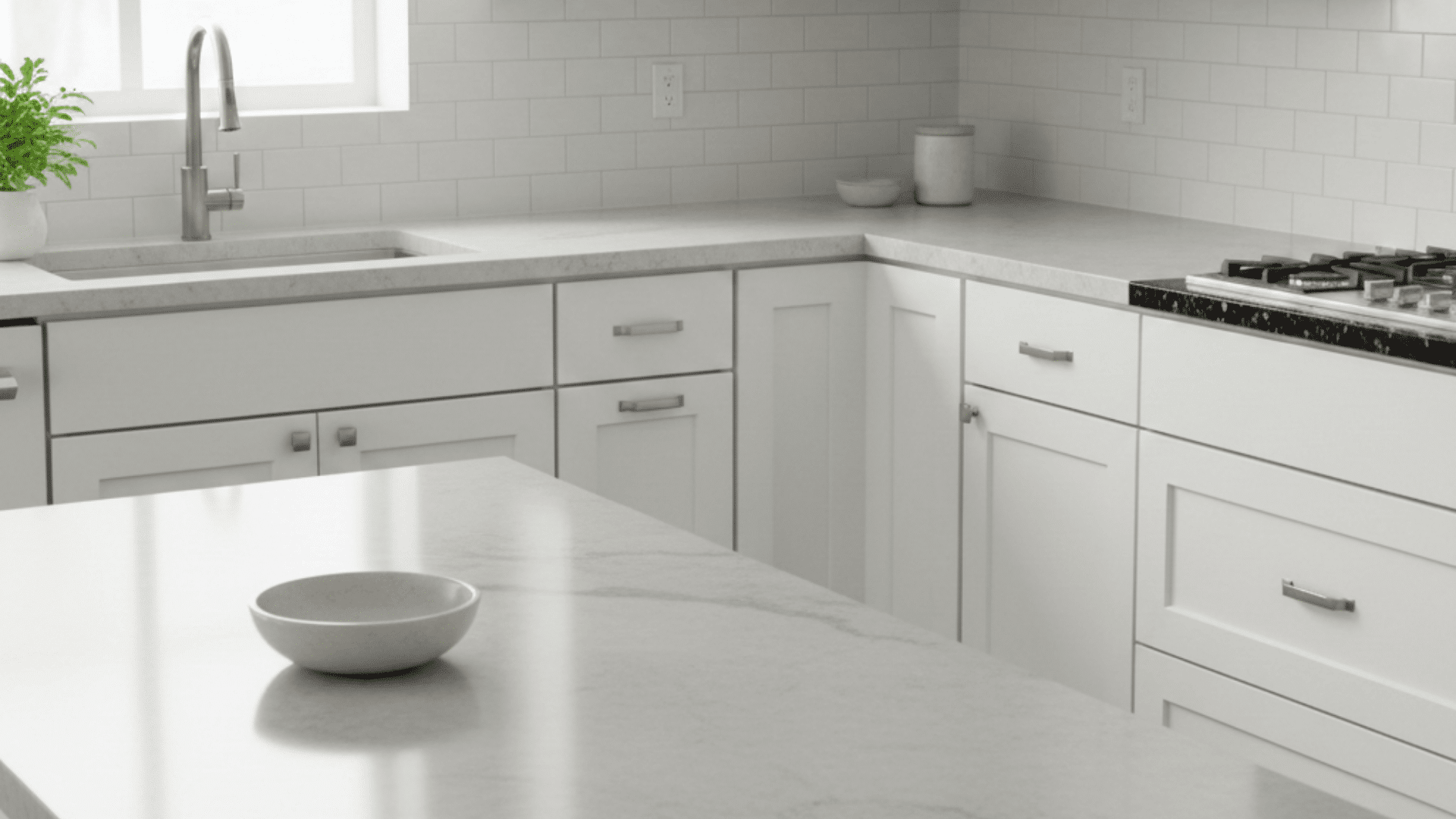
Laminate is a layered countertop surface made by bonding a printed decorative sheet to a core, often particleboard or MDF.
Many modern laminates are designed to mimic stone, wood, or concrete, so you can get the look without the high price.
| Pros | Cons |
|---|---|
| Lowest cost option for tight budgets | Can scorch or bubble with hot pans |
| Many colors and patterns (stone-look options too) | Scratches and chips, especially at edges and seams |
| Easy daily cleaning with mild soap and water | Water can seep into joints and cause swelling |
| Lightweight, often easier to install than stone | Big damage is tough to fix; sections may need replacement |
Care tips:Use a cutting board and trivets every time. Wipe standing water fast, especially near the sink and seams.
2. Tile Countertops (Ceramic or Porcelain)
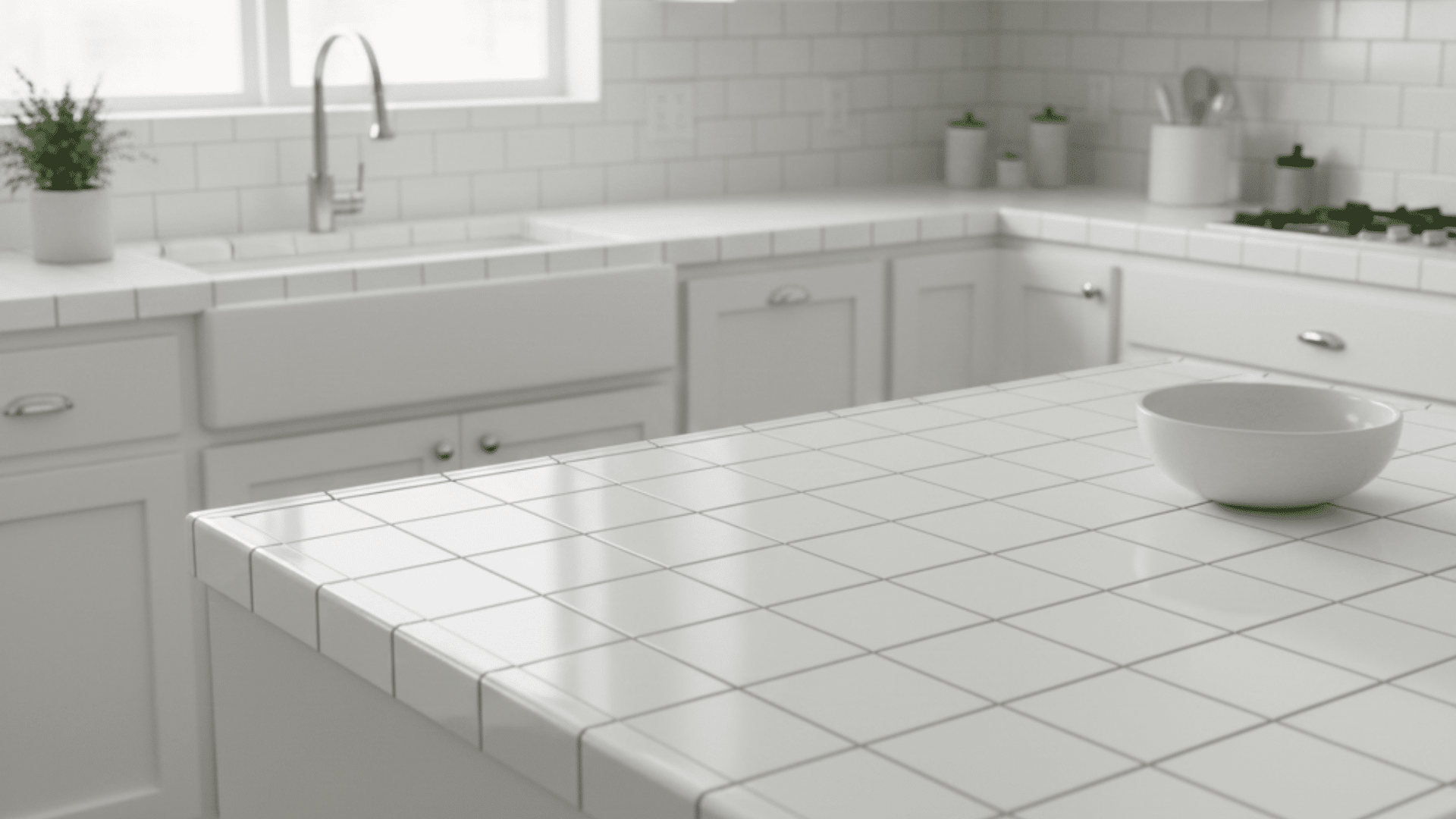
Tile countertops are built using individual ceramic or porcelain tiles set on a base with grout lines between them. You can go simple with classic squares or create a custom look with patterns, textures, and bold colors.
| Pros | Cons |
|---|---|
| Handles heat well, so hot dishes are less of a worry | Grout stains and traps crumbs, needs more scrubbing |
| Lots of design options with sizes, colors, and finishes | Tiles can chip or crack if heavy items drop |
| Single tiles can be replaced without redoing everything | Grout lines make the surface less smooth for wiping or dough |
| Great for handmade or artistic kitchen styles | Ignoring grout care can make it look worn over time |
Care tips: Seal grout if recommended. Clean grout regularly with gentle products and avoid harsh abrasive scrubbers.
3. Butcher Block Countertops
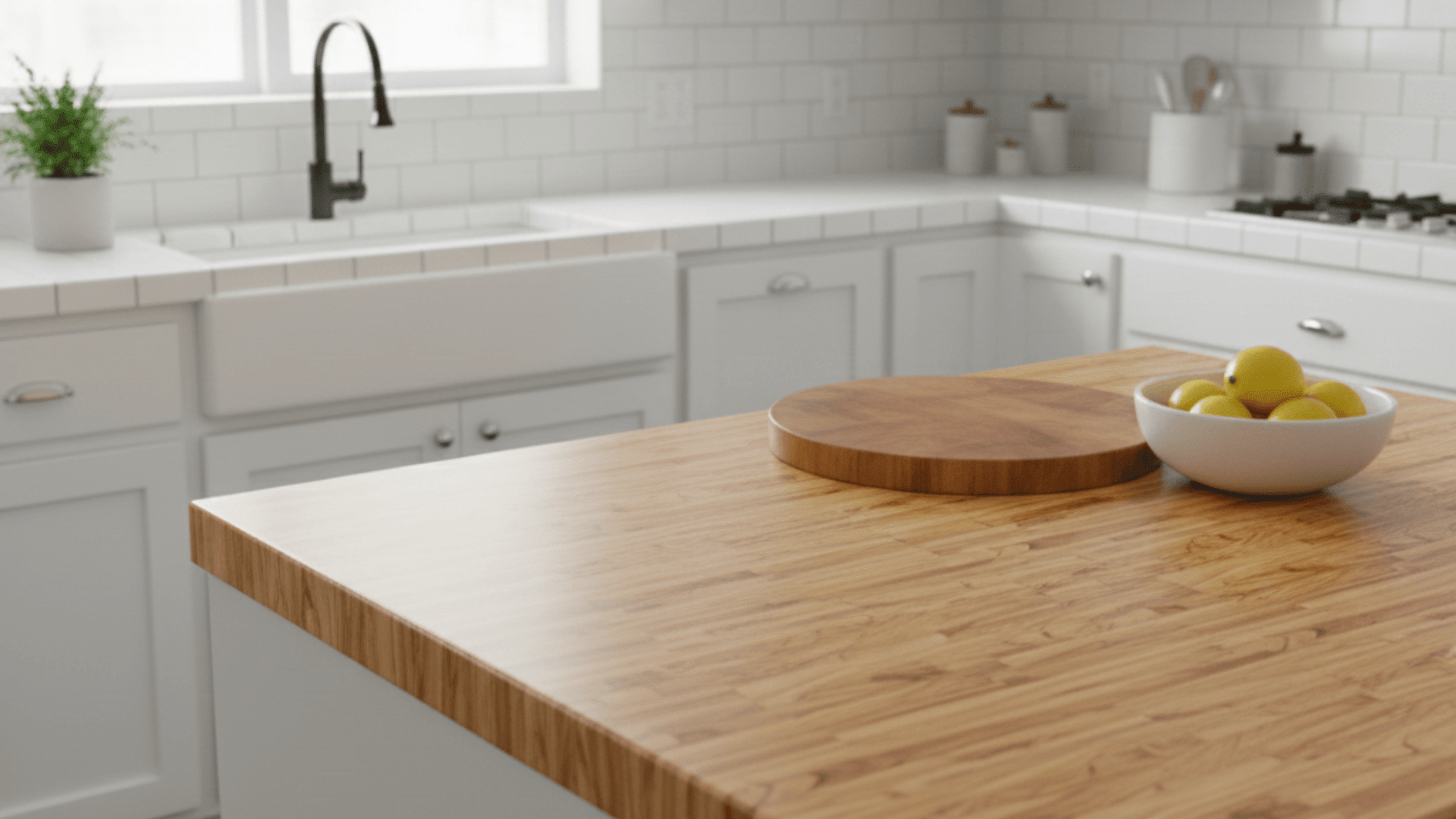
Butcher block is made from strips or blocks of wood glued together, usually maple, oak, walnut, or birch. It gives a warm, natural feel that many people love, especially in farmhouse or cozy kitchens.
| Pros | Cons |
|---|---|
| Warm, inviting look that softens the kitchen | Needs regular oiling or sealing to prevent drying and stains |
| Scratches and dents can be sanded and refinished | Water can cause swelling or dark marks near sinks |
| Quieter than stone, less clanking from dishes | Heat can burn it, and it may need sanding to fix |
| Great for prep work and daily chopping comfort | Shows wear faster in busy kitchens, and patina builds over time |
Care tips: Oil it on a schedule. Wipe water quickly, don’t let wet towels sit on it, and always use trivets for hot cookware.
4. Solid Surface (Acrylic) Countertops
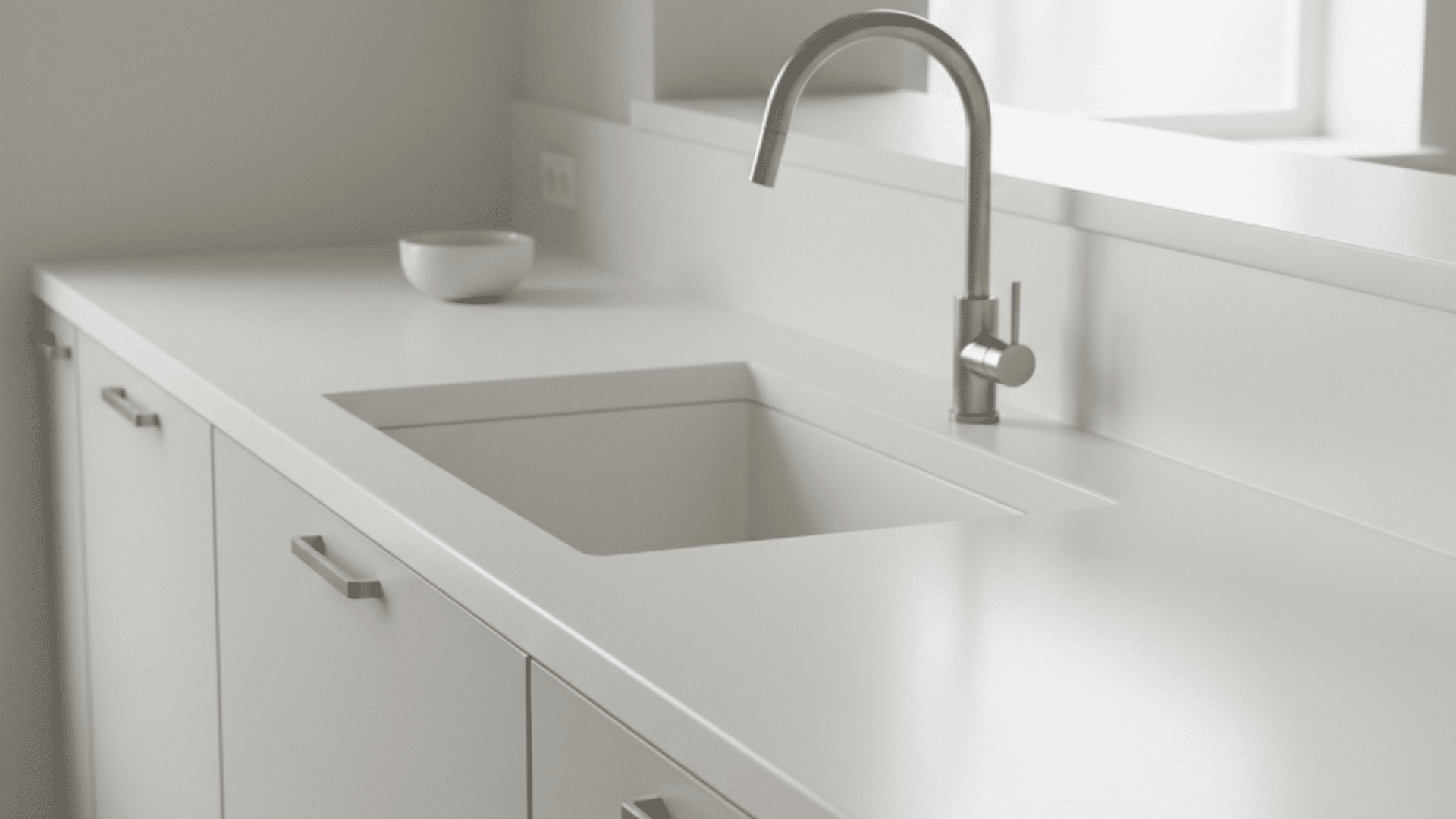
Solid surface is a man-made material, often acrylic or acrylic blends, made into sheets. A big selling point is that seams can be minimized and sinks can sometimes be integrated for a smooth, clean look.
| Pros | Cons |
|---|---|
| Seamless, clean look for modern kitchens | Scratches more easily than stone; avoid cutting directly |
| Easy wipe-down cleaning for daily mess | Hot pans can scorch or warp the surface |
| Light scratches can be buffed out | Some styles look less natural up close |
| Many calm, uniform color options | Heavy impacts can leave marks, though repairs are often possible |
Care tips: Use trivets, cutting boards, and non-abrasive cleaners. Treat it gently around heat.
5. Concrete Countertops
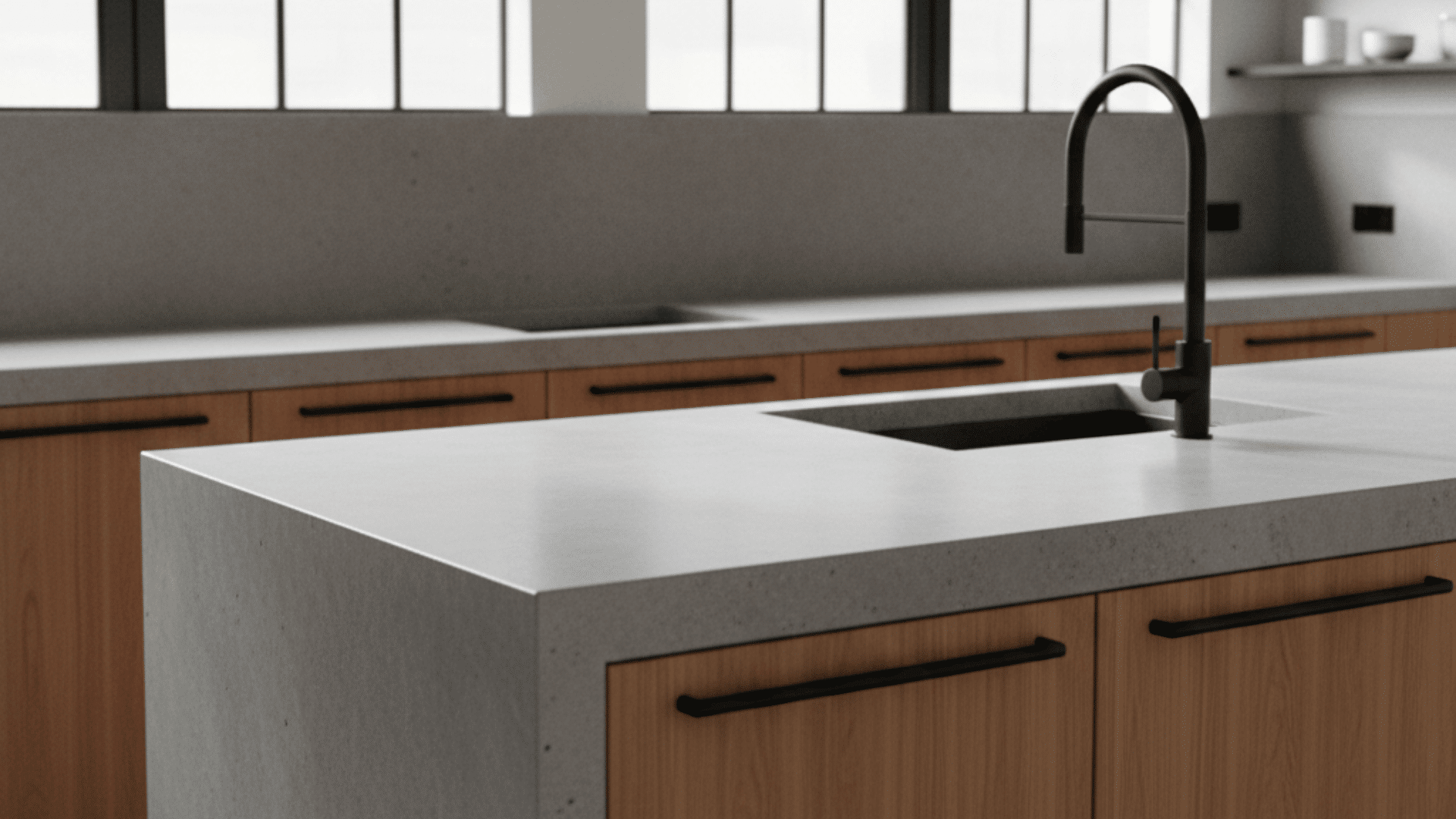
Concrete countertops are cast or poured to fit your kitchen layout. They can be tinted, textured, or finished in different ways. Because concrete is naturally porous, it is typically sealed to protect it.
| Pros | Cons |
|---|---|
| Highly customizable (color, thickness, edges, details) | Can crack if the installation is poor or the home shifts |
| Unique modern, industrial look | Needs sealing and sometimes waxing |
| Very durable when installed and sealed properly | Can stain if sealer wears down or spills sit |
| Feels custom-built, not mass-produced | Heavy material usually needs a skilled installer |
Care tips: Follow the sealer schedule. Wipe spills quickly and avoid harsh, acidic cleaners that can damage the finish.
6. Granite Countertops
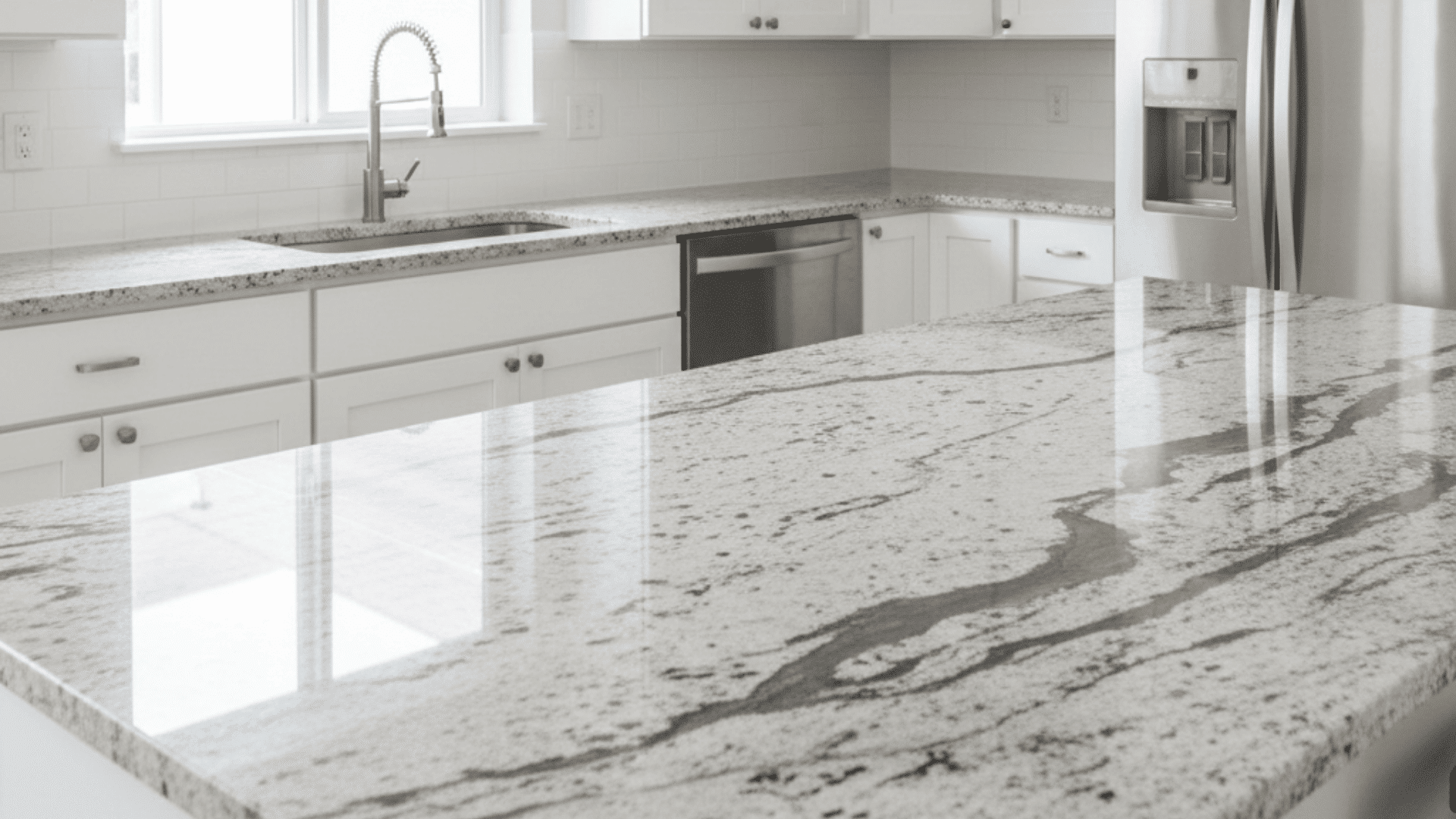
Granite is a natural stone cut into slabs. Each slab is different, so you get natural pattern movement and color variation. Granite is often chosen because it balances durability with a timeless look.
| Pros | Cons |
|---|---|
| Handles everyday heat well | Often needs sealing to help prevent stains |
| Strong against scratches and daily wear | Some patterns can look busy in small kitchens |
| Many natural colors and patterns | Poor installation can lead to stress cracks |
| Seen as a valuable home upgrade | Cutting on it can dull knives |
Care tips: Seal if recommended. Clean spills quickly, especially oils and dark liquids, and use a cutting board to protect knives.
7. Marble Countertops
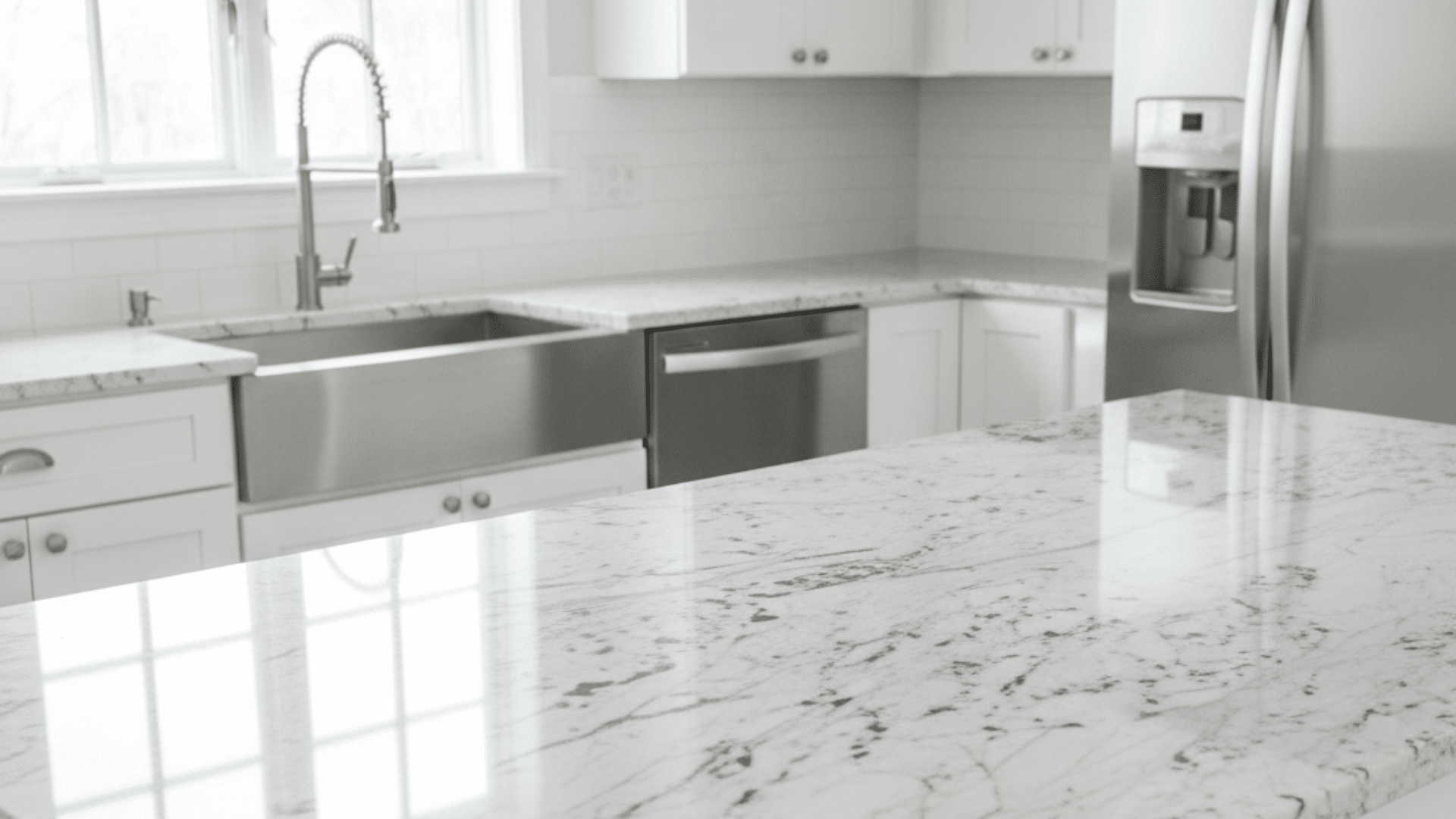
Marble is a natural stone known for soft veining and a luxury feel. Many people love the look, but it needs more careful habits compared to harder stones.
| Pros | Cons |
|---|---|
| Classic, high-end look | Acidic foods can cause etching (dull spots) |
| Stays cool, great for baking work | Scratches more easily than granite or quartzite |
| Handles heat fairly well (trivets still smart) | Often needs sealing and quick cleanup to prevent stains |
| Unique natural veining and premium feel | Patina develops in busy kitchens, but not everyone likes it |
Care tips: Use cutting boards, wipe acidic spills fast, and seal on schedule so stains don’t set in easily.
8. Quartz Countertops
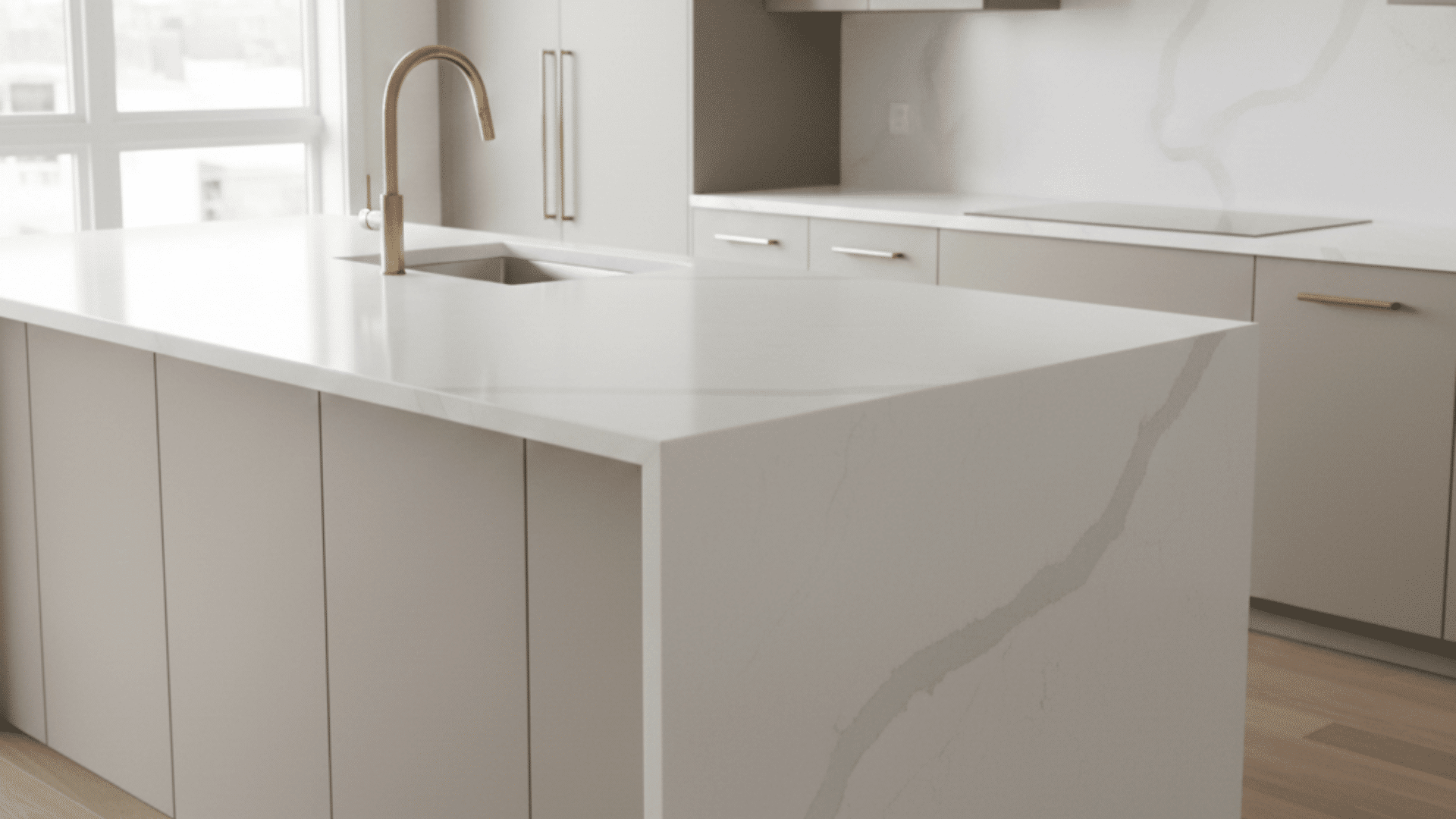
Quartz countertops are made by combining crushed quartz with resins and pigments to form a slab. Since it is engineered, it can offer consistent patterns and colors, and it is typically non-porous.
| Pros | Cons |
|---|---|
| Non-porous, resists common stains well | Hot pans can damage the resin (use trivets) |
| Low maintenance, usually no sealing | Some budget patterns look less natural up close |
| Many styles, from solid colors to marble-look | Seams depend on layout and slab size |
| Durable for daily family use | Strong sunlight may affect some colors over time |
Care tips: Use trivets for hot cookware. Clean with mild soap and water and avoid harsh, abrasive cleaners.
9. Quartzite Countertops
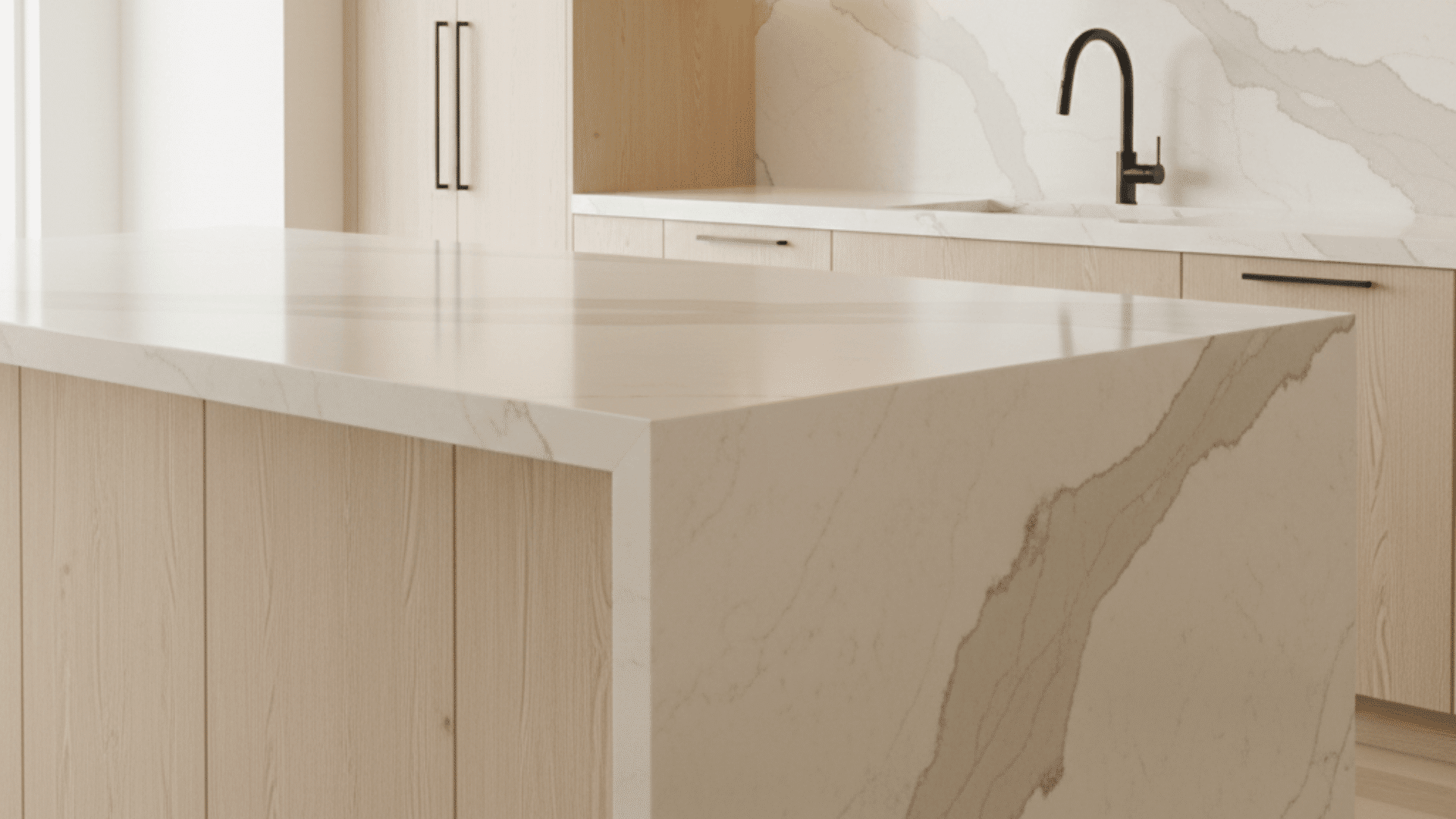
Quartzite is a natural stone formed from sandstone under heat and pressure. It is often confused with quartz because of the name, but quartzite is natural, while quartz is engineered.
| Pros | Cons |
|---|---|
| Very scratch-resistant, handles heat well | Often needs sealing, can stain if unsealed |
| Natural marble-like movement with stronger performance | Usually pricier than granite, and many mid-range options |
| Great natural stone choice without marble’s softness | Fewer pattern options than engineered quartz |
Care tips: Seal on schedule. Wipe spills quickly, especially oils, sauces, and dark liquids.
10. Soapstone Countertops
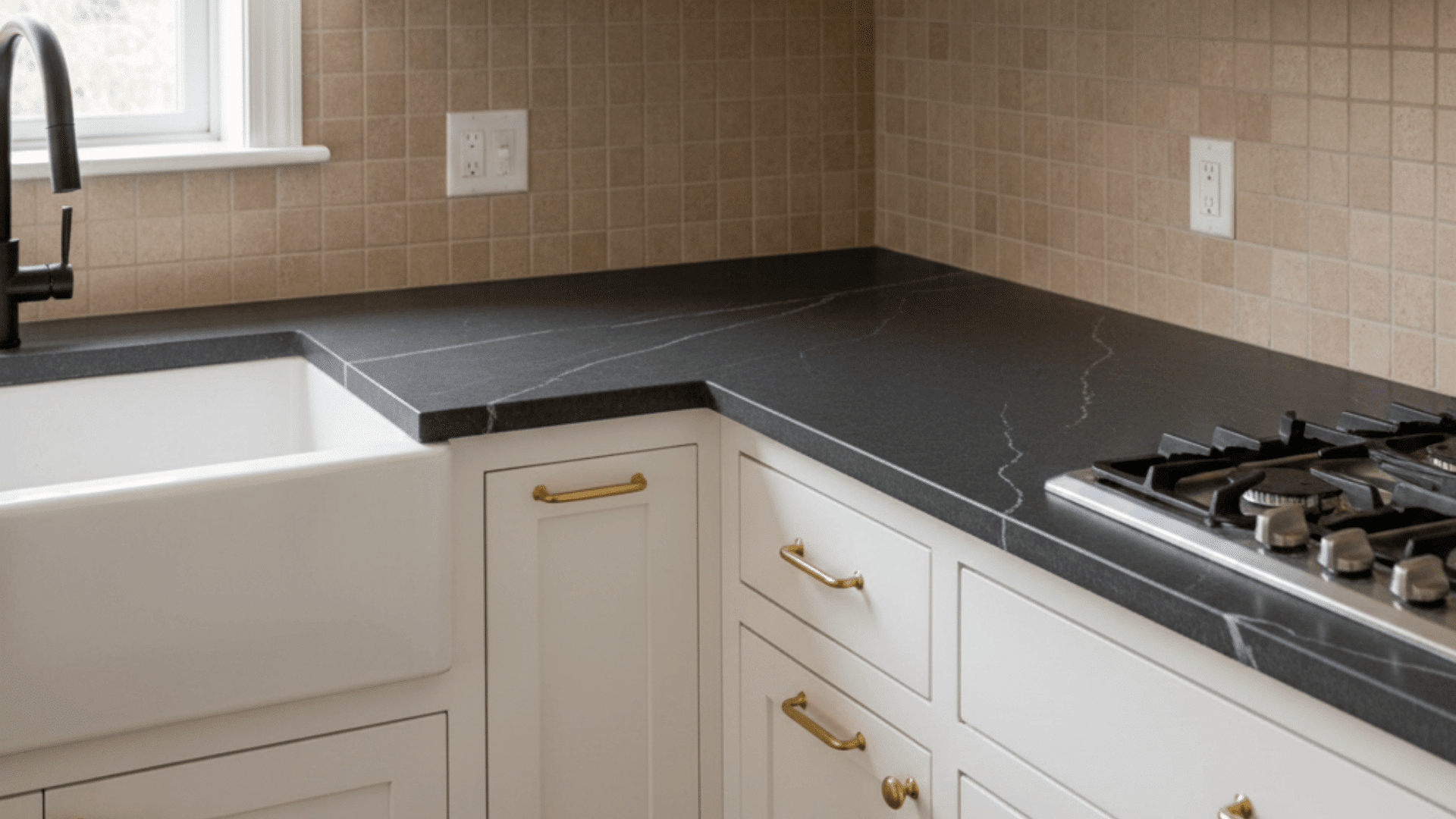
Soapstone is a natural stone with a smooth, soft feel and deep, moody tones. It is known for its ability to handle heat, plus it develops character as it ages.
| Pros | Cons |
|---|---|
| Very heat-friendly and often resists stains well | Softer stone, scratches more easily than granite or quartzite |
| Rich, cozy look that improves with time | Can darken unevenly with oiling, limited dark color range |
| Scratches can often be sanded out, and patina is normal | Not ideal if you want an “always new” look |
Care tips: Sand small scratches if needed. Oil it if you want a darker, more even tone, and use cutting boards for daily prep.
11. Stainless Steel Countertops
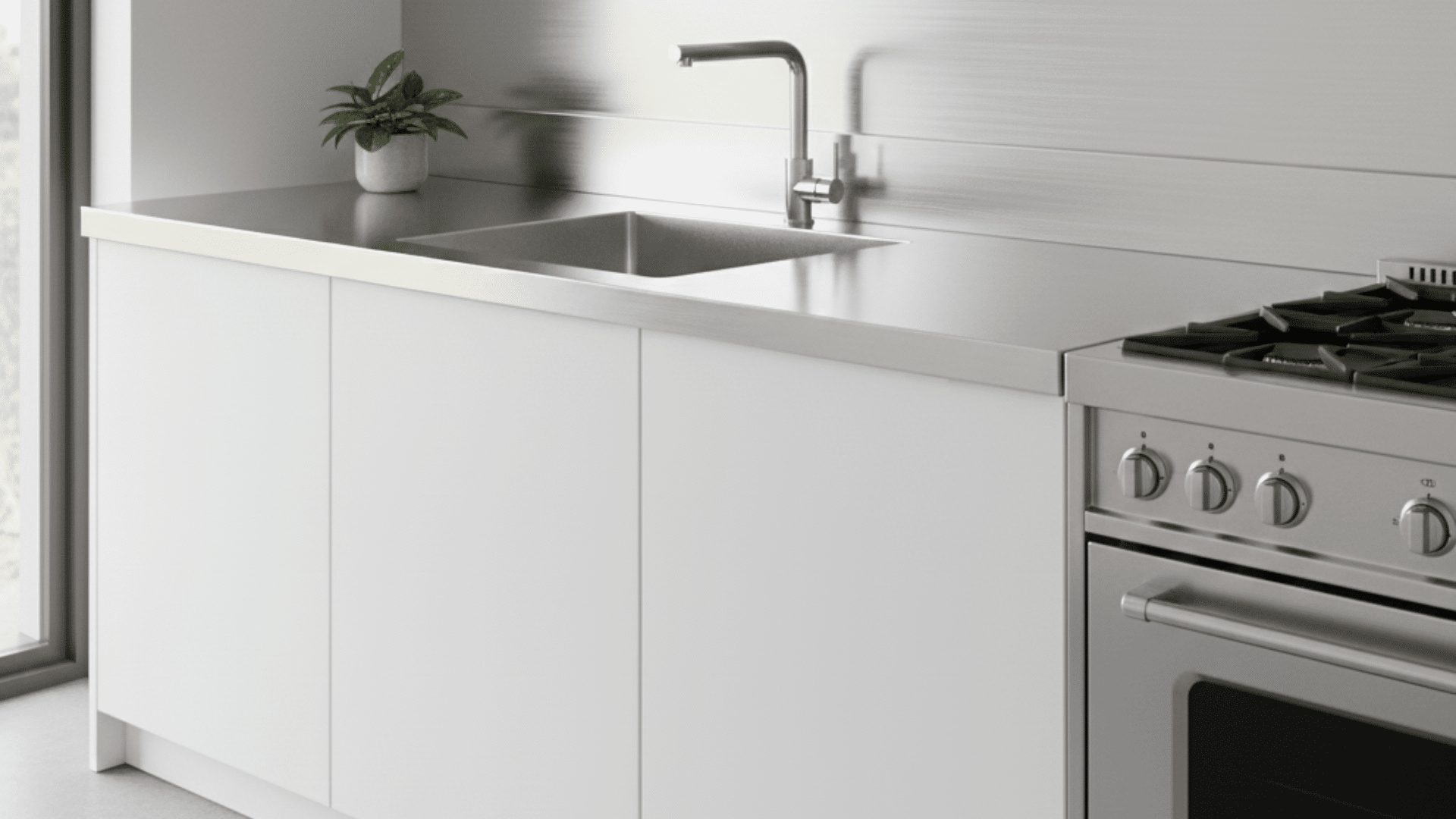
Stainless steel countertops are metal surfaces often wrapped over a wood base. They are common in professional kitchens because they are hygienic and easy to sanitize.
| Pros | Cons |
|---|---|
| Very hygienic and easy to sanitize | Shows fingerprints, smudges, and water spots |
| Handles heat well for fast cooking routines | Scratches and small dents can happen |
| Water-safe, works well near sinks | It can be noisy with dishes and pans |
| Clean modern look for minimalist or industrial kitchens | May feel too “commercial” in traditional spaces |
Care tips: Wipe with a microfiber cloth. Clean with the grain and use gentle cleaners to avoid dulling the finish.
12. Porcelain and Ultra-Compact Countertops
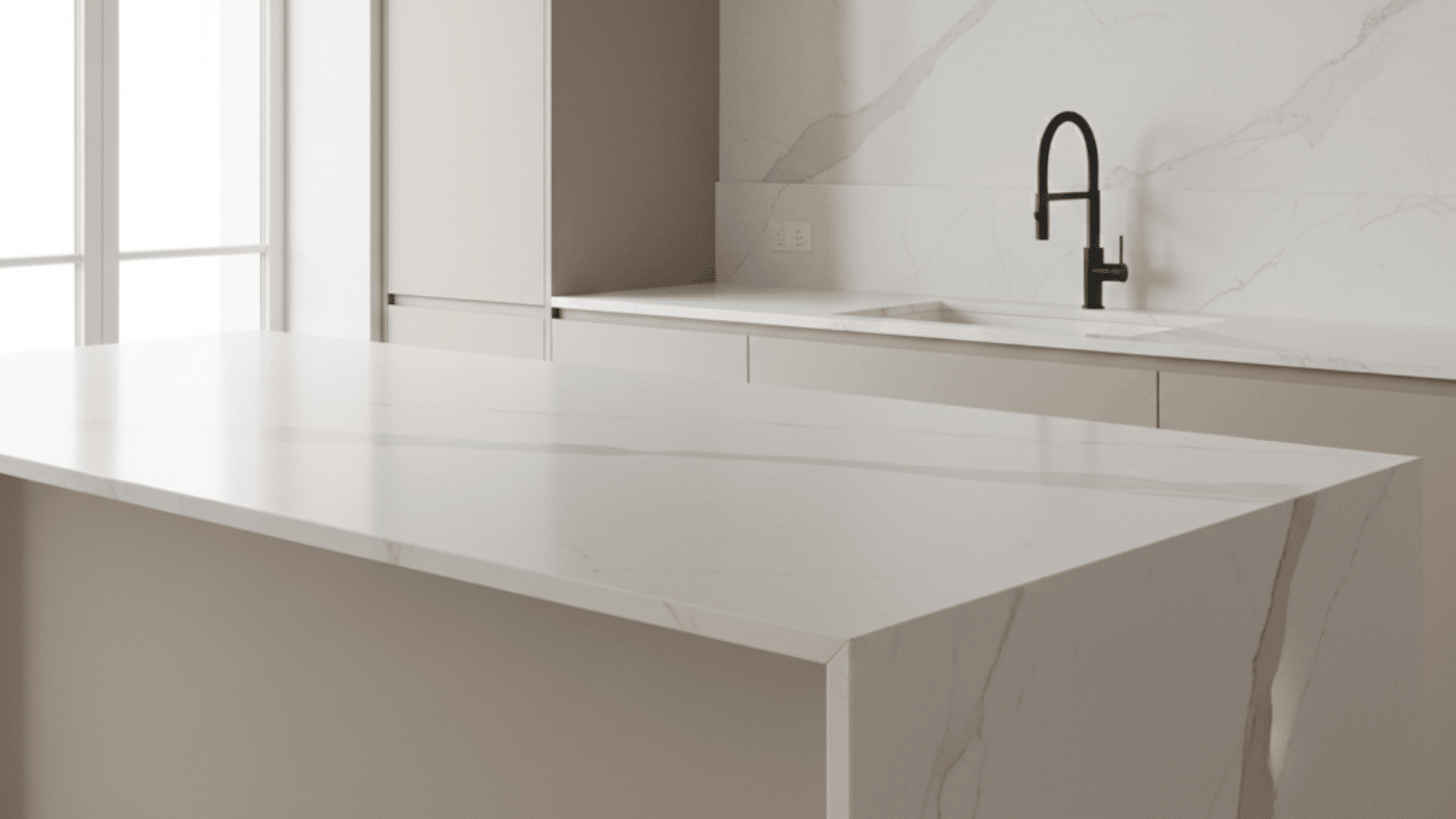
These are dense, factory-made slabs designed for high durability. They often come in modern styles that mimic marble, concrete, or stone, and some lines are known for strong performance.
| Pros | Cons |
|---|---|
| Strong resistance to heat, stains, and scratches | Often higher cost than standard options |
| Thin, modern profiles for a sleek look | Edges can chip if hit hard, especially corners |
| High-end designs, including marble-look patterns | Installation needs experience and careful handling |
| Some options handle UV well in bright spaces | Chips can be noticeable depending on the pattern |
Care tips: Avoid heavy impact on edges and corners. Follow the brand’s cleaning recommendations and use cutting boards as a habit.
13. Recycled Glass Countertops
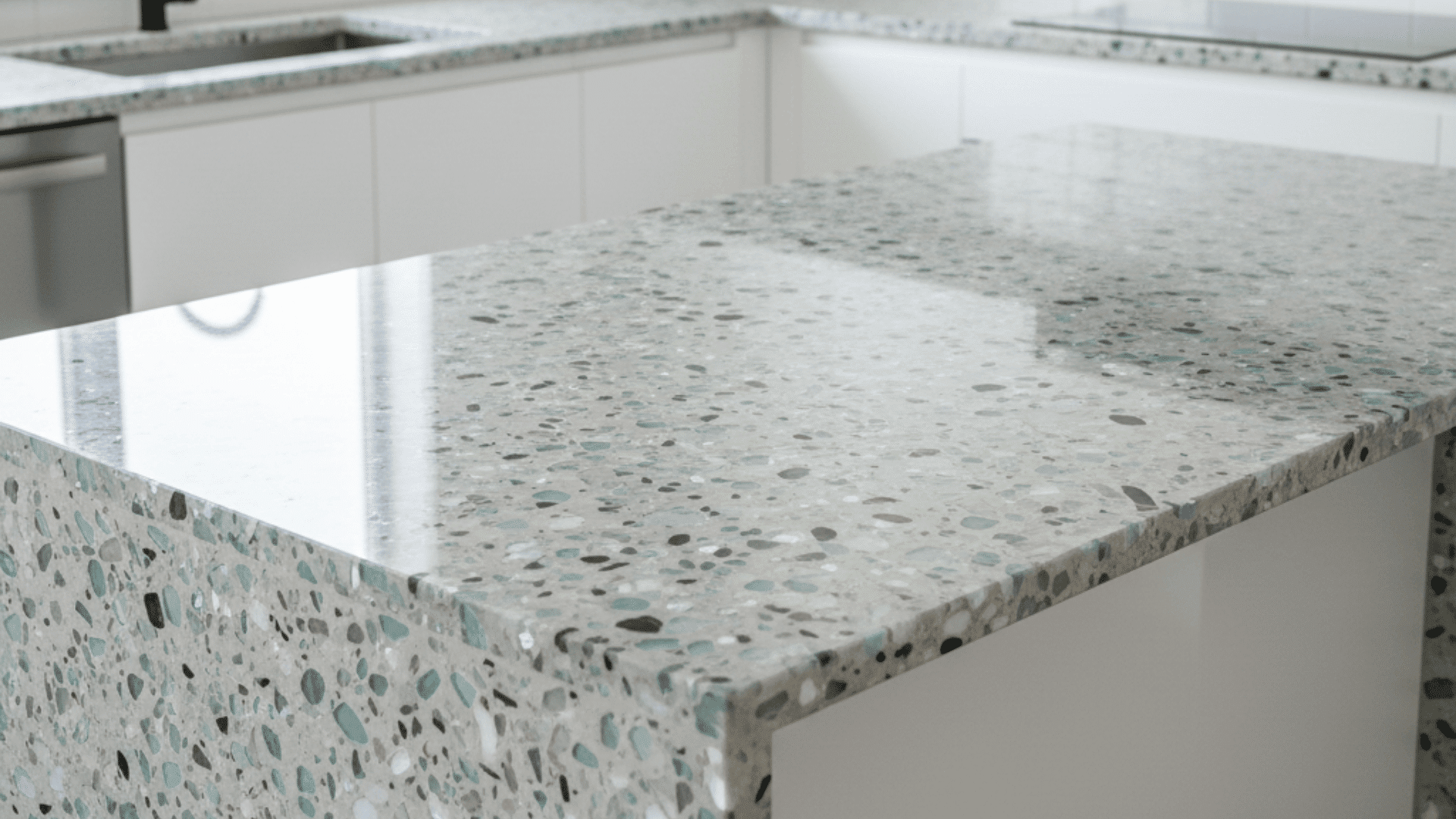
Recycled glass countertops are made from glass pieces set into a binder, usually cement-based or resin-based. The result is a surface with a unique, light-catching look that can feel modern and artistic.
| Pros | Cons |
|---|---|
| Eco-friendly option using recycled materials | Can chip on edges if hit hard |
| Unique sparkle look, no two slabs are the same | Quality depends on the binder and brand |
| Resists many stains when sealed properly | Some types need sealing, especially cement-based ones |
| Great for modern, statement designs | Repairs can be noticeable |
Care tips: Use cutting boards and trivets. Follow the sealing and cleaning guidance from the manufacturer.
14. Bamboo Countertops
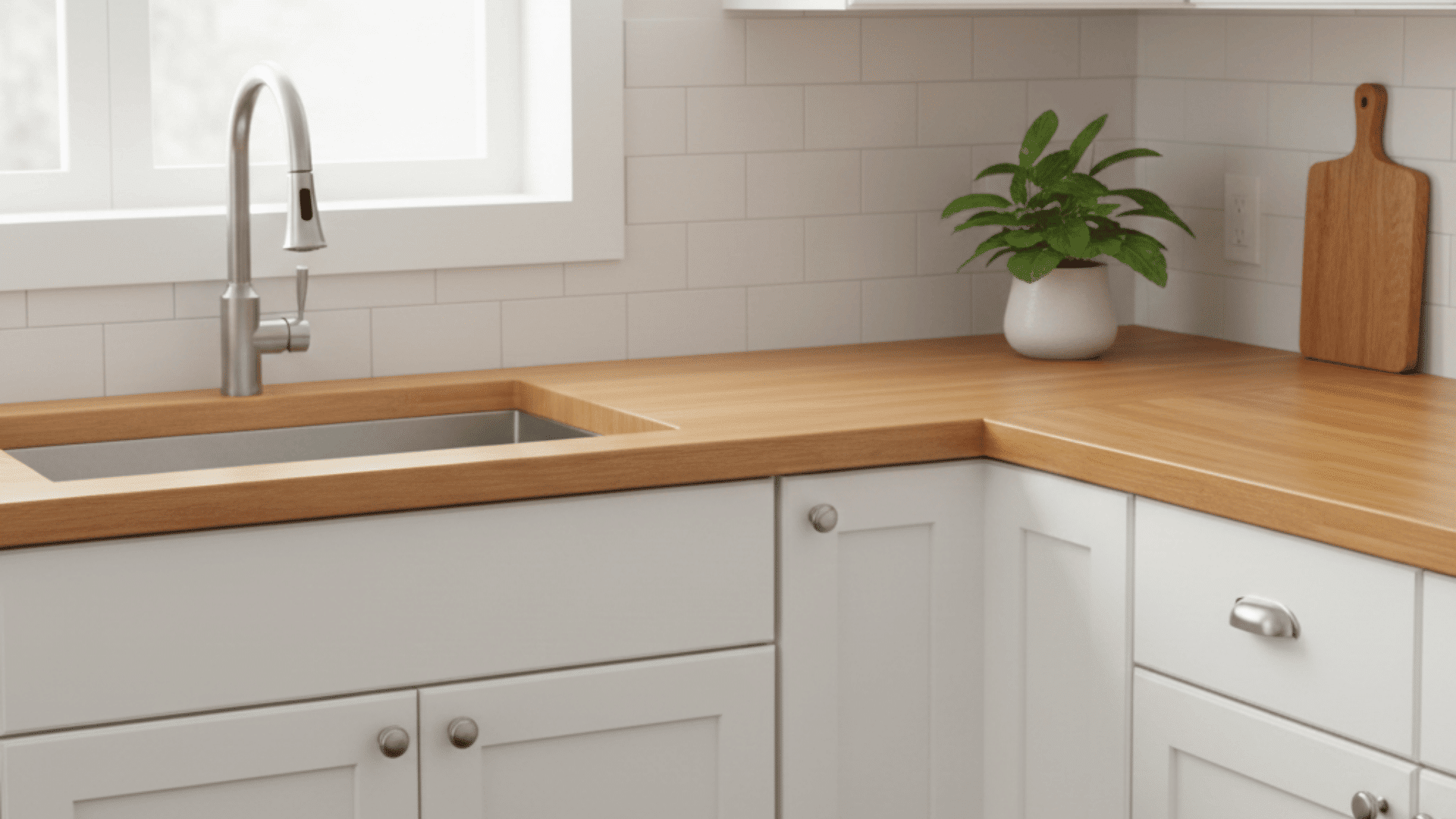
Bamboo countertops are made from laminated bamboo strips. They have a clean, natural look similar to wood, but bamboo is a fast-growing material, so it’s often chosen for a more eco-friendly vibe.
| Pros | Cons |
|---|---|
| Warm, natural look with a lighter feel | Needs sealing to handle water and stains |
| More sustainable than many hardwoods | Scratches and dents are like other wood surfaces |
| Lighter than stone, easier to handle | Heat can scorch; trivets are important |
| Can be refinished depending on the finish | Color may shift slightly over time in light |
Care tips: Keep it sealed, wipe water fast, and recoat or oil when the finish starts to wear.
15. Resin or Epoxy Countertops
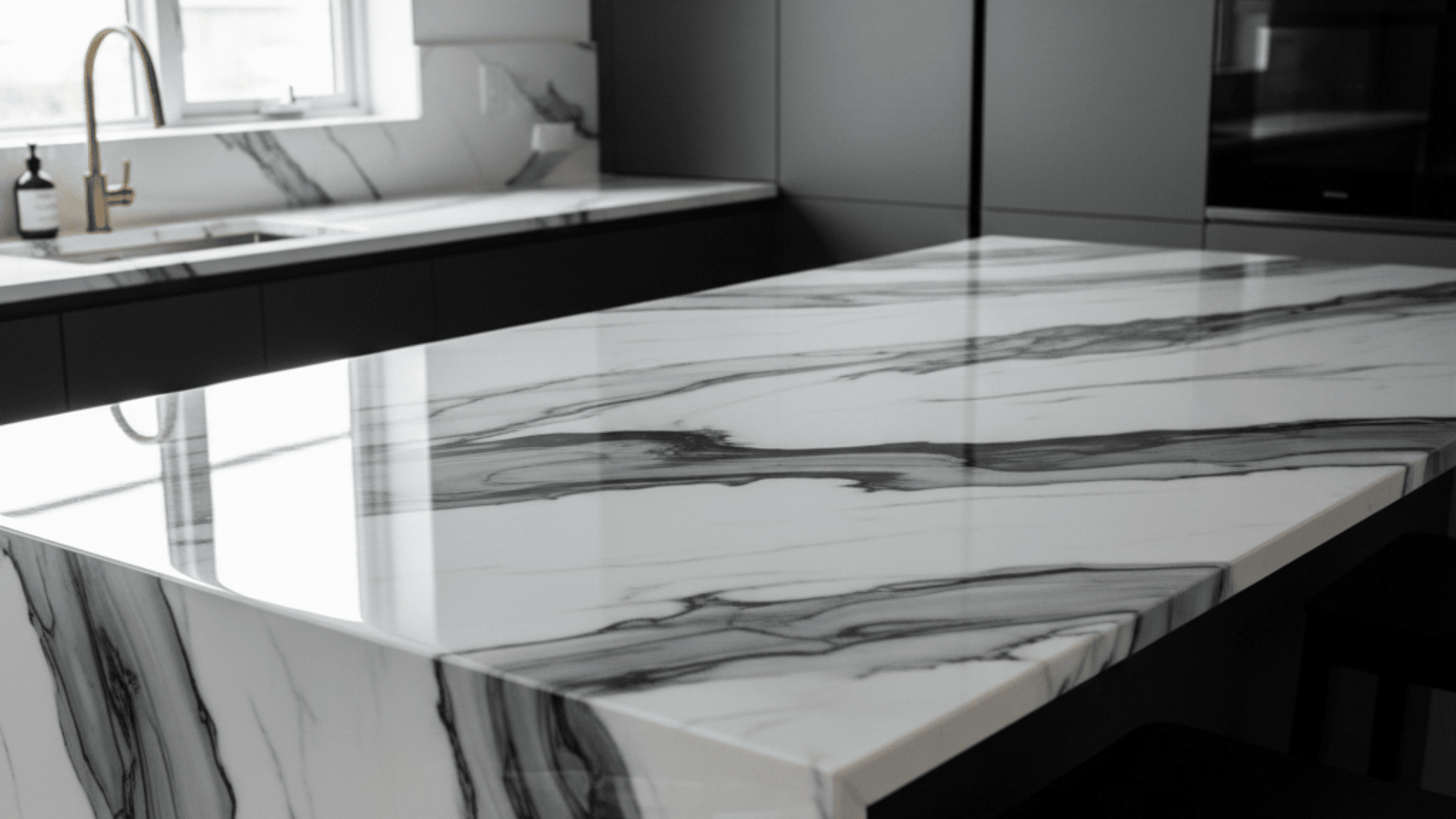
Resin or epoxy countertops are made by coating an existing surface or creating a layered top using epoxy resin. People often choose it for bold, glossy looks, creative colors, and “marble-style” effects on a budget.
| Pros | Cons |
|---|---|
| Bold custom looks for less than stone | Scratches show, especially on glossy finishes |
| Seamless look with many color options | Heat can damage or discolor it |
| Good for budget makeovers and DIY | Installation mistakes are hard to fix |
| Resists stains well when cured | It can turn yellow over time, especially in sunlight |
Care tips: Always use trivets and cutting boards. Clean with gentle products and avoid abrasive scrubbers.
Choosing the Right Countertop Material
Before you choose a color or pattern, focus on these quick factors so the countertop fits your daily routine:
- Cooking habits: If you cook often, plan for heat. Pick a surface that handles warmth well and still use trivets as a smart habit.
- Spill level: If spills might sit for a bit, lean toward less porous materials. If you choose porous surfaces, be ready for sealing and faster cleanup.
- Maintenance comfort: Some materials need sealing or oiling. If you want simple care, choose a low-maintenance surface.
- Look and consistency: Natural stone has more variation and movement. Engineered surfaces tend to look more uniform and predictable.
- Real budget: Factor in more than the slab. Edges, cutouts, seams, delivery, and installation can change the final price a lot.
Wrapping Up
Choosing between different types of countertop materials comes down to how you want your kitchen to function five or ten years from now, not just how it looks today.
Think about long-term wear, resale value, and how much effort you realistically want to put into upkeep. A surface that fits your habits will always feel like the better investment, even if it costs a little more upfront.
When performance, maintenance, and style line up with your routine, you avoid daily frustration and costly replacements later.
Take a final look at your priorities, narrow your top two choices, and visit a showroom to see them in person before making your decision.