

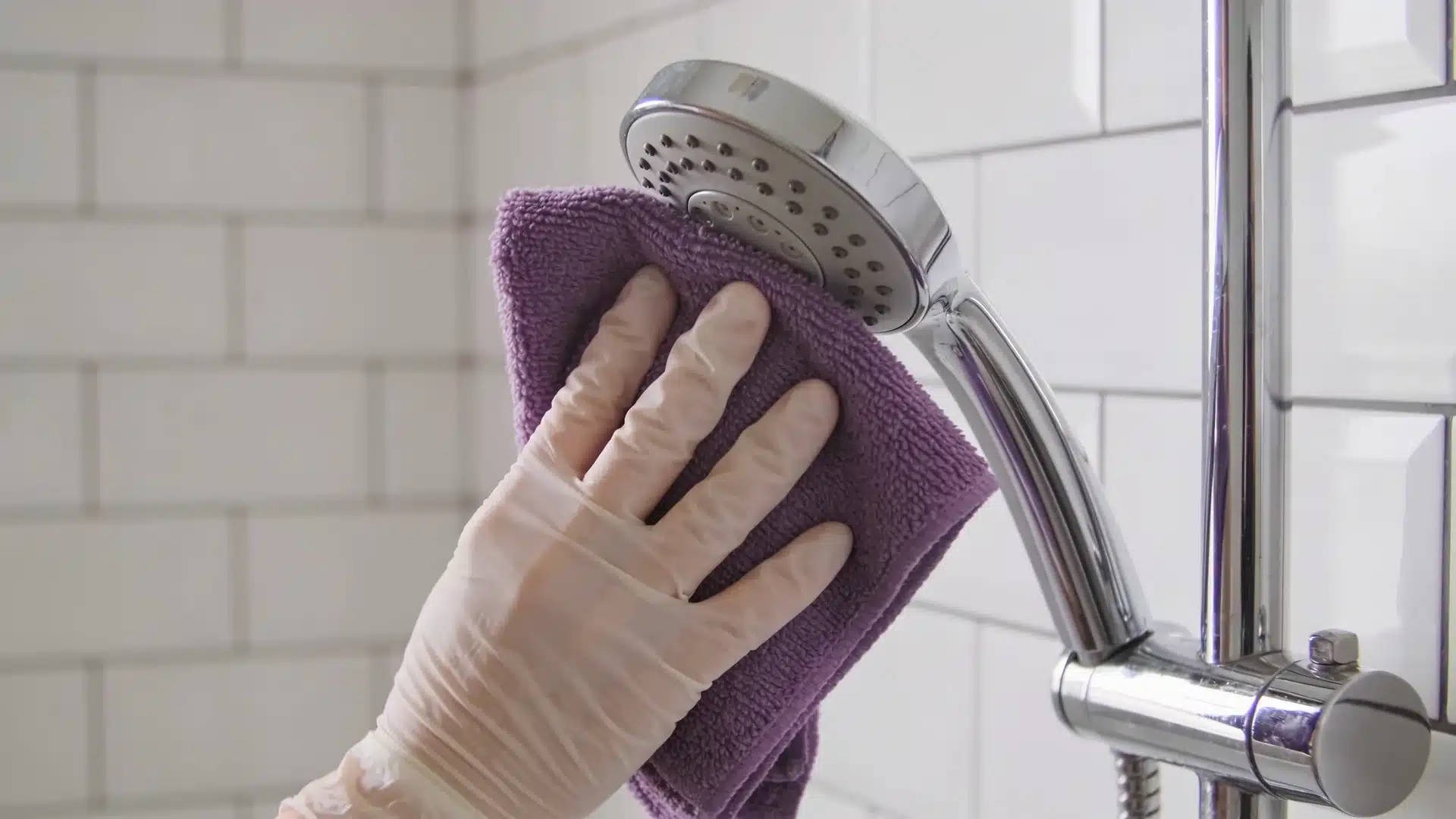


Have you ever turned on the shower and noticed the water spraying everywhere except where you need it?
It usually means your showerhead needs a good clean. If you’re wondering how to clean a showerhead buildup the easy way, this guide will walk you through it.
Shower heads get clogged when hard water leaves mineral buildup behind. Soap scum can stick around the nozzles, too. Over time, moisture can also lead to mold or a musty smell.
I’ll show you three simple ways to fix it: The Baggie Soak Method, Detach & Deep Clean, and The Natural Scrub Method. You’ll know which method best fits your shower.
Why Should You Clean Your Shower Head Regularly?
Cleaning your showerhead regularly helps keep the water flowing evenly and prevents mineral buildup from blocking the spray holes.
Over time, hard water, soap scum, and moisture can accumulate inside and around the showerhead, leading to reduced water pressure, uneven spray patterns, and stains.
Regular cleaning can also help reduce mold and mildew growth, especially in humid bathrooms. A clean shower head not only works better but can also make your showers feel more comfortable.
It may even help extend the life of the fixture by preventing buildup from becoming difficult to remove. Spending a few minutes on routine cleaning can save you from dealing with stubborn clogs and deeper cleaning later.
Signs Your Shower Head Needs Cleaning
Your showerhead may need cleaning when the water flow starts to change or the surface looks dirty. These signs usually mean that mineral buildup, grime, or mold may be blocking the spray holes.
- Weak water pressure can mean the spray holes are clogged.
- Water spraying in odd directions often means that buildup is blocking some nozzles.
- White, chalky buildup is usually a sign of hard-water minerals.
- Brown or green stains can come from rust, minerals, or old buildup.
- A musty smell may mean mold or mildew is growing around the showerhead.
- Uneven water flow may mean some spray holes are blocked.
If you notice any of these signs, a quick clean can help your showerhead work better and feel fresher.
How Often Should You Clean a Showerhead?
You should lightly clean your showerhead once a week to prevent buildup from getting worse. A vinegar soak once a month is a good way to keep the spray holes clear and the water flowing well.
For a deeper clean, remove and clean the showerhead every 3 to 6 months. If you have hard water, you may need to clean it more often because mineral buildup can form faster.
Method 1: How to Clean a Shower Head
If your showerhead looks cloudy, crusty, or the water sprays in odd directions, I’d start here.
A simple bag-and-vinegar trick that helps loosen limescale in about 30 minutes using common household items. This is the easiest method because you do not need to remove the showerhead:
Step 1: Fill a Plastic Bag With Vinegar
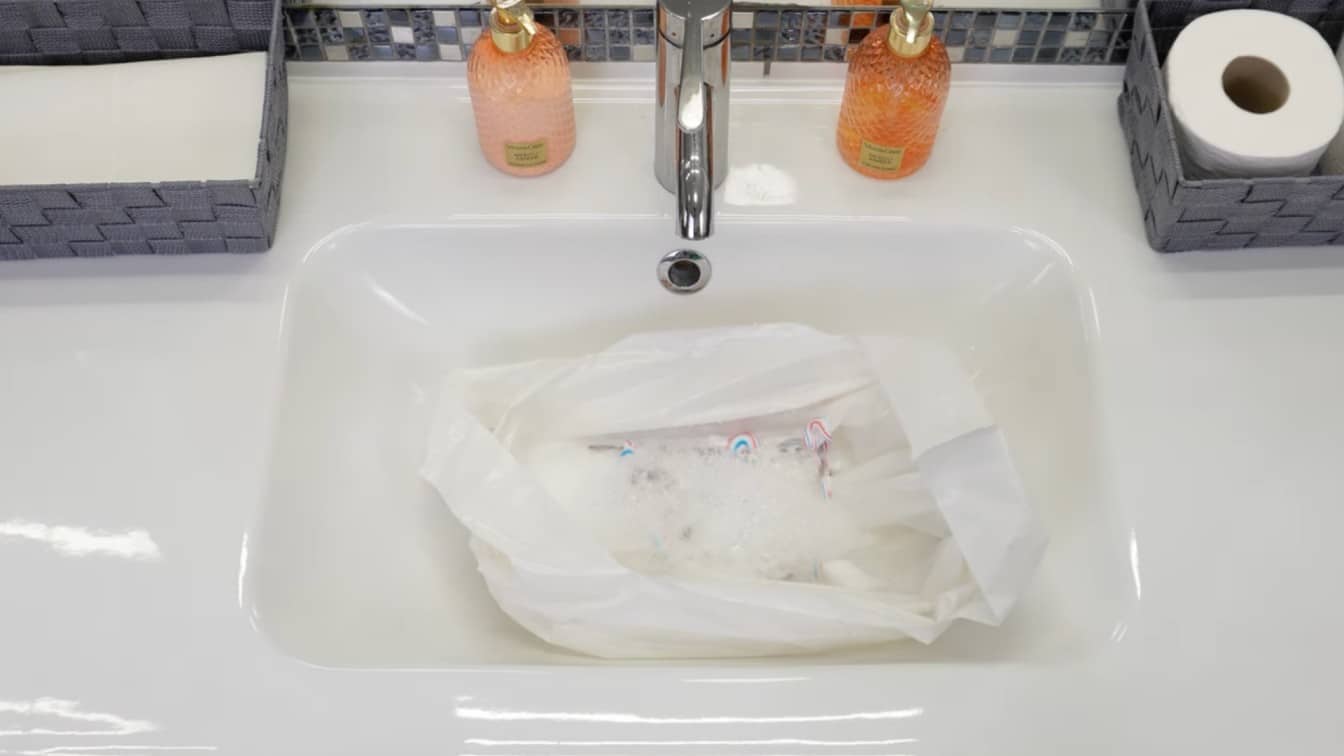
Take a sturdy plastic bag and pour enough white vinegar into it to cover the showerhead. You do not need to fill the whole bag. Just add enough so the spray holes will sit inside the liquid.
White vinegar works well because it helps break down the white, chalky buildup caused by hard water. Hold the bag upright while filling it so it does not spill before you place it over the showerhead
Step 2: Place the Bag Over the Shower Head
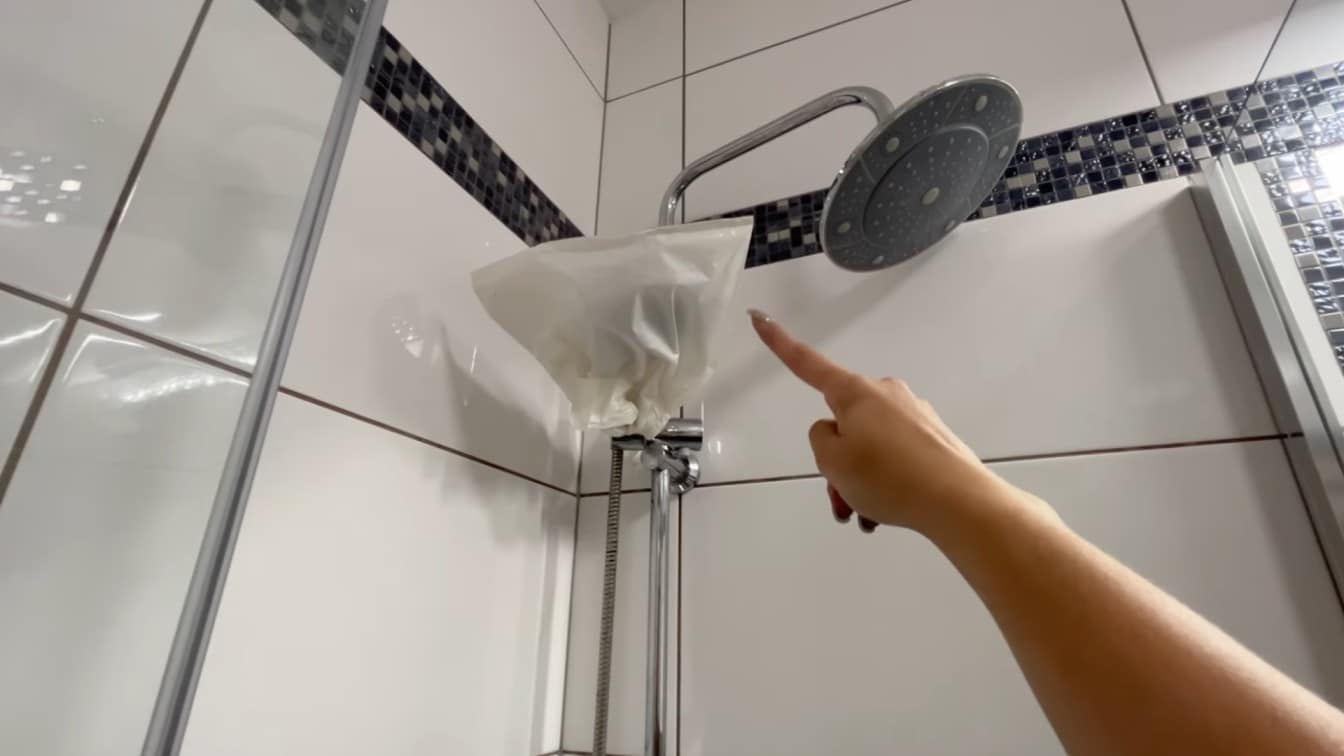
Carefully lift the vinegar-filled bag and slide it over the showerhead; secure it with a rubber band, hair tie, or zip tie. Make sure the nozzles are fully covered by the vinegar.
This part matters because the vinegar needs to come into direct contact with the clogged spray holes. If your showerhead is larger, use a bigger bag.
Adjust the bag slowly so it sits well and does not pull too hard on the shower pipe. Keep the opening of the bag near the shower arm. Let It Soak for 30 Minutes
Step 3: Remove the Bag Carefully
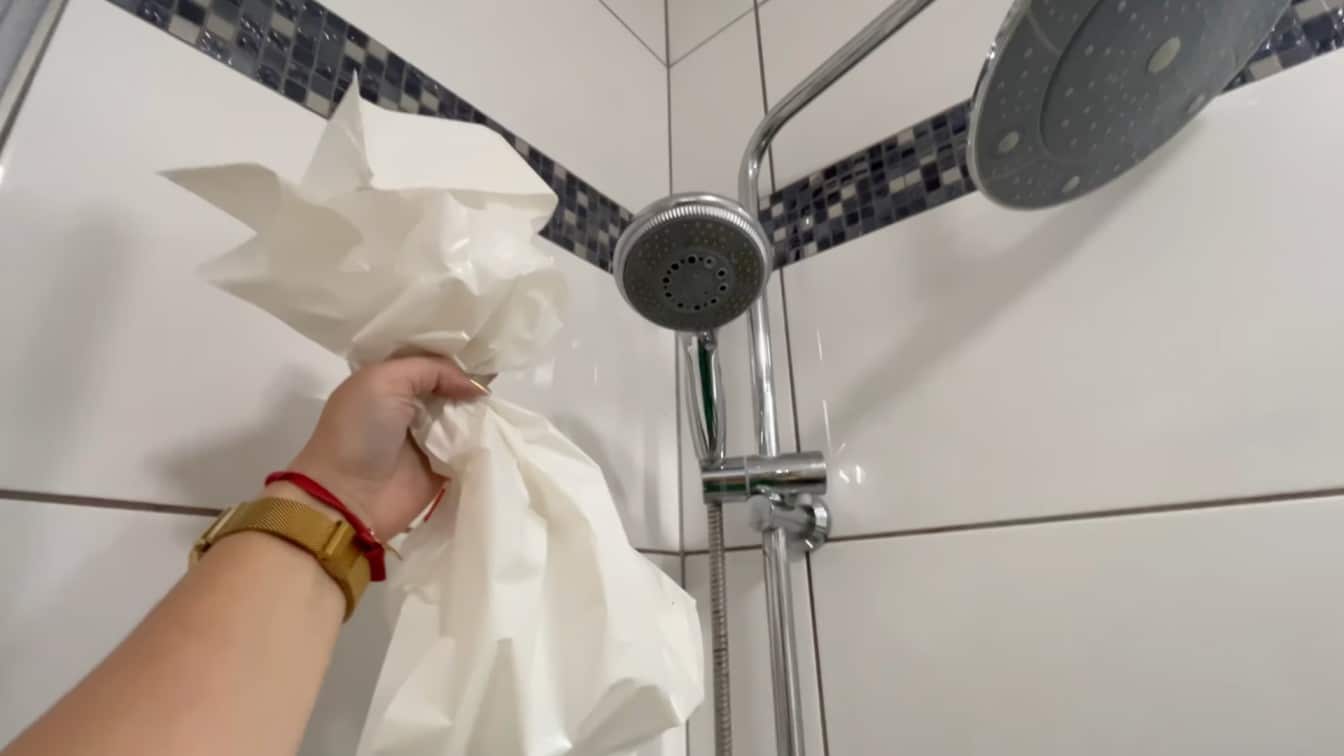
After soaking, hold the bag with one hand and remove the band with the other. Lower the bag slowly so the vinegar does not spill on you or the floor.
Pour the used vinegar down the drain. You may see small bits of buildup in the liquid, which means the soak helped loosen the clog.
Wipe the showerhead with a damp cloth to remove any vinegar residue on the outside.
Step 4: Run Hot Water Through the Shower Head

Turn on the shower and let the hot water run for a minute or two. This helps flush out loosened buildup from the spray holes.
You may notice the water pressure looks better right away. If some holes are still blocked, gently rub them with your fingers or use an old toothbrush.
Do not use sharp metal tools because they can damage the nozzles. Finish by wiping the showerhead dry with a clean cloth.
Best For: This method is best for light to moderate mineral buildup on the shower head, fixed shower heads that are hard to remove, and regular monthly cleaning to keep water flowing well.
Pro Tips
- Do not soak brass, nickel, or gold finishes for too long.
- Use warm vinegar to help loosen buildup faster.
- Add baking soda after soaking for extra scrubbing power.
For more details, refer to the video below.
Method 2: Detach & Deep Clean
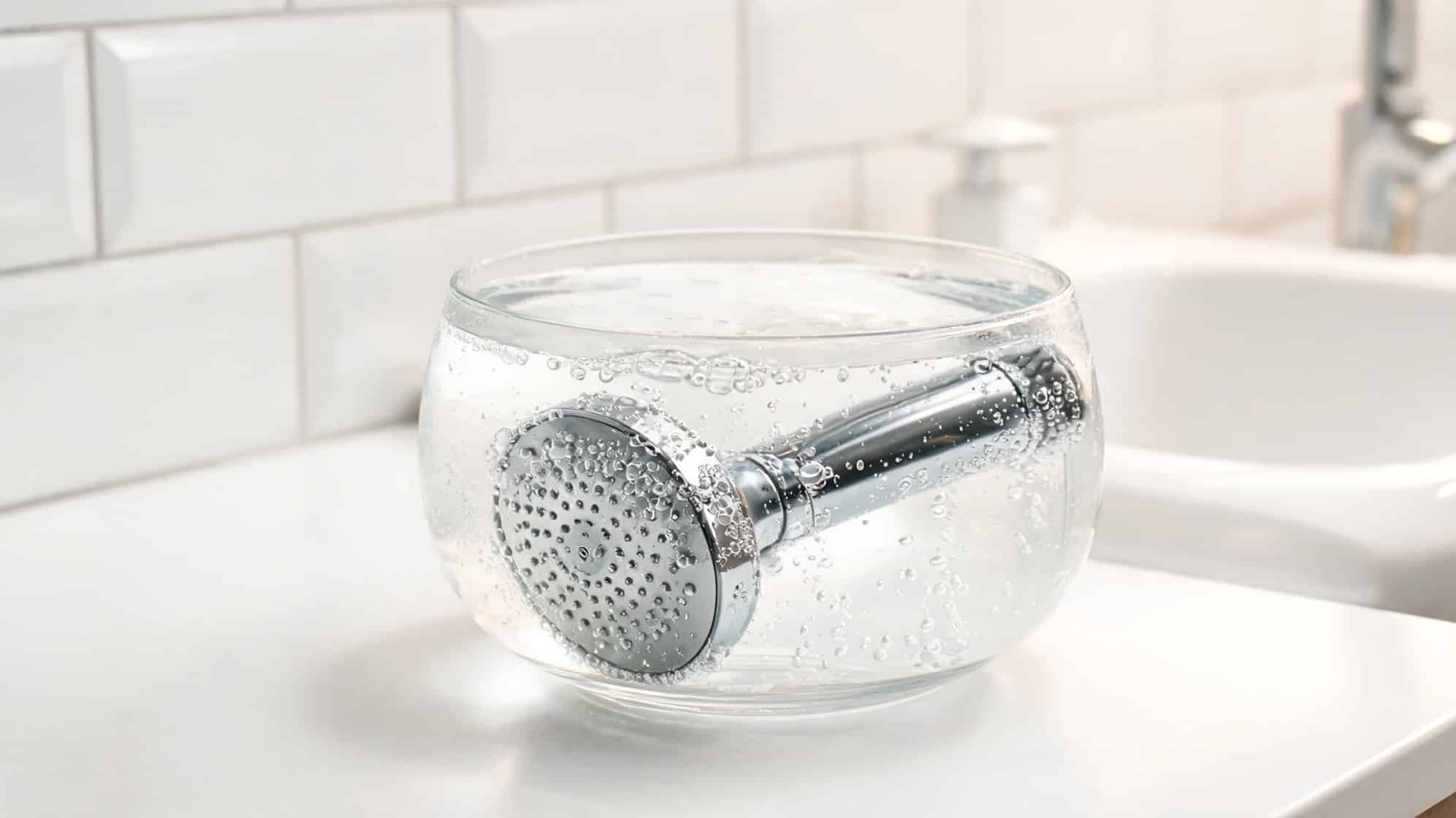
This method is best when your showerhead is badly clogged, and a simple soak does not fix it. By removing the showerhead, you can clean both the inside and the outside more thoroughly.
I’d use this method when the water pressure is very low or the showerhead hasn’t been cleaned in months.
Cleaning Instruction:
- Turn off the shower before you start.
- Unscrew the showerhead by hand, or use pliers if it feels stuck.
- Wrap a cloth around the showerhead before using tools to protect the finish.
- Place the showerhead in a bowl filled with white vinegar.
- Let it soak for several hours or overnight for heavy buildup.
- Scrub the inside and outside with an old toothbrush.
- Use a toothpick to clear blocked spray holes gently.
- Rinse the showerhead well with warm water.
- Screw the showerhead back onto the shower arm.
- Run water for a few minutes to flush out loose dirt and buildup.
Best For: Severe clogging that blocks the spray holes | Very low shower pressure | Hard water buildup on the showerhead | Showerheads that have not been cleaned in months.
Pro Tips: Check the washer or filter screen while the showerhead is removed. Replace worn washers if you notice leaks after reattaching them.
Note: Avoid harsh cleaners on coated finishes can cause damage.
Method 3: The Natural Scrub Method
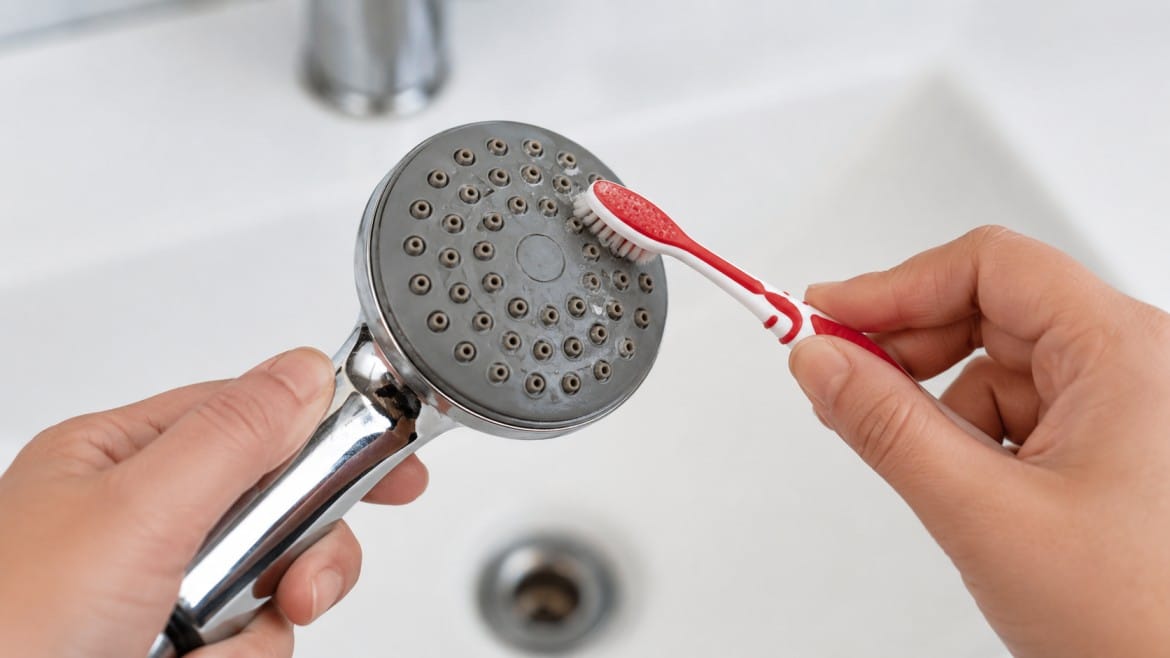
This method is great when your showerhead only needs a quick clean. I’d use it for light stains, small spots, or weekly upkeep.
It is also a good choice for delicate finishes because you can clean it gently without soaking the showerhead for long.
Cleaning Instruction:
- Mix baking soda with a little water to make a thick paste.
- Apply the paste to the showerhead with your fingers or a soft cloth.
- Gently scrub the showerhead with an old toothbrush.
- Focus on the nozzles and stained areas where buildup collects.
- Wipe the showerhead with a damp cloth.
- Run warm water for a minute to rinse the paste away.
- Dry the showerhead with a microfiber cloth to prevent water spots.
Best For: Quick refreshes between deeper cleans | Mild stains on the showerhead | Weekly maintenance to prevent buildup | Showerheads with delicate finishes.
Pro Tips: Add a small amount of vinegar for tougher spots. Dry the showerhead after cleaning to slow future buildup.
Note: Do not use rough scrubbers because they can scratch the finish.
Which Method Is Best for You?
Here’s a simple table to help you pick the best method based on how dirty or clogged your showerhead is.
| Method | Best For | Why Choose It |
|---|---|---|
| The Baggie Soak Method | Light to moderate mineral buildup, fixed shower heads, and monthly cleaning | It is easy, quick, and you do not need to remove the showerhead |
| Detach & Deep Clean | Severe clogging, very low water pressure, and heavy hard water buildup | It gives the showerhead a deeper clean, both inside and out. |
| The Natural Scrub Method | Quick refreshes, mild stains, weekly upkeep, and delicate finishes | It is gentle, simple, and good for keeping buildup from getting worse. |
If you are not sure where to start, I’d choose the Baggie Soak Method first. It works well with most showerheads and helps you see if a deeper clean is needed later.
What Not to Use on a Shower Head
Some cleaners and tools can damage your showerhead or make cleaning unsafe. I’d avoid these items to prevent scratching the finish, damaging the spray holes, or creating strong fumes.
- Do not mix bleach with vinegar because it can create unsafe fumes.
- Do not use steel wool, as it can scratch the showerhead’s finish.
- Do not use harsh abrasive powders because they can wear down coated surfaces.
- Do not use strong acids because they may damage metal or special finishes.
- Do not use undiluted chemical cleaners because they can be too harsh.
- Do not use sharp metal tools on spray holes because they can bend or damage them.
A gentle cleaner, a soft brush, and regular upkeep are usually enough to keep your showerhead clean and working well.
How to Prevent Future Buildup?
To prevent future buildup, try to keep your showerheads as dry and clear as possible between cleans. After each shower, wipe the showerhead with a soft cloth so water droplets do not dry on the surface and leave mineral spots. This small habit can slow down white chalky buildup, especially if your home has hard water.
If you deal with hard water often, a water softener can help reduce mineral buildup before it reaches your showerhead.
You can also install a shower filter to catch some minerals and other particles. After cleaning, run hot water through the showerhead for a minute to flush out any loose dirt or buildup.
For regular upkeep, rub the nozzles once a week with your fingers, a soft cloth, or an old toothbrush. This helps keep the spray holes open and stops clogs from forming. Keep the bathroom fan on or open a window after showers to lower the moisture. Good airflow helps prevent musty smells, mold, and mildew around the showerhead.
Frequently Asked Questions
How do you remove mineral buildup from a showerhead?
Soak the showerhead in white vinegar to loosen the mineral buildup. You can use the baggie method if it is still attached, or remove it for a deeper soak. After soaking, scrub the nozzles with an old toothbrush and run warm water to rinse.
How to clean the buildup inside the showerhead?
Remove the showerhead and place it in a bowl of white vinegar for several hours. After soaking, scrub the inside opening with a small brush. Rinse it well with warm water, then reattach it and run the shower to flush out loose buildup.
How to decalcify a showerhead without removing it?
Fill a plastic bag with white vinegar and place it over the showerhead. Make sure the nozzles are covered. Secure the bag with a rubber band and let it sit for about 30 minutes to a few hours. Remove the bag, scrub gently, and rinse.
How often should I replace the mineral balls in my showerhead?
Replace the mineral balls according to the product instructions, as each showerhead filter is different. Many need to be replaced every few months, depending on water use and water quality. If water flow drops, odor returns, or the balls look worn, it may be time.
Do I need to descale my showerhead?
Yes, you should descale your showerhead if the water pressure is weak, the spray holes look blocked, or you see white, chalky buildup. Descaling helps remove mineral deposits and keeps the water flowing evenly. A monthly vinegar soak is usually enough for regular care.
To Sum Up
Now you know how to clean the showerhead buildup without making the job feel hard.
I’d start with the Baggie Soak Method because it works well with most showerheads and doesn’t take much time. It is a simple fix when you notice light buildup, weak spray, or water going in different directions.
If your showerhead is badly clogged or the water pressure feels very low, Detach & Deep Clean is the better choice. It lets you clean both the inside and the outside more thoroughly. For quick touch-ups, The Natural Scrub Method is great for light stains, weekly upkeep, and delicate finishes.
Try to clean your showerhead once a month. A little care can help keep the water flowing better and stop buildup from getting harder to remove later.