

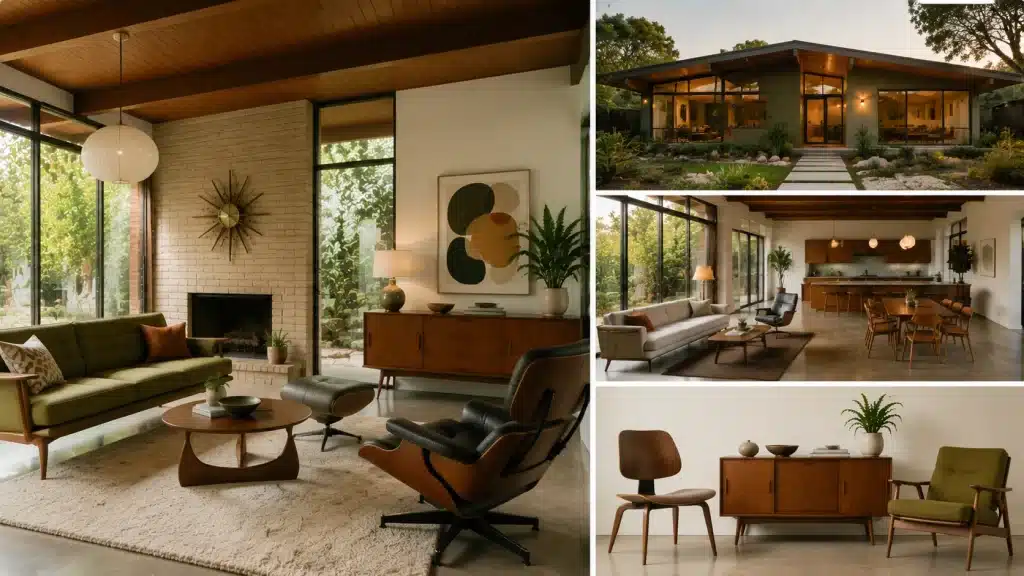


| Quick Answer: Mid-century modern is a postwar design movement, roughly 1945 to 1969, built on uncluttered forms, tapered wood furniture, large windows, and open layouts. It values everyday usefulness over ornament, staying warm rather than stark. |
If you have walked into a room with clean lines and warm wood tones, you have likely seen mid-century modern design.
The style gets mixed up with modern and contemporary decor all the time. That confusion makes it hard to know what you are actually shopping for.
This blog breaks down what the style means, where it came from, and how it looks in real homes. You will find its history, its defining features, and room-by-room ideas.
What Defines Mid-Century Modern Design?
Mid-century modern design is defined by a balance of function, simplicity, and visual warmth.
The style focuses on uncluttered spaces, practical furniture, and the thoughtful use of materials such as wood, leather, glass, and metal.
Each element serves a purpose instead of adding decoration. Furniture features tapered legs, curves, and geometric shapes, while layouts focus on openness and indoor-outdoor connections.
The style gained popularity after World War II as designers created practical pieces for changing lifestyles. Its timeless forms and usability keep it relevant in modern homes.
The History Behind Mid-Century Modern Design

Understanding its history reveals how postwar optimism, new technology, and a handful of designers built a style focused on practical, accessible living.
Soldiers returned home, families expanded, and the country needed housing fast. Builders responded with smaller, simpler homes that dropped ornate details in favor of open layouts and clean construction.
The Bauhaus School in Germany pushed the idea that design should serve everyday life rather than decorate it. Scandinavian minimal design added warmth through wood and handcraft.
The International Style contributed glass walls and a stripped-down structure. Together, these influences gave American designers a starting point they reworked into something distinctly their own.
A handful of designers defined the era and still get credit for it today, like:
- Charles and Ray Eames, this husband-and-wife team pioneered molded plywood and fiberglass furniture, including the Eames Lounge Chair.
- Eero Saarinen, known for the Tulip Table and Womb Chair, built both around a single sculptural base.
- Arne Jacobsen, a Danish architect and designer behind the Egg Chair and Swan Chair.
Key Characteristics Of Mid-Century Modern Design
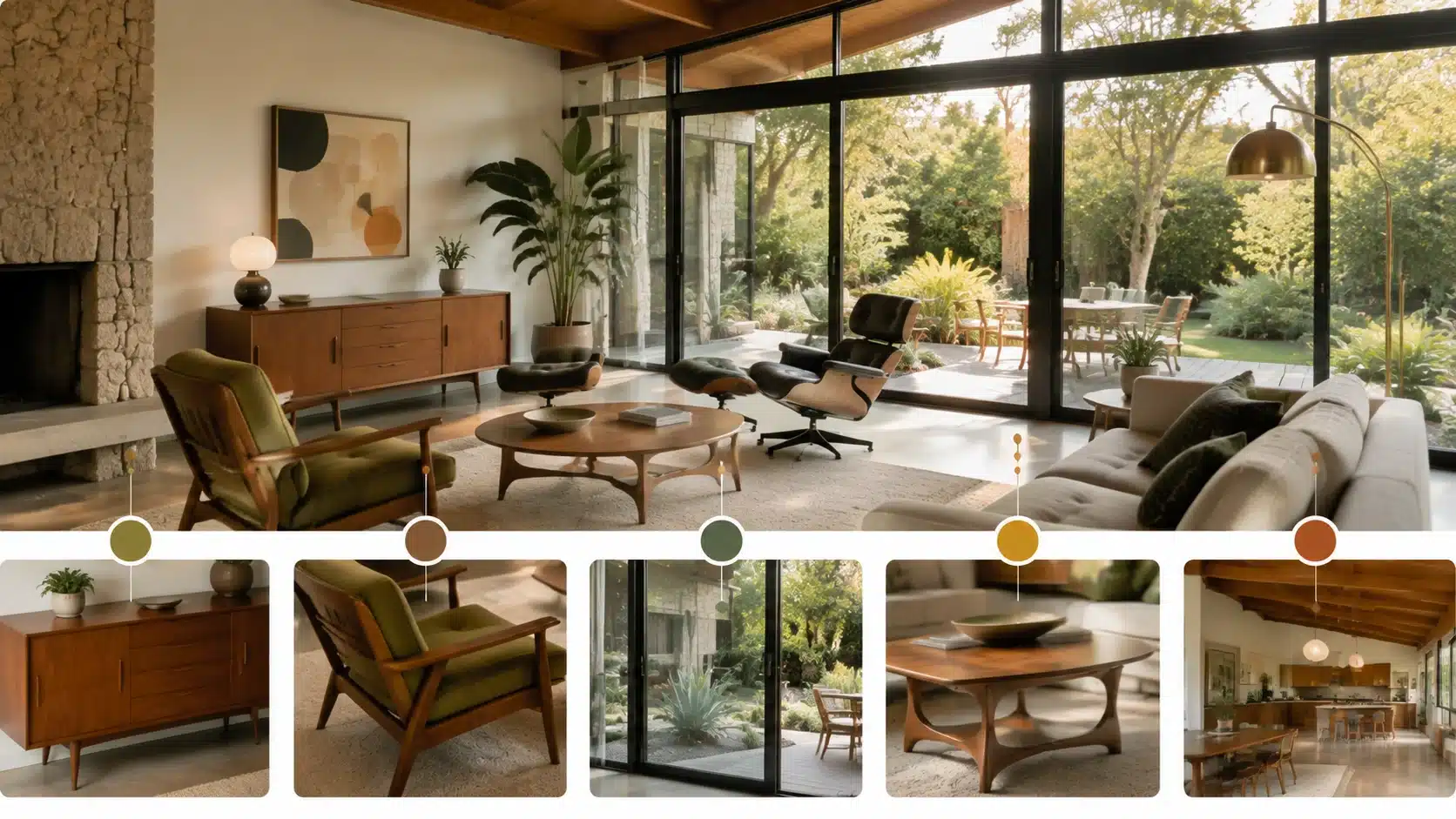
The style stays easy to recognize through its balance of simplicity, warmth, and function, mixing architectural openness with carefully considered furniture and decor.
- Clean Lines And Simple Forms: Mid-century modern furniture and architecture rely on straight lines and simple shapes rather than heavy trim or carved details.
- Natural Materials And Warm Wood Tones: Teak, walnut, and oak appear throughout mid-century furniture, often left with a light finish that highlights the grain.
- Connection Between Indoor and Outdoor Spaces: Large windows and sliding glass doors were central to mid-century architecture, not just a decorative choice.
- Organic and Geometric Shapes: The style pairs sculptural, organic pieces, like curved chairs and rounded coffee tables, with more structured geometric forms.
- Functional Open Spaces: Open floor plans let mid-century homes feel larger than their square footage suggests.
Mid-Century Modern Architecture Features
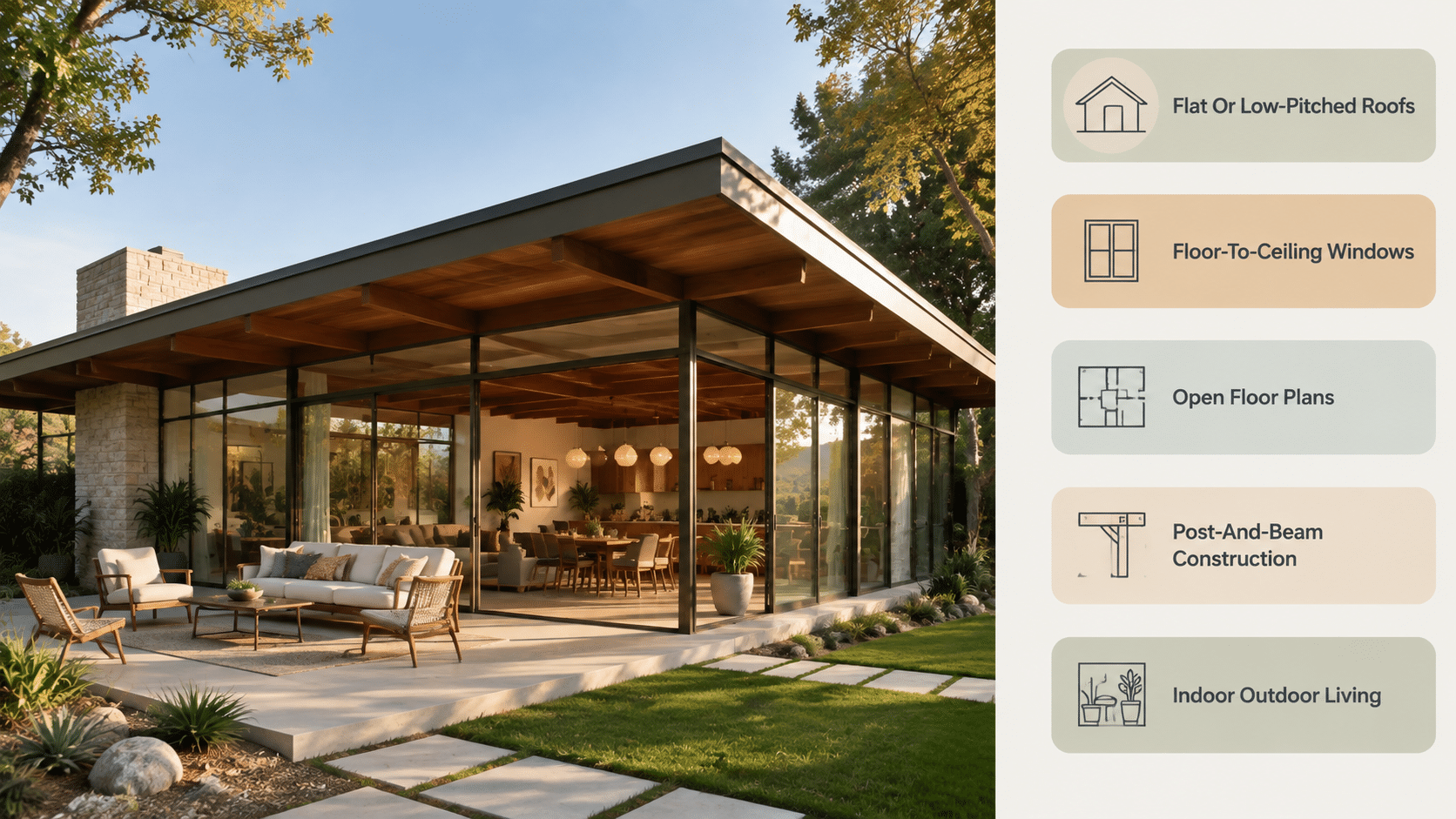
Architecture from this era focused on simplicity, natural light, and a strong connection with nature. Mid-century homes used clean structures, open layouts, and materials that made spaces feel larger and more connected.
Flat or low-pitched roofs replaced traditional steep designs, creating a simple geometric profile. Floor-to-ceiling windows brought in natural light and connected interiors with outdoor views.
Open floor plans removed unnecessary walls between living areas, while post-and-beam construction used exposed supports to create flexible spaces without interior barriers.
Indoor-outdoor living became a defining feature, with patios, courtyards, and sliding glass doors extending the home into the surrounding landscape.
Famous examples include The Eames House in Los Angeles, which used prefabricated steel components to create an open design, and The Stahl House, known for its glass corners and dramatic city views.
How to Create a Mid-Century Modern Home Today
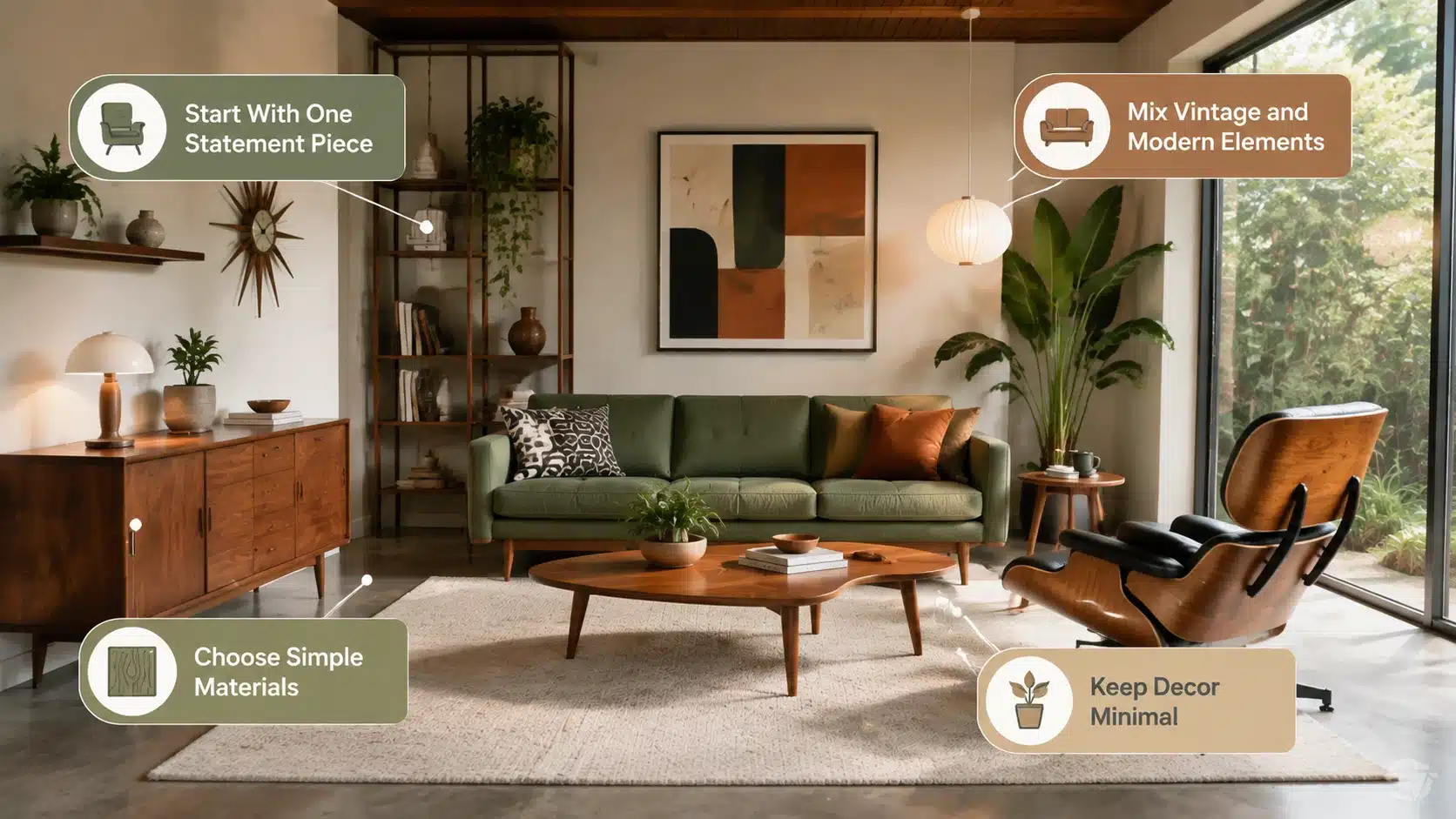
You can achieve this timeless look without turning your home into a museum. Combine classic pieces with modern comforts and your own personal taste.
- Start with One Statement Furniture Piece: Rather than replacing every item in a room, pick one anchor piece to build around. A lounge chair or a vintage credenza can set the right tone.
- Mix Vintage and Modern Elements: A room filled with vintage pieces can start to look like a theme rather than a home. Pair a contemporary sofa with a vintage-inspired coffee table.
- Choose Simple Materials: Stick to wood, glass, metal, and natural fabrics when picking new furniture or finishes. These materials echo the original style.
- Keep Decor Minimal: Mid-century rooms favor fewer well-made pieces over a room packed with accessories. Choose fewer items, but choose ones that serve a purpose.
Mid-Century Modern Design Ideas for Different Rooms
Each room can take on mid-century style in its own way. Thoughtful furniture, natural materials, and balanced color keep every space comfortable to live in.
1. Mid-Century Modern Living Room
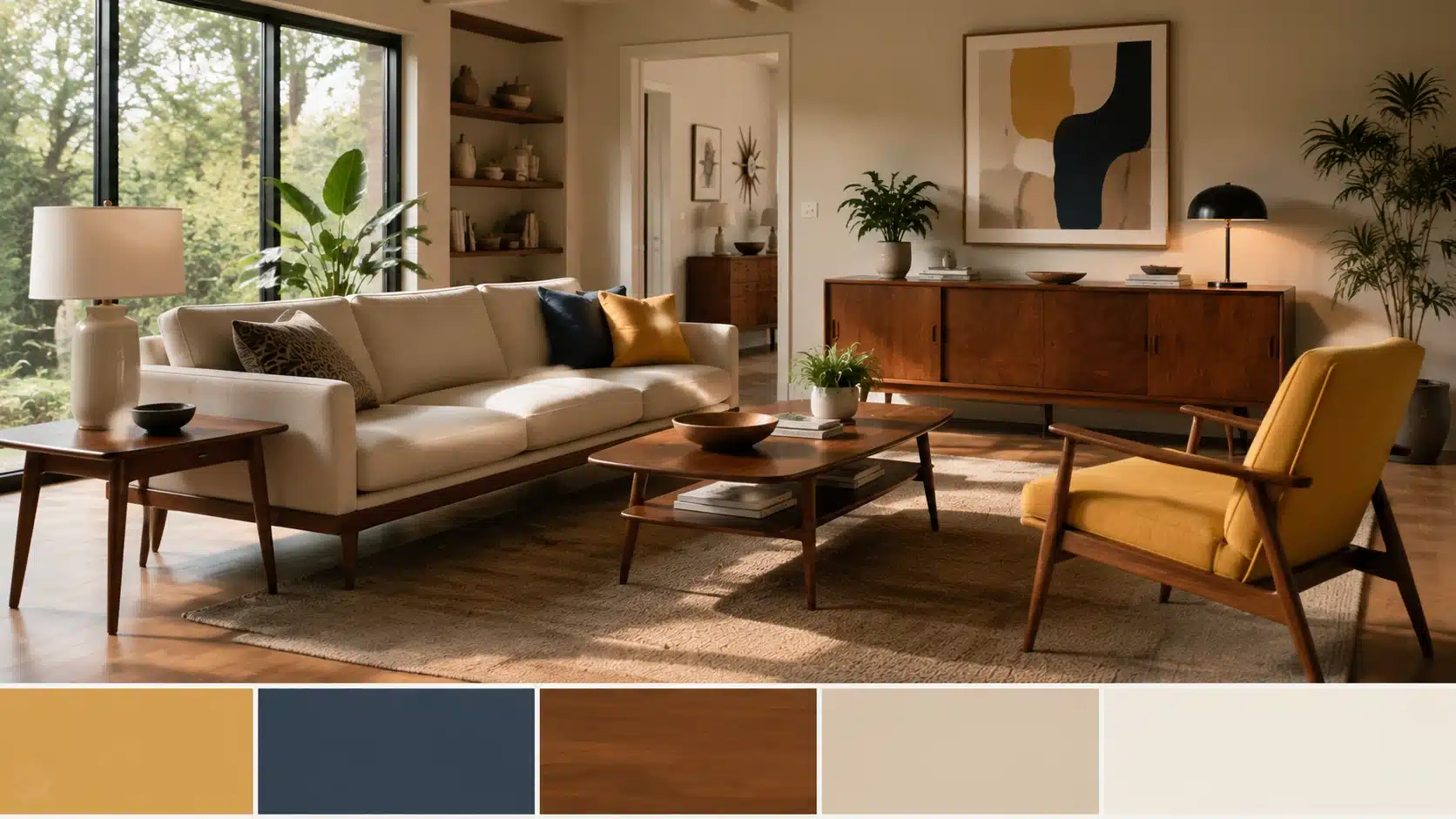
A low-profile sofa, a wooden coffee table, and a sculptural floor or table lamp form the backbone of a mid-century living room.
Add one accent chair in Sherwin-Williams Cut the Mustard (SW 6384) or Benjamin Moore Hale Navy (HC-154) to break up the base.
2. Mid-Century Modern Kitchen
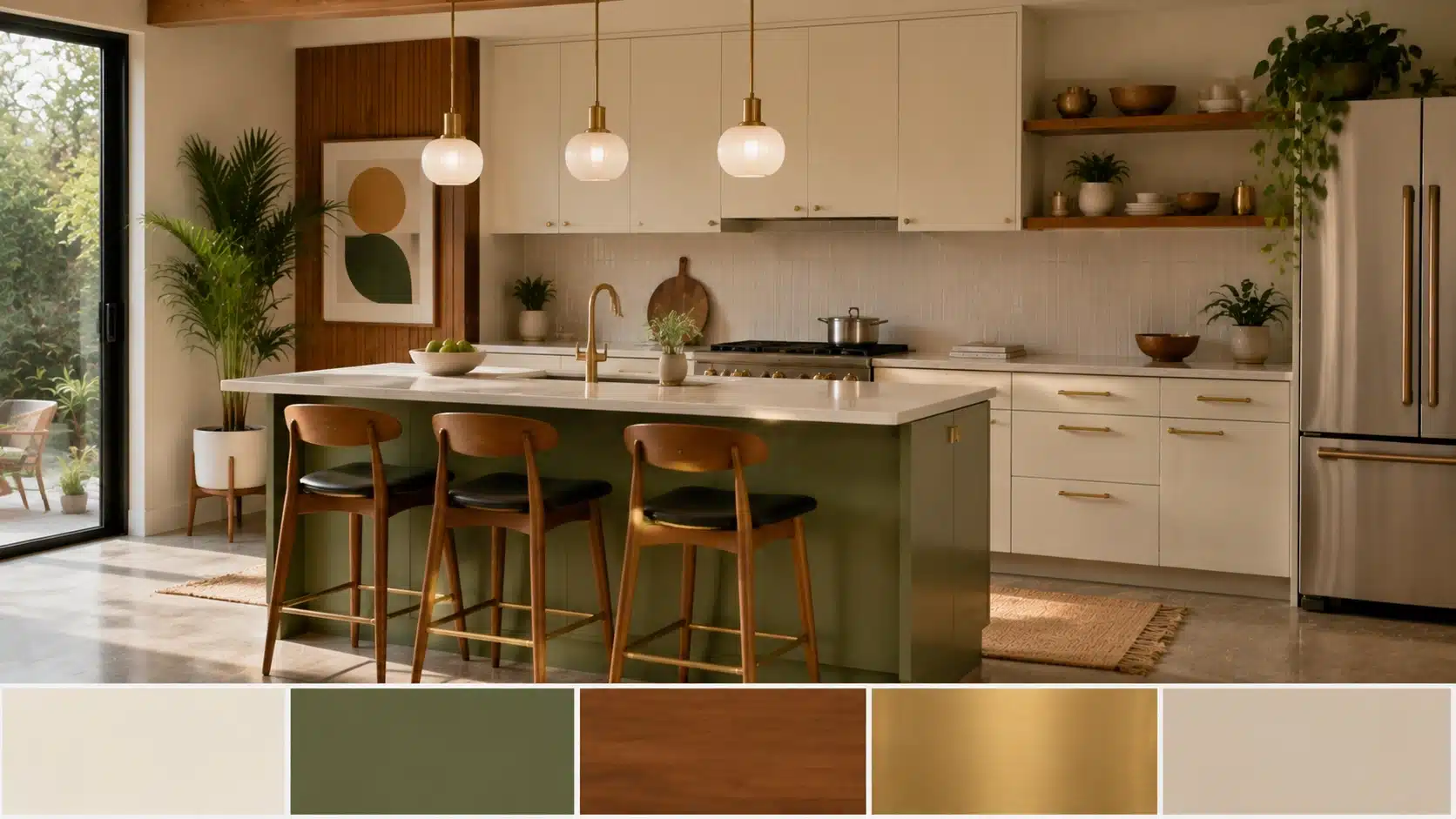
Flat-panel cabinets in Benjamin Moore Swiss Coffee (OC-45) keep the space bright, while a kitchen island in Sherwin-Williams Renwick Olive (SW 2815) adds a period-accurate pop of color.
Simple hardware, like slim brass or wood pulls, and open shelving keep the look consistent.
3. Mid-Century Modern Bedroom
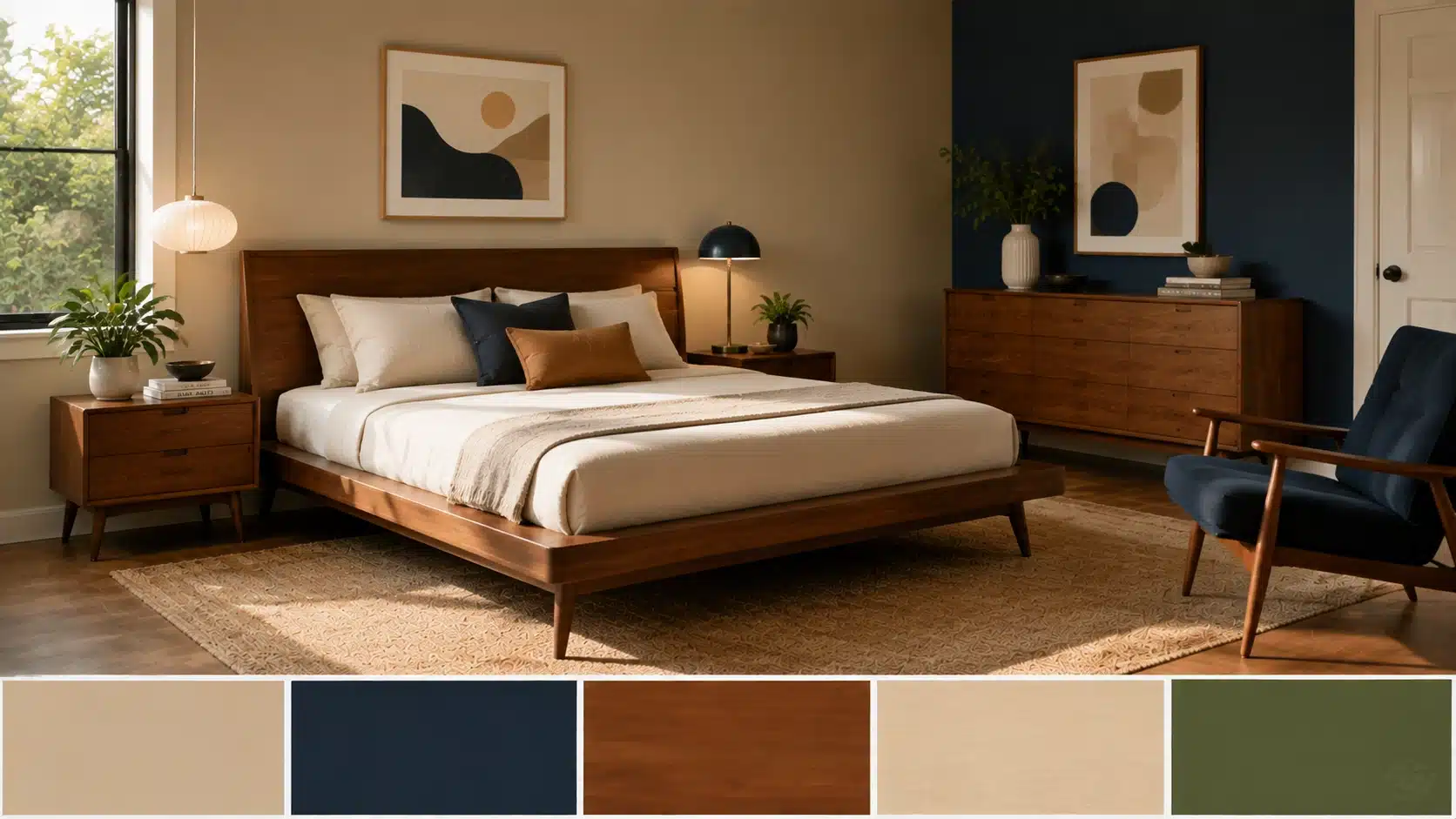
A platform bed with a low wooden frame anchors this look, especially against walls in Sherwin-Williams Kilim Beige (SW 6106).
Add a nightstand or accent wall in Benjamin Moore Hale Navy (HC-154) for depth, then pair it with warm, layered lighting.
4. Mid-Century Modern Dining Room
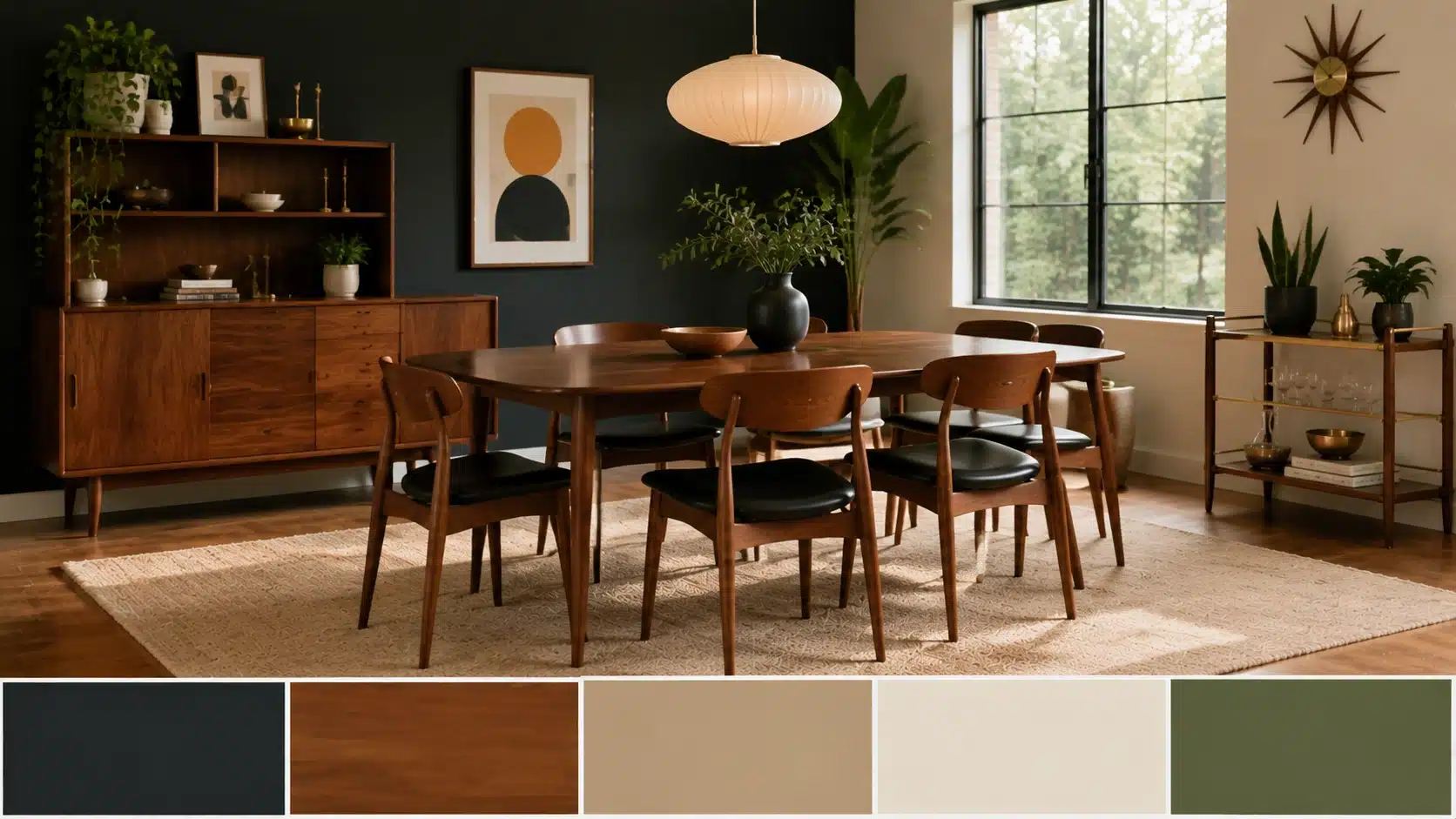
A mid-century dining room pairs a wooden table with sculptural pendant lighting overhead.
For drama, paint an accent wall or built-in hutch in Sherwin-Williams Caviar (SW 6990), which grounds the space and lets a walnut table stand out.
Pro tip: Balance a dark wall like Caviar with a lighter rug and plenty of natural light so the room does not feel closed in.
5. Mid-Century Modern Bathroom
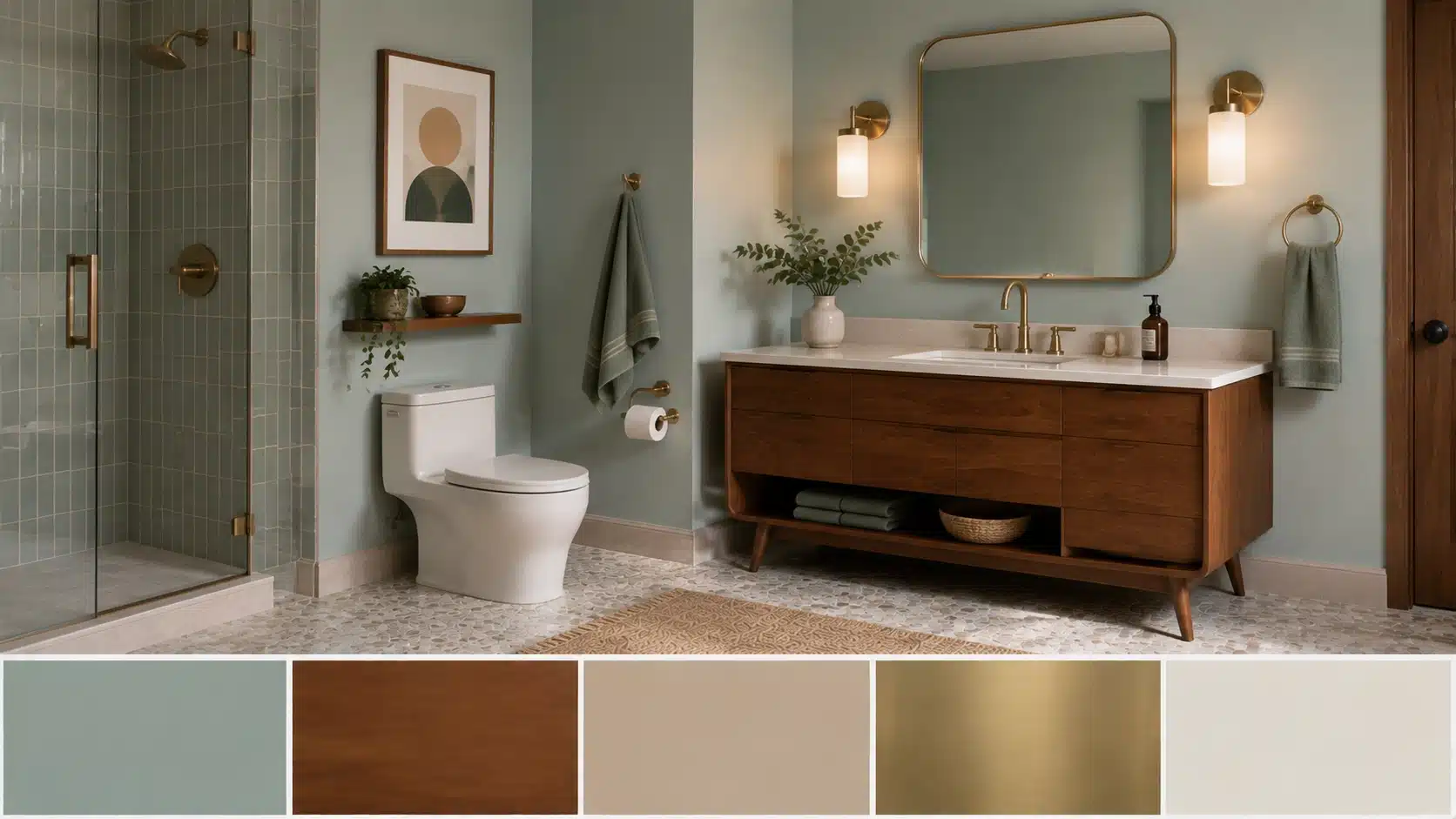
A mid-century bathroom leans on warm wood vanities, simple fixtures, and a spa-like palette.
Benjamin Moore Beach Glass (1564) on the walls brings a calm, blue-green tone that pairs well with teak accents and brass hardware.
Pro tip: Test Beach Glass on a poster board and move it around the room, since natural light shifts its blue and green undertones through the day.
6. Mid-Century Modern Home Office
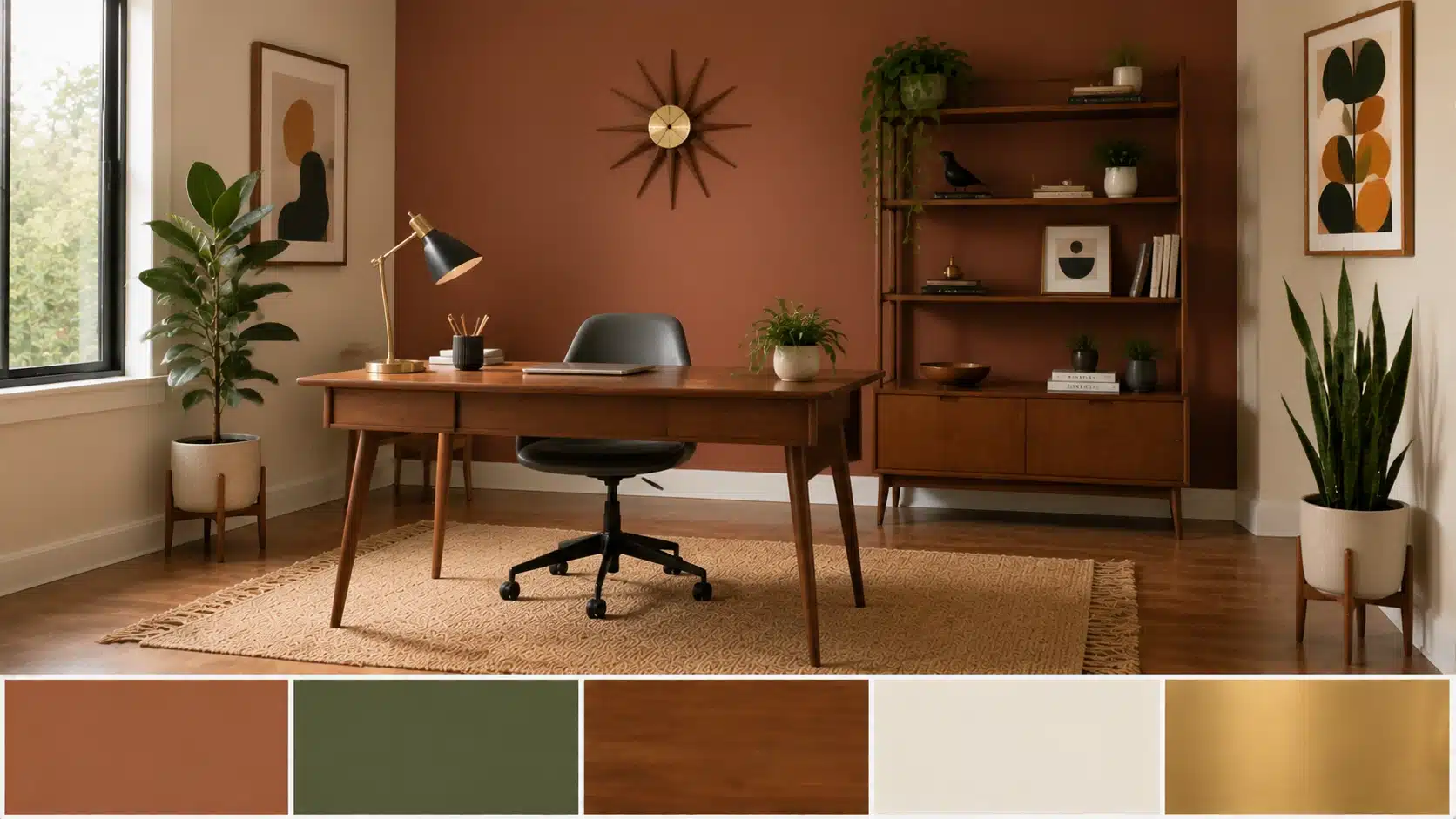
A simple wooden desk with tapered legs and an ergonomic chair with a molded shell fit the style well.
Paint an accent wall in Sherwin-Williams Cavern Clay (SW 7701) behind the desk, and keep trim in Sherwin-Williams Alabaster (SW 7008) for contrast.
Common Shades Used in Mid-Century Modern Interiors
Color choices in this style pair earthy neutrals with bold accents, creating spaces that feel warm and balanced without ever looking overwhelming.
Earthy Neutral Shades
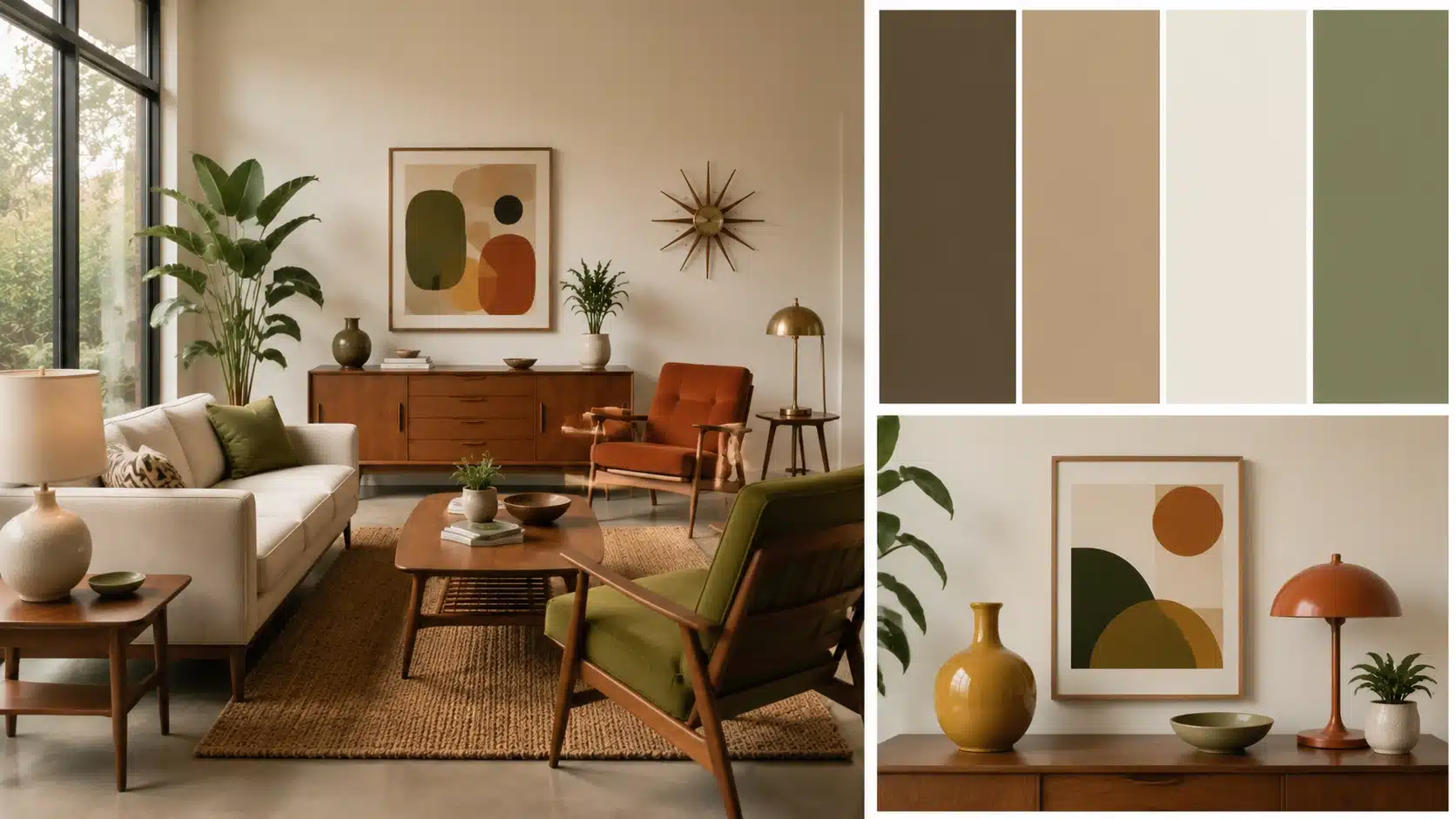
Most mid-century rooms start with a neutral base. These shades echo the natural materials used throughout the style and give bolder colors room to stand out.
Shades like Benjamin Moore Walnut (CW-240), Sherwin-Williams Kilim Beige (SW 6106), and Sherwin-Williams Renwick Olive (SW 2815) work well on walls, floors, and larger furniture pieces.
Bold Accent Colors
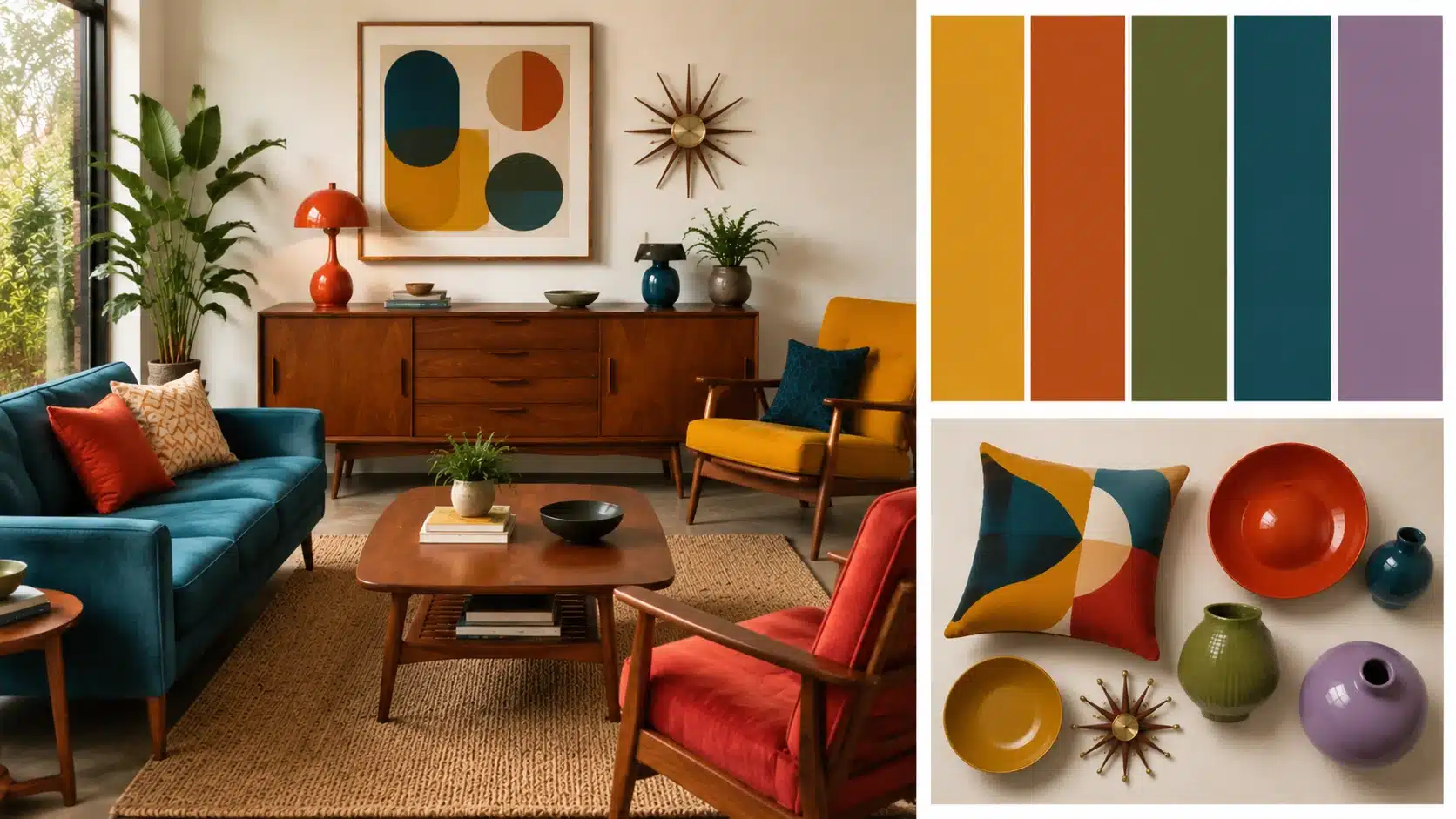
Against that neutral base, mid-century interiors add pops of color through smaller pieces like chairs, pillows, and art.
Shades like Sherwin-Williams Cut the Mustard (SW 6384), Sherwin-Williams Cavern Clay (SW 7701), and Sherwin-Williams Rustic Red (SW 7593) are common choices.
Save bold colors for accent chairs, lamps, or artwork. This keeps the space from feeling too busy while still giving it personality.
Popular Mid-Century Modern Furniture Pieces
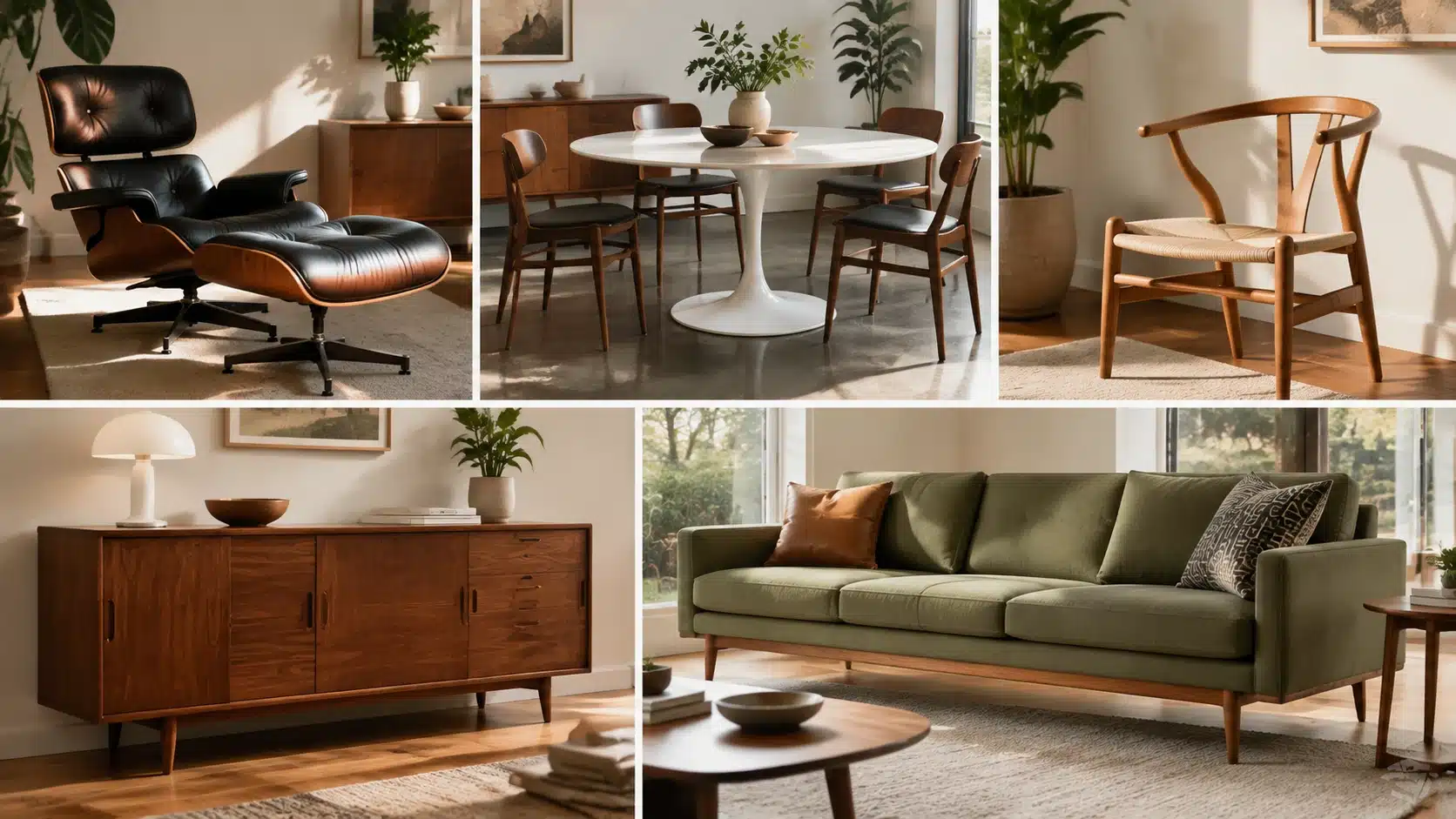
Furniture stands out as one of the clearest markers of this style, combining ergonomic shapes, solid craftsmanship, and materials built for everyday comfort.
| Furniture Piece | Design Features |
|---|---|
| Eames Lounge Chair | Molded plywood shell with leather cushions |
| Tulip Table | Single pedestal base instead of four legs |
| Wishbone Chair | Curved wooden frame with a woven seat |
| Credenzas | Low, long storage pieces with clean fronts |
| Lounge Sofas | Straight lines with exposed wooden legs |
Exposed legs are one of the easiest ways to spot mid-century furniture. Lifting a sofa or chair off the floor made rooms feel more open, which mattered in smaller postwar homes.
Low-profile designs served the same goal. A credenza that sits close to the floor takes up less visual space than a tall cabinet.
Mid-Century Modern Vs Modern Vs Contemporary Design
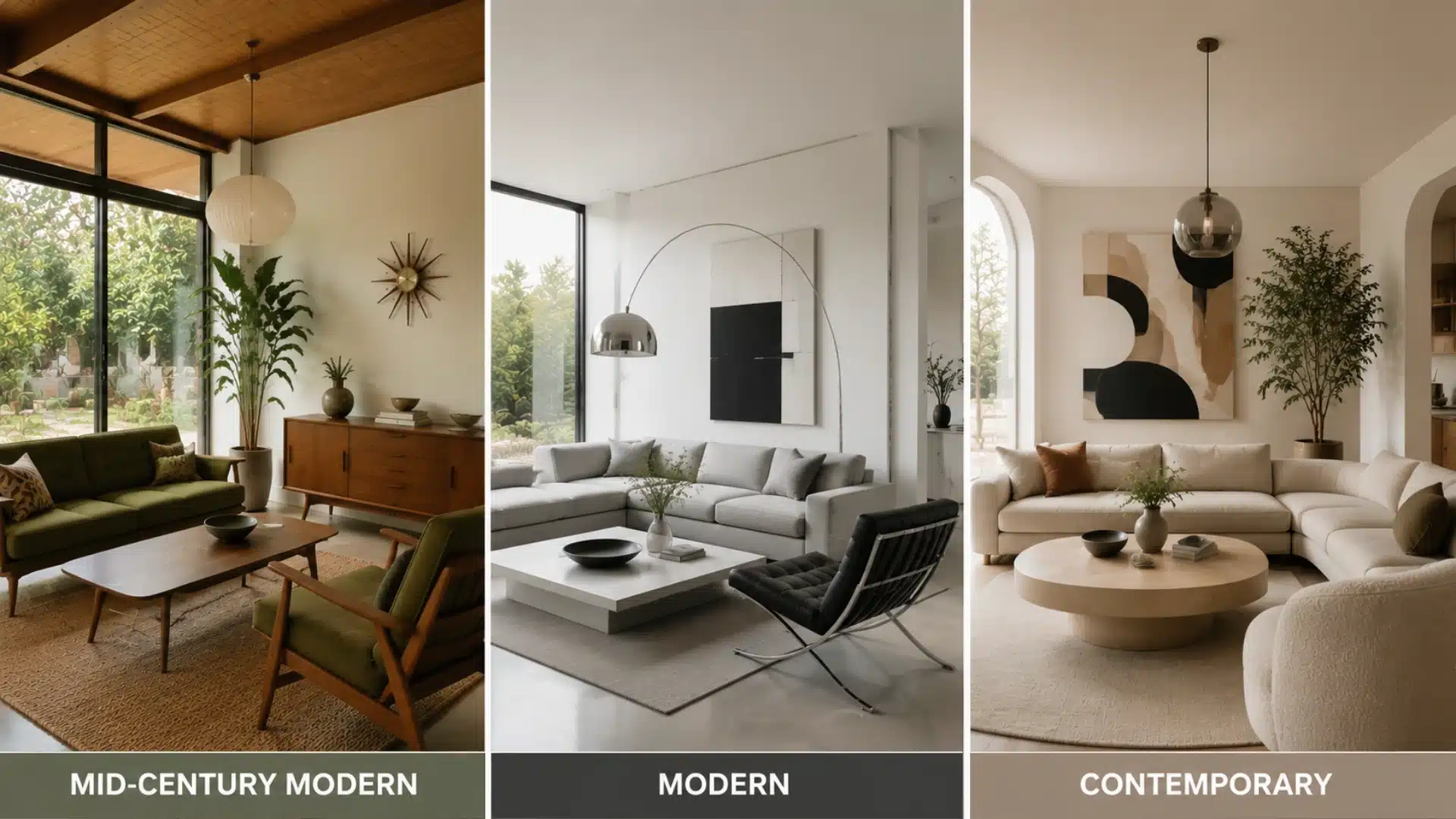
Although these styles share a clean look, their history, materials, and design approach differ enough to help individuals choose the right direction.
| Style | Main Difference |
|---|---|
| Mid-Century Modern | Warm materials, vintage influence, organic shapes |
| Modern | A broader movement focused on simplicity and function without a fixed time period. |
| Contemporary | Reflects current trends, which shift as design preferences change |
Modern design is the umbrella term under which mid-century modern falls, tied to a specific era. Contemporary design changes with the times instead.
It describes whatever is currently popular rather than a fixed set of features.
Mistakes to Avoid With Mid-Century Modern Design
Avoiding a few common mistakes helps keep the style authentic while creating a home that feels comfortable rather than overly staged or dated.
- Using Too Many Vintage Pieces: Filling a room with original mid-century furniture can make it look like a period set. Mix in newer pieces to keep the space feeling current.
- Choosing Poor-Quality Reproductions: Cheap reproductions often use thin veneers or weak joinery that wear out quickly. Look for solid-wood construction and quality materials.
- Making the Space Too Minimal: Mid-century design values simplicity, but a room stripped of all personality can feel empty rather than calm. Leave room for a few personal touches, like art or plants.
- Ignoring Comfort: Some mid-century pieces prioritize looks over ergonomics. Test seating before buying it, and pair statement chairs with genuinely comfortable options for everyday use.
- Mixing Too Many Design Styles: Combining mid-century pieces with several other unrelated styles at once can make a room feel disorganized. Choose complementary styles, like a Japandi interior design.
Frequently Asked Questions
What years are considered mid-century modern?
The style generally spans the 1940s through the late 1960s, with its peak popularity in the 1950s and early 1960s.
What makes a home mid-century modern?
A mid-century modern home typically features an open floor plan, large windows, clean lines, and a strong visual connection to the outdoors through natural light and indoor-outdoor spaces.
Is mid-century modern still popular?
Yes. The style remains popular because of its timeless designs, functional layouts, natural materials, and ability to blend easily with modern furniture and decor.
What colors are used in mid-century modern design?
Common colors include warm wood tones, earthy neutrals, olive green, mustard yellow, burnt orange, and muted accent shades, creating a balanced and inviting look.
What is the difference between mid-century modern and contemporary?
Mid-century modern refers to a specific design movement from the mid-20th century, characterized by recognizable features. Contemporary design refers to current trends and continues to change over time.
Why is Mid-Century Modern Design Still Popular?
The style continues to draw homeowners because it combines a timeless look, practical layouts, durable materials, and furniture that still works in modern homes.
Mid-century modern design has outlasted most decorating trends because its core ideas were never tied to a fad. Clean lines and open layouts work as well in a city apartment as they did in a 1950s suburban home.
The style also lines up with a broader shift toward buying fewer, better things. A well-made walnut credenza or an original Eames chair can outlast several generations of mass-produced furniture.