

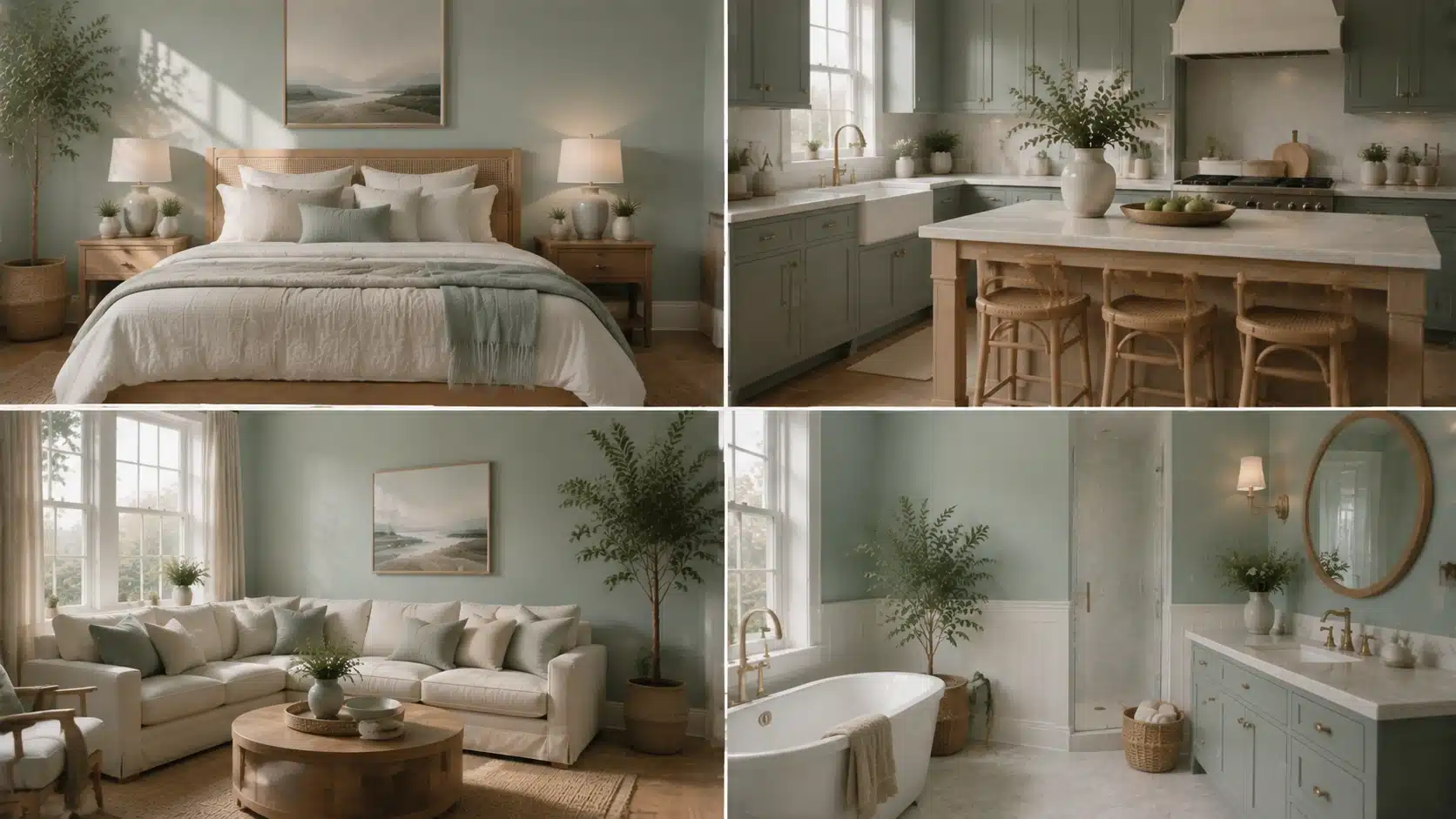


| Quick summary: Benjamin Moore Beach Glass is a muted blue-green-gray shade that changes subtly with lighting and surrounding colors. |
Benjamin Moore Beach Glass is the kind of paint color that can look soft and coastal in one room, then slightly cooler or greener in another.
That versatility is part of its appeal, but it also means choosing it requires a closer look at undertones, natural light, surrounding finishes, and coordinating colors.
This article breaks down Benjamin Moore Beach Glass 1564, including its LRV and blue-green-gray undertones.
How it behaves in different lighting conditions, the best rooms to use it in, how to coordinate whites and accent colors, and how it compares with similar popular shades.
What Color is Benjamin Moore Beach Glass?
Benjamin Moore Beach Glass 1564 is a soft blue-green paint color with a gray undertone that keeps it from ever looking too bright or too tropical.
- This shade sits in Benjamin Moore’s blue-green family, but it is not the bright aqua or classic beachy turquoise that its name might suggest.
- It reads as a muted, weathered blue-green with a gray cast, closer to the color of real sea glass than a swimming pool.
- Depending on lighting, some rooms will pull more blue while others lean slightly green, but the gray keeps both extremes in check.
Benjamin Moore’s own product page describes it as a calming blue with a gray undertone, adding versatility to the shade.
Color details
| Feature | Details |
|---|---|
| Paint brand | Benjamin Moore |
| Color name | Beach Glass |
| Color number | 1564 |
| Color family | Blue-green |
| LRV | 49.7 |
| Overall feel | Calm, coastal, muted |
Benjamin Moore Beach Glass Undertones
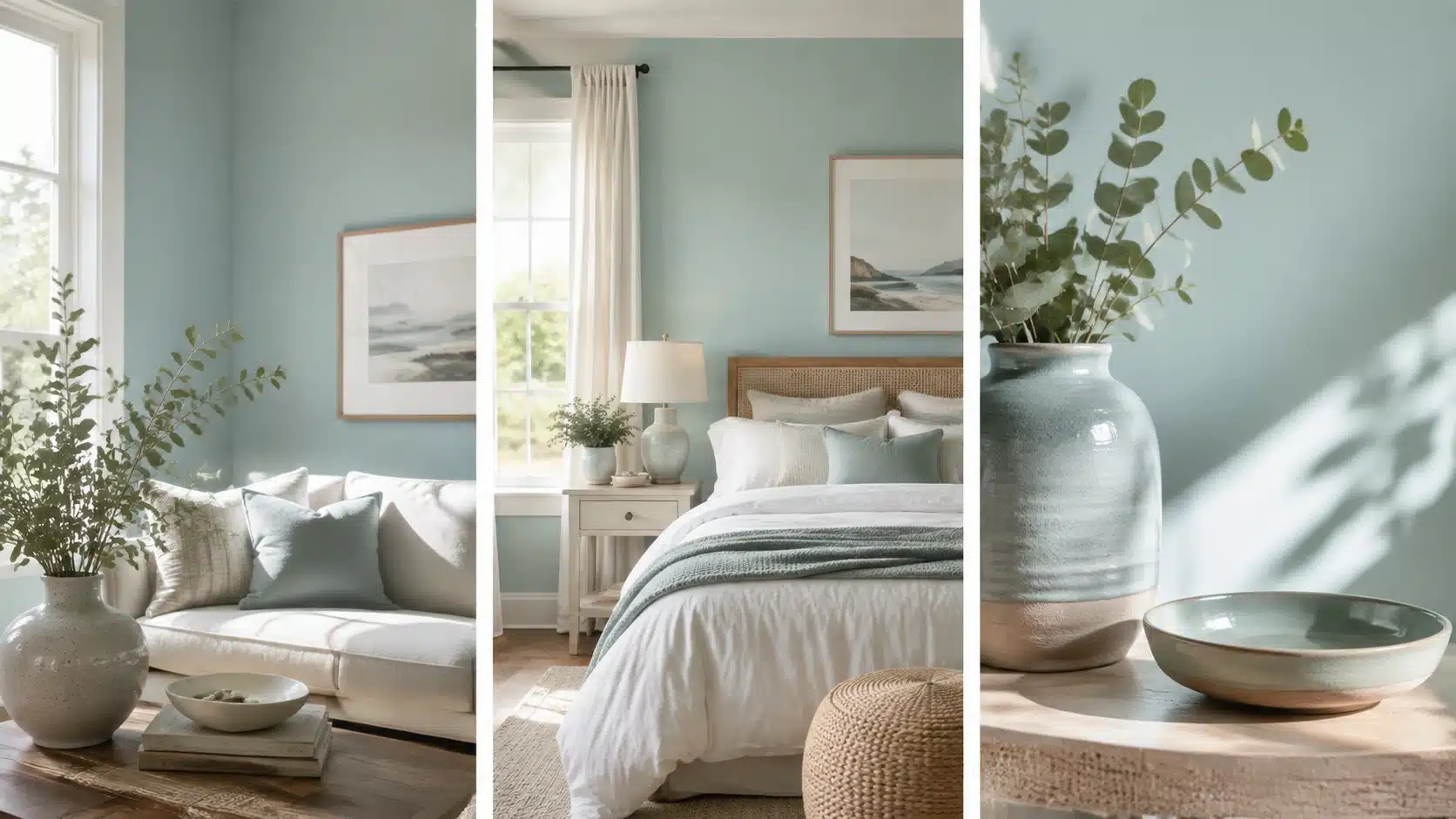
Undertones are the quiet influence sitting beneath the main color, and they are what make this shade a bit of a chameleon. Here is how each one shows up.
- Gray undertone: The gray keeps the color from ever feeling tropical or overly saturated. It softens the color and gives it a more grown-up, sophisticated quality, which is part of why it works in so many different design styles.
- Blue undertone: In cooler, north-facing light, the blue becomes more obvious. This is when the color leans closest to a true sea-glass blue, with an airy, almost weightless feel.
- Green undertone: Warm, direct sunlight tends to coax out the green side of the color. Paint experts who specialize in undertone analysis note that this warm-light shift is what gives the color its sea-glass character in south-facing rooms.
Is Benjamin Moore Beach Glass Blue or Green?
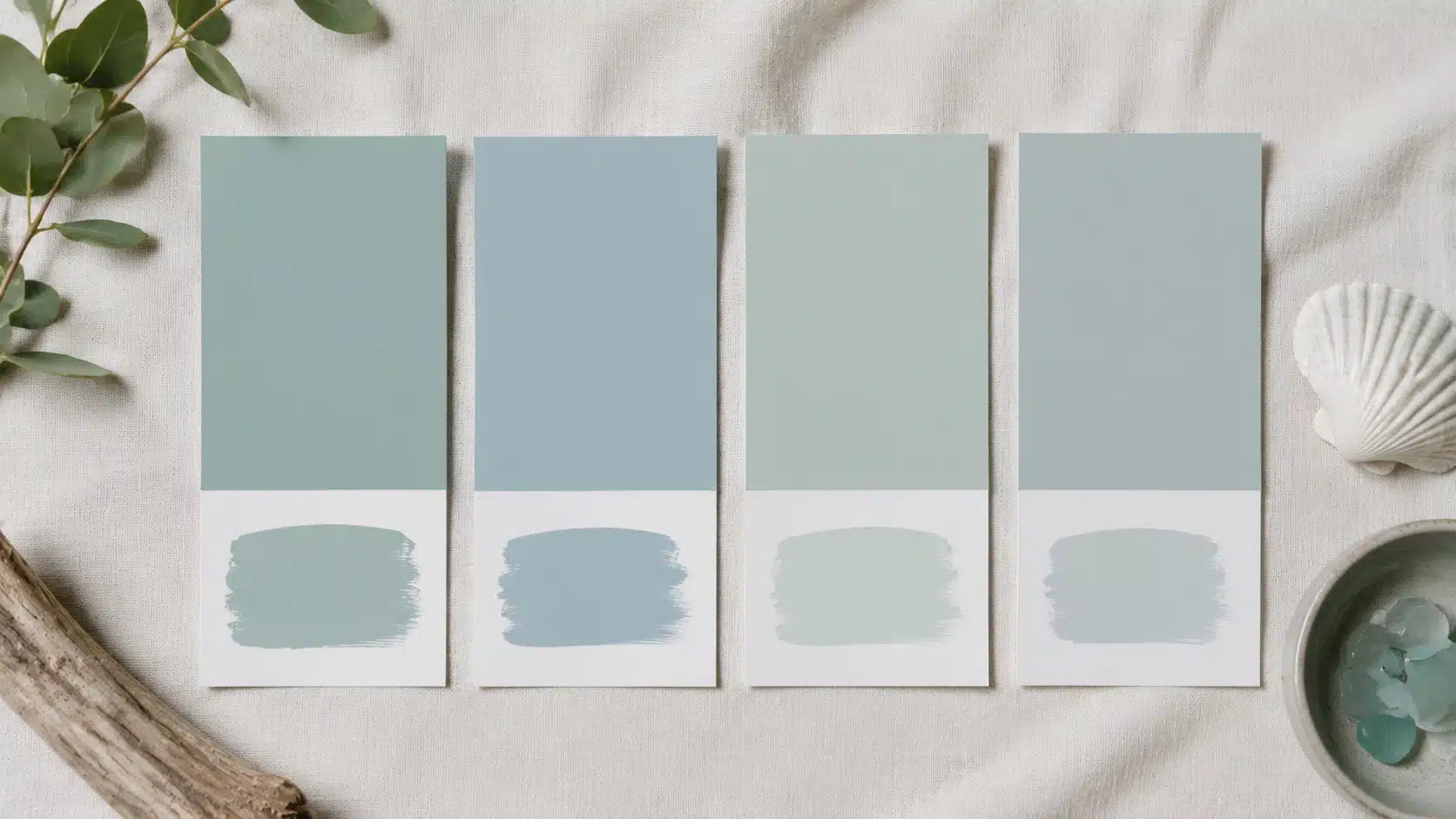
If you are trying to decide whether this color leans more blue or green, it can be a little hard to pin down at first.
It is technically a muted blue-green, but on the wall it often reads more like a soft sea-glass blue. Its gray undertone keeps it from looking too teal or too close to seafoam.
The gray undertone is what stops it from reading as a true teal or seafoam shade.
How it compares to similar blues and greens:
| Color | How it differs from Beach Glass |
|---|---|
| Beach Glass | Soft blue-green with gray |
| Palladian Blue | Brighter and more distinctly blue |
| Healing Aloe | Lighter and softer overall |
| Quiet Moments | Lighter, with an LRV close to 61, and leans slightly more blue |
Benjamin Moore Beach Glass LRV and Light Performance
LRV, or light reflectance value, measures how much light a paint color bounces back into a room versus how much it absorbs. The scale runs from 0 (pure black) to 100 (white).
This color has an LRV of 49.7, according to the official listing of Benjamin Moore, which places it almost exactly in the middle of the scale.
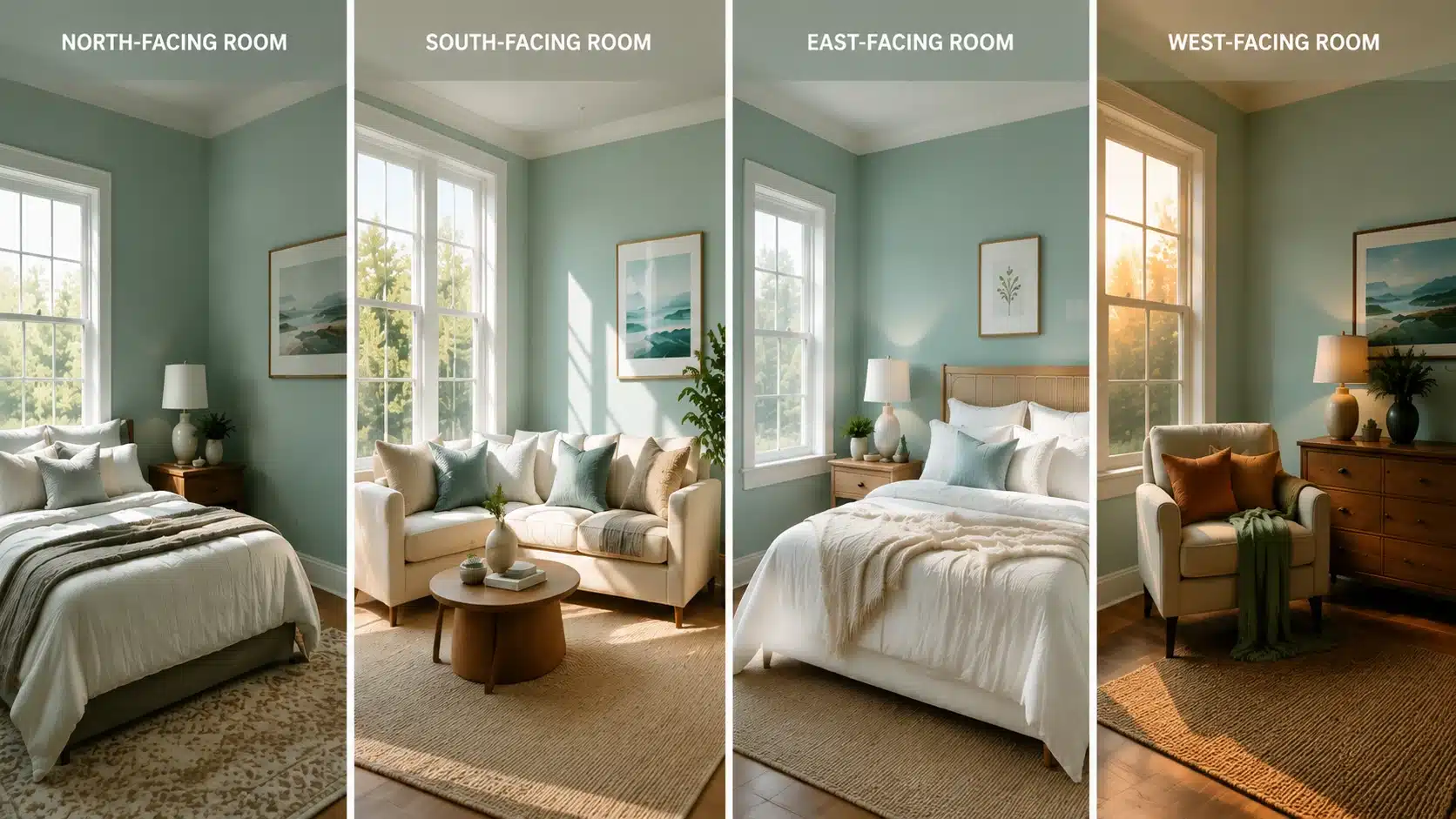
- North-facing rooms: Cooler, indirect light pulls the color deeper and grayer, and some of that airy, coastal quality fades. North-facing rooms never get direct sun, so the color settles into a moodier, more subdued side.
- South-facing rooms: Direct sun keeps the color feeling fresh and calming, and its blue-green tones read clearly without looking washed out. The strong, warm light in south-facing rooms tends to bring out the green side rather than the blue.
- East-facing rooms: Morning sun brings a brief window of warmth, so the color can look slightly greener early in the day before settling into a cooler, more blue-gray tone for the rest of the afternoon.
- West-facing rooms: Afternoon and evening sun bring the strongest warm light of the day, which can push the color toward its greener, warmer side as the sun gets lower in the sky.
How Lighting Conditions Change the Look of Beach Glass
Beyond room orientation, the type and intensity of light in a space play a big role in how the color performs day to day.
- Darker rooms: The color pulls deeper, grayer, and cooler, losing some of its lighter coastal quality when natural light is limited
- Lighter, sun-filled rooms: It reads fresh and clear, with the blue-green tones showing up most true to their intended shade.
- Warm bulbs: Warm-toned lighting emphasizes the green side of the color, giving it a slightly more sea-glass, earthy feel indoors.
- Cool LED bulbs: Cooler artificial light highlights the blue-gray side, making the color feel crisper and more subdued.
Designer tip: Test the color on at least two walls in the room, ideally one that gets direct sun and one that does not, since the same gallon can look noticeably different depending on exposure.
Where to Use Benjamin Moore Beach Glass in Your Home
This color adapts well across the home, from calm living spaces to spa-style bathrooms, though its best use depends on light, function, and nearby finishes.
1. Living Rooms with Benjamin Moore Beach Glass
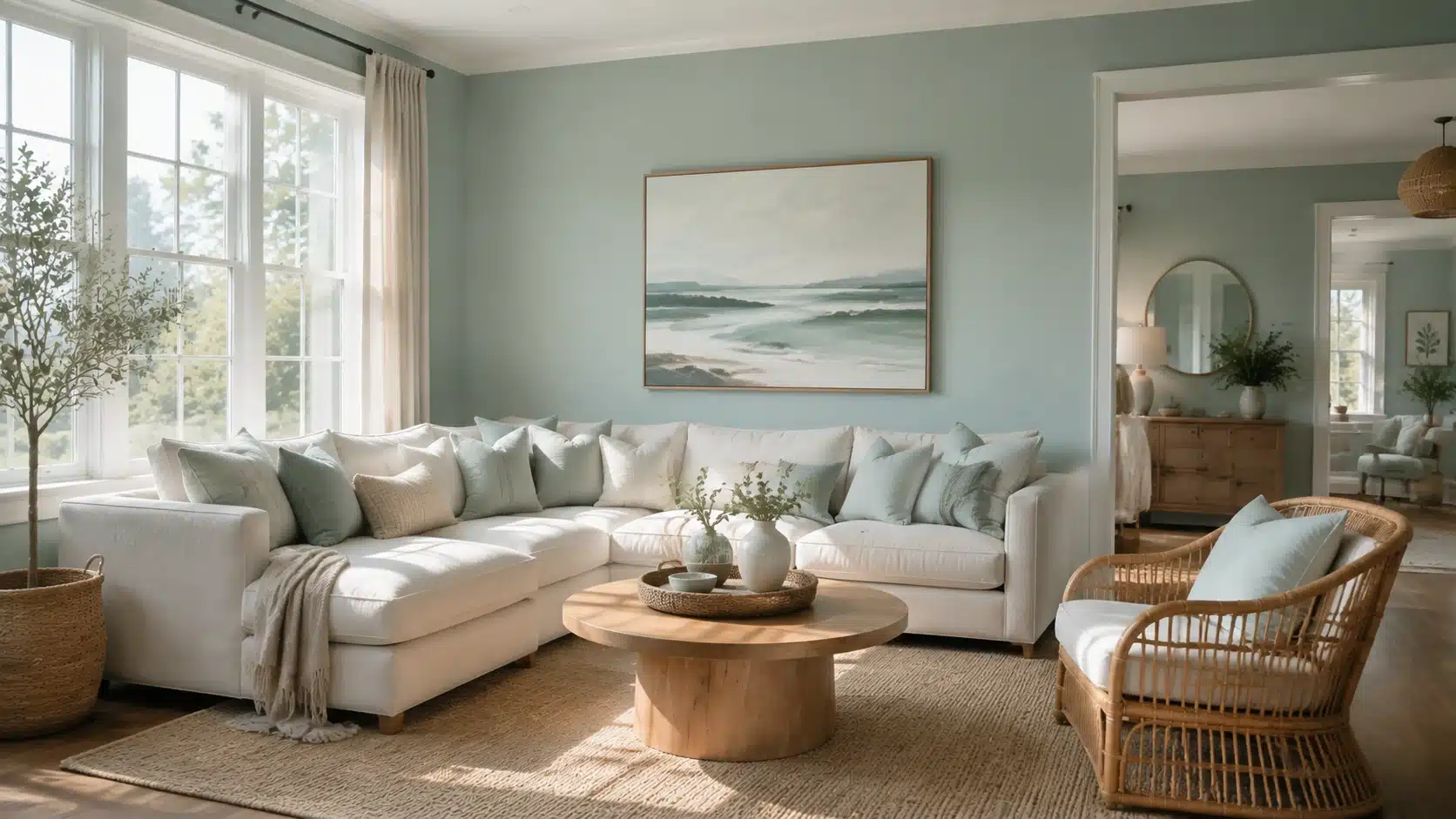
This shade creates a relaxed, easygoing backdrop that works well with natural textures like linen, rattan, and light wood tones. It is calm enough to live with daily without feeling monotonous.
- In larger living rooms with plenty of natural light, it can anchor the whole space without competing with furniture or artwork.
- It also works well on a single accent wall for those who want the color without committing to a full room.
2. Bedrooms with Benjamin Moore Beach Glass
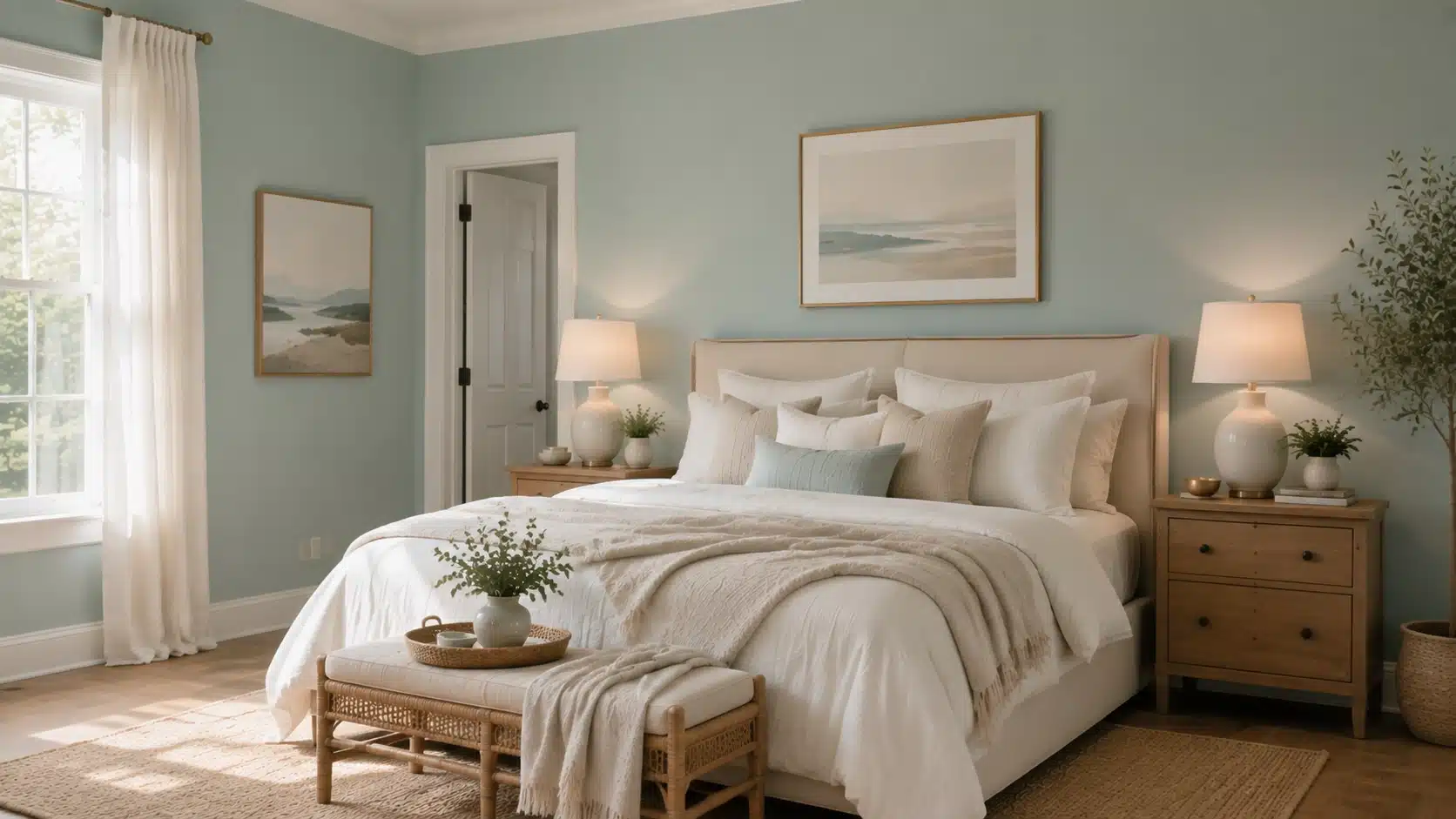
Because it leans more toward soothing than energizing, it is a popular bedroom choice. Pairing it with soft white or warm cream bedding helps balance its cooler undertone.
- It tends to work best in bedrooms that get some natural light during the day, since darker bedrooms can make the color feel flatter and less restful.
- Layering in warm-toned nightstands or lamps also helps keep the room from feeling too cool at night.
3. Bathrooms with Benjamin Moore Beach Glass
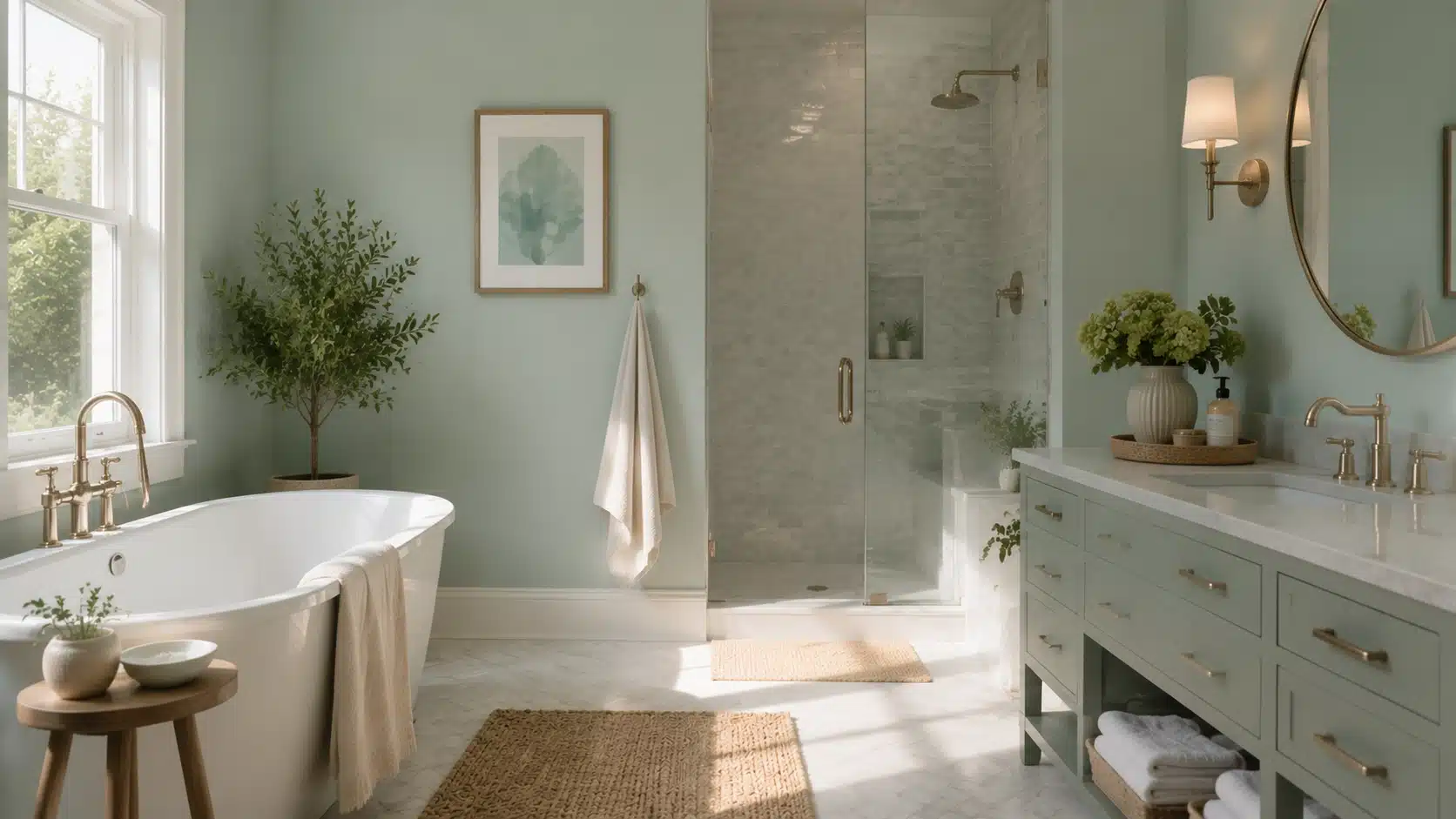
This is one of the most popular applications for the color, since its blue-green, water-inspired quality suits spa-style bathrooms especially well. It pairs naturally with white tile, marble, and brushed metal fixtures.
- Because bathrooms often rely more heavily on artificial lighting, it is worth testing the color under the room’s actual vanity lights before committing.
- This helps confirm whether it leans more blue or green once the sun goes down.
4. Kitchens with Benjamin Moore Beach Glass
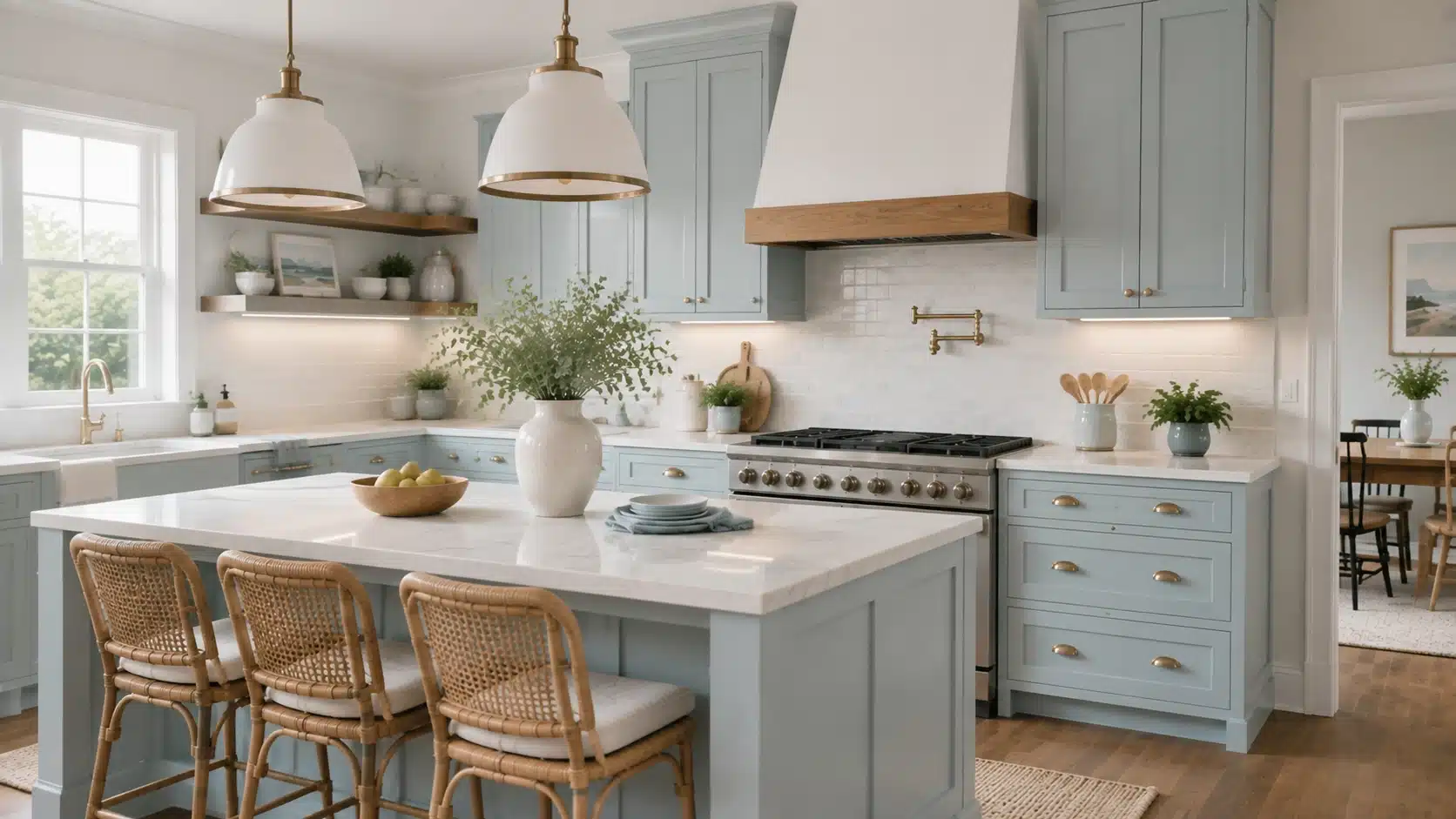
This shade also works as a cabinet color, particularly when the surrounding walls stay lighter and neutral. Warm hardware finishes, such as brass or bronze, help offset its cool base.
- It also pairs well with butcher block or light wood countertops, which help balance out the coolness of the paint.
- For kitchens with limited natural light, keeping the walls a shade or two lighter than the cabinets helps the space feel open.
Colors That Pair Well with Benjamin Moore Beach Glass
The right trim and accent colors can make this shade feel warmer, cooler, brighter, or more grounded, depending on the look you’re going for.
Best White Trim Colors
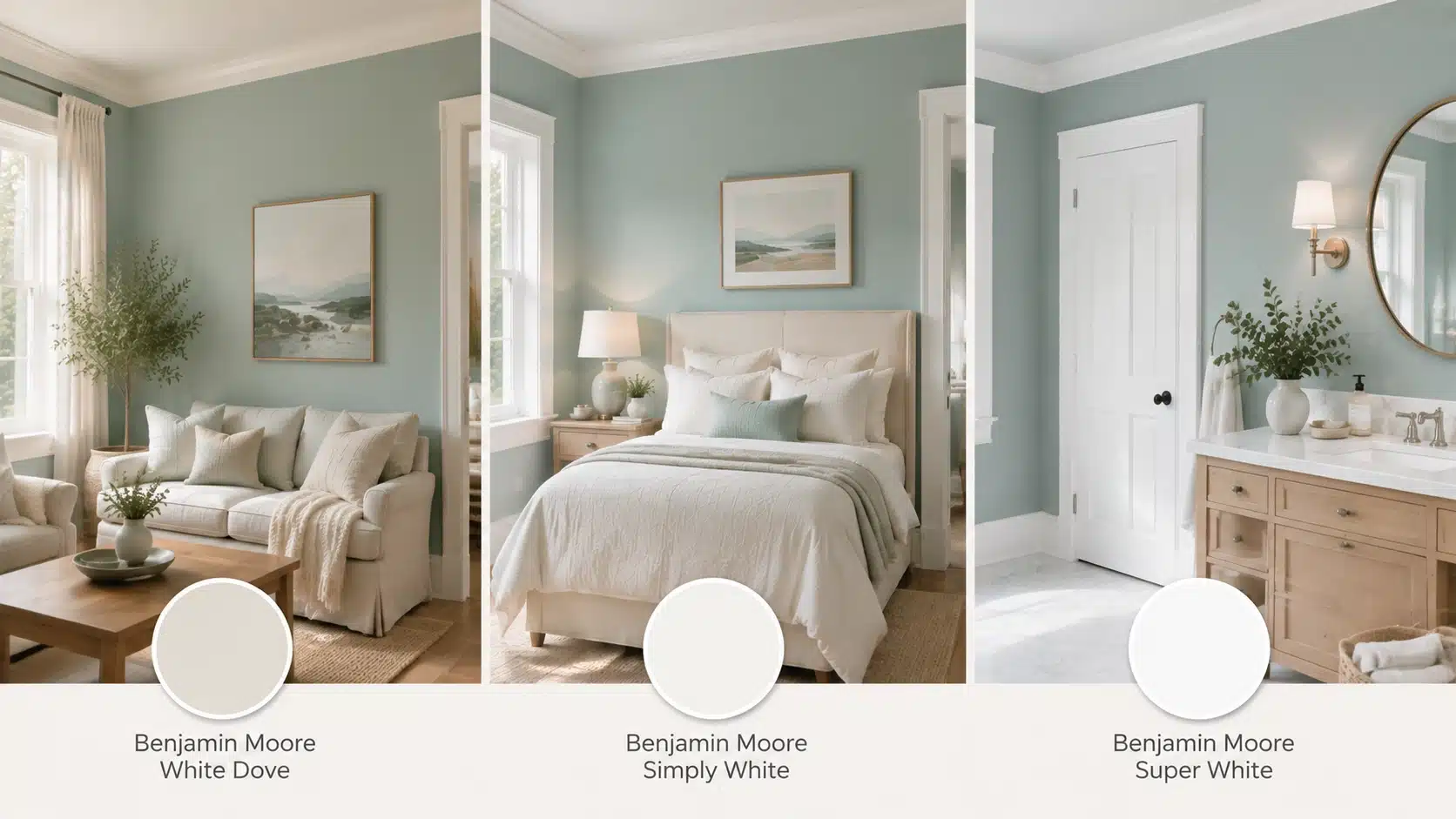
The right white trim can either soften the cool undertones of this shade or create a sharper contrast around doors, windows, and architectural details.
- Benjamin Moore White Dove: Adds warmth and prevents the overall palette from feeling too cool.
- Benjamin Moore Simply White: Creates a cleaner, crisper contrast against the blue-green walls.
- Benjamin Moore Super White: Gives the room a more modern, high-contrast finish.
Benjamin Moore’s coordinating suggestions also include whites such as Snow White OC-66 and Super White OC-152, giving you additional options for creating a balanced color scheme.
Overall, the best trim color depends on how much contrast you want. Softer whites create a warmer transition, while crisp whites highlight the wall color’s blue-green character.
Best Accent Colors for Benjamin Moore Beach Glass
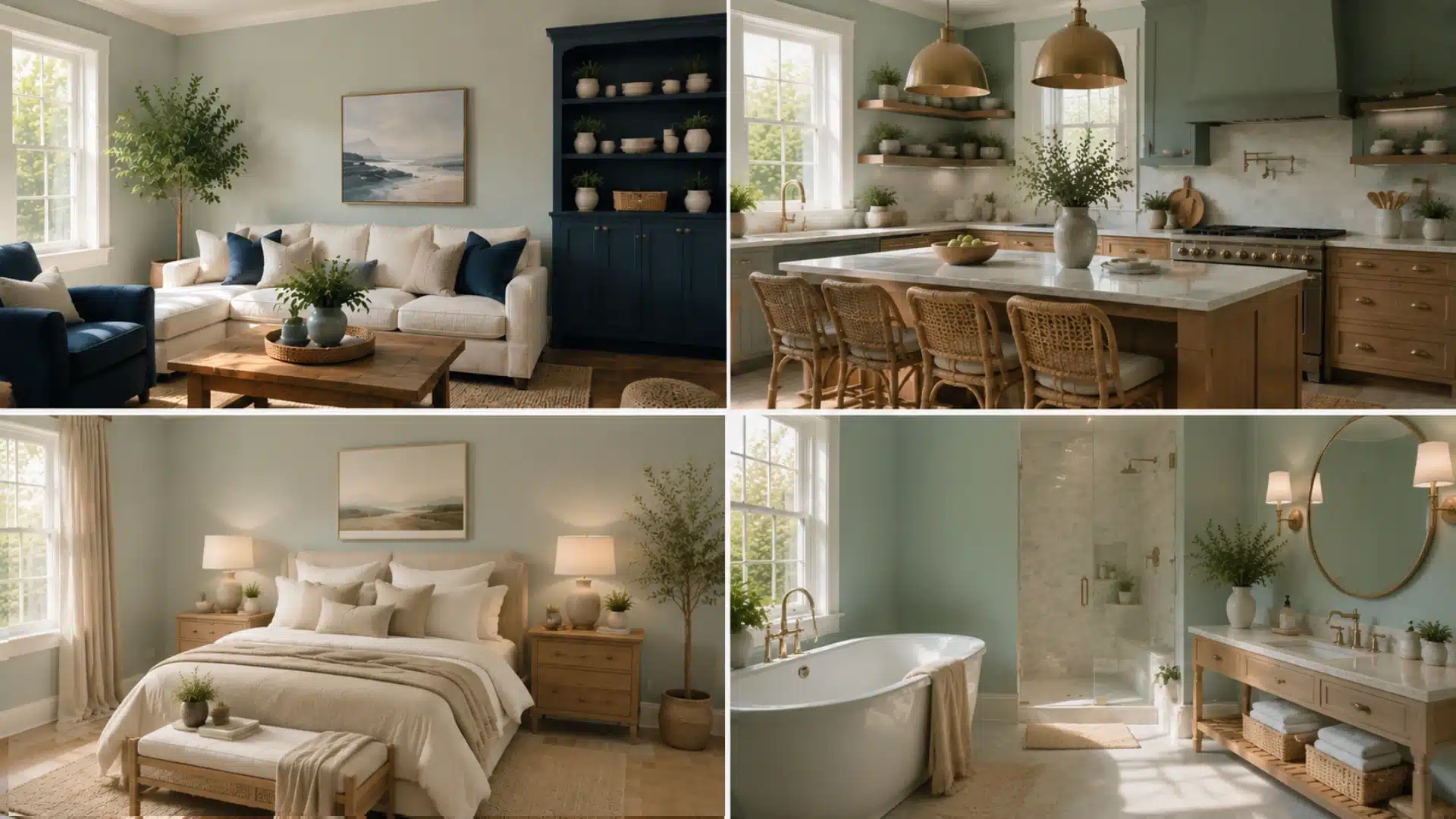
Choosing the right accent colors can help this cool-toned shade feel more balanced and connected to the rest of the room.
The best pairings either add warmth, create subtle contrast, or build on its soft coastal character.
-
Navy Blue: Adds depth and a bit of drama without clashing with the cooler base tone.
-
Warm wood tones: Balance the cool undertones and keep the space from feeling sterile.
-
Soft beige and greige: Create a quiet, layered coastal palette that feels soft and cohesive.
-
Natural greens: Reinforce the organic, sea-glass feel of the color and work especially well with plants and natural materials.
Overall, these accent colors help bring out different sides of the shade. Navy creates contrast, wood adds warmth, and softer neutrals and greens keep the palette calm and natural.
Benjamin Moore Beach Glass Compared with Similar Colors
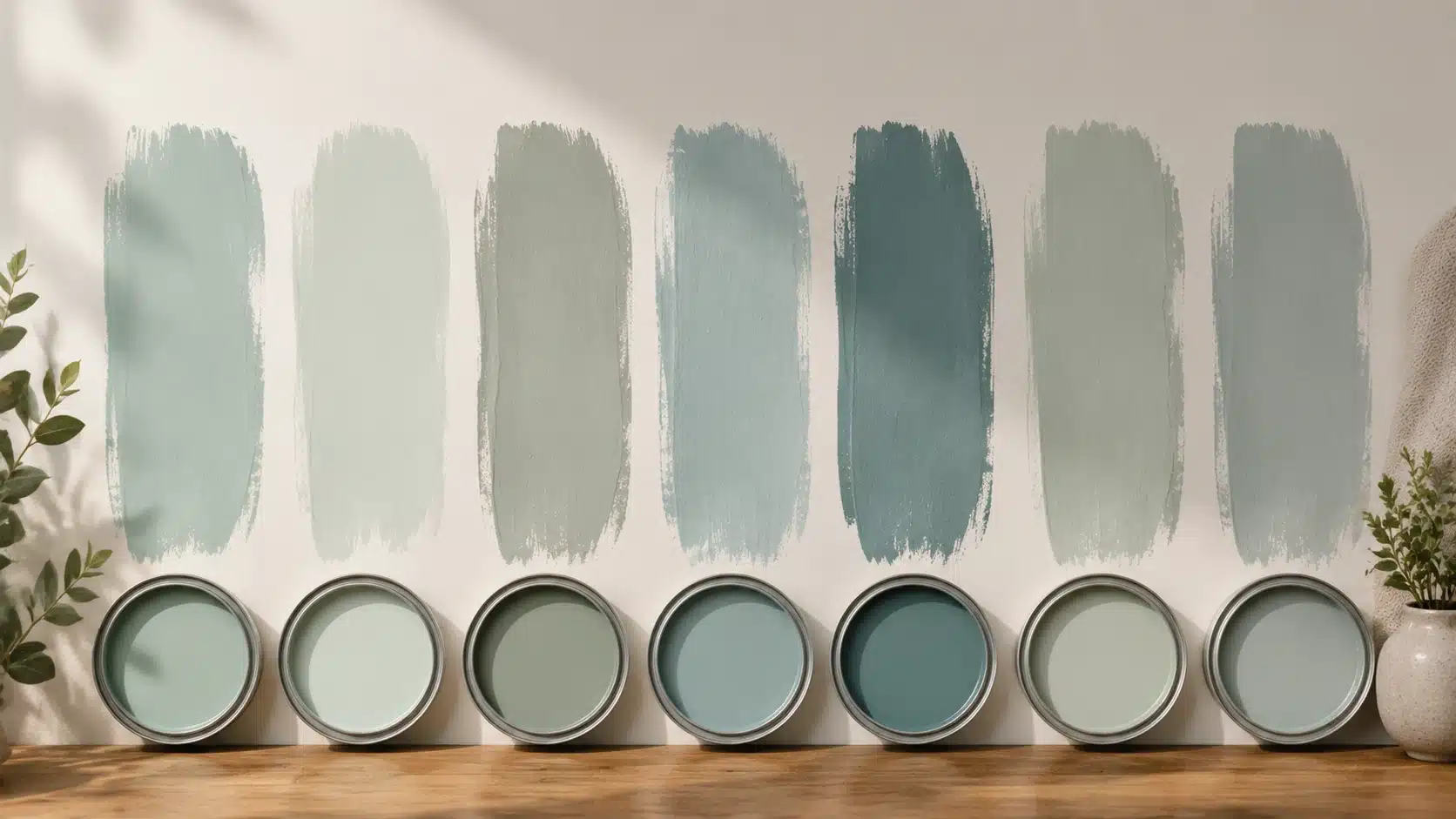
Beach Glass has good company among other Benjamin Moore blue-greens, and seeing how it stacks up can help confirm it’s the right fit before buying a sample.
| Paint color | Difference from Beach Glass |
|---|---|
| Benjamin Moore Quiet Moments | Lighter and slightly softer, with a higher LRV near 61 |
| Benjamin Moore Healing Aloe | More muted and gray overall |
| Benjamin Moore Palladian Blue | Brighter and more clearly blue |
| Benjamin Moore Mount Saint Anne | Deeper and more saturated |
| Benjamin Moore Night Mist | Leans more green-gray and reads slightly lighter |
| Benjamin Moore Iced Marble | Very close in tone and often used as a match |
Of all these options, Beach Glass still stands out for its balance. It is neither as light as Quiet Moments nor as saturated as Mount Saint Anne, which is part of why it remains such a versatile, easy-to-live-with choice.
What Not to Use with Benjamin Moore Beach Glass
- Choosing it without testing samples: Screen colors and in-store chips rarely match how a paint color behaves on an actual wall. A physical sample tested at home is the only reliable way to judge it.
- Using too many cool colors: Pairing this color with an entirely cool-toned room, including cool grays, cool whites, and chrome fixtures, can make the space feel cold rather than calm.
- Ignoring lighting direction: Because it sits at a mid-range LRV, the room’s light exposure has an outsized effect on how the color reads throughout the day.
- Pairing it with the wrong whites: Some stark, blue-based whites can make the color look flatter and more blue-gray than intended. Warmer whites tend to soften that effect.
Is Benjamin Moore Beach Glass a Good Paint Color?
Overall, Beach Glass earns its popularity. It suits many homes and styles, though like any mid-tone color, it rewards some planning around lighting and trim choices.
| Pros | Cons |
|---|---|
| Calm and versatile across multiple design styles | Can shift noticeably depending on the room’s lighting |
| Softer and more livable than a traditional bold blue | May feel too cool in rooms with limited natural light |
| Works well with both warm and cool accent colors | Requires more careful trim selection than a true neutral |
| Adds color to a room without overwhelming it | Can look different across an open floor plan with varied light |
In the end, Beach Glass remains a dependable, versatile choice for homeowners seeking a calm, coastal-inspired color that adapts to nearly any room, style, or lighting condition.
Testing at Different Times of Day
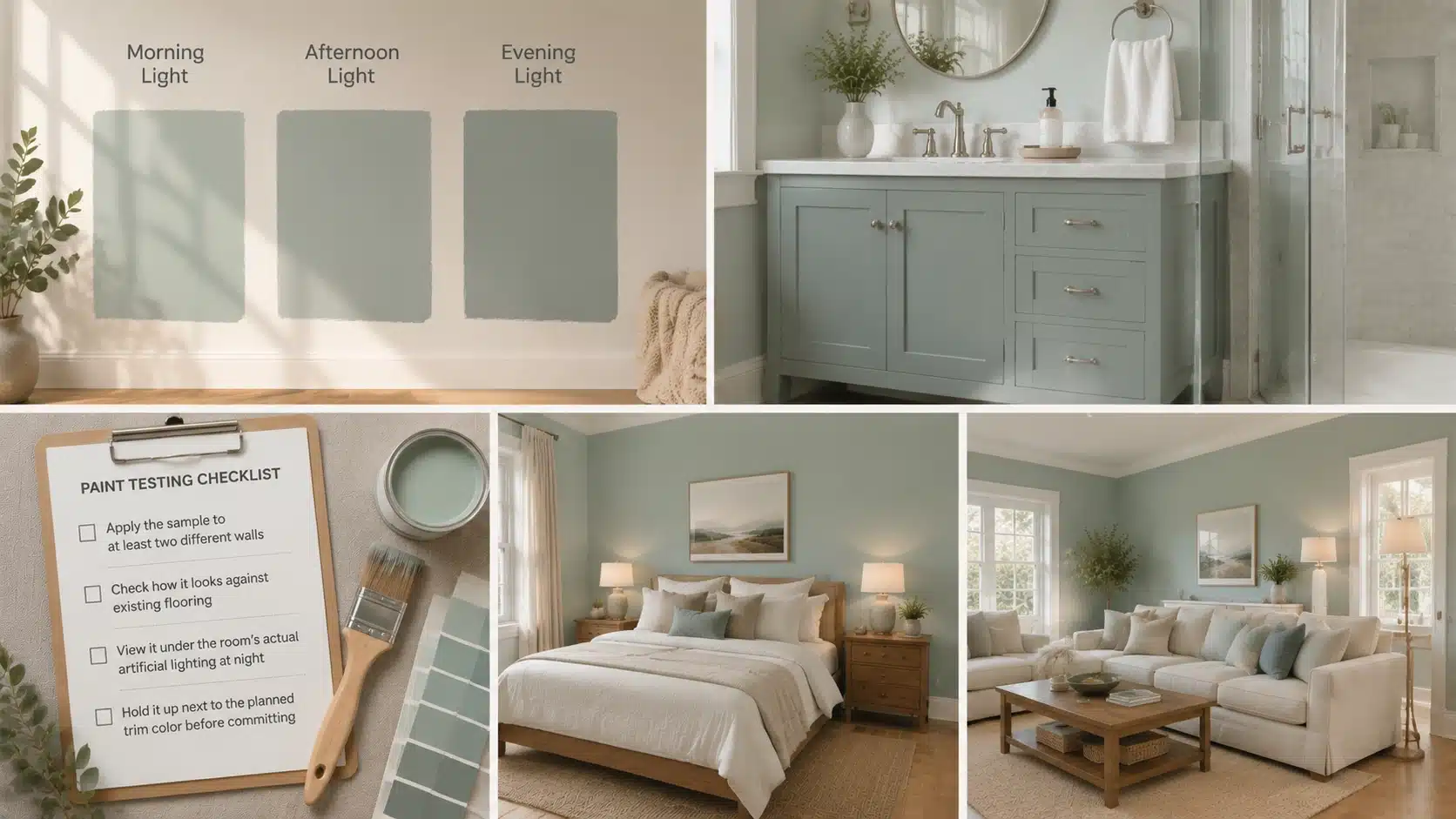
Paint behaves differently under morning, afternoon, and evening light.
Morning light tends to bring out the cooler blue-gray side of this shade, midday sun softens it toward green, and evening artificial light can deepen it slightly.
Viewing a sample across all three helps avoid surprises after the whole room is painted.
Real home application examples
- A Beach Glass bathroom vanity paired with brushed nickel hardware
- A single Beach Glass accent wall behind a bed with warm wood furniture
- Living room walls in Beach Glass paired with oak floors and linen upholstery
Frequently Asked Questions
Is Benjamin Moore Beach Glass Warm or Cool?
It leans cool overall, thanks to its gray and blue undertones, though warm natural light can bring out softer green notes throughout the day.
What is the LRV of Benjamin Moore Beach Glass?
Benjamin Moore Beach Glass 1564 has an LRV of 49.7, placing it in the medium range of the light reflectance scale.
Does Benjamin Moore Beach Glass Look Green?
It can, particularly in warm, direct sunlight, but most homeowners describe it as a muted blue-green rather than a true green.
What White Goes Best with Benjamin Moore Beach Glass?
White Dove, Simply White, Snow White, and Super White are all strong options, depending on whether the goal is warmth or crisp contrast.
Is Benjamin Moore Beach Glass Good for a Bathroom?
Yes. Its soft, water-inspired blue-green tone pairs especially well with white tile, marble, and spa-style design details.
Making Beach Glass Work in Your Home
Benjamin Moore Beach Glass is the rare paint color that never quite settles, it shifts with the morning light, changes when a lamp turns on, and responds to every piece of furniture placed nearby.
That quiet unpredictability is exactly what makes it worth living with. Test it on two walls, check it at different times of day, and pair it with a warm white trim before committing.
Do that, and Beach Glass tends to earn its place on the wall, not just for one season, but for years.