

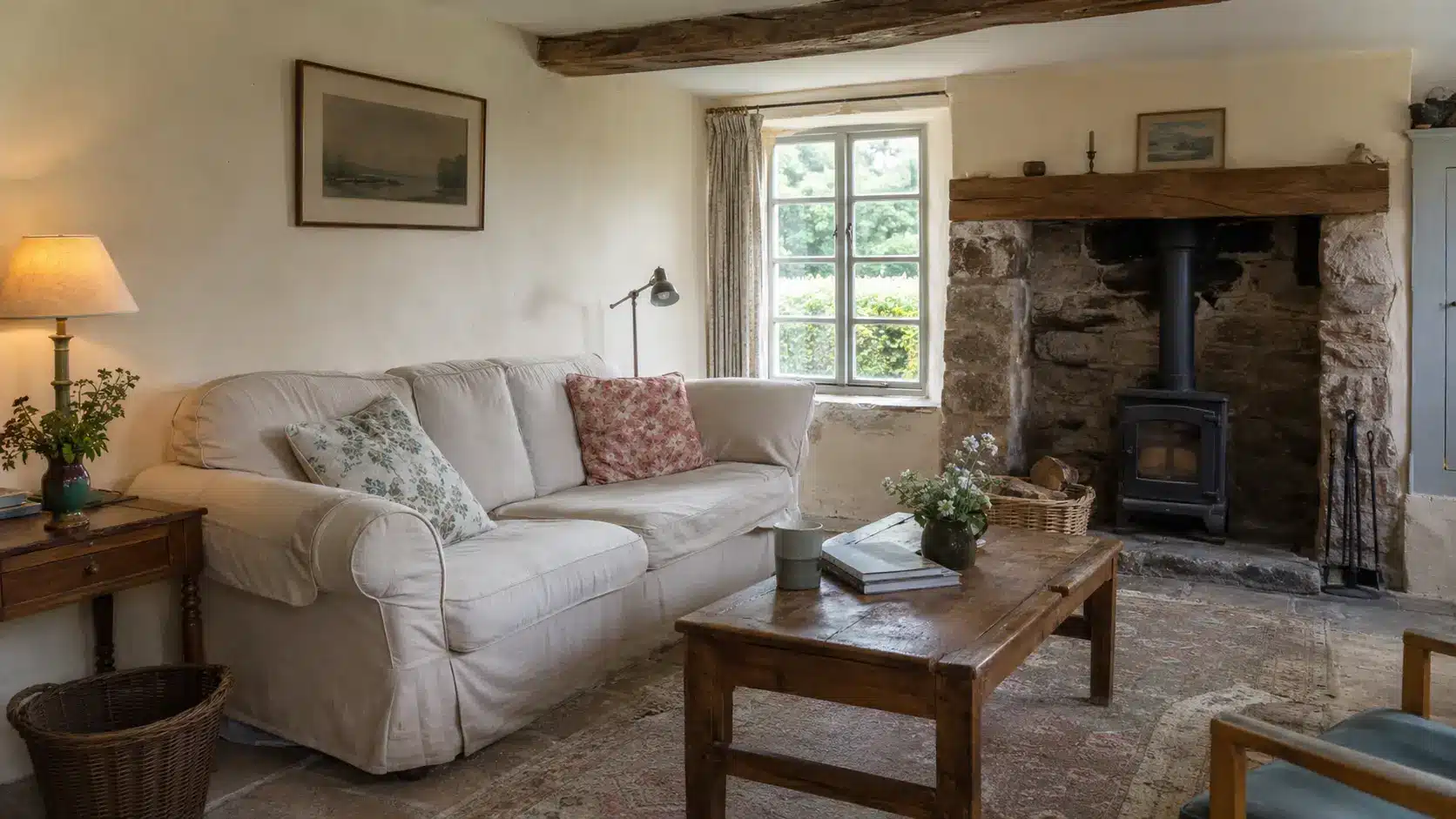


A worn armchair next to a wooden side table. Floral curtains paired with striped cushions. Old ceramics mixed in with newer finds.
None of it matches perfectly, and that gentle mismatch is exactly what gives English cottage style its warmth.
You don’t need a countryside cottage or a professional stylist to get this look right. A few simple choices in your own home can bring that same feeling to life.
Here are easy ways to bring English cottage style into an American home, no big budget or full renovation required
What is English Cottage Style?
English cottage style is a design approach based on the small, rural homes found across the English countryside, built around warm colors, natural materials, and furniture collected over time rather than bought as a matching set.
The look favors comfort and character over polish, with rooms that feel gathered instead of designed all at once. Floral patterns, aged wood, and soft, layered fabrics are signature elements of the style.
The style traces back to centuries-old thatched cottages, where practical materials and small footprints shaped both the exterior and interior.
That history still shows up today in the low ceilings, deep window sills, and cozy proportions that many cottage-inspired homes borrow from the original, setting them apart from softer, more romantic looks like French cottage style.
13 Ideas to Bring English Cottage Style Into Your Home
These ideas cover the furniture, materials, and details that make this style recognizable, without requiring a full renovation.
1. Exposed Wood Beams
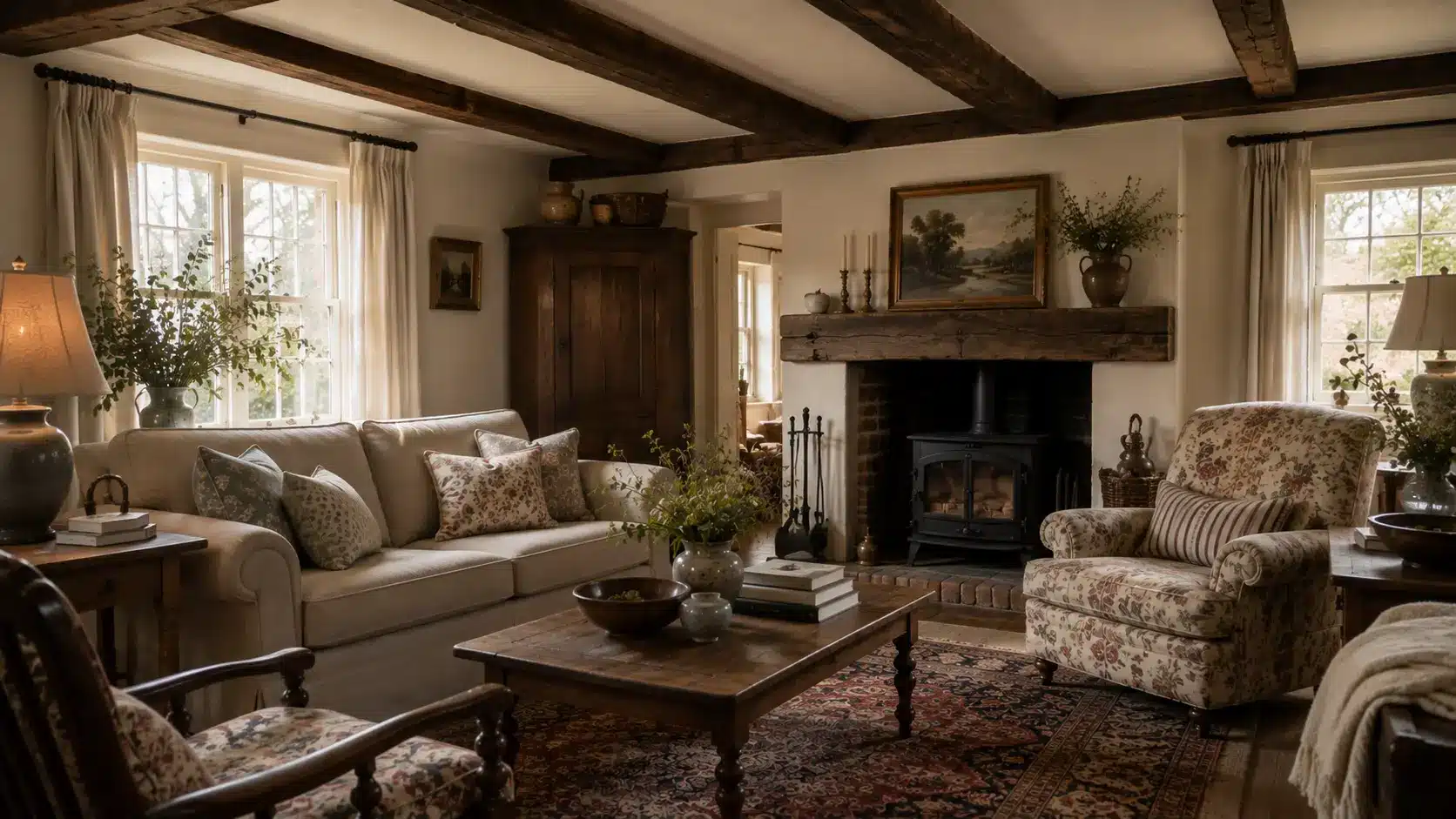
Real or faux beams across a ceiling instantly signal age and character. Faux beams work well in most American homes where original timber framing was never part of the construction.
A darker stain tends to read as more authentic than a light, raw wood finish. Pairing the beams with a lighter ceiling color also helps them stand out rather than blend into the room.
Best for: living rooms, kitchens, and dining rooms with higher ceilings.
2. A Stone or Brick Fireplace
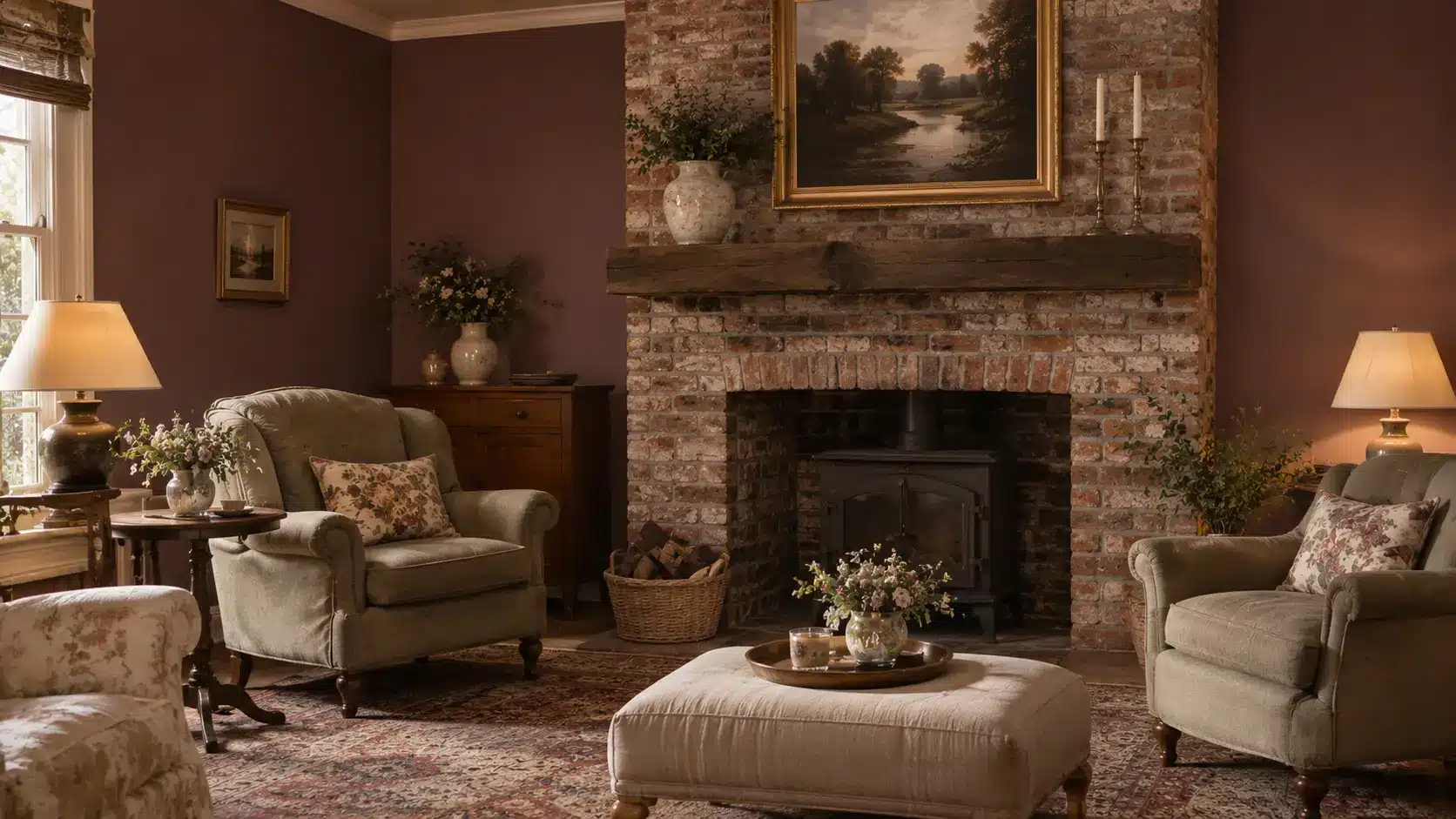
A fireplace wall in natural stone or brick gives a room an anchor point. Even a painted brick surround can suggest the same weight and history.
Leaving some of the natural texture exposed rather than fully smoothing it over keeps the rustic feel intact. A wood mantel on top adds a warmer contrast against the stone or brick.
Best for: living rooms and family rooms used as the main gathering space.
3. Mixed Florals and Patterns
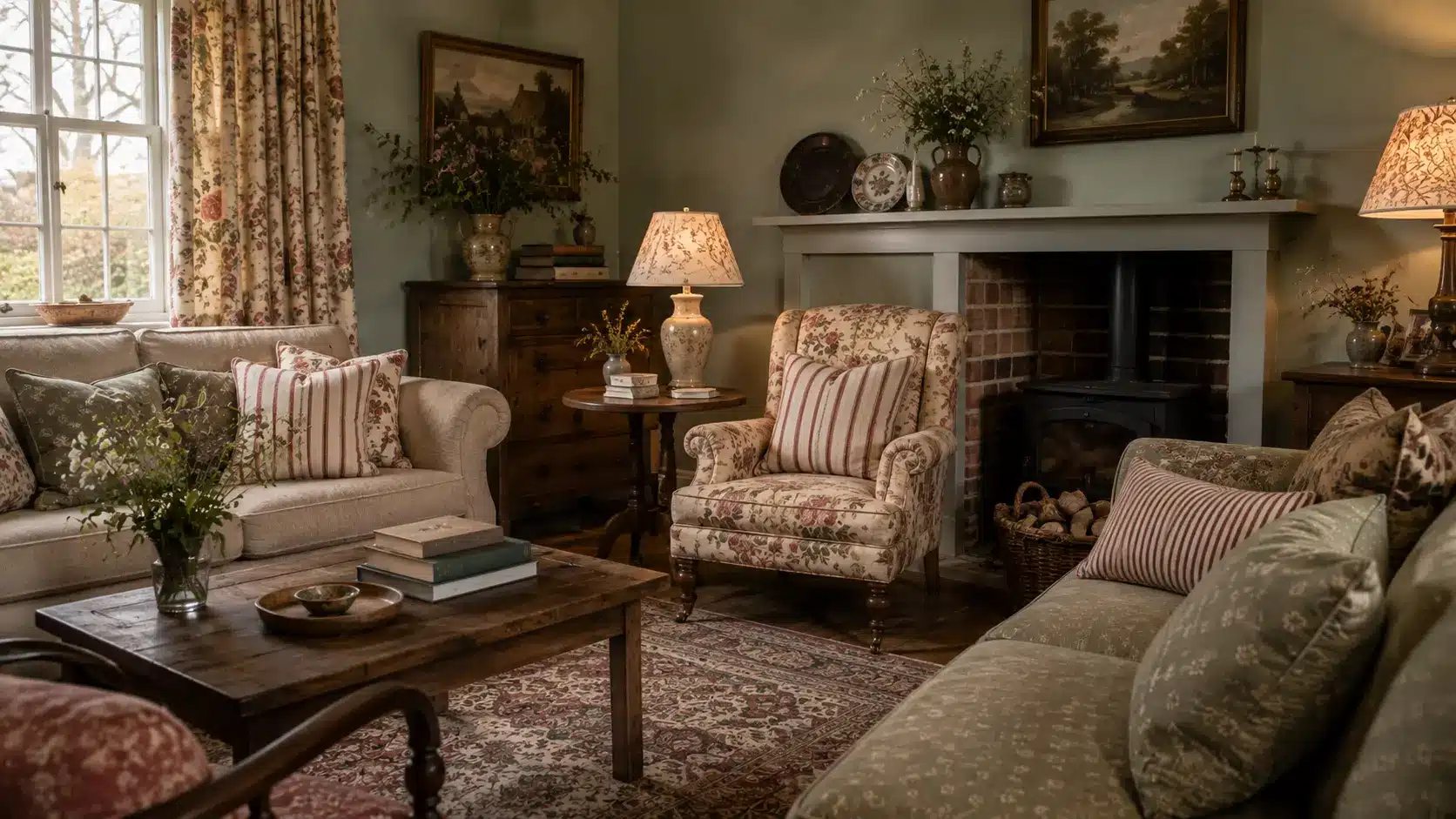
Chintz, ticking stripes, and small florals layered together are a hallmark of the look. Committing to one dominant pattern across curtains and a chair keeps the mix from feeling chaotic.
Adding a second, smaller-scale pattern on pillows or a lampshade builds depth without overwhelming the room. Keeping the color palette consistent across patterns is what makes the mixed patterns feel intentional rather than random.
Best for: living rooms, bedrooms, and reading nooks.
4. Antique or Vintage Furniture
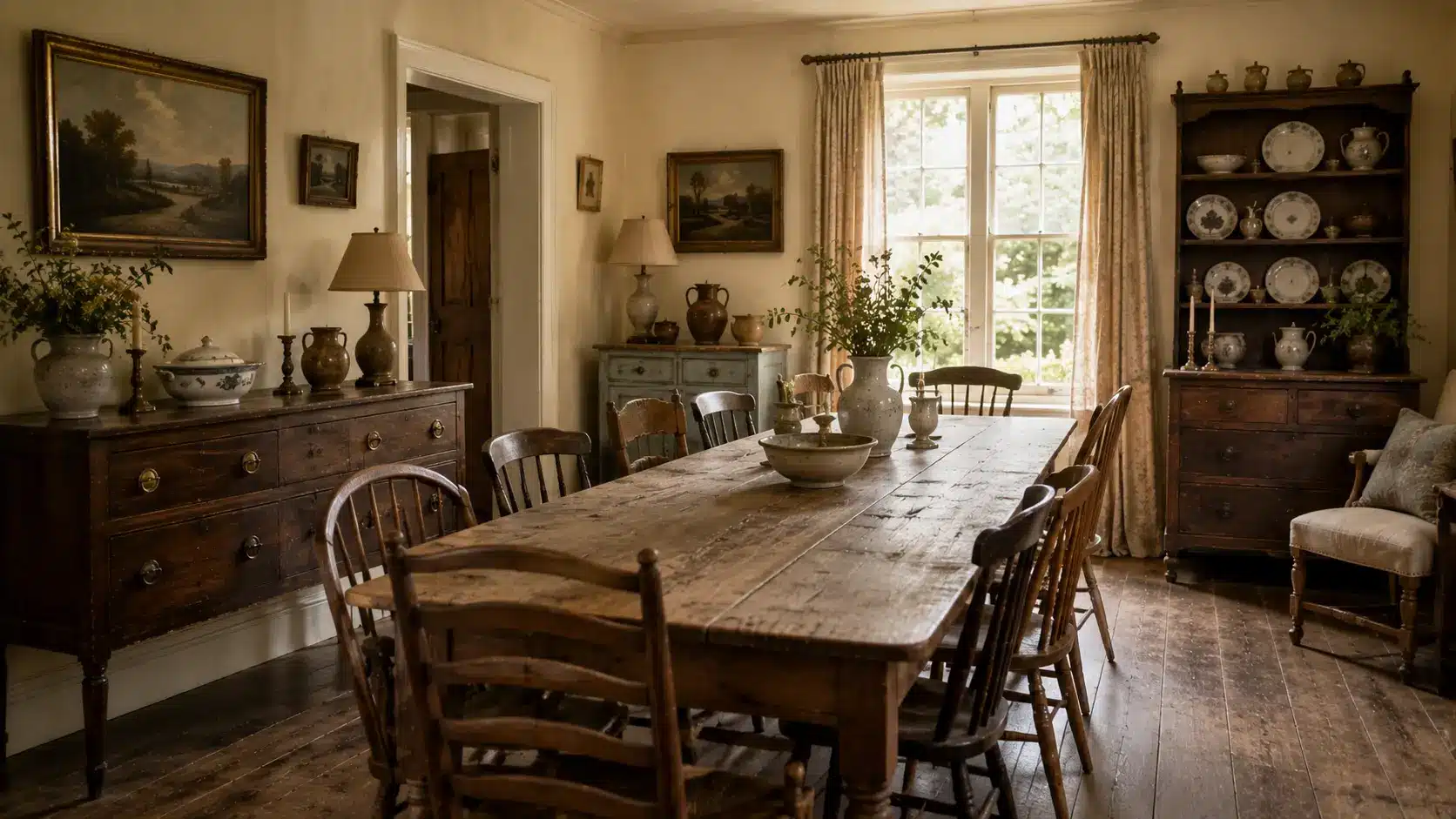
A weathered dresser, a vintage armchair, or an old farmhouse table gives the room instant history. Pieces with visible wear tend to read as more authentic than brand-new ones.
Mixing furniture from different decades adds to the collected feel, building a vintage room works best when pieces share a general tone rather than a matching set.
Estate sales, thrift stores, and vintage marketplaces are reliable places to find these pieces.
Best for: bedrooms, dining rooms, and entryways.
5. A Roll-Arm Sofa
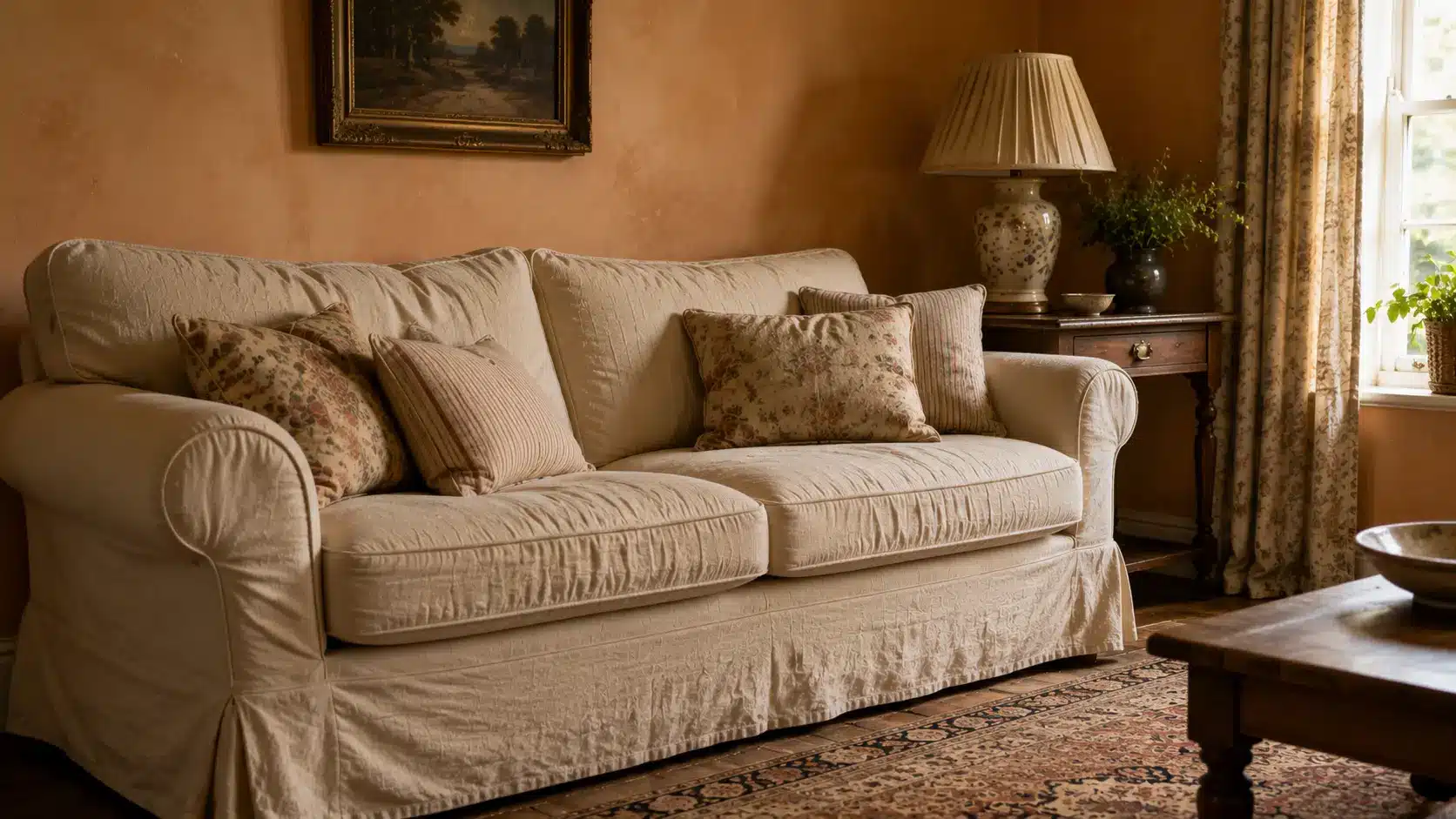
The rounded, rolled arm is one of the most recognizable features of this style. It pairs naturally with linen slipcovers or a soft floral.
A slightly worn or loose-fit slipcover looks more at home in this style than a tightly upholstered, brand-new finish. Adding a few well-chosen throw pillows on top completes the look without extra cost.
Best for: living rooms and sunrooms.
6. Wicker and Rattan Accents
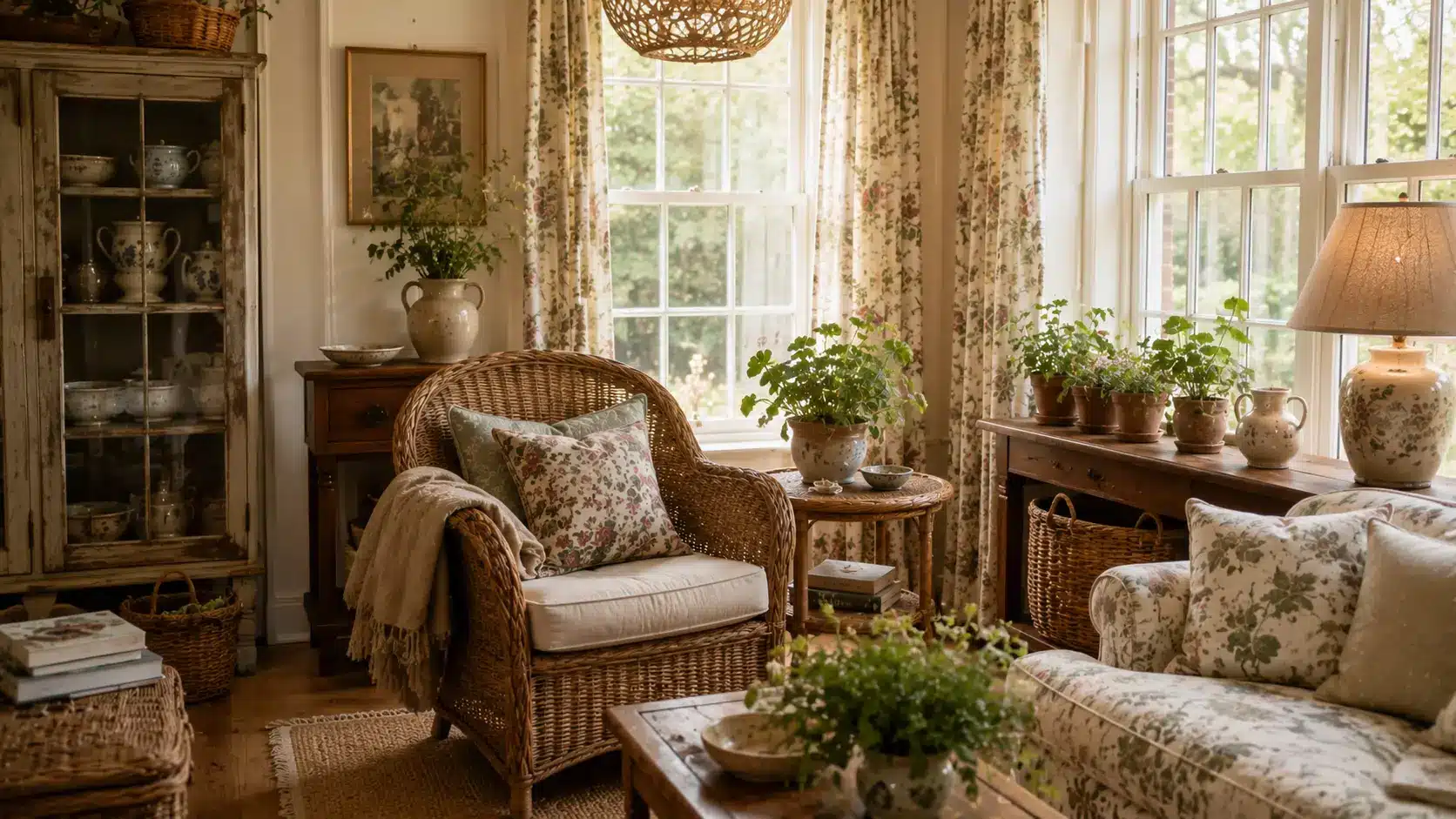
A wicker chair, basket, or side table softens the formality of antique wood pieces. It also brings in a natural texture that contrasts nicely with heavier furniture.
Using wicker baskets for everyday storage adds both function and texture. A rattan headboard or mirror frame can bring the same softness into a bedroom.
Best for: sunrooms, bedrooms, and entryways.
7. Layered Persian or Oriental Rugs
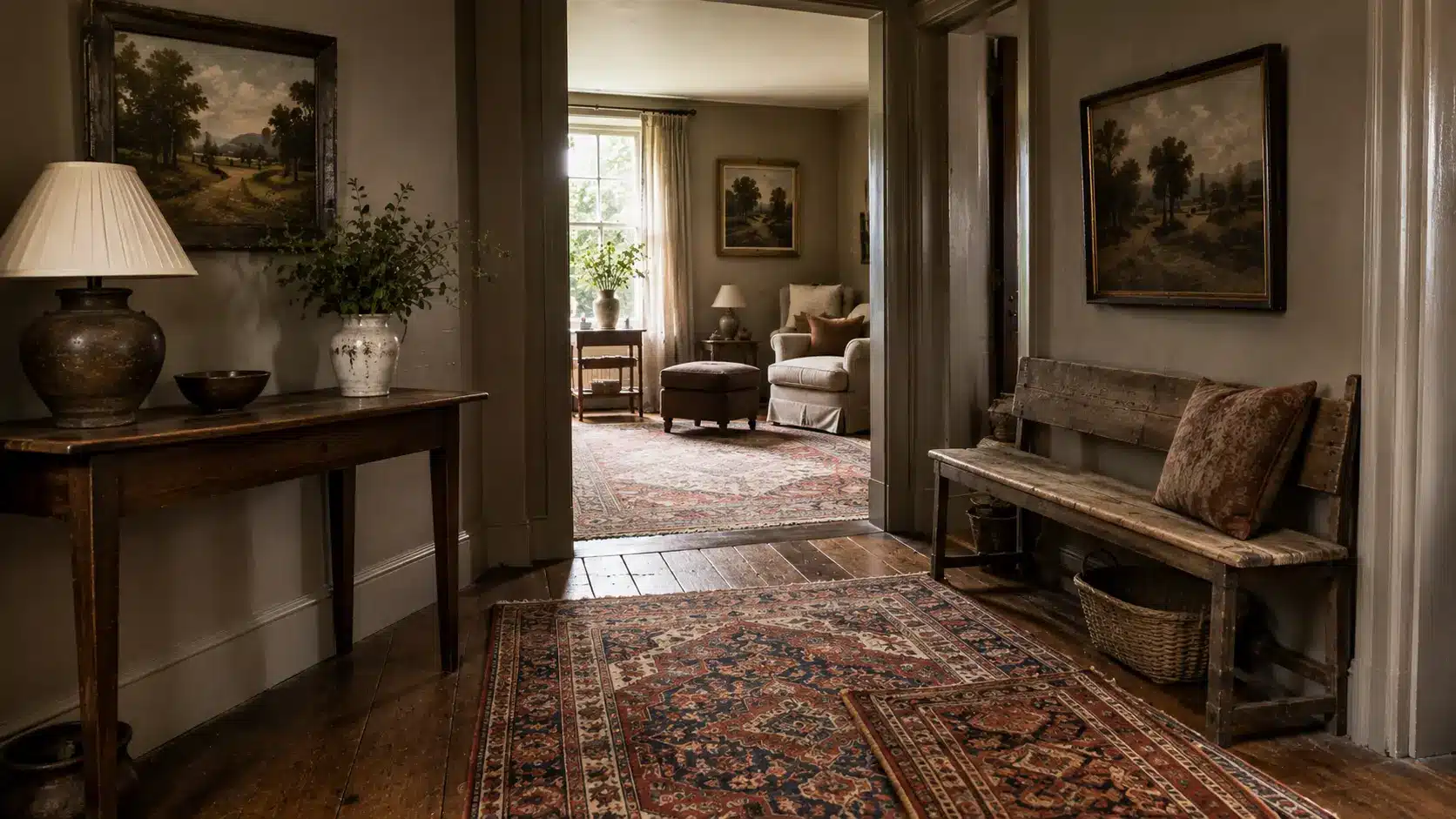
A worn-in rug, ideally one that looks like it has been in the family for years, is often the easiest place to start building a color palette. Repeating a color from the rug elsewhere in the room ties everything together.
Layering a smaller rug over a larger one adds depth and visual interest underfoot. Vintage and overdyed rugs both work well if a true antique is out of budget.
Best for: living rooms, dining rooms, and hallways.
8. A Soft, Earthy Color Palette
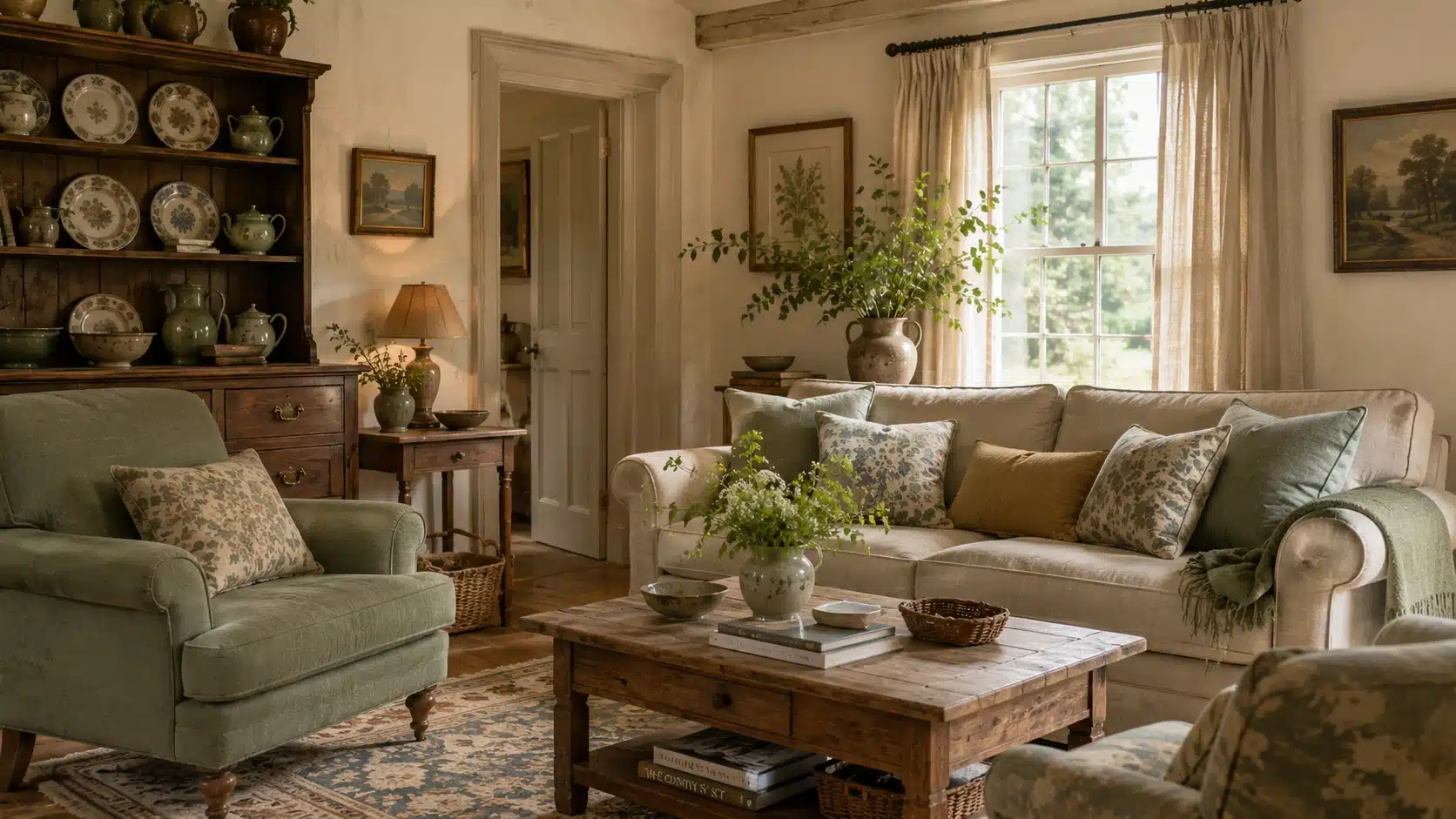
Soft creams, sage and moss greens, dusty blues, and warm ochre accents form a reliable starting palette. These colors read as pulled from the landscape rather than trend-driven.
Using a single accent color across two or three rooms helps the whole home feel connected. Keeping wall colors muted lets patterned textiles and furniture stand out instead of competing with a bold backdrop.
Best for: whole-home color planning, starting with the most-used rooms.
9. Linen and Wool Textiles
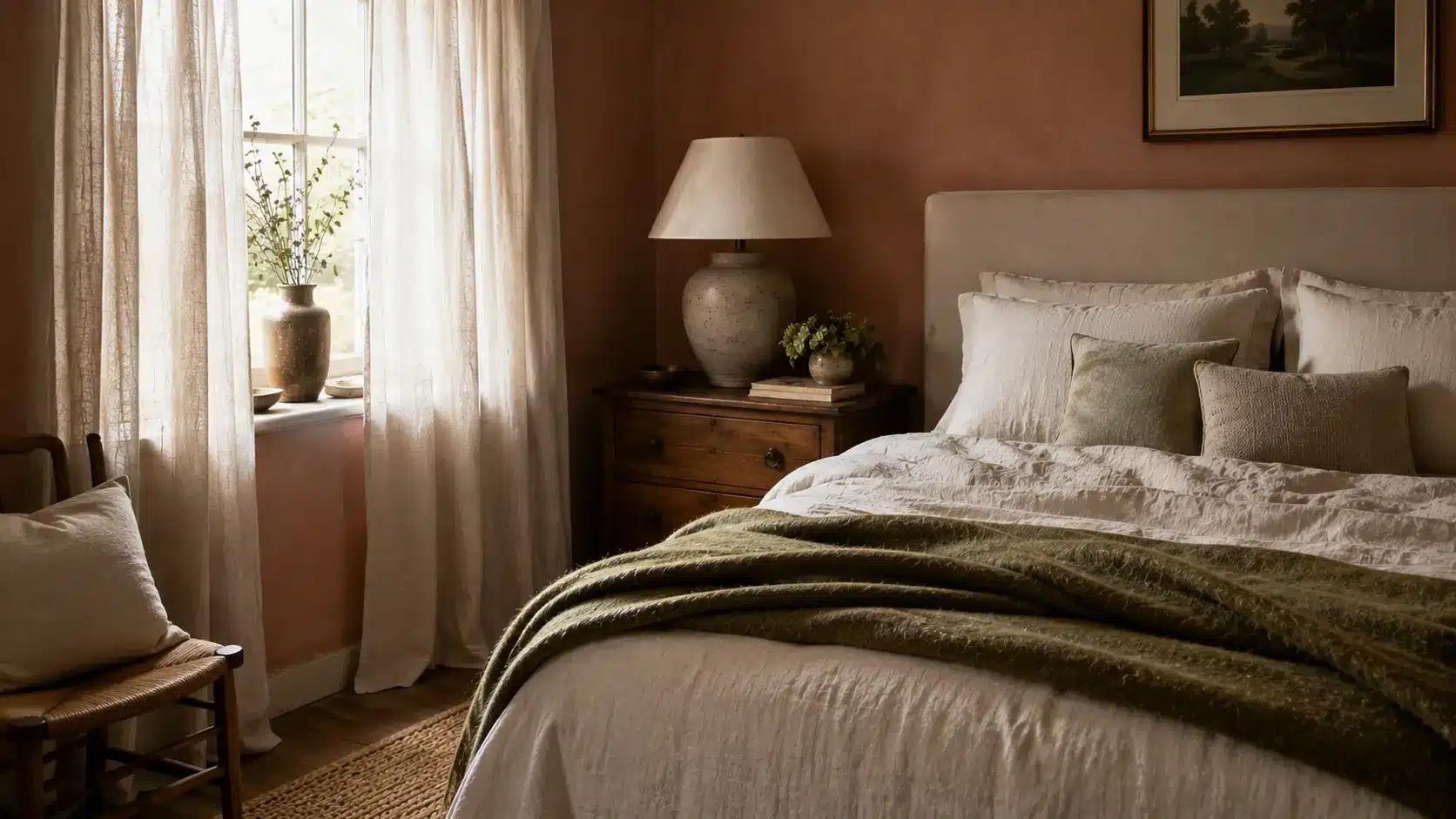
Linen curtains, wool throws, and cotton slipcovers bring in the tactile, practical materials this style is known for. These fabrics also hold up well to daily use, which fits the lived-in feel.
Linen, in particular, softens and looks better with age, unlike synthetic fabrics that tend to look worn out rather than worn in. Layering a wool throw over a linen sofa adds texture without adding another pattern.
Best for: living rooms and bedrooms.
10. Open Kitchen Shelving
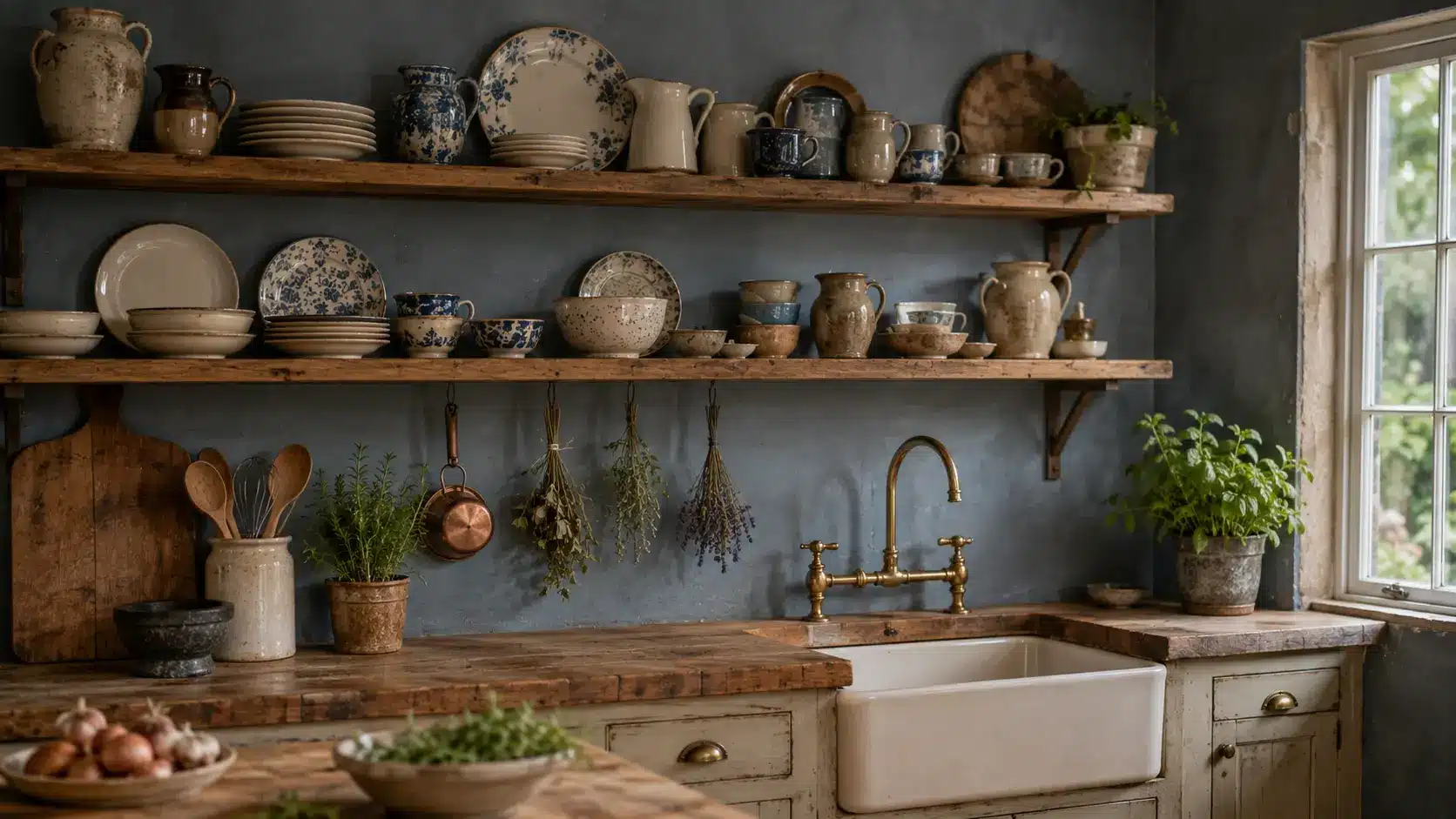
Open shelves holding mismatched but coordinated dishware give a kitchen a collected, unfussy look. A farmhouse sink and vintage-style hardware round out the effect.
Grouping dishware by color rather than by set makes an open shelf look curated, not cluttered. Hanging a few dried herbs or a small plant nearby adds a touch of garden to the space.
Best for: kitchens with at least a little extra wall space.
11. A Gallery Wall
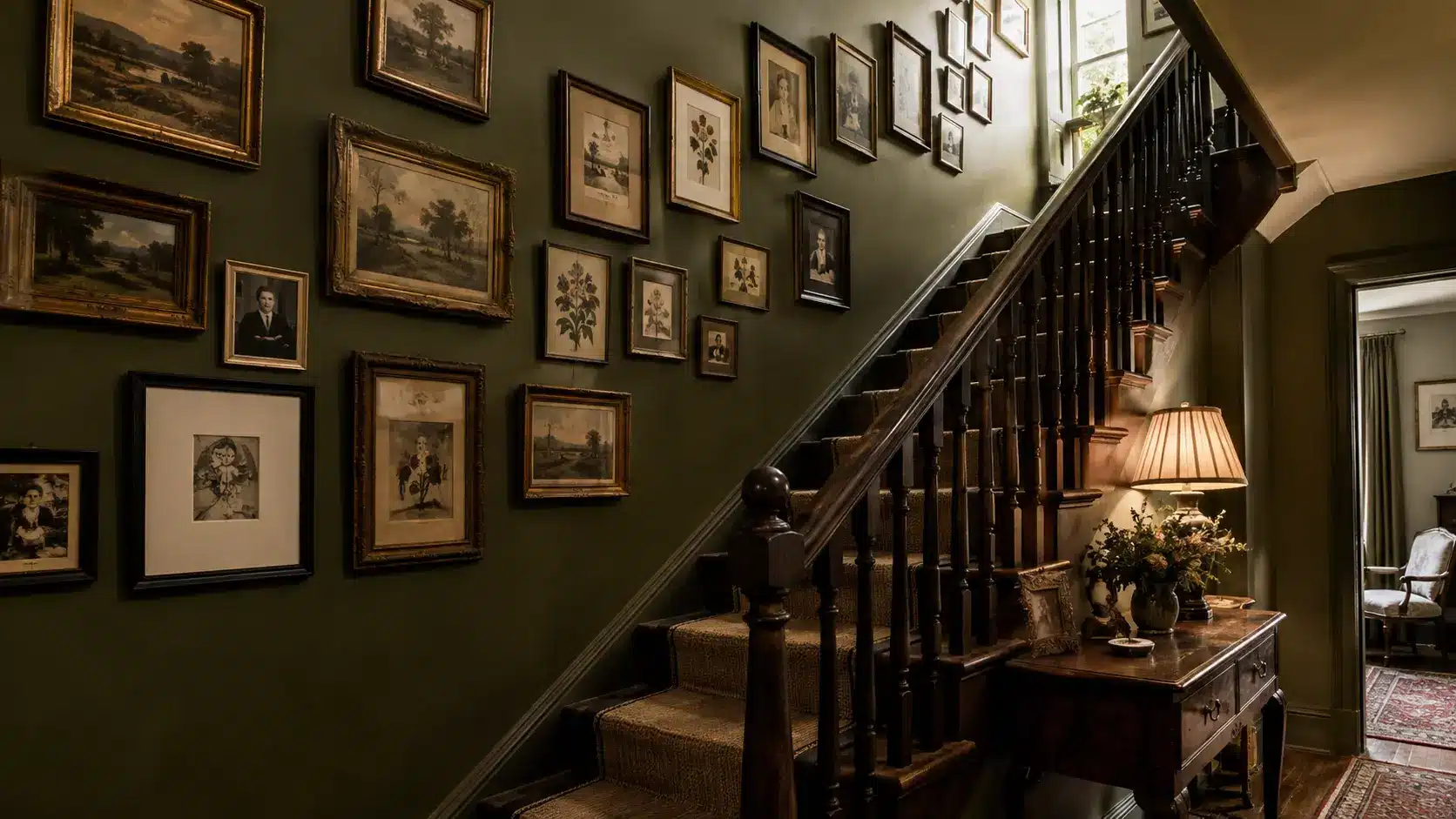
A wall of framed art, family photos, or botanical prints adds the layered, personal feel central to this style. Mixing frame styles and sizes looks more natural than a uniform grid.
Including a few personal or sentimental pieces alongside decorative art makes the wall feel more authentic. Leaving slightly uneven spacing between frames also helps it read as collected over time rather than professionally arranged.
Best for: staircases, hallways, and living room walls.
12. Garden-Inspired Touches
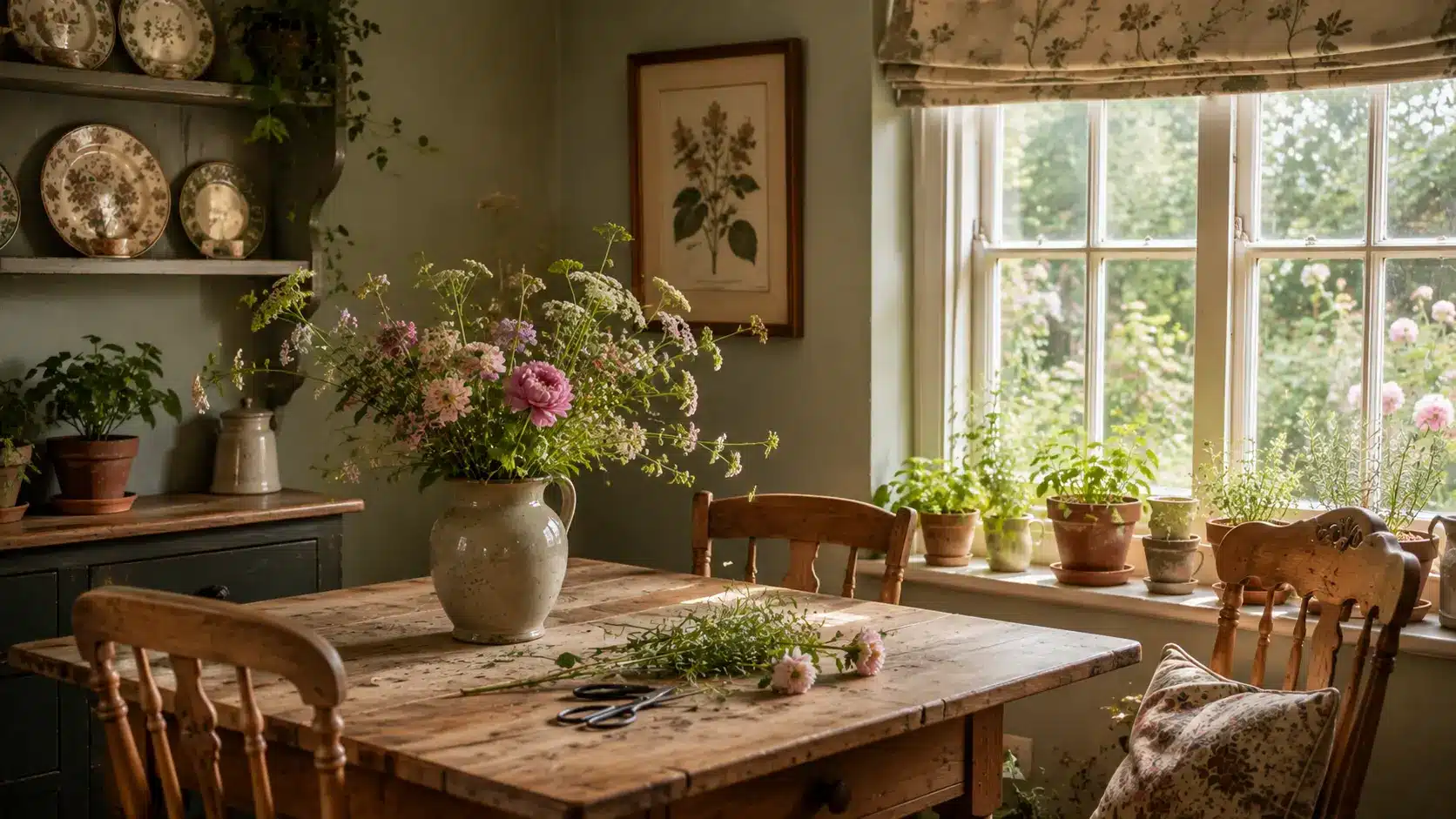
Fresh flowers in a simple ceramic jug, botanical wallpaper, or a small indoor herb garden all nod to England’s obsession with gardening.
Even a single vase of seasonal flowers goes a long way. Botanical prints on fabric or wallpaper bring the same feeling into a room year-round. A small collection of potted plants near a window also echoes the look of a cottage garden indoors.
Best for: kitchens, entryways, and sunrooms.
13. Layered Table Lamp Lighting
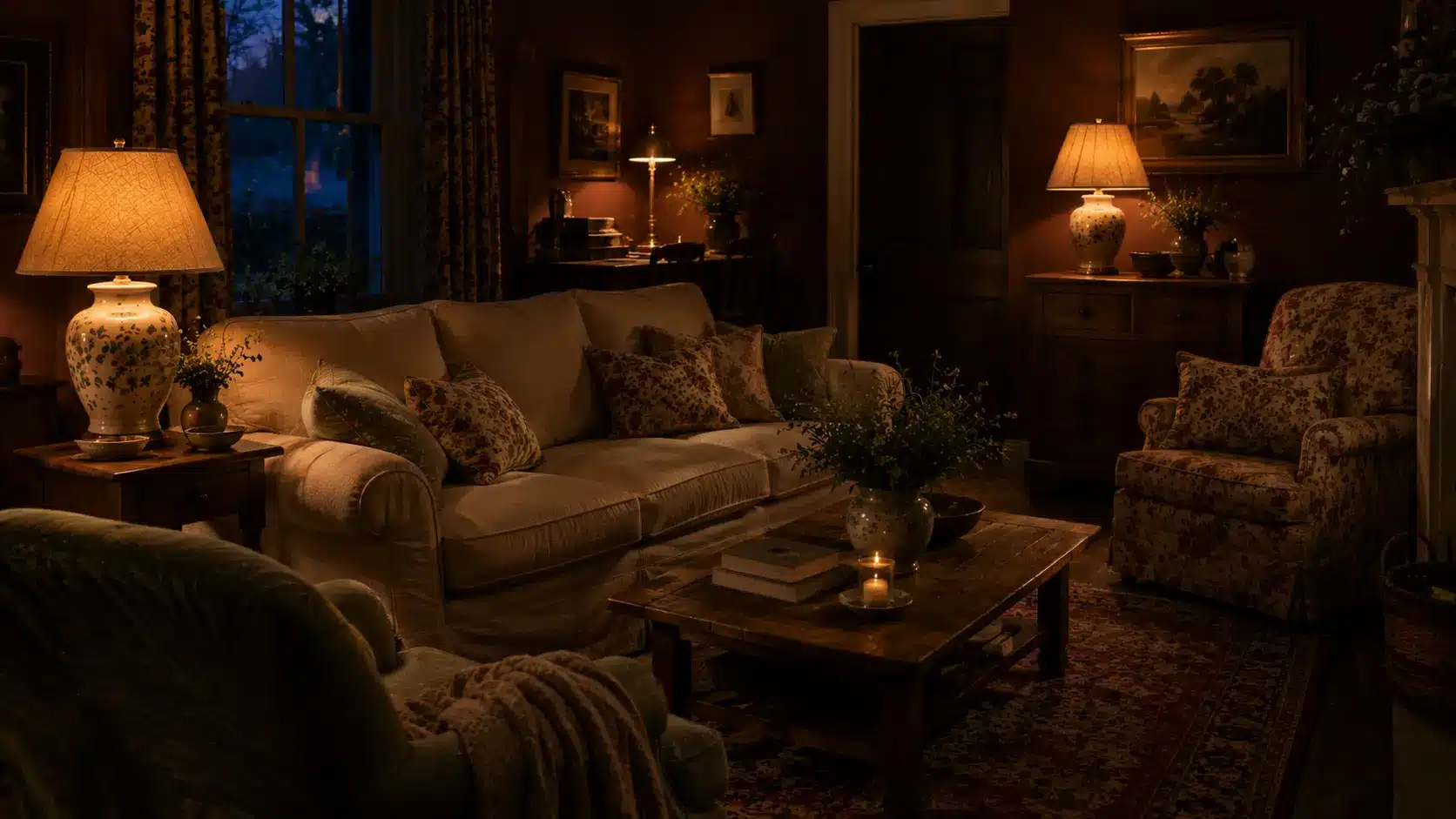
Multiple table lamps, rather than a single central overhead fixture, create the warm, pooled light this style relies on. Soft lampshades in linen or a small print keep the lighting consistent with the rest of the room.
Placing lamps at different heights throughout a room adds visual interest and improves light coverage. Warm-toned bulbs also help maintain the cozy, golden feel this style is known for.
Best for: living rooms and bedrooms.
Charming English Cottage Style Corners
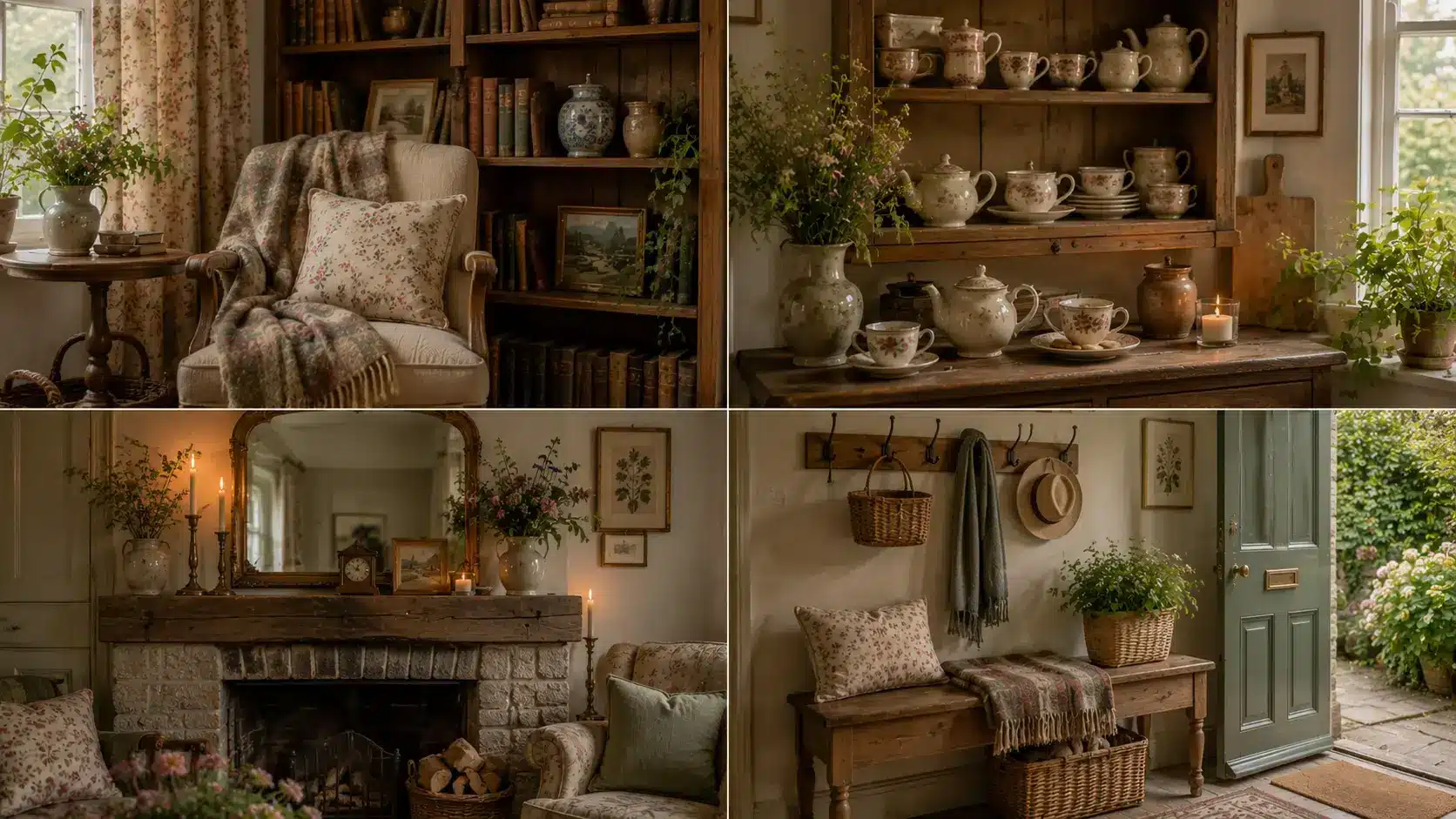
You don’t need to renovate to add cottage character. A few small corners can carry the whole feeling. Pick just one to start, and let it grow from there.
1. Reading Corner: A vintage chair as the centerpiece, a wooden bookshelf close by, and a warm lamp for evening light turn any quiet spot into a reading corner. Even a single armchair by a window can hold the whole feeling.
2. Tea Corner: Ceramic cups for a personal touch, a wooden tray for serving, and open shelves to display the pieces you use most bring cottage charm to a small tea corner. A shelf near the kettle is often all the space it needs.
3. Fireplace Corner: An antique mirror for light and depth, candles for warmth even without a fire lit, and vintage artwork on the mantel finish a cozy fireplace corner. The mantel is the easiest place to rotate seasonal touches.
4. Entry Corner: A wooden bench to sit on while putting on shoes, basket storage to keep everyday items organized, and simple wall hooks complete a functional entry corner. Keep it tidy but let it look used, not staged.
Frequently Asked Questions
What is the 3-5-7 rule in interior design?
The 3-5-7 rule suggests decorating with odd-numbered groupings of three, five, or seven items to create a balanced and visually appealing space.
What color makes a house look expensive?
Neutral shades like warm white, cream, greige, soft taupe, and sage green can make a home look more elegant and timeless when paired with natural materials.
What is the new trend for living rooms?
Current living room trends focus on layered textures, natural materials, curved furniture, earthy color palettes, and personalized décor that create a warm, comfortable atmosphere.
Which color is lucky for a living room?
Many people consider green, blue, and earthy tones lucky because they symbolize growth, peace, harmony, and stability, and they create a calming environment.
What color furniture is popular now?
Natural wood finishes, warm oak, cream, beige, olive green, soft brown, and muted blue furniture are among the most popular choices for creating timeless interiors.
Your Home, Slowly Becoming a Cottage
English cottage style never arrives all at once. It shows up in a repainted door, a chipped teacup left out on purpose, a window box that finally gets its flowers.
None of it needs to match, and none of it needs to be new. That’s the whole point.
Give a room time to collect its own history, rather than rushing to finish it. A house doesn’t need old bones to feel like it has a story. It just needs someone willing to add to it, one warm detail at a time.