

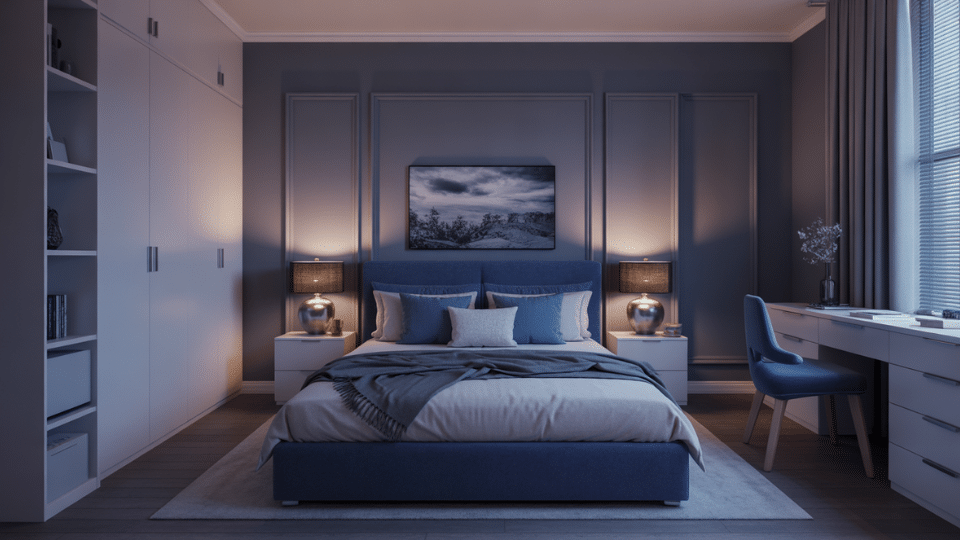


The right bedroom color directly impacts sleep quality and mood. Cool tones like blues and greens activate the parasympathetic nervous system, lowering heart rate and promoting relaxation, while warm neutrals create cocoon-like comfort.
But the same paint looks completely different depending on whether your room faces north, south, east, or west. This guide shows how to choose colors that work in real conditions, not just staged photos.
It covers how natural light shifts paint throughout the day, which shades expand small or dark spaces, and how to match colors to your desired mood, calm, cozy, airy, or boho.
You’ll also learn which colors encourage restful sleep versus ones that overstimulate, plus testing methods to avoid regret.
Best Bedroom Paint Colors Beyond Boring Regulars
While beige and white remain safe defaults, they’re not the only, or even the best, options for creating a restful, stylish bedroom.
1. Soft Cool Gray
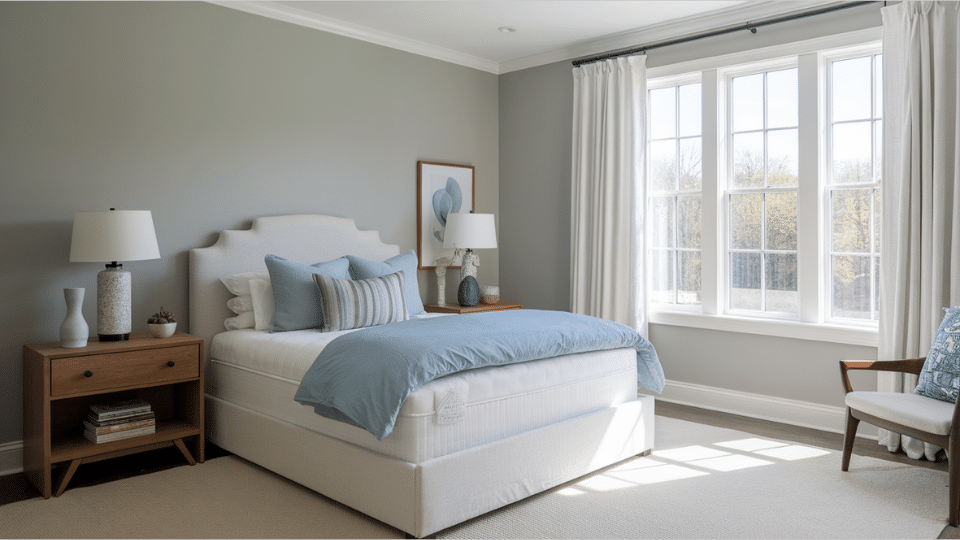
Soft cool gray is ideal for bedrooms because it feels clean and calming without turning stark or industrial. These shades usually have a slight blue undertone that keeps walls feeling fresh and airy, especially in rooms with natural light.
Soft cool grays balance warm furniture, wood floors, and layered textiles while remaining neutral enough for long-term use. They create a peaceful backdrop that supports rest without feeling flat or overly modern.
Benjamin Moore Stonington Gray (HC-170) and Sherwin-Williams Repose Gray (SW 7015) soften bedrooms with a balanced gray that avoids cold undertones.
2. Smoky Lavender Gray
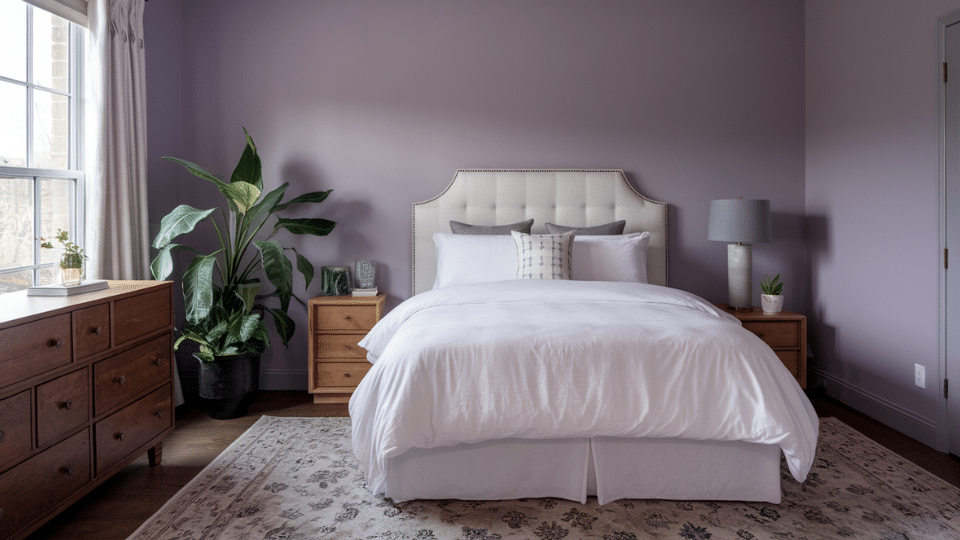
Smoky lavender gray blends gray with muted purple undertones for a bedroom color that feels gentle and graceful. Unlike traditional lavender, this version stays grounded and neutral, making it easier to live with long-term. It adds softness and visual interest without overwhelming the space.
These shades work especially well in bedrooms that need warmth but should still feel calm and grown-up rather than decorative. It is frequently cited as one of the best colors for a bedroom. Those who want a hint of personality without sacrificing serenity.
Benjamin Moore Gray Lavender (2112-60) and Sherwin-Williams Gris Morado (SW 9156) introduce subtle purple warmth while staying muted and sleep-friendly.
3. Muted Navy
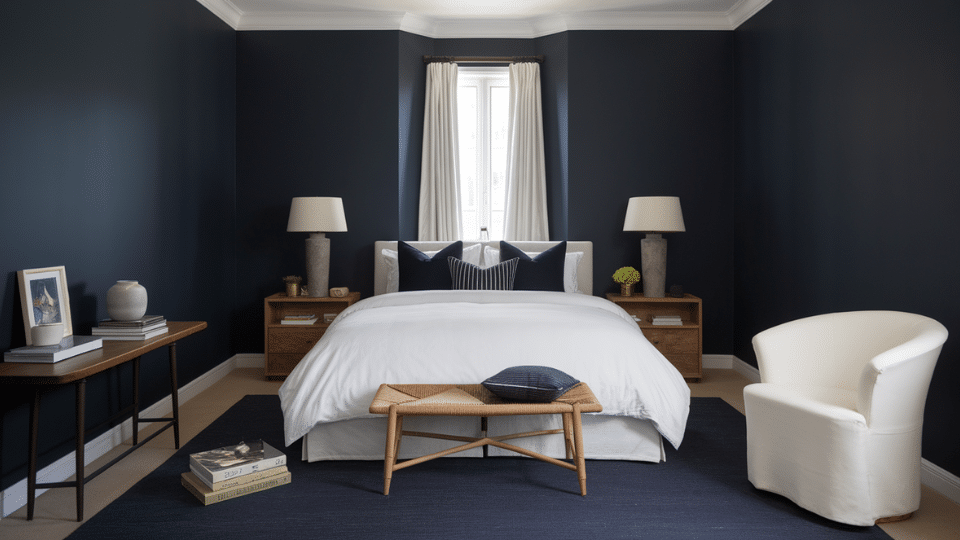
Muted navy creates a cozy, cocooning effect that works well in larger bedrooms or as an accent wall behind the bed. These shades are softened with gray so they feel restful rather than bold or dramatic.
Muted navy pairs beautifully with white bedding, warm woods, and brass or matte black accents. It adds depth and grace while still supporting a calm, sleep-focused atmosphere.
Benjamin Moore Hale Navy (HC-154) and Sherwin-Williams Naval (SW 6244) deliver rich depth without overwhelming bedroom walls.
4. Mushroom Taupe
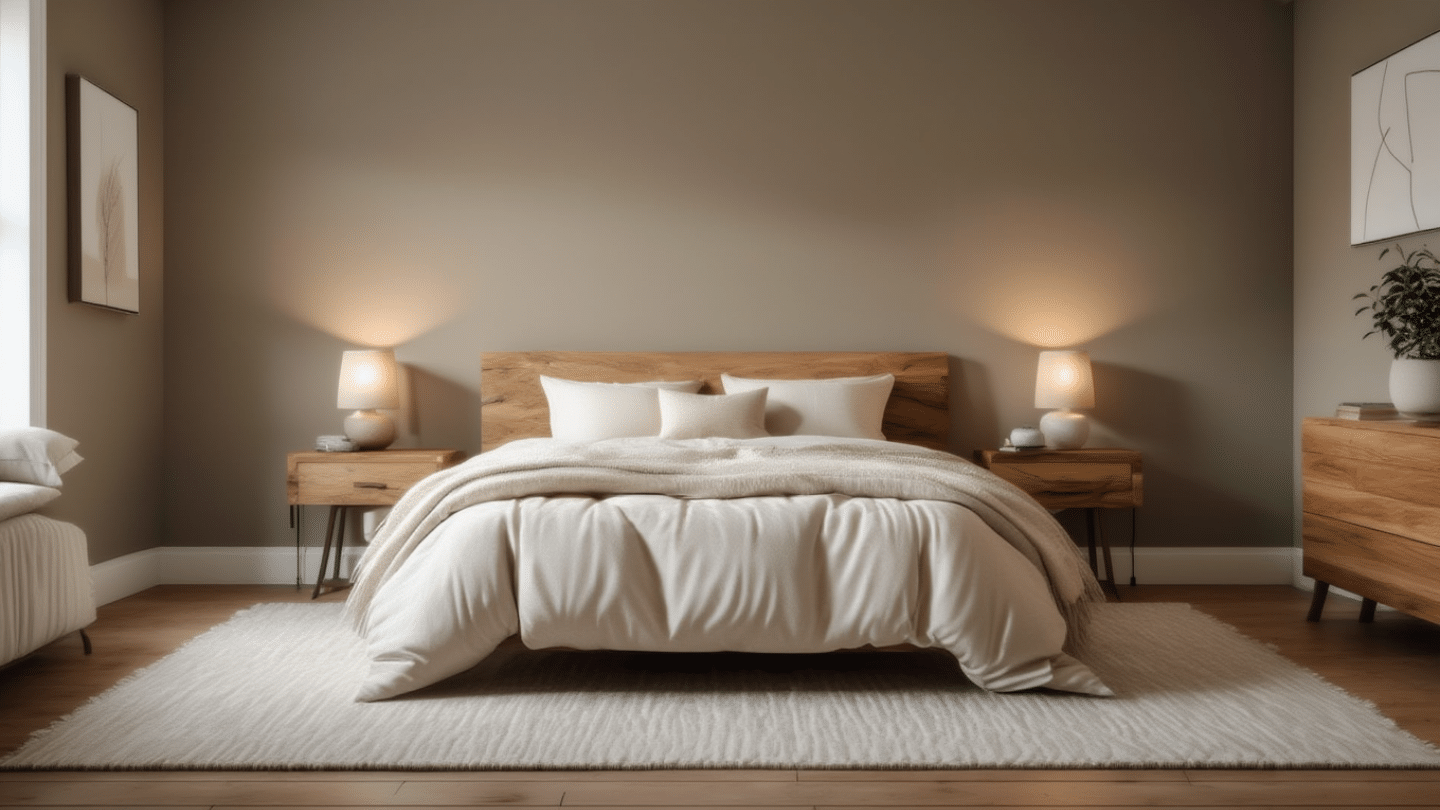
Mushroom taupe sits comfortably between gray and beige, making it a flexible and timeless bedroom neutral. It carries subtle warmth without reading yellow and subtle coolness without feeling stark.
This balance makes it ideal for bedrooms with mixed finishes or changing light throughout the day. Mushroom taupe feels grounded and calming, offering more character than standard beige while remaining easy to decorate around.
Benjamin Moore Revere Pewter (HC-172) and Sherwin-Williams Accessible Beige (SW 7036) create a grounded neutral that avoids traditional beige tones.
5. Pale Silver
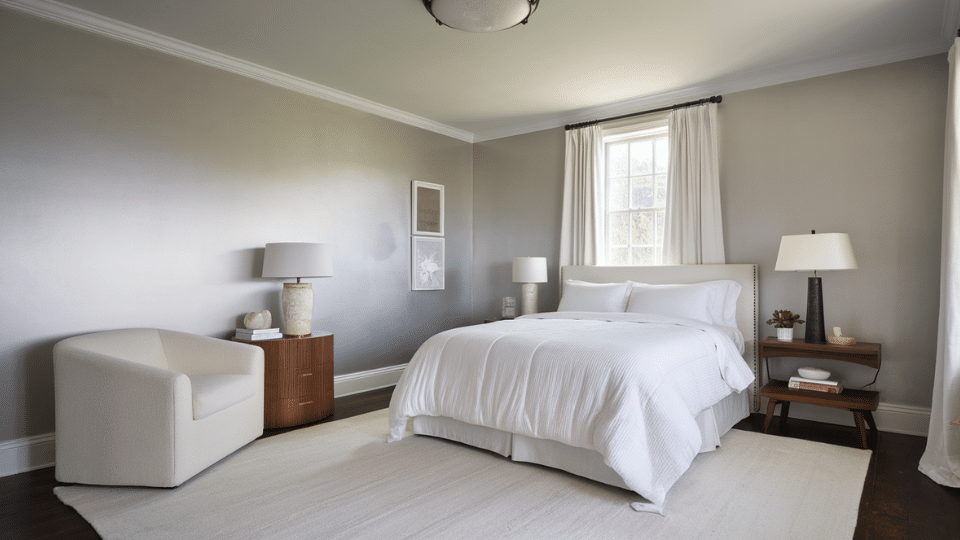
Pale silver is a light gray with a gentle reflective quality that helps brighten bedrooms without feeling cold. It works especially well in smaller rooms or spaces with limited natural light.
These shades improve white trim and soft textiles while keeping the room feeling open and restful. Pale silver adds polish and calm without introducing strong contrast, making it a safe but better bedroom wall color choice.
Benjamin Moore Silver Satin (OC-26) and Sherwin-Williams Crushed Ice (SW 7647) brighten bedrooms with a soft, light reflective gray.
6. Washed Charcoal
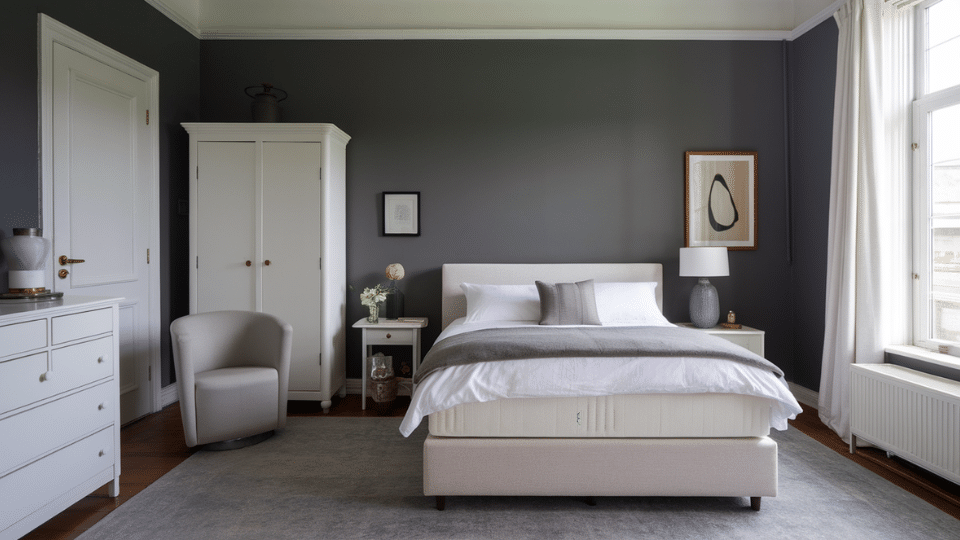
Washed charcoal offers depth without heaviness by softening traditional charcoal with gray undertones. It works well in bedrooms meant to feel cozy and enveloping, especially when paired with light bedding and warm accents.
This shade adds contrast and grace while still feeling breathable. Used thoughtfully, washed charcoal turns a bedroom into a retreat without creating a dark or closed in feeling.
Benjamin Moore Chelsea Gray (HC-168) and Sherwin-Williams Peppercorn (SW 7674) add depth while remaining soft enough for bedroom spaces.
7. Muted Plum
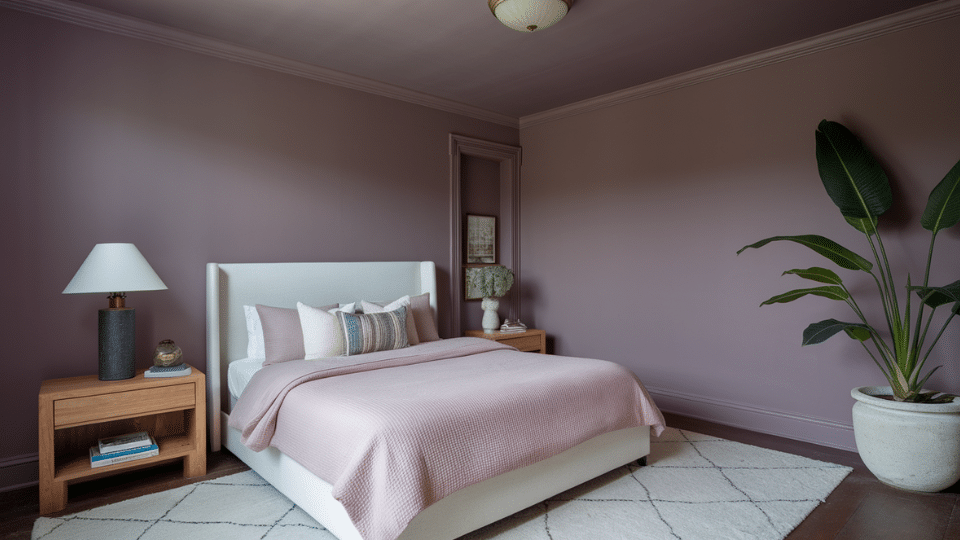
Muted plum brings warmth and personality without leaning bold or dramatic. These shades are softened with gray or brown undertones, making them feel calm and mature.
It creates a cozy and slightly romantic atmosphere, securing its spot among the best bedroom colors for a moody yet restful vibe.
Benjamin Moore Shadow (2117-30) and Sherwin-Williams Mature Grape (SW 6286) introduce softened purple depth suited for restful bedrooms.
8. Soft Clay Gray

Soft clay gray blends gray with subtle earthy warmth inspired by natural clay and stone. It feels grounded and calming without reading beige or orange.
This shade works well across different lighting conditions and pairs easily with both cool and warm decor. In bedrooms, soft clay gray creates a relaxed, natural backdrop that feels cozy yet modern, making it ideal for layered textures and neutral color palettes.
Benjamin Moore Balboa Mist (OC-27) and Sherwin-Williams Agreeable Gray (SW 7029) balance warmth and neutrality for versatile bedroom walls.
9. Cool Off-White
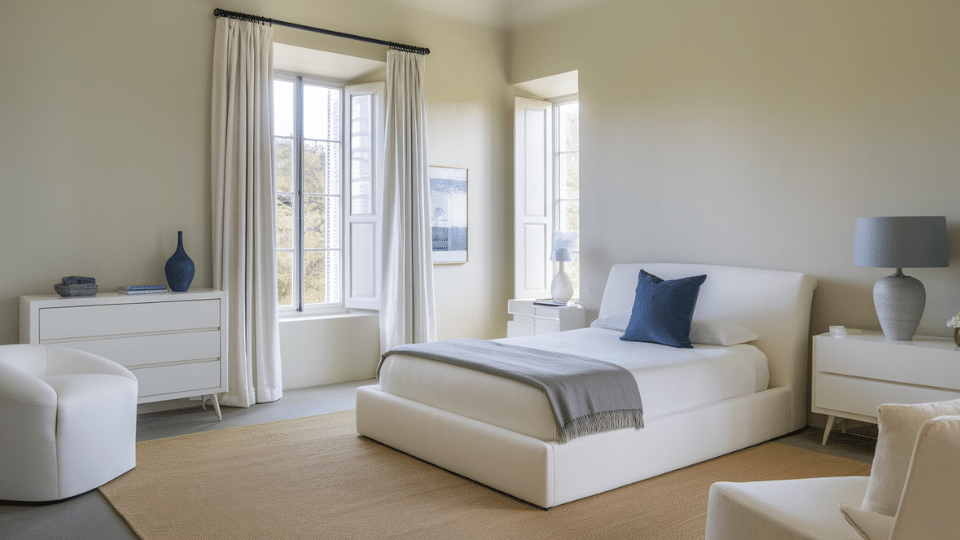
This paint offers brightness without the harshness of pure white. These shades include subtle gray or blue undertones that prevent yellowing and keep bedrooms feeling crisp and airy.
Cool off whites make rooms feel larger and work well with bold headboards, textured bedding, or darker furniture. They are ideal for minimalist or transitional bedrooms where calm and lightness are priorities.
Benjamin Moore White Dove (OC-17) and Sherwin-Williams Snowbound (SW 7004) replace stark white with a softer, cooler brightness.
10. Stormy Blue Gray
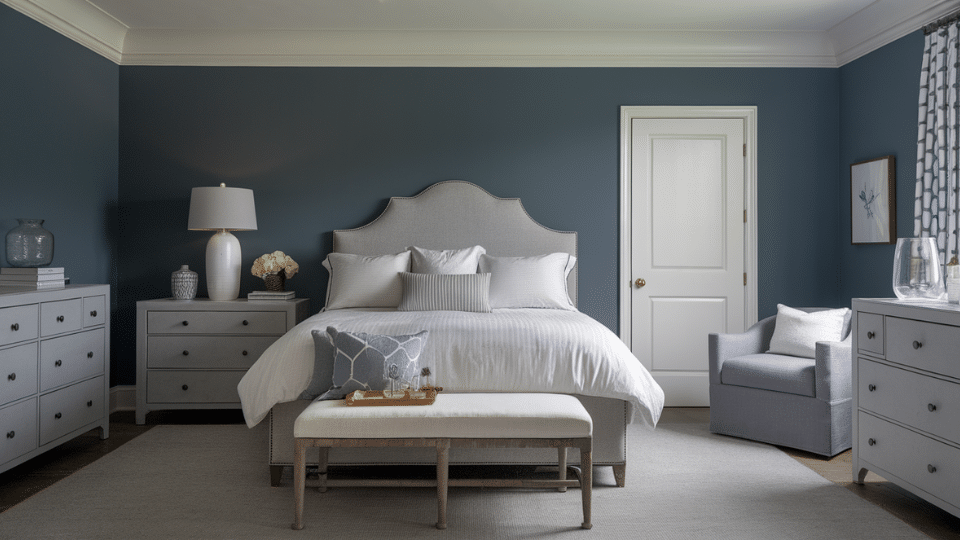
Stormy blue gray blends blue and gray to create a soothing, atmospheric bedroom color. It feels calm and balanced without leaning coastal or overly cool.
These shades shift subtly throughout the day, adding depth without visual noise. Stormy blue gray pairs well with white linens, soft woods, and muted metals, making it an excellent choice for bedrooms designed for relaxation and visual quiet.
Benjamin Moore Silver Chain (2132-60) and Sherwin-Williams Misty (SW 6232) create a tranquil blue-gray ideal for sleep-focused spaces.
11. Pale Putty
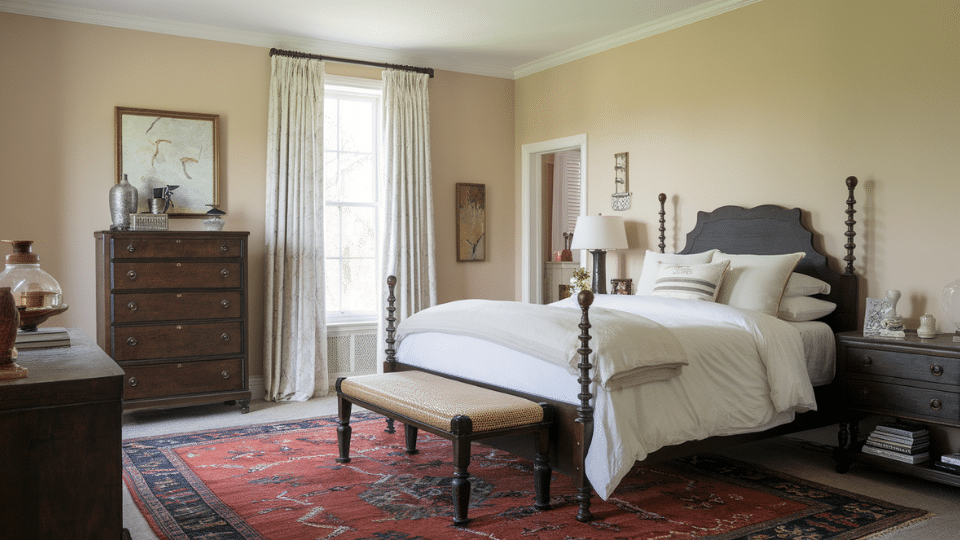
Pale putty is a light neutral that blends gray and beige in a restrained, natural way. It adapts easily to changing light and surrounding decor, making it a dependable bedroom wall color.
Pale putty feels soft, calm, and subtle, allowing furniture and textiles to stand out. It is ideal for bedrooms where you want warmth and neutrality without committing to a strong undertone.
Benjamin Moore White Sand (OC-10) and Sherwin-Williams Worldly Gray (SW 7043) offer a flexible neutral that stays calm in varied lighting.
How to Test Bedroom Paint Colors Properly
Choosing paint from tiny store chips guarantees disappointment; colors change drastically under real lighting conditions. Proper testing prevents costly mistakes.
- Sample Patches: Paint large swatches (2×2 feet minimum) directly on walls. Tiny chips don’t show how color behaves across surfaces.
- Check at Different Times: Observe morning light, afternoon sun, and evening lamps. Colors shift throughout the day.
- Warm vs Cool Lighting: Test under both warm bulbs (2700K-3000K) and cool daylight to see artificial lighting effects.
- Shortlist Method: Narrow to 3-4 favorites, live with samples for 3-5 days, eliminate options that don’t perform consistently.
Bottom Line
At the end of the day, I don’t think there’s one “perfect” bedroom color for everyone. The best choice is the one that fits your room and helps you feel good when you walk in.
If your bedroom gets cool light, warmer shades can make it feel more welcoming. If it gets intense sun, softer cool tones can keep it balanced.
And if your room is small or dark, you now know which colors can help it feel more open or more cozy on purpose. Before you commit, test a few samples on your wall and check them from morning to night.
So, pick your top 3 shades today and start testing, then share your favorite in the comments!