

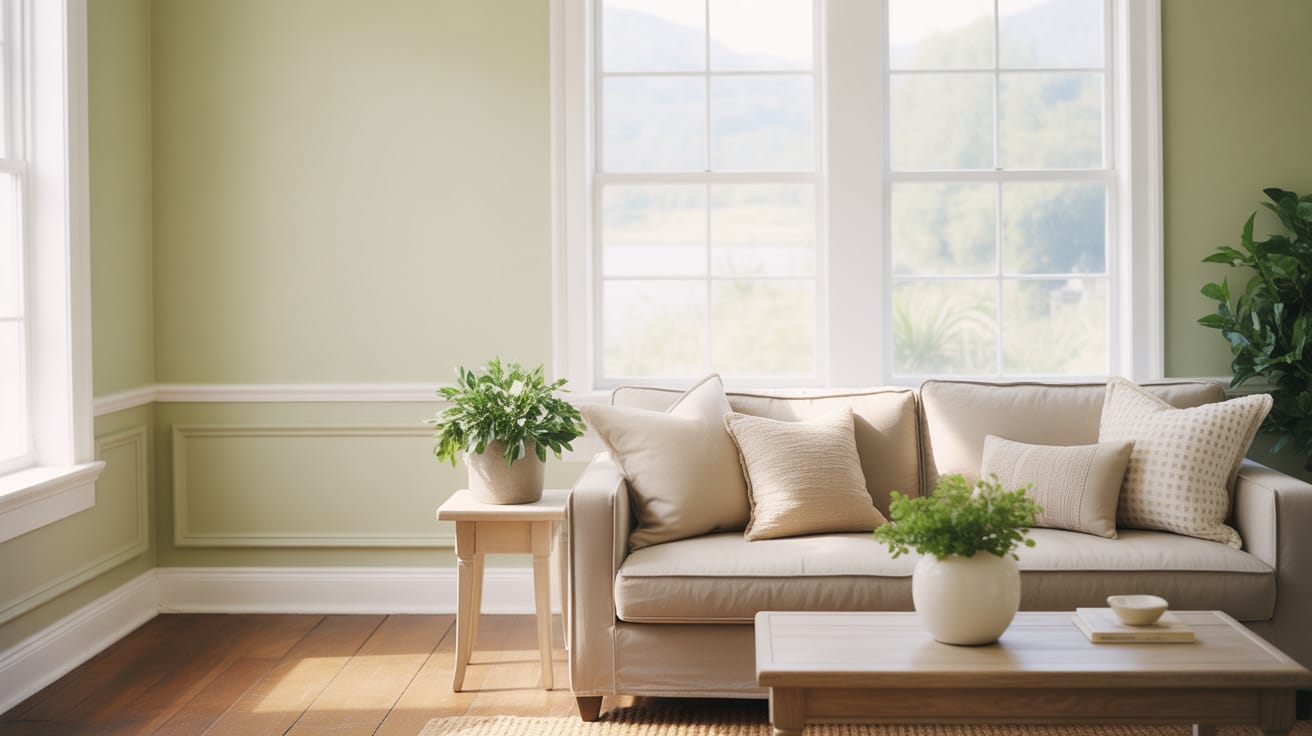


Healing Aloe by Benjamin Moore feels and looks exactly as it sounds: healing and aloe. This soft green-gray hits that rare spot where it feels calming without putting you to sleep.
As someone who loves nature themes and cool tones, this color is the dream. If you’ve been saving Instagram posts or pinning serene spaces on Pinterest, you’ve definitely seen this shade.
I’m walking you through the full breakdown of Healing Aloe: what makes this color work, where it actually looks good, how to test it without the mess, and what you’ll pay when you’re ready to commit.
Let’s figure out if Healing Aloe Benjamin Moore deserves a spot on your walls.
Healing Aloe (BM 1562) is a soft green-gray paint color with blue undertones and an LRV of 66. It works best in bedrooms, bathrooms, and living spaces where a calm, nature-inspired look is needed without going too bold.
Getting to Know Healing Aloe Benjamin Moore
Color Code: 1562 Benjamin Moore reference
LRV: 66 Light-medium depth
Collection: Classic Colors Standard BM palette
Undertones: Green-gray with blue influence. Shifts with lighting
Best Rooms: Bedrooms, bathrooms, and living rooms. Works across spaces
Healing Aloe (1562) comes from Benjamin Moore’s Classic Colors collection, and it’s basically what happens when green decides to chill out. The green base gets softened by gray and touched with blue, so you’re not getting anything loud or bright.
I’d call it a cool-leaning color that feels more like a breath of fresh air than an actual statement. It doesn’t scream “look at me” when you walk into a room. Instead, it just makes everything feel cleaner and more open.
The muted green tone works with modern farmhouse, coastal, transitional, and even minimalist spaces. If you want something that reads neutral but isn’t another shade of beige or gray, this is it.
The color family sits best with sage green paint colors and seafoam comfortably without landing fully in either camp.
How Healing Aloe Looks in Different Rooms
So, I have seen Healing Aloe in five different spaces in my and my friends’ homes, and each room brings out something different in the color. Here’s what actually works:
1. Healing Aloe in Bedrooms
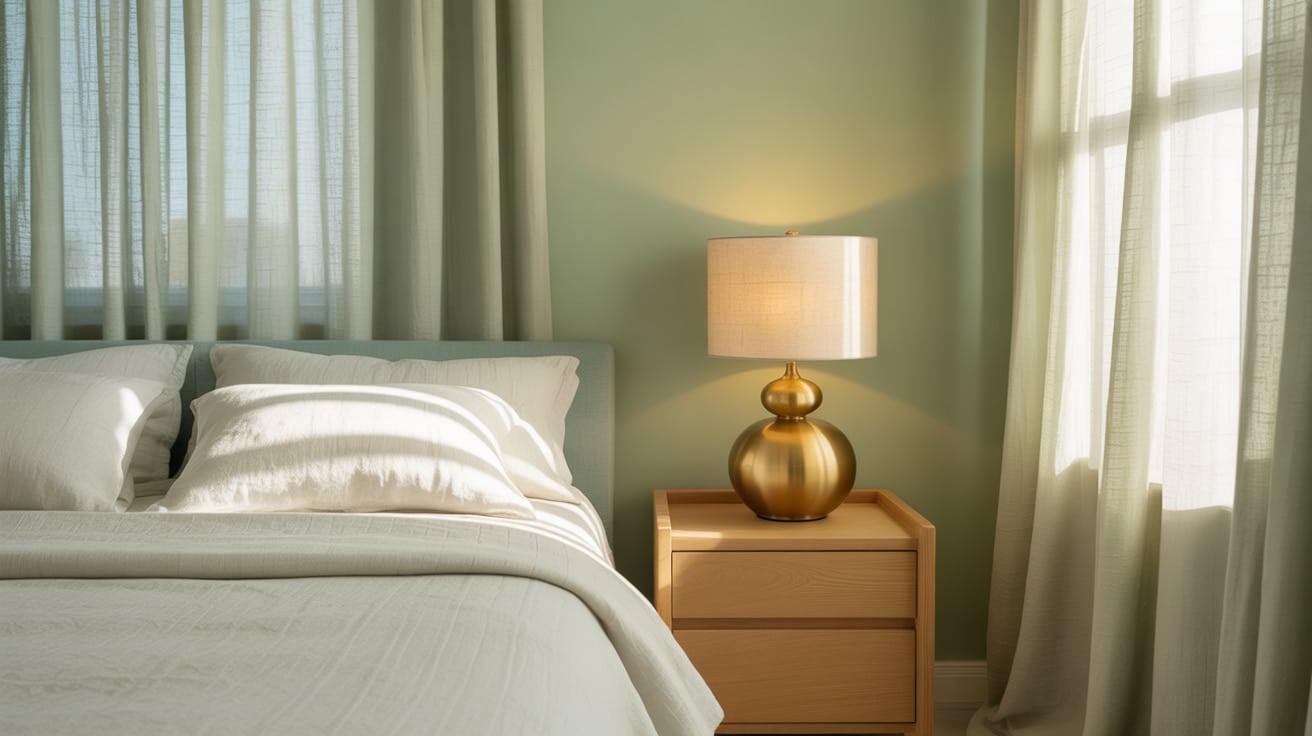
I once painted my guest bedroom in Healing Aloe, and it immediately felt like a spa retreat. The soft green-gray created a restful backdrop that didn’t compete with the white bedding or the wood furniture. Small bedrooms benefit because it doesn’t close in the space.
Large primary bedrooms look equally good since the color feels intentional without being heavy. Pair it with linen curtains, a jute rug, and simple brass fixtures. I kept the trim in Chantilly Lace for contrast, and the whole room just breathes better now.
2. Healing Aloe in Bathrooms
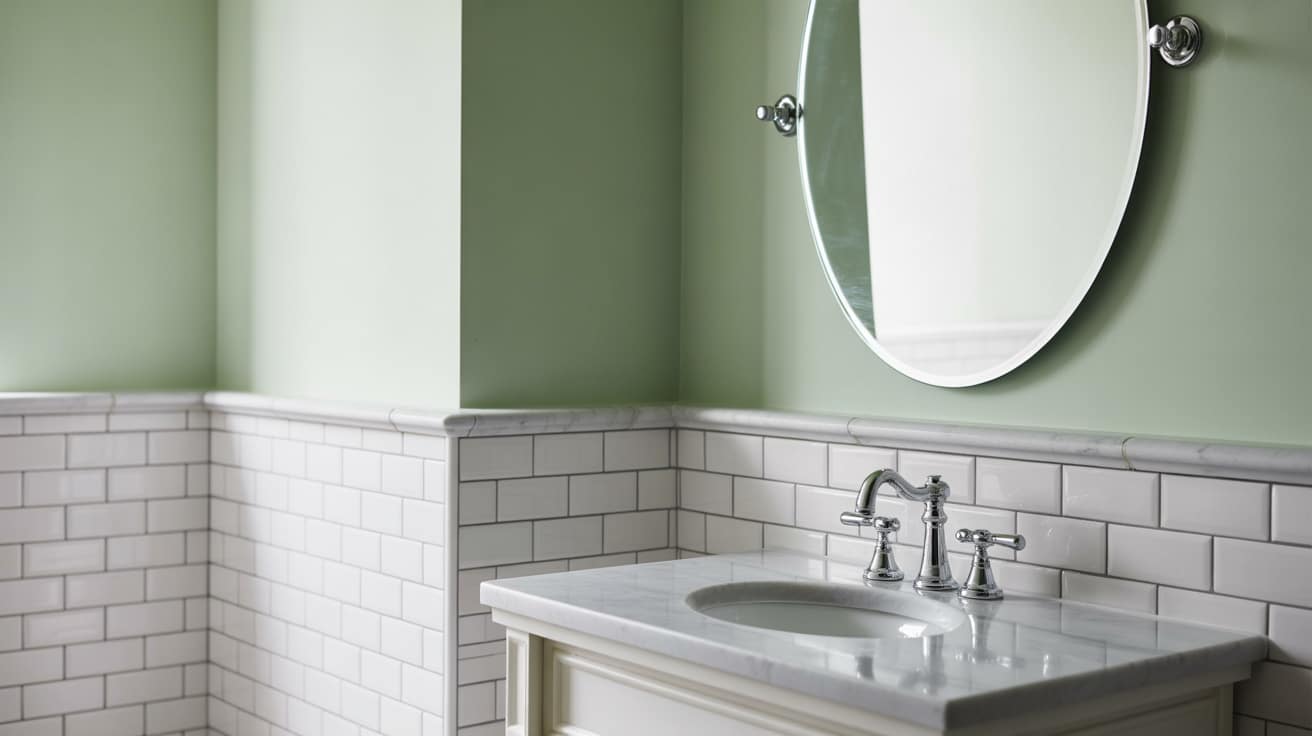
Bathrooms are where Healing Aloe Benjamin Moore really shines. A friend of mine used it in a powder room with white subway tile, and I love how fresh it feels. The color pairs beautifully with marble countertops and chrome or brushed-nickel fixtures.
It gives you that clean, spa-like vibe without feeling cold or clinical. Even in a windowless half bath, the color doesn’t look muddy or dark. If you’re doing a full bathroom renovation, consider it for the walls while keeping the vanity and tile neutral.
3. Healing Aloe in Living Rooms
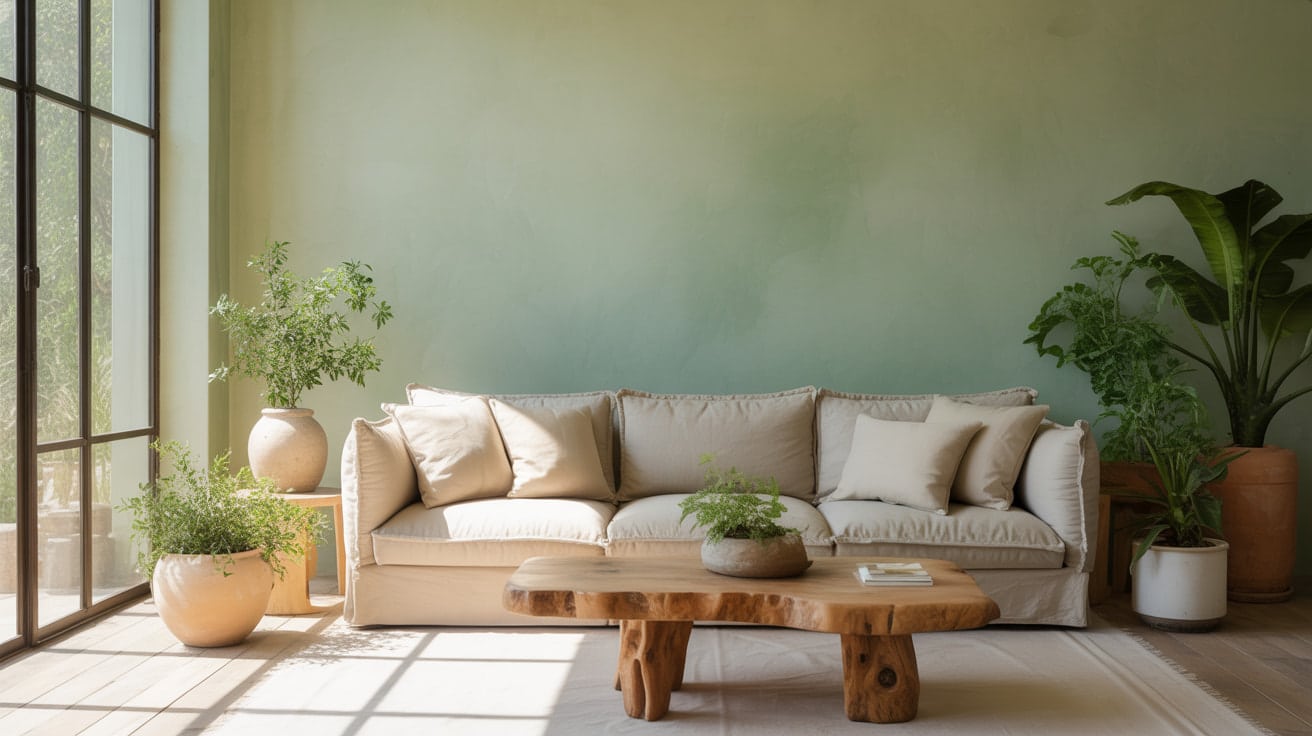
Living rooms need a color that can handle different lighting throughout the day, and Healing Aloe does exactly that. I tested it in an open-concept space with south-facing windows, and it stayed soft all day long.
The green-gray acts as a quiet background for neutral sofas, wood coffee tables, and colorful throw pillows. It doesn’t fight for attention, but still gives the room more personality than plain white or gray.
If you have a lot of natural wood trim or built-ins, this color complements them without clashing.
4. Healing Aloe in Kitchens
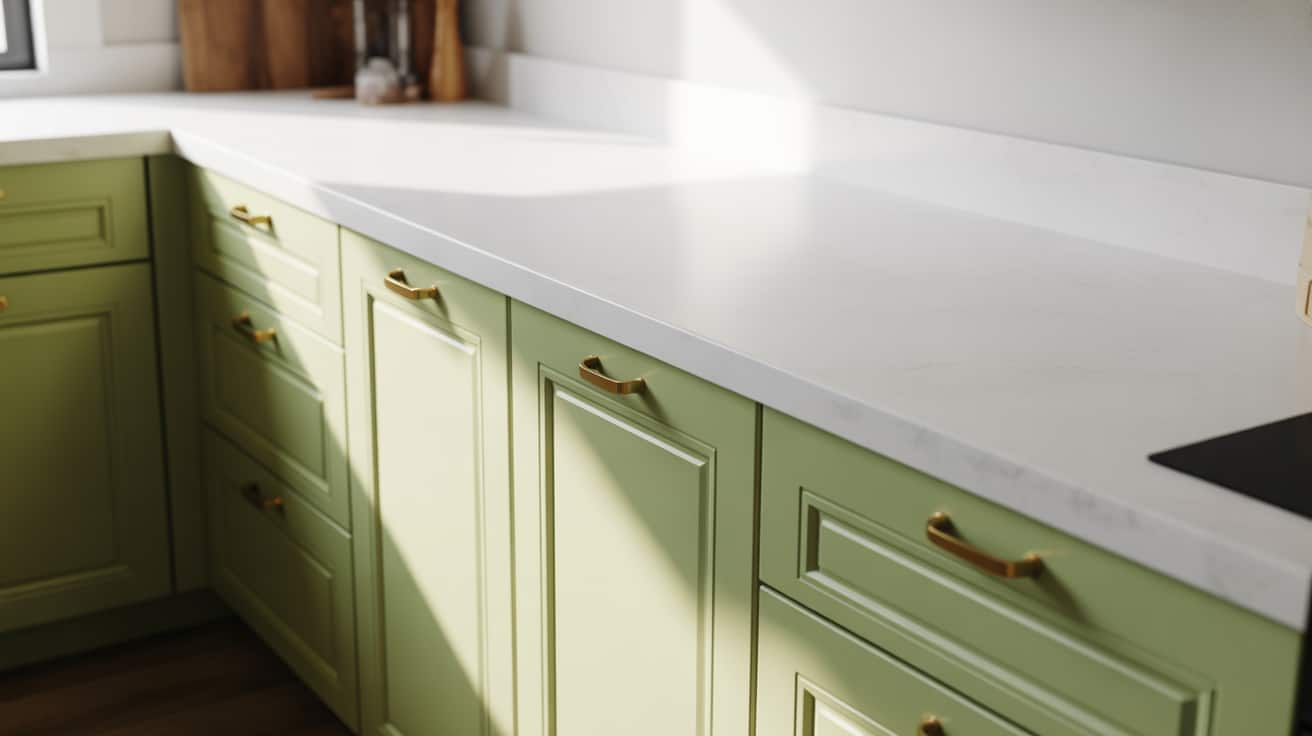
Kitchens can go two ways with Healing Aloe: walls or cabinets. I personally love it as a wall color in kitchens with white or wood cabinets, and it adds just enough color without overwhelming the space. The soft green pairs well with brass hardware, black accents, or even stainless steel.
If you’re feeling bolder, Healing Aloe kitchen cabinets in a matte finish look modern and fresh. Just make sure your countertops are neutral, white quartz, or butcher block; both work. Keep upper cabinets white if you’re going green on the lowers.
5. Healing Aloe in Nurseries and Kids’ Rooms
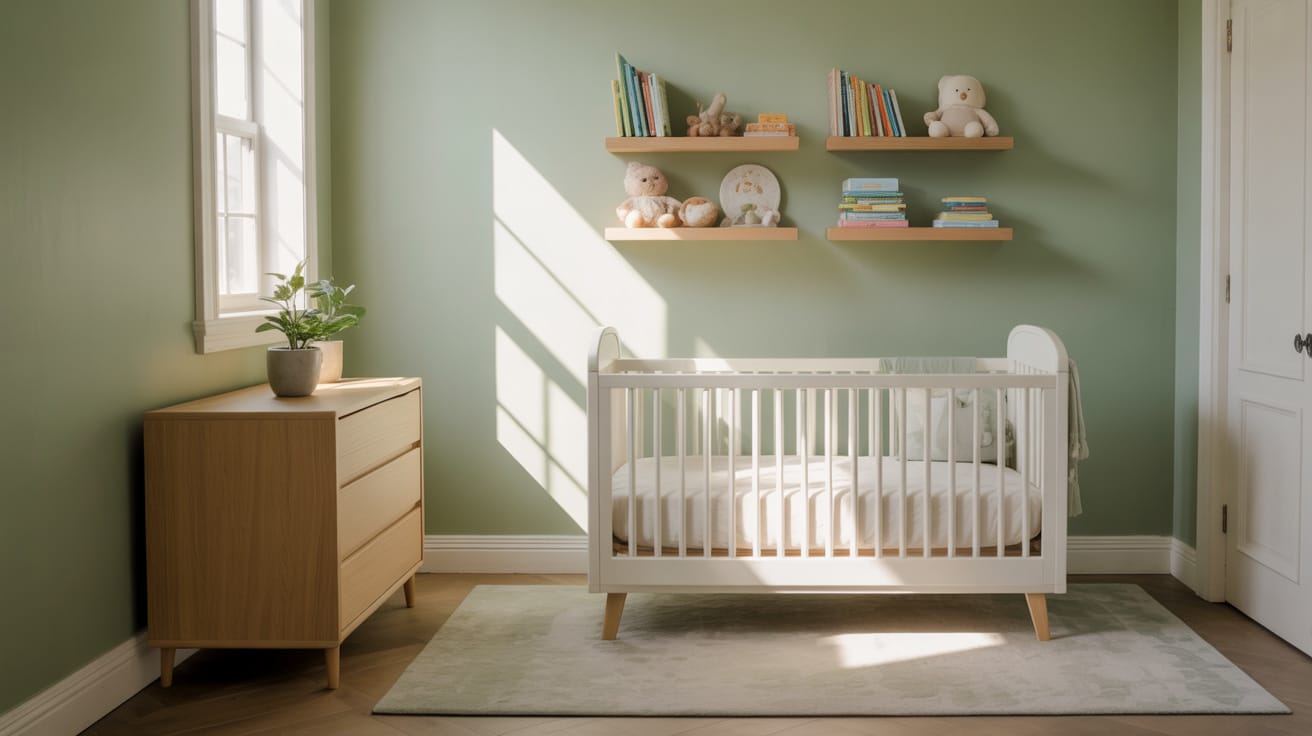
Healing Aloe works beautifully in nurseries and kids’ rooms because it’s calming without feeling babyish.
The soft green-gray grows with your child, so you won’t need to repaint in a few years. I’d suggest pairing it with white cribs, natural-wood dressers, and simple blackout curtains for nap time.
If you’re decorating a nursery, keep the furniture light and add pops of color through bedding, rugs, or wall art.
For older kids’ rooms, Healing Aloe walls provide a neutral backdrop that complements evolving interests and decor. Pair it with White Dove trim and keep the ceiling white to maintain brightness.
Where Healing Aloe Works Best
- Bedrooms where a calm, restful tone is needed
- Bathrooms for a spa-like, clean feel
- Living rooms needing soft color without heaviness
- Kitchens with white or wood cabinetry
This helps narrow down if it fits your space before testing samples.
Healing Aloe Benjamin Moore Undertones and Lighting
This color shifts noticeably throughout the day. Understanding undertones and light reflectance helps predict how it performs in your space.
How Undertones and Light Change Healing Aloe
| Element | Character | Conditions |
| Green-Gray-Blue Base | Soft, muted foundation | Shifts based on exposure |
| Morning to Afternoon | Brighter, greener tones | Early daylight through warm sun |
| Evening Hours | Softer, gray-blue read | Dusk and artificial lighting |
| LED Bulbs | Warm: neutral / Cool: bluer | 2700K-3000K vs bright white |
LRV of Healing Aloe
The LRV is 66, reflecting substantial light while maintaining wall presence. This medium-light rating works in small rooms and large open spaces without washing out. Southern exposure intensifies green throughout the day.
Northern light cools it toward blue-gray. Western afternoon light adds warmth and softness, making the read more neutral. Test samples at different times and locations before committing to this shade.
Healing Aloe Sampling Options
Before you commit to a gallon, it’s smart to test Healing Aloe in your own space. Light, room size, and surrounding colors can all affect how it looks:
Peel-and-Stick Samples
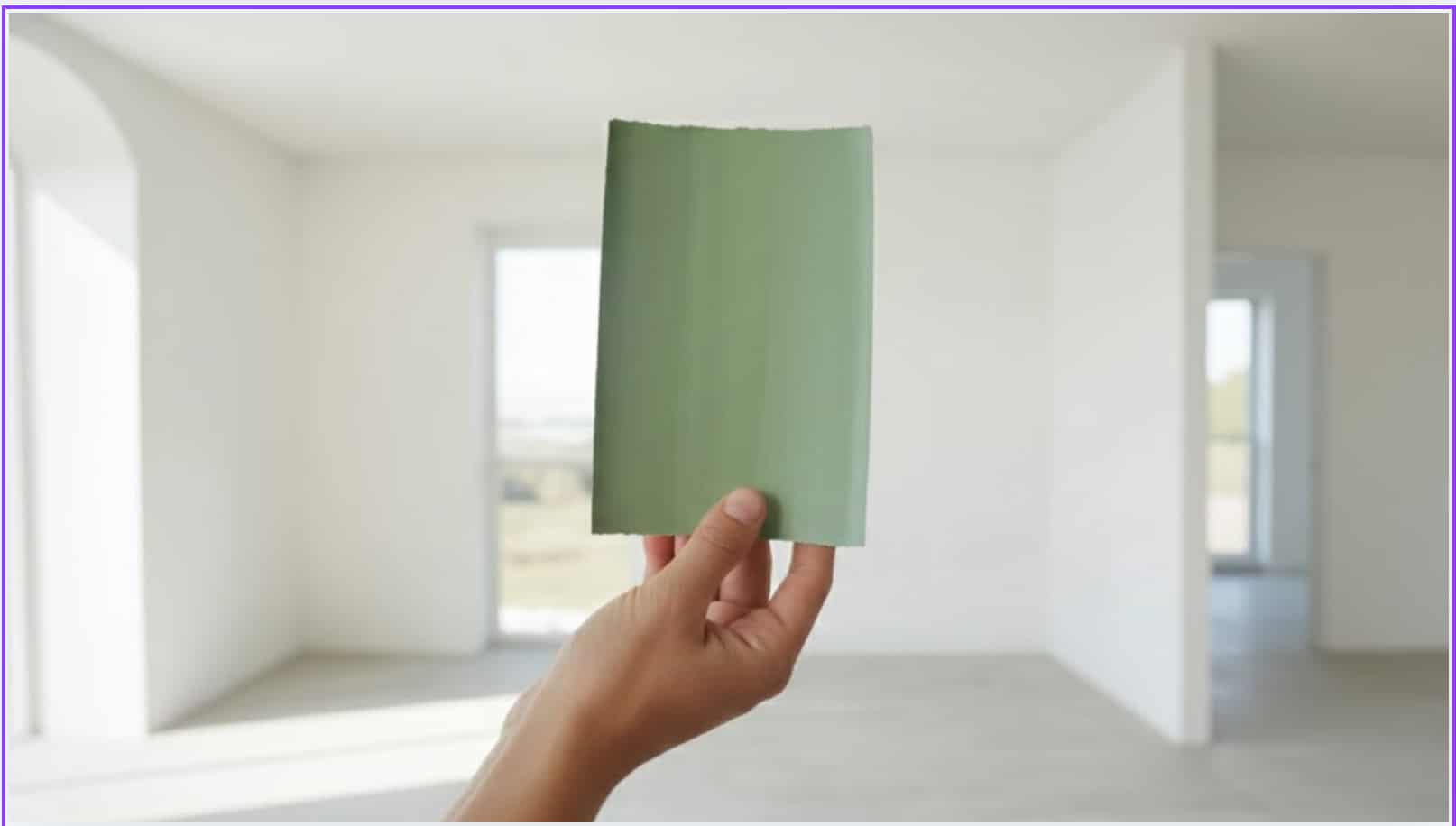
The easiest way to try Healing Aloe without making a mess is with peel-and-stick samples:
- Order from Samplize or SamPaint; they’re removable, repositionable, and damage-free.
- Stick samples on at least two different walls to compare how light hits each surface.
- Check them in morning and evening light to see how the undertones shift throughout the day.
- Move them around to test near windows, in corners, and next to your furniture or trim.
- They’re reusable, so you can test in multiple rooms without buying separate samples for each space.
- The color accuracy is solid, and you avoid wasting leftover paint or dealing with cleanup.
Stick samples on different walls and check them in morning and evening light to see how the undertones shift.
Traditional Sample Cans
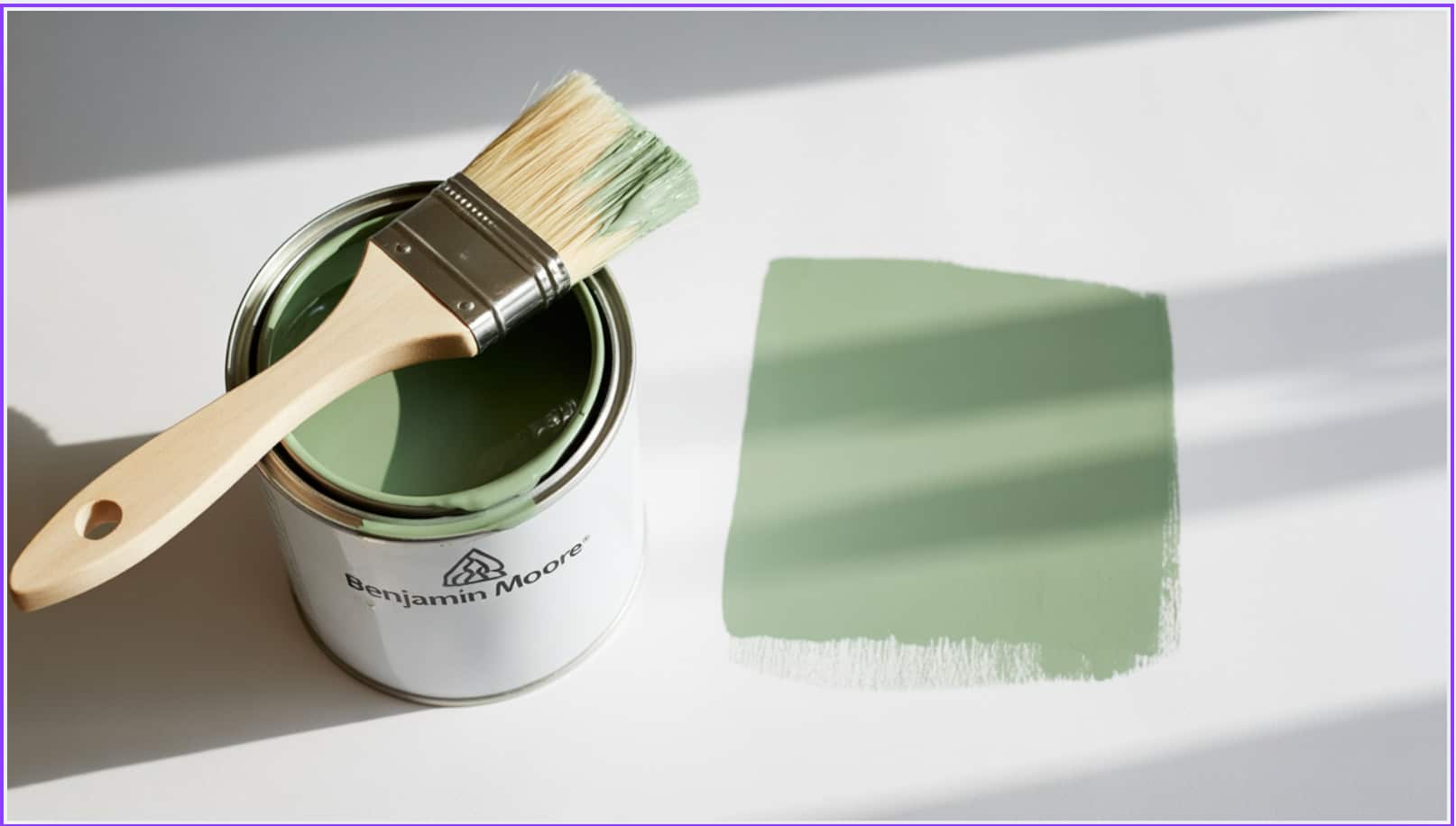
If you prefer the old-school route, small sample cans let you paint larger test areas:
- Pick up a sample can from Benjamin Moore retailers for $5-$8, enough to cover about 16 square feet.
- Paint at least a 2×2-foot section on two different walls: one with direct light and one without.
- Use a small foam roller for smooth, even coverage that mimics the final coat’s appearance.
- Let it dry completely before judging; wet paint always looks darker and richer than the dried finish.
- Leave your sample up for at least 48 hours, and check it in the morning, afternoon, and at night.
- Compare it against your trim color, flooring, and furniture to see if it works with your existing setup.
The color will look darker when wet, so give it time to dry before making any decisions.
Healing Aloe Benjamin Moore Price Guide
I bought Healing Aloe in different sizes and finishes over the years. Prices vary by product line and where you shop, but here’s what you’ll find consistently across stores:
| Size | Product Line | Price Range |
| Sample | All lines | $5 – $8 |
| Quart | ben Interior | $21.99 |
| Quart | Regal Select | $29.99 |
| Gallon | ben Interior | $47.99 |
| Gallon | Regal Select | $72.99 |
| Gallon | Aura/Aura Bath & Spa | $89.99 |
Matte and eggshell finishes cost about the same. Semi-gloss runs a few dollars more. I used Aura for high-traffic areas because the coverage and durability are noticeably better. For bathrooms, Aura Bath & Spa offers better moisture and mildew resistance than cheaper lines.
Where to Buy Healing Aloe Benjamin Moore
Healing Aloe is widely available through multiple channels, each offering distinct advantages. Whether you prefer an in-person consultation or the convenience of online shopping, you’ll find options that fit your timeline and budget for this popular Benjamin Moore shade. Where to Purchase:
- BenjaminMoore.com: Online ordering with store pickup or delivery; check local stock before visiting
- Samplize: Peel-and-stick samples with fast shipping; mess-free testing on your walls
- Sam’s Paint: Reusable, repositionable peel-and-stick samples for flexible color testing
- Amazon: Various sizes from authorized sellers; verify authenticity before purchasing
- Local Hardware Stores: Sample cans and sometimes full gallons; convenient for same-day needs
For the most accurate color matching and personalized finish recommendations, visiting a physical retailer remains the superior choice. Staff expertise helps ensure you select the right sheen and product type for your specific project requirements.
Styling and Pairing Tips for HealingAloe Benjamin Moore
This soft sage-green shade pairs beautifully with both warm and cool tones, making it ideal for coordinating multiple spaces throughout your home. Here are some common pairings:
| Category | Best Options | Effect |
| Trim Colors | Chantilly Lace, Simply White, White Dove | Creates crisp or softer contrast depending on the choice |
| Adjacent Rooms | Gray Owl, Classic Gray, Pale Oak | Maintains neutral flow or adds warmth between spaces |
| Accent Colors | Navy blue, blush, terracotta, black metal | Adds depth, warmth, or modern contrast |
| Flooring | Light oak, medium walnut, white/gray tile | Keeps spaces airy or adds richness |
| Decor Elements | Linen textures, ceramic planters, brass fixtures, natural wood | Complements the organic quality of the shade |
This gentle hue works effortlessly as your base. Keep styling minimal with natural materials and textures. Healing Aloe handles the heavy lifting, creating a calm backdrop that lets your furniture and accents shine without competing for attention.
Comparing Healing Aloe to Similar Benjamin Moore Shades
Healing Aloe shares characteristics with several Benjamin Moore greens and grays, but each offers distinct differences in tone, depth, and versatility worth considering. Similar Benjamin Moore Colors:
- Gray Owl (2137‑60): Cooler and grayer with less green; functions as true neutral
- Palladian Blue (HC‑144): More blue than green; brighter and reads aqua in strong light
- Silver Sage (506): Warmer with stronger sage presence; less gray overall
- Saybrook Sage (HC‑114): Richer, deeper sage; works better for accent walls
- Calm (2111‑70): Similar softness but leans bluer; creates a cooler atmosphere
- November Rain (2142‑60): Grayer base with minimal green; closer to true gray
- Tea Light (471): Lighter and softer with barely-there green; more delicate
One close Sherwin-Williams alternative is Sherwin-Williams Rosemary, which has a deeper green tone and slightly more saturation.
Healing Aloe strikes the ideal balance between these options, offering enough color interest without overwhelming spaces. Its medium LRV and balanced undertones make it more adaptable than alternatives.
Similar Colors from Other Paint Brands
If you love Healing Aloe but prefer shopping with other paint brands, several comparable soft sage-green options deliver a similar calming vibe across various manufacturers. Comparable Shades from Other Brands:
- Sherwin‑Williams Contented(SW 6191): Soft green‑gray with similar undertones; slightly warmer in northern light.
- Behr Mild Mint (PPU11‑12): Cool sage with gray base; comparable LRV and neutral quality.
- Valspar Panacea (6002‑3A): Muted green‑gray; leans slightly more aqua in bright conditions.
- Farrow & Ball Vert de Terre (No. 234): Sophisticated sage‑gray; deeper and more pigmented overall.
These alternatives match Healing Aloe’s serene character and adaptability. Test samples in your specific lighting conditions to find your ideal soft sage-green shade.
Final Thoughts
Healing Aloe by Benjamin Moore is one of those rare colors that works in almost any room without feeling overdone. I’ve used it, tested it, and watched it shift through different lighting conditions, and it keeps showing up as a reliable, calming choice that doesn’t get old.
If you’re tired of staring at white walls but not ready for anything loud or bold, this soft green-gray is your middle ground. Grab a peel-and-stick sample or pick up a sample can from your local Benjamin Moore store.
Test it on your walls, check it in your actual lighting, and live with it for a few days to see if it feels right. It might give you a new perspective on colors.
Drop a comment below, and share your thoughts on Healing Aloe by Benjamin Moore.
Frequently Asked Questions
Is Healing Aloe warm or cool?
Healing Aloe is a cool-leaning color with green, gray, and soft blue undertones.
What is the LRV of Healing Aloe?
The LRV of Healing Aloe is 66, making it a light to medium paint color that reflects a good amount of light.
Does Healing Aloe look more green or gray?
It depends on lighting, but it usually reads as a balanced green-gray with subtle blue shifts.
What trim color goes with Healing Aloe?
Chantilly Lace, White Dove, and Simply White work well for trim.
Is Healing Aloe good for small rooms?
Yes, its higher LRV helps reflect light, making small rooms feel more open.