

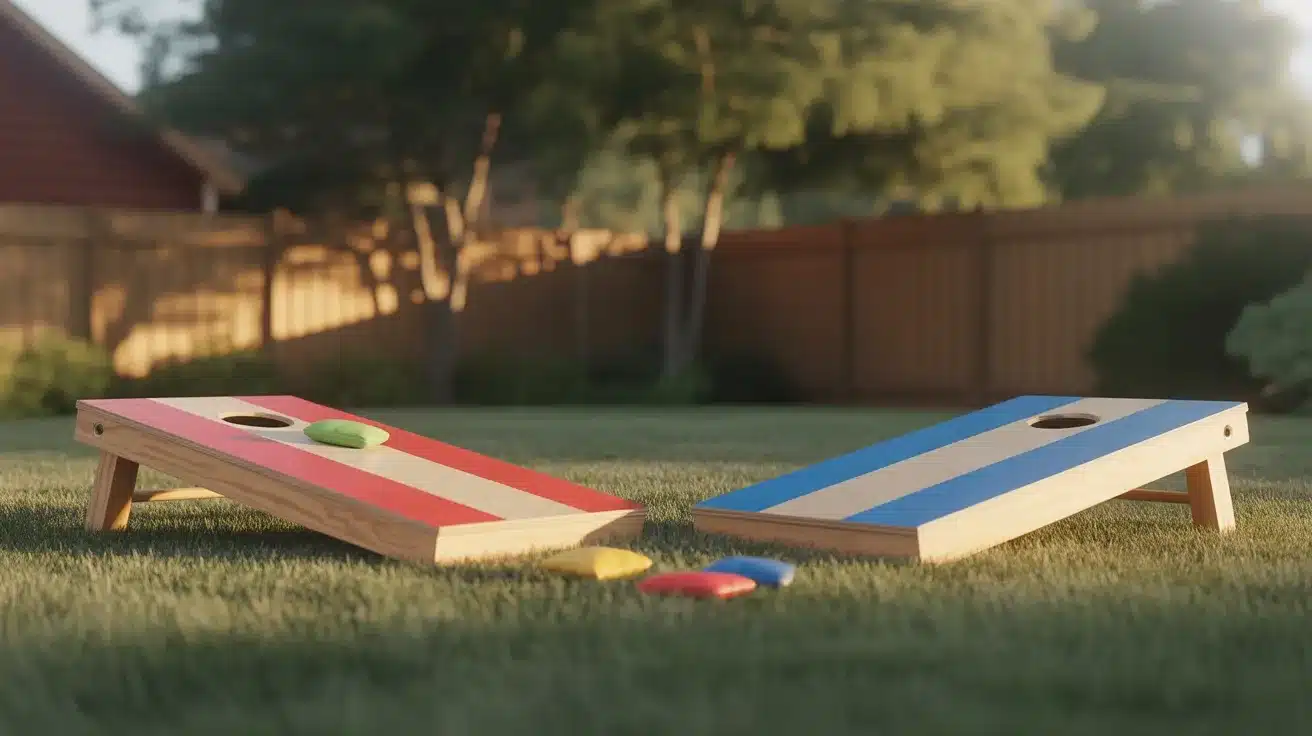


Setting up cornhole sounds simple until you realize how many people get the spacing wrong.
From backyard cookouts to tailgate parties, the game gets rushed, boards dropped wherever there’s room, and suddenly the whole thing feels off. Too close, and every toss lands in the hole.
Too far, and nobody’s scoring at all. Getting the distance for cornhole boards right is the single most important part of setup, and it’s easier than most people assume.
Let me help you understand this by breaking it down clearly, from the official measurement to practical spacing tips, so your next game feels exactly the way it’s supposed to: balanced, competitive, and worth playing.
Users are looking for the official rules regarding the setup of cornhole boards, including the standard distance between them.
Understanding Cornhole Boards
Cornhole is a competitive tossing game played with two raised wooden boards and fabric bags filled with corn or synthetic pellets. Each board has a 6-inch hole near the top, and a bag in the hole for 3 points, or flat on the board surface for 1.
Games run to 21 using cancellation scoring, where only the net difference per round counts. Players take turns throwing from the same end, switching sides each round. The American Cornhole Association governs official specs for both board dimensions and spacing.
That distance between boards determines how much skill the game actually demands; it shapes the throwing arc, the release angle, and how the bags slide once they land. Get it right, and every throw means something. Get it wrong, and even good players feel the imbalance.
What is the Official Distance for Cornhole Boards?
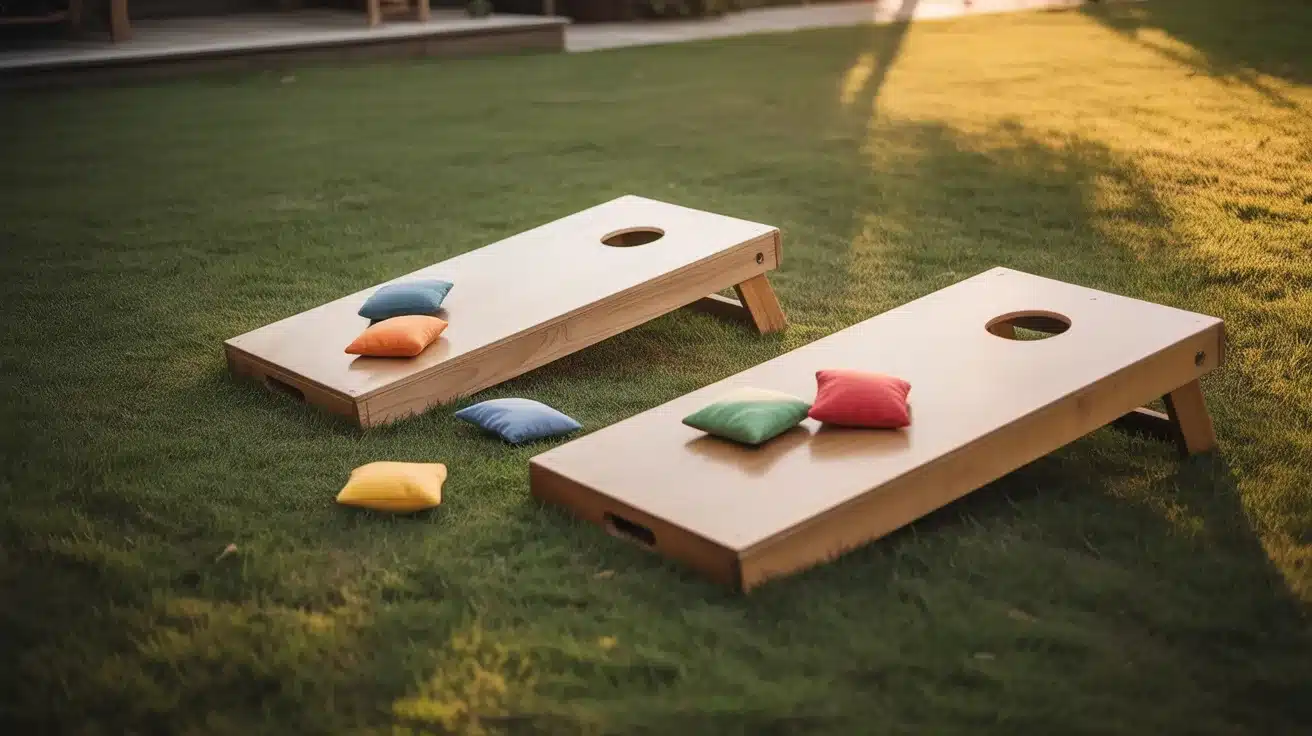
The official distance for cornhole boards depends on player age and level of play. Adult tournament rules follow strict measurements, while junior and casual games allow shorter distances for easier tossing.
Adult Regulation Distance
For official adult play, cornhole boards must be placed 27 feet apart, measured from the front edge of one board to the front edge of the other.
In metric terms, that equals 8.23 meters. This measurement is defined in official rulebooks from the American Cornhole Association (ACA), American Cornhole Organization (ACO), and American Cornhole League (ACL). The distance creates a balanced level of difficulty and ensures consistent competitive play.
Official Adult Distance:
- 27 feet
- 8.23 meters
- Front edge to front edge
Junior & Recreational Distance
Junior competitive play typically shortens the distance to 21 feet, measured front edge to front edge. For younger children, seniors, or casual backyard games, the boards may be placed 12 to 15 feet apart.
Reducing the distance makes it easier to reach the board while still practicing proper throwing form. Importantly, the board size does not change for juniors or recreational players. Only the throwing distance is adjusted to match skill level and strength.
Official Board Dimensions to Pair With Correct Spacing
Spacing alone won’t give you a regulation setup; the boards themselves need to match official specs. Here are the dimensions that matter for a correctly built or bought board. Here’s a breakdown:
| Component | Measurement | Metrics | Why It Matters |
| Board length | 4 feet | 1.22 meters | Shorter boards reduce the landing surface area significantly |
| Board width | 2 feet | 0.61 meters | Narrower boards make bag placement harder than intended |
| Hole diameter | 6 inches | 15.24 cm | Smaller or larger holes shift scoring rates noticeably |
| Hole position | 9 inches from the top, centered | 22.86 cm | Off-center holes change the target zone unfairly |
| Back edge height | 12 inches off the ground | 30.48 cm | Sets the playing slope that controls the bag slide distance |
Board size and spacing work together; using undersized boards at 27 feet makes the game harder than regulation, while oversized boards at the same distance make it easier. Match both to keep things consistent.
How to Set Up the Boards Correctly
Setting up the boards the right way keeps the game fair, stable, and safe. Follow these simple placement steps before starting play.
Step 1: Measure the Distance Between Boards
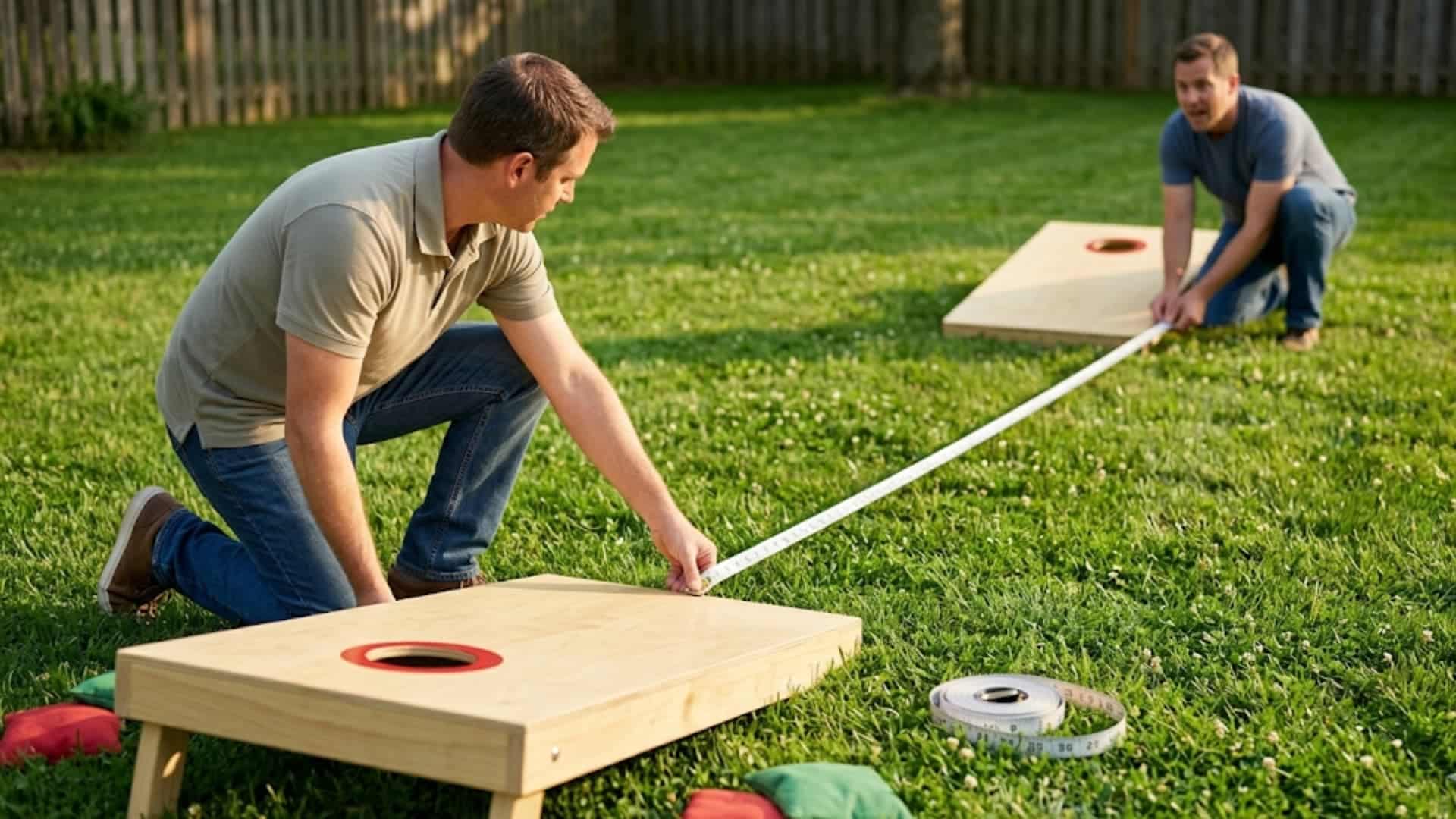
Start by placing both boards on a flat, level surface, such as grass, concrete, or indoor flooring. Measure the distance from the front edge of one board to the front edge of the other. For standard adult play, that distance is 27 feet.
For casual backyard games or kids, you can shorten it to 12–15 feet. Always measure carefully so both sides agree on spacing before the game begins. Consistent distance keeps throws fair and scoring accurate throughout the match.
Step 2: Position Boards at the Correct Angle
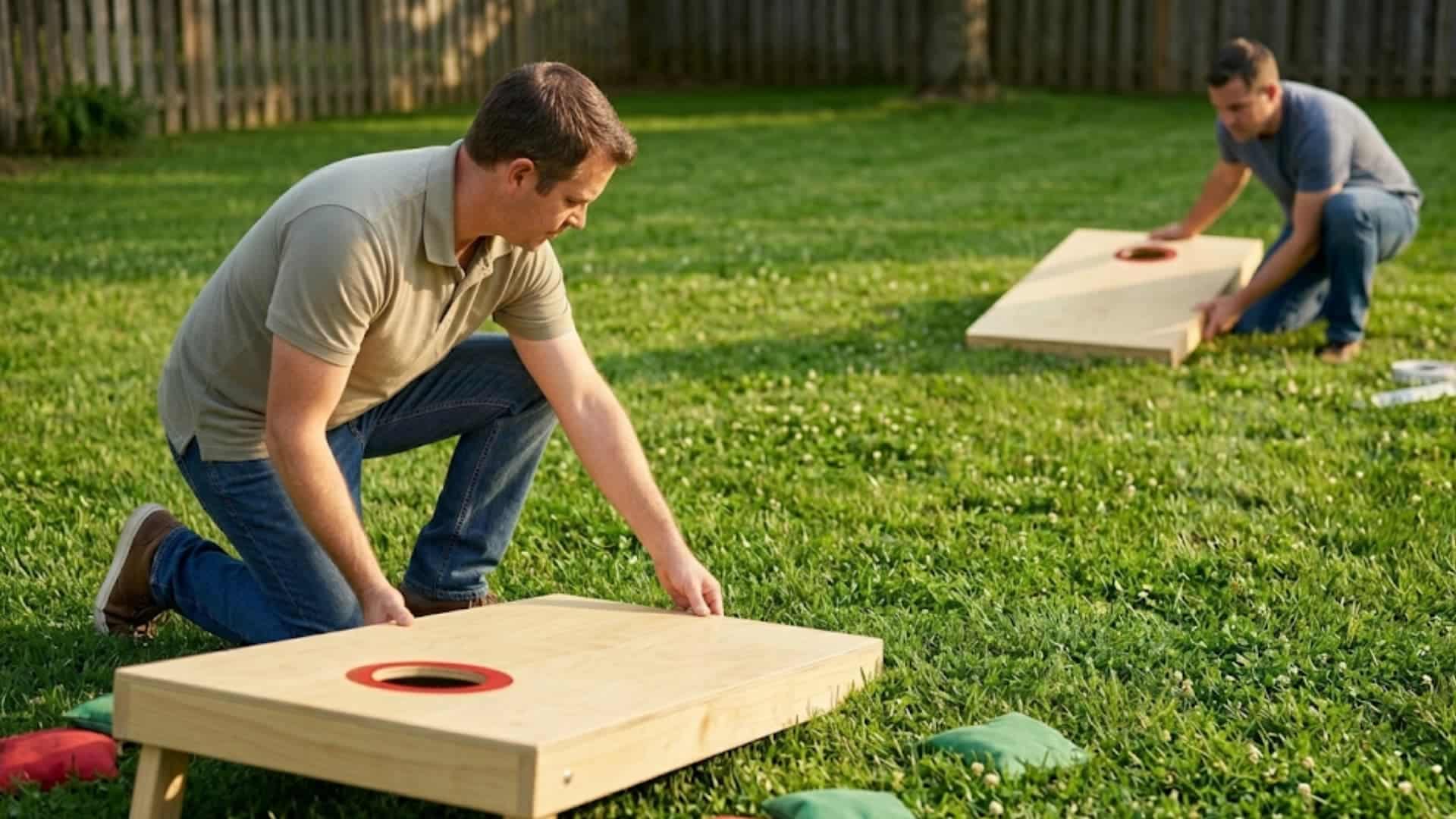
Each board should sit at a slight upward angle, not flat on the ground. The back of the board must be raised so the top edge stands about 12 inches off the ground for regulation setup.
Most boards have folding legs underneath to create this incline. Make sure both boards match in height and angle. If one board tilts differently, gameplay becomes uneven. Double-check stability so the board does not wobble when bags land on it.
Step 3: Align the Boards Straight Across
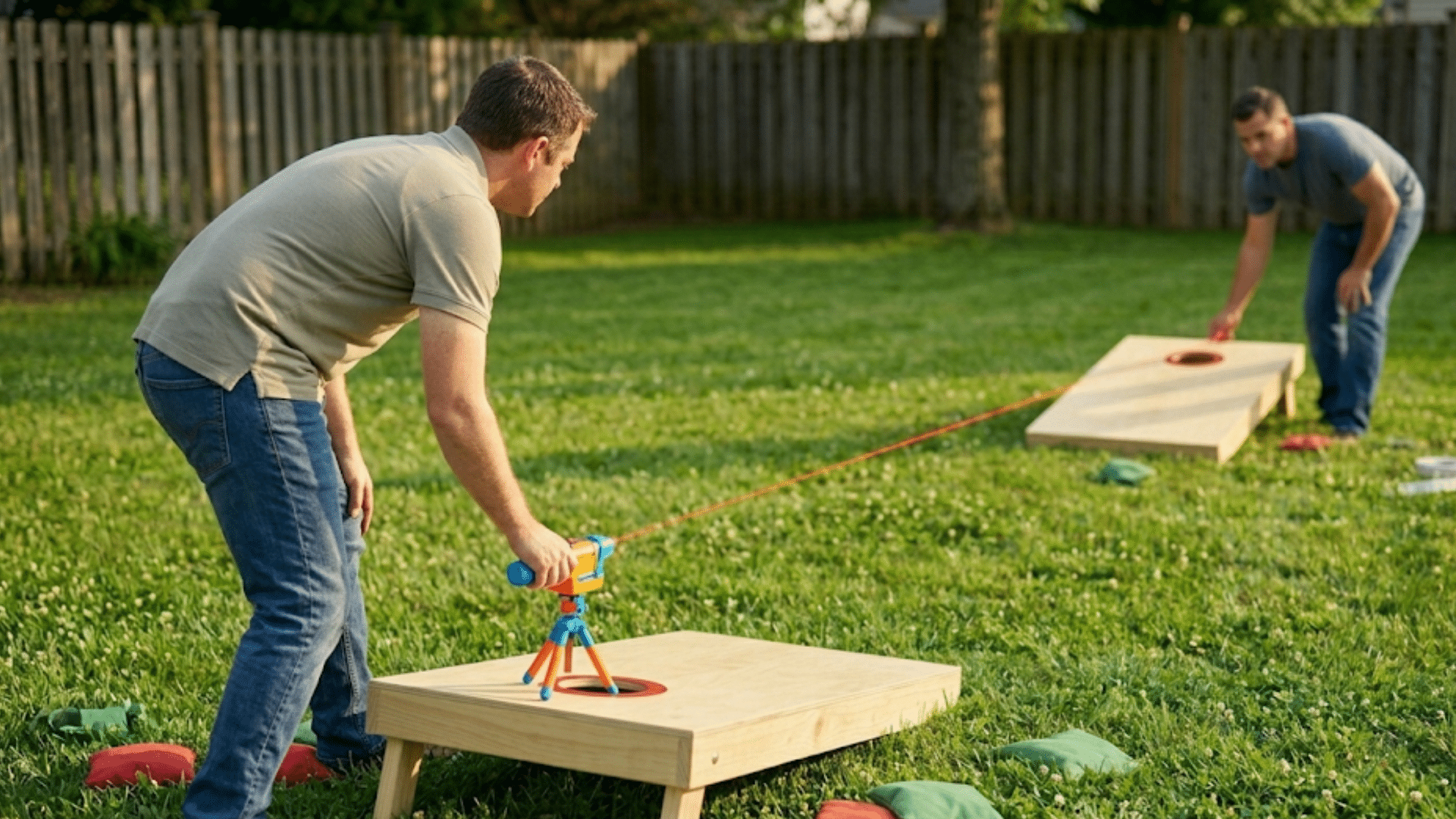
Both boards should face each other directly in a straight line. Stand behind one board and visually confirm that the hole aligns with the center of the opposite board.
If needed, adjust slightly left or right until both are evenly positioned. This alignment ensures players throw toward the center and keeps the game balanced. Crooked placement can change throwing angles and affect scoring fairness.
Step 4: Secure the Boards for Stability
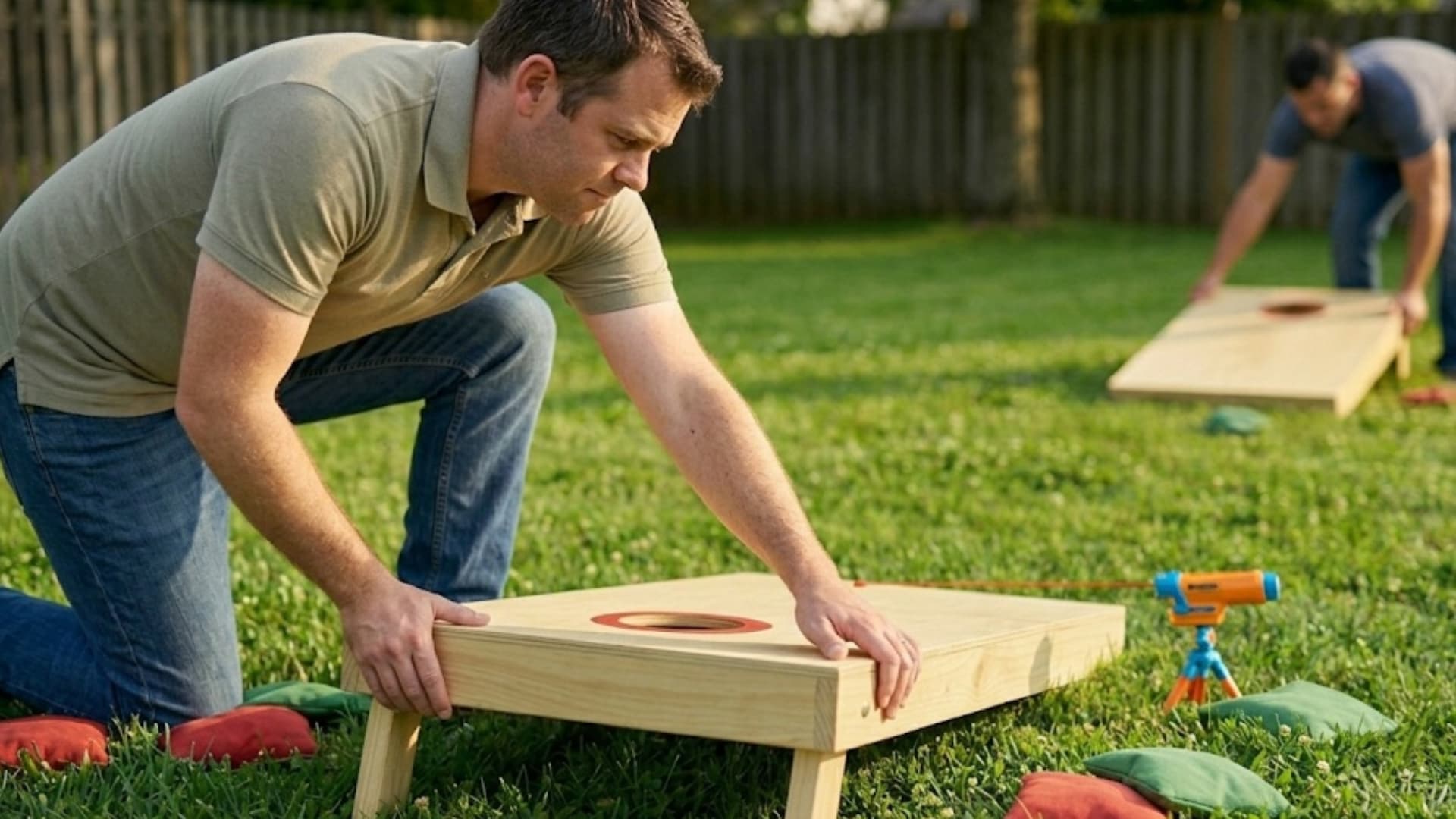
Before starting the game, test each board by pressing gently on the corners. The board should not rock, slide, or sink unevenly into the ground. On grass, press the legs firmly into the soil.
On hard surfaces, consider placing non-slip pads underneath. Stability prevents movement when bags land with force. A secure setup improves accuracy and reduces frustration during play.
Step 5: Create a Clear Throwing Line
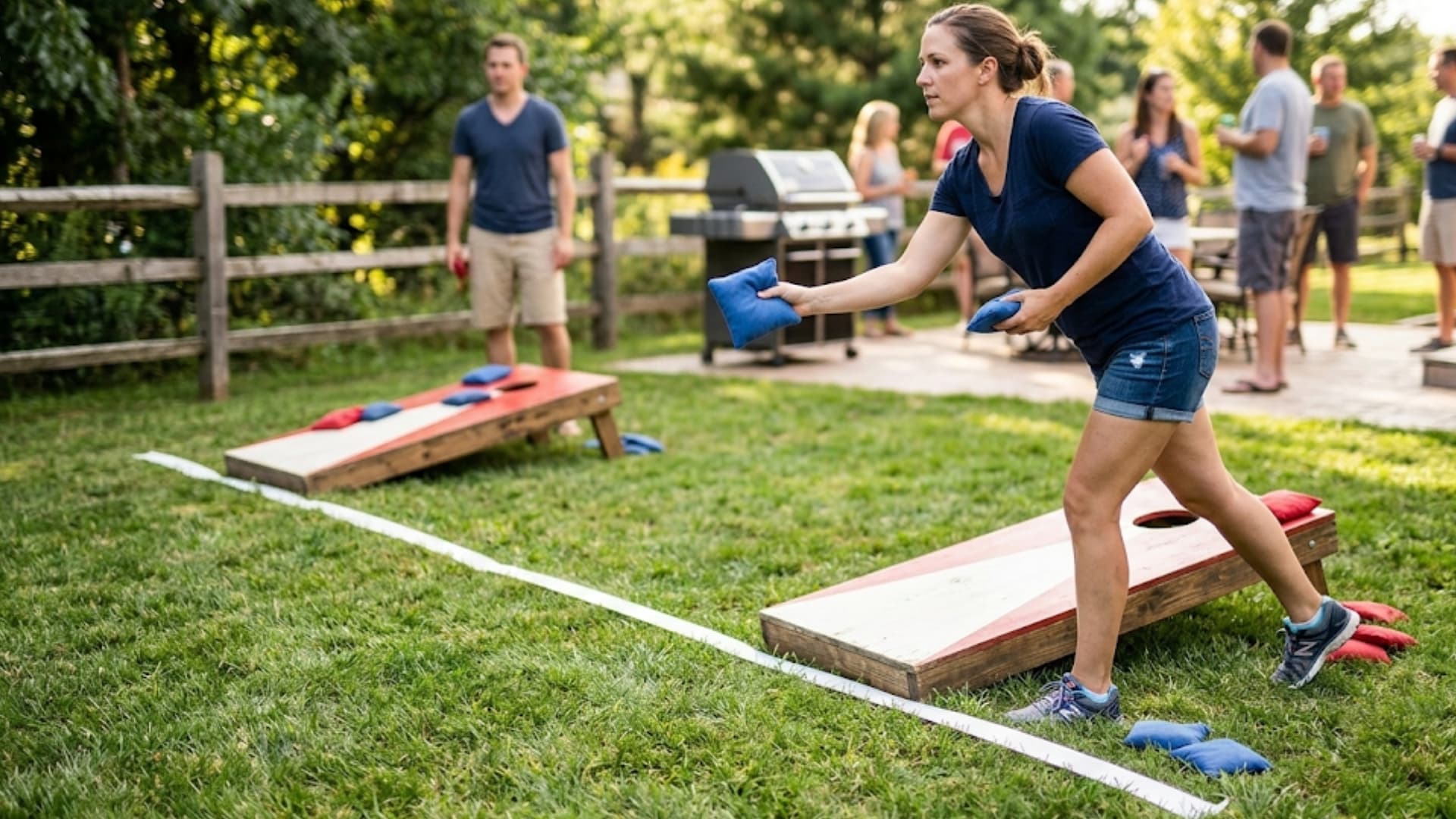
Mark a clear throwing line at the front edge of each board. Players must stay behind this line when tossing bags. You can use tape, chalk, or simply agree on the edge as the boundary. This keeps gameplay organized and fair.
Remind players not to step past the front edge during throws, especially in competitive matches. A visible line helps everyone follow the same rules.
Adjusted Distances for Different Players
Not every player throws like a tournament competitor. Scaling the distance by age and skill level keeps the game competitive and worth playing for everyone involved. Here’s a breakdown:
| Player Type | Recommended Distance | What It Does |
| Tournament / competitive adults | 27 feet | Full regulation play: tests skill, arc, and consistency |
| Beginners or casual adults | 21 feet | More forgiving without losing the feel of real cornhole |
| Kids aged 8–12 | 15 to 18 feet | Keeps scoring realistically and holds their attention |
| Young children under 8 | 10 to 12 feet | Makes the game achievable and genuinely enjoyable |
From personal experience watching kids play at family gatherings, shortening the distance to match their ability changes the whole energy; they score more, stay engaged, and actually want to keep playing.
Why 27 Feet Became the Standard
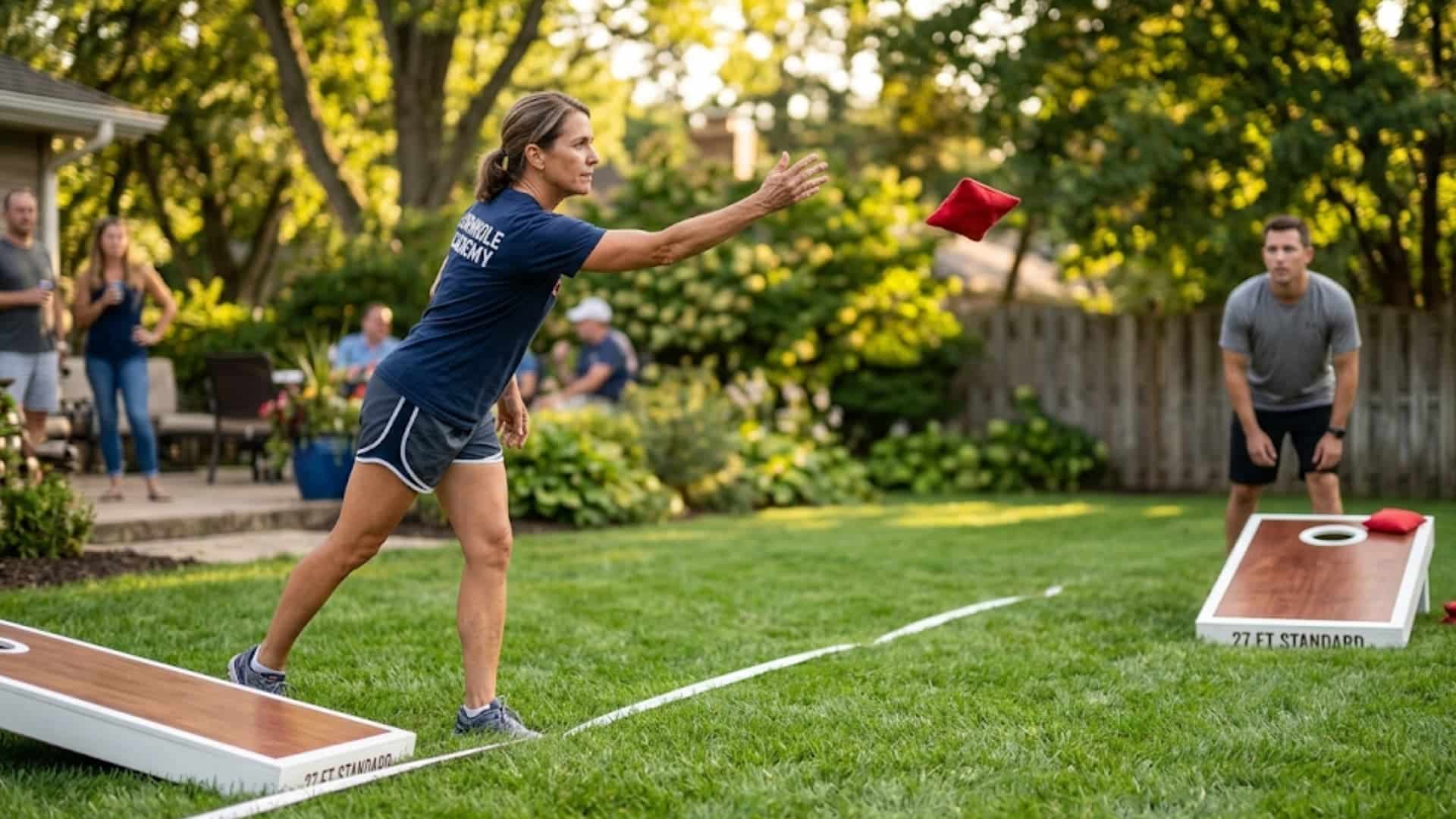
The 27-foot distance wasn’t chosen randomly, and from my experience playing at different spacings, the difference is immediately noticeable. It sits at exactly the right point where the throwing arc requires genuine control.
A good throw demands the right release height, correct arc, and enough spin to land flat so the bag slides rather than bounces toward the hole. Shorter distances make flat, skimming throws too easy.
Greater distances push scoring rates so low that games stall and lose momentum entirely. Years of competitive refinement landed on 27 feet as the number that keeps games tight, scoring meaningful, and skill properly rewarded, and in my opinion, that balance is what makes cornhole worth playing seriously.
Total Yard Space You’ll Actually Need
Most people measure the 27 feet between boards and stop there, but that’s only part of the space the game actually requires to play comfortably and safely. Here’s a clear breakdown:
| Zone | Space Required | Metric Equivalent | Purpose |
| Between boards | 27 feet | 8.23 meters | Official playing distance, front edge to front edge |
| Behind each board | 3 to 5 feet | 0.91 to 1.52 meters | Room for players to stand, step, and throw freely |
| Each side of the lane | 2 to 3 feet | 0.61 to 0.91 meters | Safety buffer and comfort space during play |
| Total length needed | 35 to 40 feet | 10.67 to 12.19 meters | Full playing area, including player zones at both ends |
A standard two-car driveway or an open backyard section comfortably covers this. Measure the full area before finalizing board placement; running short on space behind the boards mid-game affects every throw from that end.
Common Mistakes That Throw Off Your Setup
Small setup errors are more common than you’d think, and each one quietly ruins the game. Here’s what to avoid:
- Measuring from the wrong edge: Back edge to back edge cuts 4 feet off the playing distance. Always start at the front lip.
- Measuring hole-to-hole: The hole is 9 inches from the top, so this measurement falls short of the correct 27-foot spacing.
- Skipping the ground check: Sloped or uneven ground changes how bags behave on the board surface.
- Misaligning the boards: Boards angled toward each other create an uneven throwing lane. Sight down both boards before finalizing placement.
- Forgetting the foul line: Stepping past it during a throw affects the release point and fairness across a full game.
Fix these before the first toss, and the rest of the game takes care of itself. Most of these mistakes take under a minute to avoid; the payoff is a setup that actually holds up through a full game.
Final Thoughts
Now you know that the official distance for cornhole boards is 27 feet, measured front edge to front edge for adult play.
You’ve also seen how board dimensions, surface level, spacing behind each board, and proper alignment all shape how the game feels.
When you measure carefully and set up the correct distance for cornhole boards, you create a fair playing area where skill actually matters.
Take a few extra minutes with a tape measure before your next game. That small step makes a big difference in consistency and scoring. Set your boards at the proper distance today, then share your setup or questions in the comments.