

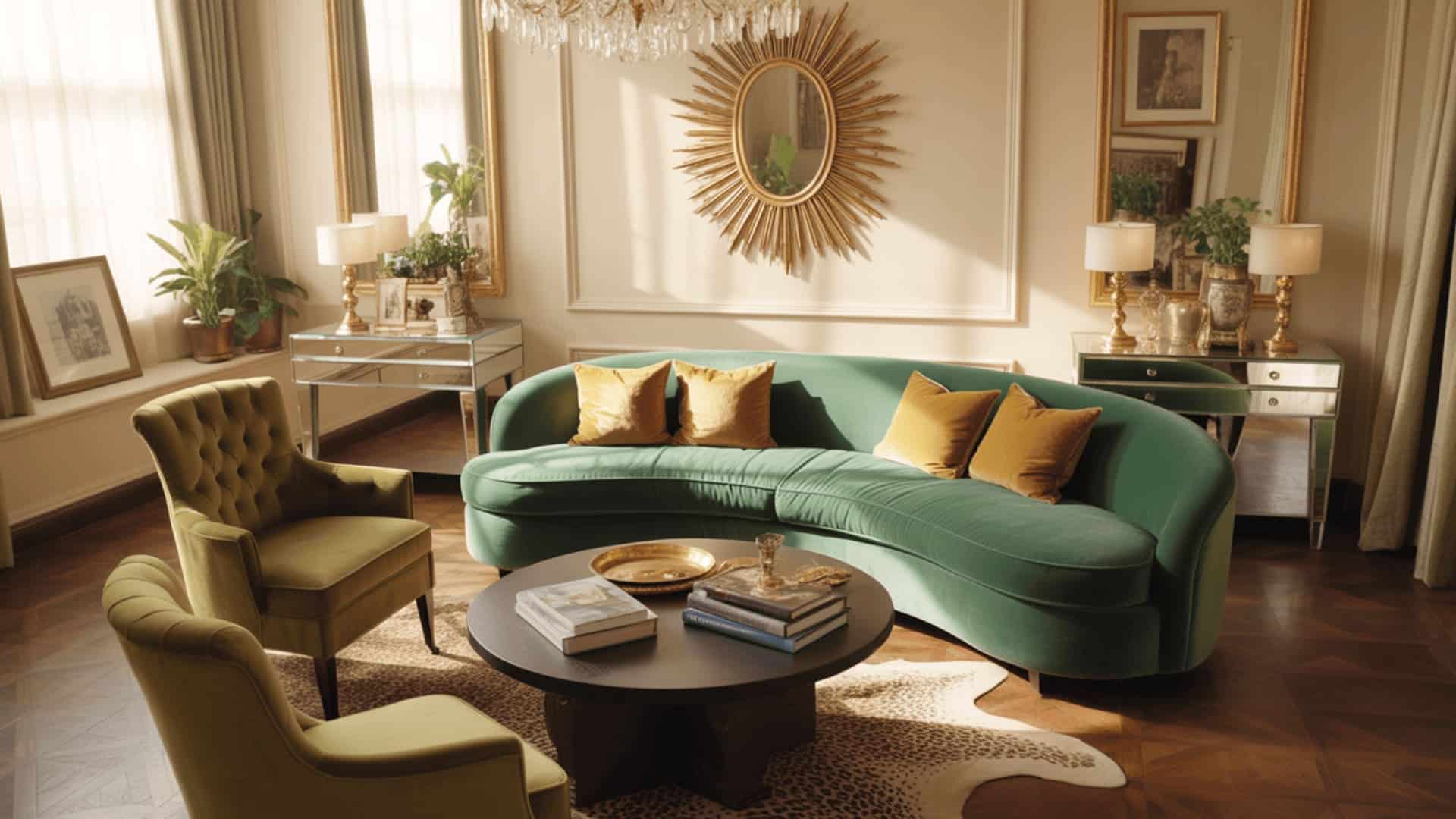


Some rooms instantly feel polished and glamorous the moment you step inside. That feeling often comes from a design approach called Hollywood Regency style.
As an interior stylist with years of experience helping clients build cohesive, personality-driven spaces, I find Hollywood Regency endlessly fascinating to work with.
It’s one of the few styles where restraint is not the point, theatricality is. I’ve styled several rooms in this idiom, and the reaction is almost always the same: people walk in and say it feels like a set.
I’ll walk you through what defines this dramatic style, where it came from, and how you can bring it into your own home.
You’ll also find practical tips for styling living rooms, bedrooms, and dining areas while keeping your space balanced and cohesive.
Hollywood Regency Style Explained
At its core, Hollywood Regency (also known as Regency Moderne) is the art of theatrical luxury. While other styles focus on how a room functions, this style focuses on how a room feels, specifically, how it feels under a spotlight.
It is defined by a “more is more” philosophy, characterized by high-contrast visuals, such as crisp black-and-white floors paired with vivid emerald or gold. Reflective glamour is achieved through heavy reliance on mirrors, glass, and high-gloss lacquer to reflect light.
Sensory textures matter deeply; if it’s not silky, velvety, or furry, it probably doesn’t belong. Scale and proportion play a crucial role, too, with low-slung furniture that makes ceilings look ten feet tall, creating an air of grandiosity that defines the entire space.
One thing people often get wrong is conflating Hollywood Regency with Art Deco. While both share geometric precision and a love of metallic finishes, Art Deco tends toward sleekness and minimalism.
Hollywood Regency is more ornamental, more eclectic, and openly maximalist. It borrows from Art Deco but layers in Chinoiserie, neoclassical symmetry, and a spirit of theatrical excess that Art Deco never fully embraced.
The History Behind Hollywood Regency
This style emerged during the Golden Age of Cinema (1920s–1950s), when movie stars like Joan Crawford and Carole Lombard sought homes that matched the opulence of their film sets.
Dorothy Draper
The “First Lady of Interior Design,” mastered bold patterns such as her “Brazilliance” leaf print and oversized checkerboard floors, demonstrating that contrasting patterns could achieve sophistication.
Draper established the first interior design firm in the United States in 1923, and her work on The Greenbrier resort in West Virginia, which she transformed from a WWII Army hospital into a showcase of American glamour beginning in 1946, remains one of the most cited examples of Hollywood Regency at scale.
William Haines
A former silent film star pioneered low-profile furniture to maintain unobstructed sightlines during gatherings.
Billy Baldwin
A third figure often left out of these histories, sometimes called the dean of American decorators.
Baldwin championed the idea that comfortable furniture was the ultimate luxury. He brought cotton fabrics, dark walls, pattern-on-pattern layering, and the armless slipper chair into the vocabulary — elements that would quietly shape what we now recognize as Hollywood Regency’s more livable side.
David Hicks
The English designer who brought the style into the 1960s and 70s with his bold geometric rugs and monochromatic rooms, giving it a sharper, more modern edge.
Key Characteristics of Hollywood Regency Style
This design style has a signature look that’s instantly recognizable, but knowing the rules also helps you know when to break them.
In practice, I’ve found that the homes that pull this off best don’t use every characteristic at once.
They anchor the room in one or two strong moves, say, a black-and-white floor and a velvet sofa, and let everything else follow quietly.
1. Bold Color Palettes
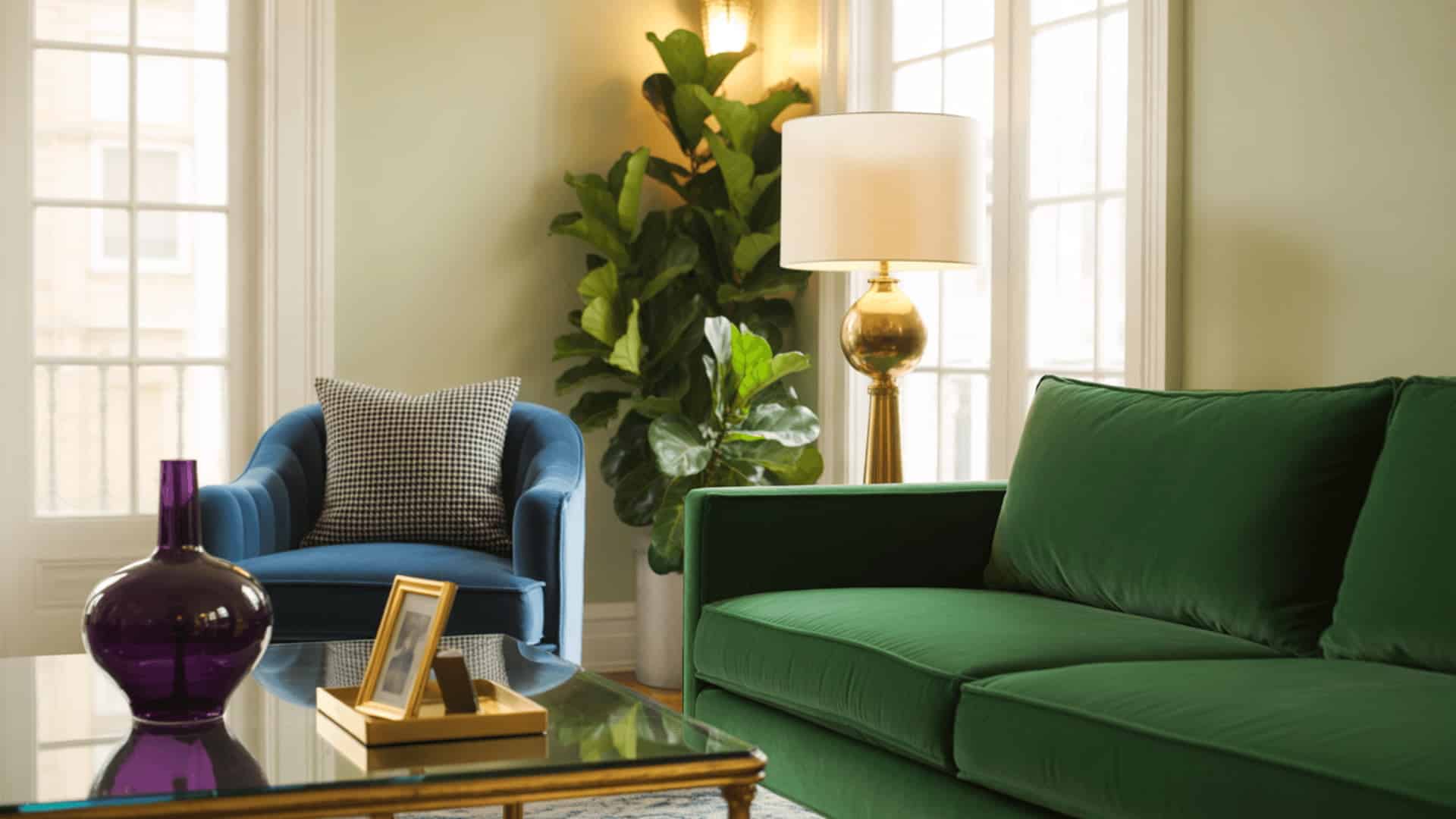
The color approach is fearless and high-impact. Sharp black-and-white contrasts form the base, and rich jewel tones like emerald green, sapphire blue, and deep amethyst add drama.
This contrast creates visual punch and keeps the eye moving around the room. It’s not about playing it safe; it’s about making each color choice count and letting different shades play off each other for maximum effect.
Hot pink satin paired with emerald velvet, or turquoise drapes against lemon yellow upholstery. These are not accidental. The contrast creates visual tension, keeping the eye moving.
The most effective Hollywood Regency rooms typically commit to one dominant jewel tone and use black, white, or gold as supporting players, rather than introducing three or four competing saturated colors at once.
2. Luxurious Materials
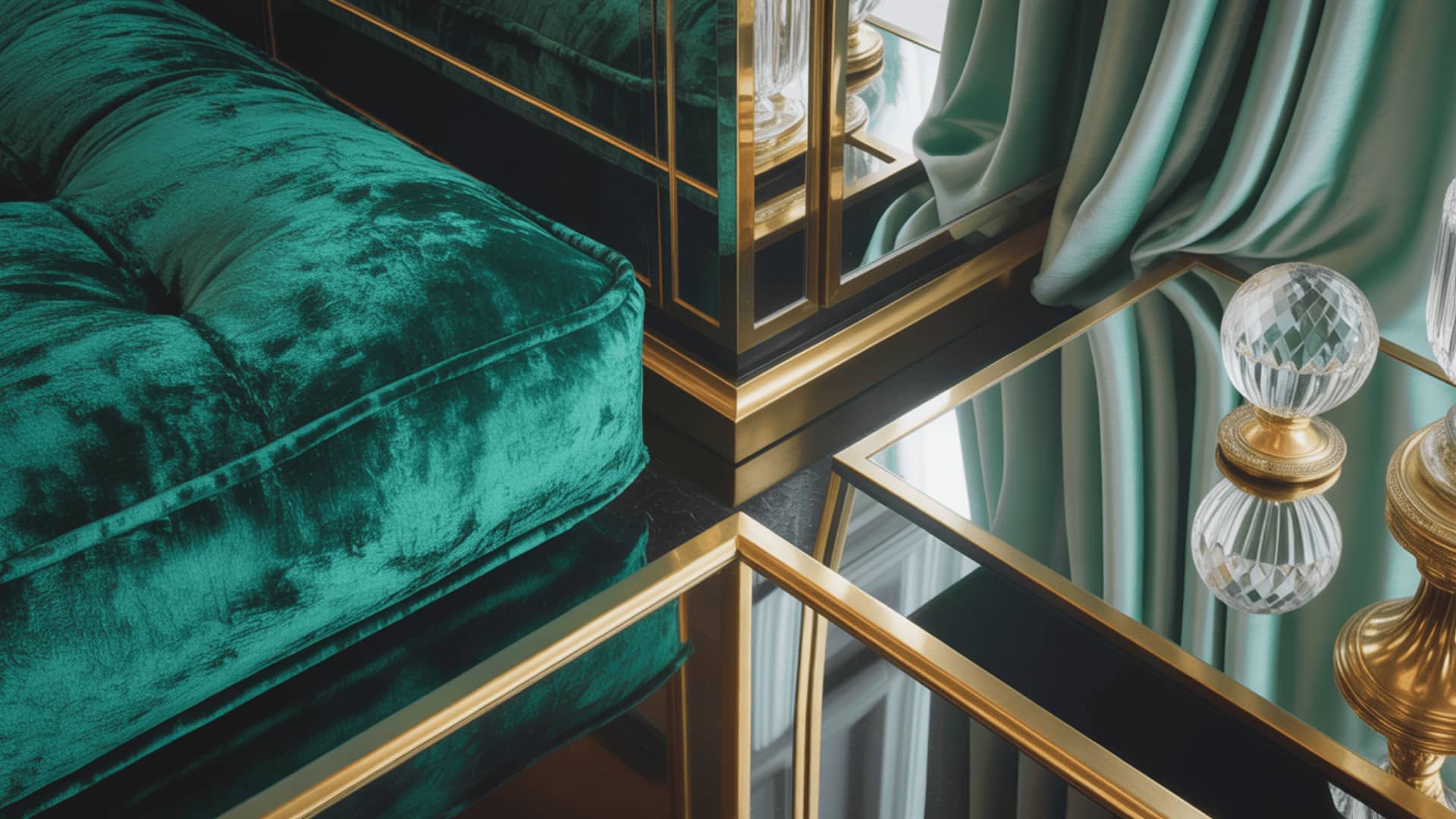
Material choice defines the whole vibe. Plush velvet upholstery, smooth silk drapes, and glossy lacquered finishes dominate the space. Mirrored surfaces and glass accents reflect light, while brass and gold hardware add warmth and richness.
These materials create layered textures that define the glamorous feel of the style. This mix of soft and shiny gives its signature opulent feel.
In more contemporary takes on the style, Lucite furniture has become a staple. It carries the same sense of glamour and transparency without the weight.
Faux fur throws and upholstered stools bring textural contrast. The goal with materials is layering: something shiny next to something plush next to something matte, so the room never reads as flat.
3. Furniture Shapes
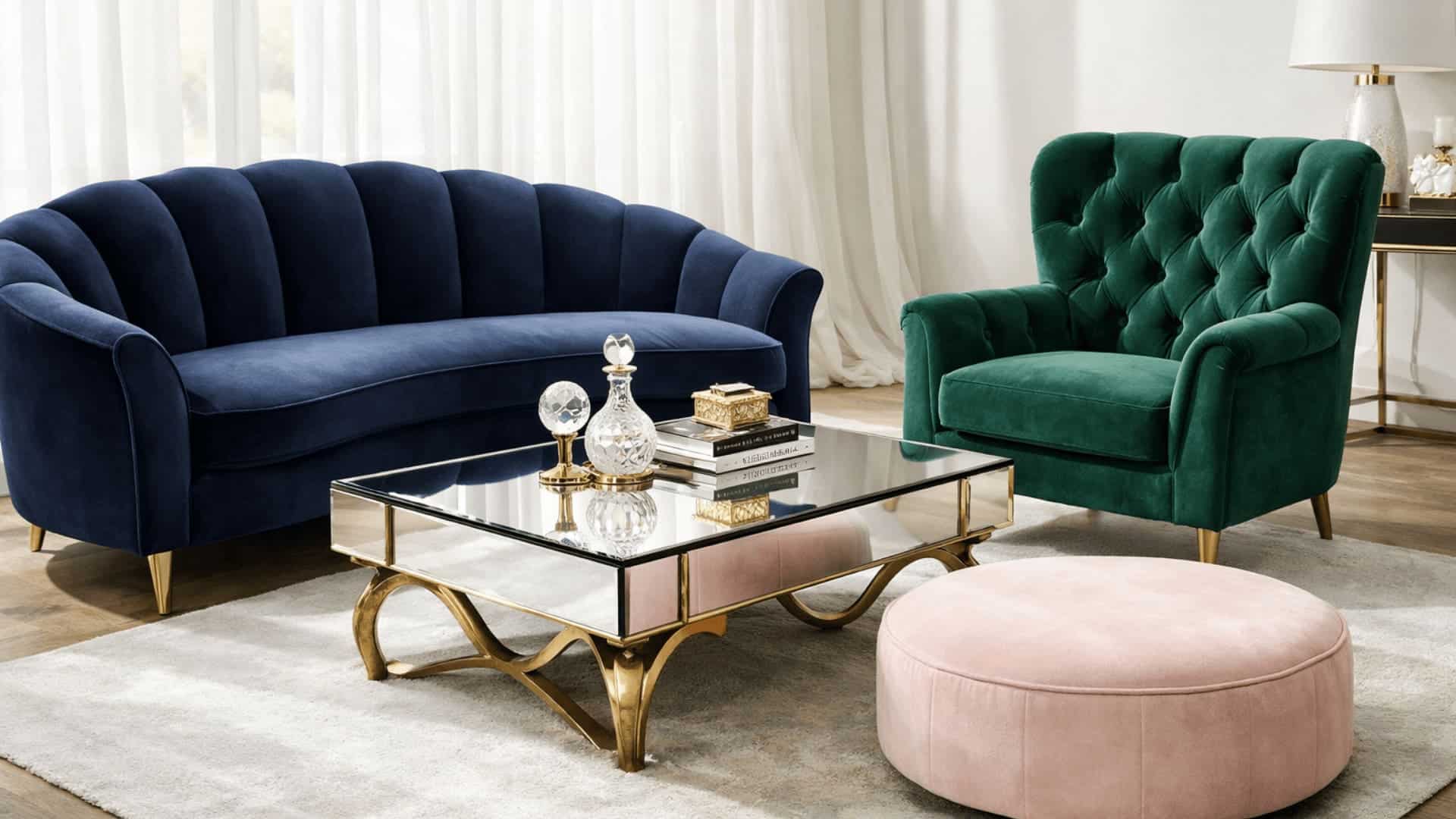
The furniture makes vibrant statements through shape alone. Curved sofas with dramatic silhouettes, deeply tufted chairs and headboards, and low-profile seating that feels modern yet plush.
The armless slipper chair is a true Hollywood Regency staple. It reads as boudoir-inspired but works in almost any room.
Haines’s “Bel Air” sofa, designed low to the floor so that guests appeared grander by comparison, is another classic reference point.
Faux-bamboo accents on furniture frames, a nod to Chinoiserie, are equally characteristic and easier to source than people expect. Statement coffee tables, often with mirrored tops or sculptural bases, anchor the room.
4. Statement Decor
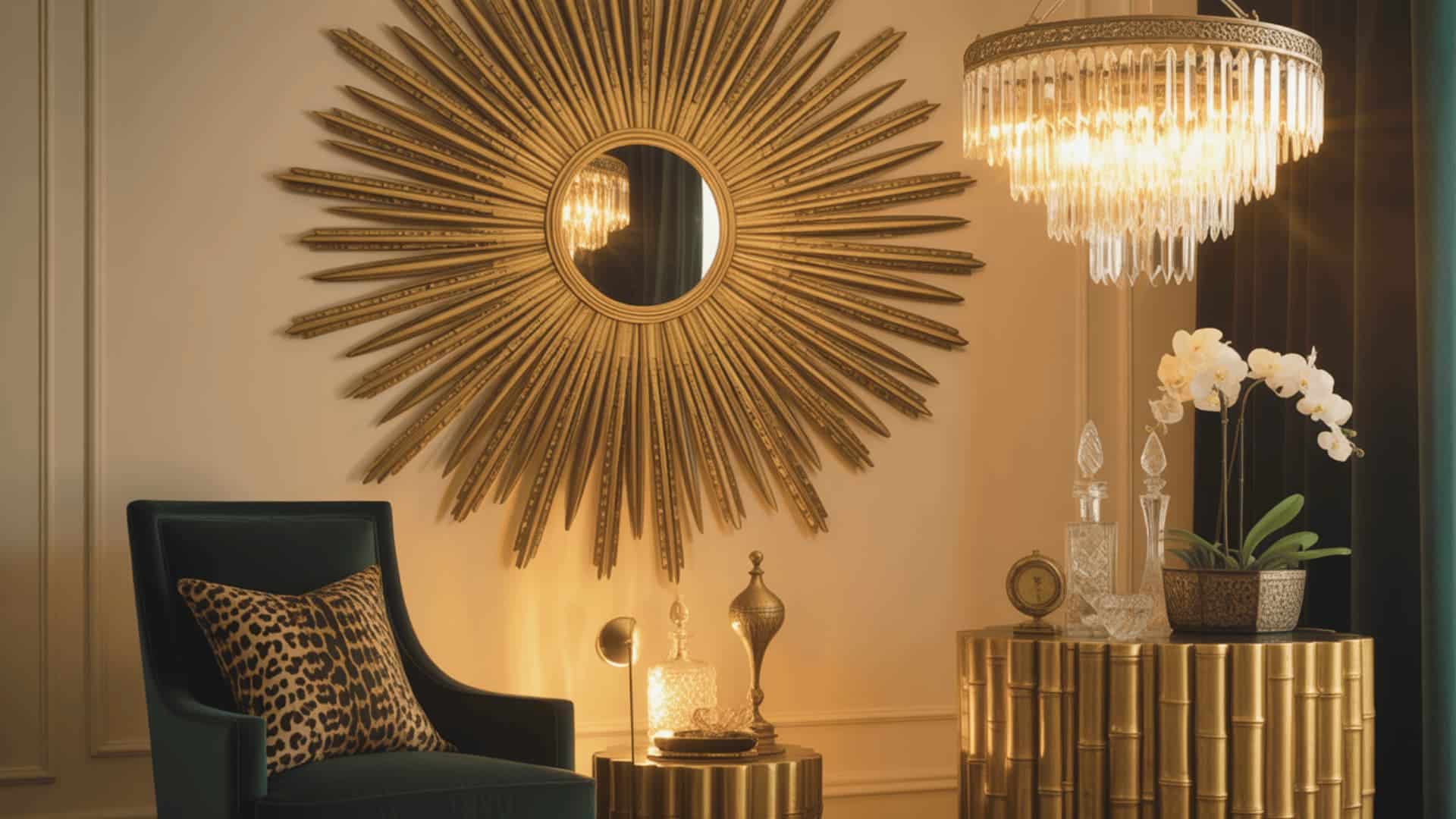
Accessories take center stage. Sunburst mirrors create instant drama on walls, while crystal chandeliers add sparkle overhead.
Animal prints like leopard or zebra bring pattern without fuss, and bamboo-style furniture nods to Chinoiserie influences.
Oversized black-and-white photographic prints of classic film actresses were common in original Hollywood Regency interiors and are having a revival.
Starburst motifs appear not just in mirrors but in ceiling flush mounts and sputnik-style pendant lights.
When choosing animal prints, scale matters. A large-scale zebra print reads as confident, while a small repeat can feel timid and out of place in an otherwise bold room.
It’s about choosing fewer pieces that make bigger impacts rather than cluttering surfaces with small, forgettable items.
5. Symmetry and Balance
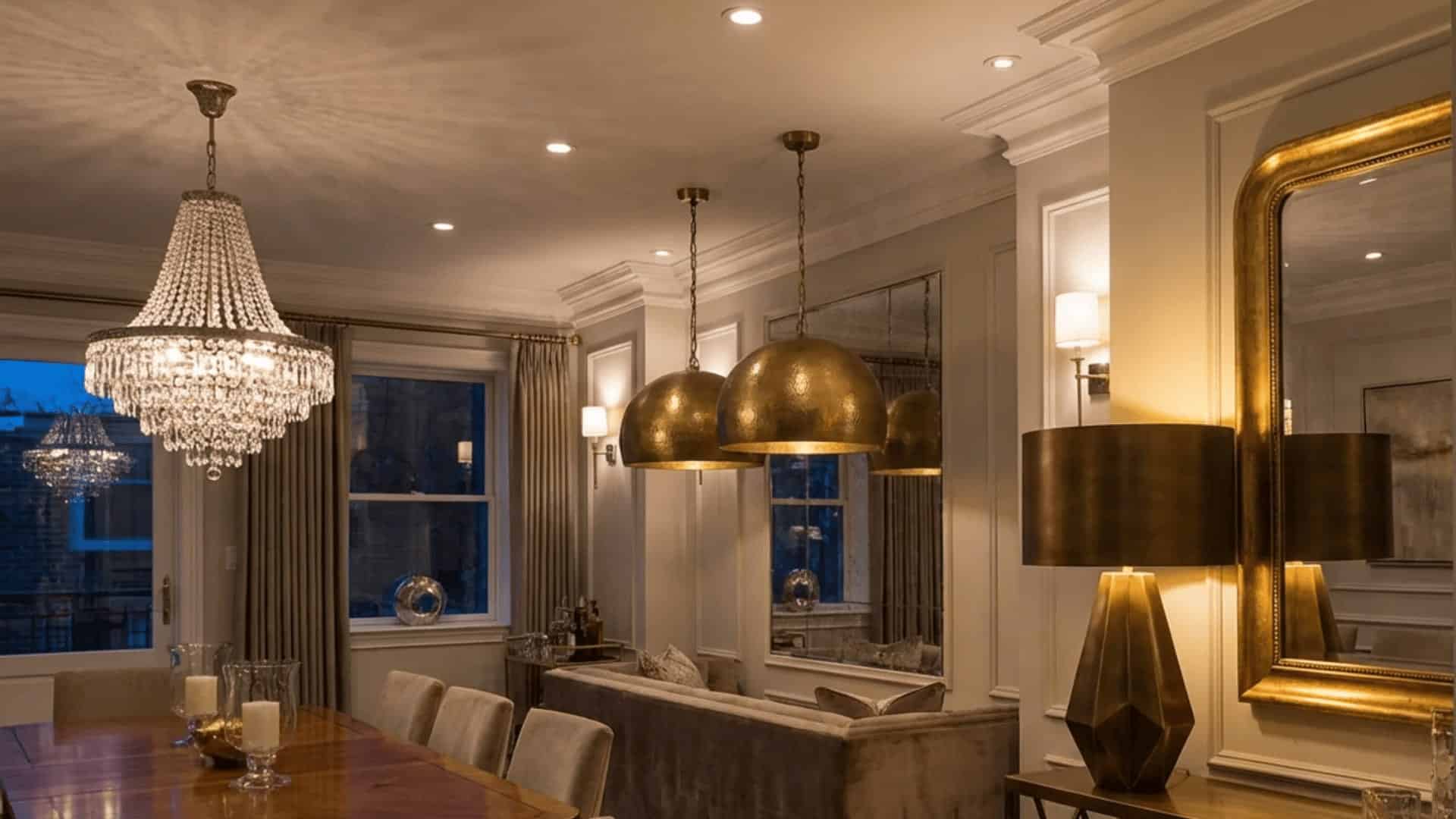
Hollywood Regency relies heavily on symmetrical arrangements to create visual harmony. Matching pairs of lamps, chairs, or side tables flank central focal points, such as sofas or beds.
This deliberate balance creates a sense of formality and polish while anchoring bold design choices.
The symmetry prevents dramatic elements from feeling chaotic, instead channeling energy into controlled, intentional glamour that feels both theatrical and refined.
6. Dramatic Lighting
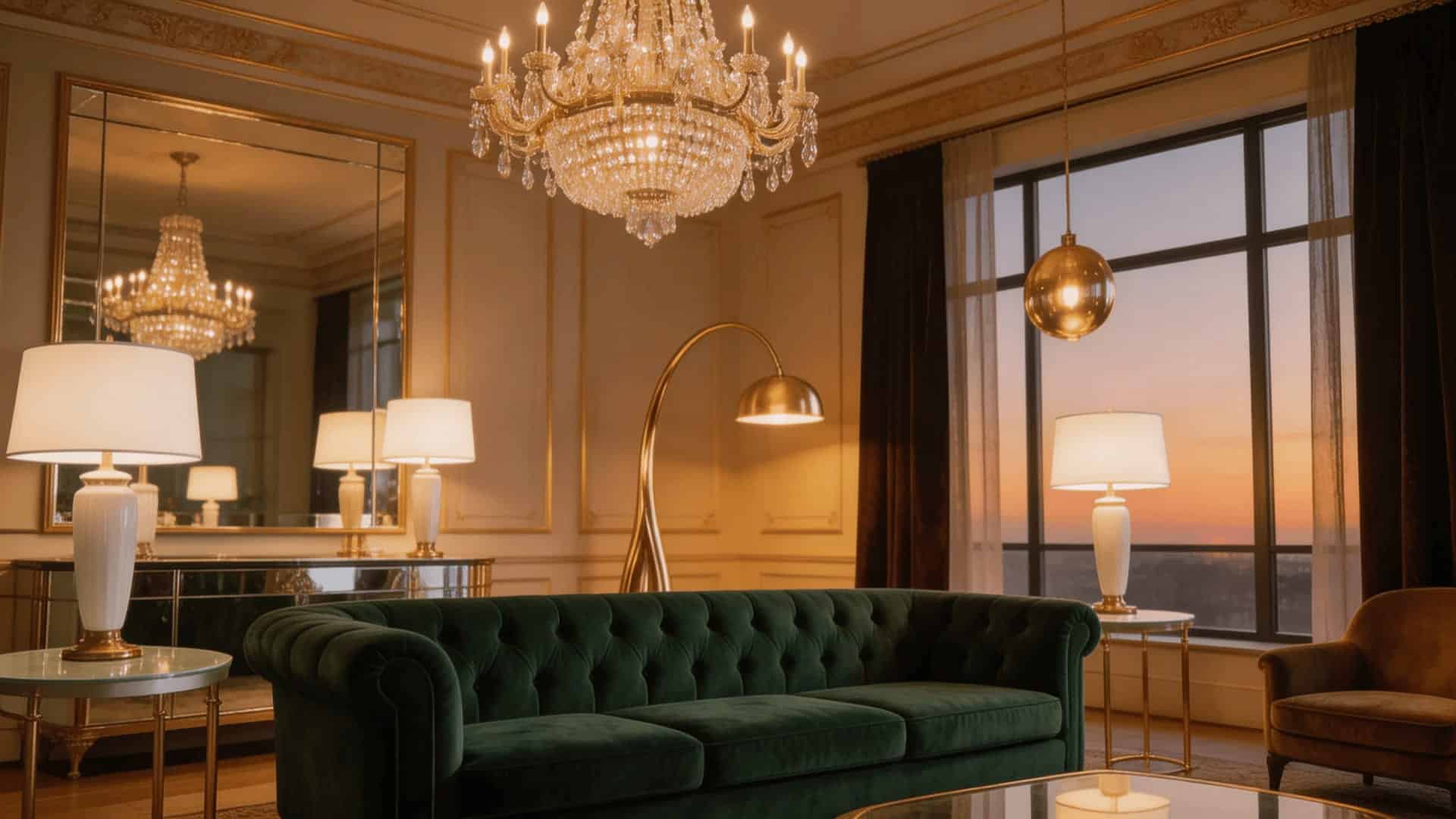
Lighting serves as jewelry for the room. Crystal chandeliers, oversized pendant lights, and sculptural table lamps with metallic finishes act as statement pieces beyond their functional purpose.
Multiple light sources at varying heights create depth and ambiance. Dimmers allow flexibility between bright, energetic settings and moody, intimate atmospheres.
Table lamps with unusual bases (sculptural animals, column forms, or oversized geometric shapes) are a Hollywood Regency signature.
The goal is not simply to illuminate but to make every light fixture feel like a deliberate design object. Sputnik chandeliers, with their starburst arms, are the most direct contemporary interpretation of this approach.
7. Walls andSurfaces
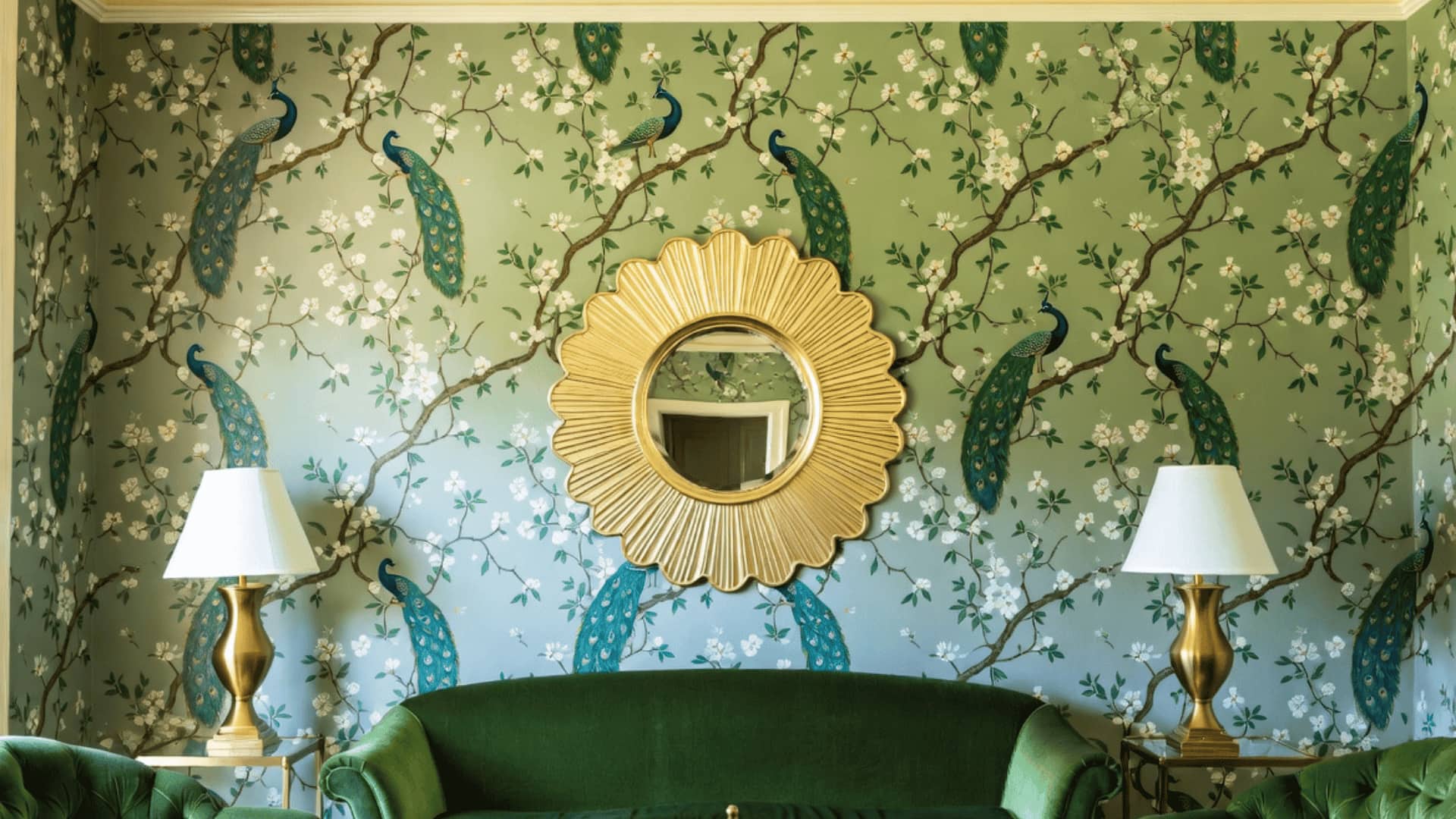
This is a characteristic top-ranking sources cover that is often underserved: plain white walls have no place in a true Hollywood Regency interior unless they are completely concealed by mirrors, frames, and artwork.
Common approaches include lacquered walls in deep jewel tones, tropical or chinoiserie wallpapers, bold stripe patterns, and glossy checkered wainscoting.
Full mirrored walls (not mosaic tiles) are also historically accurate, especially in dressing rooms and hallways. If budget is a constraint, a single mirrored wall behind key furniture achieves much of the same effect.
How to Incorporate Hollywood Regency Style in Your Home
When I bring this look into a client’s home, I always start one room at a time and resist the urge to do everything at once.
The spaces that feel genuinely glamorous are almost always built in layers over time – a good piece of furniture first, then lighting, then accessories.
Doing it all in a weekend tends to produce a room that looks costumed rather than designed.
1. Living Room
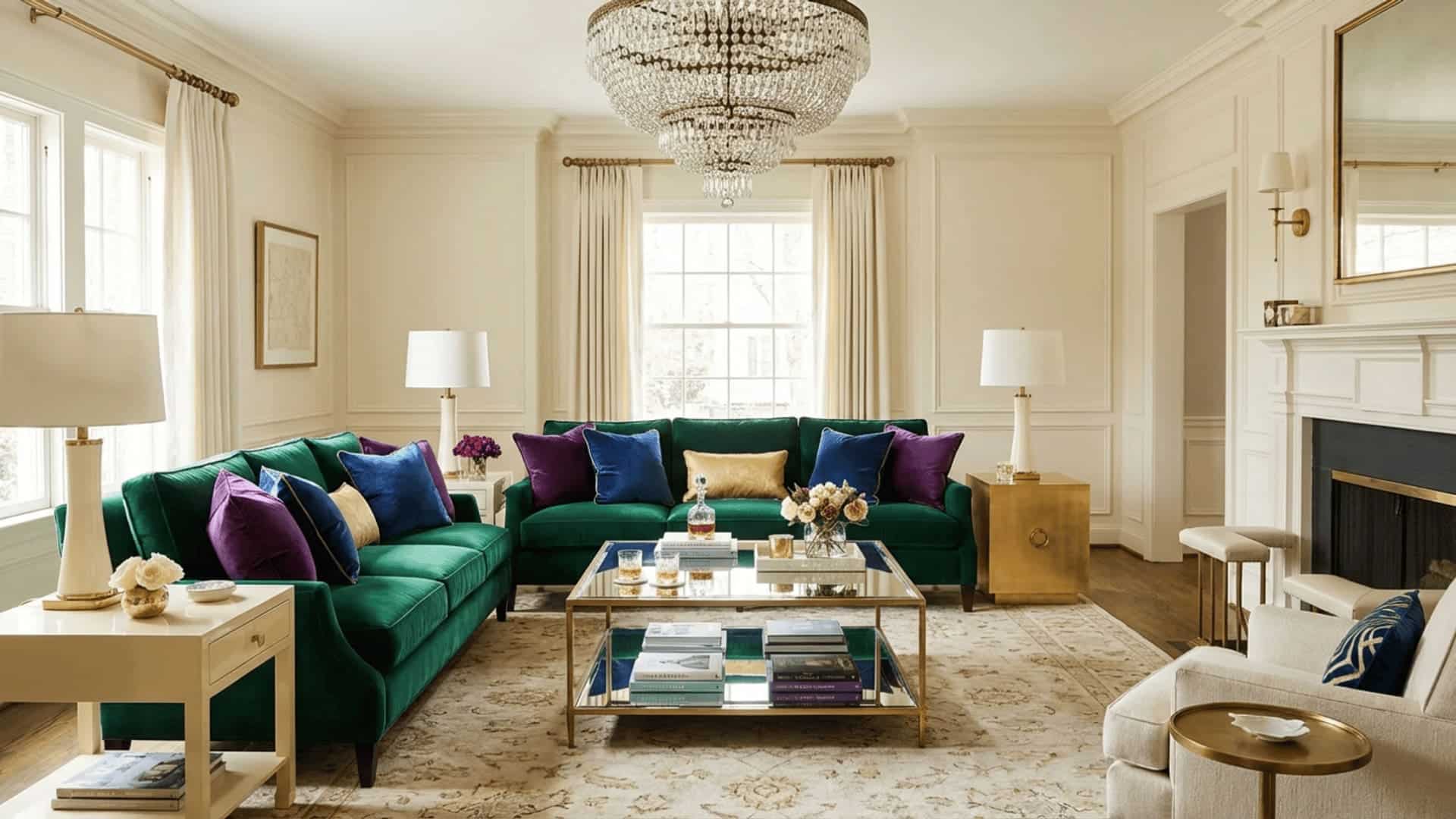
Choose luxurious fabrics like velvet or silk for sofas and chairs to establish the foundation of glamour. Incorporate mirrored furniture or lacquered finishes on coffee tables and consoles to create a reflective shine.
Add statement lighting like a vibrant crystal chandelier or large brass lamps with dramatic silhouettes. Layer in jewel-tone pillows and arrange furniture symmetrically around a central focal point to create balance and visual impact.
A glossy black-and-white chequerboard floor is the single most impactful move in a Hollywood Regency living room. It sets the entire tone and makes everything placed on top of it read as intentional.
If you rent or can’t change your flooring, a large geometric rug in black and white achieves a similar effect.
Pair this with a low-profile velvet sofa in a single strong color (emerald, navy, or deep plum) and you’ve established the room’s core language.
2. Bedroom
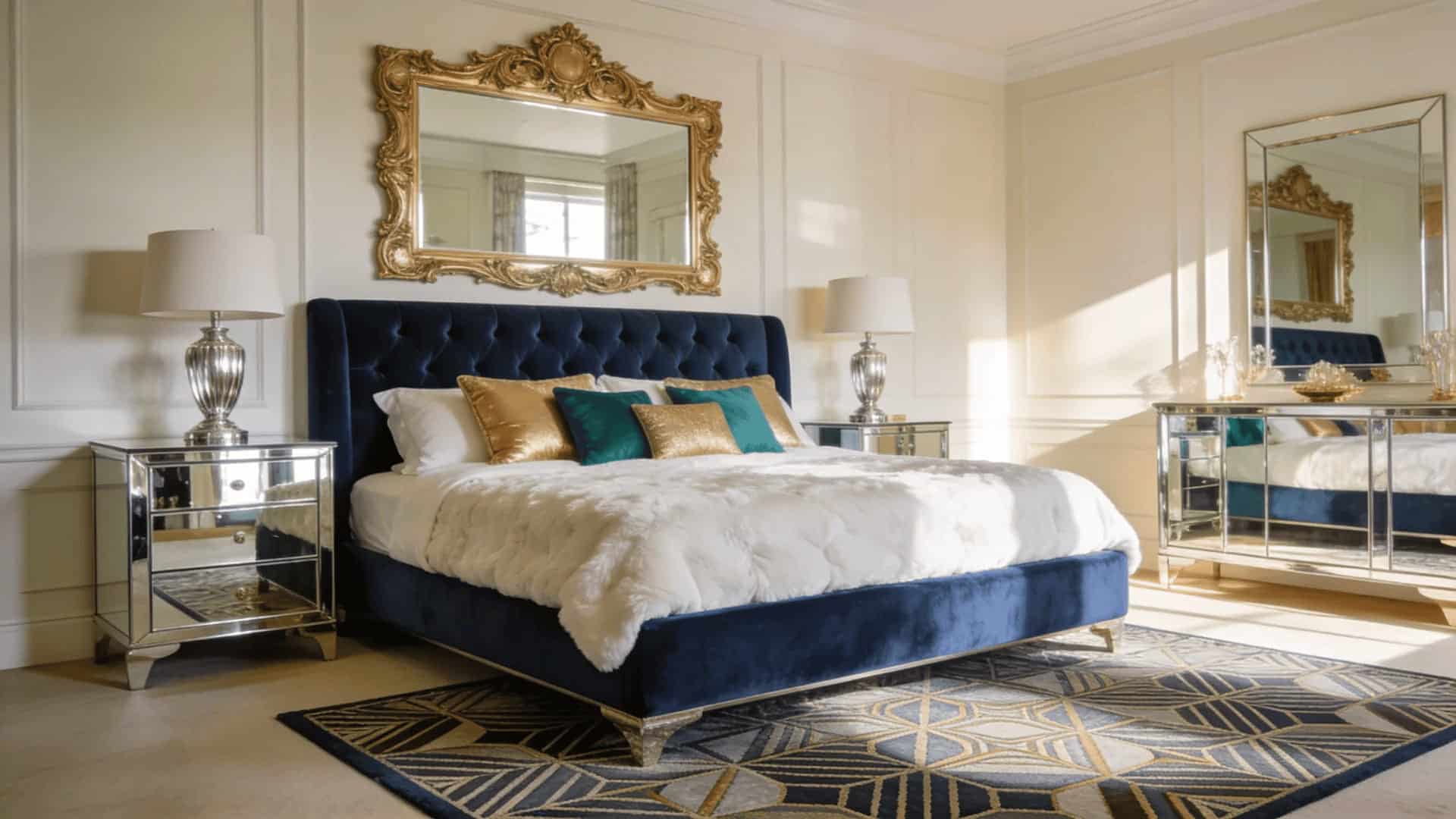
Use plush bedding with a mix of bold jewel tones and metallic gold or silver accents. Add large accent mirrors with ornate frames, and choose nightstands with chrome or mirrored finishes.
Include vibrant velvet throw pillows in contrasting colors and incorporate Art Deco-inspired patterns on area rugs or accent wallpaper behind the headboard.
Keep the palette high-contrast with deep colors against neutral backgrounds for drama.
The divan, with its plush sides and asymmetric form, is the bedroom equivalent of the slipper chair: historically rooted in Hollywood Regency and still genuinely functional.
A deeply tufted headboard in velvet or damask, ideally floor-to-ceiling in scale, is the fastest way to shift a bedroom into this register.
Chinoiserie-patterned wallpaper on the wall behind the headboard adds depth without requiring a complete renovation.
3. Dining Room
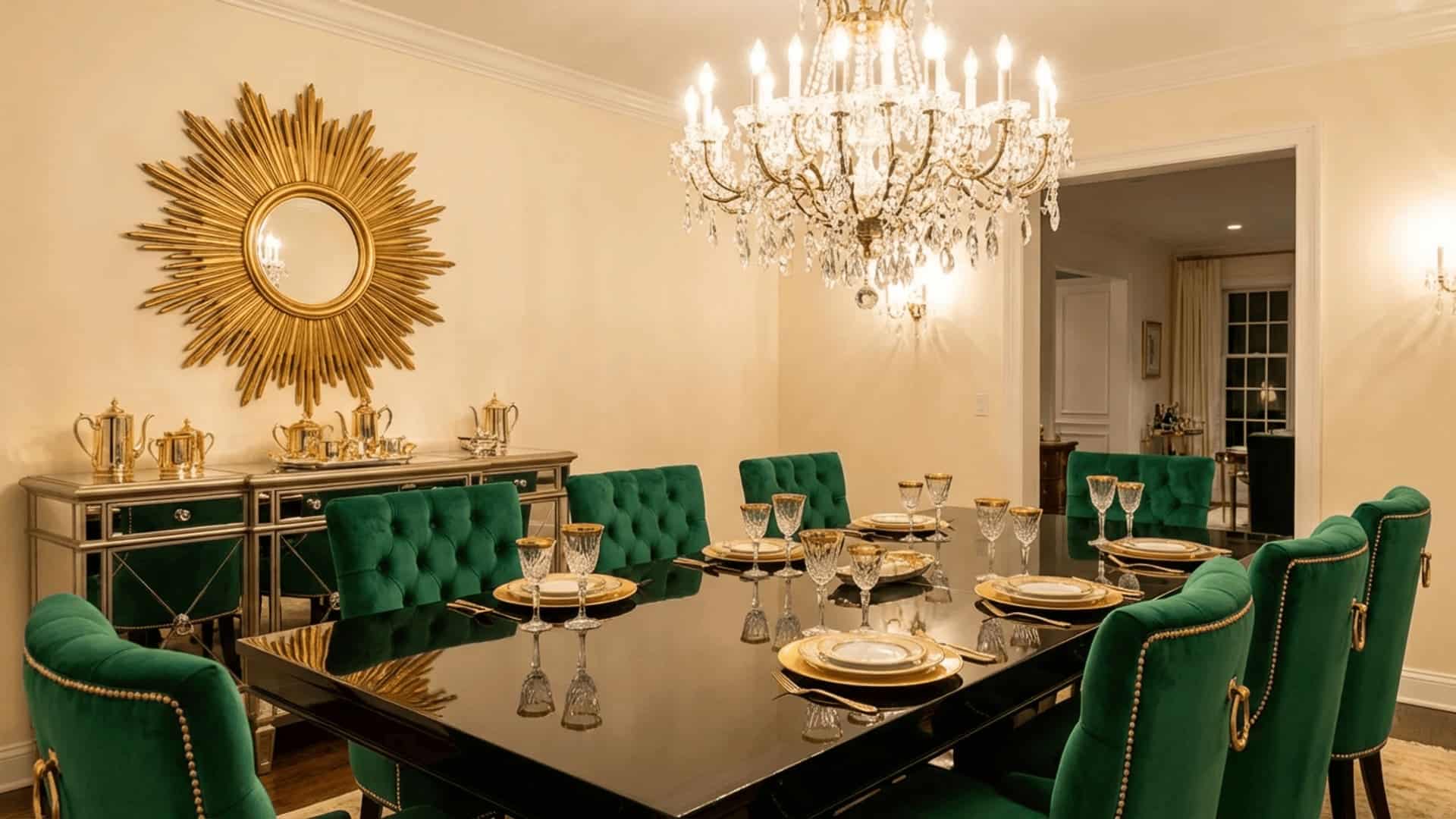
Use gold or silver-plated tableware and serving pieces to enhance the dining experience. Choose a statement dining table with a lacquered or mirrored finish as the room’s centerpiece.
Hang a dramatic crystal chandelier directly above the table for ultimate glamour. Add upholstered dining chairs in velvet with tufted backs, and place a large sunburst mirror on the wall to reflect light and create depth.
Skirted furniture, particularly in damask or brocade, is a detail that distinguishes a surface-level Regency dining room from a considered one.
A lacquered bar cart in a jewel tone, stocked with crystal decanters and gold bar tools, is both functional and entirely in character.
If the room has crown molding, painting it in a high-gloss white against a deeper wall color amplifies the drama considerably.
Pros and Cons of Hollywood Regency Style
Consider the advantages and challenges before adopting this bold interior style. This helps you decide if the look fits your space and budget.
| Pros | Cons |
|---|---|
| Creates a dramatic, luxurious ambiance that feels theatrical and polished | Expensive materials like velvet, lacquer, and brass can significantly increase costs |
| Combines modern and vintage elements for an eclectic, enduring look | Can feel overwhelming in smaller spaces due to its bold, high-contrast nature |
| Perfect for statement pieces and vibrant design lovers who embrace drama | Requires careful balance to avoid a cluttered or over-the-top appearance |
| Highly photogenic and Instagram-worthy for those who love visual impact | Not ideal for minimalists or those preferring understated, neutral aesthetics |
| Eclectic by nature, less restrictive than most styles, allowing genuine personalization across rooms | Velvet, lacquer, and mirrored surfaces require regular upkeep to maintain their impact |
This bold décor style delivers undeniable glamour but demands thoughtful execution. If you love drama and have the budget, the rewards outweigh the challenges for creating unforgettable spaces.
Who Should Choose Hollywood Regency?
Hollywood Regency works best for people who love drama, glamour, and making vibrant design statements. If you’re drawn to high-contrast colors, luxe textures, and spaces that feel theatrical, this style fits your personality perfectly.
It shines in apartments where vertical drama and mirrored surfaces make smaller spaces feel larger and more dynamic. Formal living rooms, dining rooms, and primary bedrooms also benefit from its polished, sophisticated vibe.
That said, this design feels out of place in rustic or farmhouse-style homes. The glossy finishes and jewel tones clash with weathered wood and natural textures. If your space leans cozy and organic, this style might not be your best match.
It also works surprisingly well in rental apartments. The style’s emphasis on furniture and accessories, rather than permanent architectural changes, means you can achieve significant impact without touching walls or floors.
A velvet sofa, a pair of brass lamps, a sunburst mirror, and a geometric rug can transform a generic rental bedroom into something that reads as genuinely designed.
Hollywood Regency in Modern Times
Today, interior designers are giving this bold décor style a fresh update to fit comfortably in modern homes.
Instead of filling every corner with vibrant décor, many designers focus on a few standout elements that bring glamour without overwhelming the space. This approach is often called minimal Regency glamour.
You might see a velvet chair paired with a simple neutral sofa, or a single sunburst mirror used as the room’s focal point. The goal is to keep the drama but simplify the layout.
Contemporary designers like Kelly Wearstler, Miles Redd, and Carlton Varney have been the most visible stewards of this style’s modern evolution.
Wearstler in particular, whose work on the Viceroy Hotel in Miami is often cited, distills Hollywood Regency into something sharper and more graphic without losing its essential theatricality.
Her approach is worth studying if you want to understand how to apply the style without it reading as period pastiche.
Modern furniture brands also make this style easier to try. Budget-friendly options from retailers like IKEA-inspired collections sit alongside luxury lacquered consoles, brass lighting, and velvet seating from high-end brands.
This mix allows homeowners to enjoy Regency-style interior flair on any budget.
Hollywood Regency vs. Related Styles: How to Tell Them Apart
This is a question that often comes up, and the top-ranking sources tend to address it only partially. Here is a direct comparison.
|
Style |
Key Difference from Hollywood Regency |
|
Art Deco |
Sleeker, more geometric, and less eclectic. Art Deco started in Paris and skews minimalist relative to Regency’s maximalism. |
|
Glamour / Hollywood Glam |
Often used interchangeably, but “Hollywood Glam” tends to be used more loosely and without the historical specificity of Regency Moderne. |
|
Mid-Century Modern |
Overlapping era, but MCM prioritizes organic forms, natural materials, and functional restraint. No jewel tones or animal prints. |
|
Chinoiserie |
An influence within Hollywood Regency, not a synonym. Chinoiserie’s bamboo motifs and tropical prints are incorporated elements, not the whole style. |
WrappingUp
Now you have a clearer understanding of how Hollywood Regency style works and why it continues to influence interiors today.
This design approach centers on bold colors, luxurious materials, reflective surfaces, and statement pieces that create a polished and glamorous atmosphere.
I always suggest starting with small details first. A mirrored tray, velvet pillow, or striking lamp can introduce Hollywood Regency style without overwhelming your space.
Once those elements feel comfortable, you can gradually add larger pieces to complete the space.
Interior design works best when it reflects your personality while still maintaining balance. If this guide helped you understand Hollywood Regency style, try adding one element to your home and see how it changes the room.