

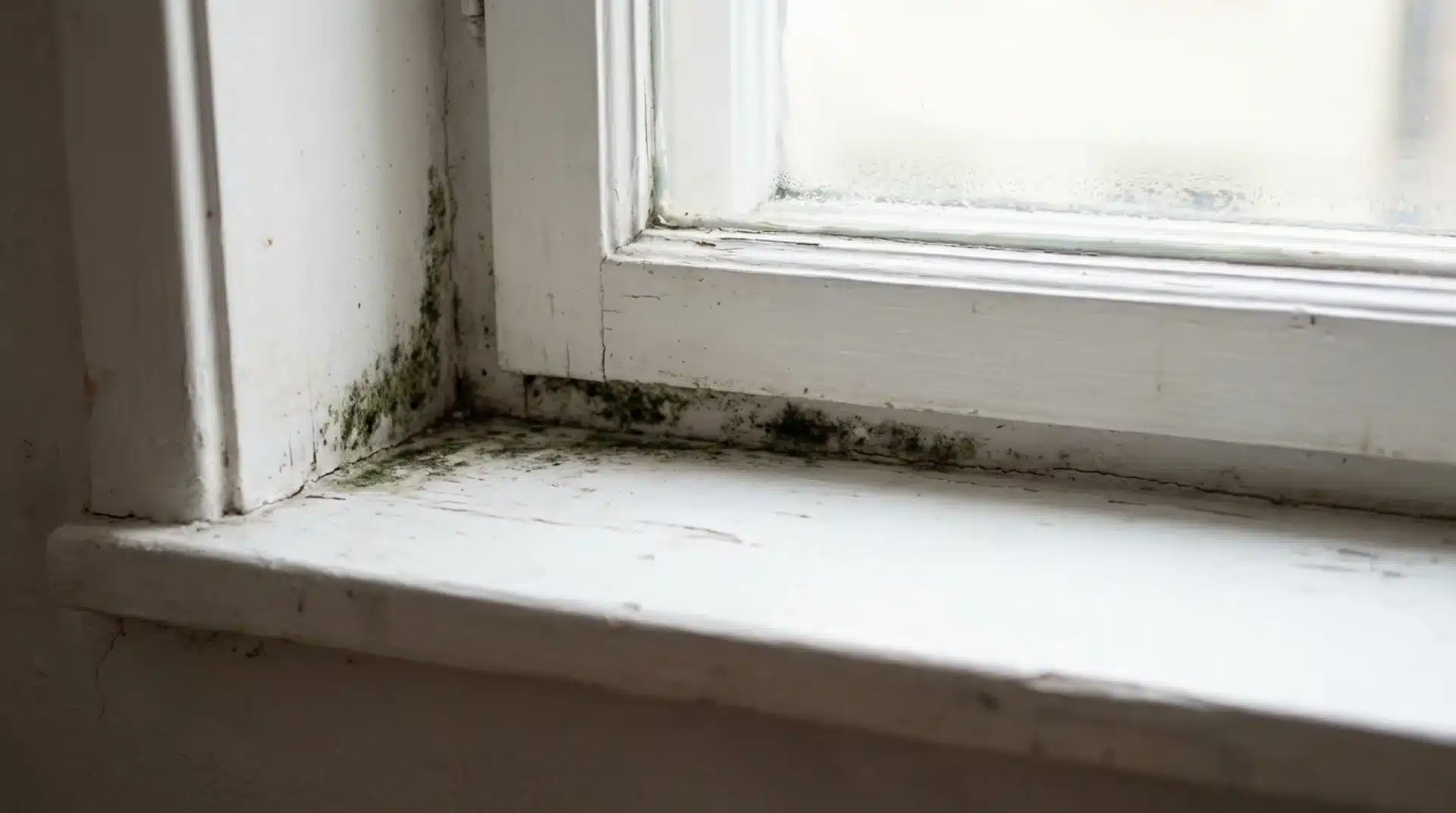


Home projects have a way of revealing problems you did not plan for, and mold on window sills is one of the most common.
In my home, it appeared after a wet winter on a north-facing window that had gone unchecked for months. It looked minor at first, but left alone, it spread quickly and became far harder to shift.
As someone who handles most home maintenance personally, the key was finding methods that work without expensive products or specialist help.
Today, I’ll cover the causes, the health risks, the most effective cleaning methods, and prevention steps that hold up, all practical enough to take on yourself.
What Is Mold on Window Sills?
Black mold on window sills is a fungal growth that develops when moisture accumulates on or around window surfaces and is left undisturbed long enough for spores to take hold. It typically appears as black, green, grey, or white patches and carries a distinct musty odor that worsens in enclosed spaces.
Window sills are a prime target because they sit directly where warm indoor air meets cold glass surfaces, creating the condensation that mold needs to survive.
Mold does not just sit on the surface. On porous materials like wood and drywall, it sends hyphae (root-like structures) deeper into the material, which is why surface wiping alone rarely solves the problem long-term.
Not all black mold is the toxic Stachybotrys chartarum; most window sill mold is allergenic rather than toxigenic, but any indoor mold warrants prompt removal regardless of species.
Why Does Mold Keep Growing on Window Sills?
Window sills are highly prone to moisture buildup, which allows mold to return repeatedly. The main cause is condensation, where warm indoor air meets cold glass, forming water droplets on the sill.
This is more common in winter, especially in areas with high humidity, like kitchens and bathrooms. Poor ventilation traps damp air near windows, while older or poorly insulated windows increase condensation.
Hidden leaks, such as cracked caulking or loose seals, can also let moisture in unnoticed, prolonging the problem.
Beyond condensation, a few lesser-known factors contribute:
- Window plants: increase local humidity through watering and transpiration
- Dust buildup: provides food for mold growth
- Curtains or blinds: trap cold, damp air near the glass
- HVAC airflow: blowing warm air toward windows increases condensation cycles
Fixing the moisture source, not just cleaning, is the key to stopping mold from coming back.
How to Clean Mold from Window Sills
The right cleaning method depends on how severe the growth is and what surface you are working with. These four solutions cover everything from light early-stage patches to heavy, established mold.
Method 1: White Vinegar Solution
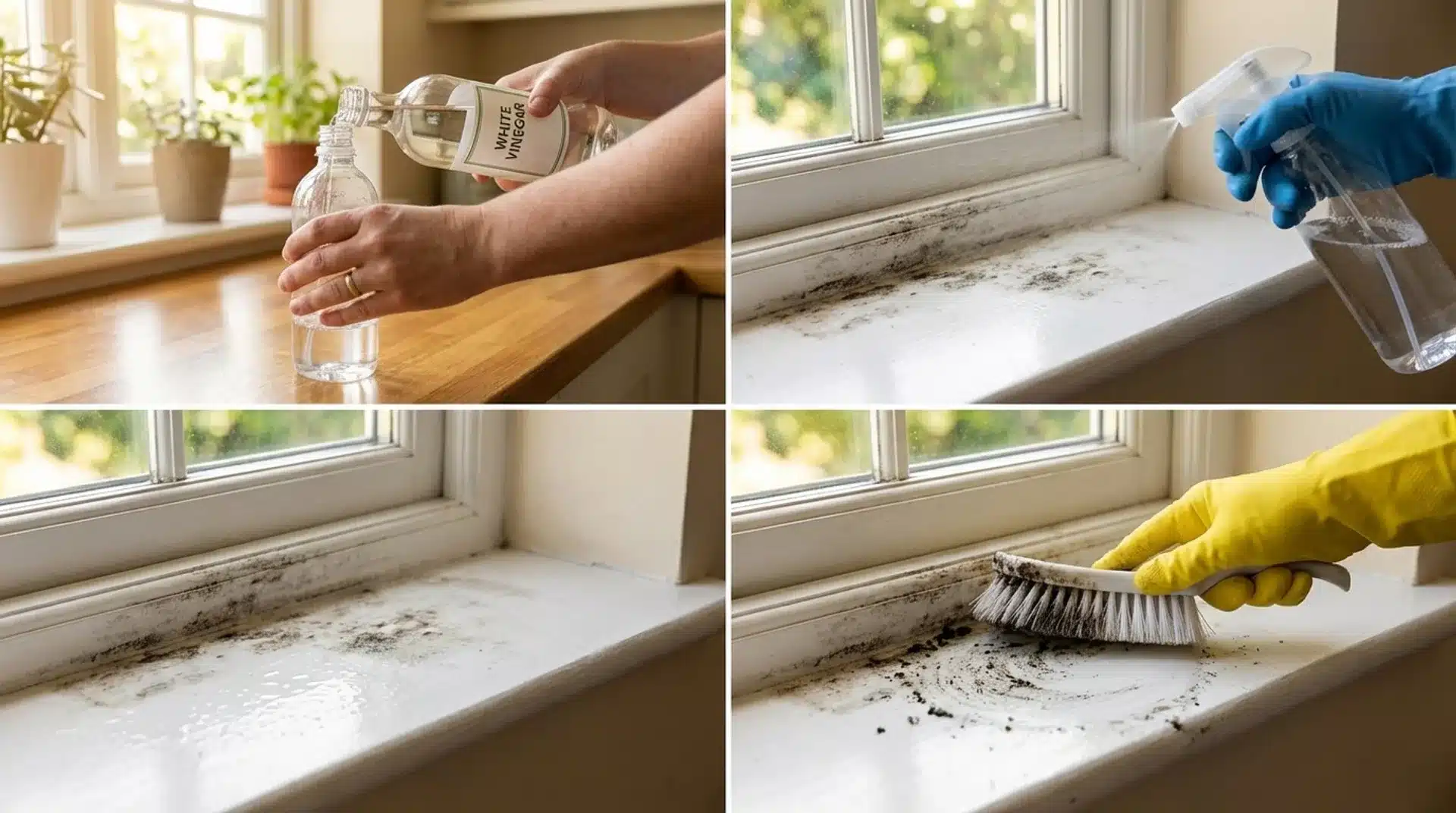
White vinegar is the gentlest starting point for light or early-stage mold. The natural acidity cuts through surface growth without damaging painted or wooden window sills, and it is safe to use in any room without heavy ventilation requirements.
Ingredients: Undiluted white vinegar, spray bottle, stiff-bristled brush, rubber gloves, microfiber cloth
- Step 1: Pour undiluted white vinegar into a spray bottle. Diluting it reduces the acidity needed to kill mold
- Step 2: Spray directly and generously onto the mold patch, ensuring full coverage
- Step 3: Leave it to sit for a minimum of 10 minutes without wiping
- Step 4: Scrub firmly with a stiff-bristle brush using small circular motions
- Step 5: Wipe away residue with a damp cloth and dry the surface completely
Method 2: Hydrogen Peroxide Spray
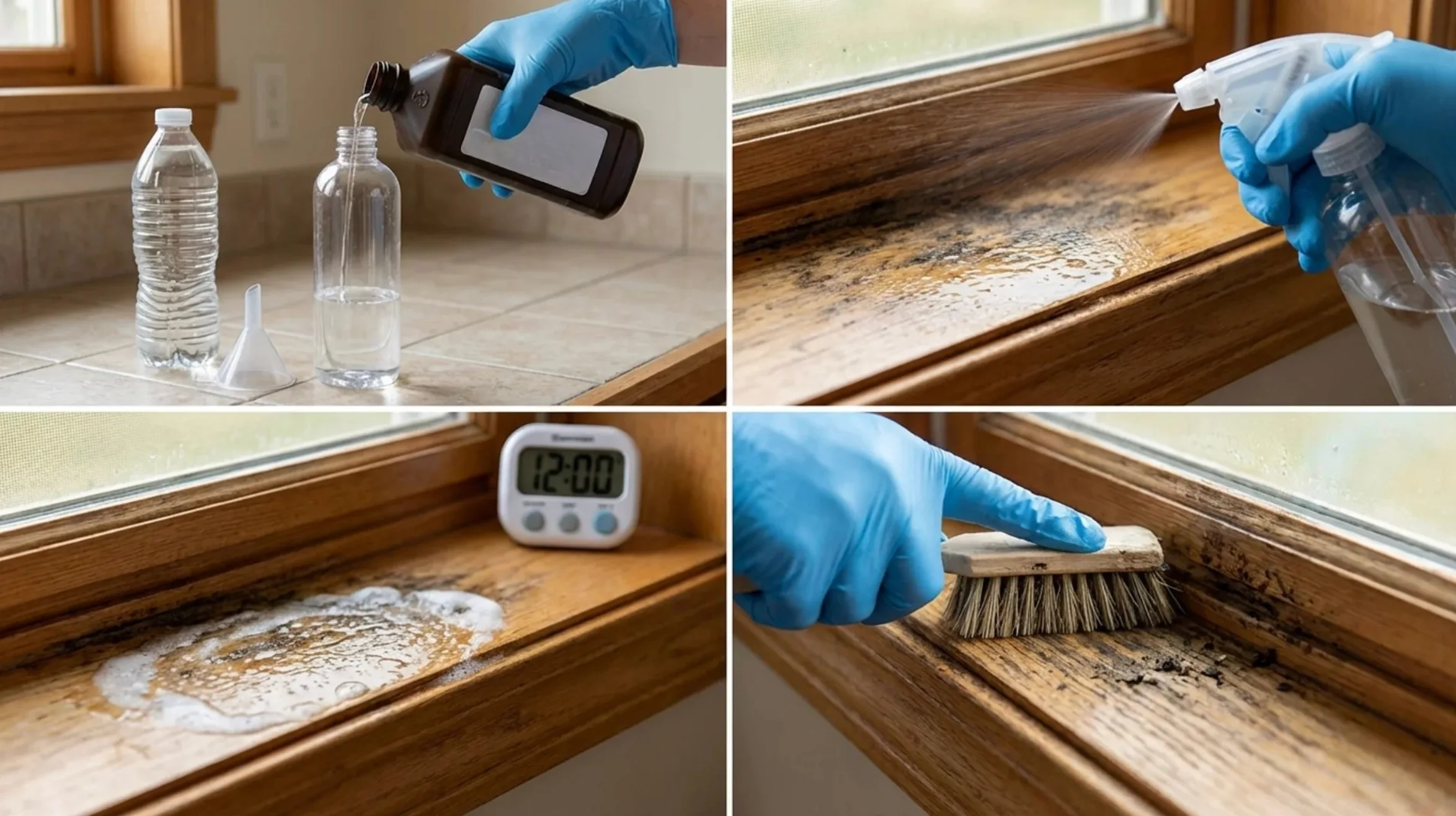
Hydrogen peroxide works well on painted wood and porous surfaces where bleach risks stripping the finish or causing discoloration. It effectively handles moderate mold growth, leaves minimal residue after rinsing, and produces far fewer fumes than stronger solutions.
Ingredients: 3% hydrogen peroxide, water, spray bottle, scrub brush, rubber gloves, microfiber cloth
- Step 1: Mix equal parts 3% hydrogen peroxide and water in a spray bottle
- Step 2: Apply the mold patch to the affected area, covering the entire area
- Step 3: Leave the solution to sit for 10–15 minutes
- Step 4: Scrub with a brush, paying close attention to grooves or textured areas
- Step 5: Wipe clean with a damp cloth and dry the sill fully before closing the window
Method 3: Baking Soda Paste
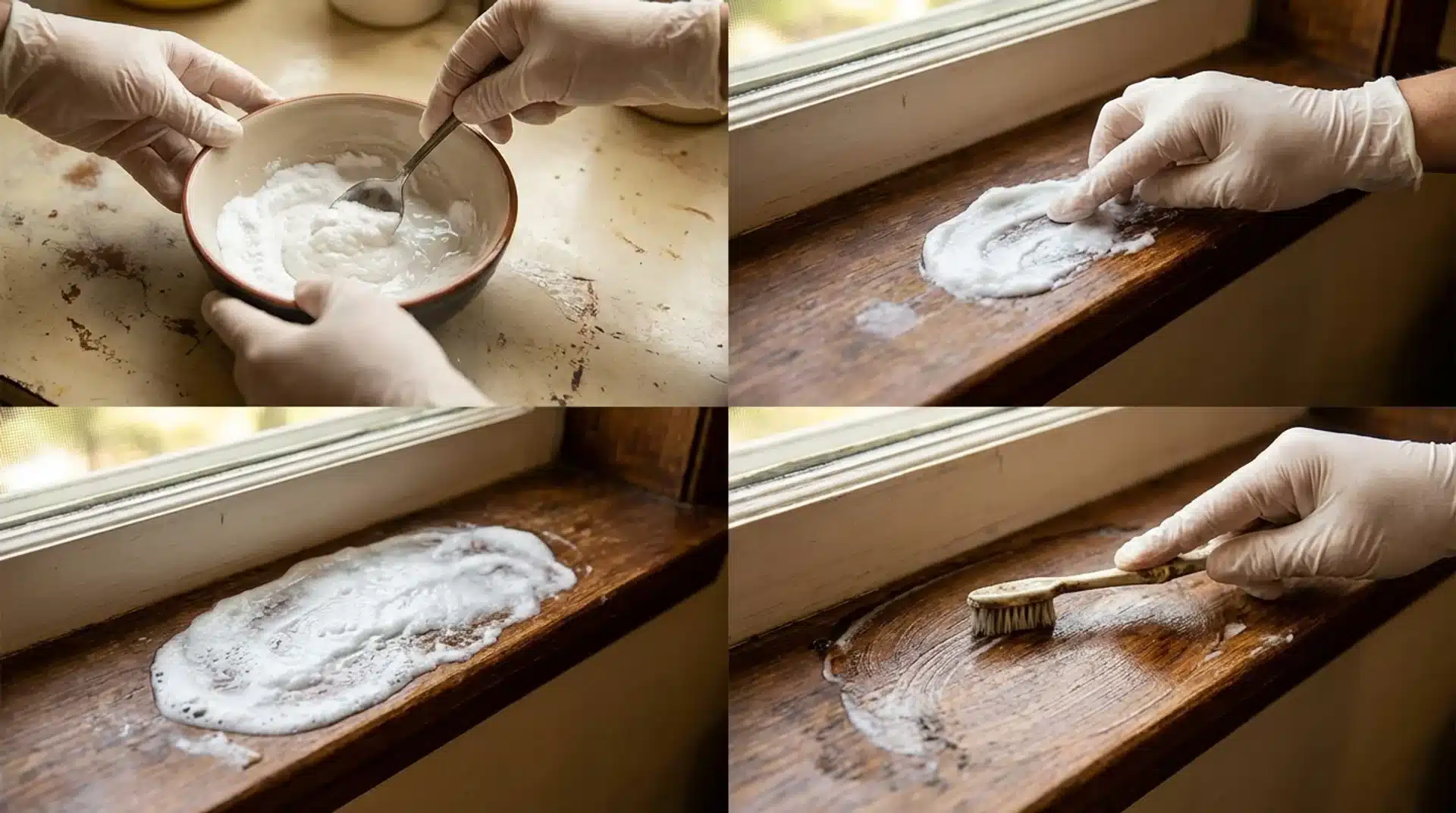
Baking soda paste is best suited for stubborn staining that has set into the surface. It is fully non-toxic and safe in households with children or pets, and it draws out residual moisture from the sill while it works.
Ingredients: Baking soda, water, mixing bowl, stiff brush or old toothbrush, damp cloth
- Step 1: Mix baking soda with a small amount of water in a bowl to form a thick, spreadable paste
- Step 2: Apply the paste over the stained area, pressing it in slightly for better contact
- Step 3: Leave it to sit for 5–10 minutes
- Step 4: Scrub with a brush or toothbrush, working the paste into the surface
- Step 5: Rinse away completely with a damp cloth and dry the area well
Method 4: Bleach Solution
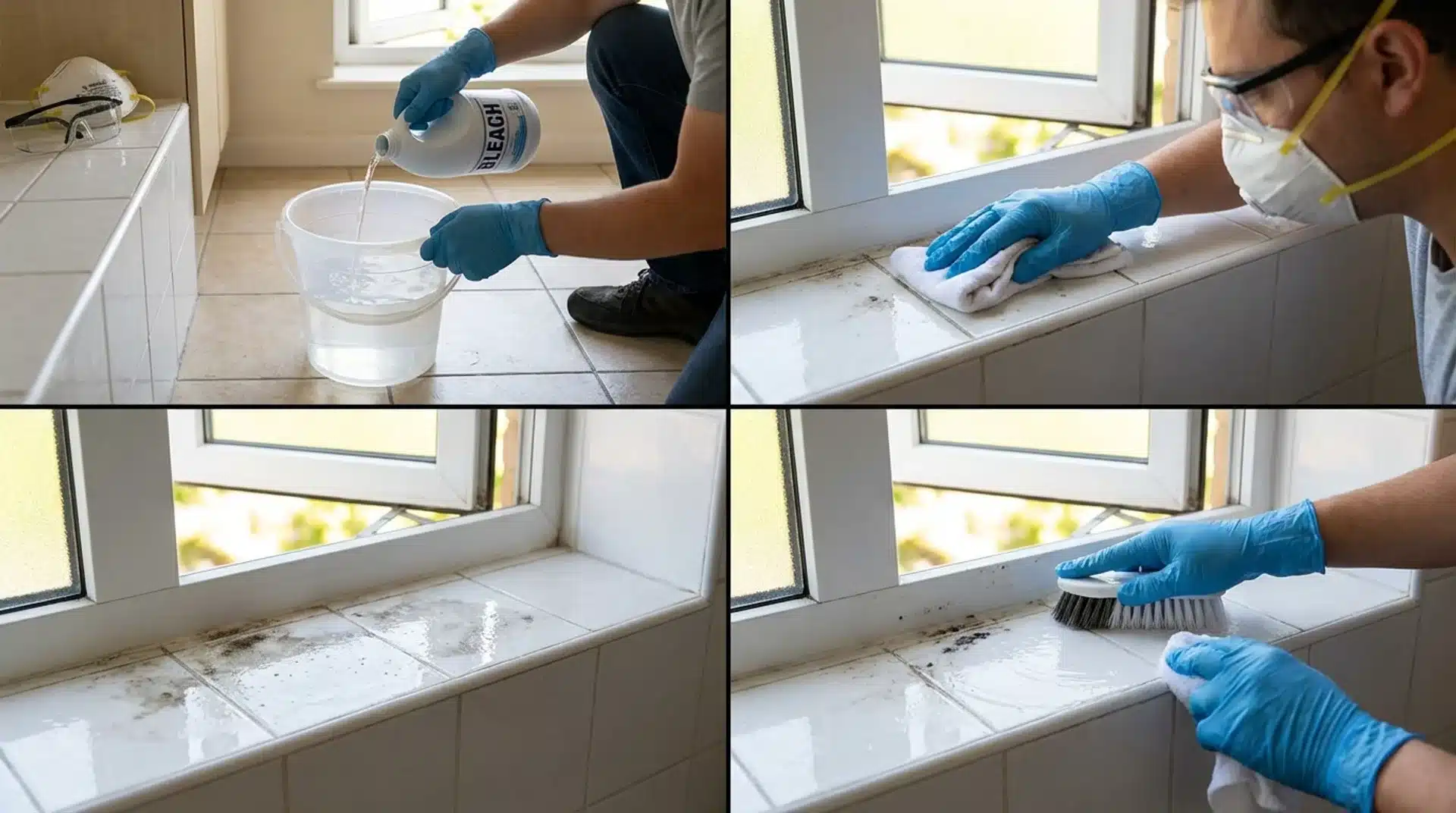
Bleach is the strongest option here and should be used only on non-porous surfaces, such as tile, sealed stone, or plastic frames. Reserve it for heavy, established mold growth where gentler methods have not worked. Always use full protective gear with windows fully open.
Important: Bleach kills surface mold effectively but cannot penetrate porous materials. On wood or drywall, it removes the color while leaving the root structures intact, so mold regrows quickly.
Never mix bleach with ammonia, vinegar, or any other cleaner. The combination produces toxic gases.
Ingredients: Household bleach, water, mixing container, rubber gloves, safety goggles, N95 mask, cloth
- Step 1: Mix one part bleach with ten parts water in a container
- Step 2: Apply using a cloth, never spray directly, as fumes concentrate quickly in enclosed spaces
- Step 3: Leave the solution on the surface for 10 minutes
- Step 4: Scrub the area firmly, then rinse with clean water
- Step 5: Dry the surface completely and keep the window open for at least an hour after finishing
After every clean: Dry the sill thoroughly with a fresh cloth. Leftover moisture restarts the growth cycle fast. Where possible, leave the window open for at least an hour so the surface airs out fully.
Which Method Is Right for You?
| Mold Severity | Surface Type | Best Method |
|---|---|---|
| Light / early-stage | Wood, painted, any | White Vinegar |
| Moderate | Painted wood, porous | Hydrogen Peroxide |
| Stubborn staining | Any (non-bleach-sensitive) | Baking Soda Paste |
| Heavy / established | Tile, sealed stone, plastic/vinyl only | Bleach Solution |
Do not mix methods. Never combine vinegar with bleach or hydrogen peroxide; combining vinegar with hydrogen peroxide creates a corrosive peracetic acid, and combining vinegar with bleach releases toxic chlorine gas. Use one method per session.
Long-Term Habits to Keep Mold Away for Good
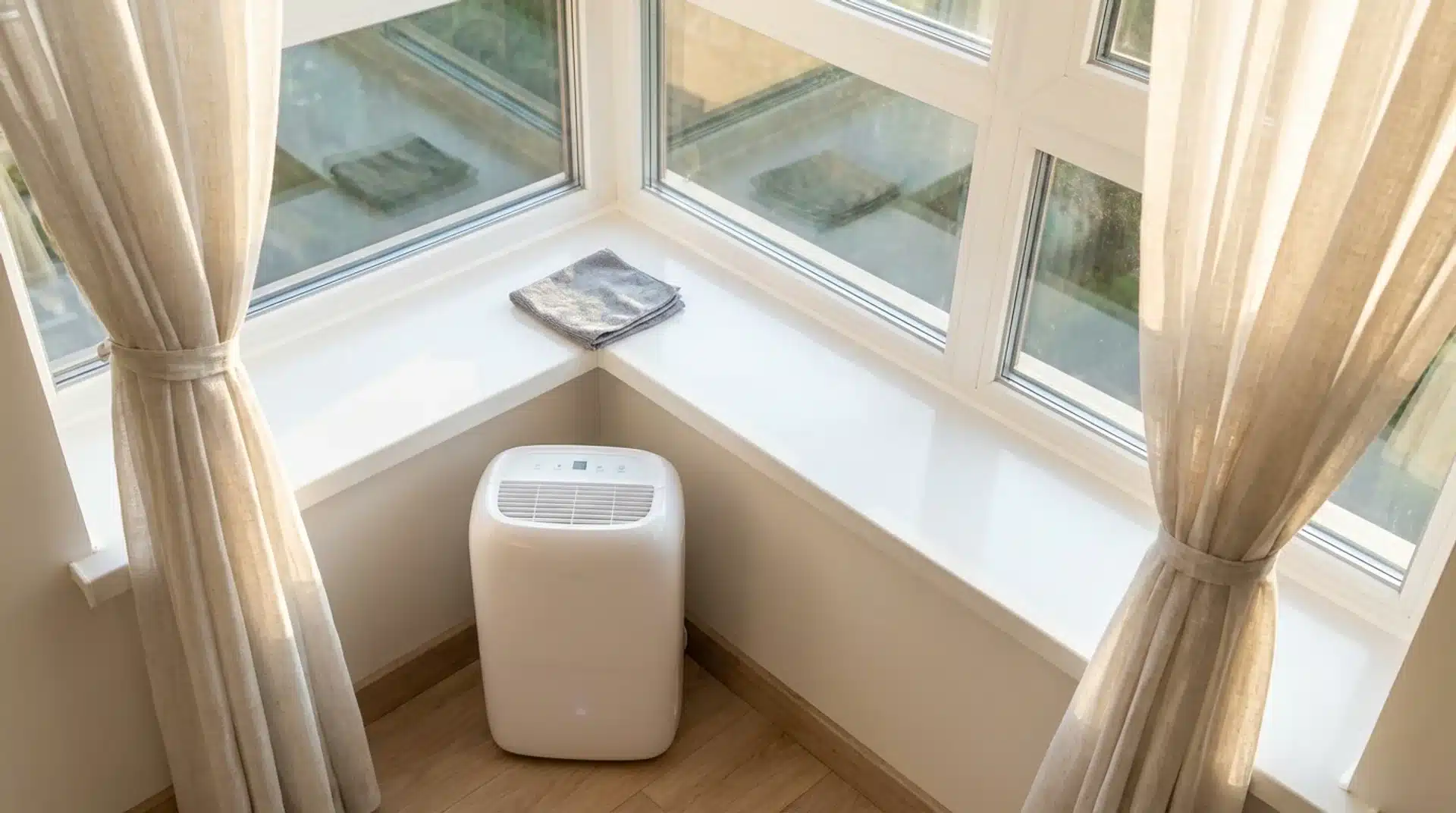
Keeping mold away permanently means addressing the conditions that allow it to return: moisture, airflow, and surface protection. These are the habits worth building into a regular routine:
- Use a dehumidifier to keep indoor humidity between 30–50%, below this range, mold spores struggle to settle on any surface
- Reseal window frame caulking annually, even small cracks quietly let water in long before any visible damage appears
- Upgrade to double glazing or apply insulating film to reduce the temperature difference that causes condensation on the glass
- Apply mold-resistant primer and semi-gloss paint after any deep clean. This creates a surface that actively repels moisture rather than absorbing it
- Pull heavy curtains back during the day to stop fabric trapping moisture directly against the glass overnight
From my experience, these actions slot into a routine without demanding much attention. No single habit does everything, but stacking two or three of them together, particularly humidity control and window sealing, removes the core conditions mold depends on to grow back.
Black Mold vs. White Mold: What’s the Difference?
Not all window sill mold behaves the same way. The type present affects the severity of the health risk, the cleaning method required, and whether professional help is needed. Here are the differences:
| Factor | White Mold | Black Mold |
| Appearance | Powdery, flat, white or grey patches | Dense dark patches, black, dark green, or brown |
| Growth stage | Early stage, surface-level | Established, penetrates deeper into the material |
| Health impact | Mild irritation in sensitive individuals | Stronger respiratory symptoms with prolonged exposure |
| Cleaning method | Basic solutions, vinegar or baking soda | Stronger solutions are required, such as hydrogen peroxide or bleach |
| Professional help | Rarely needed for small patches | Recommended for large, recurring, or persistent patches |
How to Tell if It Might Be Toxic Black Mold (Stachybotrys chartarum)?
Toxic black mold has a distinctly slimy or wet texture, a strong earthy smell even when dry, and typically requires continuous moisture exposure (72+ hours) and cellulose-rich materials like drywall or untreated wood to establish.
If the growth is on a vinyl or glass surface, it is almost certainly not Stachybotrys — that species needs porous organic material to take hold. If you’re unsure, contact a professional for identification before disturbing the colony.
If the patch is large, keeps returning after cleaning, or is visibly dark and dense, professional remediation is the safer option over attempting removal without proper equipment.
Health Risks Worth Taking Seriously
Mold on windows is not simply unpleasant to look at. Exposure to household mold over time can cause a range of health issues, and the severity depends on the mold type, the length of exposure, and individual sensitivity. What prolonged exposure can lead to:
- Respiratory irritation: persistent coughing, wheezing, and shortness of breath in enclosed rooms
- Allergic reactions: sneezing, itchy eyes, and a constantly runny nose that does not respond to typical remedies
- Asthma flare-ups: mold spores are a well-documented asthma trigger, particularly in children and elderly residents
- Headaches and fatigue: often linked to consistently poor indoor air quality
- Skin irritation: direct contact with active mold patches can cause redness or itching on sensitive skin
The symptoms above are easy to dismiss as seasonal allergies or general fatigue, which is why mold exposure often goes unaddressed. If symptoms consistently worsen at home but clear up elsewhere, the air quality in your space is worth investigating.
When to Seek Professional Help
Most window sill mold responds well to household cleaning methods. However, certain situations call for professional assessment. If the affected area is larger than ten square feet , the mold has likely spread into the wall structure where surface cleaning cannot reach.
Recurring mold that returns within weeks of cleaning, even after addressing moisture sources, points to a hidden leak or structural dampness requiring proper diagnosis.
Any growth identified as black mold or Stachybotrys should be handled by a certified specialist, as disturbing large colonies without containment spreads spores rapidly.
If household members are experiencing persistent respiratory symptoms that ease up away from home, professional remediation is worth prioritizing over repeated DIY attempts.
When hiring a mold remediation company, look for professionals who use containment barriers and HEPA filtration during removal.
Conduct post-remediation air testing to confirm clearance, and identify and seal the moisture source, not just remove the visible mold. A quote that skips the moisture diagnosis is one worth questioning.
Frequently Asked Questions
Is it safe to stay in a room with window sill mold?
Short exposure is usually tolerable for healthy adults, but long-term presence can affect air quality. Children, the elderly, and individuals with breathing issues should avoid prolonged exposure.
Can you just paint over the window sill mold?
Painting over mold traps it beneath the surface, allowing it to continue growing. It usually reappears quickly. Always clean and treat the surface fully before applying any primer or paint.
How often should window sills be cleaned?
Clean window sills every two to four weeks. During colder or humid periods, check more often and remove moisture early to prevent buildup and visible mold development.
Does vinegar or bleach work better for mold?
Vinegar works well on wood and preserves finishes, but needs time. Bleach suits non-porous surfaces but doesn’t penetrate deeply. For wood, peroxide or baking soda paste is more effective.
How do you stop mold from coming back after cleaning?
Fix the moisture source first, such as sealing gaps or improving insulation. Keep humidity low, remove condensation regularly, and use mold-resistant coatings to reduce future growth.
Can mold on window sills spread to walls?
Mold spores can travel and settle on nearby surfaces. On materials like drywall, growth can extend inside walls, making recurring issues a sign that deeper inspection is needed.
Final Thoughts
Dealing with mold on window sills does not have to be a recurring problem. With the right cleaning method matched to the severity of the growth and a consistent approach to moisture control, it becomes manageable rather than dreaded.
I think the homes that stay clear treat this as an ongoing maintenance routine, not a one-time crisis clean. Address the moisture source, apply the appropriate solution, protect the surface afterward, and check in regularly.
That combination handles the problem at every stage, before it starts, while it is present, and long after it has gone. Hope your black mold says adios to you forever. Drop a comment below and let me know which method worked best for you.