

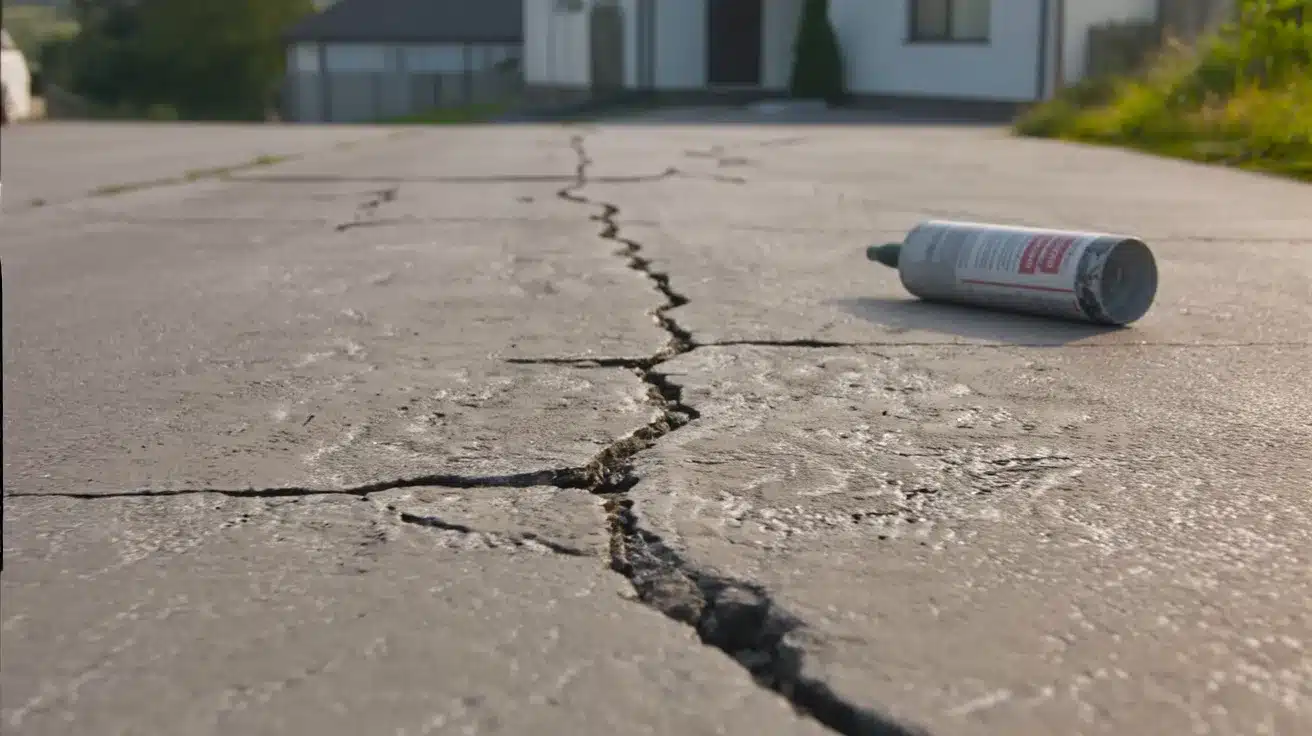


Concrete cracks have a way of showing up at the worst time, right before a gathering or when the home repair list is already long.
A thin line across the driveway or a wider gap in the garage floor both raise the same question: how much will this cost? Based on my research and what most homeowners report, concrete crack repair costs can vary widely depending on the severity and type of repair needed.
Knowing where your situation falls helps you budget before calling a contractor, ask the right questions, and avoid getting caught off guard when estimates arrive.
Let me walk you through the typical pricing, common repair methods, and the key factors that push costs up or down.
Understanding Concrete Cracks and Repairs
Concrete crack repair is the process of sealing, filling, or stabilizing cracks in concrete surfaces to restore their functionality and prevent further damage. Cracks can form in driveways, patios, sidewalks, garage floors, and foundations, and not all of them are equal in severity.
Some are purely surface-level, caused by minor shrinkage, while others signal more serious structural concrete damage that needs professional attention. The repair method used depends heavily on the crack’s size, depth, and location.
Catching the problem early is what keeps repair costs manageable. Waiting too long usually means a small sealing job turns into a full resurfacing or slab replacement project, which costs significantly more.
Factors That Cause Concrete Cracks
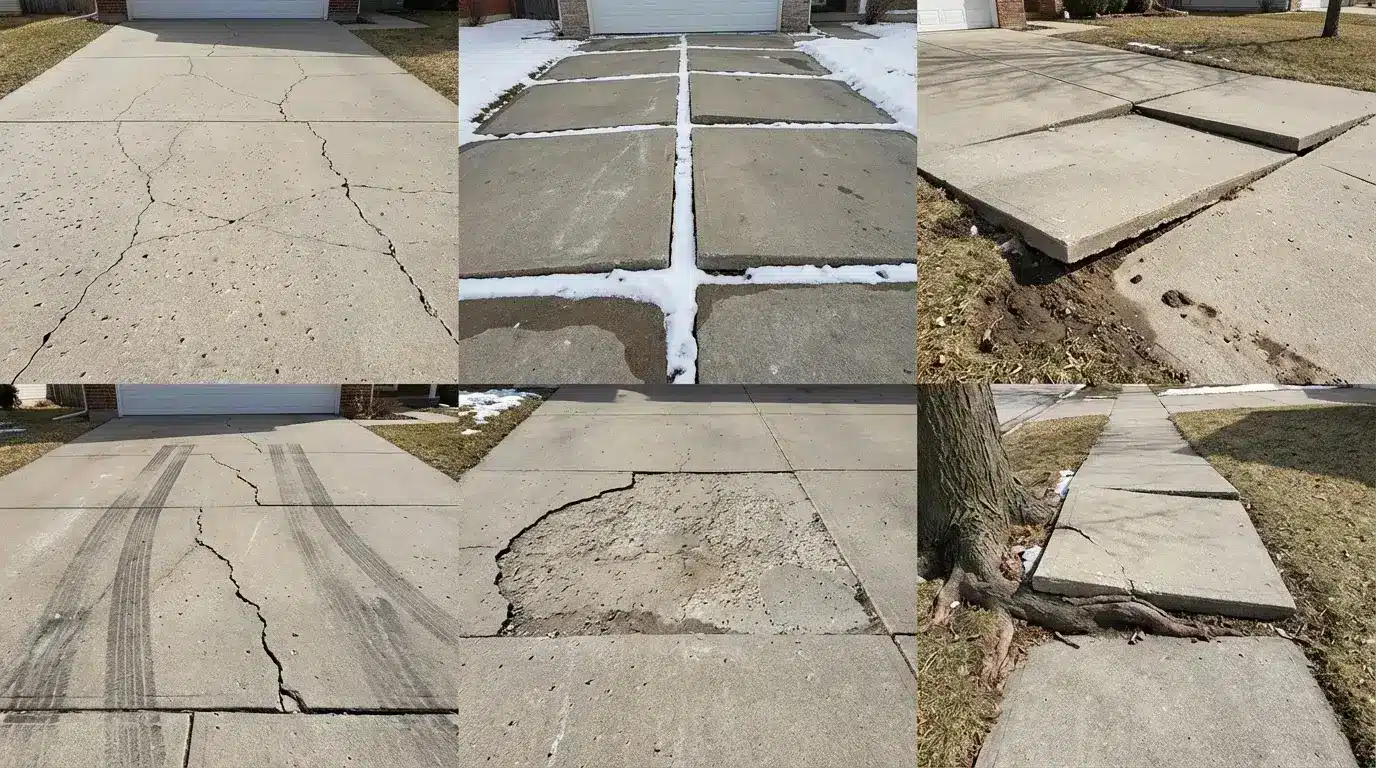
Understanding why concrete cracks helps explain why repair costs vary so much from one job to the next. The cause often determines the repair method required:
- Concrete shrinkage: As concrete cures, it naturally contracts, creating hairline cracks on the surface
- Temperature fluctuations: Concrete expands in heat and tightens in cold. Repeated cycles put stress on the slab
- Shifting soil: Unstable ground beneath a slab can cause uneven settling, leading to cracking
- Heavy loads: Driveways and garage floors bearing the weight of vehicles over time develop pressure cracks
- Poor installation: Concrete poured without proper reinforcement or allowed to cure too quickly tends to crack prematurely
- Tree root growth: Roots pushing up under sidewalks or patios can fracture even well-laid concrete
Knowing the root cause behind a crack is useful before calling a contractor. It gives you a better sense of what repair method fits and what the job might involve beyond the surface.
Average Concrete Crack Repair Cost
Below is a combined cost table covering flat-rate and per-foot pricing to help you find a clear reference point before budgeting:
| Repair Type | Average Cost Range | Pricing Method |
| Minor crack repair | $50 – $150 | Per crack |
| Moderate crack repair | $150 – $400 | Per crack |
| Large structural crack repair | $400 – $1,000+ | Per crack |
| Minor crack sealing | $3 – $12 | Per linear foot |
| Professional crack repair | $15 – $18 | Per linear foot |
| Concrete leveling | $3 – $25 | Per sq ft |
| Concrete resurfacing | $3 – $5 | Per sq ft |
| Slab replacement | $2,000 – $15,000+ | Per project |
As a general rule, longer and deeper cracks cost more to fix, both because more material is needed and because the labor time increases with complexity.
Common Concrete Crack Repair Methods
Here are the four most commonly used approaches. Concrete crack repair methods vary in complexity and price, so matching the right technique to the crack type is key.
1. Crack Filling or Sealing
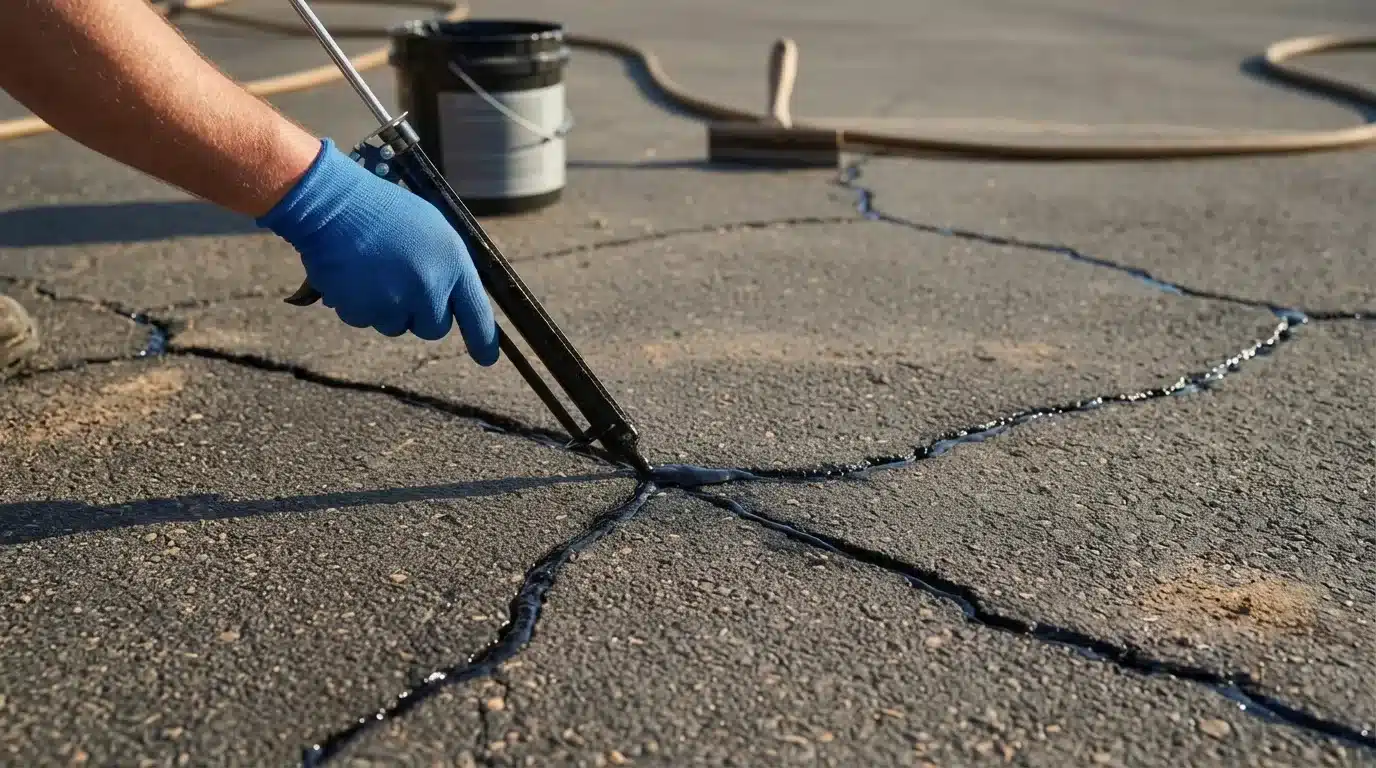
This is the most straightforward repair option. A flexible sealant or filler is applied directly into the crack to prevent water and debris from getting in.
It works best for minor surface cracks that have not penetrated deeply into the slab. Costs typically range from $50 to $200, making it the most budget-friendly professional option.
2. Epoxy Injection
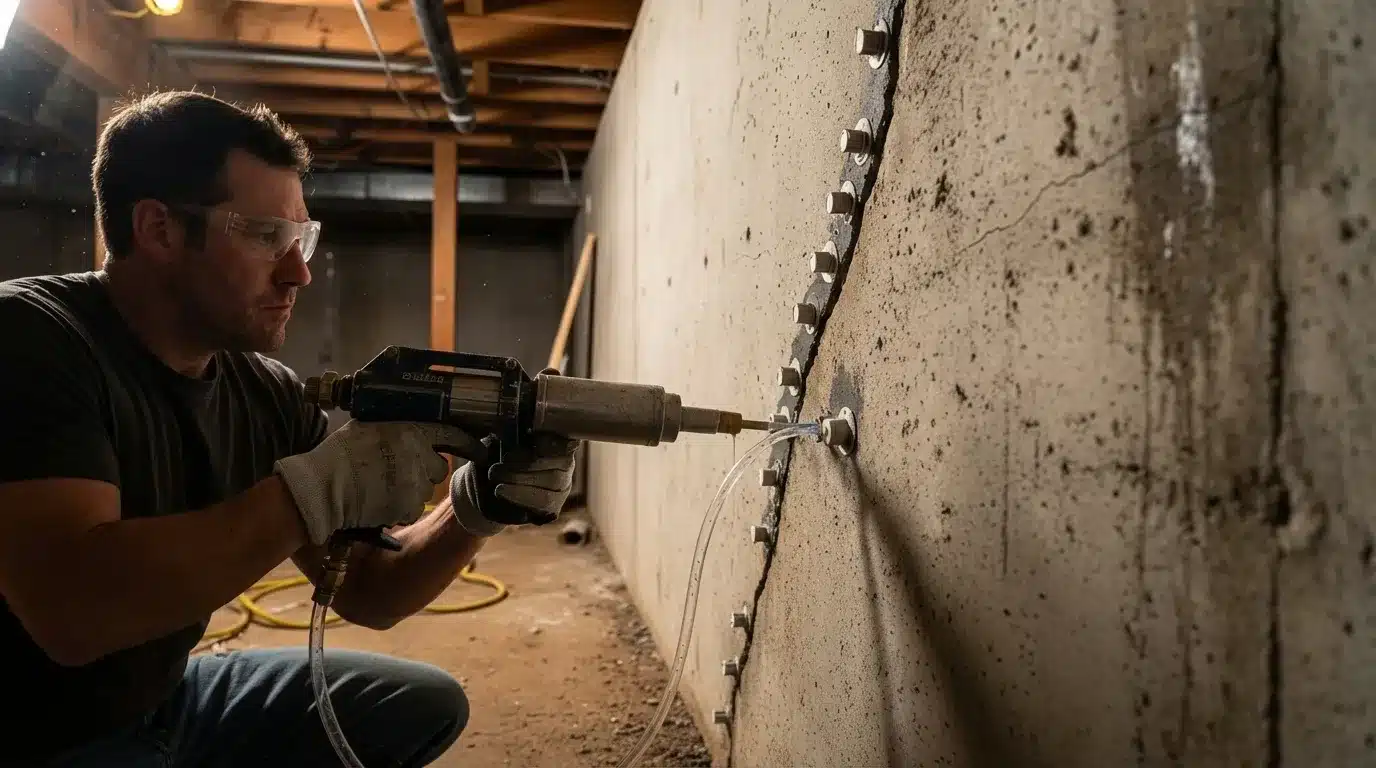
Epoxy injection is used for cracks that run deeper into the concrete and need structural reinforcement. The epoxy is pumped under pressure into the crack, bonding the two sides together once it cures.
This method is common for foundation crack repair and costs between $300 and $900 per crack. It is more involved than surface sealing but delivers a stronger, longer-lasting result.
3. Polyurethane Injection
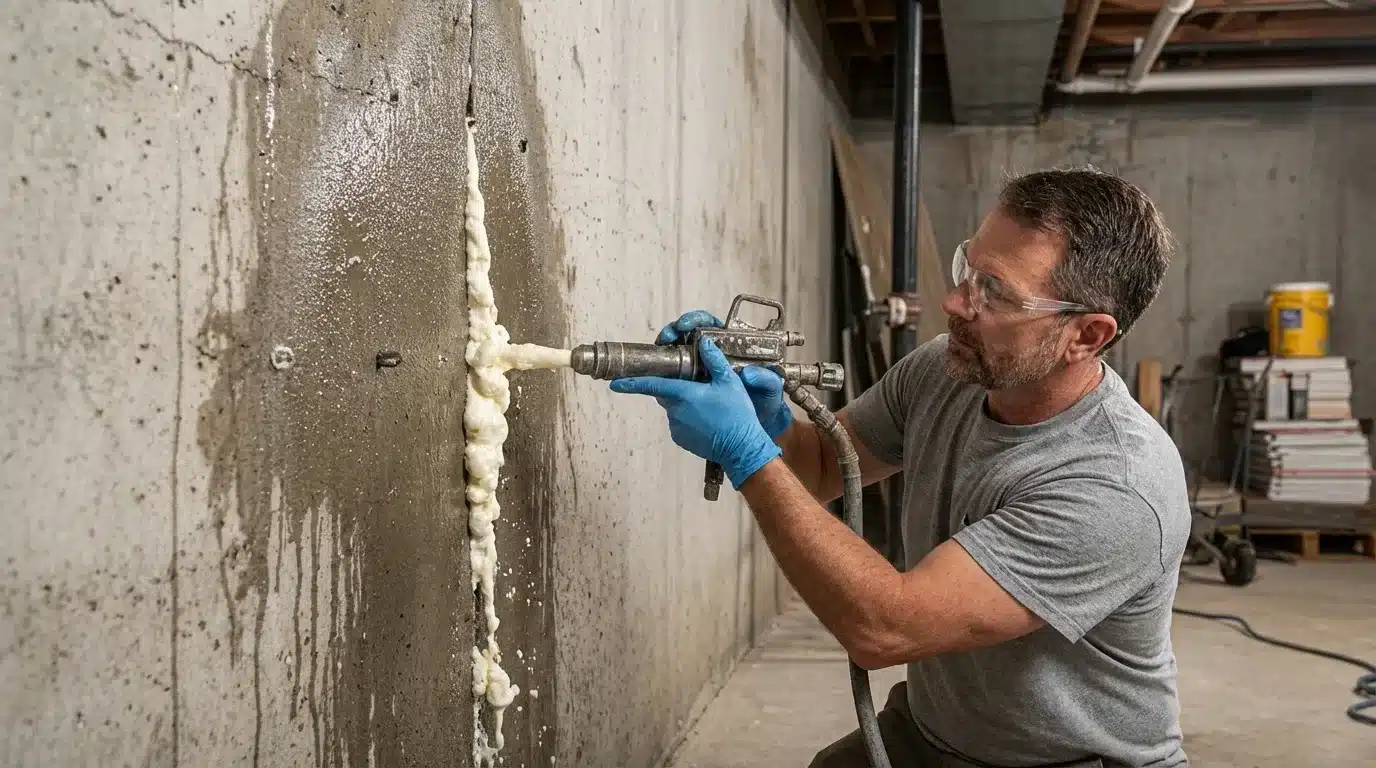
Polyurethane foam is injected into cracks to stop active water leaks and stabilize the concrete. It expands as it cures, filling irregular gaps that epoxy might miss.
This method is especially useful for basement and foundation cracks where moisture is a problem. Expect to pay between $300 and $800, depending on the crack size and the amount of material needed.
4. Concrete Leveling (Mudjacking or Foam Lifting)
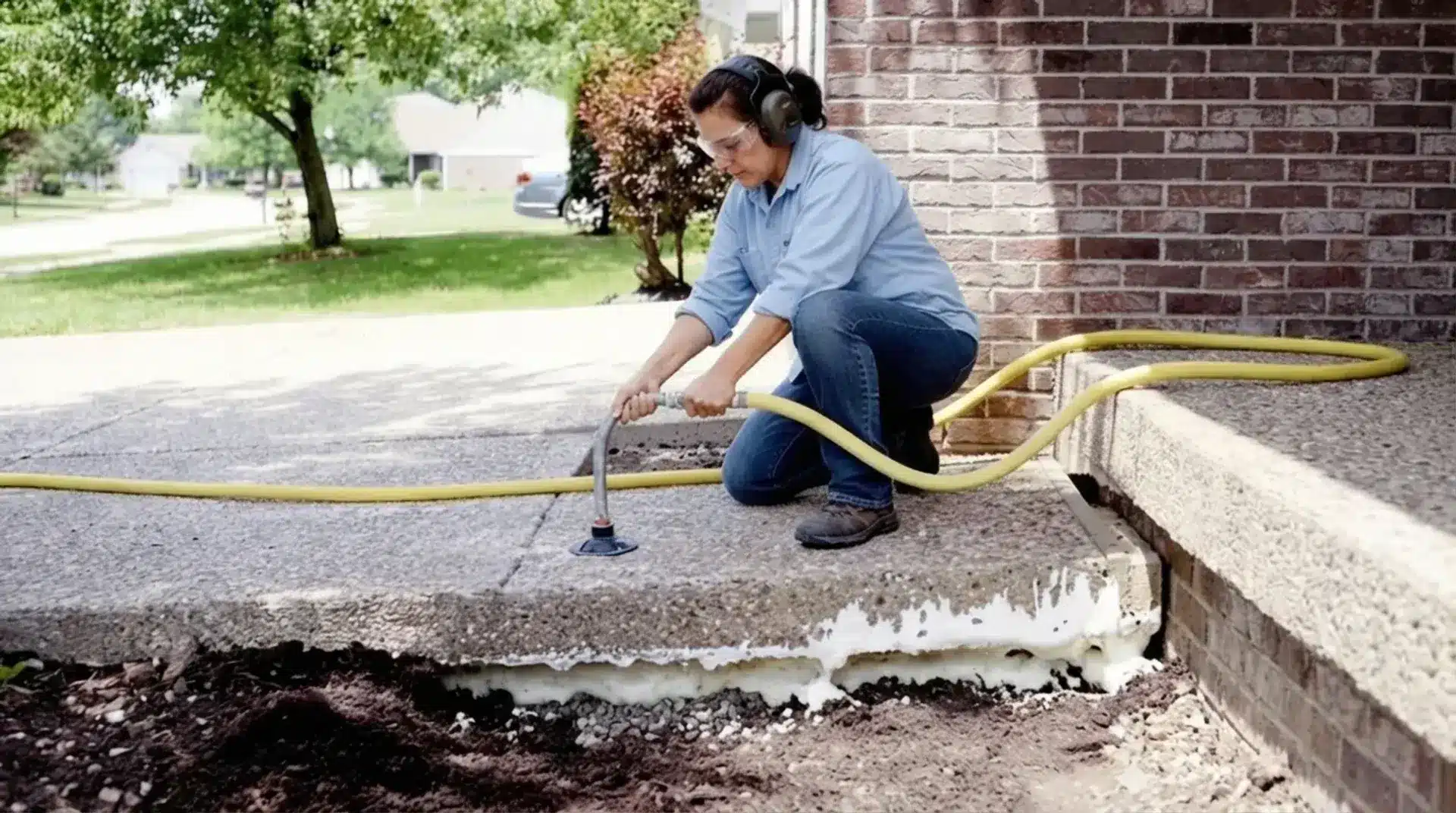
When a slab has sunken or shifted unevenly, leveling becomes necessary before or alongside crack repair. Either a slurry mixture (mudjacking) or expanding foam is injected beneath the slab to lift it back into position.
This method applies to driveways, sidewalks, and patios and costs between $500 and $6,000 based on the size of the area being lifted.
Choosing the right repair method from the start avoids repeat work and helps the fix hold up over time, especially in areas exposed to weather or heavy use.
Typical Cost of Concrete Crack Repair
Repair pricing shifts depending on whether you are looking at crack size or the specific surface being repaired. Both factors matter when estimating the cost of a job.
Getting a clear picture of what falls under each category helps you set realistic expectations before requesting quotes.
Cost by Crack Size
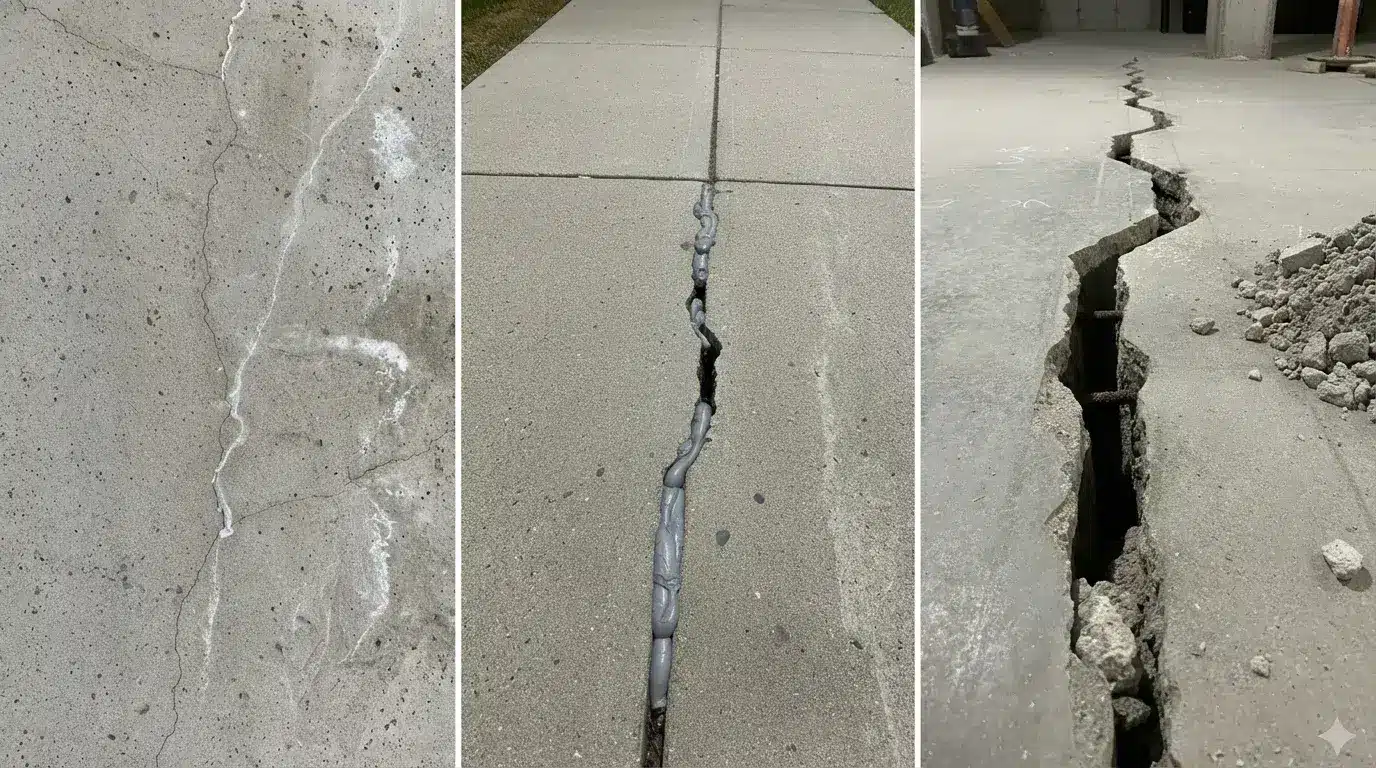
Crack size is one of the first things a contractor looks at when estimating a repair. Knowing the general price ranges by crack size helps you anticipate costs before getting a quote:
- Hairline cracks: These are surface-level and mostly cosmetic. Repair costs typically run $50–$150 using crack fillers or sealants
- Medium cracks (up to ½ inch wide): These require deeper sealing or injection. Expect to pay $150 – $400, depending on length and depth
- Large or structural cracks: Cracks this size often point to soil movement or slab failure. Repairs start at $400 and can climb well beyond that if reinforcement or leveling work is required
Crack width alone does not tell the full story; depth and length are just as important when a contractor calculates the final price.
Cost by Surface Area
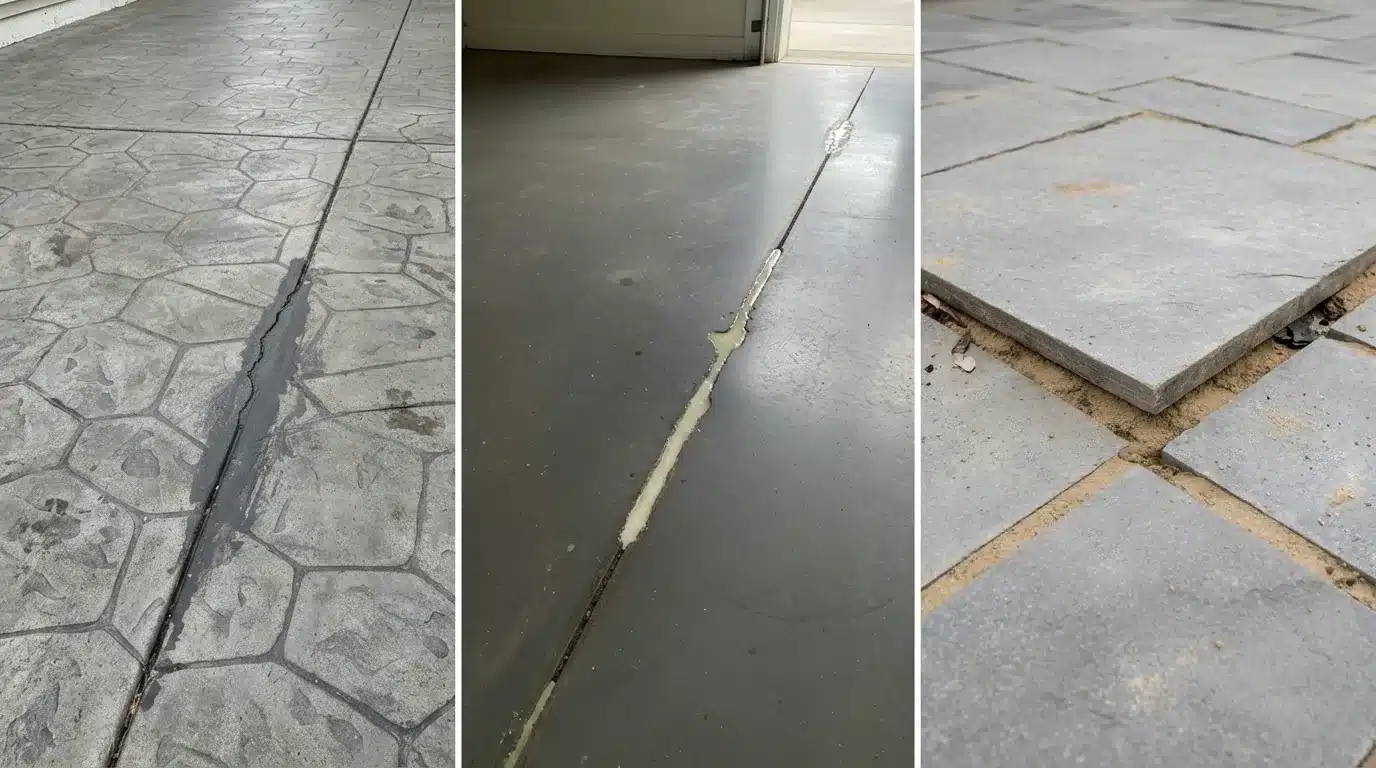
Where the crack sits on your property affects both the repair method and what you end up paying. Different surfaces come with different labor demands and material requirements:
- Driveways: Crack sealing costs $0.50 to $3 per linear foot; resurfacing runs $3 to $5 per square foot; full replacement averages $6,900 for a standard driveway
- Garage floors: Sealant or epoxy injection is the common fix, costing $10–$20 per linear foot
- Patios and sidewalks: Surface patching or sealing usually costs between $150 and $800, depending on the extent of the damage
Surface location also affects labor pricing. Garage floors and basements are often harder to access and prepare, which can increase overall costs. Additionally, if the surface is painted, removing the paint from concrete is crucial to ensure proper adhesion and prevent peeling, which could compromise the durability of the repair.
DIY Concrete Crack Repair Cost
Smaller, non-structural cracks are well within reach for a DIY fix. Hardware stores carry several product types suitable for surface crack repair that do not require professional tools or skills:
| DIY Product | Average Cost | Best For |
| Concrete crack filler | $5 – $20 | Hairline and small surface cracks |
| Concrete patch kits | $20 – $50 | Wider or shallower surface cracks |
| Epoxy repair kits | $25 – $100 | Deeper non-structural cracks |
DIY repairs work well when the crack is cosmetic and stable. If the crack is growing, wider than half an inch, or located near a foundation wall, a professional assessment is worth the cost before attempting any fix on your own.
Tips for Managing Concrete Crack Repair Costs
A few practical steps can keep repair costs from climbing higher than they need to. Small decisions made early, such as addressing a minor crack or comparing contractor quotes, can lead to real savings:
- Repair early: Small cracks cost far less to fix than structural damage. Acting quickly saves money
- Check drainage: Water pooling near a crack will cause repairs to fail. Fix drainage before patching
- Get multiple quotes: Labor rates vary by region, so comparing two or three estimates helps you find a fair price
- Ask about the method upfront: Knowing whether a contractor plans to seal, inject, or level helps you compare quotes accurately
- Bundle repairs: Multiple cracks on the same surface done in one visit usually cost less per crack than separate trips
Taking a proactive approach to concrete maintenance is almost always cheaper in the long run than waiting until the damage becomes unavoidable.
Common Mistakes to Avoid When Repairing Concrete Cracks
Skipping a few basic steps can turn a straightforward repair into a repeat job that costs twice as much the second time around. Here are the few common mistakes:
| Common Mistake | Explanation | Recommended Action |
|---|---|---|
| Ignoring small cracks | Hairline fractures can widen over time due to water infiltration and freeze-thaw cycles. | Inspect regularly and fill early using a suitable filler. |
| Using the wrong repair product | Surface sealants over deep cracks won’t hold; the product must match the crack type. | Match the repair product to the crack depth and type. |
| Skipping surface prep | Concrete must be clean, dry, and free of loose debris; poor preparation leads to poor adhesion. | Clean, dry, and remove loose debris before repair. |
| Attempting structural repairs | Foundation cracks and major slab damage require professional help; misjudging their severity can worsen the damage. | Hire a professional for structural assessment and repair. |
Avoiding these mistakes upfront saves you both the cost of redoing the work and the frustration of watching a repair fail within a season or two.
Frequently Asked Questions
Why does my repaired concrete crack keep coming back?
The underlying cause was not addressed. Shifting soil, tree roots, or water pressure cannot be fixed by surface sealing alone. Diagnose the cause before attempting any repair.
Does homeowners’ insurance cover concrete crack repair?
Sudden damage like falling trees or vehicle impact may be covered. Gradual deterioration and normal settling are almost always excluded. Check your specific policy before assuming any coverage.
What is the best time of year to repair concrete cracks?
Spring and fall are ideal; temperatures between 50 and 70 degrees allow even curing. Late fall scheduling often means lower contractor pricing due to reduced labor demand.
Final Thoughts
Concrete crack repair costs depend on crack size, repair method, surface location, and local labor rates. Minor repairs can cost under a hundred bucks as a DIY fix, while professional work on structural damage can run into the thousands.
From my experience researching this, the simplest advice holds true: act early. A small crack sealed now is far cheaper than a shifted slab or a weakened foundation down the road.
Knowing what drives concrete crack repair pricing helps you make smarter decisions, whether you grab a patch kit or call a contractor.
Have questions or dealt with a tricky repair on your property? Drop them in the comments below.