

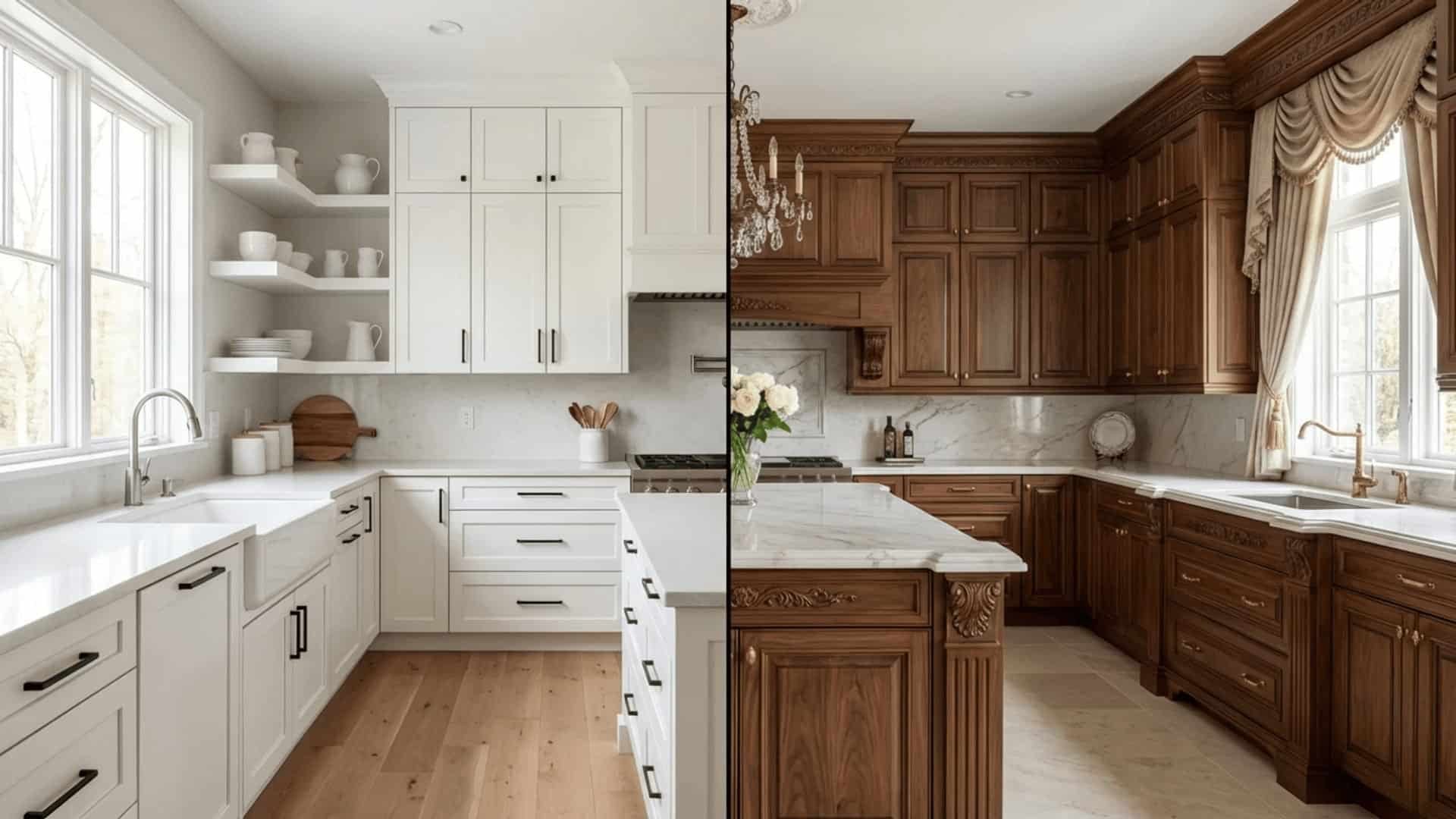


Cabinet style shapes how a kitchen feels the moment you walk in. When people ask me about shaker cabinets vs traditional cabinets, they’re usually trying to understand which design will actually work better in their space.
After more than twenty years working with wood and building custom cabinetry, I’ve installed both styles in all kinds of kitchens. Each one has strengths that become obvious once you look closely at construction, design, and long-term durability.
I’ll walk you through the key differences that matter when choosing between kitchen cabinet styles. You’ll see how shaker and traditional designs compare in style, materials, cost, cleaning, and overall kitchen compatibility, so you can make a confident decision for your home.
What are Shaker Cabinets?
Shaker cabinets trace back to the Shaker religious community in 18th-century America . They valued simplicity and function, and that philosophy shows in the cabinet design.
Each door uses a five-piece construction: four frame pieces surrounding a flat, recessed center panel . The edges stay square and clean, with no curves or decorative carving.
Most shaker cabinets come in white, grey, navy, or natural wood finishes. Materials range from solid wood to MDF, depending on budget. They suit modern, farmhouse, and transitional kitchens particularly well.
One thing I’ve noticed over the years: shaker doors are forgiving to paint and repaint.
If a homeowner wants to update the kitchen color five years down the road without replacing the boxes, shaker is almost always the right starting point.
The flat panel takes paint cleanly and evenly, unlike raised-panel doors, where touch-ups around the molding edges tend to show.
The design has stayed popular because it doesn’t lean too far in any one direction, making it easy to style around.
What are Traditional Cabinets?
Traditional cabinets have a heavier, more detailed look than the shaker-style cabinets. The defining feature is the raised center panel , which sits higher than the door frame, creating depth and shadow lines that give the cabinet a rich, layered appearance.
Decorative molding runs along the edges, and the profiles are often curved or beveled . Crown molding at the top, rope detailing, and carved accents are common touches. Nothing about this style is minimal.
These cabinets fit naturally in classic kitchens, think warm wood tones, stone countertops, and antique-style hardware.
In luxury home designs, they add a formal, built-over-time feel that shaker cabinets simply don’t replicate. If the kitchen leans traditional or high-end, this cabinet style tends to feel right at home.
Shaker Cabinets vs Traditional Cabinets: Key Differences
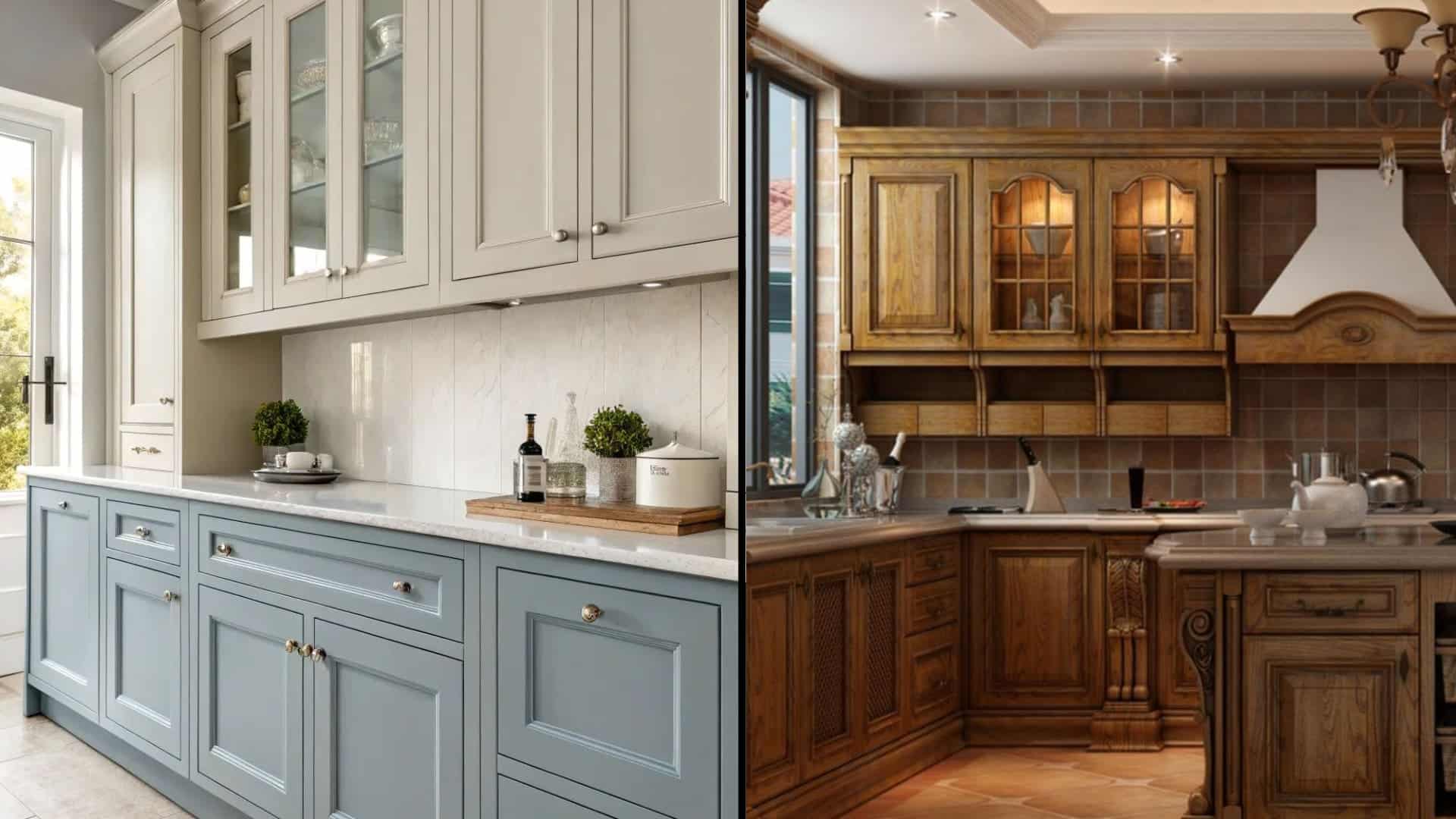
Cabinet appearance shapes the entire feel of a kitchen. Here’s how shaker and traditional styles differ visually from door to frame.
1. Design and Style
Shaker: Shaker cabinets focus on simple, functional design. A flat recessed center panel sits inside a square frame with no carving or trim. Clean lines keep the look balanced and work well in many kitchen styles.
Traditional: Traditional cabinets highlight decorative detail. Raised panels, carved trim, and crown molding add depth and shadow lines. The layered design gives kitchens a more formal appearance and makes the cabinets stand out.
2. Materials and Finishes
Shaker: Shaker cabinets often feature natural wood or smooth painted finishes. If you’re choosing paint colors with white cabinets, neutral tones like grey or light wood work particularly well. These finishes help the cabinets blend easily with different kitchen materials.
Traditional: Traditional cabinets often use deeper wood tones, such as cherry or walnut. Finishes may include glazing or lacquer that highlight carved details and trim, giving the cabinets a richer, more decorative look.
3. Cabinet Doors and Panels
Shaker: Shaker cabinet doors feature a flat, recessed center panel within a square frame. The simple construction keeps the door profile clean and balanced, making it suitable for both modern and farmhouse kitchens.
Traditional: Traditional cabinet doors usually feature raised center panels. Decorative molding or carved edges often appear around the frame, creating stronger depth and giving the cabinets a classic, detailed appearance.
4. Hardware Choices
Shaker: Shaker cabinets pair well with simple hardware. Matte black, brushed nickel, or stainless knobs and pulls keep the design clean and understated while supporting the cabinet’s minimal style.
Traditional: Traditional cabinets often use decorative hardware such as brass, gold, or antique-finish knobs and pulls. These choices complement the detailed cabinet surfaces and reinforce the classic kitchen style.
5. Cleaning and Maintenance
This is where shaker cabinets have a real, practical advantage. The flat recessed panel has almost no areas where grease, dust, and moisture can collect and hide. A damp cloth wipes clean in seconds.
Traditional cabinets are the opposite. Every carved edge and molding profile is a groove where cooking residue can settle. Cleaning thoroughly requires a soft-bristle brush or toothbrush to get into those crevices, especially around the raised panel edges and crown molding.
For families who cook frequently, this ongoing maintenance commitment is worth taking seriously before choosing the style.
I have clients who loved the look of traditional cabinets when they installed them and came to genuinely resent the cleaning by year three. That’s not a knock on the style; it’s just an honest heads-up.
6. Resale Value and Market Appeal
From a resale perspective, shaker cabinets are the safer choice in most markets. Their neutral, versatile appearance appeals to a wide range of buyers, and real estate professionals consistently note that transitional and contemporary kitchens tend to photograph better and attract broader buyer interest.
Traditional cabinets hold their value well in the right home, a formal colonial or Tudor-style property where the interior architecture supports the style.
In a mid-century ranch or a contemporary open-plan home, traditional cabinets can actually narrow your buyer pool. They signal a specific aesthetic that not every buyer shares.
This doesn’t mean you should design your kitchen around resale. But if you’re planning to sell within five to ten years, it’s a factor worth knowing.
Cost Comparison: Shaker vs. Traditional Cabinets
Cabinet cost depends on construction complexity, materials, and installation. Understanding these factors helps you estimate the real budget needed for each style.
| Cost Factor | Shaker Cabinets | Traditional Cabinets | Estimated Cost (Per Linear Foot – USA) |
|---|---|---|---|
| Manufacturing Complexity | Simple five-piece construction with flat panels makes production easier and faster. | Raised panels, carving, and decorative molding require more detailed manufacturing. | Shaker: $60–$650 / Traditional: $150–$1,200+ |
| Material Costs | Often available in MDF or solid wood with painted finishes, which keeps costs moderate. | Typically built from premium hardwoods like cherry or walnut, increasing overall material costs. | Shaker: $60–$200 (stock) up to $1,200+ custom / Traditional: $200–$1,200+ |
| Installation Costs | Straightforward designs are quicker to install, reducing labor time. | Heavier doors and trim require more labor and precision. | Shaker: $100–$450 / Traditional: $150–$500+ |
| Customization Options | Easy to customize with paint colors and hardware changes. | Detailed molding and finishes increase the cost significantly. | Shaker: $150–$650 / Traditional: $300–$1,200+ |
In most kitchens, shaker cabinets cost less because of their simpler construction, while traditional cabinets often require higher budgets for materials and craftsmanship.
Hidden Costs to Watch For
The per-linear-foot numbers above cover the cabinets themselves, but there are real additional costs that can catch homeowners off guard.
With traditional cabinets, the crown molding installation, custom corbels, and glazing touchups after delivery add up.
I’ve seen projects where the “extras” pushed the total budget 20–30% higher than the original quote. Always ask your cabinet supplier for an itemized quote that includes trim, hardware, and finish work.
With shaker cabinets, the biggest cost variable is whether you’re buying stock, semi-custom, or fully custom.
Stock shaker cabinets from big-box retailers can be perfectly serviceable, but the box construction is often thinner and the hardware is basic.
Semi-custom is usually the sweet spot for quality-conscious buyers who don’t want to pay fully custom prices.
Which Cabinet Style is Right for You?
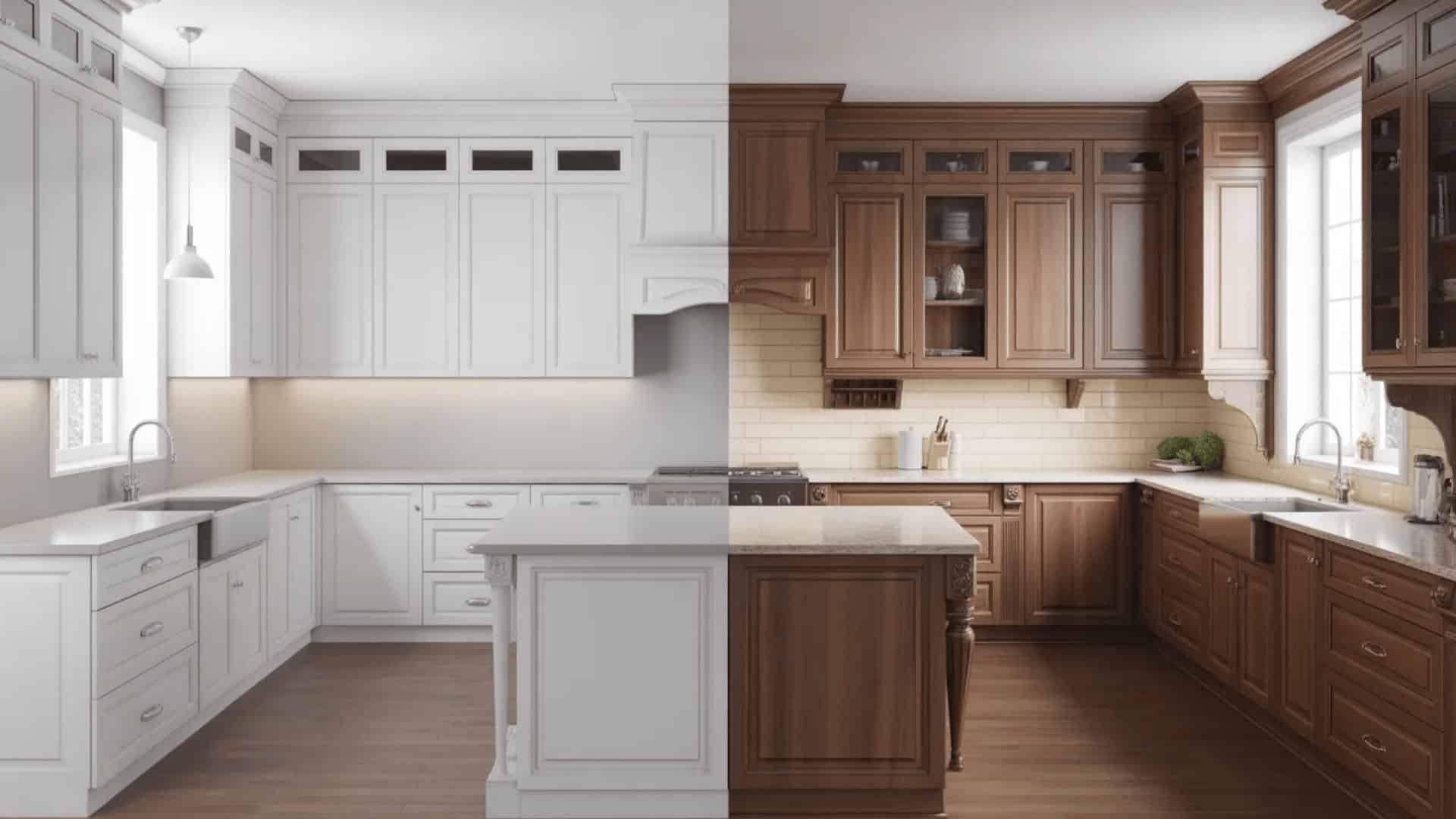
Choosing between the two comes down to your home’s existing style, budget, and the level of detail that feels right for the space.
When Shaker Cabinets Make More Sense
Shaker cabinets tend to be the more practical pick for most renovations. Here’s when they’re clearly the better direction.
- Modern, transitional, or farmhouse interior style
- Working within a moderate or mid-range budget
- Low-maintenance cleaning is a priority
- Smaller kitchen where visual weight needs to stay light
- Planning to resell with a broad buyer appeal in mind
- Clean, functional look preferred over decorative detailing
Shaker cabinets work well in most renovation scenarios. They’re versatile, practical, and easy to style around.
When Traditional Cabinets are a Better Choice
Traditional cabinets make sense in specific situations, when the home and budget genuinely support the style.
- Classic, formal, or luxury interior design direction
- Large kitchen that can carry heavier visual weight
- Crown molding and ornate fixtures are already present
- Budget supports higher manufacturing and installation costs
- Detailed woodwork and craftsmanship are a priority
- Comfortable with regular cleaning and maintenance upkeep
Traditional cabinets are worth it in the right setting, when the home, budget, and design vision all align.
Can You Mix Shaker and Traditional Elements?
Yes, and this is increasingly common in high-end kitchen renovations. A popular approach is using traditional-style cabinets for the perimeter cabinetry and a shaker-style island, or vice versa.
The contrast can look intentional and layered when the hardware and color palette tie both elements together.
I’ve completed a handful of kitchens where the upper cabinets were inset shaker in a warm white, and the lower cabinets were a more traditional raised-panel design in a walnut stain.
The mix worked because both pieces shared the same hardware finish and the same countertop material. When the bridge elements are consistent, mixing profiles reads as a design choice rather than an inconsistency.
If you’re considering a mixed approach, stick to one unifying element, whether that’s hardware finish, color family, or countertop material, and let everything else flex around it.
Final Thoughts
By now, you should have a clearer understanding of how shaker cabinets vs traditional cabinets compare in real kitchens.
Shaker cabinets bring simple lines, versatile design, and practical maintenance that works well in many homes. Traditional cabinets offer deeper detail, raised panels, and a more formal presence that suits classic interiors.
After years of building and installing cabinets, I’ve found that the right choice always depends on the kitchen itself. You want cabinets that match the home’s character, hold up to daily use, and fit comfortably within your budget.
When those elements align, the result feels natural and lasting. Take a good look at your space before deciding, and if this guide helped you narrow the choice, share which cabinet style you’re leaning toward.
Frequently Asked Questions
Do shaker cabinets increase home value?
Shaker cabinets often help with resale because they suit many kitchen styles. Buyers usually prefer simple designs that feel current, making these cabinets a safer option when preparing a home for sale.
Are traditional cabinets going out of style?
Traditional cabinets are not outdated, but they work best in homes with classic architecture. In modern layouts, they can feel heavy, so their appeal depends on how well they match the overall design.
Which cabinet style lasts longer?
Both styles can last decades if built with quality materials. Durability depends more on construction, wood type, and hardware than the door style itself, along with proper care and regular maintenance.
Can shaker cabinets look high-end?
Yes, shaker cabinets can look upscale when paired with premium finishes, solid wood, and good hardware. Details like soft-close hinges and custom paint colors can make a big difference in overall appearance.
Are traditional cabinets harder to clean?
Traditional cabinets need more effort to clean due to grooves and carved details. Grease and dust settle into these areas, so regular wiping and occasional detailed cleaning help keep them in good condition.
What kitchen styles suit shaker cabinets best?
Shaker cabinets fit modern, transitional, and farmhouse kitchens. Their simple design blends easily with different materials and colors, making them a flexible option for many home layouts.