

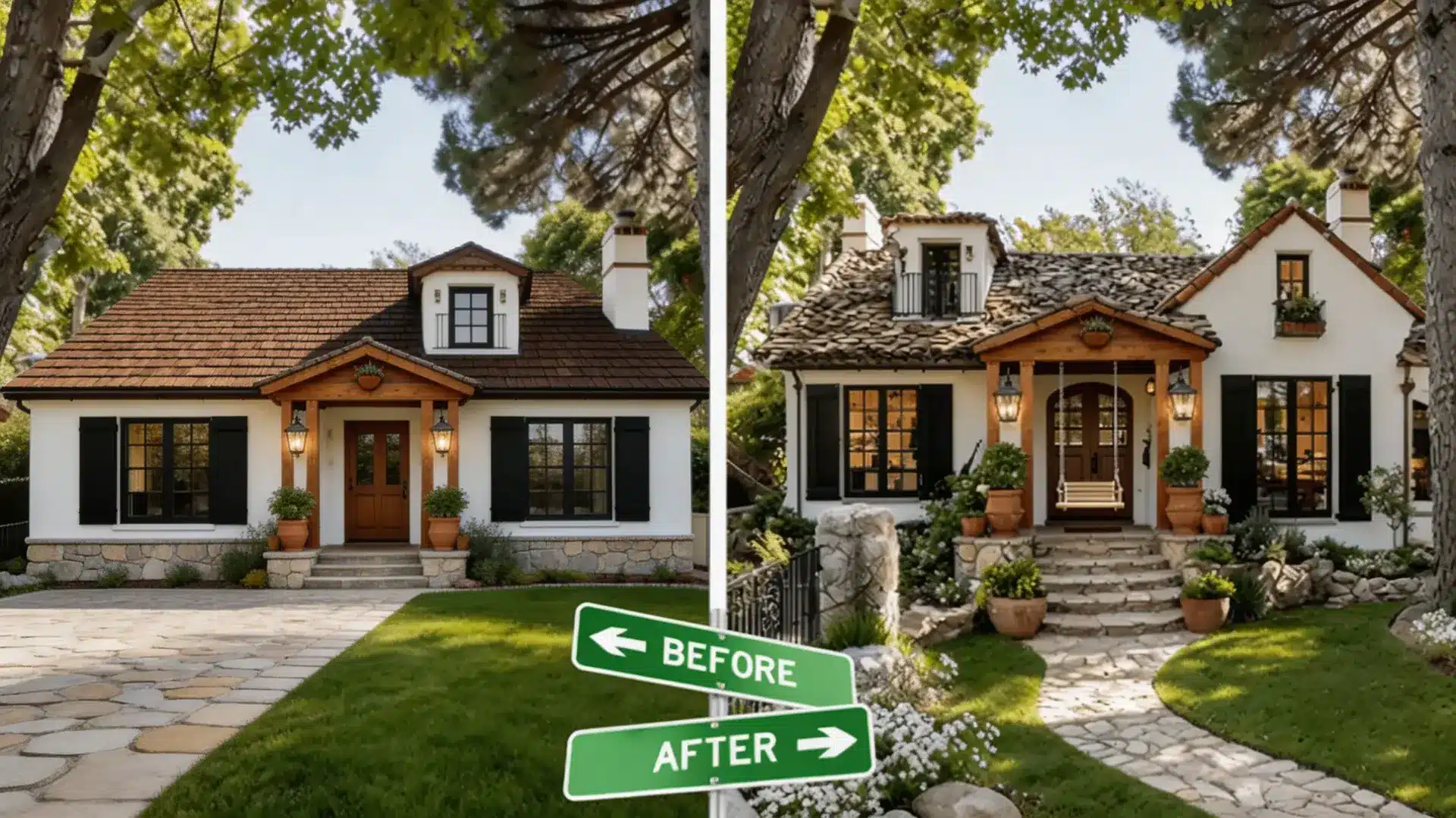


House additions run from $1,500 for a fire pit area to $350,000 for a full second story.
That range is real, and the gap comes down to three things: how much of the structure already exists, how complex the permit process is in your area, and whether you have a contractor who has done this specific type of work before.
The 37 house additions below cover outdoor builds, structural changes, and interior conversions, each with a before-and-after breakdown and the cost range you should actually expect.
| Cost Note: Figures in this article are estimates based on national averages. Actual costs vary significantly by region, contractor, materials, and project scope. Always get at least three quotes before committing to any project above $1,000. |
What to Expect Before Any House Addition Begins
Every home addition project I’ve seen go sideways had one thing in common: the owners started construction before they understood the full scope of what they were approving.
The planning phase is not optional, and it is not quick. Budget meaningful time to source and vet contractors, pull the necessary permits, and finalize a budget with a 15 to 20 percent contingency built in above the quoted figure.
Timeline expectations matter too. A bump-out or garage conversion typically runs four to eight weeks.
A second-story addition or basement conversion can take four to six months or longer, depending on structural complexity and local permit approval windows.
The projects that finish on time and on budget are almost always the ones where every material and layout decision was locked in before anyone touched a wall.
Outdoor House Additions: Before and After
Outdoor spaces are the most consistently underused part of any property. A backyard that exists primarily as a maintenance obligation is leaving real value on the table. These house additions change that directly.
1. Creating an Outdoor Living Space
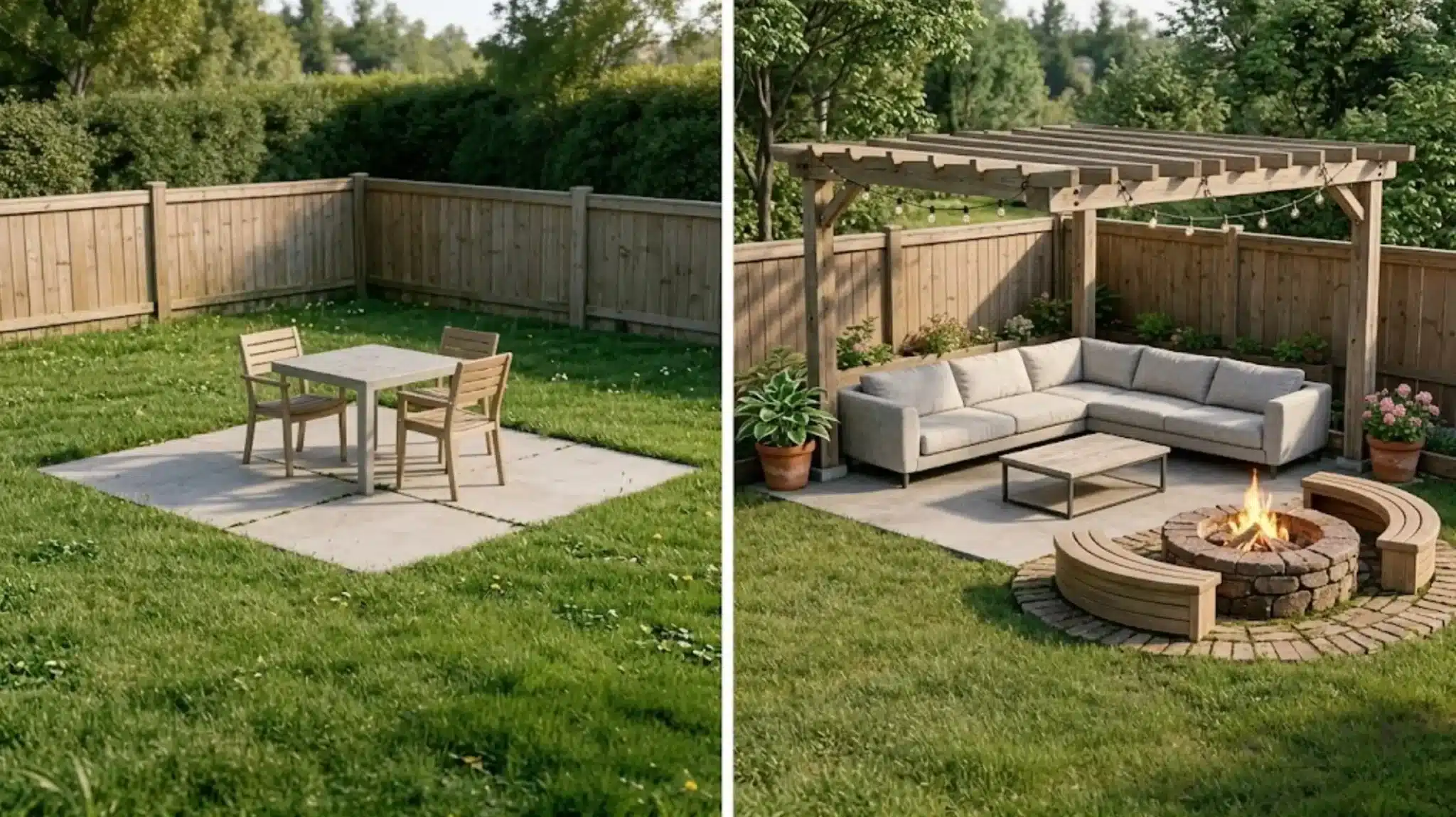
Before: A flat yard with no furniture, no shade, and no reason to spend time there. The space exists but serves no purpose beyond weekly mowing.
After: A pergola anchors the main zone. A weather-resistant sectional sits below it. A built-in stone firepit with seating is placed 10 feet away, and string lights run the length of the pergola beams. Usable for nine months of the year in most US climates.
2. Expanding the Patio or Deck
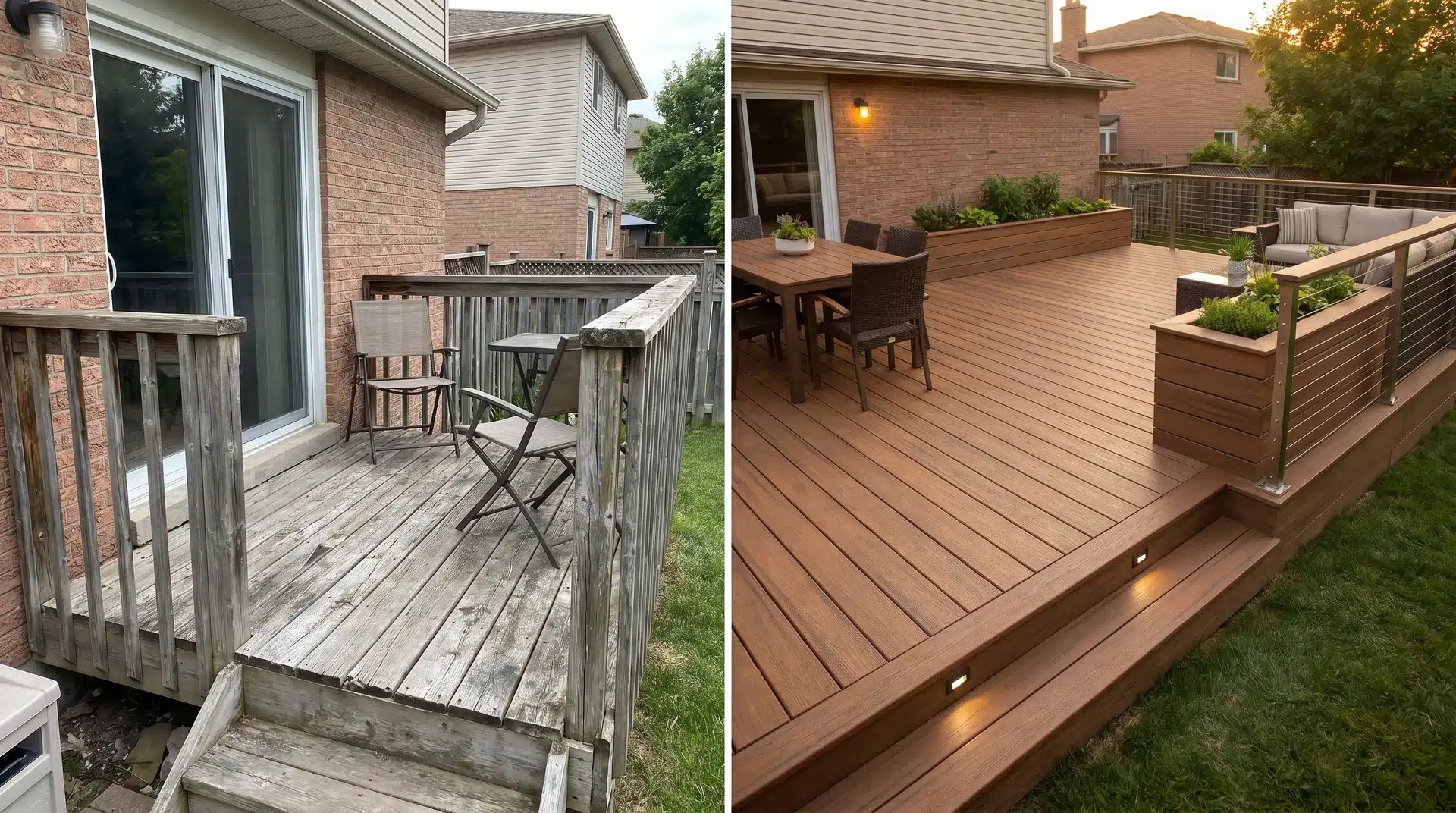
Before: A small aging deck with warped boards, outdated railing, and barely enough surface for a table and two chairs. Furniture management was required before anyone sat down.
After: Rebuilt in composite material with a defined dining zone and a lounge zone, built-in planters at the perimeter, cable railing keeping sightlines open, and recessed lighting at the perimeter for evening use. The difference in usable square footage is typically 150 to 300 square feet.
3. Adding a Pool House or Shed
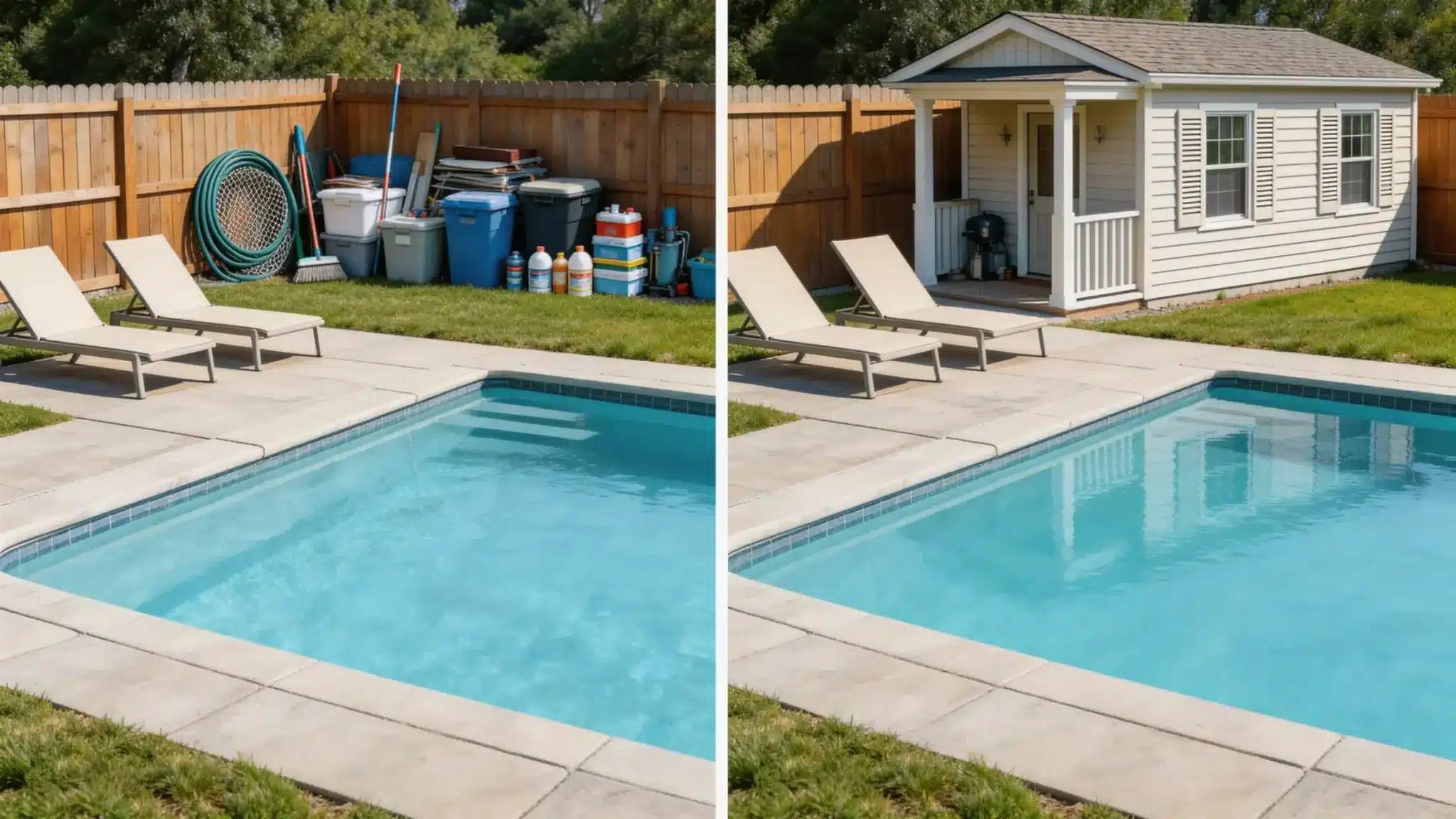
Before: Pool chemicals, floats, maintenance equipment, and towels in plastic bins against the house wall or left poolside. The yard looks disorganized regardless of how recently it was cleaned up.
After: A dedicated structure with a covered entry porch, organized equipment and chemical storage, a changing area with an outdoor shower, and exterior cladding matched to the existing house. No more visual disorder around the pool perimeter.
4. Adding a Sunroom
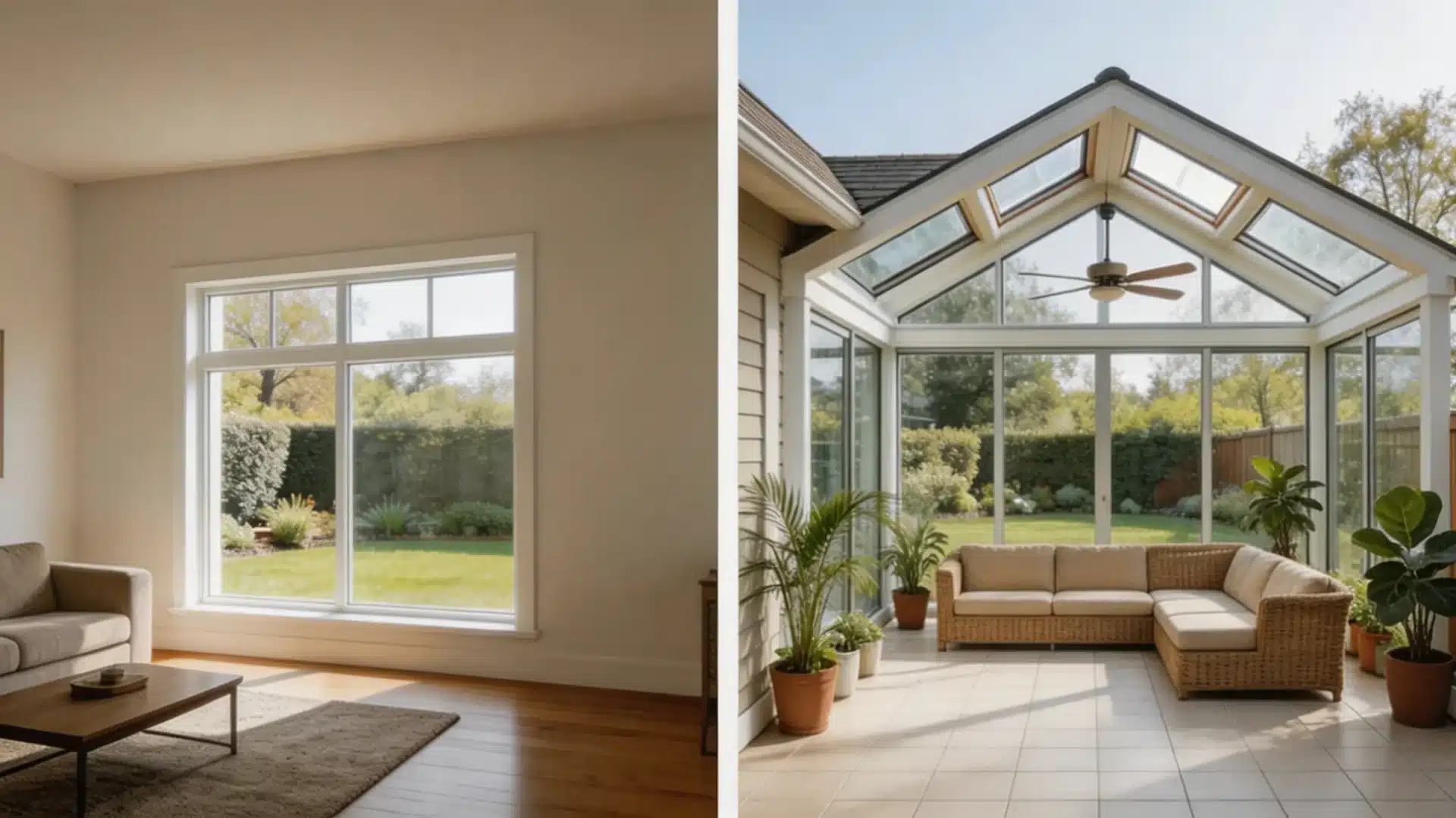
Before: A living room that backs onto the yard with no physical or visual connection to it. During cooler months the backyard is inaccessible and the interior feels closed off in every direction.
After: A glass-walled room connected through French doors, with thermal glazing, a ceiling fan, wicker furniture, tile flooring, and an unobstructed garden view. In climates with cold winters, this is the home addition that extends outdoor living by three to four months per year.
5. Expanding the Yard With a Garden
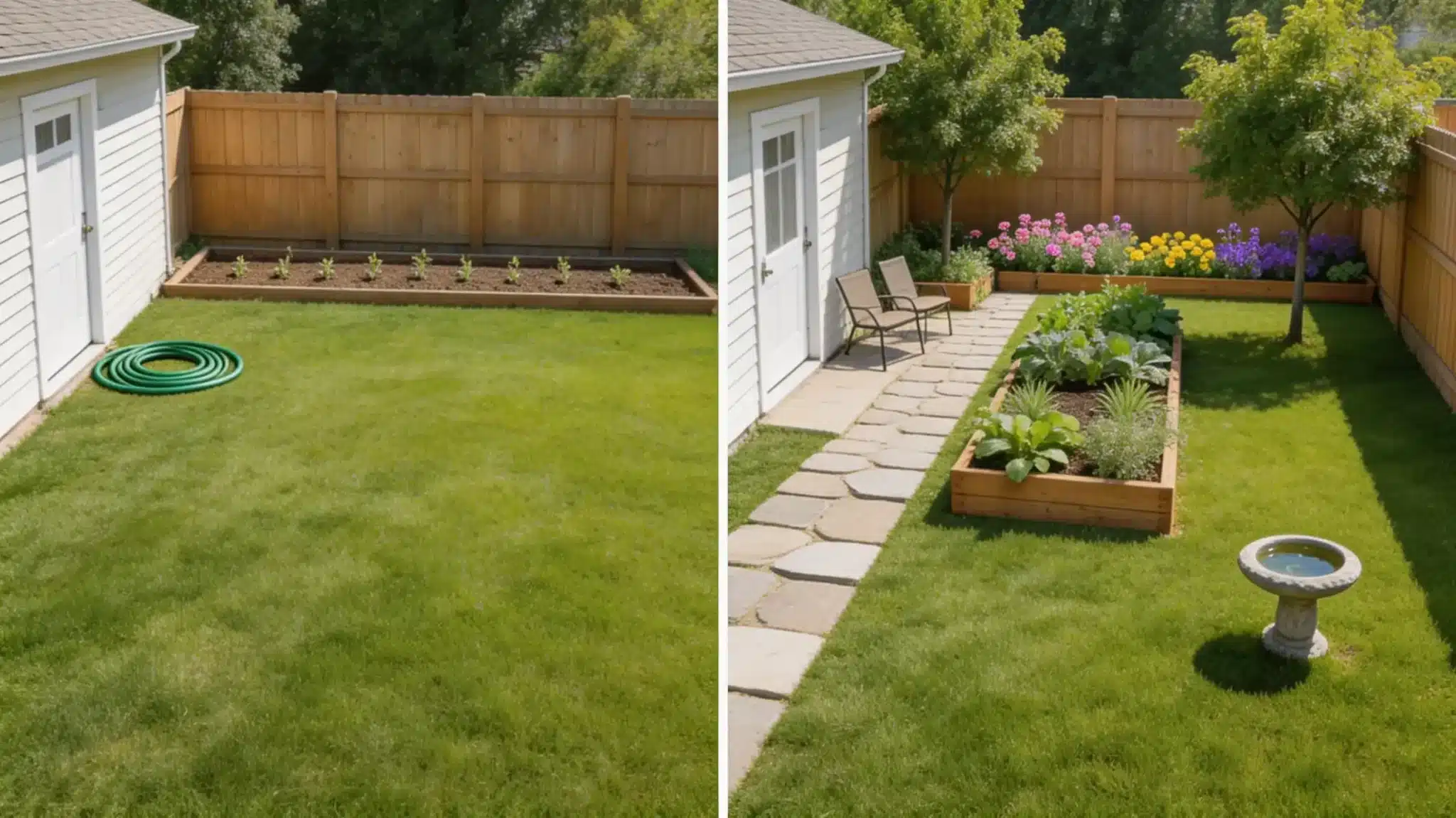
Before: A flat lawn with uniform grass, no planting beds, no pathways, and nothing that gives any part of the yard a distinct identity or reason to linger.
After: Raised beds along one fence line, a stone path from the back door to a seating area, flowering border plants at the perimeter, and two mature shade trees transplanted in place. The yard now has zones rather than a single undifferentiated surface.
6. Adding a Pergola or Covered Patio
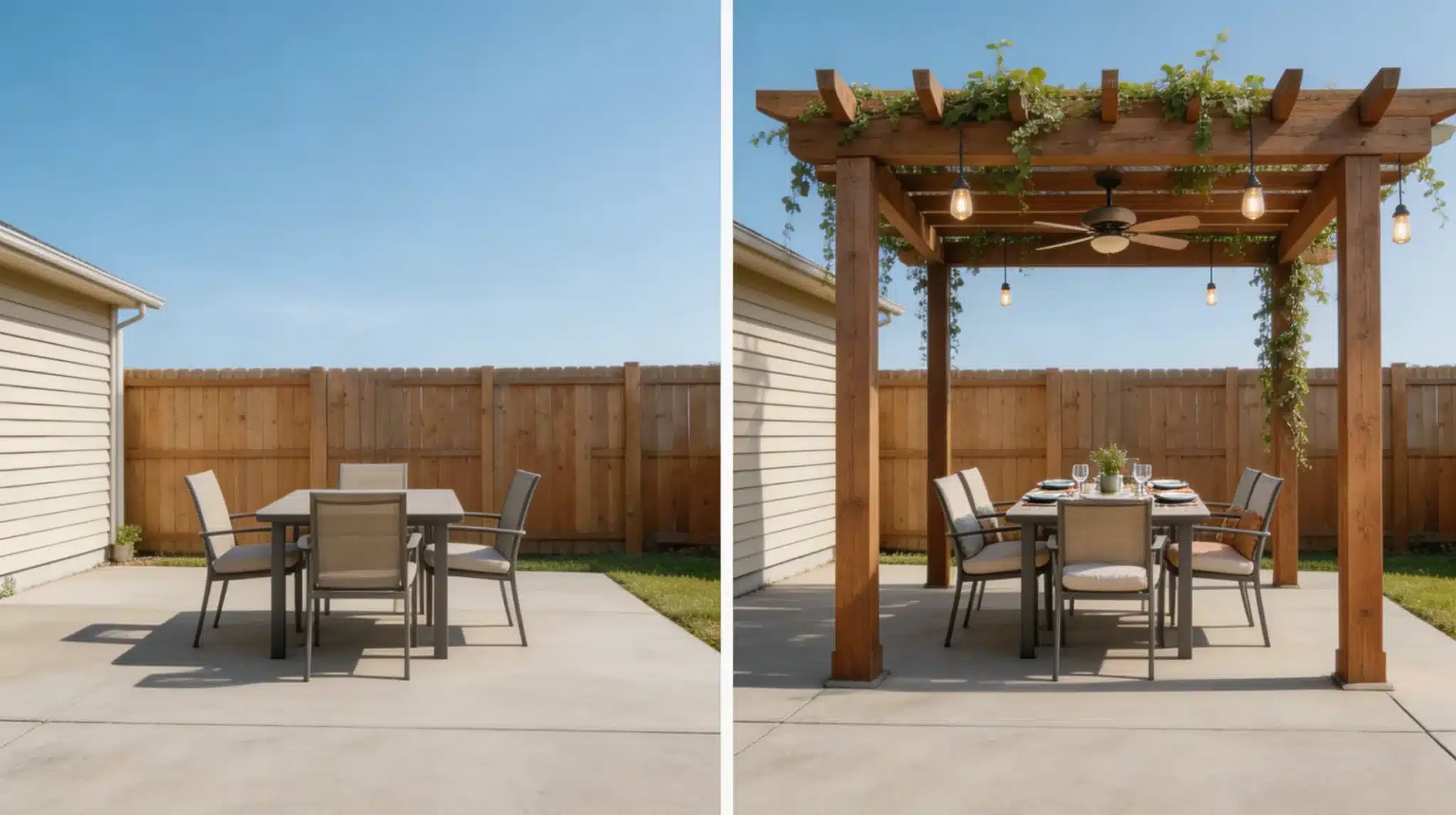
Before: A plain concrete slab with no shade and no furniture because direct sun makes the space unusable between 10am and 5pm for most of the summer.
After: A timber pergola with climbing plants along the beams, pendant lights, a ceiling fan for air movement, and weather-resistant furniture positioned within the shaded zone. One of the more cost-effective house additions at this scale.
7. Installing a Swimming Pool
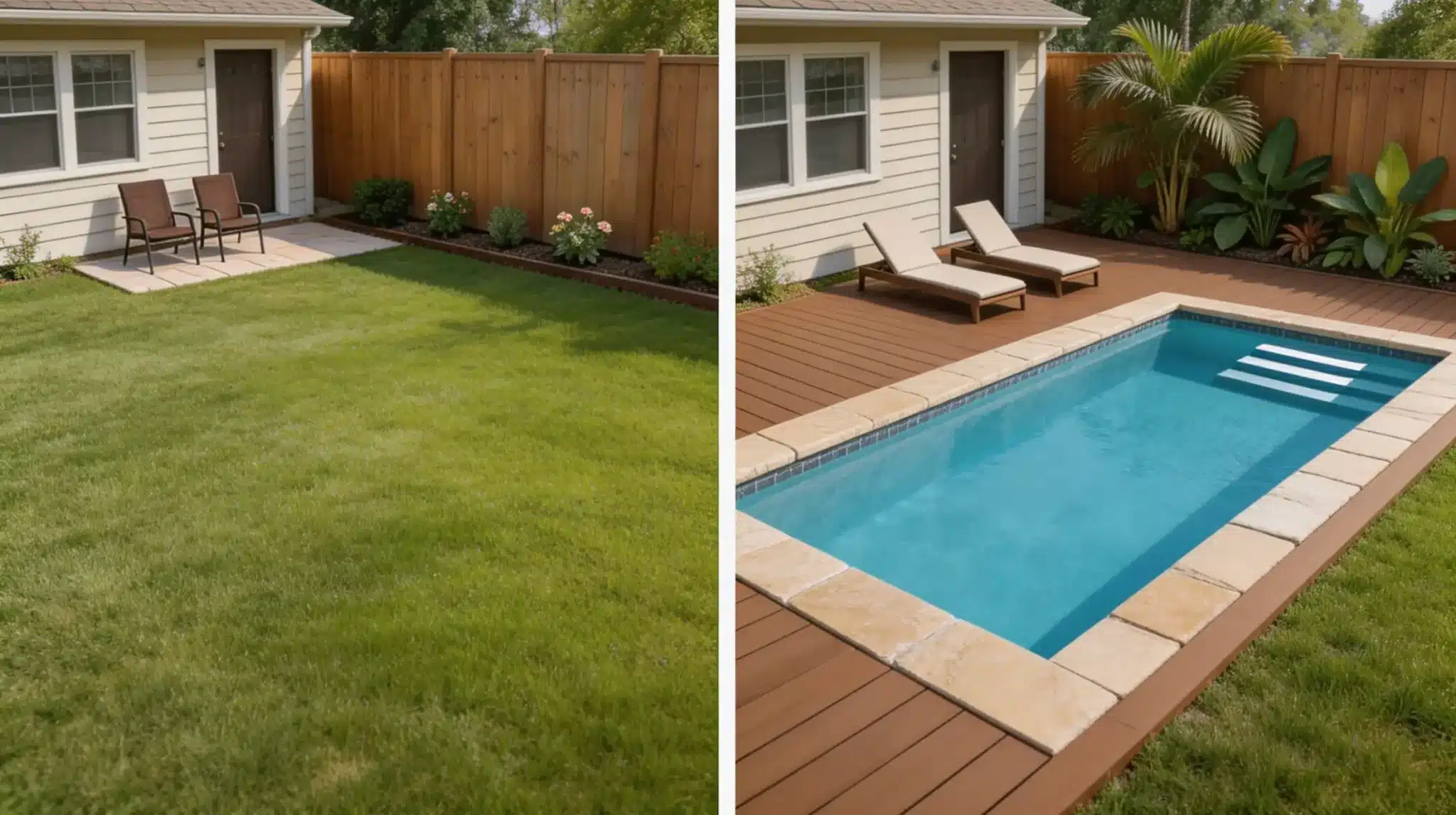
Before: A featureless backyard with no compelling reason to spend extended time in it during summer. Largely unused except for occasional seating.
After: An inground pool with stone coping, built-in entry steps, a surrounding composite deck, sun loungers alongside, and landscaped beds at the perimeter. The pool becomes the organizing feature the entire yard was missing. Note that inground pool costs vary more by region than almost any other outdoor addition, with labor and soil conditions driving most of the range.
8. Adding a Fire Pit Area
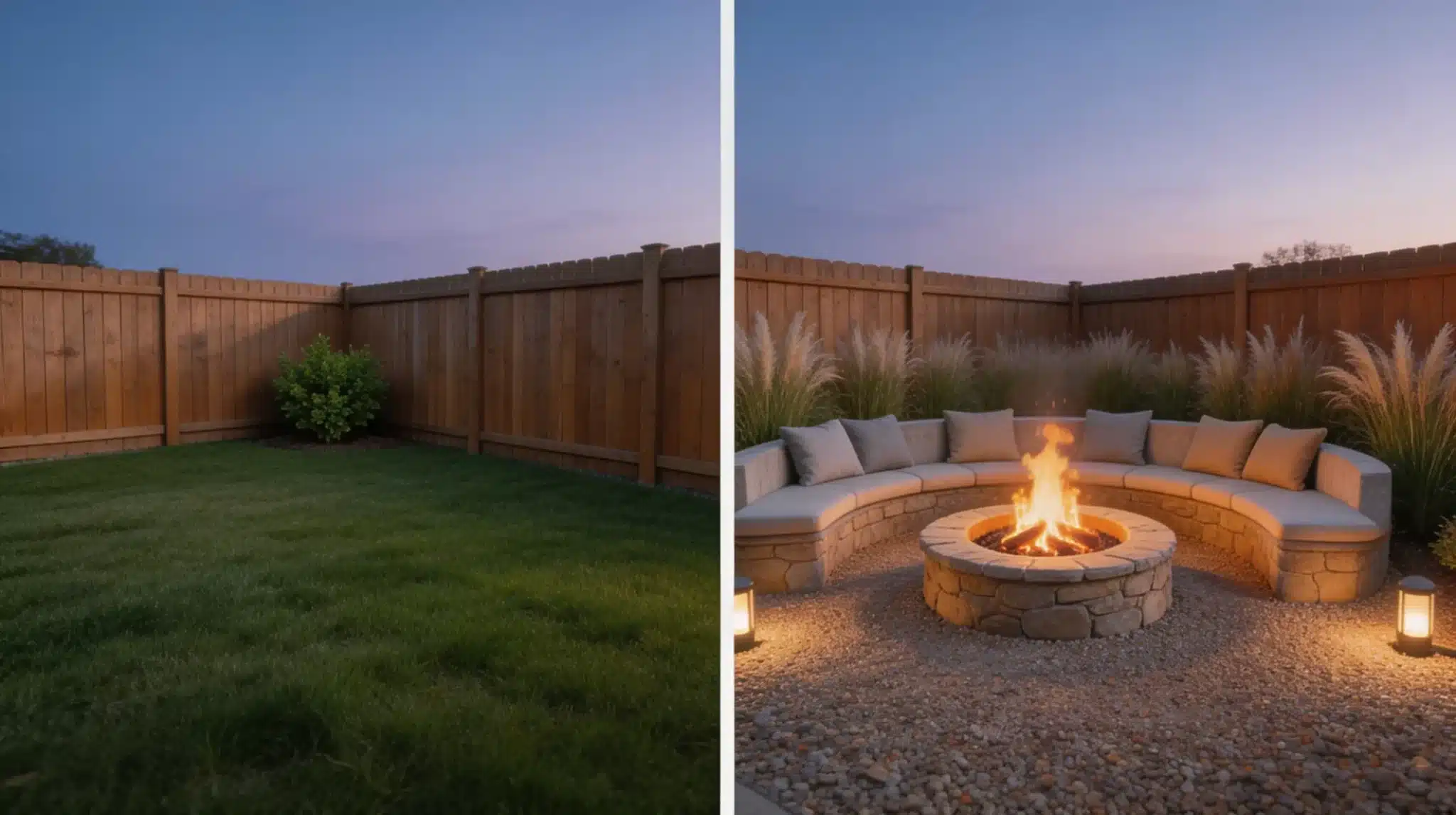
Before: An empty back corner with no purpose and no reason to go there after dark. The yard’s full footprint goes unused once daylight fades.
After: A built-in stone firepit with curved stone seating around it, low perimeter lighting, and a gravel base that drains well and requires minimal upkeep. One of the few house additions that extends outdoor use into October and November in most US climates.
9. Building a Greenhouse
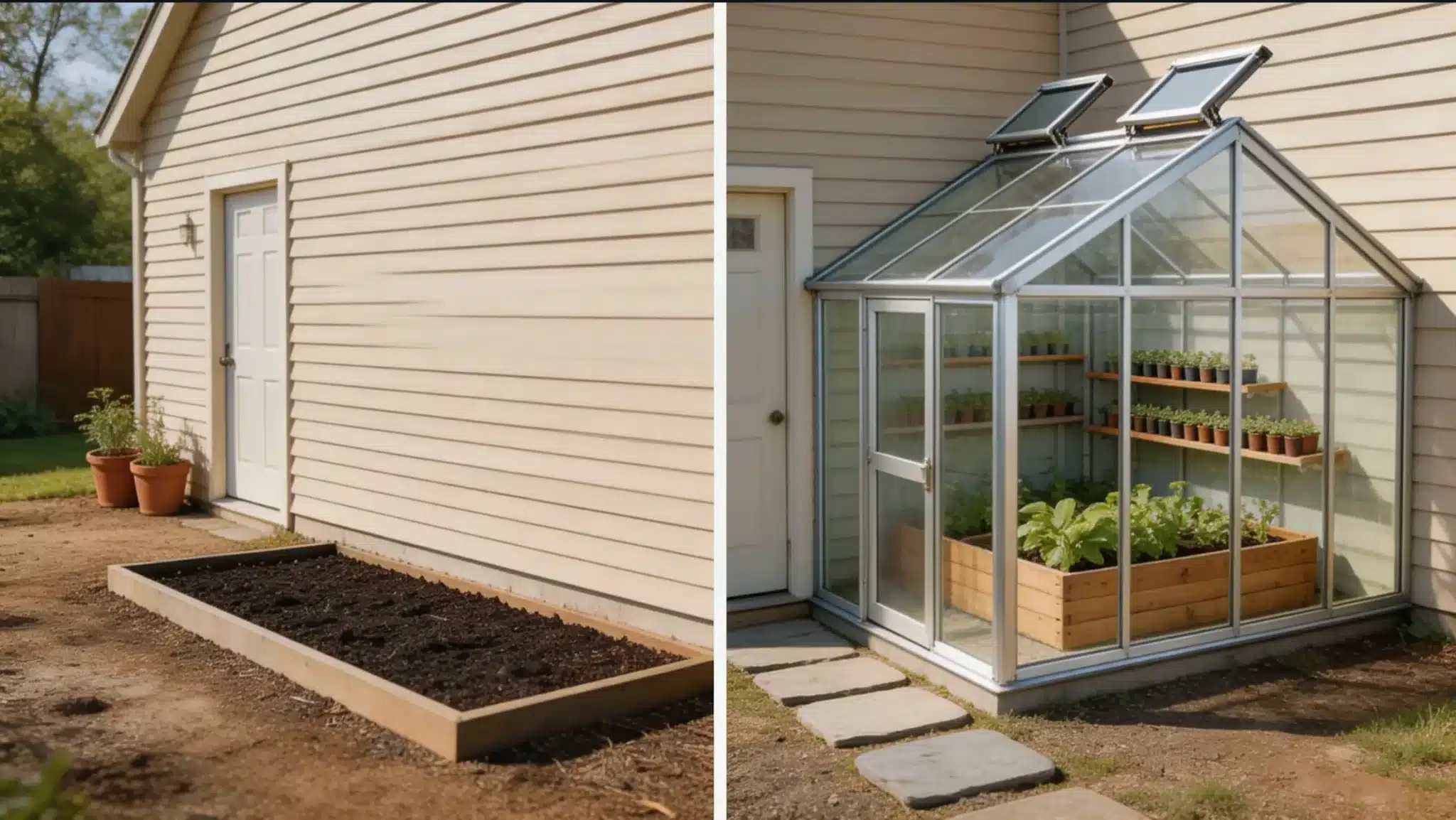
Before: Outdoor pots that decline each winter, or an empty yard corner used for nothing specific, with no shelter to carry plants through the colder months.
After: A lean-to greenhouse attached to the house wall with glass roof panels, raised growing beds, shelving for seedlings and herbs, and opening vent panels that regulate internal temperature. Extends the growing season by two to three months on either side of the standard window.
10. Adding a Front Porch
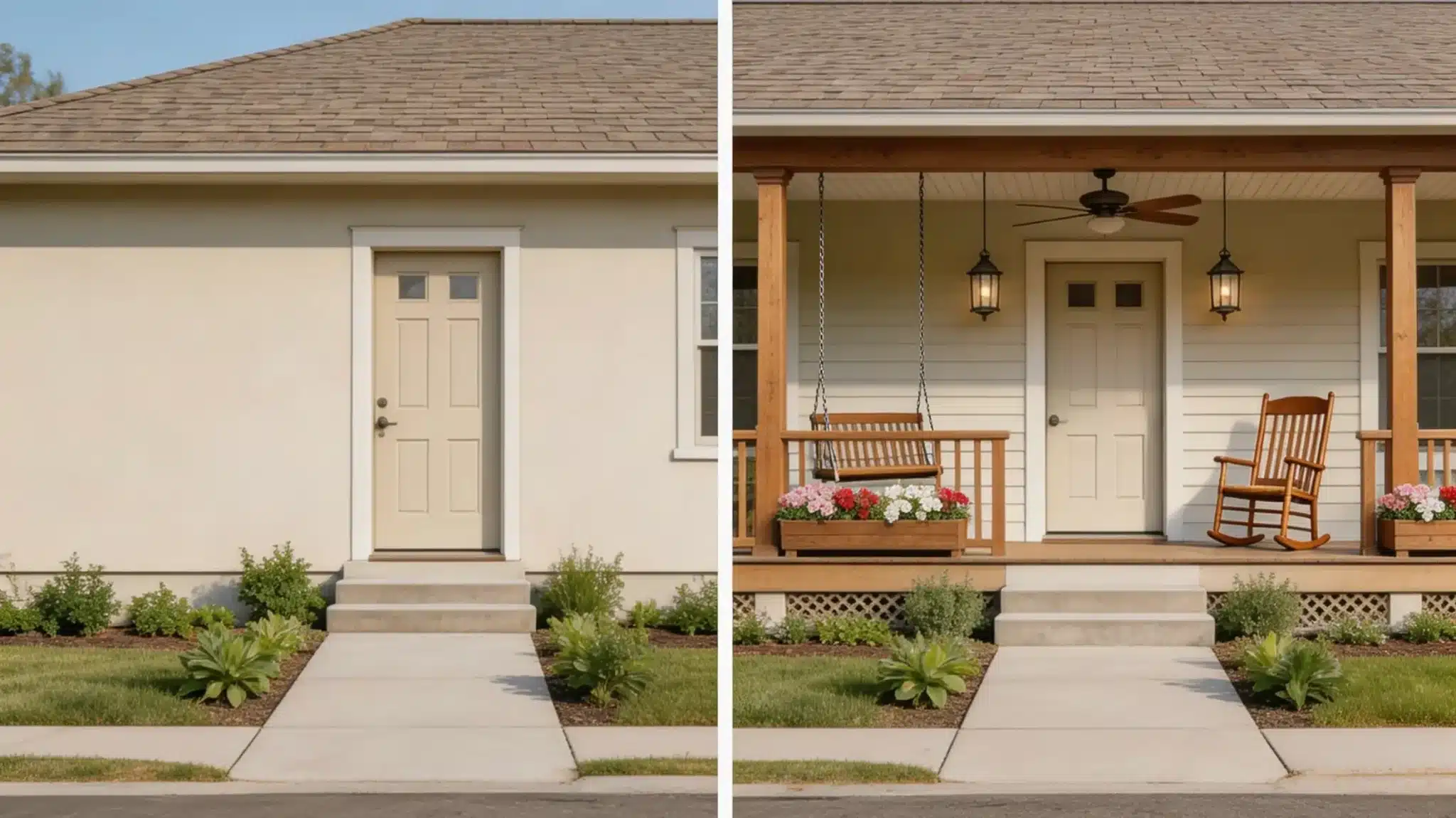
Before: A plain front door with a single step, no shelter, and no transition between the yard and the entry. Rain, deliveries, and arriving guests all encounter the same unprotected opening.
After: A covered porch with timber columns, a tongue-and-groove painted ceiling, a swing on one side, potted plants along the rail, and a ceiling fan for summer comfort. Also meaningfully improves curb appeal, which matters for resale regardless of when you plan to sell.
11. Adding a Hot Tub or Spa Area
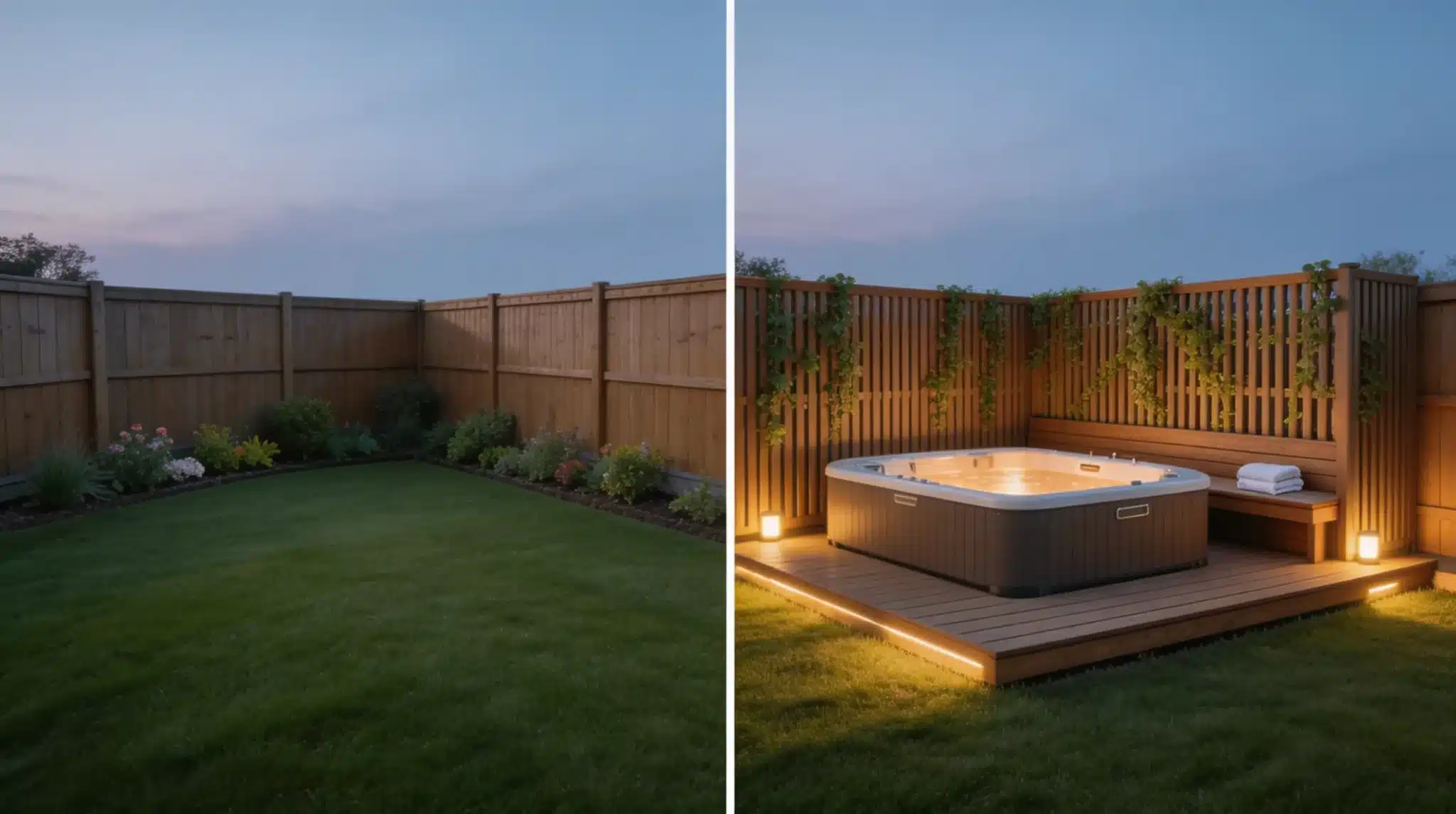
Before: A bare yard corner with no furniture and no draw to spend time there outside the warmest months. A dedicated outdoor retreat is possible but nothing has been done to build one.
After: A hot tub recessed into a timber deck platform, surrounded by a privacy screen of tall planters, low ambient lighting at the perimeter, and a side table for towels. One of the few outdoor house additions that delivers value in all four seasons.
12. Adding Outdoor Lighting
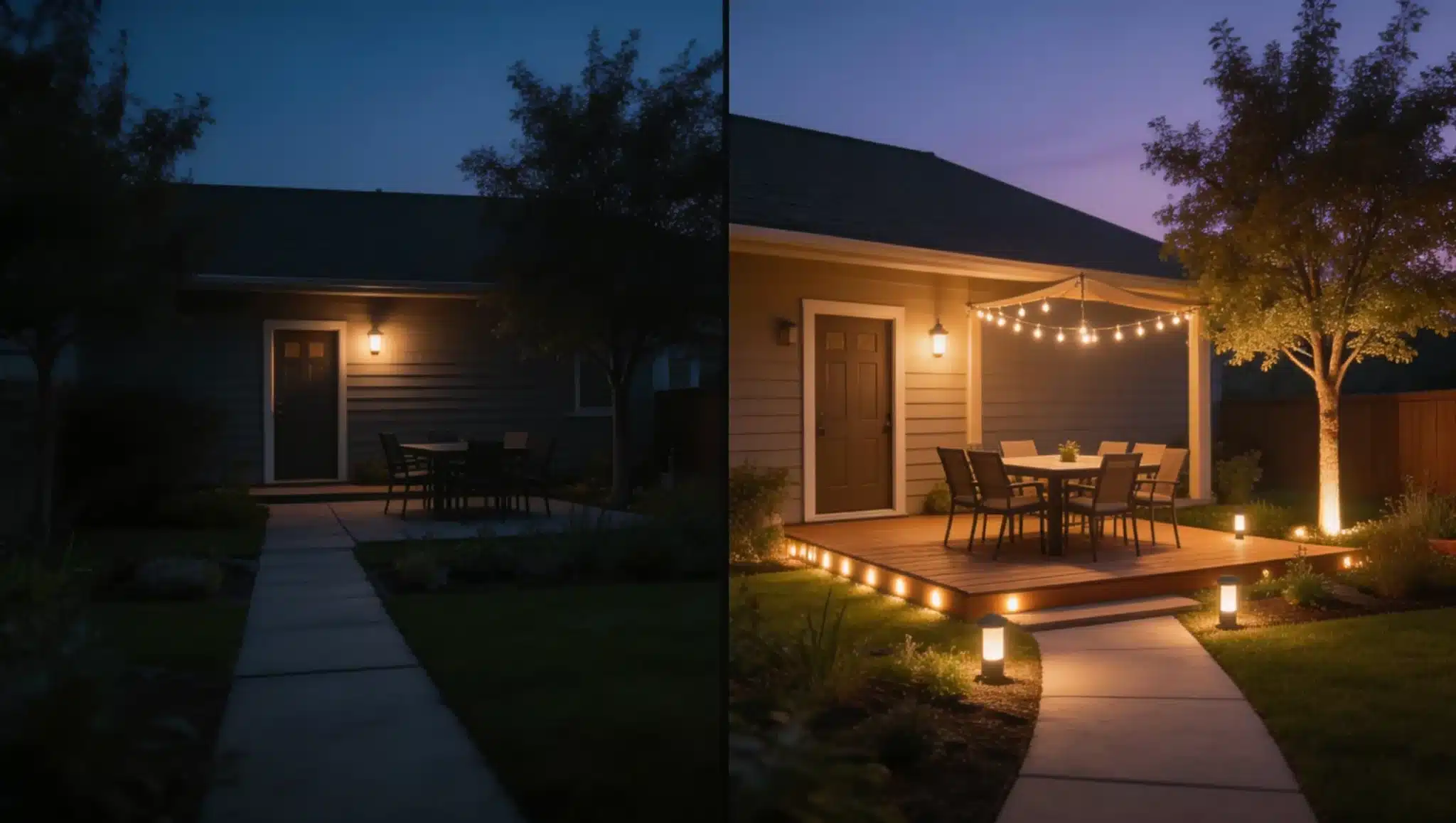
Before: A single porch light casting uneven coverage. Seating areas are dim after dark and pathways present a genuine trip hazard. The outdoor space is functionally off-limits once the sun goes down.
After: Recessed deck lighting, low-voltage path lighting along garden edges, a string light canopy over the main seating zone, and spotlights on key planting areas and the rear fence line. The yard is now usable for an extra two to three hours every evening.
Outdoor house additions consistently produce the most visible shift in how a property feels on a daily basis. Even a single well-executed project changes how much time you actually spend outside. Now let’s look at changes that go deeper into the structure.
Outdoor Addition Cost Estimates
These figures reflect typical US labor and material costs as of 2024 (HomeAdvisor national cost data). Regional variation, lot conditions, and contractor scheduling can all push costs outside these ranges.
| Addition Type | Low End | High End | What Drives the Variation |
| Outdoor Living Space | $5,000 | $65,000 | Pergola size, built-in features, firepit complexity |
| Patio or Deck Expansion | $8,000 | $45,000 | Material (pressure-treated vs composite), deck size, railing type |
| Pool House or Shed | $15,000 | $50,000 | Foundation, utility connections, cladding to match existing house |
| Sunroom | $16,000 | $75,000 | Glazing type, HVAC integration, foundation requirements |
| Garden Expansion | $2,000 | $15,000 | Hardscaping scope, tree transplanting, irrigation |
| Pergola or Covered Patio | $5,000 | $25,000 | Material (kit vs custom timber), electrical for fans/lighting |
| Inground Swimming Pool | $44,000 | $135,000 | Pool size, soil conditions, deck scope, fencing requirements |
| Fire Pit Area | $1,500 | $10,000 | Gas vs wood, built-in seating, gravel vs paver base |
| Greenhouse | $5,000 | $25,000 | Kit vs custom, foundation type, utility connections |
| Front Porch | $10,000 | $35,000 | Roof tie-in, column style, permit complexity |
| Hot Tub or Spa Area | $7,000 | $25,000 | Hot tub model, deck platform, electrical upgrade required |
| Outdoor Lighting System | $1,000 | $8,000 | Low-voltage DIY vs hardwired professional installation |
A fire pit and lighting setup can be handled at a low cost. A pool or sunroom requires a longer financial runway and a more involved permit process. Get at least three contractor quotes before committing to anything at the top of these ranges.
Structural House Additions
Structural house additions alter the building’s physical capacity. They require the most planning and budget, but the results are permanent and directly reflected in the property’s square footage and market value.
13. Adding a Second Story
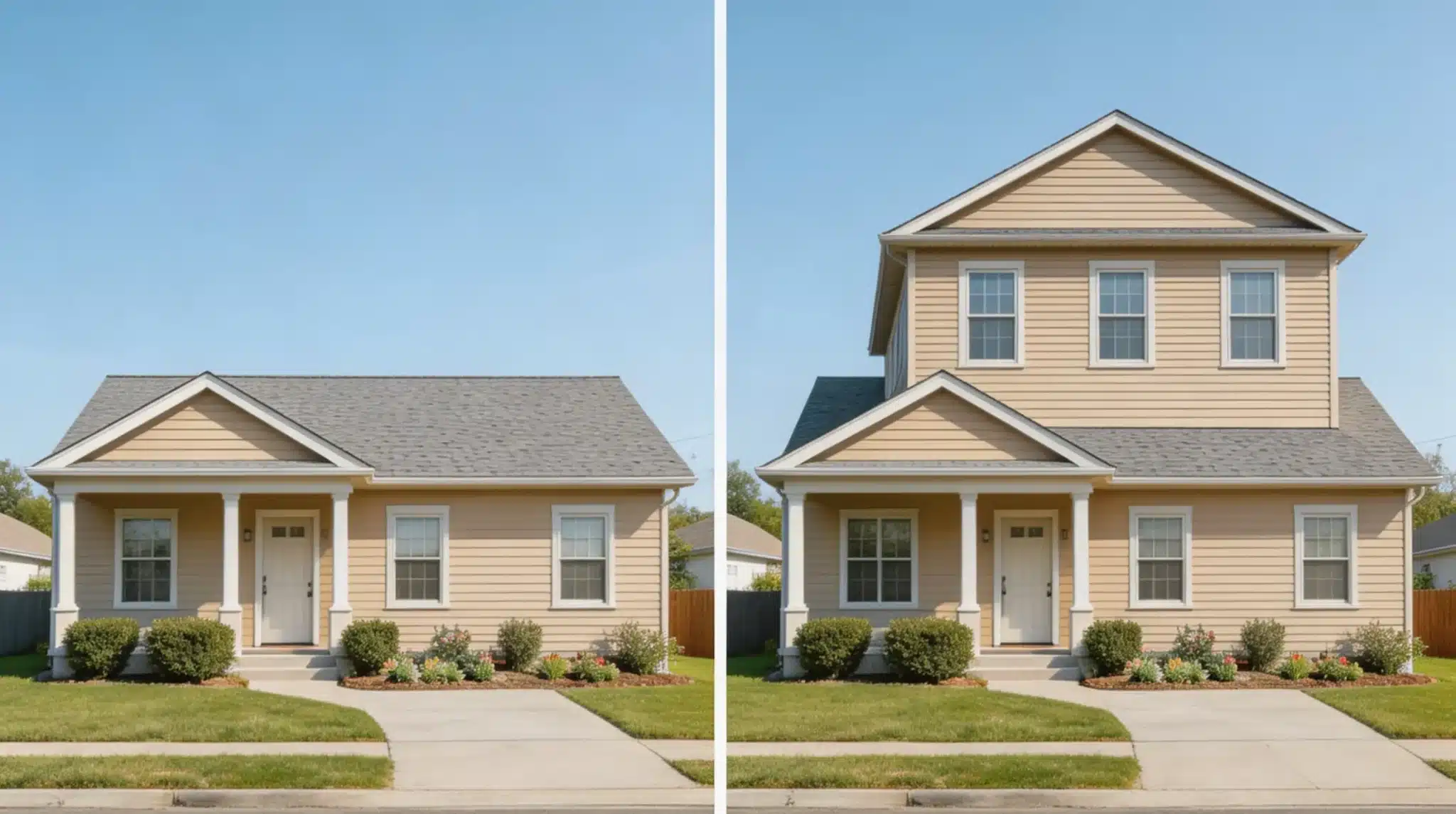
Before: A single-story home with adequate structure but insufficient bedroom count. The lot cannot grow outward and the household has clearly outgrown the available rooms.
After: A full second floor with two additional bedrooms, a new bathroom, a staircase integrated without sacrificing a main room, updated exterior cladding throughout, and an HVAC system expanded to serve both floors. This is the most disruptive of all house additions during construction, typically requiring a temporary move-out.
14. Basement Conversion
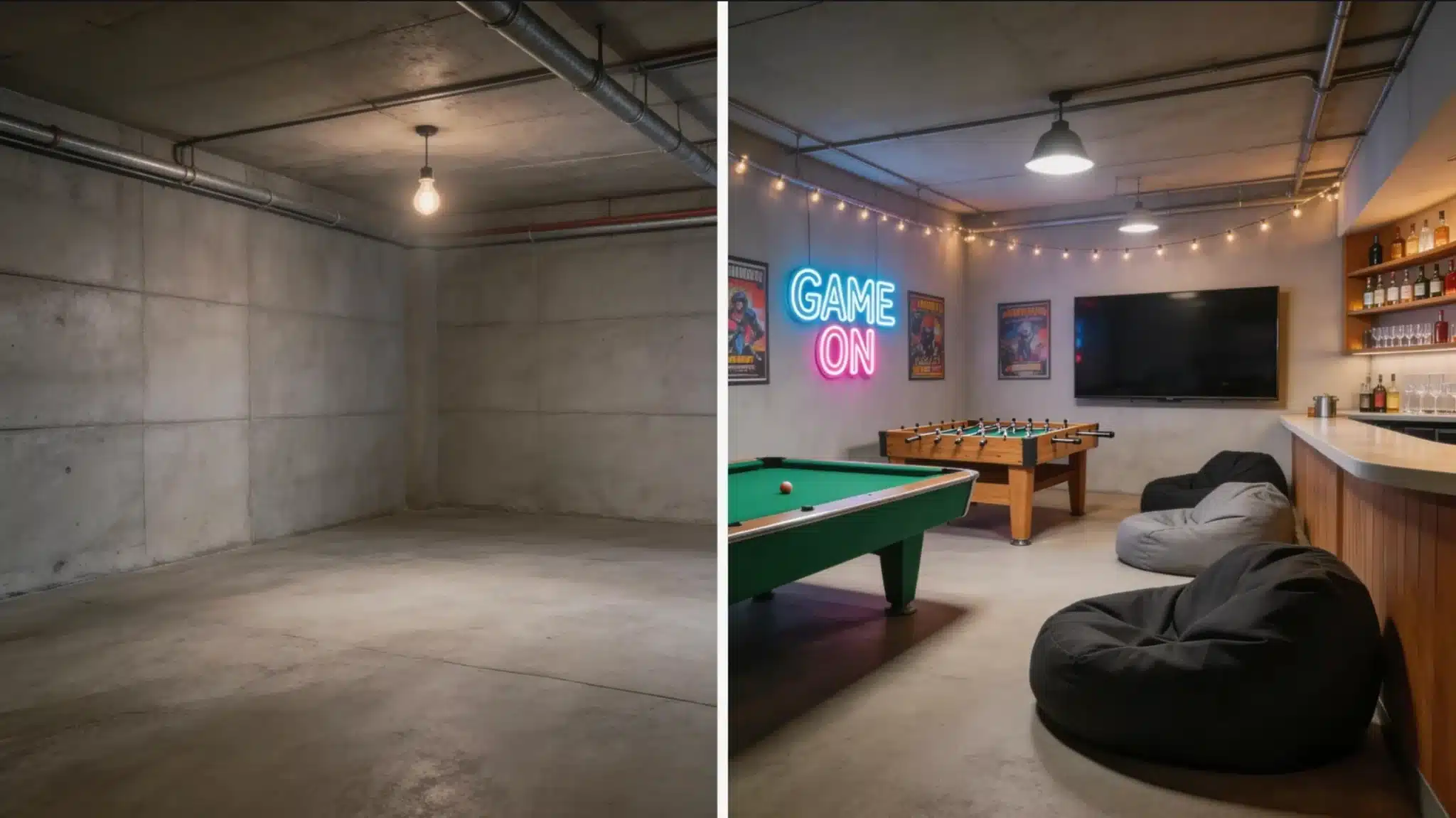
Before: A dark basement used entirely for storage. Exposed concrete walls, bare bulb lighting, a sump pump in one corner, and stacked boxes throughout. It contributes nothing to daily household life despite occupying the same footprint as the entire ground floor.
After: Insulated and drywalled walls, recessed lighting throughout, a large sectional facing a mounted TV, a wet bar with bar stools, a laundry alcove, and an egress window for code compliance. Basement conversions consistently rank among the best cost-per-square-foot home additions available.
15. Adding a Walk-In Closet
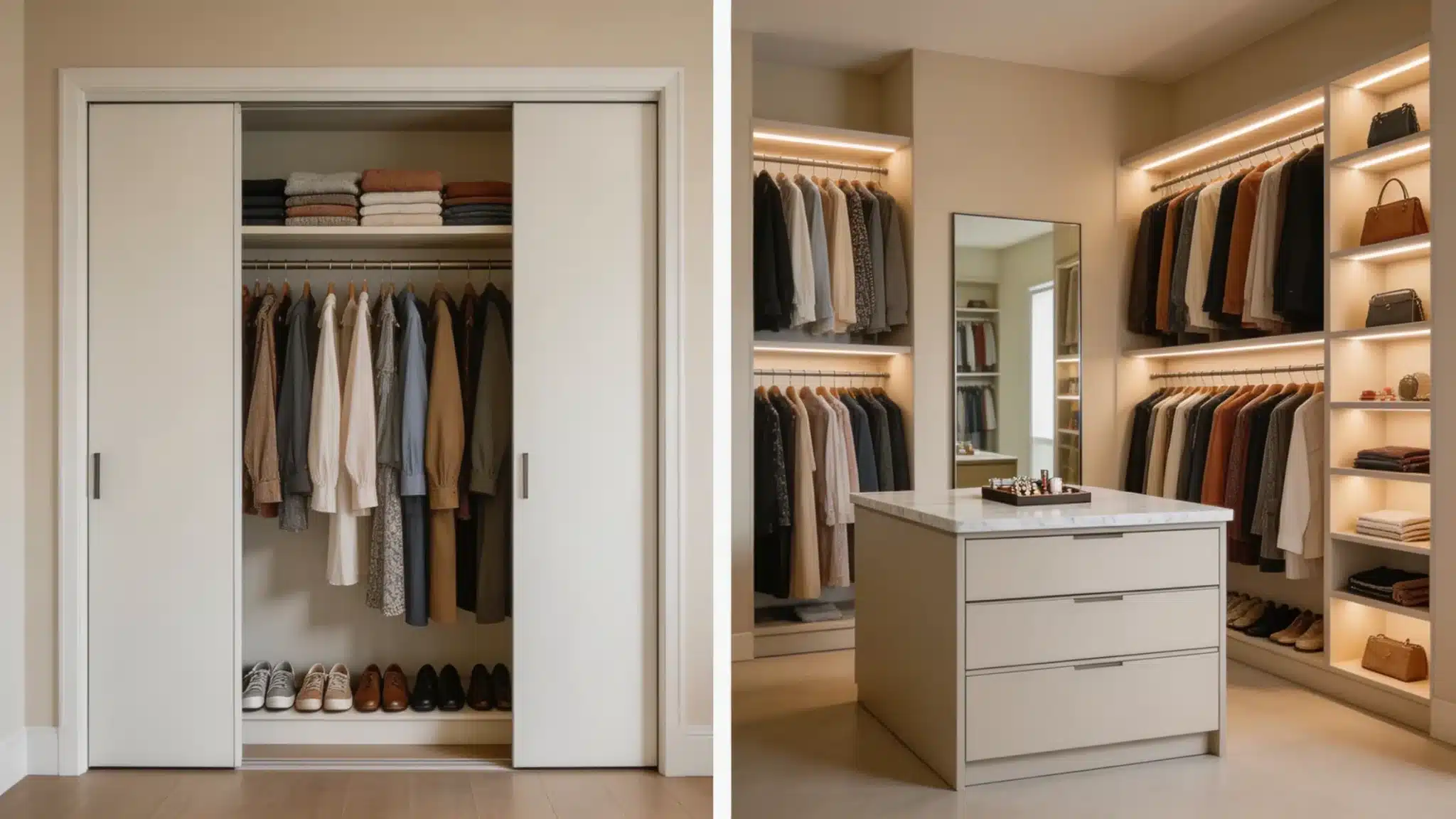
Before: A reach-in closet with a single rail, one shelf above, and no dedicated storage for shoes or accessories. Getting dressed means moving half the closet to reach the other half.
After: Dual hanging sections at two heights, open shelving for folded items, a central island with four drawers, LED strip lighting in every section, and a full-length mirror on the back wall. Often carved out of an adjacent bedroom or hallway, which is worth checking before assuming new construction is required.
16. Converting the Garage Into Living Space
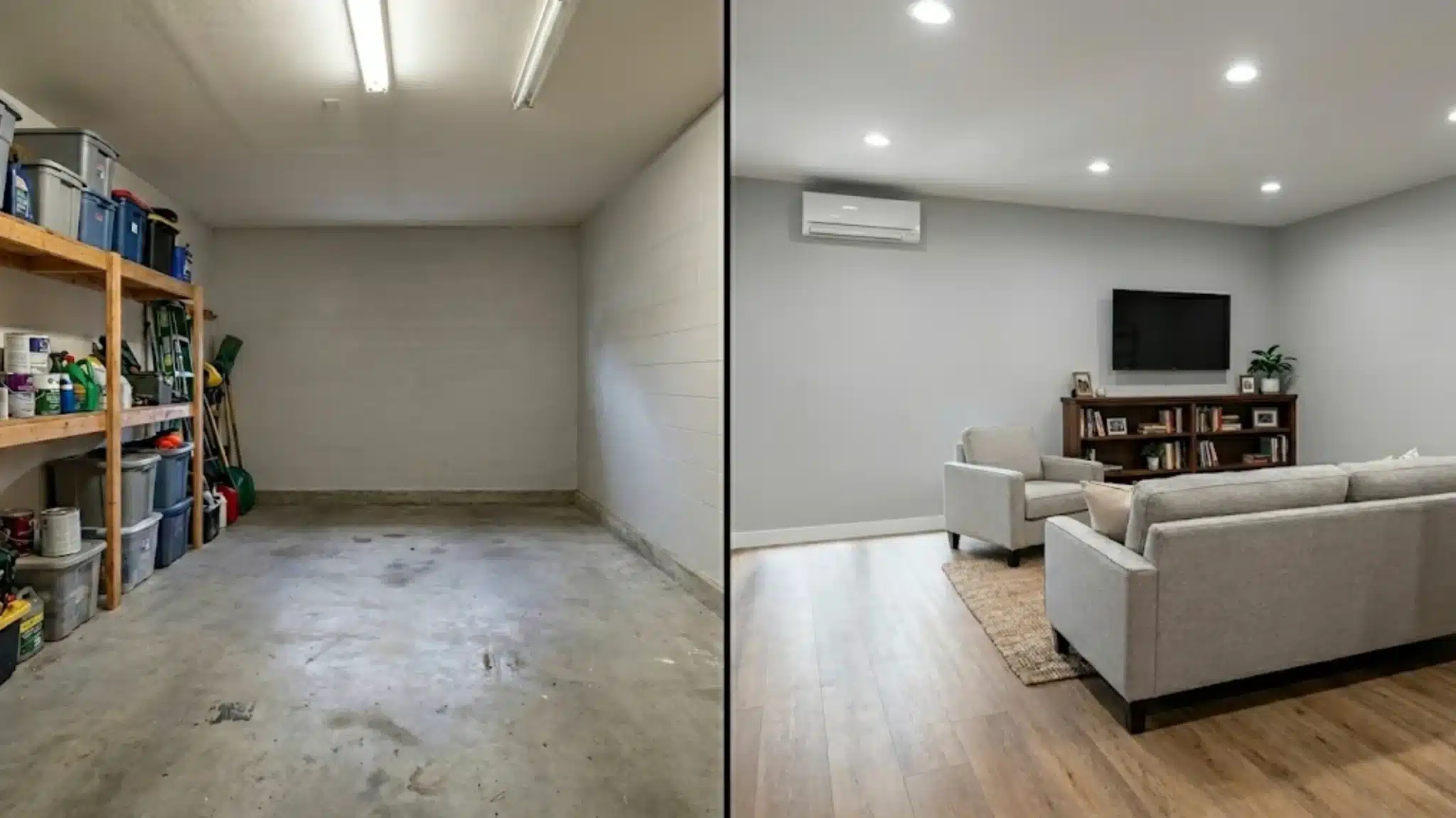
Before: A two-car garage used primarily for storage rather than vehicles. Bare concrete, uninsulated walls, a roll-up door, and no heating or cooling.
After: Insulated walls, luxury vinyl flooring over a sealed concrete slab, recessed lighting, a glass entry door in place of the original roll-up, and a split-system unit for year-round climate control. Garage conversions are among the most cost-effective house additions because the foundation, walls, and roof already exist.
17. Adding a Room Over the Garage
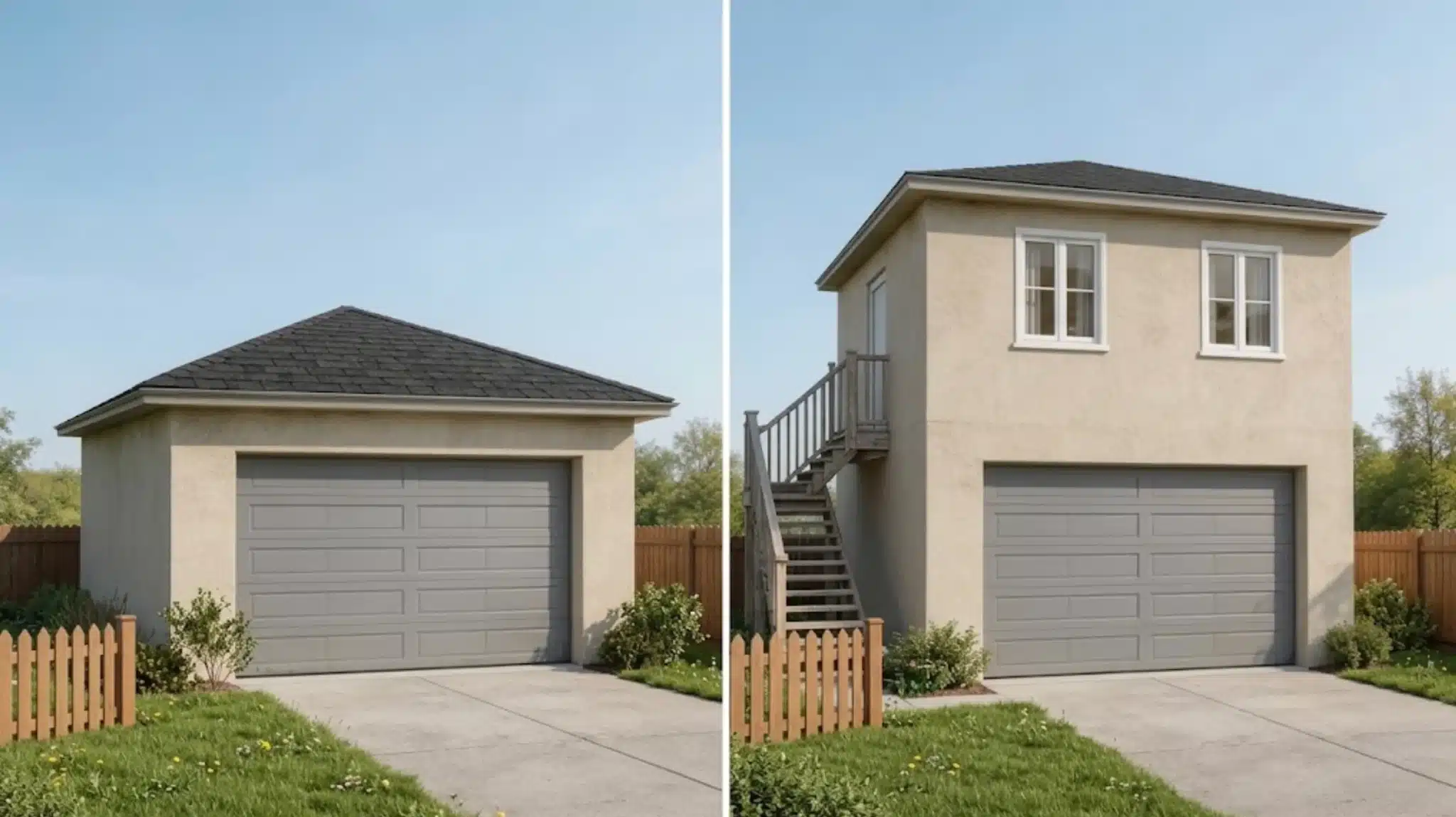
Before: A single-story garage with a flat or low-pitched roof and no use made of the airspace above it. The structure supports more than it is doing.
After: A full room above the garage with matching exterior cladding, two front-facing windows, external staircase access, insulated walls, and a split-system unit. Works well as a guest suite, home office, or rental unit, depending on local zoning rules.
18. Adding a Home Theater Room
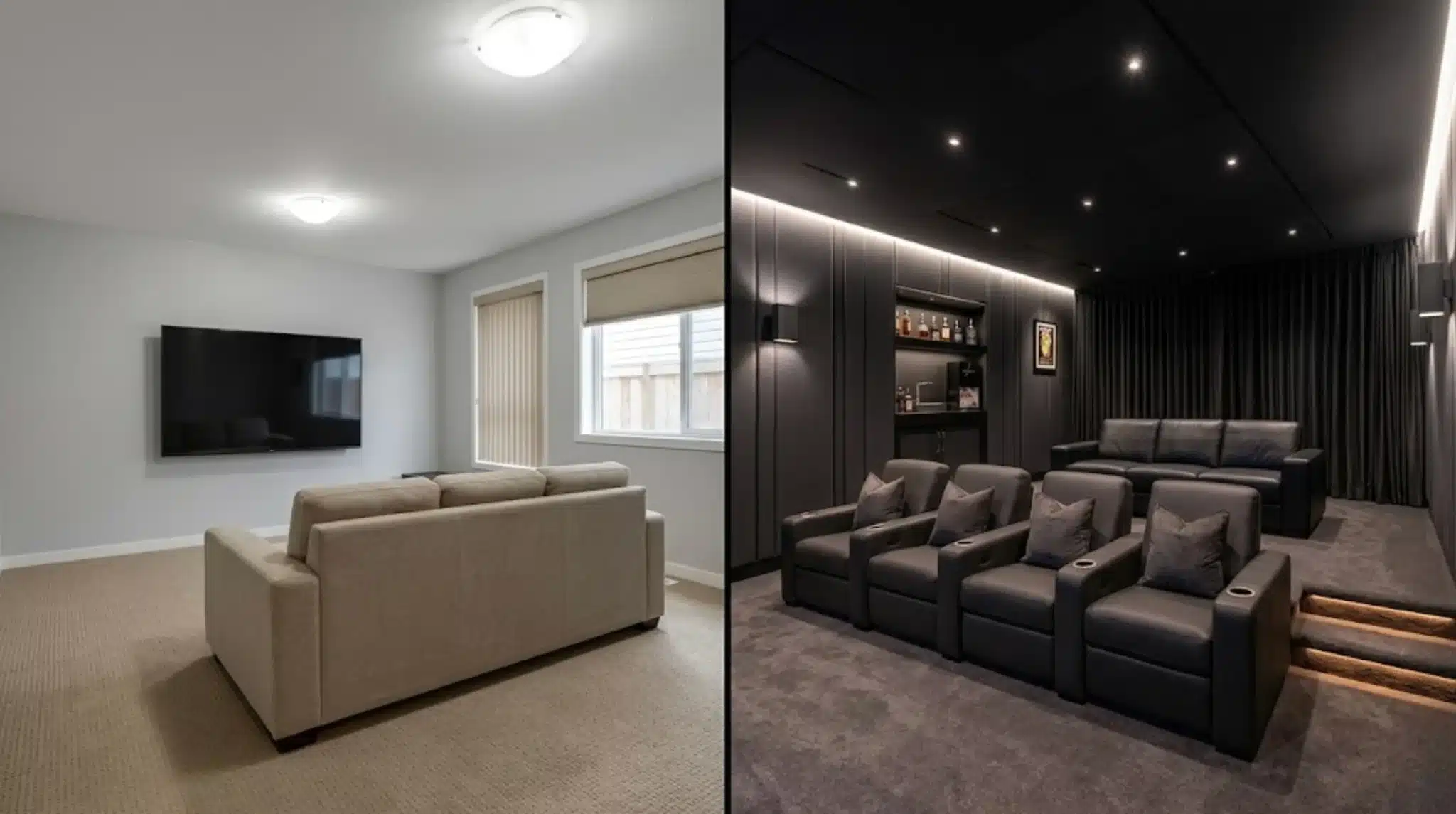
Before: A spare room with a TV on a stand, ambient noise through the walls, no acoustic management, and seating that was never selected with viewing in mind.
After: Tiered seating on two levels, acoustic panels on the walls, a full projection screen, recessed dimmable lighting, blackout curtains throughout, and a subwoofer in a corner cabinet. Best placed in a basement where sound transfer to adjacent rooms is naturally limited.
19. Adding a Music Room
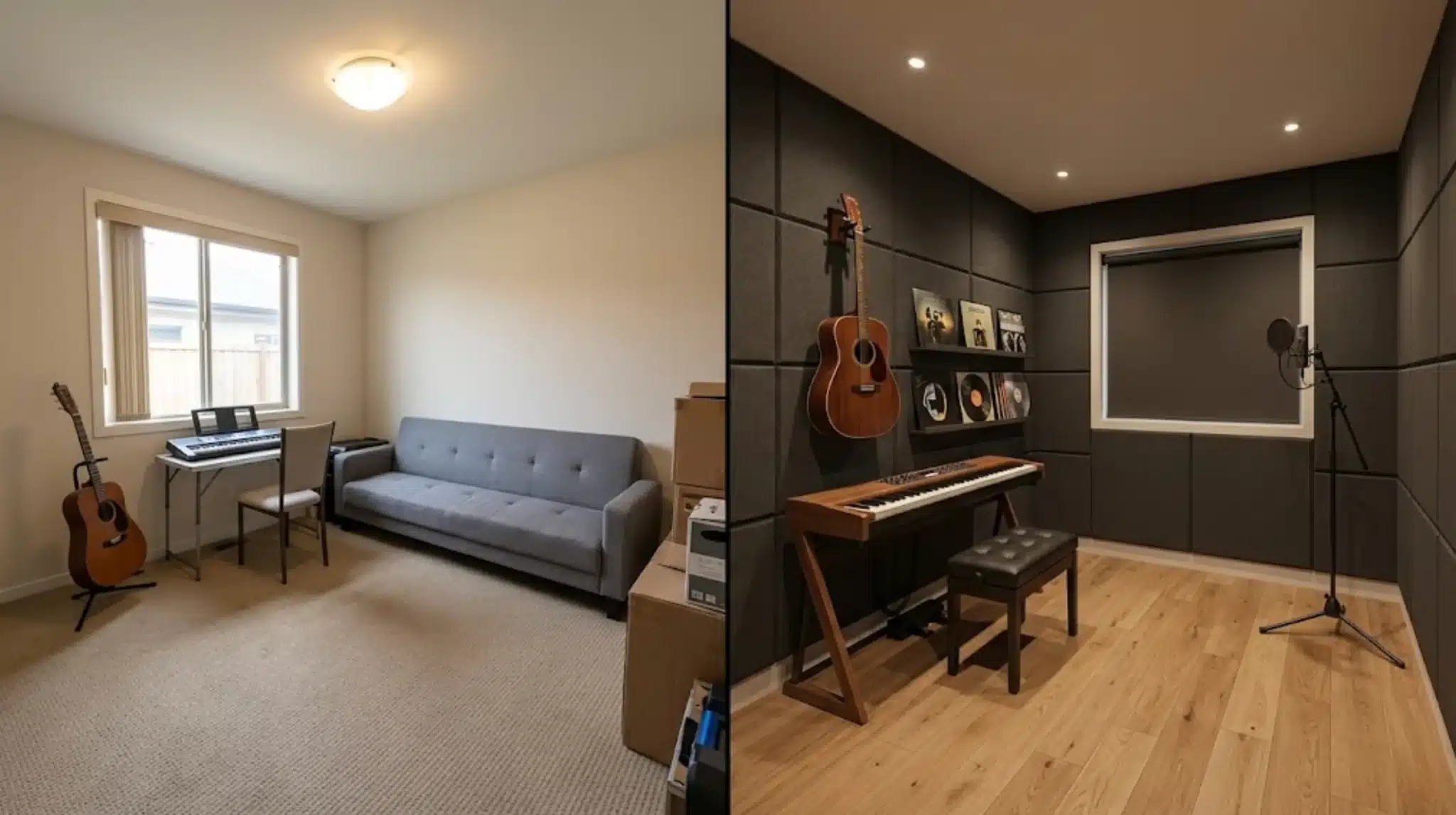
Before: An instrument in a spare bedroom with no acoustic management. Practice sessions create noise throughout the house and interrupt everyone else in it.
After: Acoustic wall panels, sound-dampening insulation in the walls and ceiling, a floating floor to reduce vibration transfer, instrument storage along one wall, and a dedicated 20-amp circuit for amplifiers. The rest of the house stops being affected.
20. Adding a Yoga or Meditation Room
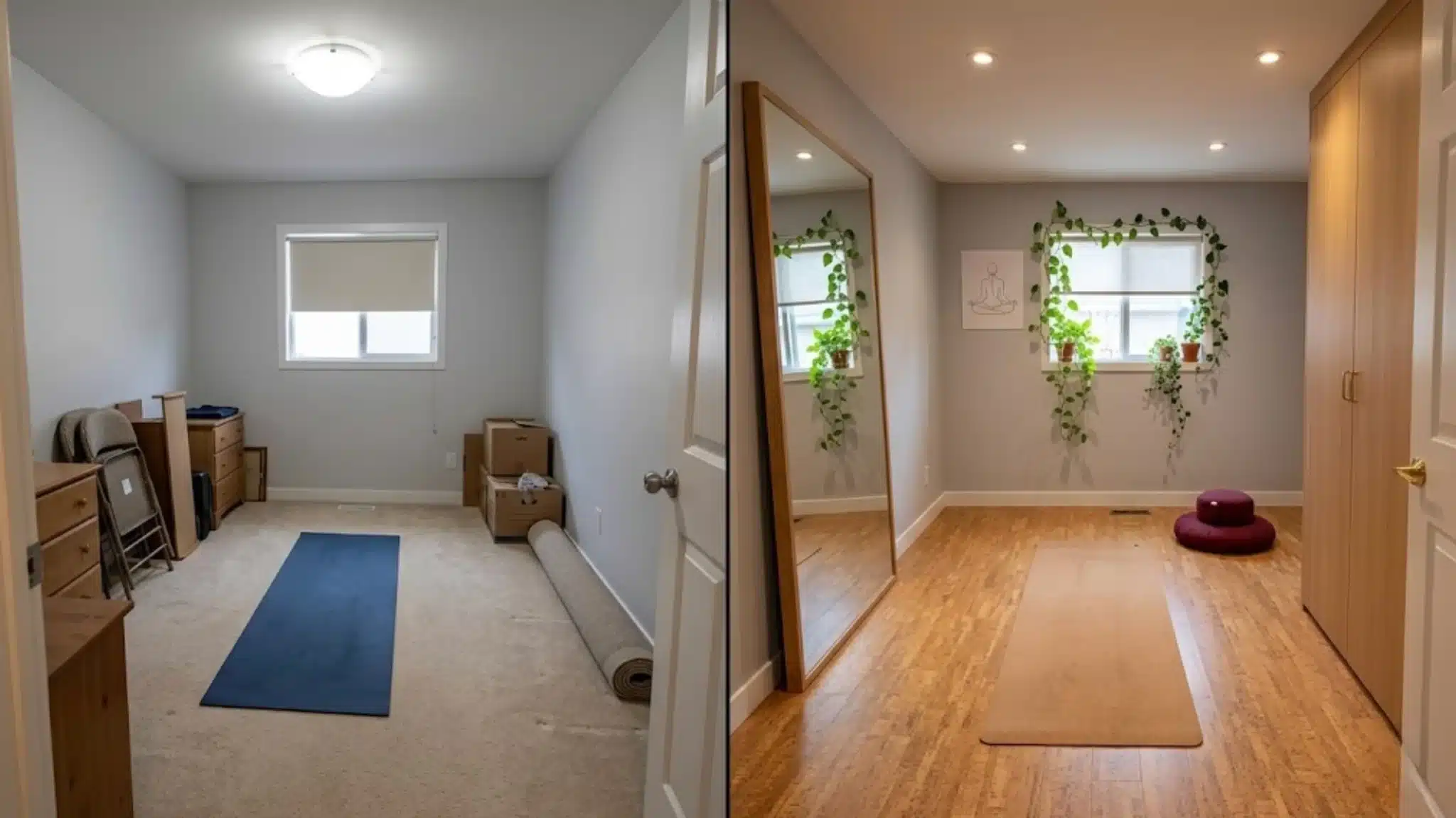
Before: A living room corner or spare bedroom floor used occasionally for practice, requiring furniture to be moved every single time. That friction alone is enough to kill a consistent routine.
After: A cleared room with cork or bamboo flooring, a full-length mirror on one wall, recessed dimmable lighting, built-in storage for mats and props, and a small Bluetooth speaker system. Among the lowest-cost room additions when the space already exists and only needs conversion.
Structural house additions require the most upfront investment in planning and permits, but they produce results that are permanent and directly affect how the property functions every day. With those in place, here are the interior living space additions that change day-to-day household rhythm most directly.
Structural Addition Cost Estimates
Structural projects involve engineering reviews, extended permit timelines, and in some cases temporary displacement during construction. These ranges include labor, materials, and standard finishes based on 2024 NAHB and HomeAdvisor data.
| Addition Type | Low End | High End | What Drives the Variation |
| Second Story Addition | $100,000 | $350,000 | Structural engineering, existing roof removal, HVAC scope |
| Basement Conversion | $25,000 | $100,000 | Waterproofing needs, egress window, wet bar or bathroom addition |
| Walk-In Closet | $5,000 | $20,000 | Custom cabinetry vs modular systems, electrical for lighting |
| Garage to Living Space | $15,000 | $50,000 | Insulation condition, flooring over concrete, HVAC addition |
| Room Over Garage | $60,000 | $150,000 | Structural assessment of existing garage, stair access type |
| Home Theater Room | $20,000 | $80,000 | Acoustic treatment depth, projection system spec, tiered seating |
| Music Room | $10,000 | $40,000 | Soundproofing level, floating floor complexity, electrical |
| Yoga or Meditation Room | $3,000 | $15,000 | Flooring type, lighting upgrade, storage built-ins |
The second-story addition is the most expensive house addition on this list and also among the most transformative. Basement and garage conversions deliver the most square footage per dollar because the structure already exists.
Expanding Living Spaces
Interior expansions and room conversions change how the home functions at the ground level every single day. These are the house additions that tend to show up most in how people describe living in their homes.
21. Expanding the Living Room
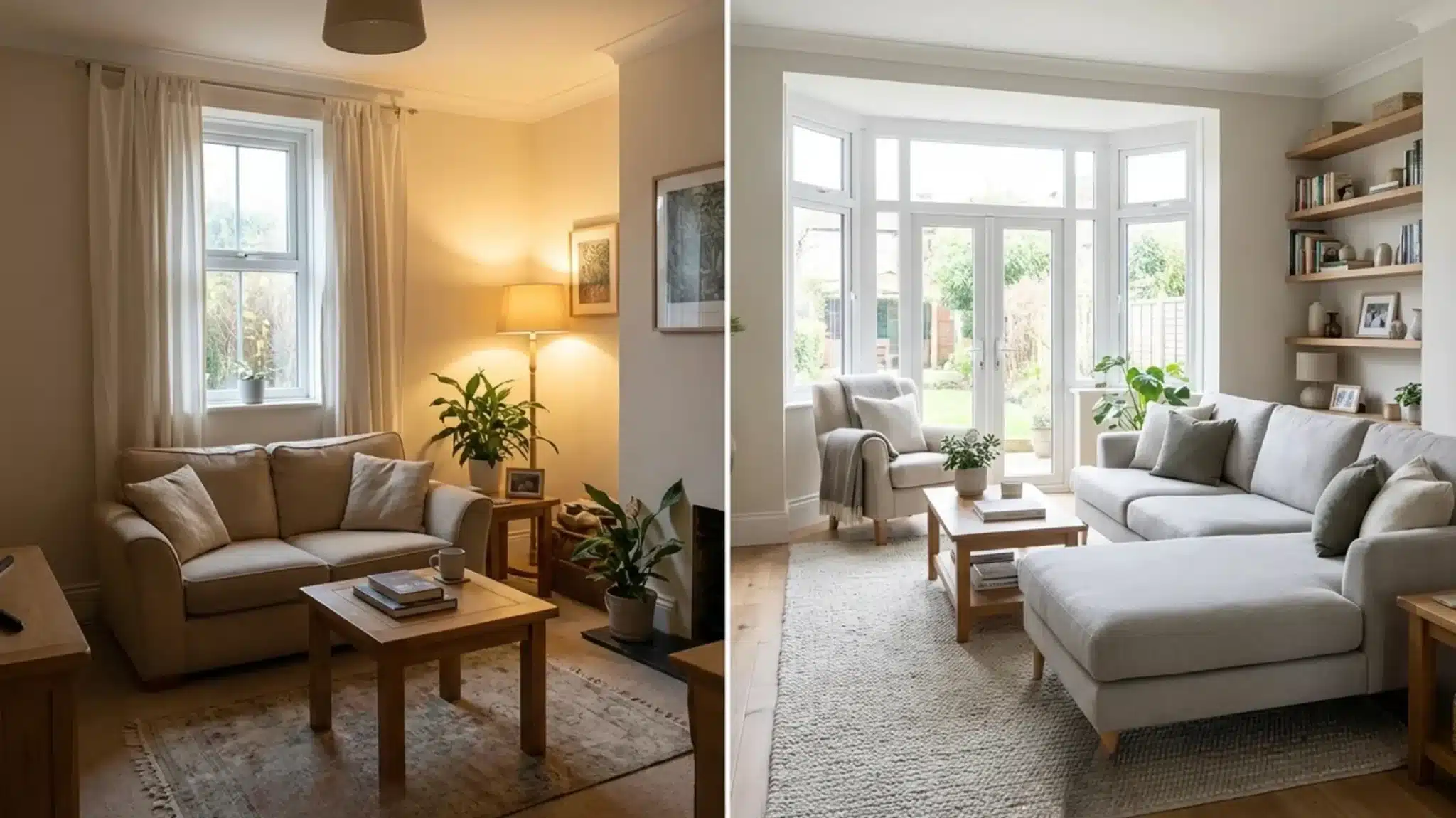
Before: A dark room with one narrow window, furniture pushed against every wall, and natural light that barely reaches the back half. The layout discourages people from spending real time there.
After: One wall pushed outward, a full bay window installed in its place, and the room now accommodating a full sectional, a reading corner, and consistent natural light throughout. Pushing a wall out by just four feet adds roughly 60 square feet to a 15-foot-wide room.
22. Adding a Family Room
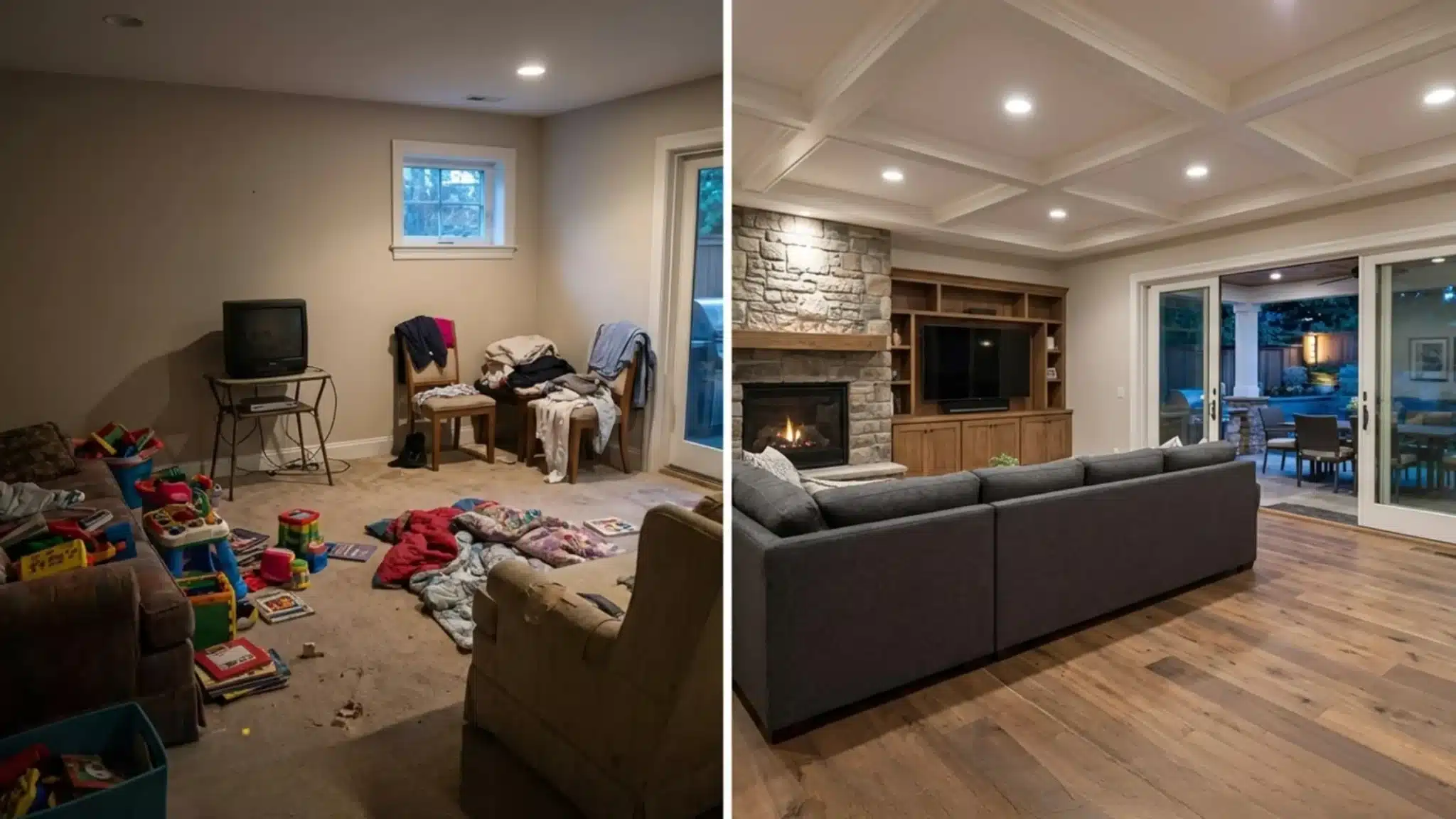
Before: A multipurpose space where furniture, stored items, and children’s gear compete for the same floor. Neither proper relaxation nor organized family activity works well in it.
After: A purpose-built room with a stone fireplace, a large sectional, recessed dimmable lighting, and sliding glass doors connecting the space directly to the backyard. Separating this function from the main living area is a significant quality-of-life shift for households with children.
23. Expanding the Garage
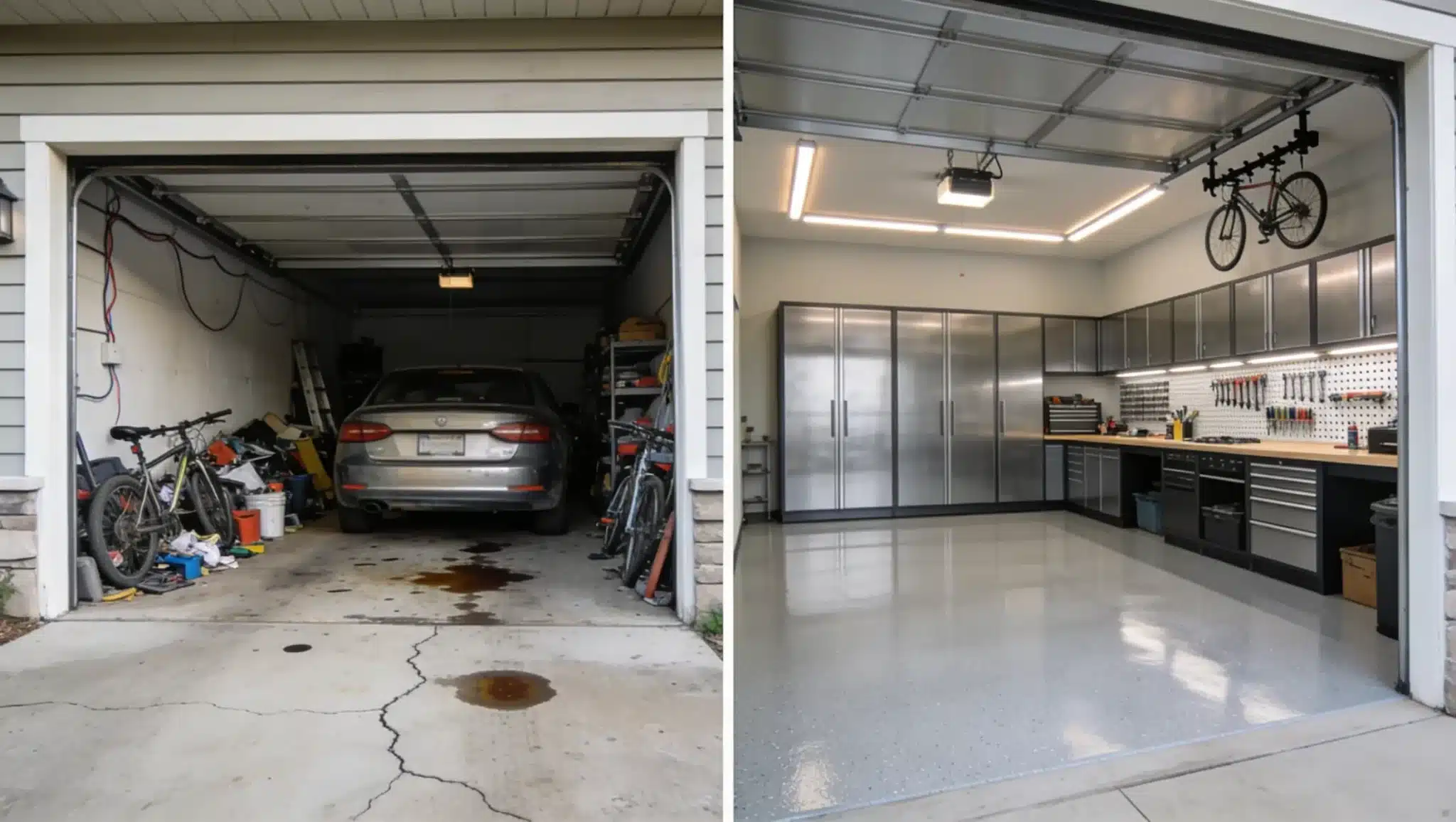
Before: A single-bay garage where the car fits but everything else competes for the remaining floor space. Accessing stored items means moving others first, and the disorder is essentially self-perpetuating.
After: Two bays with clearance, wall-mounted storage for tools and bikes, a full-wall workbench, and an epoxy-coated floor. Expanding from one to two bays is one of the higher-ROI house additions for households that actively use the garage for more than parking.
24. Adding a Mudroom
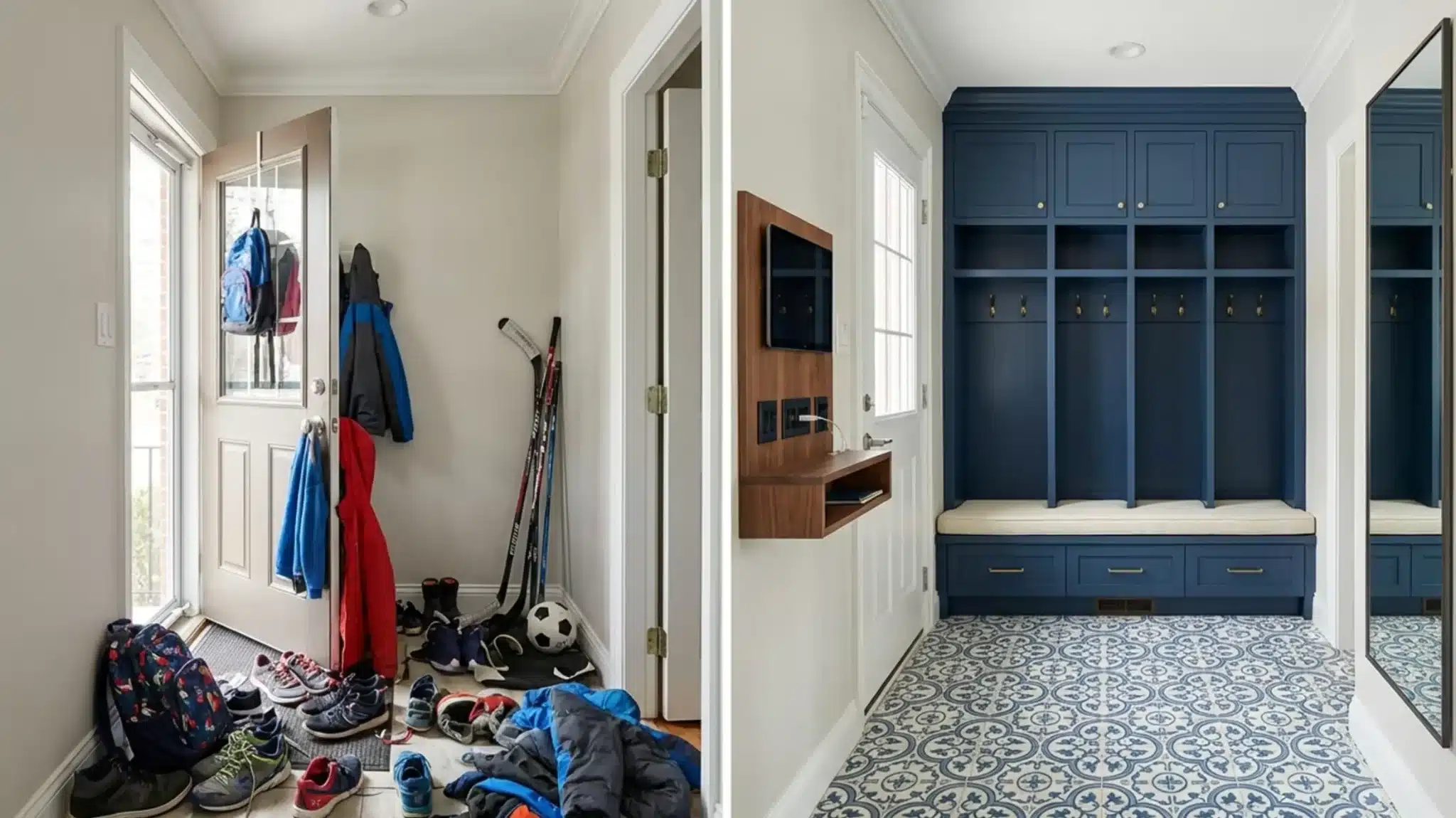
Before: Coats on door handles, shoes stacked by the entry, bags on kitchen chairs. The front door serves as a general dump zone with no dedicated storage for any of it.
After: Built-in lockers with hooks above, individual cubbies for each family member, a bench for sitting while putting on shoes, and tile flooring that handles mud and moisture. This house addition is often accomplished with a back-of-house bump-out or by converting an underused closet near the entry.
25. Adding a Home Gym
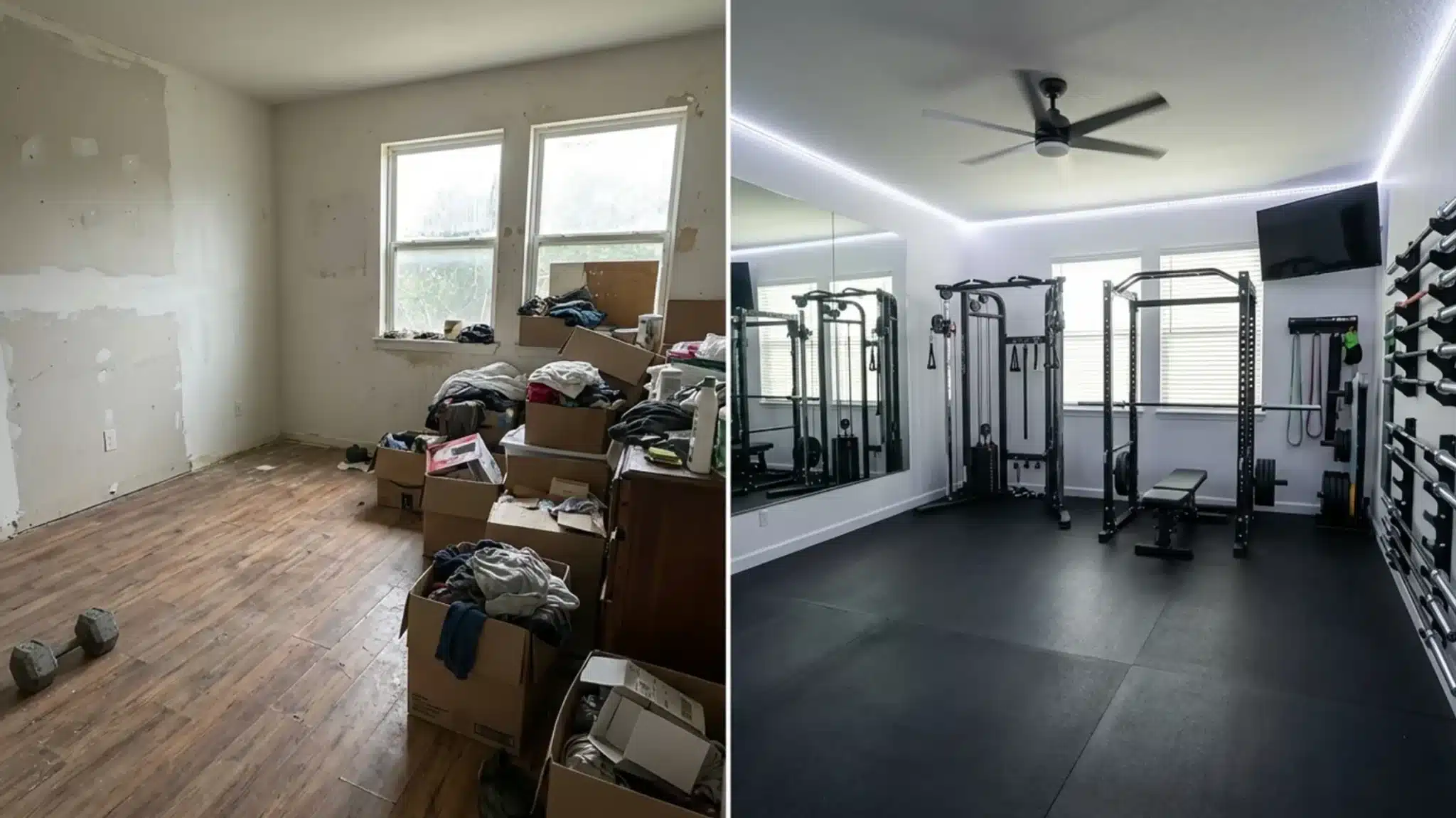
Before: A spare room or garage corner with no proper flooring, no equipment storage, and no ventilation suitable for sustained physical activity. The friction discourages consistent use.
After: Rubber floor tiles, wall-mounted mirrors, dedicated storage for weights and resistance bands, a ceiling fan for airflow, and a mounted TV. The commute to the gym disappears, which is the single most consistent reason this room addition converts into regular daily use.
26. Attic Conversion
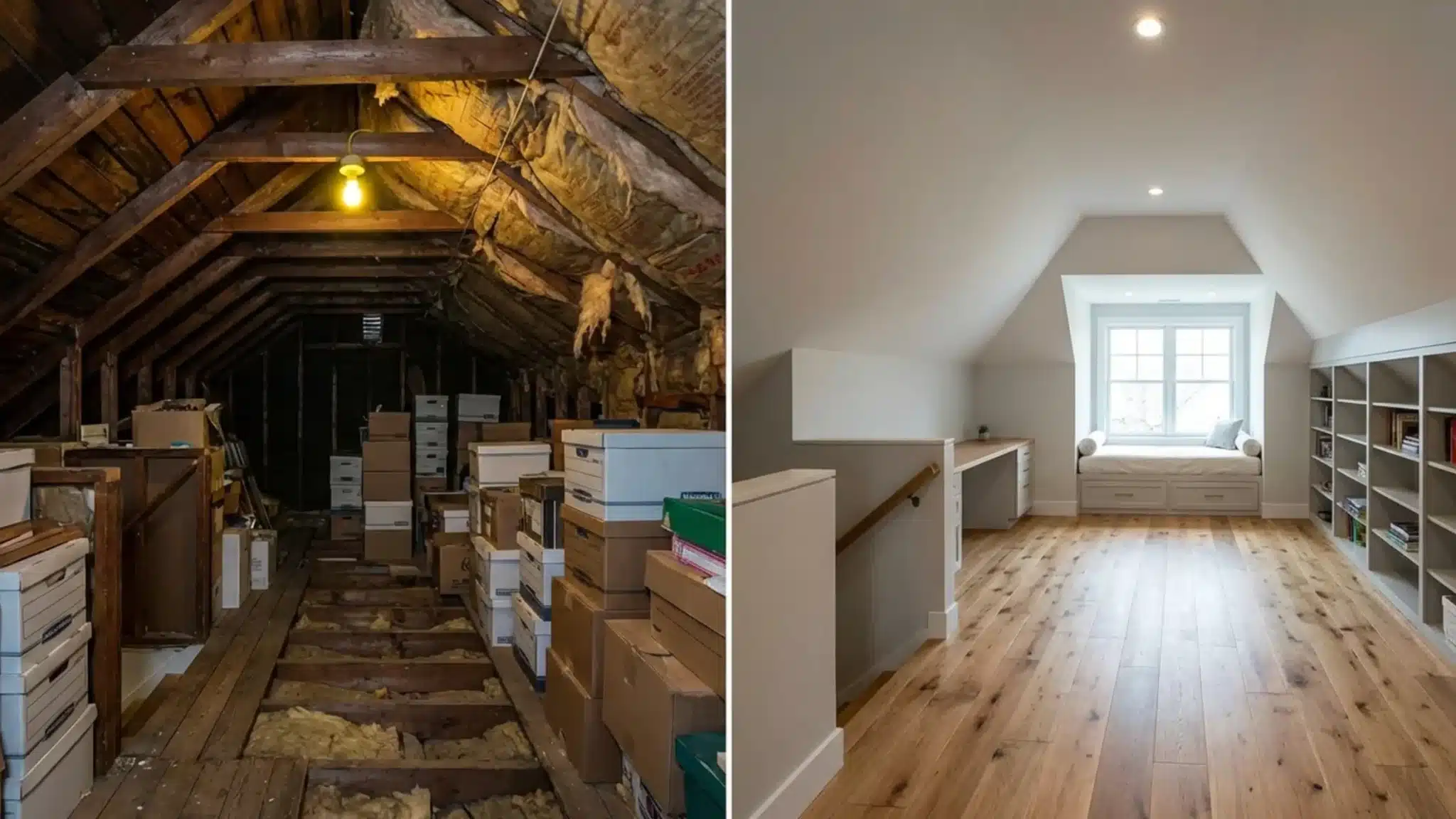
Before: A storage space with bare rafters, inadequate insulation, and unfinished floor joists. Visited as infrequently as possible and contributing nothing to daily household life.
After: Insulated and drywalled walls and ceiling, recessed lighting, a dormer window bringing in natural light, and the space converted to a guest room, quiet home office, or hobby room. Attic conversions require a minimum ceiling height of 7 feet at the center ridge to be livable; check this before planning.
27. Adding a Half Bath
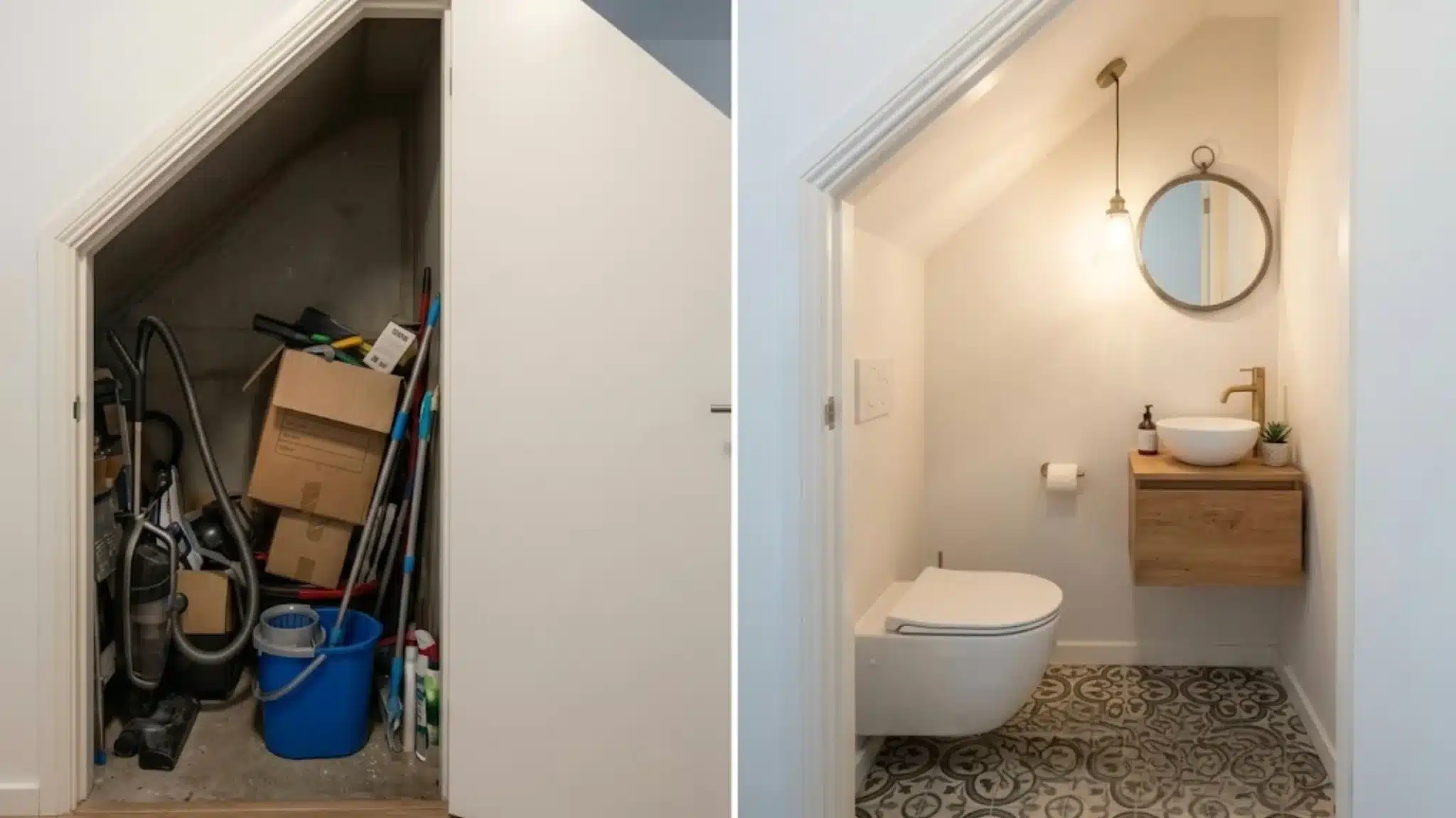
Before: One full bathroom serving the entire household and every guest. Mornings mean a queue. Visitors have access only to the family bathroom with personal items visible throughout.
After: A powder room under the stairs with a wall-hung toilet, a compact vanity, and a pendant light. Fully functional in a 15 to 20 square foot footprint. Adding a half bath is one of the few house additions with a documented resale ROI that reliably exceeds its cost, according to the NAHB.
28. Creating a Bump-Out Extension
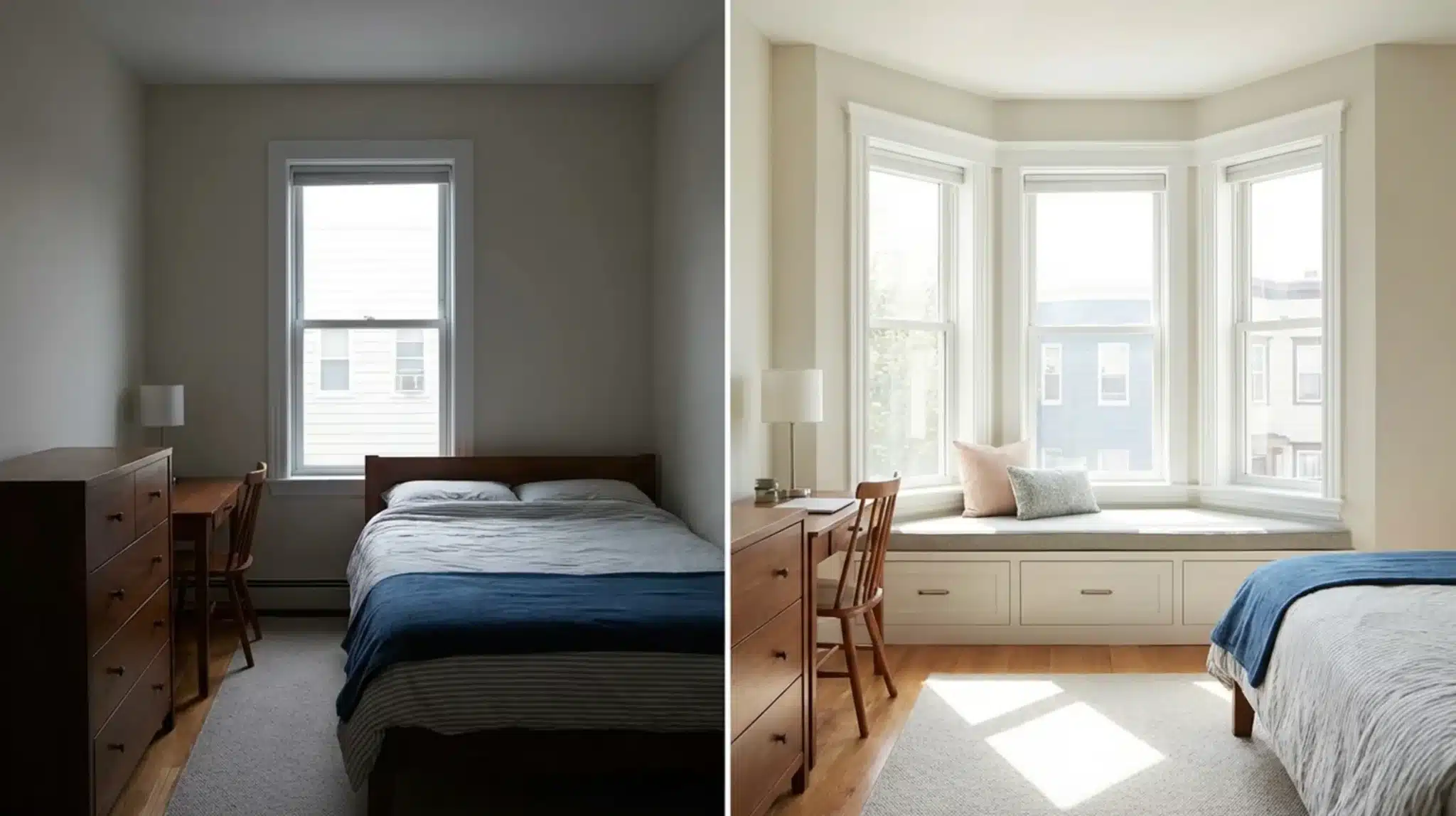
Before: A room that almost works but doesn’t quite. Furniture placement is perpetually awkward, and a single structural adjustment would produce a noticeably better result every day.
After: Two to four feet added outward creates room for a window seat, a larger counter, a soaking tub, or a reading alcove. Bump-outs use a cantilevered or mini-foundation approach that is significantly cheaper than a full room addition, making them one of the most cost-efficient house additions per usable square foot gained.
29. Adding a Dedicated Laundry Room
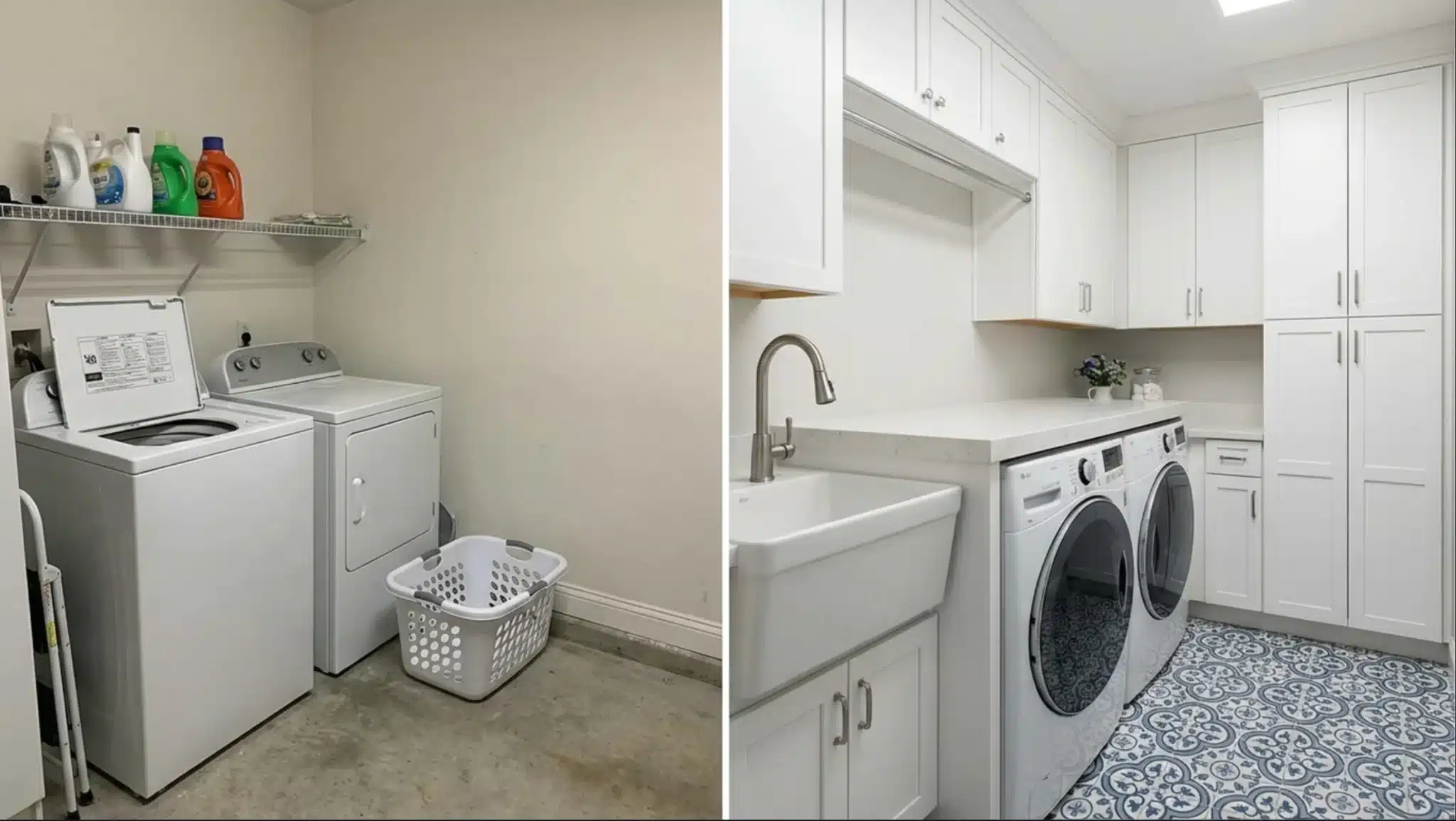
Before: A washer and dryer in the garage or a tight hallway with no folding counter, no supply storage, and no separation from the rest of the household’s daily movement.
After: Side-by-side appliances with a built-in folding counter above, floor-to-ceiling cabinetry for detergent and supplies, a utility sink, and a dedicated hanging rod. Removing the laundry function from shared living space is a daily friction reduction that most households underestimate until they have it.
30. Expanding the Master Bathroom
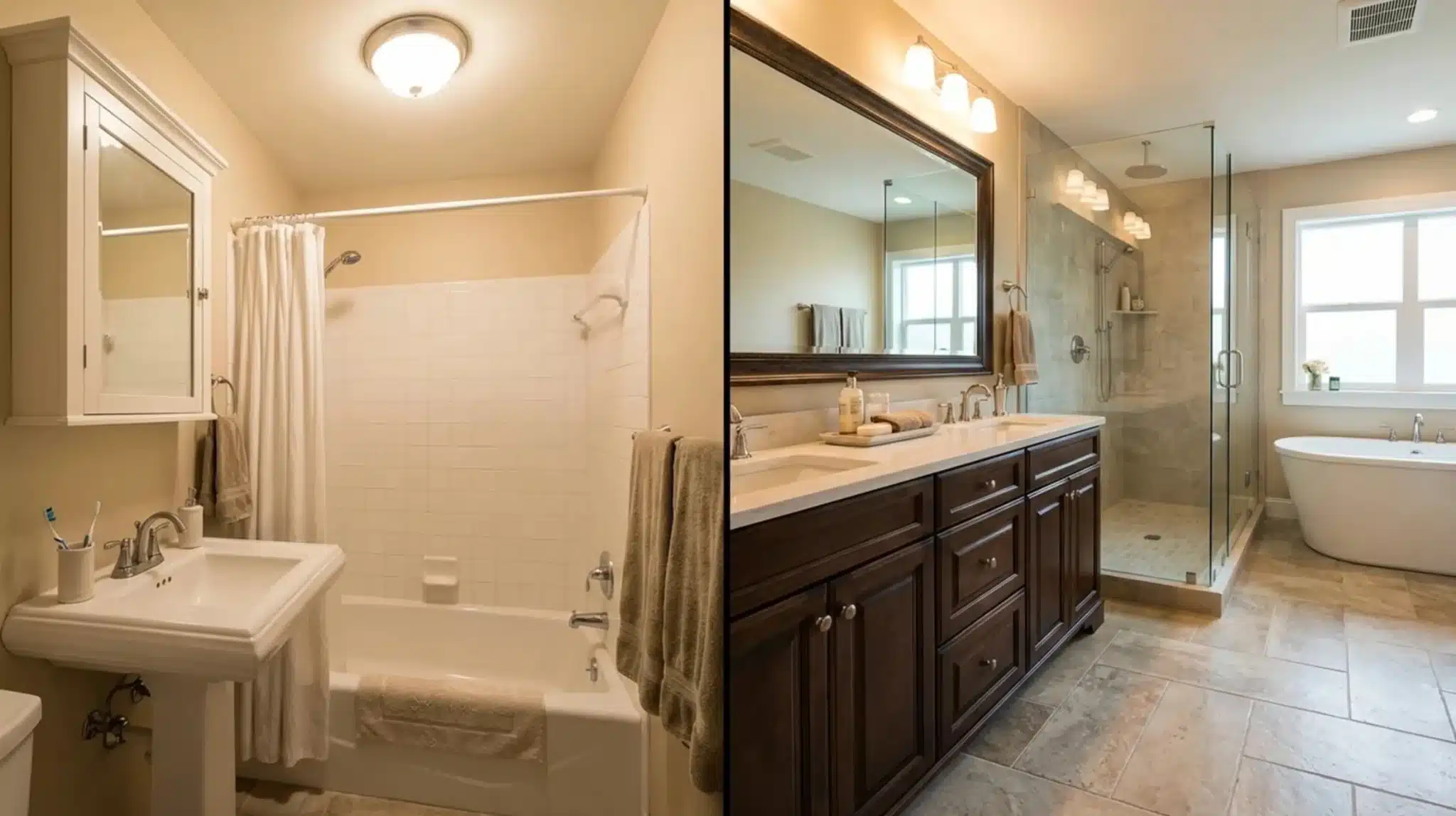
Before: A tight bathroom with a single sink, a shower-tub combo, one small window, and no storage beyond a medicine cabinet. Two people sharing it creates a daily scheduling conflict.
After: A double vanity with drawer storage, a frameless walk-in shower, a freestanding tub under the window, and heated tile throughout. An expansion of as little as two to three feet in one direction produces a noticeably different experience every morning and night.
Living Space Addition Cost Estimates
These figures cover interior expansions and conversions. Finish quality, existing conditions, and local labor rates all affect where a project lands within these ranges.
| Addition Type | Low End | High End | What Drives the Variation |
| Living Room Expansion | $20,000 | $70,000 | Foundation scope, window type and size, exterior finish match |
| Family Room Addition | $40,000 | $100,000 | Foundation, fireplace, sliding glass doors to exterior |
| Garage Expansion (extra bay) | $20,000 | $60,000 | Lot constraints, foundation extension, new door and framing |
| Mudroom Addition | $6,500 | $20,000 | Bump-out vs interior conversion, built-in scope |
| Home Gym Room | $5,000 | $25,000 | Flooring type, mirror installation, HVAC upgrade |
| Attic Conversion | $10,000 | $65,000 | Dormer addition, stair access, insulation and HVAC scope |
| Half Bath (Powder Room) | $5,000 | $15,000 | Plumbing proximity, space available, finish level |
| Bump-Out Extension | $4,000 | $40,000 | Size, cantilevered vs mini-foundation, exterior match |
| Dedicated Laundry Room | $5,000 | $20,000 | Plumbing rerouting, cabinetry scope, flooring |
| Master Bathroom Expansion | $15,000 | $50,000 | Tile and fixture level, heated floor, plumbing relocation |
Bump-outs and attic conversions typically deliver the best value per square foot among these options. Bathroom expansions cost more but carry consistent resale value. Get a structural assessment before finalizing any budget that involves pushing an exterior wall.
Kitchen and Dining House Additions
The kitchen is where the household actually runs: cooking, eating, homework, morning routines, and most of the casual conversation that happens in a home. When the layout makes those activities harder than they need to be, the friction accumulates in ways that are disproportionate to the size of the problem.
31. Creating a Larger Kitchen
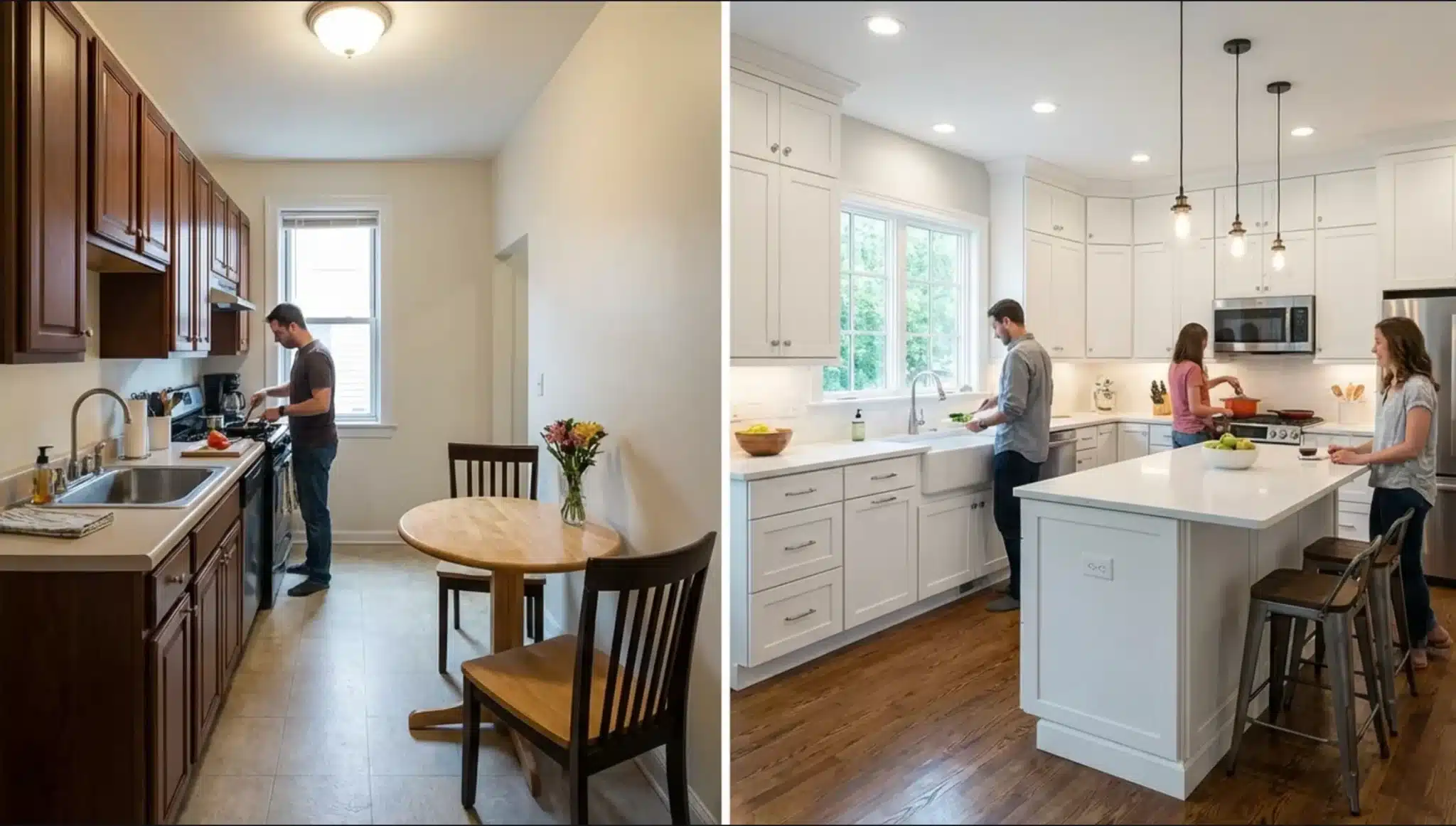
Before: A narrow single-run kitchen where two people cannot occupy the space at the same time without blocking each other. Minimal counter space and appliances crowding one another.
After: A center island with bar seating for four, counters doubled through an L-shaped reconfiguration, new built-in appliances, under-cabinet lighting, and pull-out storage in all lower cabinetry. A kitchen expansion is the highest-cost house addition in this section but also the one with the greatest daily impact on household function.
32. Opening the Kitchen to the Dining Area
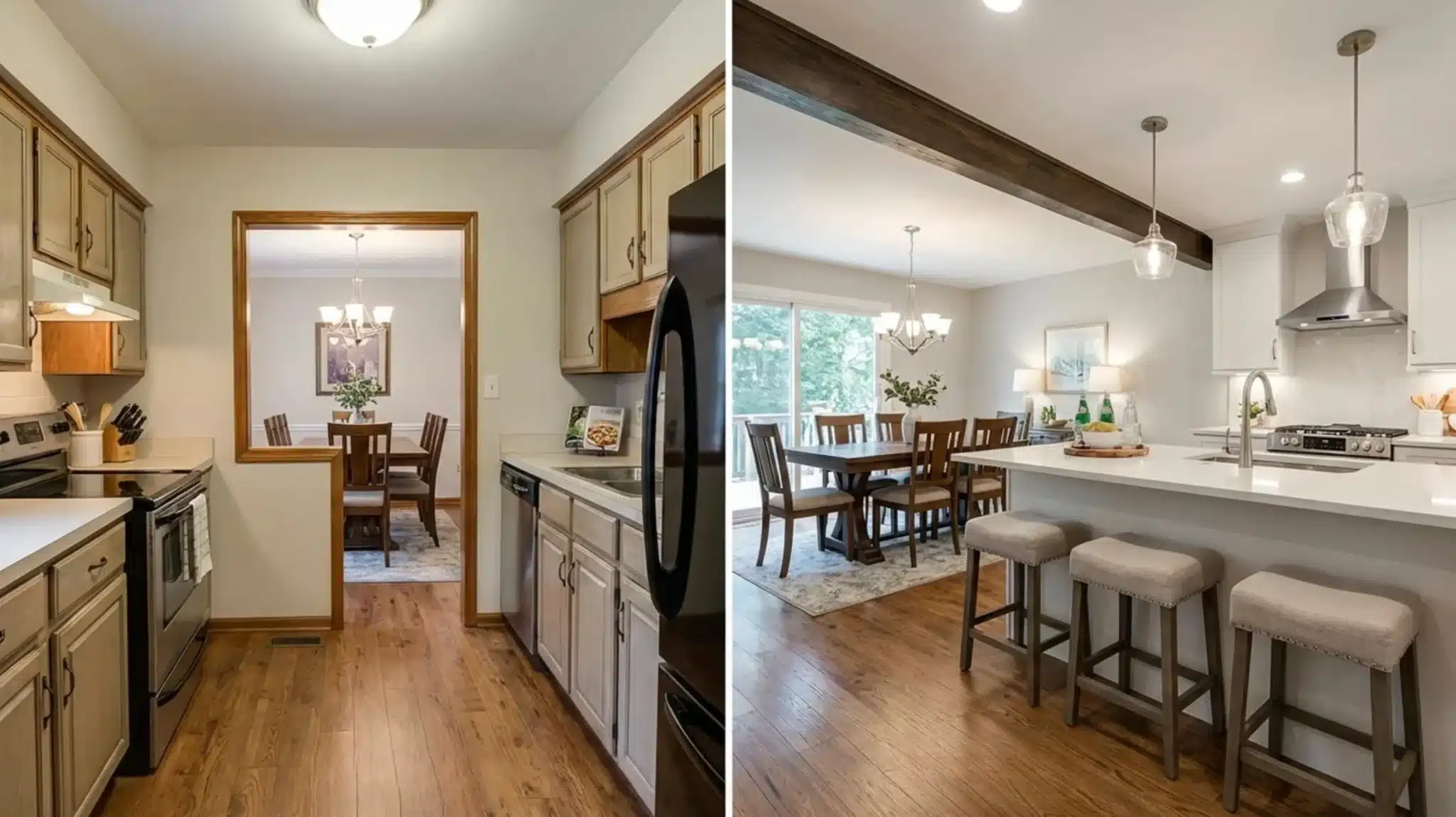
Before: A kitchen and dining room separated by a full wall with only a small pass-through window. The person cooking is isolated from the rest of the household at every meal.
After: The full wall removed and replaced with a slim structural beam. A breakfast bar at the kitchen edge. Matching flooring running continuously through both areas. The spaces function as one. This is often the least expensive structural kitchen change and one of the most impactful.
33. Expanding the Dining Room
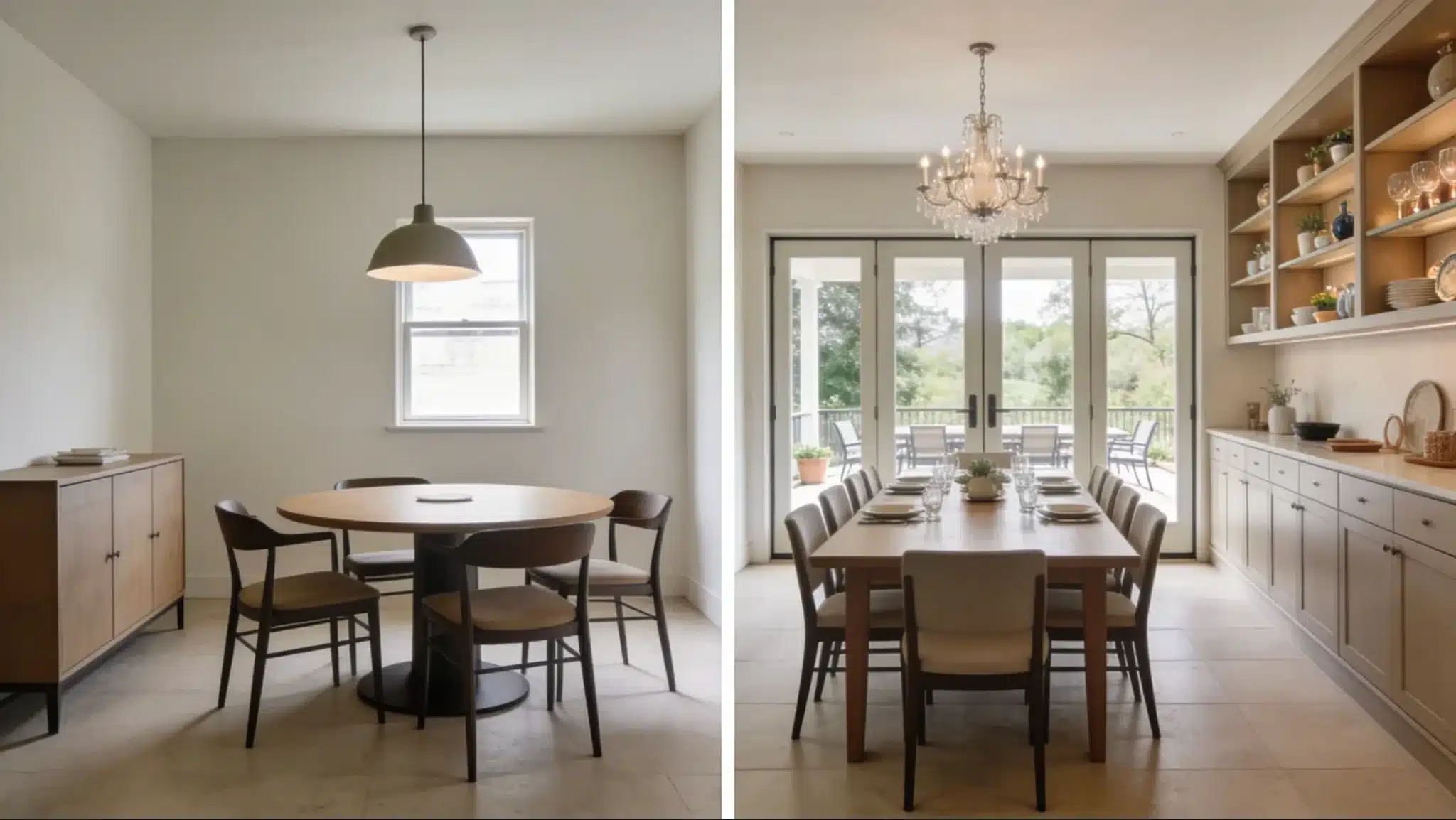
Before: A small area with a round table that technically seats six but functions tightly with four. No connection to the kitchen, no outdoor access, and no room for a larger table when guests arrive.
After: An extension toward the backyard adds French doors, a long table that seats ten, a built-in sideboard along one wall, and a chandelier anchoring the center. Outdoor dining in warm months becomes genuinely practical.
34. Adding a Butler’s Pantry
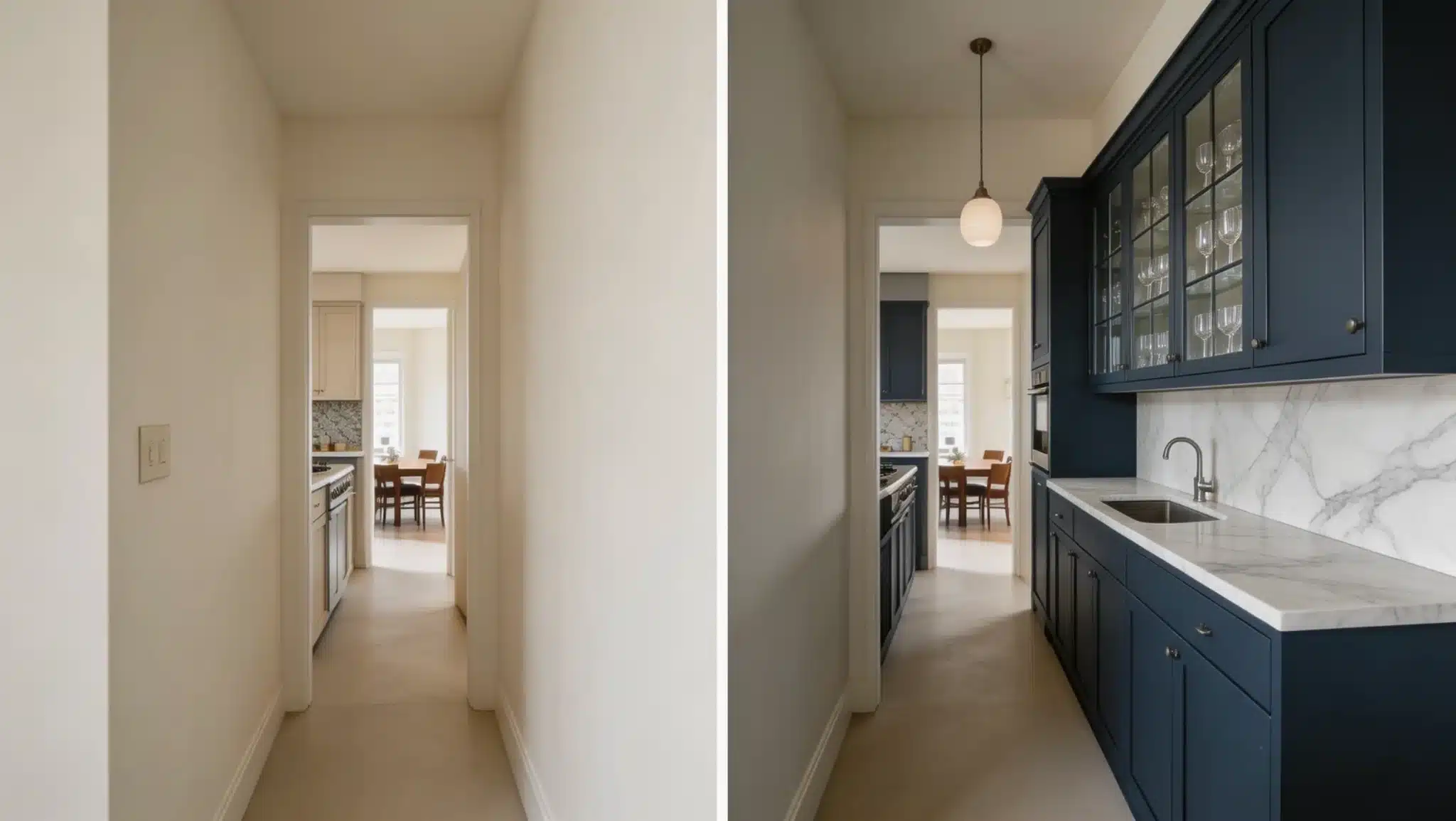
Before: A narrow pass-through hallway between the kitchen and dining room with no counter, no storage, and no role during meal preparation or gatherings. Space that physically exists but contributes nothing.
After: Upper and lower cabinetry, a marble countertop for staging and secondary prep, built-in wine storage below, a small prep sink, and glass-front upper doors for glassware. The main kitchen stays focused on cooking rather than doubling as staging space during every gathering.
35. Adding a Wet Bar
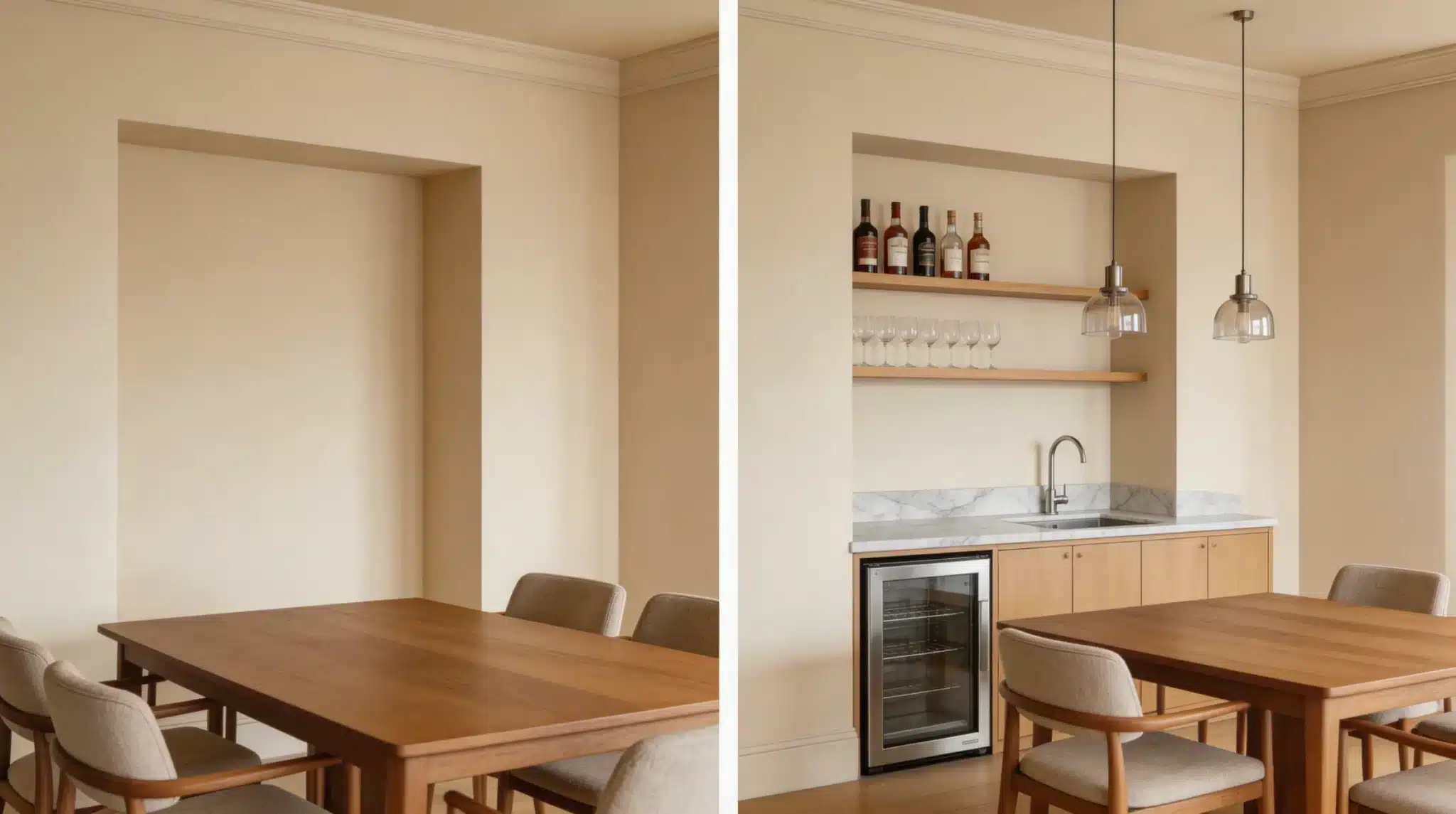
Before: An empty alcove with no function. During gatherings, all drink preparation happens in the main kitchen, which creates traffic issues and pulls the host out of the room repeatedly.
After: Floating shelves for bottles, a wall-mounted bar sink, a mini fridge recessed into the counter below, and two pendant lights directly above. One of the more affordable kitchen-adjacent house additions, particularly when existing plumbing is nearby.
36. Creating an Open-Plan Kitchen and Living Space
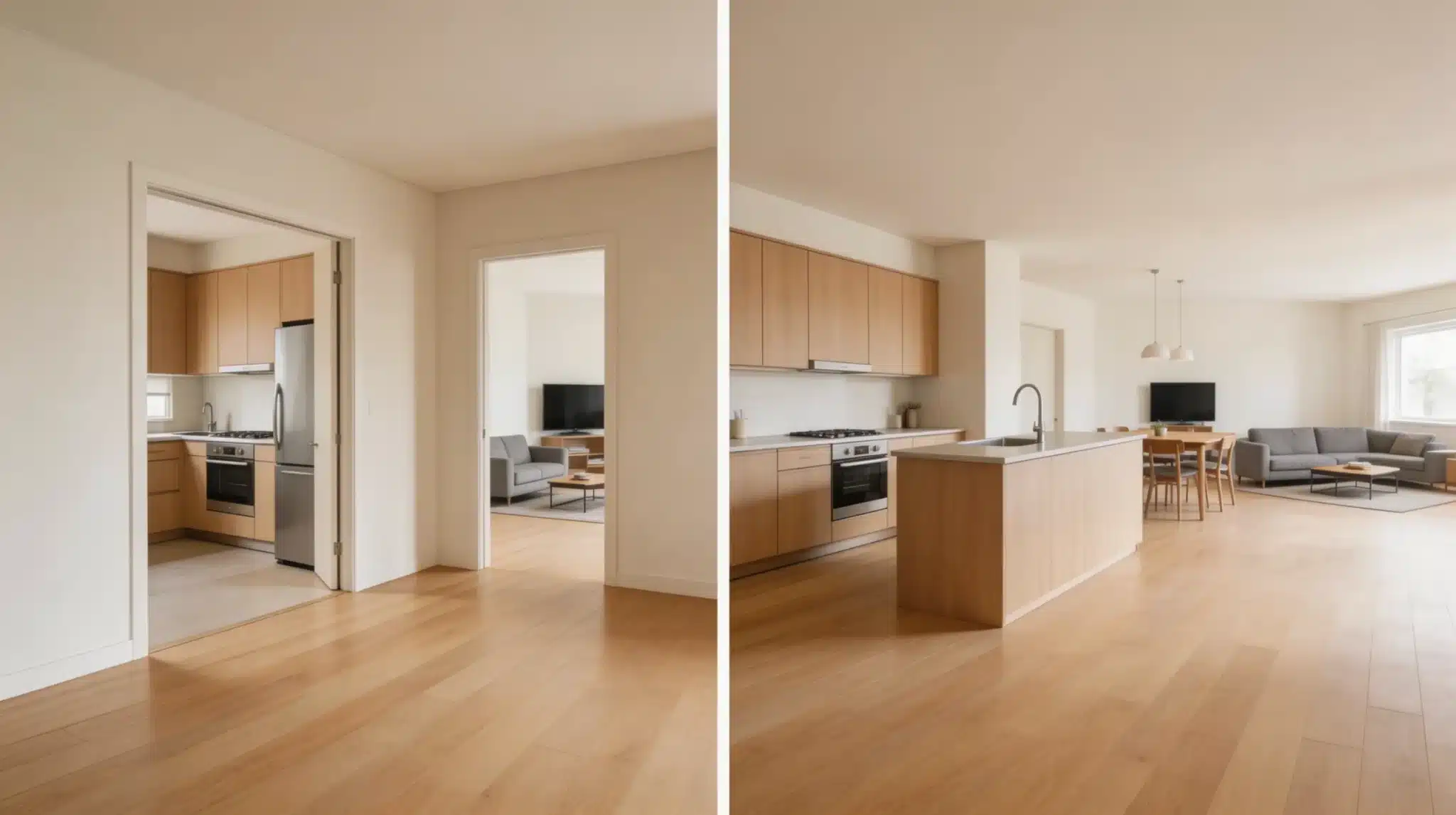
Before: A compartmentalized interior where the kitchen, hallway, and living room sit as separate enclosed rooms. The ground floor feels smaller than its actual footprint. Cooking is an isolated activity.
After: Walls removed, continuous flooring running throughout, the kitchen anchored by a large island, and the living area fully visible and connected. No additional square footage is added, but the perception of space changes significantly. This is one of the few house additions that changes how a home feels without changing its size.
37. Creating a Prep Kitchen
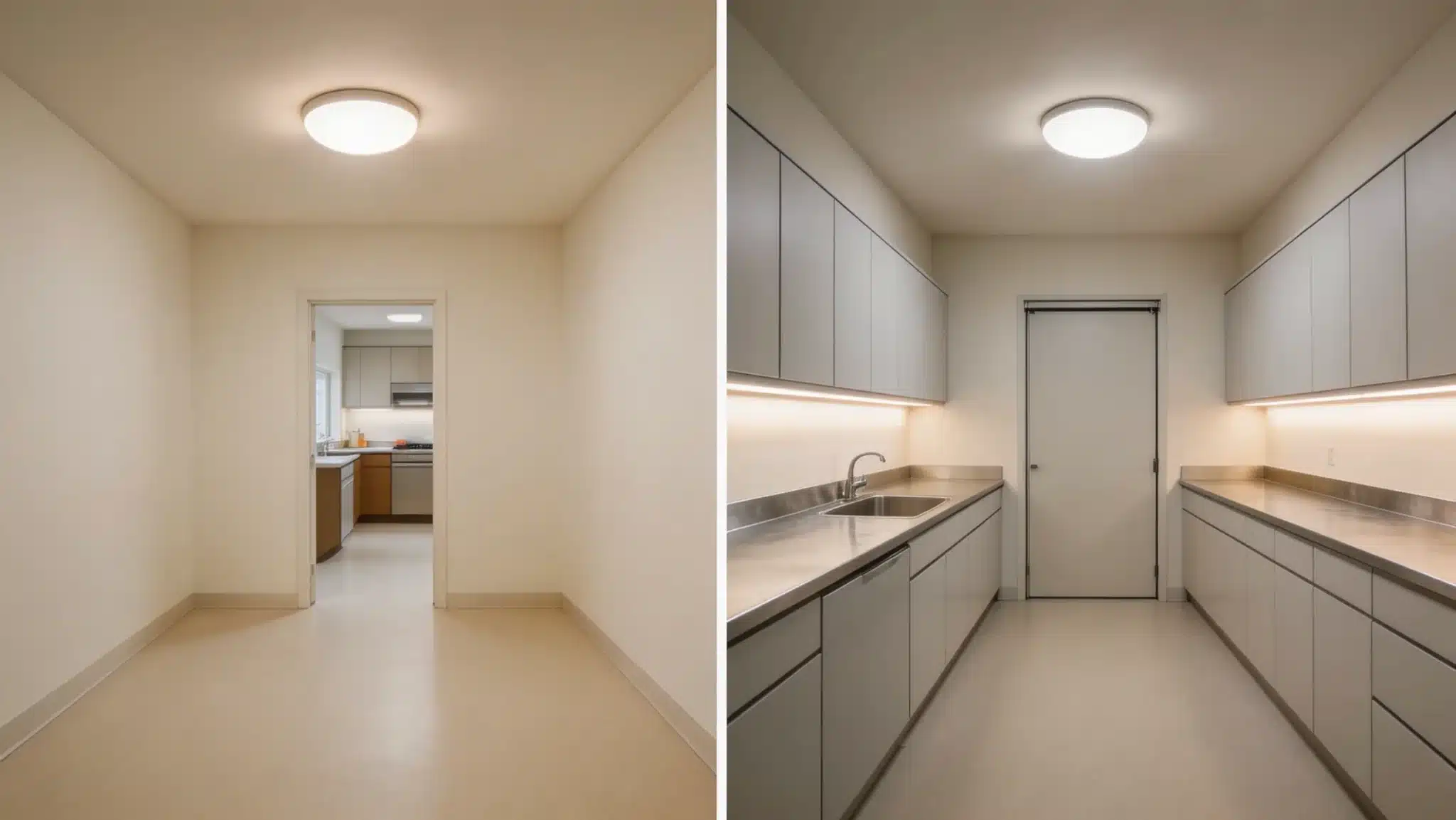
Before: All chopping, mixing, and preparation happens in the same visible space as finished cooking. Guests see the full process, and managing the cleanup during a gathering requires constant attention.
After: A separate prep zone with its own sink, counter space, lower cabinetry, and a door that closes it off from the dining and living areas. The main kitchen remains presentable throughout the entire gathering without sacrificing any prep capacity.
Kitchen and Dining Addition Cost Estimates
Kitchen projects routinely involve plumbing, electrical, and ventilation upgrades that sit outside the cabinetry and countertop scope. Confirm the full mechanical scope with your contractor before finalizing any kitchen addition budget.
| Addition Type | Low End | High End | What Drives the Variation |
| Larger Kitchen Expansion | $50,000 | $150,000 | Foundation scope, appliance tier, cabinetry material |
| Kitchen and Dining Wall Removal | $3,000 | $40,000 | Load-bearing vs non-load-bearing, beam and flooring work |
| Dining Room Expansion | $20,000 | $70,000 | Foundation, French doors, sideboard built-ins |
| Butler’s Pantry | $10,000 | $50,000 | Plumbing for prep sink, cabinetry spec, countertop material |
| Wet Bar Addition | $5,000 | $25,000 | Plumbing proximity, mini fridge, cabinetry depth |
| Open-Plan Kitchen/Living Conversion | $20,000 | $70,000 | Structural beam, flooring continuity, electrical reconfiguration |
| Prep Kitchen | $15,000 | $60,000 | New plumbing rough-in, ventilation, door and partition work |
Opening a kitchen to a dining or living area delivers the most visible change per dollar of any kitchen-adjacent project. A full kitchen expansion costs significantly more but produces daily returns that most households don’t overestimate.
Common Mistakes to Avoid With House Additions
Most house addition problems are avoidable. The issues that derail projects or produce long-term regret almost always trace back to decisions made before construction begins, not during it.
Skipping permits is the mistake I see most often cause the most damage. It creates legal liability and can make a property unsellable until the work is properly documented and inspected. No time savings is worth the risk. Beyond permits, ignoring the contingency budget causes more mid-project crises than any other planning error. Budget 15 to 20 percent above the quoted figure on every project without exception.
Choosing a contractor on price alone is the third most common problem. The lowest bid usually reflects either missing scope or underqualified labor. Check references, verify license status, and look at completed work before committing. Starting construction before all design decisions are finalized is equally damaging: mid-project changes are expensive in both money and schedule, and contractors who bid a defined scope are not positioned to absorb the cost of revisions.
Finally, don’t ignore how a new addition affects adjacent rooms. A poorly positioned room addition can block natural light in a room that currently gets it, disrupt the main traffic path through the house, or make a neighboring room feel cut off from the rest of the ground floor. Good addition planning considers the whole floor, not just the new square footage being added.
Frequently Asked Questions About House Additions
How much does a home addition cost per square foot?
Most home additions run $100 to $400 per square foot depending on the type. A basic room addition using existing structure, like a garage conversion or basement finish, sits toward the low end. A second story or full kitchen expansion with new foundation work sits toward the high end. Kitchens and bathrooms cost more per square foot than general living space because of the plumbing and electrical work involved.
What are the top tips for a home addition?
The three that matter most: get permits for everything regardless of timeline, build 15 to 20 percent contingency into the budget, and lock in all material and layout decisions before work begins. Mid-project changes are the single most consistent cause of cost overruns. Every other tip is secondary to those three.
What is the cheapest home addition to build?
A bump-out extension and a fire pit area are among the lowest-cost options. A basic fire pit with gravel base and stone seating runs $1,500 to $4,000. A bump-out of two to four feet can be done for $4,000 to $15,000 depending on cantilevered depth and exterior finish requirements. For indoor space, a half bath under the stairs is often the cheapest room addition with a meaningful return on investment.
Does a home addition add value?
Yes, most house additions add measurable resale value, though the return varies significantly by type. Adding a bathroom, especially a half bath in a home with only one full bath, consistently returns a high percentage of its cost at resale. Kitchen expansions and second-story additions also add value but at higher upfront costs. Outdoor additions like pools and pergolas add lifestyle value but vary in resale return depending on the market.
Do I need a permit for a house addition?
For any structural change, yes. This includes new rooms, second stories, basement conversions, bump-outs, sunrooms, and garage conversions. Outdoor additions like decks, pergolas, and pools typically require permits as well, depending on the municipality and size of the build. Interior cosmetic work, including flooring, painting, and cabinetry replacement, usually does not require a permit. When in doubt, contact your local building department before starting work.
How long does a home addition take?
A bump-out, mudroom, or garage conversion typically runs four to eight weeks from permit to completion. A basement conversion takes six to twelve weeks. A second-story addition or major kitchen expansion can run four to six months or longer, depending on permit approval timelines and construction complexity. Planning always takes longer than people expect, so factor three to six weeks for the permit and design phase before construction begins.
What single story ranch house additions work best?
Single story ranch house additions before and after transformations most often involve horizontal expansion: a bump-out at the rear for a larger kitchen or master bath, a family room addition off the main living area, a mudroom at the side entry, or a dedicated laundry room carved out of an oversized hallway or adjacent bedroom. Attic conversions are limited on ranch homes due to low roof pitch, but garage conversions and room-over-garage additions both work well on detached garage configurations.
These questions come up in almost every addition planning conversation I have. The answers don’t change much by project type, but the decisions that follow from them do.
Final Verdict: Which House Additions Are Actually Worth It
House additions are worth doing when they solve a real problem in how the home functions every day. The ones that produce regret are the ones built around trends or theoretical future buyers rather than the actual friction the household lives with right now. If your family shares one bathroom and mornings are a scheduling problem, adding a half bath is worth every dollar. If your kitchen cannot accommodate two people cooking at the same time, a wall removal or bump-out will change the quality of daily life more than any cosmetic update you could make instead.
The cost ranges in this article are planning baselines, not quotes. The next step is to pick the addition that addresses the most consistent friction in your household, call three licensed contractors with completed project references, and get formal bids. That conversation will tell you what it actually costs in your area and whether the timeline fits your situation. Start there.
Cost estimates based on HomeAdvisor national averages and NAHB Cost of Construction Survey, 2024. Verify current pricing with local contractors and suppliers before budgeting.