



Every types of tables guide I’ve seen leads with looks. That’s the wrong place to start. The right question is how the table will behave once it’s actually in the room — the material it’s made from, the weight it carries, how it holds up to daily use, and whether it still makes sense to own three years from now. This guide covers 18 types of tables across six materials, with room-by-room picks, the mistakes that show up after the purchase, and specific advice on where each table earns its place.
Choose the Right Table for Your Space
Most people buy the wrong table because they focus on the wrong things at the start. Here’s where to focus before you commit:
- Start with the main purpose: dining, work, storage, display, outdoor use, extra seating, or small-space function, pick one and let that drive the decision.
- Measure the room before buying: check table length, width, walking space, chair pull-out clearance, door clearance, and drawer clearance. The number that bites most buyers is the chair pull-out, allowing at least 36 inches from the table edge to the nearest wall.
- Check the right table height: coffee, dining, side, bedside, desk, and high-top tables all have different height requirements. Mixing them up is one of the most common and preventable mistakes.
- Pick a shape that fits the layout: round tables help movement, rectangular tables seat more people, square tables suit compact rooms, and oval tables soften hard corners without losing length.
- Choose a material you can actually maintain: think about kids, pets, spills, outdoor weather, budget, and how much cleaning effort you’ll realistically put in over time.
- Look for useful storage: drawers, shelves, lift tops, foldable designs, extendable tops, and hidden compartments add real function in busy homes where floor space is tight.
The right table fits your space, supports your daily routine, and holds up to the way you actually live — not just how the room looks in a photo.
Types of Table Material
Material is where most table decisions go wrong. People pick the look and find the maintenance reality later. Here’s an honest breakdown of what each material delivers and what it costs you over time.
1. Wood Tables
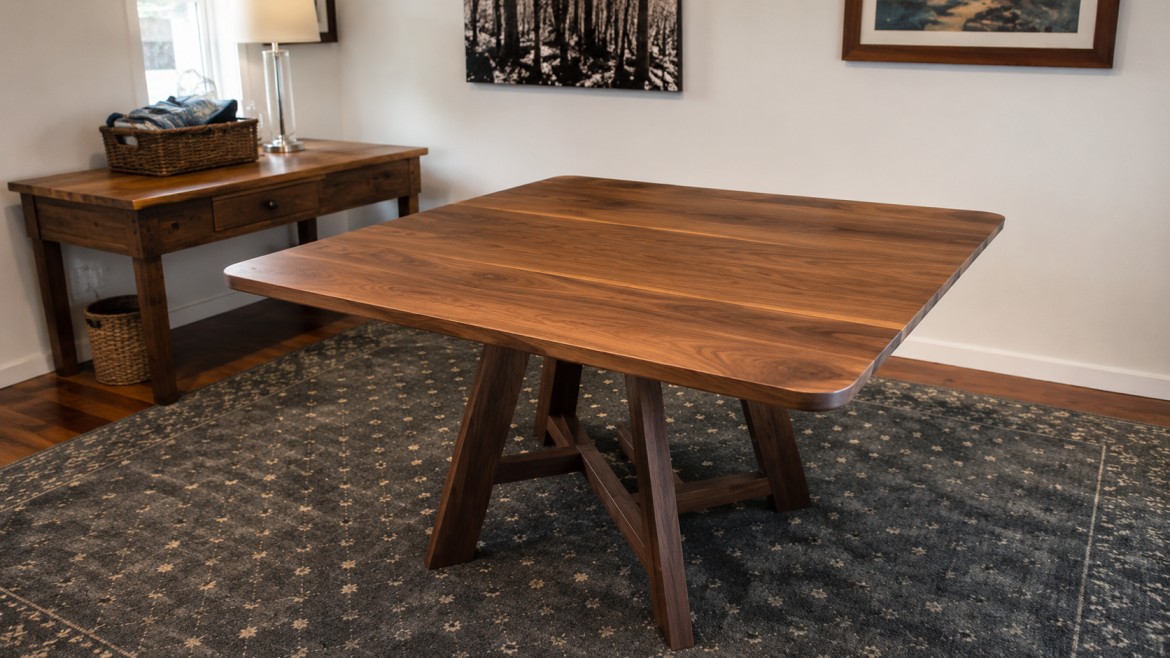
Wood is still the most reliable all-around table material when the build quality is honest. Oak and walnut hold up to daily use. Pine and mango wood are softer; they’ll dent in kitchens with active kids.
Teak’s natural oils make it the best wood choice for outdoor or humid environments. The failure mode with wood is almost always heat and moisture: spills left sitting, hot pans placed directly on the surface, and no coaster habit.
If that describes your household, choose a species with a harder Janka rating and a finish that can be recoated. For a full breakdown of which species hold up where, the guide to wood types for furniture covers the specific numbers.
2. Glass Tables
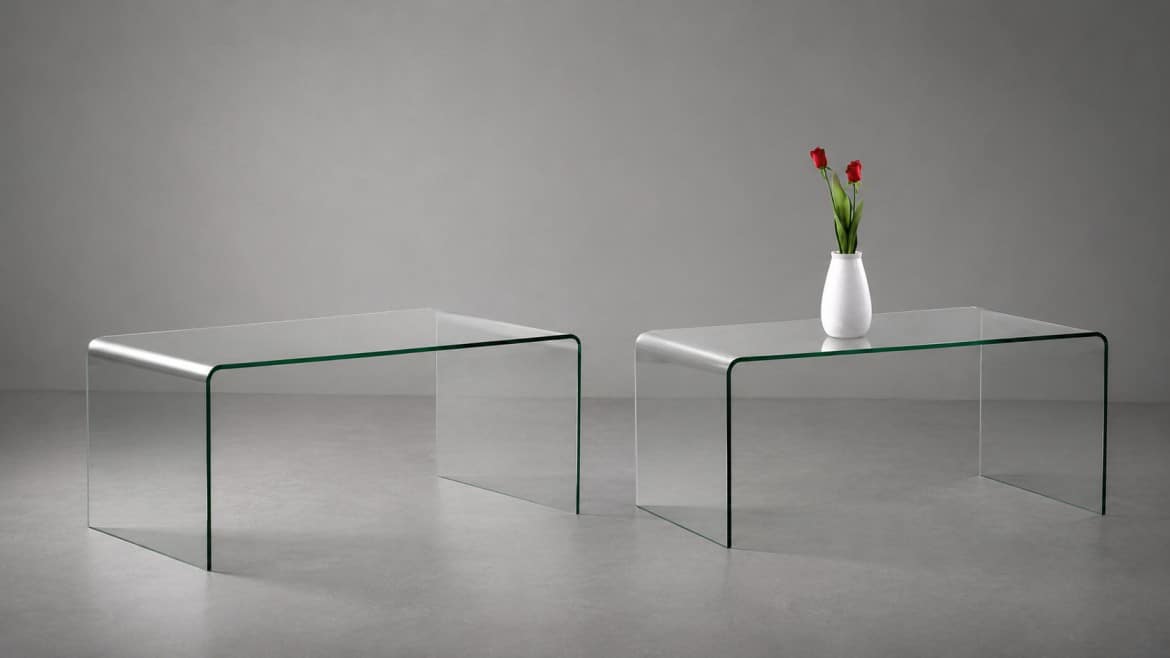
Glass works well in small rooms because it doesn’t read as a solid mass. Paired with a wood, metal, or stone base, a glass table can add visual space without sacrificing surface area.
The honest tradeoff: glass shows every fingerprint, every smudge, and every ring. In a home with kids or pets, you will be cleaning it constantly.
For adults-only rooms or low-traffic spaces, glass is genuinely low-maintenance; a damp cloth handles most of it. For daily family use, it’s a frustration waiting to happen.
3. Metal Tables
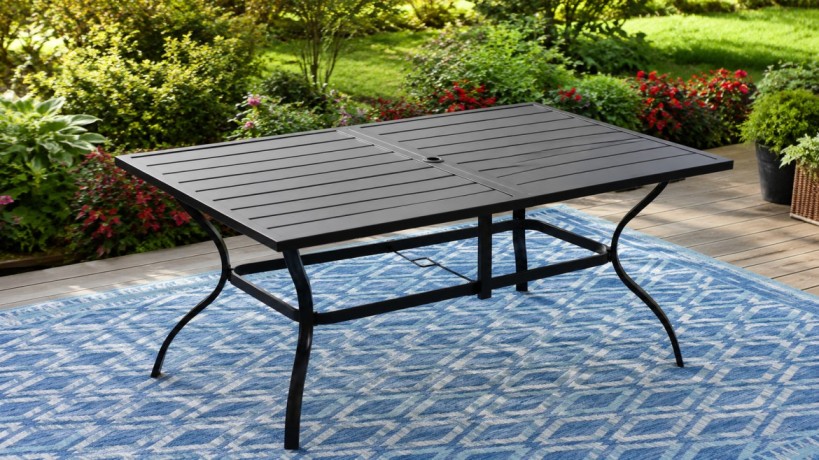
Steel and iron are heavy, stable, and hold a finish well; they work in offices, industrial-style kitchens, and outdoor areas where permanence matters.
Aluminum is the better choice when you need to move the table seasonally: same weather resistance, substantially lighter.
For outdoor use, the finish is what determines longevity; powder-coated steel resists rust significantly longer than bare or painted metal. Any untreated iron left outside will show rust along the welds first, usually within one season of wet weather.
4. Stone Tables
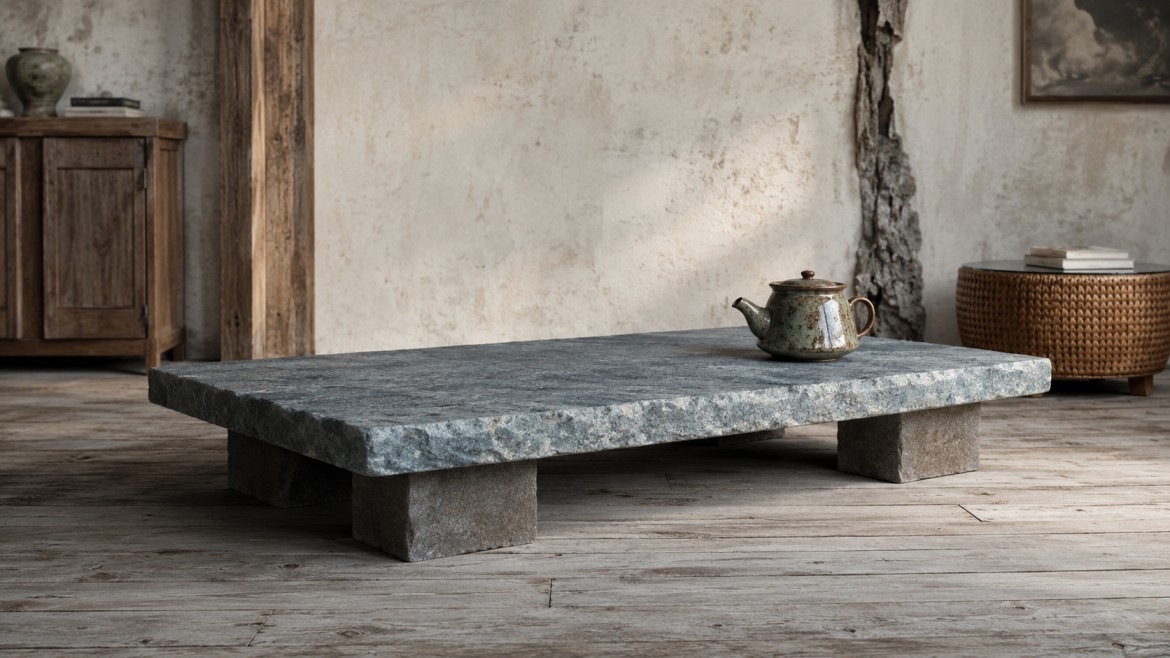
Marble, granite, quartz, and travertine are all legitimate long-term choices when they’re sealed correctly and placed where they won’t be regularly moved.
The weight is a real consideration; a marble dining table can exceed 300 lbs. Natural stone needs periodic resealing to resist staining, particularly from acids like wine, citrus, and coffee.
Quartz is engineered and non-porous, which means it’s more stain-resistant out of the box than natural marble. If you want the look without the maintenance commitment, quartz is the more practical choice of the two.
5. Rattan and Wicker Tables
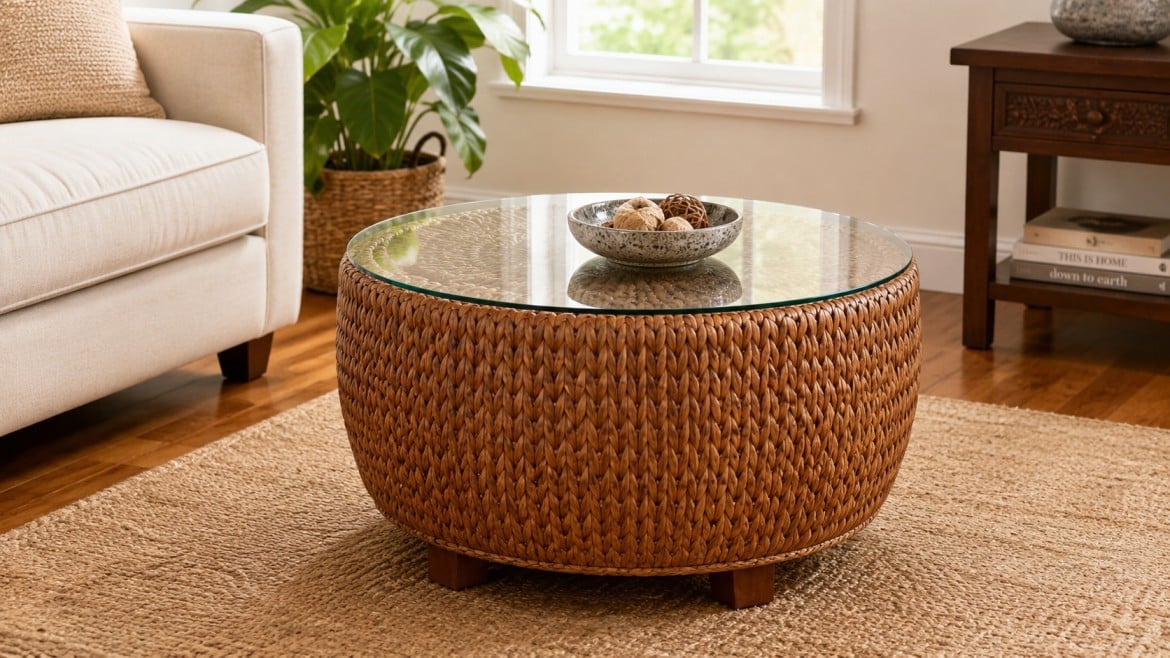
Natural rattan breaks down outdoors over time, and UV exposure dries and cracks the fibers within a few seasons. Synthetic resin wicker handles weather significantly better and is the only version I’d recommend for uncovered patios.
In covered outdoor areas or sunrooms, natural rattan is fine and holds its look well. These are light-use surfaces; they’re not built for heavy loads or rough daily handling. For outdoor areas that see real weather year-round, pair them with a glass or stone top for better durability.
6. Acrylic Tables
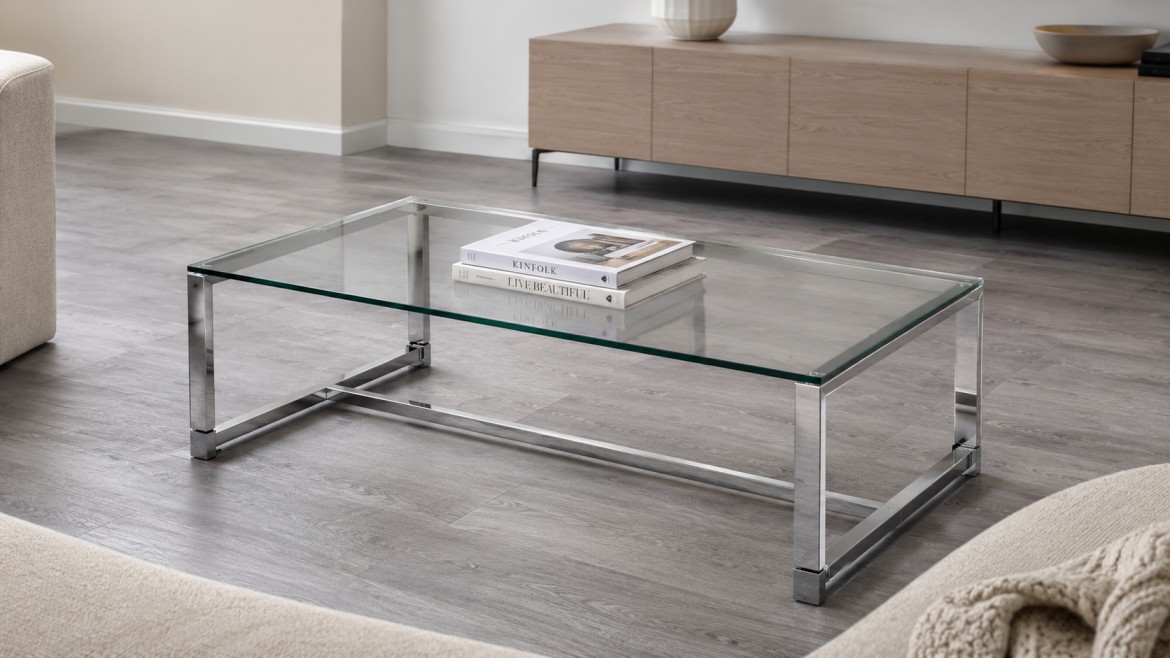
Acrylic tables do one thing better than any other material: they disappear visually. In a small apartment or a room that’s already busy, a clear acrylic table stops the space from feeling cluttered.
The tradeoff is scratch sensitivity, acrylic scratches from almost anything abrasive, and those scratches are highly visible. Use a microfibre cloth and a plastic-safe cleaner.
Don’t stack anything rough on the surface, and don’t use it as a cutting or prep surface. Within those limits, acrylic holds its look well and is easy to move.
With the materials covered, the next decision is which table type fits the specific room and function you’re working with. The 18 types below are organized by use, not by trend.
Types of Tables and Their Best Uses
The right table type comes down to what you’re actually doing at it and where it lives in the room. Every type below earns its place when it’s matched correctly, and becomes a problem when it isn’t.
1. Dining Table
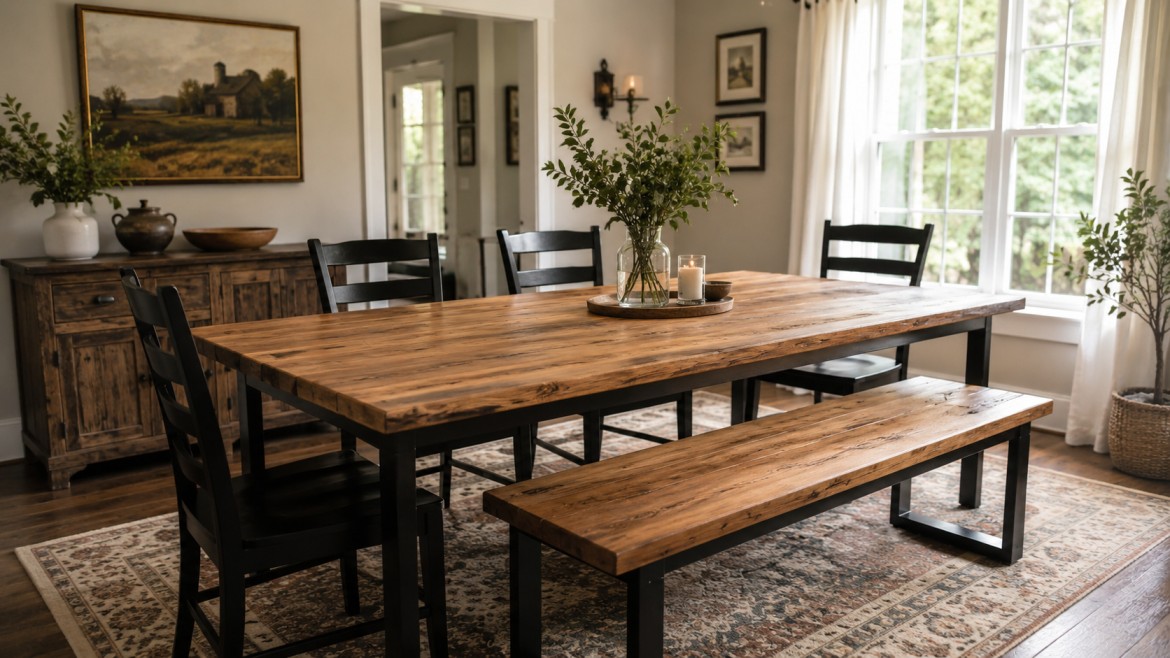
Best For: dining rooms | breakfast rooms | open kitchens
A dining table gets more daily abuse than any other piece of furniture in a home, with meals, homework, craft projects, and laptop work. The material has to hold up to all of it. The standard dining table height is 28 to 30 inches from floor to tabletop, and that number matters more than most buyers realize. A table at the wrong height creates real discomfort over the years of use.
For a full breakdown of how to get the height and apron depth right, the standard dining table height guide covers the specific measurements and where builds go wrong. Shape matters too; allow at least 36 inches of clearance on all sides for chairs and movement.
Round tables seat fewer people but allow better conversation and traffic flow. Rectangular tables seat more but require more room clearance.
Design Tip: Leave enough space for chairs and walking room, 36 inches minimum from table edge to wall.
2. Coffee Table
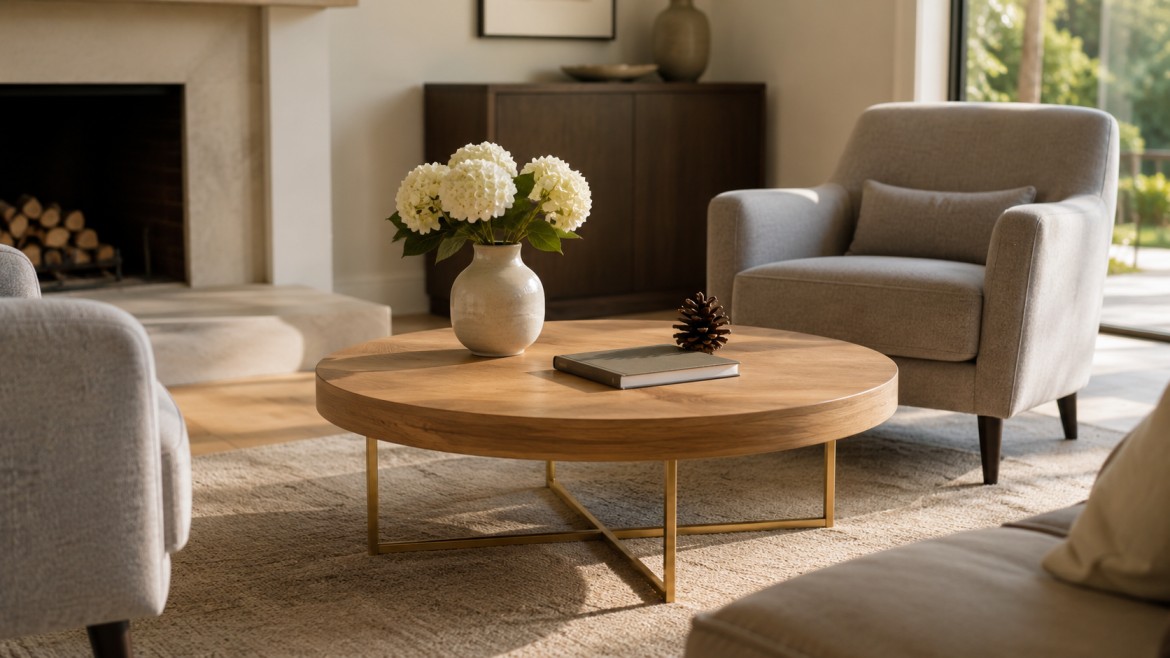
Best For: living rooms | family rooms | lounge areas
A coffee table works hardest when its height is right. The target is within 1 to 2 inches of the sofa seat height, usually 16 to 18 inches from the floor to the surface. Too low and you’re leaning forward to set a drink down; too high and it blocks sightlines. Round tables reduce corner injuries and allow easier movement around the sofa.
Rectangular and square tables offer more surface area but require tighter placement to avoid blocking traffic paths. If the living room is shared with young children, skip glass and stone tops — wood or upholstered surfaces are safer and easier to maintain.
Design Tip: Match coffee table height to sofa seat height, not overall sofa height.
3. Side Table
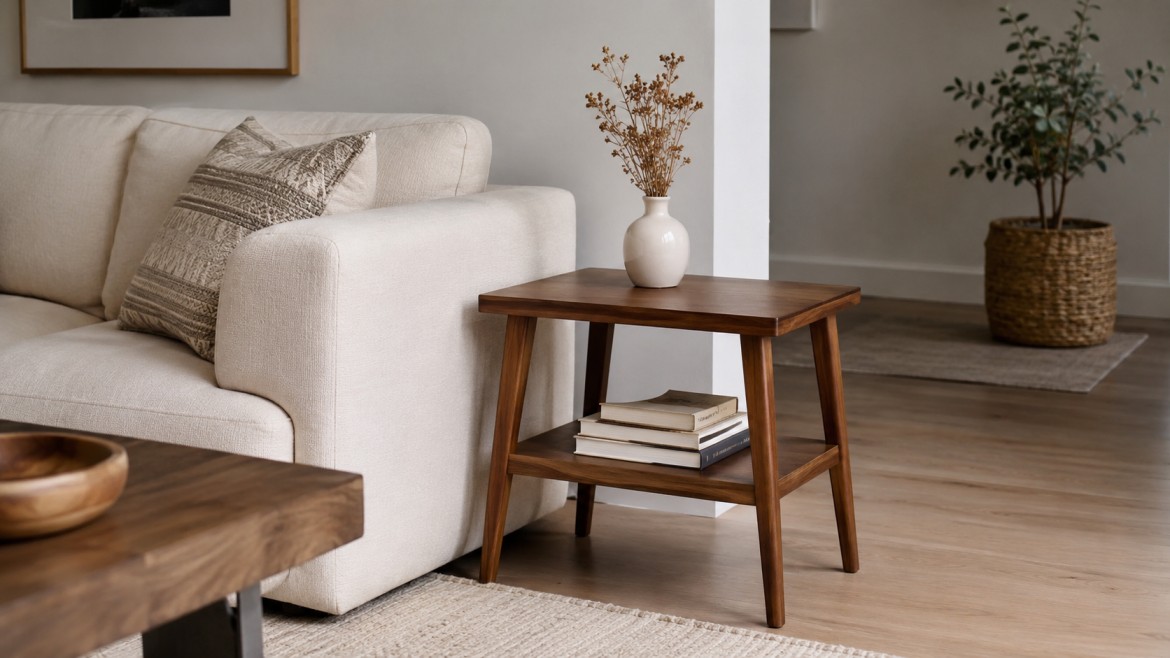
Best For: living rooms | bedrooms | hallways | empty corners
A side table is one of the most flexible pieces in any room. It can hold a lamp, a plant, a tray, or a stack of books, and it can move when the room layout changes. Slim rectangular and round styles fit tight spaces better than square ones.
Rattan and metal side tables both work well where a wood piece would feel too heavy. If the corner is empty and underused, a side table with a lower shelf adds storage without adding bulk.
Design Tip: Pick a slim footprint for tight rooms, a table wider than 18 inches starts blocking movement in narrow spaces.
4. Console Table
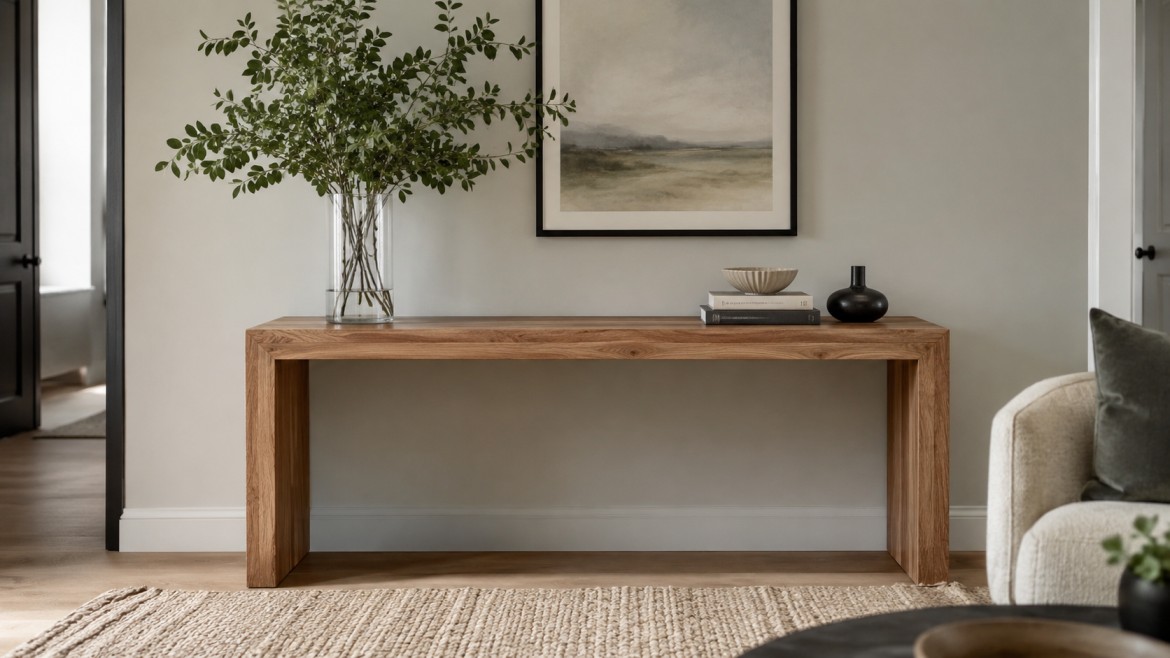
Best For: entryways | hallways | dining rooms | behind sofas
Console tables are long and narrow, designed for wall placement. In an entryway, they handle the daily drop zone, keys, mail, baskets, and lamps without blocking the path. Behind a sofa, they close off the back visually and give you a surface for lamps or decor.
Depth matters here: a console deeper than 14 to 16 inches starts to eat into hallway clearance. Wood and metal both work; stone tops add weight that can make the piece feel anchored to the wall, which is a feature in an entryway but a drawback in a sofa application where the visual should feel lighter.
Design Tip: If the console will sit near the front door, choose a version with a drawer or lower shelf, entry storage earns its place immediately.
5. Bedside Table
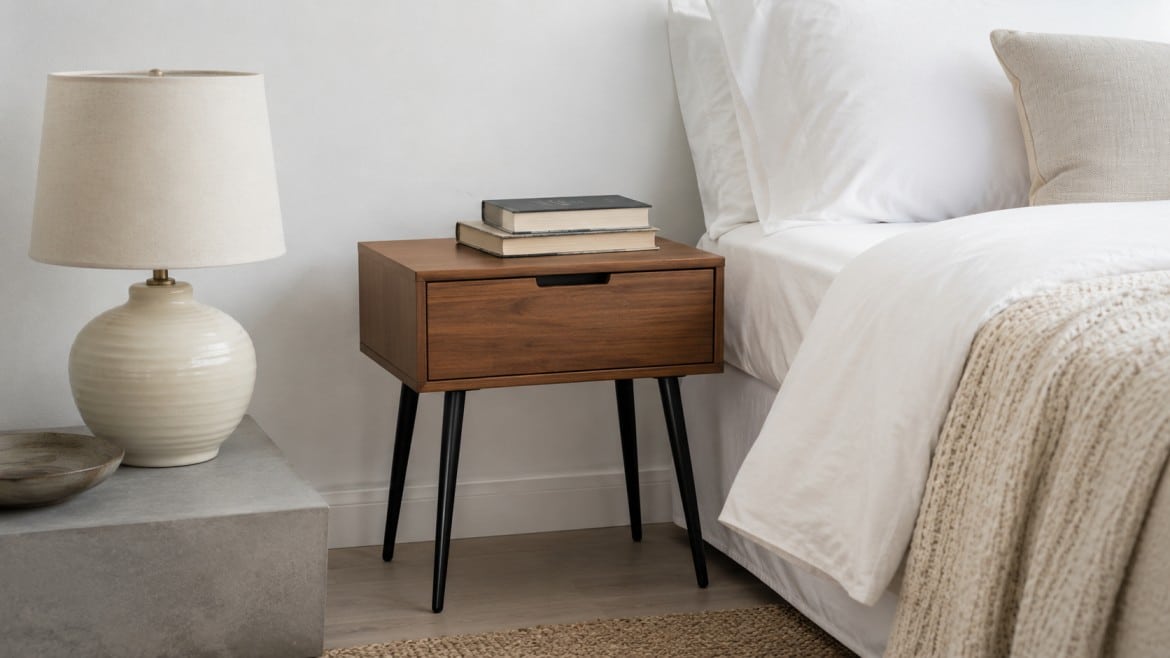
Best For: bedrooms | guest rooms | kids’ rooms
The right bedside table height is level with the top of the mattress, or within an inch in either direction. Too low and you’re reaching down to silence an alarm in the dark; too high and the lamp is at eye level.
Most mattresses with a box spring sit at 25 to 27 inches, so bedside tables in that height range are the practical starting point. Drawers beat open shelves in most bedrooms because they keep the surface clear. If the bedroom is small, a floating wall-mounted bedside shelf does the same job without using any floor space.
Design Tip: Measure from the floor to the top of the mattress before buying, matching that height exactly avoids the awkward reach.
6. Nesting Tables
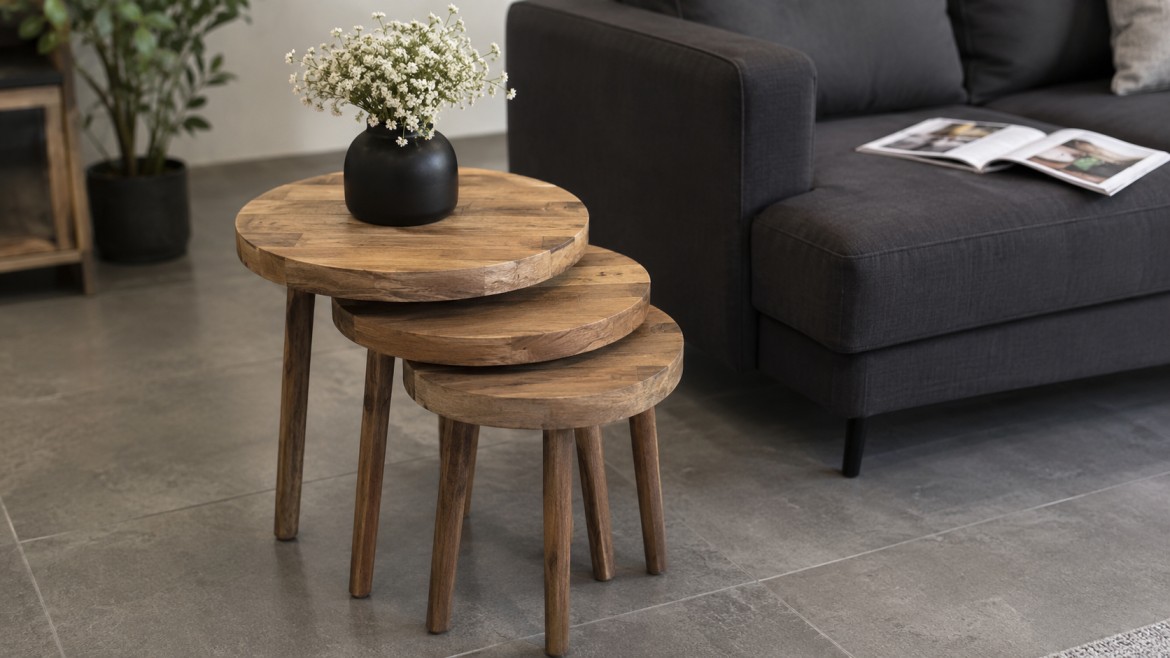
Best For: small living rooms | apartments | flexible seating areas
Nesting tables, typically sold as a set of two or three, solve a specific problem: you need extra surfaces when guests arrive but don’t have the floor space to park them permanently. When nested, they occupy roughly the same footprint as one side table.
Pulled apart, they give you three independent surfaces. Metal frames with wood or glass tops give you the best longevity in this format, all-acrylic nesting sets tend to scratch quickly from repeated pulling and pushing. If the apartment is small and the living room doubles as a workspace, nesting tables are worth the slightly higher price over a single side table.
Design Tip: Separate them before guests arrive, not during, moving furniture mid-gathering is awkward and risks scratching floors.
7. Outdoor Table
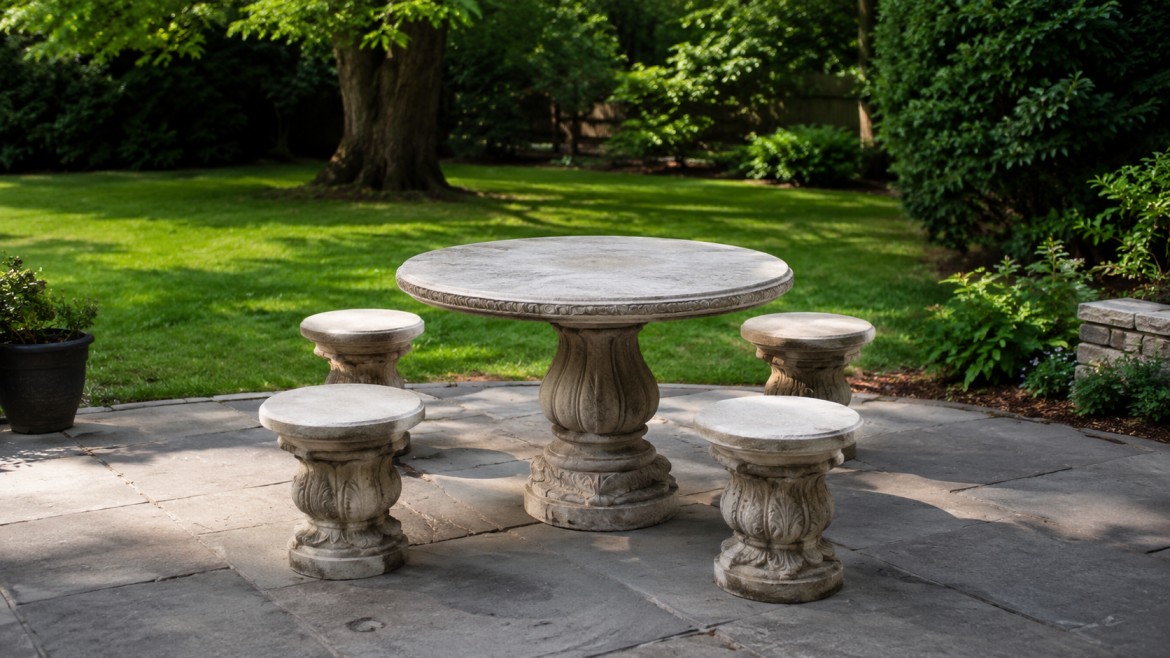
Best For: patios | balconies | decks | porches | gardens
Outdoor tables fail when the material isn’t matched to the actual climate. Teak handles moisture and UV better than most species, but it’s expensive and needs annual oiling to stay rich in color, untreated, it fades to silver-grey within a year, which some people prefer.
Aluminum is the low-maintenance outdoor option: rust-resistant, light, and easy to move inside during storms. Powder-coated steel is more durable than aluminum but heavier and needs its coating checked annually for chips that lead to rust. For outdoor table materials matched to specific climates, the outdoor furniture wood guide covers what holds up where.
Design Tip: Uncovered outdoor tables need a material that handles standing water — avoid untreated natural rattan and unsealed stone in wet climates.
8. Bistro Table
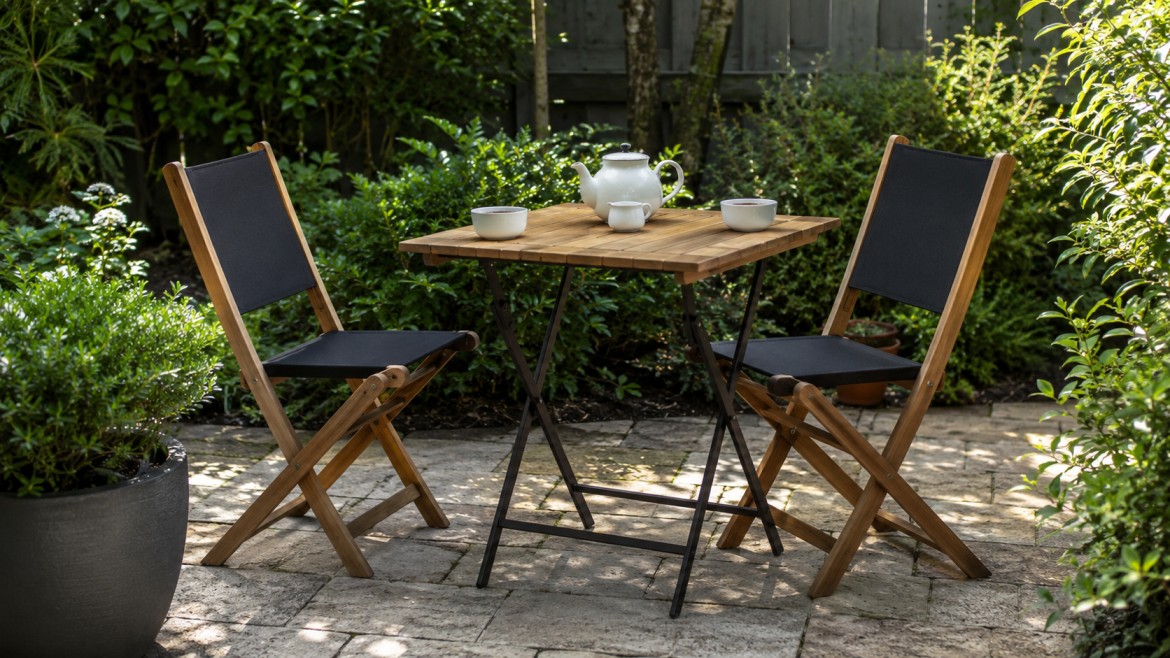
Best For: balconies | breakfast corners | patios | small kitchens
A bistro table is built for one or two people and works precisely because it takes up so little space. A round top at 24 to 30 inches in diameter gives two people enough surface for a meal without the table dominating the space around it.
Metal and glass bistro tables are the most practical for outdoor use, folding metal versions can be stored flat against a wall during off-seasons. In small kitchens, a round bistro table against a wall handles everyday breakfasts and frees up the kitchen worktop for prep.
Design Tip: Folding bistro tables earn their price in apartments with a balcony, they’re furniture when you need them, storage when you don’t.
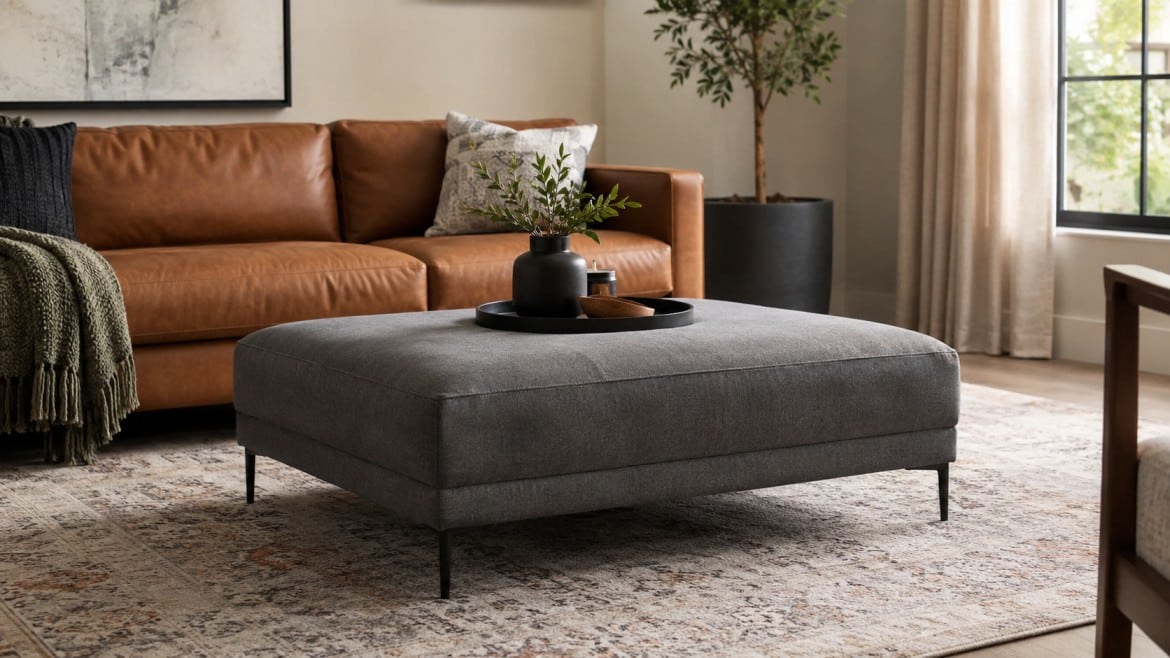
9. Ottoman Coffee Table
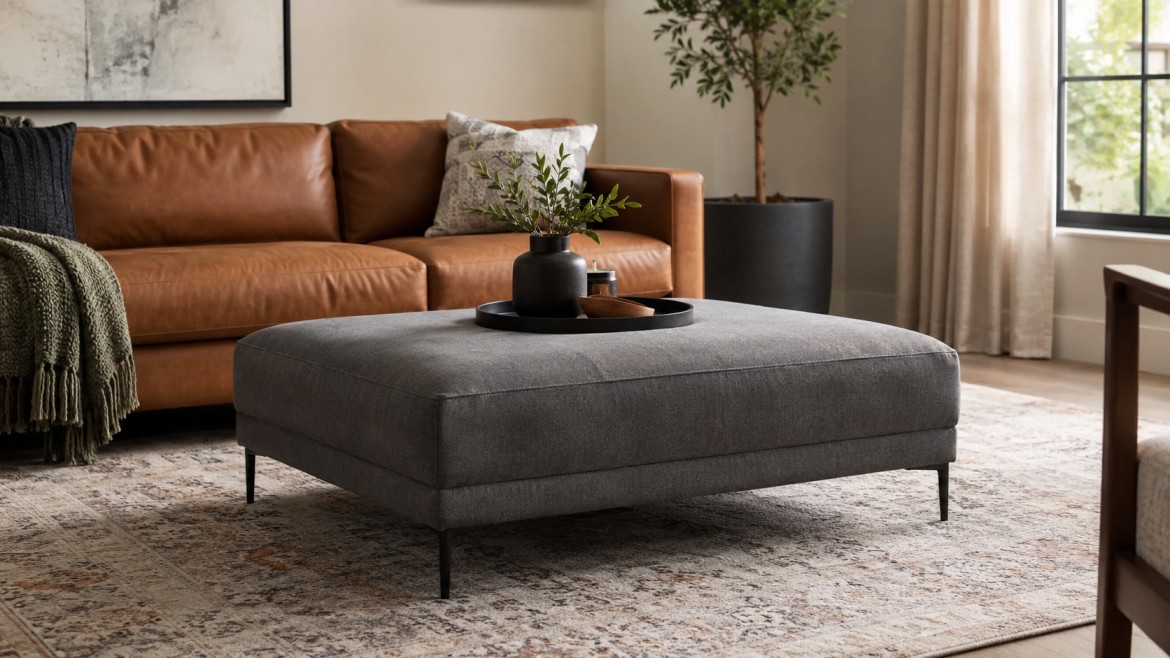
Best For: living rooms | family rooms | cozy seating areas
An ottoman coffee table works as a footrest, a secondary seat when guests arrive, and a surface when topped with a firm tray.
Fabric ottomans are softer and warmer in family rooms but stain more readily, performance fabric versions resist spills better than standard upholstery.
Leather and faux leather clean up easily but feel cold in winter. For households with small children, an upholstered ottoman is the practical choice over a hard-edged coffee table, no sharp corners at fall height.
Design Tip: Add a large tray, without it, drinks tip and items roll, which defeats the purpose of using it as a table surface.
10. High-Top Table
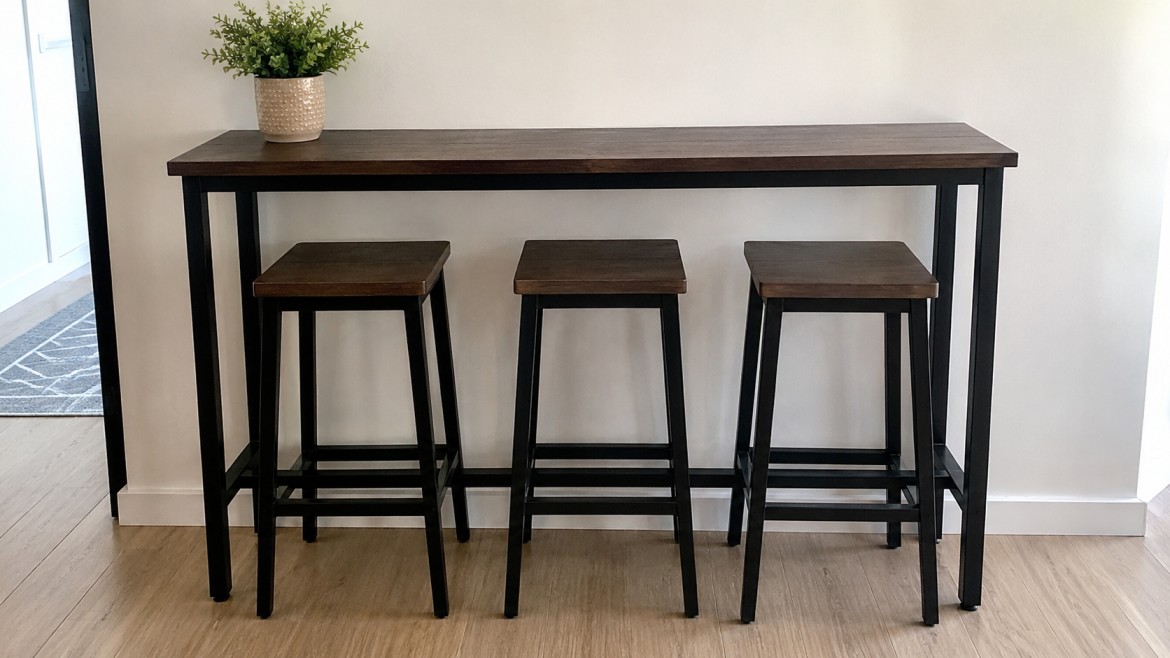
Best For: kitchens | breakfast areas | game rooms | casual dining spots
High-top tables come in two height ranges: counter height at 34 to 36 inches and bar height at 40 to 42 inches. Counter height works with stools that seat 24 to 26 inches from the floor to the seat.
Bar height needs stools at 28 to 30 inches. Buying the wrong stool height for the table is the most common mistake with this type, the seat-to-tabletop clearance needs to be 10 to 12 inches for comfortable seating. Check both measurements before ordering, not just the table height.
Design Tip: Confirm stool seat height before buying the table — seat-to-surface clearance of 10 to 12 inches is the target, and it’s easy to get wrong.
11. Drink Table
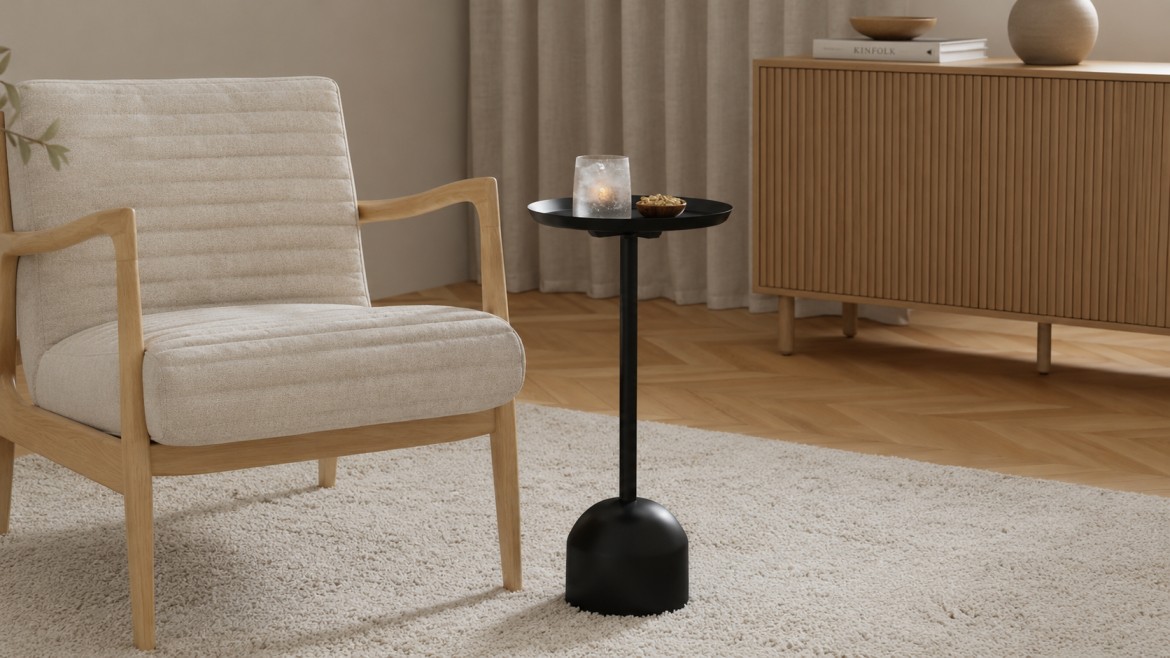
Best For: beside sofas | chairs | bathtubs | reading corners
A drink table holds one drink, one book, or one lamp. It’s the right choice when the spot next to a chair or sofa is too narrow for even a small side table.
Most drink tables have a round top between 8 and 12 inches in diameter, set on a single post or tripod base. Metal is the most practical material for this format; it’s light enough to reposition easily, and the slim profile doesn’t collect dust the way open-shelf side tables do.
Design Tip: If a standard side table won’t fit the space comfortably, a drink table is the right fix, not a smaller side table that still crowds the path.
12. Pedestal Table
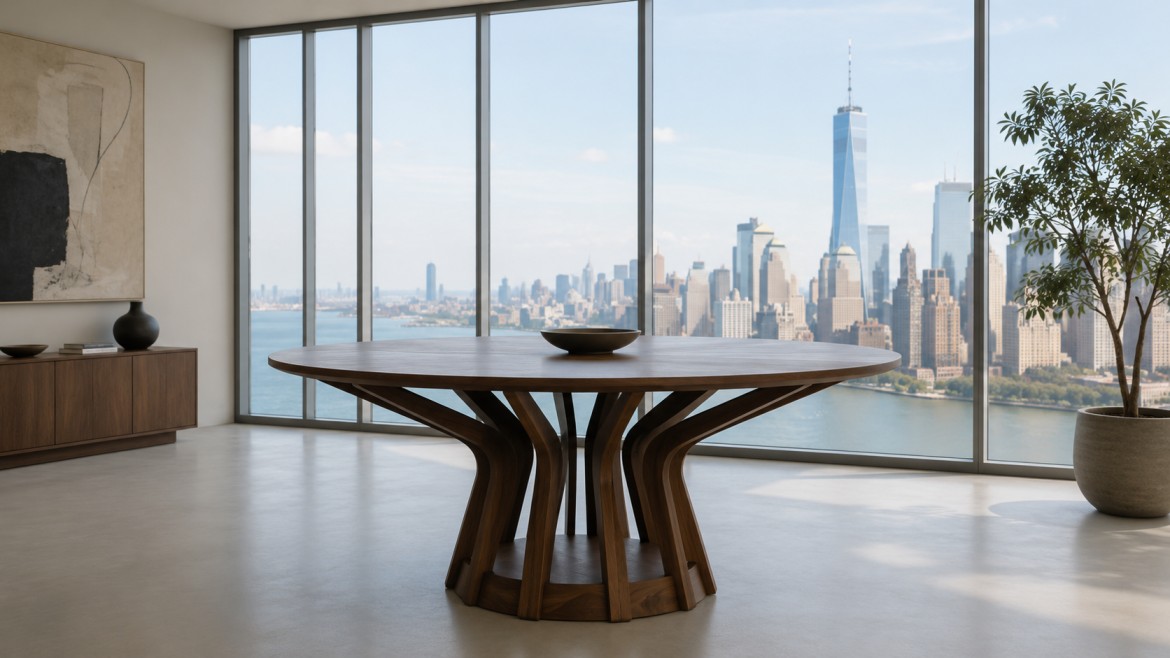
Best For: dining rooms | breakfast rooms | foyers
A pedestal table has a single center base rather than four legs, which gives everyone at the table full legroom with no corner post to work around. This matters most in small dining rooms where seating is tight.
Round pedestal tables are the most space-efficient dining format when the room is compact. The one structural check: make sure the base is wide enough to be stable when loaded. A narrow pedestal under a large top will tip if someone leans hard on one edge.
For rooms where shape matters as much as size, the table shape guide covers round vs rectangular vs oval in detail.
Design Tip: Check base width before buying, a pedestal base needs to be proportionate to the top or the table will feel unstable under real use.
13. Extendable Table
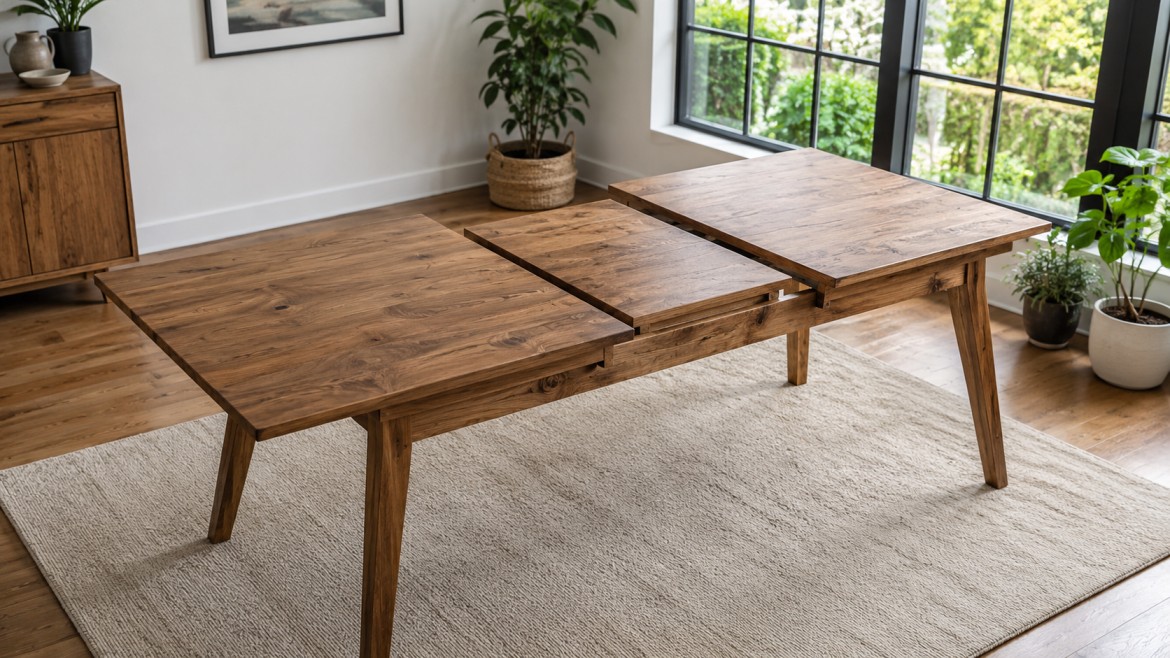
Best For: small homes | dining rooms | kitchens | hosting spaces
An extendable table solves a real space problem: you need four seats on weeknights and eight seats for holidays, but you don’t have room for a table that seats eight permanently. Butterfly leaf extensions that store under the top are the most convenient format; the leaf is always there, and the table extends in under a minute.
Separate leaf systems are cheaper but require storage space for the leaf and two people to manage the extension. Measure both the closed size and the fully extended size, and make sure the extended version actually fits the room with chairs pulled out.
Design Tip: Measure the fully extended size with chairs pulled out on all sides, that’s the real footprint you’re committing to when guests arrive.
14. Folding Table
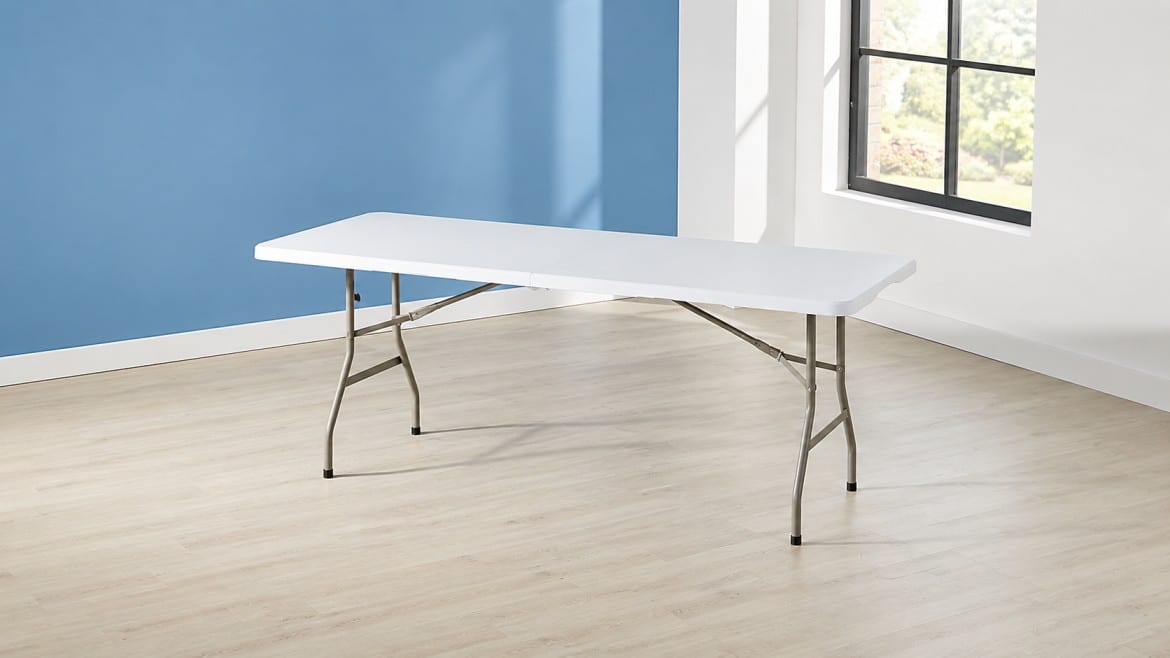
Best For: events | crafts | laundry rooms | extra dining space
Folding tables are for occasional use, not permanent placement. The plastic top versions are the lightest and cheapest, but they flex under load. They work for light craft and party setups, not for anything structural.
Laminate tops on steel frames are heavier but noticeably more rigid and better for regular use. If the folding table will come out weekly for craft or hobby work, spend more on the frame; the hinges on cheap folding tables fail within a year of regular handling.
Design Tip: If you’ll use it weekly, buy a heavier-gauge steel frame, cheap hinges are the first thing to fail on low-cost folding tables.
15. Drop-Leaf Table
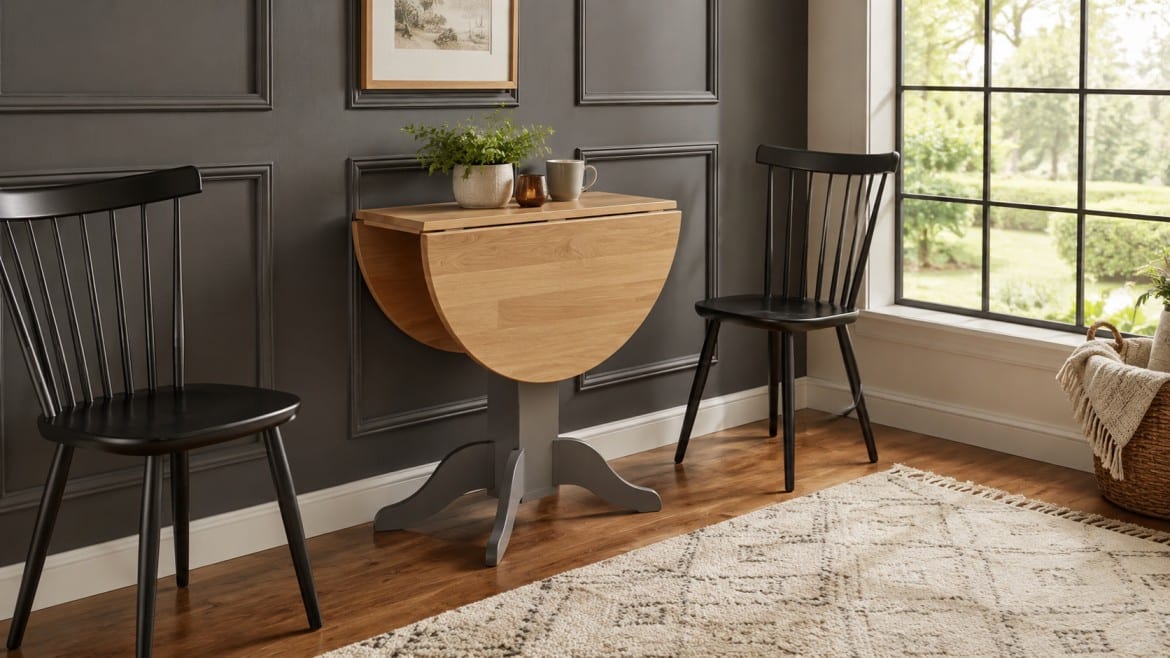
Best For: small kitchens | apartments | multipurpose rooms
A drop-leaf table has hinged sides that fold down when not in use, reducing the footprint significantly, some narrow to as little as 12 inches deep when both leaves are down, making them storable against a wall.
With both leaves raised, the same table seats four. This is the right choice for a studio apartment or a small kitchen where a full dining table won’t fit permanently.
Wood is the most common material because the hinge mechanism integrates cleanly into a wood frame. Check that the leaf support hardware is solid; metal support brackets hold better over the years of raising and lowering than the older wooden gate-leg designs.
Design Tip: Place it against a wall when folded, and both leaves are down, it becomes nearly invisible and frees the floor entirely.
16. Desk Table
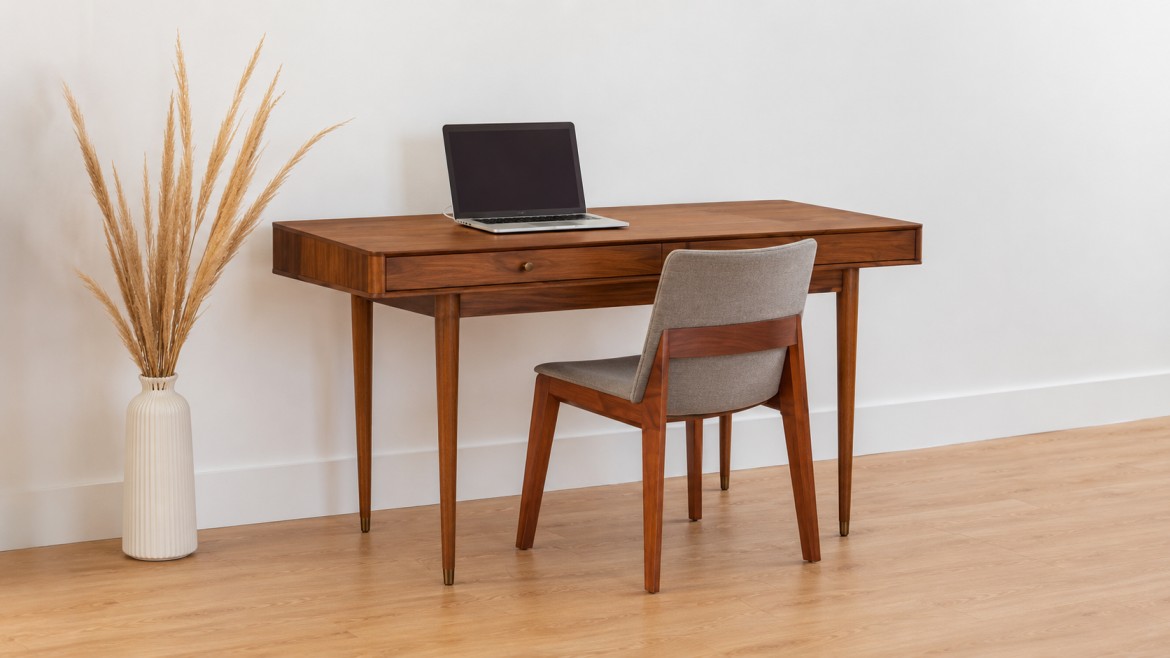
Best For: home offices | bedrooms | study corners
A desk table needs to be 28 to 30 inches high, the same as a dining table, to allow comfortable seated work with a standard chair.
Depth is where most desk purchases go wrong: a 20-inch-deep desk is enough for a laptop but not for a monitor, keyboard, and mouse setup, which typically needs 28 to 30 inches of front-to-back space.
Corner desks give the most surface area for the floor space used. L-shaped designs work well when the room has the footprint. For standing desks, look for motorized height adjustment with memory settings rather than fixed-height standing desks, which most people stop using within weeks.
Design Tip: Check cord routing before buying a desk without a cable management solution, as it becomes unusable fast in any setup with more than one device.
17. Dressing Table
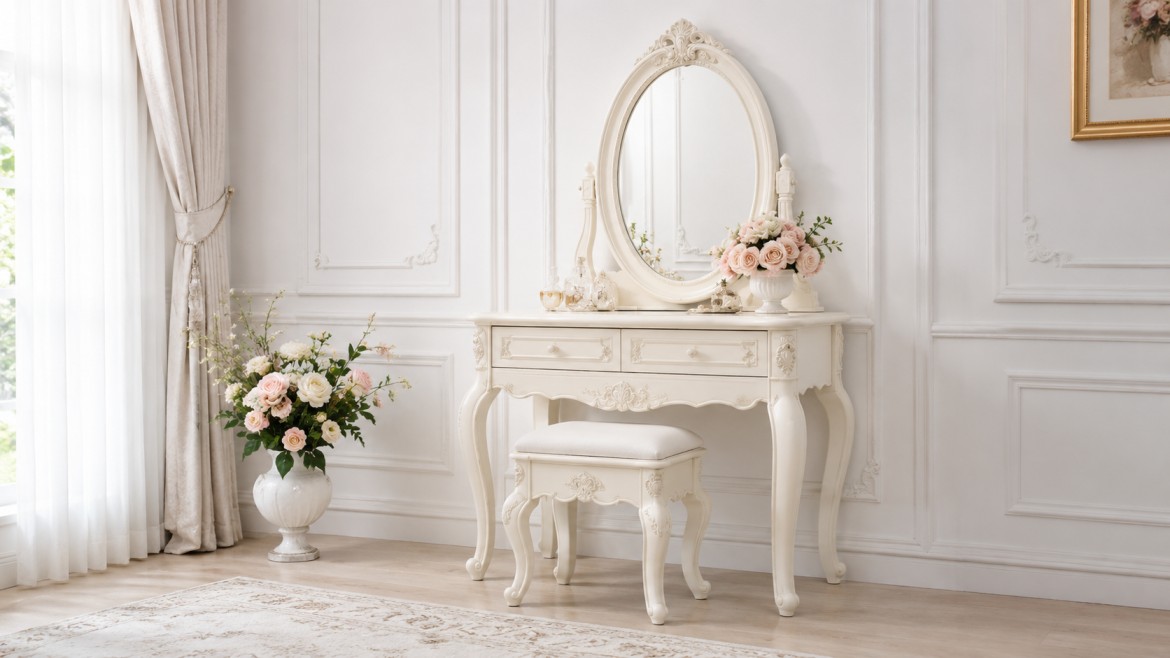
Best For: bedrooms | walk-in closets | getting-ready areas
A dressing table works when it’s placed with the right light. Natural side lighting, a window to the left or right of the mirror, is the most accurate for makeup and grooming.
Overhead lighting creates shadows under the eyes and along the jawline, making color matching unreliable. If the room can’t offer natural side light, LED strip lighting mounted on both sides of the mirror is the practical fix. Drawer count matters more than surface size in most dressing tables; small items multiply fast, and an open surface fills up with no storage behind it.
Design Tip: Choose side lighting over overhead, overhead light creates shadows that make makeup application unreliable, regardless of mirror quality.
18. C Table
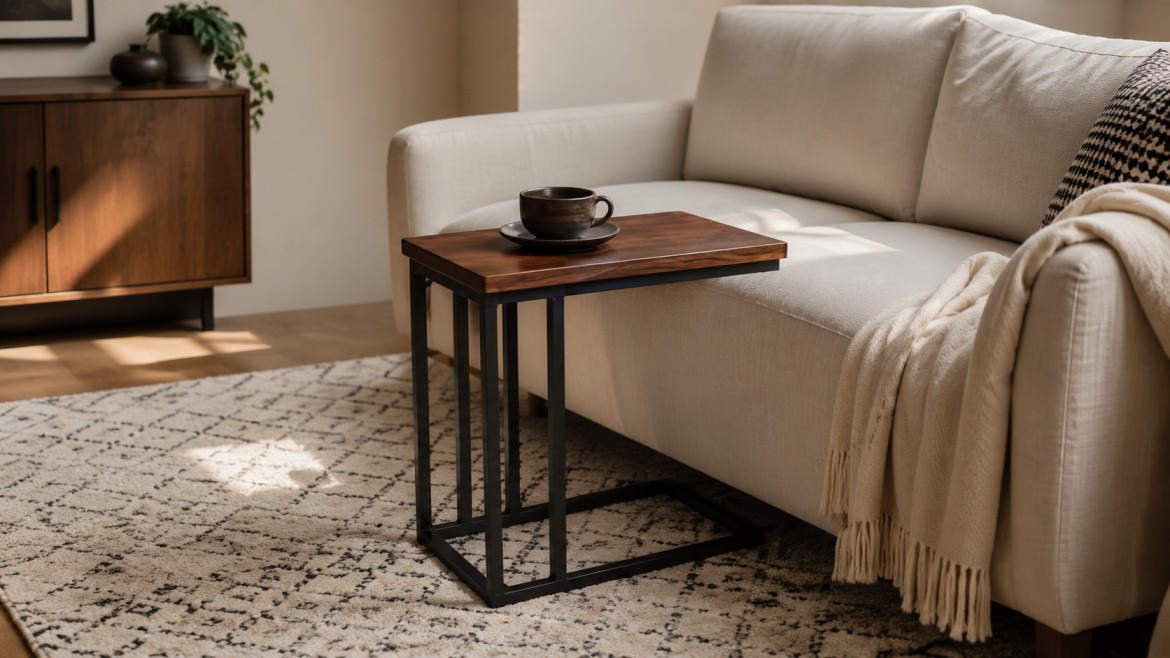
Best For: sofas | chairs | beds | small rooms
A C table slides over the arm of a sofa, chair, or bed; the C-shaped metal base passes underneath, leaving the surface cantilevered above the armrest. This format works anywhere that a side table would block movement or take up floor space that isn’t available.
Before buying, measure the height of the sofa arm and the clearance under the arm to the floor. The base of the C needs to clear the sofa leg and frame without rocking. Metal frames are more stable than wood in this format because the geometry relies on rigidity, not mass.
Design Tip: Measure sofa arm height and clearance to the floor before ordering. The base needs to slide under cleanly, and dimensions vary significantly between sofas.
Once the type is matched to the function, the room-by-room summary below makes the selection even faster.
Best Types of Tables for Each Room
The table that works in a dining room will fight against you in a hallway. Here’s the practical match for each space:
| Room | Best Table Types | Why They Work |
|---|---|---|
| Living Room | Coffee table, side table, ottoman coffee table, C table, nesting tables | Living rooms need one main surface plus smaller surfaces near sofas and chairs for drinks, books, lamps, and remotes. |
| Dining Room | Dining table, extendable table, pedestal table, drop-leaf table | Dining tables need to handle daily meals and expand for guests without permanently occupying the full guest-seating footprint. |
| Bedroom | Bedside table, dressing table, side table, C table | Bedroom tables should keep daily items within reach while adding storage. Height relative to the mattress determines whether they actually get used. |
| Entryway and Hallway | Console table, side table | Narrow tables work here because they hold keys, mail, and decor without blocking foot traffic. Depth over 16 inches creates a bottleneck. |
| Outdoor Area | Outdoor table, bistro table, folding table | Outdoor tables need to handle sun, moisture, and temperature changes, material choice is the only variable that matters here. |
| Office and Study | Desk table, folding table, C table | Office and study tables need the right height for seated or standing work, enough depth for the actual setup, and a solution for cable management. |
The table summary above is a starting point; the right pick shifts based on room size, how many people use the space, and what other furniture is already there.
Common Mistakes When Choosing a Table
Most of the mistakes I’ve seen happen after the purchase, when the table is in the room, and something doesn’t work. Here’s what to check before you commit:
- Buying the wrong size: the table is fine until a chair won’t pull out, a door won’t open, or someone has to turn sideways to get through the room. Measure clearance paths, not just the table footprint.
- Ignoring table height: coffee tables, bedside tables, desks, and high-top tables all have height requirements tied to how they’re used. A desk at the wrong height creates ergonomic problems over months of daily use.
- Picking the wrong material for the actual use: glass in a family kitchen, natural rattan in an uncovered outdoor area, and unsealed marble in a household with coffee drinkers are all purchases that create problems within a year.
- Skipping storage consideration: drawers, shelves, and lift tops add real function in rooms where surface clutter is a daily problem. A table without storage in a busy room fills up and stays filled.
- Forcing a match across all tables: every table in a room doesn’t need to be the same material, finish, or shape. Mixing works when the proportions and scale are consistent.
- Buying for how the room looks in photos: the right table is the one that fits how the room actually gets used — not how it looks in a styled photo where no one is home.
- Underestimating weight: stone and solid wood tables are difficult to move once placed. A 250 lb marble dining table isn’t something you rearrange seasonally. If flexibility matters, weight matters.
Frequently Asked Questions
These are the questions that come up most often once people have narrowed down the type but aren’t sure about the specifics.
What is the most common type of table?
The dining table is the most common table type found in homes. It sits at 28 to 30 inches high and comes in rectangular, round, square, and oval shapes. Most households have one dining table plus at least one coffee table or side table in the living area.
What type of table is best for a small living room?
Nesting tables or a round coffee table under 36 inches in diameter work best in small living rooms. Both formats take up minimal floor space while providing usable surface area. C tables are a better fit than side tables in very tight rooms where floor clearance next to the sofa is limited.
What is the difference between a side table and an end table?
End tables typically sit at the ends of a sofa at arm height. Side tables are a broader category that includes end tables and any small surface table used beside furniture. In practice, most furniture retailers use the terms interchangeably.
What type of table material lasts the longest?
Stone and solid hardwood last longest when maintained correctly. Granite and quartz are non-porous and resistant to chipping. Hardwoods like oak and walnut can last decades with periodic refinishing. Metal frames outlast most tops in structural terms but surface finishes need maintenance to prevent rust.
What are the different types of dining table shapes?
Dining tables come in rectangular, round, square, oval, and pedestal (single-base) configurations. Rectangular seats the most people per square foot of table. Round promotes conversation and eliminates sharp corners. Oval splits the difference. Square works in compact square dining rooms.
What height should a coffee table be?
A coffee table should sit within 1 to 2 inches of the sofa’s seat height, typically 16 to 18 inches from floor to surface. A table lower than 15 inches requires too much forward lean. Higher than 20 inches starts to visually divide the seating area.
What type of table works best for a home office?
A dedicated desk table at 28 to 30 inches high with at least 24 to 28 inches of front-to-back depth is the practical baseline. Corner and L-shaped desks offer the most surface area for the floor space used. For laptop-only setups, 20 inches of depth is adequate.
Final Thoughts on Choosing the Right Types of Tables
The best tables are the ones that get out of the way and do their job every day without requiring workarounds. Start with the function, what the table needs to do, in what room, for which people, and the material and type follow from that.
A dining table in a family kitchen needs a harder material and a finish that can take daily cleaning. A side table in a bedroom corner needs to match mattress height and hold what you actually put on it at night.
Get those specifics right and the rest — shape, finish, size — is largely about preference. If you’re still working out which table shape fits your room layout, the table shape guide is the next step.