

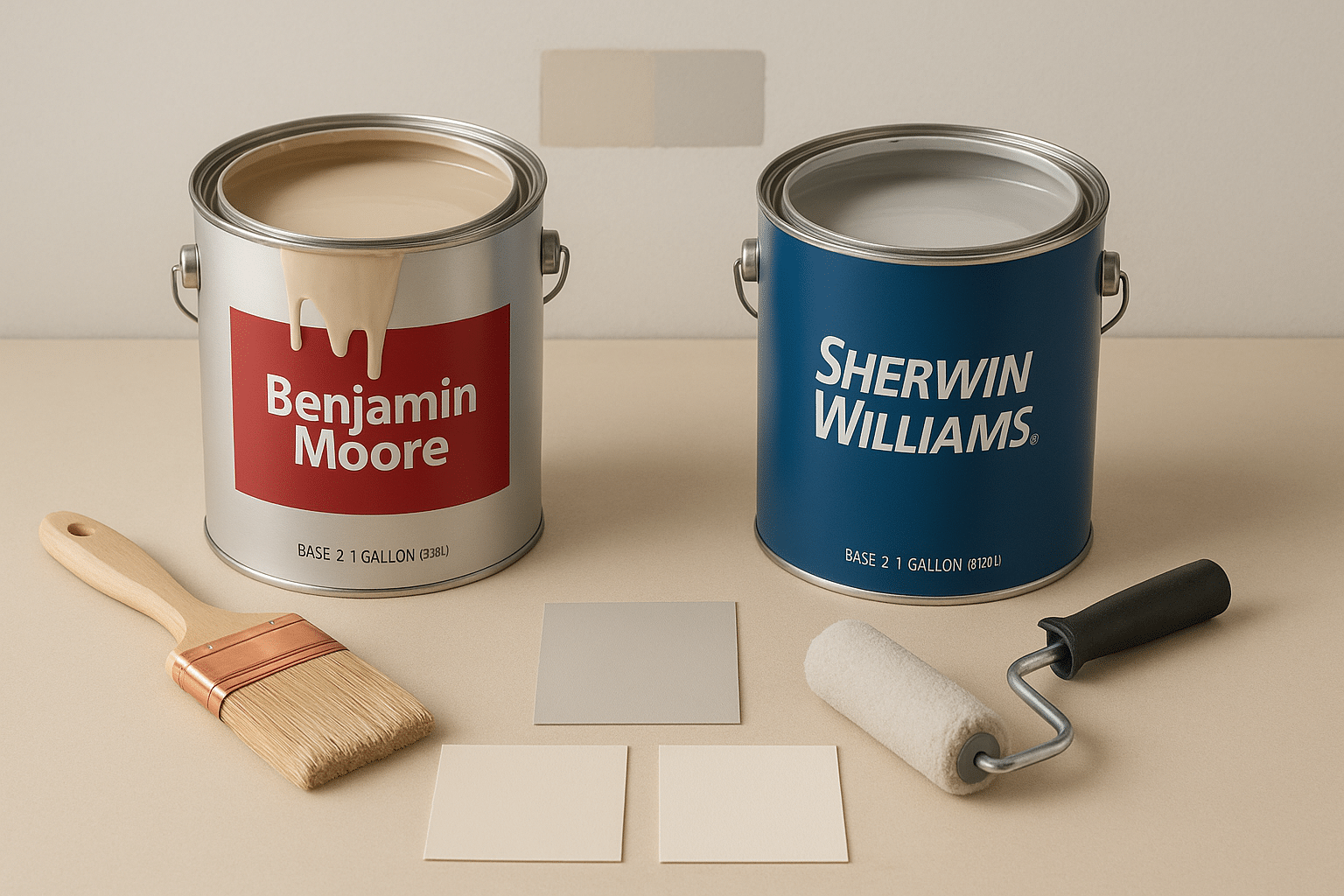


The benjamin moore vs sherwin williams comparison matters before you buy, not after, because the wrong choice means an extra coat, a flat finish in afternoon light, or a wall that scuffs in six months. Both brands have earned their reputation. The question is which one earns it on your walls, for your project.
Benjamin Moore has built its reputation on color quality and finishes that hold up under close inspection. The brand sells through independent dealers, where in-store guidance tends to be specific and useful. Its higher solids content contributes to strong hide and smooth results, and lines like Aura and Regal Select reflect that.
Sherwin-Williams operates differently. With over 4,500 dedicated stores across North America, it is one of the most accessible paint brands available.
Contractors default to it for large-scale work, exterior projects, and high-traffic surfaces because it performs consistently across varied conditions. Where it clearly leads is washability: scuff a wall, wipe it down, and the paint holds without fading or streaking.
For households with kids or pets, that is a practical advantage worth paying for. Knowing these differences before you buy saves time, money, and a second trip to the store.
Side-by-Side: Key Differences That Actually Matter
Six factors tend to separate an average paint job from a great one. Here is how both brands stack up so you know exactly what you are paying for.
1. Coverage: Fewer Coats, Less Work
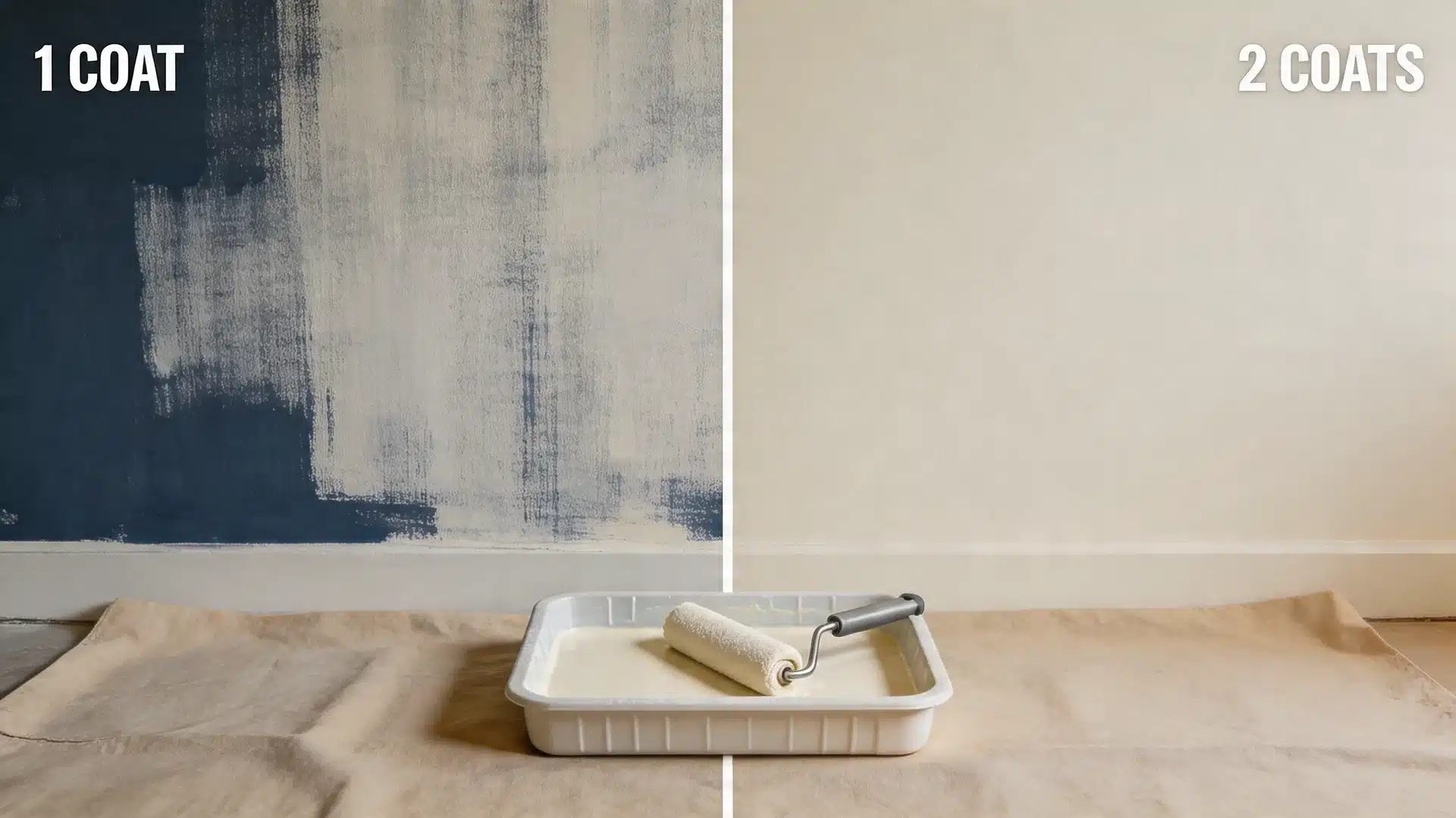
Benjamin Moore leads on coverage. Its higher solids content gives the paint better hide on the first pass, and most color changes land in one to two coats, even over dark or saturated walls.
Sherwin-Williams is competitive in its premium Emerald line, but mid-range options often need an extra coat, particularly over deep tones like navy or forest green.
| Pro Tip: If you are painting over a dramatically different color, both brands benefit from a tinted primer. Benjamin Moore’s Fresh Start primer pairs well with Aura and Regal Select and reduces the coat count considerably. Sherwin-Williams has its Extreme Block primer for similar situations. Skipping primer to save money often costs more in paint. |
2. Durability and Washability
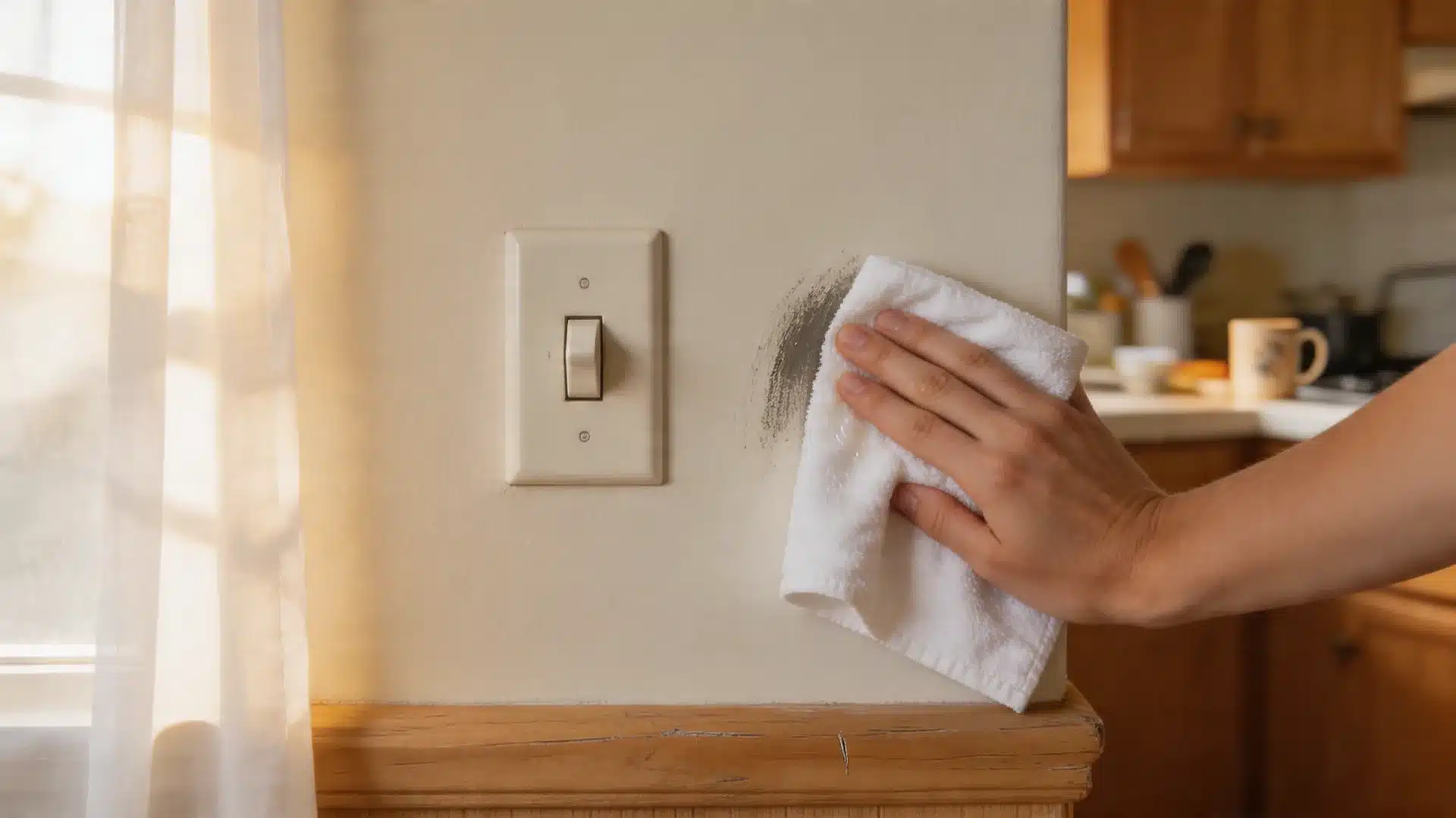
Sherwin-Williams carries a clear edge in scrubbing resistance, which matters most in kitchens, bathrooms, and busy hallways. Both brands handle everyday wear without complaint.
Benjamin Moore, by contrast, holds its color tone more consistently over the years. Walls look closer to day-one condition without repainting. For high-traffic spaces, that durability gap is worth factoring into the decision before you choose a line.
3. Application and Ease of Use
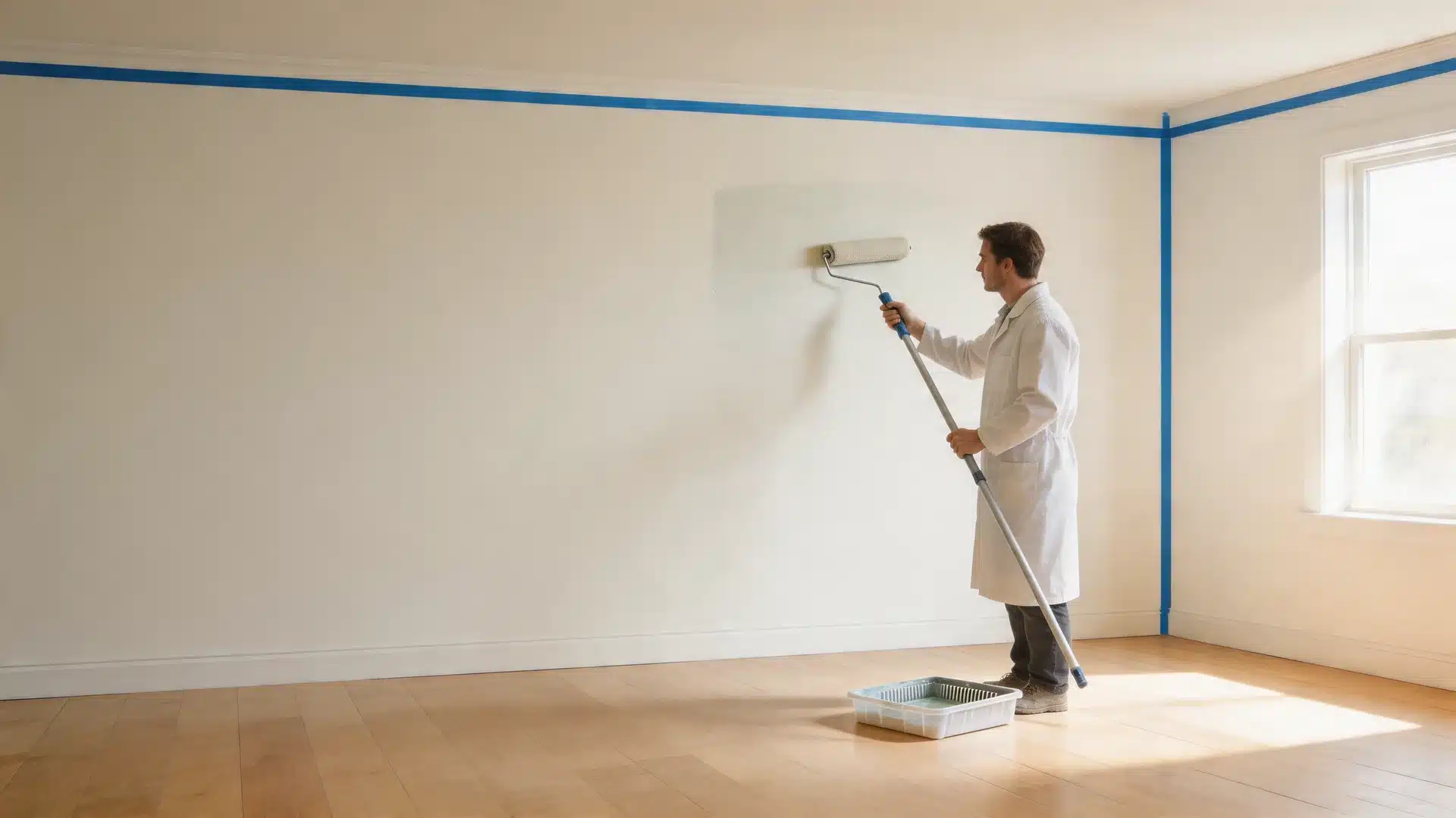
Benjamin Moore flows more smoothly from brush or roller, with less drag and fewer visible roller marks. That makes it more forgiving for those without professional experience.
Sherwin-Williams can run thicker or thinner depending on the product line, requiring more technique for even paint application, particularly across wide, flat surfaces where inconsistency tends to show up clearly under direct light.
4. Finish Quality
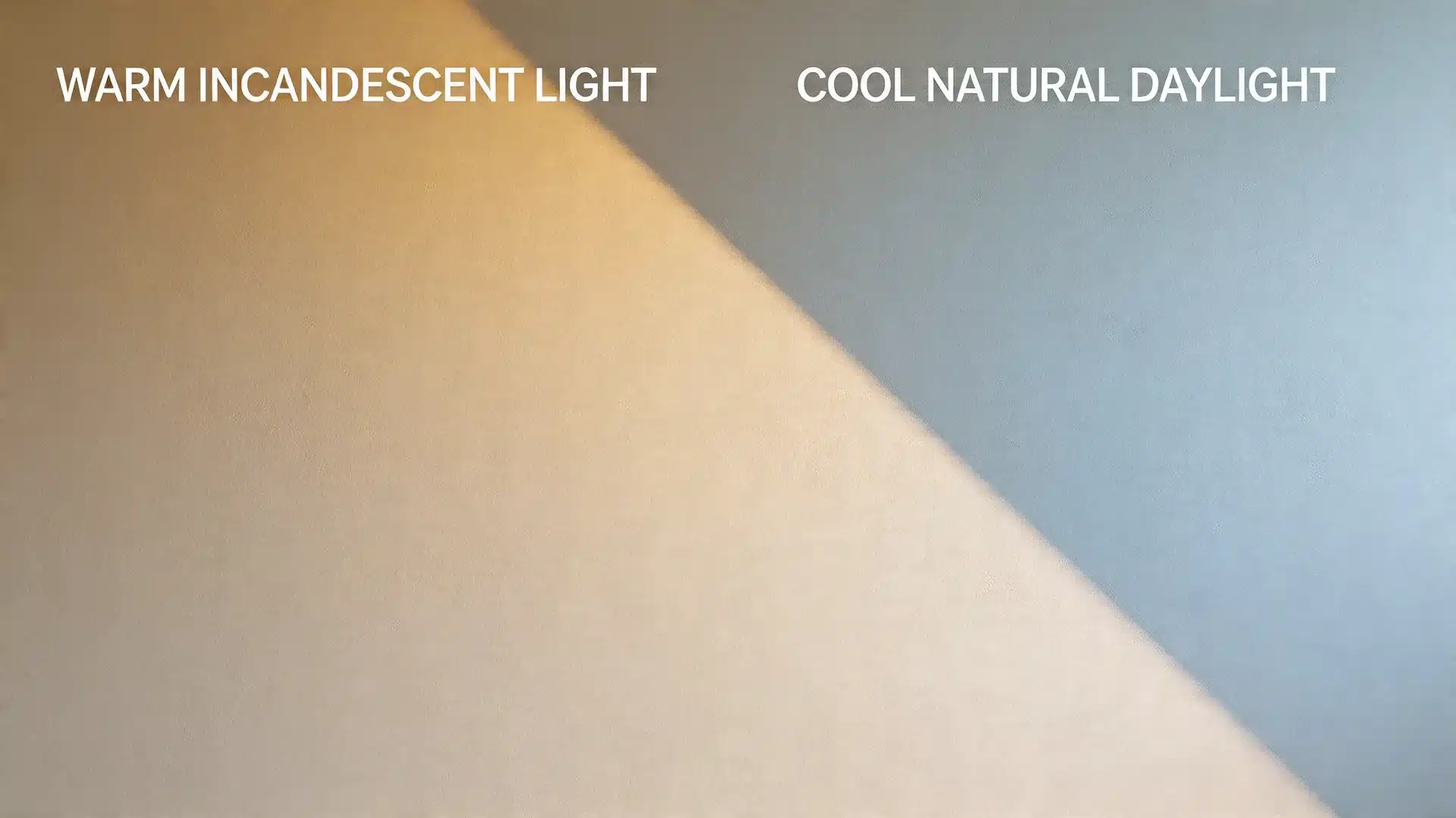
Benjamin Moore produces a richer, more layered look that reads differently under natural and artificial light, especially in matte and eggshell sheens.
Sherwin-Williams gives a more uniform finish across large flat walls, making it a stronger pick for open-plan spaces where visual consistency matters more than tonal depth. Both deliver clean results, but the finish character differs.
5. Price and Real Value
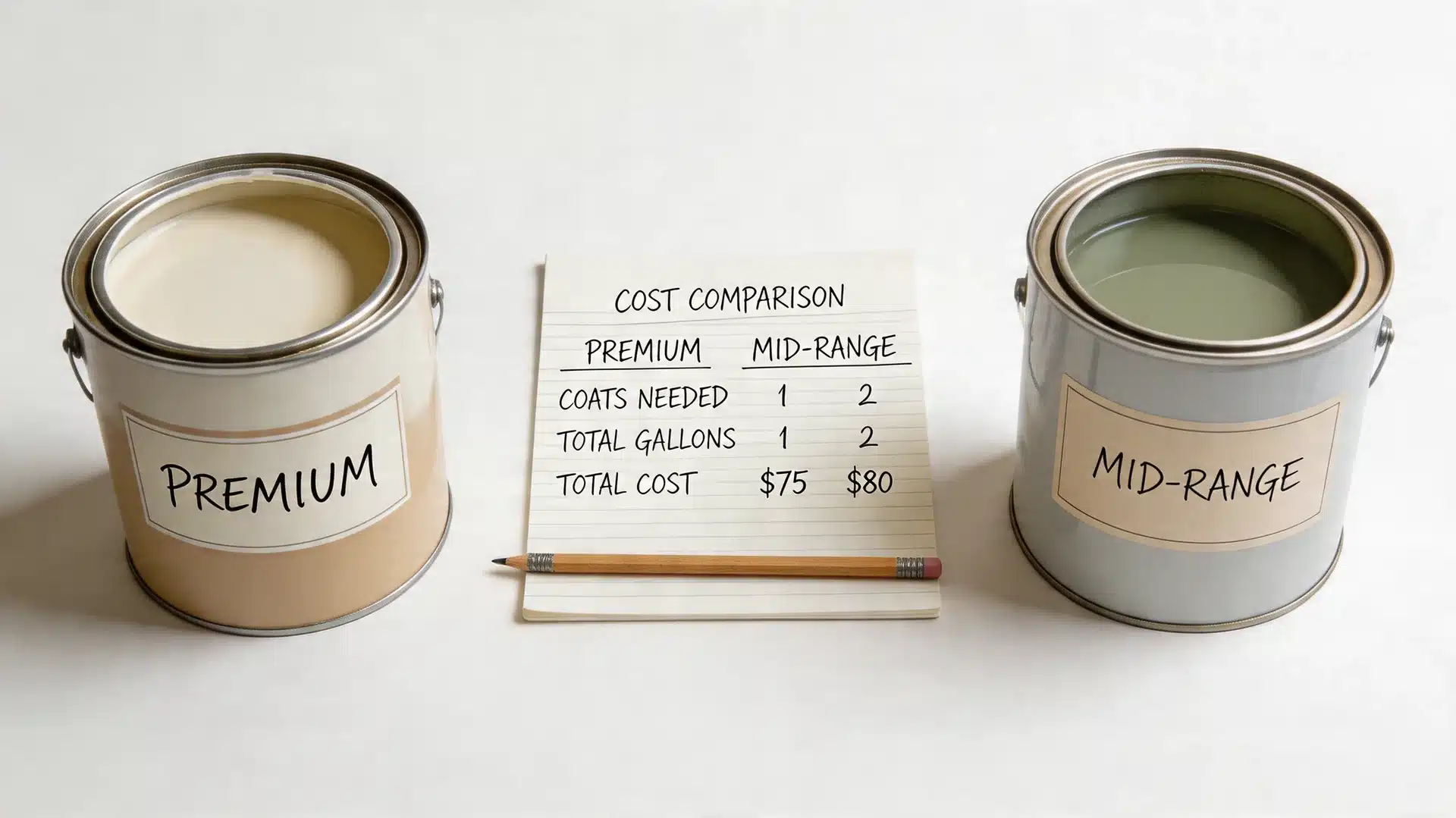
Benjamin Moore costs slightly more upfront, but that gap reflects fewer coats in most situations.
Sherwin-Williams runs frequent promotions, sometimes 30 to 40% off, which can bring premium lines to a comparable price point.
The real value depends on coat count: a cheaper gallon requiring three coats typically costs more in time and product than a pricier one that covers in two.
6. Color Selection
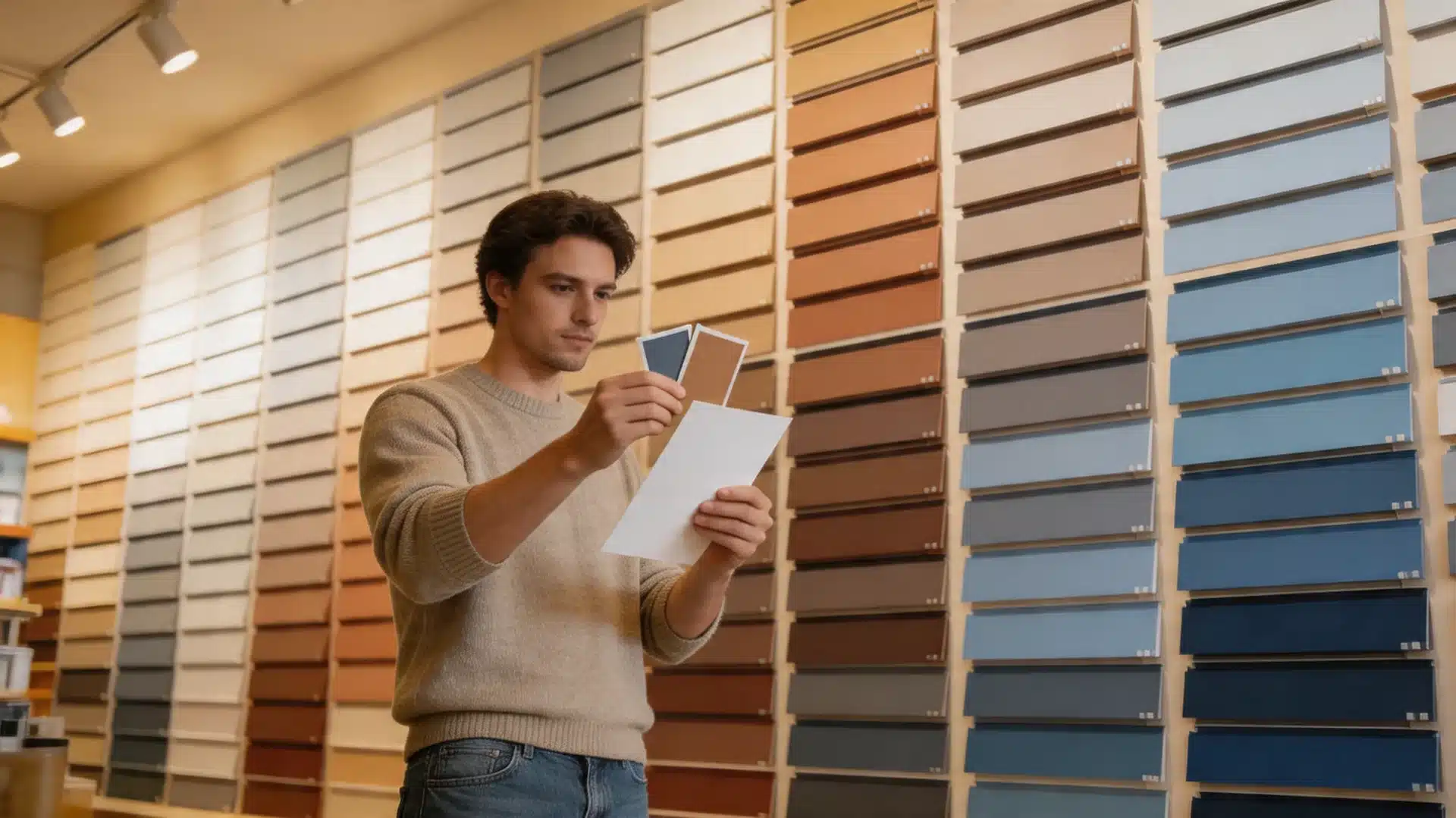
Benjamin Moore stands out for its neutral palette. Whites, greiges, and warm tones shift noticeably under different lighting, making color selection more precise.
Sherwin-Williams makes color matching fast and accessible, which is a practical advantage when replicating an existing shade or referencing another brand’s palette. Both brands offer thousands of colors, so volume alone will not be the deciding factor here.
One underrated advantage Benjamin Moore holds is their ColorReaders tool, which scans surfaces in your home and recommends paint colors that harmonize with your existing materials.
For anyone who has struggled to pick a wall color that works with fixed elements like wood floors or granite countertops, it is genuinely useful.
No single factor determines the better brand. It always depends on your specific surface, your color choice, and how much time you realistically have. The sections ahead break that down further.
What Contractors Prefer: and Why
The professional split comes down to practicality rather than brand loyalty, and most experienced contractors will tell you that directly.
Sherwin-Williams tends to be the default for exterior and commercial work. It holds up well against weather, traffic, and time, and the dense store network makes sourcing large orders straightforward.
For interior residential projects, though, a significant portion of those same contractors quietly switch to Benjamin Moore. The reason comes up consistently: finish quality and client satisfaction.
When a homeowner is standing in a freshly painted living room under afternoon light, the depth and smoothness of the finish is what they notice, and Benjamin Moore delivers that more reliably.
The working rule of thumb from the trade is simple: reach for Sherwin-Williams where durability and weather resistance take priority, and reach for Benjamin Moore where the final appearance is what the client is actually paying for.
Product Lines: A Quick Reference
Both brands organize their products into clear tiers, each built for a different project type and budget. Knowing which line does what saves time and prevents an expensive misstep at the store.
Benjamin Moore
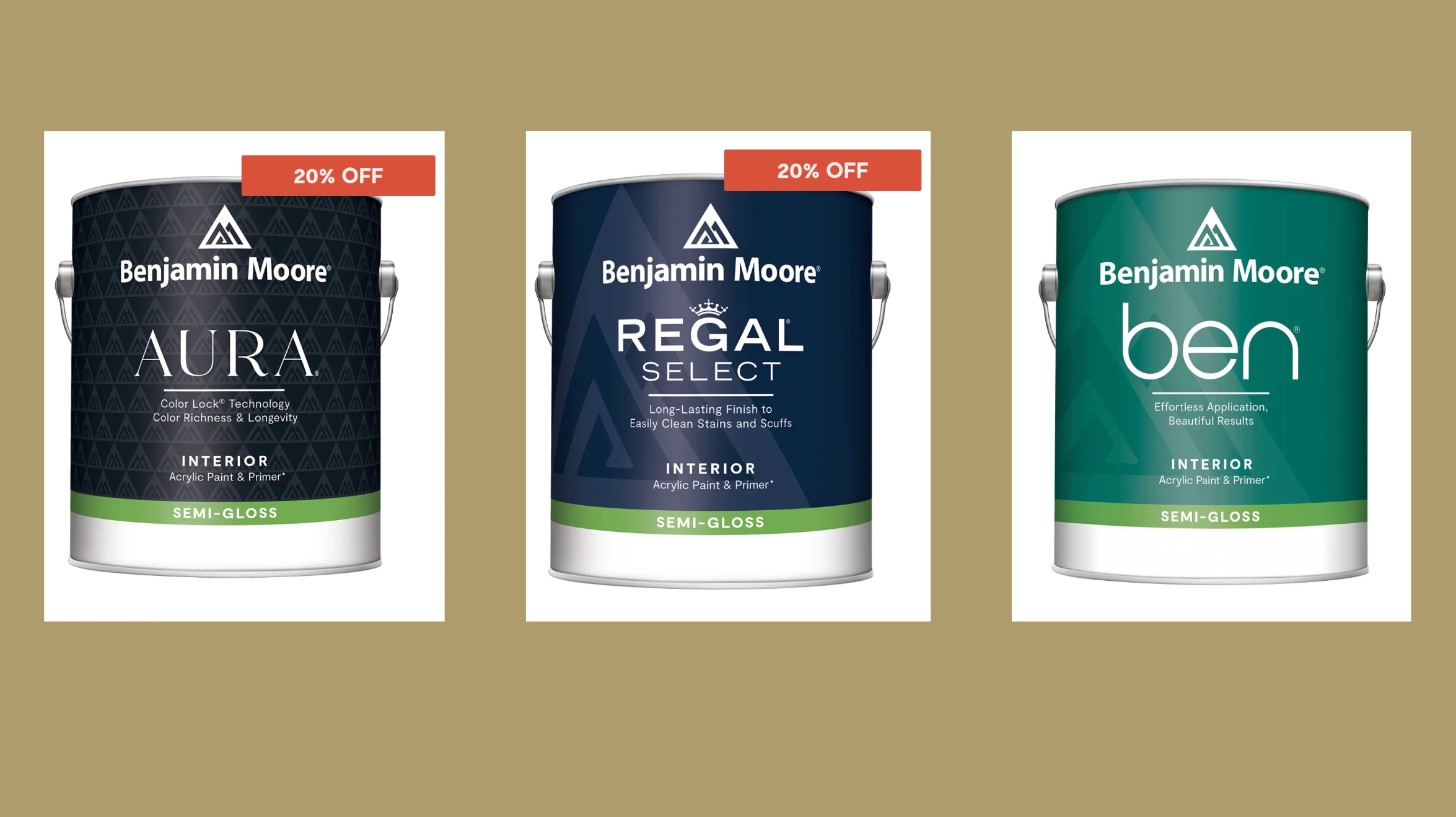
Benjamin Moore keeps its lineup focused on three core interior options. Each one targets a different budget and performance level, so the right choice depends on how much coverage and finish quality matter to you.
| Line | Available Finishes | Best For | Typical Coat Count |
| Aura | Matte, Eggshell, Satin, Semi-Gloss | Premium interiors, rich color payoff | 1 to 2 coats |
| Regal Select | Flat, Matte, Eggshell, Low Luster, Semi-Gloss, High Gloss | Everyday interior walls | 2 coats |
| Ben | Flat, Eggshell, Semi-Gloss | Budget-conscious interior projects | 2 coats |
Aura is the clear top-tier pick for interiors where the finish is the priority. Regal Select hits the sweet spot between performance and price, while Ben works well for straightforward repaints without a significant quality trade-off.
Sherwin-Williams
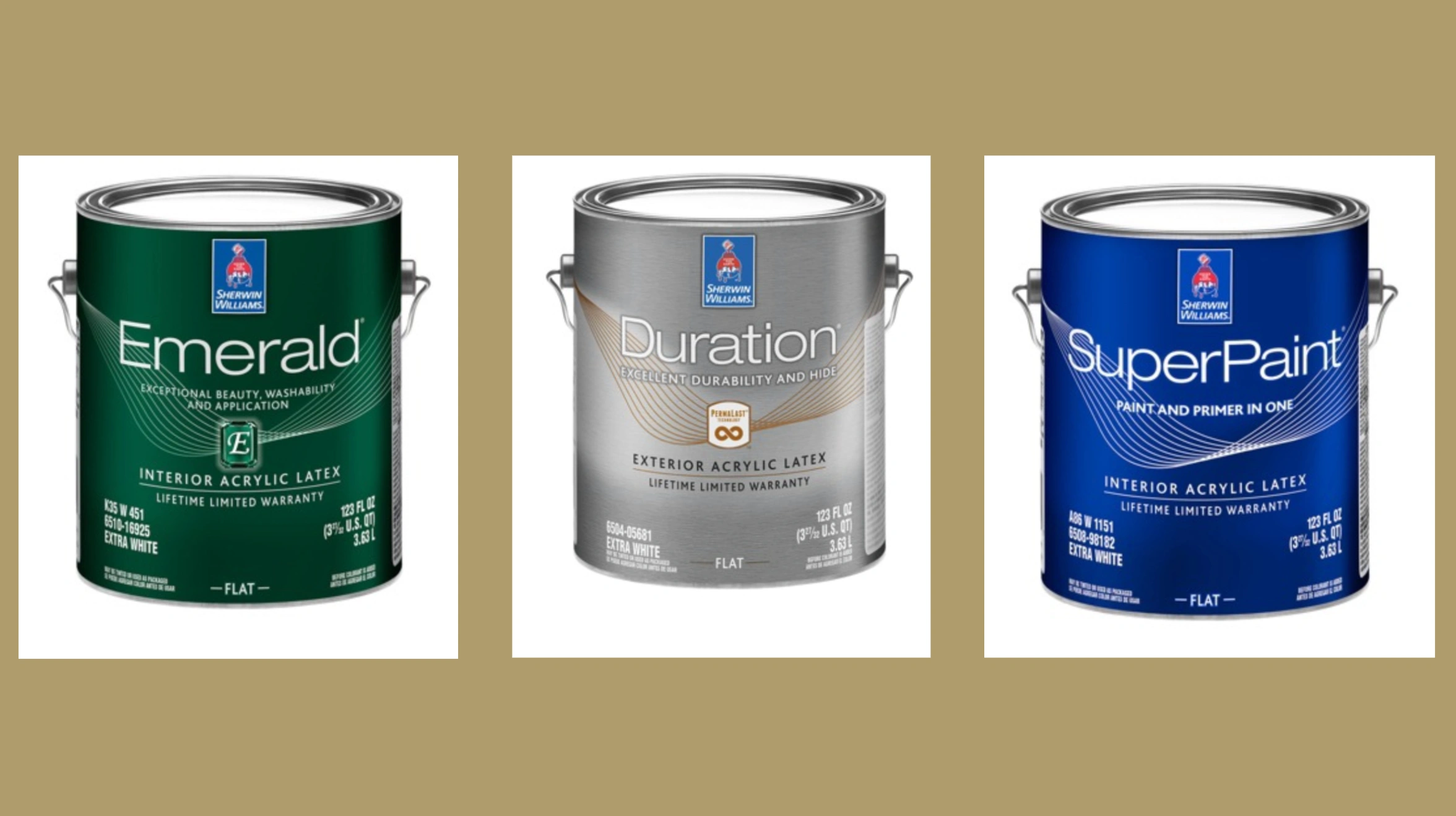
Sherwin-Williams covers more ground across interior, exterior, and everything in between. These three lines represent the most commonly recommended options across different project types, budgets, and durability requirements.
| Line | Available Finishes | Best For | Durability Level |
| Emerald | Matte, Satin, Semi-Gloss, Gloss | High-end interiors and exteriors | Excellent |
| Duration | Satin, Low Luster, Gloss | Exterior longevity in varied climates | Outstanding |
| SuperPaint | Flat, Satin, Semi-Gloss, Gloss | Value option, general use | Good |
Emerald is the strongest all-around option and frequently goes on sale, making it a compelling value at the premium tier. Duration is the workhorse for exterior projects and holds up exceptionally well in climates with freeze-thaw cycles or high humidity. SuperPaint covers most standard interior needs without stretching the budget.
What Homeowners and Painters Actually Say
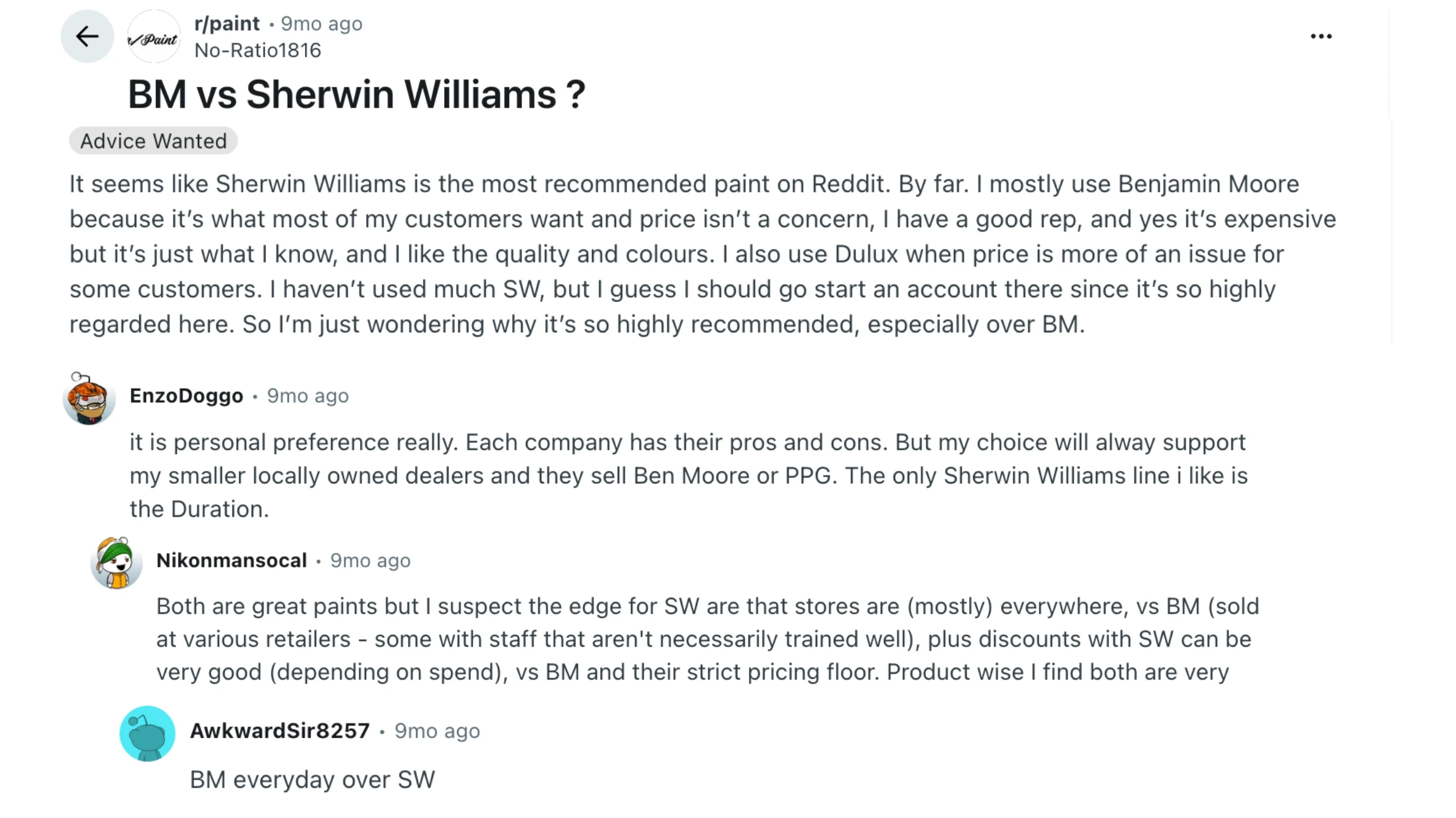
Online forums and Reddit discussions surface a few consistent patterns in the benjamin moore vs sherwin williams debate. Benjamin Moore earns consistent praise for coverage and ease of application, with many users noting fewer coats and less hassle overall. The finish is often described as polished without being flashy.
Sherwin-Williams receives strong reviews for durability, particularly for exterior projects in humid climates and areas with intense sun exposure. Some long-term Sherwin-Williams users have noted a decline in mid-range coverage, likely related to adjustments around VOC regulations.
These are the questions I hear most often from people who have already taped the trim and are trying to make the final call.
Frequently Asked Questions
Is Benjamin Moore better than Sherwin-Williams?
Not across the board. For interior work and finish quality, Benjamin Moore is often the preferred choice. For durability and exterior applications, Sherwin-Williams holds a clear practical edge. The answer depends on the project.
Which paint lasts longer on exterior walls?
Sherwin-Williams generally holds up better in exterior conditions and under heavy scrubbing. Its Duration line is specifically built for climates with extreme temperature swings. Both perform comparably on interior walls under normal residential use.
Why do contractors prefer Sherwin-Williams?
Availability, consistent pricing, and long-term durability make it the practical default for professionals handling high-volume work across multiple project types. The store network means they can source paint quickly without waiting on special orders.
Does Benjamin Moore Aura cover in one coat?
Often, yes, particularly over similar base colors. The higher solids content in Aura gives it better hide on the first pass. Other Benjamin Moore lines like Regal Select typically require two coats for full, even coverage.
Which is better for interior walls?
Benjamin Moore delivers a cleaner, more polished finish with less effort. Its smoother application makes it more forgiving for those painting without professional experience, and the color depth is more noticeable in rooms with natural light.
Is Sherwin-Williams Emerald worth the price?
For high-traffic spaces and exterior surfaces, yes. It offers comparable durability to premium Benjamin Moore lines and frequently goes on sale at 30 to 40% off. At sale price, Emerald is difficult to beat for demanding applications.
Which paint brand is better for kitchen cabinets?
Sherwin-Williams Emerald Urethane is a common professional choice for cabinets given its hardness and scrubbability. Benjamin Moore’s Advance line is the comparable pick and is well regarded for a smooth, factory-like finish. Both outperform standard interior wall paint on cabinets.
Which One Should You Choose?
Neither brand is a wrong choice, but each fits a different type of project. For interior work where the finish is the main event, Benjamin Moore is consistently the stronger pick.
The coverage, application feel, and final result tend to justify the slightly higher upfront cost, and the difference is most visible in rooms with natural light, where a well-applied coat of Aura or Regal Select simply reads better on the wall.
For exterior surfaces and high-traffic spaces where paint takes real punishment, Sherwin-Williams is the more practical choice. Its durability, washability, and wide store availability make it a reliable option for demanding conditions.
Timing a purchase around a Sherwin-Williams promotion can bring Emerald down to a genuinely competitive price, and for exterior work especially, that combination of durability and value is difficult to match at a similar tier.
If you are still undecided, here is the shortcut: if the room has significant natural light and color accuracy is your first priority, use Benjamin Moore Aura. If you are painting a high-traffic space, an exterior surface, or you are working with a tight budget and can catch a Sherwin-Williams sale, go Emerald. For specific color decisions within each brand, the Sherwin-Williams Natural Choice review and the Debonair by Sherwin-Williams guide show how individual colors perform in real rooms. The same principle applies to navy paint comparisons where brand choice intersects with undertone behavior.
Benjamin Moore vs. Sherwin-Williams: Which Paint Brand Is Right?
Here is what I would tell you at the paint counter: if you are painting an interior room with good natural light and you want the color to look exactly right at 7am and 7pm, go with Benjamin Moore Aura.
If you are tackling a high-traffic hallway, a kitchen, or exterior siding that will face real weather, Sherwin-Williams Emerald is the more durable and often better-value choice when bought on sale.
The benjamin moore vs sherwin williams decision is not about which brand is better overall. It is about matching the right paint to what your specific wall actually needs.
Start with your room type and your light conditions, then choose the line that fits. Order a sample, test it on the wall before you commit to a gallon, and let it dry fully before you judge the color.