

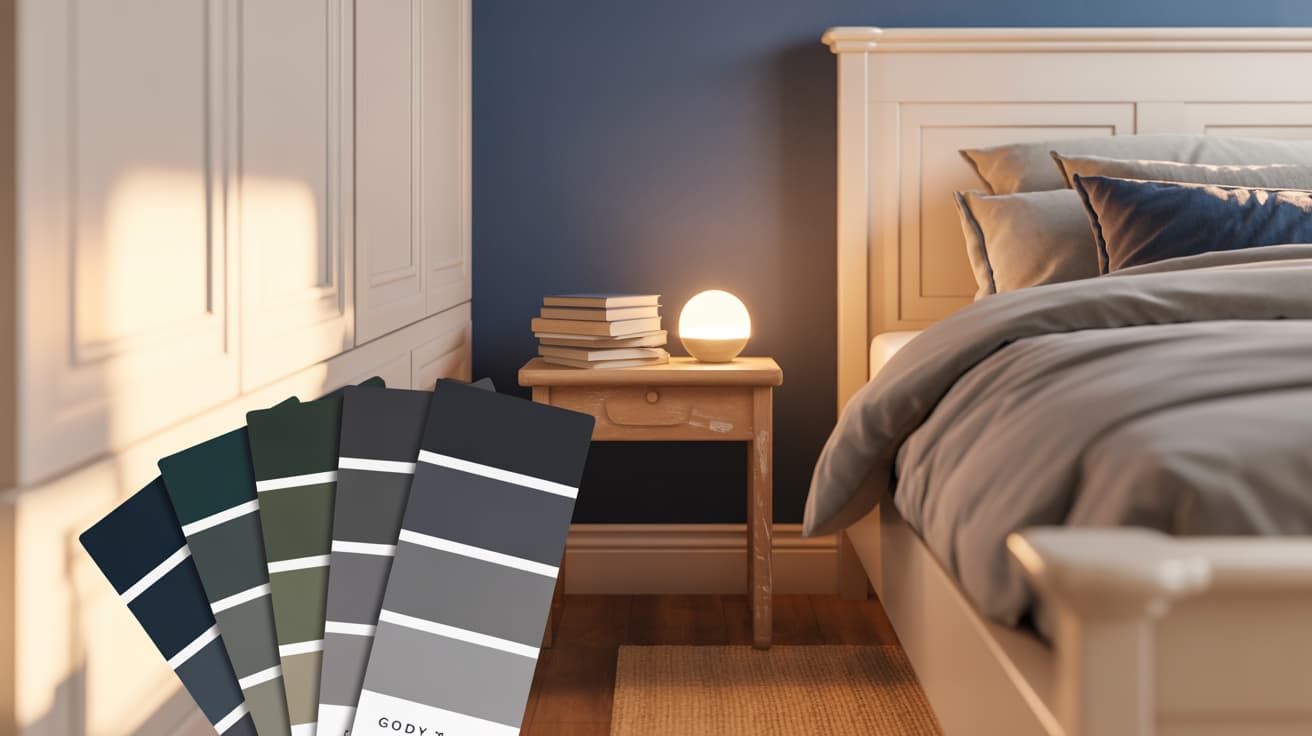


The right boys room paint ideas can turn a plain, forgettable space into somewhere your child genuinely wants to be. I’ve watched it happen with a single color change: a navy wall goes up, the white furniture suddenly pops, and a room that felt like a holding area becomes the place your kid wants to spend every afternoon.
Paint is the cheapest lever in any room, and in a boy’s bedroom, it’s the one that moves the needle most.
This guide covers 13 specific color directions, an age-by-age breakdown, the technical factors that determine how a color actually looks once it’s on the wall, and the painting techniques worth knowing before you open the first can.
What Makes Paint Colors for a Boy’s Room Actually Work?
Not every color that reads well on a chip translates to a wall. A few real factors decide whether a color succeeds in practice.
Start with the room’s orientation and light exposure. A north-facing room will pull any color cooler and darker than the chip suggests.
A south-facing room does the opposite, so a shade that looks muted in the store can feel intense once the afternoon sun hits it. Second, the color needs to work with everything already fixed in the space: the flooring, the trim color, the furniture finishes. Third, pick something with staying power.
Navy, gray, and forest green carry a boy from age six to sixteen without feeling either babyish or jarringly adult. Finally, check how it looks under the room’s artificial lighting, not just in daylight. Choosing the right paint color comes down to how it performs across those real-world conditions, not how it looks on a Saturday afternoon in a showroom.
13 Boys Room Paint Ideas to Fit Any Style and Personality
Here’s a close look at each color direction, what it actually delivers in a real room, and how to use it without it becoming a mistake you’re repainting in two years.
1. Bold Navy Blue for a Classic Look
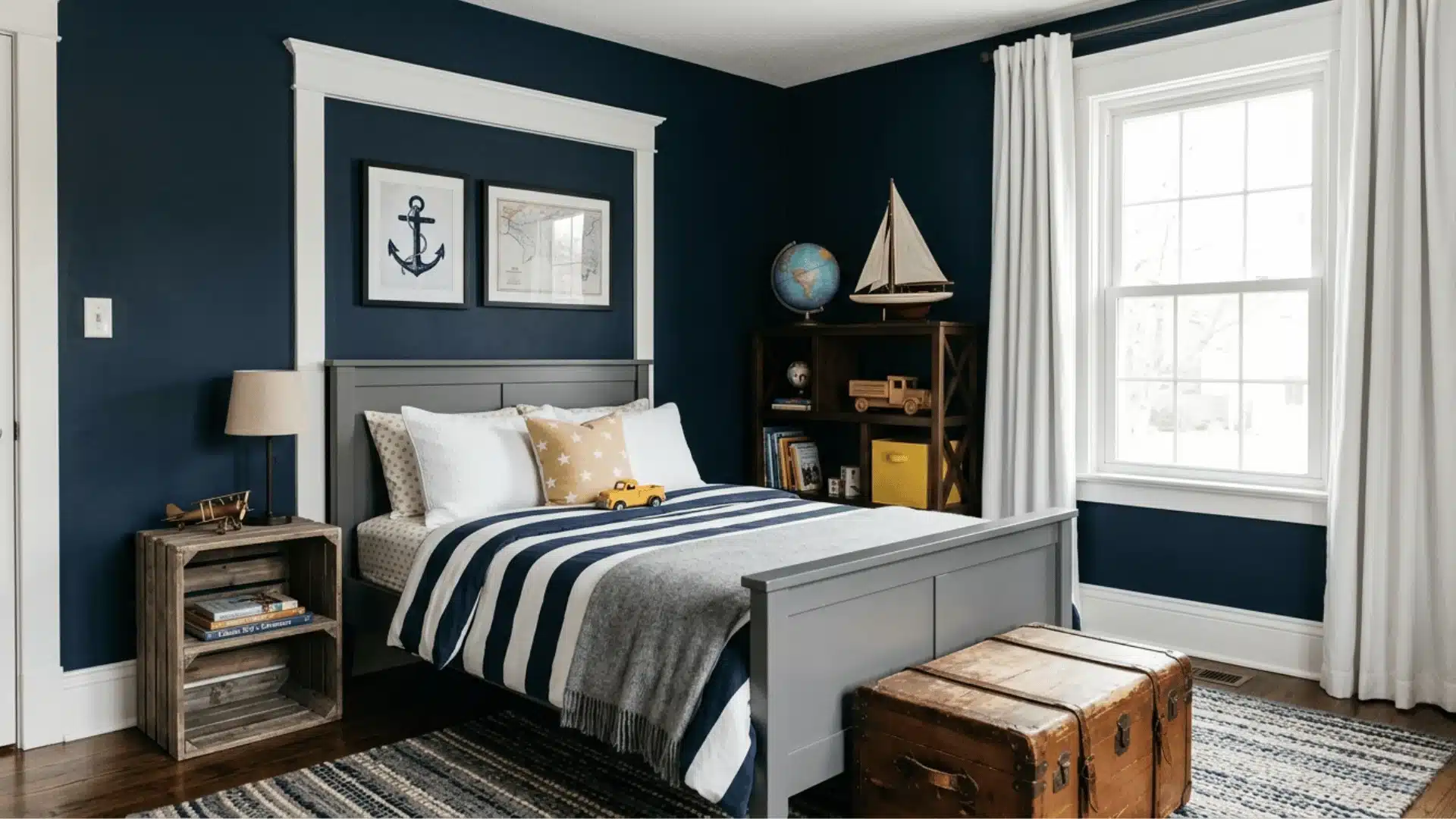
Navy blue is the most consistently successful choice on this list. It adds depth and visual weight without tipping into oppressive, and it reads as finished rather than childish from the moment the second coat dries.
Pair it with white trim and gray furniture and the contrast does the work for you. Yellow accents, brass hardware, or warm wood tones all read well against it.
Navy scales well with the child too: what works in a six-year-old’s room still looks intentional when he’s fifteen.
2. Soft Gray for a Calm, Neutral Backdrop
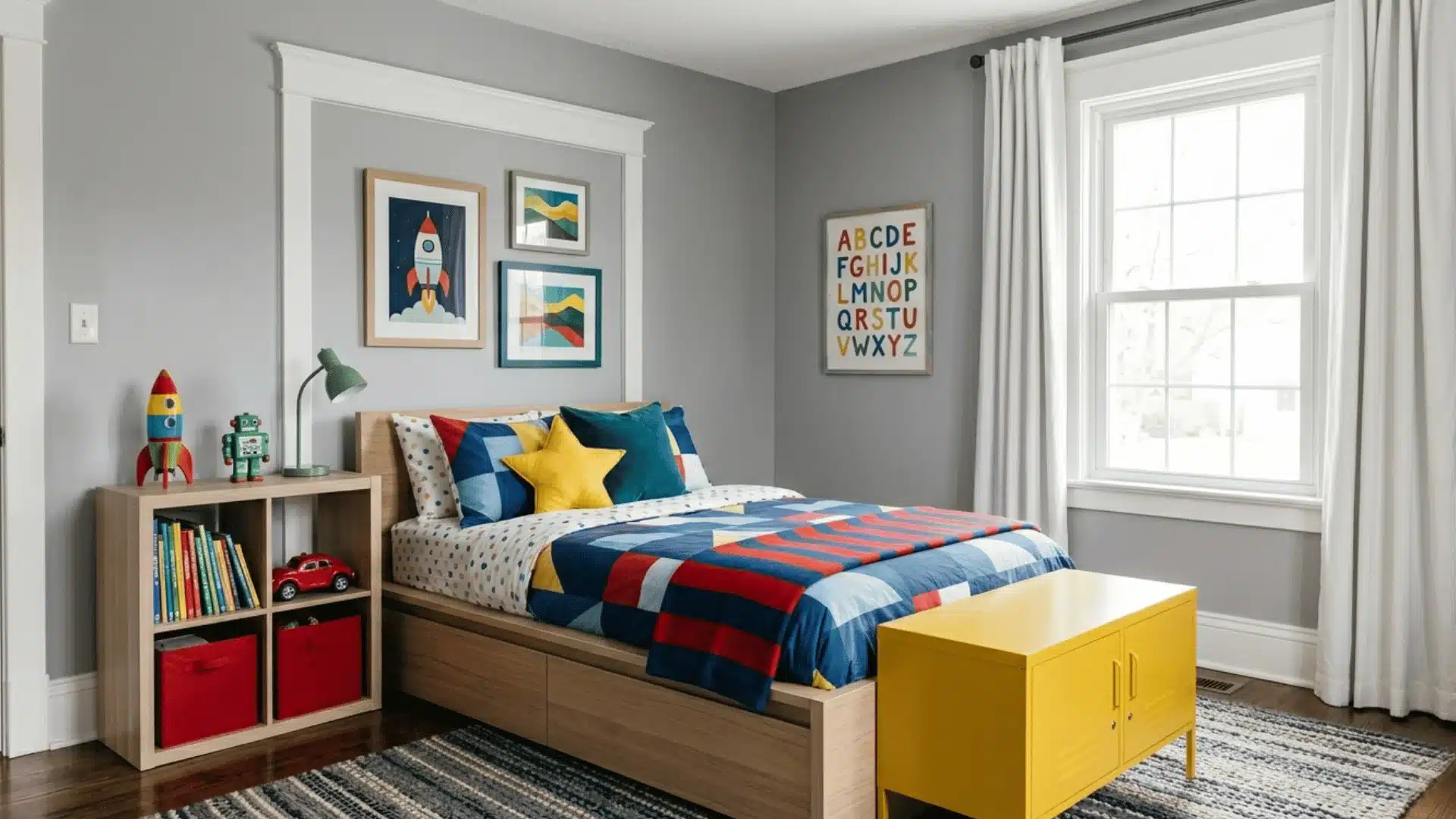
Gray walls are the most forgiving choice on this list. They sit behind colorful bedding, posters, and accessories without competing, and they don’t force a decision on every future purchase.
Medium grays with slight warm undertones perform best in kids’ rooms because they avoid the clinical quality of a cool blue-gray. The practical advantage: when his interests shift from dinosaurs to basketball to music, the walls stay current. You change the accessories, not the room.
3. Sky Blue for a Bright and Airy Feel
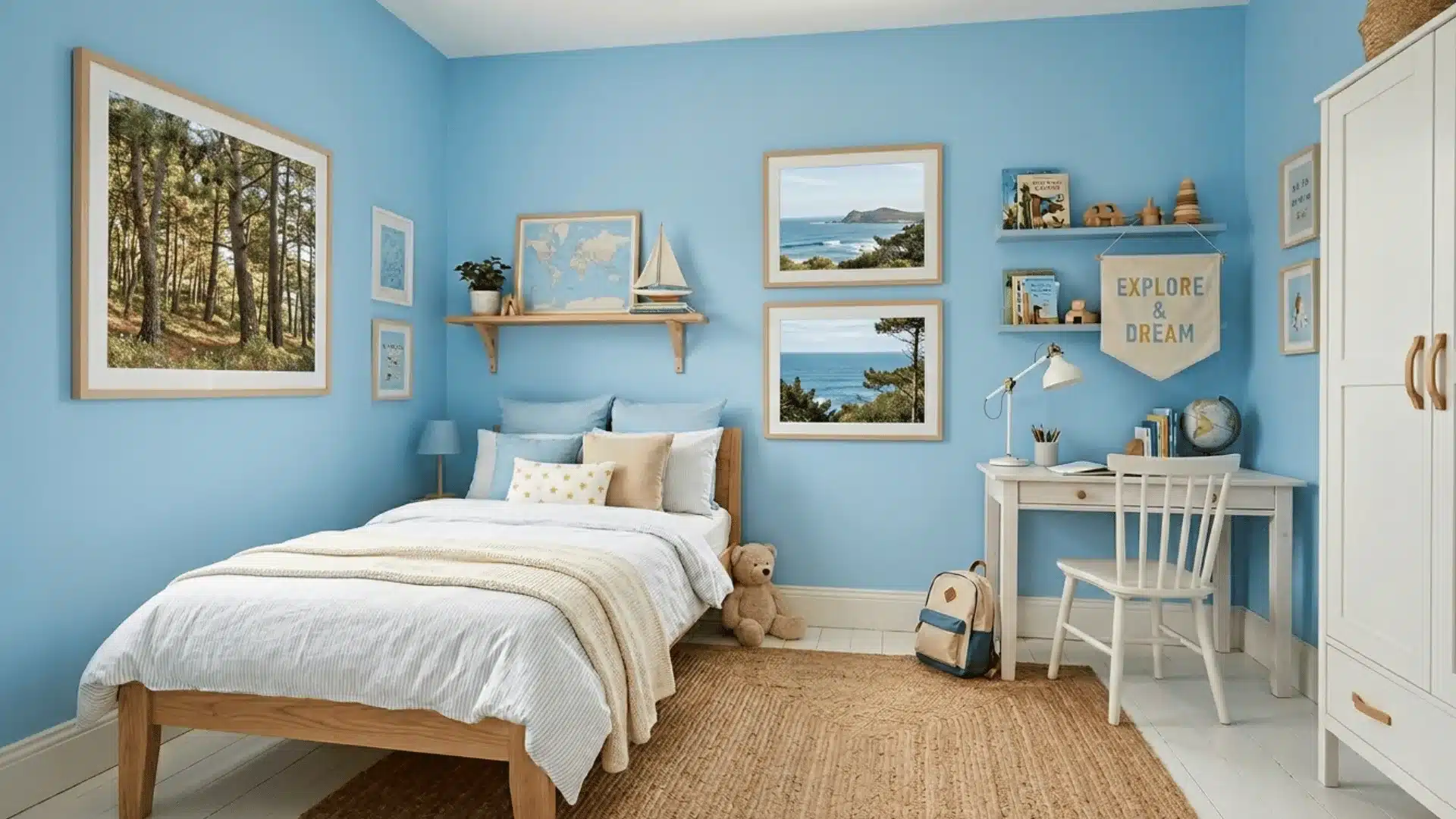
Sky blue does one thing exceptionally well: it opens a small room up. If you’re working with a box bedroom under 150 square feet, this is the color that makes the walls feel like they’ve stepped back a foot.
It pairs well with white, soft yellow, and warm beige, and it complements small bedroom layout strategies that already rely on keeping the visual field light and uncluttered. In rooms with limited windows, it compensates by keeping the atmosphere bright rather than dim.
4. Sage or Mint Green for a Refreshing, Natural Touch
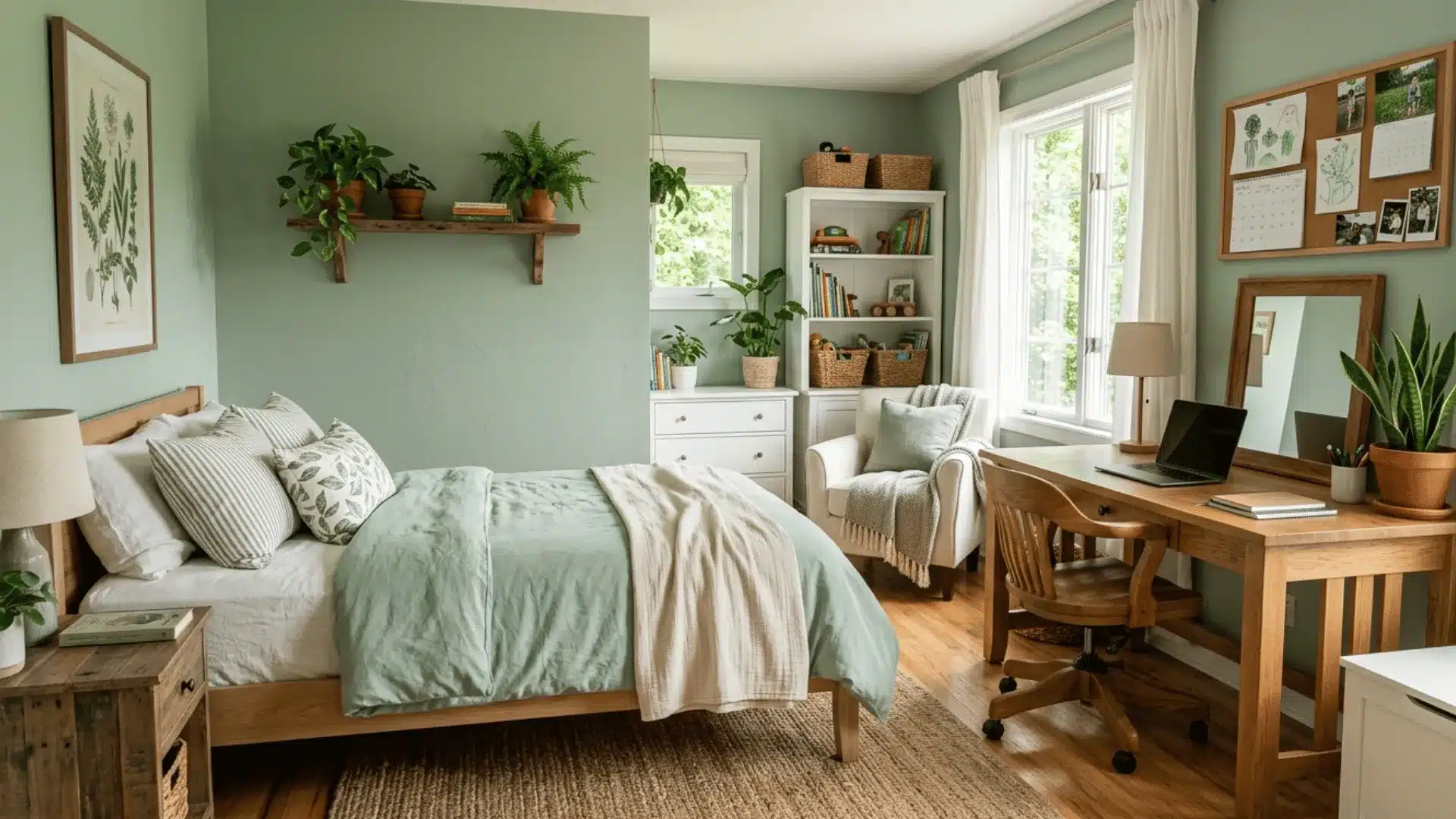
Green is one of the few colors that genuinely supports sleep and focus. Sage in particular sits in a useful middle ground: not so muted it reads like beige, not so saturated it demands attention.
It pairs naturally with raw wood furniture, earthy textiles, and white trim. If you want a room that works for both rest and homework without adjusting the mood between activities, a warm sage is one of the most practical color choices here.
5. Earthy Terracotta for a Warm, Cozy Feel
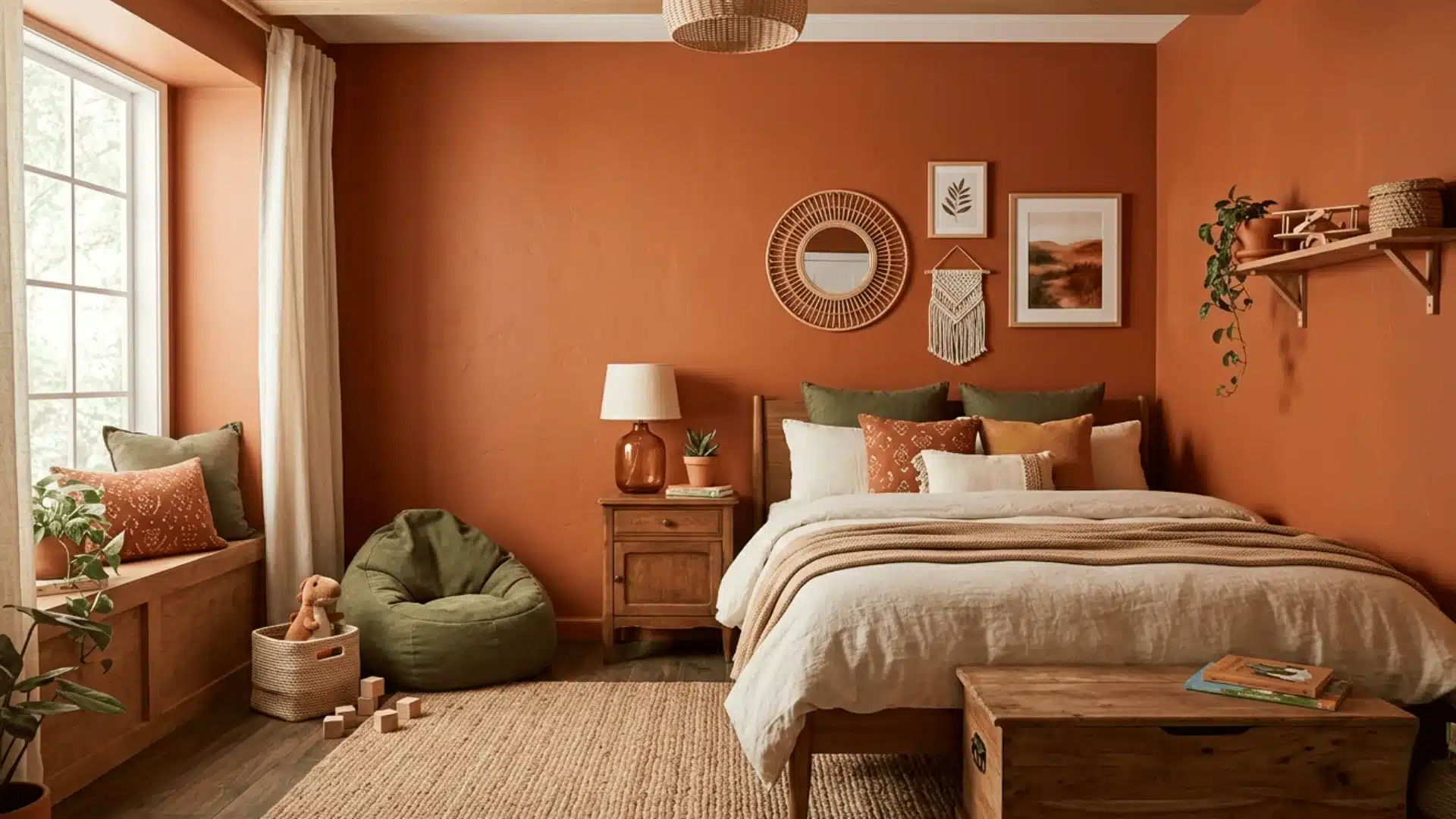
Terracotta reads warm, grounded, and slightly unexpected in a boy’s room, which is exactly why it works. It pairs with cream, tan, and olive well, and natural rattan or wooden furniture pulls the palette together without much effort.
The caveat is light: terracotta needs a room with decent natural light. In a dim, north-facing room it can veer toward muddy. Get it under the room’s actual light conditions before committing to a full tin.
6. Dark Charcoal for a Sleek, Mature Room
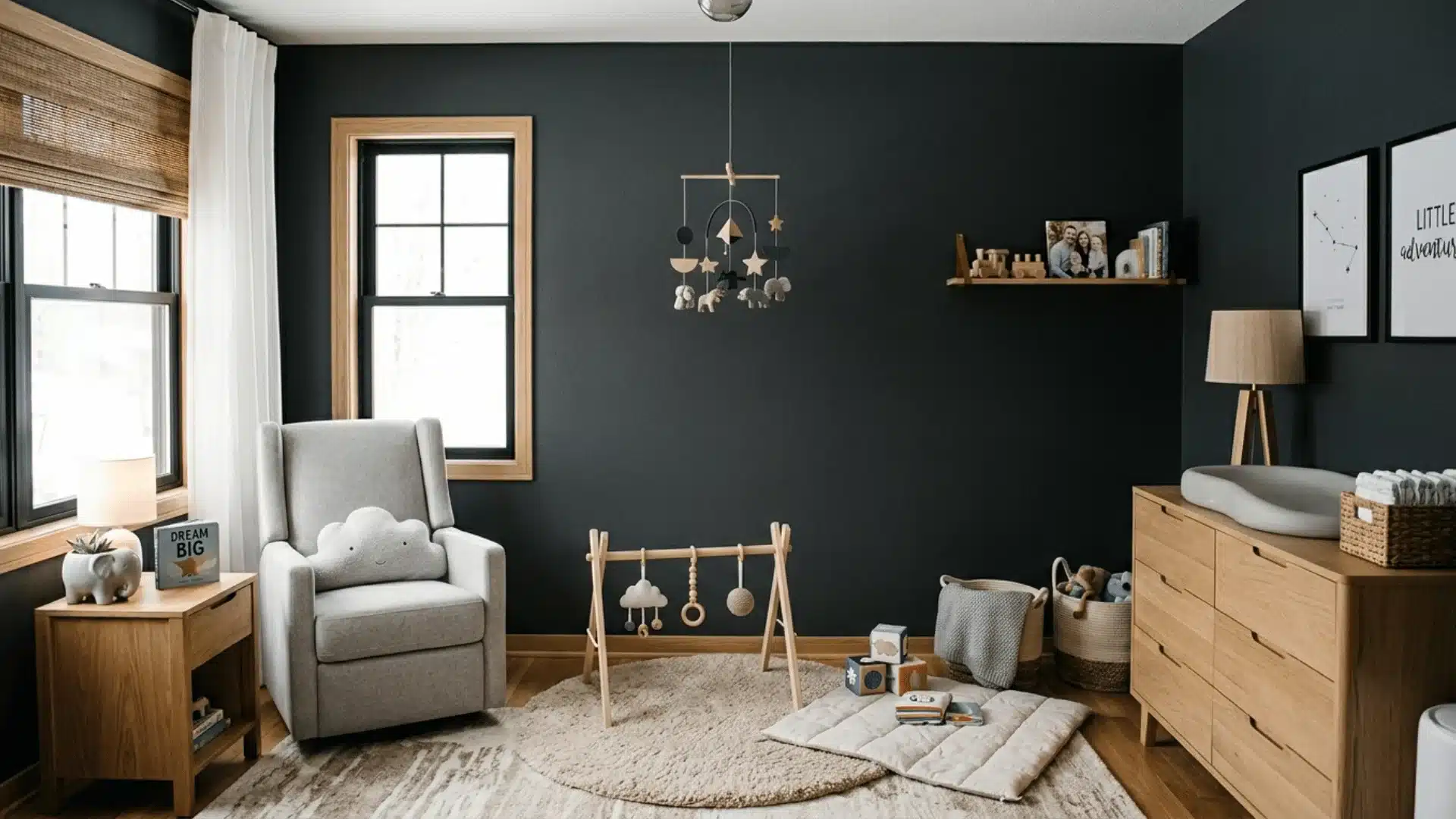
Charcoal is the right call for older boys, roughly ten and up, who want a room that doesn’t look like it belongs in a children’s furniture catalog.
The key to making it work is contrast: light-colored furniture, white or off-white trim, and at least one source of warm artificial light to prevent the room from feeling cold after dark.
Metallic accents, a desk lamp with a warm bulb, and light bedding all bring it back. Done right, it feels like a personal retreat rather than a bedroom.
7. Bright Orange for Energy and Imagination
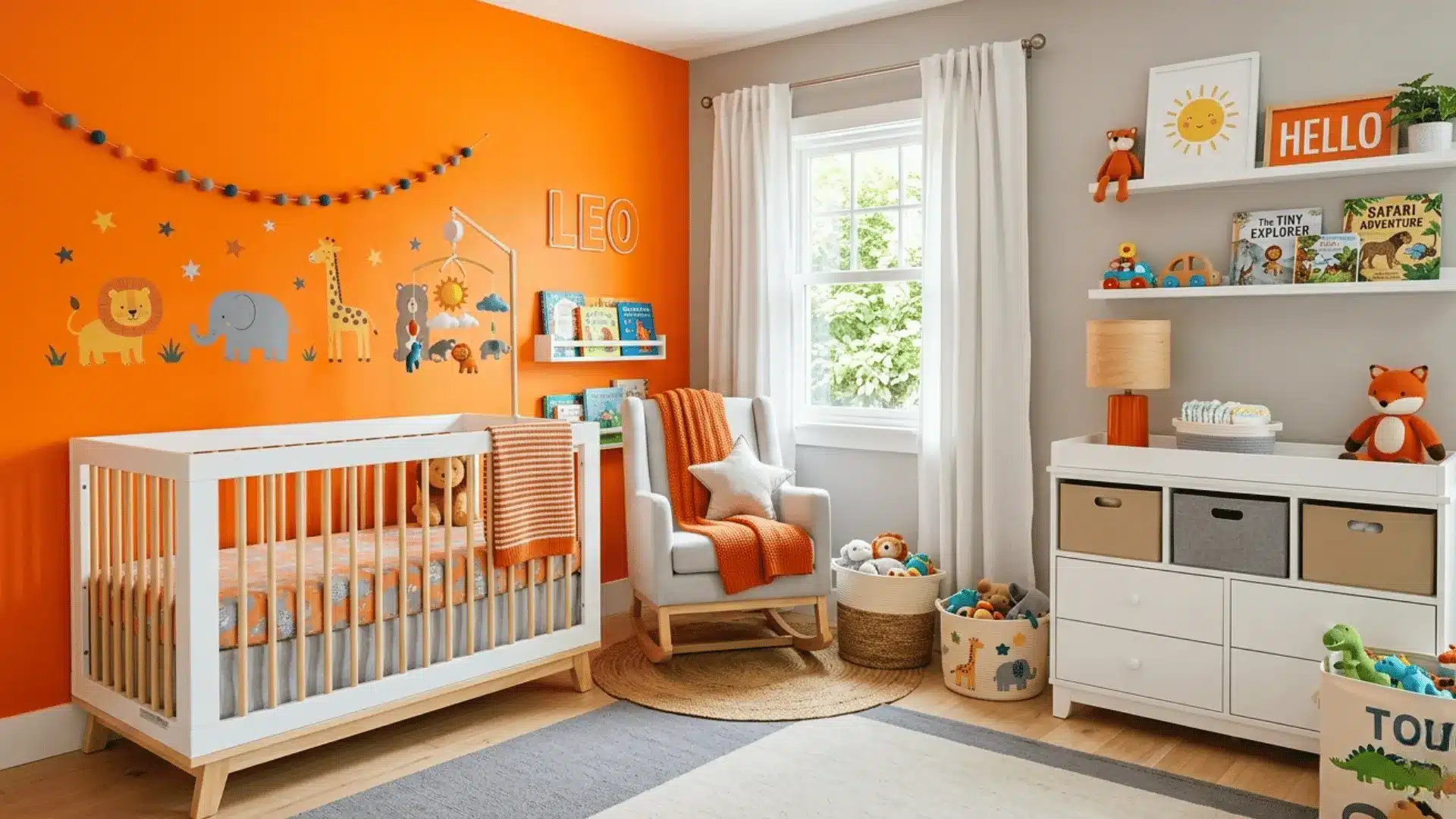
Use orange as a feature wall rather than all four walls. It stimulates energy and creativity, which is genuinely useful in a space designed for play and imagination, but a full-room orange application is difficult to live with after the first week.
One wall in a warm burnt orange against three white or light gray walls gives you the impact without the fatigue. It suits younger boys well and pairs cleanly with gray, white, and natural wood.
8. Bold Red Accent Wall for a Sports Room
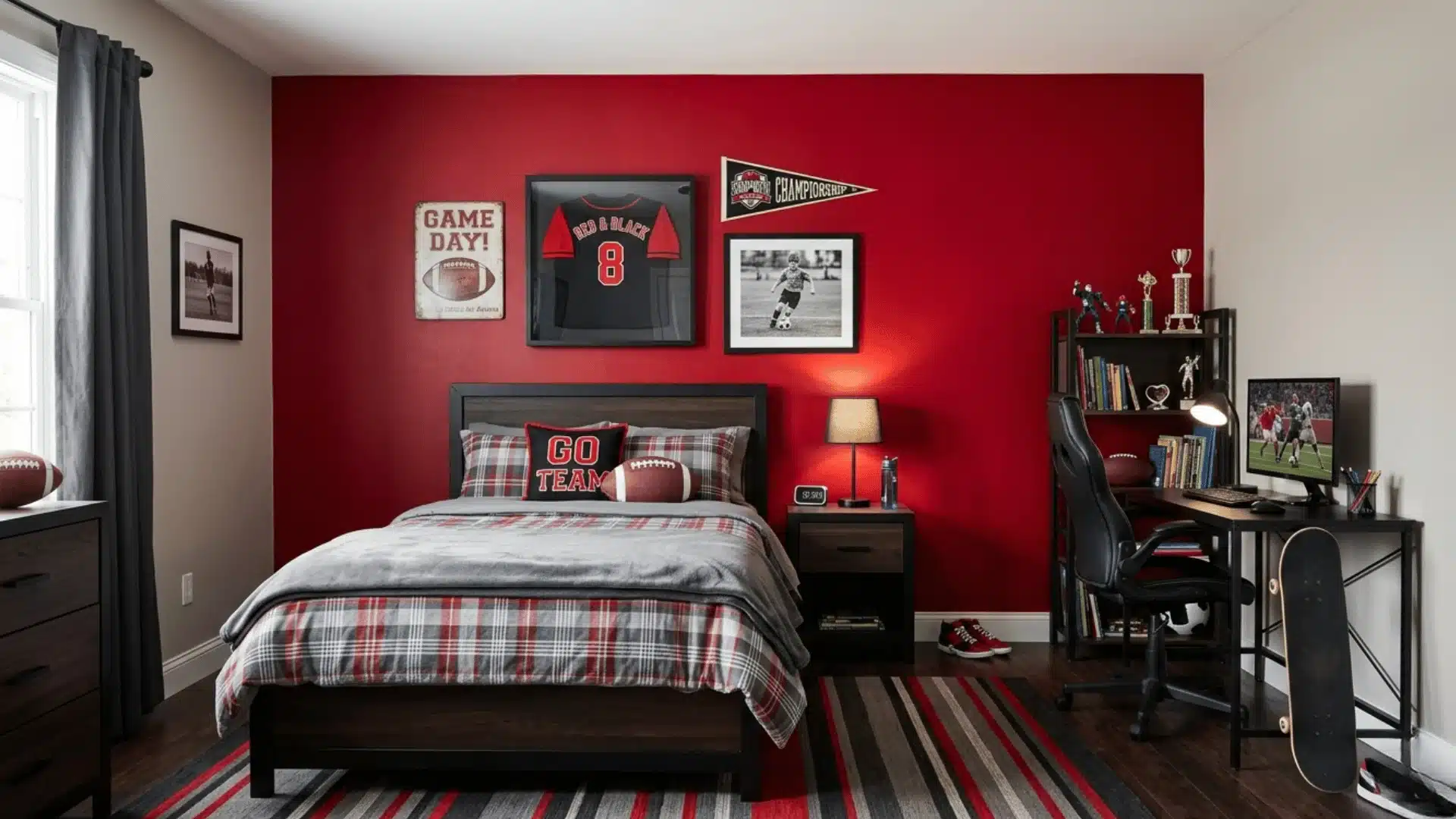
A red accent wall works best behind the bed or the main desk wall, anchoring the room’s focal point and adding intensity without overwhelming the space.
Dark wood furniture, black accents, and neutral surrounding walls keep it from feeling like a fast food restaurant. Red suits sports-themed rooms particularly well, where the energy of the color reinforces the theme rather than fighting it.
9. Cool Mint Green for a Focused Study Space
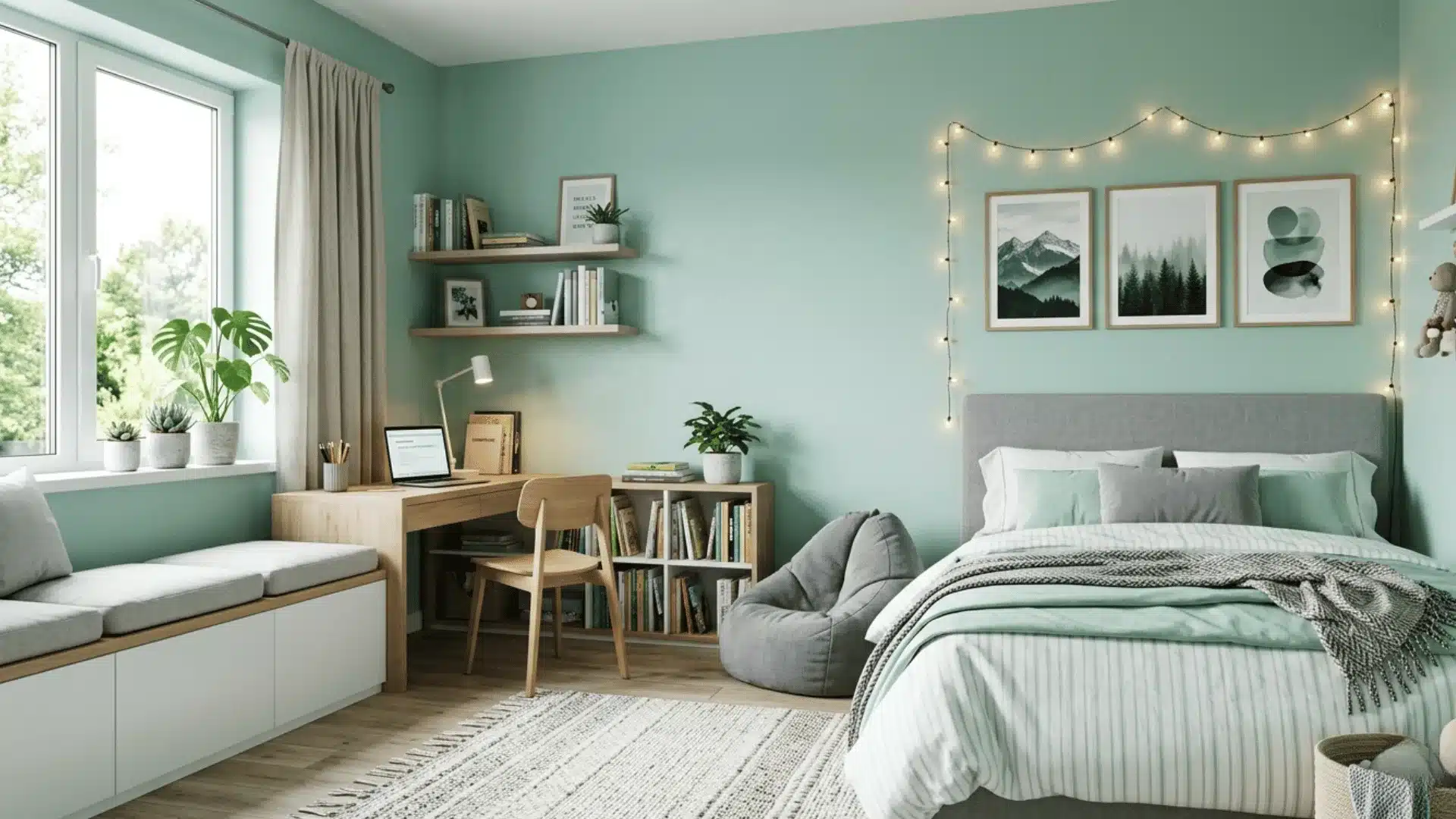
Mint is lighter and cooler than sage, and it handles a different function. Where sage feels warm and grounding, mint reads as clean and alert, which makes it well-suited for rooms where homework gets done.
It pairs with white, light wood, and soft gray without feeling clinical, and it keeps the room feeling open without needing an accent wall or additional color. For boys who need a calm environment to concentrate, it’s the most practical cooler-toned green on this list.
10. Dark Forest Green for an Adventure-Inspired Room
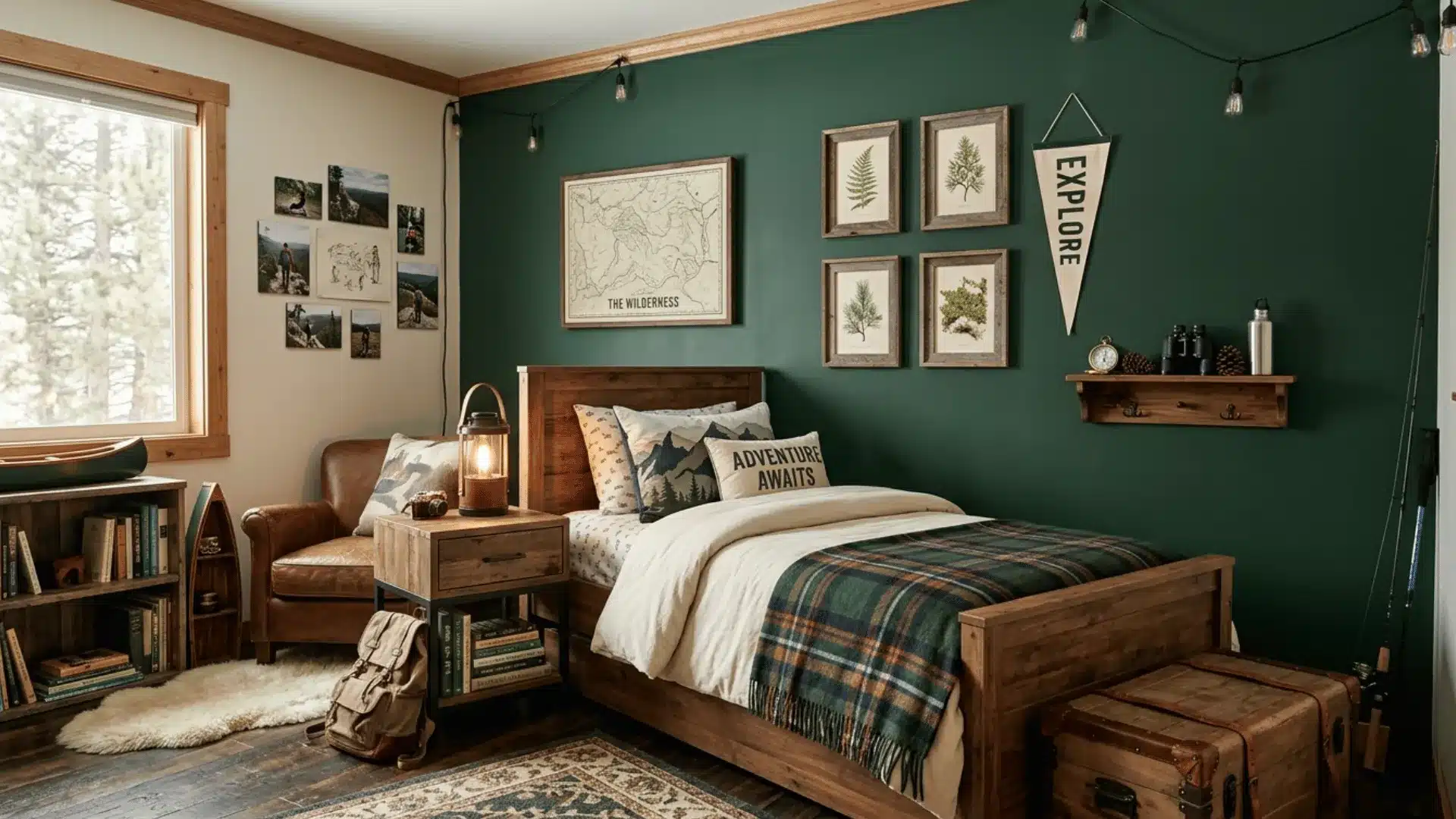
Forest green is the darker, richer sibling of sage. It has real depth, and in a room with good natural light it feels immersive rather than heavy. Warm wood tones, leather accents, and vintage-style maps or outdoor photography all work with it.
The surprise of forest green is how cozy it reads at night: unlike charcoal, it doesn’t go cold when the lights are low. For boys who love the outdoors, camping, hiking, or nature in any form, it connects the room to those interests without a single themed accessory required.
11. Light Taupe for a Subtle, Modern Look
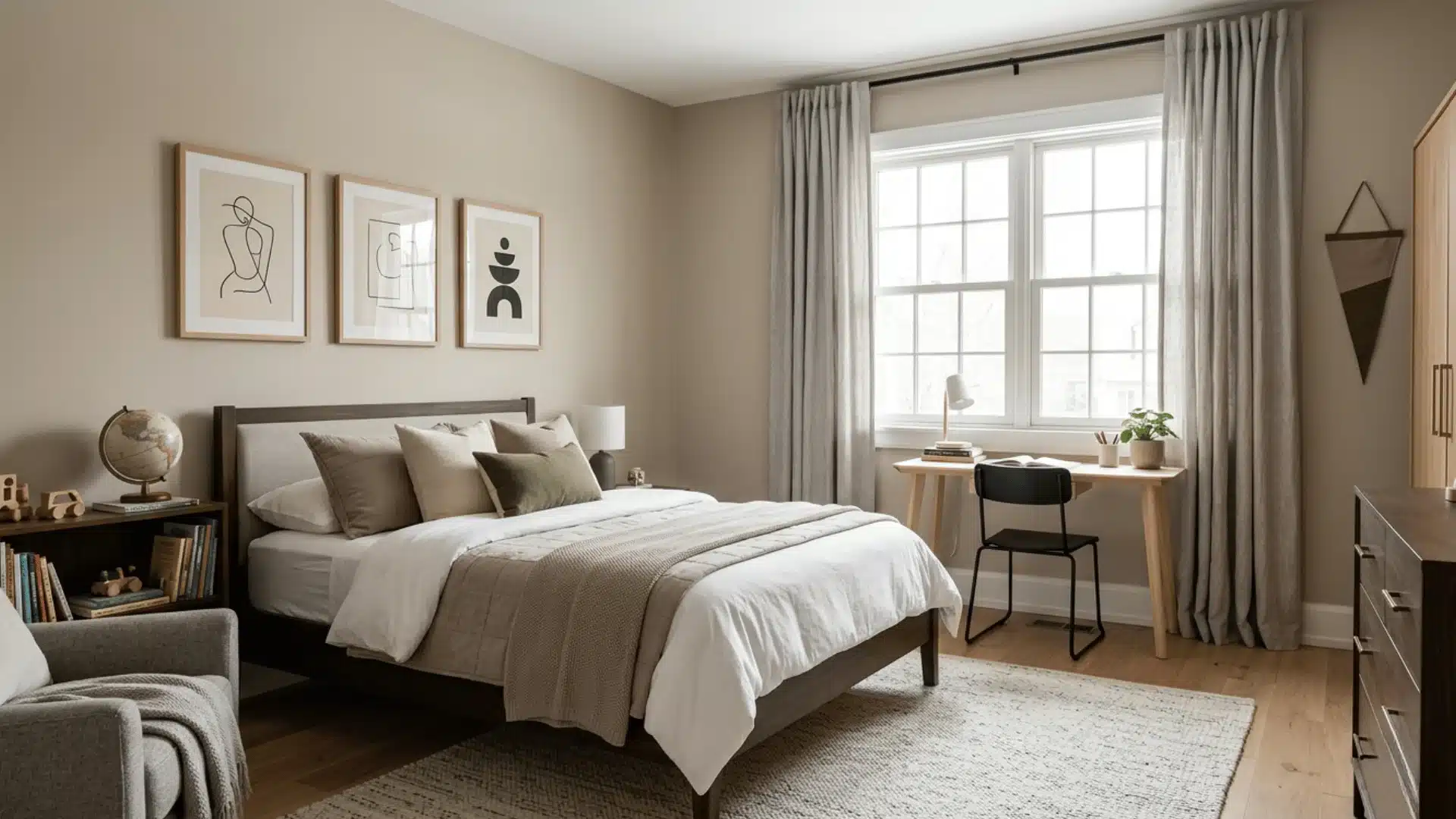
Taupe sits between beige and gray, which means it works with warm and cool furniture finishes without pulling in either direction. It’s an understated choice, not dramatic or immediately striking, but it ages better than most options on this list.
For parents who want a room that doesn’t require repainting every three years as tastes shift, taupe is a reasonable long-term investment. It keeps the room feeling grown-up and cohesive regardless of what goes on the walls or shelves.
12. Vibrant Yellow for a Cheerful, Light-Filled Room
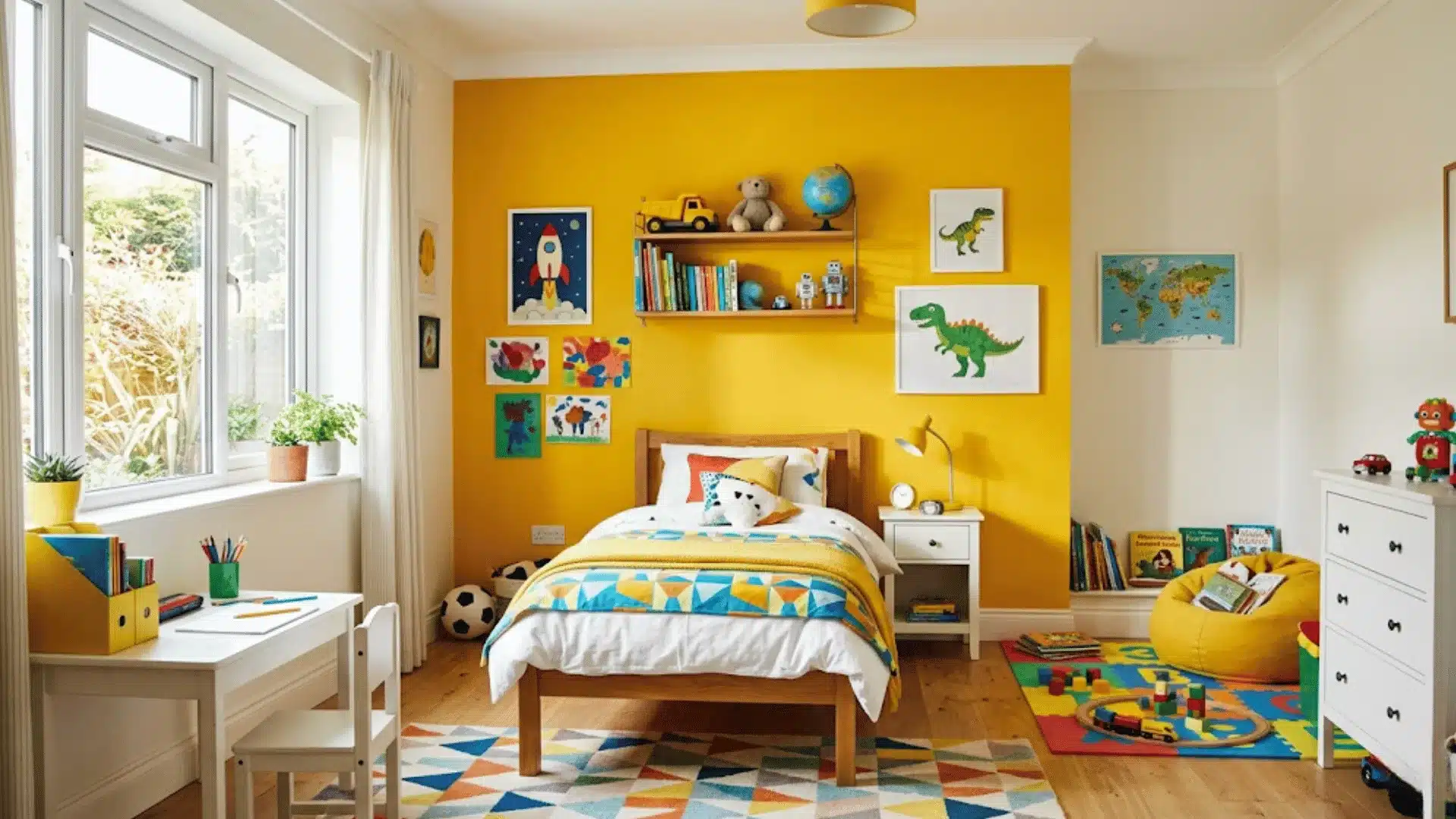
Yellow is the most effective option for rooms with little to no natural light. It compensates with a warmth that other colors don’t deliver, keeping the space from feeling dim and closed-in regardless of the time of day.
Use it as an accent wall balanced with white and neutral tones rather than all four walls. It suits younger boys particularly well and works with almost any furniture color scheme. The caution is saturation: a muted, warm yellow ages significantly better than a neon version.
13. Soft Lavender for a Unique, Creative Space
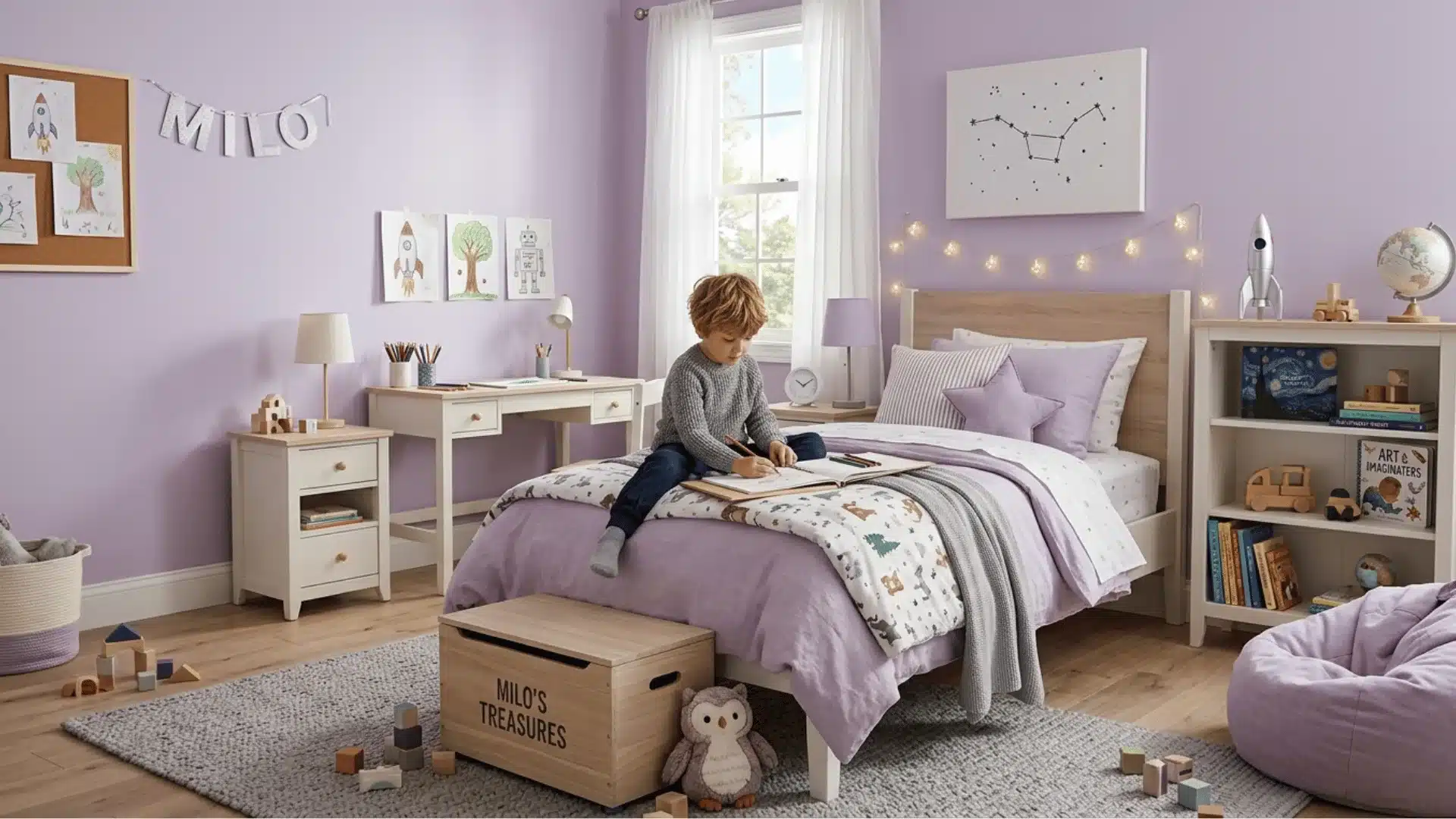
Lavender breaks the convention of boys room colors, and that’s the point.
For boys with artistic or creative personalities who want something personal and a little unexpected, soft lavender delivers a dreamy, calming atmosphere that encourages both rest and imagination. Pair it with silver, white, or soft wood.
The rule is keeping it soft: a muted lavender reads sophisticated; a saturated purple reads juvenile. Silver and white accents prevent it from tipping too sweet.
Best Paint Colors for a Boy’s Room by Age
The right boys room paint ideas change as your child does. A color that energizes a five-year-old can feel out of place in the same room when he’s twelve. This breakdown matches color direction to developmental stage and interest set.
| Age Group | Colors That Work | Why | Best Match |
|---|---|---|---|
| Toddlers (1–3) | Soft yellow, pastel blue, light green | Gentle stimulation without overstimulation | Sensory-driven, playful learners |
| Preschoolers (3–5) | Orange, sky blue, primary-toned accents | Bold colors spark imagination and play | Kids into toys, cartoons, creative storytelling |
| Early school age (6–8) | Navy blue, forest green, red accent | Defined colors match growing confidence | Sports lovers, outdoor adventurers |
| Preteens (9–12) | Charcoal gray, teal, olive green | Deeper tones reflect developing individuality | Gaming, art, science, nature exploration |
| Teenagers (13+) | Dark charcoal, slate blue, deep forest green | Moody, sophisticated shades suit a personal space | Music, sport, travel, minimalist aesthetics |
The pattern that holds across all of these age stages: keep the wall color flexible and bring strong personality in through bedding, posters, and accessories. Those are easy to swap. The walls aren’t.
Six Factors That Change How Paint Looks Once It’s on the Wall
Paint chips are misleading. The same color reads completely differently depending on the room it goes into. These six variables are why.
Room orientation: North-facing rooms cool colors down and deepen them. South-facing rooms intensify warm undertones, sometimes dramatically.
Artificial lighting: Warm incandescent or Edison bulbs pull yellow out of any color. Cool LEDs push greens and grays toward blue. Test a paint sample under the room’s actual light source, not daylight alone.
Wall texture: Textured surfaces deepen color through micro-shadows. What reads as medium gray on a smooth wall reads noticeably darker on a textured one.
Room size: Dark colors shrink a space. Light colors open it. This is physics, not preference, and it doesn’t change regardless of how much you like the darker shade.
Finish: Matte softens and lightens a color. Semi-gloss intensifies it and adds reflectivity. The difference between satin and semi-gloss finishes can make the same base color look like two different shades on the same wall.
Adjacent colors: Flooring, furniture, and trim all shift how the wall color reads. Never evaluate a paint sample in isolation from the room’s other fixed elements.
Painting Techniques and Finishes Worth Knowing
Choosing the right technique and finish is as consequential as the color itself. Here’s a quick reference before you make any decisions.
| Technique / Finish | What It Does | Best Application |
|---|---|---|
| Matte Finish | Non-reflective, hides wall imperfections | Calm, pared-back look; less durable under scrubbing |
| Eggshell / Satin | Slight sheen, significantly more durable | Best default for a boy’s room; holds up to the reality of daily use |
| Glossy Finish | Easy-wipe, highly durable surface | Trim and doors rather than full walls |
| Two-Tone Painting | Divides wall into upper and lower color zones | Adds structured visual depth; works well with navy or charcoal on the lower half |
| Color Blocking | Geometric shapes or panels of contrasting color | High-energy, contemporary rooms; best with two or three colors maximum |
For a boy’s room specifically, eggshell or satin is the practical default. The walls will get scuffed, leaned on, and occasionally crayon-adjacent. A finish that can be wiped down without losing its surface is worth the small additional cost per gallon.
Four Mistakes That Lead to Paint Regret
Most color regrets in a child’s room come down to the same four decisions. Here’s where people go wrong and how to avoid it.
Choosing full saturation: Highly saturated colors are stimulating in a paint chip and exhausting on four walls. Go for a muted version of the color you want, the kind that still reads as the color but doesn’t demand attention from every corner of the room.
Not accounting for the next five years: A color that works perfectly at age five can feel jarring by ten. Navy, sage, warm gray, and forest green age well. Bright primary schemes usually don’t.
Skipping the sample step: Test two shades on the actual wall, at least a foot square each, in morning light and at night. Paint looks nothing like the chip. That step eliminates most regrets before they happen.
Following a trend for the base color: Trend colors date quickly and are hard to accessorize around as they shift in and out of favor. Keep the wall timeless. Bring trends in through bedding, rugs, and posters, things you can change without labor.
Where to Buy Paint for a Boy’s Room
These three sources cover the main scenarios, from in-person color consultation to safer formulas for children’s spaces.
| Where to Buy | What You Get | Best For |
|---|---|---|
| Sherwin-Williams | Color consultation, sample pots, in-store mixing | Testing shades with personal advice before committing |
| Benjamin Moore | Premium color range, online room visualizer | Browsing palettes and previewing shades in a virtual room |
| ECOS Paints | Low-VOC, low-odor, child-safe formulas | Parents prioritizing air quality in a child’s sleeping space |
Regardless of where you buy: always get a sample pot and test the color on the actual wall before purchasing the full quantity. A two-dollar sample can save you from a decision you spend the next three years regretting.
Frequently Asked Questions About Boys Room Paint Ideas
What are the best paint colors for a boy’s bedroom?
Navy blue, forest green, and warm gray are the most reliably successful choices across age groups because they age well, pair with most furniture finishes, and don’t force frequent repaints. For younger boys, sky blue and soft yellow also work particularly well. The “best” color depends on the room’s light conditions and your child’s personality more than any universal rule.
What color should I paint a boy’s bedroom walls?
Start with the room’s orientation. North-facing rooms suit warmer shades: taupe, warm gray, sage, and terracotta hold their warmth better than cool blues, which can turn cold and flat. South-facing rooms can take almost any color without correction. From there, match the shade to his age and interests using the age table above.
What is the most popular color for boys’ rooms?
Navy blue consistently performs as the most popular boys room choice, followed by gray and various shades of green. Navy’s appeal is its range: it works for a five-year-old and still looks deliberate for a teenager, which is why it keeps dominating boys room paint choices over time.
What paint finish should I use in a boy’s room?
Satin or eggshell is the practical default. Both stand up to cleaning and daily contact without losing their surface. Matte looks cleaner in photos but scuffs under real use. Save semi-gloss for trim and doors where the extra durability is worth the higher reflectivity.
How do I choose a paint color my son will still like in a few years?
Separate the base color from the theme. Navy, forest green, and warm gray hold up across age stages because they’re neutral enough to work with changing accessories. Bring the theme elements, the sports gear, the gaming posters, the collection of whatever he’s into, in through items you can swap. If the walls are timeless, the room stays current.
Is dark paint safe to use in a boy’s bedroom?
Yes, dark paint colors are completely appropriate in a boy’s room when paired with the right lighting. Charcoal, deep navy, and forest green all work well in spaces with adequate artificial lighting and at least one source of warm light. Always test the shade on the actual wall under the room’s lighting conditions before buying the full quantity.
What color should I paint a small boy’s bedroom?
Sky blue, soft gray, and light sage all make small rooms read as larger. Light-reflecting colors with a matte or eggshell finish keep the visual field open. If your heart is set on a darker shade, limit it to one accent wall rather than all four. Pairing it with the right layout for a small boys’ bedroom will do more for the room’s sense of space than any single paint decision.
What paint color works best for a boys’ bedroom with no natural light?
Warm yellows, terracotta, and warm off-whites compensate most effectively for low light conditions. They generate a sense of brightness under artificial light that cooler colors don’t. Sky blue can also work if the artificial lighting is warm-toned. Test samples under the room’s actual bulbs, not daylight, before deciding.
Final Verdict: Which Boys Room Paint Ideas Are Worth Your Time?
If you’re looking for the safest choice with the longest useful life, navy blue or forest green will serve you from age six through the teenage years without a repaint.
If the room is small or dark, sky blue or warm yellow solves that problem more directly than anything else on this list. If your child is older, ten and above, and wants a space that feels like his own, charcoal with white trim and warm lighting delivers that.
Order one or two sample pots, put them on the actual wall under the actual lighting, and make the call from there. Every color on this list looks different once it’s at scale.
The sample step is the one decision that removes the guesswork.