

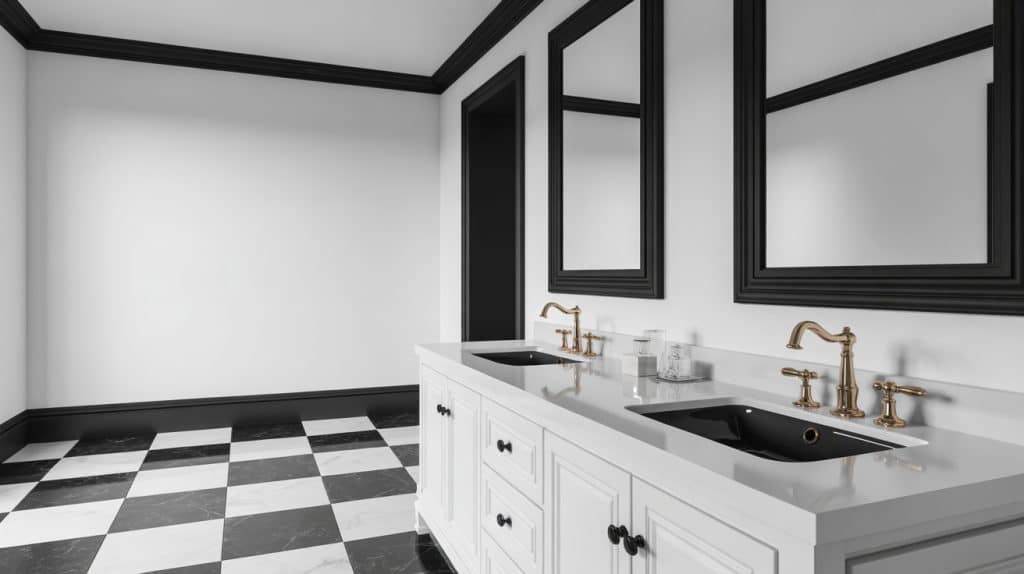


If you’ve been saving black and white bathroom ideas but still feel unsure how to make them work. I’ve seen this color combo look amazing in one space and completely flat in another. The difference usually isn’t the colors. It’s how they’re balanced.
You’re probably wondering how to add contrast without making your bathroom feel cold, dark, or dated. That’s exactly what this guide will help you figure out.
I’ll walk you through modern layouts, small-space tricks, vintage details, bold statements, and softer layered looks.
I’ll also cover tile choices, accent materials, and common mistakes that can throw the whole design off. By the end, you’ll know which direction fits your space and how to execute it confidently
Why Black and White Bathrooms are a Classic Choice
Black and white is one of those combinations that’s hard to get wrong, yet easy to overthink. It’s been a go-to in bathroom design for over a century, and the reason is simple: contrast does the heavy lifting.
It creates visual interest without needing much else. But beyond just looking sharp, a well-planned black-and-white bathroom can feel warm, layered, and completely personal, or bold and dramatic, depending on how far you take it.
The size of the space doesn’t matter as much as most people think, either. Small bathrooms, powder rooms, and full master baths all respond well to this palette. The black-and-white bathroom ideas ahead cover both ends of that spectrum, so there’s plenty to work with regardless of budget.
Modern Black and White Bathrooms Ideas
Clean lines and minimal clutter define modern black-and-white bathrooms. The focus is on sharp contrasts, sleek fixtures, and materials that feel intentional rather than busy.
1. Matte Black Fixtures Against White Walls
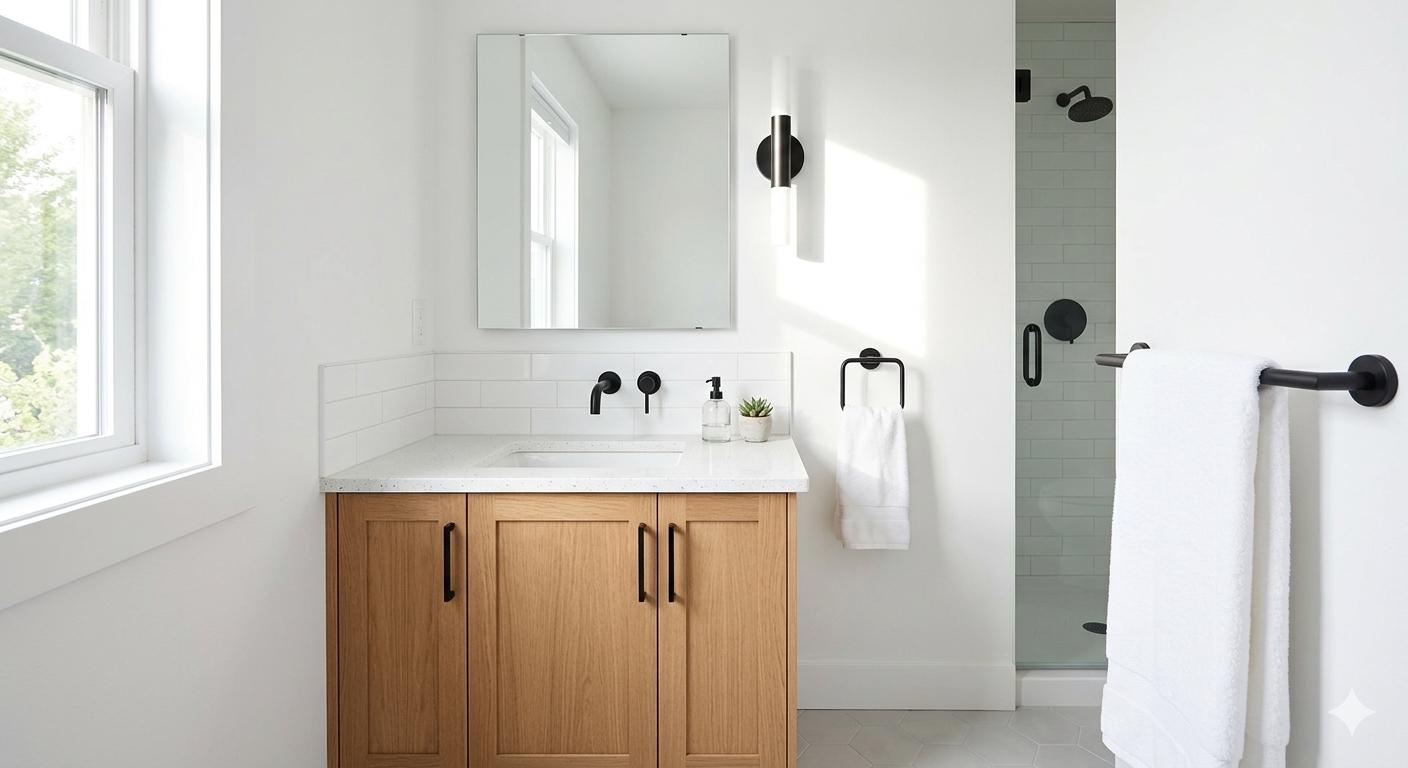
Matte black faucets, towel bars, and cabinet hardware against crisp white walls create a contrast that feels sharp without being overdone. The matte finish avoids the cold, reflective quality that polished chrome can bring to an otherwise clean space.
It works best in bathrooms with decent natural light, where the black accents can stand out clearly without making the room feel noticeably darker.
2. Floating Vanity in Black With White Countertop
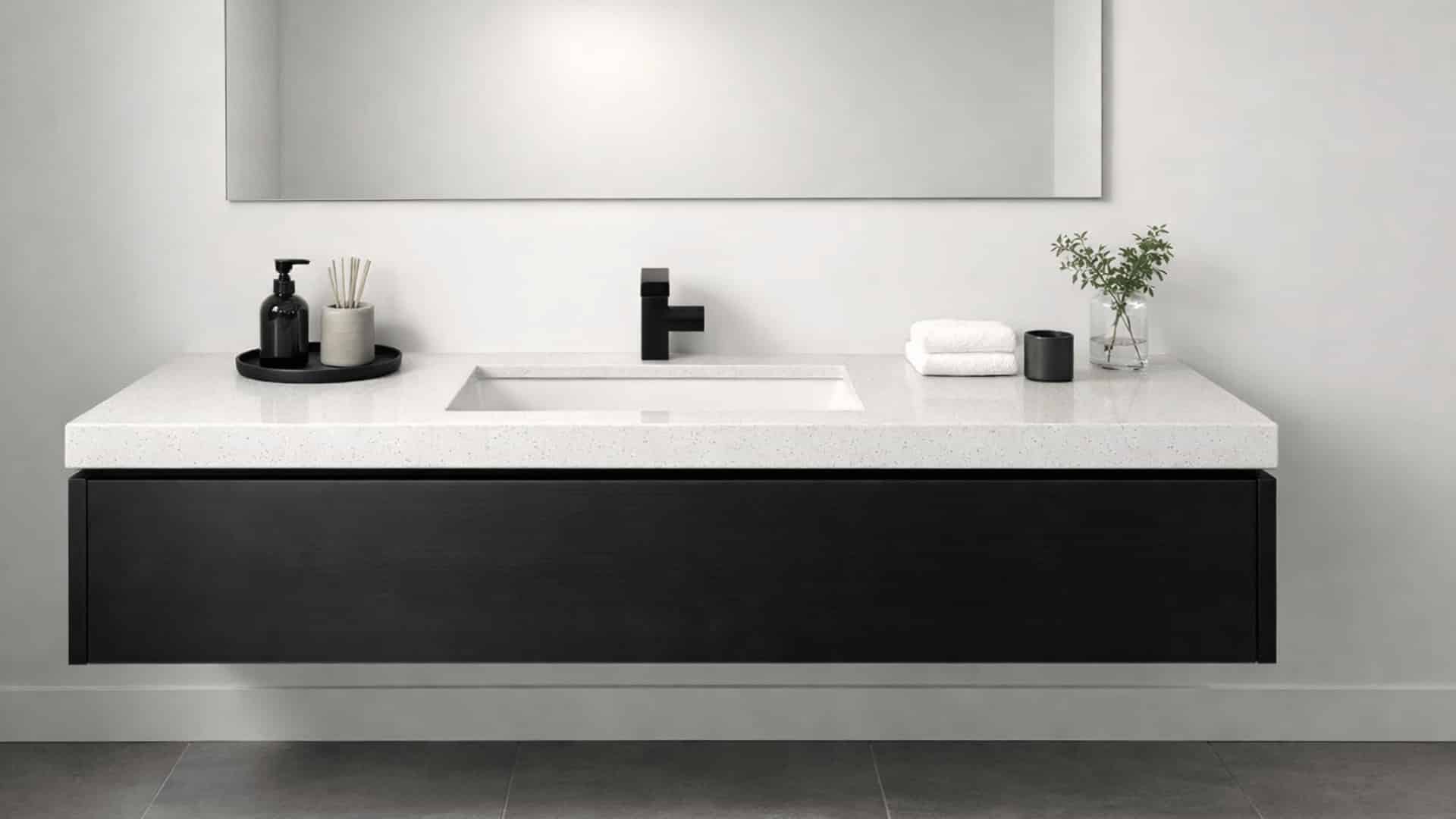
A black floating vanity paired with a white countertop gives the bathroom a grounded, modern look while keeping the floor visually open beneath it. This works particularly well in smaller spaces, where every visible inch of floor makes the room feel less boxed in.
The white countertop keeps the vanity from feeling too heavy and maintains the contrast at the most visible point.
3. Frameless Glass Shower With Black Metal Frame
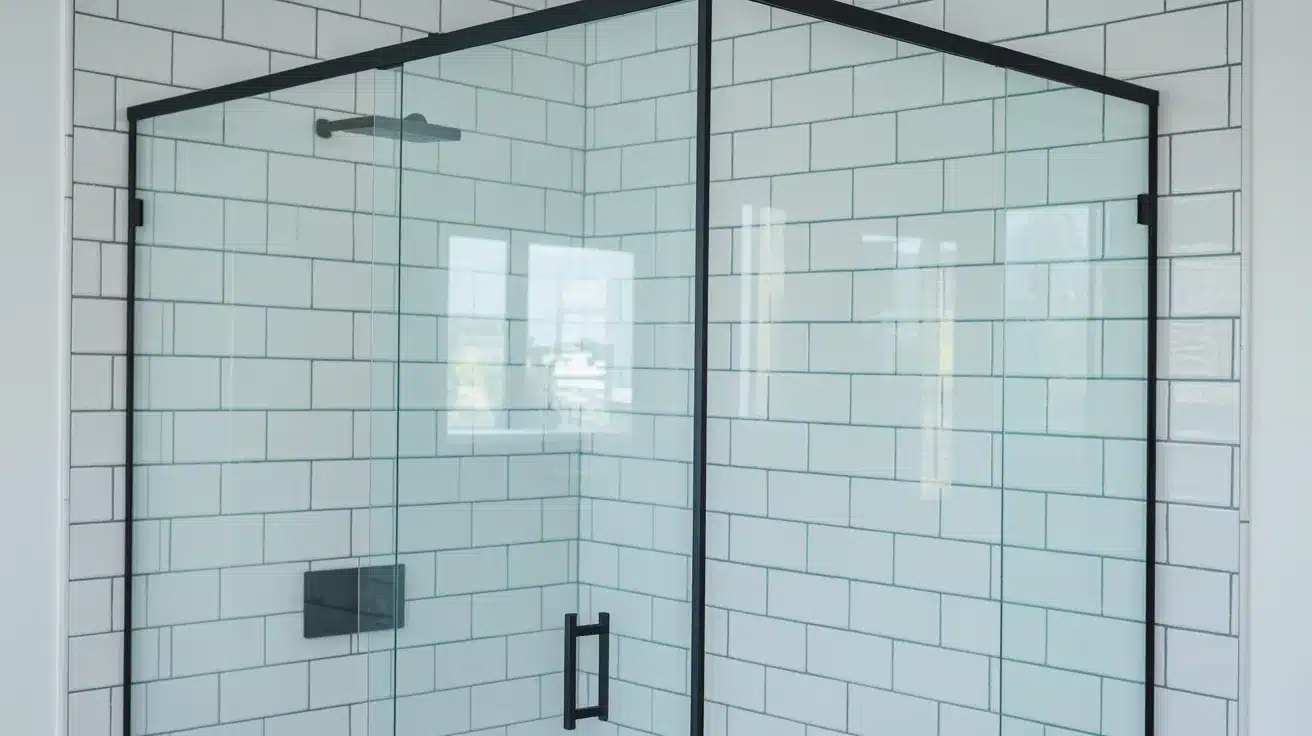
A frameless glass shower with thin black metal framing adds structure to the bathroom without adding visual bulk. I’ve tried this myself, and the black framing made the whole shower feel like a deliberate design choice rather than just a functional enclosure.
Pairing it with white wall tile inside keeps the contrast clean and prevents the enclosure from competing with other elements in the room.
4. Black Ceiling With White Walls
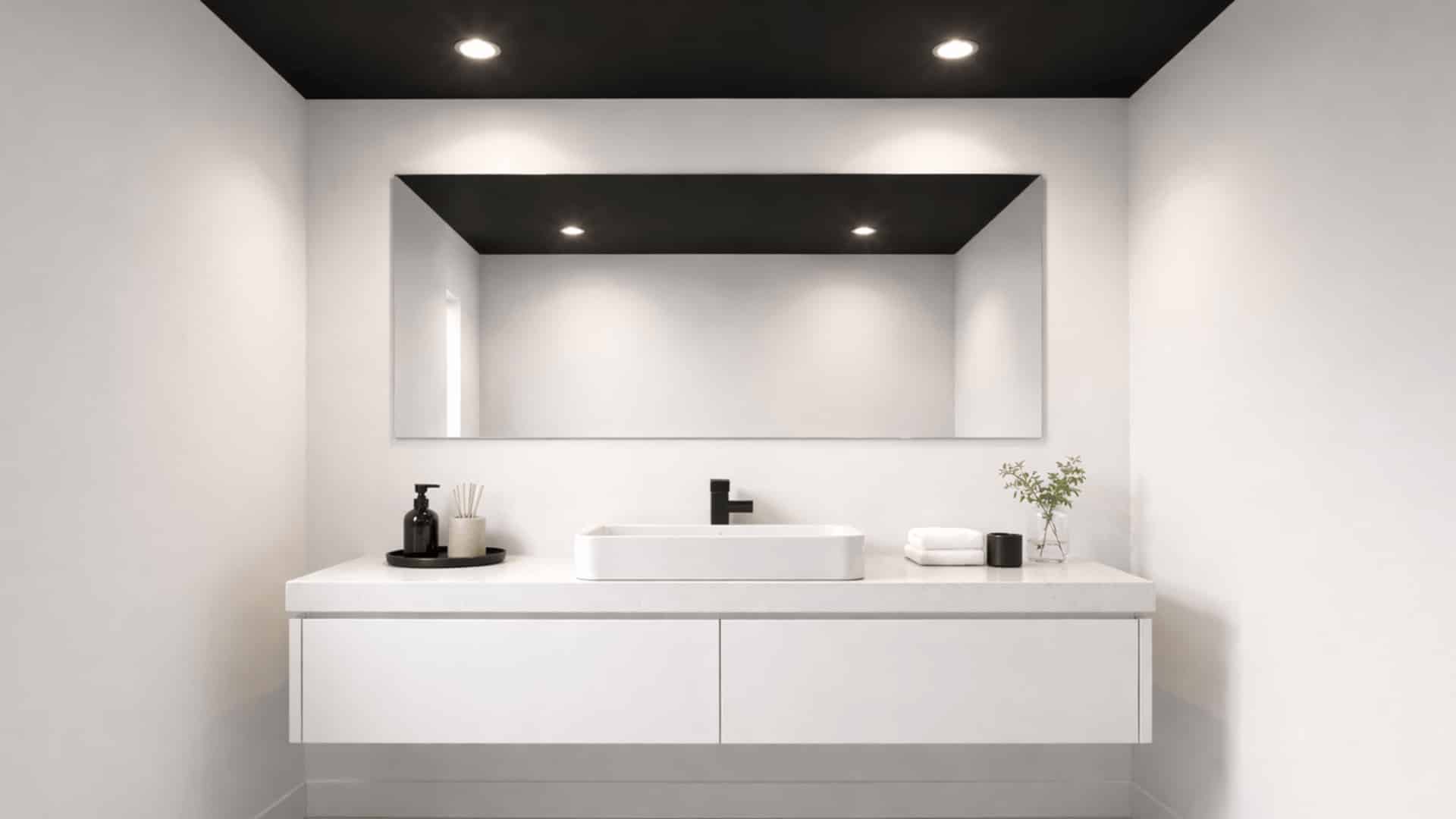
Painting the ceiling black while keeping the walls white is an underused move that adds real drama to a bathroom. It draws the eye upward, making the space feel more deliberate and considered.
This works best in bathrooms with decent ceiling height; in very low-ceiling rooms, a black ceiling can feel oppressive rather than dramatic, so it’s worth assessing the proportions first.
5. Black Grout With White Subway Tile
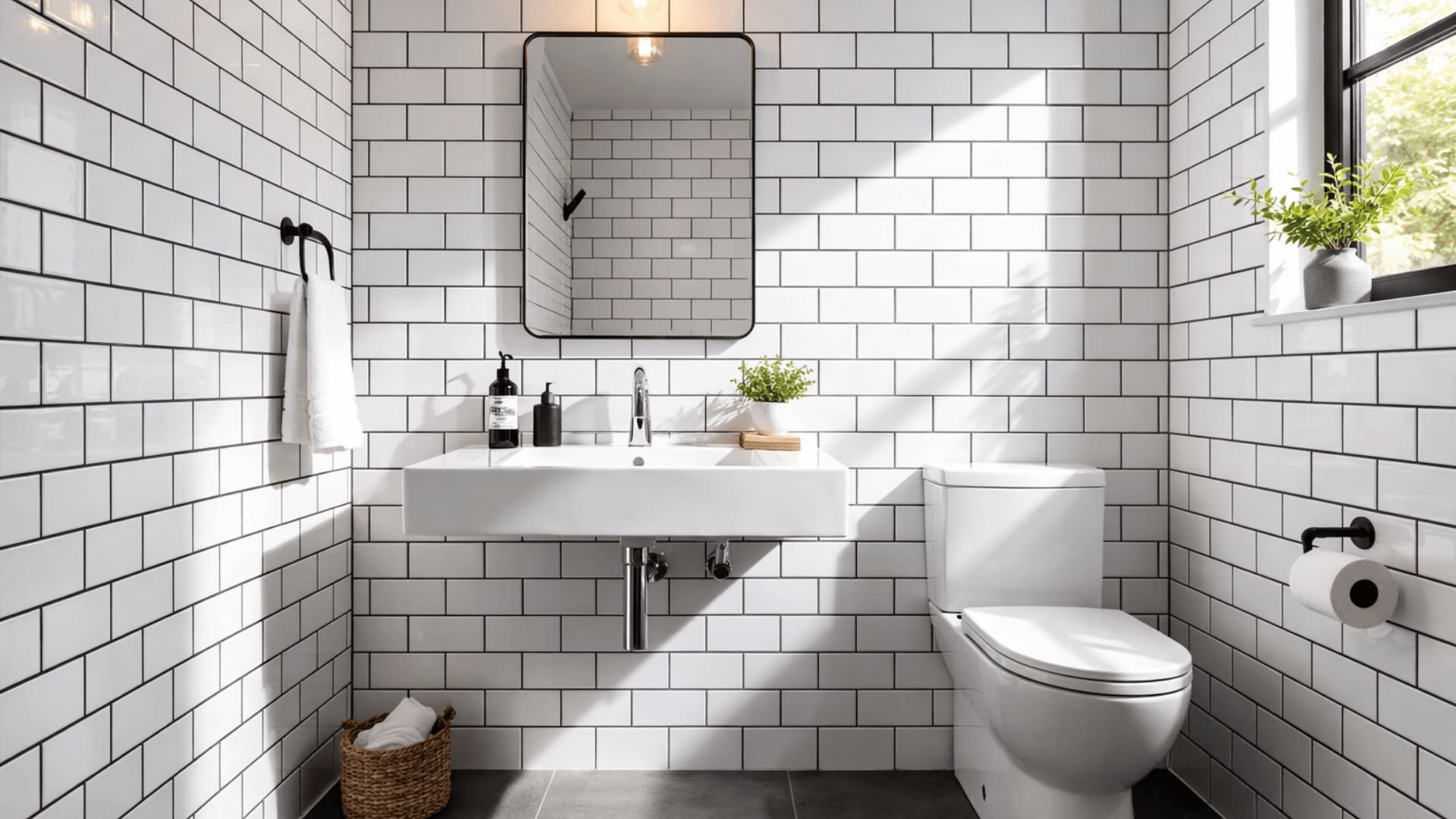
White subway tile is one of the most common bathroom choices, but black grout changes its entire character. The grid pattern becomes sharply defined and graphic rather than soft and blended.
I’ve tried this in a bathroom update, and the difference was immediate. It’s a low-cost way to add visual weight without committing to darker walls or floors that are much harder and more expensive to change later.
6. Black and White Geometric Floor Tile
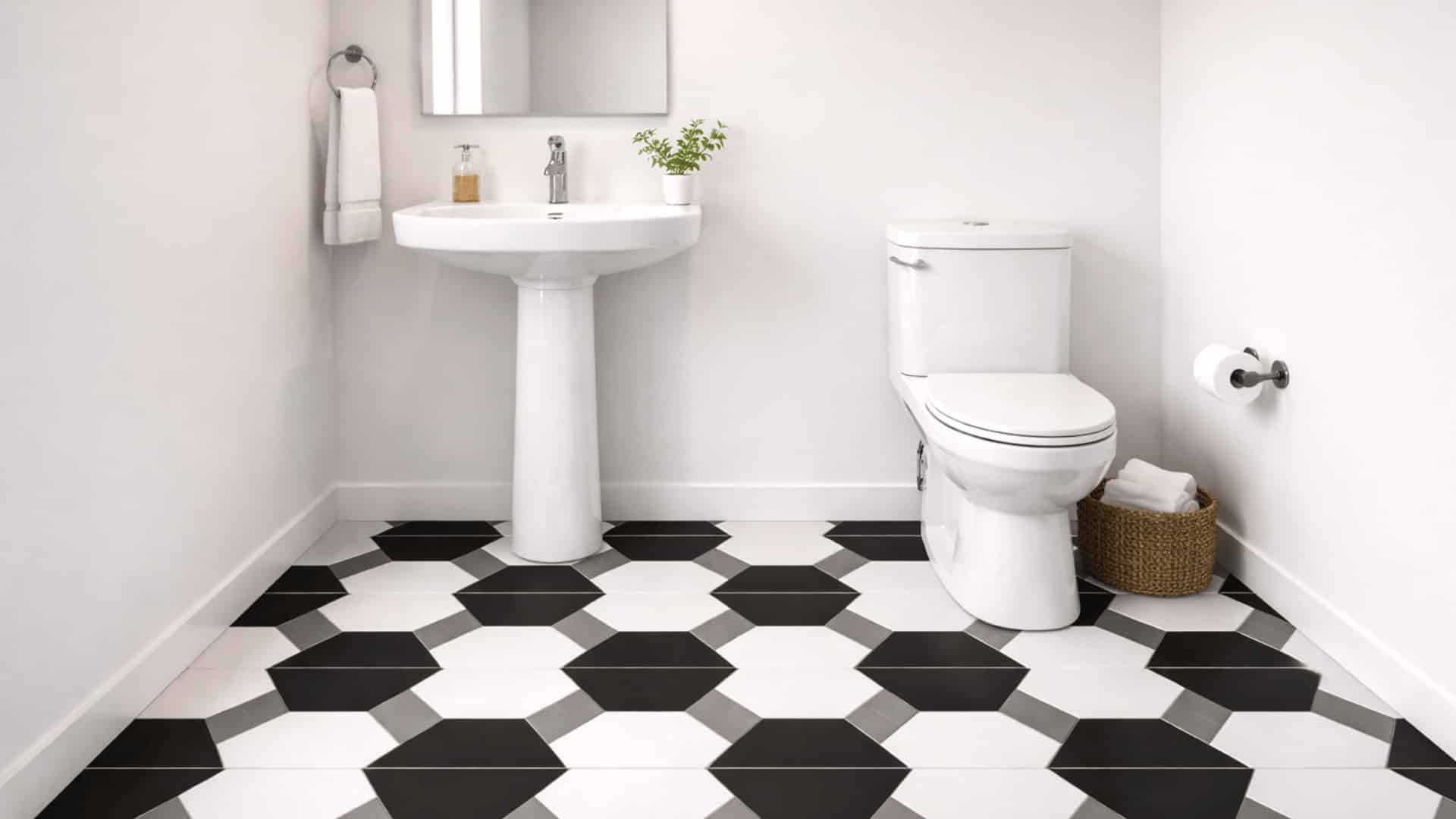
A geometric black-and-white floor tile with hexagons, diamonds, or triangles adds a bold pattern to the bathroom, with little else in the room to carry the design. I’ve seen this in a colleague’s bathroom, and it genuinely stopped me mid-conversation.
Keeping walls and fixtures neutral lets the floor lead, and larger geometric patterns tend to suit bigger bathrooms, while smaller-scale geometry works better in compact spaces.
7. White Freestanding Tub on Black Floor Tile
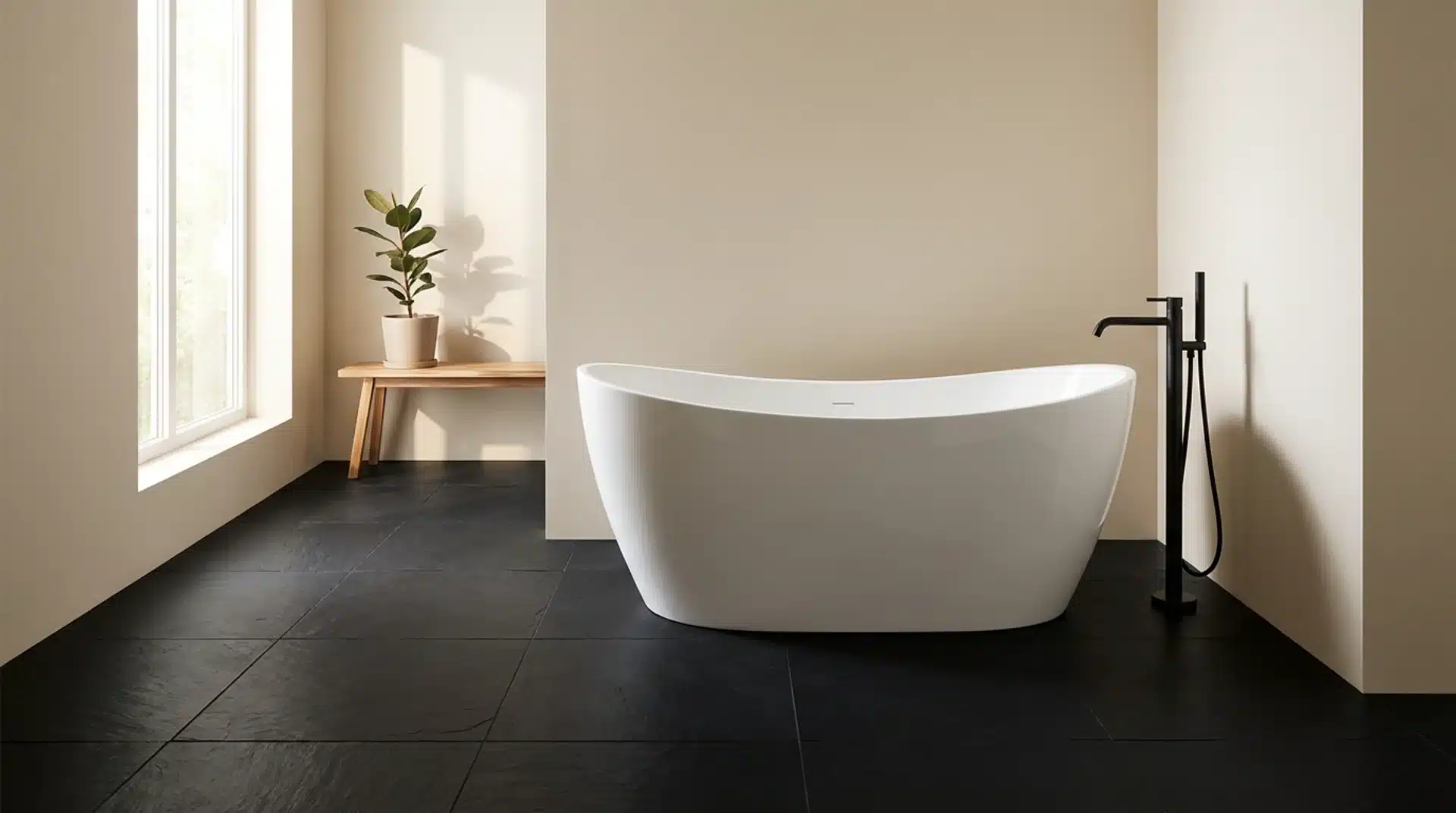
A white freestanding tub placed directly on black floor tile creates a focal point that’s immediately noticeable when entering the room. A friend of mine did this in her renovation last year, and it completely changed how the bathroom felt from the doorway.
Keeping the walls light ensures the tub remains the centerpiece, and a floor-mounted matte-black faucet ties the fixture back to the floor.
8. Recessed Black Niche in White Shower Wall
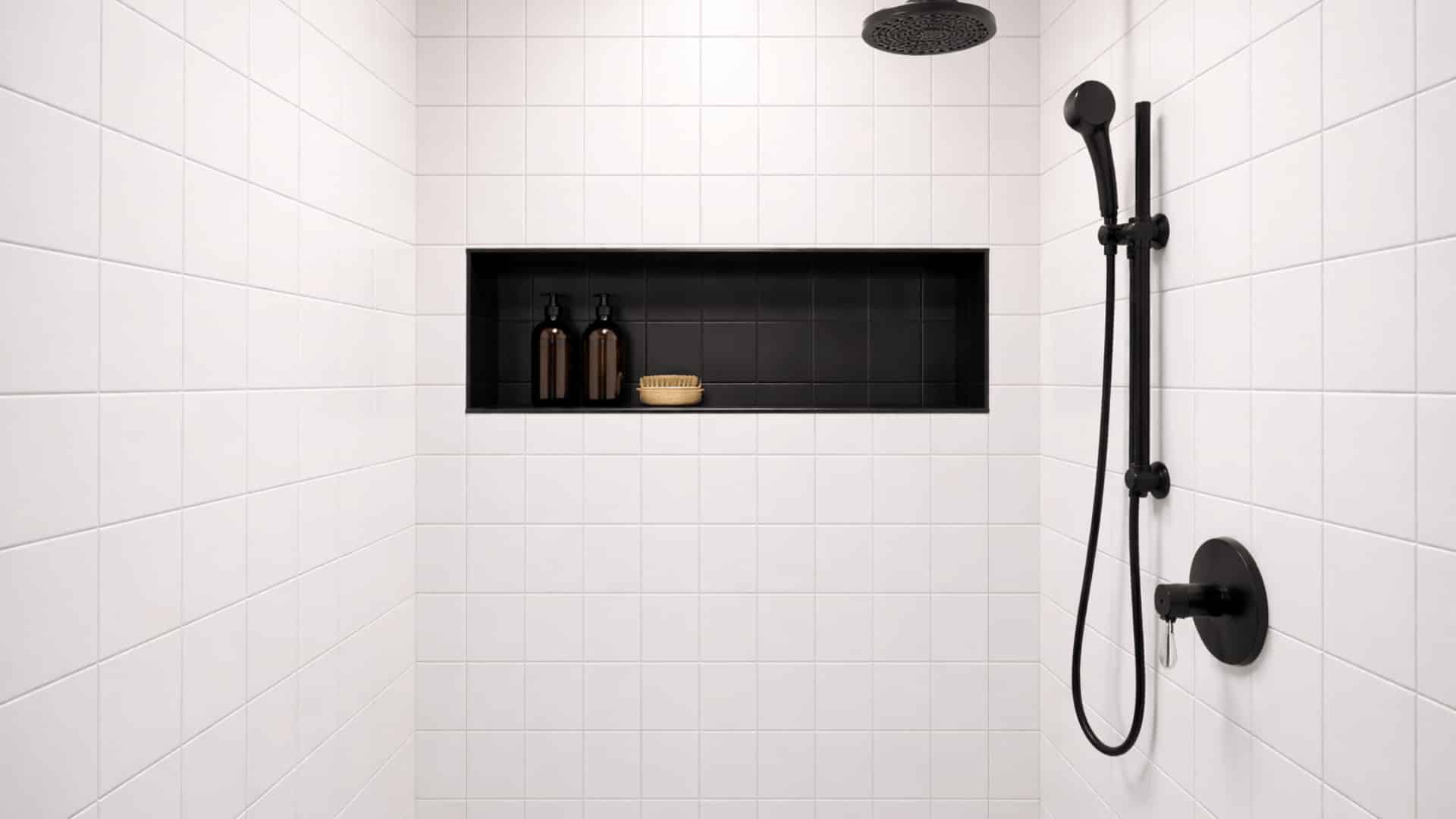
A shower niche finished in black tile against a white shower wall adds a functional storage detail that feels well thought out rather than purely practical.
I’ve tried this myself, and it’s one of those details that looks simple but takes real planning to get proportionally right. Keep the niche sized to the wall; too large and it dominates the space; too small and it disappears into the surrounding tile.
9. White Walls With a Single Black Accent Wall
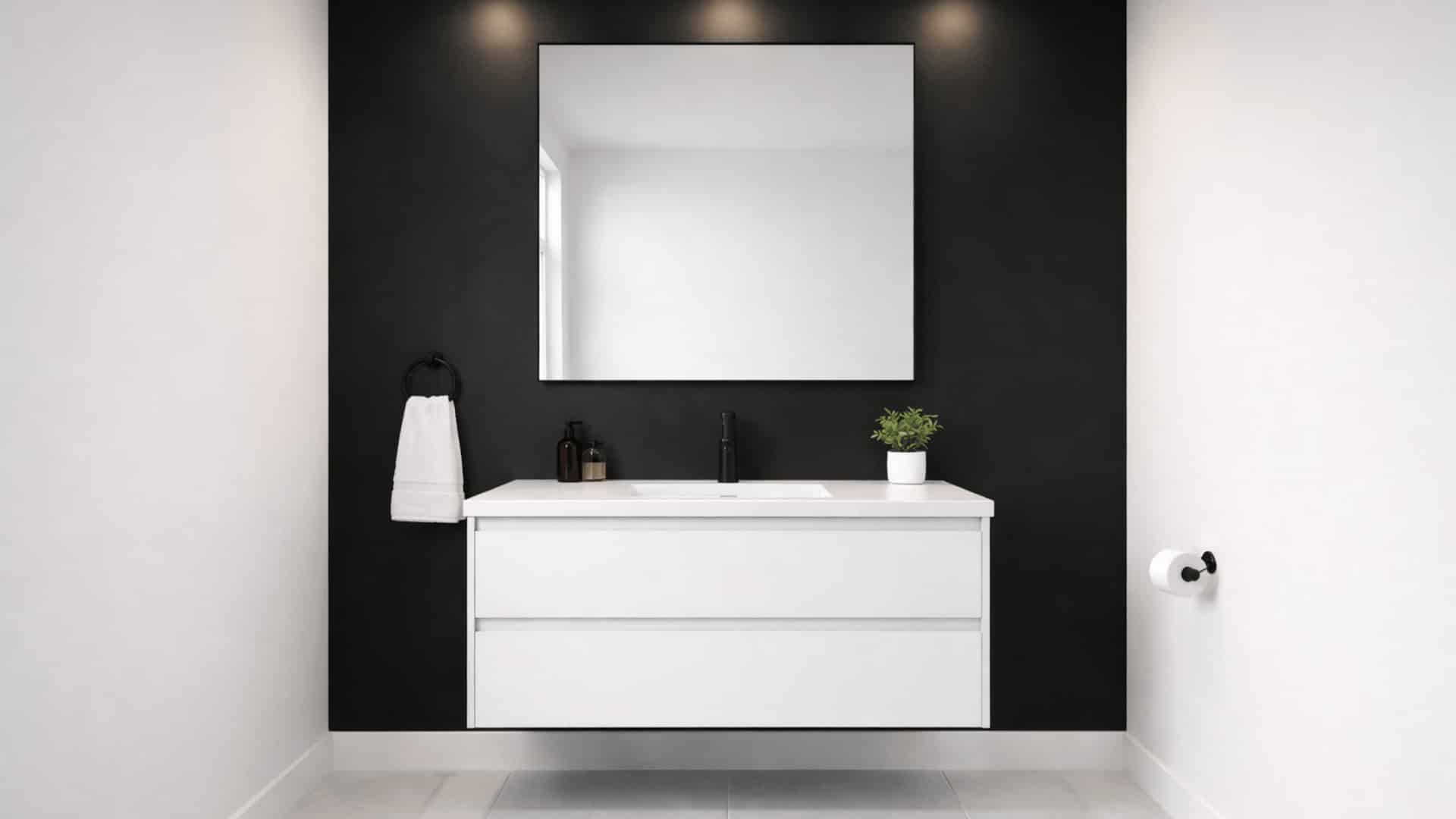
One black accent wall behind the vanity or bathtub creates visual focus without making the entire room feel closed in. A cousin of mine tried this behind the vanity and said it was the single change that made the bathroom feel finished.
Matte paint holds better in bathrooms than glossy finishes, which tend to highlight every watermark and smudge far more noticeably on a dark background.
10. Black Framed Mirrors Above White Double Vanity
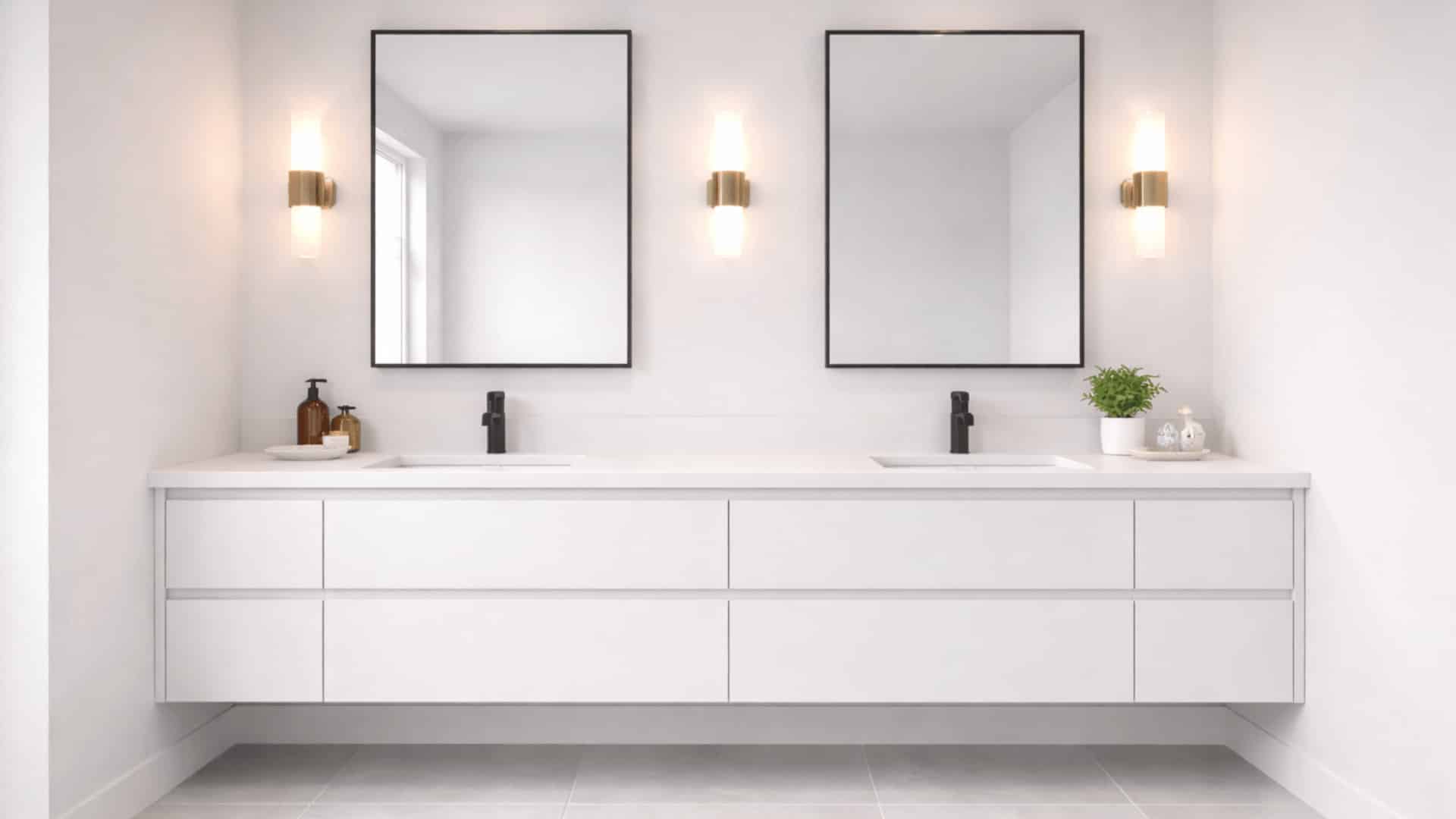
Two black-framed mirrors positioned above a white double vanity create symmetry and visual structure in a bathroom that can otherwise feel unanchored.
I’ve seen this in a colleague’s home, and it pulled every other black element in the room together instantly. It’s one of the simpler updates that noticeably shifts the overall feel of a bathroom without requiring significant investment or renovation.
Small Black and White Bathroom Ideas
Small bathrooms benefit from contrast more than most people expect. The key is knowing where to place black so it defines the space rather than makes it feel smaller.
11. White Walls With Black Penny Tile Floor
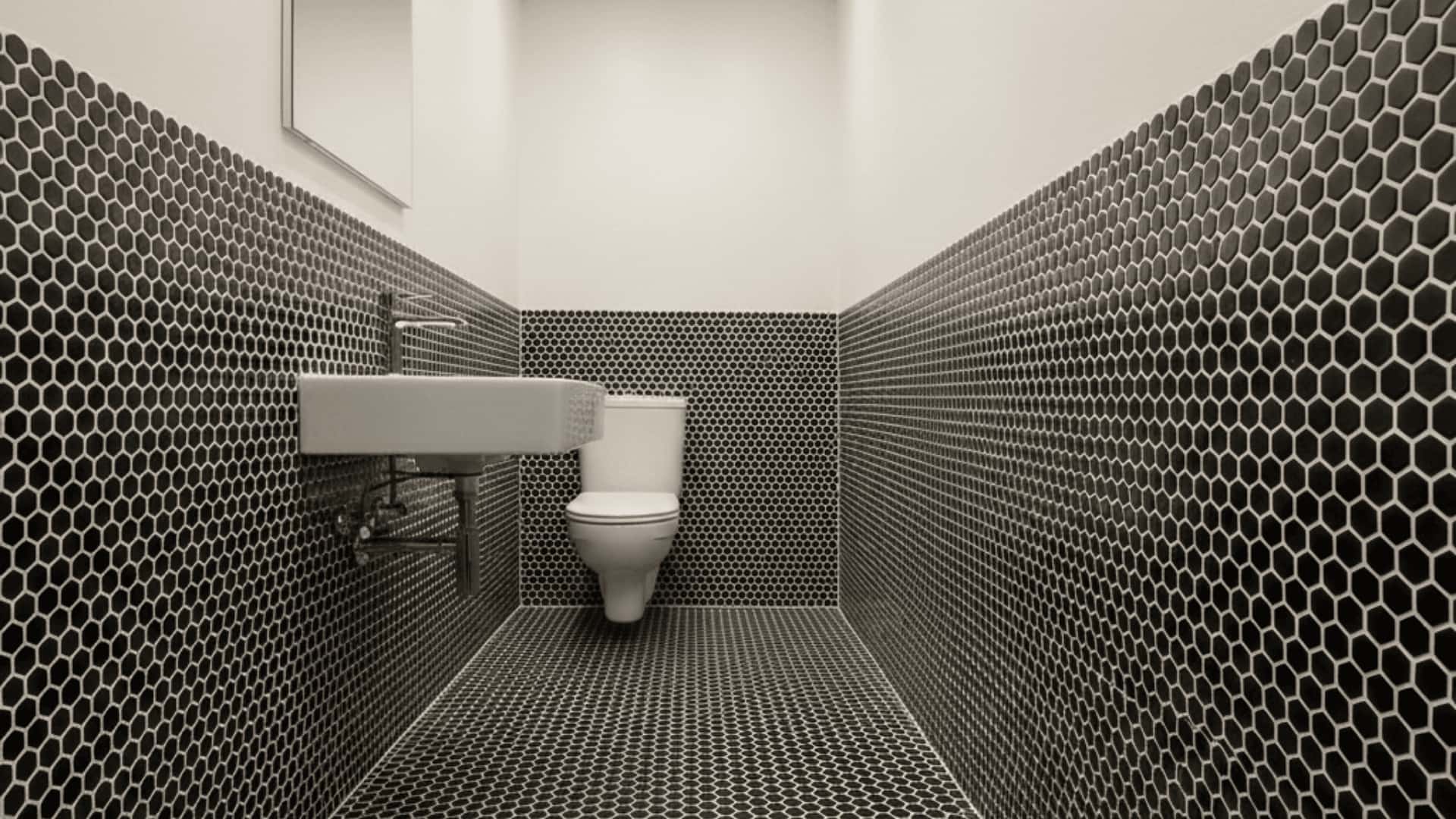
Black penny tile on the floor against white walls keeps the contrast at ground level without making the walls feel any closer. A friend redid her narrow bathroom floor with this exact combination, and it completely changed how spacious the room felt.
It’s a reliable approach where wall space is already tight and needs to stay as light as possible to avoid feeling cramped.
12. Vertical Black Tile Strip in White Shower
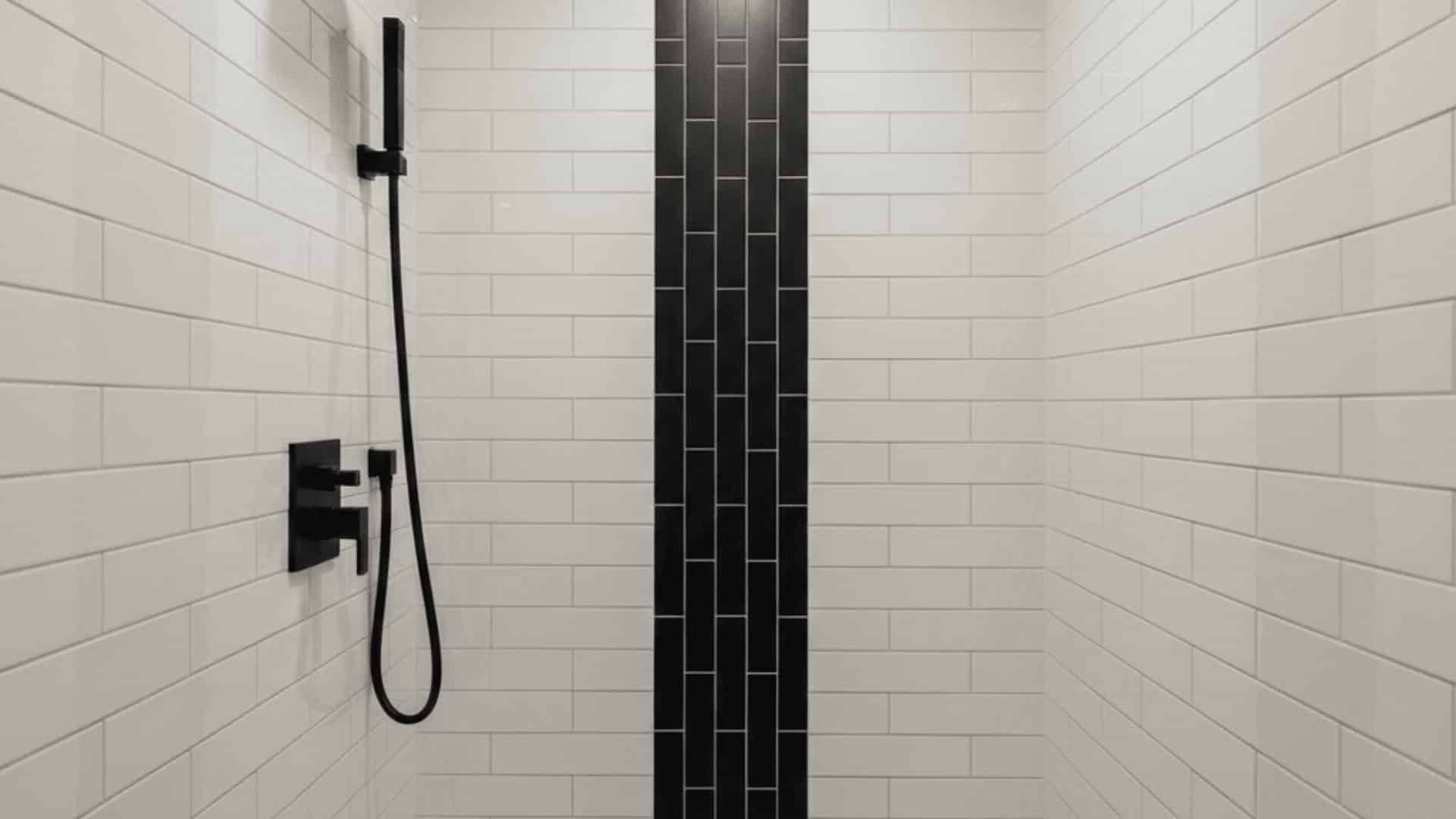
A single vertical strip of black tile running floor to ceiling inside a white shower draws the eye upward, making the ceiling feel noticeably higher. A colleague tried this in a rental bathroom renovation and said it was the most impactful change made with the least amount of tile.
Centering the strip or aligning it with the showerhead keeps the detail looking intentional rather than accidental.
13. Black Vanity in a Small All-White Bathroom
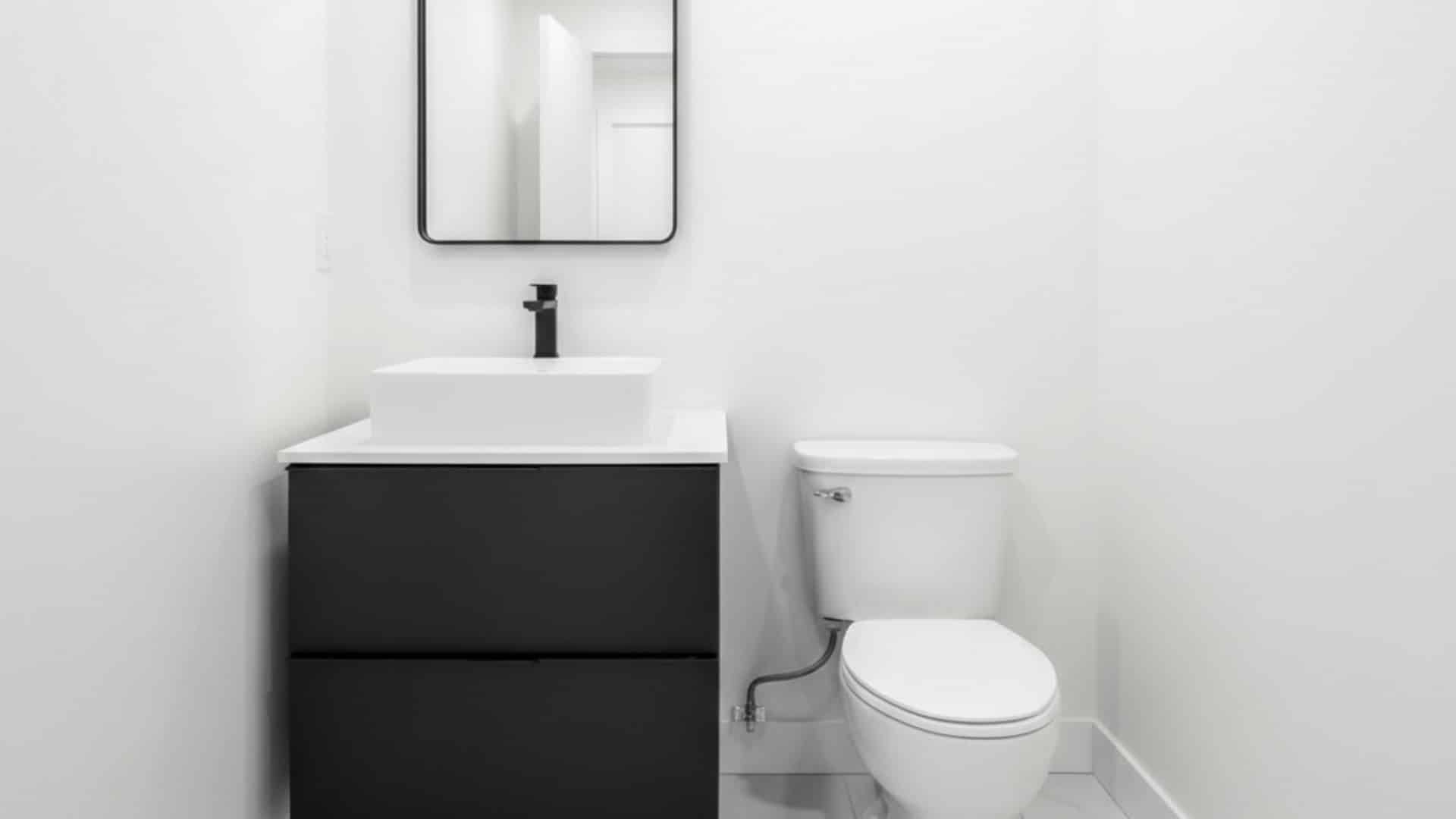
A dark vanity in a small bathroom sounds like it would shrink the space, but it actually anchors it instead. My cousin installed a black vanity in her small guest bathroom and said every visitor assumes the room is larger than it actually is.
Keeping the countertop and sink white maintains the contrast and prevents the vanity area from feeling too heavy in an otherwise light room.
14. Half-Wall Black Tile With White Above
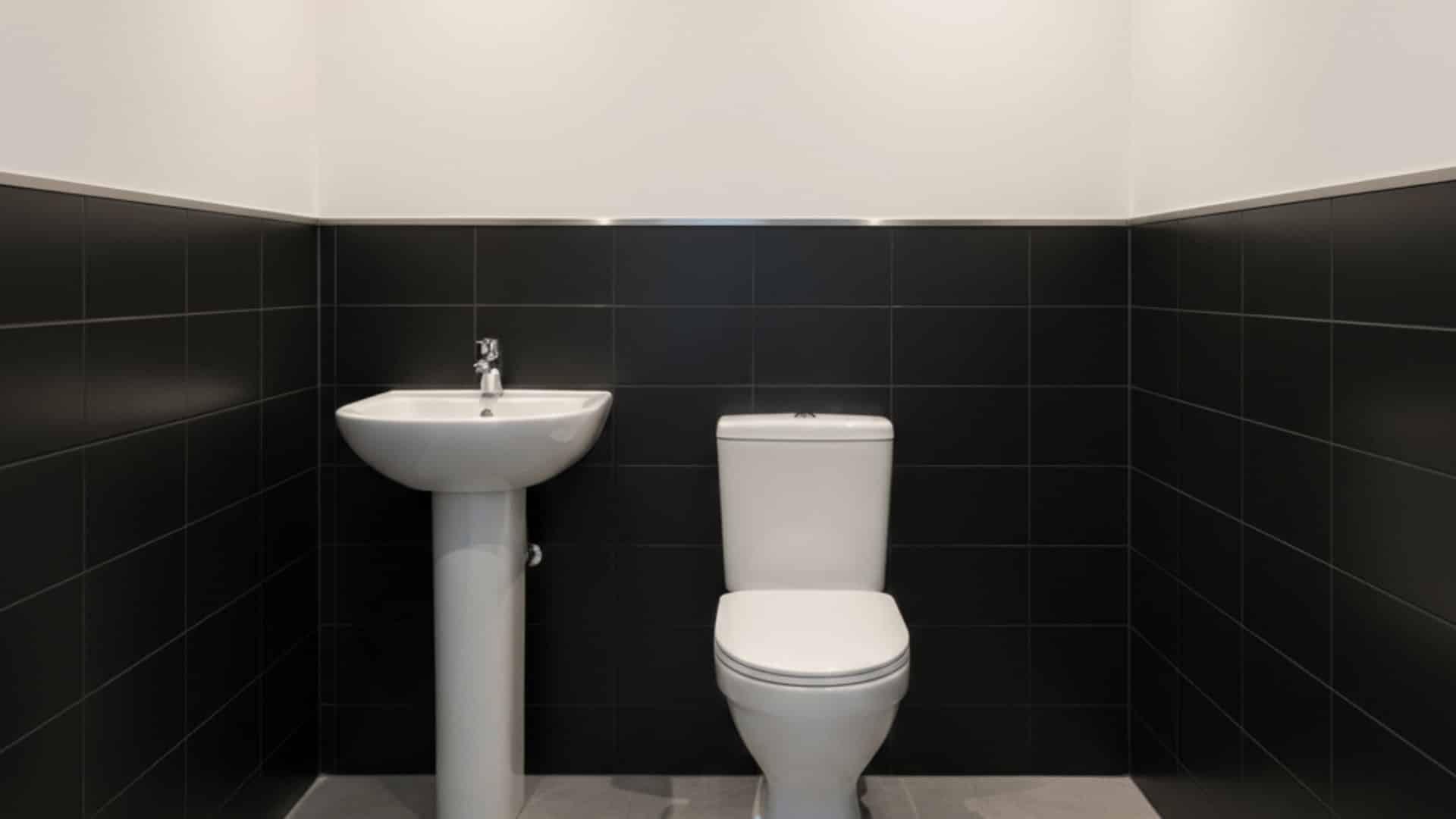
Tiling the lower half of the wall in black and keeping the upper half white creates a clear visual divide, making the ceiling feel taller. A friend of mine did this in a narrow bathroom, and it immediately gave the room more structure.
Finishing the dividing line with a thin trim tile or metal strip keeps the transition looking deliberate and clean rather than abrupt.
15. Large White Tiles With Thin Black Grout Lines
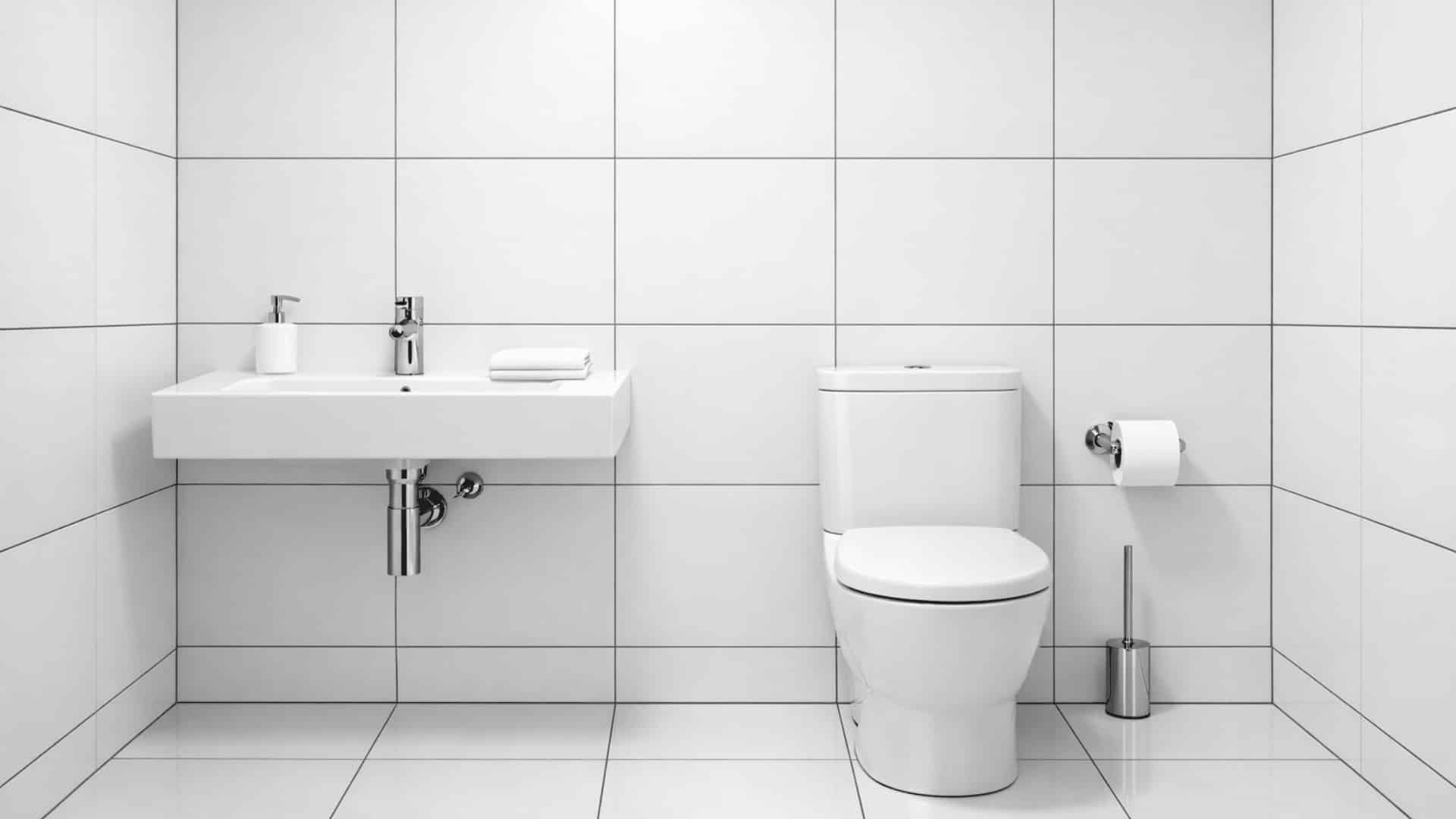
Large-format white tiles with thin black grout lines keep the walls clean and simple while still adding contrast through the grid. A colleague renovated her bathroom with this exact tile choice and mentioned the reduced grout lines alone made cleaning noticeably easier.
In a small space, this approach stays visually calm while the black grout adds just enough definition to prevent a completely flat look.
16. Black Mirror in a Small All-White Bathroom
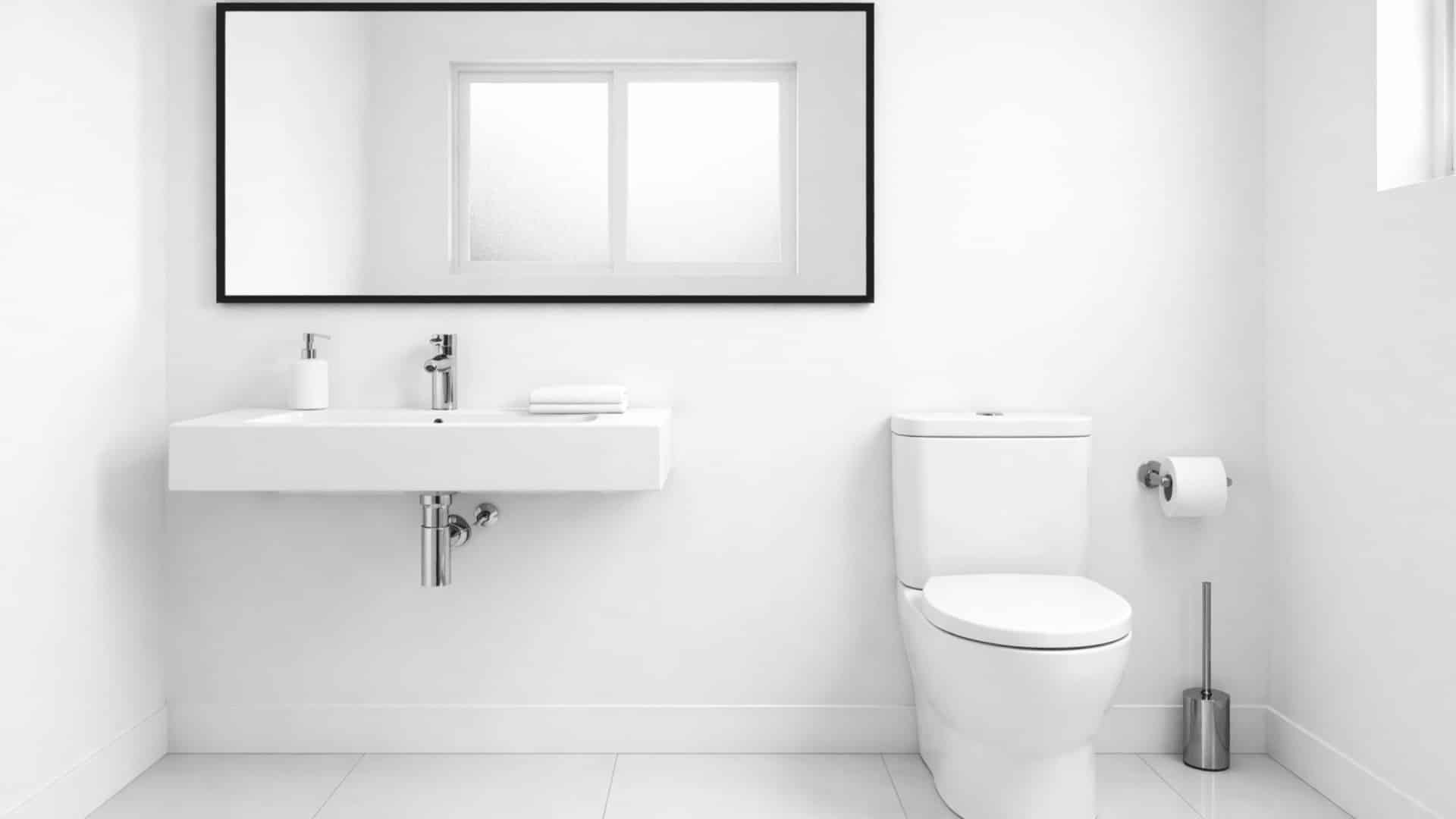
A large black-framed mirror in an otherwise all-white bathroom serves as a strong focal point without taking up any floor space.
My cousin swapped out a plain, frameless mirror for a large black-framed one and said it was the most noticeable change in the room for the least money spent. Oversized mirrors also reflect more light, helping smaller bathrooms feel more open and less enclosed.
17. White Beadboard With Black Floor and Fixtures
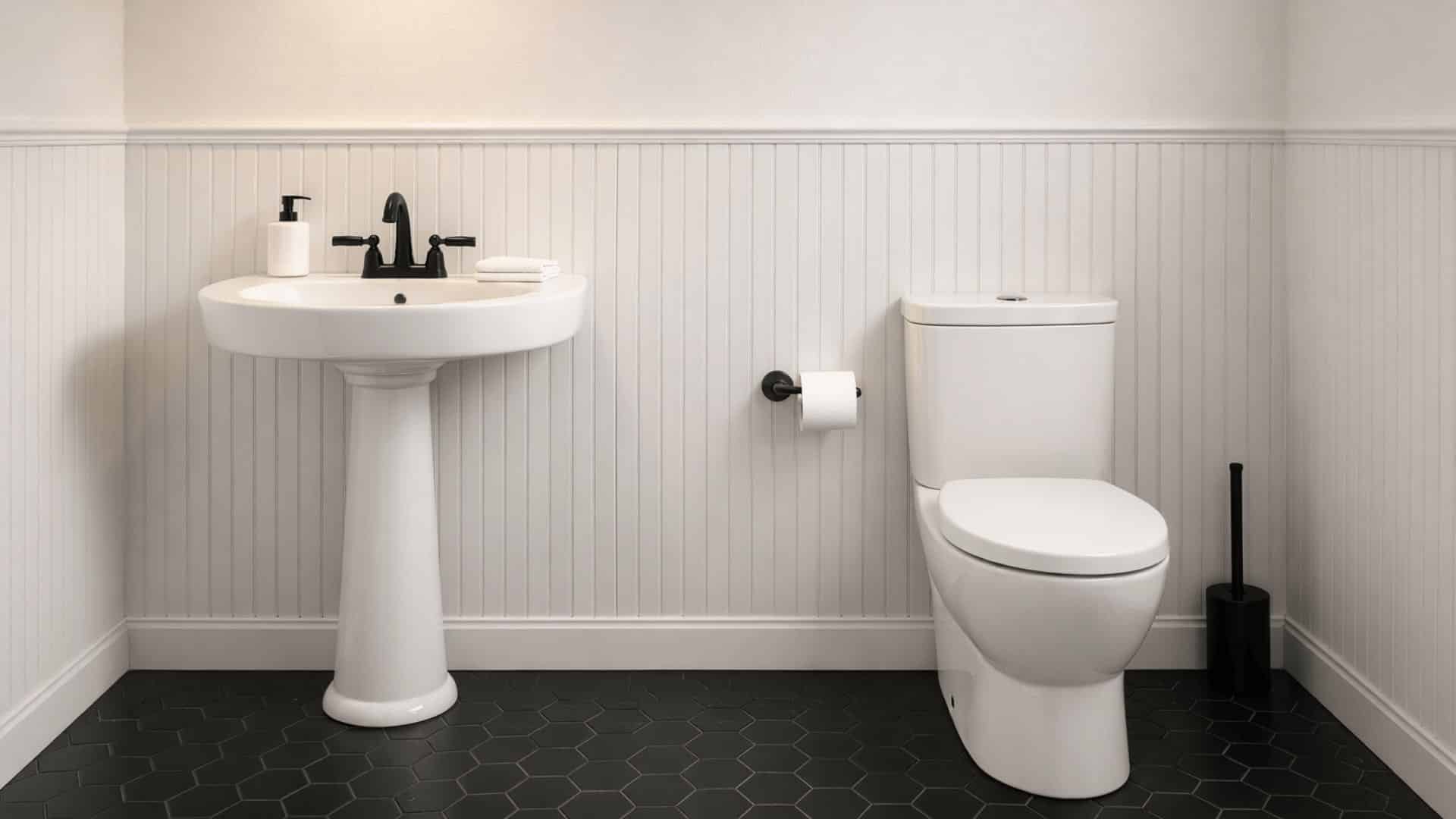
White beadboard paneling on the lower walls paired with black floor tile and black fixtures creates a compact design that works particularly well in cottage-style or older homes.
The beadboard adds surface texture to the white without introducing any new color into the palette. The black floor ties the fixtures together into one cohesive look that reads as intentional rather than a collection of separate decisions.
18. Black Shower Curtain in a White Bathroom
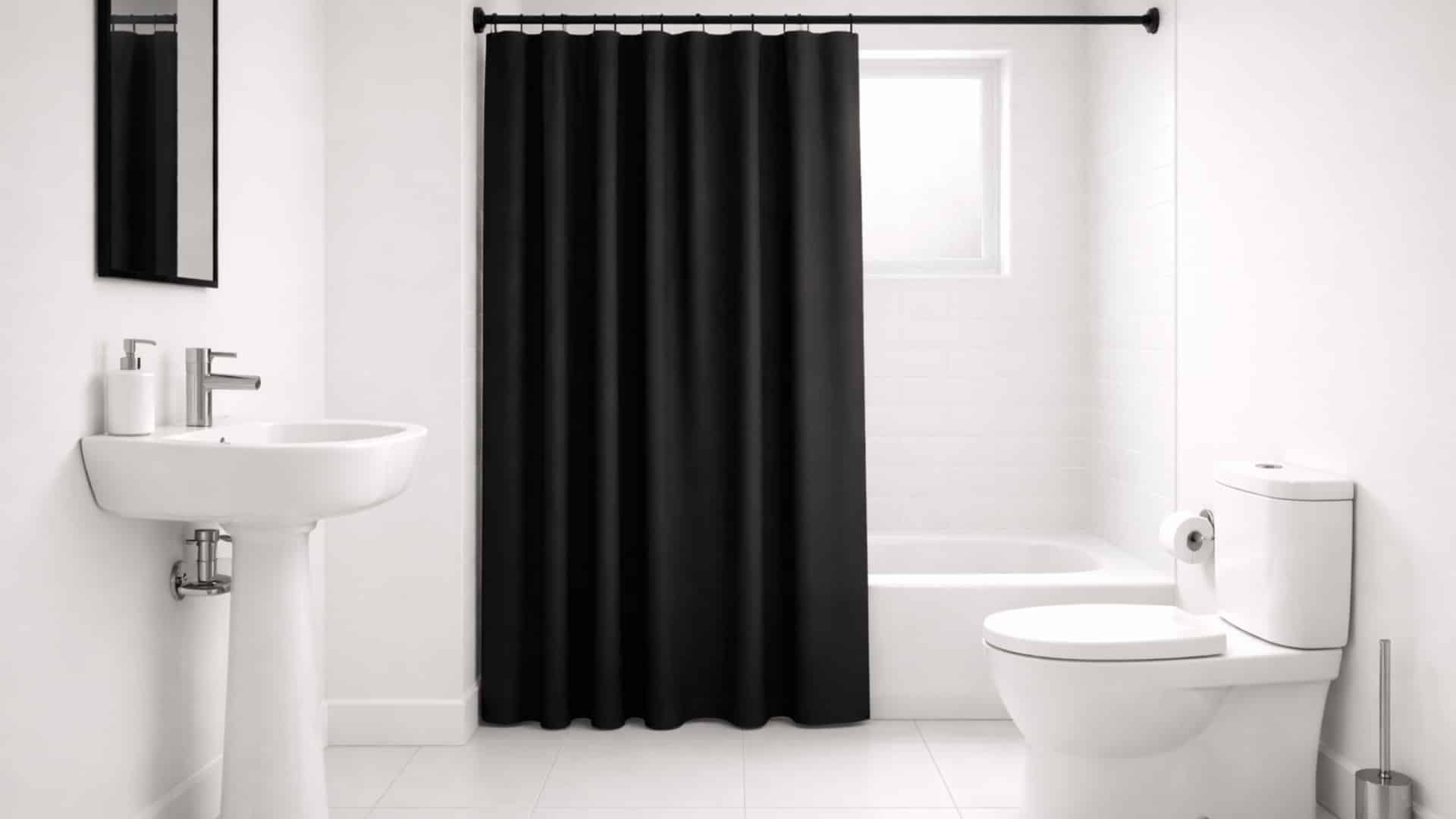
A black shower curtain against white walls and a white tub is one of the most affordable ways to introduce contrast without any renovation work. A colleague made this single change in her rental bathroom, and the room looked completely different within minutes.
Solid matte black works better than patterns here, in a small space; a printed curtain quickly makes the room feel busier than intended.
Vintage-Inspired Black and White Designs
Vintage black-and-white bathrooms lean into patterns, details, and materials that feel like they’ve been in place for decades, in the best possible way.
19. Classic Checkerboard Floor Tile
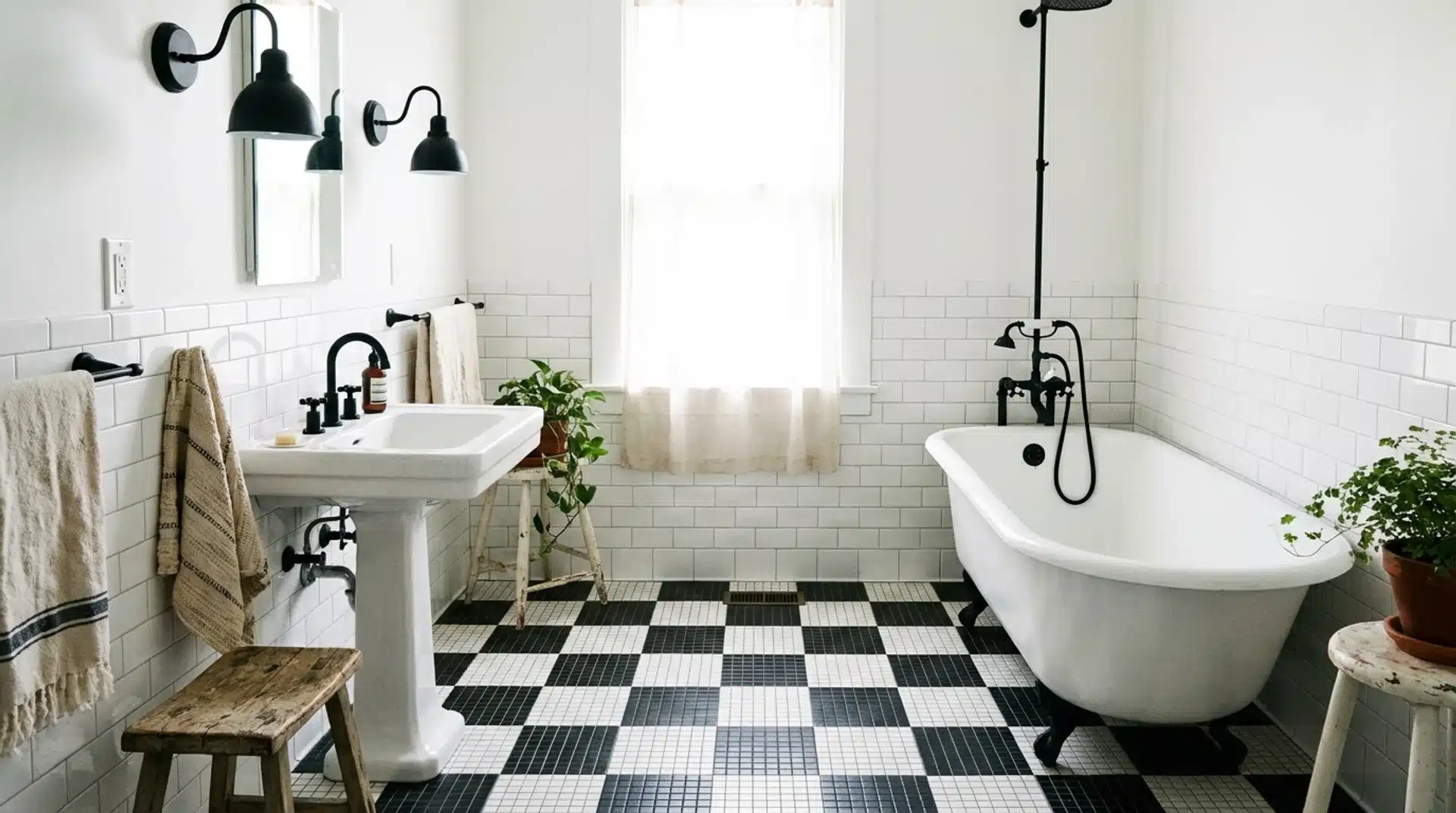
Black-and-white checkerboard floors are the most recognizable vintage bathroom detail and still hold up remarkably well in modern homes. A cousin of mine installed this in a full bathroom renovation and said every guest comments on the floor before anything else in the room.
Smaller 2×2-inch tiles give a more authentic period feel, while larger squares read as more contemporary and graphic.
20. Clawfoot Tub on a Patterned Black and White Floor
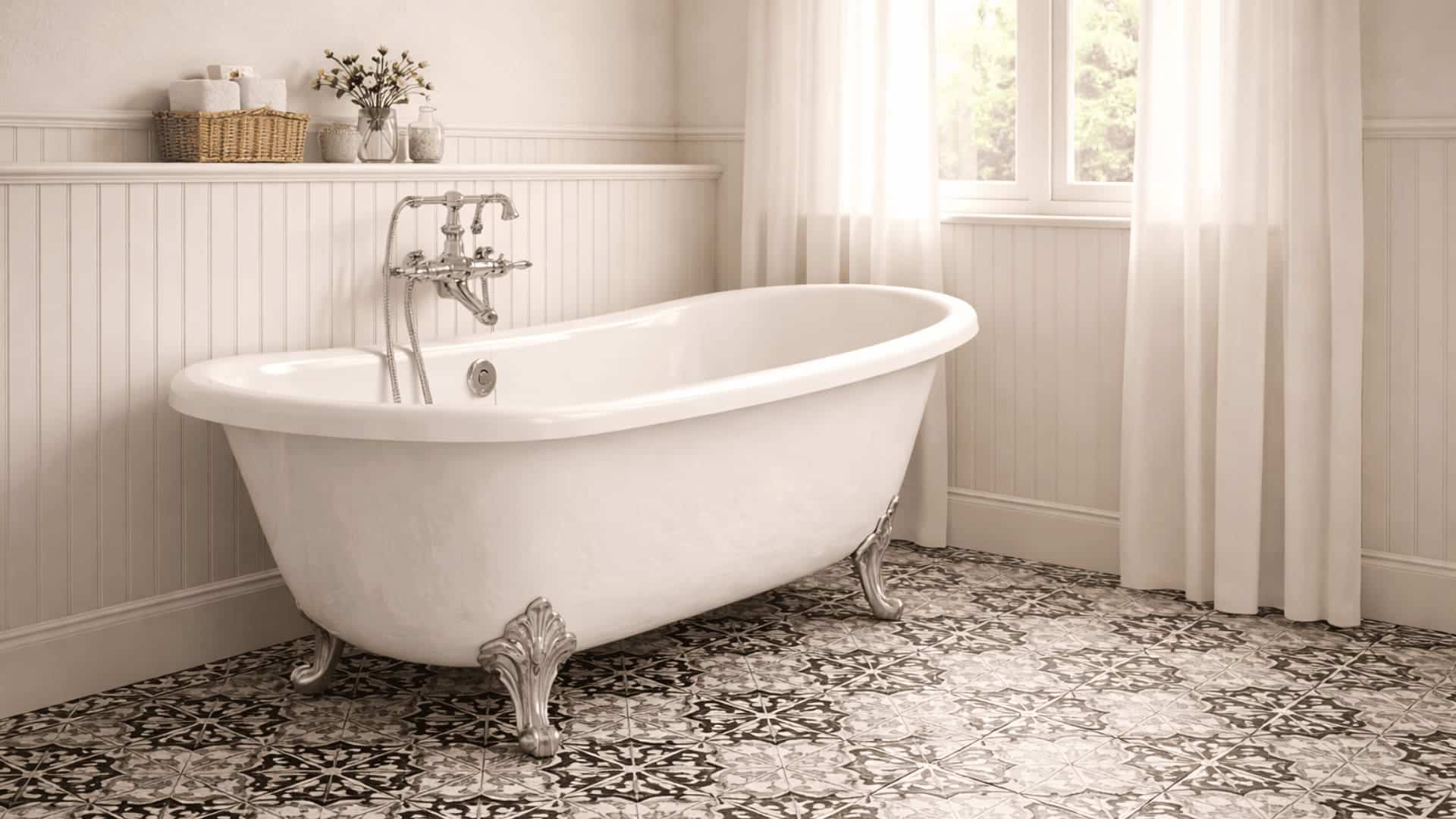
A white clawfoot tub on a patterned black-and-white floor is a combination that has worked in bathroom design for well over a century. A friend restored an older home and kept this exact pairing intact; it’s the first thing anyone notices walking in.
Keeping surrounding elements simple ensures the tub and floor receive the full visual attention they deserve without unnecessary competition.
21. Black Subway Tile With White Grout
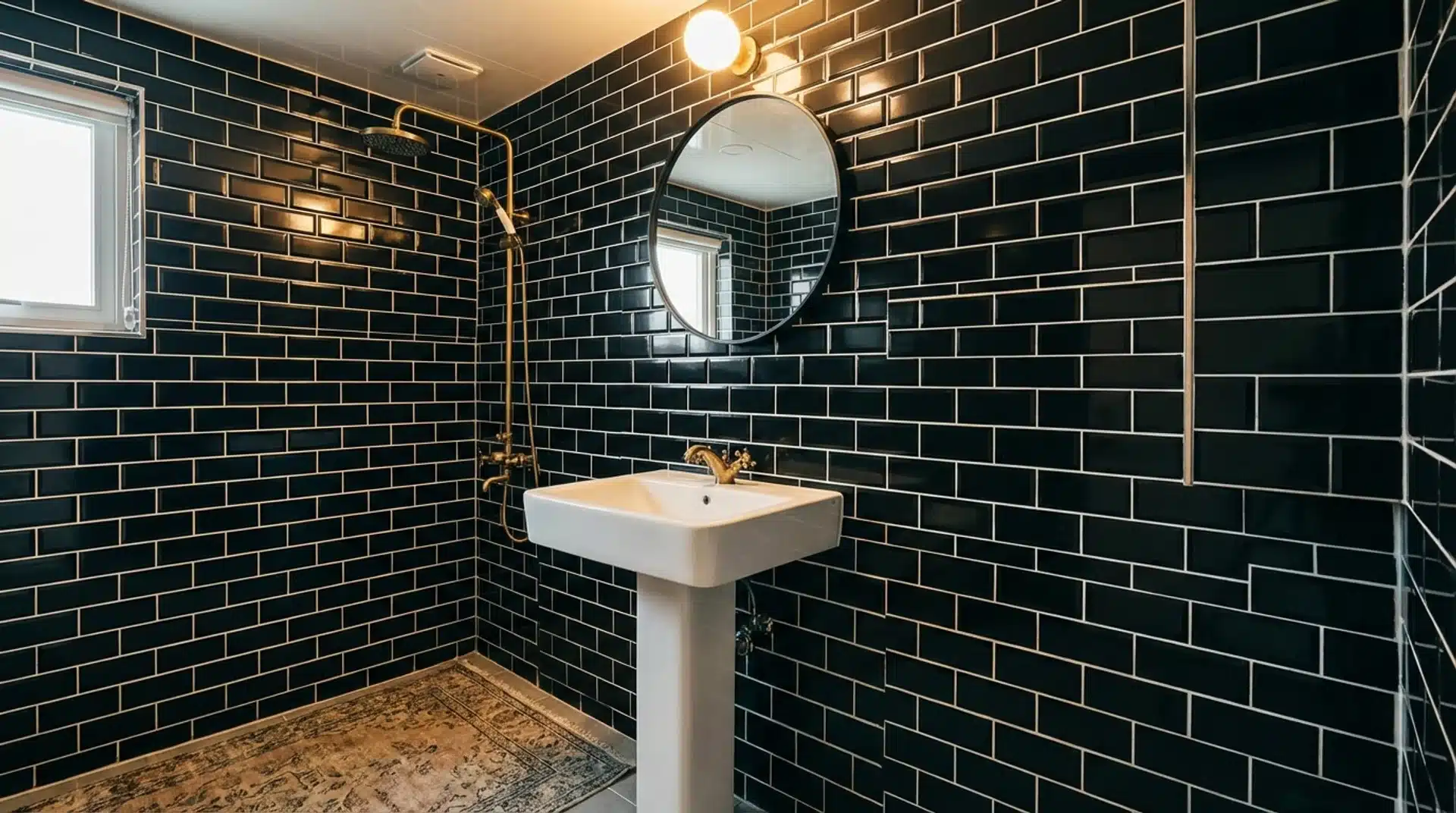
Reversing the usual setup, black subway tile paired with white grout instead of the other way around, gives a vintage feel with a noticeably moodier and more dramatic edge.
The white grout lines make the tile pattern stand out clearly against the dark background. It works well in half-baths or on shower walls where a stronger visual statement suits the size and purpose of the space.
22. Pedestal Sink With Black Hex Floor Tile
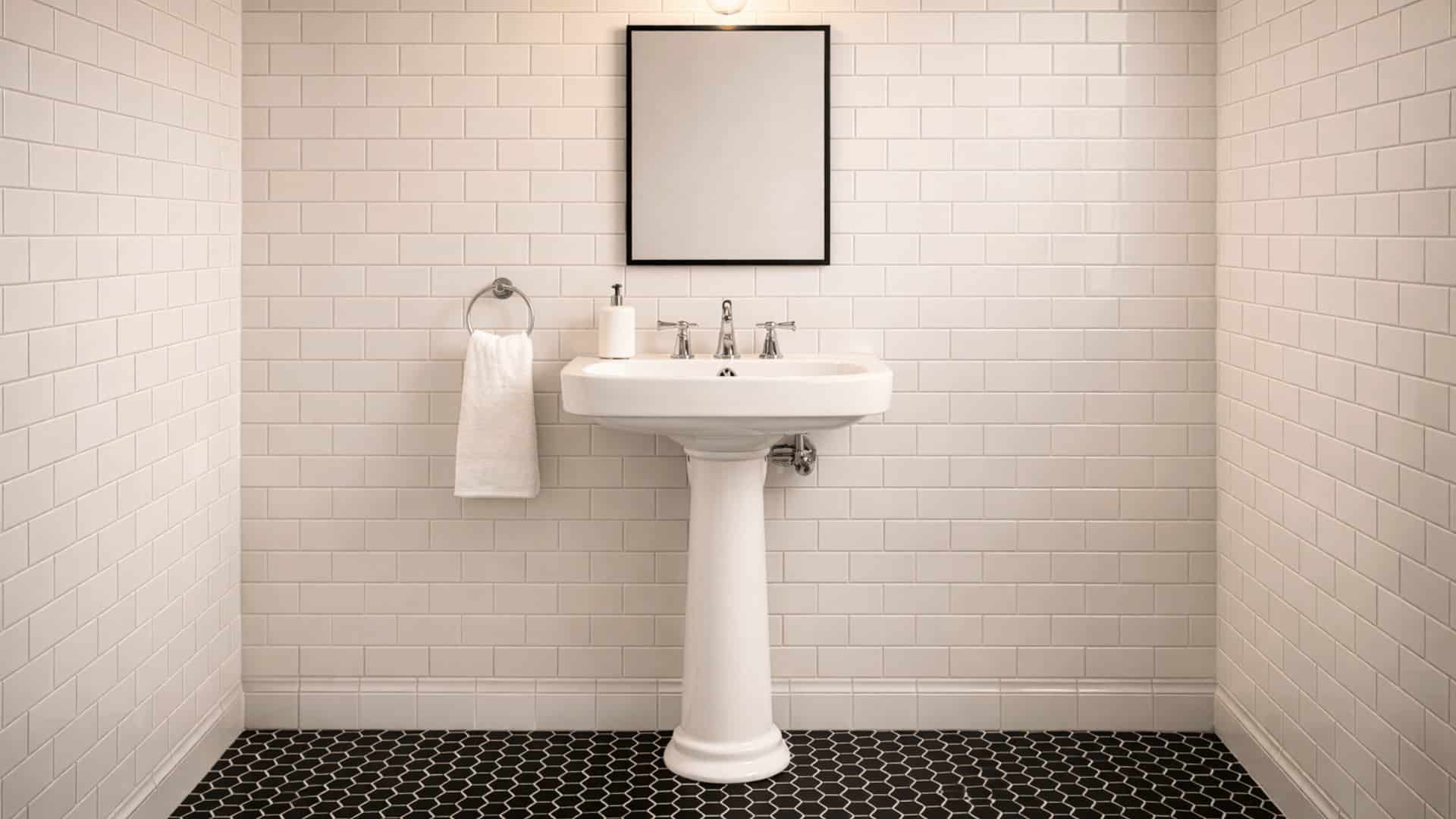
A classic white pedestal sink positioned over black hexagonal floor tile feels period-accurate without being stiff or overly formal. The pedestal design keeps the floor open and fully visible, letting the tile pattern do its intended work without obstruction.
Adding a simple black-framed mirror directly above completes the look without pulling the overall design in any unnecessary or competing directions that would dilute the vintage feel.
23. Black and White Encaustic Cement Tile
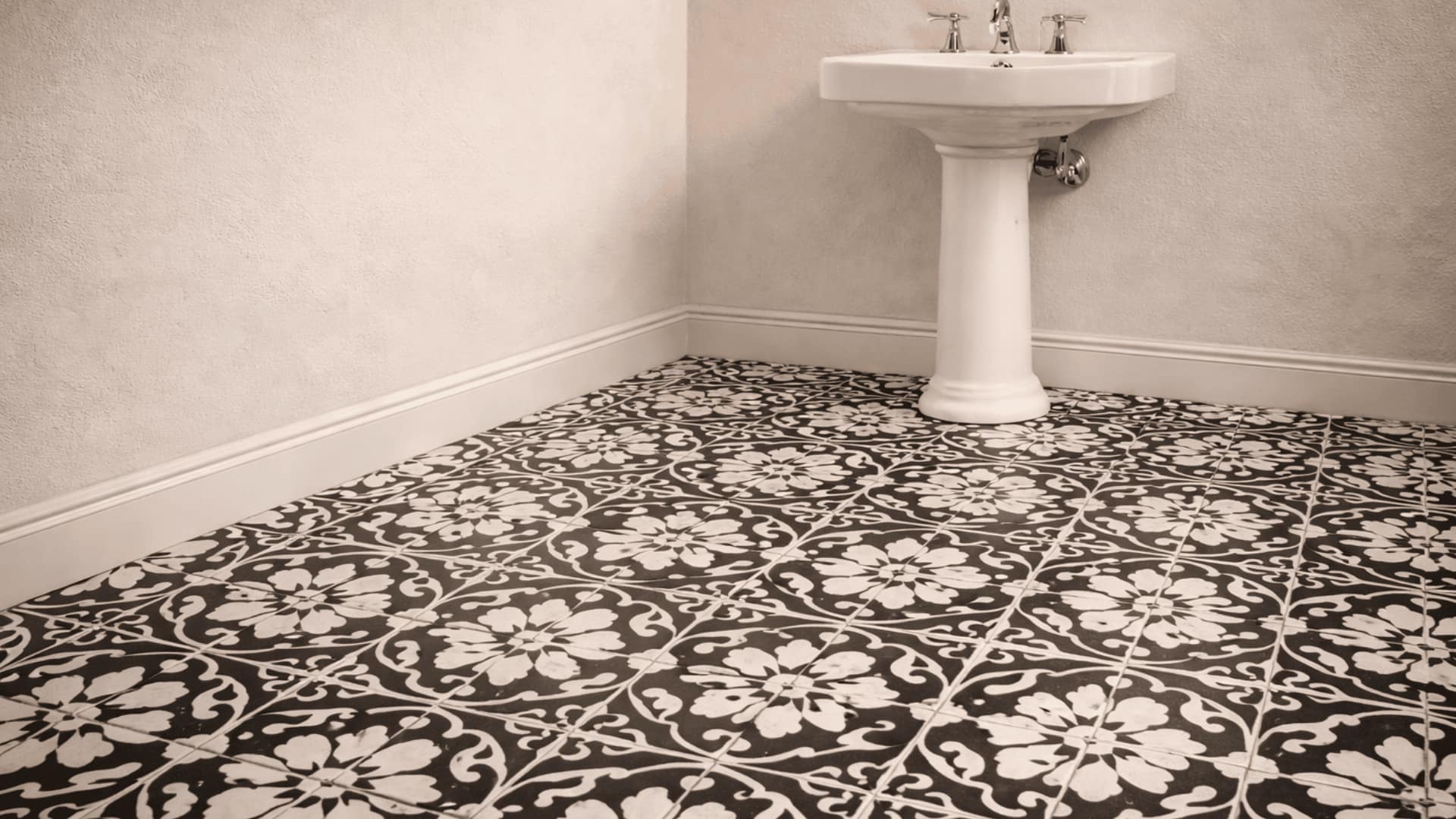
Encaustic cement tiles with black-and-white geometric or floral patterns bring a handcrafted quality that feels vintage without appearing dated or overly nostalgic.
Each individual tile has a slight variation in tone and surface texture, adding warmth that machine-made tiles rarely replicate. These work well as a feature floor or a single accent wall; covering every surface in the room tends to feel visually overwhelming quickly.
24. White Wainscoting With Black Upper Walls
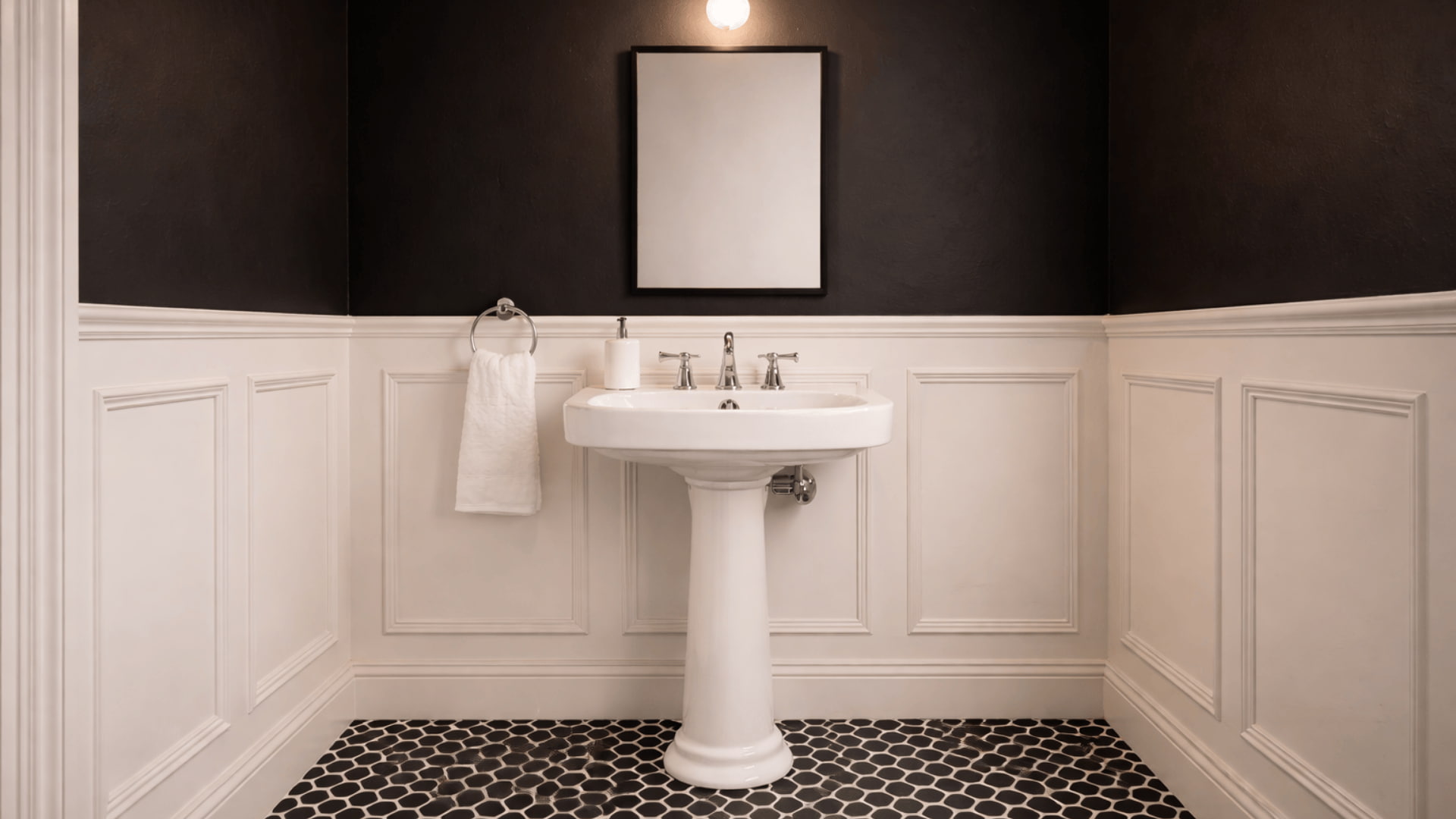
White paneling on the lower half of the walls, with black-painted walls above, reverses the typical wainscoting setup in an unexpected, genuinely dramatic way. It suits powder rooms particularly well, where making an impact matters more than everyday practicality.
Keeping the ceiling white rather than extending the black upward prevents the room from feeling too enclosed or visually heavy from every direction.
25. Black Claw Feet on a White Freestanding Tub
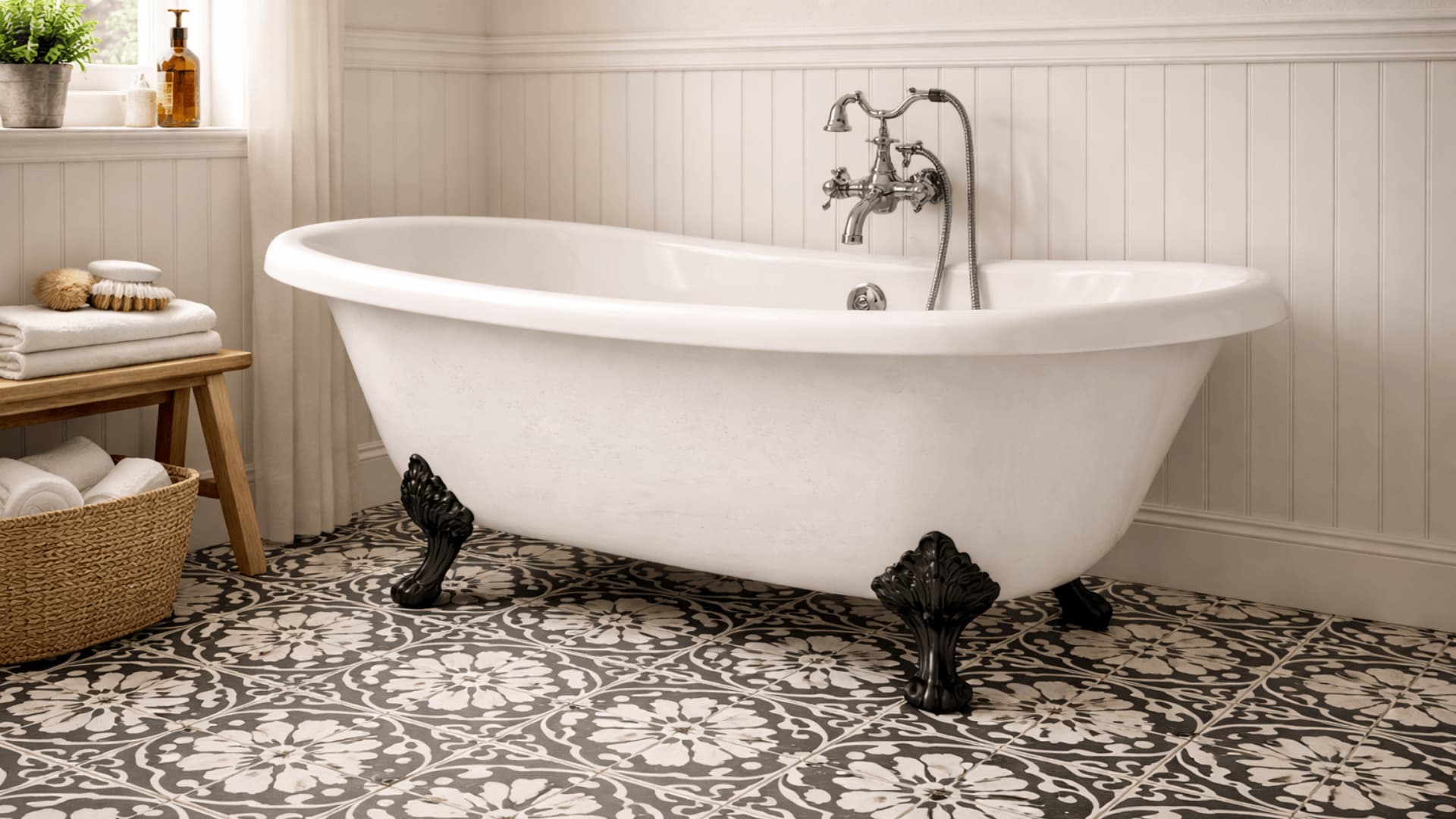
Painting the claw feet of a white freestanding tub black is a small finishing detail that makes a more noticeable difference than expected.
It visually connects the tub to other black elements in the room, fixtures, mirrors, or floor tile, without requiring any significant redesign. The detail reads as intentional and considered rather than coincidental, which elevates the overall finish of the bathroom noticeably.
26. Vintage Black and White Wallpaper as an Accent
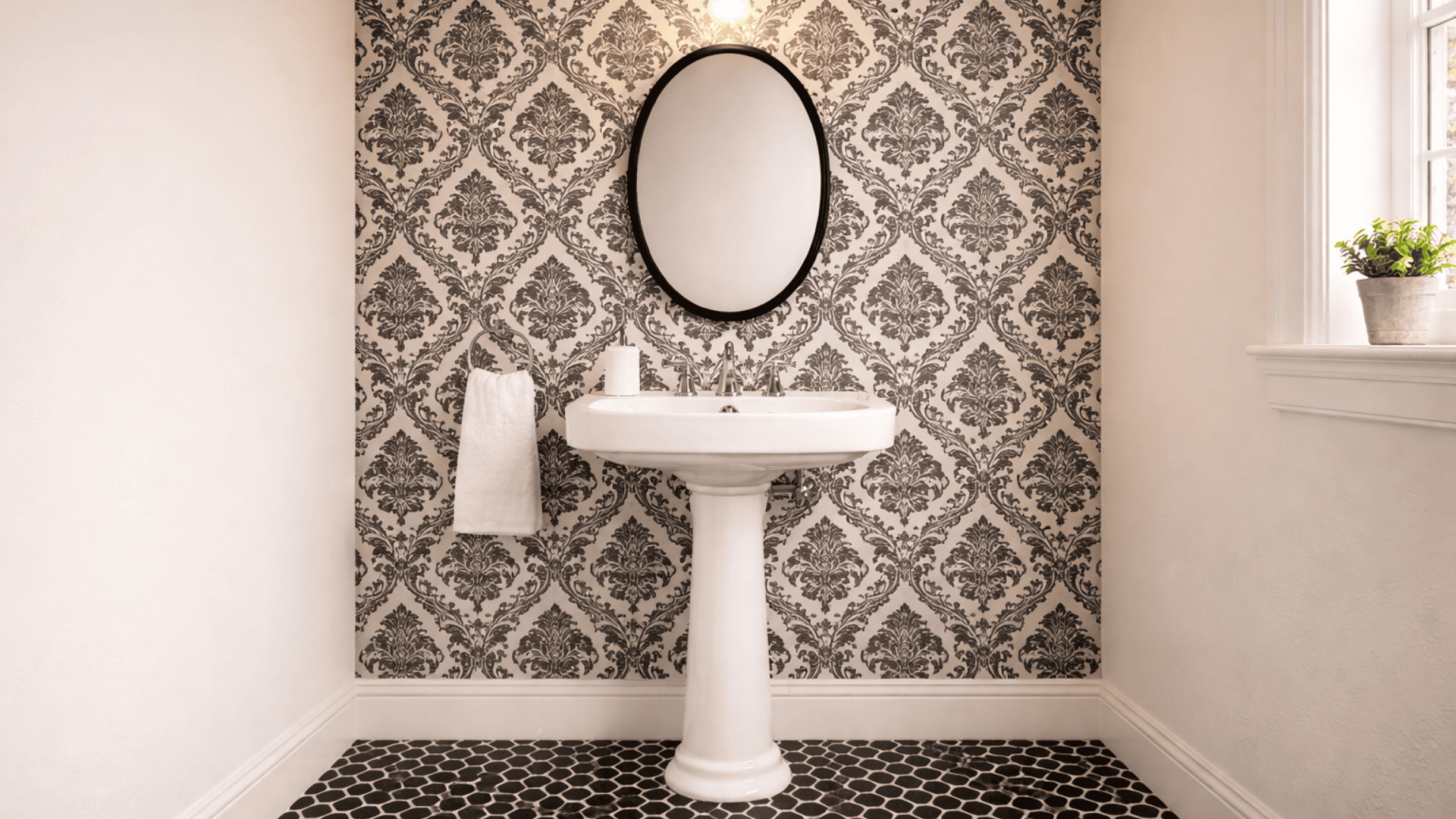
A single wall of black-and-white vintage-pattern wallpaper, florals, damask, or toile adds personality to a bathroom without overwhelming the space. Keeping the remaining walls plain white lets the pattern breathe and stand out on its own terms.
This works best behind the vanity or toilet wall, where it functions as a backdrop rather than competing directly with functional bathroom elements.
Black and White With Gold or Brass Accents
Gold and brass warm up the sharpness of black and white without softening the contrast itself. Used carefully, they considerably shift the mood of the space.
27. Brass Faucet Against Black and White Tile
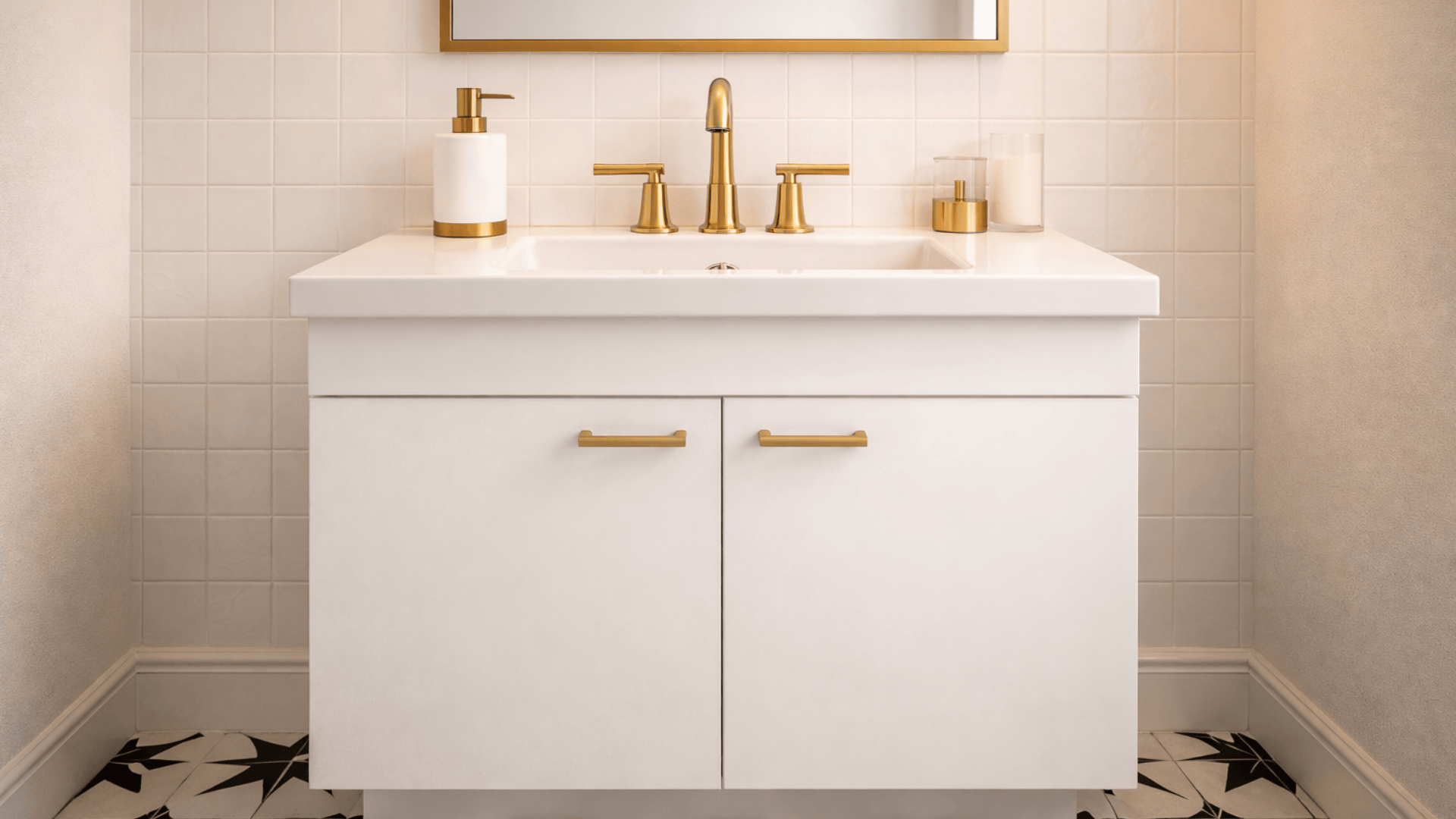
A brass faucet set against black-and-white tile adds warmth at the most visible point in the bathroom. The warm gold tone cuts through the starkness of the palette without disrupting the overall contrast.
Brushed brass tends to age more gracefully in bathroom environments than polished versions, which show water spots and fingerprints far more readily and require noticeably more upkeep to stay looking clean.
28. Gold-Framed Mirror Above a White Vanity
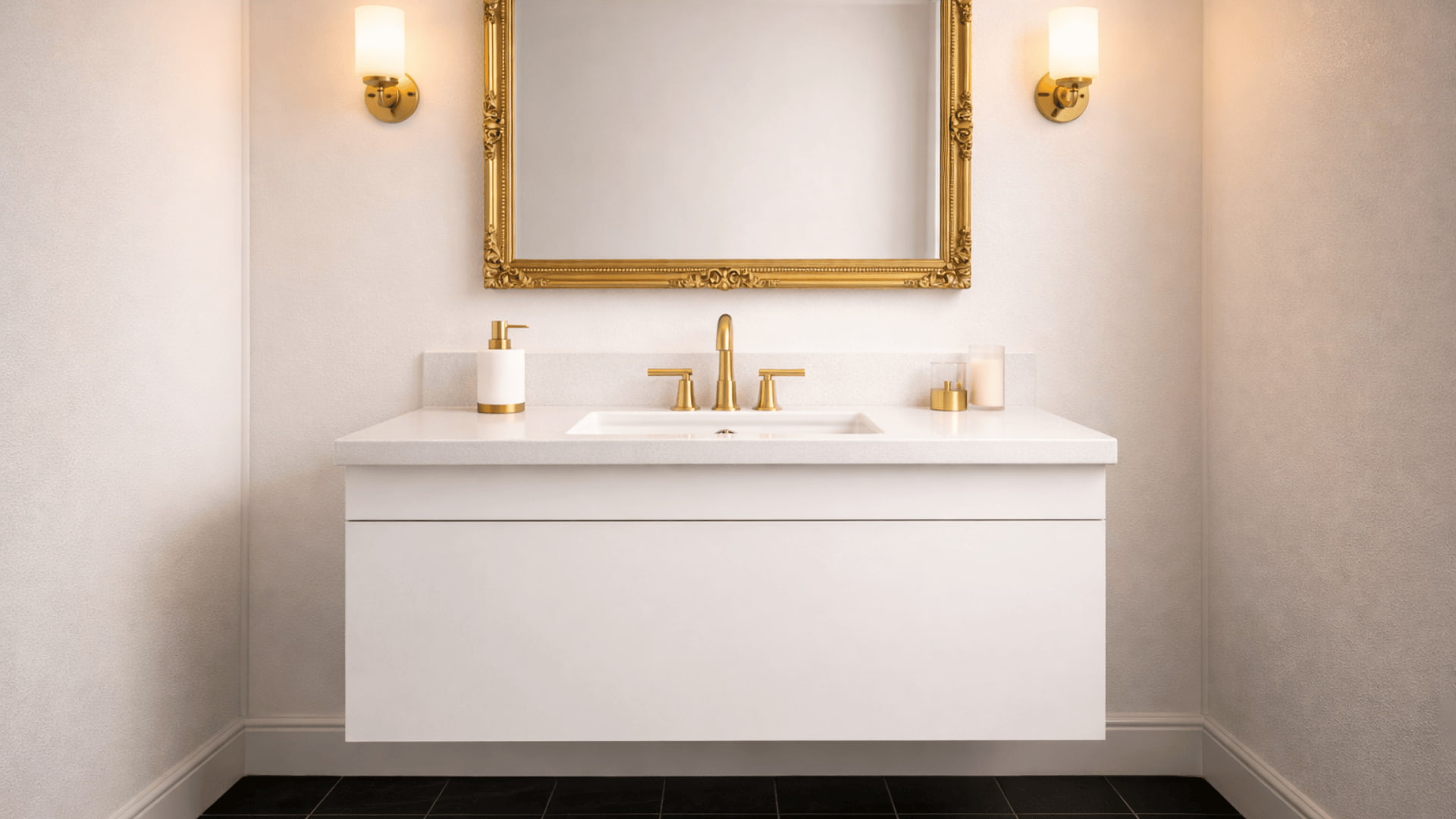
A gold- or brass-framed mirror above a white vanity introduces warmth at eye level, making a real and immediate difference in how the room feels. It softens the contrast between black and white just enough to keep the space from feeling cold or clinical.
Pairing it with white walls and black floor tile keeps the gold feeling grounded rather than out of place in the palette.
29. Black Tile Shower With Brass Shower Fixtures
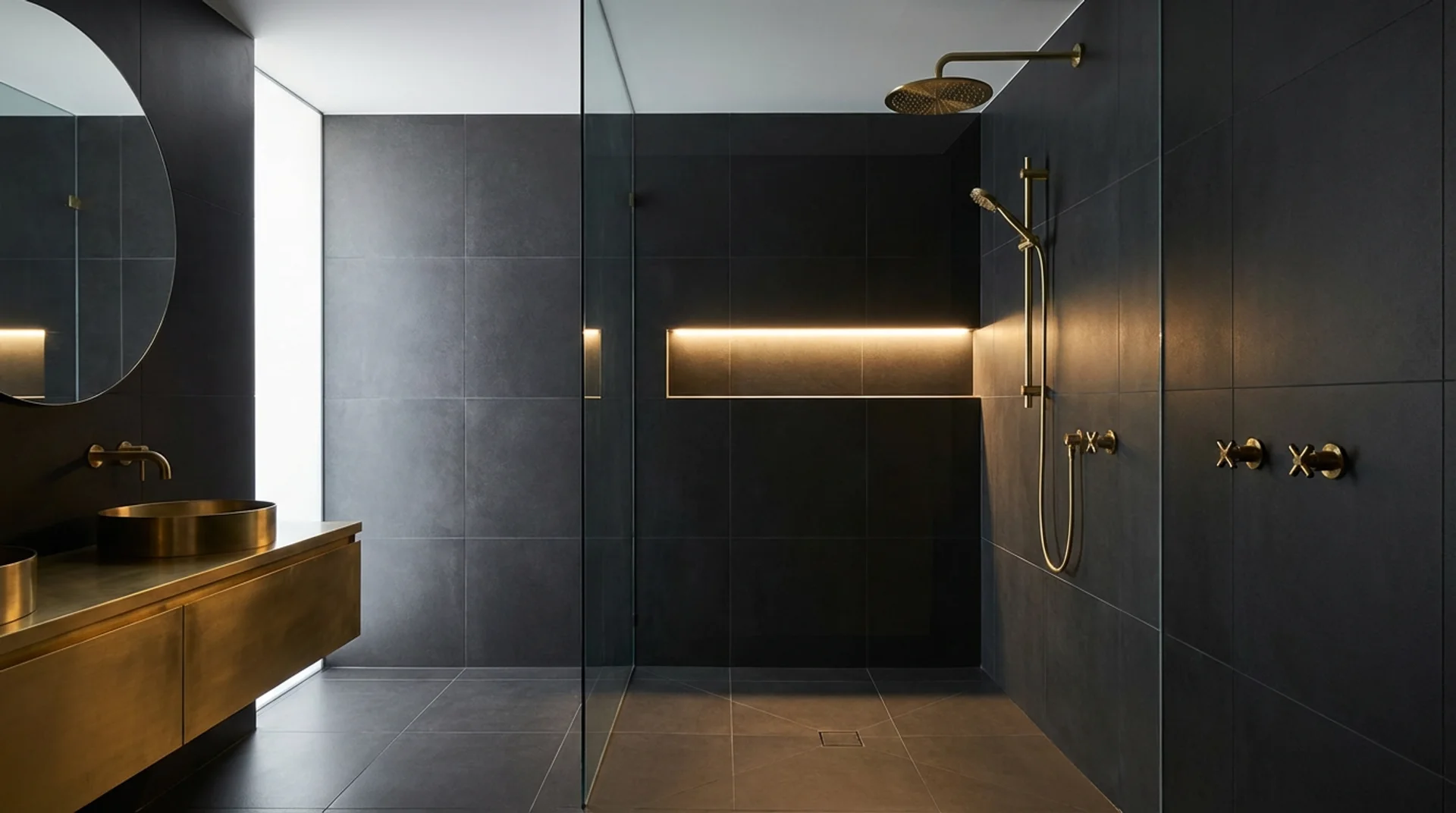
A black-tiled shower with brass fixtures is one of the stronger material combinations in this palette. The warm metal set against dark tile creates depth and richness that a single-finish bathroom rarely achieves.
Using matte-black tile rather than glossy keeps the contrast from feeling overly harsh, and the brass reads noticeably warmer against a matte surface than against a shiny or reflective one.
30. Black Hardware With Brass Cabinet Pulls
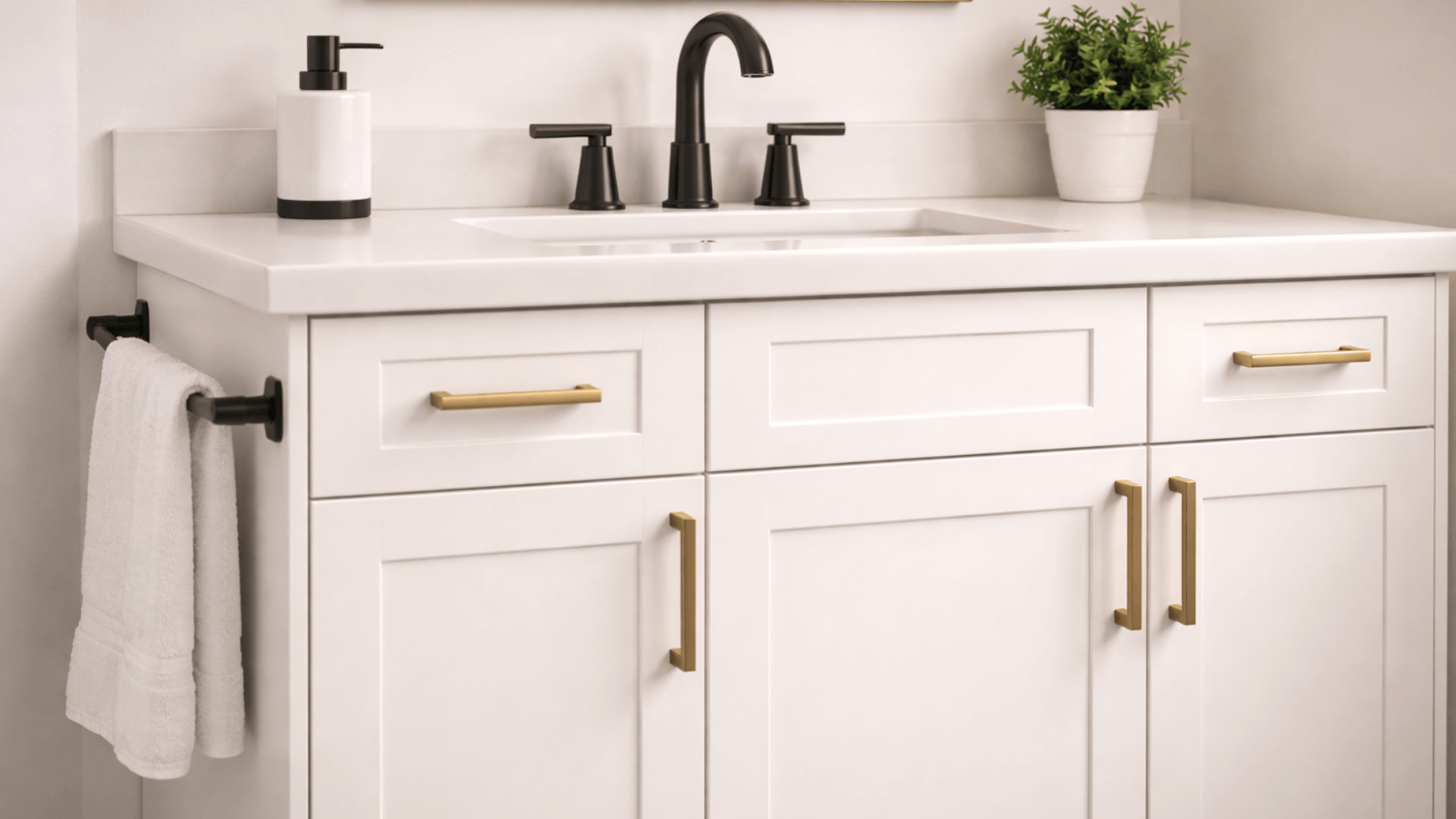
Mixing black hardware on faucets and towel bars with brass cabinet pulls creates a layered look that feels curated rather than accidental or indecisive.
The key to making this work is consistency in finish; brushed versions of both metals tend to sit together more naturally than mixing matte black with polished brass, which can feel mismatched and pull the overall design in two different directions simultaneously.
31. White Bathroom With Brass Lighting Fixtures
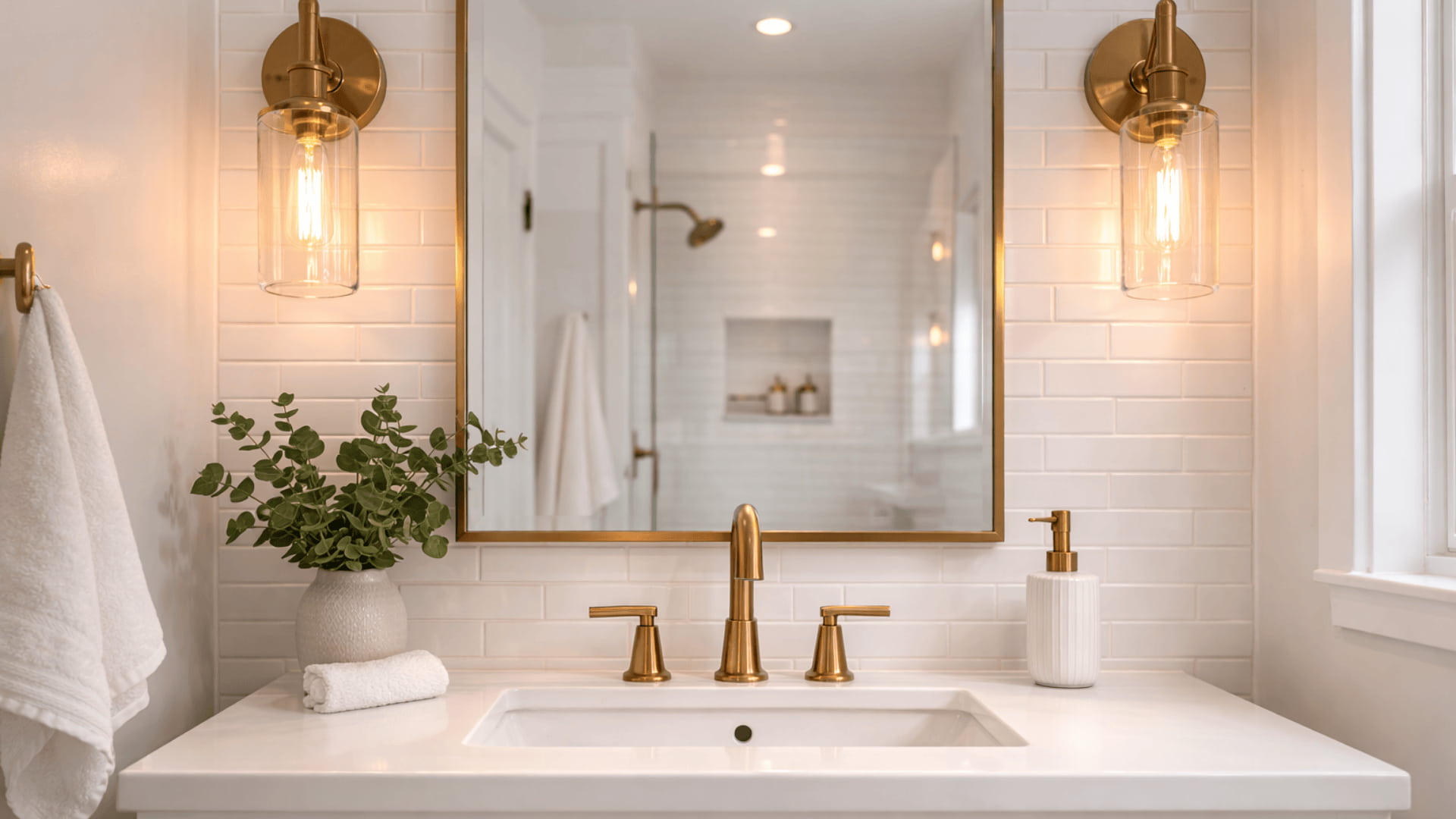
Wall sconces or overhead lighting in a brass finish warm up an otherwise cool black-and-white bathroom more than most people anticipate. Lighting fixture finish matters as much as bulb temperature in setting the mood of a space.
Warm-toned bulbs paired with brass fixtures keep the bathroom from feeling clinical or stark, a common outcome when black-and-white bathrooms rely entirely on cool-white lighting.
32. Brass Towel Bars in a Black and White Bathroom
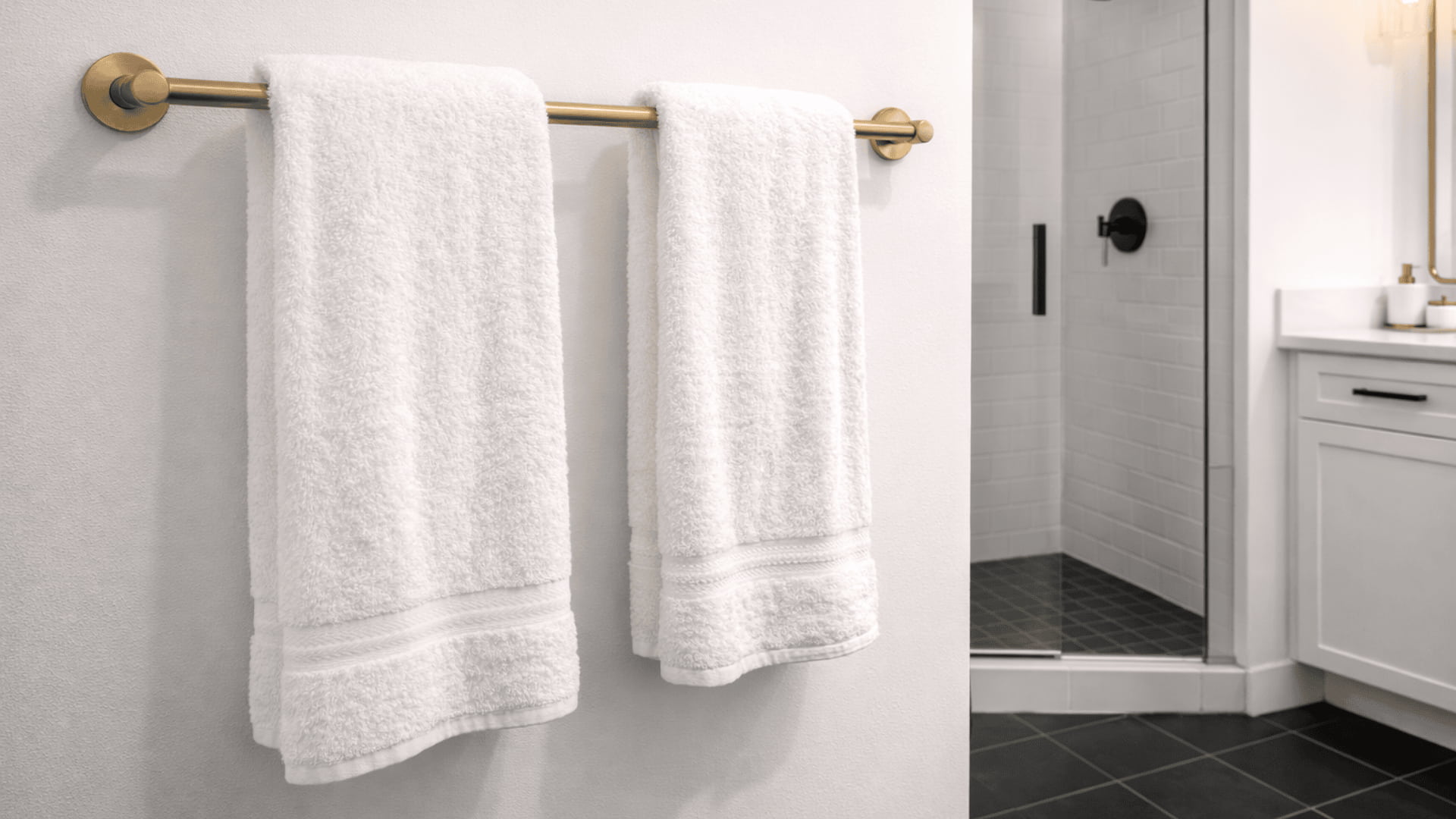
Swapping out standard chrome or matte-black towel bars for brass ones is a quick, low-commitment change that noticeably shifts the room’s temperature. It adds warmth without requiring any renovation work.
This works especially well in bathrooms that already lean toward the softer end of the black-and-white spectrum rather than the bold or high-contrast end, where warmer metals can feel slightly out of place.
33. Black and White Tile With a Gold Clawfoot Tub
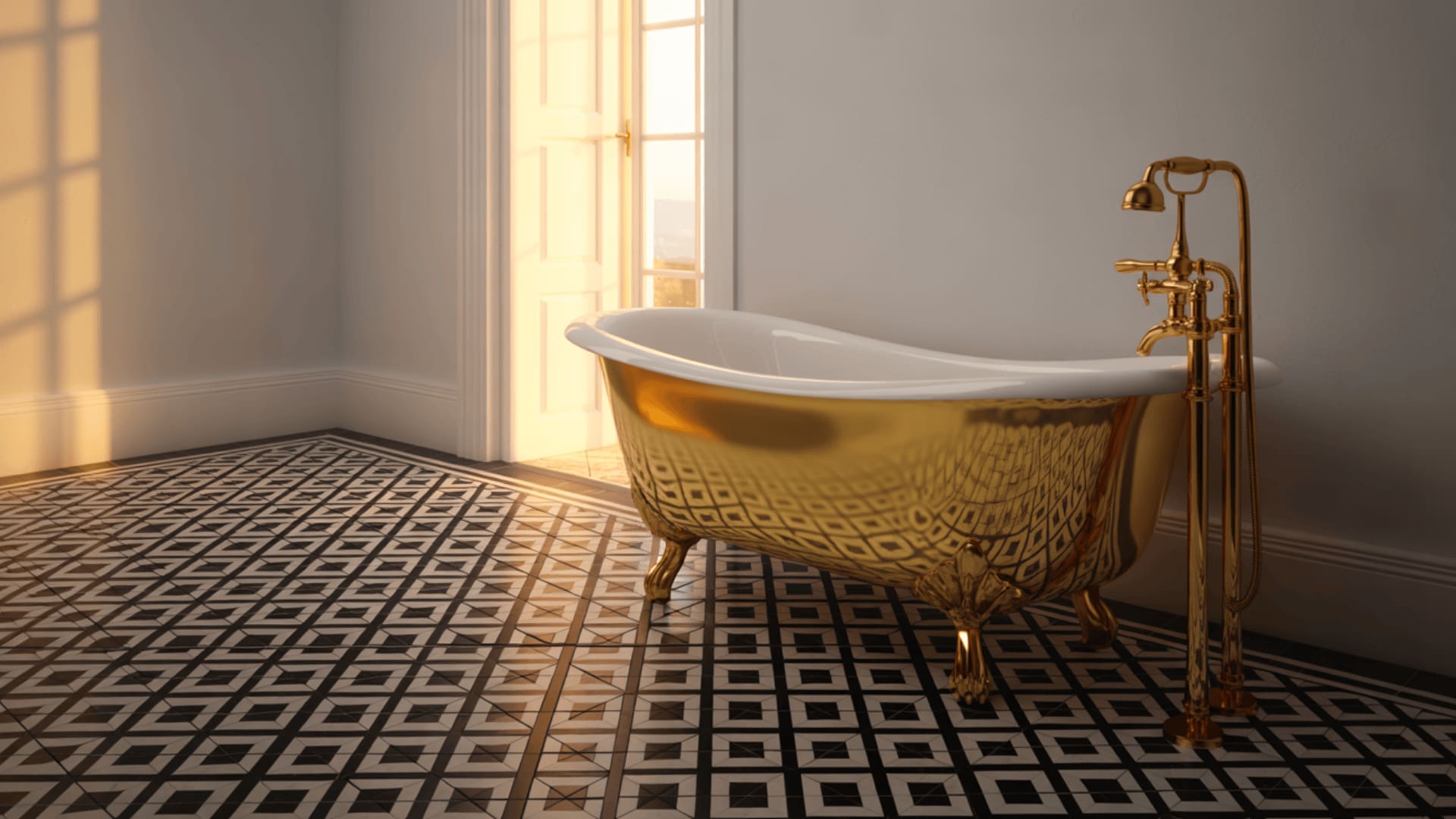
A gold- or brass-finished clawfoot tub in a black-and-white tiled bathroom is a statement piece that justifies its presence through sheer contrast. The metallic finish ties the palette together in an unexpected but effective way.
Keeping the walls and floors simple ensures the tub remains the clear focal point rather than competing visually with a busy or pattern-heavy background that divides attention throughout the room.
Black and White With Wood Elements
Wood softens the contrast of black and white in a way that few other materials can match. It adds warmth and texture without introducing a competing color into the palette.
34. Walnut Vanity With Black and White Tile Floor
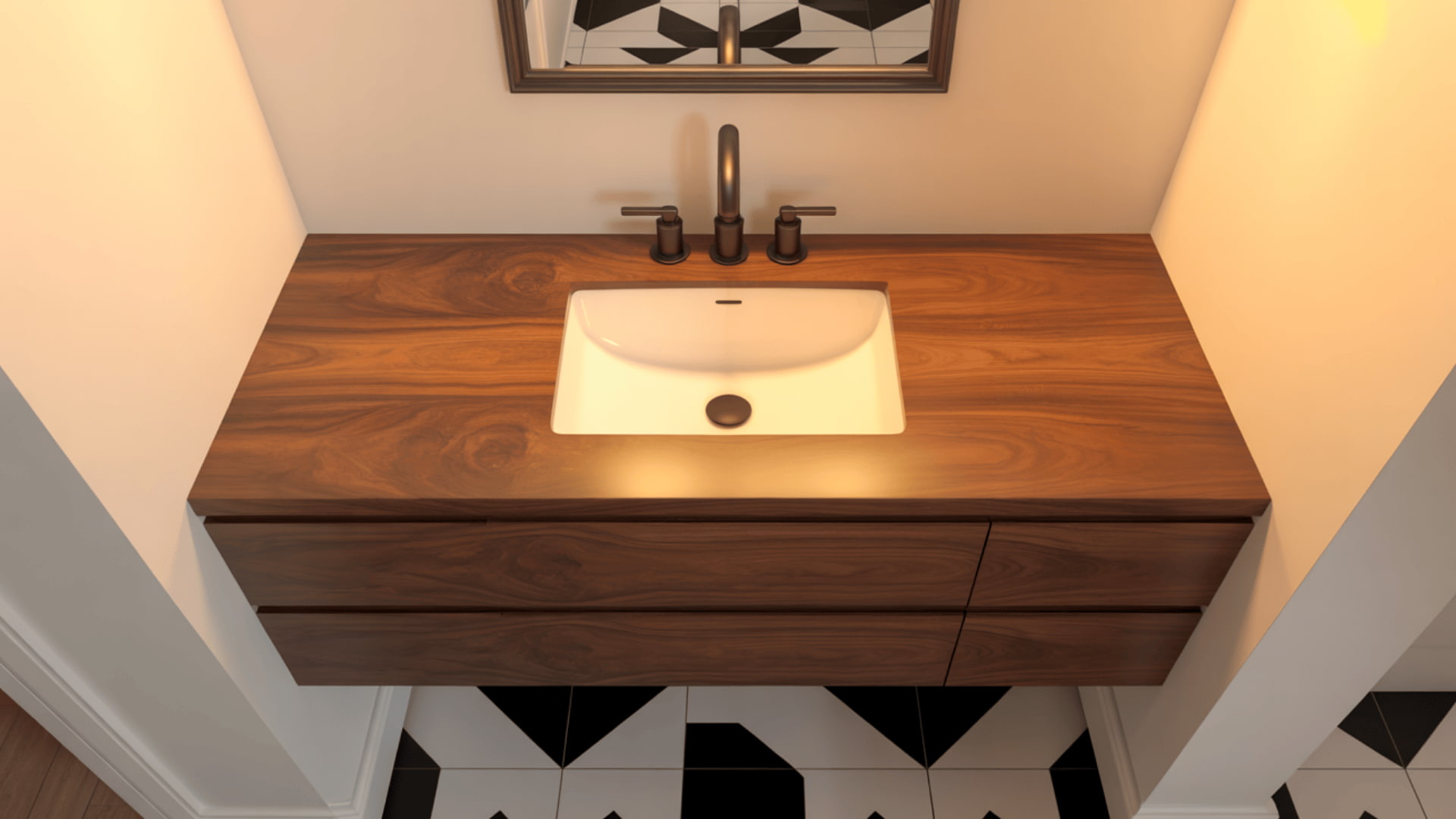
A walnut vanity paired with a black-and-white tile floor creates a balanced look that feels warm and steady. The rich brown tone naturally softens the sharp contrast between black and white without competing with either color.
In my experience, walnut works especially well when the tile pattern feels bold or graphic. The visible wood grain adds texture and depth, which keeps the space from feeling flat. It’s a simple way to introduce warmth while still keeping the overall palette clean and defined.
35. Wood Floating Shelves in a Black and White Bathroom
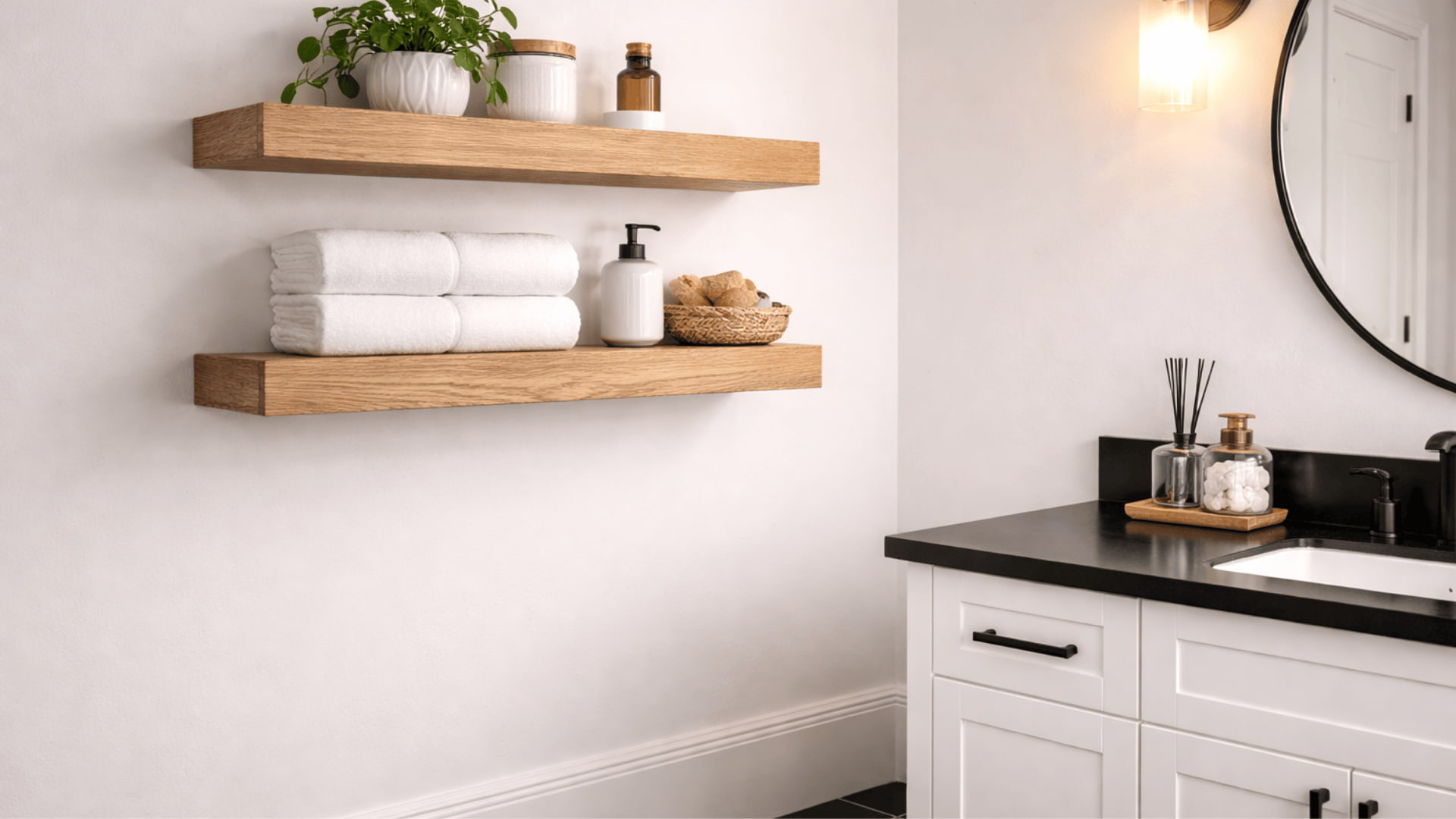
Open wood shelving in a black-and-white bathroom adds warmth and breaks up the visual rigidity of the palette without introducing a new color.
Natural or lightly stained wood works better than painted shelves here; the grain and warm tone add an organic quality that painted surfaces can’t match.
Keeping shelf styling minimal lets the wood itself remain the focus rather than the objects placed on it.
36. White Shiplap Walls With Black Fixtures and Wood Floor
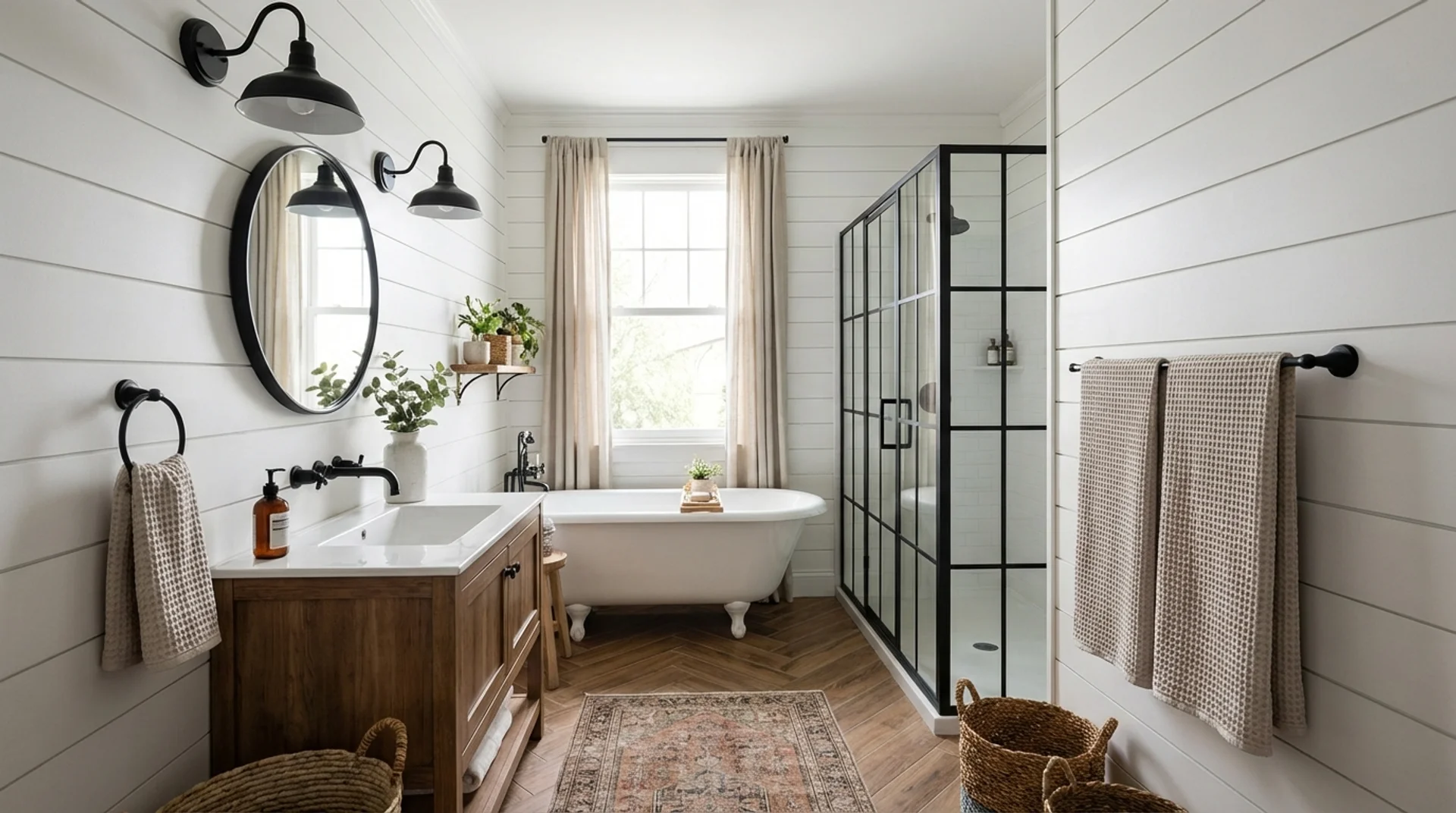
White shiplap walls paired with black fixtures and a wood-look floor tile create a relaxed, layered version of the black-and-white palette that suits casual or farmhouse-influenced bathrooms well.
The shiplap adds surface texture to the white without introducing color. Wood-look porcelain tile is a practical choice in bathrooms where real hardwood flooring isn’t typically recommended due to ongoing moisture exposure.
37. Black Vanity With a Wood Countertop
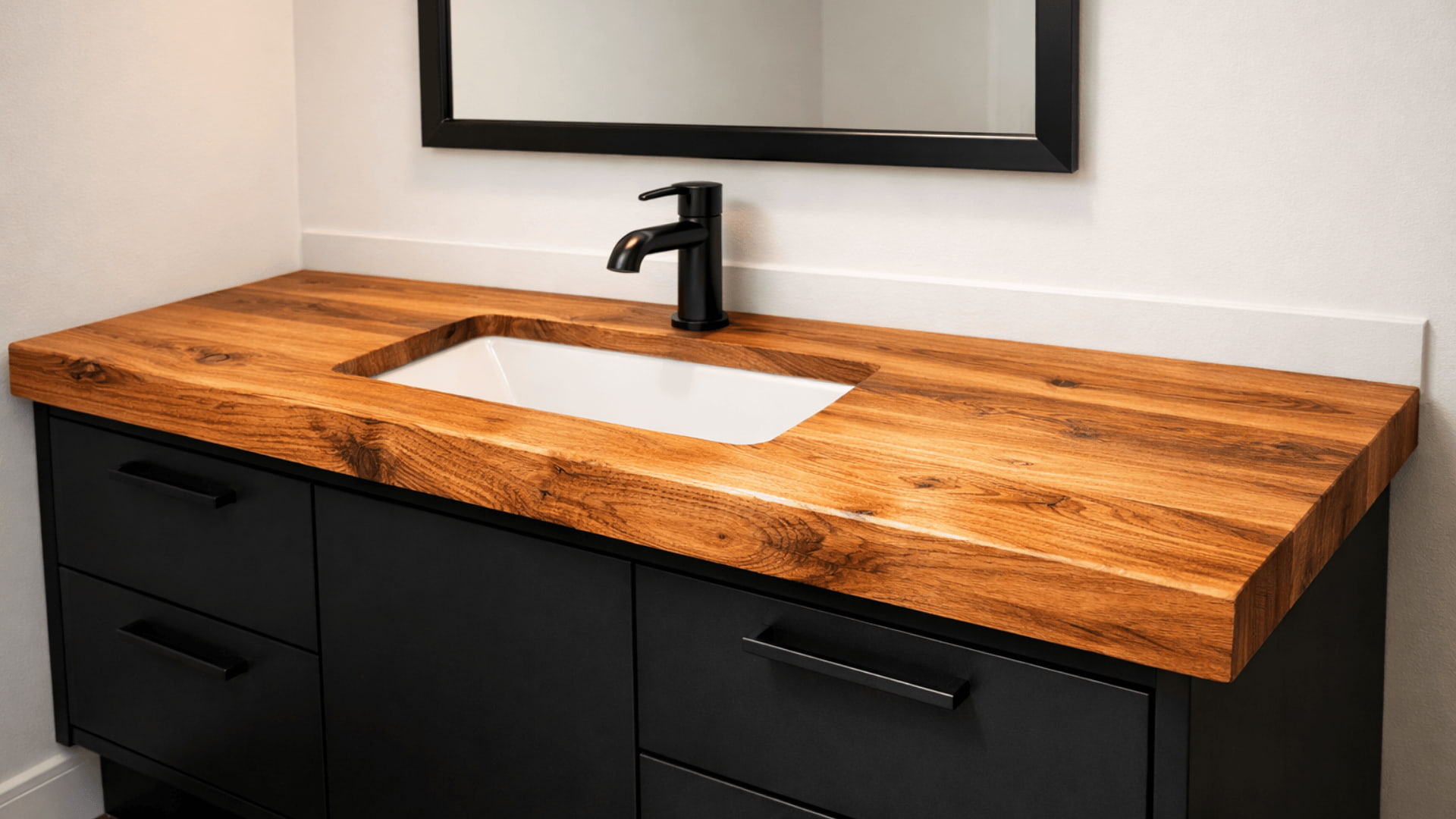
A black vanity topped with a live-edge or butcher-block wood countertop is an unexpected pairing that works more naturally than it might sound. The wood brings warmth directly to the vanity area, which is often the coldest part of a high-contrast black-and-white bathroom.
Sealing the wood surface properly is essential in a wet environment; untreated wood deteriorates quickly with regular exposure to water and moisture.
38. Teak Shower Mat Against Black and White Tile
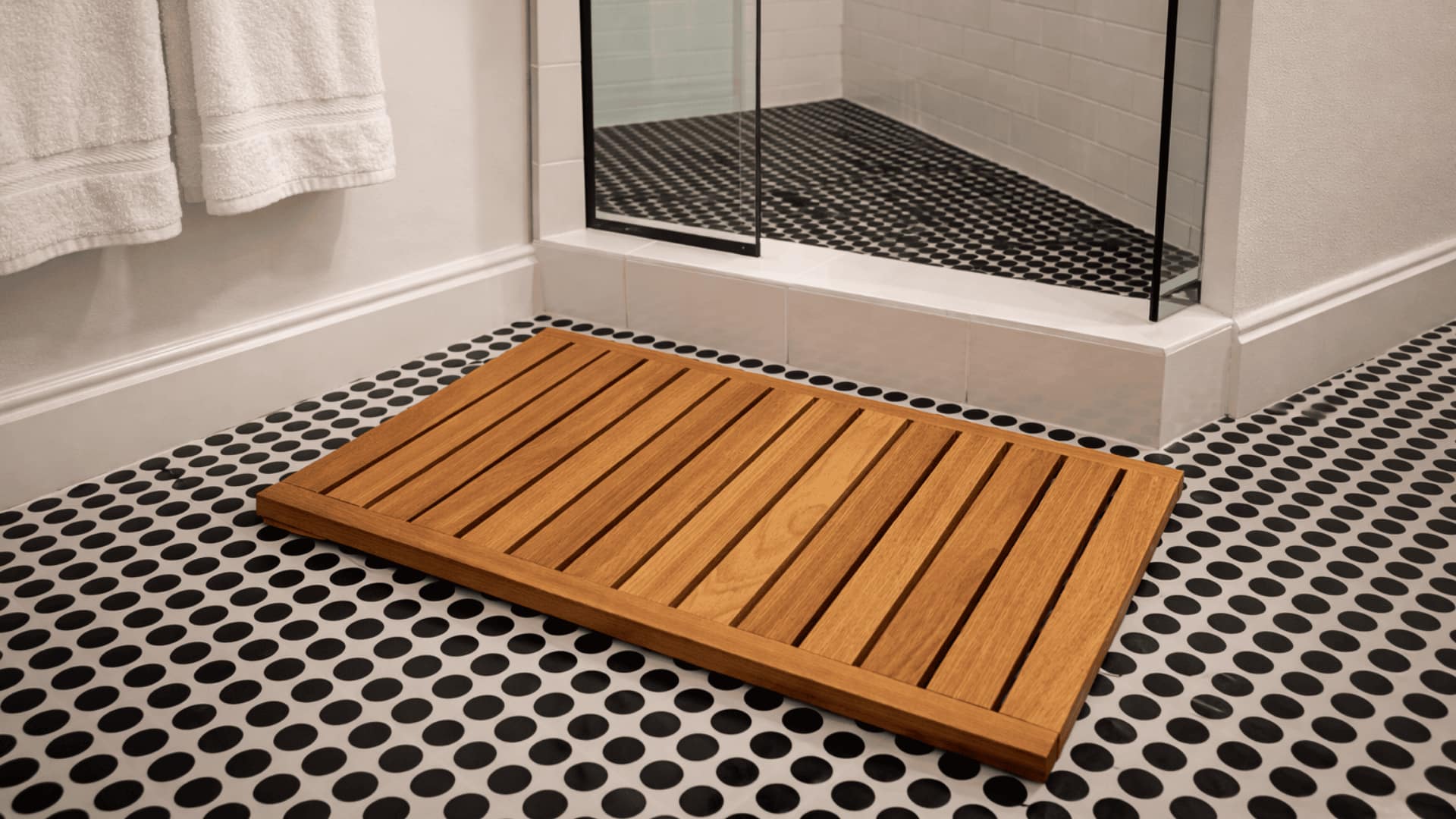
A teak shower mat laid on black-and-white floor tile is a small addition that has a noticeable warming effect on the overall space.
The natural wood introduces warmth and tactile texture at floor level, where it’s immediately felt underfoot rather than just seen from a distance.
Teak holds up well in wet bathroom environments compared to most other wood types and requires relatively little maintenance.
39. Wood-Framed Mirror in a Black and White Bathroom
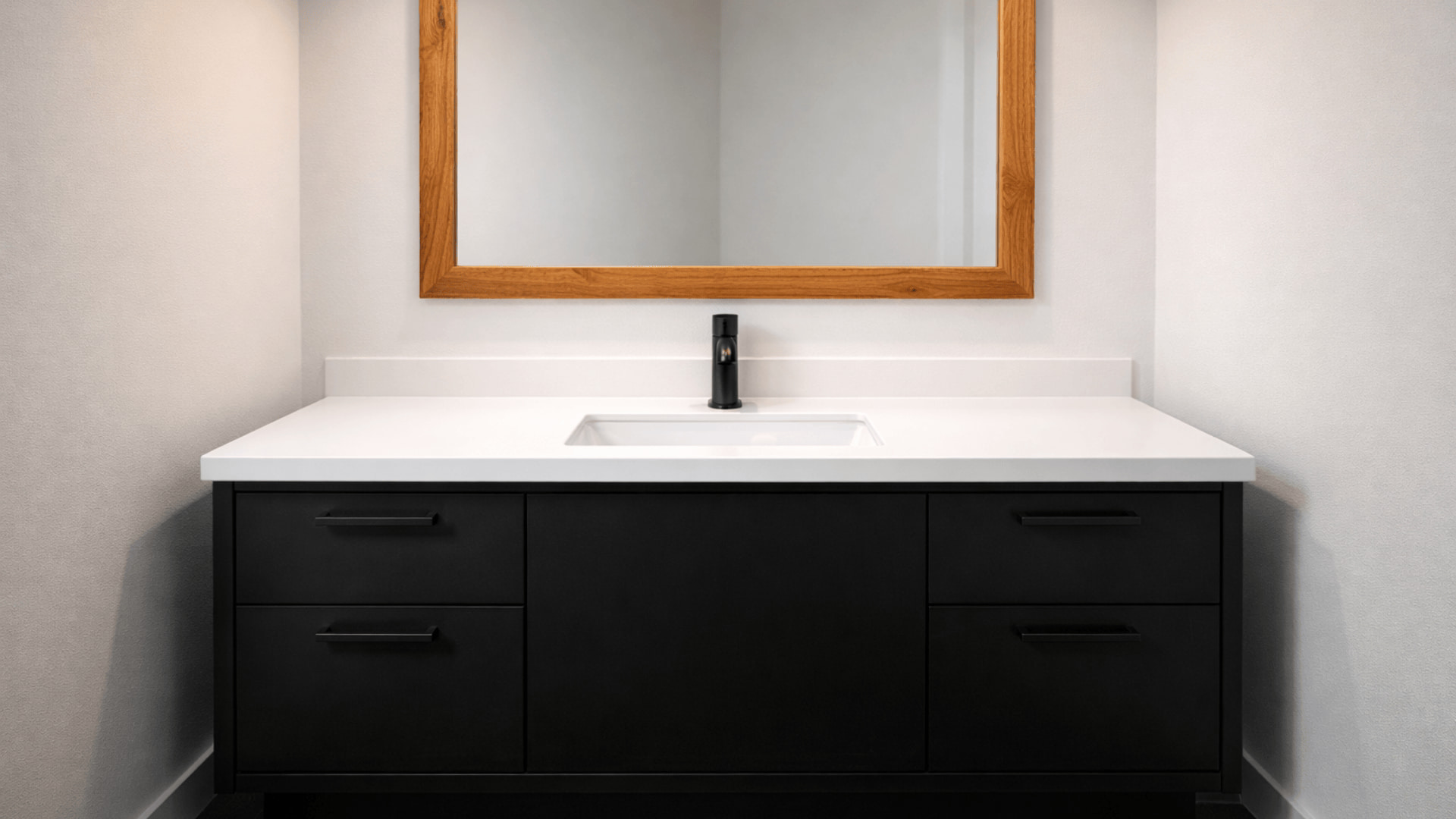
A natural wood-framed mirror softens a black-and-white bathroom in a subtle yet effective way, easy to overlook until it’s in place. It introduces warmth at eye level without altering other elements in the room.
This works particularly well in bathrooms that already feature a black vanity or black fixtures, where a second black-framed mirror might feel too heavy or overly repetitive overall.
40. Bamboo Accessories in a Black and White Bathroom
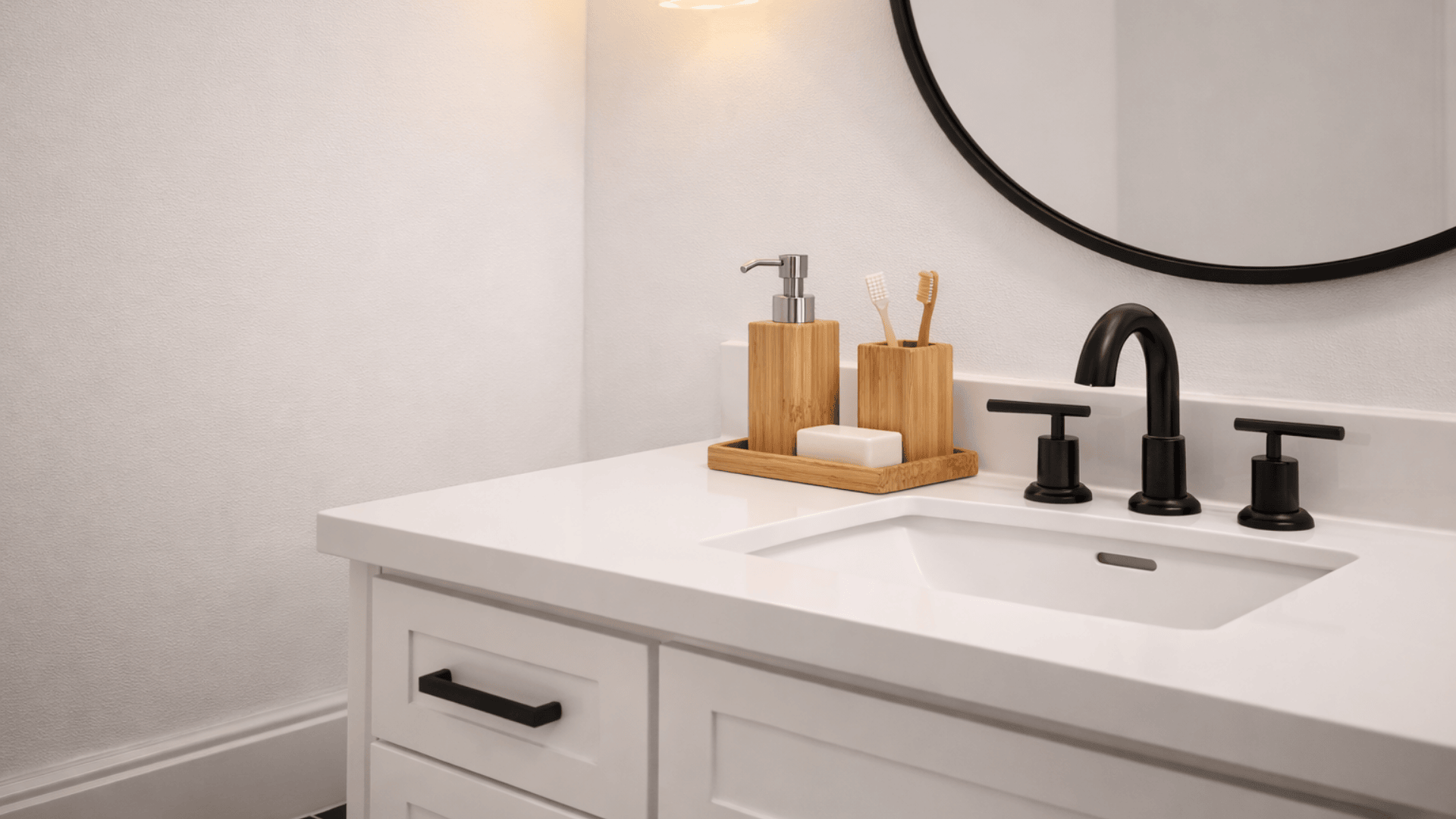
Bamboo soap dispensers, trays, and small storage containers add organic warmth to a bathroom that’s otherwise composed entirely of hard surfaces and sharp contrast.
They’re also easy to swap out if the design direction changes later. Small accessories tend to make a more significant visual impact in a high-contrast bathroom than in a softer, more neutral space, where the eye isn’t drawn as sharply.
Bold and Dramatic Black and White Bathrooms
Bold black and white bathrooms aren’t the right fit for every space or every person, but when they work, they’re genuinely hard to forget.
41. All-Black Walls With White Fixtures and Floor
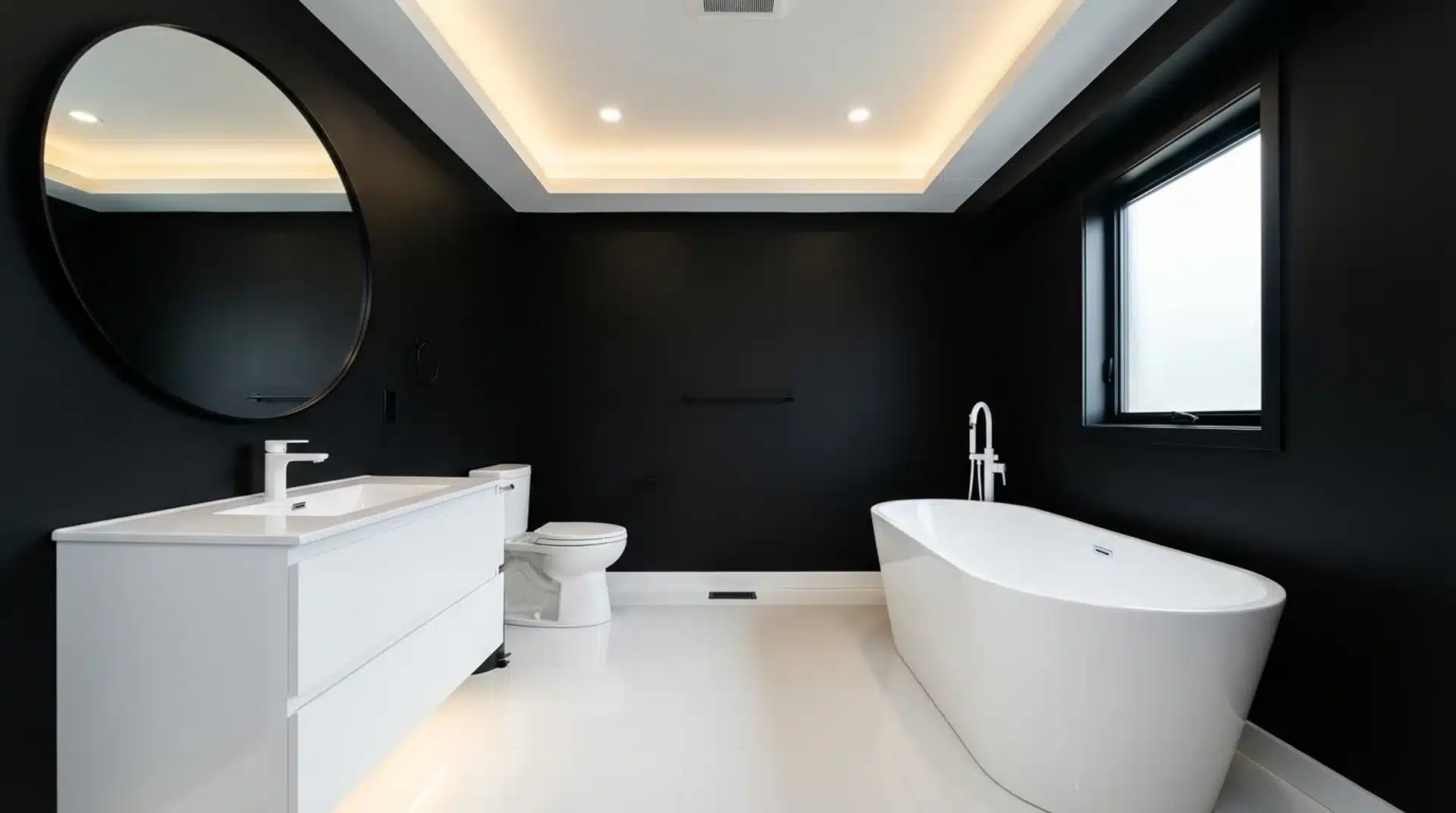
Fully black walls with white fixtures and a white floor flip the usual black-and-white ratio entirely and make an immediate impact.
It’s a dramatic choice that works best in powder rooms or bathrooms that don’t see heavy daily use. The white floor and fixtures prevent the room from feeling like a sealed box despite the dark walls surrounding every surface in the space.
42. Black and White Graphic Wall Mural
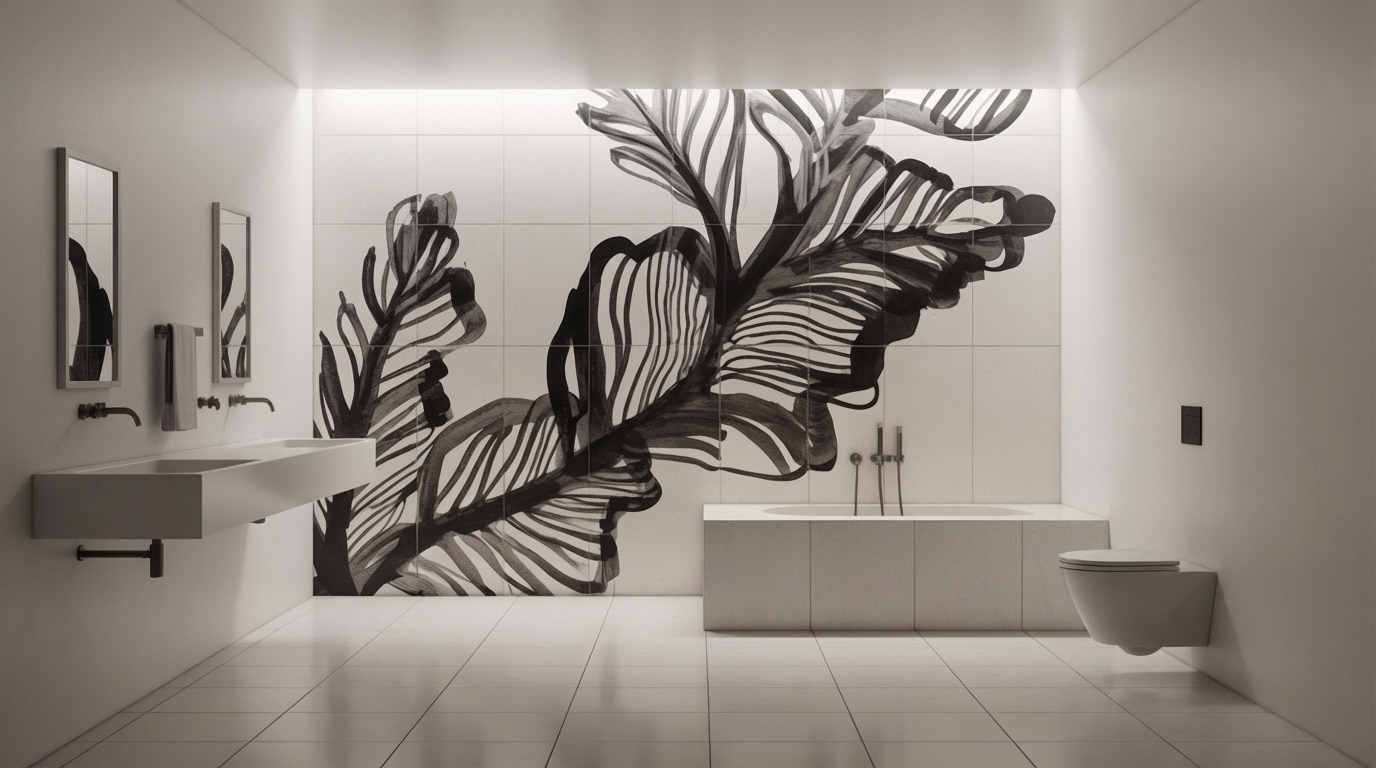
A large-scale black-and-white graphic mural on a single wall makes an instant statement without touching any fixtures or tile. Abstract patterns, architectural line drawings, or oversized botanical prints all work well in this format.
Keeping everything else in the room plain, white walls, simple fixtures, gives the mural enough visual space to land without competing elements fragmenting the impact it’s meant to create.
43. Black Marble Walls With White Floor
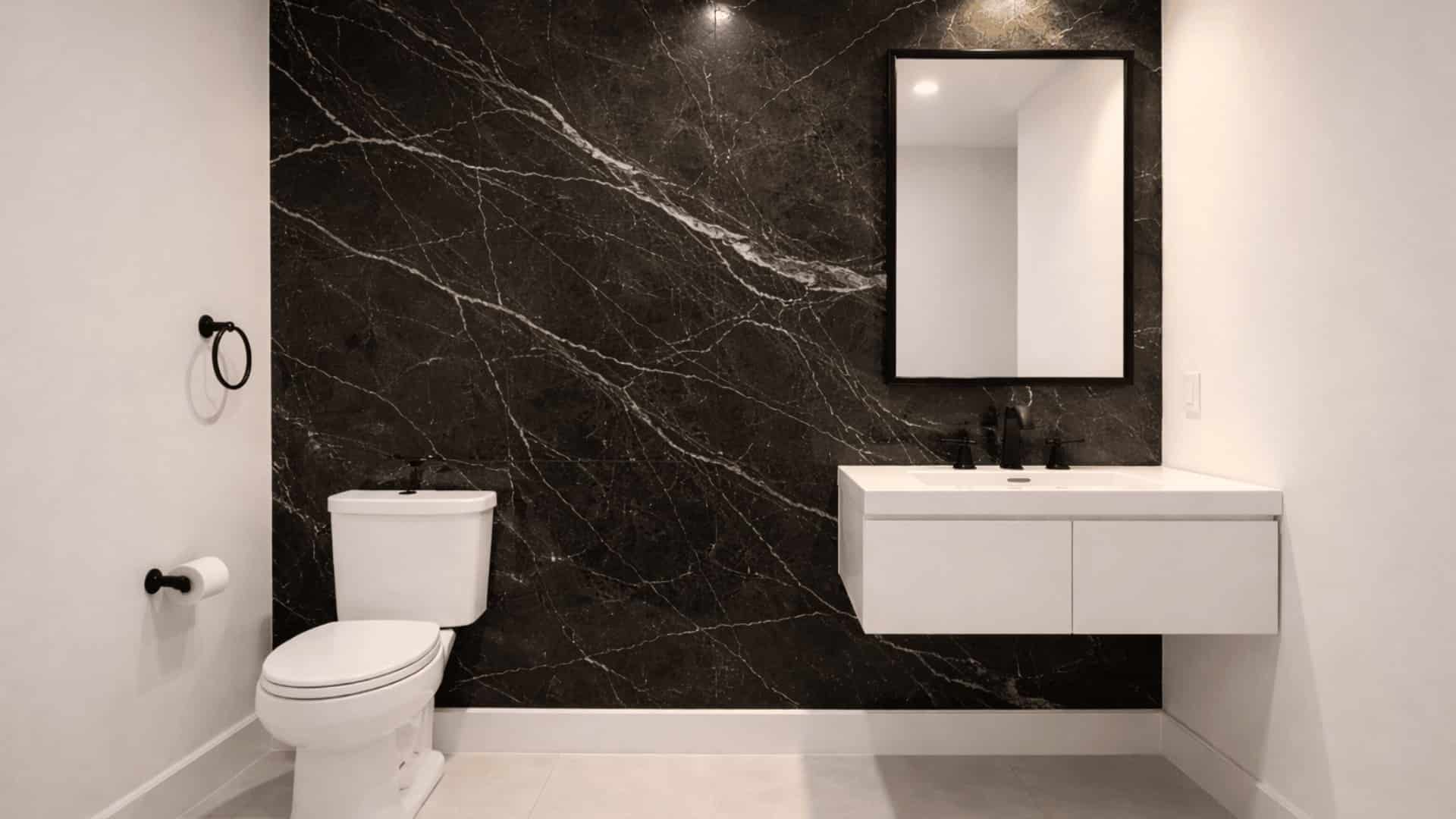
Black marble walls paired with white floor tile create a rich, layered look that goes beyond basic contrast. The natural veining running through black marble adds movement and depth that flat-painted or standard-tiled walls simply can’t replicate.
It’s a more expensive approach, but even a single black marble feature wall can fundamentally change the character and perceived quality of an entire bathroom space.
44. High-Contrast Striped Tile Walls
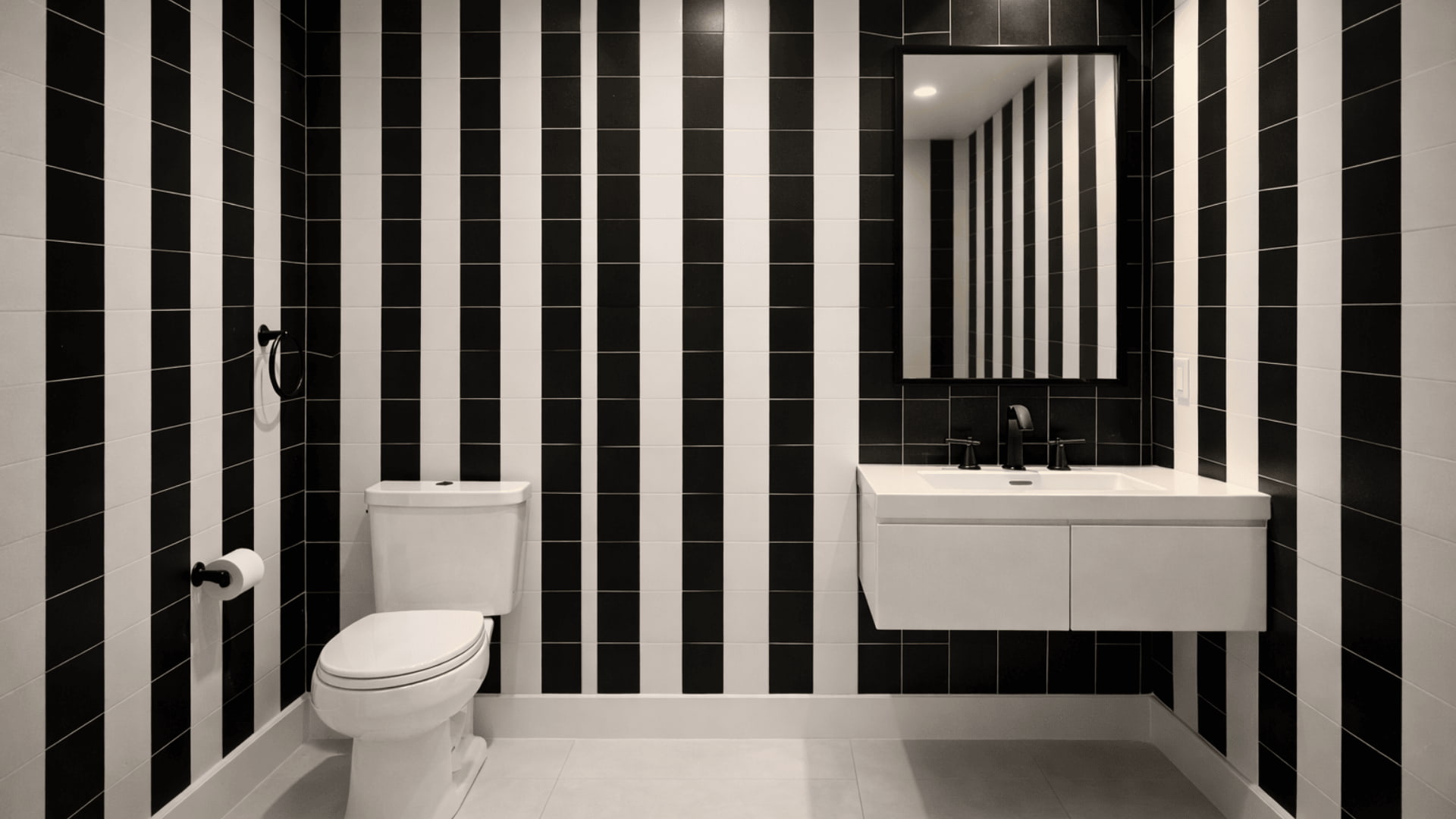
Floor-to-ceiling vertical stripes in alternating black and white tile create height and drama at the same time. The stripes make the room feel noticeably taller while the high contrast keeps the walls visually active.
Keeping the floor a single solid color, either black or white, balances the intensity of the striped walls without making the room feel sparse or under-designed.
45. Black Wet Room With White Mosaic Accents
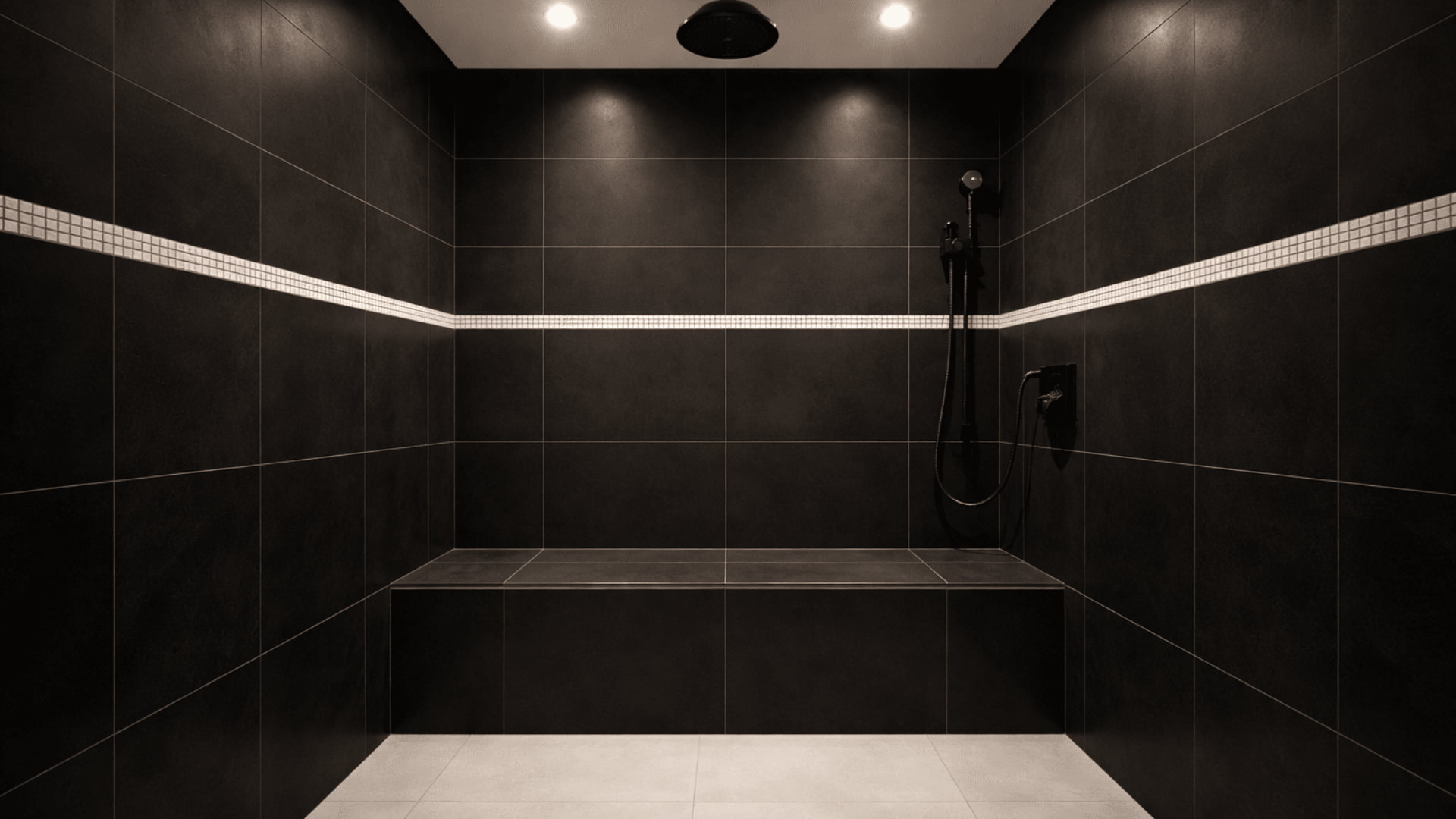
A fully black wet room with small white mosaic tile accents used as a border or feature strip creates a space that feels immersive and intentional.
Darker tile in wet rooms is a practical advantage because grout lines and water marks are far less visible on dark surfaces. The white mosaic accents prevent the space from becoming a single flat field of dark color, which would read as one-dimensional.
46. Black and White Maximalist Pattern Mix
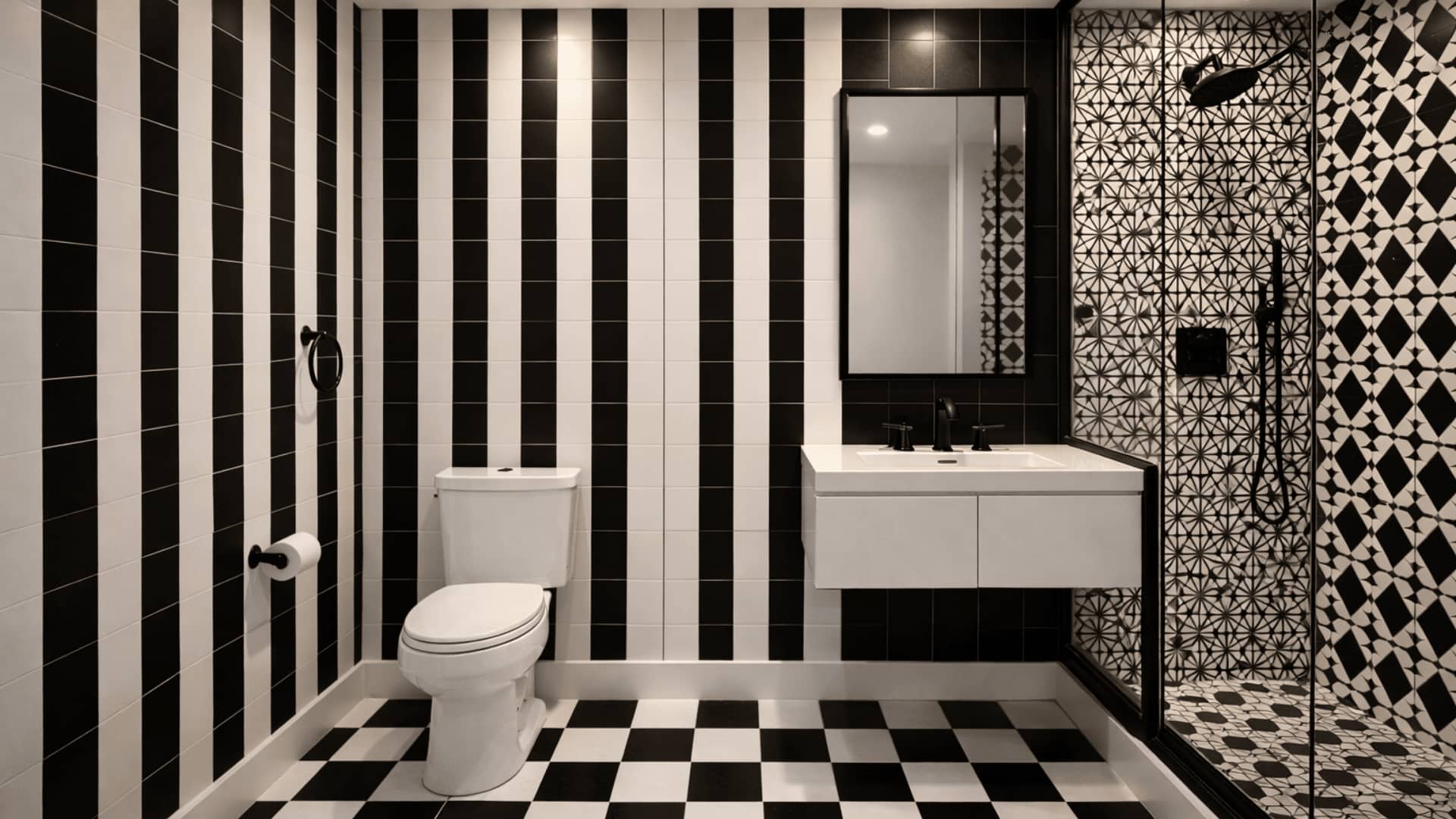
Mixing multiple black-and-white patterns, stripes on one wall, a checkerboard on the floor, and geometric tile in the shower creates a maximalist bathroom that works specifically because the palette stays strictly two-tone throughout.
The shared color constraint is what holds the mix together and keeps it from feeling chaotic. It’s a bold approach that suits bathrooms where confident and deliberate design choices are the clear intention.
Soft and Airy Black and White Designs
Not every black-and-white bathroom needs to be high-contrast or dramatic. These ideas use the palette lightly, keeping the space open, calm, and easy to live with day to day.
47. White Walls With Soft Grey and Black Accents
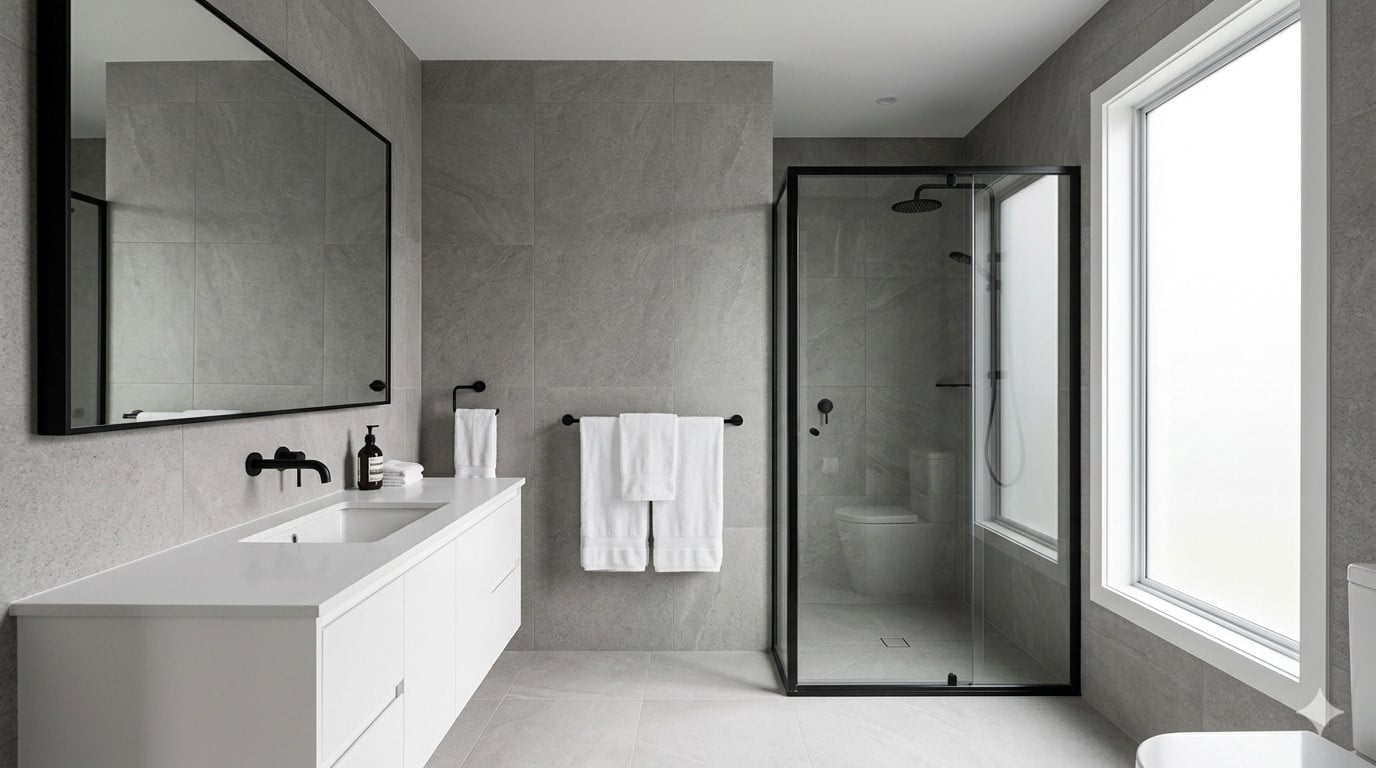
Introducing soft grey alongside black creates a gentler version of the black-and-white palette, where the contrast remains but is noticeably less intense. The grey acts as a visual buffer between the two extremes, softening the overall feel without eliminating the contrast that makes the palette work.
This suits the main bathrooms used daily, where a slightly softer atmosphere tends to feel more comfortable and sustainable over time.
48. White Shaker Vanity With Black Hardware
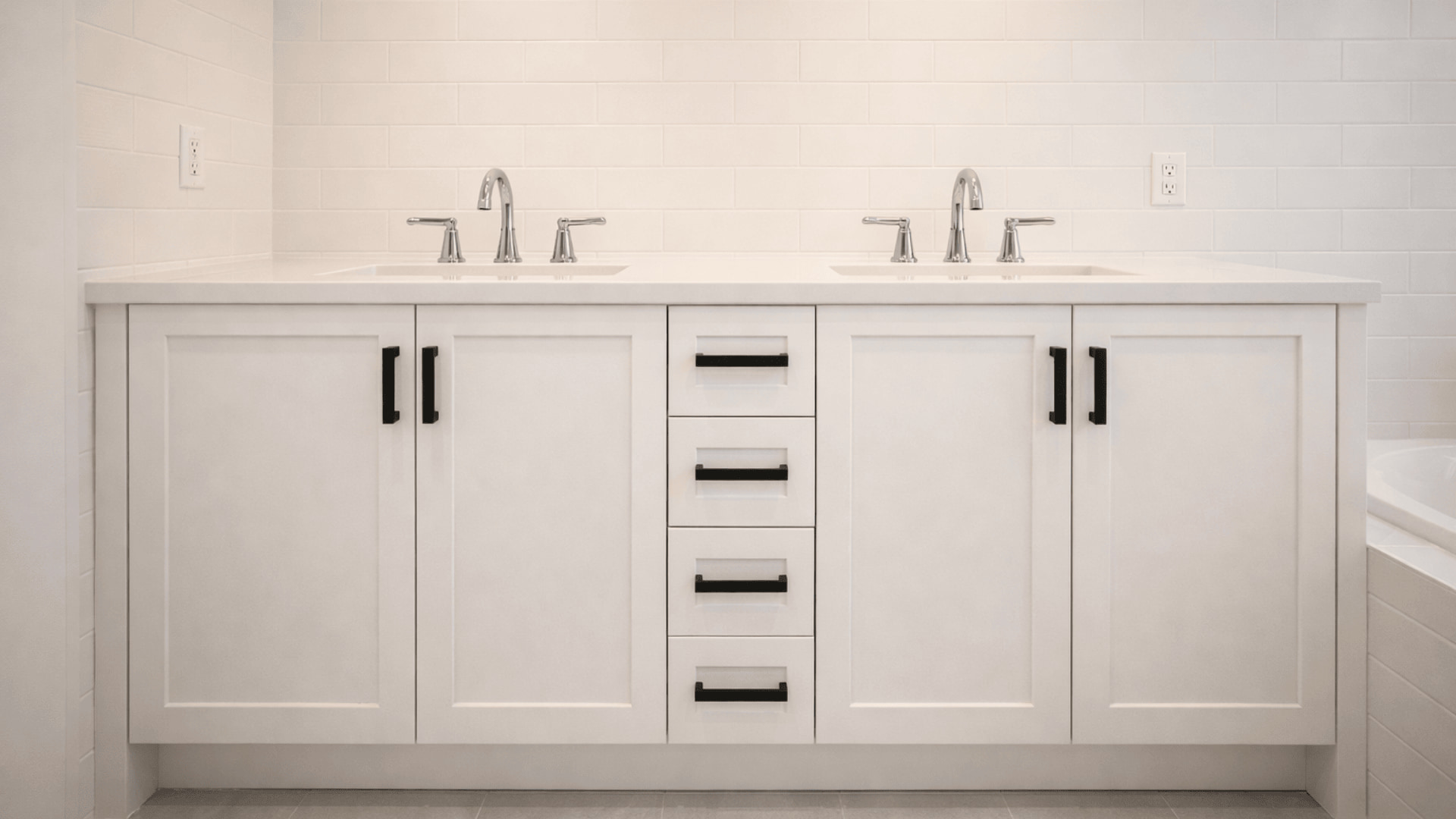
A white shaker-style vanity fitted with simple black hardware, small knobs or bar pulls, keeps the contrast understated and entirely functional.
It’s one of the quieter ideas on this list, but it suits family bathrooms or everyday spaces where the design needs to be livable rather than statement-making. The result feels clean and considered, without the coldness that higher-contrast versions of the black-and-white palette can sometimes carry.
49. Light Grey Tile With Black Fixtures
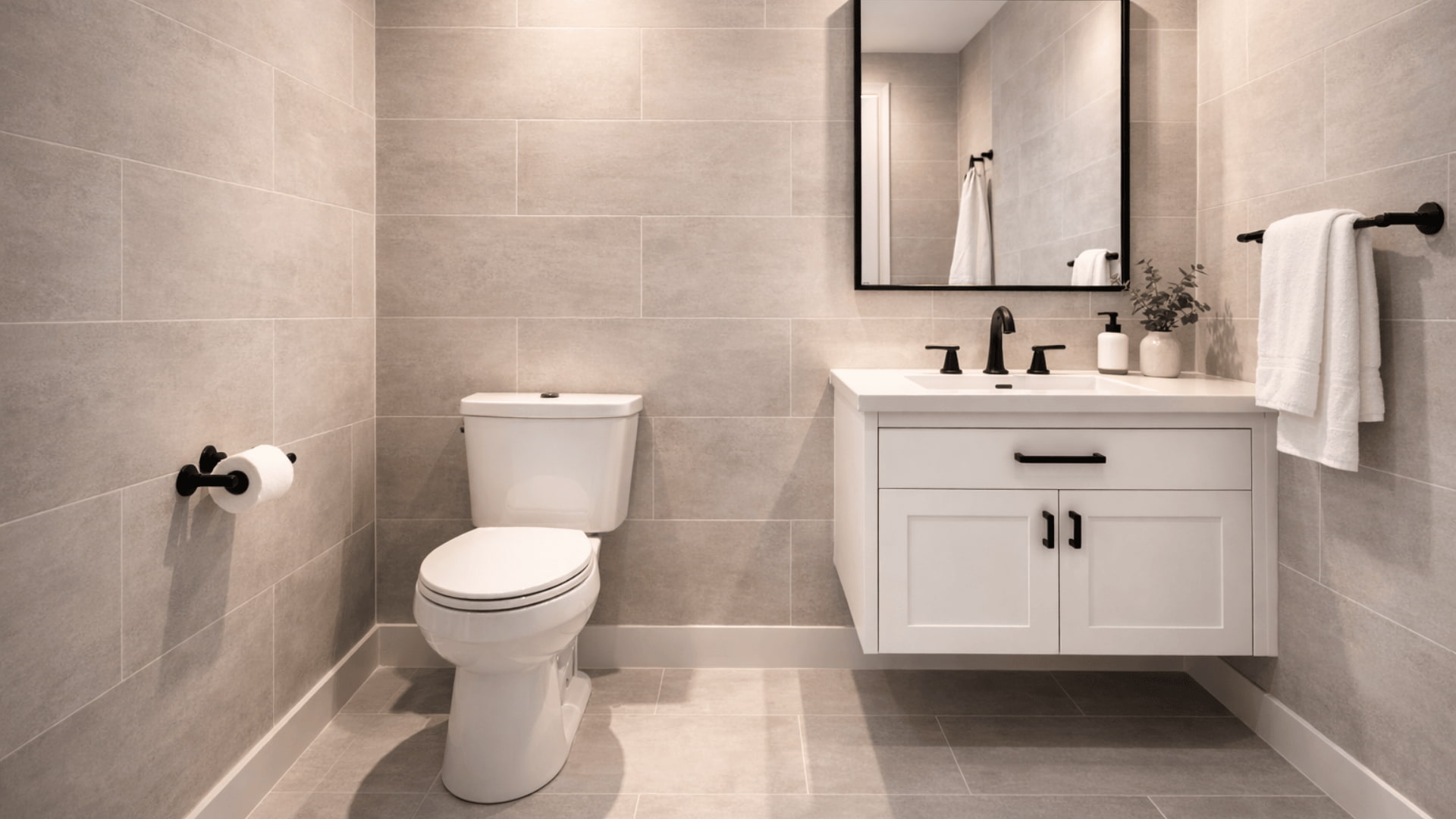
Light grey tile on walls or floors paired with black fixtures creates a softer take on the high-contrast palette that still reads as deliberate and considered.
The grey sits close to white in most lighting conditions, adding just enough warmth to prevent the space from feeling stark. It’s a forgiving combination that translates well across a wide range of bathroom sizes and overall design directions.
50. White Linen Curtains With Black Rod in White Bathroom
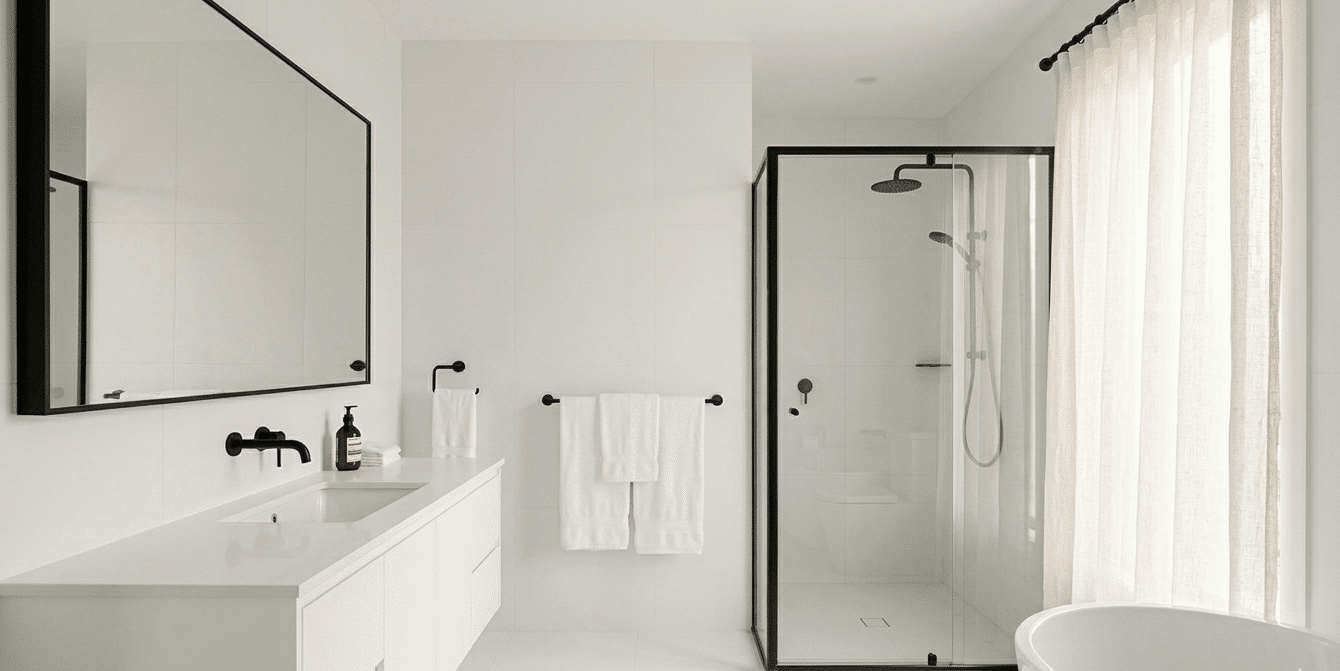
A white linen window curtain hung on a black curtain rod adds softness and organic texture to a bathroom without disrupting the palette.
The linen brings a quality that hard tile and fixture surfaces can’t provide on their own. It also filters natural light gently rather than blocking it, which tends to make white bathrooms feel noticeably warmer and more inviting at different points throughout the day.
51. White Bathroom With Black Potted Plants
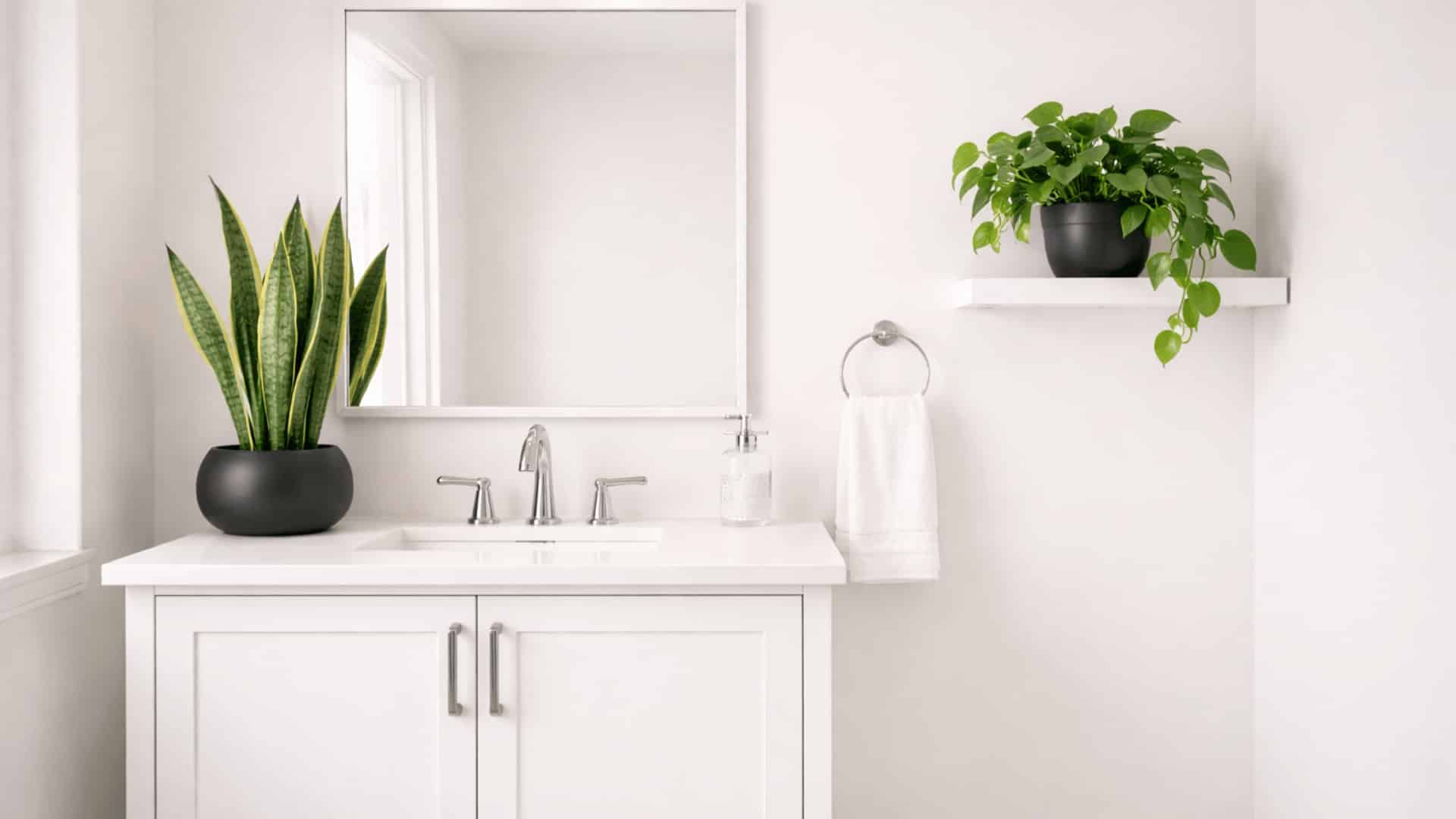
Dark green plants placed in black pots on a white vanity or open shelf add life to a black-and-white bathroom without introducing a competing accent color that pulls the palette out of balance.
The plant itself brings color, but the black pot keeps the palette grounded and consistent. Snake plants, ZZ plants, and pothos all handle bathroom humidity well and require relatively minimal ongoing care.
52. Soft White Walls With a Black Freestanding Tub
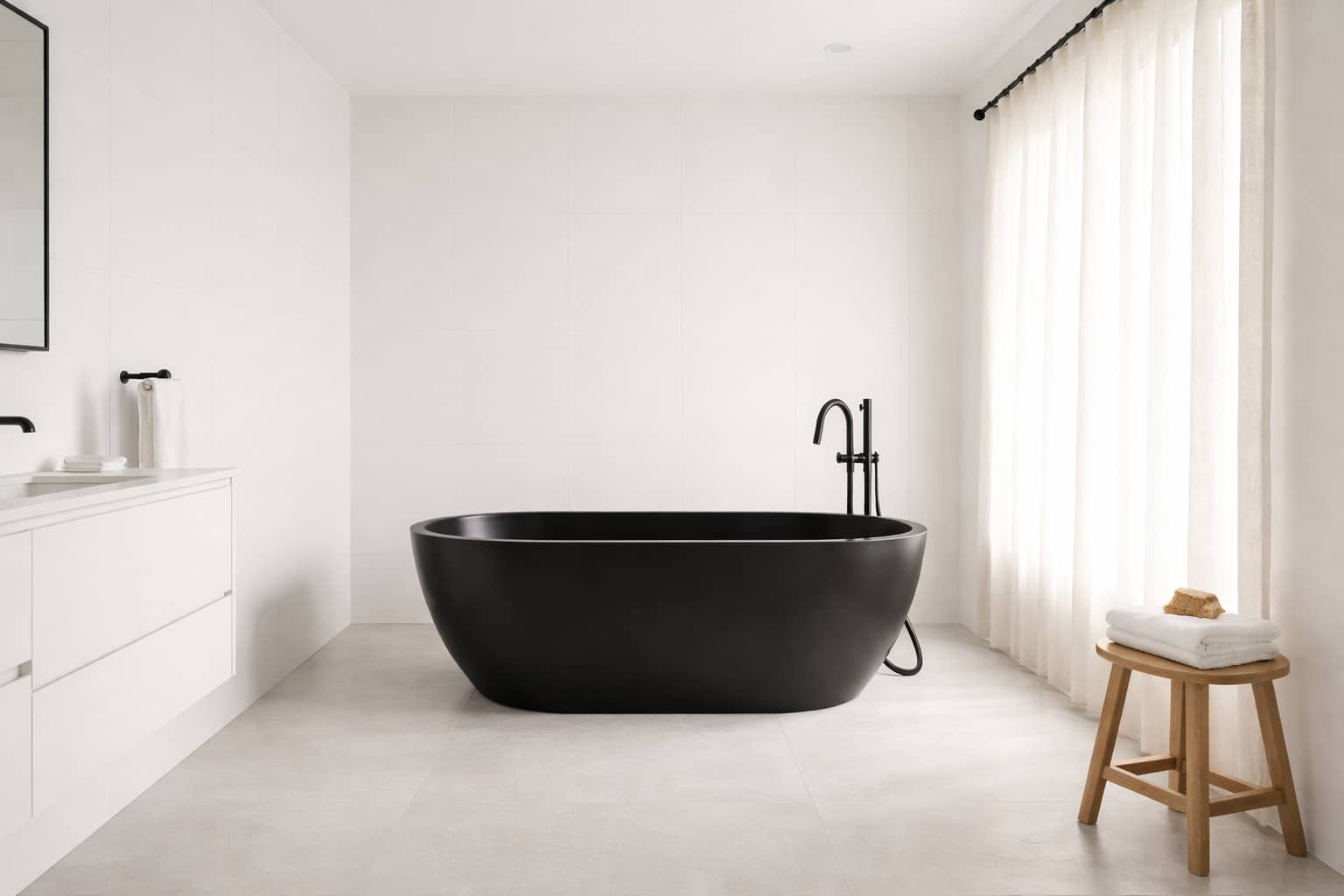
A matte-black freestanding tub in an otherwise all-white bathroom creates a single, strong focal point that anchors the entire space. The contrast is clear and immediate but not overwhelming because the rest of the room stays deliberately quiet around it.
This works especially well in larger bathrooms, where the tub is visible from the doorway and can serve as the room’s primary design centerpiece.
53. White Bathroom With Black and White Abstract Art
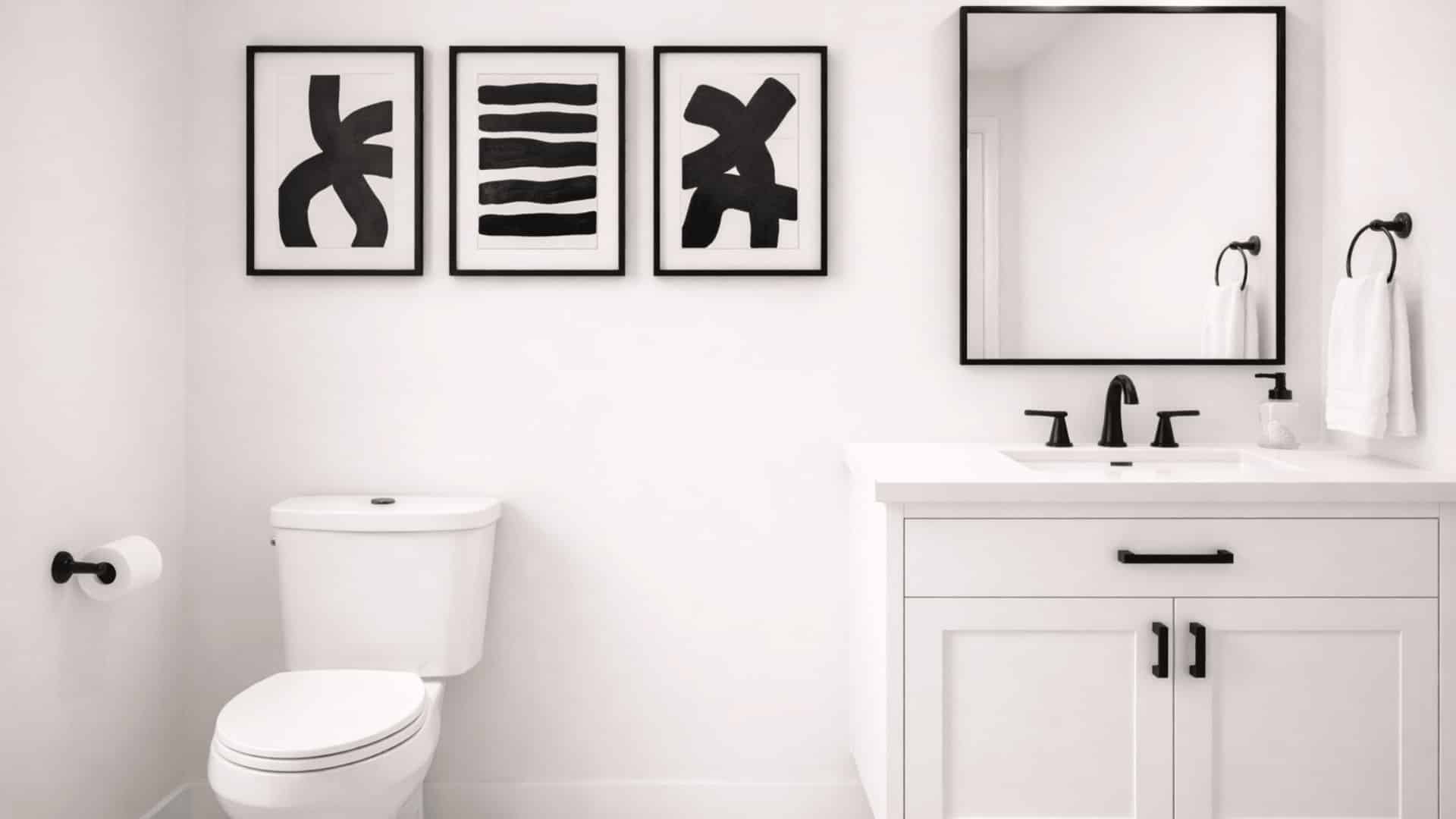
Hanging black-and-white abstract art on a white bathroom wall adds visual interest without changing a single fixture, tile, or structural element in the room. It’s the lowest-commitment way to introduce the palette intentionally.
Framing each piece in a simple black frame ties the artwork back to existing black elements and keeps the overall look considered and cohesive, rather than decorative afterthoughts.
Common Mistakes to Avoid
A few missteps can flatten the whole design. Avoiding these early saves time, money, and a lot of second-guessing later.
- Too much black in low-light rooms: Darker walls absorb what little light exists, making the space feel smaller and heavier than intended.
- Mixing cool and warm whites: Bright white tile next to cream fixtures creates an unintentional clash that’s hard to unsee once noticed.
- Ignoring texture completely: A flat, all-smooth finish removes the depth that makes black-and-white bathrooms feel layered rather than stark.
- Forgetting contrast balance: Going too heavy on one color without anchoring the other leaves the design feeling unresolved and incomplete.
- Choosing glossy black tile without considering upkeep: Every water spot and fingerprint shows clearly on glossy dark surfaces, whereas matte finishes simply don’t.
Getting these right from the start makes the rest of the design decisions significantly easier to land confidently.
Wrapping It Up
Now you’ve seen how flexible black and white can really be. You’ve looked at bold statements, softer layered versions, vintage touches, warm wood additions, and ways to introduce brass without losing contrast.
You also know the common mistakes that can make the space feel flat or unbalanced. I always tell people to start with one strong anchor piece. It could be a patterned floor, a walnut vanity, or a matte black fixture set.
Once that’s in place, the rest becomes easier to build around. Think about your lighting, room size, and how you actually use the space. Then choose one idea and move forward.
If you’re torn between options, tell me what your bathroom looks like, and I’ll help you narrow it down.