

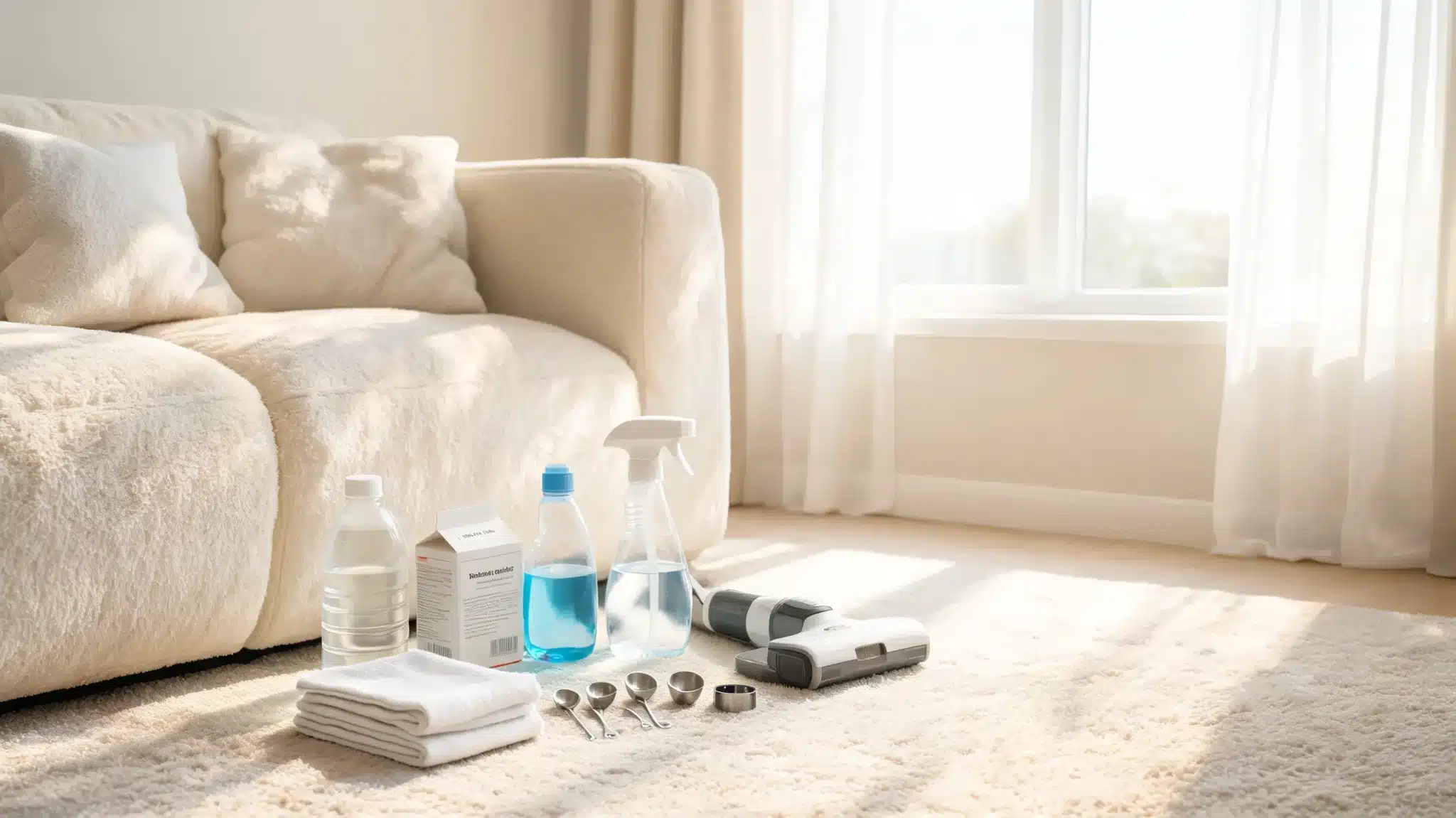


Most carpet stains I’ve dealt with didn’t need anything from a store.
A solid DIY carpet cleaner made from white vinegar, baking soda, and dish soap handled the coffee spill next to the couch, the muddy paw tracks near the back door, and a juice stain I let sit for two days too long.
The main thing is using the right homemade carpet cleaner solution for the right type of stain, and avoiding a couple of ingredient combinations that cause more damage than the stain itself.
| Difficulty | 1 out of 5 — no special tools or skills required |
| Time | 10–30 minutes per stain; dry time 1–4 hours |
| Cost | $5–$10 using pantry ingredients you likely already have |
| Tools Needed | Spray bottle, clean white cloths, vacuum, measuring spoons |
| Skill Required | Beginner — no experience needed |
What Can Go Wrong Before You Start
The mistake I made the first time was using too much dish soap. It looked like it was working, the stain lifted, the carpet looked clean.
Two weeks later that same spot was darker than the rest of the floor because the leftover residue kept pulling in new dirt. The second most common mistake is saturating the carpet instead of misting it lightly.
Excess moisture gets trapped in the padding underneath and causes a mildew smell that’s harder to get rid of than the original stain.
One more: never skip the patch test. Even mild vinegar-based solutions can affect certain wool or lightly-dyed carpets. Test in a hidden corner first and wait 10 minutes before you trust the rest of the floor.
| Safety Note: Never mix bleach with vinegar – the combination produces toxic chlorine gas. Never mix bleach with ammonia — this releases dangerous fumes. Keep all DIY carpet cleaner recipes simple and single-ingredient-category. If a solution changes smell, texture, or color during mixing, stop and ventilate the room. |
5 DIY Carpet Cleaner Solutions by Stain Type
Different stains need different approaches. Using the right DIY carpet cleaner for the job gets better results than a one-size-fits-all spray, and it reduces how much solution you need to apply, which means faster drying.
1. Homemade Carpet Cleaner Solution for Carpet Cleaning Machines
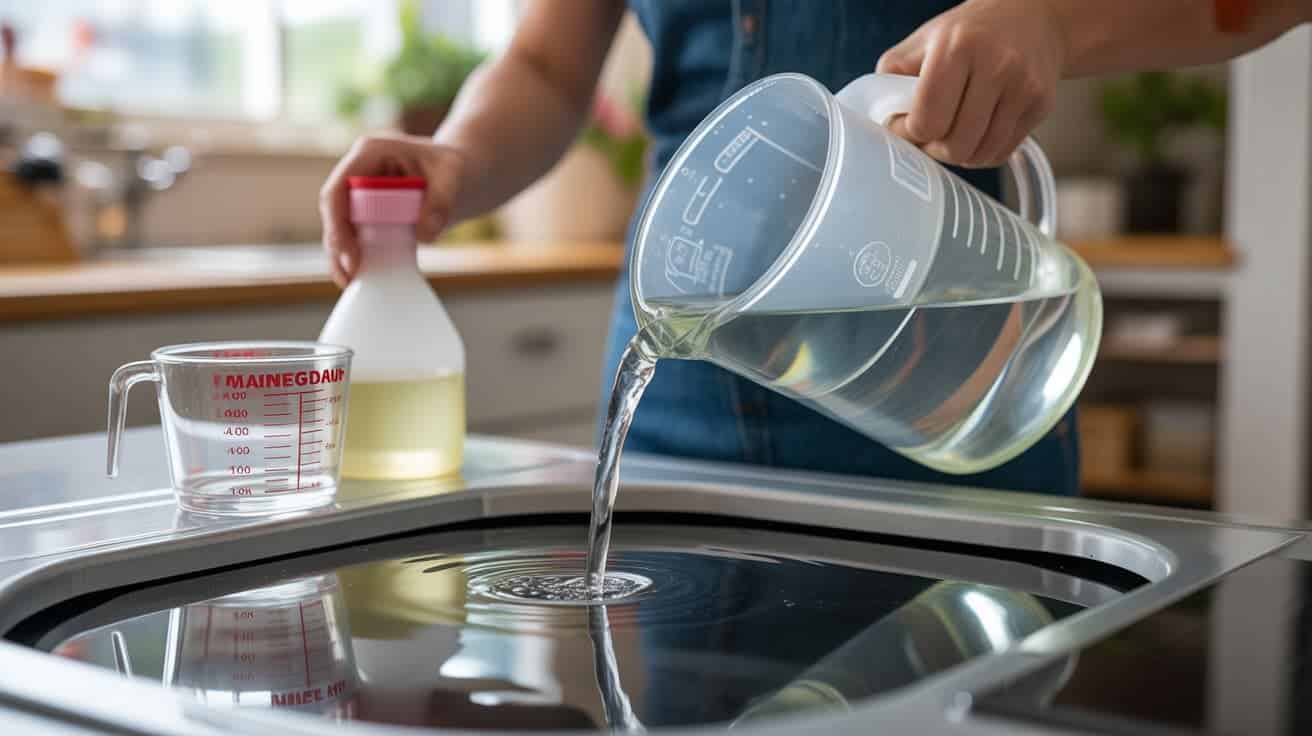
This is the recipe I use every few months for the whole floor. It works in most home carpet cleaning machines when mixed with enough water to keep the foam low.
The oxygen cleaner powder is the part most people leave out — it’s worth adding for heavily used areas because it helps lift embedded grime that vinegar alone won’t touch.
| Ingredients | 1 gallon hot water, 2 tbsp mild detergent, ¼ cup white vinegar, 1 tbsp oxygen cleaner powder |
| Best For | Deep cleaning, high-traffic areas, yearly carpet washing |
| Machine-Safe? | Yes — keep soap ratio low to prevent foam overflow |
How to use: Mix all ingredients slowly in a large container. Fill the machine tank with hot water first, then add roughly ¼ cup of the solution per tank. Clean in slow, overlapping passes and follow with a plain-water rinse pass to clear any soap residue from the fibers.
2. DIY Spot Cleaner for Food and Drink Stains
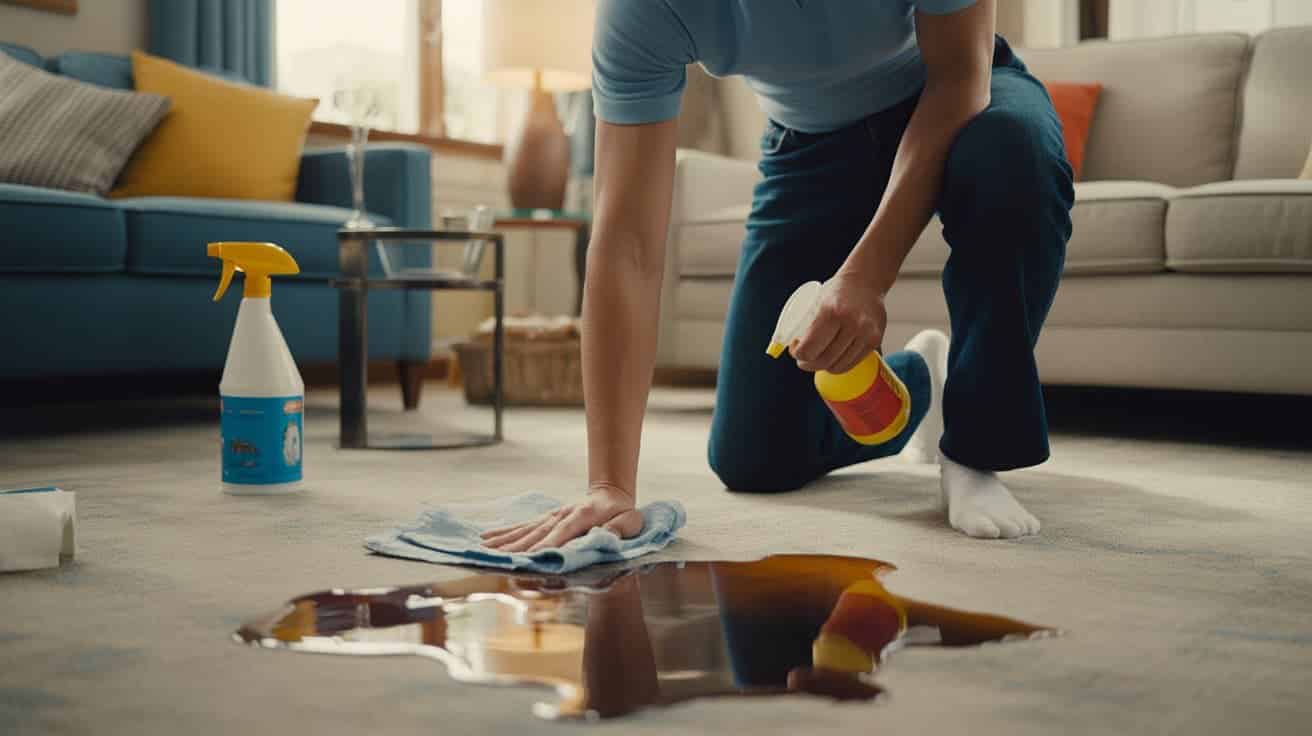
This is the first recipe I reach for after any fresh spill like coffee, wine, juice, or chocolate. The key is acting fast. The same recipe that clears a 10-minute-old wine spill in one pass will need three or four applications if the stain has dried overnight.
| Ingredients | 1 cup warm water, 1 cup white vinegar, 1 tsp dish soap |
| Best For | Coffee, wine, juice, sauce, chocolate — fresh spills only |
| Not For | Stains older than 24 hours — use the deep-clean version below |
How to use: Blot the spill with a dry towel first to absorb the excess. Spray the mixture lightly — don’t soak the fibers. Let it sit for 5–10 minutes. Blot again with a clean cloth, working from the outside of the stain inward to avoid spreading it.
3. Homemade Carpet Cleaner for Pet Stains and Odors
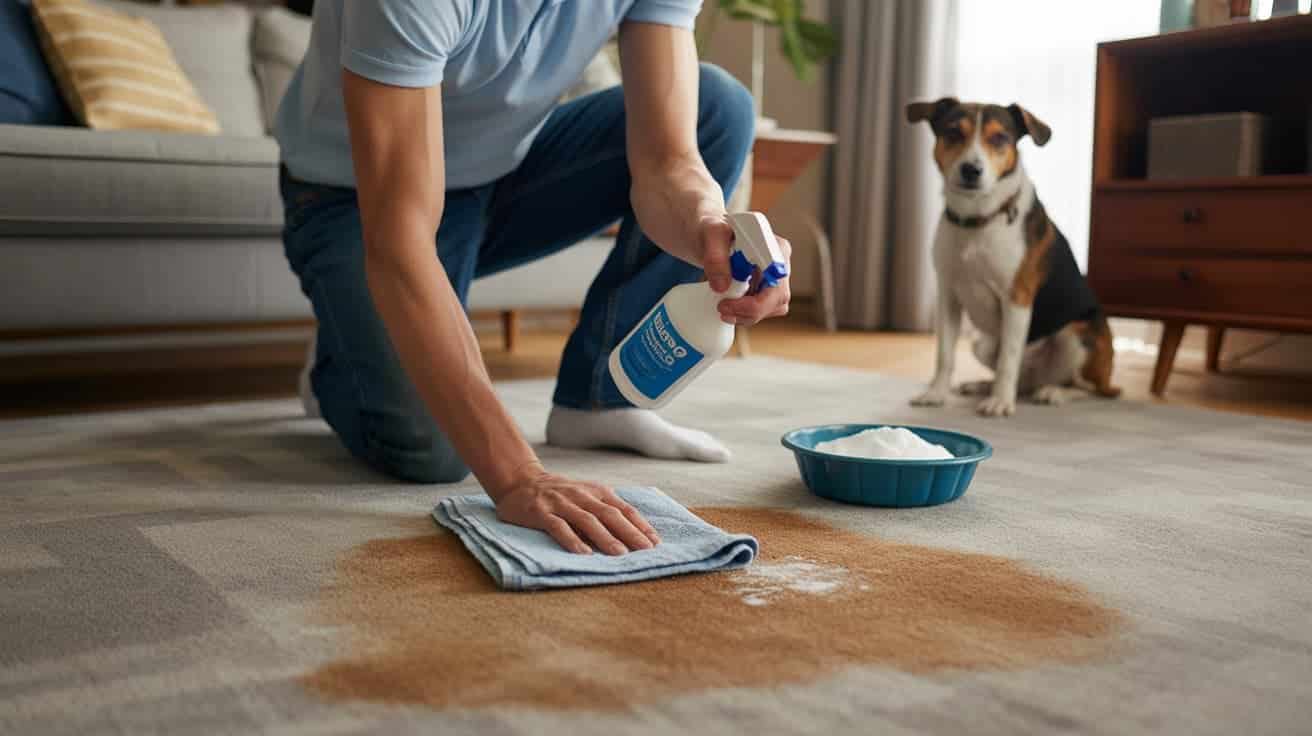
Pet accidents are different from food spills because the odor compound (urine in particular) needs to be neutralized, not just lifted. Vinegar handles the odor.
Hydrogen peroxide handles the discoloration. I always do this in two separate steps rather than mixing everything together — it gives each ingredient time to work properly.
| Ingredients | 2 cups warm water, ½ cup white vinegar, 1 tbsp baking soda, 1 tbsp hydrogen peroxide |
| Best For | Urine odors, vomit stains, muddy paw marks |
| Caution | Patch test first — hydrogen peroxide can lighten dark carpet fibers |
How to use: Remove any solid material and blot the excess moisture first. Spray the mixture lightly over the stained area and allow it to sit for 10 minutes. Dry the area completely using clean towels pressed firmly onto the carpet — don’t rub. For stubborn urine odors that persist after drying, repeat the application and leave it overnight before blotting again.
4. Natural Baking Soda Carpet Deodorizer (No Liquid)
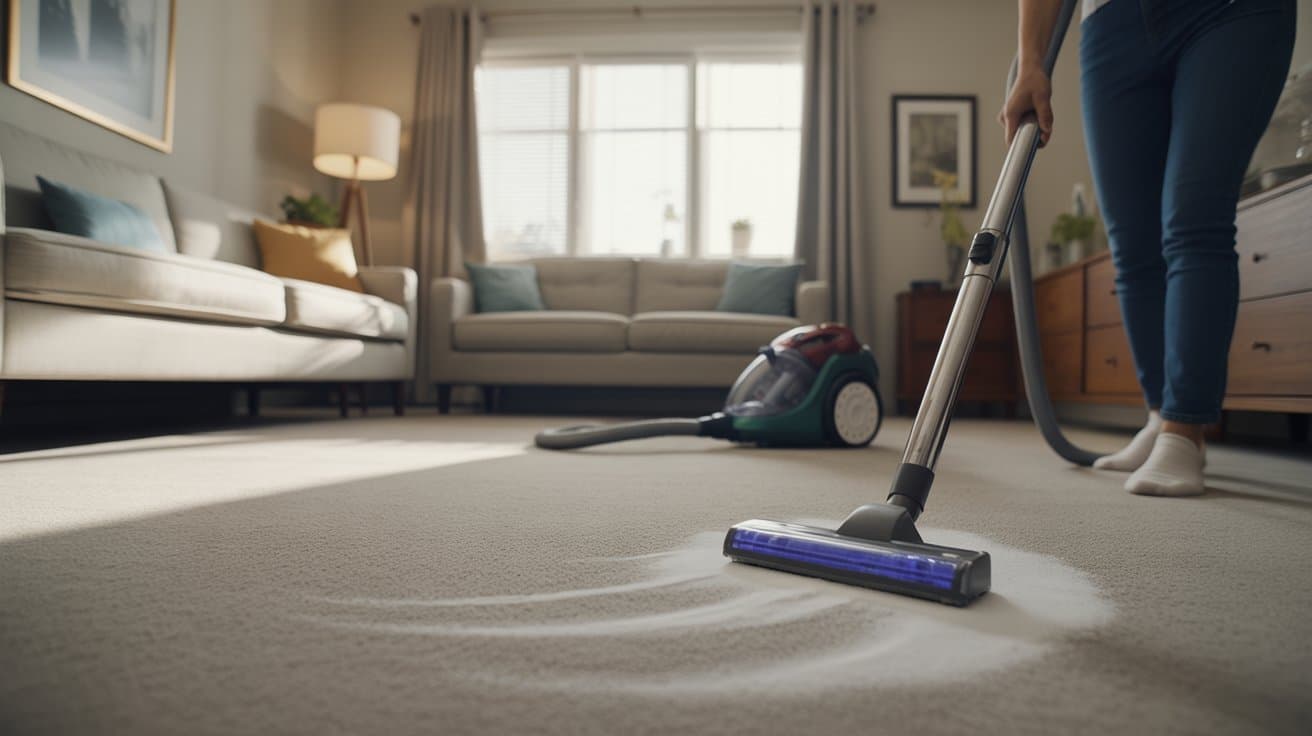
This is my go-to for refreshing carpets between deeper cleans, especially in bedrooms or areas where a liquid solution would take too long to dry. It takes about 30 seconds to apply and removes most stale odors without any moisture at all.
| Ingredients | 1 cup baking soda, a few drops of essential oil (optional) |
| Best For | Quick deodorizing, light carpet refresh, homes with young children |
| Drying Time | None — vacuum up after 30 minutes or overnight |
How to use: Sprinkle baking soda evenly across the carpet, concentrating more heavily on any areas with noticeable odors. Leave it for at least 30 minutes — overnight works better for persistent smells. Vacuum slowly to remove all the powder, running a second vacuum pass over high-traffic areas.
5. Deep Cleaning Solution for High-Traffic Areas
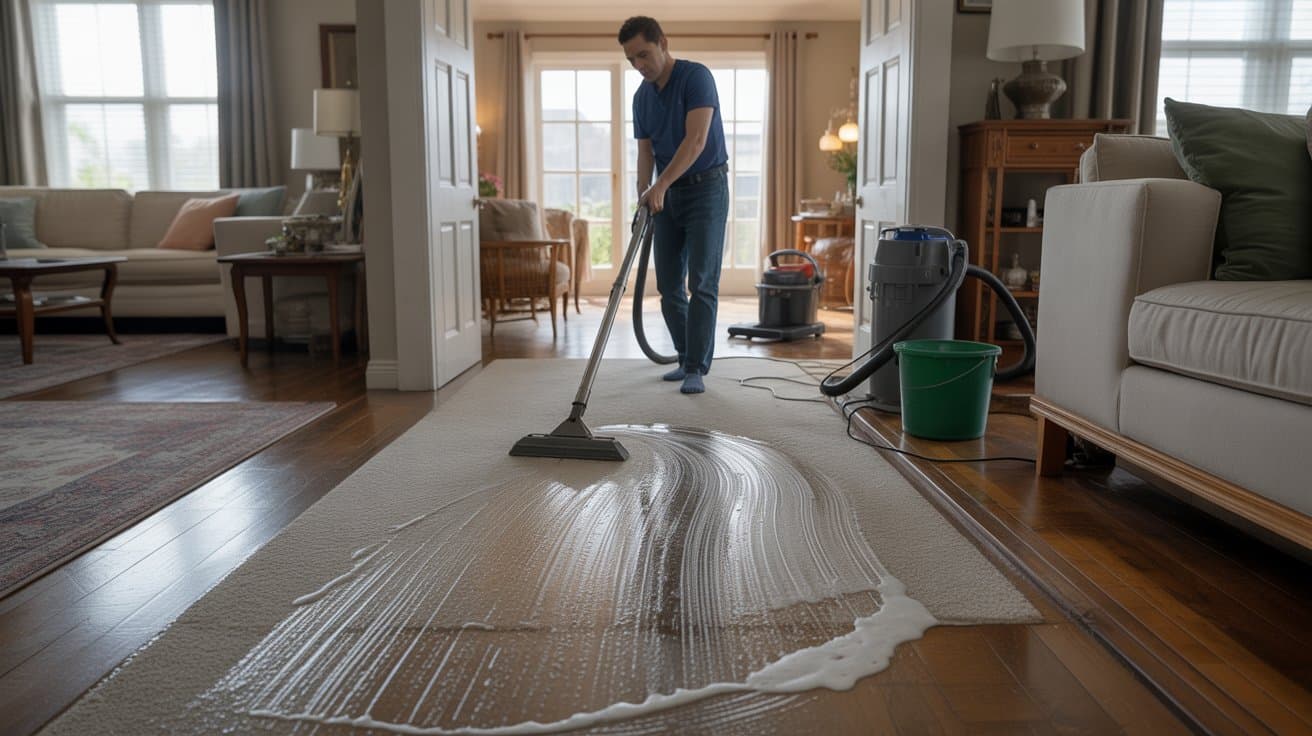
Hallways, stairs, and living room centers need more than a quick spray. The pre-treatment step here — baking soda sit time before you apply the liquid — is what separates a surface clean from a proper deep clean. I skipped it the first time and got mediocre results.
The second time, letting the baking soda sit for 15 minutes first made a visible difference. Stair carpet in particular takes a beating, if you’re dealing with a stair runner, the DIY stair makeover guide covers how to install and maintain one properly before cleaning becomes a recurring task.
| Ingredients | 2 cups hot water, 1 cup white vinegar, 1 tsp dish soap, baking soda for pre-treatment |
| Best For | Hallways, living room centers, stair carpets |
| Method | Pre-treat with baking soda before applying the liquid solution |
How to use: Sprinkle baking soda over the dirty carpet area and let it sit for 15 minutes before vacuuming it up thoroughly. Then spray the cleaning solution lightly across the pre-treated surface. Scrub gently with a brush or run it through a carpet machine using slow, overlapping passes.
DIY Carpet Cleaner Quick Reference
| Carpet Problem | Best DIY Solution | Main Ingredients | Method |
|---|---|---|---|
| Pet stains and odors | Pet stain cleaner | Vinegar + baking soda + hydrogen peroxide | Spot treatment |
| Food and drink stains | Vinegar spot cleaner | Vinegar + dish soap | Blotting |
| Full-room deep clean | Machine carpet cleaner | Hot water + detergent + vinegar | Carpet machine |
| Stale odors | Baking soda deodorizer | Baking soda | Vacuum treatment |
| High-traffic buildup | Deep cleaning solution | Vinegar + baking soda + dish soap | Pre-treat and scrub |
The pattern across all five is consistent: use less solution than you think you need, blot rather than rub, and let the carpet dry completely before walking on it. Getting that right matters more than which specific recipe you use.
Ingredient Combinations to Never Use Together
Most DIY carpet cleaner problems aren’t about using the wrong ingredients — they’re about mixing ingredients that react badly with each other. A few of these create fumes serious enough to require immediate ventilation.
- Bleach + Vinegar: Creates toxic chlorine gas. Even small amounts cause eye and throat irritation. Never combine these, even in diluted form.
- Bleach + Ammonia: Releases chloramine gas, which causes serious respiratory damage. Both are common household cleaners — keep them stored and used separately.
- Too Much Detergent: Leaves a sticky film that attracts dirt faster than the original stain would. One teaspoon per cup of water is the maximum for spot treatment.
- Hydrogen Peroxide on Dark Carpets: Acts like a mild bleach on darker fibers. Always patch test in a hidden area before using it on any colored carpet.
- Multiple Store-Bought Cleaners Mixed Together: Even products labeled “natural” can react when combined. Use one product at a time and rinse thoroughly before switching to another.
Keeping recipes simple and following measured ratios is the most reliable way to avoid these issues.
The Faster-Second-Time Tricks I Learned the Hard Way
There are a few things nobody mentions in the recipe itself that would have saved me a lot of re-cleaning. These aren’t complicated — they’re just the adjustments that turn a decent result into a consistently good one.
| Pro Tip: Keep the food-and-drink spot cleaner (vinegar + water + dish soap) pre-mixed in a spray bottle under the sink. The 30 seconds you save not measuring it out while a fresh spill is soaking in is the difference between one blot and four blots. Label the bottle with the mixing date and replace it after 30 days. |
- Treat stains immediately. A 5-minute stain blots out clean. A 2-hour stain usually takes 3 applications. An overnight stain sometimes doesn’t come out fully regardless of what you use.
- Use white cloths only. Colored towels can transfer dye to the carpet when wet. White cloths also let you see exactly how much of the stain is transferring so you know when to stop.
- Work from the outside in. Starting from the center of a stain spreads it outward. Starting from the outer edge and moving inward keeps the stain contained.
- Open windows after any liquid cleaning. Faster drying prevents the mildew smell. A box fan pointed at the treated area cuts dry time from 4 hours to around 1 hour.
- Vacuum before applying any liquid. Loose dirt turns into muddy paste when you add moisture. A 2-minute vacuum pass before treatment makes the solution more effective.
DIY vs. Store-Bought Carpet Shampoo: When to Use Which
A homemade carpet cleaning solution covers most household situations. There are specific cases where a store-bought product or a professional service is the better call — and knowing the difference saves a lot of wasted effort.
| Factor | Homemade Carpet Cleaner | Store-Bought or Professional |
|---|---|---|
| Cost | $5–$10 per batch | $15–$40 per bottle; $120–$240 for professional cleaning |
| Best For | Fresh spills, routine maintenance, light-to-moderate stains | Deep-set stains, mold, flood damage, heavy pet accidents |
| Residue Risk | Higher if too much soap used | Controlled by formulation, varies by brand |
| Eco-Friendliness | Generally biodegradable | Varies significantly by brand |
| Cleaning Strength | Good for regular upkeep and fresh stains | Stronger for tough, deep-set buildup |
For most households with pets and kids, a DIY carpet cleaner handles 80–90% of what comes up. The remaining cases — an old stain that’s been there for months, or a flood-level soaking — are what professional extraction is actually for.
Frequently Asked Questions About Homemade Carpet Cleaner
These are the questions that come up most often once people have actually used a DIY carpet cleaner and run into a real-world situation the basic recipe didn’t cover.
What is the best homemade carpet cleaning solution for machines?
Hot water with 2 tablespoons of mild detergent, ¼ cup white vinegar, and 1 tablespoon of oxygen cleaner powder. Fill the tank with water first, add about ¼ cup of the solution per tank, and keep soap ratios low to avoid foam overflow in the machine.
Can you use a DIY carpet cleaner solution in a Bissell or rental carpet machine?
Yes, with low-soap formulas. High-foam mixtures can overflow the machine and leave residue. Use no more than 2 tablespoons of detergent per gallon of water. Always check your specific machine’s manual for restrictions on homemade solutions before filling the tank.
Does a homemade carpet cleaner solution actually work on tough stains?
For fresh stains and routine maintenance, yes — consistently. For stains older than a week, deeply embedded grime, mold, or heavy pet accidents, homemade solutions are often not strong enough. That’s the line where professional extraction cleaning becomes the more effective option.
How often should I clean carpets with a DIY carpet cleaner?
Every 2–3 months for spot maintenance in a typical household. High-traffic areas and homes with pets or children may need spot treatment monthly, with a full machine clean twice a year. Vacuuming weekly reduces how often you need to apply any liquid solution.
Is it safe to reuse leftover homemade carpet cleaner solution?
Yes, if stored in a sealed clean container. Discard and remake if the solution separates, smells unusual, or becomes cloudy. Vinegar-based solutions stay effective for about 30 days. Mixes containing baking soda are best used fresh — the fizzing reaction that does the cleaning work dissipates quickly.
Will vinegar smell linger after cleaning carpet with a DIY solution?
Temporarily, yes — until the carpet fully dries. It usually disappears within a few hours with normal ventilation. Open windows and run a fan to speed drying. The smell does not transfer to fabric or furniture once the carpet is dry.
Can a DIY carpet cleaner solution work on wool or natural fiber carpets?
With caution. Vinegar and hydrogen peroxide can damage wool and natural fibers or affect their dye. A mild dish soap diluted in warm water is the safest option for delicate carpets. Always patch test in a hidden corner and wait 10 minutes before treating the visible area.
Final Verdict
If I were starting again, I’d skip the residue mistake entirely by measuring the dish soap carefully and never eyeballing it.
The five DIY carpet cleaner recipes in this article cover every routine situation a household runs into, and at a difficulty rating of 1 out of 5, there’s no reason to default to an expensive product for something a $5 batch of vinegar and baking soda handles just as well.
Start with the spot cleaner recipe (vinegar, water, one teaspoon of dish soap) and keep it premixed in a spray bottle under the sink. You’ll use it within a week.