

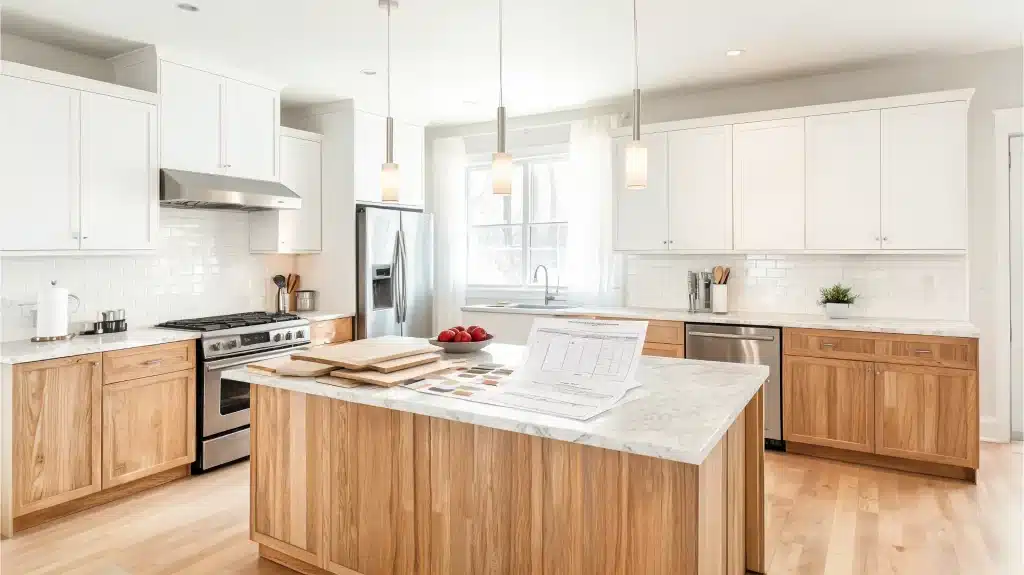


Kitchen renovation prices can be hard to pin down because the final number depends on size, layout, materials, labor, and where the home is located.
A small refresh may cost around $10,000, while a larger remodel with new cabinets, counters, flooring, appliances, lighting, and licensed labor can reach $75,000 or more.
I’d start by separating must-have fixes from nice-to-have upgrades, then compare costs by project scope. That makes it easier to read contractor quotes, spot missing line items, and avoid surprises.
If you are asking how much does it cost to renovate a kitchen, the answer starts with your scope, your space, and the choices that matter most.
How Much Does It Cost to Renovate a Kitchen?
The average kitchen remodel cost in the U.S. often falls between $15,000 and $50,000 for a standard full update. Smaller cosmetic jobs can cost less, while full gut renovations with new cabinets, stone counters, better appliances, licensed labor, and layout work can pass $75,000.
A basic refresh usually keeps the same layout. A mid-range remodel replaces the main surfaces and improves storage. A high-end project often adds custom work, better materials, and licensed trades for plumbing, gas, or electrical changes.
| Remodel Type | Typical Cost Range | Best For | Common Updates |
|---|---|---|---|
| Basic Refresh | $8,000 – $20,000 | Tight budgets | Paint, hardware, lighting, simple counters |
| Mid-Range Remodel | $20,000 – $50,000 | Most homes | Cabinets, counters, flooring, backsplash, appliances |
| Major Remodel | $50,000 – $90,000 | Older kitchens | New layout, better storage, licensed trade work |
| High-End Remodel | $90,000+ | Luxury homes | Custom cabinets, premium appliances, structural work |
Use these ranges as a starting point, then adjust your budget based on your kitchen size, layout, material choices, and local labor costs.
Cost Breakdown for a Kitchen Renovation
Knowing what each part of a kitchen renovation costs makes it easier to plan your budget and compare contractor quotes line by line. Cabinets and labor consistently take the largest share. Smaller details like fixtures and backsplash tile can still add up quickly if they aren’t planned before work starts.
| Line Item | Low End | High End | What Drives the Variation |
|---|---|---|---|
| Cabinets | $5,000 | $30,000+ | Stock vs. custom, pull-outs, pantry units, finish level |
| Labor | $2,300 | $12,000+ | Scope of work, demo, trades, location |
| Countertops | $1,500 | $6,000+ | Material, island size, edge profile, cutouts |
| Appliances | $2,000 | $10,000+ | Brand, size, built-in vs. freestanding |
| Flooring | $1,000 | $4,000+ | Material, subfloor condition, prep work |
| Plumbing & Electrical | $1,000 | $10,000+ | Layout changes, code updates, panel upgrades |
| Permits | $500 | $2,700 | City, county, project scope |
| Backsplash & Fixtures | $600 | $2,700+ | Tile type, wall size, sink, and faucet finish |
| Lighting | $500 | $3,000+ | Fixture count, wiring needed, recessed vs. pendant |
The sections below break down each line item with the specific choices that move the price up or down. If you’re comparing quotes, this is the order to check them against.
1. Cabinets
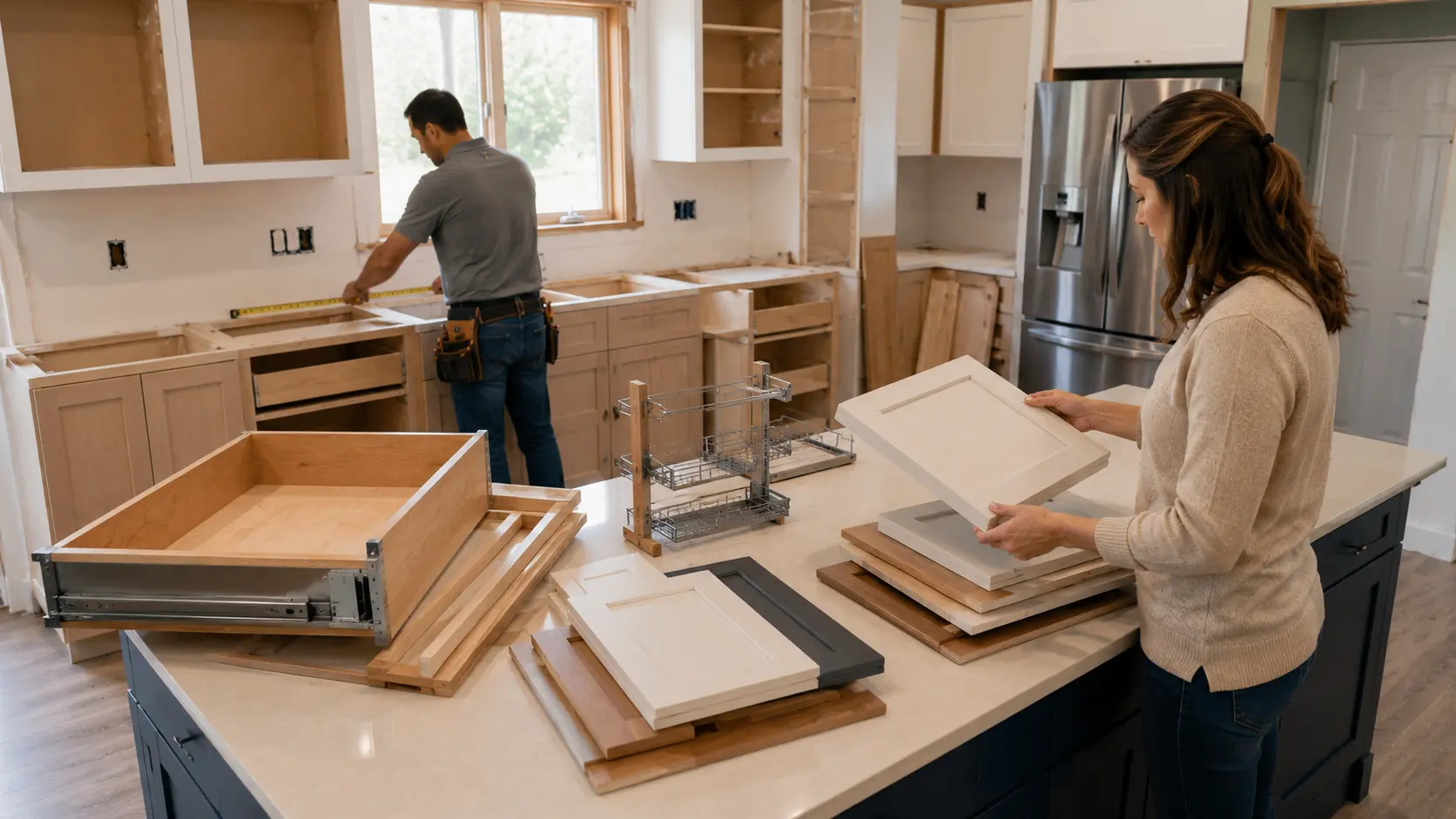
Cabinets are often the single highest cost in a kitchen renovation, ranging from $5,000 to $30,000 or more depending on kitchen size, cabinet type, and finish level. Stock cabinets cost less and work well with standard layouts. Semi-custom cabinets give you better storage options at a higher price.
Custom cabinets can raise the total quickly, especially when the kitchen has unusual corners, tall pantry units, pull-outs, or special trim. If your budget is tight, refacing the existing cabinet boxes costs significantly less than full replacement and can produce a similar visual result.
2. Labor

Labor can make up about 15% to 30% of a kitchen remodel budget. For many projects, total labor costs can fall between $2,300 and $12,000 or more, depending on the scope of work and where the home is located.
A simple update with no layout changes usually costs less. A full renovation takes more time because crews may need to handle demolition, cabinet installation, plumbing, electrical work, flooring, tile, painting, cleanup, and inspections.
3. Countertops

Countertops often cost between $1,500 and $6,000 for a standard kitchen. Laminate and butcher block are usually the lower-cost choices, while quartz and granite sit in the mid-range for most U.S. homes.
A detailed look at countertop materials and their costs can help narrow down which surface fits both your budget and your kitchen’s use.
The price rises with larger islands, premium stone, special edges, extra seams, and sink or cooktop cutouts. Ask whether your quote includes templating, fabrication, delivery, old counter removal, and installation.
4. Appliances

Appliance pricing depends on brand, size, features, and finish. A basic kitchen appliance package may cost around $2,000 to $4,000, while mid-range packages can run $4,000 to $10,000 or more.
High-end appliances can cost much more, especially if you choose a built-in refrigerator, wall oven, cooktop, range hood, or panel-ready units. I would set an appliance allowance early so one item does not take money away from cabinets, counters, or labor.
5. Flooring

Kitchen flooring typically costs between $1,000 and $4,000, depending on the material, square footage, and prep work needed. Vinyl, laminate, and luxury vinyl plank usually cost less. Tile costs more because it needs careful subfloor prep and skilled installation.
If you’re considering vinyl plank, understanding how to lay vinyl plank flooring correctly can help you decide whether it’s a viable DIY option. Old floor removal, water damage repair, and subfloor leveling can all add to the total; ask your contractor if those items are included in the quote.
6. Plumbing and Electrical
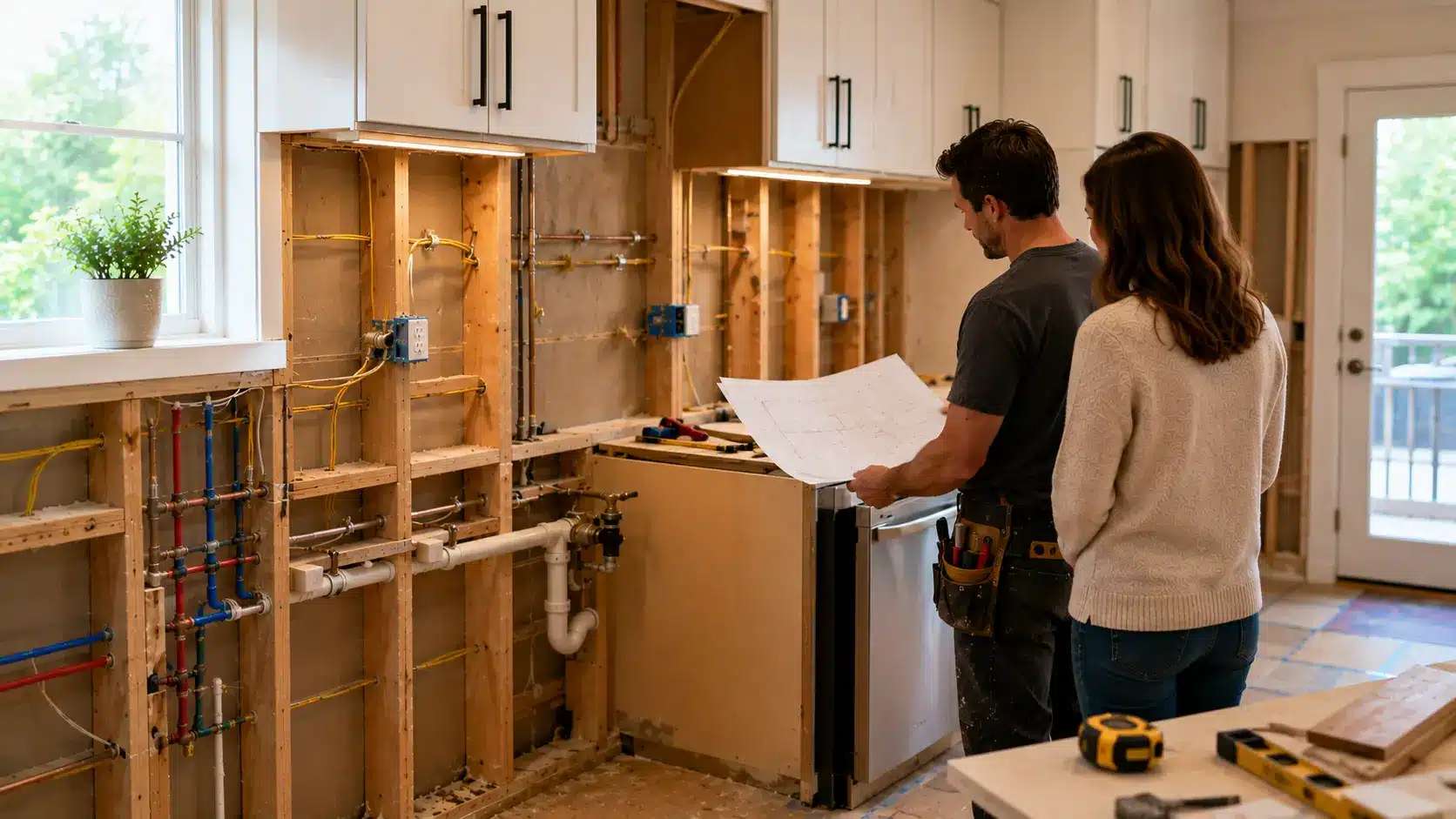
Plumbing and electrical work can range from $1,000 to $10,000 or more, depending on what needs to be moved, replaced, or brought up to code. Larger plumbing changes alone can reach $15,000 in complex projects.
Electrical costs can include new outlets, dedicated appliance circuits, recessed lights, under-cabinet lighting, panel updates, and code fixes. These items are easy to miss in early quotes, so they should be listed clearly.
7. Permits

Permits often cost between $500 and $2,700, but the final amount depends on your city, county, and project scope. Cosmetic updates may need little or no permitting, while plumbing, electrical, gas, or structural work often requires approval.
Your quote should explain who pulls the permits, who pays for them, and whether inspection fees are included. This helps prevent surprise charges once the project starts.
8. Backsplash and Fixtures
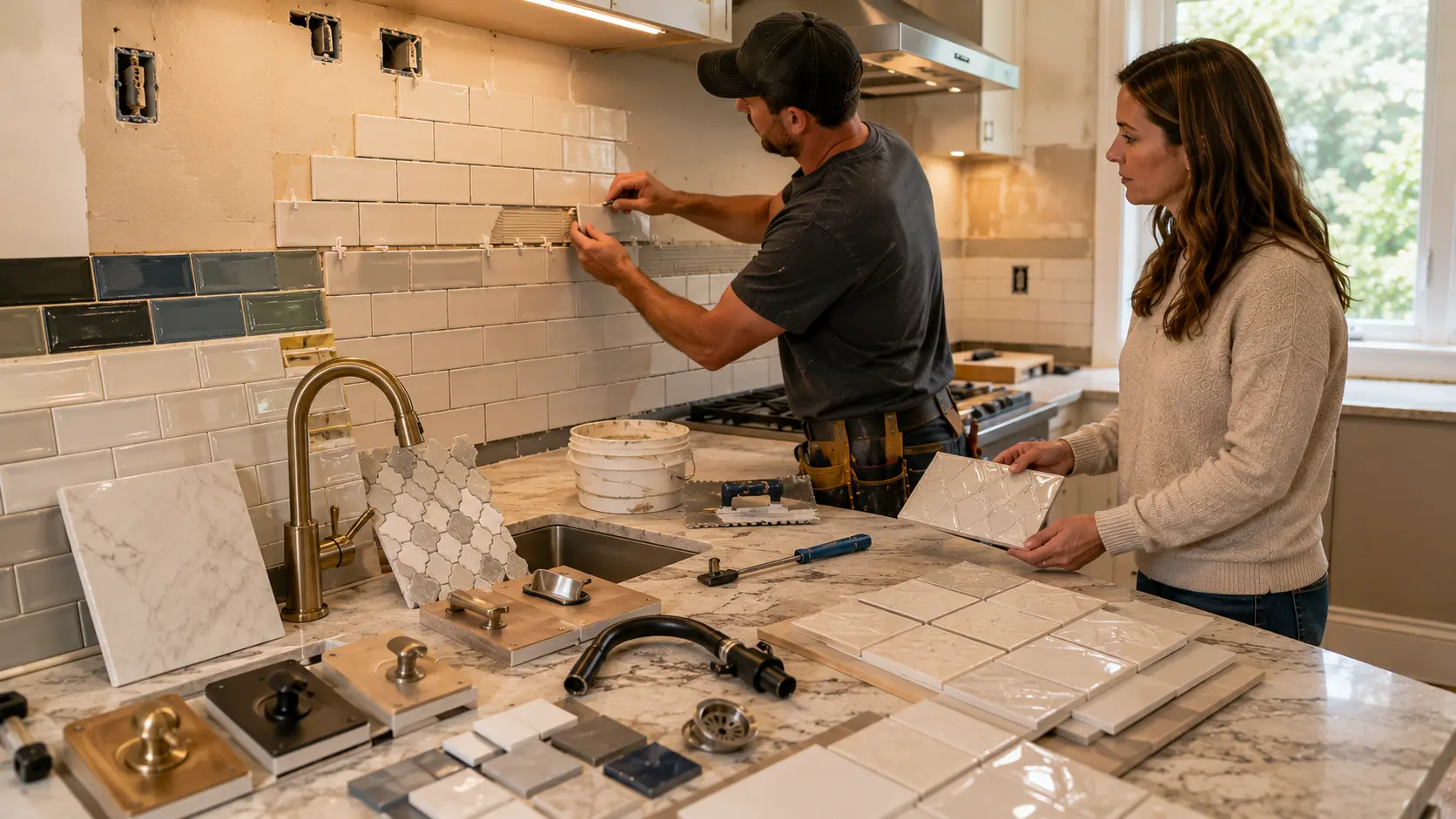
Backsplash installation often costs between $500 and $1,700, depending on the tile, wall size, pattern, and labor. Simple subway tile usually costs less, while handmade tile, full-height backsplash work, and detailed layouts cost more.
Fixtures, such as sinks and faucets, can range from $100 to $1,000 or more each. Premium finishes, workstation sinks, touchless faucets, and added accessories can raise the price.
9. Lighting
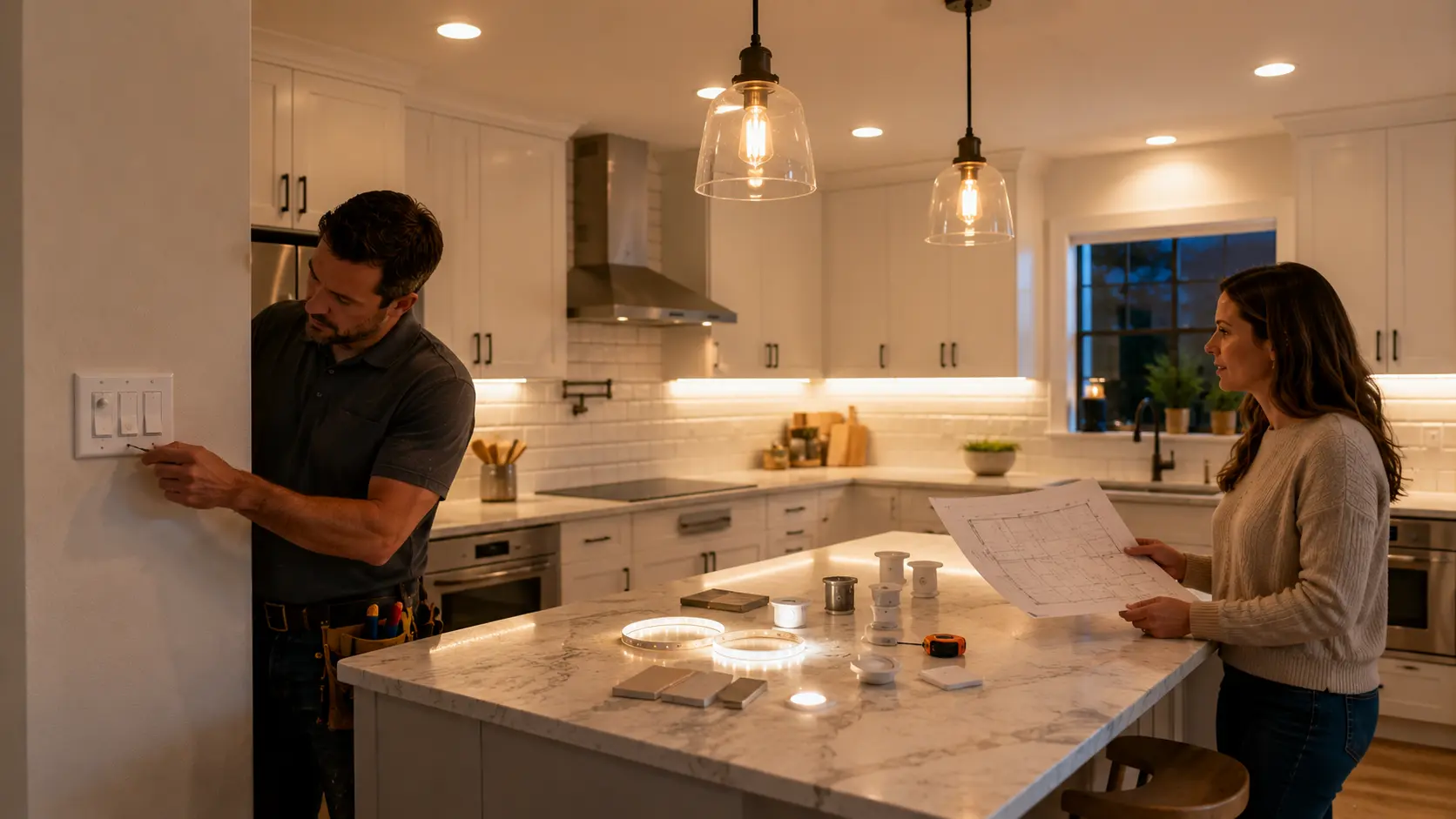
Lighting can add $500 to $3,000 or more, depending on how many fixtures you add and how much wiring is needed. Basic ceiling lights cost less, while recessed lighting, pendants, dimmers, and under-cabinet lights cost more.
Plan lighting before work starts. Last-minute changes can require new wiring, extra labor, drywall repairs, and longer timelines.
Kitchen Renovation Cost by Project Size
Size matters, but it is not the only driver. A small kitchen with custom cabinets can cost more than a larger kitchen with stock products. Still, square footage gives you a starting point.
| Kitchen Size | Typical U.S. Cost Range | Notes |
|---|---|---|
| Small kitchen under 100 sq. ft. | $7,500 – $25,000 | Lower material volume, but fixed labor still applies |
| 12×12 kitchen, 144 sq. ft. | $15,000 – $42,000 | A common mid-size example for checking the 12×12 kitchen remodel cost |
| Medium kitchen, 150-200 sq. ft. | $20,000 – $65,000 | More cabinets, counters, flooring, and labor |
| Large kitchen over 200 sq. ft. | $65,000 – $130,000+ | Often includes islands, more storage, higher labor, and premium choices |
Taking time to compare the details now can help you avoid costly surprises once the remodel begins.
What Affects the Final Price?

A kitchen can look simple on the surface, but then it becomes expensive once the walls open up. These are the cost factors I would check before saying yes to a quote.
1. Keeping or Changing the Layout
Keeping the sink, range, dishwasher, and fridge in the same spots is one of the best ways to control costs. Moving plumbing, gas, or electrical lines adds skilled labor and permits. Removing a wall can cost much more if it is load-bearing.
2. Material Choices
Material choices can change the total quickly. Stock cabinets, laminate counters, and standard appliances cost less. Custom cabinets, stone slabs, built-in appliances, and handmade tile raise the budget.
3. Location
Labor rates are not the same across the U.S. Large, high-cost metro areas often cost more than smaller cities or lower-cost regions. Permit fees, contractor demand, delivery, parking, and disposal can also shift the final price.
4. Age of the Home
Older homes can hide extra work behind walls and floors. You may find old wiring, weak plumbing, uneven framing, asbestos risk, rot, or water damage. I would keep a 10% to 20% cushion for these problems, especially if the home is several decades old.
5. DIY vs. Professional Work
DIY can help with painting, hardware swaps, cabinet assembly, or simple backsplash work. Licensed pros should handle electrical, plumbing, gas, and structural work. A mixed plan often works best. You save where the risk is low and pay pros where safety matters.
What Homeowners Say About Kitchen Renovation Costs

Homeowner discussions on Reddit and Houzz show why kitchen remodel prices can feel confusing. Many people start with one budget, then find out cabinets, counters, labor, plumbing, electrical work, permits, cleanup, and small repairs can raise the total fast.
One homeowner on Reddit shared that a $30,000 budget started to feel closer to $50,000 after pricing cabinets, quartz counters, layout changes, appliances, plumbing, and electrical work. That kind of jump is common when the project moves beyond surface updates.
On Houzz, another homeowner showed how cabinet quotes ranged from about $11,000 to $27,000, while labor ranged from about $8,700 to $23,000. This shows why two kitchen quotes can look very different, even for the same room.
The main takeaway is to compare the full scope, not just the final number. Ask what each quote includes, what is left out, and how much room you should keep for hidden repairs. A higher quote may be more complete, while a lower one may leave costs for later.
How to Plan Your Budget and Save Money
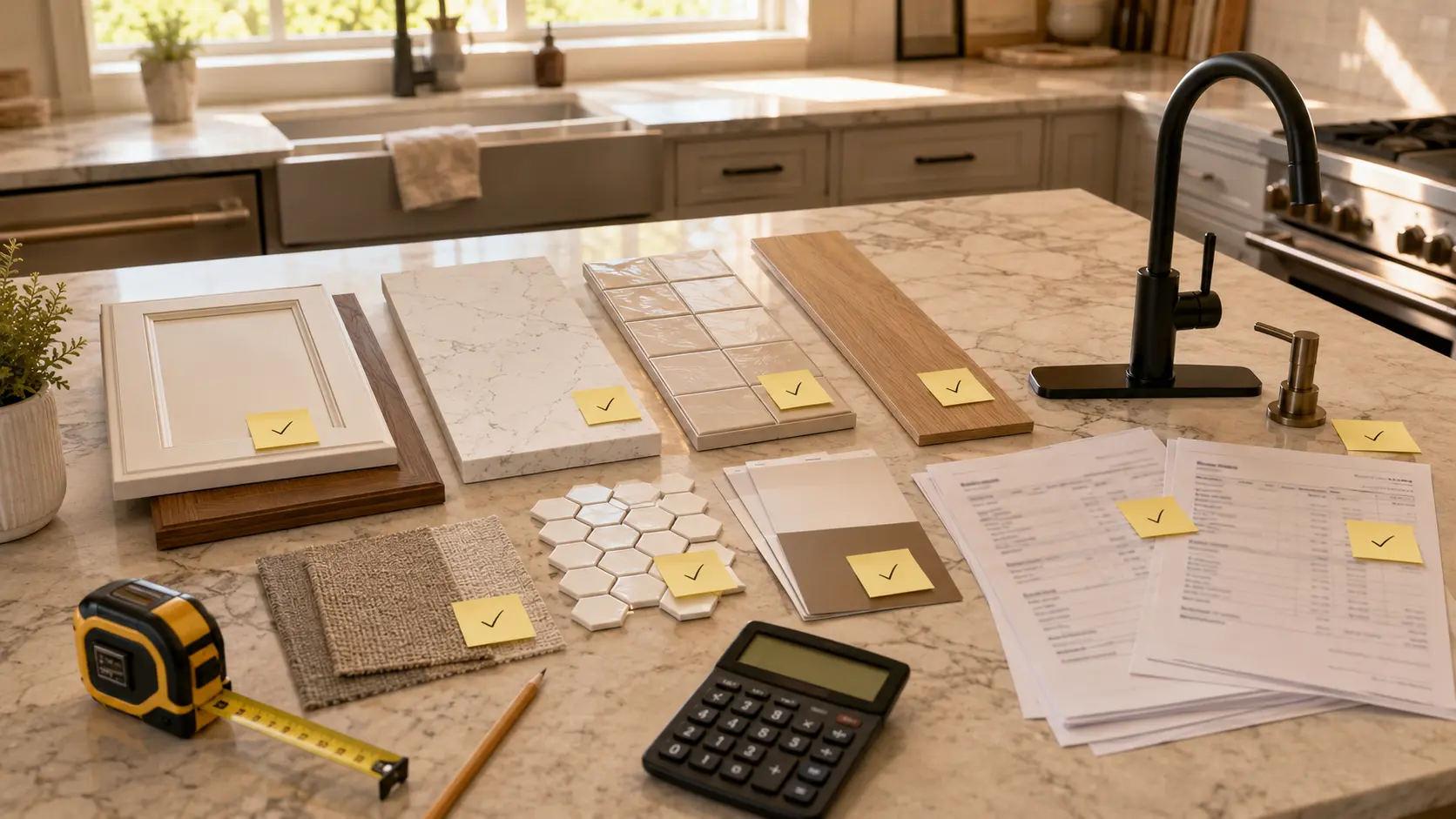
Start with what the kitchen needs most, then match your budget to that scope. This helps you spend on the right upgrades and avoid surprise costs.
- Fix major issues first, such as leaks, bad wiring, broken appliances, or damaged flooring.
- Keep what still works, like cabinet boxes, appliances, flooring, or the current layout.
- Choose your remodel level before picking finishes.
- Set aside 10% to 20% for unexpected costs.
- Get at least three quotes with the same scope.
- Ask for labor, materials, permits, demolition, disposal, cleanup, and allowances in writing.
- Save by keeping the layout, refacing cabinets, using standard countertop slabs, shopping appliance sales, and choosing simple tile.
- Spend more on cabinets, lighting, sink, faucet, and durable flooring.
- Cut back on upgrades that are easy to change later.
If you’re weighing a smaller-scope project, the cost breakdown for a kitchen remodel without appliances covers where the biggest savings come from when you’re keeping existing units.
What to Ask Your Contractor Before Signing Anything
Most budget problems start with a quote that left something out. These five questions surface the gaps before work begins.
- What exactly is included in the labor line? Ask whether demo, cleanup, inspections, and touch-up painting are covered, or if those are billed separately.
- Who pulls the permits, and are the fees included? Some contractors include permit costs in the quote; others bill them as a pass-through. Clarify before signing.
- What’s your process when hidden conditions are found? A contractor who has a clear answer, written change order, and agreed markup rate is more reliable than one who says “we’ll figure it out.”
- Are allowances real, or placeholders? Some quotes list $500 for tile or $2,000 for fixtures. Ask whether those numbers reflect your actual selections or whether they’ll change once you pick materials.
- What’s the payment schedule? Avoid contractors who require more than a 30% to 40% deposit upfront. Payment tied to project milestones protects you if the schedule slips.
Return on Investment
Kitchen updates can support resale value, but the largest project isn’t always the smartest financial move. According to Hanley Wood Market Intelligence’s 2025 Cost vs.
Value Report, a minor midrange kitchen remodel, recouped a higher percentage of its cost than a major upscale remodel nationally. Smaller, well-executed updates tend to perform better on resale percentage than full gut renovations.
That said, larger remodels can still make sense if you plan to stay for years and want better daily use from the space. For resale, keep material choices neutral, durable, and consistent with the price range of nearby homes. A kitchen that outspends the neighborhood rarely recovers the premium at sale.
Frequently Asked Questions
What costs the most in a kitchen renovation?
Cabinets take the largest share of most renovation budgets because the cost includes boxes, doors, drawers, hardware, trim, and installation. Custom sizes, soft-close features, pull-outs, pantry units, and premium finishes all raise the price significantly.
Should I change the kitchen layout?
Change the layout only when the current setup creates real daily problems. Moving a sink, range, gas line, or wall adds labor, permits, and time. If the room functions reasonably well, keeping the existing layout can save several thousand dollars.
How many contractor quotes should I get?
Get at least three quotes with the same scope. Ask each contractor to separate labor, materials, permits, and allowances into distinct line items. A low quote is not always better if it omits cleanup, inspections, or key materials.
Can I do part of a kitchen renovation myself?
Yes, for low-risk tasks. Painting, cabinet hardware, simple demo, and some backsplash work are DIY-friendly. Licensed pros should handle electrical, plumbing, gas, structural work, and anything tied to permits or inspections.
How long does a kitchen renovation take?
A basic cosmetic refresh may take two to four weeks. A mid-range remodel typically runs six to ten weeks, including ordering lead time for cabinets. A full gut renovation with layout changes can take three to six months from demo to punch list.
Does kitchen renovation cost more in certain states?
Yes, significantly. Labor and permit costs in high-cost metros like San Francisco, New York, or Seattle can run 30% to 50% higher than the national average. States with lower labor costs and simpler permitting requirements can come in at the lower end of national ranges.
Final Thoughts
Now you have a clearer view of how much does it cost to renovate a kitchen and why prices vary so much.
The smartest budget starts with scope, not finishes. Decide what must change, what can stay, and how much risk your home may hide behind the walls. A 12×12 space may land near $15,000 for a lighter refresh or pass $40,000 with fuller upgrades. Larger or higher-end projects can cost far more.
If you are ready to plan, measure your space, list your must-have updates, and collect three detailed quotes before you choose a contractor.
Use that process before signing anything, and your budget will be easier to defend from the start.