

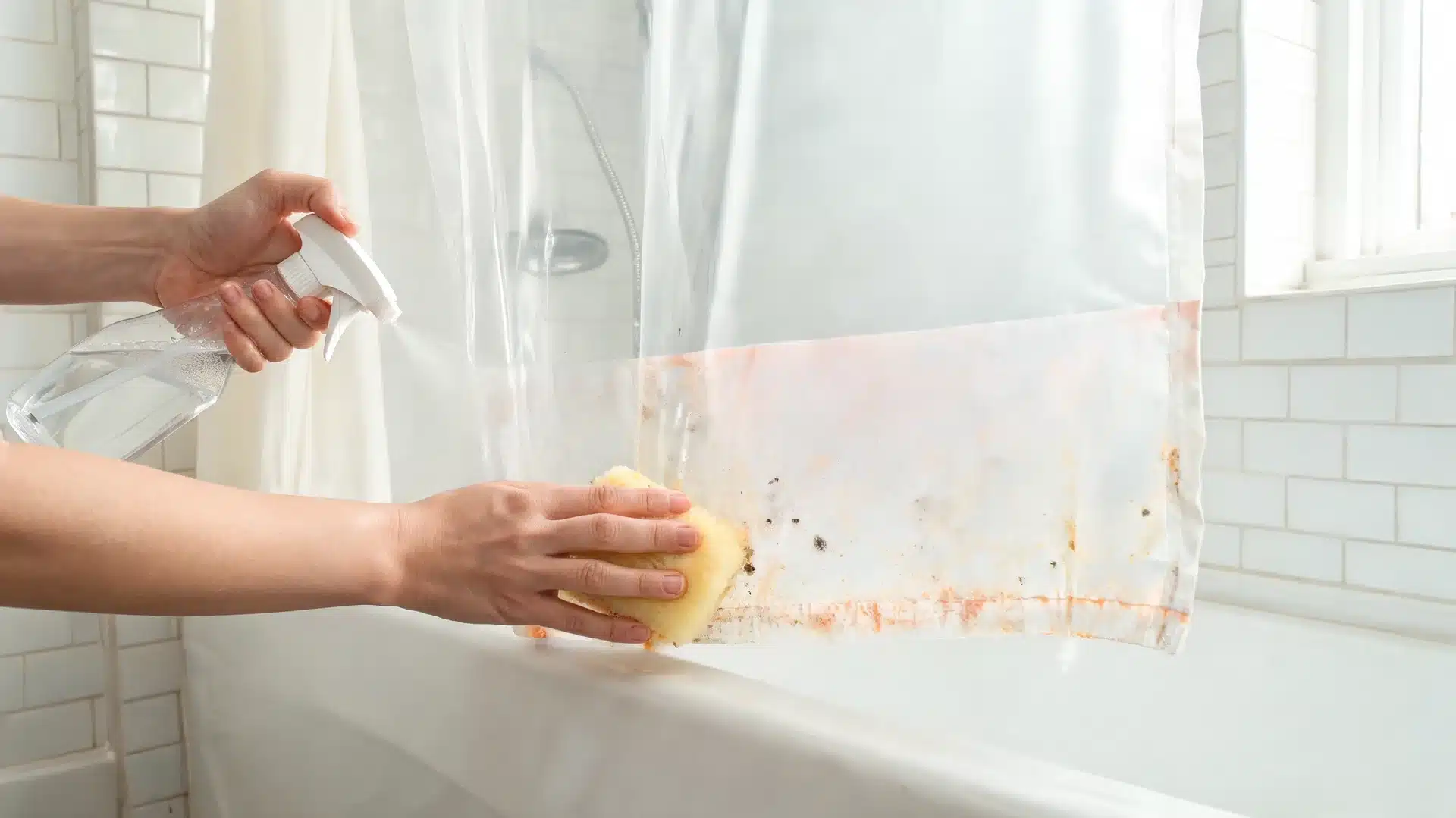


There’s that one morning when you pull back the curtain, and something about the bottom edge just looks off. That filmy buildup, the faint pink tinge, or the smell that hits before the water even warms up.
I ignored mine for longer than I care to admit, assuming a quick rinse in the shower would sort it out. It never did. Soap scum, body oils, shampoo residue, and bathroom moisture accumulate faster than on most surfaces in the house.
The bottom edge takes the worst of it because it stays damp long after every shower ends. What looks like a quick fix usually needs the right method for whatever material is hanging in your bathroom, not just hot water and hope.
Knowing how to clean a shower curtain correctly starts with the material it is made of, which is broken down by material type, problem type, and the time you realistically have.
| Difficulty | 2 out of 5, no special skills, just the right method for the material |
| Time | 10 minutes hands-on (machine method) or 30 to 45 minutes (hand wash) |
| Cost | $0 to $5, baking soda, white vinegar, and your regular detergent cover it |
| Tools Needed | Soft brush, spray bottle, sponge, white towels |
| Skill Required | For a beginner, the main skill is checking the care label and matching the cleaner to the material |
Curtain and Liner Are Not the Same Cleaning Job
Most bathrooms have two things on the rod, not one. Understanding the difference between them is the starting point for cleaning either one correctly, and it’s the step most people skip.
A shower curtain is the decorative piece on the outside facing the bathroom. It’s usually fabric cotton, polyester, waffle weave, or linen-style. It deals with bathroom humidity, light splashes, and dust, but it stays comparatively dry compared to the inside.
A shower curtain liner is the waterproof piece on the inside of the rod that comes into direct contact with water every single shower. Liners are typically made from plastic, vinyl, or washable fabric. Because they’re always wet, the liner is where soap scum, mold, mildew, hard-water deposits, and that pink film are most likely to show up first.
The care tag matters. The American Cleaning Institute says care labels help you choose the right wash and dry settings, so checking first can save the curtain from damage.
A simple rule: wash the fabric curtain when it looks dull or smells musty. Clean the liner more often, because it gets the most direct contact.
If your shower is one of the smaller enclosures with limited airflow, keeping the liner clean on a tighter schedule is worth it.
You can find practical small bathroom shower designs that account for ventilation from the start. Once you know which piece needs work, the right method becomes obvious.
|
Before starting, keep these basic items ready:
|
How to Clean a Shower Curtain in the Washing Machine
For most people, this is how to clean a shower curtain without spending more than 10 minutes of actual effort. The machine does the work when the right cycle, temperature, and additions are used together.
Step 1: Removal and Pre-Treating Stains: Remove the curtain and rings, shake off debris, then apply a baking soda paste to visible stains and let it sit for five minutes before washing.
Step 2: Load with Towels: Place the curtain in the washer along with two or three white towels to create friction and prevent the liner from sticking or bunching.
Step 3: Add Cleaning Agents: Add regular laundry detergent along with 1/2 cup of baking soda to help break down soap scum and body oil buildup.
Step 4: Select Proper Cycle: Choose a gentle cycle with cold or warm water, avoiding hot water as it can warp plastic or vinyl materials.
Step 5: Rinse and Dry Properly: Add 1 cup of white vinegar to the rinse compartment, then hang the curtain back immediately after washing so it dries evenly.
The machine method works well for most pieces, but thin or older vinyl liners need a different approach. The next method is safer for anything that feels fragile.
Watch the detailed video by DIY Pinto
| Thing to Keep in Mind: Never put plastic or vinyl liners in the dryer. Even a single short cycle on low heat can cause warping, cracking, or permanent shrinkage. Air drying on the rod is the only safe option for any liner, every time. |
How to Hand-Wash a Shower Curtain Liner
Thin or worn liners can come out of a machine wash looking worse than they went in. Hand washing gives full control over pressure and temperature, which matters a lot for vinyl. https://www.oxiclean.com/en/stain-solutions/how-to-clean-shower-curtains
Step 1: Prepare Cleaning Solution: Fill the tub with warm water and add mild dish soap, white vinegar, or an Oxiclean oxygen-based cleaner to help break down mold and heavy buildup.
Step 2: Soak the Curtain: Fully submerge the curtain and let it soak for 20 to 30 minutes to loosen soap scum, mineral deposits, and residue along the lower section.
Step 3: Scrub Stubborn Areas: Gently scrub the bottom 6 to 12 inches using a soft brush or baking soda paste to remove any remaining buildup.
Step 4: Rinse Thoroughly: Rinse the curtain completely until the water runs clear and no slippery or soapy residue is left on the surface.
Step 5: Hang and Dry Properly: Hang the liner straight on the rod without wringing, keep it fully open, and use ventilation to help it dry faster.
If the curtain only needs light upkeep between full washes, the next method helps you freshen it without taking it down from the rod.
Watch the detailed video here by Sherls Corner
| Pro Tip: Rinse the tub after hand washing before the next person showers. Baking soda and soap residue left on the tub floor get slippery fast and are easy to miss when they dry. |
How to Clean a Shower Curtain Without Taking It Down
Pulling the curtain down every week is not realistic. A quick spray between full washes helps with light soap residue, mild odors, and early buildup before they turn into a bigger cleaning job.
Step 1: Prepare Vinegar Solution: Mix equal parts white vinegar and water in a spray bottle, then shake gently to combine the solution evenly.
Step 2: Spray the Liner: Spray the lower half of the liner while it is hanging, focusing on the bottom edge where buildup forms most often.
Step 3: Let It Sit: Allow the solution to sit for two to three minutes to loosen light residue, odor, and fresh film.
Step 4: Wipe and Rinse: Wipe the area with a damp sponge or microfiber cloth, then rinse with the showerhead if accessible.
Step 5: Air-Dry Properly: Spread the curtain fully open on the rod and let it air-dry, using ventilation if available to speed up drying.
If a quick wipe does not fix the smell, film, or spots, the next section shows how to treat each problem the right way.
Watch the detailed video on HGTV
| Pro Tip: Keep a diluted vinegar spray bottle on the shower shelf and spray the liner once a week after showering. It takes less than a minute and helps reduce the number of full washes. |
Targeting Specific Problems: Mold, Soap Scum, Pink Film, and Hard Water
Not every dirty shower curtain needs the same cleaner. A musty liner, cloudy soap scum, pink film, and hard water marks all need a slightly different fix. Below is the description for each fix:
| Problem | What it looks like | What to use | What to do |
| Light smell | Musty odor with no heavy stains | White vinegar | Add it during rinse or use a short soak |
| Soap scum | Cloudy, slick film near the bottom | Baking soda paste | Rub it on, scrub gently, then rinse or wash |
| Mold or mildew | Dark spots or gray patches | Oxygen cleaner or safe diluted bleach | Soak, scrub lightly, rinse fully, and air dry |
| Pink or orange film | Pink or orange buildup near wet areas | Detergent and vinegar | Wash first, rinse well, then dry with airflow |
| Hard water marks | Chalky or cloudy mineral spots | Vinegar and water spray | Spray, wait 10 to 15 minutes, wipe, and rinse |
The main rule is simple: match the cleaner to the problem. After that, drying matters most because a damp, folded liner can bring the same stains back fast. Matching the right solution to the right problem cuts the effort in half.
|
Thing to Keep in Mind: Never mix bleach and vinegar in the same wash or on the same surface. The combination produces harmful fumes and does not improve results. Use one or the other, never both at the same time. |
Mistakes to Avoid
Some cleaning shortcuts can ruin the curtain or make stains harder to remove. Keep these simple rules in mind before using heat, bleach, or rough scrubbers.
- Do not scrub printed designs too hard
- Avoid soaking metal grommets for too long
- Do not use colored towels with white liners
- Skip scented cleaners on musty liners
- Do not fold the liner while it dries
- Avoid washing cracked liners again and again
- Do not hang the liner over a dirty tub edge
- Skip the heavy cleaner on unknown fabric
Once these mistakes are clear, it becomes much easier to clean the curtain safely and move on to mold, soap scum, pink film, or hard water marks.
What Users Commonly Report
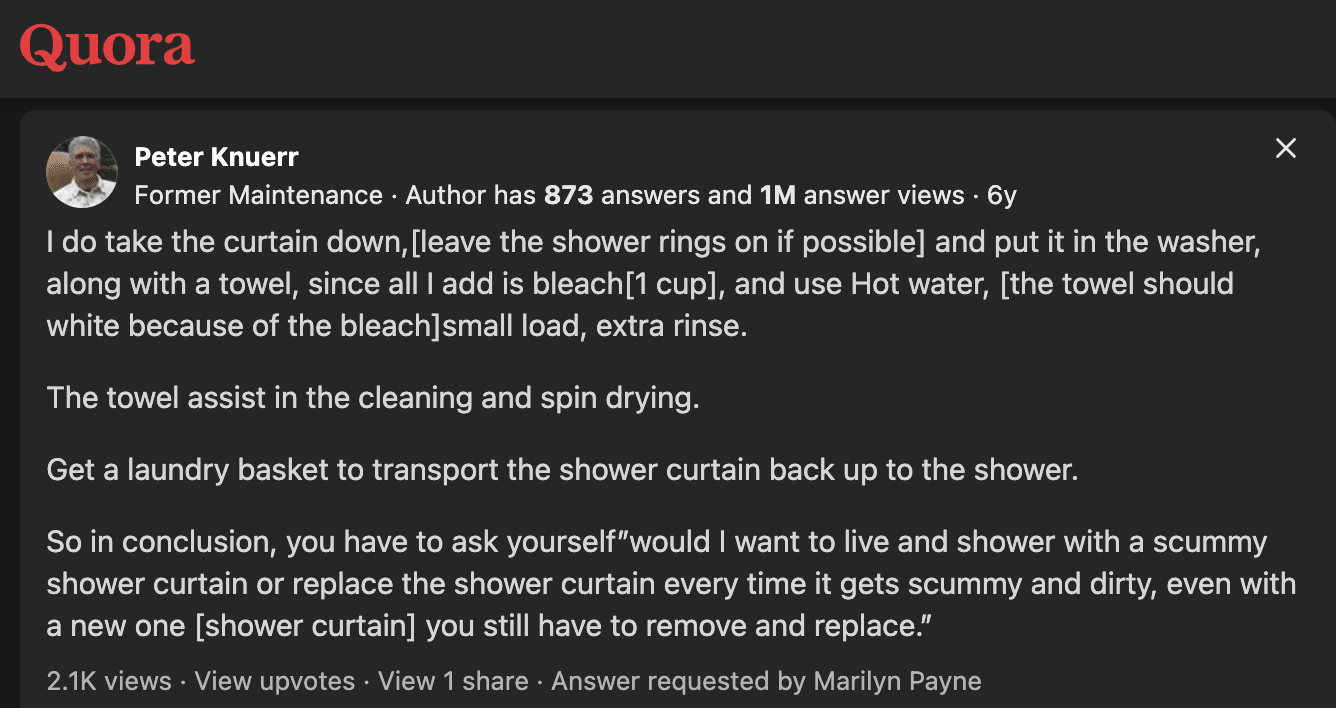
Towels added to the wash cycle are frequently mentioned in Quora discussions. Users report that combining towels with baking soda improves cleaning results, helping remove buildup more effectively than washing the liner alone.
Vinegar timing is another common point. Quora users note that adding it during the rinse cycle, rather than with detergent, removes odor more effectively and leaves no lingering smell after drying.
The issue of pink residue comes up often. Users point out that it can return quickly after bleach treatment and is not always mold. Many emphasize that proper airflow after showering plays a bigger role in preventing it.
On mildew, similar discussions highlight ventilation as the key factor rather than relying on stronger cleaning products. Improved air circulation helps slow buildup and keeps liners cleaner longer.
When it comes to replacing vs cleaning, opinions vary, but many users lean toward replacing the liner every few months if buildup keeps returning despite regular cleaning.
From my perspective, the pattern is clear: small habits like adding towels, correct vinegar timing, and improving airflow matter more than harsher products, reducing the need for deep cleaning.
How Often to Wash and When a Replacement Makes More Sense
Most people push the wash past when it is actually needed, then wonder why one cycle does not fix weeks of buildup.
A simple schedule based on a certain type keeps things manageable before they become a project.
| Task | Frequency |
| Spread the curtain fully open after each shower | Daily |
| Spray the lower edge with vinegar and water | Weekly |
| Wash liner | Every 1 to 2 months |
| Wash the fabric curtain | Every 2 to 3 months |
| Deep clean for mold or heavy staining | As needed |
Replace the liner rather than washing it again if mold returns within a week of cleaning, cracks appear along the hem, the plastic stays sticky after a full wash cycle, or the smell persists after the liner is completely dry.
A basic liner costs $8 to $15 and isn’t worth fighting when those signs appear.
If you’re at the point of replacing a liner and want to think through the rest of the bathroom at the same time, these low-cost bathroom refresh ideas cover upgrades that work alongside basic maintenance.
Wrap Up
The best way to clean a shower curtain starts with one question: What is it actually made of? Get that right, and the rest of it, which product to use, which cycle to run, whether to hand wash or machine wash, falls into place quickly.
Vinegar, baking soda, and a standard machine wash handle most of what builds up over time. Mold and hard water need a bit more targeted treatment, but nothing complicated.
The drying step and the daily habit of fully opening the curtain after every shower do more to prevent the problem from coming back than any deep clean can on its own.
Drop a comment below and share which method worked best for the curtain or liner in your bathroom.
Frequently Asked Questions
Can you put a shower curtain in the washing machine?
Yes, most fabric, polyester, and vinyl shower curtains are machine washable. Use a gentle cycle with warm or cold water, never hot, and add two or three towels to the load.
Always check the care label first, particularly for delicate fabrics or printed designs.
How do you clean a shower curtain liner without removing it?
Mix equal parts white vinegar and water in a spray bottle. Spray the lower half of the liner while it hangs, let it sit for two to three minutes, and wipe with a damp microfiber cloth. This works well for weekly maintenance between full washes.
How do you get mold off a shower curtain?
For fabric curtains, soak in warm water with an oxygen cleaner for 30 minutes, then machine wash on gentle.
For vinyl or plastic liners, soak in the tub with diluted white vinegar or a small amount of bleach, never both together. Scrub stubborn spots with a soft brush, rinse thoroughly, and air dry completely with the bathroom fan running.
Why does my shower curtain smell even after washing?
The most common cause is insufficient rinsing or incomplete drying. Add vinegar at the rinse cycle stage (not at the start), hang the curtain fully spread on the rod immediately after washing, and run the exhaust fan.
If the smell returns within a few days, the liner may have deteriorated to the point where replacement makes more sense than another wash.
What removes soap scum from a shower curtain?
A paste made from baking soda and a small amount of water applied directly to the buildup, left for five minutes, and scrubbed with a soft brush removes most soap scum.
For heavy buildup, follow with a machine wash on a gentle cycle.
Should a shower curtain liner be open or closed after showering?
Always spread it fully open. A bunched liner traps moisture for hours, accelerates mildew growth, and makes the bottom hem deteriorate faster. Fully open and flat is the default position after every shower.
How do you clean shower curtain rings?
Soak metal or plastic rings in warm water with a small amount of dish soap or white vinegar for 15 minutes. Scrub with a soft brush, rinse clean, and dry before rehanging. Check metal rings for early rust spots and replace them before they transfer staining to the fabric.
What material shower curtain liner resists mold best?
Polyester or microfiber fabric liners dry faster than plastic or vinyl and hold up better through repeated machine washing. That faster drying time is the main reason they develop mold more slowly over time.