


Walls don’t usually look dirty in one go. A faint smudge near a switch, a bit of kitchen grease, or a light scuff in the hallway builds up slowly until it starts standing out more than expected.
I’ve noticed this in my own space too, where I didn’t realize how much those small marks were changing the feel of a room until light hit the wall the wrong way.
Understanding how to clean painted walls properly matters when I don’t want to risk patchy paint or dull spots after wiping. The focus here stays on simple methods, safe steps, and habits I use to keep walls clean without damaging the finish.
Understanding Your Wall Before Cleaning
Understanding the wall before cleaning makes a big difference in results. Painted drywall vs textured walls respond differently, with textured surfaces holding more dust and needing a gentler approach.
Old paint vs fresh paint also changes how much moisture or pressure the surface can handle, since older paint may wear faster while fresh paint is still settling. Even location matters, as high-traffic vs low-contact areas tend to collect more marks and need more frequent care.
Freshly painted walls also need patience because new paint needs full curing time before any washing. Light dusting can be done early, but full cleaning should only happen once the paint has fully set to avoid streaks or surface damage.
How to Clean Painted Walls: Step by Step
Cleaning painted walls works best when done in a simple order that protects the paint while still removing everyday dirt, stains, and marks without leaving streaks or uneven spots.
- Step 1 – Dust the walls: Remove spider webs and surface dust using a dry cloth or vacuum brush so dirt doesn’t turn into streaks later.
- Step 2 – Prepare cleaning mix: Mix a small amount of dish soap with warm water in a spray bottle.
- Step 3 – Apply correctly: Spray at an angle instead of directly on the wall to avoid over-wetting and streaking.
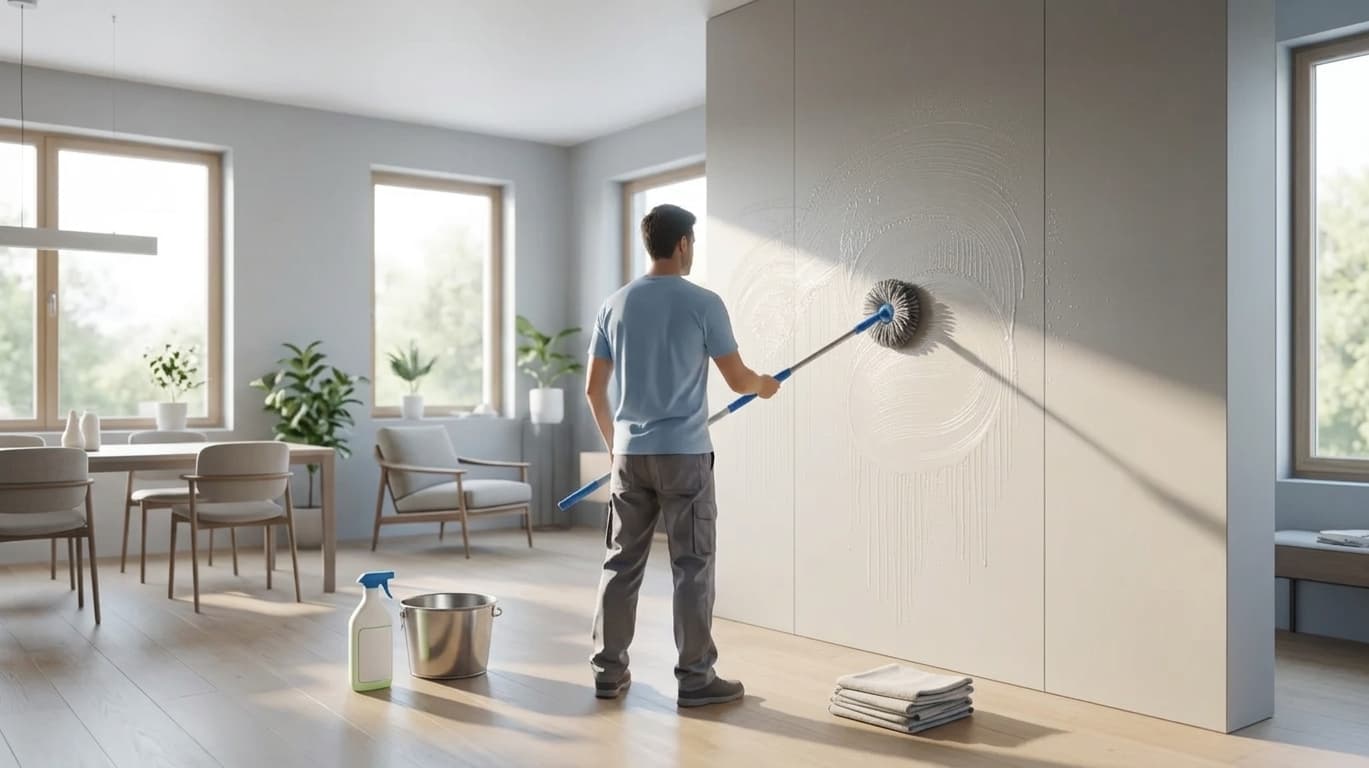
- Step 4 – Clean in sections: Use a damp microfiber mop or cloth and clean in small areas with smooth up-and-down motions.
- Step 5 – Rinse often: Keep rinsing the mop or cloth in clean water to prevent spreading dirt.
- Step 6 – Spot clean stains: Use a gentle foaming cleaner for tough marks like crayon or scuffs, then wipe softly.
A careful step-by-step approach like this keeps painted walls looking even and fresh while preventing common cleaning mistakes that damage the finish over time.
Stain-Specific Cleaning Methods for Painted Walls
Different wall stains need different cleaning approaches, and using the wrong method can damage paint. These simple steps help handle common marks safely and effectively.
1. Grease Stains (Kitchen Walls)
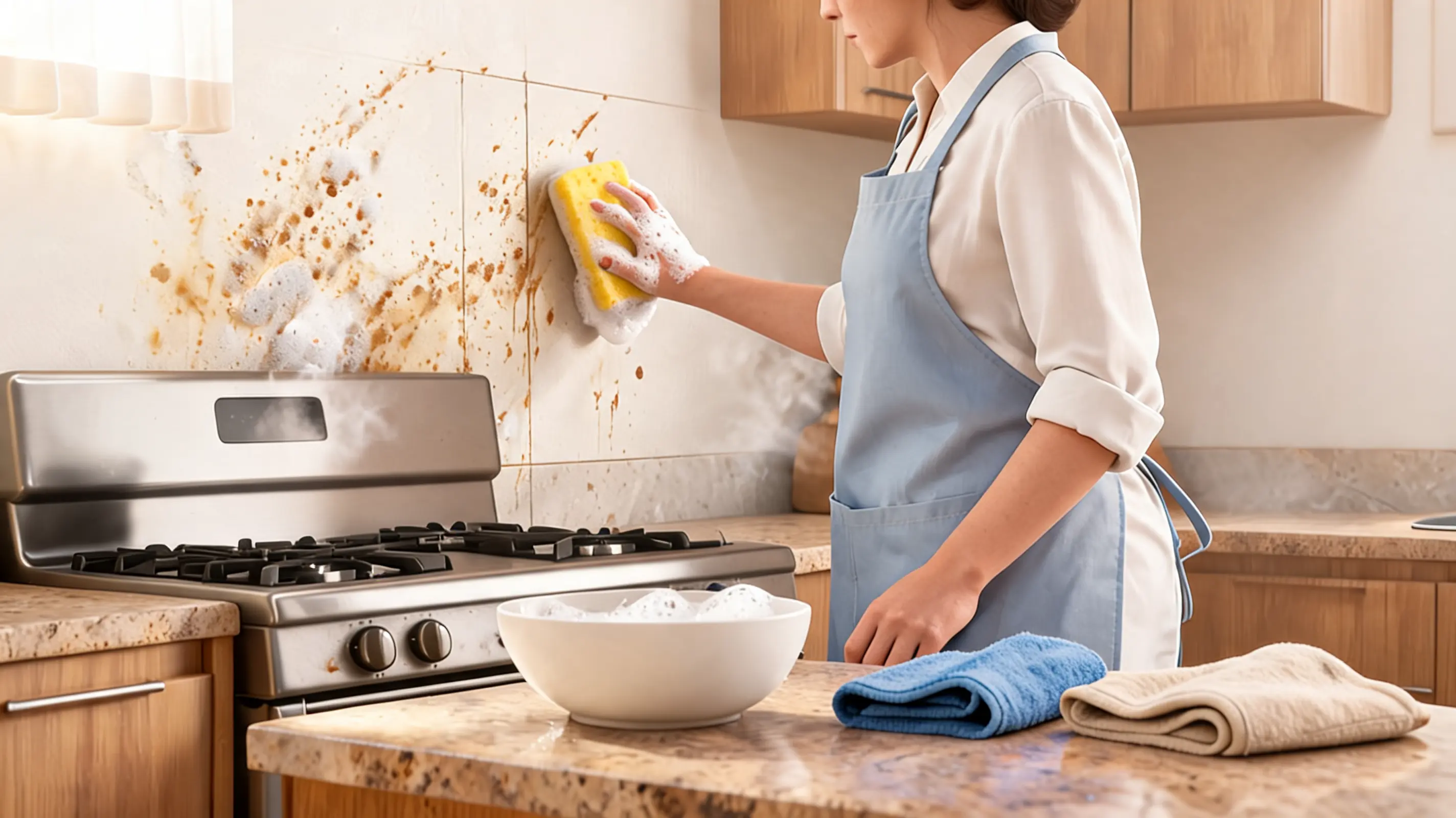
Grease stains are common in kitchen areas where cooking oil and steam slowly settle on painted surfaces. These marks can look dark and sticky, but they can usually be removed with a gentle cleaning approach without harming the paint finish.
Materials required: Mild dish soap, warm water, soft sponge, microfiber cloth, clean towel
How to clean:
- Mix dish soap with warm water in a bowl
- Dip a soft sponge and wring out excess liquid
- Gently wipe the greasy area in light strokes
- Repeat if needed without scrubbing hard
- Wipe with a clean damp cloth to remove residue
Drying tip: Pat dry with a soft towel to avoid water marks and keep the surface even.
2. Crayon or Marker Stains
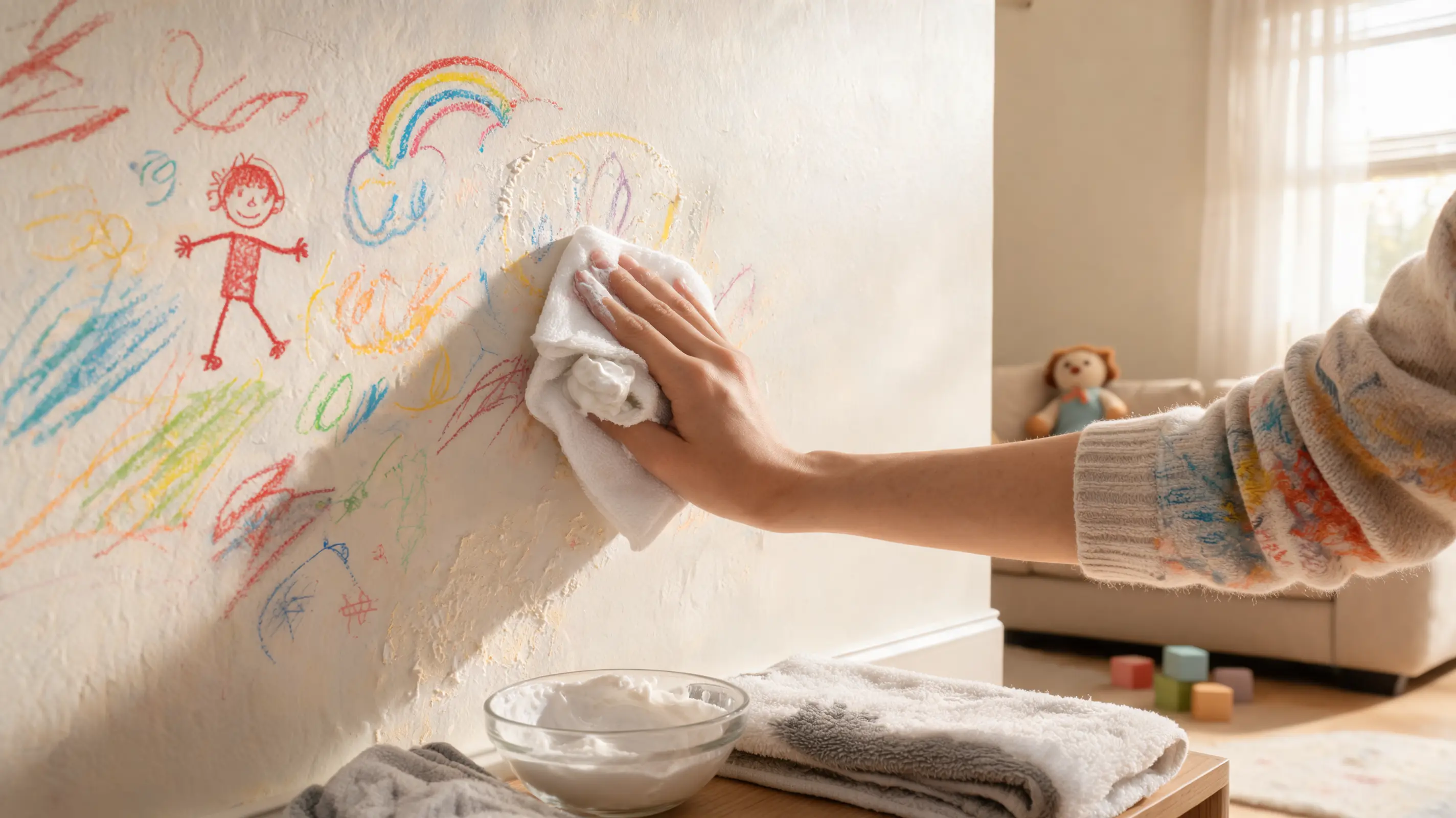
Crayon and marker stains often appear in homes with kids and can seem stubborn, especially on light-colored walls. These marks sit on the surface of paint and need a gentle lifting method instead of harsh scrubbing to avoid damaging the finish or creating dull patches.
Materials required: Baking soda, water, soft cloth, small bowl, microfiber towel
How to clean:
- Mix baking soda with a small amount of water to form a paste
- Apply the paste gently over the stained area
- Dab softly using a cloth instead of rubbing
- Repeat lightly if the mark remains
- Wipe clean with a damp cloth
Drying tip: Let the area air dry completely before checking if a second round is needed.
3. Scuff Marks From Shoes or Furniture
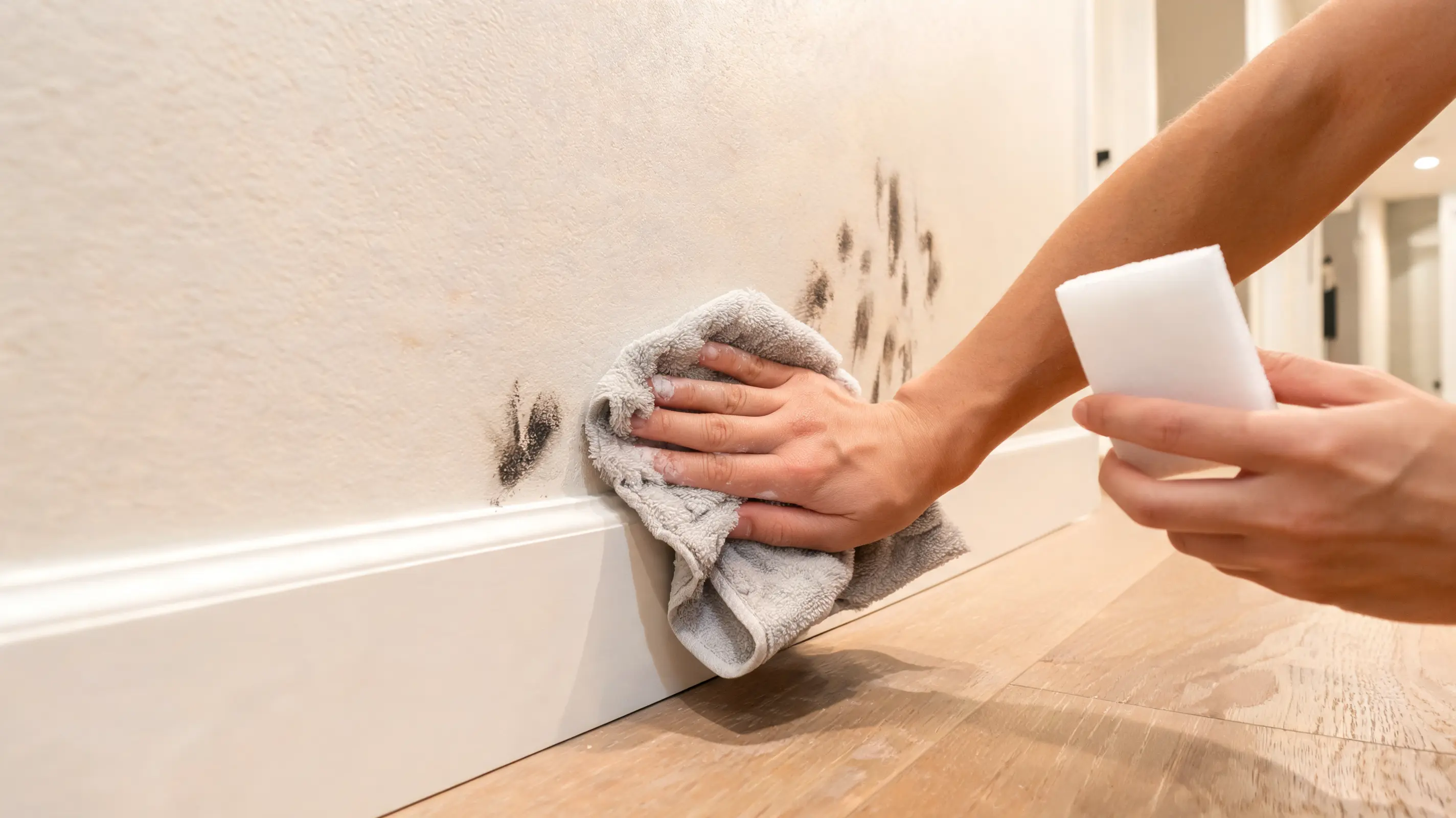
Scuff marks are usually caused by shoes, chairs, or furniture rubbing against walls. These marks are often surface-level and can be removed without any liquid cleaner, making them one of the easiest wall stains to fix when handled properly.
Materials required: Dry microfiber cloth, sponge eraser
How to clean:
- Start with a clean dry microfiber cloth
- Rub the scuff gently with light pressure
- Use a sponge eraser for tougher marks if needed
- Avoid adding water or liquid cleaners
- Repeat lightly until the mark fades
Drying tip: No drying needed; just ensure the wall stays dry and untouched after cleaning.
4. Food or drink spills
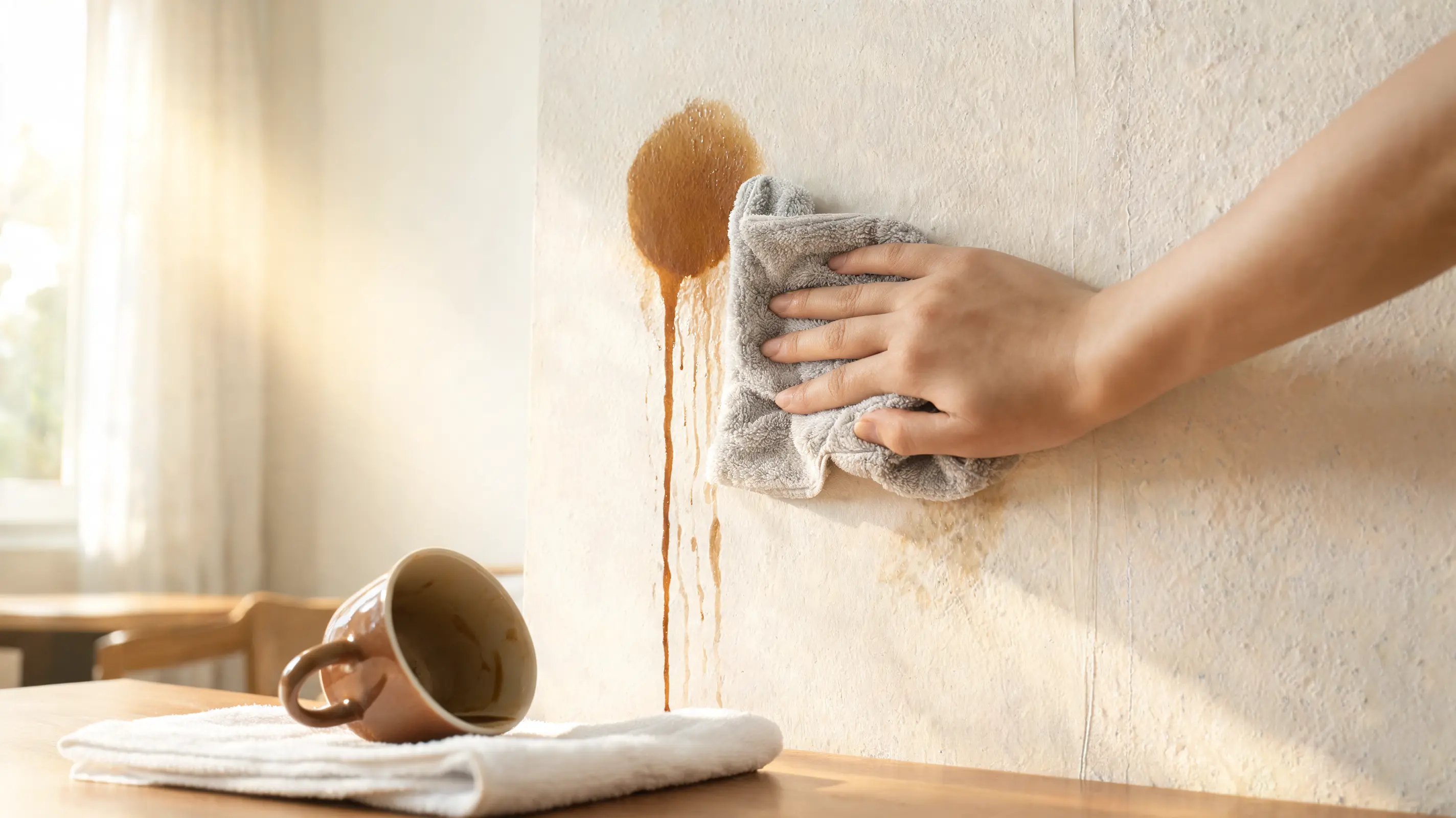
Food and drink spills can leave noticeable marks on painted walls if not cleaned quickly. These stains can soak into the surface slightly, so fast action helps prevent discoloration and makes removal much easier without affecting the paint layer.
Materials required: Mild dish soap, warm water, soft cloth, microfiber towel
How to clean:
- Dip a soft cloth into warm soapy water
- Blot the spill gently instead of rubbing
- Lift the stain slowly using repeated dabbing
- Wipe the area with a clean damp cloth
- Repeat if any residue remains
Drying tip: Dry immediately using a soft towel to avoid sticky patches or water spots.
5. Smoke or dull wall marks
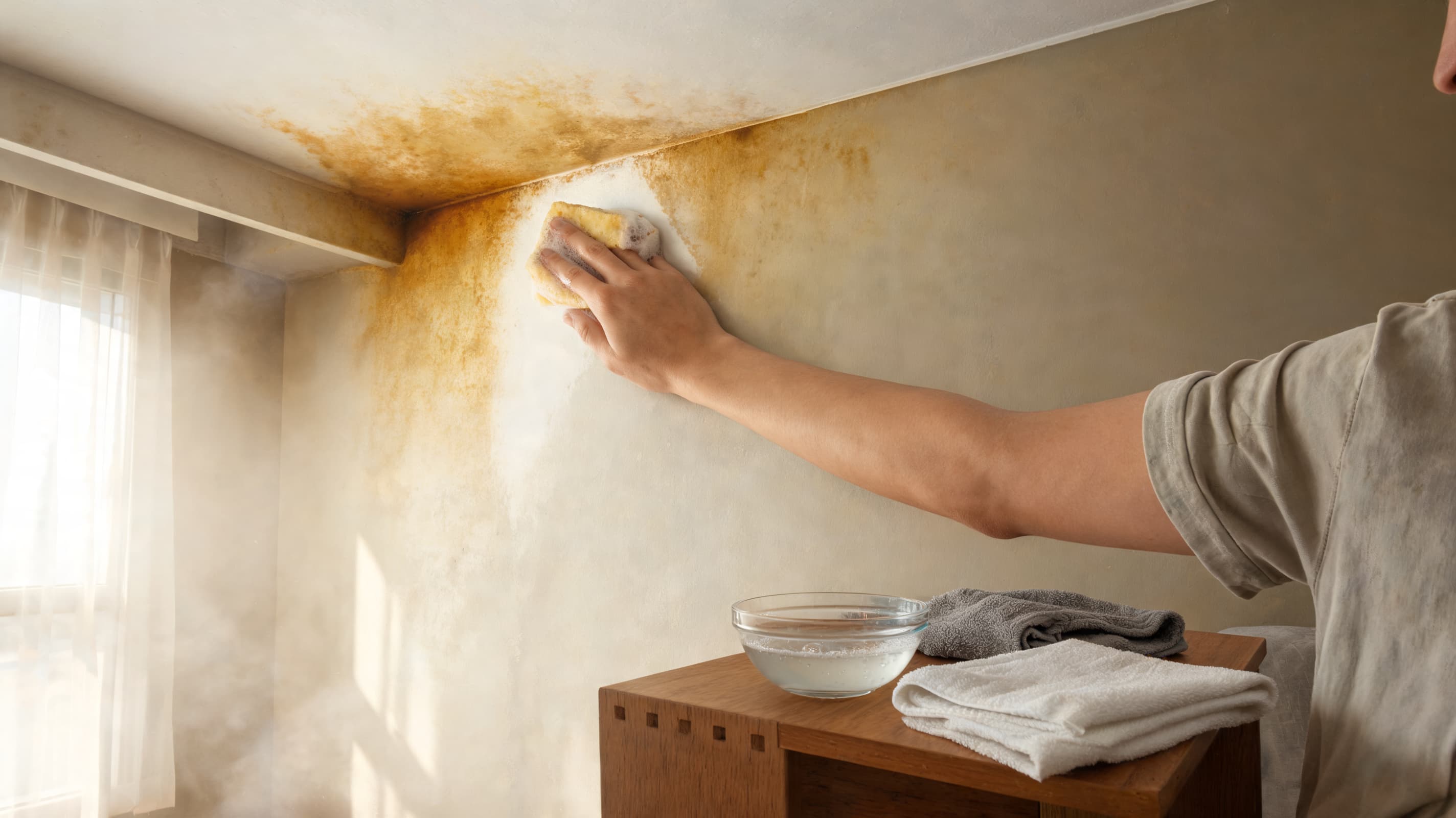
Smoke stains or dull patches usually develop over time due to cooking fumes or indoor smoke exposure. These marks create a faded or yellowish look on walls and need gentle cleaning to restore surface clarity without damaging paint sheen.
Materials required: Mild diluted degreaser, sponge, clean water cloth, soft towel
How to clean:
- Dilute a gentle degreaser with water
- Apply lightly using a soft sponge
- Wipe the area gently without scrubbing
- Remove residue using a clean damp cloth
- Repeat only if necessary for stubborn marks
Drying tip: Wipe dry immediately with a soft towel to prevent streaking or uneven finish.
Knowing the right method for each stain keeps painted walls clean, consistent, and damage-free, helping maintain a smooth finish without unnecessary effort or repainting.
What Cleaning Methods Should Be Avoided
Some cleaning habits seem harmless but can slowly damage painted walls. Avoiding a few common mistakes helps keep the paint finish smooth and consistent after every clean.
- Too much water on walls: Can seep into paint layers, causing streaks, swelling, or long-term surface damage.
- Harsh scrubbing tools: May scratch the paint or remove it, leaving uneven and visible marks.
- Bleach or ammonia cleaners: Can fade color, weaken the finish, and cause dull patches on most painted surfaces.
- Magic erasers with pressure: Can polish the surface, creating shiny spots especially on matte paint.
- Colored cloths that bleed dye: May transfer color onto light walls and leave permanent stains.
Avoiding these mistakes helps maintain paint quality, prevents uneven patches, and keeps walls looking clean, smooth, and well-maintained after every cleaning session.
Common Problems and Fixes While Cleaning the Walls
Walls can sometimes show issues even after cleaning, and most of them come from small mistakes in technique or tools. Knowing these helps fix the problem quickly and avoid repeat damage.
| Problem | Cause | Fix |
|---|---|---|
| Streaky walls | Too much soap or residue | Wipe again with clean water |
| Dirty smears | Reusing unclean cloth | Rinse or change cloth often |
| Uneven drying marks | Air drying unevenly | Dry with soft towel immediately |
| Shiny patches | Over-scrubbing paint | Use light pressure only |
| Paint dull spots | Harsh cleaning products | Switch to mild soap solution |
| Color fading patches | Strong chemicals used | Avoid bleach or ammonia cleaners |
Understanding these common issues helps correct cleaning mistakes early and keeps painted walls looking smooth, balanced, and consistently fresh after every wash.
Maintenance Routine For Cleaned Walls of Your Home
Keeping painted walls clean doesn’t need constant effort, but a simple routine helps maintain a fresh look and prevents buildup of dust, stains, and marks over time.
Regular cleaning depends on how much each space is used and exposed to dirt or grease.
- Kitchen: Every 1–2 months since cooking oil, steam, and splashes build up quickly on walls.
- Hallways: Every 3–4 months because high foot traffic leads to frequent scuffs and fingerprints.
- Bedrooms: 2–3 times a year as these areas stay relatively low on dirt and only need light dusting and occasional spot cleaning.
Following this schedule helps prevent heavy staining, reduces deep cleaning efforts, and keeps paint looking even and well-maintained throughout the year.
Signs the Wall Needs Repainting Instead of Cleaning
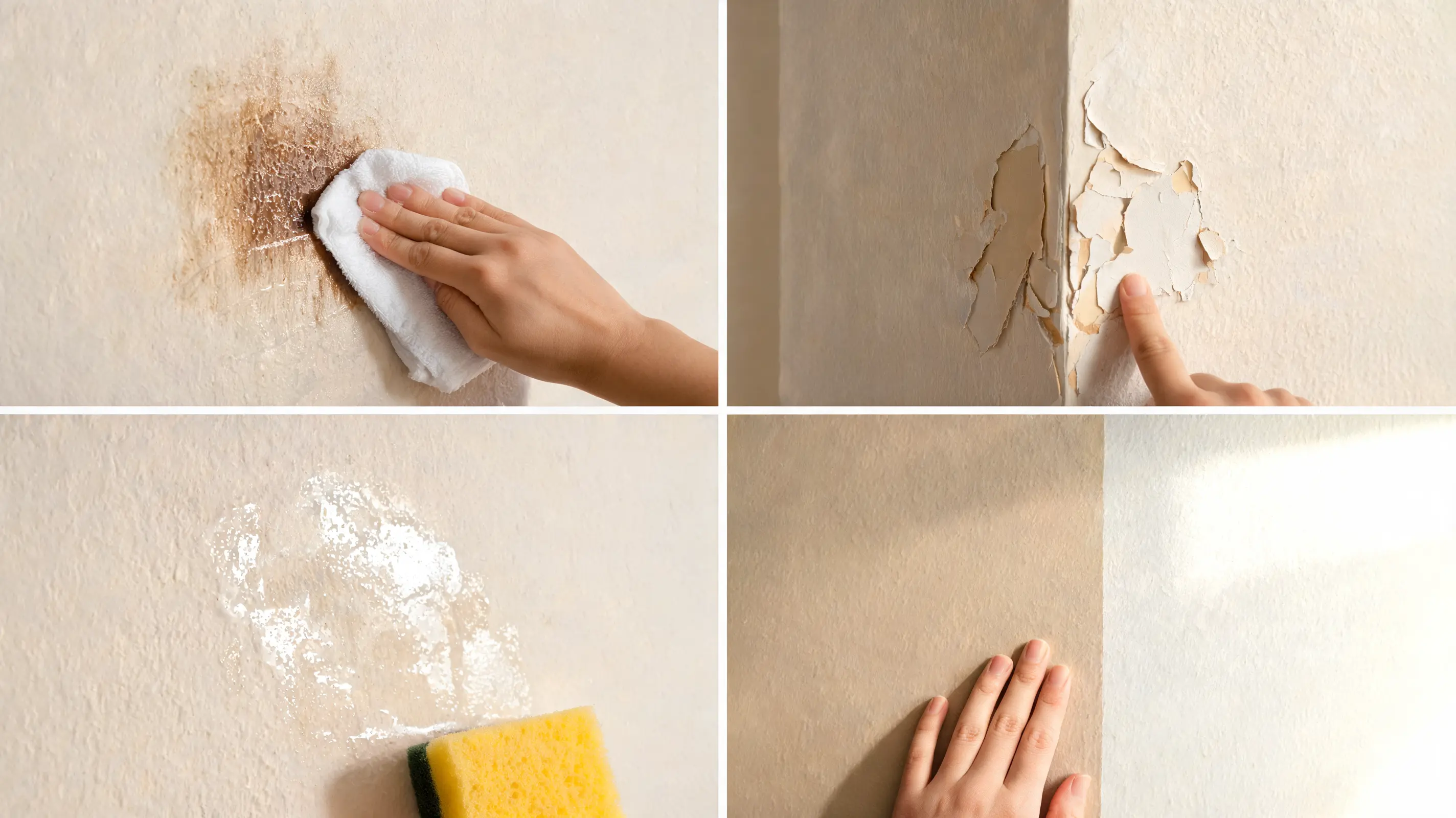
Not every wall problem can be fixed with cleaning. Sometimes the paint itself reaches a point where washing no longer improves the look and repainting becomes the only practical option.
- Permanent stains: Marks that stay visible even after repeated cleaning attempts usually mean the stain has set into the paint layer.
- Paint peeling: Flaking or peeling areas show surface damage that cleaning cannot repair.
- Shine patches after cleaning: Uneven glossy spots often appear after over-scrubbing and cannot be blended back.
- Color fading: Walls that look dull or uneven in tone have lost their original finish over time.
When these signs appear, cleaning can only do so much, and repainting helps restore an even, fresh surface that looks clean and consistent again.
Pro Tips for Cleaning Painted Walls
A few simple habits can make wall cleaning easier and help protect paint from damage over time. These quick tips improve results without extra effort.
- Clean from bottom up for heavy stains: This helps control drips and prevents dirty streaks running down the wall.
- Change water frequently: Fresh water stops dirt from being spread back onto already cleaned areas.
- Use natural daylight when possible: Better lighting helps spot missed marks and uneven cleaning.
- Avoid cleaning on humid days: Slow drying in humidity can increase streaking and water marks.
- Keep edges and corners for last: These areas collect more dust and need separate attention after main cleaning
Following these small but effective tips keeps painted walls cleaner for longer, reduces mistakes, and helps maintain a smooth, even finish after every cleaning.
Frequently Asked Questions
Can sunlight exposure affect how clean walls look after washing?
Yes, direct sunlight can highlight streaks, water marks, or uneven patches after cleaning. It is better to inspect walls under natural but indirect light to ensure an even finish and spot any missed areas more clearly.
Is it safe to clean walls near electrical switches and outlets?
Yes, but extra care is needed. Always avoid excess moisture and never spray directly. Use a lightly damp cloth instead and ensure the area stays dry to prevent any risk of damage or electrical issues.
How to clean high walls without using a ladder?
A long-handled sponge mop or extendable microfiber duster works well for high walls. These tools allow controlled cleaning from the floor, reducing the need for climbing and improving safety during the process.
Do painted walls attract more dust after cleaning?
Walls do not attract more dust after cleaning, but residue from soap or improper drying can make dust stick faster. Proper rinsing and thorough drying help maintain a cleaner surface for longer periods.
Can room ventilation affect wall cleaning results?
Yes, good ventilation helps walls dry evenly and prevents moisture buildup. Poor airflow can lead to streaks or damp spots, so keeping windows open during and after cleaning improves overall results.
Final Thoughts
Walls stay in better shape when cleaning is done with the right steps instead of rushing or using harsh methods. I’ve noticed in my own space how small changes like using mild solutions, soft tools, and proper drying can prevent paint damage and keep the finish even.
You’ve seen how everyday marks, stains, and buildup don’t need aggressive scrubbing when handled the right way. In my experience, most wall issues come from simple mistakes rather than tough stains. That’s why I shared what I follow in my own routine for how to clean painted walls safely.
Try these tips in your space and notice the difference. Share your thoughts in the comments and check out other cleaning guides for more help!