



Quartz countertops have a way of making a kitchen look effortlessly clean, until one wrong product leaves a dull, streaky mess that will not budge. Knowing how to clean quartz countertops the right way is what separates a surface that stays beautiful for years from one that quietly deteriorates.
The good news is that quartz is actually very easy to maintain when you know what to do. Here, I will show you exactly how to clean quartz countertops step by step.
You will learn the safest cleaning method, the best cleaners to use, and what products you should avoid. I will also explain how to remove stains, grease, and sticky spills without harming the surface.
By the end, you will know how to keep your quartz countertops clean, shiny, and looking great for years.
Why Quartz Countertops Need Special Cleaning?
Quartz countertops are not the same as natural stone, like granite or marble . They are made from crushed quartz minerals, mixed with resins and pigments.
This mix creates a strong, smooth, non-porous surface. Because of this structure, quartz does not readily absorb liquids, which helps prevent stains and bacterial buildup.
However, the resin that holds the material together can react to harsh cleaners or strong chemicals. That is why gentle cleaning methods work best for quartz surfaces.
Engineered quartz contains about 90% natural quartz and 10% polymer resins and pigments. The resin layer keeps it non-porous but also makes it sensitive to certain products.
While quartz is durable and stain-resistant, it can still lose shine or become damaged if you use rough scrubbers or strong cleaning products. Using mild cleaners helps keep the surface clean and protected.
One more thing worth knowing: unlike granite or marble, quartz never needs to be sealed. The non-porous resin surface makes sealants unnecessary, and applying one can actually leave uneven residue as it wears off in high-traffic areas.
What You Will Need to Clean Quartz Countertops
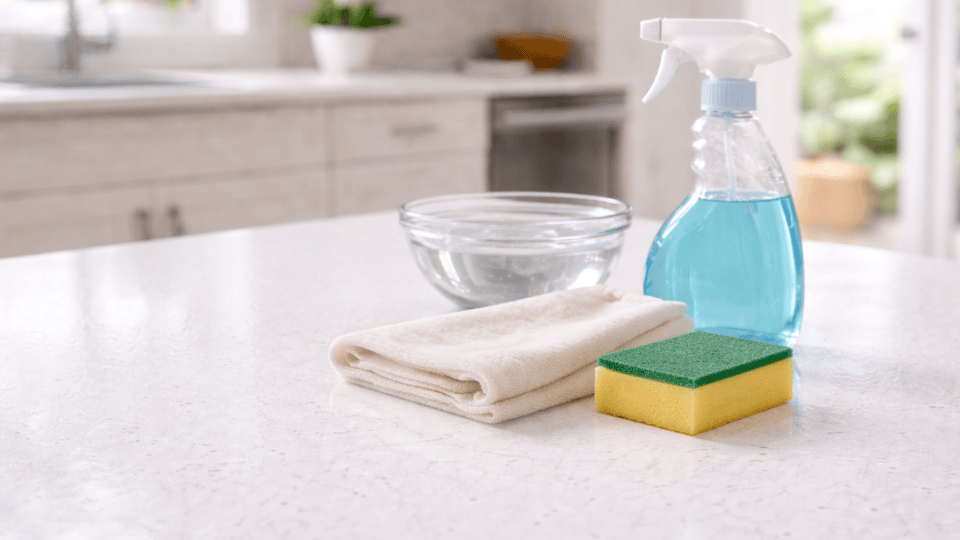
You do not need anything fancy to keep quartz countertops looking their best. Most of these items are already sitting in your kitchen or bathroom:
- Dry cloth, paper towel, or soft brush
- Small bowl or sink with warm water
- Mild dish soap
- Soft cloth or non-abrasive sponge
- Microfiber cloth or soft towel
These are simple, everyday items that get the job done without risking any damage to your surface. Once you have everything ready, the actual cleaning process is quick and straightforward:
How to Clean Quartz Countertops: Step-By-Step
Cleaning Quartz Does Not Require Complicated Products or Tools. a Simple Routine Can Keep the Surface Fresh and Safe. Follow These Steps to Clean Your Countertops the Right Way without Damaging the Finish:
Step 1: Clear the Countertop Surface
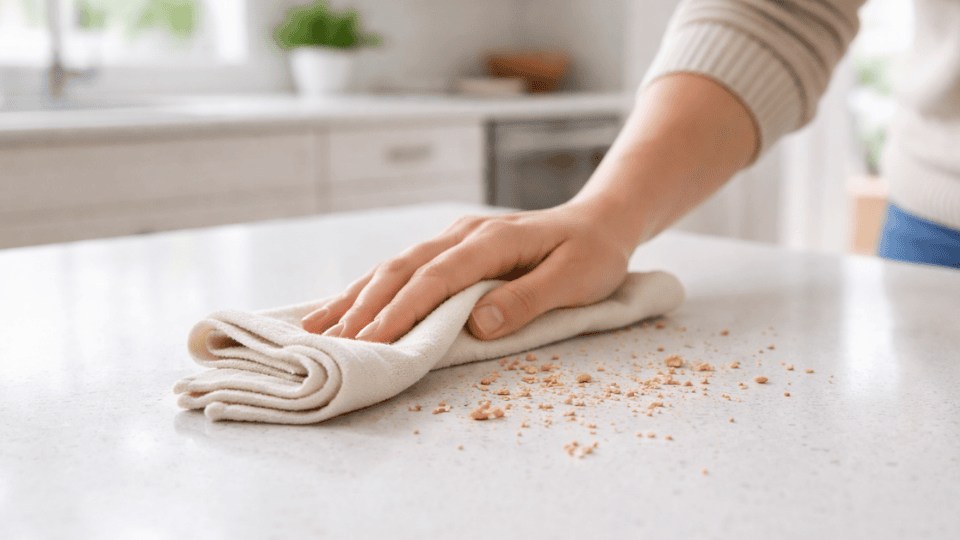
Start by Removing Crumbs, Dust, and Loose Debris from The Countertop. You Can Use a Dry Cloth, Paper Towel, or A Soft Brush to Sweep Everything Away.
This Step Helps Prevent Scratching While You Clean. Small Particles Can Act Like Grit when Rubbed Across the Surface. Clearing the Counter First Makes the Rest of The Cleaning Process Safer and More Effective.
Step 2: Use Warm Water and Mild Dish Soap
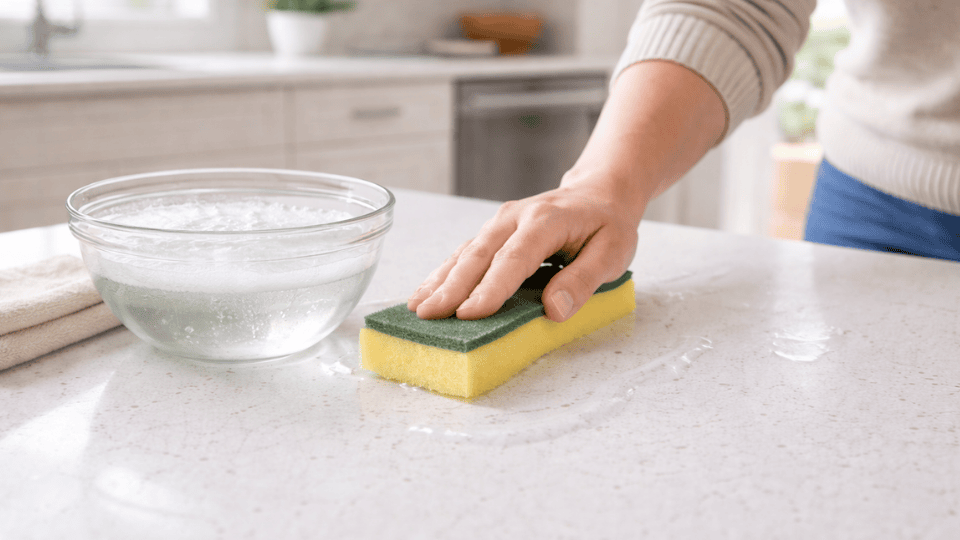
Fill a Small Bowl or Sink with Warm Water and Add a Few Drops of Mild Dish Soap. Dip a Soft Cloth or Sponge Into the Mixture and Gently Wipe the Countertop.
Dish Soap Works Well Because It Removes Grease, Food Spills, and Everyday Dirt. Avoid Strong Cleaners, as they can, over time, affect the Resin Used in Quartz Surfaces.
Step 3: Wipe with A Soft Cloth or Sponge
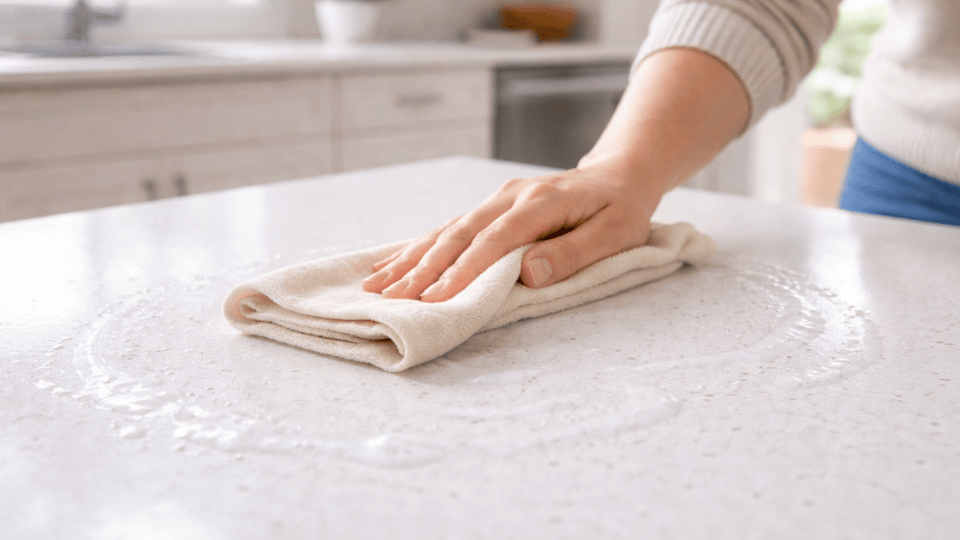
Use a Soft Cloth or Non-Abrasive Sponge to Wipe the Surface Evenly. Move in Gentle Circular Motions so The Soap Can Lift Dirt and Residue.
Avoid Using Rough Scrubbers or Scouring Pads Because They May Dull the Finish. Soft Materials Clean the Surface Effectively While Keeping the Countertop Smooth and Shiny.
Step 4: Dry with A Microfiber Cloth
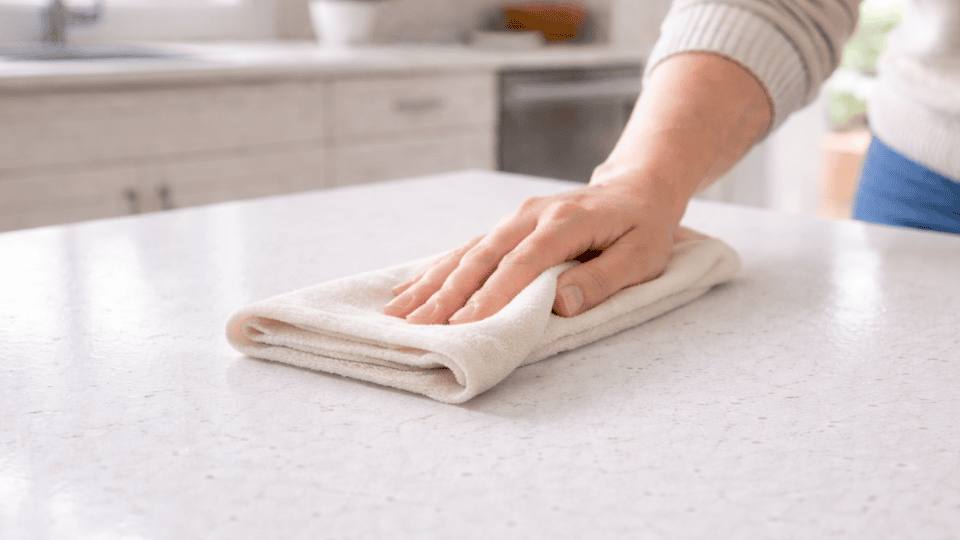
Finish by Drying the Countertop with A Microfiber Cloth or Soft Towel. Drying Helps Prevent Water Spots and Streaks.
Microfiber Cloths Work Well Because They Absorb Moisture and Leave the Surface Smooth. Taking a Minute to Dry the Counter Also Helps Keep the Shine and Gives Your Kitchen a Clean, Polished Look.
How to Remove Tough Stains from Quartz Countertops
While everyday soap and water work for most situations, some stains need a more targeted approach. The table below outlines the safest and most effective methods for common tough stains.
| Stain Type | What to Do | When to Use This Method |
|---|---|---|
| Dried-On Food or Gum | Use a plastic scraper or a credit card edge at a low angle. Clean residue with warm soapy water. Avoid metal tools. | Use this method when residue has hardened and cannot be wiped away easily. |
| Coffee, Wine, or Tea | Spray a mix of equal parts rubbing alcohol and water. Let it sit 1–2 minutes, then wipe with a soft cloth. | Best for pigmented stains that leave behind visible discoloration. |
| Grease or Cooking Oil | Apply dish soap directly, wait 30 seconds, and wipe clean. Use a stone-safe cleaner for heavy buildup. | Ideal for oily spots that feel slick or leave a dull film on the surface. |
| Permanent Marker or Ink | Dab rubbing alcohol with a soft cloth. Rinse afterward. Repeat if needed, but avoid harsh solvents. | Use this approach for ink marks or dye-based stains that don’t come off with basic cleaning. |
By following these methods, you can remove tough stains effectively while preserving the finish and durability of your quartz countertops.
Tips to Keep Quartz Countertops Looking New
Quartz Countertops Can Stay Smooth and Bright for Many Years with Simple Daily Habits. Small Preventive Steps Help Protect the Surface and Reduce the Need for Heavy Cleaning.
- Wipe Spills Quickly: Clean Spills as Soon as They Happen to Prevent Stains or Sticky Residue. Quick Wiping Also Stops Liquids from Drying on The Surface and Leaving Marks.
- Use Cutting Boards when Preparing Food: Always Place a Cutting Board on The Countertop While Chopping or Slicing. This Helps Prevent Scratches and keeps the Quartz Surface Smooth and damage-free.
- Use Trivets for Hot Pots and Pans: Place Hot Cookware on Trivets or Heat Pads Instead of Directly on The Countertop. High Heat Can Affect the Resin and Cause Surface Damage.
- Avoid Dragging Heavy or Rough Objects: Sliding Heavy Appliances, Pots, or Containers Across the Surface May Create Scratches. Lifting Items Instead of Dragging Them Helps Protect the Countertop Finish.
- Clean the Surface Regularly: Regular Cleaning with Warm Water and Mild Dish Soap Helps Remove Grease, Crumbs, and Daily Dirt. Consistent Cleaning Keeps Quartz Countertops Fresh and Well-Maintained.
- Use coasters under glasses: condensation from cold drinks can leave mineral rings over time that are difficult to remove.
- Limit direct sun exposure where possible: prolonged UV rays can gradually dull or fade the quartz surface over time.
Following These Simple Habits Helps Protect Your Quartz Countertops from Damage. A Little Daily Care Can Keep the Surface Looking Clean, Smooth, and Well-Maintained for Years.
How to Disinfect Quartz Countertops Safely
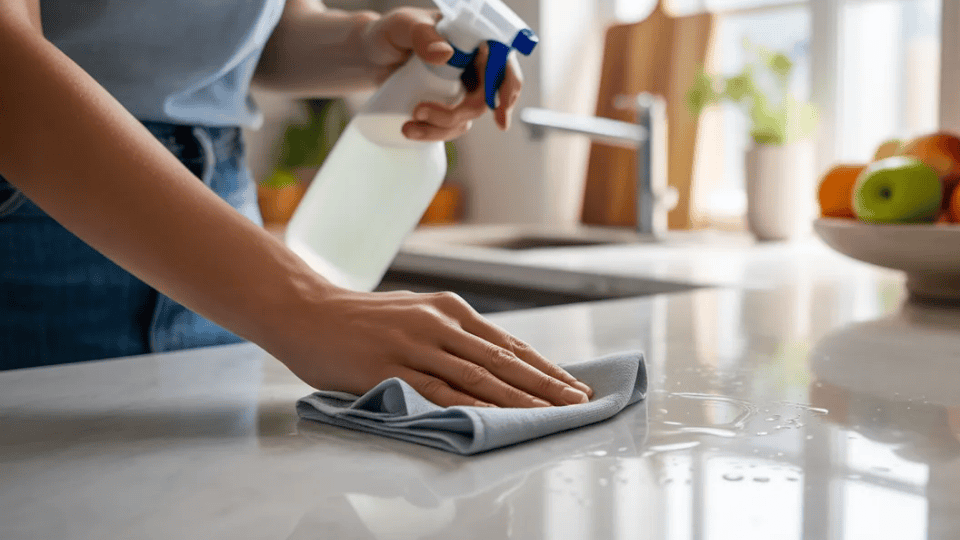
Quartz countertops are easy to keep clean, but disinfecting them the right way matters just as much as regular cleaning. The good news is that you do not need harsh chemicals to get the job done effectively:
- Use a diluted rubbing alcohol solution or quartz-safe disinfectant wipes for safe and effective germ removal.
- Lightly spray or wipe the surface, then use a soft cloth to spread the disinfectant evenly across the countertop.
- Let it sit for a short moment before wiping clean; this gives the disinfectant time to work properly.
- Avoid bleach, ammonia, and other strong chemicals, as they can break down the quartz resin and dull the finish over time.
In my experience, disinfecting after food prep makes the biggest difference in keeping countertops hygienic long term. A simple routine like this takes less than a minute and keeps your surface looking as good as the day it was installed.
Lysol disinfectant sprays and wipes that do not contain harsh chemicals are generally safe for quartz. Always check the label and rinse the surface with clean water after use. Products containing bleach, ammonia, or high concentrations of alkaline ingredients should always be avoided.
Cleaning Products You Should Never Use on Quartz
Quartz countertops are strong, but some cleaners can still damage the surface. Knowing what to avoid helps protect the finish and keeps your countertops looking smooth and clean.
| Product to Avoid | Why to Avoid | Common Examples | Safe Alternative |
|---|---|---|---|
| Abrasive Scrubbers | Scratches the surface and dulls the finish | Steel wool, scouring pads | Soft cloth or non-abrasive sponge |
| Oven Cleaners | Too harsh, leaves permanent marks | Easy-Off, heavy-duty degreasers | Mild dish soap and warm water |
| Vinegar and Acidic Cleaners | Breaks down resin and reduces shine | Vinegar, lemon-based sprays | pH-neutral stone cleaner |
| High-Alkaline Cleaners | Causes fading and uneven surface areas | Heavy-duty bathroom cleaners | Mild soap and water |
| Bleach and Ammonia-Based Cleaners | Strips resin finish and dulls the surface | Windex, concentrated bleach | Diluted rubbing alcohol |
| Paint Removers and Solvents | Etches and permanently discolors quartz | Nail polish remover, acetone | Rinse immediately with clean water |
| Wax and Polish Products | Builds up residue and dulls appearance | Furniture polish, countertop wax | Dry microfiber cloth only |
Avoiding These Products Helps Your Quartz Countertops Last Longer. Using Mild Soap, Warm Water, and Soft Cloths Is Usually the Safest Way to Clean Them.
Common Quartz Countertop Cleaning Mistakes to Avoid
Taking care of quartz countertops is simple, but small cleaning mistakes can slowly affect their look and durability. Being aware of these habits helps you maintain a smooth and polished surface for years.
- Using harsh chemicals: Strong cleaners like bleach or ammonia can slowly break down the resin that binds quartz, leading to dull spots and long-term surface damage.
- Scrubbing with rough materials: Abrasive pads or steel wool can leave tiny scratches on the surface, making the countertop lose its smooth finish and natural shine over time.
- Letting spills sit too long: Liquids like coffee, wine, or oil can seep in and leave stains or sticky residue if not cleaned up quickly and properly.
- Placing hot items directly: Putting hot pots or pans on quartz can damage the surface finish and may even cause discoloration due to sudden heat exposure.
- Ignoring regular cleaning: Skipping daily wipe-downs allows dirt and grime to build up, making the countertop harder to clean and maintain later.
- Using too much cleaner: Overuse of cleaning products can create a cloudy film on the surface, detracting from the clean, polished look of quartz countertops.
By avoiding these common mistakes and sticking to gentle cleaning habits, you can keep your quartz countertops looking fresh, clean, and well-maintained for a long time.
Cleaning Quartz Countertops in the Bathroom
The same rules apply in bathrooms, but a few specific situations come up more often there. Toothpaste, makeup, and hair products can all leave residue that builds up if not wiped regularly.
For toothpaste and soap scum, warm soapy water and a soft cloth work well.
For makeup stains or foundation smudges, a small amount of rubbing alcohol on a soft cloth lifts the pigment effectively without harming the surface.
Nail polish remover (acetone) should never be used on or near quartz, as it can permanently etch the resin.
If nail polish lands on the countertop, remove as much as possible with a plastic scraper, then treat the residue with a quartz-safe cleaner.
Bathroom counters also tend to stay damp longer than kitchen counters. Wiping the surface dry after use prevents water spots from hard minerals building up over time, which become increasingly difficult to remove the longer they sit.
Frequently Asked Questions
Can you use vinegar on quartz countertops?
No, it is best to avoid vinegar on quartz countertops. Vinegar is acidic and can slowly damage the resin that holds the surface together, causing dullness over time.
Is baking soda safe for quartz?
Yes, baking soda can be used occasionally for tough stains. However, it should be applied gently as a paste and not scrubbed aggressively to avoid scratching the surface.
How often should you clean quartz countertops?
You should wipe quartz countertops daily with mild soap and water to remove dust, spills, and grease. Regular cleaning helps maintain shine and prevents buildup.
Can quartz countertops stain permanently?
Quartz is stain-resistant but not completely stain-proof. If spills like coffee, wine, or oil are left too long, they may leave marks. Cleaning quickly helps prevent permanent stains.
Can a scratched quartz countertop be repaired?
Minor scratches can sometimes be buffed out by a professional. Deeper scratches are harder to fix and usually require expert repair, as DIY methods can worsen the surface.
Final Shine
Keeping quartz countertops clean does not have to feel complicated. I always tell people that a simple routine works best. Warm water, mild soap, and a soft cloth can handle most messes you see every day.
When spills happen, wiping them quickly can prevent stains and keep the surface looking fresh. It also helps to avoid harsh chemicals, rough scrubbers, and strong cleaners that can dull the finish over time. A few simple habits can protect your countertops and make cleaning much easier.
Once you understand how to clean quartz countertops, maintaining them becomes simple. If this guide helped you, consider sharing it with someone who wants an easier way to care for their kitchen surfaces.