

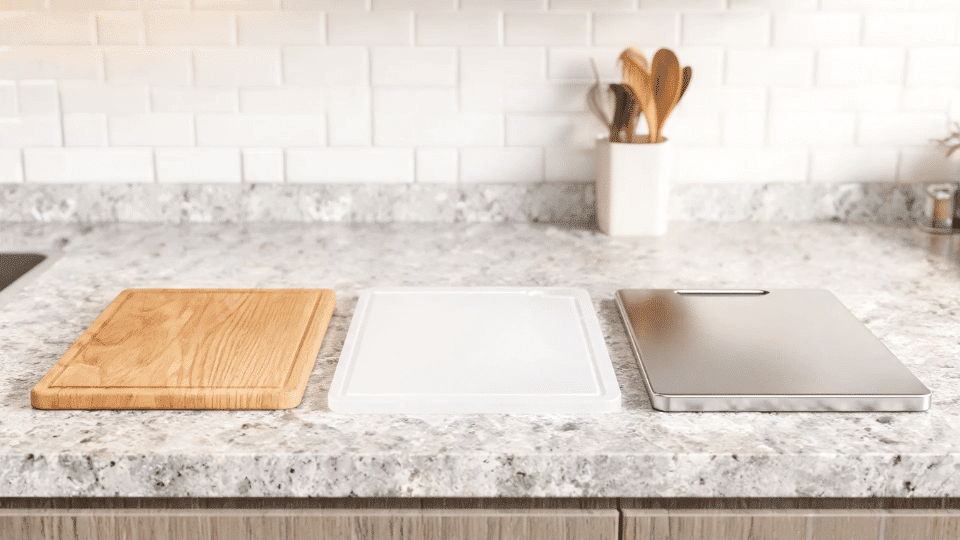


Learning how to disinfect a cutting board properly is one of those kitchen habits that takes five minutes to do right and costs you nothing, until you skip it after raw chicken and spend three days regretting it.
I used to run a wooden board under hot water, wipe it down, and call it clean. That is not disinfecting. That is moving bacteria around.
This guide covers what actually works: the six-step cleaning routine that applies to every board, the right method for each material, how bleach compares to vinegar and hydrogen peroxide, and the mistakes that quietly make boards harder to sanitize over time.
| Difficulty | 2 out of 5, straightforward once you know which sanitizer matches your board material |
| Time | 5–10 minutes per board, per session |
| Cost | $2–$8 (bleach, vinegar, or hydrogen peroxide; food-grade mineral oil for wood boards) |
| Tools Needed | Bench scraper, scrub brush or sponge, spray bottle, clean paper towels |
| Skill Required | Beginner |
Why Proper Disinfecting Methods Matter
Cutting boards pick up more than knife marks. Every prep session leaves food residue, juices, and bacteria behind, and the grooves your knife cuts into the surface over time become places where bacteria can sit even after a rinse.
Raw meat, poultry, and seafood carry the highest cross-contamination risk, but fresh produce can carry bacteria too.
Different materials also respond differently to water and sanitizers. Plastic and glass are nonporous, which makes them easier to sanitize fully.
Wood is more sensitive to moisture; soaking a wooden board or running it through the dishwasher causes warping and cracking, and a cracked board is harder to clean than a damaged one.
Bamboo absorbs less moisture than most woods, but still needs careful hand washing and complete drying after every use.
A Basic Step-by-Step Cutting Board Wash
No matter what material your board is made from, this routine is the safe starting point for daily kitchen cleaning. The two steps most people skip are rinsing after sanitizing and drying fully before storing. Both matter more than people expect.
Step 1: Scrape off food residue: Use a bench scraper, spatula, or folded paper towel to remove crumbs, juices, and stuck-on food before washing. Letting food sit through the wash cycle makes every step after it less effective.
Step 2: Wash with hot soapy water: Scrub the top, bottom, sides, and edges with hot water, dish soap, and a clean brush or sponge. Pay attention to visible knife grooves; bacteria concentrate there.
Step 3: Rinse with clean water: Rinse the board thoroughly so no soap film remains before applying any sanitizer. Soap residue can reduce how well bleach or hydrogen peroxide works.
Step 4: Sanitize the board: Mix 1 tablespoon of unscented liquid chlorine bleach with 1 gallon of water. Apply the solution across the full surface and let it sit for several minutes.
For wood and bamboo boards, see the material-specific section below. Diluted bleach still works, but vinegar or hydrogen peroxide are gentler options for regular use.
Step 5: Rinse again: Rinse off all sanitizer with clean water before the board touches food again. Bleach residue left on the surface is not safe.
Step 6: Dry completely: Pat the board dry with clean paper towels, then stand it upright so air can reach both sides. A board stored flat while still damp holds moisture in grooves and edges, which defeats the point of washing it.
How to Disinfect a Cutting Board Based on Material
Each board material has its own care needs. Using the wrong method, soaking a wooden board, or skipping oil on bamboo, damages the surface and makes it harder to clean over time.
Here is what actually works for each type:
1. How to Disinfect a Wooden Cutting Board
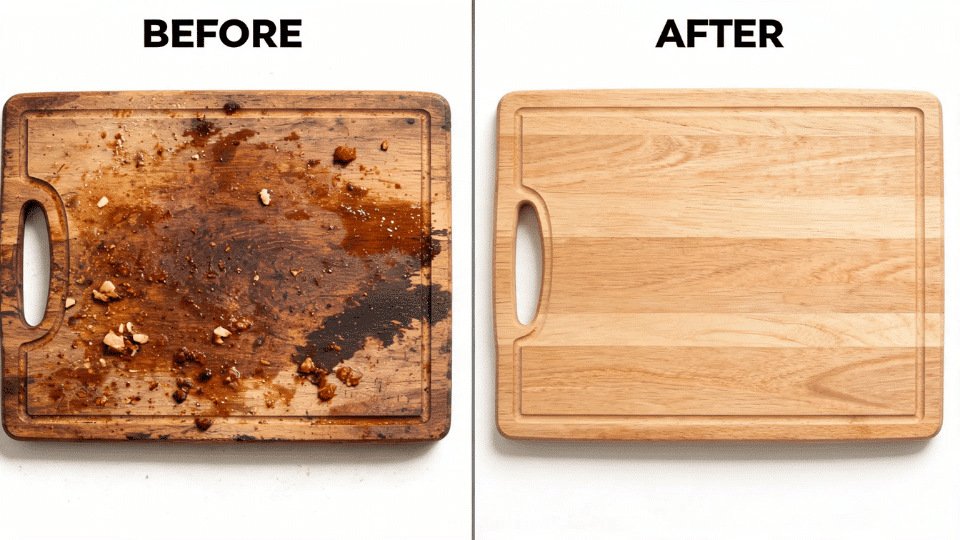
Wood needs steady care because excess water causes warping or cracking. A well-oiled board lasts longer and is easier to clean. The second time I made this mistake, leaving a wooden board soaking in the sink overnight, it split along the grain by morning. That board went in the bin.
- Wash by hand: Scrape off food residue first, then wash with hot soapy water and a soft brush or sponge. Never the dishwasher.
- Avoid soaking: Do not leave the board sitting in water or submerged in the sink. Too much moisture causes cracks and warping, and cracked wood is a bacteria trap.
- Sanitize the surface: Use diluted bleach (1 tablespoon per gallon of water), undiluted white vinegar, or hydrogen peroxide after washing, especially after raw meat or strong-smelling foods. Let the sanitizer sit before rinsing.
- Rinse and dry upright: Rinse well after sanitizing, then stand the board upright so air reaches both sides before storing.
- Oil regularly: Apply food-grade mineral oil every few weeks to keep the wood from drying, cracking, or absorbing too much moisture during future washes. Understanding how different wood types behave with moisture and oil helps you pick the right maintenance schedule for your specific board.
2. How to Disinfect a Plastic Cutting Board
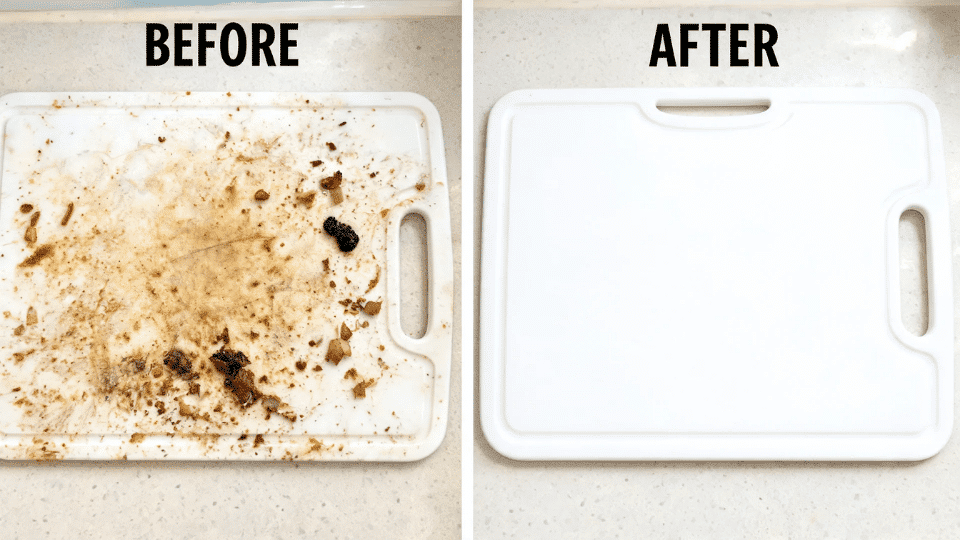
Plastic boards are a practical choice for raw meat because they are easier to sanitize than wood, and most are dishwasher safe. That said, deep knife grooves eventually make any plastic board hard to clean thoroughly, which is when replacement becomes the right call.
- Rinse right after use: Remove juices, crumbs, and loose food before they dry into knife grooves. Dried-on residue takes significantly more scrubbing to shift.
- Wash and scrub well: Use hot soapy water and a scrub brush to clean the surface, sides, and any visible knife marks.
- Use the dishwasher if safe: Place the board in the dishwasher only if the manufacturer’s label confirms it is dishwasher safe. Use the sanitize cycle when available.
- Sanitize after raw meat: Apply diluted bleach after cutting raw meat, poultry, or seafood. Let it sit for several minutes before rinsing fully.
- Replace when grooves get deep: When knife marks become deep or discolored, the board is past the point of reliable sanitizing. Replace it.
3. How to Disinfect a Bamboo Cutting Board
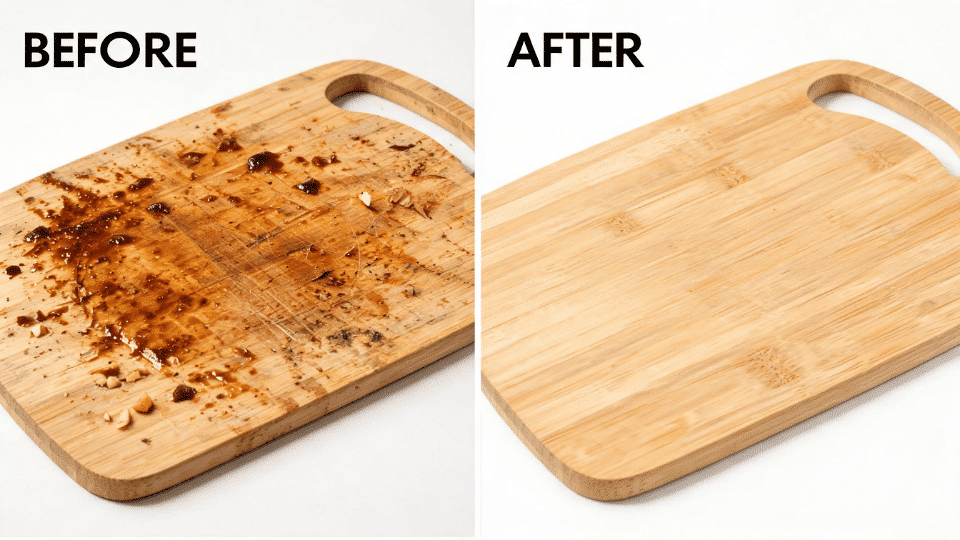
Bamboo absorbs less moisture than many woods, but it still needs hand washing, complete drying, and regular oiling to stay in reliable condition. The same surface properties that make bamboo durable make it prone to surface cracking when left wet or under-oiled.
- Wash after each use: Clean with hot soapy water after cooking, especially after raw proteins or strong-smelling foods.
- Do not soak it: Keep bamboo out of standing water. Moisture can still cause swelling, surface cracking, or joint separation, even though bamboo is denser than most wood boards.
- Sanitize when needed: Use diluted bleach, white vinegar, or hydrogen peroxide after raw foods. Let the sanitizer work for a few minutes before rinsing.
- Rinse and dry upright: Remove all soap or sanitizer with clean water, then stand the board upright until fully dry before putting it away.
- Oil the board: Rub with food-grade mineral oil regularly to help bamboo resist cracking and maintain its surface condition.
4. How to Disinfect Glass, Acrylic, and Nonporous Cutting Boards
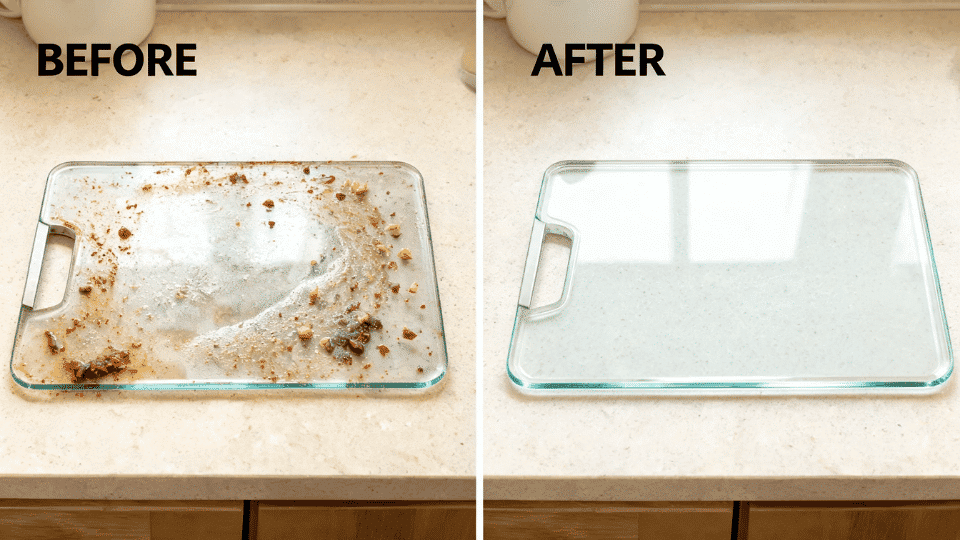
Nonporous boards are the easiest to sanitize fully, but they still need proper cleaning after raw proteins and regular checks for chips or cracks. A chipped glass board is a safety hazard and should be replaced immediately.
- Wash after every use: Clean with hot soapy water after each use, even after only produce or bread.
- Use the dishwasher if safe: Check the care label first. Most glass and acrylic boards handle the dishwasher well; use the sanitize cycle when available.
- Sanitize after raw proteins: Apply diluted bleach or hydrogen peroxide after contact with raw meat, poultry, or seafood. Let it sit, then rinse fully.
- Rinse and dry fully: Remove all sanitizer with clean water and dry the board completely before storing.
- Check for damage: Look for chips, cracks, or slippery areas. Damaged boards are harder to clean and can be unsafe.
Bleach vs Vinegar vs Hydrogen Peroxide for Cutting Boards
Not every sanitizer works the same way, and the right choice depends on your board material, what food touched the surface, and how strong a disinfection you actually need. Here is how they compare.
| Factor | Bleach | Vinegar | Hydrogen Peroxide | Lemon and Salt |
|---|---|---|---|---|
| Best for | Raw meat, poultry, seafood | Odors and light cleaning | Extra sanitizing after washing | Smells and stains |
| How to use | Dilute 1 tbsp per gallon, let sit, rinse well | Spray or wipe undiluted, then rinse | Apply, let bubble briefly, rinse, dry | Scrub with coarse salt, rinse, dry |
| Best board | Plastic, glass; careful use on wood | Wood, bamboo, plastic | Wood, plastic, bamboo | Wood and bamboo |
| Main limit | Must be diluted and rinsed fully | Not the strongest option after raw meat | Needs thorough rinsing before food contact | Not enough after raw meat |
Bleach is the safest choice after raw meat; nothing in the home kitchen matches it for pathogen reduction. Vinegar, hydrogen peroxide, lemon, and salt work well for odors, stains, and regular maintenance between deeper cleans.
If you are using a wood board and want to avoid repeated bleach exposure, hydrogen peroxide is the most practical alternative for routine sanitizing after produce or cooked foods.
What Not to Do When Disinfecting a Cutting Board
Some cleaning habits damage the board’s surface and make it harder to sanitize reliably over time. These are the ones worth knowing before they become a problem.
- Do not soak wooden or bamboo boards in water: Too much water causes swelling, warping, and cracking, which opens up new grooves where bacteria can sit.
- Do not put wooden boards in the dishwasher: Heat and long water exposure damage wooden boards consistently. Plastic and glass boards are a different story; check the label first.
- Do not skip rinsing after sanitizer: Bleach, vinegar, and hydrogen peroxide should all be rinsed off before food touches the board surface again.
- Do not store boards while damp: Moisture sitting in grooves, cracks, and edges means the board stays unsafe even after washing. Stand it upright and let it air dry fully.
- Do not keep damaged boards: Deep grooves, cracks, warping, or splinters make boards harder to clean and a legitimate food safety concern. Replace them.
- Do not reuse a raw meat board without washing it first: Wash and sanitize it before it touches produce, bread, or any ready-to-eat food.
How Home Cooks Sanitize Cutting Boards: Real Kitchen Habits
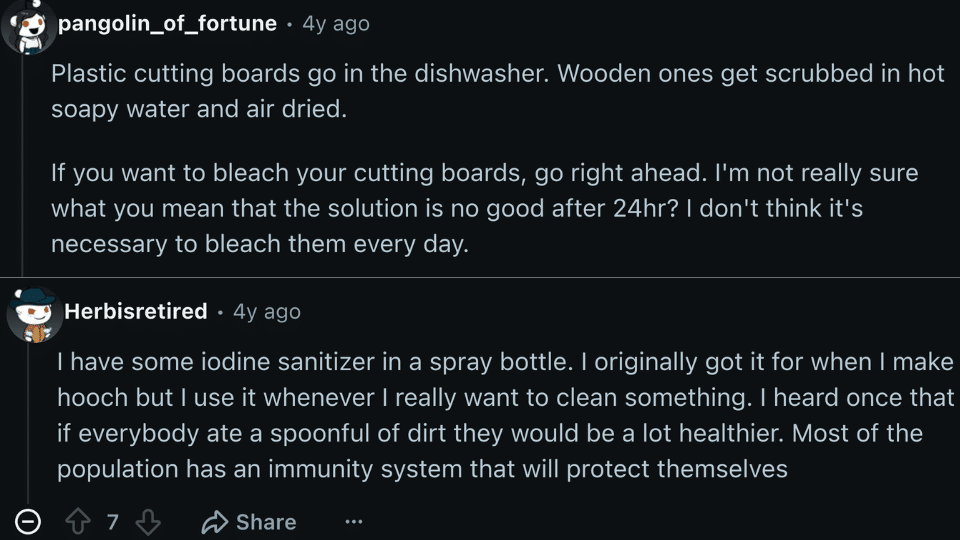
A Reddit thread on How do you guys sanitize your cutting boards? showed how home cooks handle this in real kitchens. Several users said plastic boards go straight into the dishwasher after raw meat.
Others scrub wooden boards with hot, soapy water and let them air dry. Methods mentioned included diluted bleach, iodine sanitizer, hydrogen peroxide, and keeping separate boards for meat and produce. One commenter raised a fair point: Do vegetable-only boards even need full disinfecting every time?
My take: I would not reach for bleach after every onion. But after raw meat, after anything that leaves a smell, or when knife grooves start to look discolored, that is when full disinfection earns its place in the routine.
Separate boards for meat and produce make this easier. It removes the guesswork about which board needs what treatment.
FAQs About How to Disinfect a Cutting Board
How do you deodorize a cutting board?
Scrub the board with coarse salt and half a lemon, then rinse with clean water. For stronger odors, a paste of baking soda and water left on the surface for a few minutes before rinsing works well. Dry the board upright afterward.
What should you do after cutting chicken or raw meat on a board?
Wash immediately with hot soapy water and rinse. Then apply diluted bleach (1 tablespoon per gallon of water), let it sit for several minutes, rinse again thoroughly, and dry the board completely before storing or reusing it.
Should meat boards be separate from regular cutting boards?
Yes. One board for raw meat, poultry, and seafood; a separate board for produce, bread, and ready-to-eat foods. Color-coding boards by use is the simplest way to keep this consistent without relying on memory.
Are cutting boards dishwasher safe?
Most plastic, acrylic, and glass boards are dishwasher safe; check the label first. Wooden and bamboo boards are not. Heat and prolonged water exposure in a dishwasher consistently damage wood and bamboo, shortening the board’s lifespan and creating more surface cracks to clean around.
How often should you disinfect a cutting board?
After every use involving raw meat, poultry, or seafood. For boards used only for produce or bread, a thorough hot soapy wash after each use is enough, full disinfecting when odors appear, or grooves look discolored.
When should you throw away a cutting board?
When it has deep grooves, cracks, warping, splinters, or persistent smells that do not clear after proper cleaning. A board that cannot be cleaned thoroughly is not worth keeping.
Can you use hydrogen peroxide on a wood cutting board?
Yes. Pour a small amount of 3% hydrogen peroxide over the surface, let it fizz briefly, then rinse and dry upright. It is a gentler alternative to bleach for regular wood board maintenance and works well after producing or cooking foods.
Final Thoughts
If I were doing this again from scratch, I would start by getting two boards, one for raw meat, one for everything else, and accept that wooden boards need oiling every few weeks if you want them to last.
The routine itself is not complicated: hot soapy water every time, bleach solution after raw meat, dry upright before storing.
What trips people up is using the same method for every material or skipping the drying step because the board feels clean enough.
Knowing how to disinfect a cutting board the right way for each material takes one read-through to get it right.
After that, it is just a five-minute routine that protects every meal you prep. Start there, wash, sanitize with the right product for your board, rinse, and stand it upright. That is the whole thing.