


Choosing wall colors for light hardwood floors trips up even experienced decorators because light wood doesn’t behave like other flooring.
It bounces light, amplifies undertones, and changes paint colors throughout the day in ways that catch people off guard. Most advice tells you what colors to pick, but skips the crucial why behind color compatibility.
In this guide, I’ll explain how to decode your floor’s undertone, choose harmony or contrast before selecting paint, test colors for a good look, and avoid costly do-overs.
By the end, you’ll have a simple framework and a cheat sheet that cuts through the confusion.
Why Light Hardwood Makes Wall Color Choice Tricky
Light hardwood floors act as massive reflectors, bouncing natural and artificial light back onto your walls. This amplification makes wall colors appear brighter and often shifts them cooler than expected.
The high reflectivity also reveals undertones with ruthless clarity; a small mismatch between your floor’s warmth and your wall’s coolness becomes glaringly obvious.
However, there’s good news: light hardwood is the most versatile wood tone you can work with.
Its neutral foundation pairs well with an enormous range of colors, making it far more forgiving than dark or red-toned floors. This versatility sets a reassuring tone for your color selection process.
The Simple Framework for Matching Wall Color With Light Hardwood
Follow this two-step system to eliminate guesswork and narrow your options to colors that will actually work in your space.
Step 1: Identify Your Floor’s Undertone
Place a sheet of white paper on your floor in natural light. Compare the floor color to pure white. Does it lean peachy, golden, or yellow? If yes, you’re dealing with warm undertones
Gray or slightly pink means cool undertones. And if you can’t figure out which way it leans, you’re dealing with neutral undertones. This single test determines which color families will harmonize with your floors.
Step 2: Decide Between Blending or Contrast
Blending means choosing wall colors with the same temperature as your floor, warm with warm, cool with cool. This creates a cohesive, flowing space.
Contrast means pairing opposite temperatures, like cool gray walls with warm honey floors. This adds visual interest and definition.
Your preference here determines your entire color direction before you ever look at a paint chip.
Best Wall Colors that Pair with Light Hardwood
Choosing the right white for light hardwood floors depends on undertone, brightness, and the mood you want. These whites enhance the wood’s character without washing out the space.
1. Best Whites for Light Hardwood
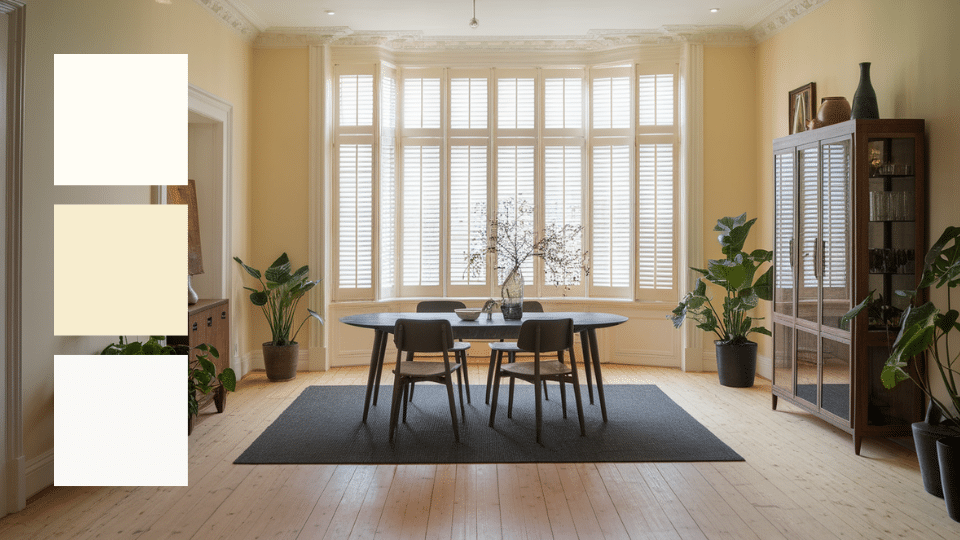
White paint colors create bright, airy foundations that let light hardwood shine without competing for attention in any space.
These shades work beautifully in living rooms, bedrooms, and open-concept areas where you want walls to recede and floors to take center stage.
Choosing the right white depends on your floor’s undertones and whether you prefer warm, cozy vibes or crisp, modern aesthetics.
- Warm white: Adds softness and balances yellow or honey-toned floors without making them look overly golden.
- Soft cream: Introduces gentle warmth that complements traditional, cozy, or farmhouse styles without overwhelming light wood.
- Clean white: Pairs beautifully with cool or neutral light floors for a crisp, modern look; avoid if wood has strong orange tones.
2. Best Neutrals for Light Hardwood
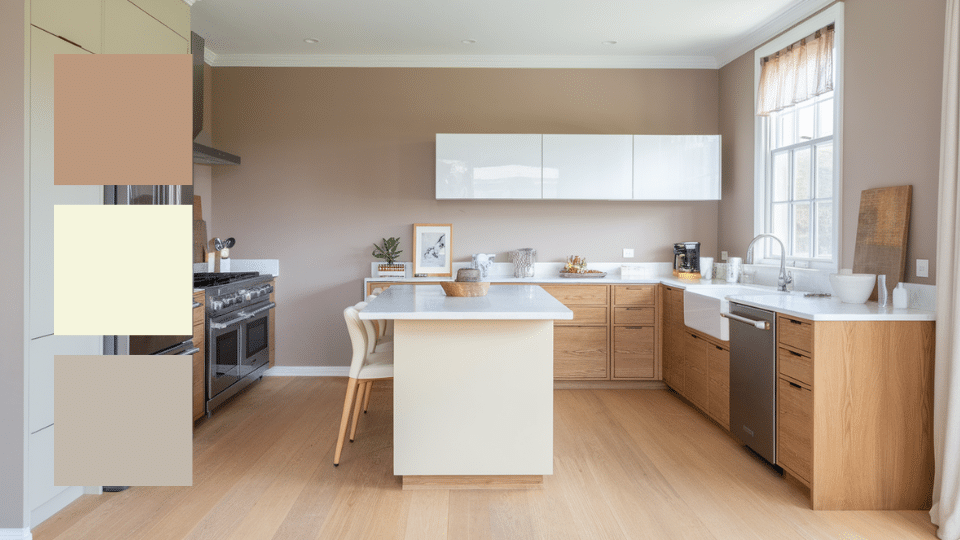
Neutral paint colors offer versatility and sophistication that adapts to any decorating style while complementing light hardwood’s natural warmth beautifully.
These shades work perfectly in living rooms, bedrooms, and hallways where you want timeless elegance that won’t feel dated.
The key is matching your neutral’s undertones to your flooring to create harmonious spaces that feel intentional and cohesive.
- Greige: A universally flattering mix of gray and beige that works with every undertone, making it the safest neutral for light wood floors.
- Pale taupe: Adds subtle depth without overpowering the room; avoid it if your floors lean pink, as it can amplify that undertone.
- Light warm beige: Creates a cozy, natural backdrop but should be avoided with heavily yellow floors to prevent a too-warm, dated feel.
3. Best Soft Color Options
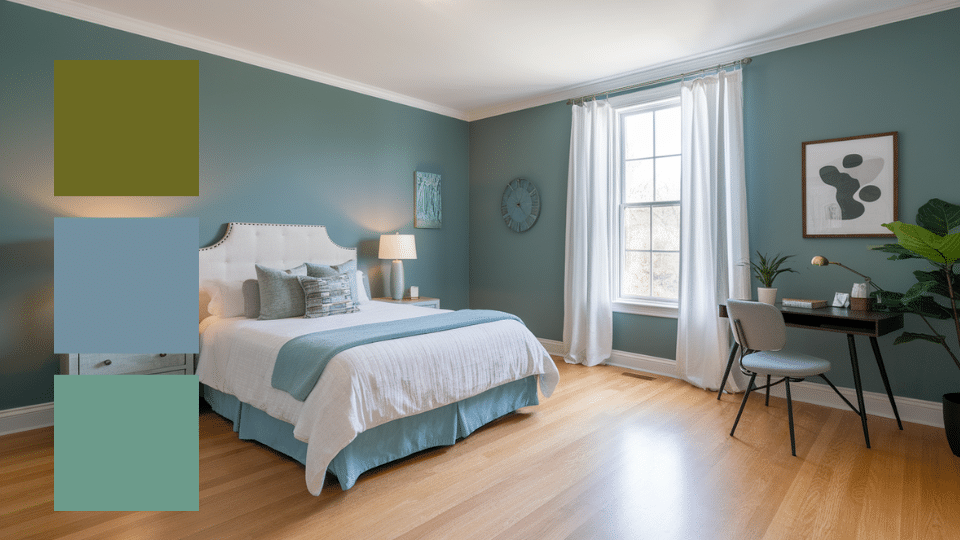
Soft colors introduce personality and style while maintaining the calm, airy feel that light hardwood naturally creates in any space.
These gentle hues work beautifully in bedrooms, bathrooms, and living areas where you want subtle color without overwhelming bold statements.
They bridge the gap between neutral safety and colorful expression giving rooms character that feels both modern and timeless.
- Sage green: A calming, nature-inspired shade that grounds warm light hardwood and adds freshness without overwhelming the space.
- Dusty blue: Soft and airy, this hue cools down warm floors and complements cool-toned wood for a serene look.
- Muted blue-green: A flexible, modern choice that works with neutral floors and adds a subtle wash of color without feeling bold.
4. Best Dark Accent Colors for Light Hardwood
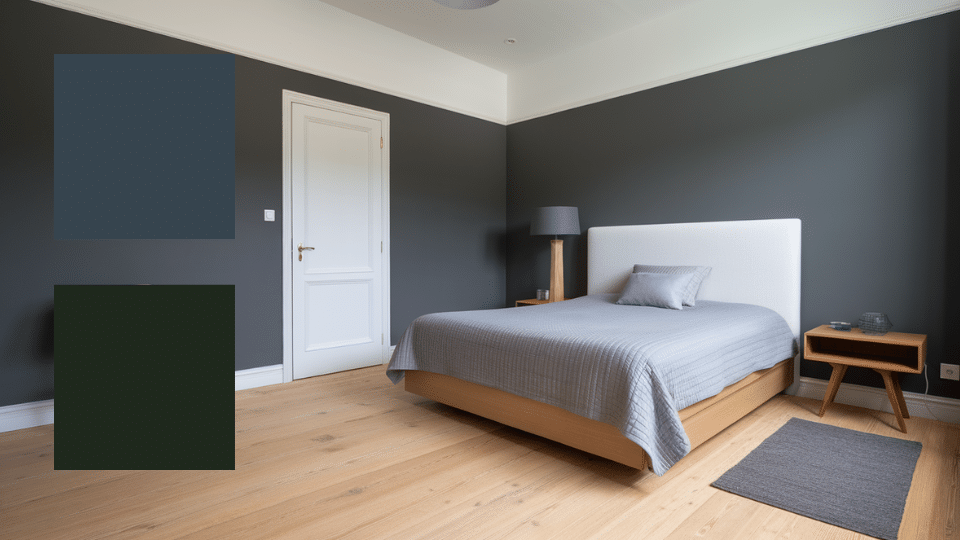
Dark accent colors create dramatic contrast that makes light hardwood floors pop while adding depth and sophistication to modern spaces effectively.
These bold shades work best as accent walls in living rooms, dining rooms, or bedrooms where you want impact without darkness.
Used strategically, dark colors ground airy rooms and prevent them from feeling too lightweight or lacking in visual interest and drama.
- Charcoal: Adds modern contrast and style, giving light hardwood floors stronger definition without making the space feel closed in.
- Deep green: Dramatic yet earthy, it pairs beautifully with light wood and introduces richness without overwhelming the palette when used sparingly.
5. Wild Card Shades that Surprisingly Work
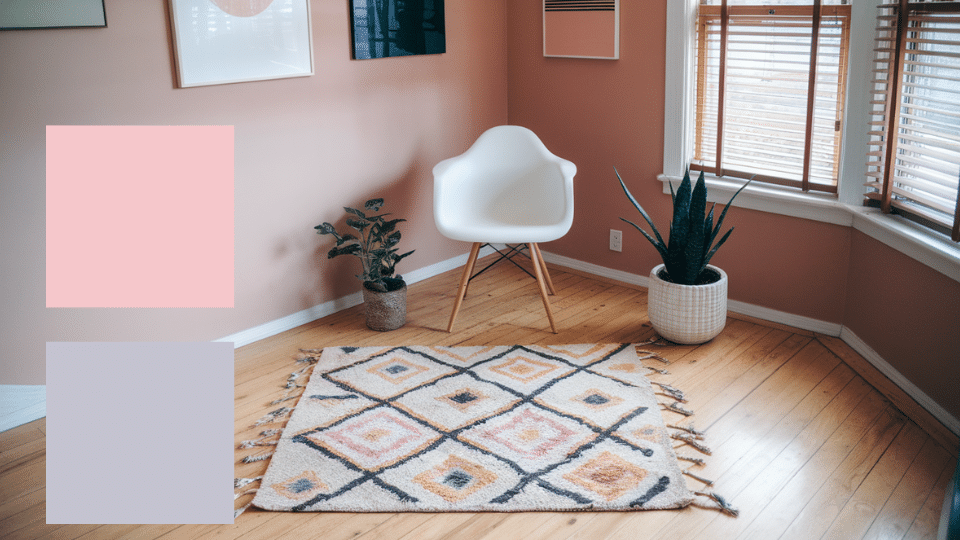
These unexpected colors prove that light hardwood can handle unusual choices than you might think when selected thoughtfully and carefully.
They work beautifully in bedrooms, creative spaces, and powder rooms where you want unique personality without sacrificing sophistication or elegance.
These shades create memorable spaces that feel fresh and modern while still complementing your flooring’s natural warmth and beauty perfectly.
- Soft blush: A muted, barely-there pink that warms up neutral wood tones and adds a modern, cozy feel without reading “pink.”
- Smoky lavender: A subdued lavender-gray that subtly offsets yellow or pink undertones in the flooring, creating an unexpectedly balanced look.
How to Test Paint Colors Properly
Most paint failures stem from testing in the wrong location or lighting conditions. This streamlined checklist eliminates guesswork and prevents costly repainting mistakes.
| Step | Action | What To Check |
|---|---|---|
| 1 | Paint large swatches on poster board | Easy to reposition without wall commitment |
| 2 | Place directly beside the hardwood floor | Undertone harmony or clash becomes obvious |
| 3 | View throughout the day | Morning, afternoon, and evening shifts reveal true color |
| 4 | Test under your artificial lighting | LED and warm bulbs alter appearance dramatically |
| 5 | Compare three similar options side by side | Identifies which is too warm, cool, or balanced |
| 6 | Live with samples for 3+ days | Initial excitement fades; true preference emerges |
This methodical approach reveals problems before you commit to gallons of paint, saving time and disappointment down the line.
Common Mistakes to Avoid
Even experienced decorators make these preventable errors when choosing wall colors for light hardwood. Recognizing these pitfalls before you start saves time and disappointment.
- Matching wall and floor too closely: When both surfaces are too similar in tone, the room loses dimension and feels flat. You need some differentiation to create visual interest and depth.
- Picking bright white without checking undertone: Pure white walls with warm honey floors create jarring contrast. Cool white with cool floors can feel sterile. Match your white’s undertone to your floor.
- Choosing colors under store lighting: Paint stores use bright, neutral lighting that bears no resemblance to your home. Colors that look perfect in-store often fail in natural home lighting conditions.
- Ignoring artificial light temperature at home: Your LED bulbs matter as much as your paint. Cool-temperature bulbs (5000K+) make warm colors look muddy. Warm bulbs (2700K) make cool colors appear dingy. Factor in your lighting.
Remember that these mistakes are easy to avoid once you’re aware of them, proper testing and undertone matching solve most problems.
Wrapping Up
The secret to finding perfect wall colors for light hardwood floors isn’t memorizing color names or following trendy palettes; it’s understanding your specific floor and testing systematically.
You now have the two-step framework to decode undertones and choose your design direction, plus a testing protocol that prevents expensive mistakes.
Light hardwood’s reflective nature isn’t an obstacle when you work with it. The best part? It’s the most versatile flooring, giving you more creative freedom than you thought.
Trust your testing process, compare your options thoughtfully, and remember that even professionals rely on samples before committing.