

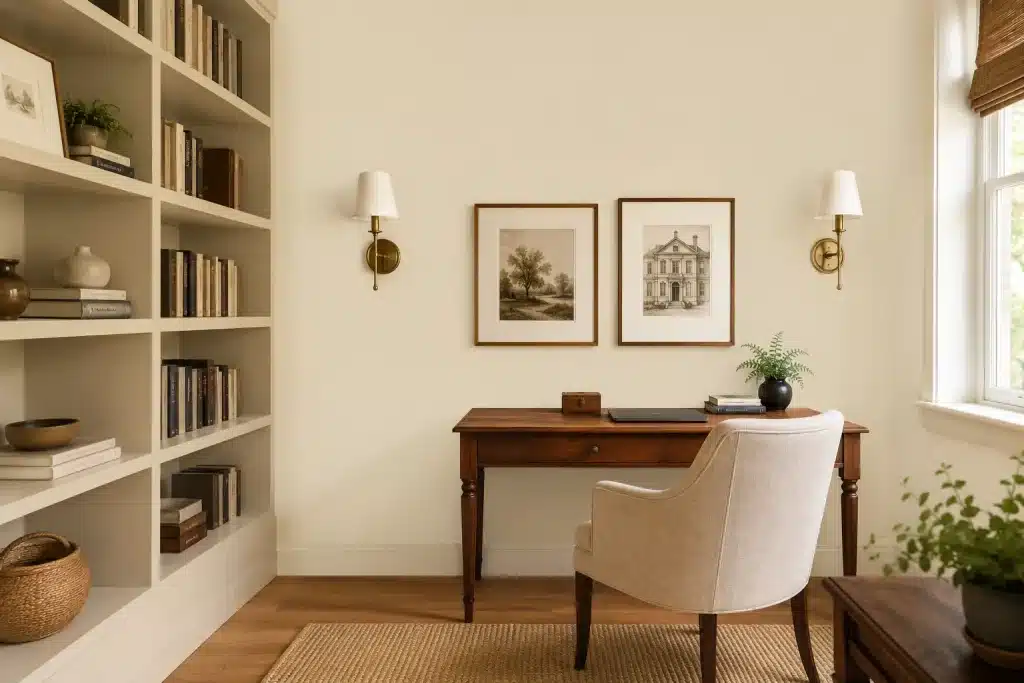


When I help someone choose a beige paint color, the worry is almost always the same: “What if it looks yellow, dull, or too dark once it’s on the wall?”
That is a fair worry. Beige can look calm on a sample card, then shift completely once it sits beside your flooring, trim, furniture, and afternoon light. Manchester Tan Benjamin Moore is one of those colors that looks simple at first, but it has enough warmth and undertone movement to deserve a closer look.
So before you order a gallon of Benjamin Moore Manchester Tan HC-81, let me walk you through what it actually does on a wall, how its undertones shift with light, which rooms it suits, which ones it does not, and what finishes and colors to pair it with.
By the end of this, you will have a clear answer for your specific space.
| Color Name | Manchester Tan |
| Code | HC-81 |
| Also Known As | Berber White / 955 |
| LRV | 63.24 |
| Color Family | Warm beige / light tan neutral |
| Collection | Historical Colors |
| Color Temperature | Warm |
| Undertones | Soft green-gray |
| Best For | Warm-finished rooms, south or west-facing spaces, traditional and transitional interiors |
| Avoid In | Cool-tiled rooms, north-facing rooms with no warm lighting, crisp contemporary interiors |
What Is Benjamin Moore Manchester Tan HC-81?
Manchester Tan HC-81 is a warm, light beige from Benjamin Moore’s Historical Colors collection, a palette of 191 time-honored hues inspired by America’s historic landmarks.
It sits in the warm neutral family, closer to a soft tan than a yellow or cream, and it is also listed under the alternate names Berber White and 955.
On a scale from 0 to 100, that places it comfortably in the medium-light range. It is not so light that it washes out, and not so deep that it weighs a room down. That middle ground is exactly why it has worked well in living rooms, bedrooms, whole-home designs, and traditional exteriors for years.
Color Details:
- Color Name: Manchester Tan
- Code: HC-81
- Also Known As: Berber White / 955
- LRV: 63.24
- Color Family: Warm beige / light tan neutral
- Collection: Historical Colors
- Color Temperature: Warm
- Undertones: Soft green-gray
One thing worth setting straight before going further: Manchester Tan is not a plain beige. It carries undertones that shift depending on the light in your room, and those undertones are worth understanding before you pick up a brush.
What Undertones Does Manchester Tan HC-81 Have?
Manchester Tan is not a plain beige. It carries a soft green-gray undertone that stays invisible in warm, well-lit rooms and becomes visible the moment the light turns cool or ambient. Understanding this shift is the single most important thing you can do before painting.
In warm 2700K to 3000K light, or in a room that faces south or west, the warm beige comes forward, and the color reads exactly as the chip suggests.
In north-facing rooms, overcast daylight, or under cool white LEDs at 4000K or higher, the green undertone surfaces and the color starts to look muted, flat, or slightly off. It is not a defect. It is the color behaving exactly as it should, and the fix is almost always a bulb change rather than a repaint.
That green undertone is subtle on the chip. Light is what decides whether it shows up in your room.
How Does Manchester Tan HC-81 Behave in Different Light?
Manchester Tan HC-81 can shift a lot with the light, so it helps to see how it reacts from morning to evening before you choose where to use it.
Natural Light
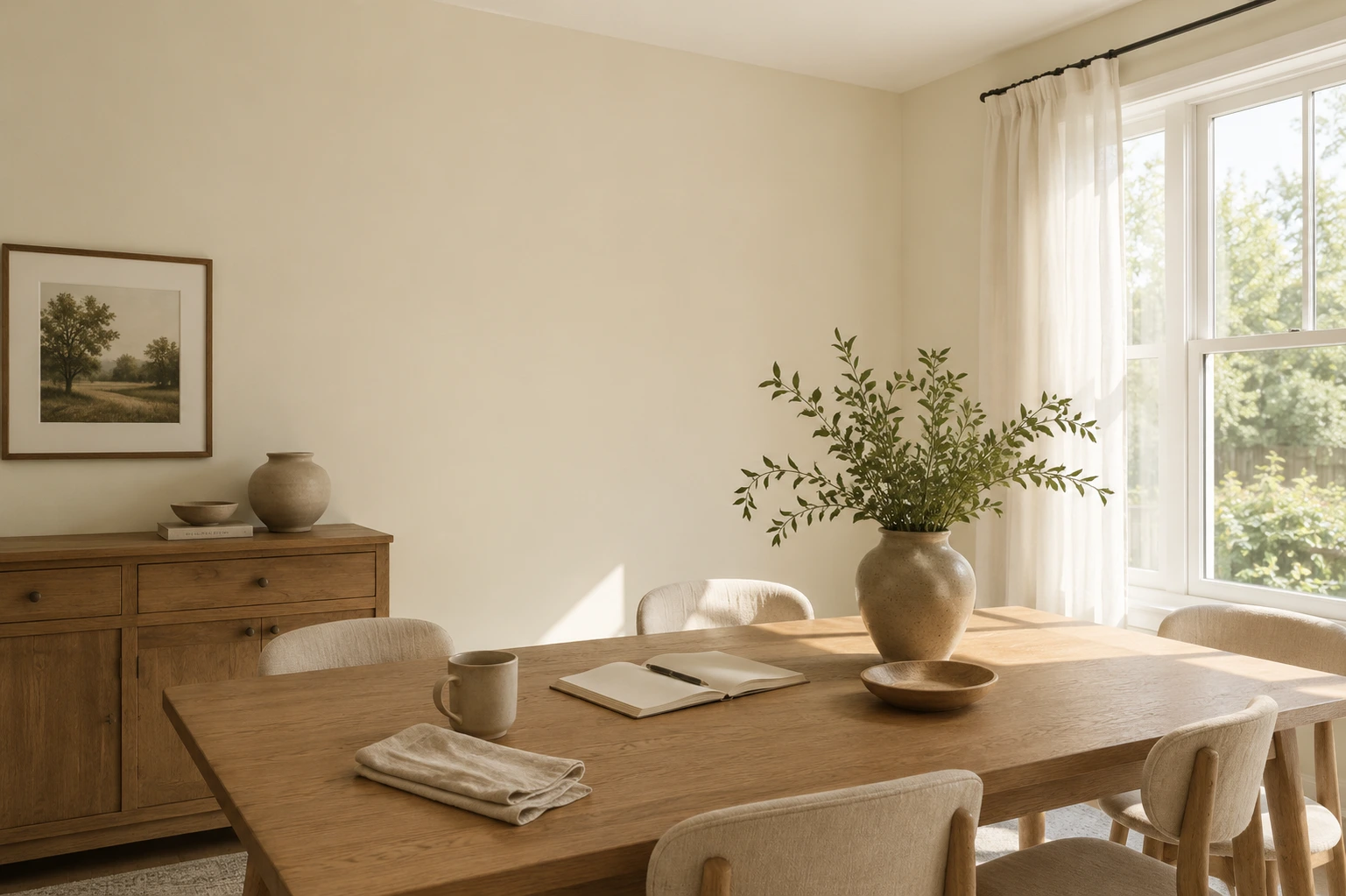
Manchester Tan is noticeably sensitive to natural light. In bright daylight, the warm beige comes forward, and the color feels settled and friendly.
In lower or cooler light, the subtle green undertone becomes more visible, giving the color a slightly muted, earthy quality. The direction your room faces makes a significant difference in how this plays out throughout the day.
- North-Facing Rooms: Manchester Tan can look cooler, flatter, and slightly greener in north-facing rooms. Use warm 2700K to 3000K bulbs and lighter trim to keep the beige tone soft.
- South-Facing Rooms: South-facing light brings out Manchester Tan’s warm beige side beautifully. Just be careful with orange-toned oak or very warm flooring, which can make it look too golden.
- East-Facing Rooms: Morning light makes Manchester Tan feel soft and warm. By afternoon, it settles into a calmer, slightly muted beige that usually feels balanced.
- West-Facing Rooms: Afternoon light makes Manchester Tan look richer and warmer. In the morning, it may appear more muted, so test it at both times before deciding.
Artificial Light
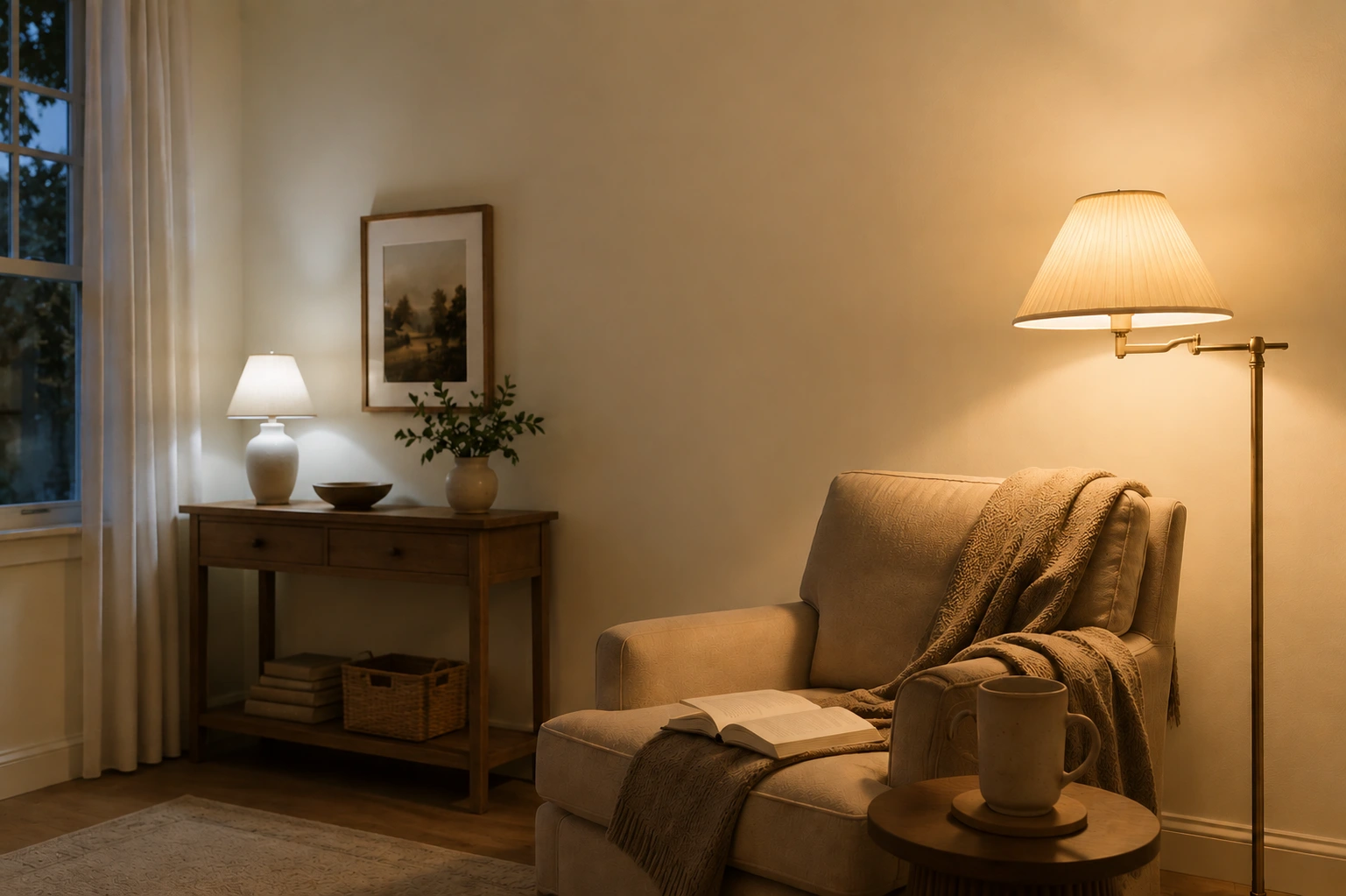
The bulb you use changes how Manchester Tan reads as much as natural light does. Warm bulbs, such as soft white or bulbs rated at 2700K to 3000K, bring out the beige warmth and make the color feel grounded and cozy.
Cool white or daylight bulbs at 4000K or higher push the green undertone forward and can make the color look more muted or slightly off. For the best result, test your actual bulbs against the sample before finalizing any room.
What Paint Finish Should You Use for Manchester Tan?
Finish changes how much light bounces off the surface, which directly affects how Manchester Tan reads in a real room. In matte it looks softer and more muted. In satin, it reads slightly cleaner and more defined. Choose based on the surface and its use, not just personal preference.
Understanding how paint finishes differ by sheen before you buy will save you a second trip to the store.
- Flat / Matte: Best for low-traffic walls and ceilings. It gives Manchester Tan its softest, most muted look, but it is not ideal for busy rooms or high-touch surfaces.
- Eggshell: Best for living rooms, bedrooms, and most walls. It keeps the color balanced, reads naturally, and is easier to clean than matte.
- Satin: Best for kitchens, hallways, and bathrooms. The slight sheen adds durability and makes Manchester Tan look a little crisper.
- Semi-Gloss: Best for trim, doors, and cabinets. It gives a sharper definition and wipes clean easily, but it is too reflective for regular walls.
- High Gloss: Best for very small accent details only. It is highly reflective and can deepen the color, but it almost never works well on walls.
My usual recommendation is simple: eggshell on most walls, satin in kitchens and bathrooms, and semi-gloss on all trim and cabinets without exception. You can review Benjamin Moore’s paint sheen guide to match the right formula to your surface type and room conditions.
How Does Manchester Tan HC-81 Look in Different Rooms?
The undertones and lighting behavior above translate differently depending on the room, its fixed finishes, and how the space is used day to day. Here is what to expect across the most common spaces.
1. Living Rooms
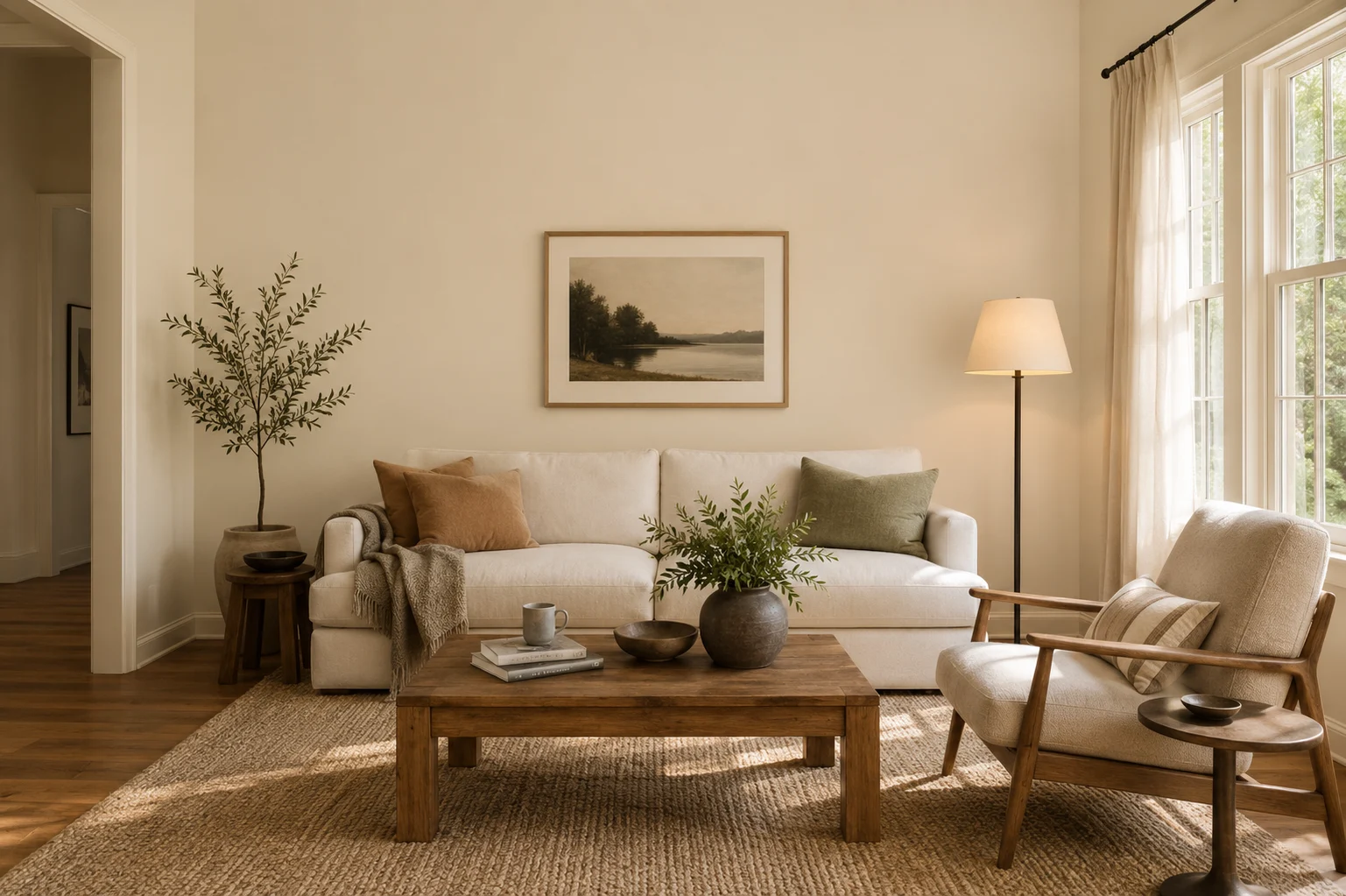
Manchester Tan is one of those colors that makes a living room feel like it has always been that color. It works well when the room includes warm wood furniture or flooring, cream or off-white upholstery, woven textures, and soft ambient lighting.
The color adds enough warmth to make the space feel lived-in without looking heavy or overdone. Pair it with a warm white trim, and the walls read clean and intentional. It suits both traditional layouts and transitional open-plan spaces.
2. Bedrooms
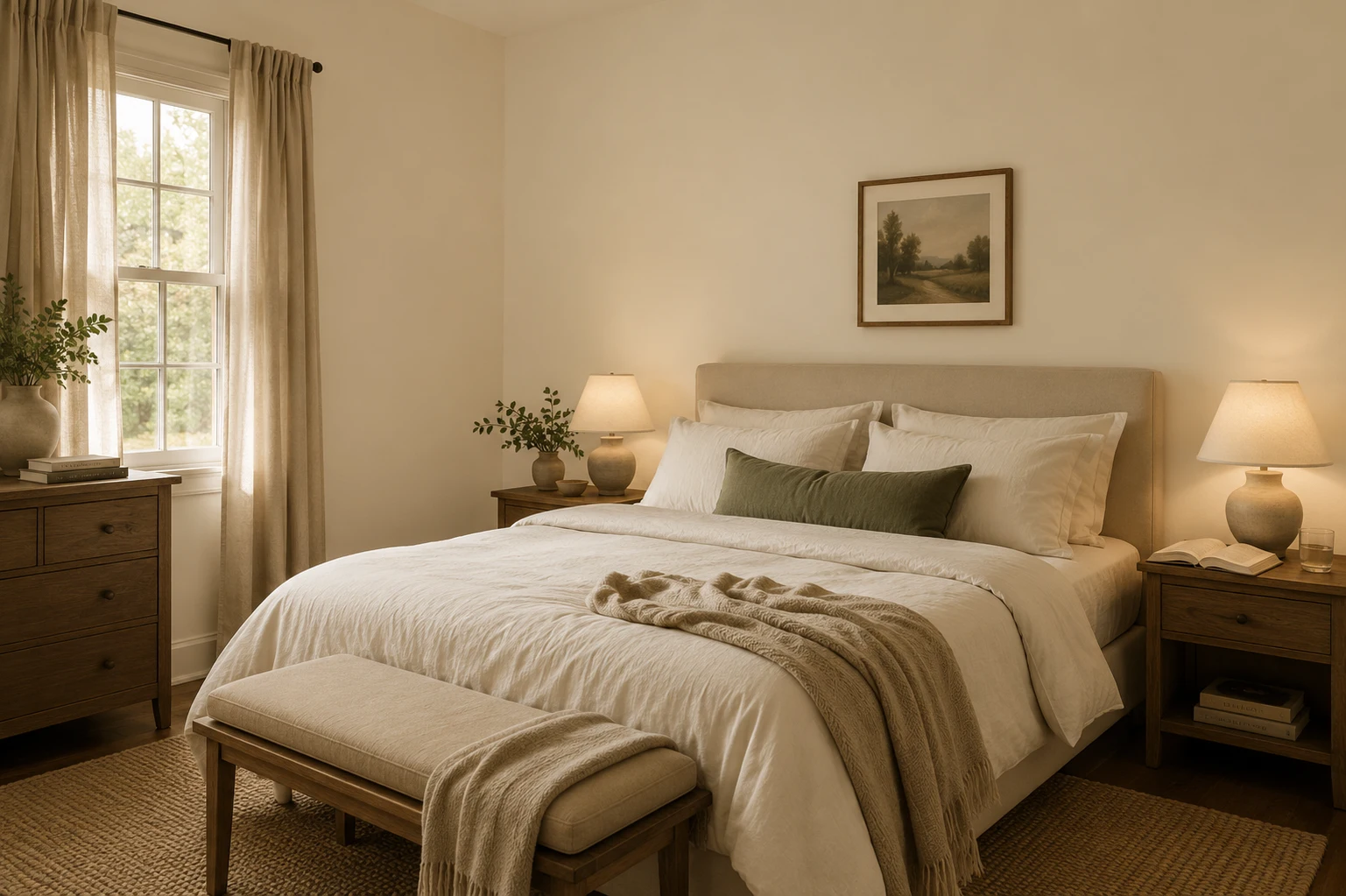
In bedrooms, Manchester Tan creates a calm, grounding backdrop. It sits well with white or soft linen bedding, warm wood nightstands and headboards, and the kind of warm lamp light that makes a room feel restful by 9 pm.
Avoid cool gray bedding or icy white linens because those will pull the green undertone forward and create a visual mismatch that is hard to resolve without repainting. If you are choosing a warm bedroom color scheme, this color pairs naturally with soft neutrals and natural materials.
3. Kitchens
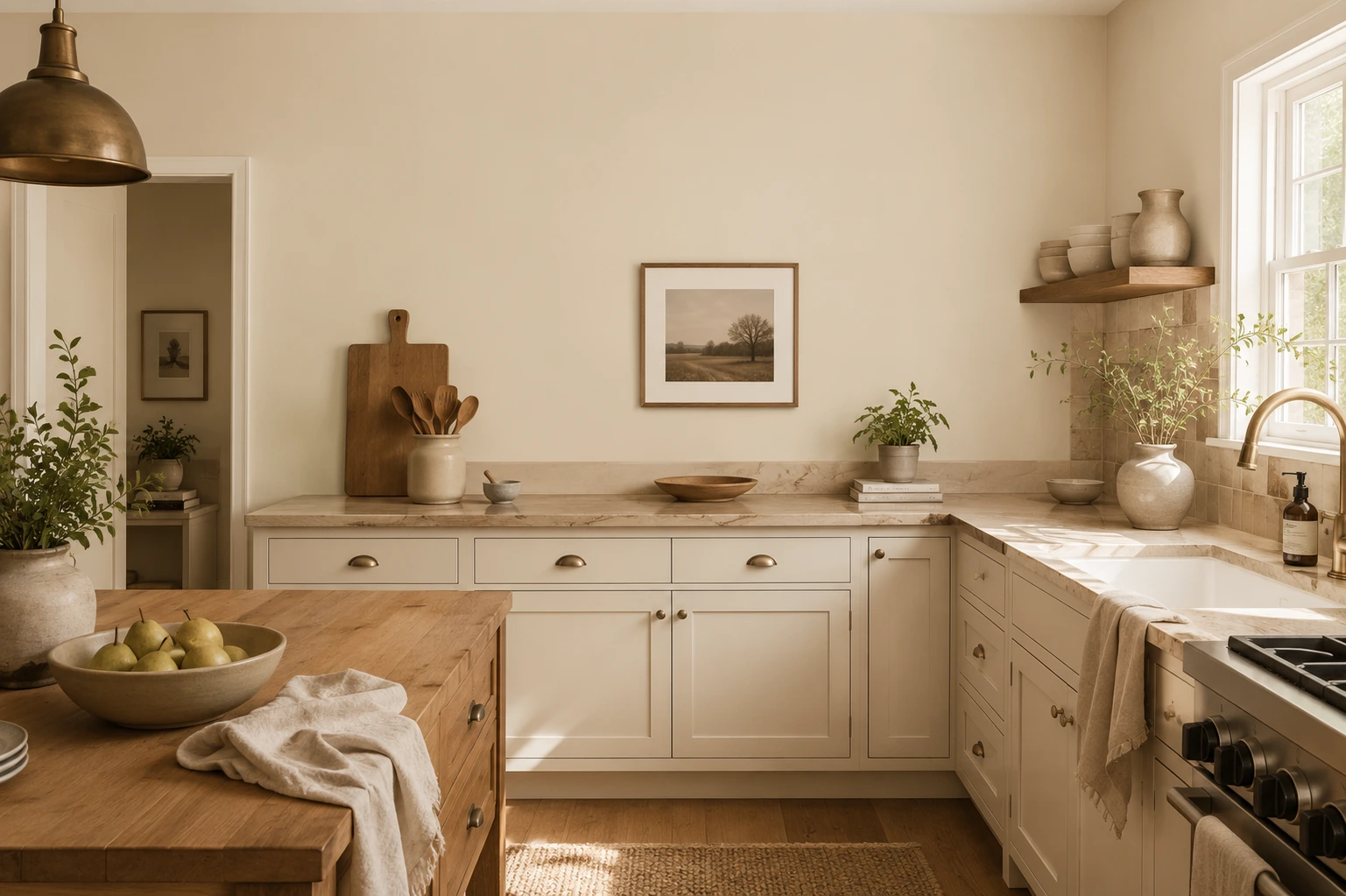
On kitchen walls, Manchester Tan pairs well beside cream or wood cabinets, warm stone counters, and tile with earthy or sandy tones. It brings a soft, grounded quality to the kitchen without competing with surrounding materials.
It reads particularly well beside natural stone backsplashes, butcher block surfaces, and warm hardware finishes like brass or oil-rubbed bronze. For a full picture of how warm neutrals perform in kitchens, the kitchen wall colors with white cabinets breakdown covers the most useful pairings.
4. Cabinets
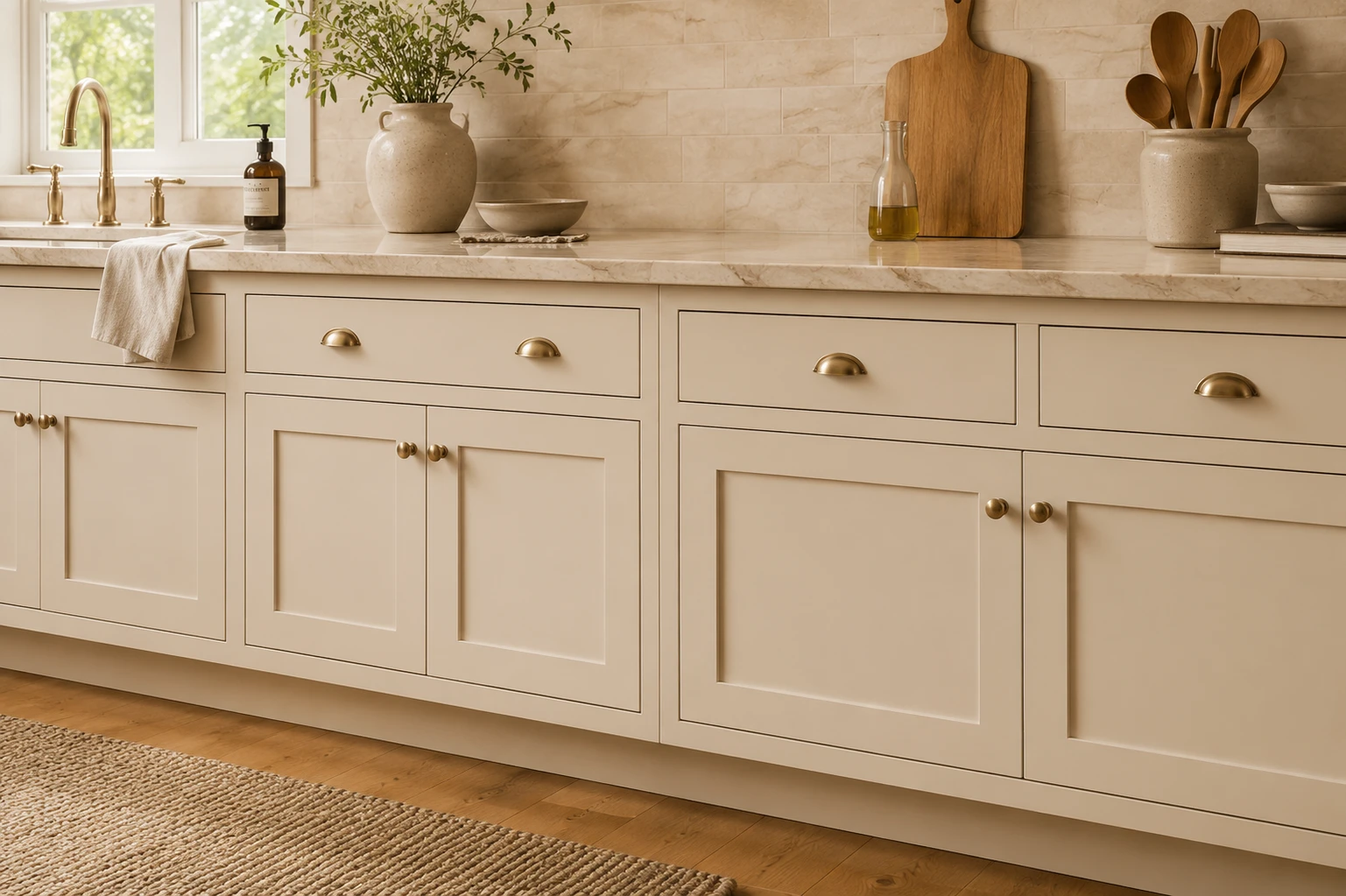
On cabinets, Manchester Tan offers a softer, more organic alternative to stark white. It looks best against countertops that carry some warmth, such as quartz with a warm cream or beige veining.
If your counters are very cool or very white, the green undertone in Manchester Tan may create a contrast that reads as dated rather than classic. Test a sample on a cabinet door before committing to the full kitchen.
5. Bathrooms
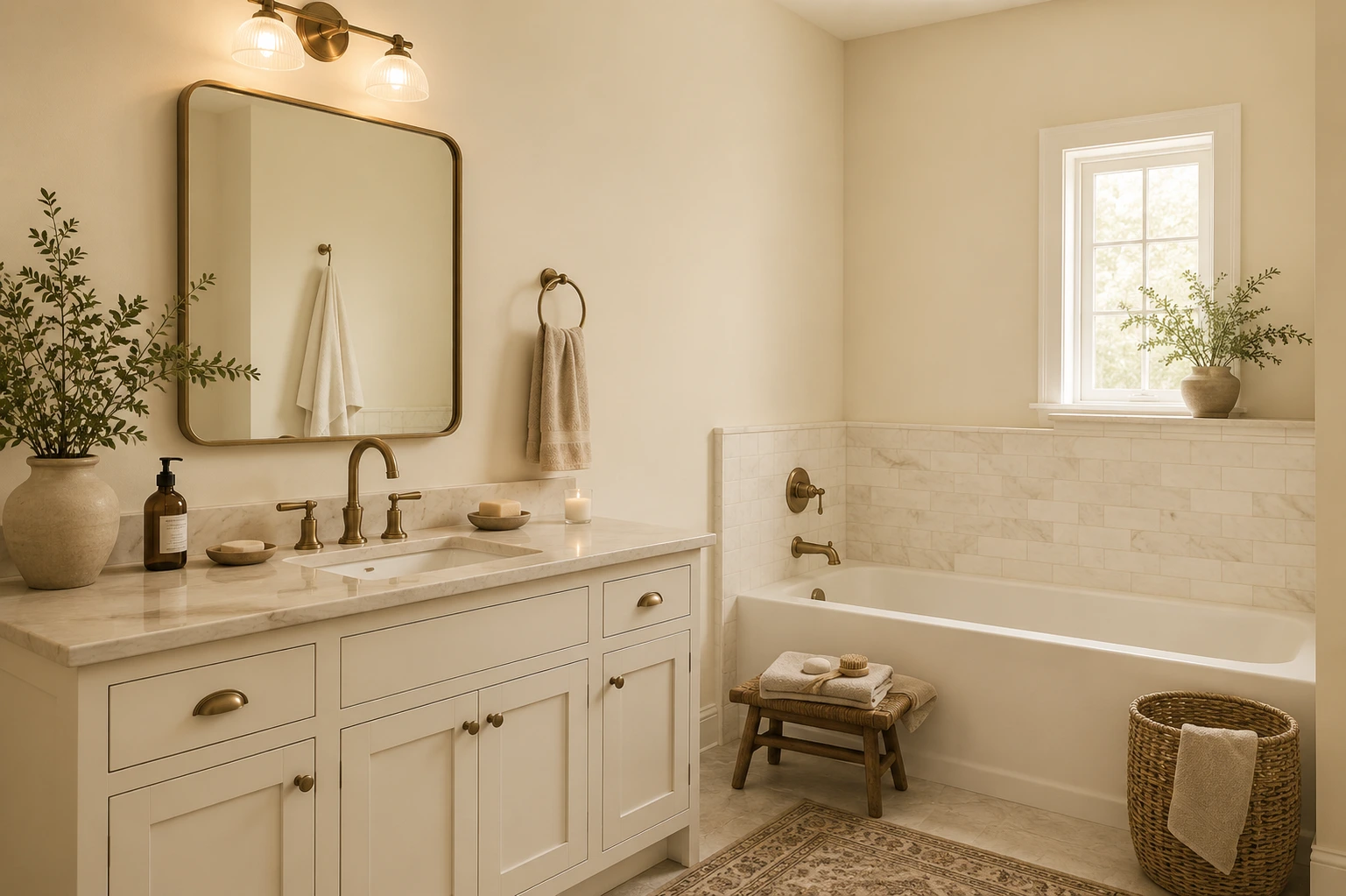
Bathrooms can go either way with this color, depending entirely on the fixed finishes. Creamy white tile, warm gray tile, or tile with earthy tones: Manchester Tan can look beautiful and intentional.
Cool, icy white, or blue-gray tile: the undertones may create a subtle clash that works against the warmth you are trying to achieve. Observe the sample under both natural and artificial bathroom lighting before deciding.
6. Hallways
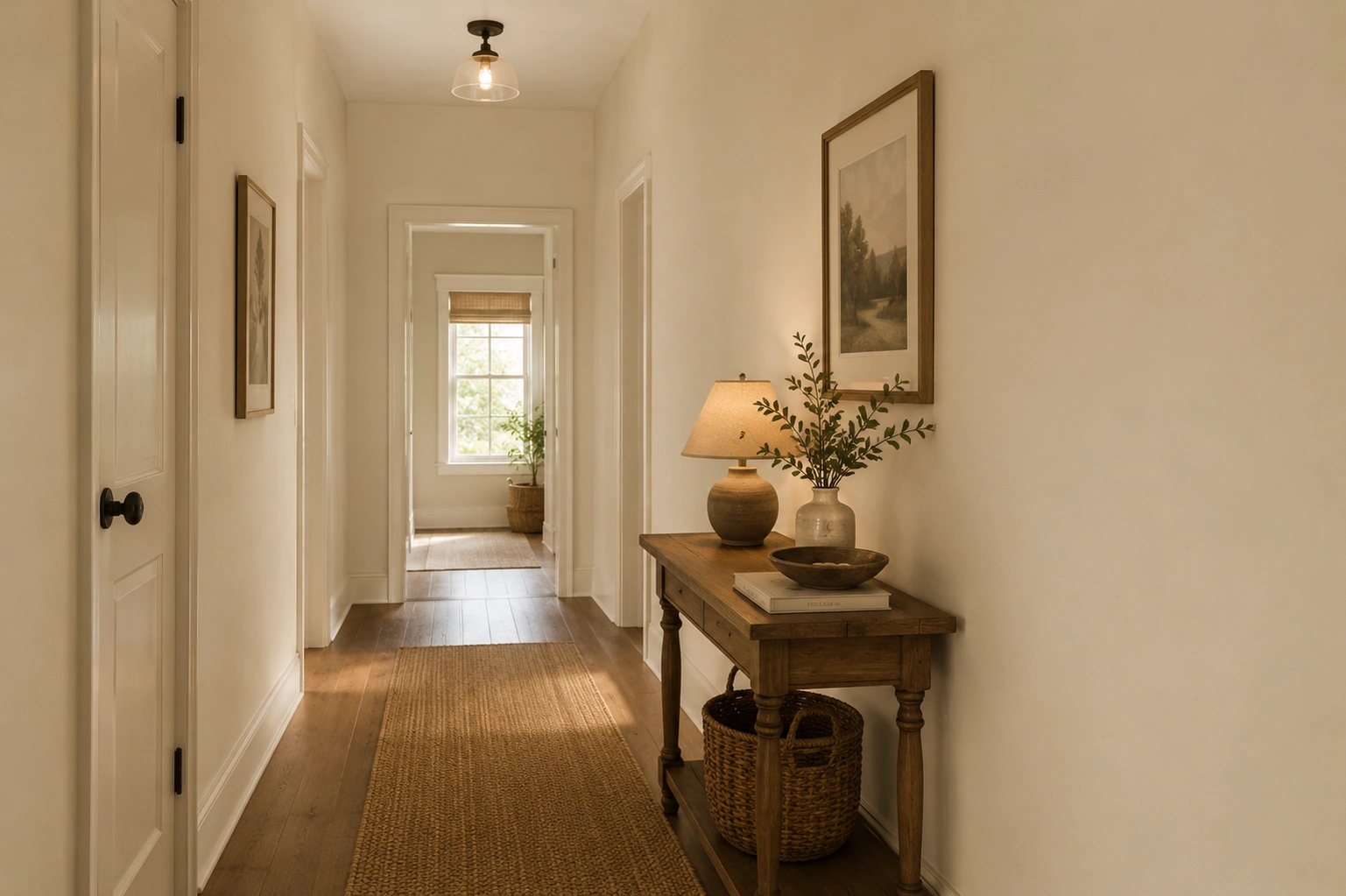
Hallways are often low-light and narrow, which makes color choice feel more high-stakes than it needs to be. Manchester Tan works in hallways when the trim is lighter and warm bulbs are used overhead.
The LRV of 63.24 is high enough to keep the space from feeling closed in, as long as there is enough contrast between wall and ceiling to prevent everything from blending together.
Getting the room match right is half the work. The other half is choosing a finish that makes the color behave the way you actually want it to on that specific surface.
How to Test Manchester Tan Before Painting
Here is the failure pattern I have seen many times: someone falls in love with a photo online, orders paint, does a full room, and then stands back and wonders why it looks dull and slightly green. The photo was taken in a south-facing room with warm wood floors. Their room faces north with cool tile.
The fix is simple. The Benjamin Moore Color Sample costs $5.99 and covers approximately two square feet in two coats. That is cheap insurance before committing to a full gallon.
- Get the Right Sample: Order or pick up a Benjamin Moore 8oz brush-on color sample of Manchester Tan HC-81.
- Apply Two Full Coats: Apply two coats on a large foam board or directly on two different walls.
- Test in Multiple Positions: Place the sample on a wall that receives direct light and one that does not.
- Observe at Four Points in the Day: Check the sample in the morning, at midday, in the late afternoon, and at night under your usual lighting.
- Hold It Against Fixed Materials: Hold the sample next to your trim, flooring, countertops, tile, and any fabric you plan to keep.
- Check Your Bulbs: If the room looks flat under artificial light, test a warm 2700K bulb before deciding the color is wrong.
A sample test takes one weekend. Repainting a room takes considerably longer and costs considerably more. The 48-hour test is the single step that most people skip, and most people regret skipping.
Similar Colors to Benjamin Moore Manchester Tan HC-81
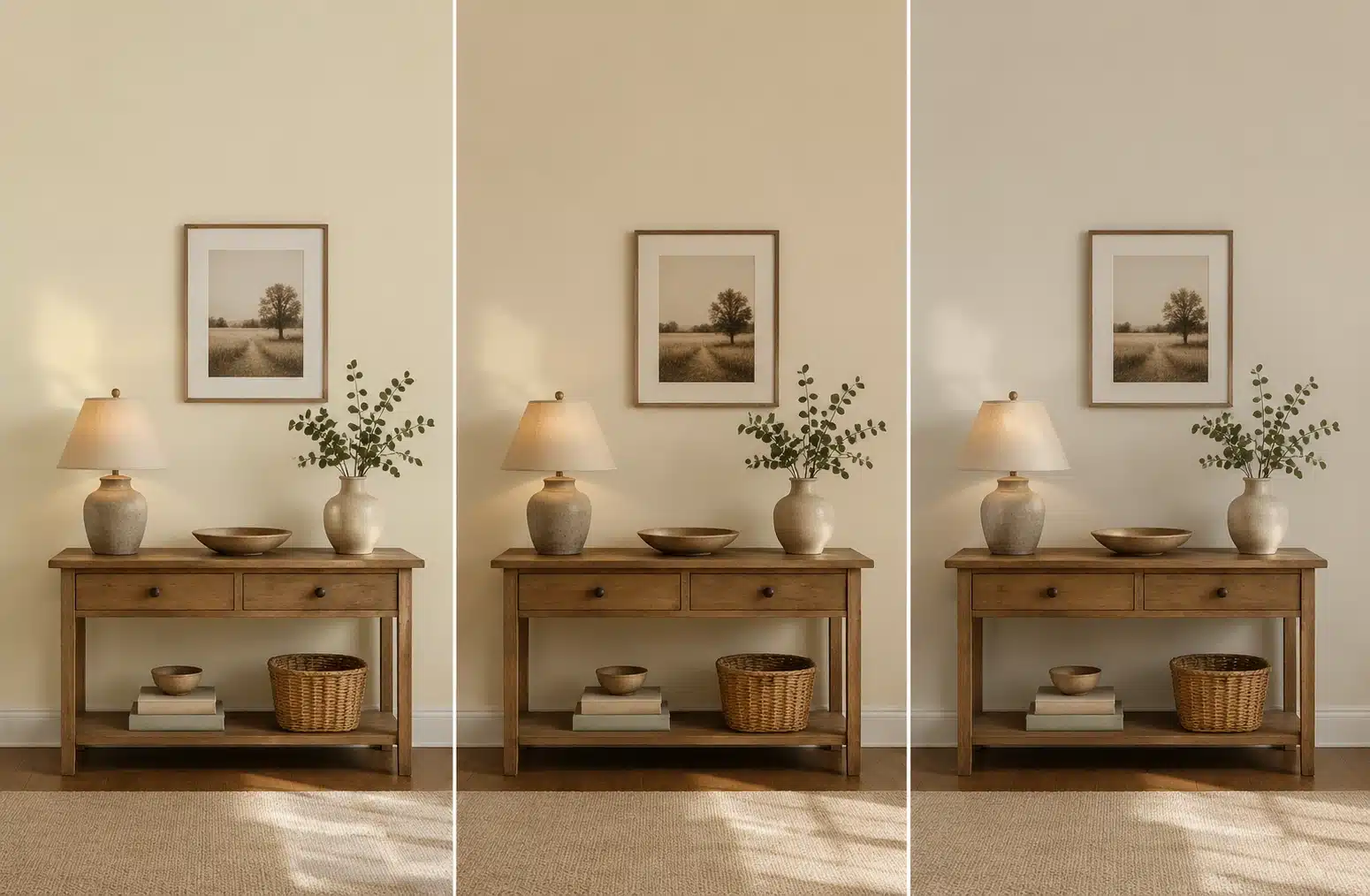
If you are shortlisting warm neutrals, it helps to see how Manchester Tan sits against its closest alternatives. One comparison from the same brand and one from a different brand help you understand what you are actually choosing between.
| Color | Code | Brand | LRV | Tone | Key Difference vs. Manchester Tan |
| Jute | AF-80 | Benjamin Moore | 63.3 | Soft neutral, green-brown undertone | Nearly identical LRV but softer and more gray-brown in base character |
| Shaker Beige | HC-45 | Benjamin Moore | 53.53 | Warmer, deeper tan-beige | Noticeably darker and warmer with a stronger golden undertone |
| Accessible Beige | SW 7036 | Sherwin-Williams | 58 | Warm greige, soft green-gray undertone | Darker than Manchester Tan, leans grayer and less warm overall |
Jute sits in the same LRV zone as Manchester Tan but has a softer, more gray-brown character that suits organic and natural-material interiors.
Benjamin moore Shaker Beige goes noticeably deeper and warmer, the better choice when you want the walls to carry more visual weight.
If you are already working within a Sherwin-Williams palette and want a comparable warm neutral, the Balanced Beige SW 7037 review covers a similar greige that reads slightly cooler and darker than Manchester Tan.
If the color feels close but you are not fully decided, Jute is the nearest Benjamin Moore alternative. If you want the same warmth with more depth, Benjamin moore Shaker Beige is the natural next step.
What Colors Go Well With BM Manchester Tan HC-81?
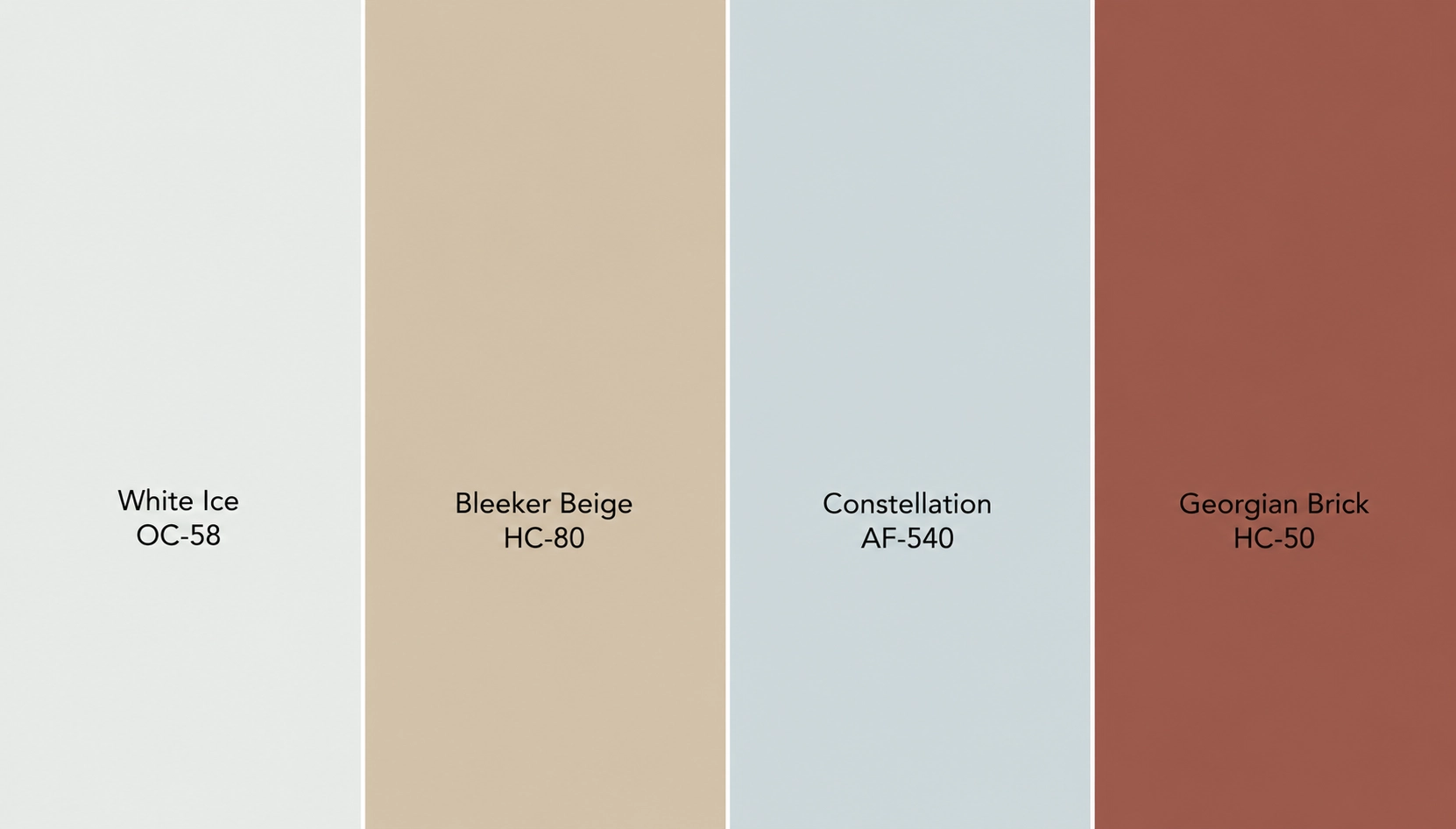
Manchester Tan works best with colors that share its warmth without fighting it. Benjamin Moore’s recommended coordinating colors for HC-81 are a smart starting point because they keep the palette soft, warm, and easy to use across connected spaces.
- White Ice OC-58: A clean, lightly warm off-white that works well for trim, ceilings, and doors. It gives Manchester Tan a clear definition without making the walls look too yellow or too green.
- Bleeker Beige HC-80: A deeper beige that pairs naturally with Manchester Tan in adjoining rooms, built-ins, or exterior details. It adds depth while staying in the same warm neutral family.
- Constellation AF-540: A soft muted blue that balances Manchester Tan’s warmth. It works well in bedrooms, living rooms, or accent areas where you want a gentle contrast.
- Georgian Brick HC-50: A warm red-brick accent that pairs well in small doses. Use it for a front door, fireplace detail, shutters, or decor rather than large wall areas.
These pairings give you enough range for trim, ceilings, adjoining rooms, and accent details. The main rule is simple: keep the surrounding colors warm and muted so Manchester Tan feels connected to the rest of the room.
Where to Use Manchester Tan and Where to Avoid It
Manchester Tan is not universally safe just because it is a familiar classic. Getting this decision right before you paint saves a repaint later. Here is an honest breakdown of where it works and where it does not.
| Situation | Use It | Avoid It |
| Floor Material | Warm oak, walnut, natural stone with warm veining, and terracotta | Very cool gray tile, blue-tinted stone |
| Countertops | Butcher block, warm quartz, earthy granite | Icy white quartz, cool gray stone |
| Hardware | Brass, oil-rubbed bronze, warm nickel | Chrome, polished nickel, cool matte black |
| Trim Color | Off-white, warm white, cream | Stark white with a blue or gray base |
| Lighting | Warm bulbs 2700K to 3000K, south or west-facing rooms | Cool white LEDs, dark north-facing rooms without added warmth |
| Design Style | Traditional, transitional, farmhouse, organic modern | Crisp, contemporary, minimalist, cool-toned modern |
| Room Size | Most sizes with proper contrast and trim | Very small dark rooms without warm bulbs or contrast |
In rooms where the fixed finishes are warm and the light is generous, Manchester Tan does exactly what a good neutral should: it holds everything together without drawing attention to itself.
In rooms where the finishes are cool, or the light is limited, the yellow-green base can start to read as dated or dingy, no matter how much you like the swatch.
Benjamin Moore Manchester Tan HC-81: Paint Line to Use
The paint line matters more than most people expect, and it matters especially with a color like Manchester Tan, where the warmth and depth need to come through consistently across coats.
- Benjamin Moore Aura Interior: This is the strongest option for most rooms. The color depth is noticeably richer, coverage is superior, and the durability holds up in high-traffic areas. For cabinets or accent walls where you want the color to look exactly right, Aura is worth the price difference.
- Benjamin Moore Regal Select: A reliable mid-tier option for standard walls. It applies smoothly, covers well in two coats, and works consistently in bedrooms, living rooms, and hallways. A good choice when Aura is over budget.
- Benjamin Moore ben: Suitable for low-traffic rooms like guest bedrooms or storage areas where performance demands are lower. For Manchester Tan specifically, you may need a third coat to get the full warmth and depth of the color.
For trim and cabinets, Benjamin Moore Advance in semi-gloss is the formula I reach for consistently. It levels beautifully, cures hard, and makes Manchester Tan look clean and intentional on any architectural detail.
Is Benjamin Moore Manchester Tan HC-81 Still Worth Choosing?
Yes. Manchester Tan HC-81 is still a very good warm beige for homes that suit it. It is light enough to keep a room from feeling heavy, warm enough to feel grounded, and muted enough to work across a range of furniture styles and materials.
What makes it hold up in 2026 is the same thing that made it work when Benjamin Moore first included it in the Historical Collection: it does not try to do too much. It is a supportive color, not a showstopper, and in most homes, that is exactly what you need from a wall color.
The right answer for your home depends on what light your rooms receive, what fixed finishes you are working around, and which finish you choose. Get the sample, observe it across a full day, and hold it against the real materials in your room. Then decide.
Frequently Asked Questions
Does Manchester Tan HC-81 work with oak floors?
Yes. Manchester Tan pairs naturally with both golden oak and more natural oak tones because its warm beige base shares the same color temperature as the wood. Warm white trim ties the combination together cleanly.
Can Manchester Tan work as a whole-house color?
Yes. Its LRV of 63.24 holds up across different room sizes and light conditions, and it flows well between connected spaces without feeling jarring in transitions. Consistent trim color throughout keeps the palette cohesive.
What happens if I use Manchester Tan in a room with gray tile?
The yellow-green base in Manchester Tan will likely conflict with cool gray tile. The contrast tends to read as dated rather than warm. A cooler greige or a true warm gray would be a better fit for that specific room.
Is Manchester Tan good for an open-plan living and dining space?
Yes. The LRV is high enough to feel open and the muted warmth reads consistently across different zones of the room. Pair it with Bleeker Beige HC-80 on a built-in or accent surface to add depth while staying within the same color family.
How does Manchester Tan look on an exterior in shaded areas?
In shaded exterior conditions, the green undertone becomes more visible and the color can read closer to a muted sage or khaki than a warm beige. Test a large sample board in the shaded area specifically, not just in full sun, before choosing it for exterior siding.
Is Benjamin Moore Manchester Tan still a relevant color in 2026?
Yes. It holds up because it does not trend, it reads as settled and permanent in the right room, and its LRV sits in a useful middle range. The rooms where it fails are the same ones that would have tripped it up twenty years ago: cool-tiled, north-facing, or too contemporary in finish.
Final Thoughts
Choosing the right warm neutral takes more than matching a chip to your sofa cushion. Lighting direction, floor material, trim color, and finish all pull a color in directions you will not see on a swatch.
Benjamin Moore Manchester Tan HC-81 has earned its long-running reputation because it does the quiet work well. It is warm without being golden, light without being weak, and muted enough to work across a wide range of interiors.
But it is not the answer for every home. If the fixed finishes in your room are cool, or if you want a crisp, contemporary result, there are better options. Do the sample test, observe it at different times of day, and hold it against the materials that are not moving before you buy.
Drop a comment below and tell me which room you are planning to use it in and what direction it faces. I will share my honest take.