

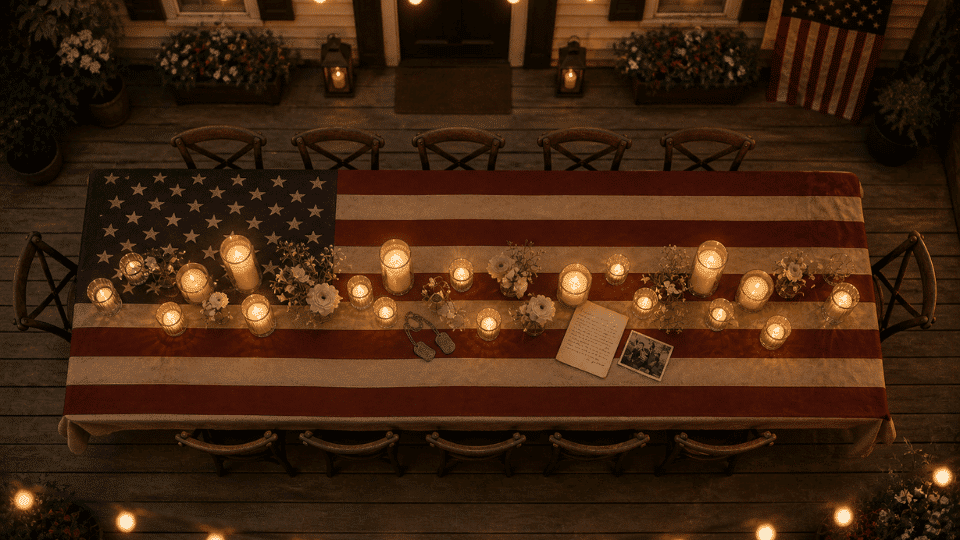


Memorial Day table decorations carry a quiet responsibility that other holidays simply don’t. This isn’t the day for seasonal color swaps; it’s the day the table itself becomes a tribute.
I put together several distinct setups here, each built around a genuinely patriotic table setting rooted in real military tradition. Not just red, white, and blue for the sake of it, but details that actually mean something.
You’ll find the practical elements that tie every setup together, the small touches that lift the look without cluttering it, and answers to the most common questions before you shop.
If you’re hosting twenty people or five, your table can make guests feel something worth feeling.
The Holiday That Changed What Decoration Means
Memorial Day started as Decoration Day in 1868. Families brought flowers to the graves of Civil War soldiers. It was a physical act of remembrance, personal, intentional, and rooted in loss.
As the country fought more wars, the scope of the conflict grew. By 1967, it was officially renamed Memorial Day and dedicated to every American who died in military service.
The table, in that context, is where Memorial Day decor becomes something more than aesthetics — it’s a modern extension of that original impulse. It brings the act of remembering inside, into a gathering, a meal, a shared moment with people you love.
What separates a meaningful setup from a forgettable one is the same thing that defined Decoration Day: every choice should be intentional. That standard runs through everything covered here.
Idea 1: The Missing Man / Fallen Comrade Table
This table stands apart from the main table, and that separation is intentional. The contrast between the two is where the meaning lives.
1. The Foundation
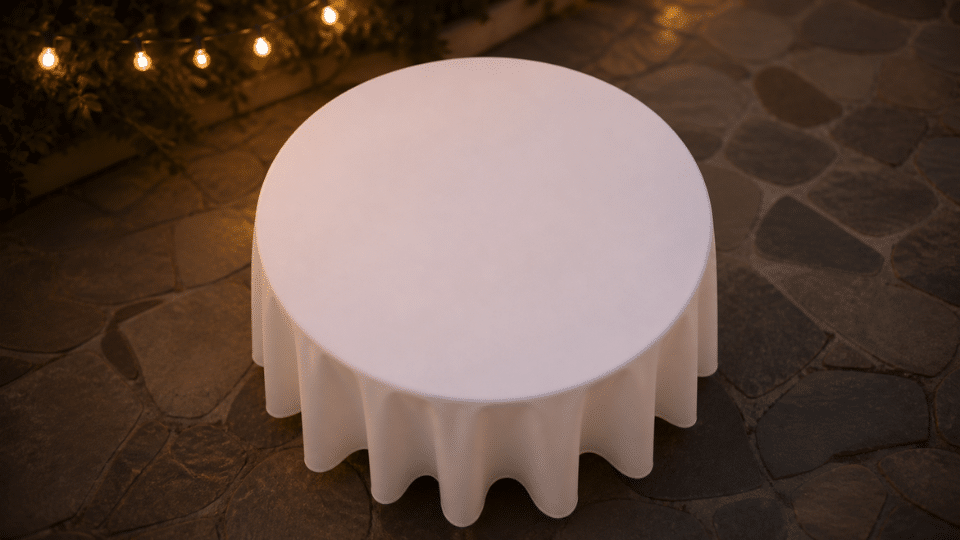
Use a small, round table, never a rectangular one. The roundness is part of the symbolism: a circle has no end, representing unending concern for those who didn’t return.
Cover it in a crisp white linen cloth with no pattern, no texture, no embroidery. The starkness is the point. Place it somewhere visible, near the entrance or beside the main table, so guests encounter it before they sit down.
2. The Empty Chair
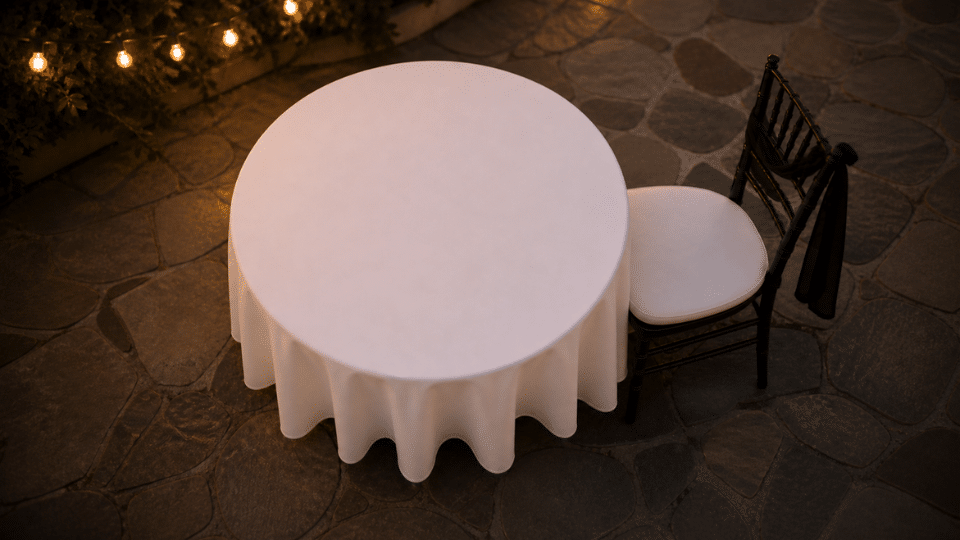
Pull one chair to the table, but do not push it in. It should look like someone stepped away and isn’t coming back. Drape a black sash or ribbon across the back of the chair.
The black represents the emptiness left in the hearts of the families. Nothing else belongs on or around the chair. Resist the instinct to add flowers or a name card. The absence is the decoration.
3. The Centerpiece
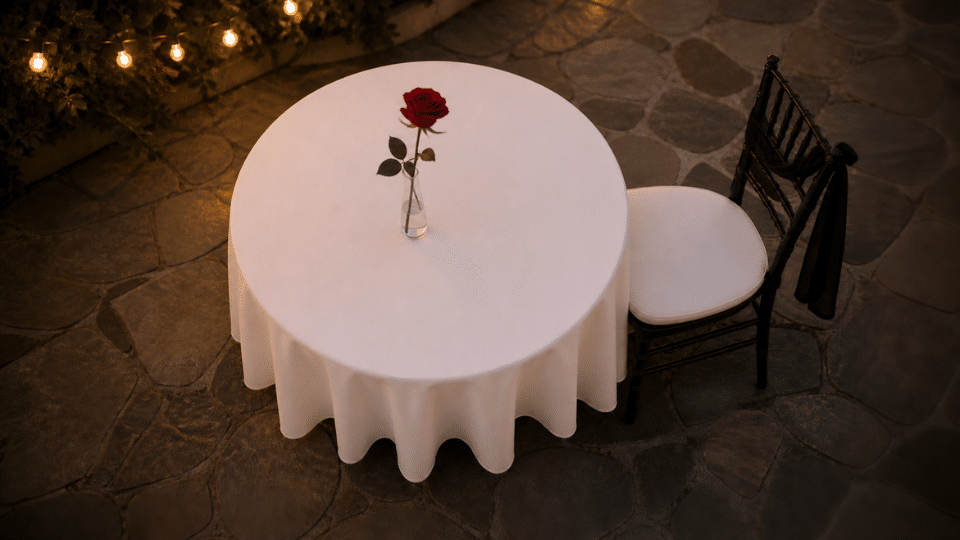
Place one single red rose in a slim, clear glass vase. Nothing else. Set it slightly off-center so it doesn’t look staged. The rose represents the lives of those who served and the loved ones still waiting for answers.
Among all Memorial Day centerpieces, this is the one I keep coming back to. A symmetric, perfectly centered arrangement looks deliberate in the wrong way. The slight asymmetry makes it feel like someone placed it there in a quiet, unhurried moment.
4. The Table Items
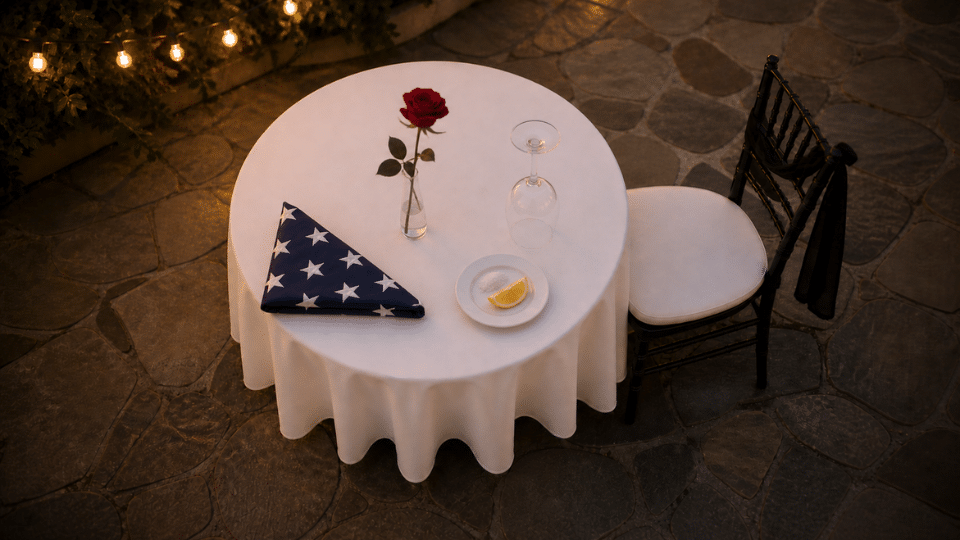
Each item on the table carries a specific meaning. A folded American flag sits to the left of the place setting. An inverted wine glass, never to be filled, stands to the right.
A slice of lemon on the bread plate represents the bitterness of absence. A small pinch of salt beside it represents the tears of the families. These are not styling choices. They are part of the tradition.
5. The Framed Explanation Card
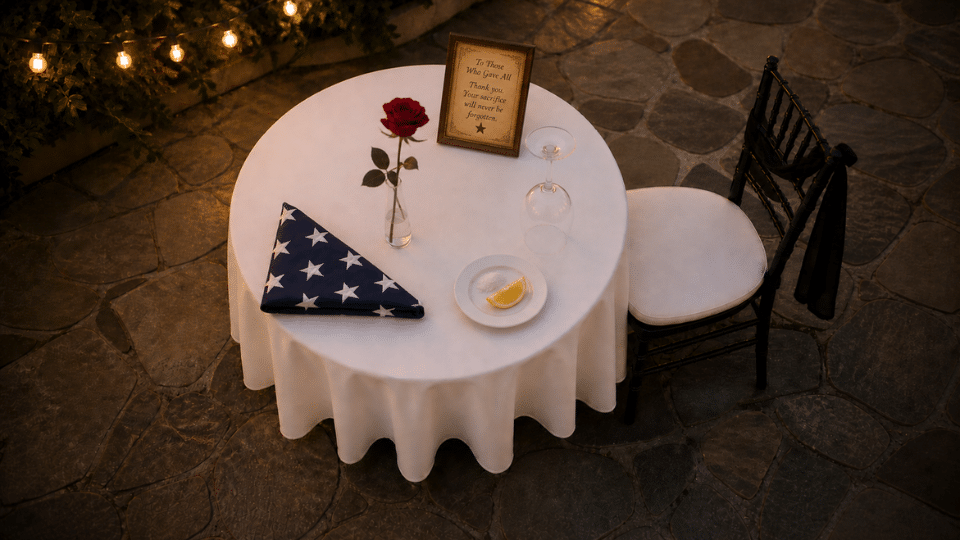
Without context, guests may not understand what they’re looking at. A framed card explaining the symbolism of every item transforms curiosity into a moment of genuine reflection.
Print it on aged parchment paper rather than white cardstock; the texture signals that this is not an ordinary place card. Set it where guests can read it comfortably. This card is often what people photograph and share.
6. The Personal Touch
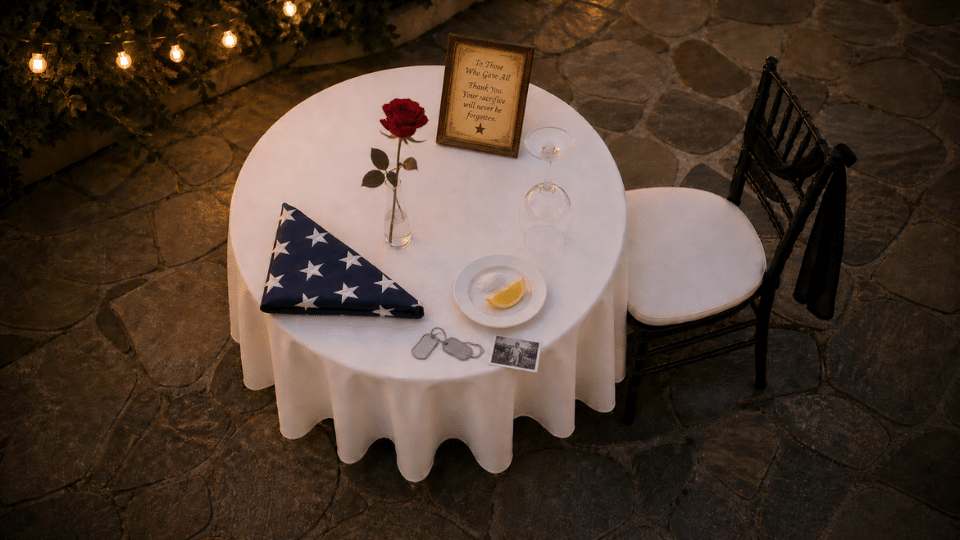
If your family has a direct connection to military service, this layer is where that lives. A branch insignia pin leaned against the vase. A small black-and-white photograph in a simple frame.
A set of dog tags resting on the white cloth. One personal item shifts this from a general tribute to a specific one. Specificity is what makes people stop. Generic tributes are noticed. Personal ones are felt.
Idea 2: The Branches of Service Table
This is the main table. Each seat honors one of the six military branches, and every element of the setup reinforces that structure, from the base to the place card.
1. The Base
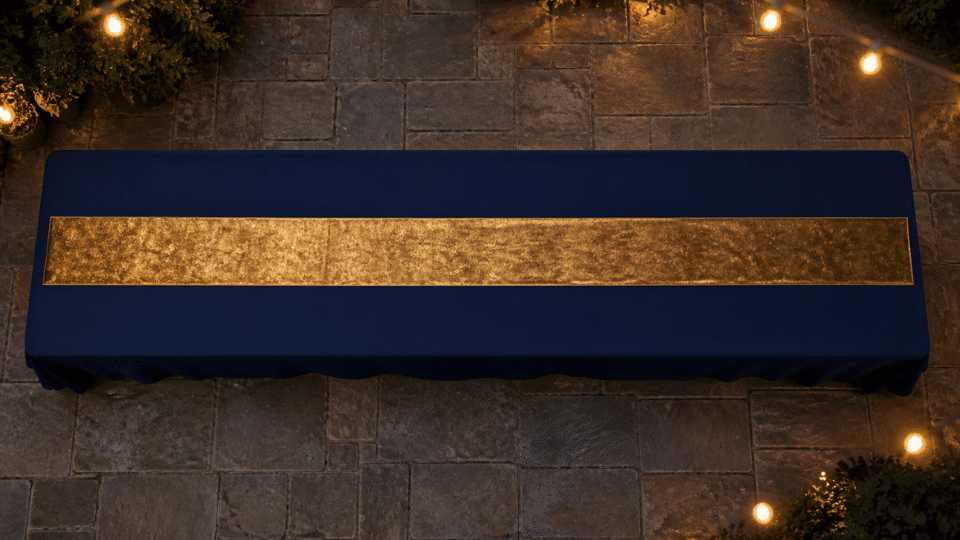
Start with a deep navy tablecloth that runs the full length of the table. Lay a gold runner down the center. Navy and gold are shared colors across all six military branches; they signal formality without leaning into any single branch’s palette.
The combination is clean and serious. It sets a tone before a single plate is placed. Don’t substitute lighter blues or silver. The depth of the navy matters.
2. The Place Cards
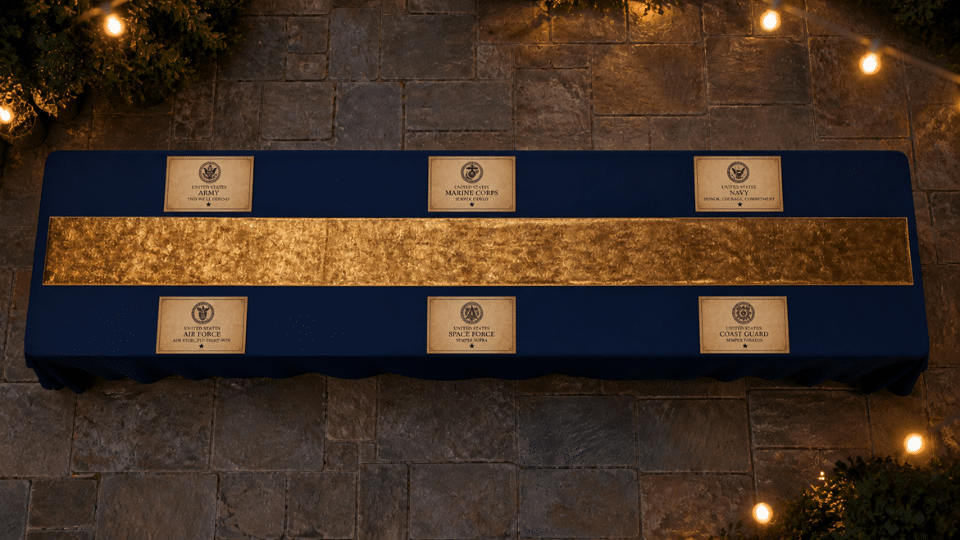
Print each branch seal on aged card stock: Army, Navy, Marine Corps, Air Force, Coast Guard, Space Force. Place each card at a seat with the branch motto beneath the seal in a smaller font. Most guests won’t know all six mottos.
That gap is the point. The card becomes a conversation starter before the meal begins. Use a matte finish throughout. Glossy cardstock reads as casual, and casual works against the intent of this table.
3. The Napkins
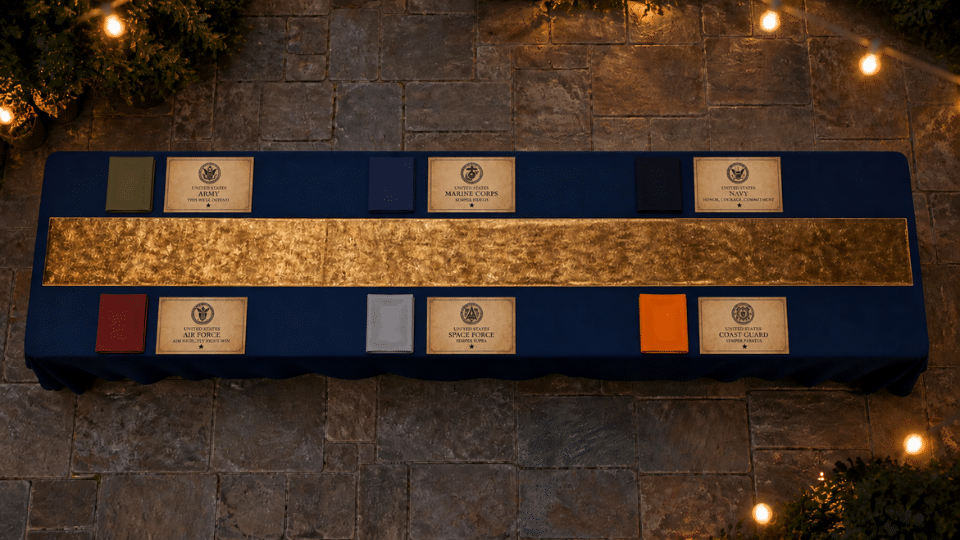
Each napkin should subtly reflect that seat’s branch color: Army olive, Navy blue, Marine scarlet, Air Force silver-blue, Coast Guard orange, and Space Force midnight. These don’t need to match exact uniform shades.
Approximate colors in quality linen work well. Fold them simply. A flat rectangle works better here than an elaborate fold. The napkin should complement the place card without competing with it for attention.
4. The Centerpiece
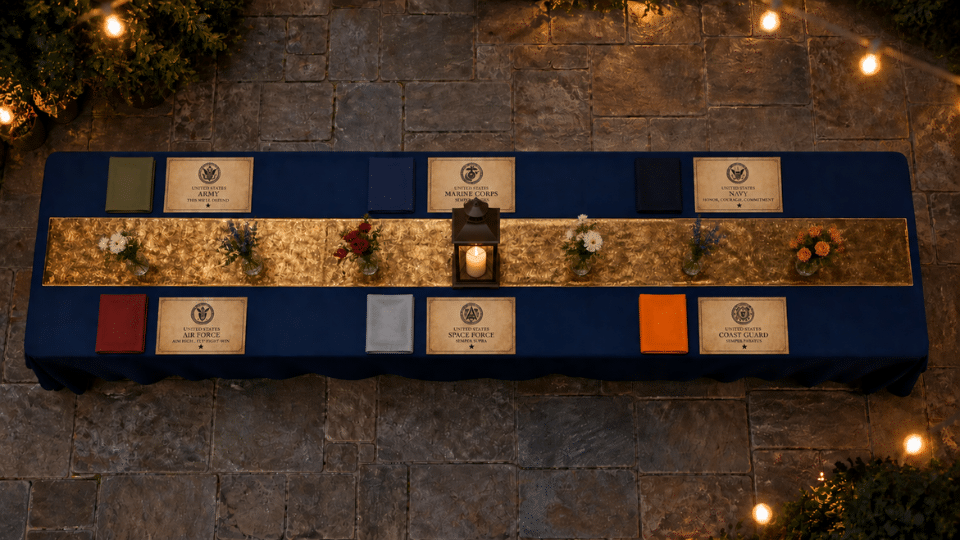
A tall lantern anchors the center of the table. Flank it with six slim bud vases, each holding the flower most associated with that branch.
Keep the bud vases low; they should be visible from a seated position without anyone having to crane to see the person across from them.
The lantern provides height without blocking sightlines. Odd numbers of flowers per vase always look more natural than even numbers in a small vessel.
5. The Under-Plate Card
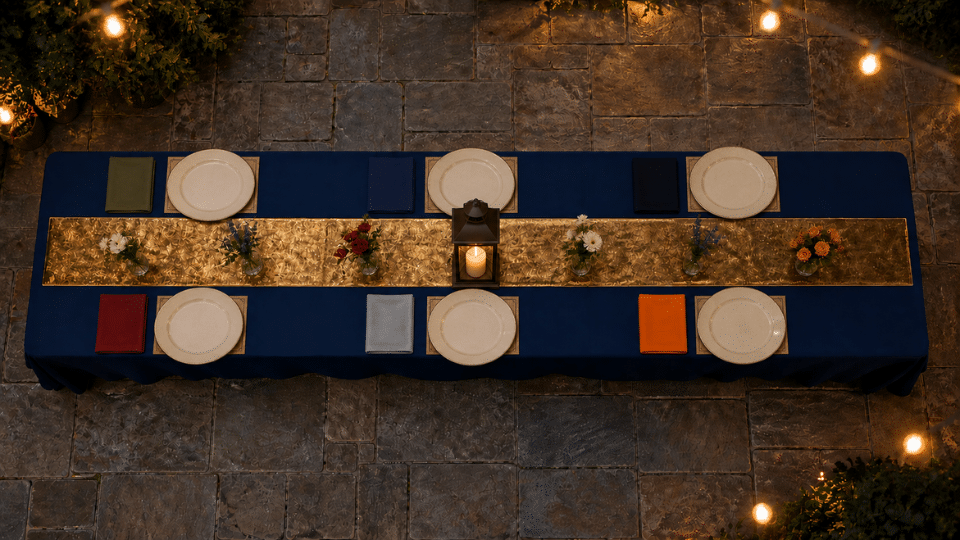
Beneath each plate, slip a printed card with one remarkable historical fact about that branch, a defining battle, a first, a record. Guests discover it when they lift their plate.
The reveal moment turns the setup from visual to participatory. Keep the fact to two sentences maximum. Any longer and guests skim it. Any shorter and it reads as trivia rather than tribute. The right length makes someone read it twice.
Idea 3: The Letters Home Table
This table is built around the most human thing soldiers did during wartime: they wrote home. Every element reflects that single act.
1. The Base
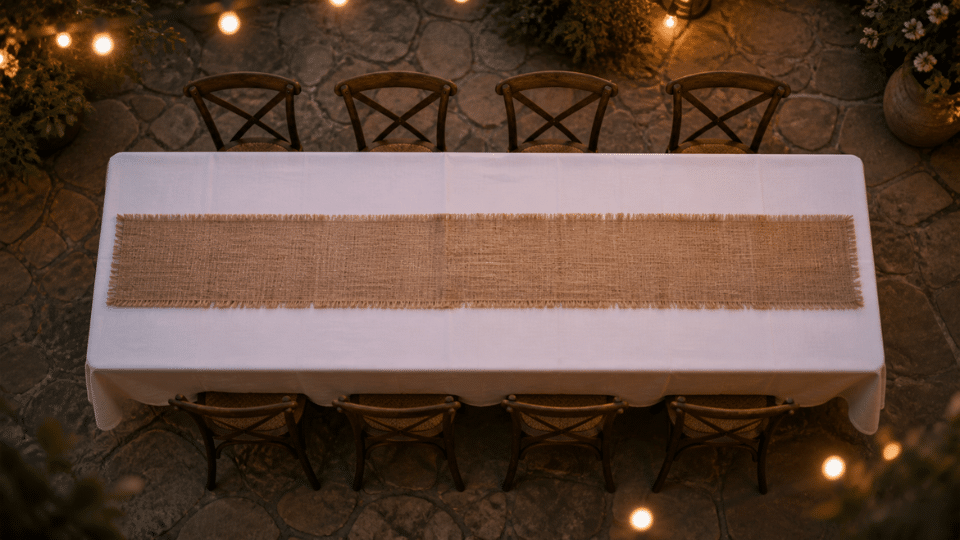
Lay a white tablecloth as the foundation, then run a length of raw burlap or unbleached linen down the center as the runner.
The contrast between clean white and rough texture is intentional. The white suggests to the world that the soldiers were writing to was ordered, domestic, and safe.
The burlap suggests the conditions from which they were writing. That visual tension runs quietly through the entire setup without needing explanation.
2. The Place Settings
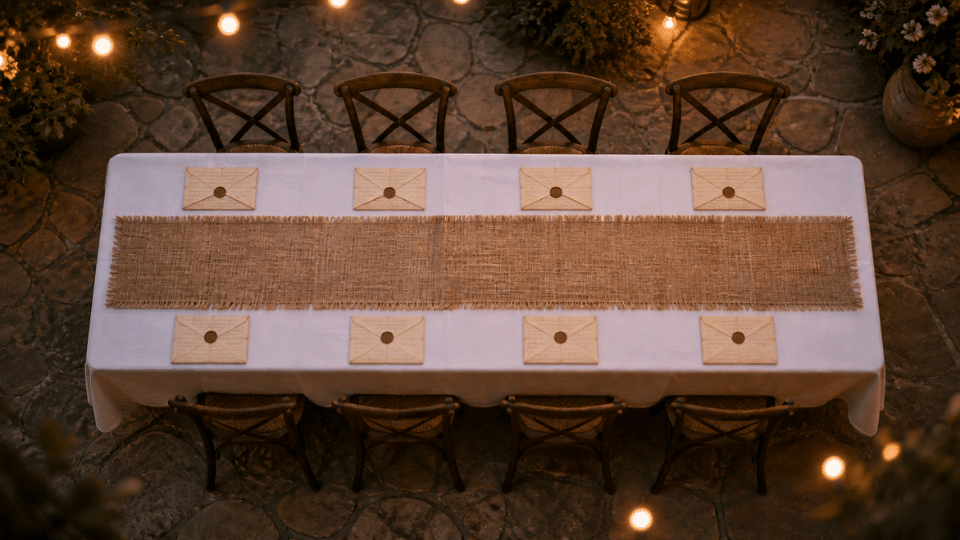
At each seat, place a folded letter that has been tea-stained to give it an aged appearance. Seal it before guests arrive with a wax stamp; a simple star or eagle seal works well.
Inside, guests find a paraphrased excerpt from a real wartime letter, sourced from the National Archives or Library of Congress.
The act of opening the sealed letter at the table is the first moment of genuine connection. Make sure the opening is easy; no one should fumble with it.
3. The Centerpiece
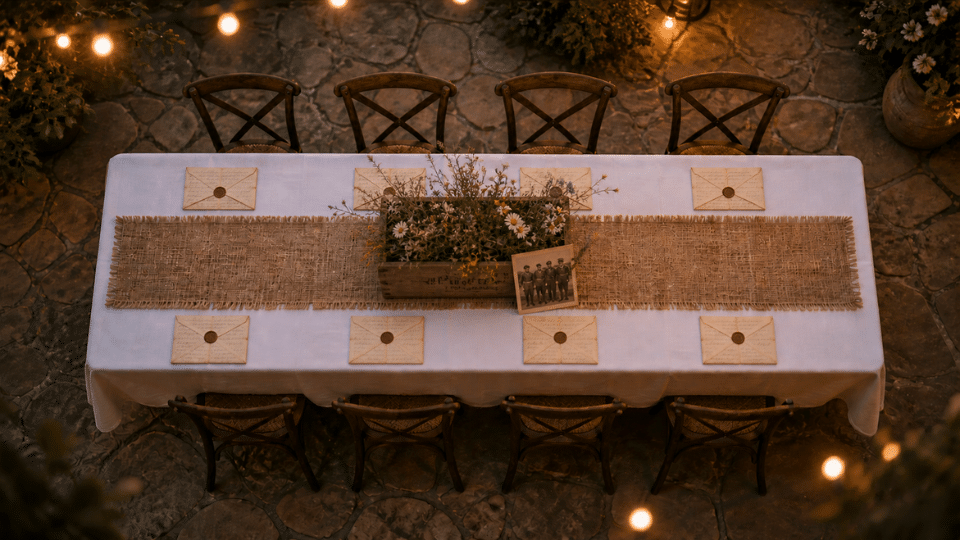
Use a vintage wooden crate or a worn cigar box as the vessel. Fill it with loose wildflowers, nothing arranged formally.
Lean a small black-and-white photograph of soldiers in the field against the outside of the crate, without a frame.
Unframed, it looks found rather than placed, as if it arrived with the crate and was never moved. That quality of accidental discovery carries more weight than a polished, deliberate display.
4. The Runner Accents
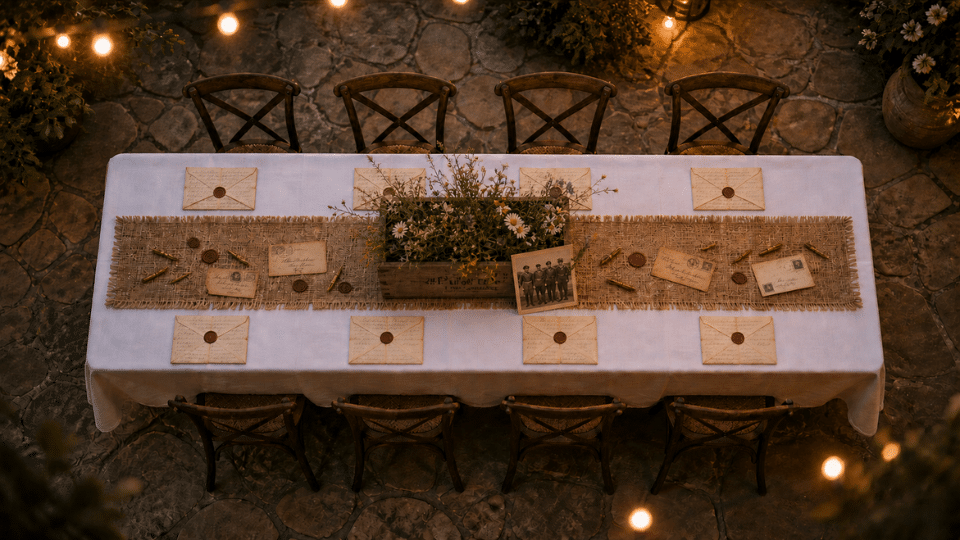
Scatter a few small objects along the runner between place settings: a brass pen nib, a dried wax seal, a folded, aged envelope with a postmark stamped on the front.
None of these need to be genuine antiques; aged replicas are available cheaply and convincingly. Space them unevenly along the runner.
The irregularity makes the table feel assembled over time rather than styled in an afternoon. Evenness breaks the illusion entirely.
5. The Chalkboard Sign
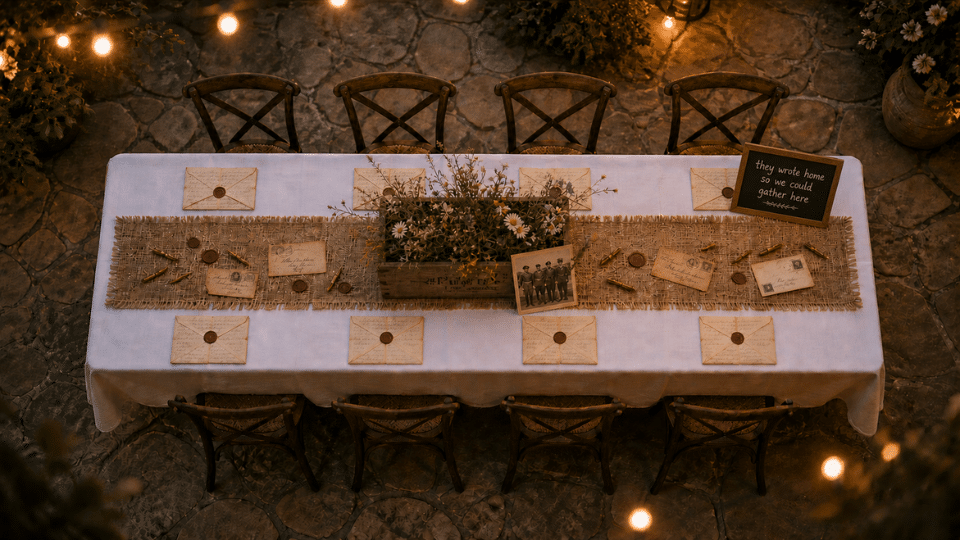
At the far end of the table, place a small chalkboard sign that reads: “They wrote home so we could gather here.” Write it by hand rather than printing it.
Handwriting connects to the theme in a way that clean typography doesn’t. Keep the sign small enough to feel personal, not a large statement piece. Guests should have to lean in slightly to read it. That small lean-in creates the moment this table is built around.
Idea 4: The Through the Wars History Table
This table assigns each seat to a different American conflict. By the end of the meal, every guest has learned something they didn’t know when they sat down.
1. The Base
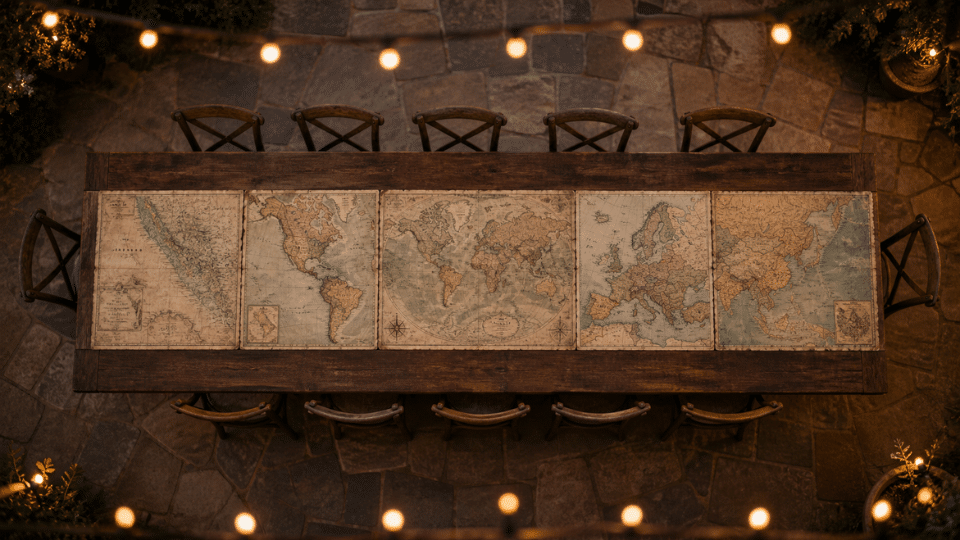
Source vintage maps from estate sales, antique stores, or printed reproductions online. Cut them to runner width and lay them flat down the center of the table.
WWII-era maps of Europe or the Pacific carry an immediate visual weight. Korean Peninsula maps, Vietnam topography, Gulf region charts, each one marks where Americans fought and died.
The maps don’t need to be framed or laminated. Flat, slightly worn, and unprotected is better than preserved.
2. The Place Cards
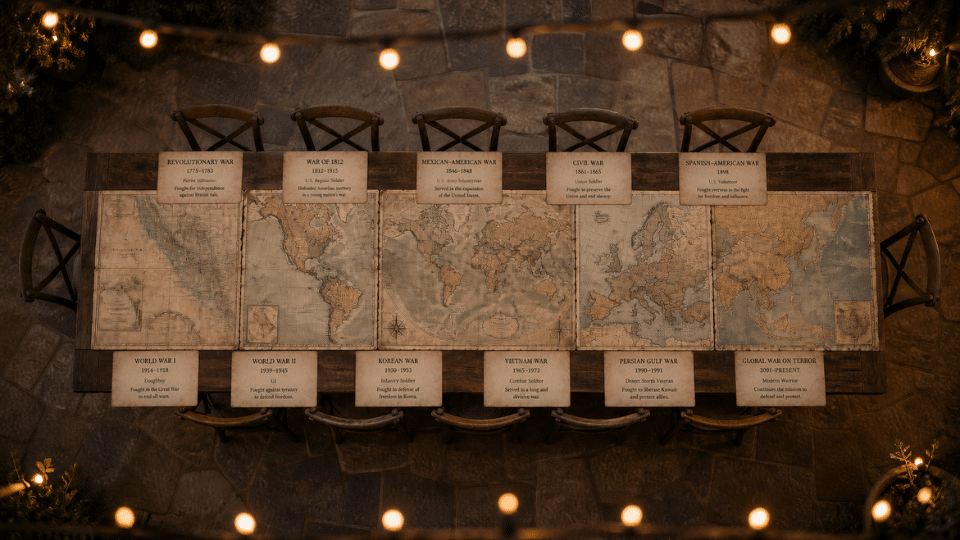
Print a card for each seat naming a specific American conflict: the Civil War, WWI, WWII, Korea, Vietnam, the Gulf War, Afghanistan, and Iraq.
Include the years the conflict ran and a single sentence about one soldier from that war: name, rank, home state, and what they did.
Not a famous general. An ordinary soldier. The ordinariness is what makes it land. Guests read the name and understand, without being told, that it could have been anyone.
3. The Centerpiece
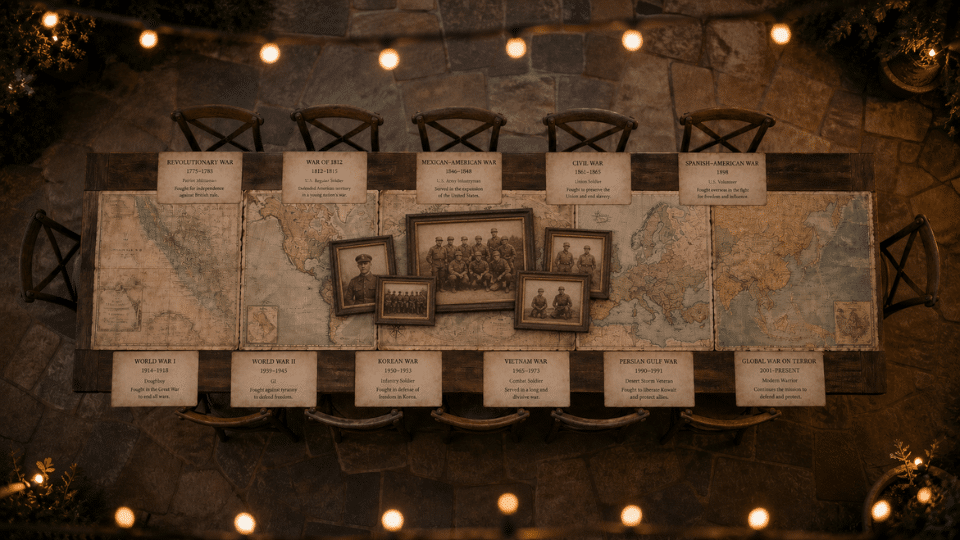
Group three to five sepia-toned photographs in simple frames at the center of the table. Mix sizes, one larger frame flanked by smaller ones, create a natural visual hierarchy without formality.
Source photographs from public domain military archives. They should show soldiers in the field, not in formal portraits. Portrait photographs look like monuments. Field photographs look like people. This table is about people, not monuments.
4. The Vases
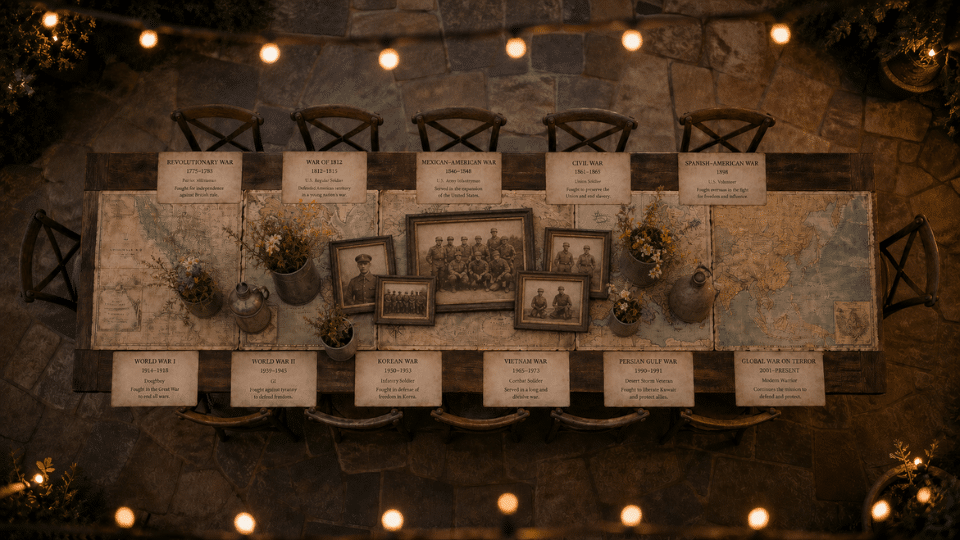
Use military-issue tin cups, old canteens, or galvanized metal buckets as vases instead of glass. These vessels reinforce the field setting established by the maps and photographs across the rest of the table.
Fill them with simple seasonal flowers, nothing that reads as decorative or arranged. The roughness of the containers against the softness of the flowers creates a visual tension that quietly echoes the whole premise of this setup.
5. The Era Accents
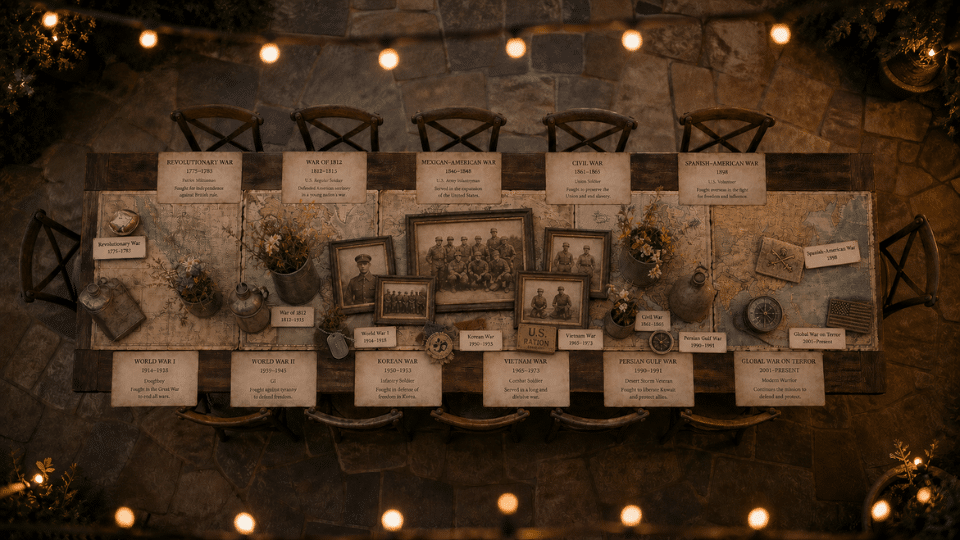
Place one or two small artifacts along the runner between the vase groupings: a WWII ration tin, a Vietnam-era compass, or a Desert Storm patch. Label each with a small tag identifying the conflict and year.
The labels are what change the objects from décor into anchors. Without them, guests would not be able to admire the objects. With them, guests ask questions. The questions are the point. A table that creates conversation about sacrifice has done its job.
Idea 5: The Gold Star Family Tribute Table
This is the most emotional of the five. It is built around the families left behind, the ones still carrying the weight long after the service ended.
1. The Base
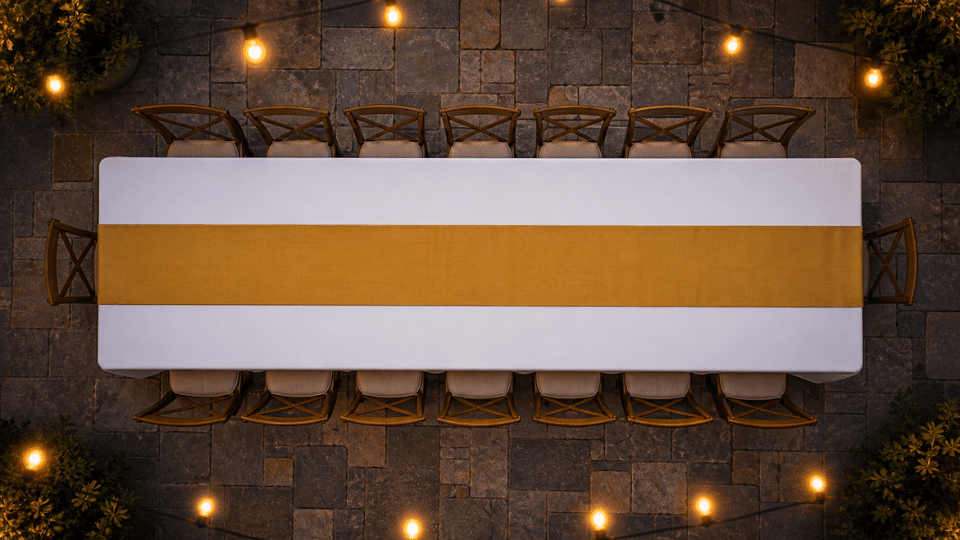
Start with a white tablecloth and a deep gold runner. Gold is the color of the Gold Star, the symbol given to families who lost a service member in active duty. The choice to use gold here is not a styling decision.
It is a direct visual reference to that tradition. Keep the base clean and uncluttered. Everything placed on this foundation should have a clear reason for being there.
2. The Yellow Rose Centerpiece
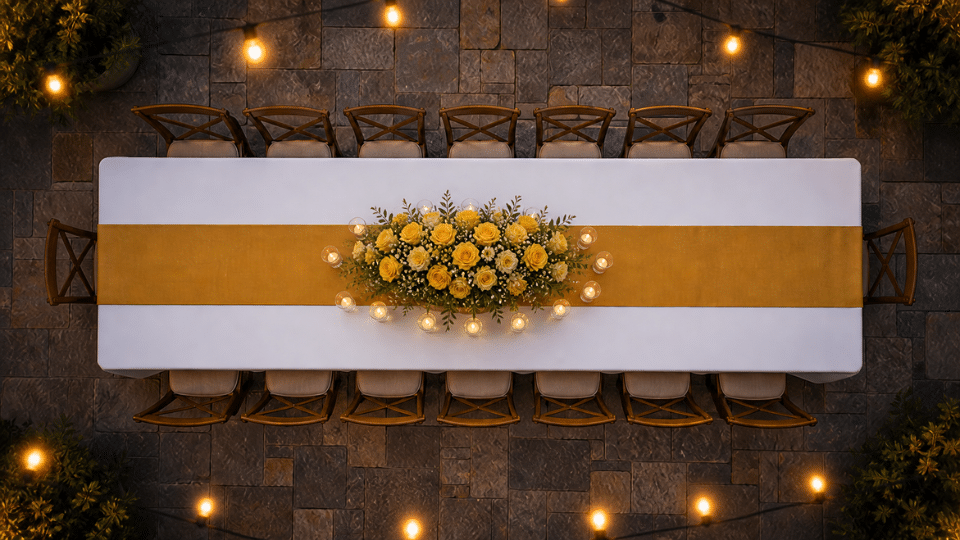
Yellow roses are the traditional flower of waiting and remembrance for those who didn’t return. Fill a wide, low vessel with yellow roses and white filler flowers, so guests can see each other clearly across the table.
Surround the base of the vessel with small tea lights in clear holders. The candlelight at the base of the arrangement draws the eye inward and holds it there. That quality of stillness is worth deliberately designing for.
3. The Flag Display
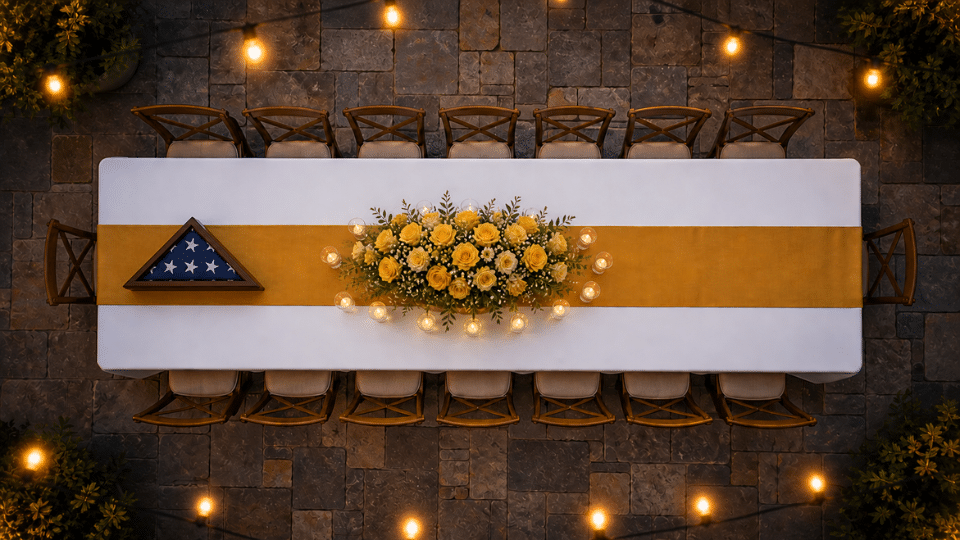
A folded American flag in a triangular display case belongs at one end of the table, not centered, not mirrored with anything else.
The off-center placement signals that it was placed intentionally, not styled symmetrically into the layout.
If you have a flag from a family member’s service, this is the right table for it. If not, a new flag folded and cased carries the same visual and symbolic weight without apology.
4. The Remembrance Book
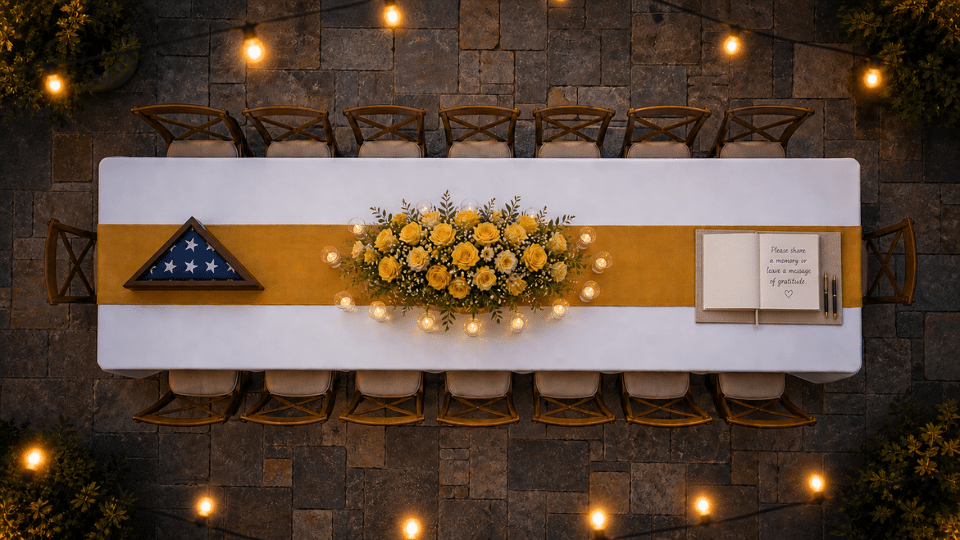
Place a small, cloth-covered guest book at the far end of the table with a short handwritten prompt on the open page: “Write a name you want to remember today.”
Leave two or three pens beside it. By the end of the gathering, the book fills with names, some familiar to everyone at the table, some known only to the person who wrote them. That collection, accumulated quietly over the course of a meal, is the tribute.
5. The Framed
Quote
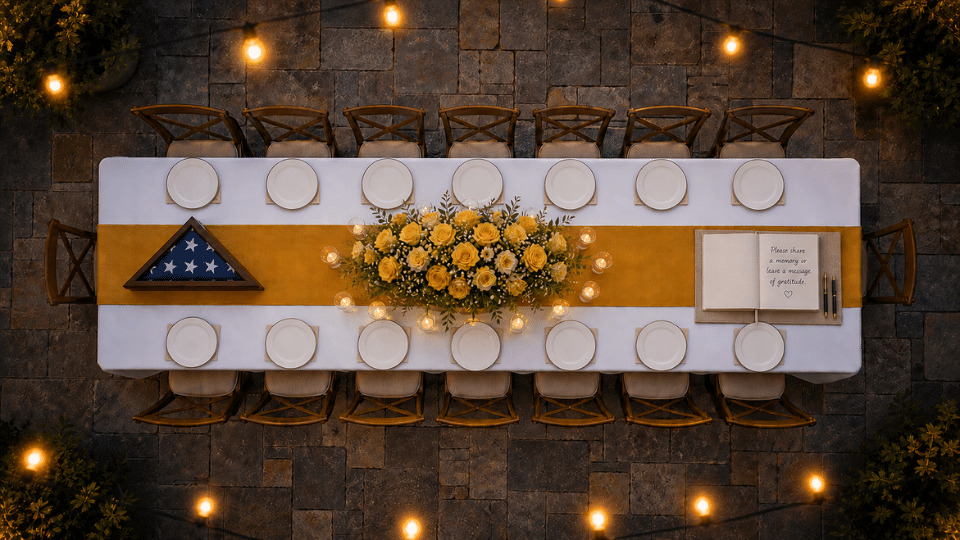
Choose one quote about freedom, sacrifice, or remembrance and frame it simply. Keep the frame small, 4×6 is enough.
Lean it against the flag display case rather than standing it upright independently. A lean frame reads as personal. A standing frame reads as institutional.
Source the quote from a soldier’s letter, a Gold Star parent’s testimony, or a poet who served. Avoid political speeches. Specificity and humanity matter here more than recognition.
Five Tables One Foundation
All five tables share a quiet foundation. These elements shape tone, guide emotion, and ensure every setup feels intentional, cohesive, and grounded in meaningful remembrance.
- Tablecloths and Runners: White linen keeps the base clean and symbolic, while burlap and raw textures add honesty and depth, and glossy or synthetic fabrics should be avoided completely.
- Flowers With Meaning: Red roses reflect love and sacrifice, white lilies stand for purity and honor, and yellow roses connect to Gold Star families in a quiet, meaningful way.
- Dinnerware: Skipping disposable plates helps maintain integrity, while enamelware or vintage pieces add authenticity, and simple designs keep the focus on meaning rather than display.
- Lighting: Soft candlelight creates a reflective atmosphere, lanterns add warmth without distraction, and bright or colored lighting should be avoided to preserve the tone.
- Food as Décor: Food as décor should stay simple yet thoughtfully arranged, using natural colors like berries and melon, so it feels inviting rather than overly styled or decorative.
When every detail is considered, the tables feel connected. What remains is not decoration, but a shared moment of reflection that quietly stays with every guest.
Frequently Asked Questions
What colors work beyond red, white, and blue?
Navy, ivory, and gold appear patriotic without loudness. Black is suitable, as seen on the Missing Man Table. Forest green suits outdoor settings. Aged brass and raw metals add authenticity. The palette should feel earned, not like a party store.
How do I decorate a Memorial Day table on a budget?
Tea-stained paper for place cards costs almost nothing. Mason jars work as vases. Thrift stores carry enamelware, vintage glassware, and transferware plates. Historical place cards can be made at home for under a dollar each. Budget and meaning are not in conflict. Many powerful table elements cost less than five dollars.
How do I display an American flag properly at a table setting?
A folded flag in a display case should sit on a table or surface, not on the floor or draped over furniture. Standing flags must be upright and secured. The flag should not touch the table when folded. These rules, outlined in the U.S. Flag Code, ensure respect and seriousness, not decoration.
The Final Design
Five setups, one shared foundation, and every practical detail you need to pull it off; I hope this gave you something real to work with.
A Memorial Day table doesn’t need to be expensive or elaborate. It just needs to be intentional. Every choice you make is a quiet statement about what this day means to you, and the people sitting at that table will feel it even if they never say so.
Pick one setup, borrow from a few, or make it entirely your own. Just make it mean something. And if you do build one this year, drop a comment below; I’d love to see it.