

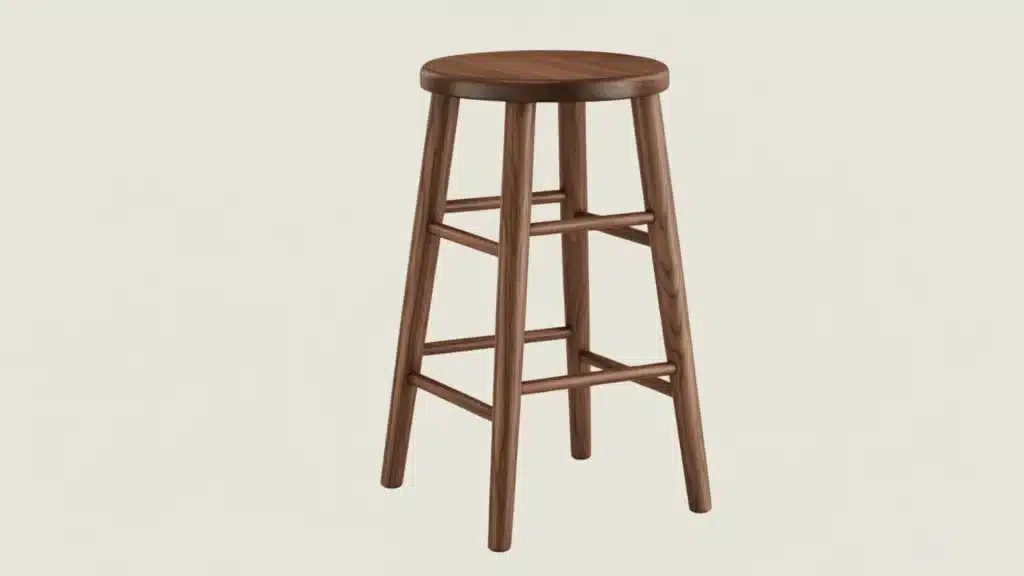


I’ve fitted bar stools to hundreds of counters. The number-one complaint I hear from clients is that their stools feel “off.” Almost every time, the culprit is a mismatch between seat height and counter height by just two or three inches.
I’ll help you understand what the standard bar stool height actually is and why it matters when choosing seating for your counter or bar.
You’ll also learn how to measure your counter properly, how bar stools differ from counter stools, how to figure out how many stools fit your space, and the spacing that keeps seating comfortable.
By the end, you’ll know exactly what height works best for your space.
What is the Standard Bar Stool Height: Quick Answer
The standard bar stool height is usually 28 to 30 inches from the floor to the seat. This height works best with bars or counters that are about 40 to 42 inches high. You will often see this setup in home bars, pub-style tables, and tall kitchen bar areas.
|
Stool Type |
Seat Height |
Best Counter Height |
Common Use |
|
Dining / Short |
16–23 in |
28–33 in |
Low dining tables, casual seating |
|
Counter Height |
24–26 in |
34–36 in |
Kitchen islands, breakfast bars |
|
Bar Height |
28–30 in |
40–42 in |
Home bars, pub tables, tall islands |
|
Extra-Tall / Spectator |
33–36 in |
44–48 in |
Custom bars, entertainment spaces |
How to Measure the Right Bar Stool Height
Choosing the correct bar stool height helps ensure comfort and proper seating posture. A simple measurement can help you avoid stools that feel too high or too low.
- Measure Counter Height: Measure the distance from the floor to the underside of your counter or bar surface. This measurement determines which stool height category will work best.
- Leave Enough Legroom: For comfortable seating, leave about 10–12 inches of space between the stool seat and the bottom of the counter. This allows enough room for legs to move freely.
- Check Standard Stool Heights: Most bar stools fall into common ranges. Counter stools are usually 24–26 inches, while bar-height stools are typically 28–32 inches tall.
- Consider Adjustable Options: If multiple people will use the stools or your counter height is unusual, adjustable stools can provide flexibility and better seating comfort.
|
Quick Formula: Counter height (in inches) − 10 to 12 inches = ideal seat height Example: 42-inch bar − 12 inches = 30-inch seat height |
Taking a few minutes to measure correctly helps ensure your stools fit the space well. Proper height improves comfort, posture, and the overall look of your kitchen or bar area.
Bar Stool Height vs. Counter Stool Height
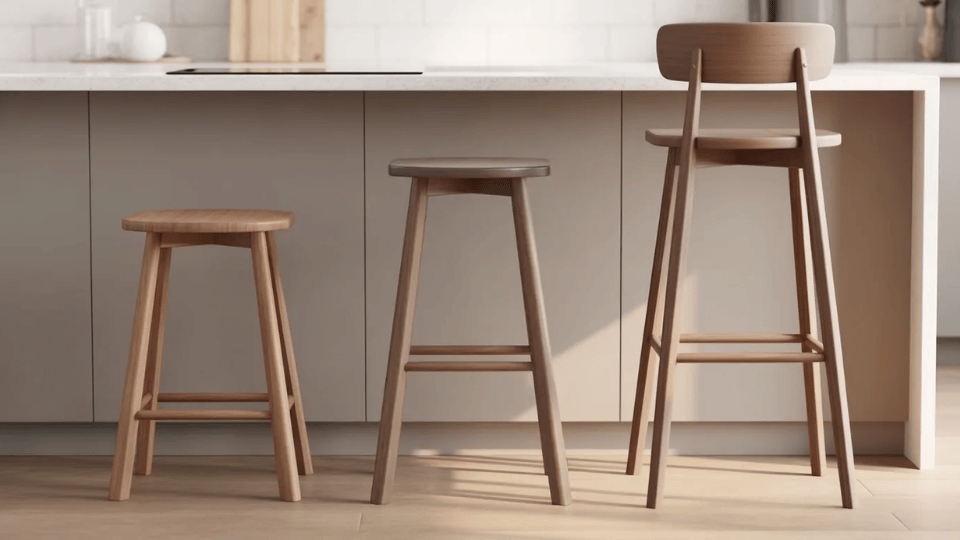
From my experience, stool height is one of the most important details. The right choice gives you comfortable legroom and helps your stools fit perfectly with your counter.
1. Counter Stool Height
Counter stools usually have a seat height of 24 to 26 inches, which makes them a good match for counters that are about 34 to 36 inches high.
This is the common height for many kitchen islands and breakfast bars in homes. With this setup, you still get about 10 to 12 inches of legroom, which helps you sit comfortably while eating, working, or chatting in the kitchen.
One thing I notice in my own workshop is that when clients bring me measurements from their kitchen island, they almost always measure to the top of the counter.
But I always ask them to remeasure to the underside because the thickness of a quartz or butcher block top can add an inch or more, which changes your stool height recommendation.
2. Standard Bar Stool Height
Standard bar stools typically have a seat height of 28 to 30 inches. These stools are designed for bars or counters that are around 40 to 42 inches tall.
This height is very common in home bar areas, pub-style tables, and entertainment spaces. When paired with the right bar height, these stools provide enough legroom so sitting feels relaxed and comfortable.
3. Extra-Tall Bar Stool Height
Extra-tall bar stools usually have a seat height of 33 to 36 inches. They are made for very tall counters or bars that measure about 46 inches or more in height.
These stools are not as common as standard ones but are often used in special bar setups or custom entertainment spaces where the counter is higher than usual.
4. Short / Dining Height Stools
Short stools, also called dining-height stools, sit between 16 and 23 inches from the floor to the seat. They pair with lower surfaces between 28 and 33 inches tall.
You won’t encounter these often in a traditional bar setup, but if someone has a low custom table or a platform seating arrangement, this is the category to know.
Why the 10–12 Inch Rule Matters for Comfort
The 10–12 inch rule is important because it helps your bar stool feel comfortable every time you sit down. This rule means there should be about 10 to 12 inches of space between the top of the stool seat and the bottom of the counter or bar.
If the gap is too small, your knees can press against the counter, which can feel tight and annoying after a few minutes. With enough space, you can slide in easily, move your legs, and stand up without bumping the surface.
This extra room also lets you sit with your back straight, rather than leaning forward in a cramped position. In simple words, the right gap keeps sitting relaxed, natural, and much more enjoyable for daily use.
A client of mine once came back after installing beautiful, solid oak stools I had built for her kitchen island. She complained they felt “claustrophobic.”
The stools were the perfect size at 24 inches. The problem was that she had replaced her original laminate top with a thick 2-inch marble slab, which had quietly eaten into the legroom. That single inch made all the difference.
The fix was simple. I trimmed the base legs down slightly, but it’s a good reminder to always re-measure after any counter renovation.
Seat Width and Depth: The Dimensions Most People Overlook
Most guides stop at seat height. But seat width and depth are just as important, especially if you’re buying for multiple people or a shared kitchen island.
Seat width on a standard bar stool ranges from about 15 to 20 inches. Wider seats (18 to 20 inches) feel more comfortable for extended sitting, but take up more space along the counter. Narrower seats (15 to 16 inches) work well in tight layouts where you need to fit more stools.
Seat depth typically runs from 12 to 16 inches for counter-height stools. A shallower seat (12 inches) helps the stool slide fully under the counter when not in use. A deeper seat feels more like a proper chair but may not tuck away as cleanly.
When I build stools to order, I default to a 16-inch seat depth for most clients. It strikes the right balance: comfortable enough for a full meal, compact enough to tuck neatly under the counter. I’d only go deeper for someone who specifically wants the stool to double as a reading or lounge seat near the counter.
How Many Bar Stools Fit at Your Counter?
Once you’ve nailed the height, the next question most people have is: how many stools will actually fit? The answer depends on the stool width and the amount of elbow room you want.
As a general rule, plan for 26 to 30 inches from the center of one stool to the center of the next.
This leaves at least 6 inches between seats on standard-width stools, which is the minimum for comfortable seating without bumping elbows.
|
Quick Formula: Counter length in inches ÷ 28 = approximate number of stools Example: An 84-inch island ÷ 28 = 3 stools comfortably. |
For stools with arms or swivel bases, increase the spacing between seats to 8 to 10 inches, since the stool footprint is wider when in use.
I’ve had clients insist they can squeeze four stools onto a 90-inch island. Mathematically, you can. But I’ve seen the result in real kitchens.
It becomes hard to pull out a stool without knocking the neighbor’s, and nobody wants to sit in the end seats. Three comfortable stools almost always beat four cramped ones.
Stool Types and How They Affect Height and Fit
The style of stool you choose affects more than just looks. It changes how the stool fits under the counter, how much clearance you need, and how comfortable it feels for daily use.
- Backless Stools: Backless stools have the smallest footprint and tuck cleanly under most counters. They work well in tight layouts or anywhere you want to keep the counter line visually open. The tradeoff is less support for longer sitting sessions.
- Low-Back and Full-Back Stools: Low-back stools provide modest lumbar support without protruding too far above the counter. Full-back stools offer the most comfort but add 15 to 20 inches of height above the seat, which can look heavy in smaller kitchens. If you go full-back, check that the total stool height doesn’t tower awkwardly above the counter surface.
- Swivel Stools: Swivel stools are great for social spaces because the seat rotates, making it easy to turn and talk without getting off the stool. They typically require a bit more side clearance than stationary stools, since the seat swings out slightly during rotation.
- Stools with Arms: Arm stools feel the most chair-like and comfortable for long meals. The critical thing to check is arm height. If the arms are taller than the underside of your counter, the stool won’t slide under at all. Always measure arm height against your counter clearance before buying.
Adjustable vs. Fixed Height Bar Stools: Which is Better?
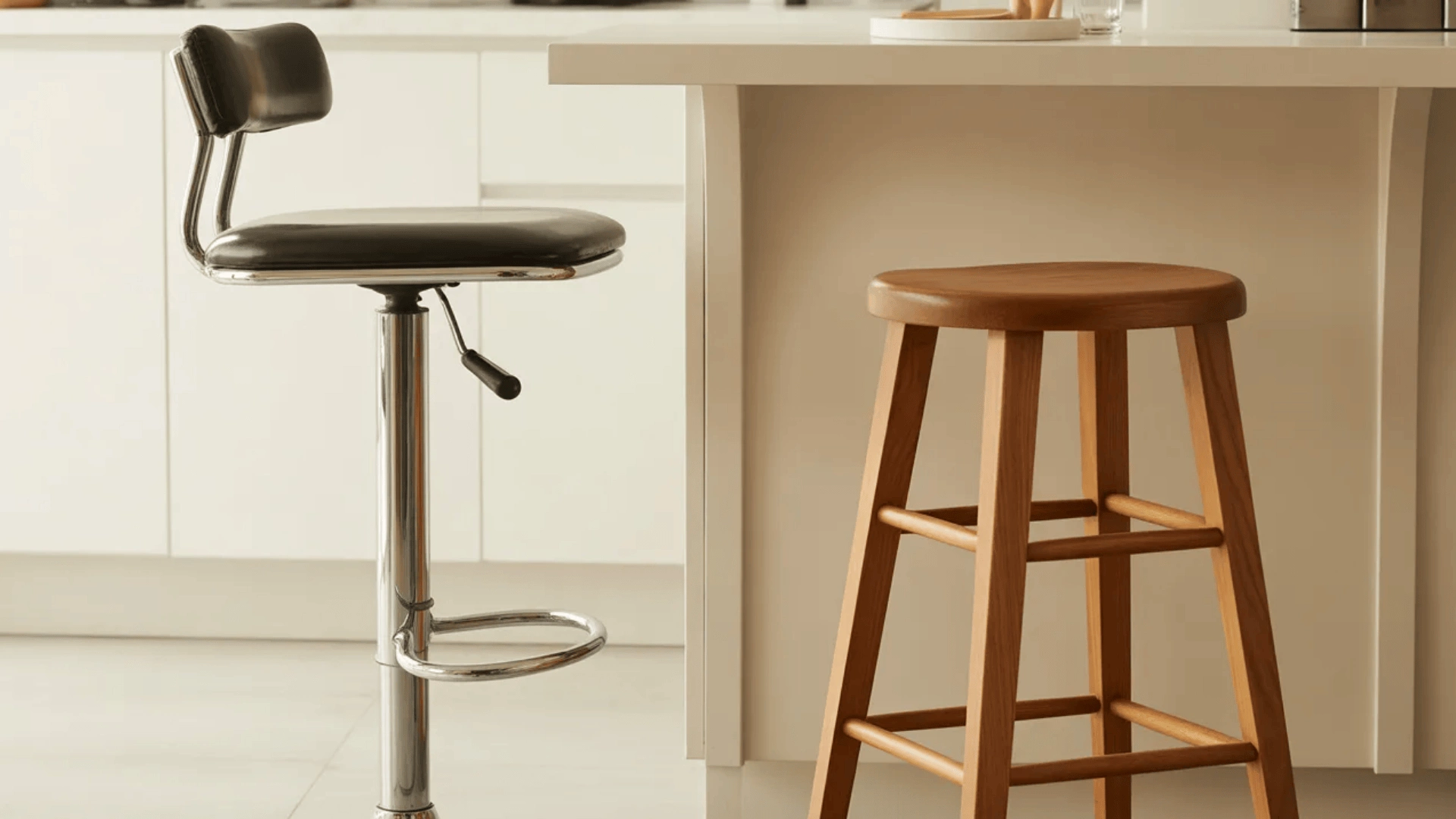
If you’re choosing between adjustable and fixed bar stools, the right option depends on how you plan to use them. Both types can work well, but each one has its own benefits.
| Feature | Adjustable Bar Stools | Fixed Height Bar Stools |
|---|---|---|
| Height | Seat height can be raised or lowered | Seat height stays the same |
| Best For | Counters with unusual heights or multi-use spaces | Counters with a known standard height |
| Flexibility | Very flexible for different users and setups | Limited flexibility |
| Stability | May feel slightly less sturdy depending on the base | Usually more solid and stable |
| Design | Often modern with metal bases and levers | Usually simple and classic designs |
| Maintenance | Moving parts may need occasional care | Very low maintenance |
Quick tip: If you want flexibility and shared seating, adjustable stools are a helpful option. If you prefer a simple, sturdy option and know the exact height you need, fixed stools are a great choice.
Common Mistakes to Avoid When Choosing Bar Stool Height
Before you buy your bar stools, it helps to know the common mistakes people often make so you can avoid comfort problems later.
- Checking total stool height instead of seat height: Always look at the seat height from the floor. The backrest height does not determine whether the stool will fit your counter.
- Not leaving enough legroom: Make sure there are about10–12 inches between the stool seat and the counter. This space helps you sit comfortably without your knees hitting the surface.
- Forgetting about spacing between stools: If stools are placed too close together, it becomes hard to sit, turn, or get up. Leave enough room for easy movement.
- Guessing the counter height: Never estimate. Measure from thefloor to the top of the counter so you can choose the correct stool size.
- Ignoring adjustable options when unsure: If your counter height feels tricky or slightly unusual, an adjustable stool can help you get the right fit.
- Not accounting for arm height on stools with arms: Many buyers check seat height and ignore arm height. If your counter has a low overhang, stool arms can prevent the stool from sliding under the counter at all. Always check arm clearance before purchasing.
- Forgetting to re-measure after a counter renovation: A new countertop material, especially stone or solid wood, can add 1 to 2 inches of thickness. This changes your required seat height. Always re-measure against the underside of the finished counter, not just the old surface height.
Keeping these simple tips in mind will help you choose the right stool height and make sure your seating feels comfortable every day.
Final Words
Choosing the right standard bar stool height can make a big difference in how comfortable your kitchen, island, or home bar feels.
When you measure your counter properly and leave about 10–12 inches of legroom, seating becomes much more relaxed and practical for everyday use.
In my experience working with furniture and wood, even well-built stools can feel awkward if the height doesn’t match the counter correctly. The good news is that getting it right is simple once you know the basic measurements.
Take a moment to measure your counter before buying stools and compare it with the recommended seat heights.
Use the quick-reference table at the top of this guide, apply the formula, and check your stool spacing before you commit. Getting it right the first time saves you the hassle of returning stools or living with discomfort.