

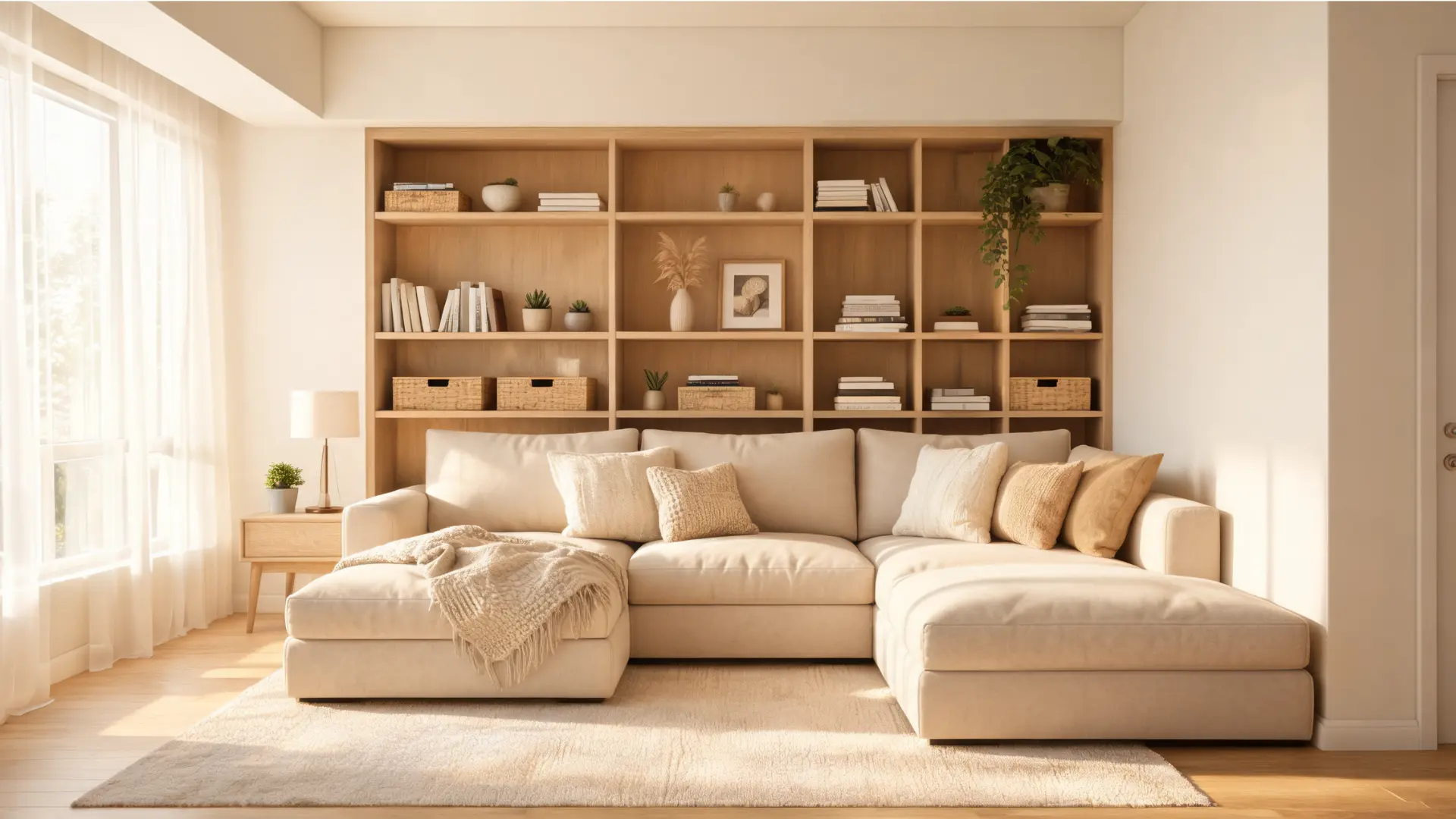


Ever watch a gorgeous showroom table fall apart in less than two years? It’s incredibly frustrating to spend hard-earned money on pieces that look solid but secretly rely on cheap materials.
When you are hunting for the most durable furniture material, you aren’t just buying a look, you are investing in structural survival. Navigating the marketing jargon to find what actually lasts can feel like guesswork.
I have laid out the ultimate breakdown of structural materials, high-traffic fabrics, and outdoor options.
By the end of this guide, you will know exactly how to spot generational quality, decode rub counts, and avoid the beautiful fakes that compromise your home.
What is the Most Durable Furniture Material?
A piece can look solid in the showroom and fall apart in 18 months. I’ve seen it happen with oak-finish particleboard dining tables, bonded leather sofas, and powder-coated steel outdoor chairs that weren’t actually powder-coated, just painted.
The most durable furniture material depends entirely on what the piece is, where it lives, and how hard it gets used. There is no single answer that works for every room.
What there is: a clear hierarchy of materials that hold up versus ones that don’t, and a set of construction details that separate long-lasting furniture from furniture that just looks like it should last.
Most Durable Furniture Materials: Quick Comparison
Different materials serve different functions. A dining table, a sofa frame, an outdoor bench, and a dresser all face different types of stress, weight, friction, moisture, UV exposure, and mechanical impact. This table covers the materials that consistently perform across those categories.
| Material | Janka / Hardness | Best Use | Cost Range | Durability |
| Hickory (hardwood) | 1,820 lbf | Frames, tables, chairs | $6–$10/board ft | Very High |
| Hard maple (hardwood) | 1,450 lbf | Dining tables, dressers | $5–$9/board ft | Very High |
| White oak (hardwood) | 1,360 lbf | Tables, bed frames, cabinets | $6–$12/board ft | Very High |
| Teak (hardwood) | 1,155 lbf | Outdoor furniture | $20–$35/board ft | Very High (outdoor) |
| Steel (powder-coated) | N/A — tensile | Frames, patio, shelving | Mid–high (finished piece) | Very High |
| Aluminum | N/A — tensile | Outdoor chairs, frames | Mid | High (rust-resistant) |
| Granite / Quartz | N/A — Mohs 6–7 | Tabletops | High | Very High |
| Performance fabric (Crypton) | N/A — rub count | Sofas, dining chairs | Mid–high | High |
| Full-grain leather | N/A — rub count | Sofas, chairs | High | Very High (maintained) |
| HDPE | N/A — plastic | Outdoor benches, chairs | Mid | High |
| High-pressure laminate | N/A — surface | Desks, kids’ furniture | Low–mid | Medium |
| Low-grade particleboard | Very low | Budget decorative only | Low | Low |
Hardwood Janka ratings from the Wood Database. Janka hardness measures the force required to embed a steel ball halfway into the wood, higher numbers mean harder wood and better resistance to denting and wear.
Most Durable Materials for Frames, Tables, and Storage
1. Solid Hardwood
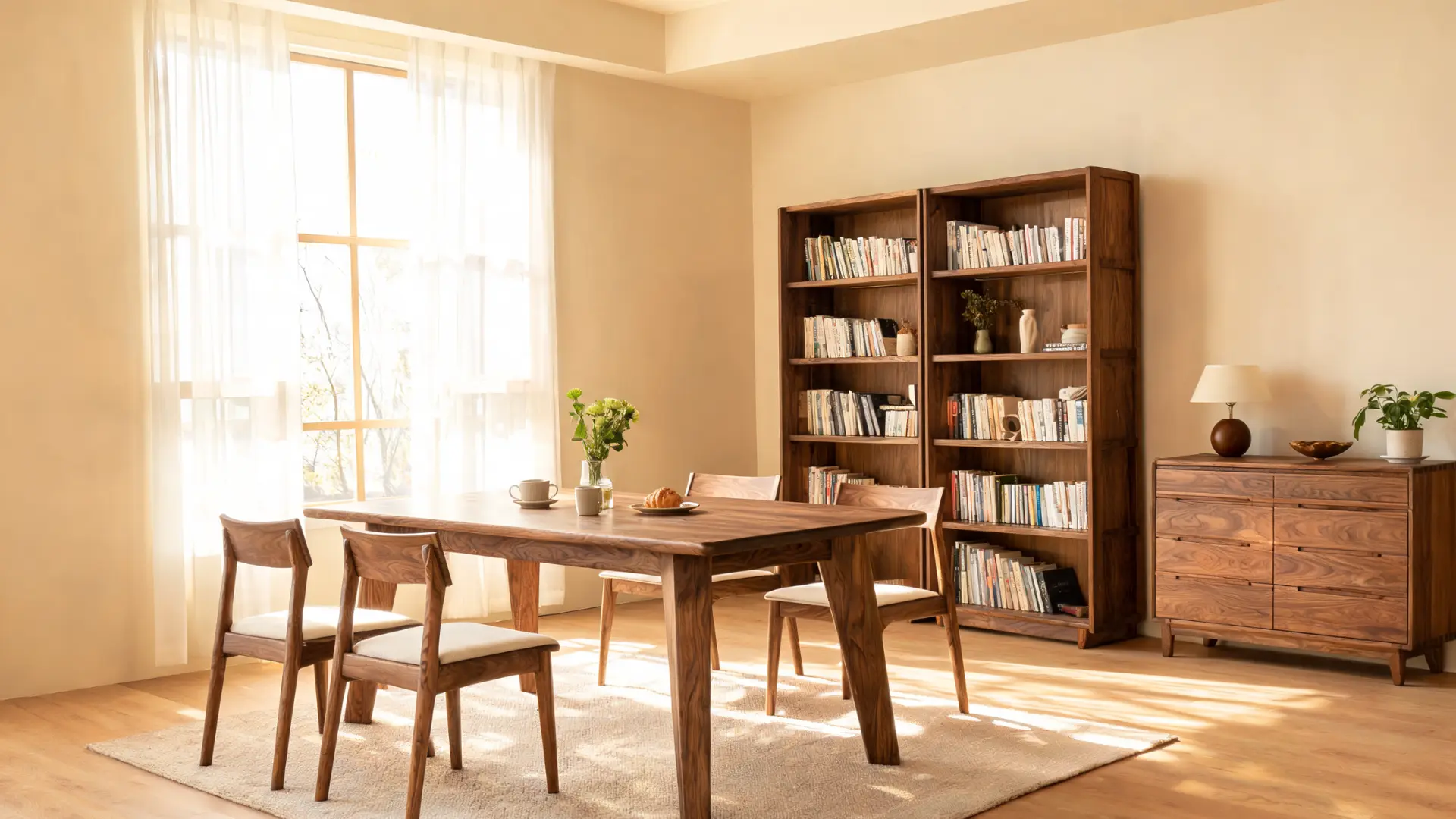
Solid hardwood is the benchmark for frame durability. What makes it different from engineered alternatives isn’t appearance, it’s how the material responds to stress over time. Kiln-dried hardwood resists warping and cracking because the moisture has been removed before the wood was milled.
A dining table frame made from kiln-dried white oak (1,360 lbf Janka) will absorb daily use, minor impacts, and seasonal humidity changes without losing structural integrity. The same table built from undried or low-grade softwood will start showing movement within a few years.
Species matter. Oak, maple, hickory, walnut, and ash all outperform pine, poplar, or rubber wood in a structural role. Teak sits in its own category for outdoor applications because of its natural oil content, which makes it resistant to moisture and insects without annual treatment.
Durability: Very high when kiln-dried and properly finished.
Best for: Dining tables, bed frames, bookshelves, dressers, sofa frames, cabinets.
Worst for: Perpetually damp spaces, solid wood moves with moisture, and a basement or bathroom will eventually work against it regardless of finish quality.
2. Metal (Steel and Aluminum)
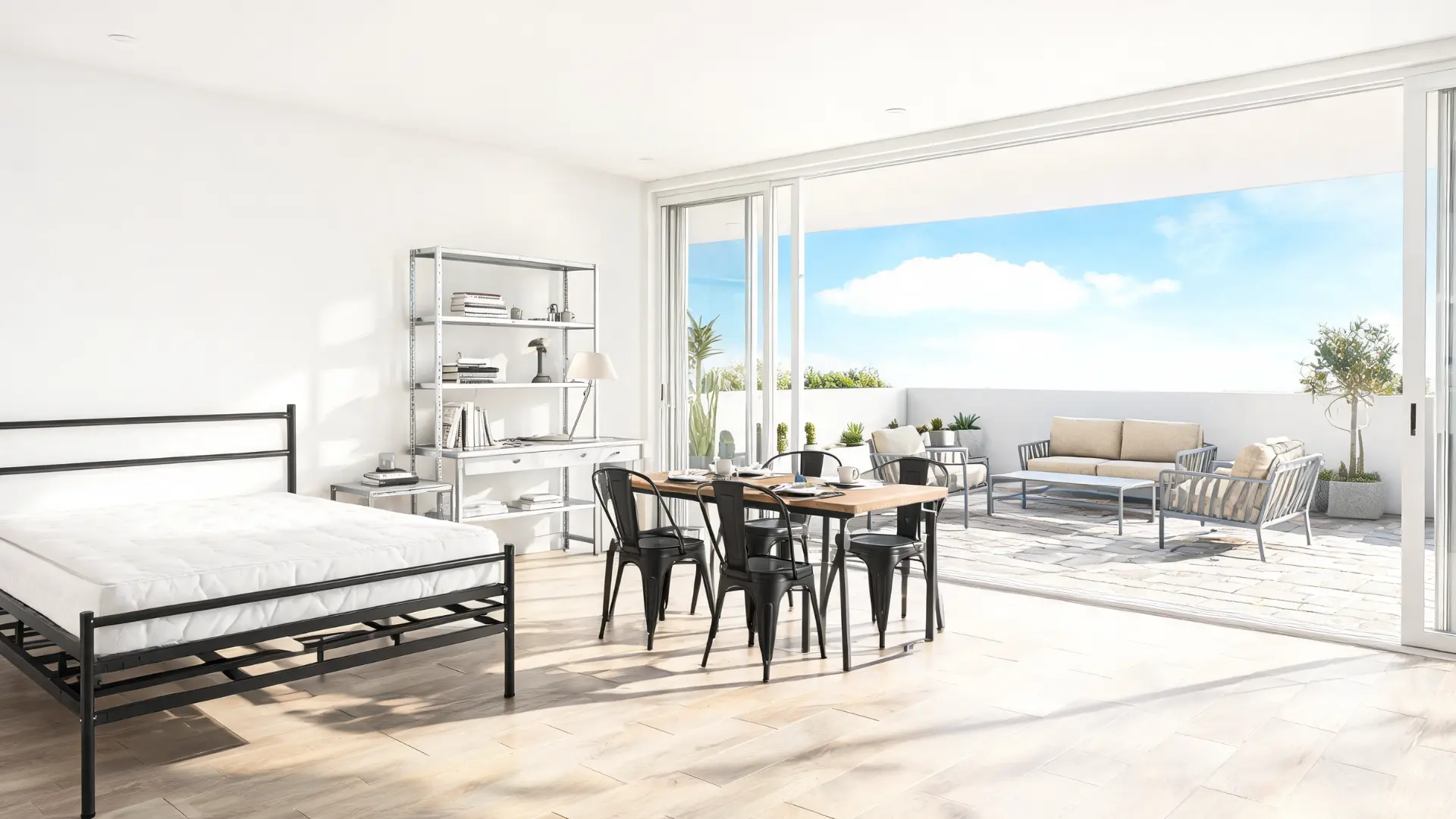
Steel is one of the strongest structural materials available for furniture, and it’s used in commercial seating and shelving specifically because it doesn’t flex under sustained load the way wood eventually can.
The catch is finish quality. Bare steel rusts. Powder coating, where electrostatically charged pigment particles are baked onto the surface, creates a protective layer that resists chipping and corrosion. Ask specifically whether outdoor metal furniture uses powder-coated steel or just painted steel. Painted steel looks identical and fails within two to three seasons in a wet climate.
Aluminum is the right choice where rust resistance is the priority. It weighs about a third as much as steel, doesn’t corrode, and holds up well in coastal and high-humidity environments without any protective coating. The trade-off is that aluminum dents more easily than steel under impact.
Durability: Very high for structural use; powder-coated steel and aluminum outperform bare metal significantly outdoors.
Best for: Bed frames, desk frames, shelving, patio chairs, dining chair bases.
Worst for: Coastal outdoor settings if untreated, saltwater accelerates corrosion even on coated steel.
3. Stone (Granite and Quartz)
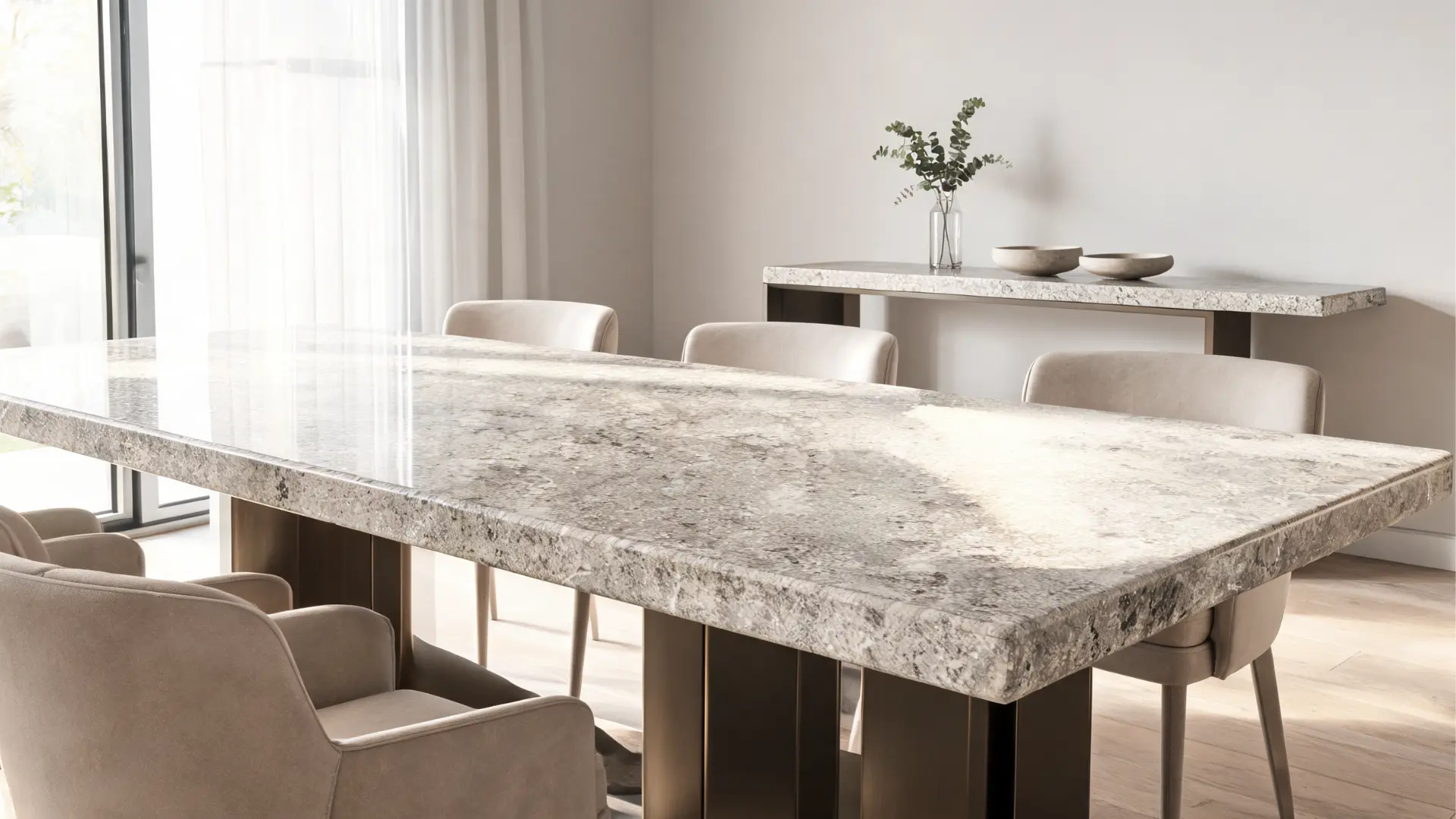
For tabletops, granite and quartz are about as close to indestructible as a surface material gets. Granite rates 6–7 on the Mohs hardness scale, harder than most metals. Quartz tabletops are engineered from about 90% crushed quartz bound with resin, which makes them slightly more consistent and less porous than natural stone.
Marble belongs in a separate category: it scores 3–4 on the Mohs scale, which means it scratches easily and etches permanently when exposed to acids, wine, citrus, vinegar, even sealed.
The practical limitation of stone is weight and brittleness at the edges. A dropped pot or a sharp corner impact can chip granite, and replacing a stone tabletop section isn’t possible the way refinishing wood is.
Durability: Very high for scratch and heat resistance; edge vulnerability is the weak point.
Best for: Dining tables, coffee tables, console tables where the surface takes regular use.
Worst for: Homes where the furniture gets moved frequently, stone tabletops are heavy and the edges don’t tolerate rough handling.
Most Durable Upholstery Materials for Sofas and Seating
Frame durability and upholstery durability are separate questions. A sofa can have an excellent kiln-dried hardwood frame and fail in three years because the fabric couldn’t handle daily use. Upholstery wear is measured differently, look for rub count ratings, which measure how many double rubs (back-and-forth passes) the fabric survives before breaking down.
For a family sofa in daily use, anything below 15,000 double rubs is a risk. 30,000 and above is where the fabric starts to become genuinely long-lasting.
4. Performance Fabric (Including Crypton)
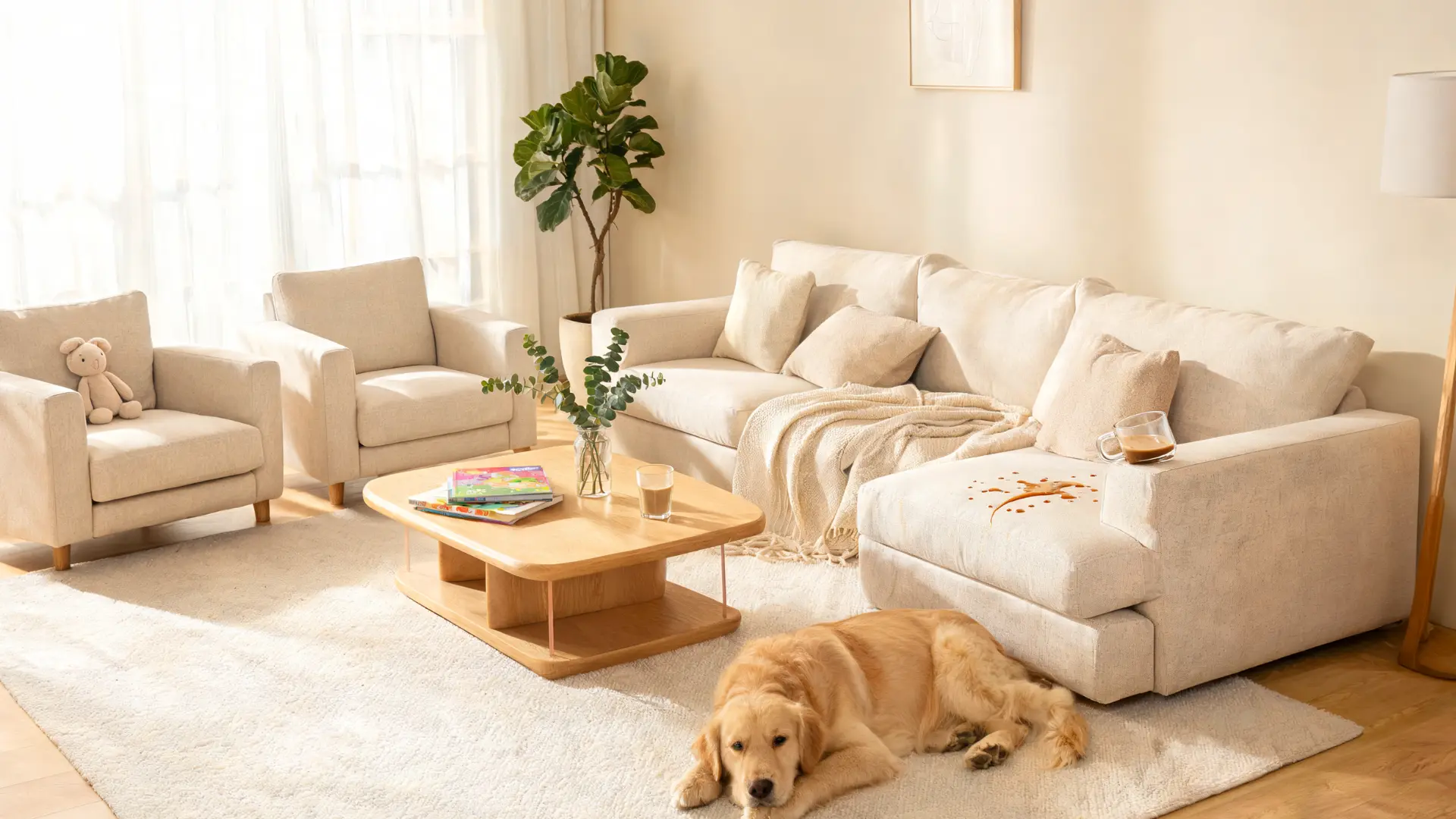
Performance fabric is the category term for synthetic or treated upholstery fabrics engineered to resist stains, fading, and friction. The key difference from standard fabric is that the fiber itself, not a surface treatment, provides the resistance.
Crypton is the best-known brand in this category. It builds moisture and stain barriers directly into the fiber structure, which means the protection doesn’t wash out over time the way topical spray-on treatments do. Rub counts for high-quality performance fabric commonly land above 50,000 double rubs.
For homes with kids or pets, performance fabric is usually the most practical choice for most durable furniture material when upholstery is the primary concern. It handles spills, odors, and pet hair better than almost anything else at a comparable price point.
5. Microfiber
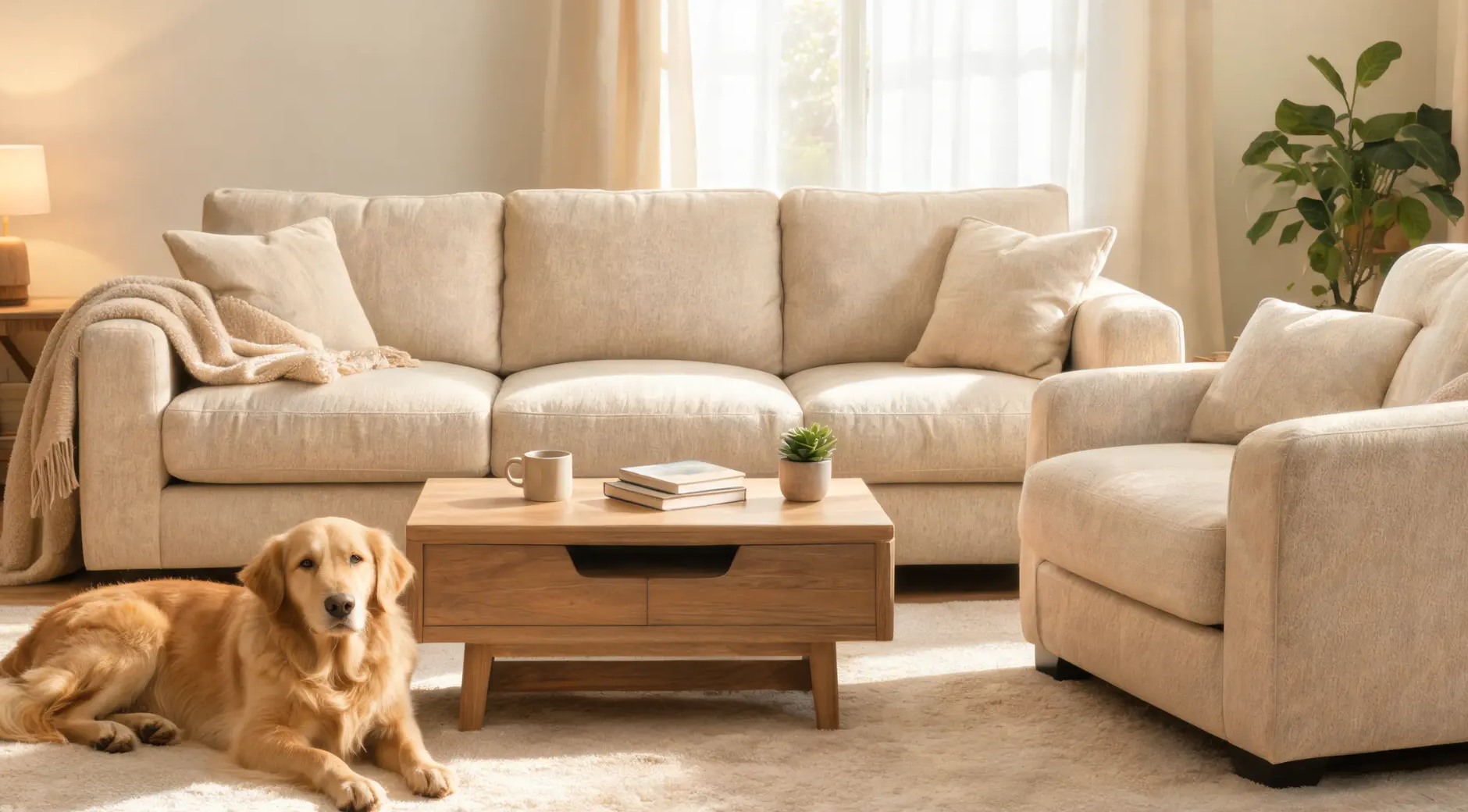
Microfiber is a tightly woven synthetic fabric, typically polyester or nylon, where the fibers are split to diameters smaller than a human hair. That density is what gives it durability.
It resists snagging, repels pet hair reasonably well, and holds up to daily friction better than loosely woven naturals like cotton or linen blends. It’s the most budget-friendly durable upholstery option available. The practical downside is static and dust attraction, which means regular vacuuming is necessary to keep it clean.
Durability: High for everyday use; performance drops if the fabric isn’t cleaned regularly.
Best for: Family sofas, recliners, apartment seating, homes with pets.
Worst for: Anyone sensitive to static or dust, microfiber is a magnet for both.
6. Full-Grain and Top-Grain Leather
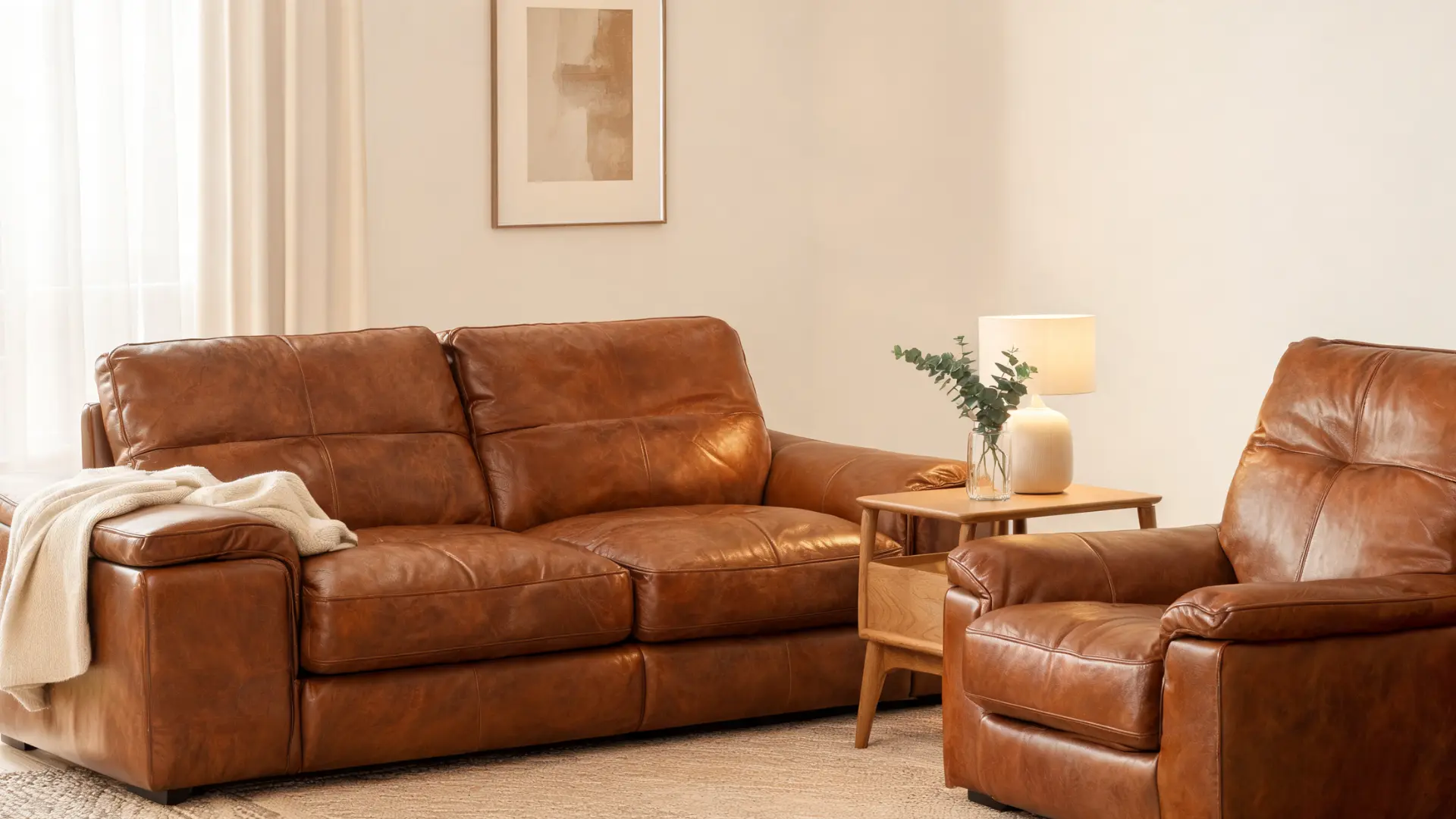
Full-grain leather is the outer layer of the hide with the grain intact, the most structurally dense part of the skin. It develops a patina over years of use rather than degrading, which is why heirloom-quality sofas and chairs are almost always full-grain.
Top-grain leather has been lightly sanded to remove imperfections, which makes it more uniform in appearance but slightly less durable than full-grain over decades of use. Both are significantly more durable than bonded leather, which is a composite of leather scraps and synthetic binders, and one of the fastest-failing upholstery materials available.
Leather requires conditioning every 6–12 months in dry climates. Without it, the surface dries and eventually cracks. Keep it out of direct sunlight and away from heating vents.
Durability: Very high for full-grain and top-grain, maintained correctly. Bonded leather typically fails in 3–5 years.
Best for: Sofas, recliners, office chairs, formal seating, any piece you expect to own for 15+ years.
Worst for: Homes with cats, or rooms with heavy direct sun exposure.
7. Vinyl and PU Fabric
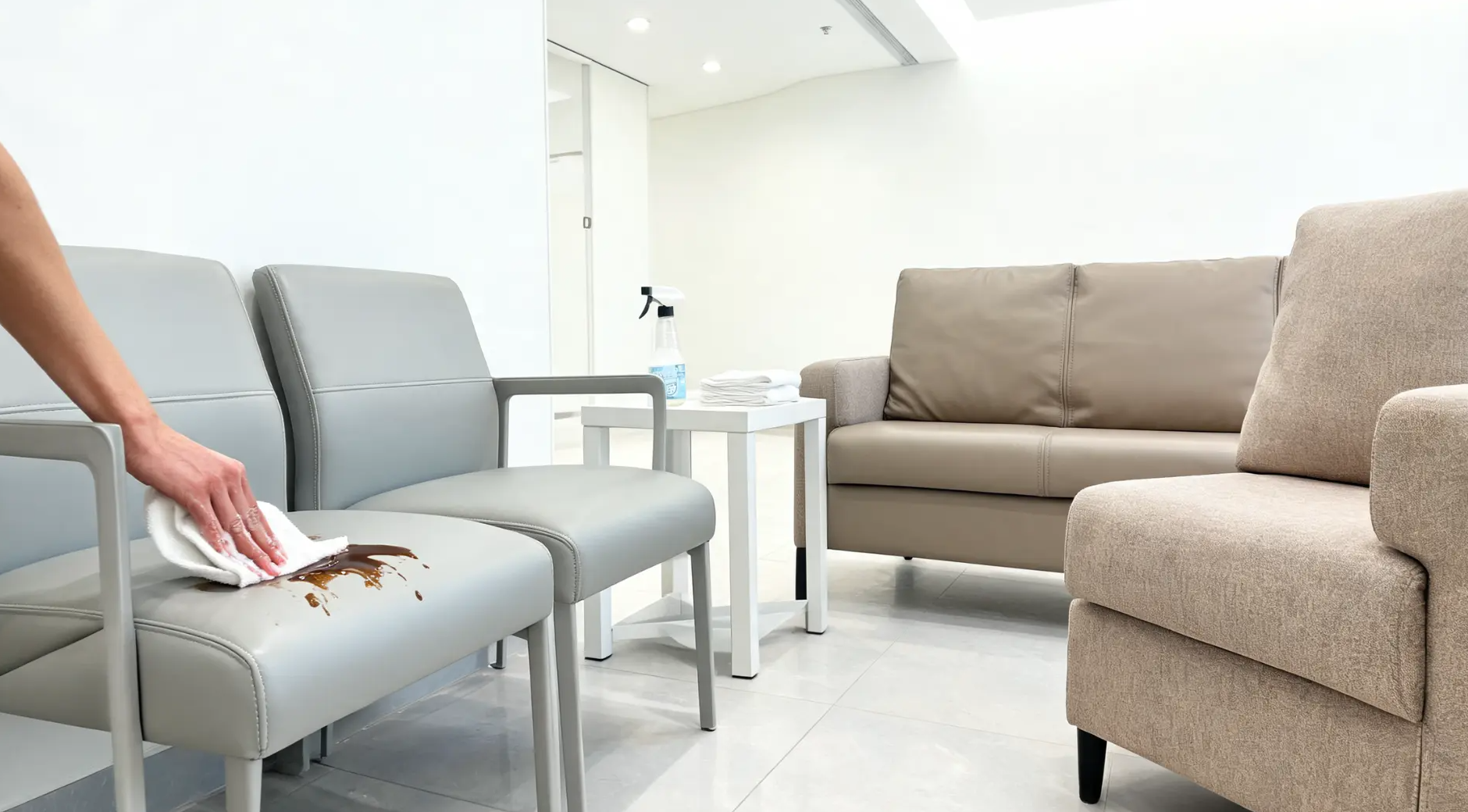
Vinyl and polyurethane fabrics are the most moisture-resistant upholstery options available. Wipe them with a damp cloth and they’re clean. That’s the primary reason they appear in healthcare, hospitality, and rental furniture.
Vinyl is tougher but stiff and non-breathable in warm temperatures. PU fabric is softer and more flexible, with an appearance closer to leather. Neither will develop the way genuine leather does over time, and both can crack in cold temperatures if they’re not kept supple.
Durability: High for moisture resistance and frequent cleaning; long-term durability in residential use is moderate.
Best for: Dining chairs, rental properties, commercial seating, kids’ furniture.
Worst for: Hot climates or sun-exposed rooms, both materials can become sticky and degrade with sustained heat exposure.
Most Durable Materials for Outdoor Furniture
Outdoor materials face a different set of failure modes than indoor ones: UV degradation, moisture cycling, freeze-thaw stress, and in coastal areas, salt corrosion. A material that lasts 20 years indoors might fail in three seasons outdoors if it wasn’t designed for weather exposure.
8. Teak, Aluminum, and HDPE
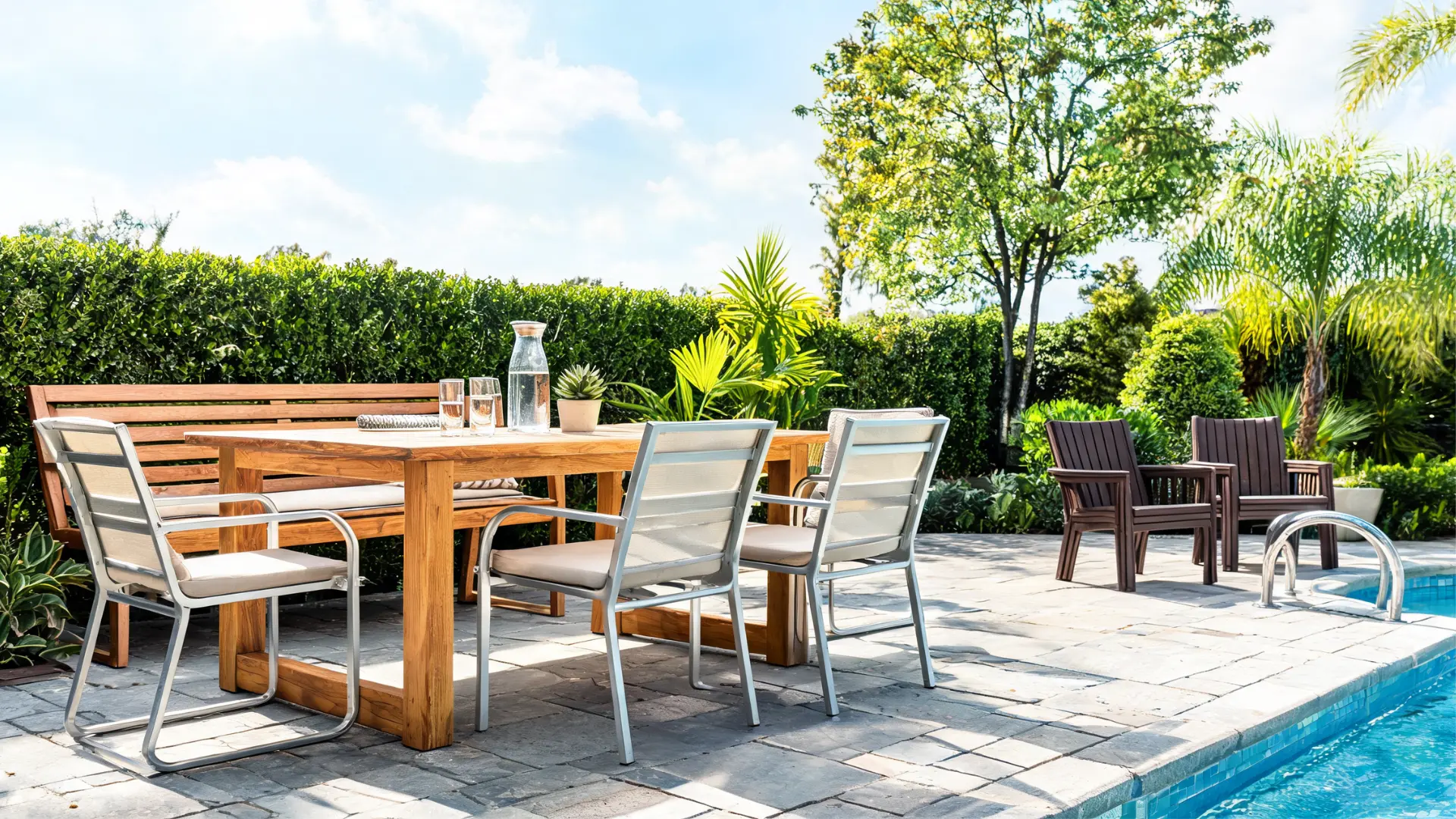
Teak’s durability outdoors comes from its natural silica and oil content, which make it resistant to moisture absorption and insect damage without requiring annual sealing. It weathers to a silver-grey if left untreated, which some people prefer, and can be restored with teak oil if you want to maintain the original color. Its Janka rating of 1,155 lbf also means it resists surface denting from outdoor use.
For the best outdoor furniture made without wood, aluminum and HDPE are the two materials I’d use. Aluminum doesn’t rust, is light enough to move easily, and holds a powder-coat finish well. HDPE (high-density polyethylene) is made from recycled plastic, it’s dense, heavy, UV-stable, and doesn’t crack or splinter even after years of freeze-thaw cycles.
It looks like painted wood from a distance. It requires almost no maintenance. The only knock against HDPE is that it can warp under sustained direct heat, avoid placing it directly against dark surfaces in hot climates.
Durability: Very high for all three materials in outdoor conditions.
Best for: Patio dining sets, benches, poolside seating, balcony furniture.
Worst for: Anyone who wants lightweight portability, teak and HDPE are both heavy.
Materials That Look Durable but Wear Out Faster
Some materials fail in specific, predictable ways. Knowing the failure mode ahead of time is more useful than a general “avoid this” warning.
1. Bonded Leather
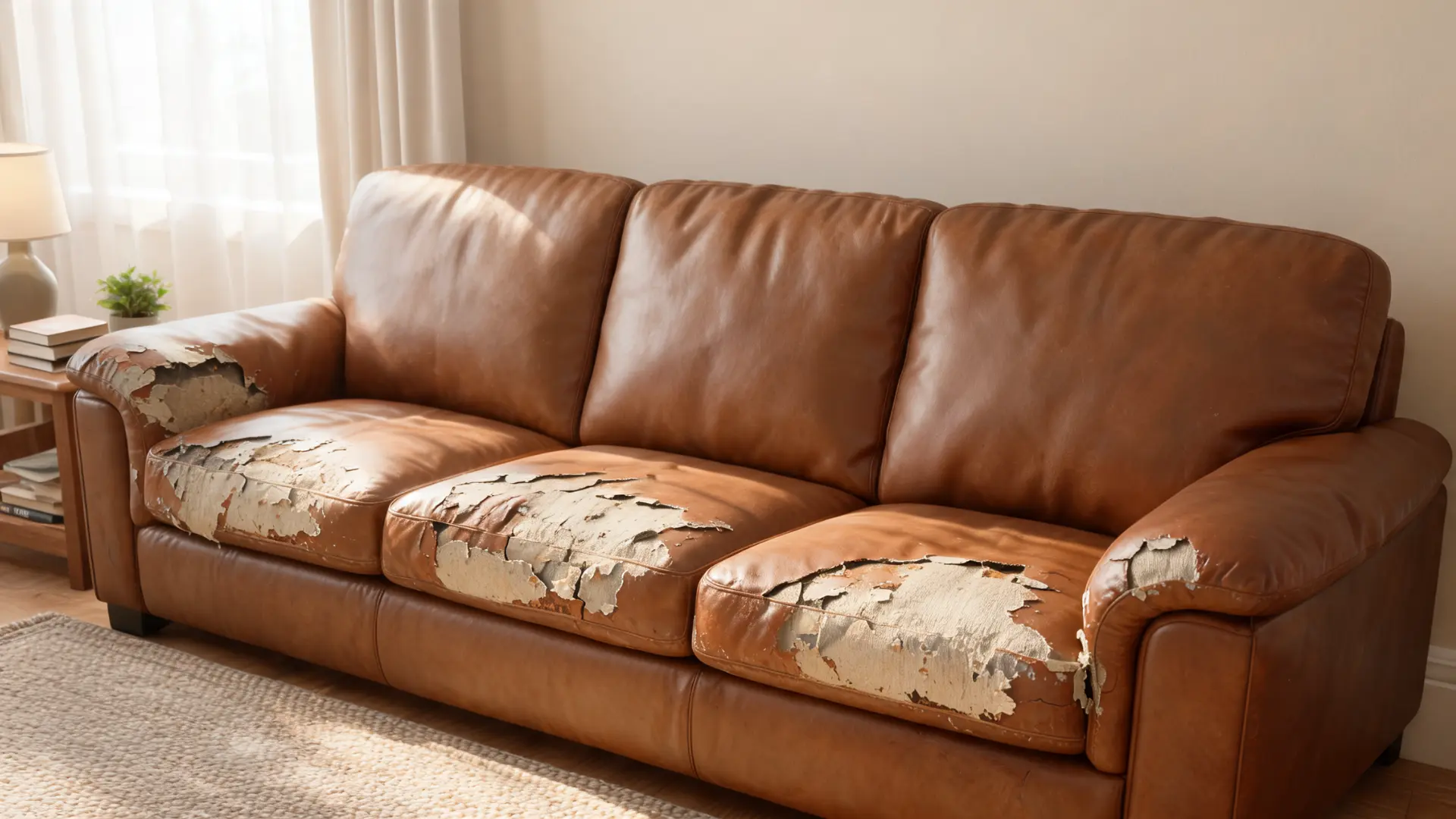
Bonded leather is roughly 20% leather fiber mixed with polyurethane binders. The surface film peels away from the backing in sheets, usually starting at the seat edges and armrests, and there’s no repair path. Once it starts peeling, the piece is finished. The typical lifespan for a bonded leather sofa in daily use is three to five years.
2. Low-Grade Particleboard
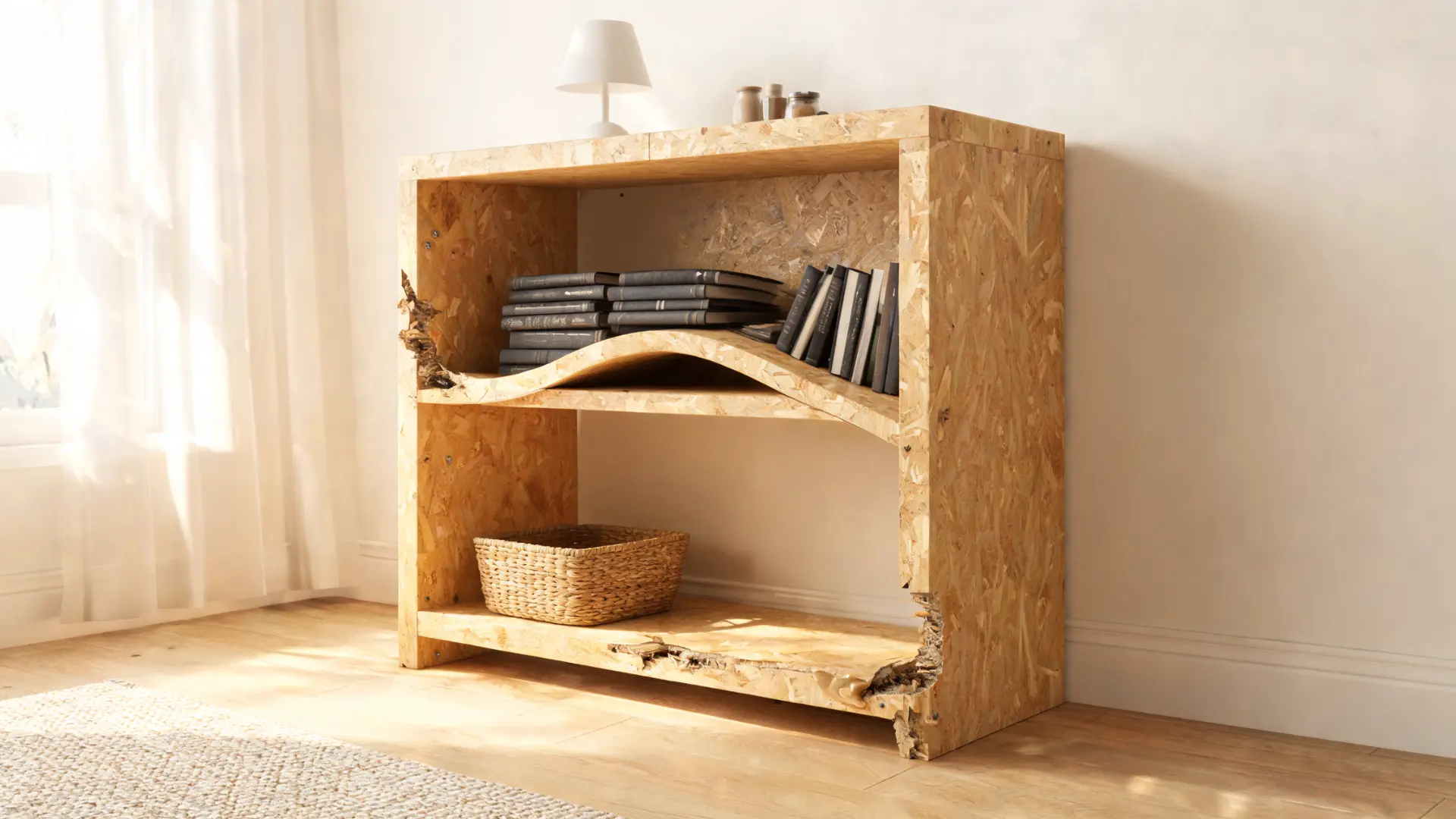
Particleboard is compressed wood chips held together with resin. The problem isn’t the material itself, high-density particleboard has legitimate uses, it’s that low-grade particleboard swells when exposed to moisture, strips out around screw holes under repeated loading, and sags under sustained weight.
A bookshelf built from it will lose its shape within a few years. Avoid it for any piece that carries meaningful load: bed frames, bookshelves, dining tables, cabinets.
3. Cheap Plastic and Untreated Metal (Outdoors)
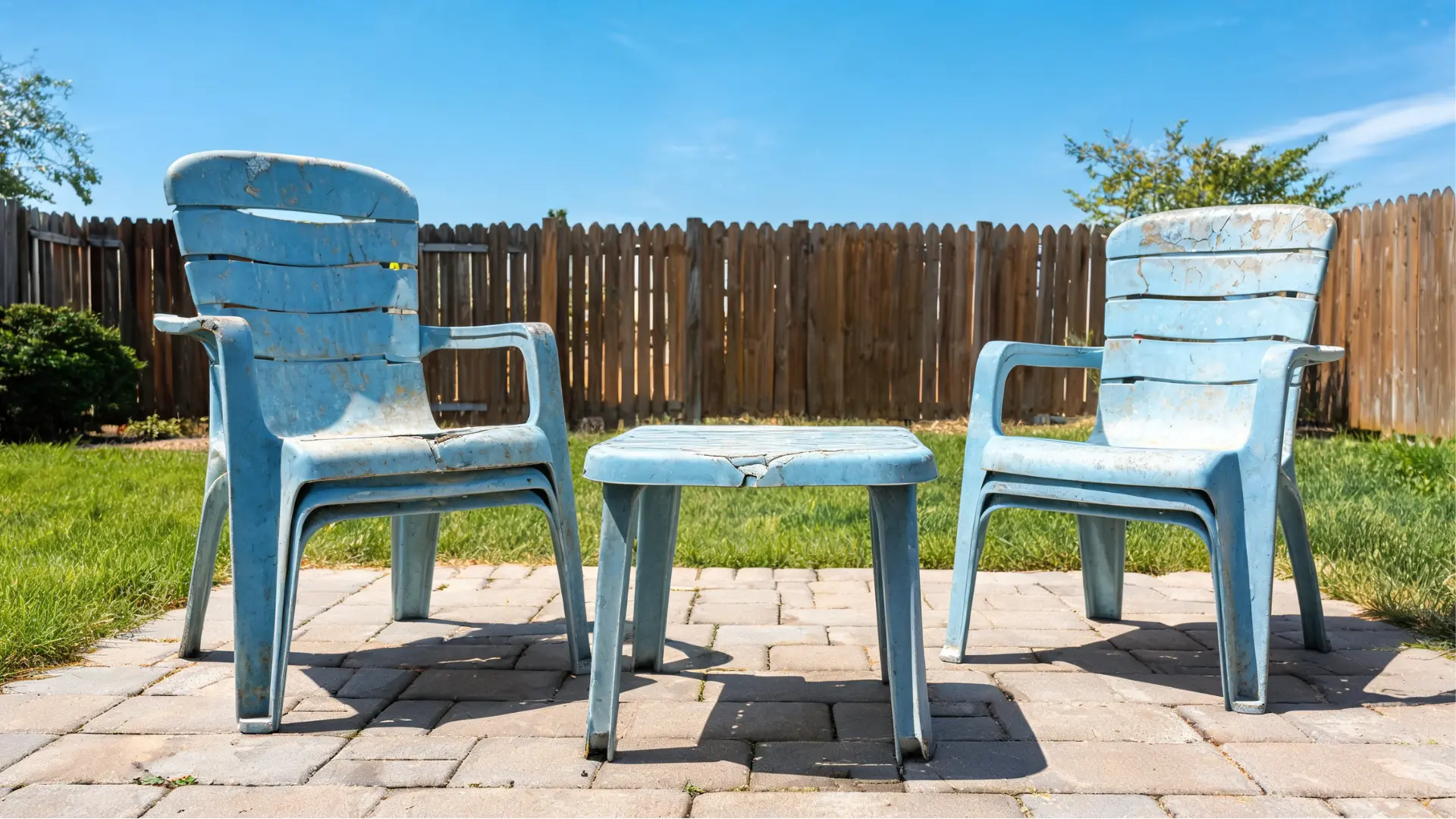
Polypropylene patio furniture, the inexpensive stackable kind, becomes brittle in UV exposure within two to three summers, depending on climate. The plastic doesn’t crack suddenly; it loses flexibility gradually until it snaps under normal use.
Untreated metal follows a similar arc through rust: surface oxidation, then structural corrosion at joints and welds, then failure. For outdoor use, neither material is worth buying if you’re expecting more than a couple of seasons from it.
4. Loose-Weave Fabrics, Silk, and Untreated Linen
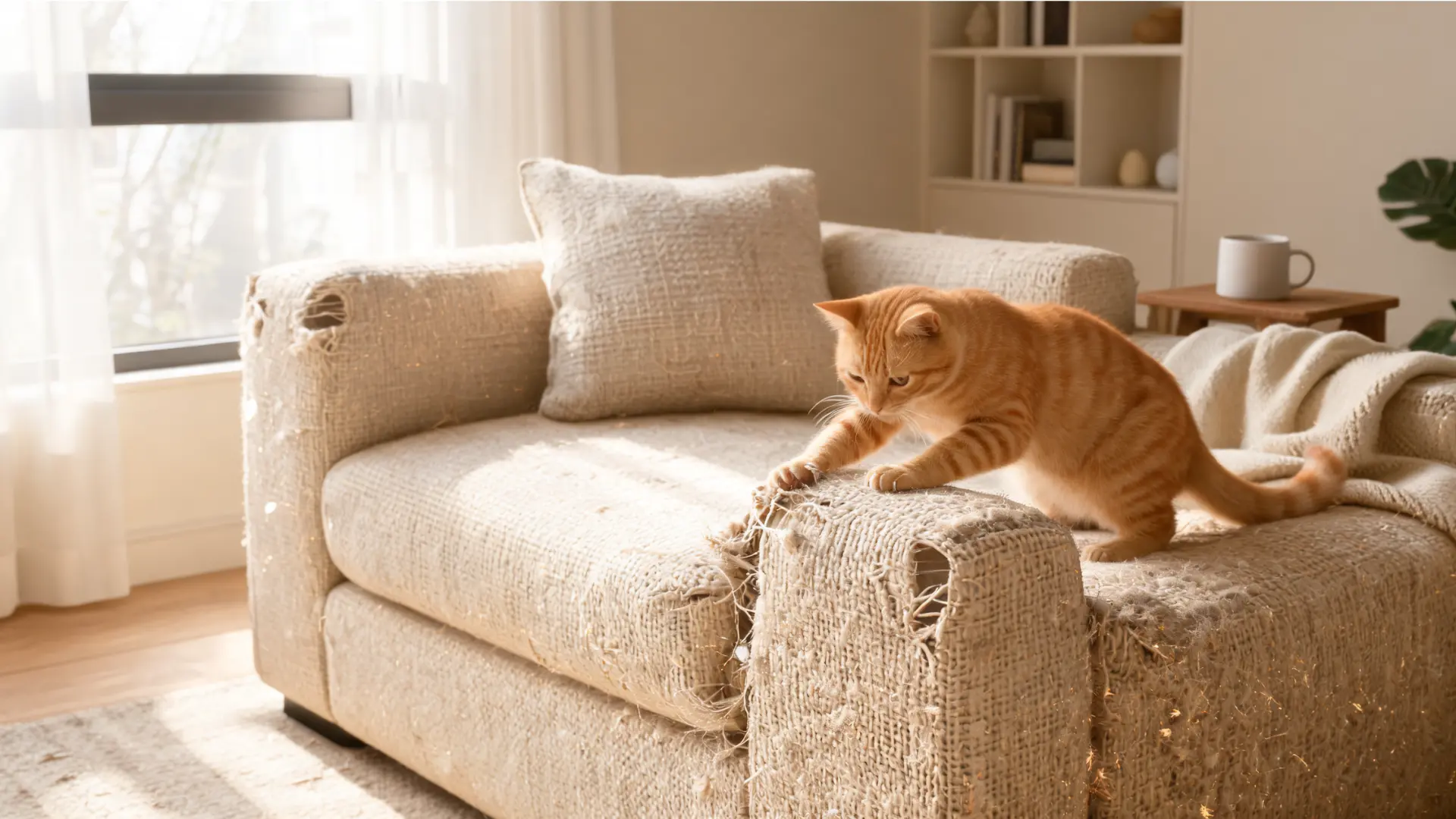
Loose-weave fabrics snag under pet claws, pill from daily friction, and trap hair in the gaps between threads. Silk looks exceptional and fails quickly, it can’t handle sunlight, moisture, or consistent contact pressure, making it unsuitable for any furniture that actually gets sat on.
Untreated linen stains easily and wrinkles permanently. These materials work in low-traffic, decorative contexts. For a sofa a family uses every day, they’re wrong choices from the start.
What to Check Before Buying Any Piece of Furniture
Material choice is only part of the durability equation. Construction quality is the other half, and it’s easier to spot than most people think. The following checks apply regardless of which material you’re evaluating.
- Frame joinery: Look for screws combined with corner blocks, or traditional joinery like mortise-and-tenon and dovetail. Staples and glue alone indicate a frame built to a price, not a lifespan.
- Frame material: Ask specifically, kiln-dried hardwood, steel, or furniture-grade plywood are the acceptable answers. “Solid wood” can legally refer to softwoods or engineered composites depending on the retailer.
- Upholstery rub count: Request this for any sofa or chair. 15,000 double rubs is minimum for light use; 30,000+ for daily family use; 50,000+ for high-traffic or commercial applications.
- Fabric weave tightness: Run your hand across the surface. If you can see individual threads clearly, it will snag. Tight weaves resist pet claws and daily friction far better.
- Cushion density: High-resilience (HR) foam, typically rated at 1.8 lb/cubic ft density or above — holds its shape significantly longer than standard foam. Avoid “dacron wrapped” claims without checking what’s underneath.
- Finish quality on wood: Multiple thin coats of finish protect better than one thick application. Run your hand along underside edges — raw, unfinished undersides suggest the piece was built to look good from the front only.
- Outdoor finish type: For metal outdoor furniture, confirm powder coating rather than spray paint. For wood, confirm the species and whether it’s naturally weather-resistant or requires regular sealing.
How to Make Durable Furniture Last Longer
Even the most durable furniture material degrades faster when it’s used against its grain, literally or figuratively. Keep heavy indoor pieces on level flooring so joints don’t torque under uneven load.
Avoid dragging furniture across hard floors; the stress concentrates at the leg joints, which are usually the first thing to fail. Rotate sofa cushions every few months so compression distributes evenly rather than compressing in one spot permanently.
For wood furniture, keep pieces away from heating vents and direct sunlight. Both dry out the wood and the finish faster than normal use does.
For leather, conditioning once or twice a year is the single most effective maintenance habit, a quality hide cream applied every six months prevents the cracking that makes leather sofas look old before their time. For outdoor furniture, covering it during off-season or during extended storms extends its useful life meaningfully, even with teak or HDPE.
Furniture Material Maintenance by Type
- Vacuum upholstered pieces weekly to prevent debris from embedding in the weave and acting as abrasive material against the fiber.
- Blot liquid spills immediately, don’t rub. Rubbing forces liquid deeper into upholstery fibers.
- Use coasters and trivets on wood, stone, and laminate surfaces. Heat rings in wood finishes and etching on stone from acidic liquids are both permanent.
- Condition leather every 6–12 months, more frequently in dry climates or air-conditioned spaces.
- Wipe metal furniture dry after rain or heavy humidity, even powder-coated steel benefits from drying to avoid water spots and early surface oxidation.
- Clean outdoor furniture at the start and end of each season to remove pollen, mildew, and salt buildup before it works into joints and surfaces.
- Check the cleaning code on upholstered pieces before applying any product: W (water-based), S (solvent-based), WS (both), or X (vacuum only).
Is the Price Premium for Durable Materials Worth It?
Almost always, yes, when the alternative is replacing the piece. A bonded leather sofa at $600 that fails in four years costs more over a decade than a $1,800 full-grain leather piece that lasts 20 years with basic care. The same math applies to particleboard dining tables versus solid oak, and to cheap plastic outdoor chairs versus HDPE.
That said, price alone doesn’t guarantee durability. A high price can reflect design, brand, or fabric choice rather than construction quality. A $3,000 sofa with a softwood frame and low-rub fabric isn’t better than a $1,200 sofa with kiln-dried hardwood and 35,000-rub performance fabric.
Check the actual specifications, not the marketing. Contract-grade furniture, pieces built to commercial standards, is tested to specific durability thresholds that most retail furniture doesn’t have to meet, and it’s worth seeking out for high-use pieces.
Frequently Asked Questions
These are the questions I hear most from people who’ve already touched the furniture in the showroom and are trying to work out whether what they’re looking at will actually hold up.
What is the strongest material for a sofa frame?
Kiln-dried hardwood, specifically oak, maple, or hickory, is the strongest frame material for sofas. Kiln-drying removes moisture before milling, which prevents warping and cracking over time. Steel frames are comparably strong but less common in residential sofas.
What is the most durable fabric for a couch?
Performance fabric with a rub count of 30,000 or above, including Crypton, is the most durable upholstery choice for a couch in daily use. Full-grain leather is equally durable and easier to wipe clean, but requires conditioning to prevent cracking.
Which furniture material is best for homes with pets?
Microfiber, Crypton, and full-grain leather all handle pet use well. Microfiber and Crypton resist pet hair and stains; leather wipes clean easily. Avoid any loose-weave fabric — cat and dog claws pull threads and the damage compounds quickly.
What wood is most durable for furniture?
Hickory (1,820 lbf Janka), hard maple (1,450 lbf), and white oak (1,360 lbf) are the three hardest domestic hardwoods commonly used in furniture. For outdoor furniture, teak is in a separate category due to its natural oil content and weather resistance.
What is the most durable material for outdoor furniture?
Teak, aluminum, and HDPE are the three outdoor materials that consistently hold up across multiple seasons. Teak resists moisture and insects naturally; aluminum doesn’t rust; HDPE resists UV degradation and freeze-thaw cracking better than any other plastic.
Is laminate furniture worth buying?
High-pressure laminate is legitimate for desks, kids’ tables, and low-cost dining furniture where the surface takes direct wear. Its weakness is edges and seams — once moisture gets in through damaged edging, the substrate swells and the piece is done. It’s not refinishable.
Why does bonded leather peel?
Bonded leather is a laminate of leather scraps and polyurethane binder. The top film delaminates from the base layer under the mechanical stress of daily sitting, particularly at seat edges and armrests. There’s no repair for delamination; the piece fails completely within a few years.
Final Verdict
Investing in high-quality items saves you from the cycle of replacing broken items every few years.
Finding the most durable furniture material simply means matching the specific item to the environment and daily stress it will face.
If you choose kiln-dried white oak for your dining room, high-performance Crypton fabric for a busy family living room, or rustproof aluminum for your backyard patio, checking structural specs beats relying on showroom looks every time.
Now that you know how to look for high rub counts, solid frame joinery, and natural wood hardness, you can shop with complete confidence. What specific piece of furniture are you currently looking to upgrade for your home.
Sources
The Wood Database, “Janka Hardness Ratings — North American Species.” wooddatabase.com
National Hardwood Lumber Association (NHLA), “Grading Rules for Lumber.” nhla.com
The Spruce, “How to Identify Quality Sofa Construction.” thespruce.com