

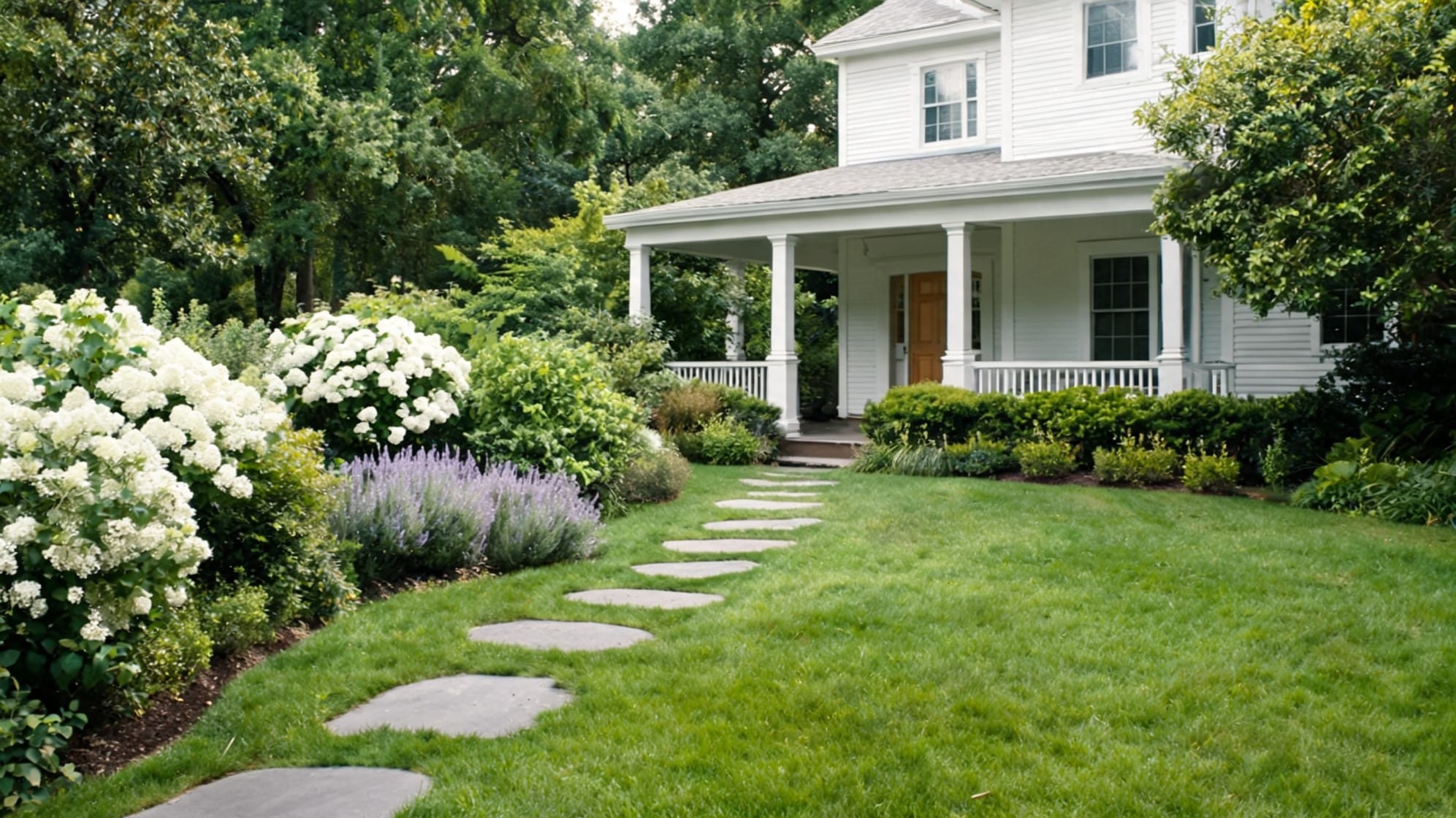


Does your front yard look fine for two days, then need work again?
I get why that feels tiring. Grass grows fast, weeds show up, and some plants seem to need attention every time you walk outside. That is whylow-maintenance front yard landscaping can make a big difference, and why getting the approach right matters more than just picking pretty plants.
The goal is not to make your yard plain. It is to make it easier to care for, with smart choices that still look clean from the street.
I’ll walk you through simple ideas such as mulch beds, native plants, rock gardens, ground covers, drip irrigation, and lawn alternatives. You’ll also see how to choose the right materials, avoid common mistakes, and match ideas to your yard type.
By the end, you’ll have practical ways to cut mowing, watering, and weeding without giving up a front yard you feel good about.
Simple Front Yard Layout Formulas
A low-maintenance front yard is easier to plan when you start with a simple layout. Pick one clear style, use fewer plant types, and repeat the same materials so the yard looks clean without needing constant work.
- Modern front yard: Use a gravel bed, a concrete or stone path, 3 evergreen shrubs, 2 ornamental grasses, 1 small tree, and drip irrigation.
- Cottage front yard: Use mulch beds, perennials, compact flowering shrubs, a stepping stone path, and one trellis near the entry.
- Drought-tolerant front yard: Use a gravel or rock base, succulents or native plants, boulders, drip irrigation, and no traditional lawn.
- Family-friendly front yard: Use a small lawn or lawn alternative, mulch beds along the edges, a durable path, low-growing shrubs, and no thorny plants near walkways.
These formulas keep the design simple and easy to manage. You can adjust the plants and materials based on your climate, budget, and the amount of yard work you want to avoid.
Basic Maintenance Plan
Keep the front yard care on a simple schedule, so you do not have to think about it every weekend. Even a low-maintenance yard needs a little attention, but the work becomes much easier when you split it into monthly, seasonal, and yearly tasks.
| Schedule | What to do |
|---|---|
| Monthly | Pull small weeds before they spread, check drip lines, sweep gravel or paths, and trim plants blocking walkways. |
| Seasonally | Refresh mulch where it looks thin, cut back ornamental grasses, lightly prune shrubs, and replace dead plants with better-suited options. |
| Yearly | Review plant spacing, add compost if needed, check edging, and adjust the irrigation schedule for the season. |
The goal is not to avoid yard care completely. It is to keep the work small, steady, and simple, so your front yard stays clean without taking over your free time.
Low-Maintenance Front Yard Landscaping Ideas
I’ve found that the easiest front lawn ideas usually start with one simple change: less grass and fewer fussy plants. You don’t need to redo the whole yard at once. Start with one area, make it easier to care for, then build from there.
1. Trees with Mulch Beds
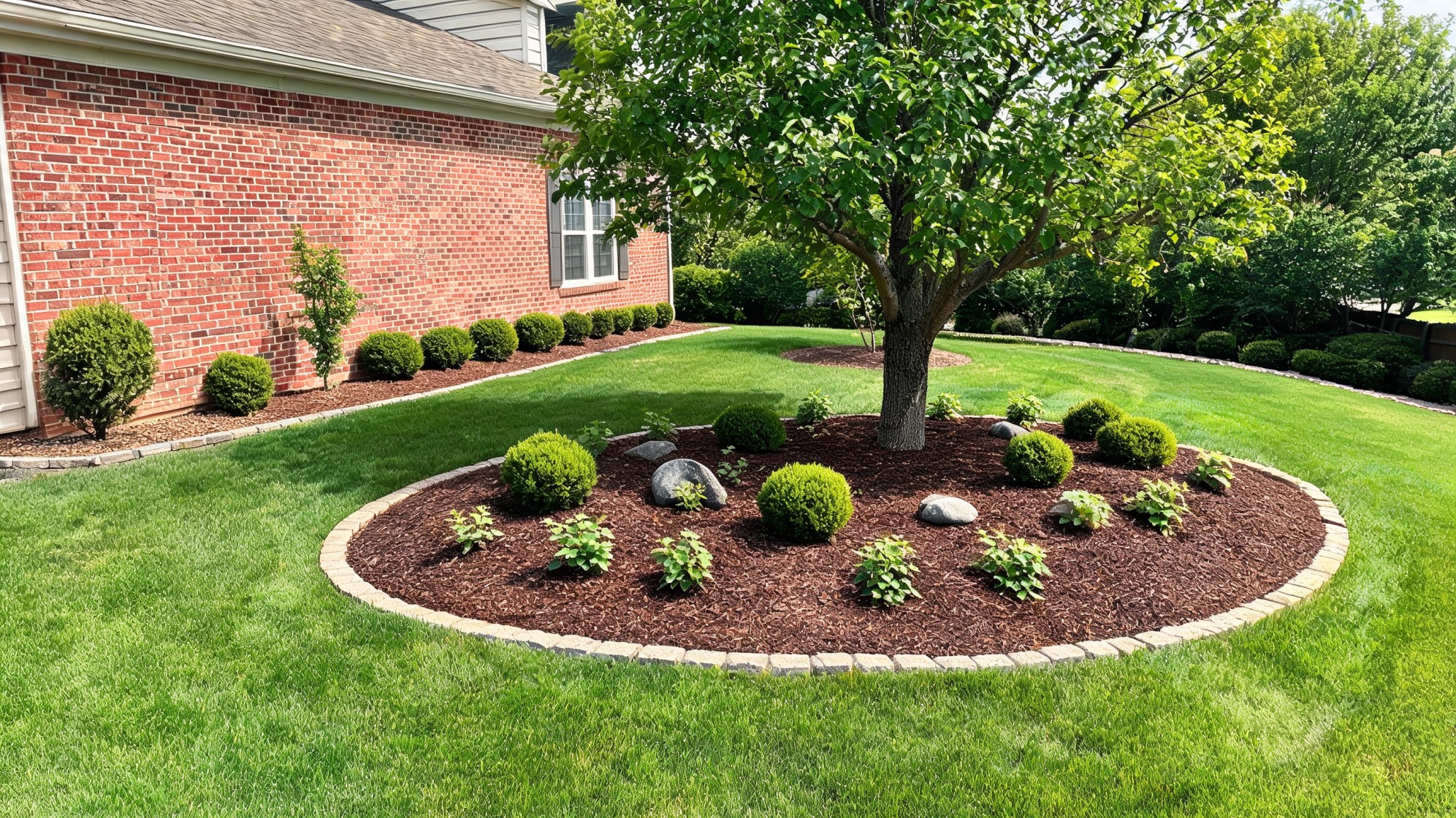
Grass is often the main reason a front yard feels like work. It needs mowing, watering, trimming, and clean edges. The idea here is to remove grass from small, hard-to-maintain areas and turn them into mulch beds.
You can use mulch around trees, along walkways, under shrubs, or near the front wall of your home. Add shrubs, perennials, or small plants before mulching if you want color. Mulch helps the soil stay moist, protects plant roots, and makes it harder for weeds to grow.
- Tip: Use shredded bark, pine bark, cedar mulch, or composted mulch.
- Avoid: Piling mulch against stems or tree trunks.
- Best for: Flower beds|Shrub borders|Tree rings
| Pro Tip: A 3-inch mulch depth is the working minimum. Less than 2 inches, and weeds push through. More than 4 inches around shrubs, and you risk crown rot in wet seasons. |
2. Native Blooms That Fit Your Climate
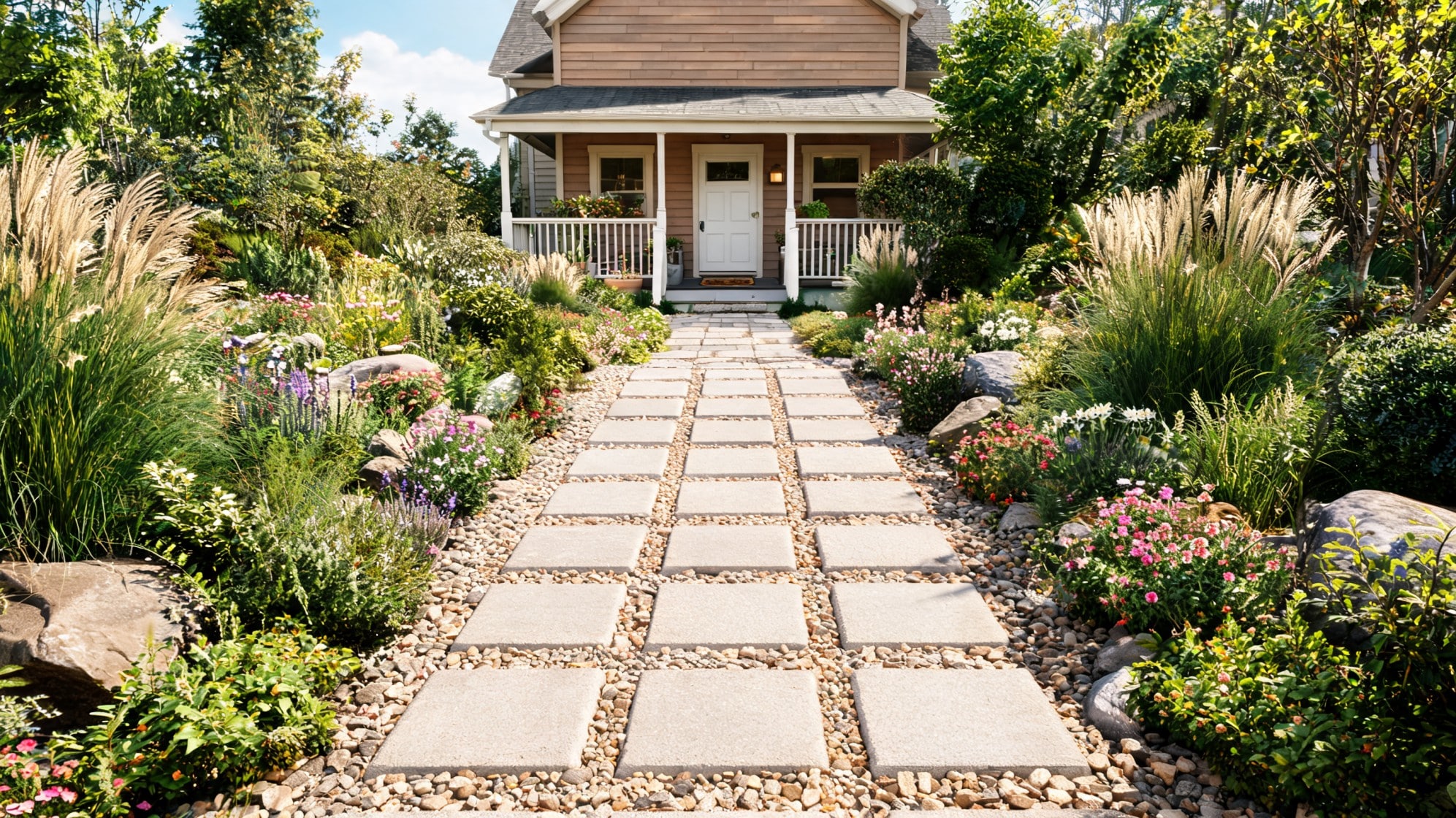
Native plants are plants that already grow well in your area. They are accustomed to the local weather, soil, and rainfall patterns, so they usually require less care once they settle in. The idea is to choose plants that fit your yard rather than picking them only because they look good in photos.
For a contained native planting without committing to in-ground beds, a DIY planter box offers the same climate-matching flexibility with easier drainage control. Native plants can also support birds, bees, and butterflies, which makes your front yard feel alive without adding much extra work.
- Tip: Water native plants well during the first growing season.
- Avoid: Mixing dry-loving plants with plants that need frequent watering.
- Best for: Natural|Low-water front yards
3. A Classic Evergreen Shrub Border
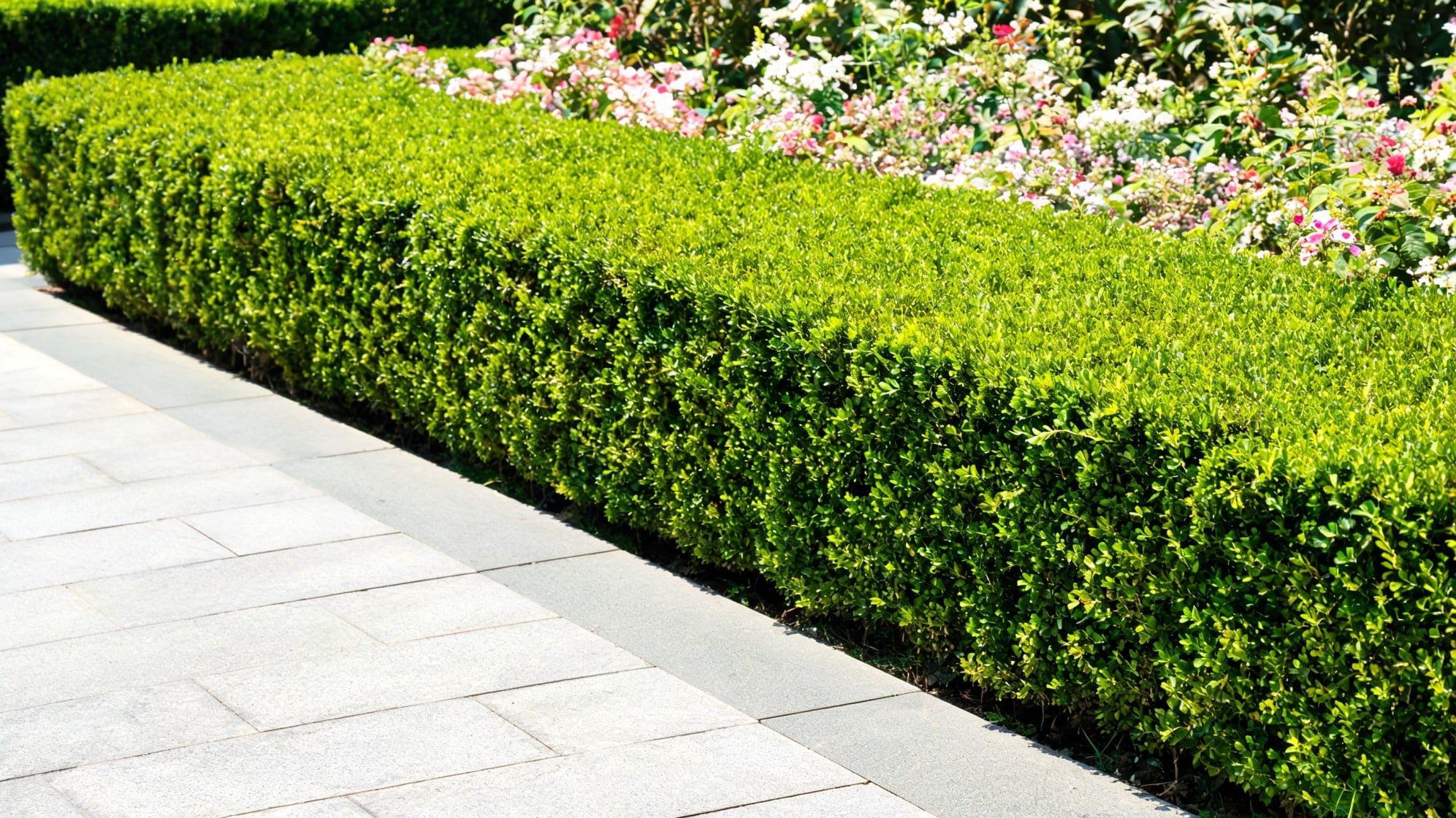
Evergreen shrubs are a smart base for a low-maintenance front yard because they keep their shape and leaves through most or all of the year.
The idea is to use them as the steady structure of the yard. Even when flowers are not blooming, the front yard still looks planned and tidy.
Use them along the house, driveway, walkway, or front fence. Repeating the same shrub makes the design look cleaner and easier to care for. Choose compact shrubs near windows so you do not have to keep cutting them back.
- Tip: Leave enough space between shrubs so they can grow naturally.
- Avoid: Planting large shrubs too close to windows, doors, or walkways.
- Best for: Neat|Year-round front yards
4. A Multi-Season Perennial Flower Bed
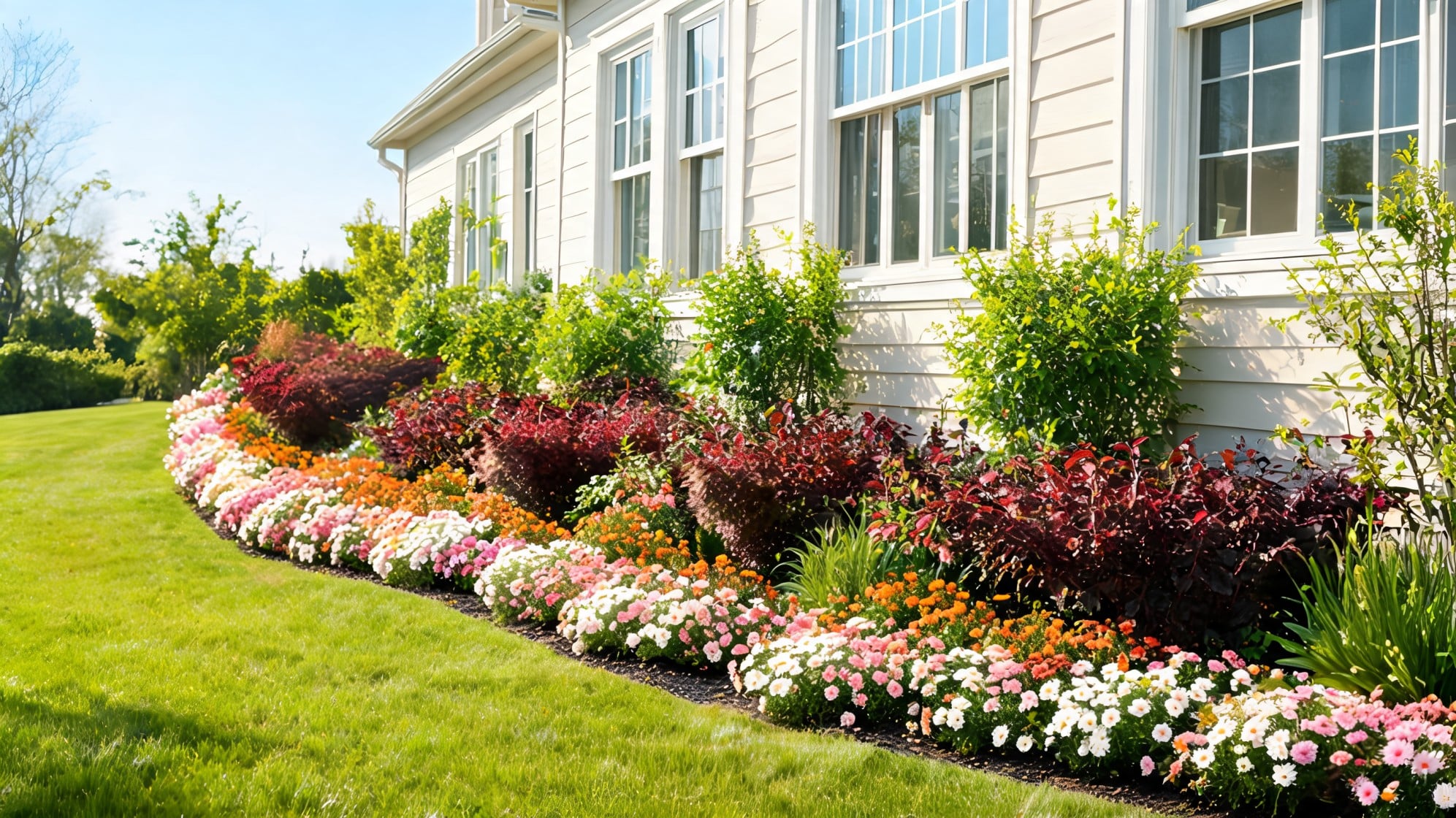
A perennial flower bed gives you color without replanting the whole area every year. Perennials return each growing season, making them easier to grow than annual flowers.
The idea is to mix steady plants with seasonal color, so the bed does not look empty when one plant stops blooming.
A simple formula works well: use 40% evergreen shrubs for shape, 40% perennials for flowers, and 20% seasonal color or ornamental grass for extra interest. This keeps the bed balanced, full, and easier to manage through the year.
- Tip: Repeat the same plants in small groups for a cleaner look.
- Avoid: Filling the whole bed with annual flowers that need replacing often.
- Best for: Colorful|Easy-care front yards
5. A Rock Garden for Sunny Areas
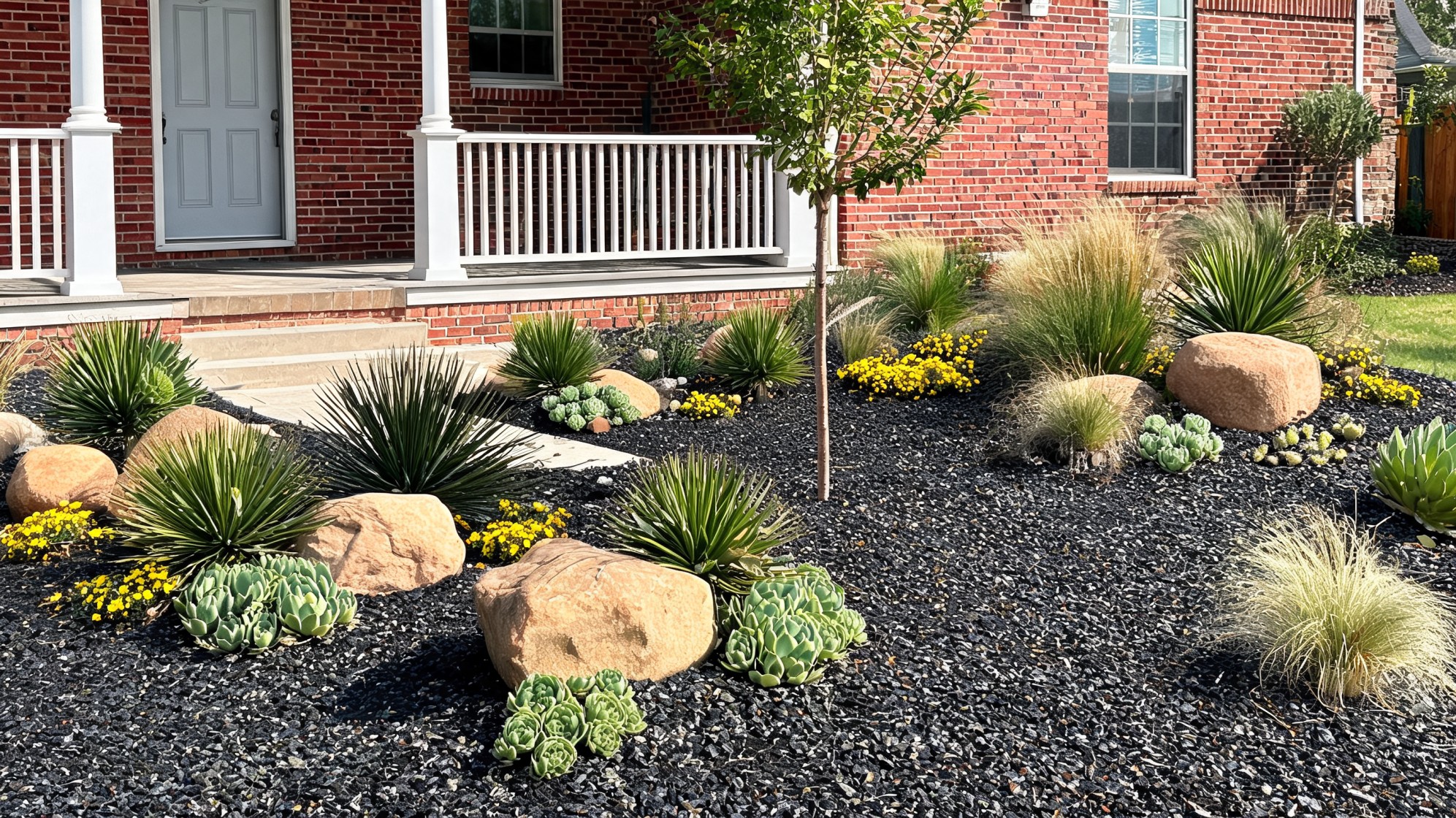
A rock garden is a good choice when grass struggles or the yard gets strong sun most of the day. The idea is to use rocks, gravel, and drought-tolerant plants to create a front yard area that needs very little watering or mowing.
Start with large rocks first because they give the space shape. Then fill the open areas with gravel or pea stone. Add plants in small groups, not one by one everywhere.
This keeps the design clean and easy to manage. Leave some open space between rocks and plants so the yard does not look crowded.
- Tip: Use different rock sizes for a more natural look.
- Avoid: Filling every empty space with plants.
- Best for: Dry|Sunny front yards
6. Gravel and Pebbles Pathway
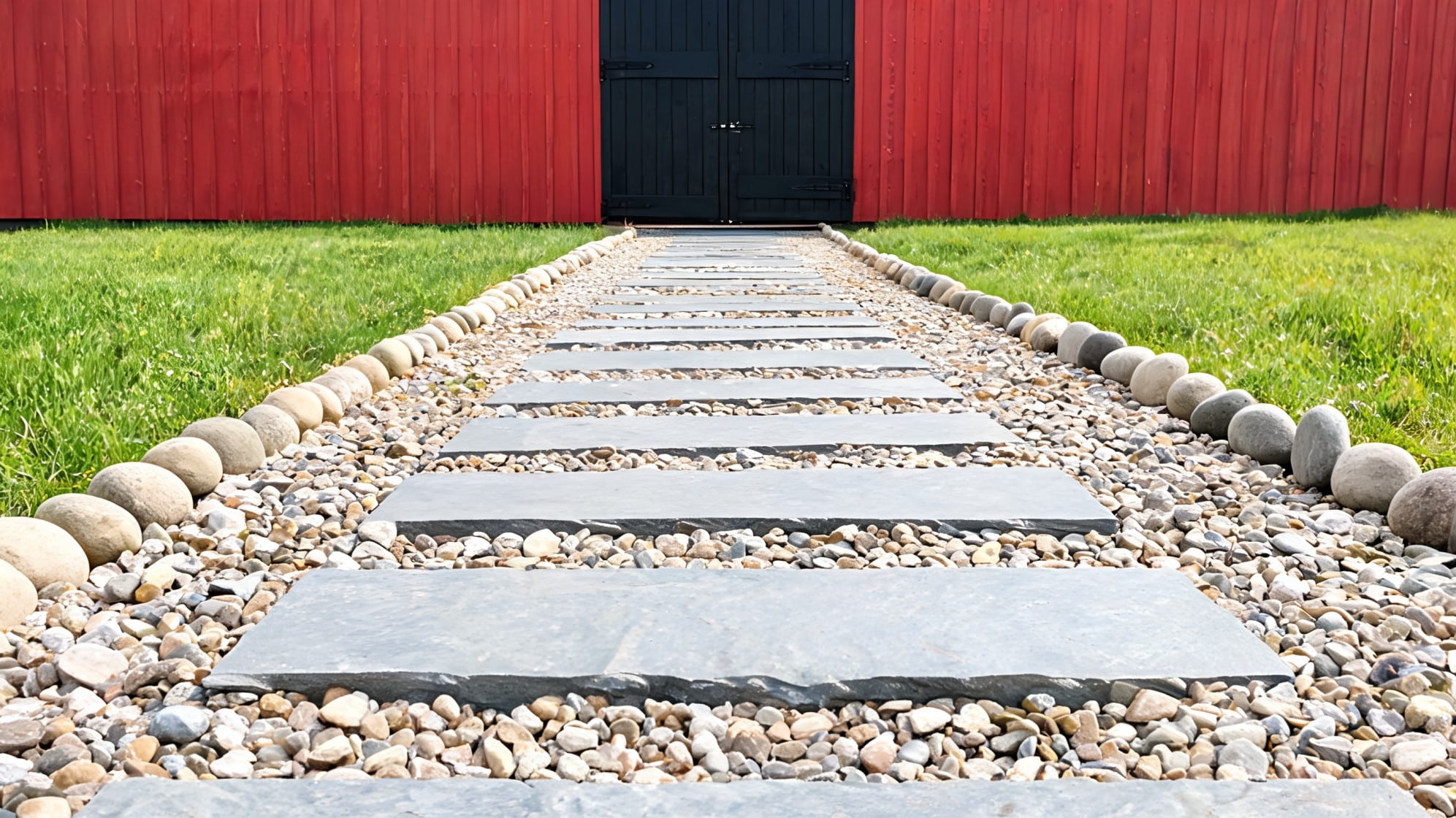
Bare soil can quickly turn into a weed patch, muddy spot, or dusty area. Gravel and pebbles help cover the ground while keeping the front yard neat and easy to care for.
The idea is to use them around pavers, along walkways, under seating spots, or between planting areas. The same edging logic applies when gravel meets a driveway follow identical containment rules at the boundary.
For areas with weeds, place landscape fabric under the gravel where needed. Choose smaller gravel for walking areas and larger pebbles for decorative spaces where people will not walk often.
- Tip: Use smaller gravel near walkways for easier walking.
- Avoid: Using loose gravel on steep slopes.
- Best for: Paths|Side yards|Dry planting beds
7. A Stepping Stone for a Walkway
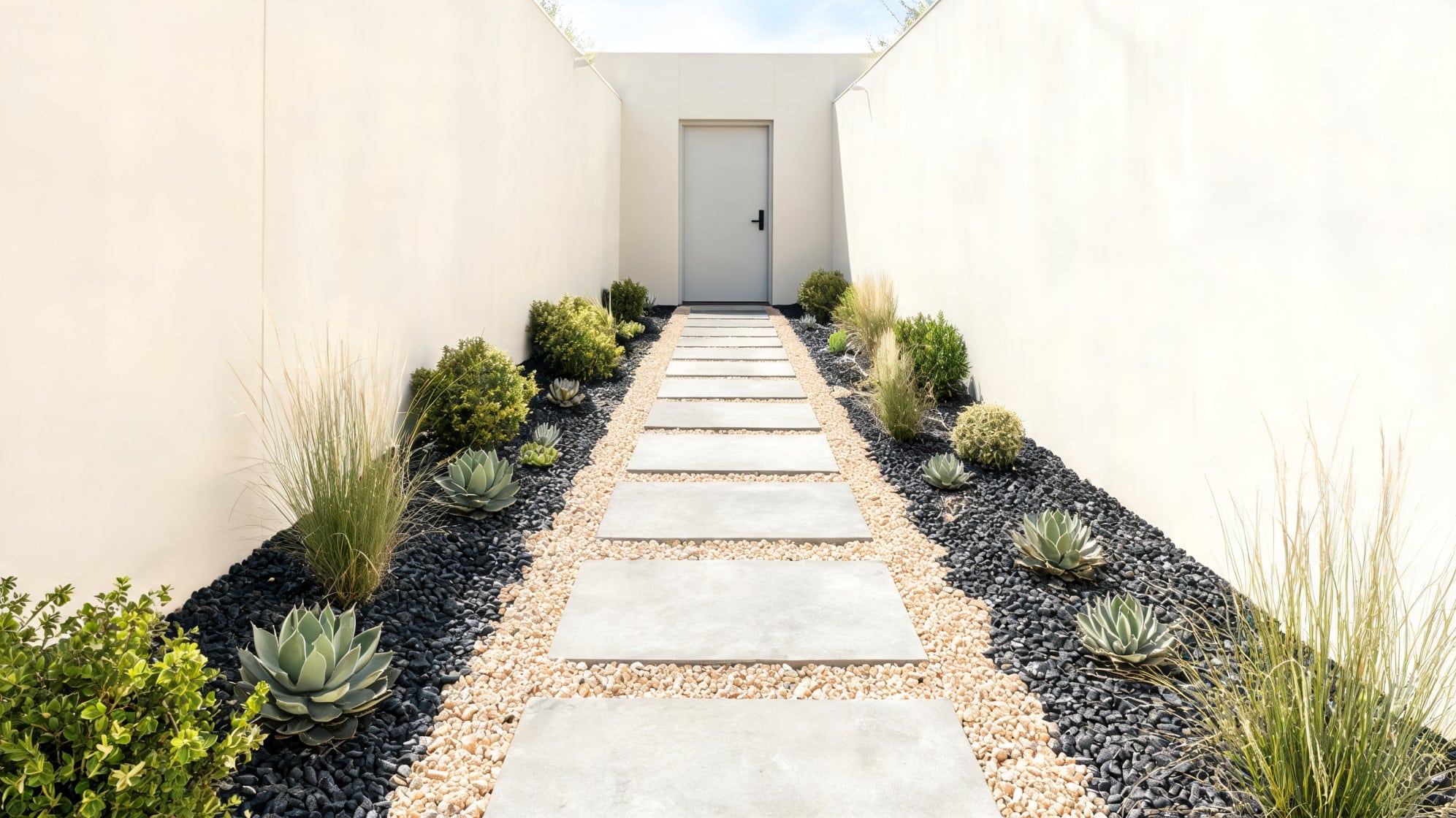
Stepping stones give your front yard a clear path without adding much upkeep. The idea is to guide people from the driveway, sidewalk, or street to the front door in a simple and clean way.
Place the stones where people naturally walk, then set them at a comfortable distance apart. Larger stones are safer because they give more room for each step. You can fill the gaps with gravel, mulch, or low ground cover to reduce bare soil and weeds.
This also helps the walkway blend into the yard rather than look like a random line of stones.
- Tip: Use larger stones for a safer and cleaner path.
- Avoid: spacing stones too far apart.
- Best for: Entry paths|Small front yards|Lawn breaks
8. Style Sunny Spots with Succulents
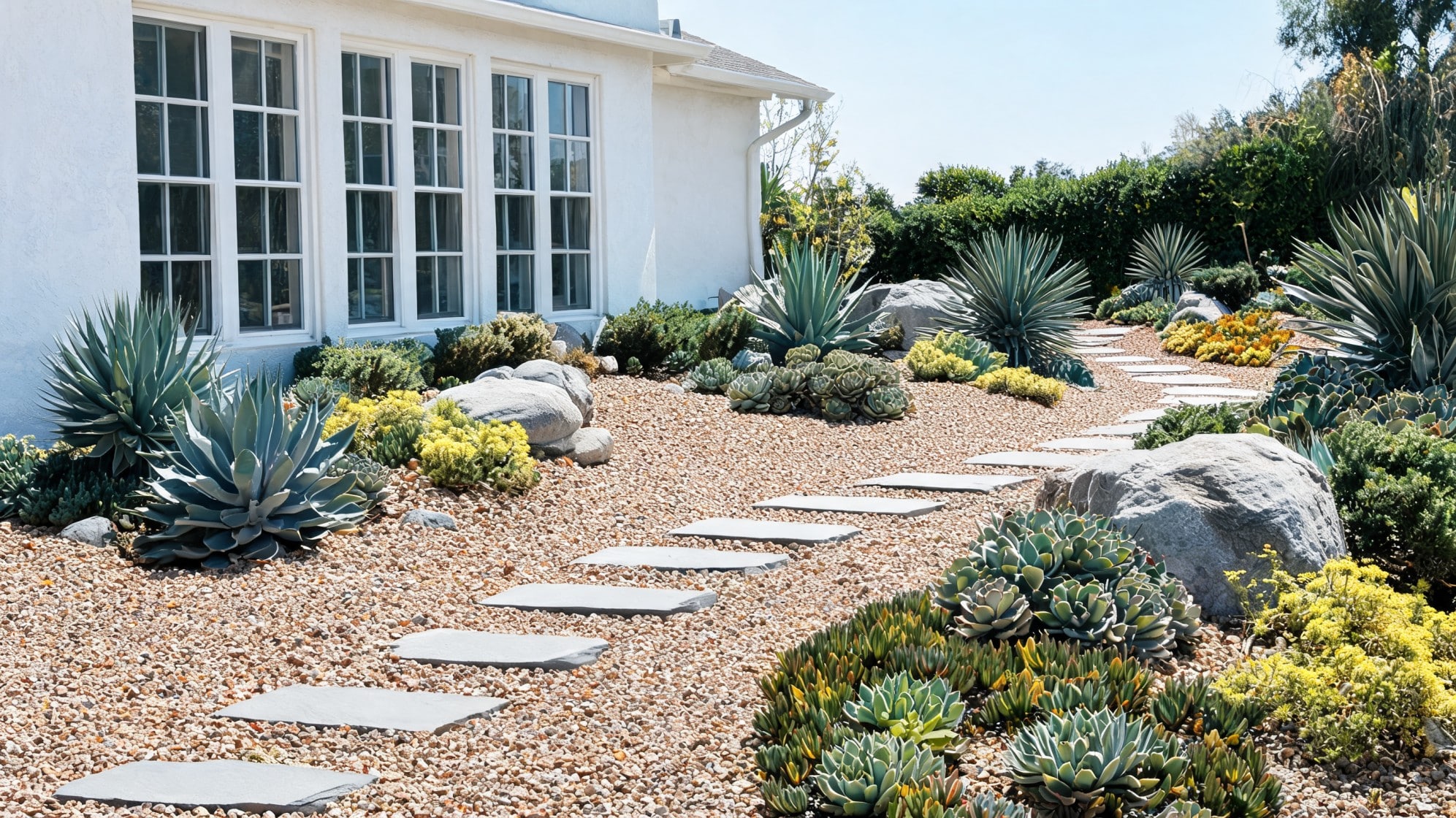
Succulents are useful for low-maintenance front yards because they store water in their leaves and do not need frequent watering. The idea is to use them in sunny areas where the soil drains well.
They work well near gravel, boulders, stone borders, and raised beds. Before planting, check your soil. If it stays wet for too long, succulents may rot.
Wet clay soil needs improvement before planting, or you can use raised beds with a better soil mix. Succulents are great for dry climates, but they are not the best choice for every yard.
- Tip: Pair succulents with gravel, boulders, stone borders, or raised beds.
- Avoid: Planting succulents in wet clay soil without fixing drainage.
- Best for: Dry|Sunny front yards
9. Grass Fairy Garden with Evergreen Weeds
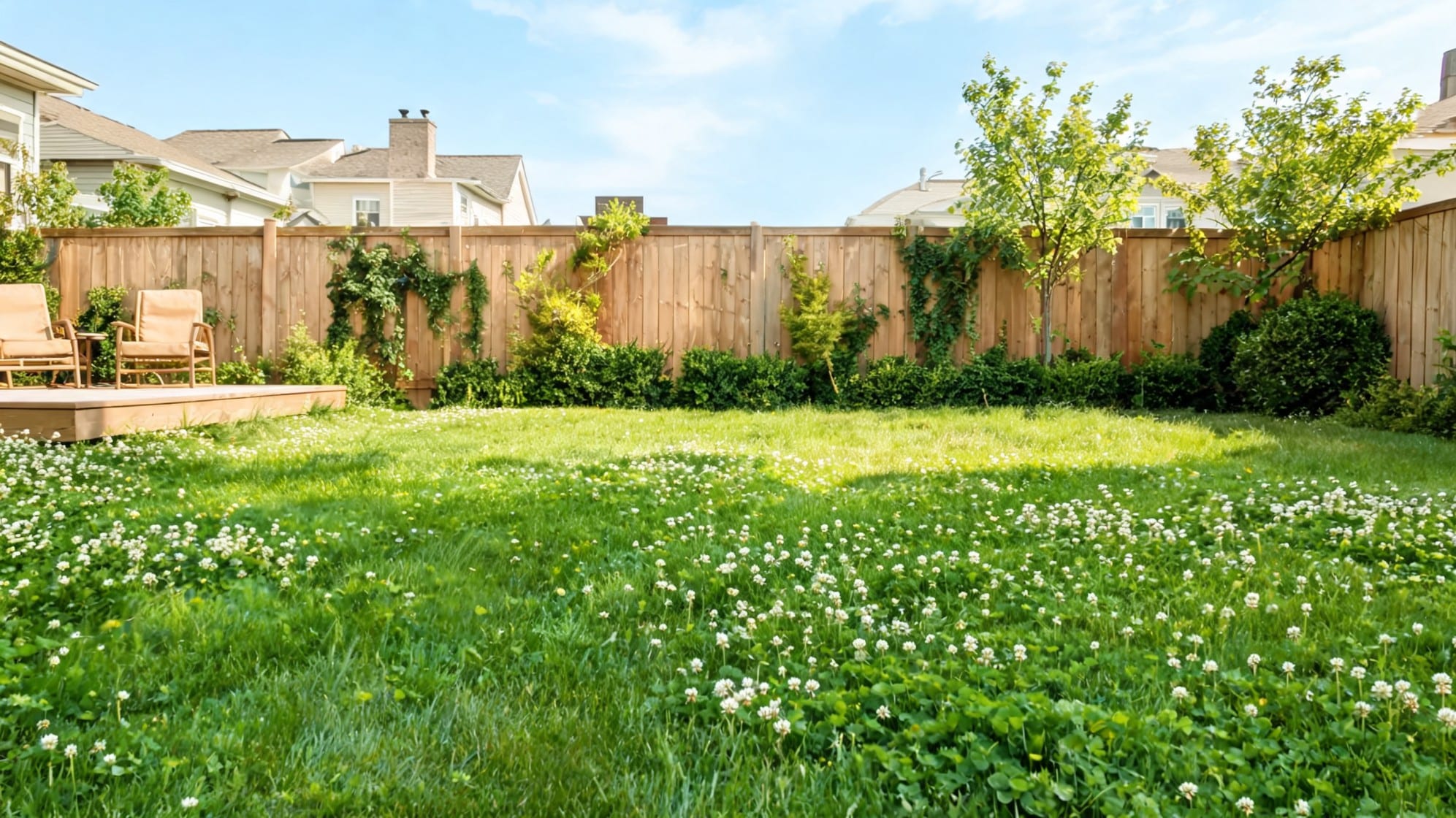
A full grass lawn can take a lot of water, mowing, and care. If you still want a soft green look, try drought-tolerant grass or a lawn alternative instead.
The idea is to keep the front yard open and neat without using a traditional high-maintenance lawn. You can use clover, native grass, Kurapia, creeping thyme, sedges, artificial turf, or gravel with planting islands.
Choose based on your climate, foot traffic, and how much mowing you want to avoid. Some options feel like a lawn, while others create a cleaner, planted look with very little upkeep.
Choose a softer option like clover or native grass if kids or pets use the yard.
| Option | Water use | Mowing needs | Best climate |
|---|---|---|---|
| Clover lawn | Low to moderate | Low | Mild to warm areas |
| Native grass | Low once settled | Low | Local climate zones |
| Kurapia | Low | Very low | Warm, dry areas |
| Creeping thyme | Low | Very low | Sunny, dry areas |
| Sedges | Low to moderate | Very low | Shade or mixed sun |
| Artificial turf | None for growth | None | Most areas, but it can get hot |
| Gravel with planting islands | Very low | None | Dry or sunny areas |
- Avoid: Picking artificial turf for very hot spots without considering heat and drainage.
- Best for: Low-water|No-mow front yards
10. Cutesy Smart Watering System
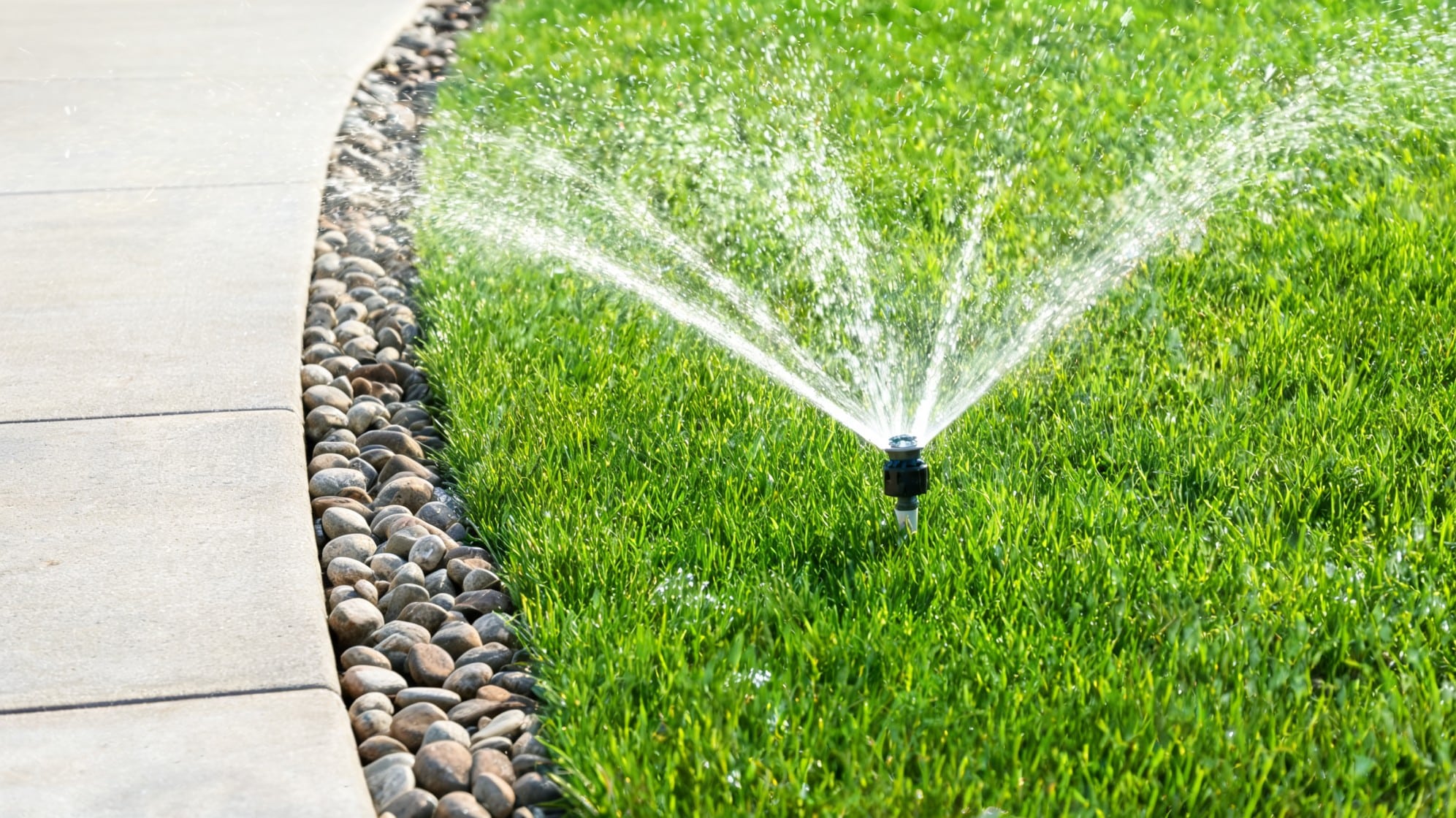
Hand watering can make even a simple front yard feel like a chore. Drip irrigation or smart watering helps you care for plants without dragging a hose around every few days. The idea is to send water straight to the roots, where plants need it most.
Use drip lines in flower beds, around shrubs, and near foundation plants. Add a smart timer so the system waters on a set schedule. Some timers can even adjust for rain. For better results, group plants with similar water needs together so each area gets the right amount.
- Tip: Check drip lines once a month for clogs or leaks.
- Avoid: Watering all plants the same way if they have different needs.
- Best for: Flower beds|Shrubs|Busy homeowners
11. Ornamental Grasses for Movement and Texture
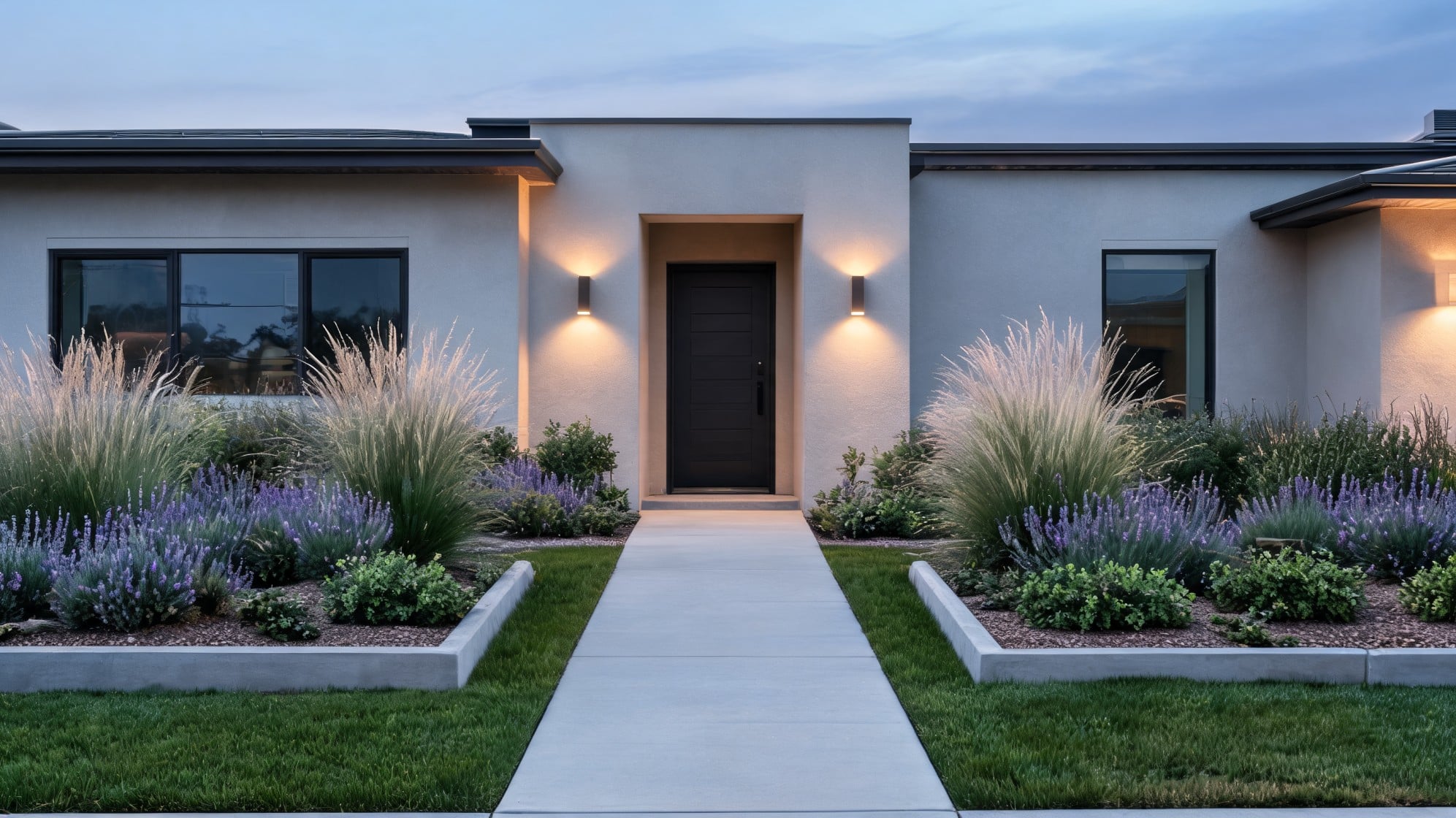
Ornamental grasses are a great way to make a front yard feel full without adding much work. They bring height, soft movement, and texture, especially when planted near gravel, mulch, boulders, or perennials.
Many types need little water once they settle in, and most only need trimming once or twice a year. The idea is to use them as simple accent plants rather than filling the yard with flowers that require regular care. Plant them in groups of 3, 5, or 7 so they look planned and balanced.
- Tip: Pair grasses with gravel, mulch, boulders, and perennials.
- Avoid: Planting large grasses too close to paths or windows.
- Best for: Modern|Natural|Low-water yards
12. Charming No-Mow Mailbox Garden
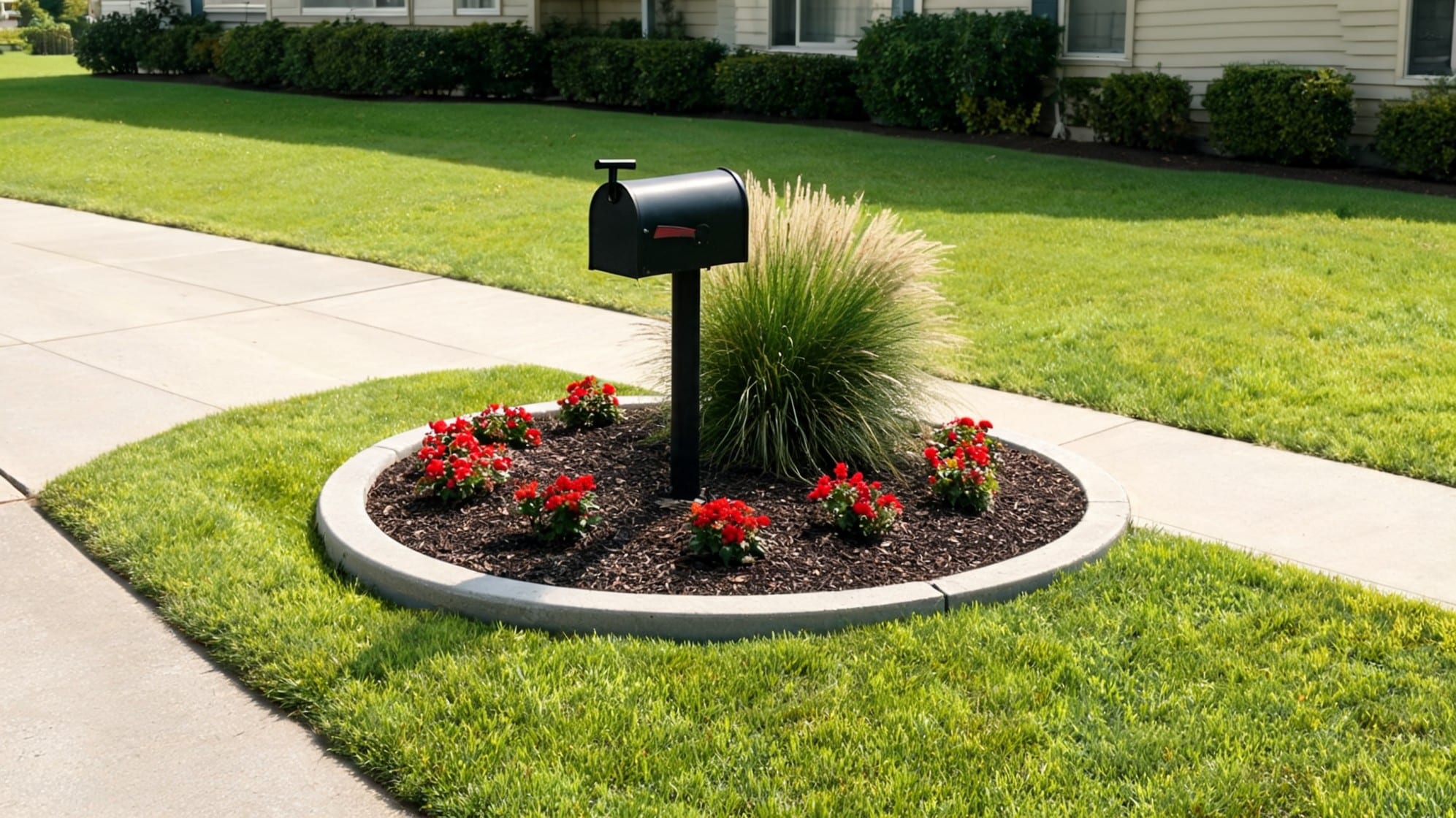
The area around a mailbox or driveway often looks messy because it is hard to mow and easy to ignore. A no-mow border fixes that small problem area and makes the front yard look cleaner.
The idea is to remove grass from the tight strip, then replace it with edging, mulch, gravel, or low plants. Keep the design simple. Use one small shrub, one ground cover, and one accent plant for a planted look.
Keep everything low so your house numbers, mailbox, and driveway view stay clear.
- Tip: Use low plants so the mailbox and house numbers stay visible.
- Avoid: Tall, thorny, or fast-spreading plants near the driveway.
- Best for: Mailbox areas|Driveway edges|Narrow grass strips
13. Slopes Covered in Easy Ground Covers
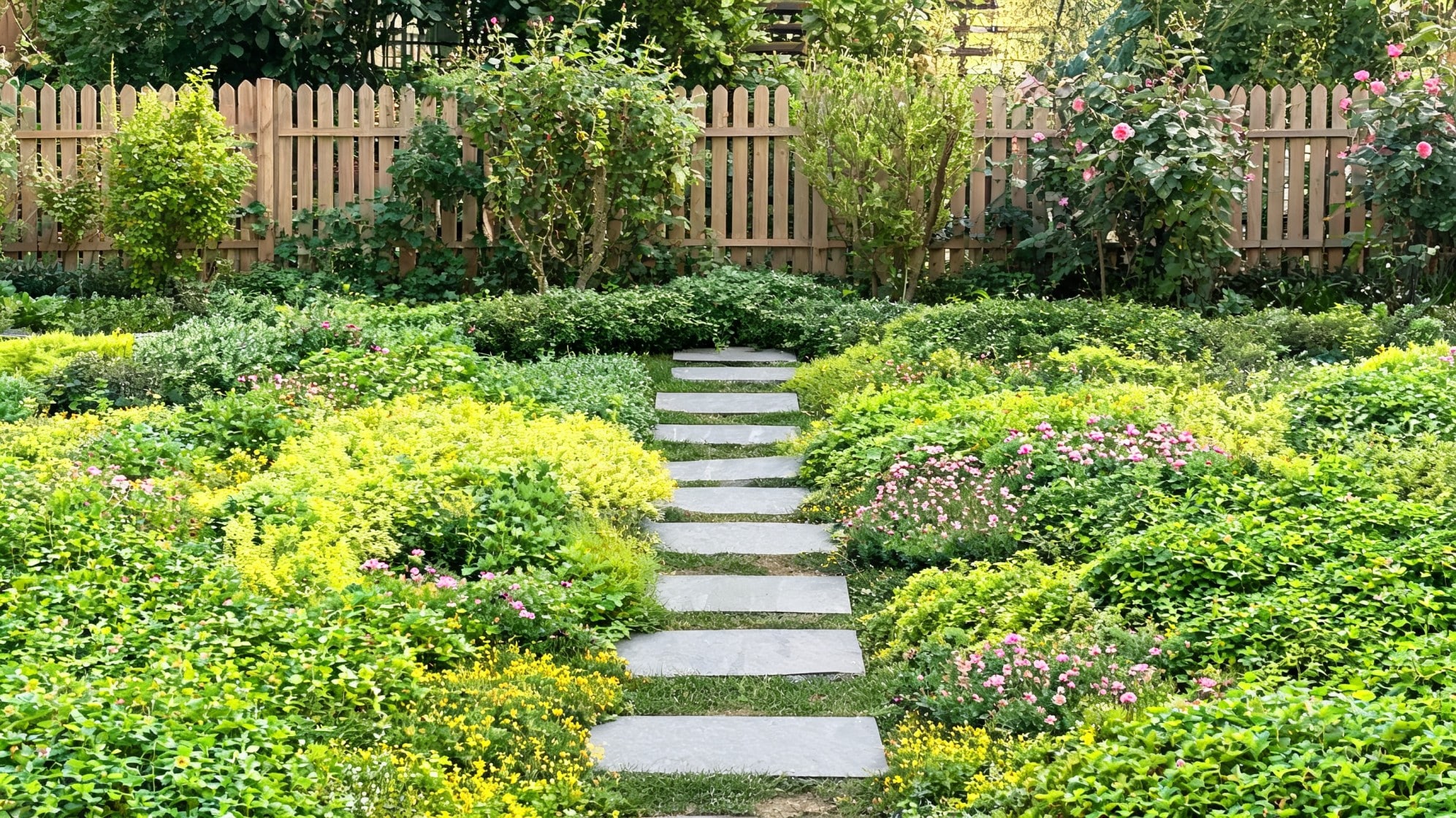
Ground covers are low-growing plants that spread across the soil. They are useful in places where grass is hard to mow or does not grow well.
The idea is to replace difficult grass areas with plants that cover the ground, reduce weeds, and help hold soil in place. This works well on sloped front yards, narrow strips near sidewalks, under trees, between stepping stones, and around boulders.
On slopes, ground covers can also help reduce soil washout after rain. Choose a type that suits your sun, shade, and water needs.
- Tip: Use ground covers between stepping stones for a softer look.
- Avoid: Fast-spreading plants that can take over nearby beds.
- Best for: Slopes|Sidewalk strips|Under trees
14. Dry Creek Bed for Beauty and Drainage
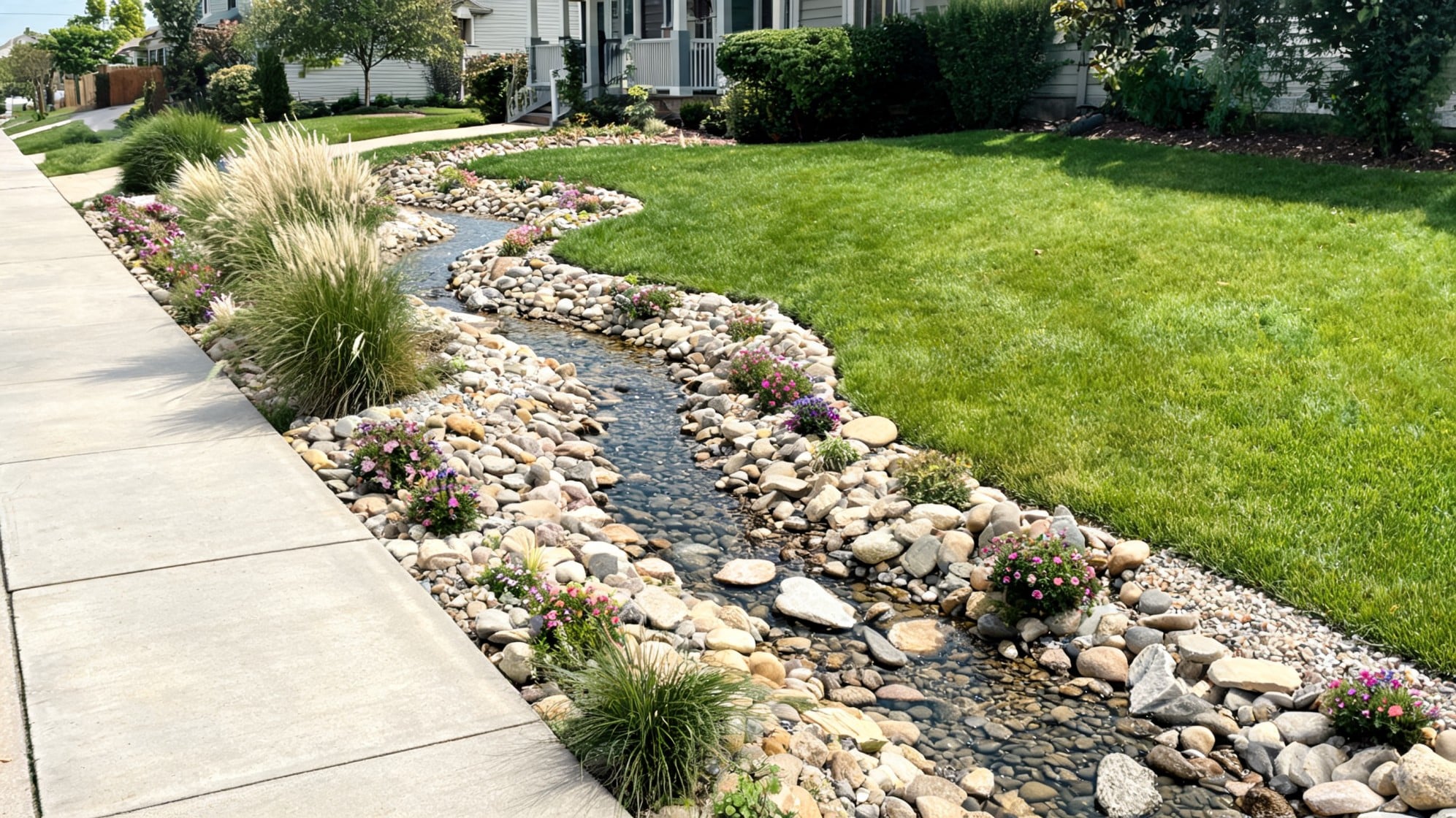
A dry creek bed is a shallow stone channel that helps guide rainwater through the yard. It looks like a natural stream bed, but it stays dry most of the time.
The idea is to place it where water already flows or where puddles form after rain. Use river rock as the main base, then add larger stones along the edges to define the shape.
Make the creek bed curve rather than run in a straight line, so it looks more natural. Add drought-tolerant plants along the sides to soften the stone and improve curb appeal.
- Tip: Mix small river rock with larger stones for a natural look.
- Avoid: Placing a dry creek bed where it sends water toward the house.
- Best for: Drainage|Muddy spots|Sloped front yards
15. Frame the Yard with Natural Stone Edging
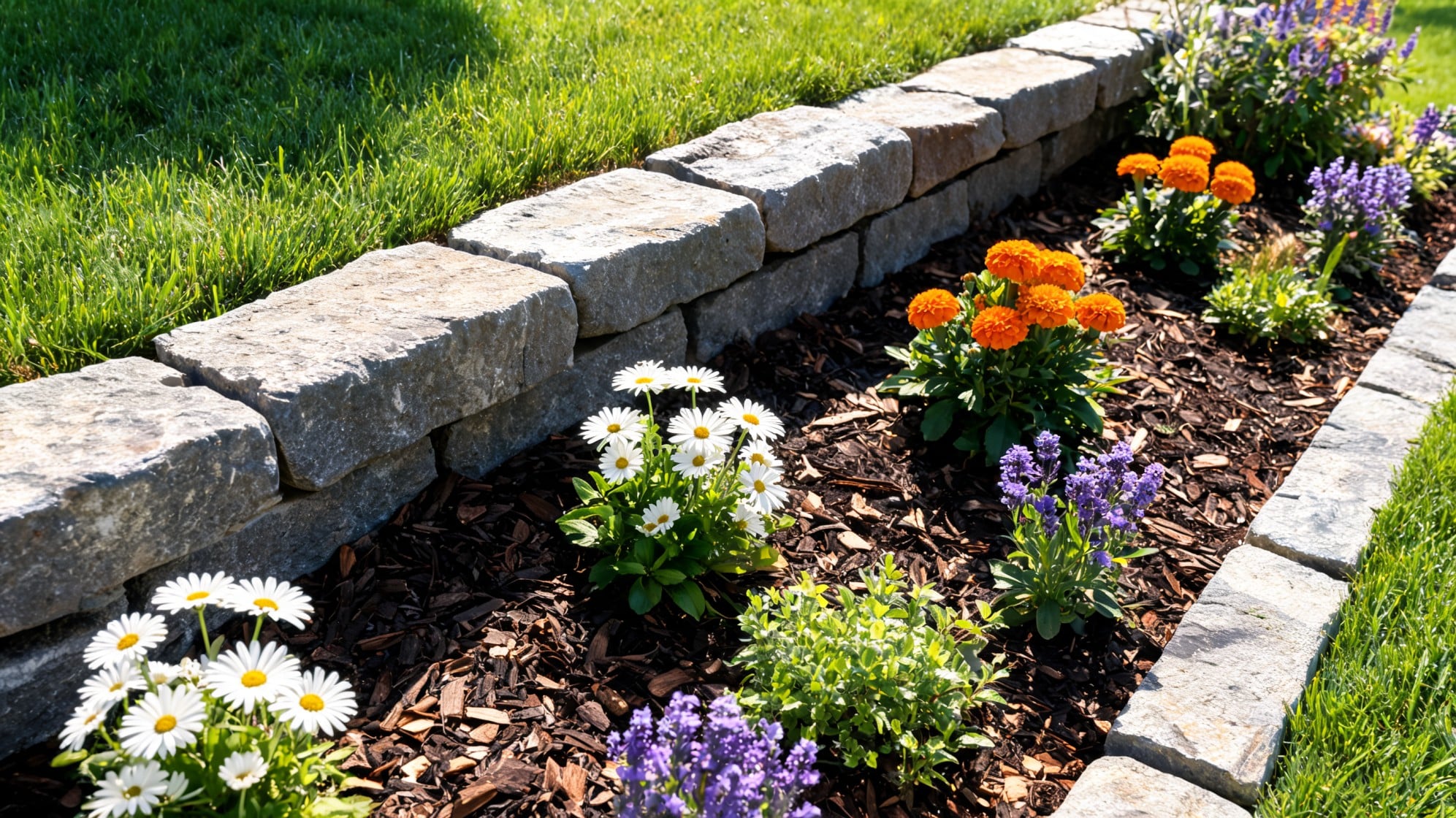
Natural stone edging helps a front yard look neat with very little ongoing care. The idea is to create clear lines between different areas, such as lawn and mulch, gravel and plants, or a walkway and flower bed. This keeps materials from spreading and makes the yard easier to maintain.
You can use stone along a front path, around a tree ring, at the edge of a planting bed, or on a small slope as a low retaining edge. Stone also lasts longer than many thin plastic borders and gives the yard a finished look.
- Tip: Use similar stone colors across the yard for a cleaner design.
- Avoid: Using loose stones where people may trip.
- Best for: Lawn edges|Walkways|Planting beds
16. A Small Ornamental Tree to Steal the Attraction
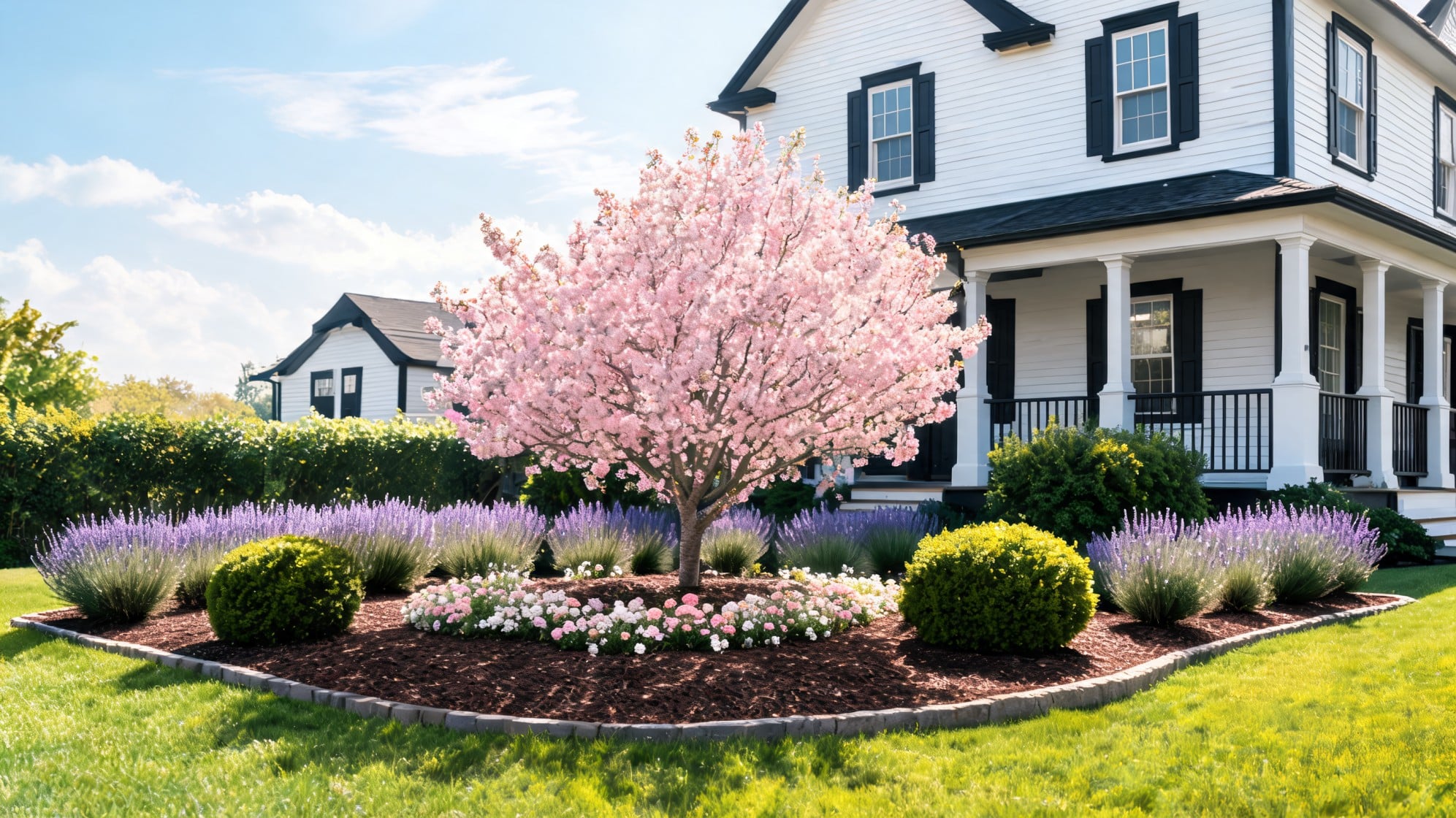
A small ornamental tree can make a simple front yard feel planned without adding much work. The idea is to use one tree as the main focal point instead of filling the yard with too many small plants. Choose a tree that fits the space when fully grown, not just when it is young.
Keep it away from the foundation, roofline, driveway, and utility lines. After planting, add a mulch ring around the trunk to protect the roots and reduce mowing around the trunk. You can also add low plants around the base for a finished look.
- Tip: Check the mature height and width before buying.
- Avoid: Planting large trees too close to the house.
- Best for: Entry areas |Open lawns|Front yard corners
17. Cohesive and Calm Repeated Plant Pattern
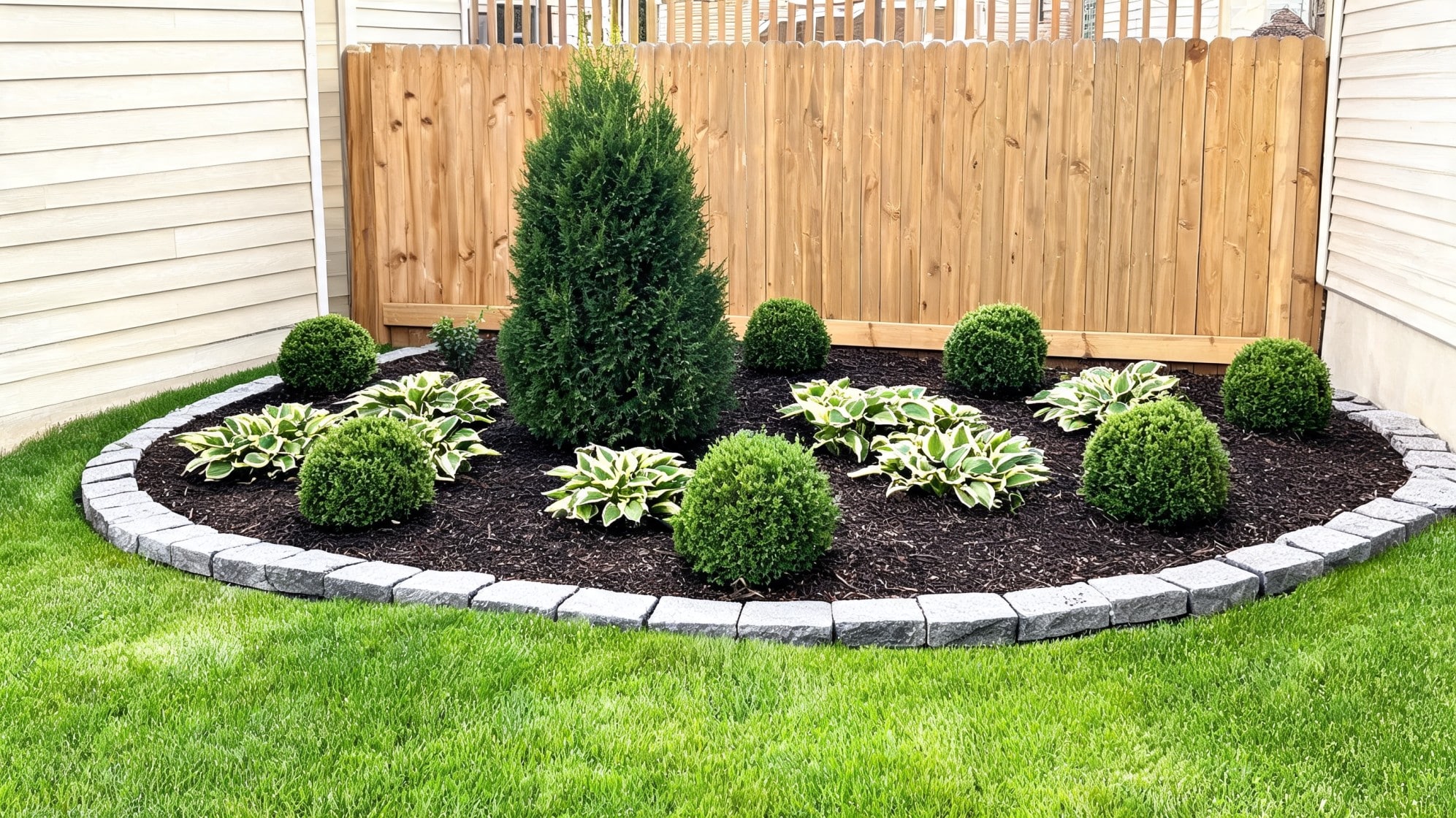
A low-maintenance front yard should not feel packed or confusing. The idea is to use fewer materials and repeat the same plants so the yard looks neat and is easier to care for. Too many plant types can mean different watering, pruning, and cleanup needs.
A simple formula works better: pick one path material, one mulch or rock type, and 3 to 5 main plant types. Repeat those plants in groups rather than placing one of each across the yard. Leave open space between plants so they can grow without crowding each other.
- Tip: Repeat colors, shapes, and materials for a cleaner look.
- Avoid: Adding too many one-off plants just to fill empty space.
- Best for: Clean|Easy-care front yards
How to Choose the Right Low-Maintenance Plants
The right plant makes the whole yard easier to care for. I always suggest choosing plants based on your yard first, then picking the ones you like from that smaller list.
- Choose plants for your climate first: Pick plants that can handle your local heat, cold, rain, and dry seasons.
- Match plants to sun or shade: Use sun-loving plants in open areas and shade-friendly plants under trees or near covered spaces.
- Check mature size before planting: Choose plants that fit the space when fully grown, so you do not have to keep trimming them back.
- Pick drought-tolerant plants where water is limited: Use plants that can handle dry spells if your area gets little rain or has watering limits.
- Use more perennials and shrubs than annuals: Perennials and shrubs come back year after year, while annuals usually need replacing each season.
- Group plants with similar water needs: Keep dry-loving plants together and water-loving plants together to keep watering simple.
- Use native plants where possible: They often require less care because they are well-suited to your local soil and weather.
- Avoid invasive vines and fast-spreading plants: These can take over beds, climb into unwanted areas, and create more work later.
A low-maintenance plant is only low-maintenance when it fits the place you plant it. Choose for climate, light, size, and water first, and your yard will be much easier to manage.
Installation: What You Can DIY and What You Shouldn’t
If the project extends to the back, concrete patio and deck combinations involve the same material-selection decisions covered here.
DIY-appropriate: Mulch bed installation, gravel path laying, ground cover planting, drip irrigation on existing water supply, stepping stone paths, ornamental grass planting, dry creek bed construction.
Hire a licensed contractor for: Any irrigation work that requires a connection to the main water line or backflow preventer (permits required in most jurisdictions). Retaining walls over 4 feet tall (structural permit and engineering typically required). Any work that involves regrading toward the house or redirecting water toward a neighboring property.
On cost: A basic mulch bed installation runs $300–$600 for a 200-square-foot area (materials plus labor). A full front-yard gravel-and-native-plant conversion typically costs between $2,500 and $7,000, depending on yard size and whether irrigation is included.
Drip system installation for a standard front yard: $800–$2,000 professionally installed, or $300–$500 DIY with a weekend of work.
Landscaping Materials: Quick Comparison
The material you choose can make your front yard easier or harder to care for. Compare the basics first so you can pick what fits your space, budget, and level of upkeep.
| Material | Best use | Main benefit | Watch out for |
|---|---|---|---|
| Mulch | Beds and tree rings | Fewer weeds, better moisture | Needs topping up |
| Gravel | Paths and dry beds | No mowing, good drainage | Can move without edging |
| River rock | Dry creek beds | Handles runoff | Can heat up in full sun |
| Flagstone | Walkways | Long-lasting | Higher upfront cost |
| Pavers | Paths and patios | Clean look | Weeds can grow in gaps |
| Artificial turf | No-mow lawn look | No mowing or watering | Can get hot |
| Compost | Soil improvement | Helps plant health | Must be worked into the soil |
The best choice depends on where you use it. Mulch is great around plants, gravel works well for dry paths, and stone gives the front yard a clean shape with very little upkeep.
Common Mistakes to Avoid
- Choosing plants before checking sun and soil: Pick plants only after you know how much light the area gets and how well the soil drains.
- Filling the whole yard with small plants that need trimming: Too many small plants can create more pruning, watering, and cleanup work.
- Using too many plant types: Stick to a few repeat plants so the yard looks cleaner and is easier to manage.
- Skipping edging around gravel or mulch: Edging keeps materials in place and stops them from spreading into the lawn or walkway.
- Planting shrubs too close to the house: Give shrubs room to grow so they do not block windows, vents, doors, or paths.
- Using annuals as the main flower bed: Annuals need replacing often, so use them only for small seasonal color.
- Choosing thirsty plants for a dry yard: Pick drought-tolerant plants if your yard gets strong sun or limited water.
- Installing artificial turf without considering heat and drainage: Turf can get hot and may require proper drainage beneath it.
- Leaving bare soil exposed: Bare soil invites weeds, dust, mud, and erosion, so cover it with mulch, gravel, or plants.
- Forgetting walkway safety and lighting: Keep paths flat, clear, and well-lit so the front yard stays safe and easy to use.
Frequently Asked Questions
Do HOA rules typically restrict front-yard materials like gravel or artificial turf?
Many do, and the restrictions are rarely in the welcome packet. Gravel-only front yards, artificial turf, and the removal of all lawn grass are commonly restricted in HOA communities, sometimes requiring approval from the architectural committee, even for changes to mulch depth.
Pull the CC&Rs before buying any hardscape materials. Fines for non-compliant front yard changes can run $100–$500 per month in active HOAs.
How do I handle a front yard that gets reflected heat from a light-colored driveway or concrete wall?
Reflected heat from concrete or light stone can raise surface temperatures 15–30°F above air temperature in the adjacent planting bed, killing plants rated for your zone. In those microclimates, skip standard USDA zone guidance and choose plants rated for two warmer zones.
Desert willow, agave, and most salvias tolerate this. Most ornamental grasses and standard evergreen shrubs do not grow without supplemental irrigation.
Will a low-maintenance front yard actually reduce my water bill, and by how much?
A full lawn-to-native-plant conversion typically reduces outdoor water use by 50–70%, according to EPA WaterSense data. In dollar terms, a homeowner irrigating a 1,500-square-foot front lawn in a warm climate can save $200–$600 annually depending on local water rates.
Gravel alone, without plant replacement, saves roughly 30–40% because it eliminates irrigation but doesn’t replace the evapotranspiration benefit that plants provide.
To Sum Up
Low-maintenance front yard landscaping ideas work best when you make simple choices that save time each week. You do not need a full yard makeover to see a change.
Start with one problem spot, like too much grass, bare soil, messy edges, or plants that need too much water. I suggest choosing plants that fit your climate, using mulch or gravel to control weeds, and adding clear paths or borders to keep the yard neat.
Small changes like drip watering, ground covers, native plants, and repeated shrubs can make your front yard easier to care for.
The goal is a yard that looks clean without asking for constant work. When you match the design to your space, sun, soil, and budget, your front yard becomes easier to enjoy and easier to maintain through every season.