

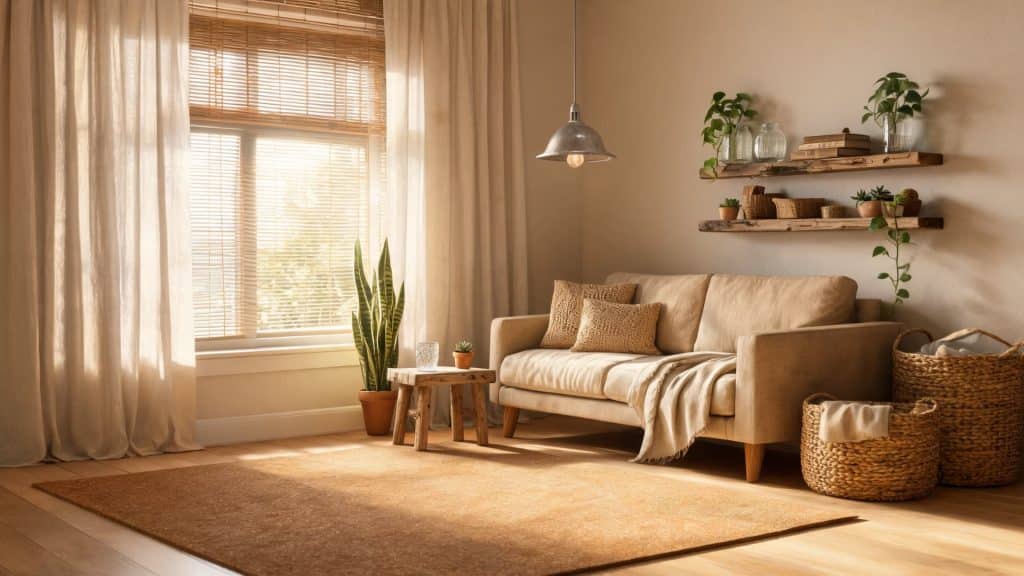


Most rooms don’t need a full renovation to become more sustainable. They need better decisions about what stays, what gets replaced, and what gets chosen the next time something wears out.
Sustainable interior design is the process applied room by room, material by material, choice by choice.
It covers where materials come from, how furniture is made, how much energy a space uses, and what happens to an item when it’s no longer needed. Done right, it produces rooms that are healthier to live in, cheaper to maintain, and less wasteful over time.
Done wrong, it’s a label on a product that doesn’t hold up past the second year.
This guide covers the materials that actually perform, how to choose them by room, what to avoid, and how to make progress without replacing everything at once.
Sustainable Interior Design at a Glance
Sustainable interior design means planning indoor spaces to reduce environmental impact, support healthier air quality, minimize waste, and extend the useful life of every material and piece of furniture in the room.
It looks at the full life of a space: where materials come from, how they’re made, how much energy the room uses, and what happens when something is removed or replaced.
A room can look responsible and still rely on finishes that off-gas for years, furniture that can’t be repaired, or materials that were sourced without accountability.
The practical value is real. Durable furniture, repairable pieces, low-energy lighting, and quality materials tend to outlast cheaper alternatives that cycle in and out every few years. That saves money over time and keeps usable items out of landfills.
| Pro Tip: Before buying anything new, check what can be repaired, repainted, moved to a different room, or reused first. The most sustainable choice is almost always the one already in the house. |
Best Materials for Sustainable Interiors
The right sustainable material depends on the room it’s going into. Moisture level, foot traffic, cleaning habits, sunlight exposure, and expected lifespan all affect whether a material will actually last. A natural label doesn’t mean much if the finish is high-VOC, the adhesive is toxic, or the piece won’t survive five years of daily use.
Use this table to compare common materials before choosing one for a specific room. It shows where each material performs well and why it earns a place in a more sustainable interior.
| Material | Best Used For | Why It Works |
| FSC-certified wood | Furniture, flooring, cabinetry | Responsibly sourced, auditable supply chain, durable |
| Reclaimed wood | Tables, beams, shelves, wall accents | Reuses existing material, no new harvesting required |
| Bamboo | Flooring, furniture, accessories | Fast-growing, renewable, comparable hardness to many hardwoods |
| Cork | Flooring, wall panels, underlayment | Harvested without cutting the tree, soft underfoot, sound-absorbing |
| Recycled metal | Lighting, furniture frames, hardware | Durable, reusable, and requires less energy to produce than virgin metal |
| Recycled glass | Tiles, countertops, decorative accents | Diverts waste from landfill, adds texture and visual depth |
| Natural fiber textiles | Rugs, curtains, upholstery, bedding | Biodegradable, breathable, no synthetic off-gassing |
| Low-VOC paint | Walls, trim, ceilings | Reduces volatile organic compound emissions after application |
| Linoleum | Flooring | Made from linseed oil and natural materials, long-lasting, biodegradable at end of life |
| Wool | Rugs, upholstery, acoustic insulation | Natural, durable, flame-resistant without chemical treatment |
The best choice is rarely the most popular one. It’s the one that fits the room’s conditions, holds up under daily use, and uses finishes that won’t compromise indoor air quality.
Best Sustainable Materials by Room
A material that performs well in a bedroom may fail quickly in a bathroom or kitchen. Before choosing anything, think about the conditions that the room creates every day: moisture, sunlight exposure, foot traffic, cleaning chemicals, and how long you need the material to last. That context determines whether a sustainable choice is actually practical.
1. Living Room
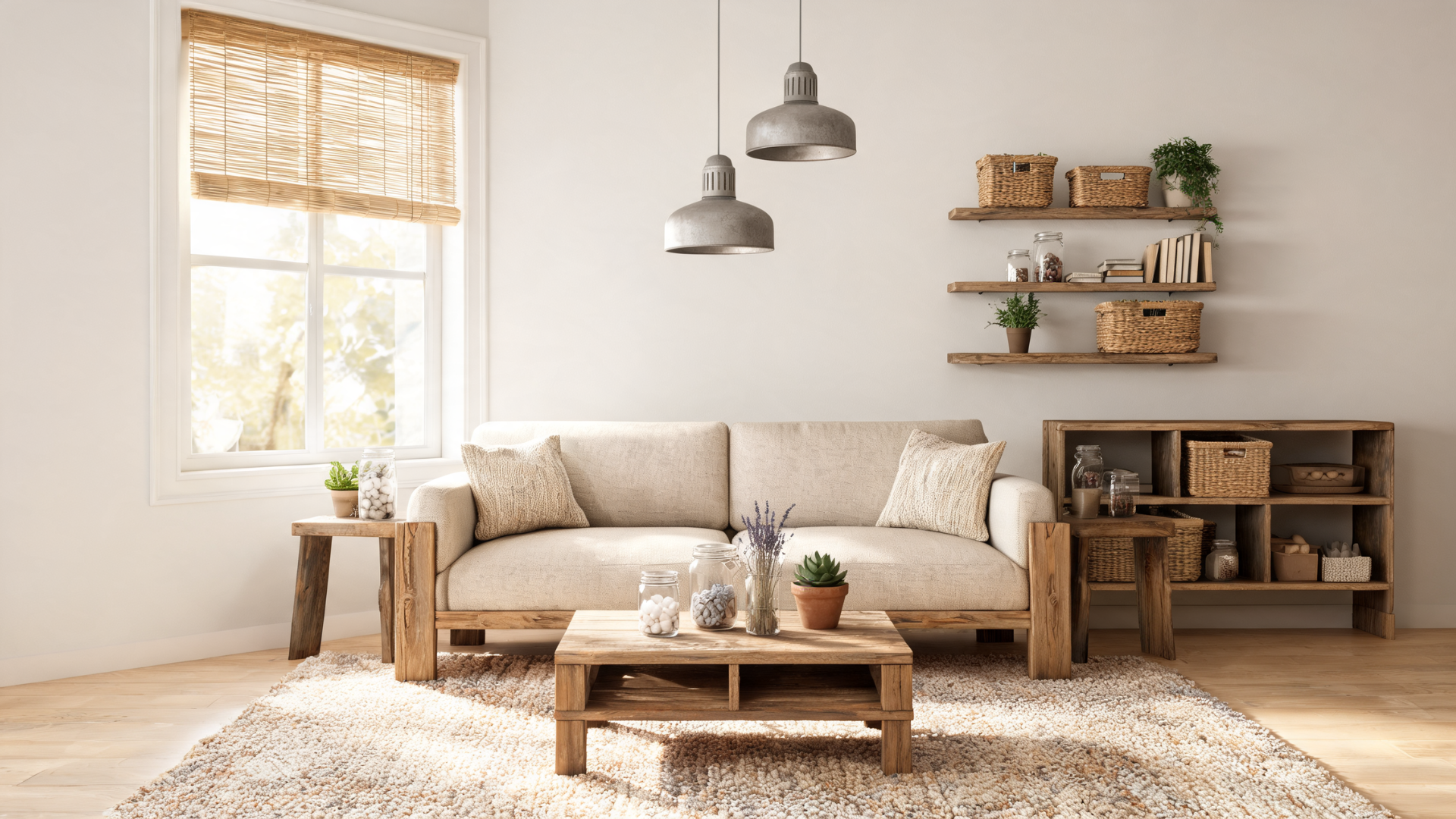
Living rooms see daily use from multiple people, so the materials here need to handle wear, support comfort over years, and be repairable when something eventually gives. Start with the largest pieces first: they drive the most cost, waste, and long-term impact.
Reclaimed wood works well for shelves, coffee tables, media units, and wall accents. It keeps usable material out of landfills and gives the room a character that new MDF can’t replicate.
Vintage furniture with solid frames offers the same advantage, especially pieces where broken joints or worn upholstery can be fixed rather than thrown out. The types of wood for furniture matter here: oak and walnut hold up significantly better under daily use than softer species.
Wool rugs hold up in high-traffic seating areas better than most synthetic options and are naturally stain-resistant when cared for properly. Recycled metal lighting is a long-lasting choice. Low-VOC paint on the walls reduces ongoing chemical exposure. Bamboo blinds add natural texture and are a renewable alternative to synthetic window treatments.
| Key Materials | Reclaimed wood shelving and tables, vintage furniture with repairable frames, wool rugs, recycled metal lighting, low-VOC paint, bamboo blinds |
| Priority | Start with the largest furniture pieces first. They account for the most waste and the most cost over time. |
2. Bedroom
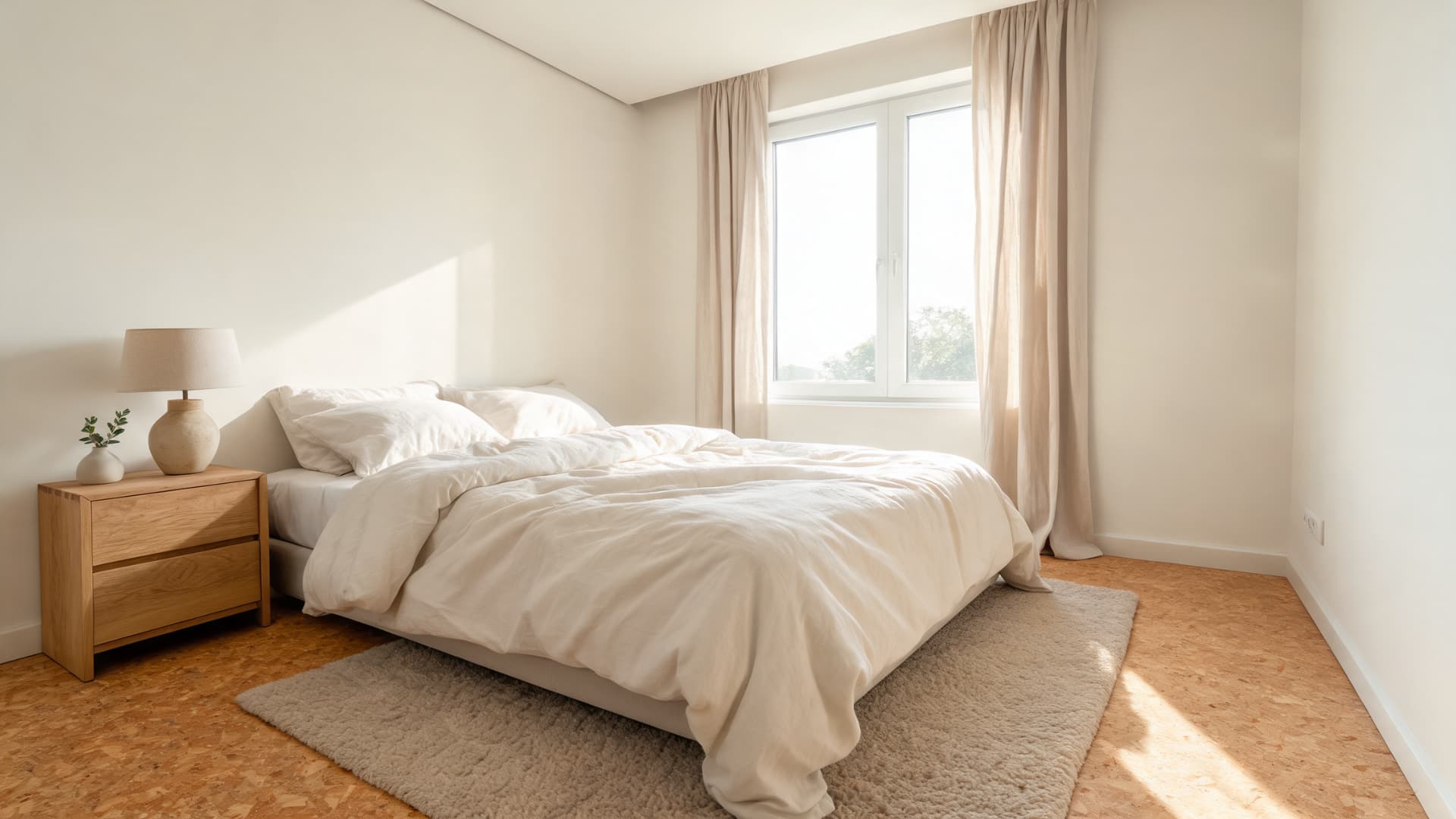
Bedrooms are where most people spend six to eight hours a night, so indoor air quality matters more here than in almost any other room. Avoid finishes, adhesives, or synthetic textiles that continue off-gassing after installation. The bedroom is not the place to save money on paint or mattress covers.
Organic cotton bedding and linen curtains create a breathable environment without synthetic fibers that trap heat or off-gas over time. Solid wood furniture is worth the investment here: it can be refinished when it shows wear instead of being replaced.
Cork flooring is soft and quiet underfoot and performs well in a low-traffic room. Understanding VOC levels in paint matters in a room where the windows may stay closed for hours.
| Key Materials | Organic cotton bedding, linen curtains, wool rugs, solid wood furniture, cork flooring, low-VOC paint |
| Priority | Paint and bedding first. These directly and continuously affect indoor air quality. |
3. Kitchen
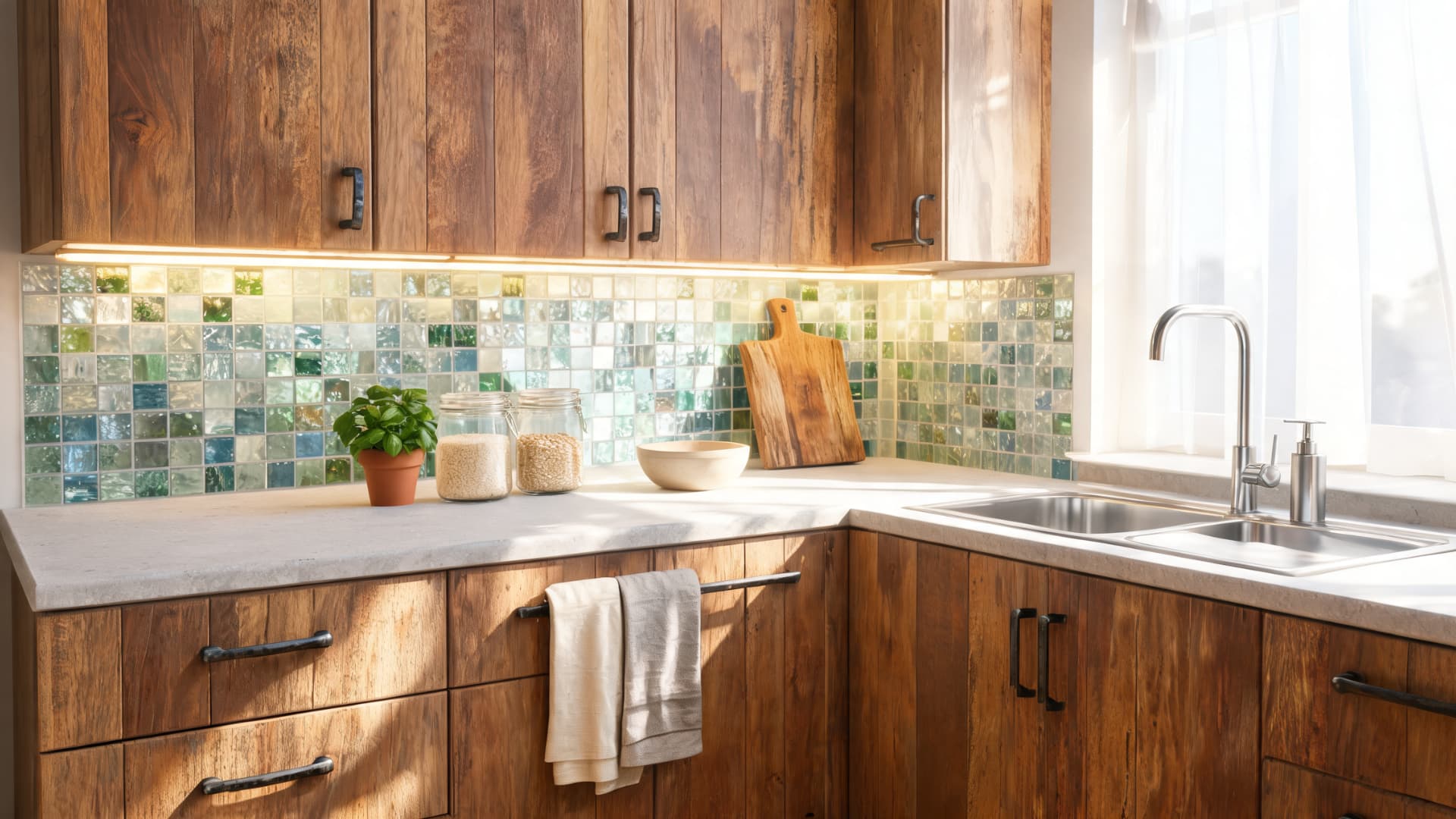
Kitchens need materials that handle heat, moisture, cleaning products, and daily use without deteriorating quickly. Replacing worn-out cabinets or counters every few years is neither sustainable nor economical. Durability comes first here.
FSC-certified wood cabinets are the responsible sourcing choice for new installations. Before replacing cabinets entirely, cabinet refacing is worth considering: it keeps the existing carcasses in place and updates only the door fronts and drawer faces, cutting both waste and cost significantly.
Recycled glass tile handles moisture well and brings recycled content into a heavily used area. Low-VOC finishes on cabinets matter in a room where ventilation may be limited. A minimalist kitchen layout also reduces the total surface area requiring material, which compounds the savings across every material choice.
| Key Materials | FSC-certified wood cabinets, reclaimed wood accents, recycled glass backsplash tile, recycled metal hardware, low-VOC cabinet finishes, LED task lighting |
| Priority | Assess existing cabinets for refacing before replacing. A refaced kitchen produces a fraction of the waste of a full replacement. |
4. Bathroom
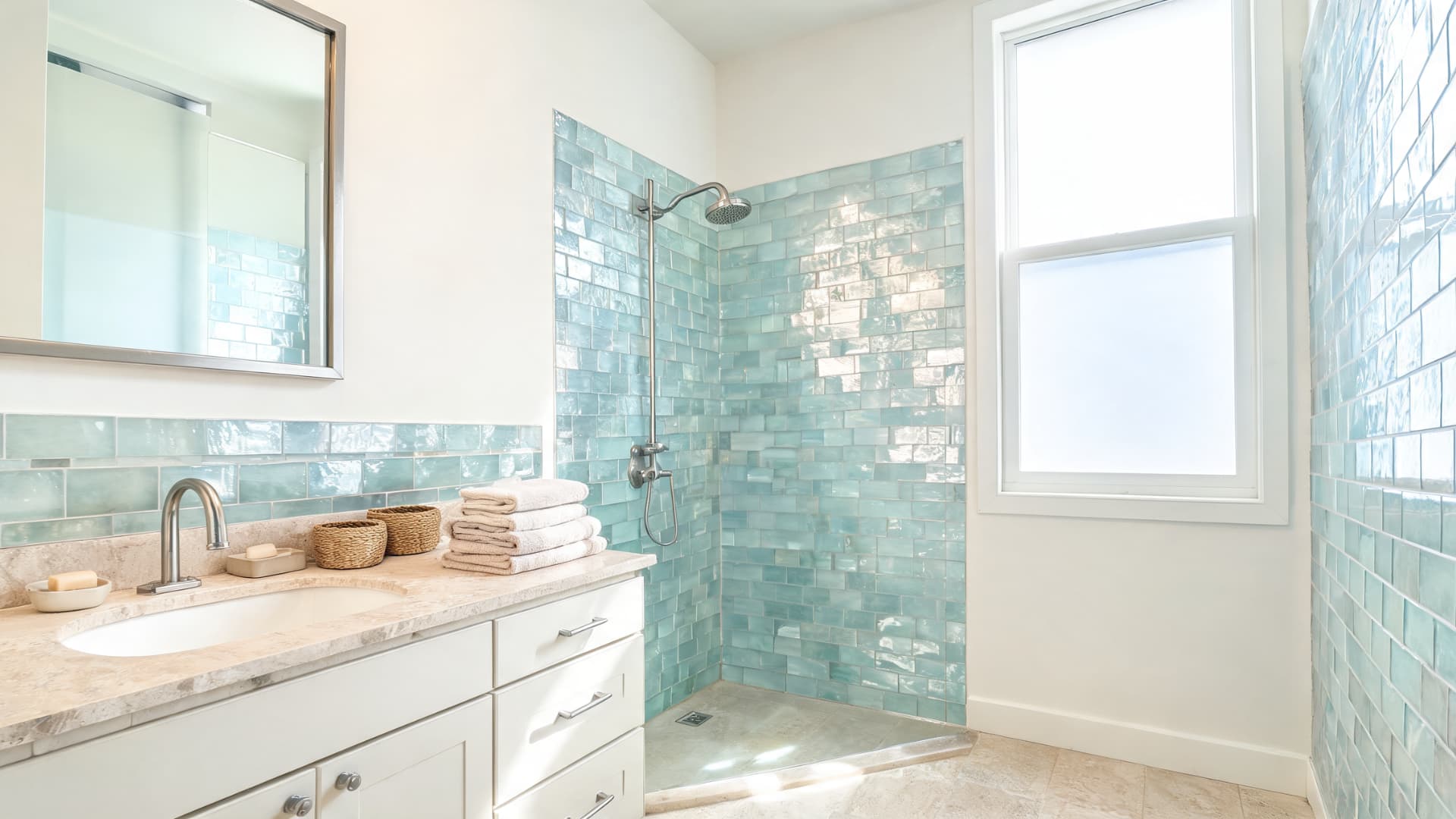
Water, steam, and frequent cleaning are hard on weak finishes. Every material choice in a bathroom needs to be assessed for moisture resistance before anything else. A beautiful material that degrades in humid conditions is a replacement job waiting to happen.
Recycled glass tile performs well on shower walls and backsplashes. Responsibly sourced stone is durable when maintained and sealed correctly. Water-saving fixtures are among the highest-impact changes in a bathroom: low-flow showerheads and dual-flush toilets reduce daily water consumption without a noticeable change in function.
Low-VOC mildew-resistant paint protects walls that stay damp. Durable metal hardware outlasts cheaper finishes in high-humidity environments.
| Key Materials | Recycled glass tile, responsibly sourced stone, water-saving fixtures, low-VOC mildew-resistant paint, durable metal hardware, bamboo accessories |
| Priority | Water fixtures first. They reduce ongoing resource use and pay back the investment over time. |
5. Home Office
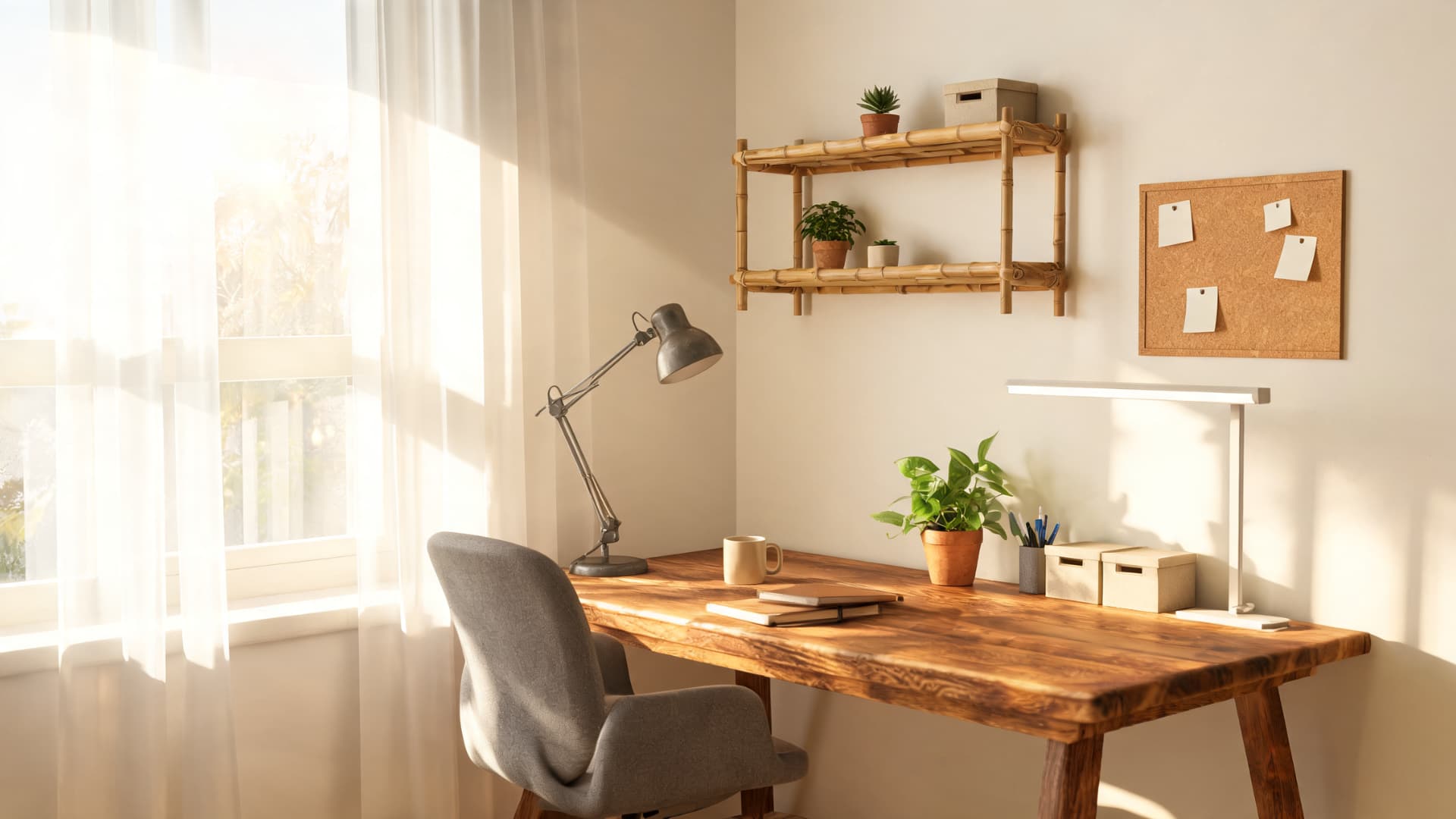
A home office needs furniture that supports posture and focus across long days. The desk and chair are the most important pieces to get right. A second-hand solid wood desk often outlasts a new budget alternative by a decade or more, and it costs less. That’s not a compromise: that’s a better purchase.
Bamboo shelving provides renewable storage that holds books and equipment without the particleboard off-gassing common in flat-pack alternatives. Cork boards replace single-use adhesive notes and sticky strips with a reusable surface.
Recycled metal lamps and LED task lighting reduce energy use in a room that may be lit for eight or more hours a day. An ergonomic chair with replaceable parts extends the product’s useful life significantly.
| Key Materials | Second-hand solid wood desk, bamboo shelving, cork board, recycled metal lamp, LED task lighting, repairable ergonomic chair |
| Priority | Desk and chair first. They affect both daily function and long-term cost more than any other piece in the room. |
6. Small Apartment
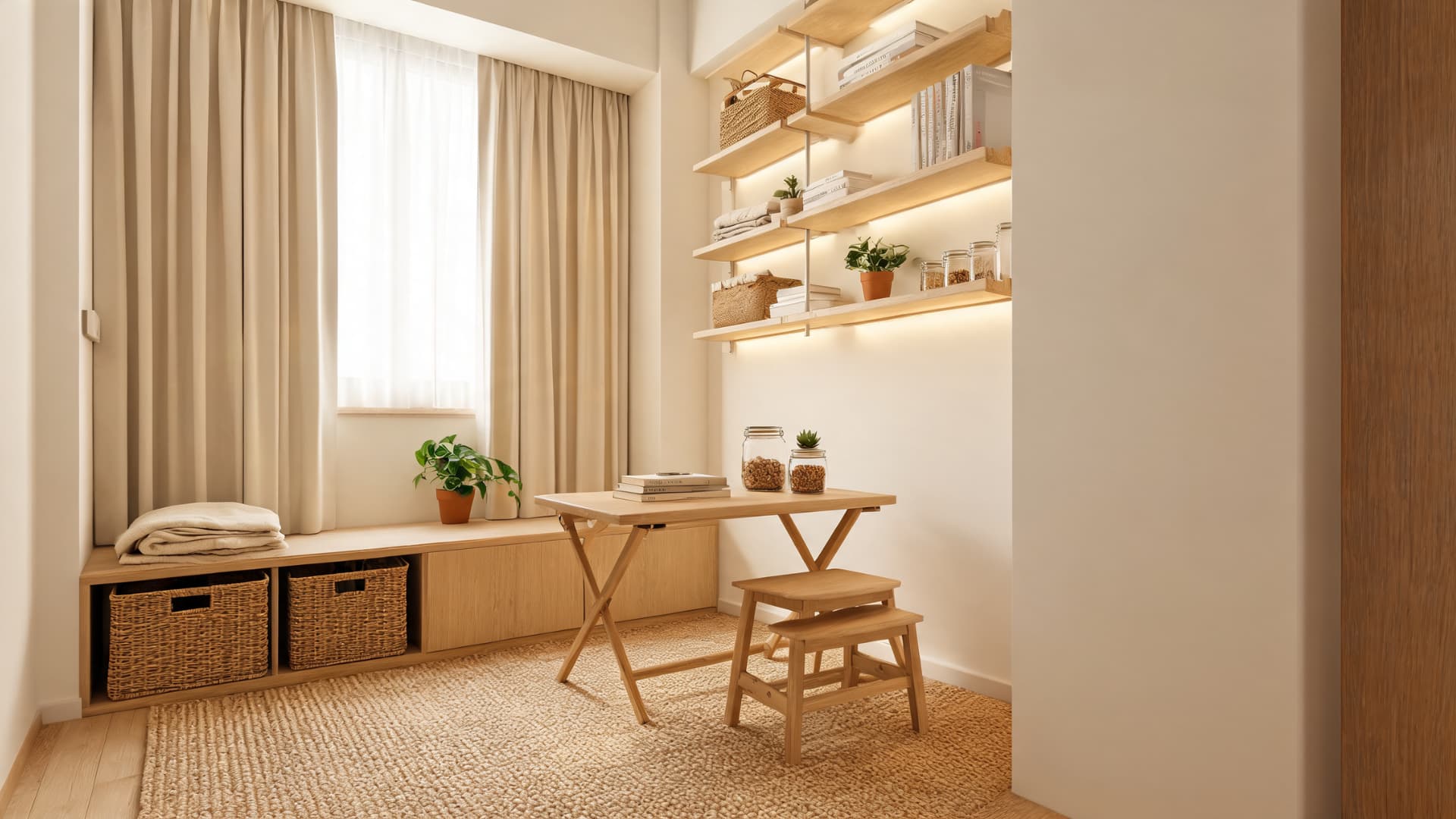
Every item in a small apartment has to earn its place. The sustainable choice here isn’t about finding the greenest product: it’s about buying fewer things that do more.
A storage bench that seats two and holds linens replaces two separate pieces. A foldable dining table reclaims floor space for six hours a day. That’s the design principle that matters most in a compact layout.
Second-hand storage pieces extend the useful life of furniture that would otherwise sit in a landfill. Natural fiber rugs add warmth without overwhelming a small floor plan.
Modular shelving adapts as storage needs change, which reduces the need to buy new furniture when the room’s function shifts. Thermal curtains regulate indoor temperature and cut heating and cooling costs in apartments with older windows.
| Key Materials | Multifunctional furniture, second-hand storage pieces, natural fiber rugs, LED lighting, thermal curtains, modular shelving |
| Priority | Multifunctional pieces first. They reduce the total number of items needed, which is the most direct path to a less wasteful room. |
How to Choose the Right Sustainable Material
A product can carry every eco-friendly claim on the packaging and still be the wrong choice for the room. Before buying any material, run through these four checks first.
| What to Check | Why It Matters | What to Look For |
| Room conditions | Bathrooms and kitchens need moisture-safe materials. Bedrooms need breathable textiles and low-emission finishes. Getting this wrong produces early failures. | Assess moisture, sunlight, foot traffic, cleaning routines, and whether children or pets are using the space before finalizing any choice. |
| Full life cycle | A reused or repairable material usually outperforms a new item that needs replacing in three years. | Ask where it came from, how it was made, how long it’s expected to last, and what happens when it’s removed. |
| Finish and adhesive | Natural base materials can still use toxic adhesives, sealers, stains, or coatings that undermine the environmental case. | Check finishes on wood furniture, bamboo flooring, cork tiles, cabinetry, upholstery, and rugs before purchasing. |
| Maintenance requirements | A material that fails early because it’s hard to clean or care for is not a sustainable choice regardless of its sourcing. | Stone may need periodic sealing. Cork needs moisture protection in wet areas. Wool needs correct cleaning products. Solid wood may need refinishing over time. Know the maintenance schedule before buying. |
A good material fits daily life in that specific room, not just a certification label. The right choice is one that suits the conditions, lasts well under actual use, and can be maintained without ongoing stress or cost.
Sustainable Interior Design Practices That Matter Most
Sustainable interior design is not only about buying eco-friendly products. It often starts with buying less, using items longer, and choosing better when something needs replacing.
- Reuse First: Repair, repaint, refinish, or reupholster what is already there before buying new.
- Buy Second-Hand: Look for solid wood tables, sturdy chairs, lamps, mirrors, shelving, and storage pieces.
- Check Condition: Avoid items with mold, water damage, broken frames, or strong chemical odors.
- Choose Quality: Pick durable, repairable pieces instead of cheap items that need replacing quickly.
- Try The 50/50 Method: Mix second-hand or upcycled pieces with new items to reduce waste.
- Source Locally: Use nearby woodworkers, upholstery shops, salvage stores, and repair services when possible.
- Plan for Flexibility: Choose furniture that can work in more than one room as needs change.
What To Avoid In Sustainable Interior Design
A lower-waste room is not only about adding better materials. It also means avoiding choices that break quickly, affect indoor air, or create more waste later.
- Avoid fast furniture that breaks quickly and has limited repair value.
- Do not replace everything at once if existing pieces can be repaired, refaced, donated, or reused.
- Choose low-VOC paints, stains, sealers, and adhesives to support better indoor air.
- Avoid non-certified wood with unclear sourcing.
- Do not trust green claims without material details, certifications, or brand transparency.
- Check the finish, adhesive, and coating, not just the base material.
- Pick materials based on moisture, traffic, sunlight, pets, children, and cleaning needs.
- Avoid hard-to-recycle mixed materials unless the product is durable enough to last.
- Skip trend-only purchases that may be replaced quickly.
- Think about repair, resale, donation, recycling, and disposal before buying.
Frequently Asked Questions
What makes a home truly eco-friendly inside?
A truly eco-friendly home reduces waste, uses durable materials, and avoids harmful emissions. It focuses on long-lasting furniture, safe finishes, and efficient energy use. The goal is not just appearance but how responsibly each item is sourced, used, and eventually replaced or reused over time.
Can sustainable design still look modern?
Yes, sustainable design can look very modern and stylish. Clean lines, neutral tones, natural textures, and minimal layouts often come from sustainable choices. Materials like wood, stone, cork, and recycled metals blend easily into contemporary interiors without losing visual appeal or comfort.
Are eco materials more expensive overall?
Eco materials can cost more upfront, but they often save money long term. Durable furniture, repairable pieces, and low-maintenance finishes reduce replacement costs. Over time, fewer replacements and lower energy use make sustainable choices more economical than cheaper short-life alternatives.
Do sustainable interiors need special cleaning?
Not always. Most sustainable materials can be cleaned with simple, mild products. Natural fiber rugs, wood, and stone may need gentle care, but they don’t require complex routines. The key is choosing materials that match your lifestyle so maintenance stays simple and realistic.
Is second-hand furniture always sustainable?
Second-hand furniture is often more sustainable, but condition matters. Items should be structurally sound, safe, and free from damage or harmful finishes. When chosen carefully, reused furniture reduces waste and extends product life, making it one of the most practical eco-friendly choices.
How does lighting affect sustainability indoors?
Lighting impacts energy use and comfort. LED lighting reduces electricity consumption and lasts longer than traditional bulbs. Good lighting design also reduces the need for excess fixtures. Natural daylight use further improves efficiency and lowers environmental impact over time.
Can small changes really improve sustainability?
Yes, small changes make a big difference over time. Switching to LED bulbs, choosing low-VOC paint, or repairing furniture instead of replacing it reduces waste. Sustainable design works best when improvements are made step by step rather than all at once.
What is the biggest mistake in eco design?
The biggest mistake is focusing only on labels instead of long-term durability. A product may look eco-friendly but fail quickly or use harmful finishes. True sustainability depends on lifespan, repairability, and how well the material performs in real daily conditions.
Summing Up
Creating a more thoughtful home doesn’t require a full renovation or expensive upgrades. With sustainable interior design, I focus on choosing materials, furniture, and finishes that last longer and reduce unnecessary waste over time.
From FSC-certified wood to low-VOC paint and recycled materials, each decision adds up across every room in your home.
When you start thinking in terms of durability, air quality, and long-term use, your space naturally becomes healthier and more efficient.
Sustainable interior design works best when you apply it step by step, starting with the spaces you use the most and building from there. Try one small change today and see how your home improves naturally.