

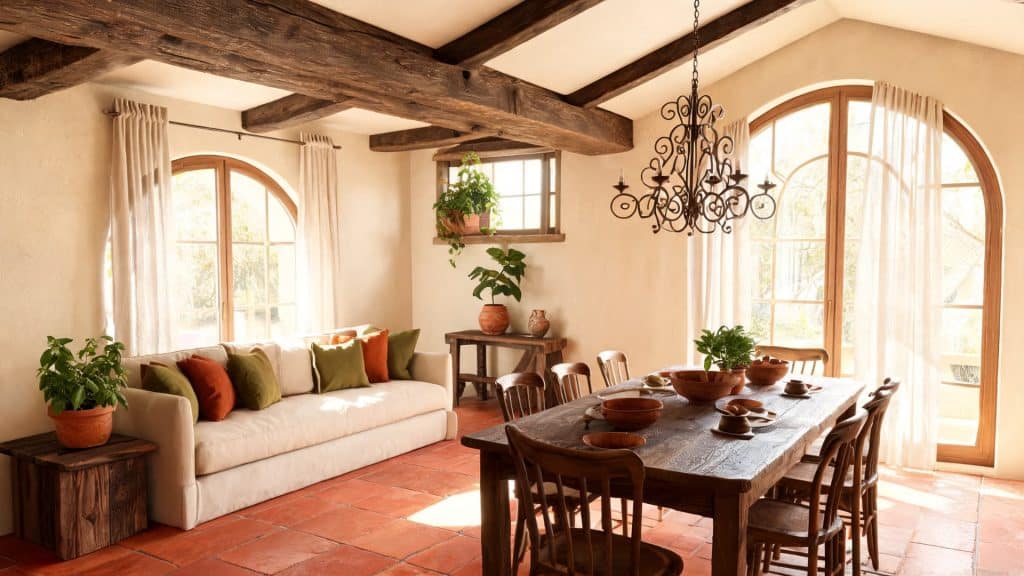


Tuscan interior design has a specific problem when people try to apply it: they focus on the look, the terracotta, the exposed beams, the wrought iron, without understanding the logic underneath.
The logic is warmth through material honesty. Stone, wood, and plaster that behave exactly like stone, wood, and plaster. Nothing faked, nothing forced. That’s the reason a well-executed Tuscan interior feels grounded, and a poorly executed one feels like a theme park.
This guide covers how Tuscan design actually works, room by room, material by material, and how modern updates like lighter palettes and sustainable materials keep it from feeling dated.
If you’re starting with one room or rethinking a whole floor plan, the decisions are the same: which materials, how much texture, and where the layout needs to breathe.
The Core Elements of Tuscan Interior Design
Before getting into specific rooms, it helps to understand what makes a Tuscan interior coherent rather than just a collection of rustic pieces.
Tuscan is one of the few interior design styles where the architecture does most of the heavy lifting, the flooring, the ceiling, and the wall surface, before a single piece of furniture enters the room. The table below maps each element to its modern interpretation and the practical effect it creates in a real room.
| Element | Modern Interpretation | Effect in the Room |
| Natural Materials | Limestone, travertine, light reclaimed wood | Organic warmth that doesn’t feel staged |
| Color Palette | Beige, cream, olive, warm white | Airy base that lets textures carry the visual weight |
| Textures | Light plaster, subtle stone, linen | Depth without heaviness |
| Furniture | Rustic forms with cleaner lines | Comfort that doesn’t crowd the room |
| Architecture | Exposed beams, soft arches | Structure that reads as warmth, not weight |
The most common mistake in Tuscan rooms is layering all of these elements at full intensity in the same space. The rooms that work are the ones that lead with one or two anchors, a stone floor, and a set of exposed beams, letting everything else support them rather than compete.
Traditional vs. Modern Tuscan: Where the Differences Actually Matter
The shift from traditional to modern Tuscan isn’t about abandoning the style, it’s about editing it. Traditional Tuscan interiors were built around abundance: heavy oak furniture, deep terracotta walls, elaborate iron fixtures. Modern Tuscan keeps the bones and lightens the skin.
| Feature | Traditional Tuscan | Modern Tuscan |
| Color Palette | Deep, saturated earthy finishes | Soft neutrals with earthy accents |
| Furniture | Large, ornate carved wood with iron hardware | Streamlined, lighter finishes, multifunctional |
| Textures | Heavy rustic textures throughout | Softer textures, one or two tactile anchors per room |
| Architectural Features | Full country estate authenticity — arches, beams, stone | Same features, but openness and simplicity take priority |
| Décor | Rich tapestries, dense ornamentation | Curated, intentional — fewer pieces doing more work |
| Atmosphere | Cozy, immersive, historically grounded | Warm but airy — readable and livable every day |
| Materials | Heavy stone, dark oak, wrought iron | Reclaimed or responsibly sourced stone and wood, refined iron |
The practical takeaway: if a room feels dark or closed in after you’ve added the Tuscan elements, the problem is usually the palette or the scale of the furniture, not the style itself. Swap to lighter wall tones and right-size the pieces before adding more décor.
Room-by-Room: Applying Tuscan Interior Design Where It Actually Lives
The style works differently in each room because the function is different. Here’s how the decisions change depending on what the room needs to do.
1. Living Rooms
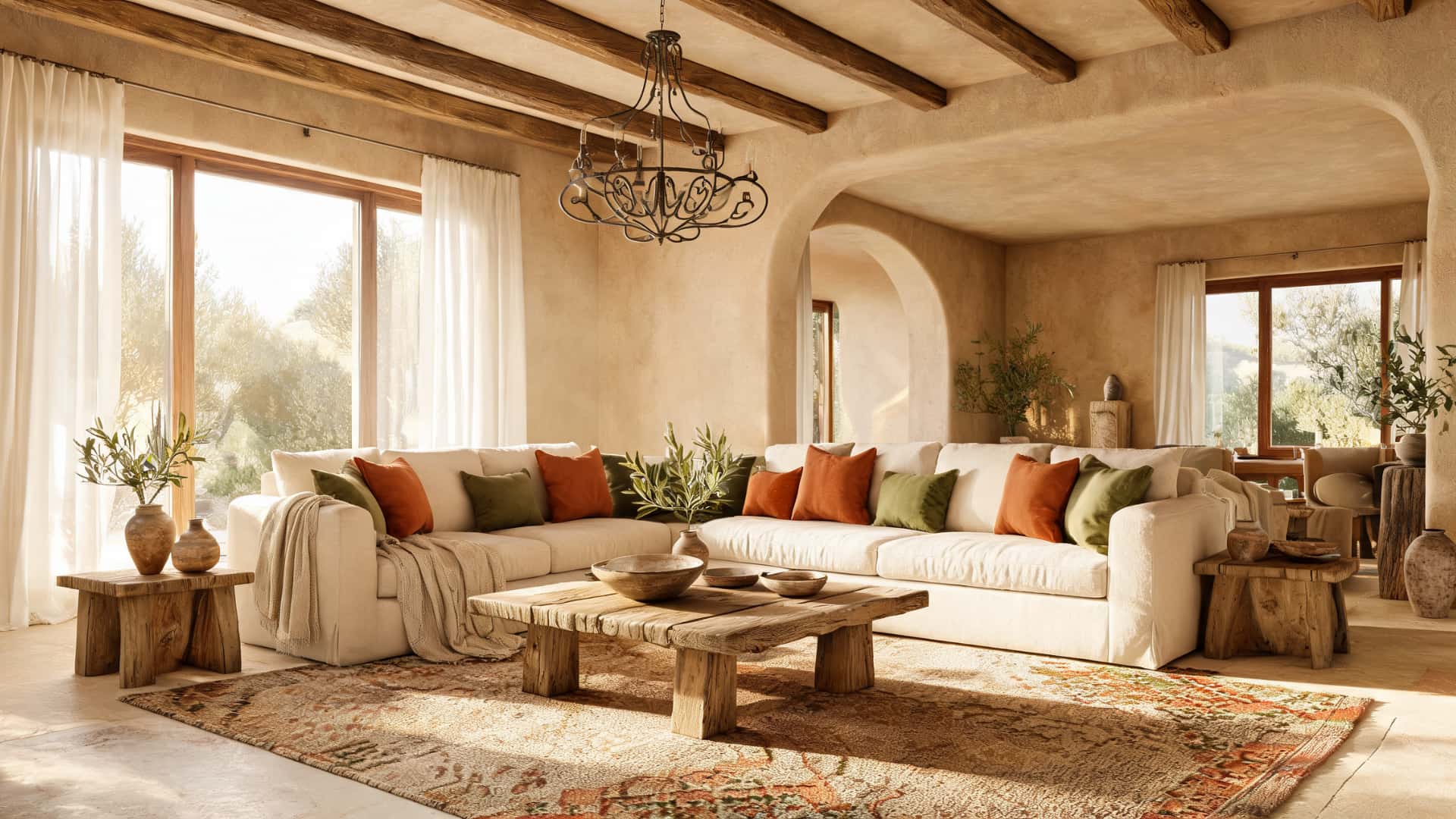
In a Tuscan living room, the furniture arrangement is the first problem to solve, not the décor. If the seating is positioned to face a television in the corner, no amount of terracotta pillows or handcrafted ceramics will make the room feel grounded. Start by identifying the real focal point: a fireplace, a stone arch, a large window. Build the seating conversation around that.
From there, texture does the heavy lifting. A neutral sofa, cream linen or warm beige, gives the room a base that lets muted terracotta or olive accents register without competing. A statement rug anchors the space and defines the conversation area. A rustic wooden coffee table handles the material note without cluttering sightlines.
Large windows are assets here: natural light hitting textured plaster or stone reads completely differently than it does in a flat-painted room, the same principle that makes Mediterranean living rooms feel warm without feeling heavy.
Wrought iron lighting and a few handcrafted ceramic pieces close the loop. The key is restraint, two or three well-chosen pieces, not a collection of every Tuscan element available.
2. Kitchens and Dining Areas
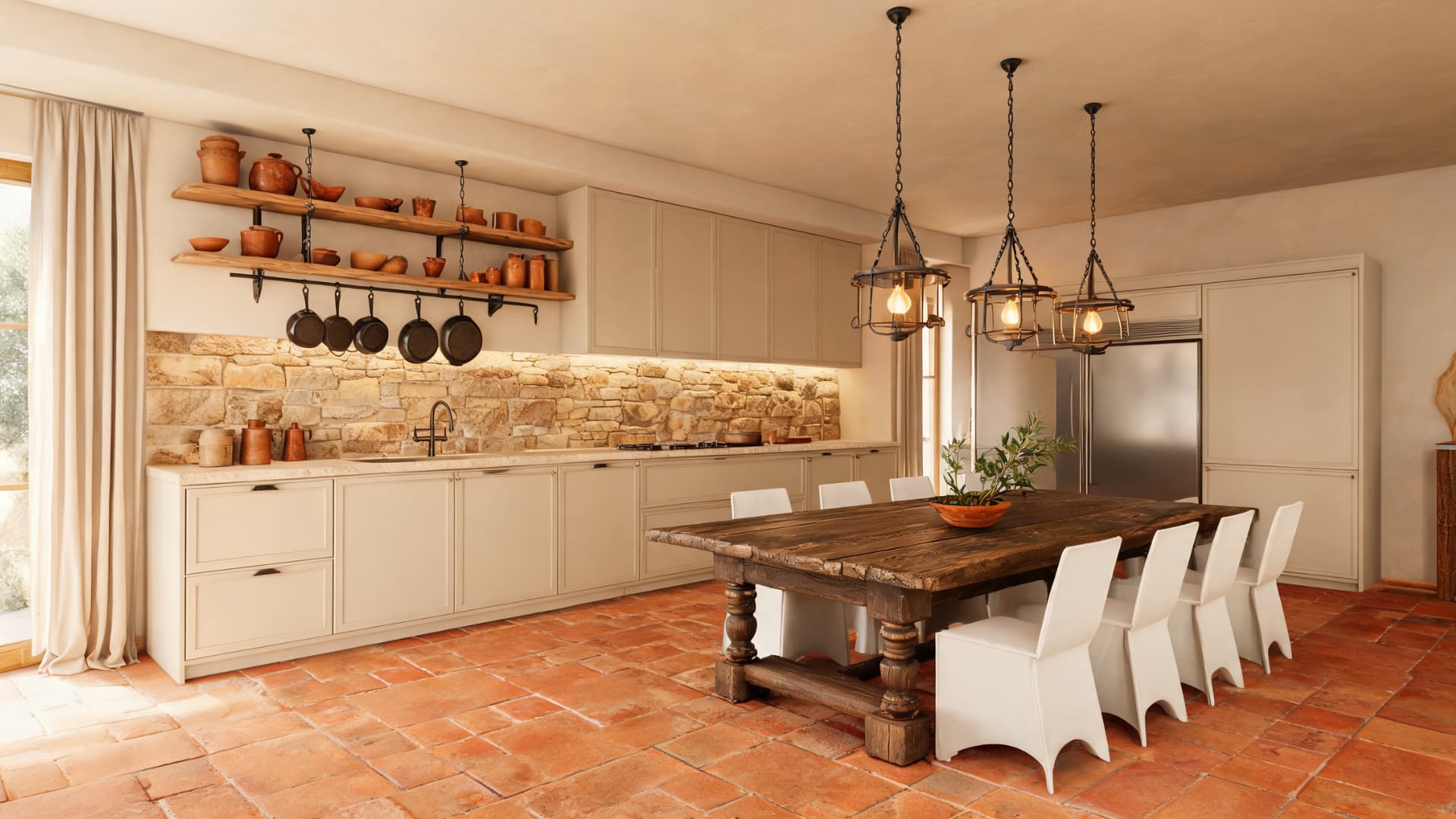
The kitchen is where Tuscan design earns its practicality. Light cabinetry, cream or soft white, paired with natural stone countertops handles the material layer without making the kitchen feel heavy. Terracotta or stone flooring grounds the room. If terracotta isn’t feasible, warm-toned large-format tile achieves a similar effect at lower cost and maintenance overhead.
The dining area is where you can introduce contrast. An antique farmhouse table paired with cleaner-lined chairs keeps the room functional while the table does the Tuscan work. If you’re choosing a new piece, dining table wood matters more in a Tuscan kitchen than in most other styles; the grain and aging need to feel honest rather than manufactured.
Open shelving is worth considering here; terracotta pottery and wrought iron pieces read well against it, and it keeps the room from feeling enclosed. A textured backsplash in stone or hand-set tile, combined with rustic pendant lighting and natural wood accents, completes the layering without overwhelming the workspace.
3. Bedrooms
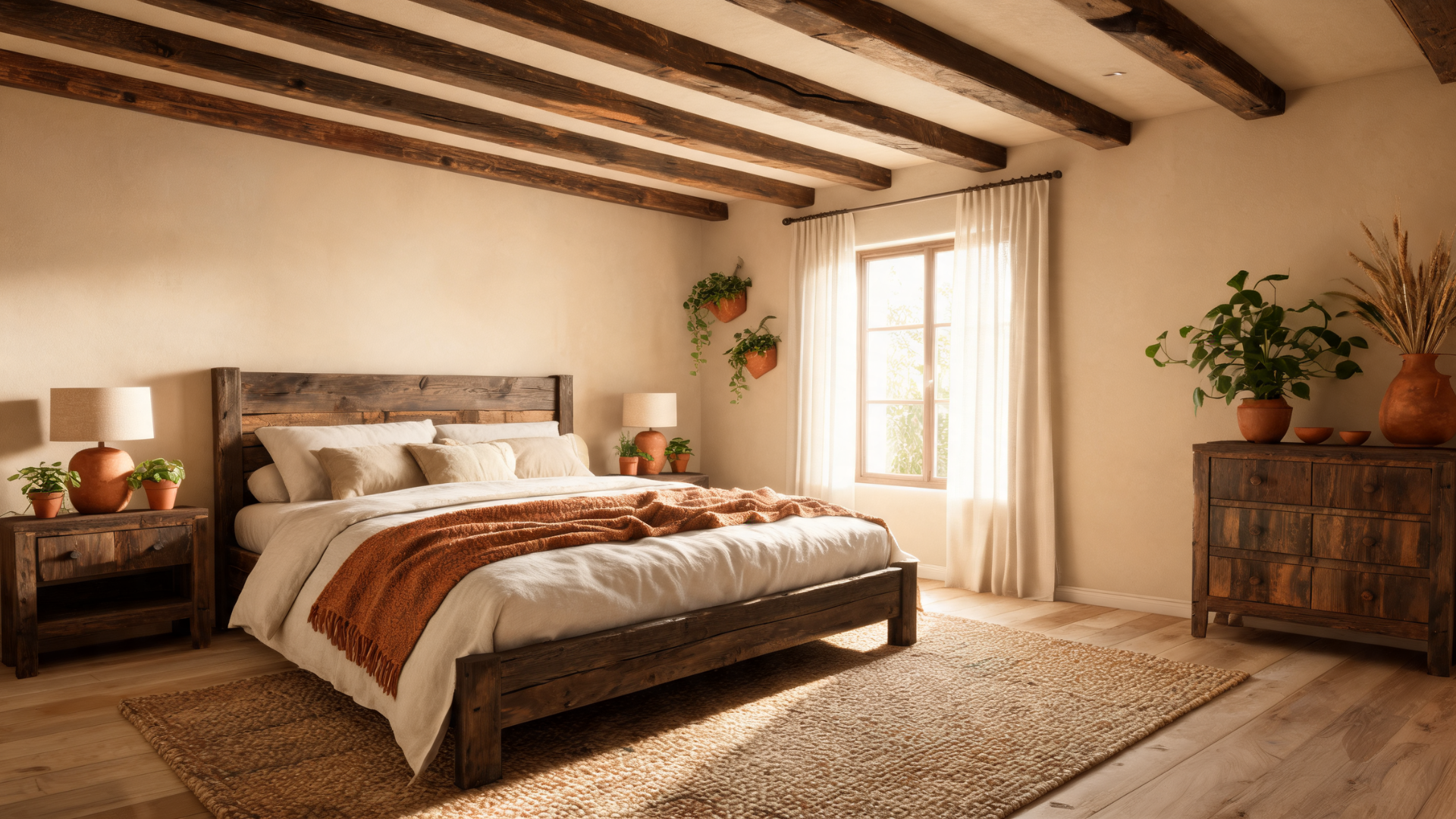
Tuscan bedrooms work best when they let the architecture speak and keep the furniture quiet. Exposed wood beams, even if you’re adding them rather than uncovering them, add vertical warmth without consuming floor space. Soft neutral walls, warm white or light plaster, give the beams the contrast they need to register.
Bedding is where texture compounds: layered natural linen, a woven or textured throw, and a low-profile rug in warm oat or clay.
The furniture should be solid wood with clean enough lines to avoid the room reading as heavy, a platform bed with simple joinery is more effective than an ornate carved headboard in a modern Tuscan bedroom.
Terracotta accents, a few potted plants, and a single piece of wall art do the finishing work. The goal is calm and warmth at the same time, which means editing down, not adding up.
4. Bathrooms
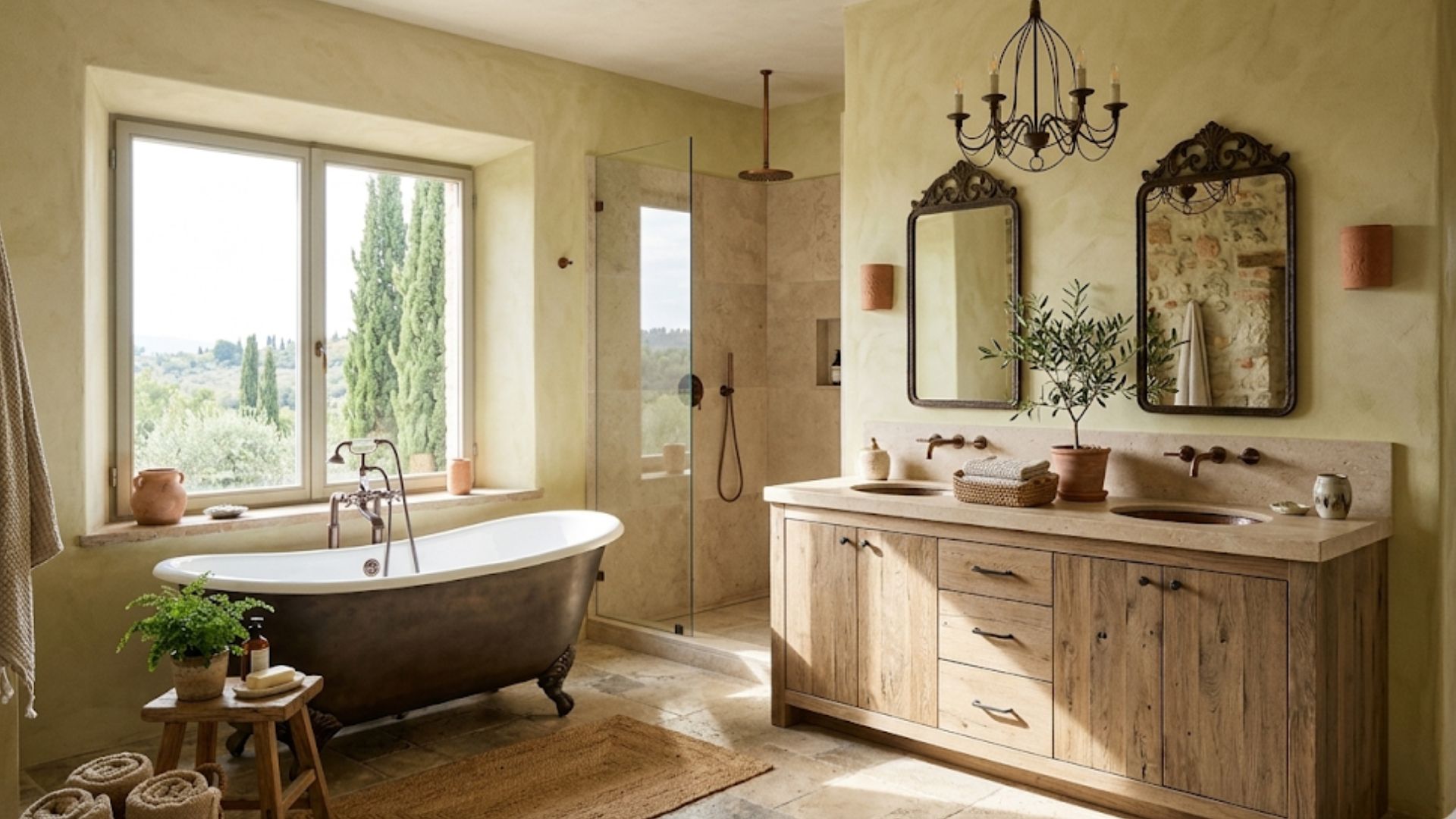
Bathrooms are where one or two strong material choices matter more than anything else. A freestanding tub in white or stone resin, a weathered wood vanity, or a stone tile floor, pick one as the anchor and keep everything else supporting it. Trying to do all three in a standard bathroom makes the room feel congested.
Soft neutral tones on the walls, warm white or light greige, give the materials room to read. An iron chandelier or pendant light adds the Tuscan hardware note without taking up floor space.
Natural stone tile on the floor, textured linen towels, and a small terracotta plant or two round out the layering. Keep the layout uncluttered: surfaces clear, storage out of sight. The bathroom should feel like a room you want to be in, not a reference board.
5. Outdoor Spaces
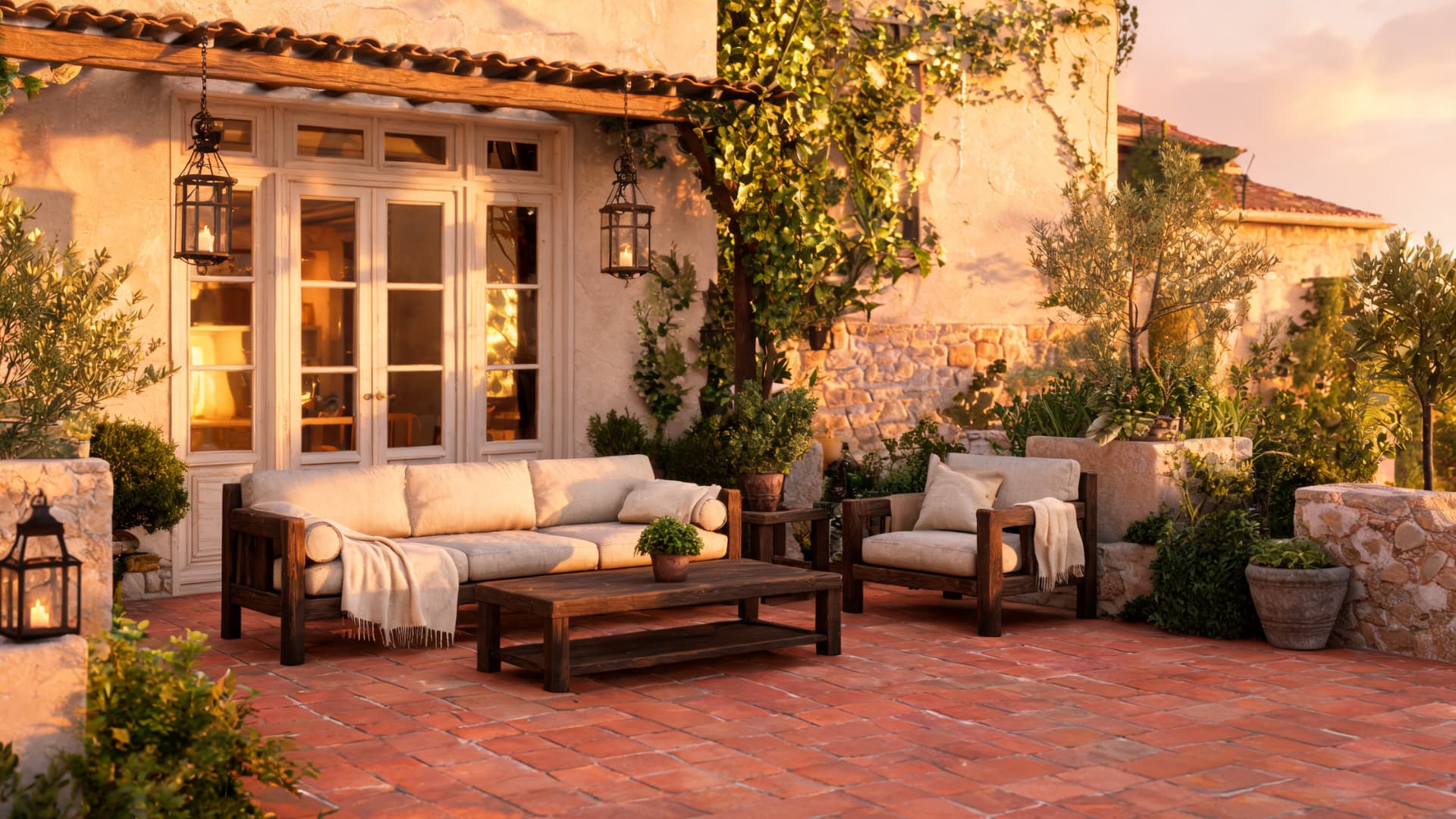
The connection between the interior and the outdoor space is where Tuscan design has a real structural advantage. Large windows or French doors that open onto a terrace create the indoor-outdoor continuity that defines the style.
On the terrace itself, terracotta tile flooring, rustic wooden furniture, and organic textiles carry the interior language outside without needing to replicate it exactly.
Potted plants and climbing vines do more than add greenery; they soften the transition between the built space and the landscape in a way that feels intentional rather than decorative.
Stone planters, layered seating with plush cushions and throws, and wrought iron lanterns create an outdoor room that functions as an extension of the interior rather than a separate design problem.
The standard for outdoor Tuscan materials is simple: terracotta and stone hold up. Painted wood and light metals don’t, at least not without ongoing maintenance.
6. Small Spaces
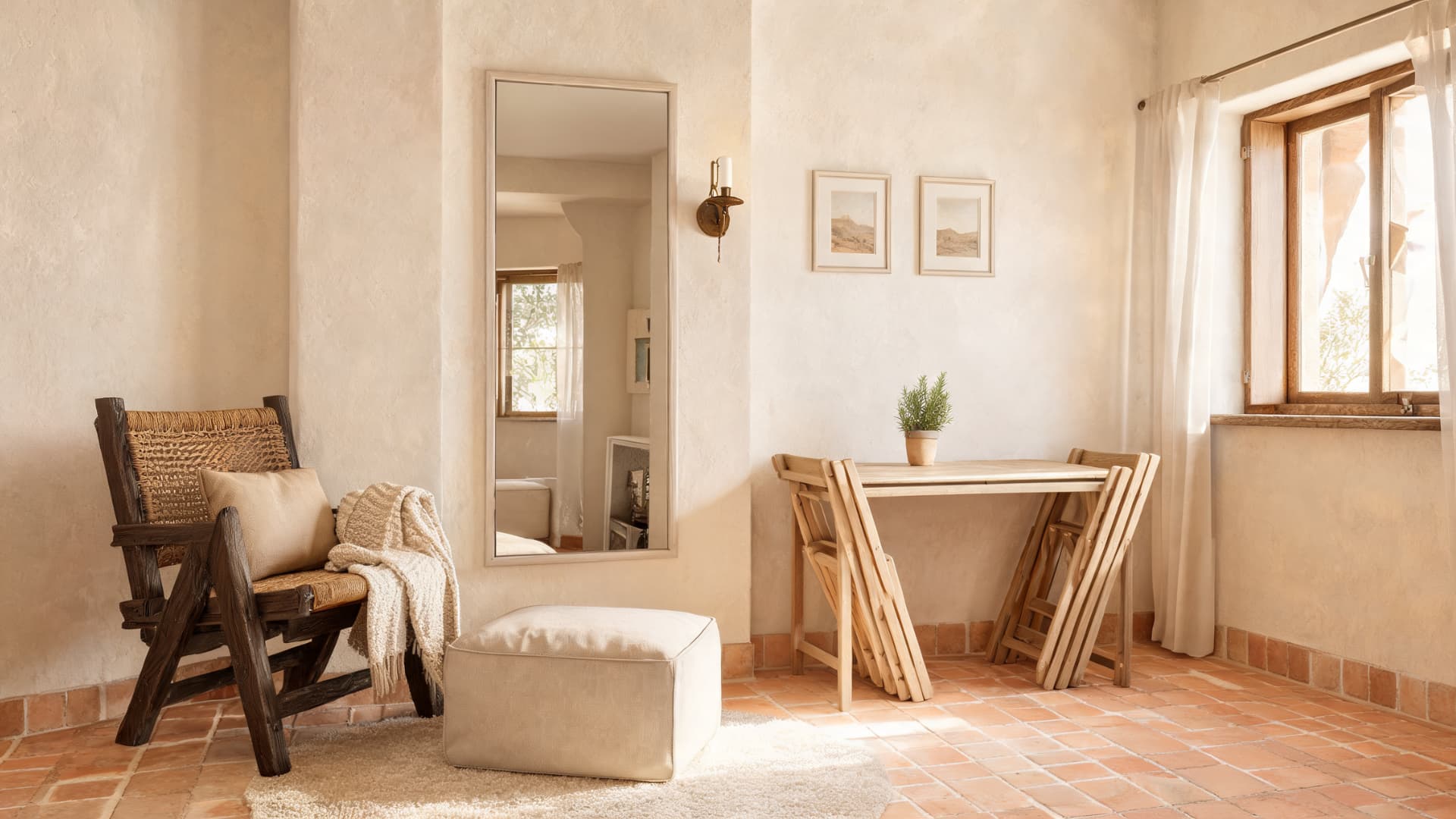
Tuscan interior design scales down, but only if you edit aggressively. In a small room, every element needs to earn its place. Start with a light palette, cream walls, light stone or warm hardwood floor, and add texture in layers rather than all at once.
A single statement piece (a terracotta lamp, a small carved wood console) carries more weight than five mid-sized accent pieces.
Furniture scale is the most common error in small Tuscan spaces. A large farmhouse dining table in a 10×12 dining room doesn’t create a Tuscan feeling; it creates a traffic problem.
Right-size the furniture first. In low-ceilinged rooms, exposed beams actually help by drawing the eye horizontally rather than letting the ceiling height read as the dominant constraint — but only when the wall color is light enough to give the beams contrast.
Multifunctional pieces, a storage ottoman, a fold-down table, a bench at the foot of the bed, extend usable space without adding visual clutter. Mirrors placed opposite windows let natural light reach further into the room, which matters more in a small Tuscan interior than in a large one.
Current Trends in Tuscan Interior Design Worth Paying Attention To
Lighter Palettes
The biggest shift in Tuscan design over the last few years is the move away from saturated terracotta walls toward soft creams, warm whites, and muted pastels as the dominant wall color.
The earthy tones move into the accents, pillows, ceramics, and small furniture pieces, where they have more visual impact against a light background than they do covering a whole wall. This isn’t a departure from Tuscan design; it’s the version that works in most US homes, which have lower ceilings and less natural light than an Italian farmhouse.
Sustainable Materials
Reclaimed wood, responsibly sourced stone, and low-VOC plasters are now standard considerations in Tuscan-influenced rooms, which is why sustainable interior design thinking has become part of how Tuscan rooms are sourced, not just styled.
Reclaimed oak beams and reclaimed stone tile look more convincingly Tuscan than new equivalents anyway; the aging and weathering are part of what makes the materials feel honest. If you’re sourcing wood specifically, look for Forest Stewardship Council (FSC) certified suppliers to verify responsible sourcing.
Balancing Rustic with Contemporary
The rooms getting the most attention right now are the ones that place a clearly contemporary element, a clean-lined sofa, a minimal pendant light, next to a clearly rustic one, an exposed stone wall, a reclaimed wood table, and let the contrast do the work.
This isn’t mixing styles randomly. It’s understood that Tuscan elements read more clearly when they have something to contrast against rather than being surrounded entirely by other Tuscan elements.
What to Avoid in Tuscan Interior Design
Most Tuscan interior design mistakes come from scale issues, poor lighting, and overuse of heavy materials, which reduce warmth, balance, and the natural openness this style depends on.
- Oversized Furniture Scale Issues: Large furniture in small rooms removes openness, making Tuscan interiors feel cramped instead of warm and inviting.
- Excess Heavy Material Layering: Too many stone, wood, or dark textures without light balance creates visually dense, heavy-looking spaces.
- Poor Lighting Placement Choices: Relying only on overhead lighting removes depth; Tuscan spaces need layered ambient and accent lighting.
- Overdecorating Walls Excessively: Too many wall pieces weaken natural textures and architectural features that should lead the design.
- Lack of Texture Contrast Variety: Using only smooth or only rough surfaces removes visual depth and makes rooms feel flat.
- Blocking Natural Window Light: Covering windows reduces daylight, which is essential for Tuscan warmth and livability.
- Unplanned Style Mixing Errors: Combining rustic and modern elements without intent creates visual confusion instead of balance.
- Overcrowded Décor Placement: Too many accessories reduce flow and make the space feel cluttered rather than curated.
- Outdated Tuscan Styling References: Overusing dark reds, heavy gold frames, or old motifs makes interiors feel dated instead of timeless.
| Pro Tip: If you’re unsure whether a Tuscan room is working, remove everything that isn’t a structural material or a key furniture piece and look at what’s left. If the room still has character from the architecture, the flooring, and the main furniture, the foundation is right. If it feels empty without the small décor items, the foundation needs work before adding more pieces. |
Frequently Asked Questions
What are authentic Tuscan wall colors?
Traditional Tuscan design relies on deep terracotta, ochre, and olive green. Modern versions prefer warm whites or creams as base colors, using deeper earth tones exclusively for textiles and accents to keep rooms bright, open, and airy.
Which budget-friendly updates work best?
Prioritize paint and textiles. Warm cream walls, natural linen drapery, and a textured area rug instantly introduce the signature style. Thrifted wooden accent furniture, vintage ceramic vessels, and classic terracotta planters provide authentic charm without requiring a costly structural renovation.
How should natural stone be maintained?
Seal stone flooring and countertops immediately upon installation. Reapply sealer every one to three years to prevent stubborn stains on porous limestone or travertine. Clean daily using mild, pH-neutral soap and water, avoiding harsh chemical cleansers that erode finishes.
What lighting prevents a dim atmosphere?
Layer wrought iron chandeliers with functional task lights and accent lamps. Relying solely on overhead fixtures creates flat, dark spaces. Use warm-toned bulbs between 2700K and 3000K to highlight plaster textures and replicate the cozy ambiance of Mediterranean evenings.
Which plants enhance the Tuscan aesthetic?
Incorporate potted olive trees, fragrant rosemary, and lavender. Housing these plants in weathered terracotta pots strengthens the connection to the Italian landscape. For outdoor terraces or covered patios, trailing ivy and climbing vines beautifully soften structural stone transitions.
Can Tuscan style suit minimalist homes?
Yes, by focusing on a singular architectural element like an exposed beam or plaster wall. Keep the remaining layout uncluttered and the palette light. Select scaled-down, multifunctional furniture and limit accessories to a few high-quality, impactful pieces.
Final Thoughts
Embracing Tuscan interior design isn’t about replicating a distant Italian villa; it’s about creating a personal sanctuary rooted in material honesty and warmth.
When I first experimented with this style, I realized that true beauty lies in the balance, letting the organic texture of stone, wood, and plaster breathe without overcrowding the space.
By introducing soft neutrals and curated, intentional anchors, you can craft a home that feels both historically grounded and completely livable for your modern everyday life.
Ready to upgrade your space into a warm, inviting retreat? Drop a comment below sharing which room you’re planning to redesign first, or subscribe to our newsletter for weekly interior styling tips delivered straight to your inbox.