
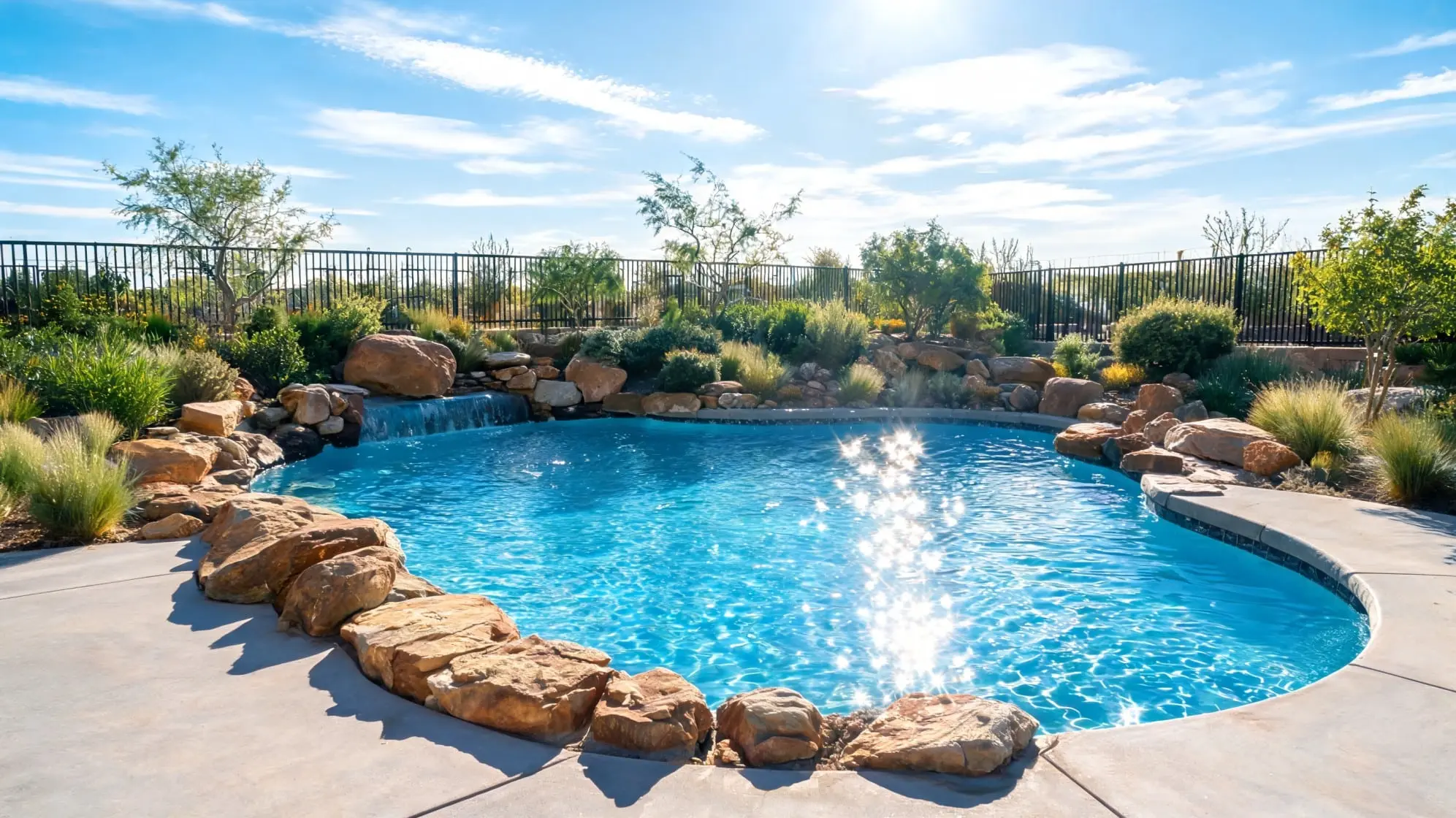


Have you ever looked at your pool and felt like the edges need something more than plain concrete or patchy grass?
I’ve seen how the right rocks can make a pool area feel cleaner, calmer, and easier to care for. When you plan landscaping around a pool with rocks, you need more than a pretty color.
You also need a safe footing, good drainage, and materials that hold up around water, sun, and pool chemicals.
I’ll walk you through the best rock types, smart design ideas, plant pairings, installation tips, and common mistakes to avoid. You’ll get simple ideas you can use to shape your pool area with more comfort and less upkeep overall.
What Rocks Work Best Around a Pool?
Choosing the right rocks around a pool is not just about how they look. You also want materials that feel safe underfoot, handle water well, stay in place, and match the style of your yard. Here are the best rock options to use around a pool and where each one works best:
- River rock: best for soft borders, garden beds, and natural pool edges.
- Pea gravel: best for drainage zones and budget-friendly paths.
- Crushed granite: best for walkways, modern yards, and low-maintenance ground cover.
- Flagstone: best for pool decks, stepping stones, patios, and paths.
- Travertine: best for hot climates because it stays cooler underfoot.
- Slate: best for a darker, high-end look, but it needs proper installation.
- Boulders: best for focal points, waterfalls, privacy, and natural edges.
- Basalt or granite: best for saltwater pools and durable modern designs.
The best choice depends on how you use the space.
Smooth rocks work well near bare feet, flat stones are better for walking areas, and larger rocks can add shape, privacy, or a natural focal point.
For the best results, mix two or three rock types rather than using a single material throughout.
Landscaping Around Pool with Rocks Ideas
Rock landscaping can make your pool area feel more finished, natural, and easy to care for. The right mix of stones can shape the space, guide foot traffic, improve drainage, and add style without needing much upkeep.
1. River Rock Border Around the Pool
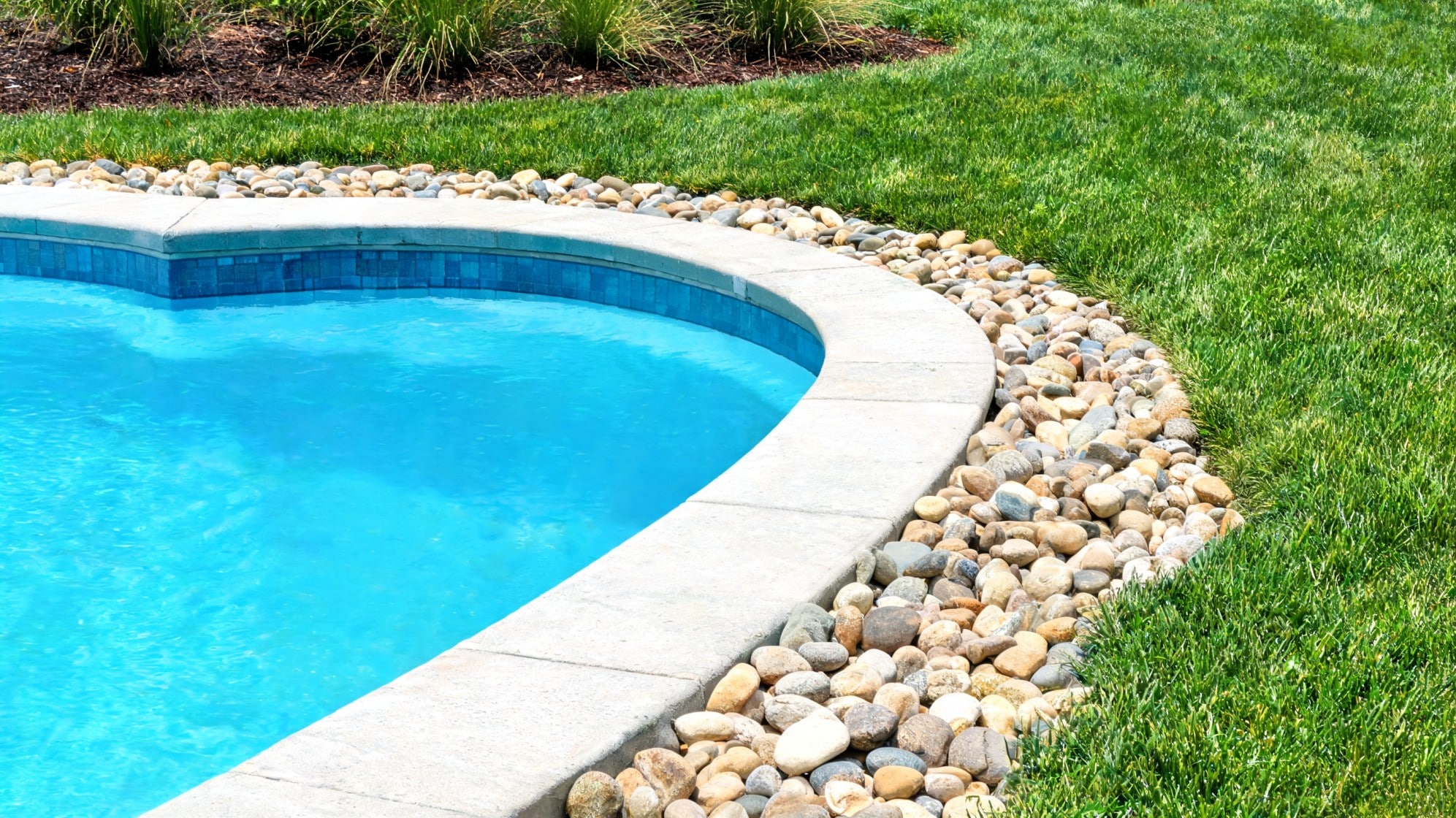
A river rock border is one of the easiest ways to make a pool edge feel soft and finished. Use smooth, rounded stones around planting beds, curved pool edges, or empty strips where grass does not grow well.
The rocks create a clean break between the pool deck and the landscape without feeling too formal. Add metal, stone, or concrete edging to keep the rocks in place and stop them from washing into the pool.
Mix two sizes of river rock to create a natural shape, then add low-growing plants for color and texture.
Styling tips:
- Use mixed tan, gray, or white river rocks for a natural look.
- Add black metal edging for a cleaner finish.
- Pair with ornamental grasses or low shrubs.
- Keep rocks a few inches below coping height.
Best for: Natural pool designs, coastal yards, and relaxed backyard pools.
2. Flagstone Stepping-Stone Path
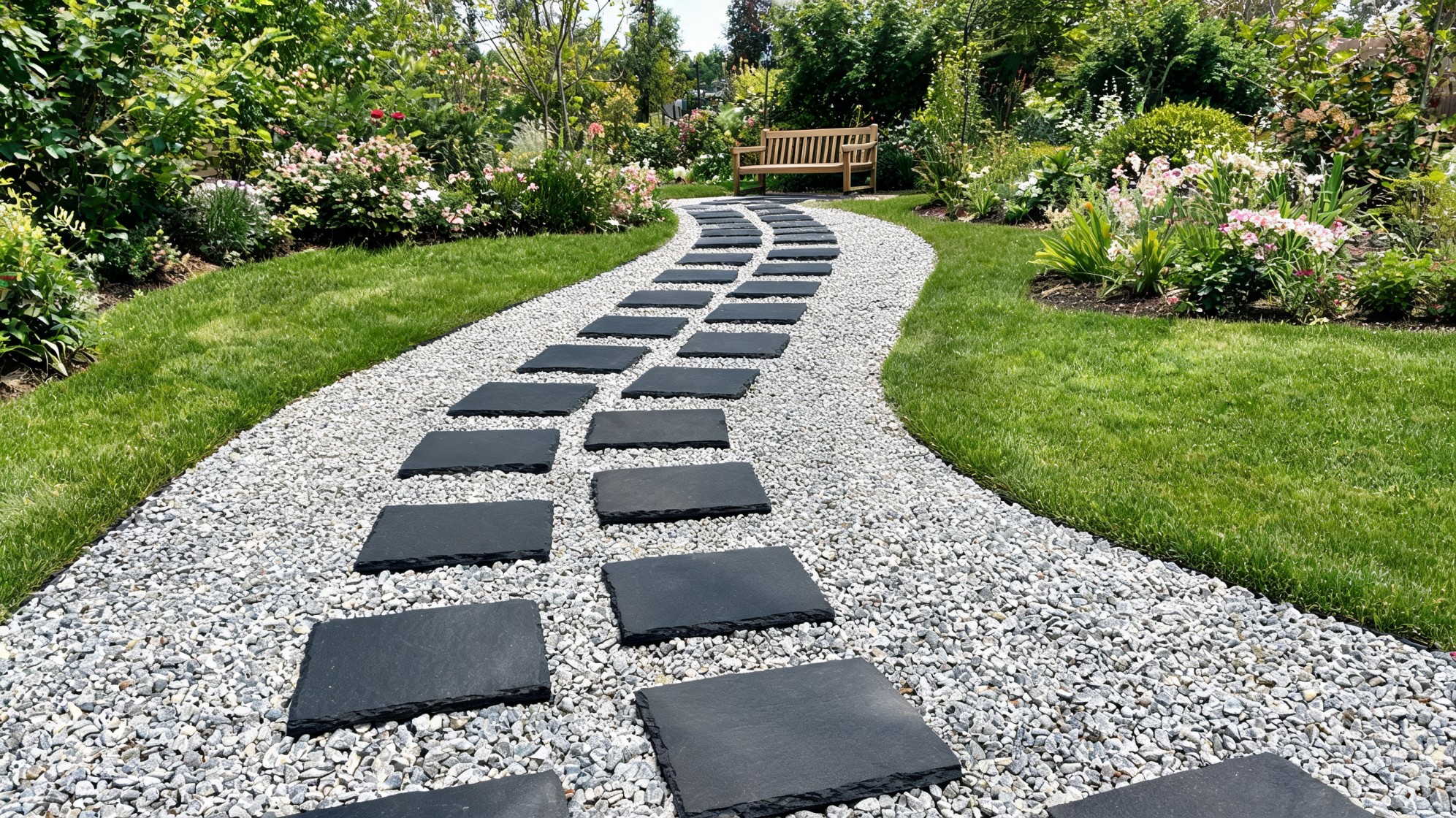
A flagstone stepping-stone path provides the pool area with a natural walkway without making the yard feel overly paved.
Use large, flat stones to connect the patio, pool gate, outdoor shower, garden, or seating area. Leave small gaps between each stone and fill them with pea gravel, crushed rock, or low ground cover.
This keeps the path stable while still feeling relaxed. Flagstone works well because each piece has a slightly different shape and tone. It also gives guests a clear place to walk, which helps protect grass and planting beds.
Styling tips:
- Use larger flagstones for safer barefoot walking.
- Fill gaps with pea gravel or creeping ground cover.
- Keep stone spacing even for easy steps.
- Match the flagstone tone with your pool coping.
Best for: Natural pool designs, rustic yards, garden-style pool areas.
3. Boulder Waterfall Feature
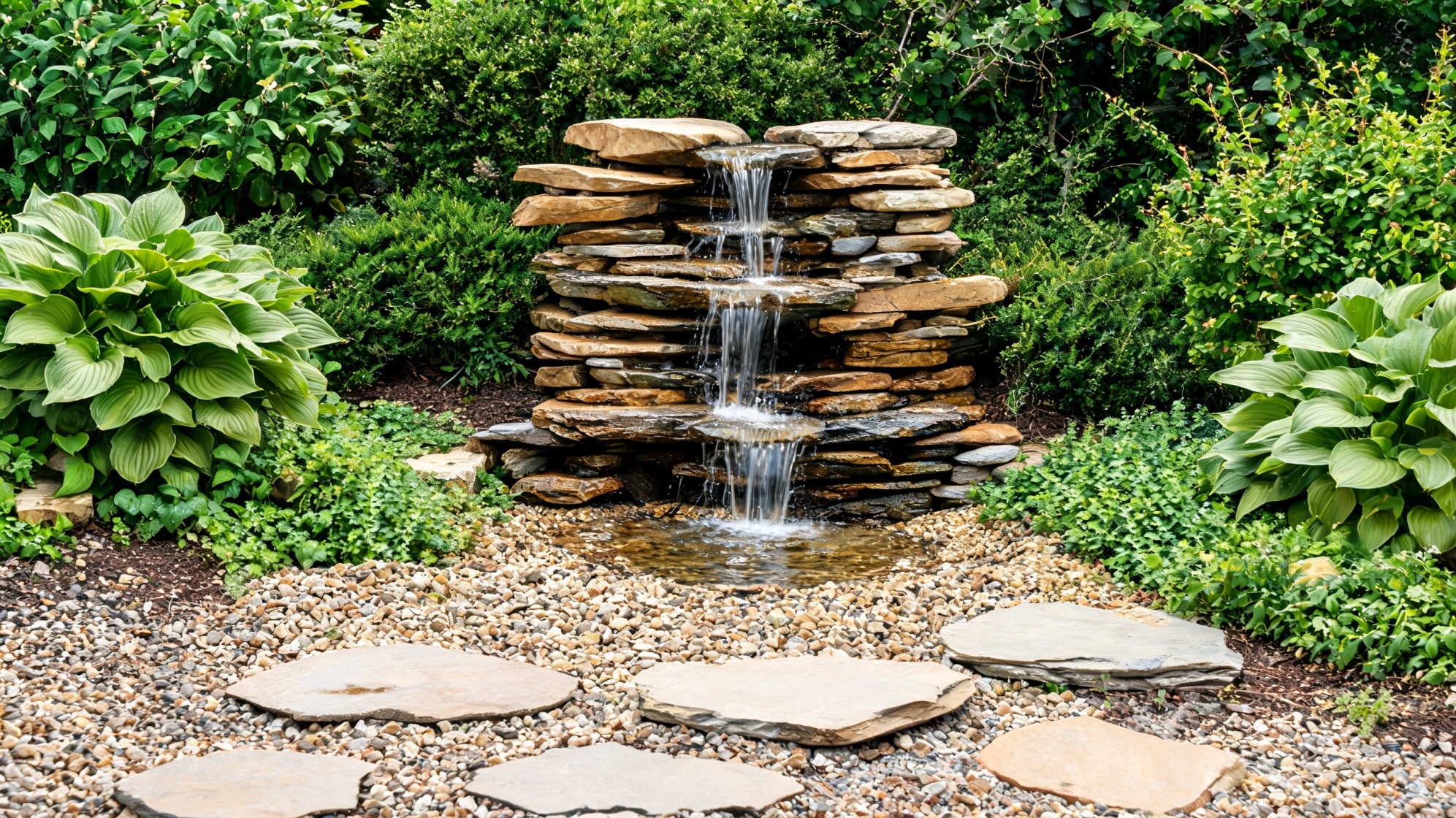
A boulder waterfall can turn one side of the pool into a strong focal point. Place large boulders in a natural cluster, then let water spill over them into the pool or a small catch basin.
Use smaller rocks near the base so the feature does not look too staged. Add ferns, palms, or grasses around the edges to soften the stone and make it feel part of the yard.
This idea works best when the pool has curves, since the rock shape blends well with a freeform layout and nearby planting beds.
Styling tips:
- Use odd-numbered groupings of boulders for a natural shape.
- Add smaller stones at the base to hide gaps.
- Place tropical plants behind the rocks for depth.
- Use warm lighting to highlight the water at night.
Best for: Freeform pools, tropical pool areas, natural pool designs.
4. Crushed Granite Poolside Ground Cover
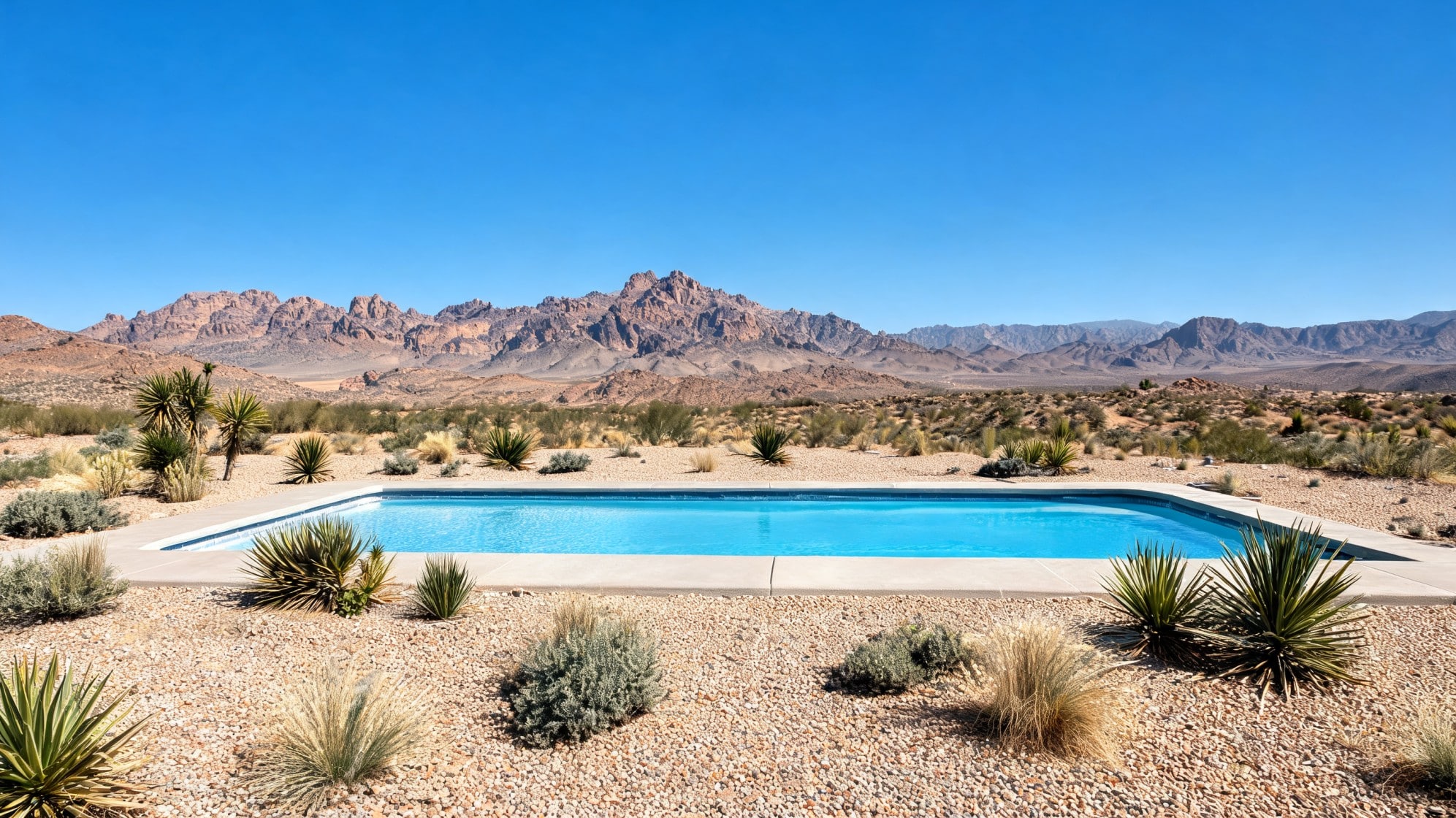
Crushed granite is a smart choice for poolside areas where grass looks patchy or needs too much care.
It creates a neat ground cover that handles heat, foot traffic, and water better than many soft surfaces. Use it around lounge chairs, in side yards, in garden beds, or in spaces between pavers.
Light gray, tan, or gold granite works well in sunny areas because it feels calmer and does not hold as much heat as dark stone. Add edging around the space so the granite stays in place and does not spread onto the pool deck.
Styling tips:
- Choose lighter granite in hot, sunny yards.
- Use firm edging to hold the material in place.
- Pair with large pavers for a clean walking path.
- Keep loose granite away from pool steps.
Best for: Low-water yards, modern pools, narrow poolside spaces.
5. Desert-Style Rock Garden
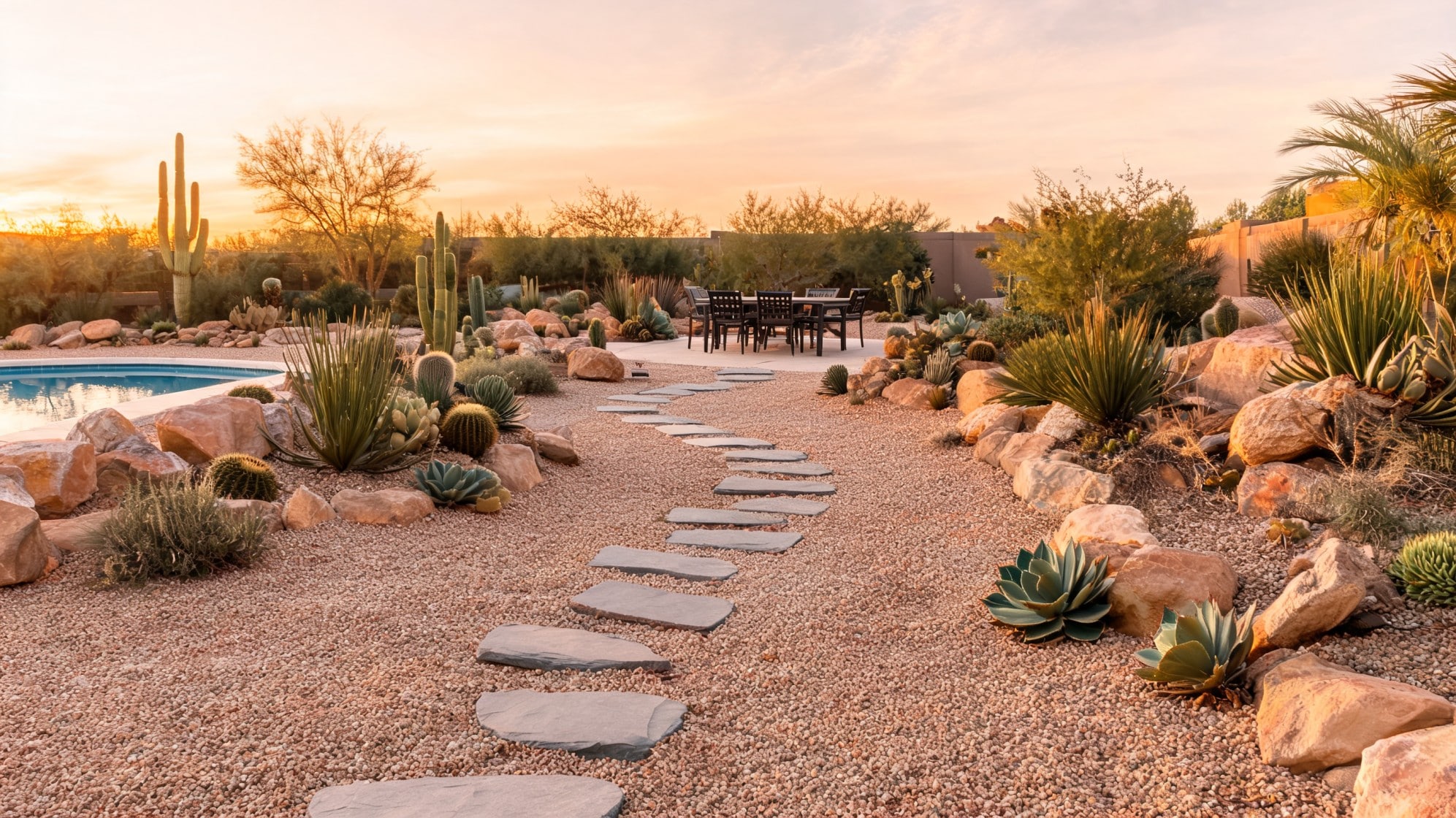
A desert-style rock garden is a strong choice if you want a pool area that looks clean and needs less water. Start with tan gravel or decomposed granite as the base, then add large boulders for shape and height.
Pair the rocks with agave, cactus, yucca, aloe, or ornamental grasses. Keep plant spacing open so each plant has room to stand out. This style works well in hot, dry areas because it does not rely on a lawn.
It also keeps the pool area simple, warm, and easy to maintain.
Styling tips:
- Use tan, gold, or rust-colored gravel.
- Add two or three large boulders instead of many small rocks.
- Choose drought-friendly plants with bold shapes.
- Leave open space so the design does not feel crowded.
Best for: Dry climates, desert pools, low-maintenance yards.
6. Modern Black Basalt and Concrete Design
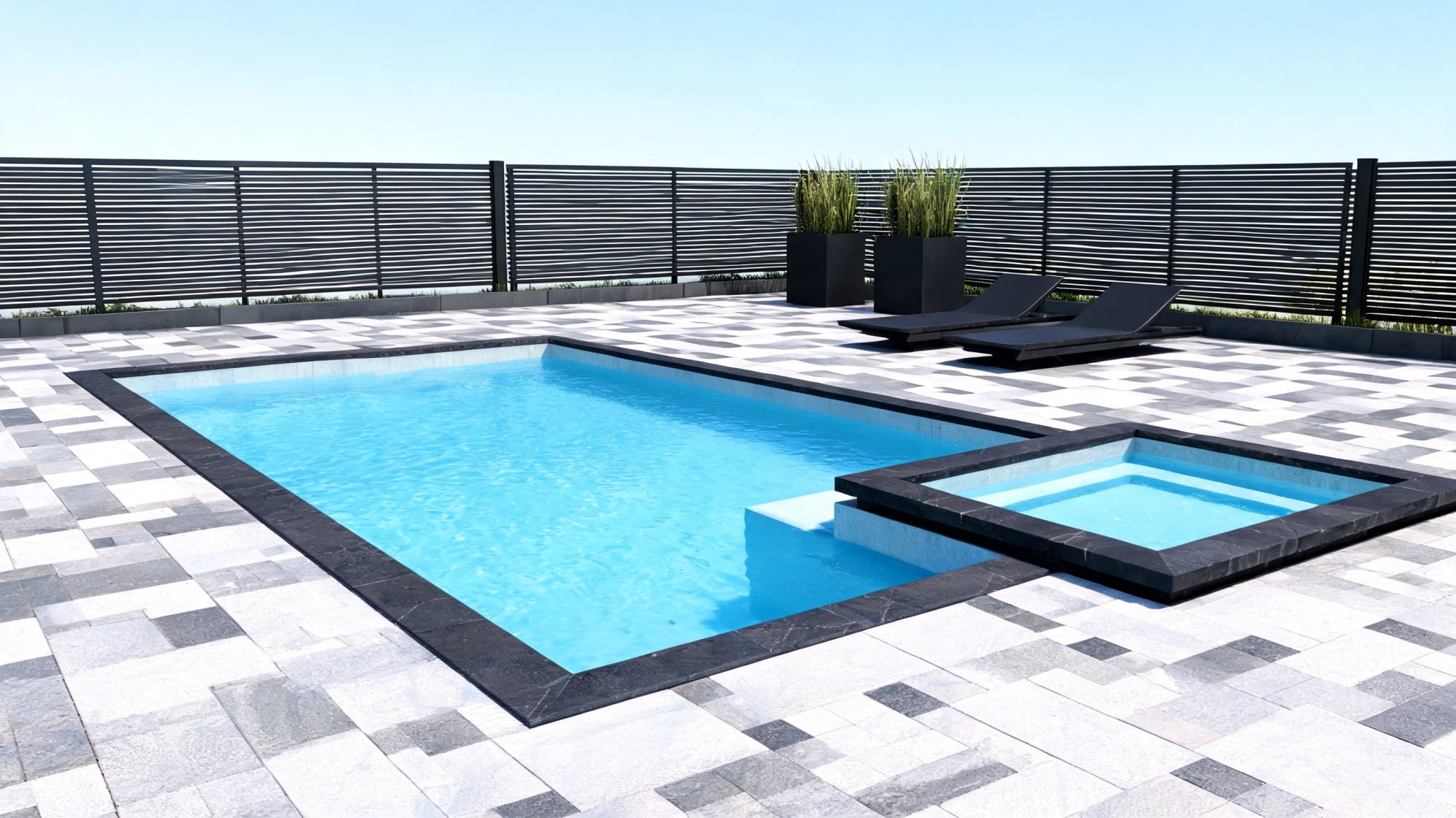
Black basalt and concrete create a clean, modern pool setting with strong contrast. Use black basalt pebbles or crushed basalt in narrow beds beside concrete pavers, coping, or a smooth pool deck.
Keep the shapes straight and simple so the space feels planned, not busy. Add a few upright grasses, boxwood, or sculptural plants to break up the dark stone.
This idea works best when you want a sharp, polished look. It also pairs well with rectangular pools, white walls, glass fencing, and simple outdoor furniture near shaded seating areas.
Styling tips:
- Use basalt in narrow borders instead of large open areas.
- Pair black stone with white walls or pale concrete.
- Add simple plants with upright shapes.
- Avoid dark stone in areas where people walk barefoot often.
Best for: Modern pools, rectangular pools, clean backyard layouts.
7. Rock Retaining Wall With Planters
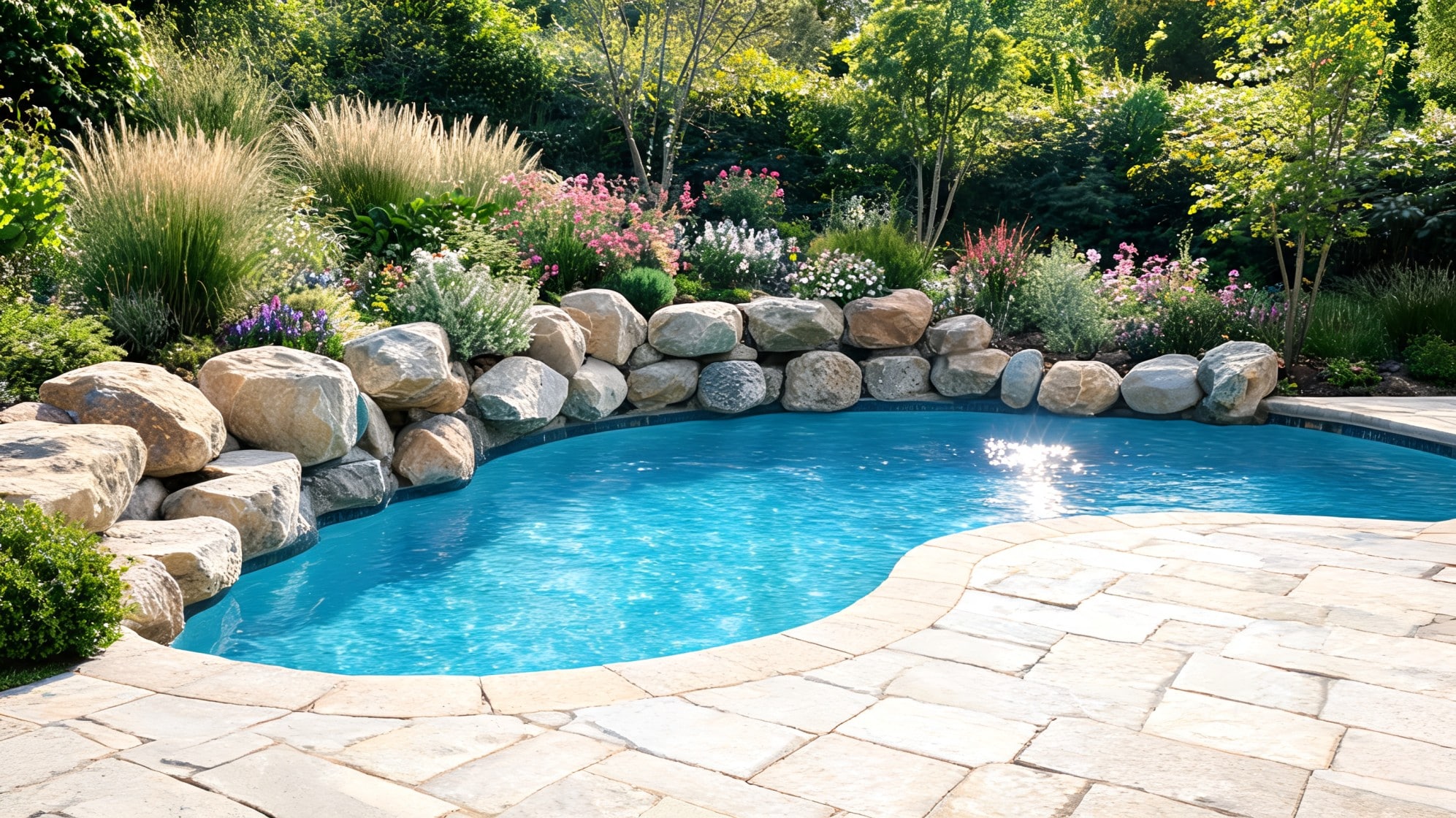
A rock retaining wall with planters is a smart way to handle a sloped yard near the pool. Use stacked stone, natural boulders, or cut stone blocks to hold soil in place and create raised planting areas.
The wall adds height, while the planters soften the hard edge with grasses, lavender, small shrubs, or trailing plants.
This design is useful when water runs toward the pool or when the yard feels uneven. Keep the wall low and layered if you want a natural look, or use cleaner stone cuts for a modern space.
Styling tips:
- Use plants that will not drop too many leaves into the pool.
- Keep the wall height balanced with the pool size.
- Add soft grasses to break up the stone.
- Use matching stone for steps or nearby edging.
Best for: Sloped yards, natural pool designs, layered landscapes.
8. Dry Creek Bed Near the Pool
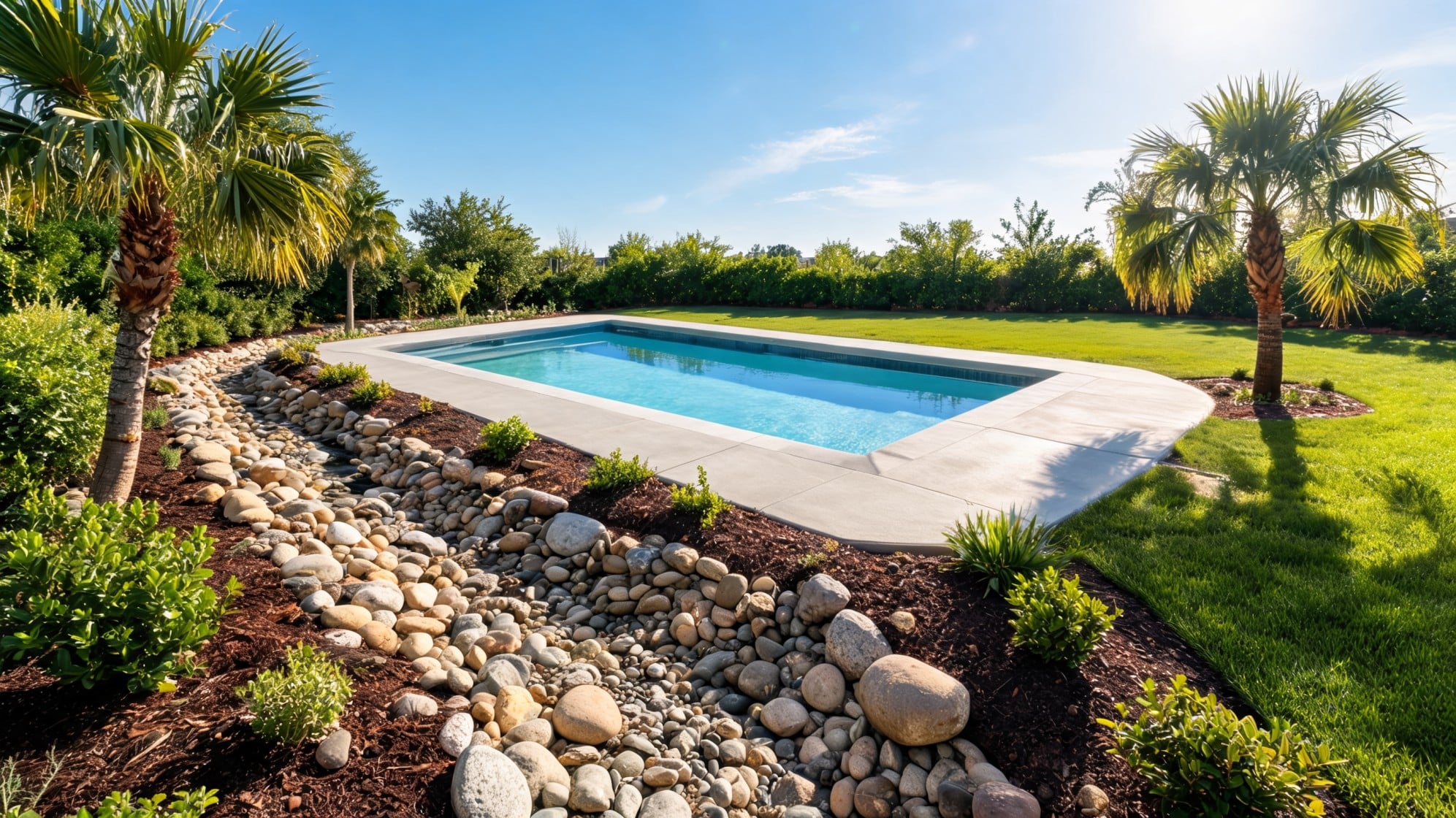
A dry creek bed adds movement to the pool landscape while helping with drainage. Use river rock, cobbles, and a few larger boulders to form a shallow, curved channel that guides rainwater away from the pool.
The bed should look like water could naturally flow through it, even when it is dry. Place larger stones along the edges and smaller rocks in the center.
Add grasses or drought-friendly plants nearby to soften the shape. This idea works especially well in yards with runoff, slopes, or wet spots after rain and storms.
Styling tips:
- Curve the creek bed instead of making it straight.
- Use three rock sizes for a more natural look.
- Place boulders at turns for visual weight.
- Add plants along the edges, not in the water path.
Best for: Natural pool designs, sloped yards, drainage-focused landscapes.
9. Poolside Fire Pit With Stone Seating
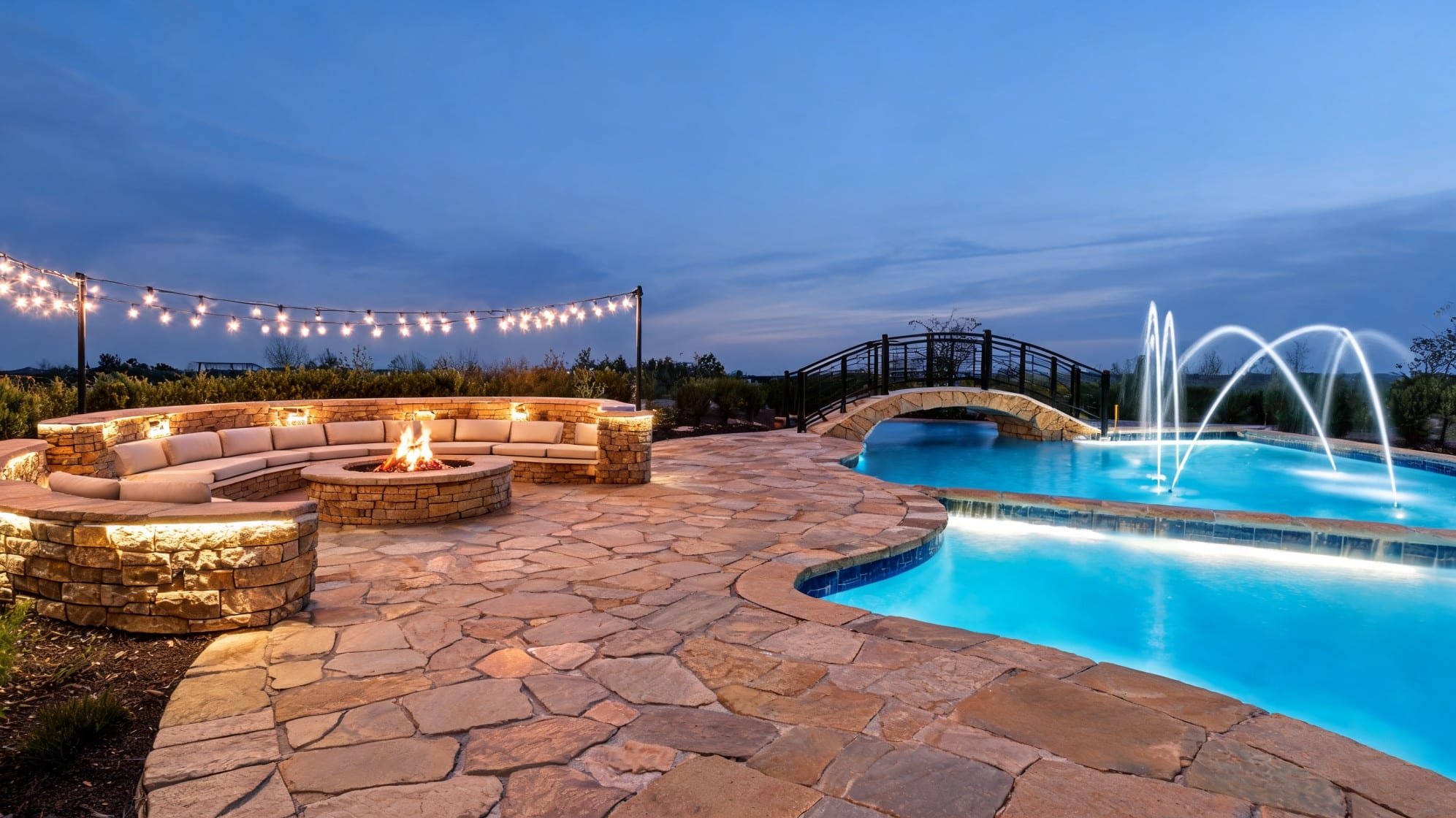
A poolside fire pit with stone seating makes the pool area useful after swimming hours. Use gravel or crushed rock under the seating zone to create a dry, low-care base.
Place larger stones, seat walls, or stone benches around the fire pit to frame the space. Keep enough distance from the pool edge so people can move safely between the water and the fire area.
This design works best when the seating feels connected to the pool but not crowded. Add simple lighting so the space feels safe and calm at night.
Styling tips:
- Use gravel under seating to reduce mud and weeds.
- Keep the fire pit away from splash zones.
- Add seat cushions for comfort.
- Use low lighting along the path from the pool to the fire pit.
Best for: Entertainment-focused yards, large pool areas, and evening use.
10. Tropical Rock-and-Plant Border
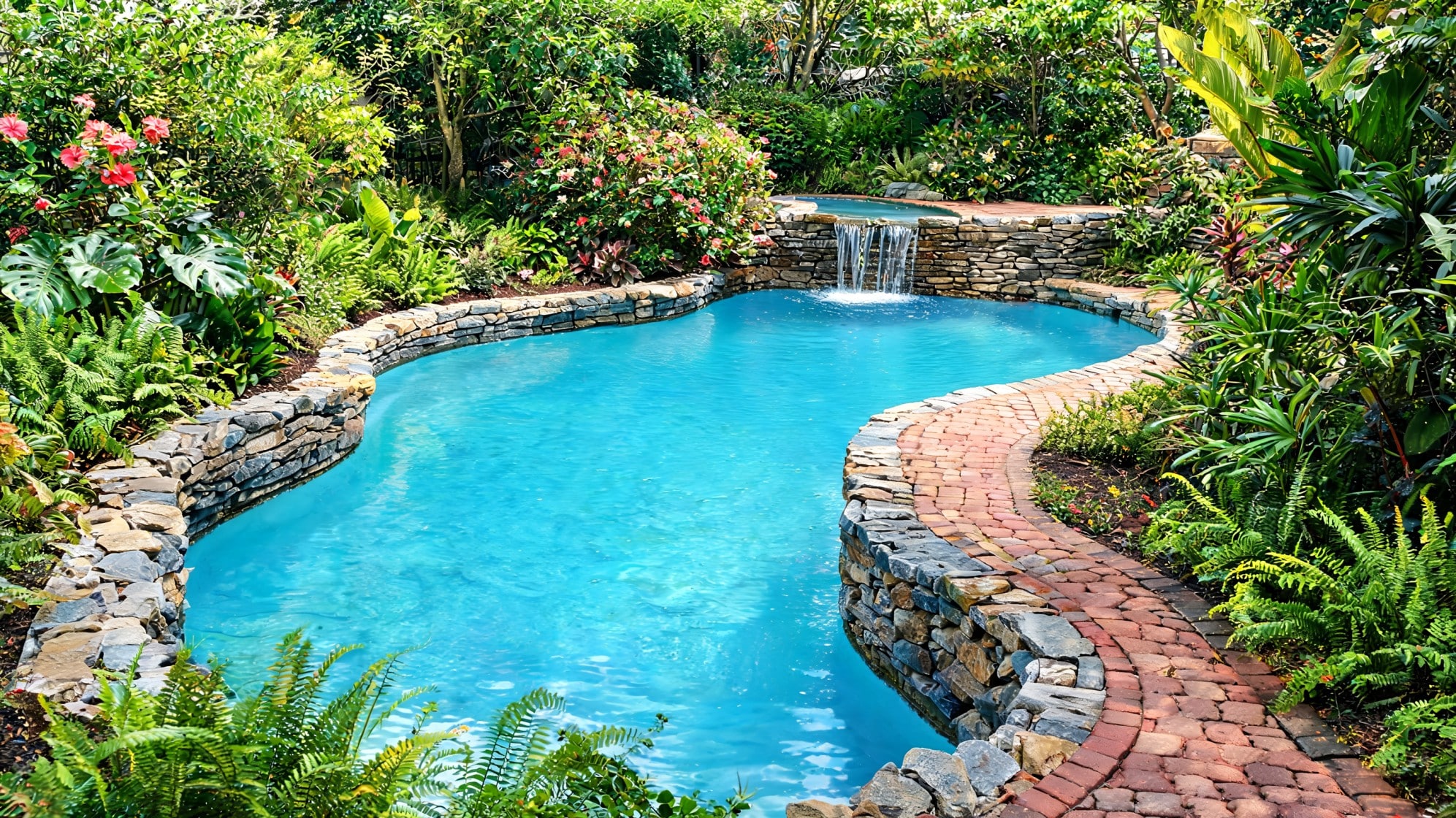
A tropical rock-and-plant border works well when you want the pool to feel lush and relaxed. Use large boulders as anchor points, then fill the gaps with river rock, palms, ferns, elephant ears, or bright flowers.
A small fountain or low waterfall can make the border feel more like a resort pool without taking over the yard. Keep the planting beds full but not messy, and leave enough room for pool access.
This idea works best with curved pools because the rocks and plants can follow the shape naturally and softly.
Styling tips:
- Use boulders at corners or curves for structure.
- Add palms or tall plants behind smaller greenery.
- Use river rock as mulch around tropical plants.
- Keep plants trimmed so they do not crowd the pool edge.
Best for: Tropical pools, freeform pools, lush backyard designs.
11. Low-Maintenance Gravel and Paver Layout
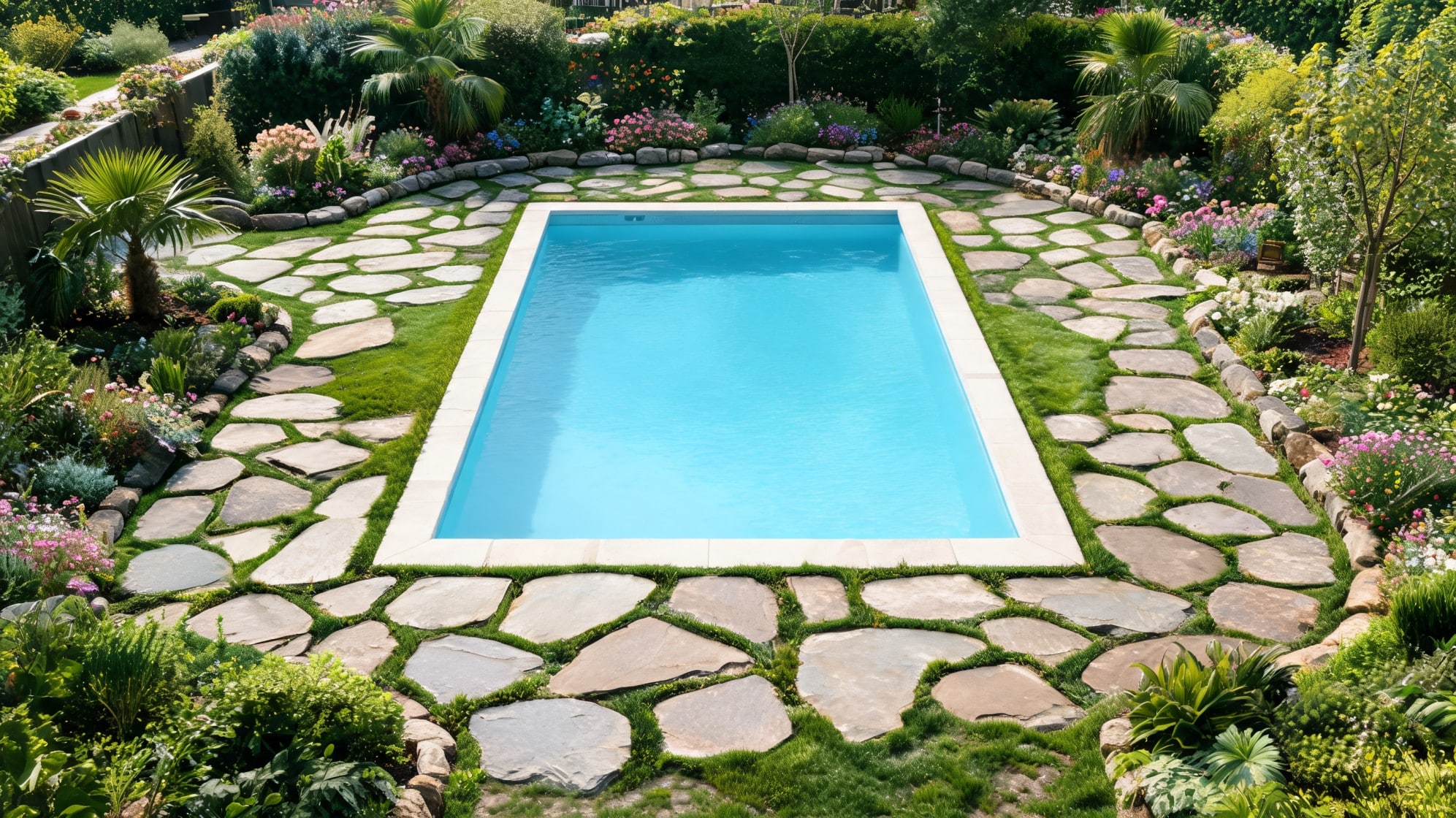
A gravel-and-paver layout is a clean option for small yards, narrow poolside areas, and spaces where mowing is difficult.
Use large concrete, stone, or porcelain pavers as the main walking surface, then fill the gaps with pea gravel or crushed rock.
This gives the area a finished look without adding a full patio. Keep the joints even so the design feels neat and easy to walk across.
It also helps with drainage, reduces lawn care, and works well beside lounge chairs, fences, or outdoor showers in tight spaces.
Styling tips:
- Use large pavers for a safer walking surface.
- Keep gravel gaps narrow near the pool edge.
- Match the paver color with the pool coping.
- Add edging so gravel does not spill into the lawn or pool.
Best for: Small yards, side yards, narrow pool areas.
These rock landscaping ideas work best when you match the material to how the pool area is used.
Smooth stones are better near bare feet, flat stones work well for paths, and larger rocks help shape the space.
A simple mix of rocks, plants, edging, and good drainage can make the pool area look cleaner and feel easier to maintain.
How to choose the right rocks for your pool area?
The best rocks for your pool area should match how you use the space. Think about comfort, drainage, heat, pool type, and the style of your yard before choosing a material.
- For barefoot comfort: choose river rock, flagstone, travertine, or smooth pebbles because they feel better underfoot and are safer around wet pool areas.
- For drainage: Use pea gravel, crushed granite, river rock, or decomposed granite to help water move through the ground rather than collect near the pool.
- For hot climates: Pick light-colored stone, travertine, or pale gravel because they stay cooler than dark rocks in direct sun.
- For saltwater pools: choose harder stones like granite or basalt because they hold up better to salt, moisture, and pool chemicals.
- For modern yards: Use basalt, slate, gray gravel, concrete pavers, and simple boulders for a clean, sharp, and organized look.
- For natural yards: Go with river rock, boulders, flagstone, native grasses, and curved borders to create a softer, more relaxed pool setting.
The right choice comes down to balance. A good pool rock design should look nice, feel safe, drain well, and be easy to maintain over time.
Rocks to avoid around pools
Not every rock is a good fit for pool areas. Some stones can feel sharp under bare feet, hold too much heat, create glare, or wash into the pool and equipment. I would recommend that, before choosing a material, you consider safety, comfort, cleaning, and how close the rock will be to the water.
- Sharp crushed rock in barefoot walking zones.
- Very dark stones in full sun because they can get hot.
- Loose gravel too close to the pool edge because it can enter the water.
- Soft porous stones near saltwater pools unless sealed.
- White rock in full sun if glare is a concern.
- Small gravel near pool equipment, if it can wash into drains or filters.
The safest choice is a rock that stays in place, feels comfortable, and handles pool water well.
Avoid materials that create extra cleaning, heat, glare, or filter problems, especially near the pool edge and walking zones.
Pool Rock Landscaping by Design Style
I like this section because it helps you move from “which rock looks good?” to “which rock fits my pool style?” Use the table below to match the rock, plants, and layout with the kind of pool area you want to create.
| Pool style | Best rocks and materials | Best plant pairings | Design feel |
|---|---|---|---|
| Natural pool | River rock, boulders, flagstone, curved stone borders | Native plants, ornamental grasses, low shrubs | Soft, organic, and relaxed |
| Modern pool | Basalt, black pebbles, gray gravel, and concrete pavers | Simple grasses, boxwood, sculptural plants | Clean, sharp, and minimal |
| Tropical pool | Boulders, river rock, waterfall stones, natural pebbles | Palms, ferns, large leafy plants, bright flowers | Lush, resort-like, and calming |
| Desert pool | Tan gravel, decomposed granite, large boulders | Succulents, cactus, agave, yucca | Warm, dry, and low-maintenance |
| Mediterranean pool | Travertine, light stone, gravel, terracotta accents | Lavender, olive trees, rosemary, small shrubs | Warm, classic, and inviting |
| Coastal pool | Beach pebbles, light stone, pale gravel, driftwood accents | Beach grasses, palms, dune-style plants | Breezy, soft, and beach-inspired |
| Family pool | Smooth rocks, flagstone, slip-safe pavers, stable gravel | Low-maintenance shrubs, soft grasses | Safe, open, and easy to use |
A good pool design does not need too many materials. Pick one main rock, one accent stone, and a few plants that match the style. This keeps the space clean, safe, and easy to maintain.
Best Plants to Pair with Rocks Around Pool Ideas
- Ornamental grasses: Add soft movement around rocks and work well in modern, natural, and low-maintenance pool designs.
- Succulents: Pair well with gravel, boulders, and desert-style pool areas because they need little water and stay neat.
- Lavender: Adds color, scent, and a soft Mediterranean feel beside light stone, gravel, or travertine.
- Agave: Creates a bold shape beside boulders, tan gravel, and desert-style rock beds.
- Yucca: Works well in dry pool landscapes and adds height without needing much care.
- Palms: Give the pool area a tropical feel and look great with river rock, boulders, and waterfalls.
- Hydrangeas: Add full blooms and color beside smooth stones, light gravel, and coastal-style pool borders.
- Native grasses: Blend well with river rock, boulders, and curved beds while needing less care once established.
- Rosemary: Adds greenery, scent, and structure near Mediterranean pool designs with gravel or stone edging.
| Note: Choose plants that do not drop too many leaves into the pool. |
Installation Tips for Landscaping Around Pool
Good installation helps your rock landscaping stay neat, safe, and easy to care for. Before placing any stone, think about weeds, drainage, edging, and how people will move around the pool.
- Add landscape fabric under gravel: This helps reduce weeds and keeps the gravel from sinking into the soil.
- Use edging around rock areas: Edging keeps rocks from spreading into the pool, lawn, patio, or walking paths.
- Slope the ground away from the pool: A gentle slope helps rainwater drain away rather than collect near the pool’s edge.
- Use larger rocks near drainage zones: They are less likely to be washed away during heavy rain or runoff.
- Keep loose gravel away from pool steps: Small stones near steps or shallow lounging areas can fall into the pool and make the area feel unsafe underfoot.
- Leave access around pool equipment: Keep the area around pumps, drains, and filters clear so cleaning and repairs stay easy.
When installed well, rocks should stay in place, drain properly, and make the pool area safer to use. A little planning at the start can prevent weeds, washouts, and extra cleanup later.
Maintenance Tips for Landscaping Around Pool
Rock landscaping is easier to maintain than grass, but it still needs light care to stay clean. Regular checks help keep the pool area fresh, safe, and free from weeds or buildup.
- Rinse decorative rocks as needed: A quick rinse removes dust, pollen, and dirt, helping the rocks keep their color.
- Remove leaves early: Clear leaves before they break down and stain the rocks or attract pests.
- Refill thin gravel areas: Add more gravel once or twice a year where the layer starts to look patchy.
- Pull weeds while they are small: Early weed removal keeps roots from spreading through the rock bed.
- Check edging after heavy rain: Make sure borders are still holding rocks in place after storms or runoff.
- Clean algae from shaded rocks: Damp, shady areas can grow algae, so clean them before they become slippery.
- Re-seal porous stone as needed: Stones such as travertine, limestone, or slate may require sealing to protect against stains and water damage.
With simple upkeep, rock landscaping can stay attractive for years. Check the area often, fix small issues early, and your pool border will be much easier to manage.
Common Mistakes to Avoid
Rock landscaping around a pool should look good, but it also needs to feel safe and work well with water, heat, and foot traffic. These common mistakes can make the space harder to clean, less comfortable, or more expensive to fix later.
- Choosing rocks by color alone: A rock may look good in photos, but it also needs to be safe, durable, easy to clean, and suited to your climate.
- Ignoring how hot the surface gets: dark stones can heat up quickly in full sun, making the pool area uncomfortable for bare feet.
- Using sharp gravel where people walk barefoot: Rough crushed rock can hurt feet, so keep it away from steps, paths, and lounging areas.
- Skipping edging: Without edging, rocks can spread into the pool, lawn, patio, or garden beds.
- Mixing too many rock colors: Too many colors can make the pool area look busy, so stick to one main rock and one accent stone.
- Placing messy plants too close to the pool: Plants that drop leaves, flowers, or seeds can increase pool-cleaning work.
- Forgetting drainage: Poor drainage can lead to puddles, shifting rocks, weeds, and soil washing into the pool area.
- Not checking saltwater compatibility: Some soft or porous stones can stain, wear down, or need sealing near saltwater pools.
Avoiding these mistakes will help your pool area stay cleaner, safer, and easier to maintain. Choose rocks for comfort, drainage, heat, and long-term use, not just for how they look on the first day.
Frequently Asked Questions
What are the latest trends in pool landscaping?
Current pool landscaping leans toward natural stone, native planting, water-wise beds, soft curves, outdoor lighting, and spaces for sitting, dining, or cooking. Many designs also use rock borders, boulders, and simple water features to make the pool feel connected to the yard.
What not to plant around a pool?
Skip plants that drop lots of leaves, fruit, seed pods, thorns, or sticky sap. I would also avoid fast-spreading roots near paving and pool plumbing. Messy plants can clog filters, stain stone, and add extra cleaning after wind, rain, or heavy use.
How to landscape around a pool on a budget?
Start with one small zone instead of changing the whole yard at once. Use pea gravel, crushed granite, river rock, or mulch-style rock beds. Reuse existing pavers, add simple edging, choose small plants, and leave bigger features like waterfalls for later.
How to make your pool look expensive?
Keep the design simple and neat. Use one main stone, one accent stone, clean edging, soft lighting, and matching furniture. Add large planters, trim messy plants, hide equipment, and keep the pool deck clean. Small details often make the biggest difference.
What is a cowboy tub?
A cowboy tub is a stock tank used as a small backyard pool. It is usually a round galvanized steel tub, often set on level ground with a pump or filter. People like it because it costs less and fits smaller yards.
What is a ghost pool?
A ghost pool is not a common term for a backyard pool. It may refer to abandoned or hidden pools in local history, travel, or art projects. For home design, use clearer terms like natural pool, dark-bottom pool, plunge pool, or reflective pool.
Landscaping Around Pool with Rocks
Landscaping around a pool with rocks is a simple way to make your outdoor space look cleaner, feel more natural, and need less daily care. The best results come from choosing rocks that match how you use your pool, not just how they look.
Smooth river rock, flagstone, travertine, gravel, boulders, and granite can all work well when placed in the right spots. You can use them for borders, paths, drainage, planting beds, waterfalls, or quiet seating areas.
I always suggest considering comfort, heat, safety, water flow, and upkeep before choosing a material. Add the right edging, pair rocks with low-mess plants, and avoid sharp or loose stones near walking zones.
With the right plan, landscaping around pool with rocks can make your pool area safer, easier to maintain, and more enjoyable year-round.