



| Quick Answer: Ceiling fan installation costs between $146 and $360 for a standard job with existing wiring, averaging around $253. New wiring, a vaulted ceiling, or an outdoor install can push the total past $600. The biggest cost driver is whether wiring already exists at the installation spot. |
You budgeted for the fan. You forgot that the installation is a separate cost. That catches most of us off guard.
The final number depends almost entirely on what is already in your ceiling. Confirmed wiring and a fan-rated box keep costs low. No wiring, a vaulted ceiling, or an outdoor location pushes it significantly higher.
According to Energy Star, certified fans can be up to 44% more energy-efficient than standard models, which changes how you think about the upfront cost.
You will typically be billed $60 to $130 per hour for a licensed electrician. I will walk you through every variable so you know exactly what to expect before you make the call.
How Much Does Installing a Ceiling Fan Cost?
The price depends on one question, do you already have wiring in that spot? Find your scenario below.
| Your Installation Scenario | What You Will Pay |
| Fan replacement with existing wiring | $85–$300 |
| New install at existing fixture location | $146–$360 |
| New install with no existing wiring | $400–$1,000 |
| Vaulted or angled ceiling install | $300–$600 |
| Outdoor or wet-rated fan installation | $250–$500 |
| Smart fan setup with wiring | $150–$600 |
| Two or more fans in one visit | Save $50–$100 on labor |
You will see different averages depending on which source you read. They measure different types of jobs. A simple swap looks nothing like a new install with fresh wiring. Labor runs $50 to $250. Your total depends on your scenario and who you hire.
What Factors Change the Final Price?
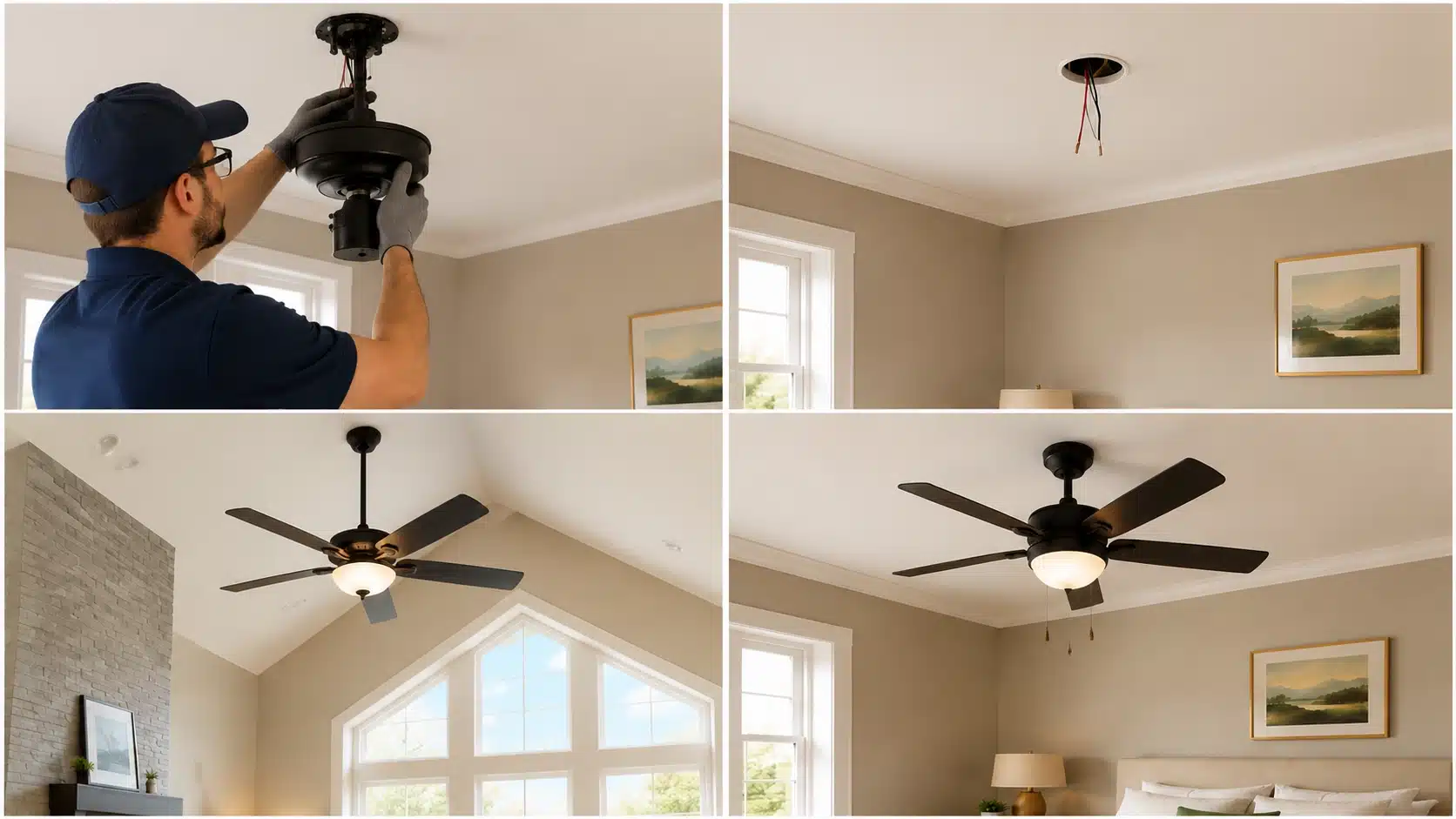
Several things move your number up or down. Here is what you need to know before you pick up the phone.
1. Labor: Who Should You Hire?
A handyperson charges $50 to $80 per hour for a straightforward swap with existing wiring. An electrician charges $60 to $130 per hour, often with a $150 minimum for the first hour and a $100 to $200 job fee.
Here’s my rule: hire a handyperson only if the wiring is confirmed and the box is fan-rated. Any work involving new wiring or circuit work requires a licensed electrician to avoid safety and code issues.
2. New Wiring vs. Existing Wiring
Your wiring situation is the single biggest cost driver on any job. Replacing a fan on existing wiring runs $100 to $300 in labor, while new wiring adds $200 to $700.
Open attic access keeps costs low; finished drywall means cutting in, fishing cable, and patching, which can add $300.
New wiring runs $5 to $17 per linear foot, and a new circuit adds $150 to $600. In older homes where the electrician finds broader issues, such as an outdated panel or degraded circuits, the scope can expand well beyond a single fan install, and rewiring costs are worth knowing before that conversation happens.
3. Ceiling Type and Height
Standard 8-foot ceilings add no extra cost. Vaulted or angled ceilings past 34 degrees need a sloped adapter, about $37. Ceilings 12 feet or higher may need scaffolding or a lift, adding $50 to $150.
For downrod length, per Hunter Fan, subtract 9 feet from your ceiling height, then convert the result to inches. A 12-foot ceiling needs a 36-inch downrod. Downrods run $10 to $75.
4. Fan Type and Accessories
| Fan Type | Fan Price | Install Impact |
| Standard (4–5 blade) | $50–$300 | Simple, 1–2 hours |
| Low-profile or hugger | $50–$400 | Same as standard |
| Smart or Wi-Fi-enabled | $120–$600 | Extra setup and app config |
| Outdoor or wet-rated | $100–$400 | Weatherproof wiring required |
| Dual-motor or directional | $150–$1,850 | Heavy; may need ceiling brace |
Your fan choice affects price and installation time, as shown above. A wall control or remote receiver adds $28 to $100. If your ceiling box can’t support a fan’s weight, swapping it runs $15 to $50 in parts plus $50 to $100 in labor.
DC motor fans cost more upfront but use less power, and a fan can let you raise your thermostat by about 4 degrees while staying comfortable.
Ceiling Fan Installation Cost by Location
Where you live can shift your total installed cost by $100 or more. Local cost of living, licensing requirements, and demand all play a role.
| City | Avg. Installed Cost |
| Boston | $392 |
| New York City | $406 |
| Washington DC | $378 |
| Chicago | $322 |
| Seattle | $364 |
| Denver | $322 |
| Austin | $294 |
| Philadelphia | $314 |
These numbers are a baseline, not a final price. Your actual invoice depends on your home’s specific wiring and layout, as well as the pro you hire.
Should You Repair or Replace Your Fan?
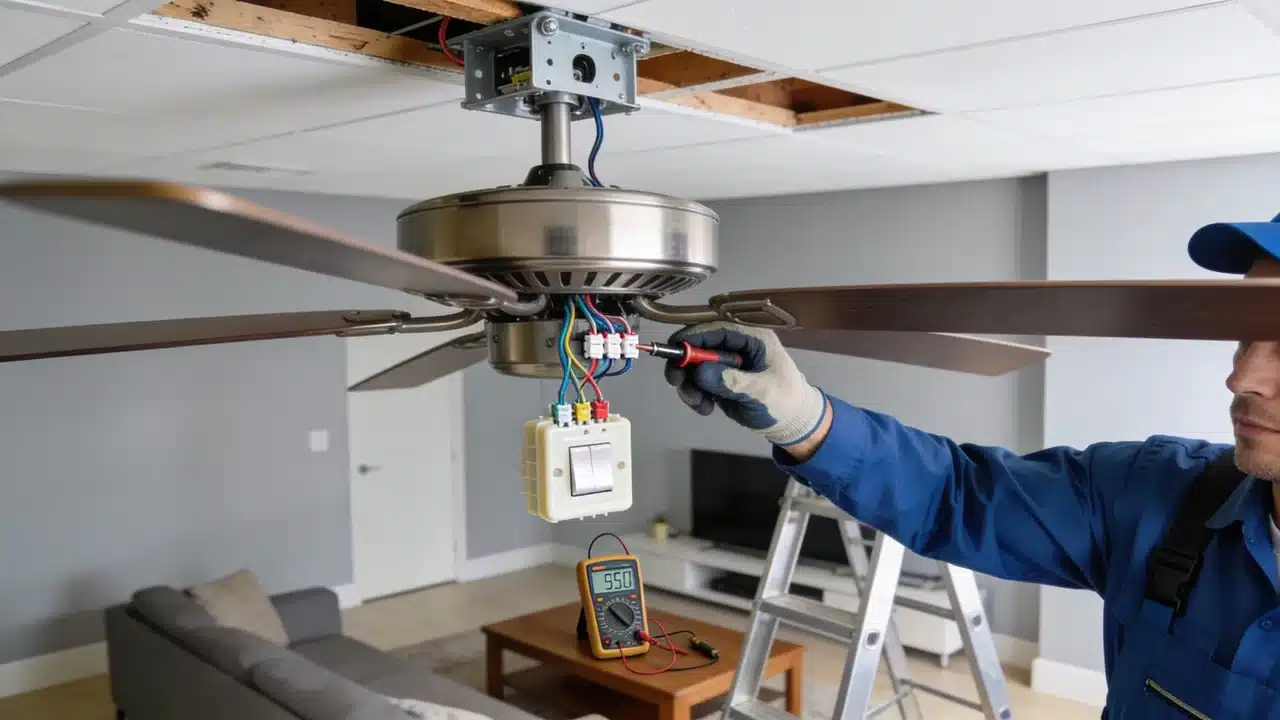
Before you budget for a full replacement, check whether a simple fix solves the problem for less money. Here is how to decide.
Repair it if:
- Your fan is under 10 years old
- The issue is a wobble, a cracked blade, or a dead light kit
- The motor runs quietly and does not overheat
- The repair cost is lower than buying and installing something new
- Typical repair cost: $50 to $400
Replace it if:
- Your fan is 10 to 15 years old or more
- The motor hums, overheats, or stalls at different speed settings
- You cannot find replacement parts for your model
- You want smart controls, a DC motor, or quieter operation
- Your ceiling box is not fan-rated
That last point matters most. A box built for a light fixture is not designed to support the weight and rotation of a fan.
A wobbling or noisy fan is often a symptom, not the real problem, so check the box behind it before you buy anything new. If it is not rated, the whole setup needs to be replaced, which typically runs $150 to $600 installed.
DIY Installation vs. Hiring a Professional
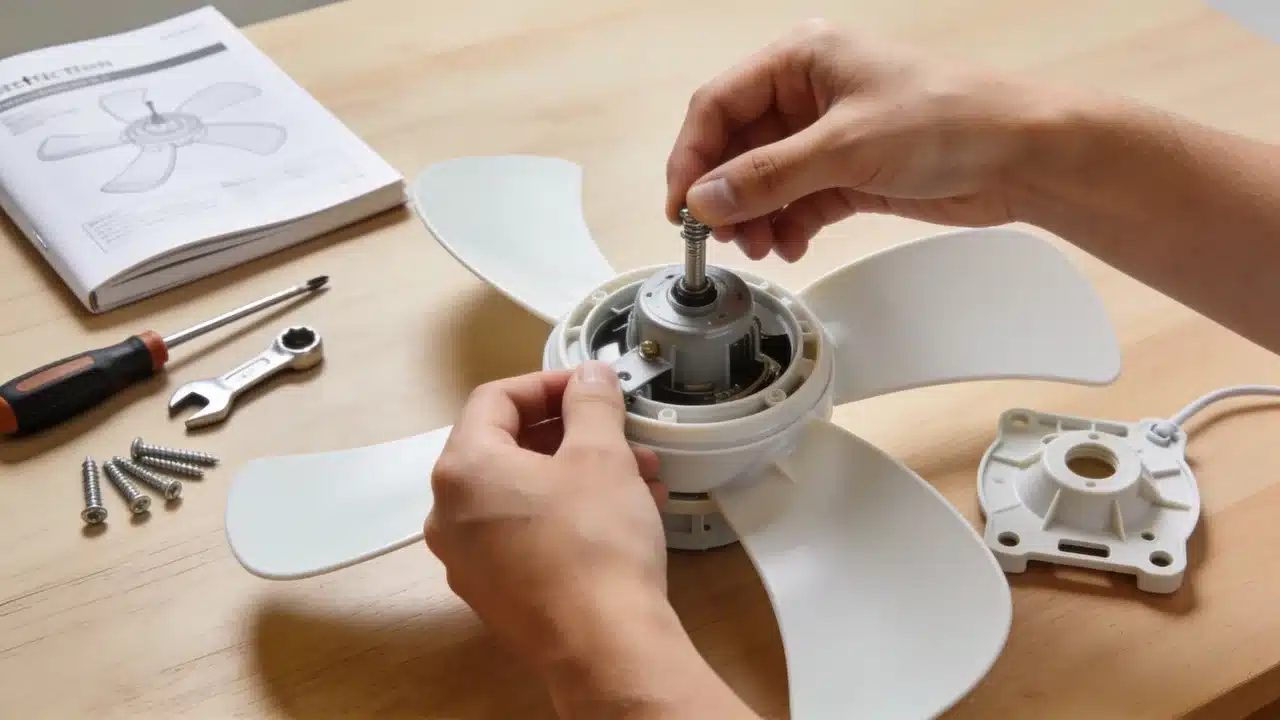
You can save $100 to $250 on labor by doing it yourself. But getting it wrong costs you more than that to fix. Here is a look at both sides.
Your DIY cost equals the fan price plus $10-$40 in materials. That covers wire connectors, mounting hardware, and basic tools.
DIY works for you if:
- You are swapping a fan in the exact same location
- Your existing wiring and a fan-rated ceiling box are confirmed
- Your ceiling is standard height and easy to reach with a stepladder
- You have real experience with basic electrical work
Always hire a pro if:
- New wiring or a new circuit is required
- There is no existing fixture at your installation location
- Your ceiling is vaulted, sloped, or over 10 feet tall
- Your ceiling box is not rated for fan support
- Local permits or inspections apply to the work
Improper wiring is the top cause of ceiling fan failure. A fan that wobbles or stops working after a few months almost always traces back to the original installation. Professional work protects your home and keeps your warranty valid.
How Much Time Does Ceiling Fan Installation Take?
The time required depends on your existing setup and the scope of the installation.
A simple fan swap at an existing wired location with a fan-rated box typically takes one to two hours. That includes removing the old fixture, checking the box, connecting the wires, mounting the new fan, and testing it at all speed settings.
New installations requiring new wiring, circuit changes, or ceiling box upgrades take 2 to 4 hours. Add another hour if the electrician needs to access a finished attic, fish cable through drywall, or patch anything after the work is done.
High ceilings change the picture. Anything above ten feet requires a ladder setup, careful downrod measurement, and slower work at height. That alone can add thirty to sixty minutes to an otherwise simple job.
Outdoor installs and smart fan configurations add even more time. Running weatherproof wiring and configuring app controls or wall switches adds complexity that a standard swap does not.
Tips to Lower Ceiling Fan Installation Cost
Hiring an electrician is recommended when the installation involves electrical changes or safety concerns beyond a simple replacement.
Consider professional help if you have:
- No existing wiring for the ceiling fan location
- No fan-rated electrical box for proper support
- Circuit capacity concerns or electrical issues
- High ceilings require specialized equipment
- Outdoor installations needing weather-rated connections
- Permit requirements related to electrical modifications
A qualified electrician can confirm the fan is mounted securely and connected correctly, especially when the installation goes beyond replacing an existing fixture.
Mistakes to Avoid When Installing a Ceiling Fan
Most ceiling fan problems trace back to decisions made before installation, not during it. Buying a fan before checking the wiring is the most common mistake.
Smart fans, fans with separate light kits, and fans with multiple speed controls may need a neutral wire that older homes do not have at the switch location. Finding that out after purchase means either returning the fan or running new wiring.
Next, make sure the fan is sized correctly for the room. A fan too small for the space moves insufficient air. A fan too large for a low ceiling becomes a clearance hazard. Measure your room and ceiling height before you buy anything.
Skipping the ceiling box check is where safety problems start. A standard light fixture box is not rated to support the weight and continuous rotation of a fan. Using one is a code violation and a real physical risk.
Finally, accepting a vague quote creates the most budget surprises. Any estimate that doesn’t separate labor, materials, ceiling box work, and potential wiring changes leaves room for charges you didn’t plan for. Ask for a line-item quote before work begins.
Frequently Asked Questions
How Much will Home Depot Charge to Install a Ceiling Fan?
Home Depot ceiling fan installation costs vary by location and project needs, including wiring, mounting requirements, and labor complexity. Exact pricing requires a quote.
Are Ceiling Fans Worth Installing?
Ceiling fans can be worth installing because they improve air circulation, reduce cooling demand, and provide comfort while using less energy than air conditioning.
Are Ceiling Fans Outdated in 2026?
Ceiling fans are not outdated in 2026. Modern designs, smart controls, efficient motors, and stylish finishes keep them practical for many homes.
Why Should You Not Sleep with a Ceiling Fan on all Night?
Sleeping with a ceiling fan running all night is generally safe, but some people may experience dryness, allergies, noise concerns, or discomfort from constant airflow.
Is a 52-Inch Fan too Big for a 12×12 Bedroom?
A 52-inch ceiling fan is usually suitable for a 12×12 bedroom and provides balanced airflow. Check ceiling height and blade clearance before installation.
Final Thoughts
So, what does installing a ceiling fan actually cost? For a simple replacement of existing wiring, you are looking at $85 to $300.
A full new install without wiring goes up to $1,000. Your location, ceiling type, and fan choice all shift that number.
The real work happens before you dial a number: know your wiring situation and check that your box can handle a fan. Everything else in this guide flows from those two answers. Have you installed a ceiling fan before?
Drop your experience in the comments below. I would love to know what it cost you.