

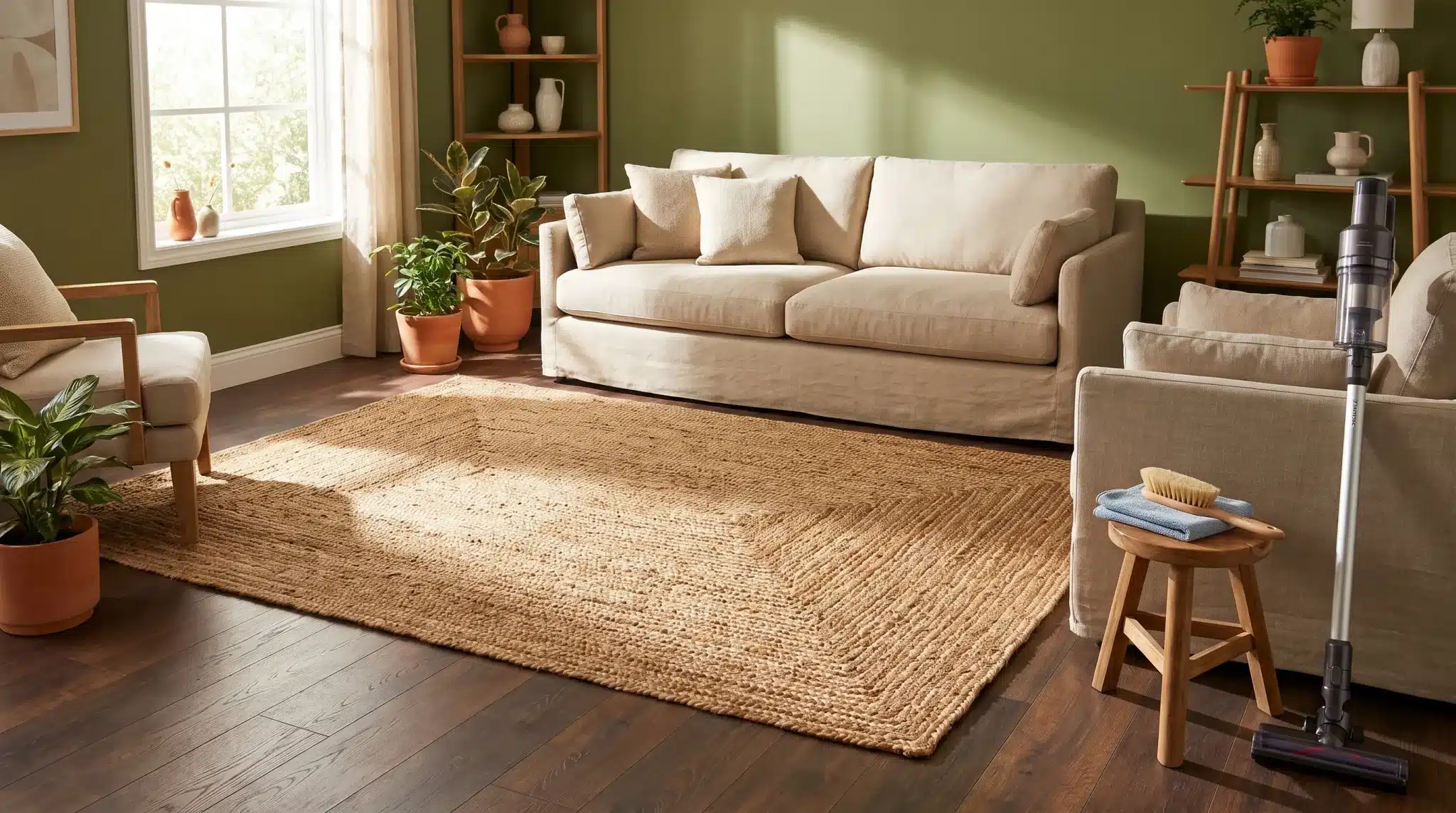


The biggest mistake with jute rugs is treating them like regular carpet.
Too much water or aggressive scrubbing can damage the natural fibers and leave behind browning, stiffness, or larger stains.
Jute rugs need a gentler approach because their plant-based fibers absorb moisture quickly.
Fresh spills and surface dirt are usually easier to handle, while deep stains, pet accidents, and damage that reaches the backing can be much harder to remove.
Understanding Jute Rugs and Their Unique Cleaning Needs
Jute is a natural plant fiber made from the stem of the jute plant. Its soft texture, earthy look, and eco-friendly qualities make it a popular choice for area rugs.
However, unlike synthetic carpets, jute fibers are highly absorbent and can react poorly to excess moisture, harsh cleaners, and rough handling.
Water can cause the fibers to swell, weaken, or develop brown discoloration as they dry. Because of this, jute rugs require gentle cleaning methods that remove dirt and stains without compromising their natural texture and durability.
Safe Cleaning Methods for Jute Rugs
Clean jute rugs with low-moisture methods that protect the natural fibers. Regular vacuuming, dry deodorizing, and careful spot cleaning are generally safe, while soaking, steam cleaning, washing machines, and carpet shampoo machines can damage the rug.
| Cleaning Method | Safe for Jute? |
|---|---|
| Vacuuming | Yes |
| Dry baking soda deodorizing | Usually yes |
| Spot cleaning | Yes, with care |
| Steam cleaning | No |
| Washing machine | No |
| Soaking | No |
The safest approach is to use gentle, low-moisture cleaning methods and avoid anything that saturates the fibers. Proper care helps prevent shrinking, staining, and weakening of the jute material.
How to Clean a Jute Rug Step by Step
Cleaning a jute rug requires a careful process that removes dirt and stains without soaking the natural fibers. Follow each step to prevent moisture damage, discoloration, and lingering odors.
Step 1: Remove Loose Dirt and Debris
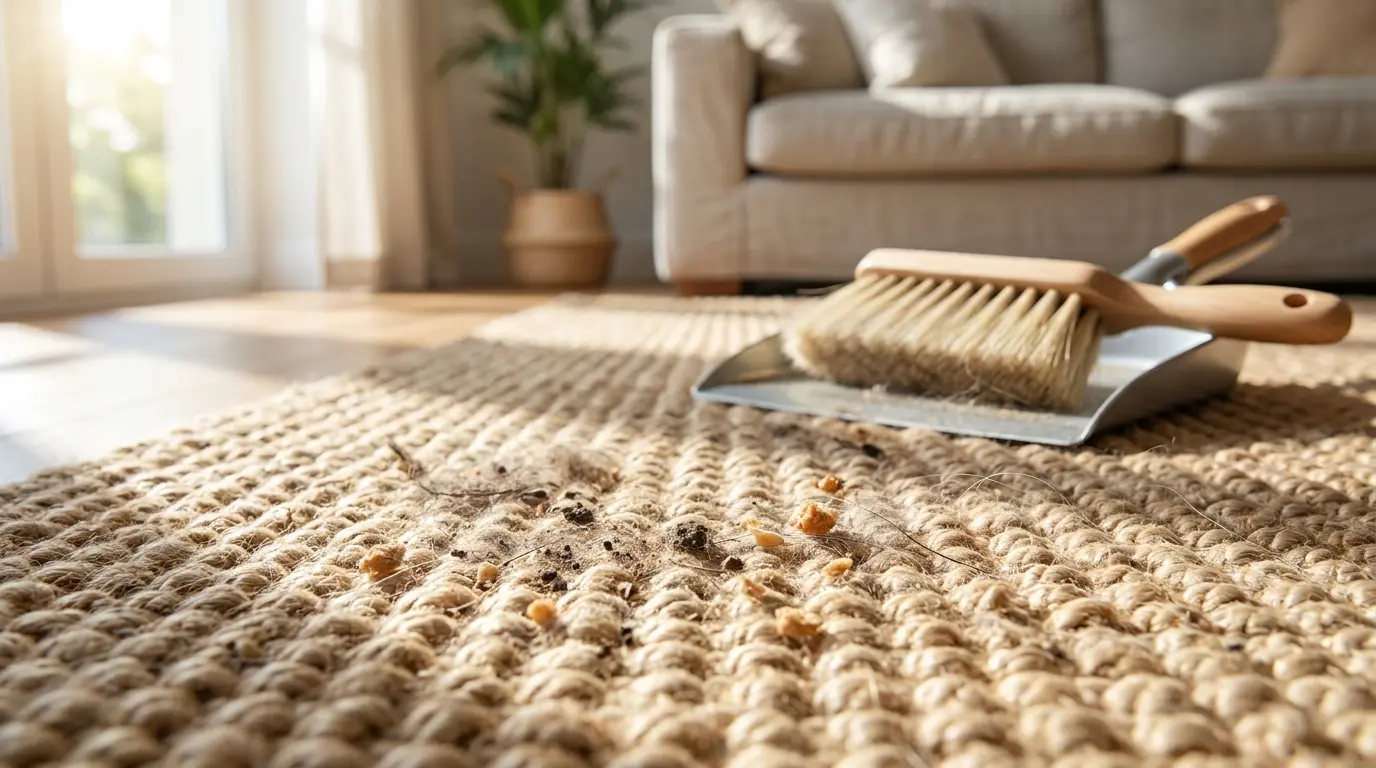
Shake out the rug if possible or vacuum away crumbs, pet hair, dry soil, and surface debris. Removing loose dirt first prevents it from getting pushed deeper into the fibers during cleaning.
Step 2: Vacuum the Rug Carefully
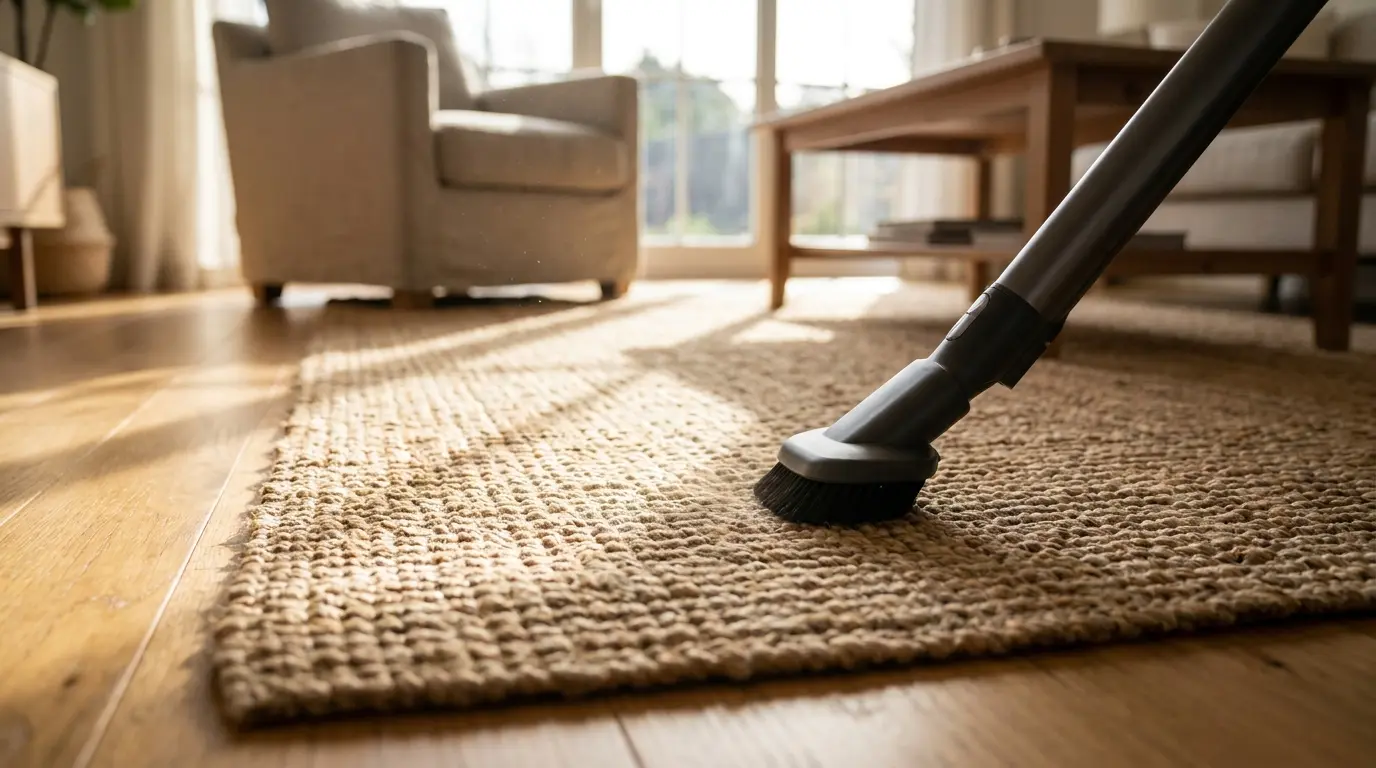
Use low suction and turn off the rotating brush. Vacuum in the direction of the fiber grain and avoid pulling at loose fibers. Aggressive vacuuming can increase shedding over time.
Step 3: Spot Clean Small Stains
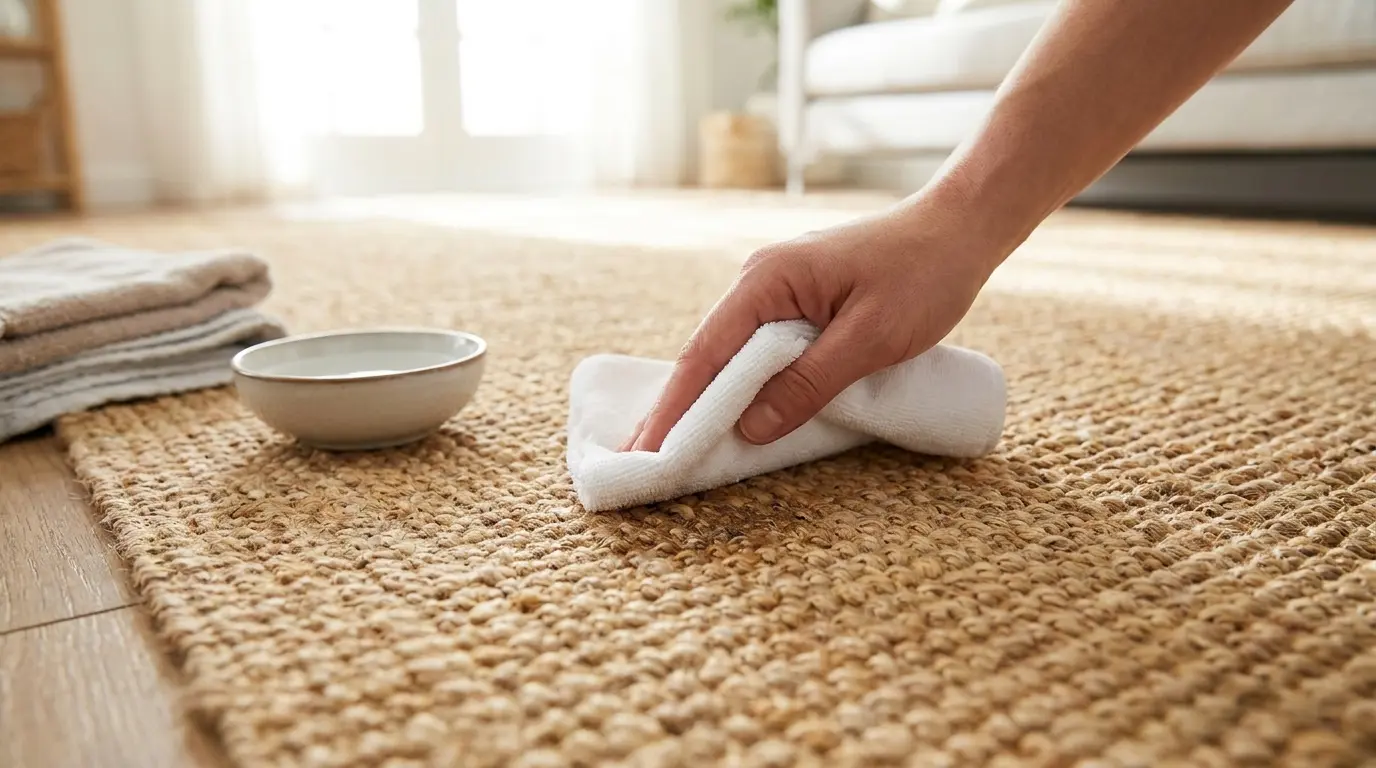
Remove any solids first, then blot liquid right away. Use a minimal amount of cleaner and work from the outside of the stain inward.
If the stain is stubborn, choose a gentle carpet cleaner designed for delicate fibers and test it on a hidden area first. Dry the area quickly once the residue is gone.
What not to do: Avoid scrubbing the stain, as rough friction can damage the natural fibers and push the mess deeper into the weave. Do not soak the area or pour cleaner directly onto the rug, since excess moisture can lead to browning, stiffness, or lingering odors. Avoid hot water, too, because it can affect the jute fibers and make the stain harder to remove.
One thing I learned after ruining a small section of a jute rug is that adding more water rarely fixes the problem. Removing moisture first usually gives better results.
Step 4: Dry the Rug Completely
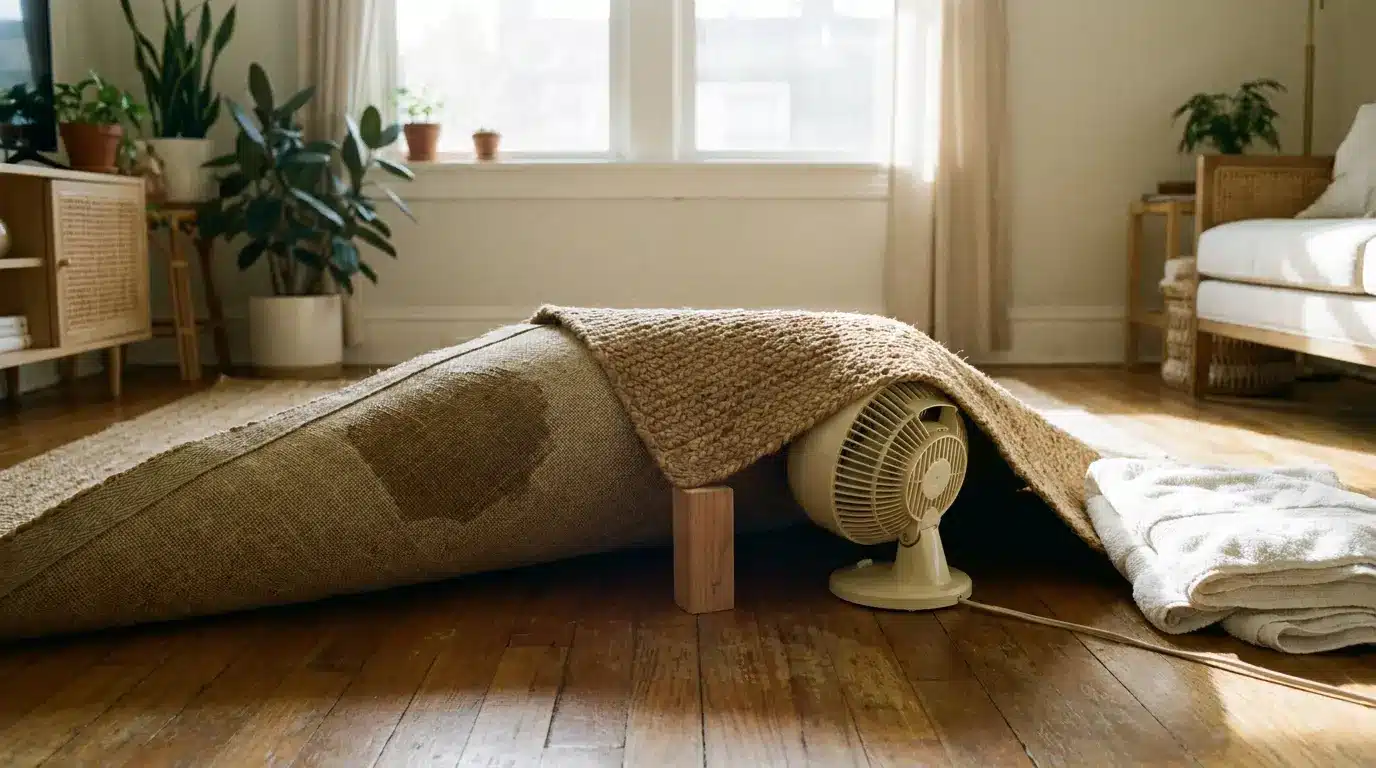
Lift any damp sections and get airflow underneath the rug. Check the backing before placing furniture back on top.
Drying is one of the most important steps when cleaning a jute rug. Proper airflow helps prevent moisture damage, browning, and musty odors while protecting the natural fibers.
How to Clean a Jute Rug without Water
Those seeking safer cleaning methods often look for low-moisture options because excessive water can weaken jute fibers and affect the rug’s texture.
- Vacuuming on a regular schedule
- Dry brushing to lift surface dirt
- Sprinkling baking soda, letting it sit, then vacuuming it up
- Removing dry mud once it has fully hardened
- Rotating the rug to spread out wear and exposure
These methods handle everyday dirt and light odors without increasing moisture risk.
How to Clean Pet Stains and Urine From a Jute Rug
Pet stains need faster attention than regular spills because urine, vomit, and other accidents can move beyond the surface and reach the backing or rug pad.
The key is to remove moisture quickly while avoiding methods that can damage natural jute fibers.
Step 1: Remove the Mess Immediately
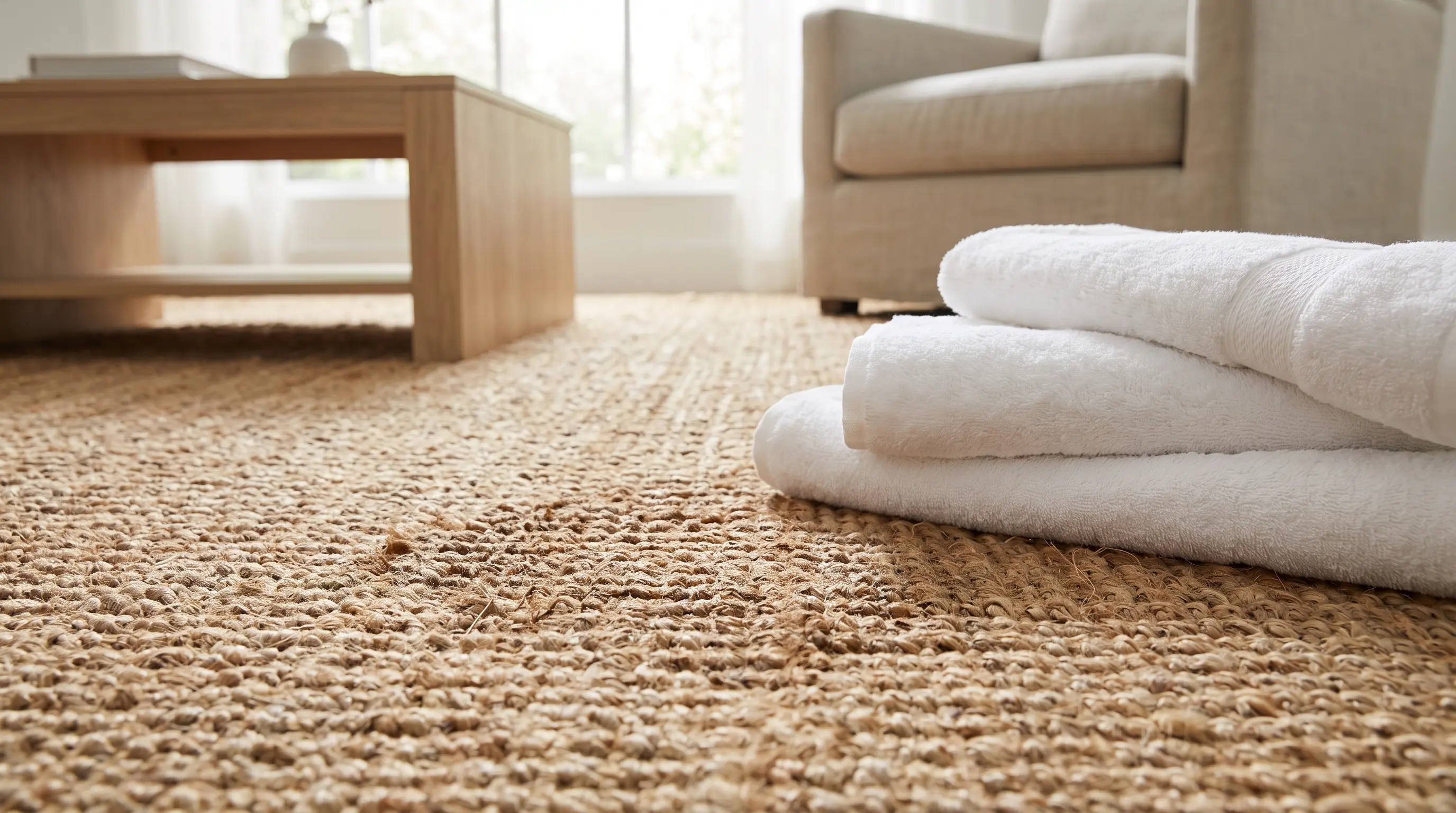
Start by removing as much of the accident as possible before applying any cleaner.
Blot urine with dry towels to absorb moisture, and lift solid messes like vomit or feces carefully to avoid pushing them deeper into the weave.
Step 2: Check the Rug Pad and Floor Below
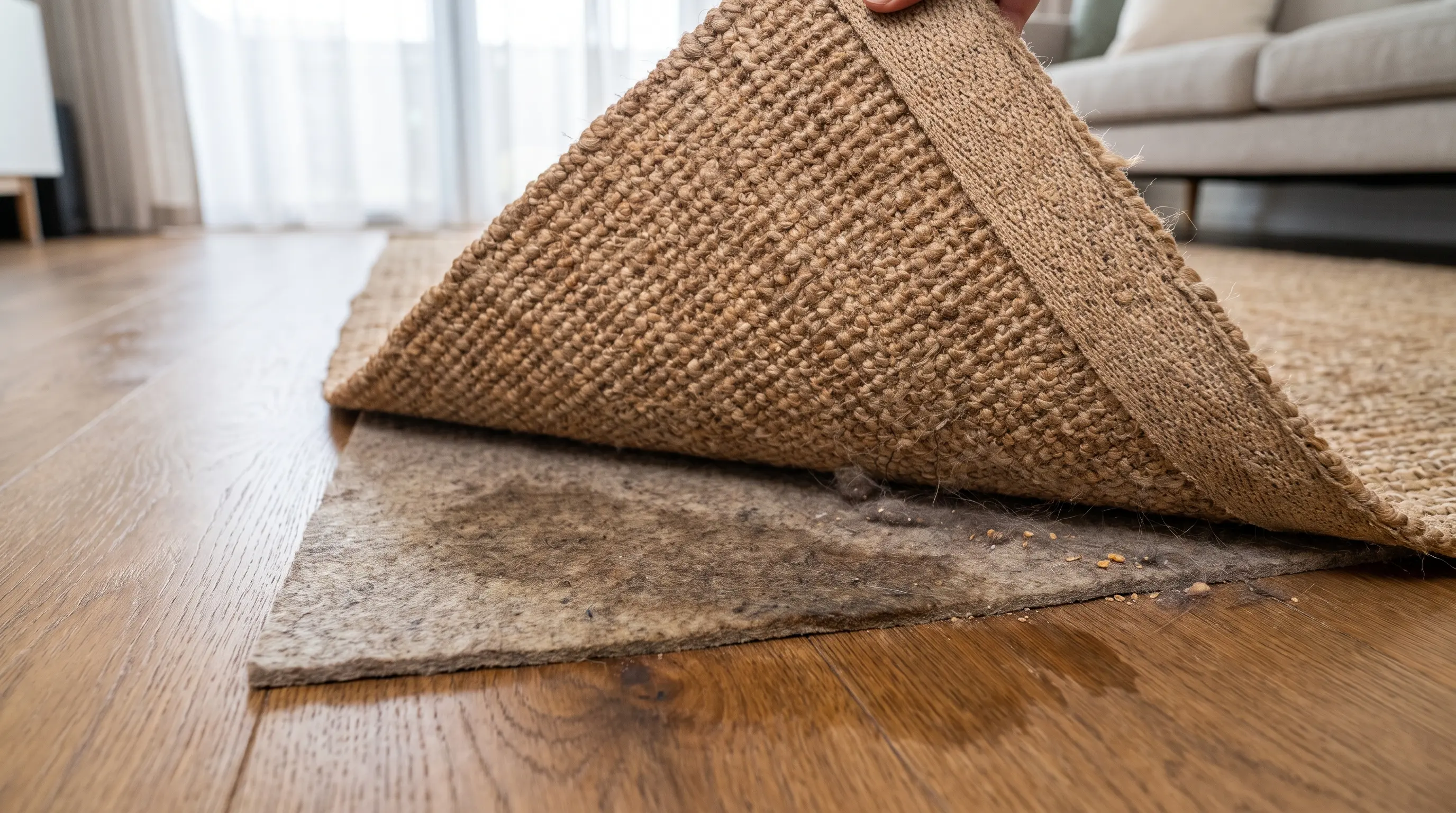
Lift the rug and inspect the area underneath after a pet accident.
Urine can spread beyond the visible stain, so checking the backing, rug pad, and floor helps prevent lingering odors and hidden moisture problems.
Step 3: Apply a Jute-Safe Pet Cleaner Carefully
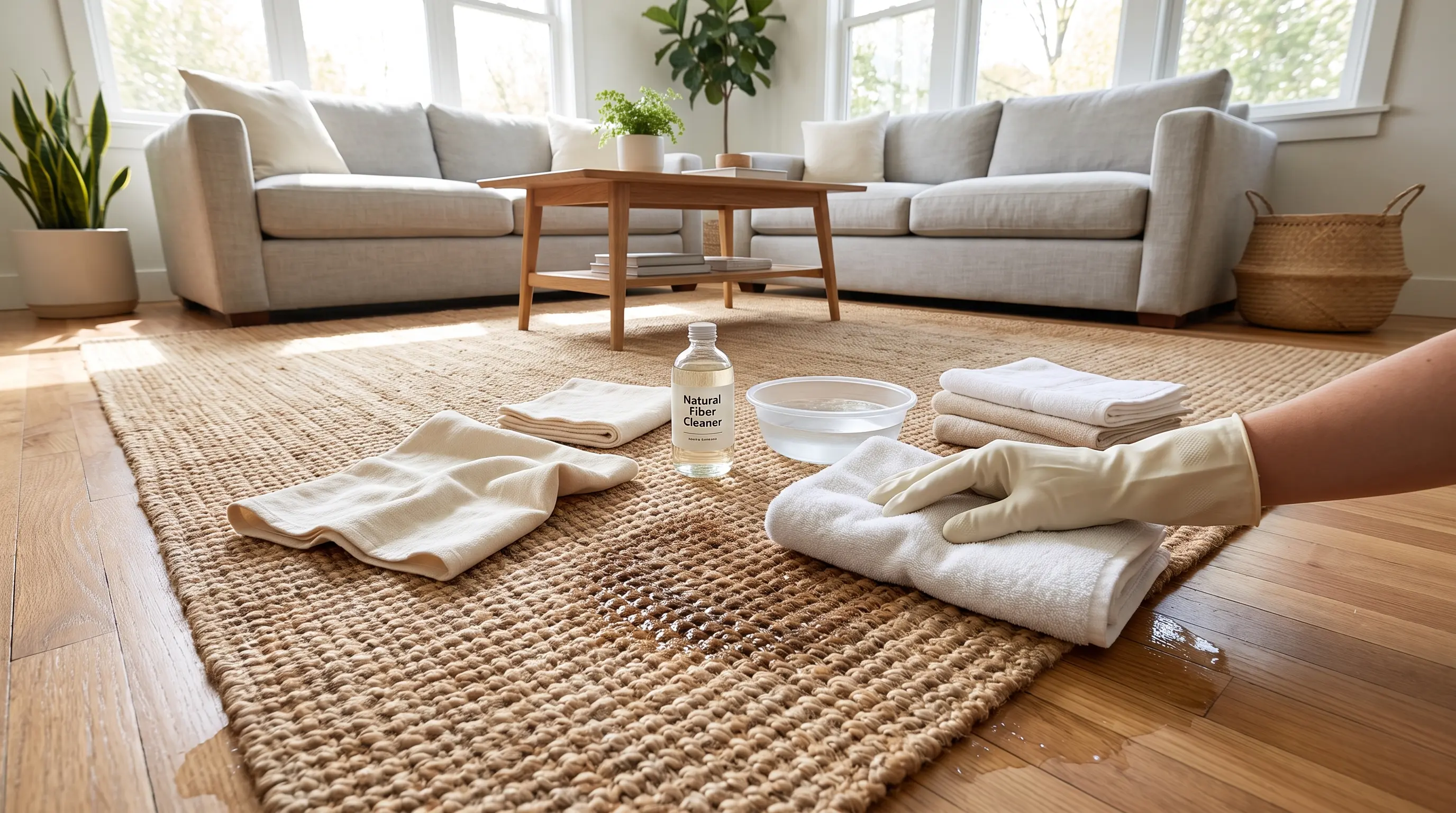
Use only a cleaner labeled safe for natural fibers and test it on a hidden area first.
Apply a small amount with a cloth and blot gently instead of soaking the rug, as excess moisture can cause browning and stiffness.
Step 4: Dry the Rug from Both Sides
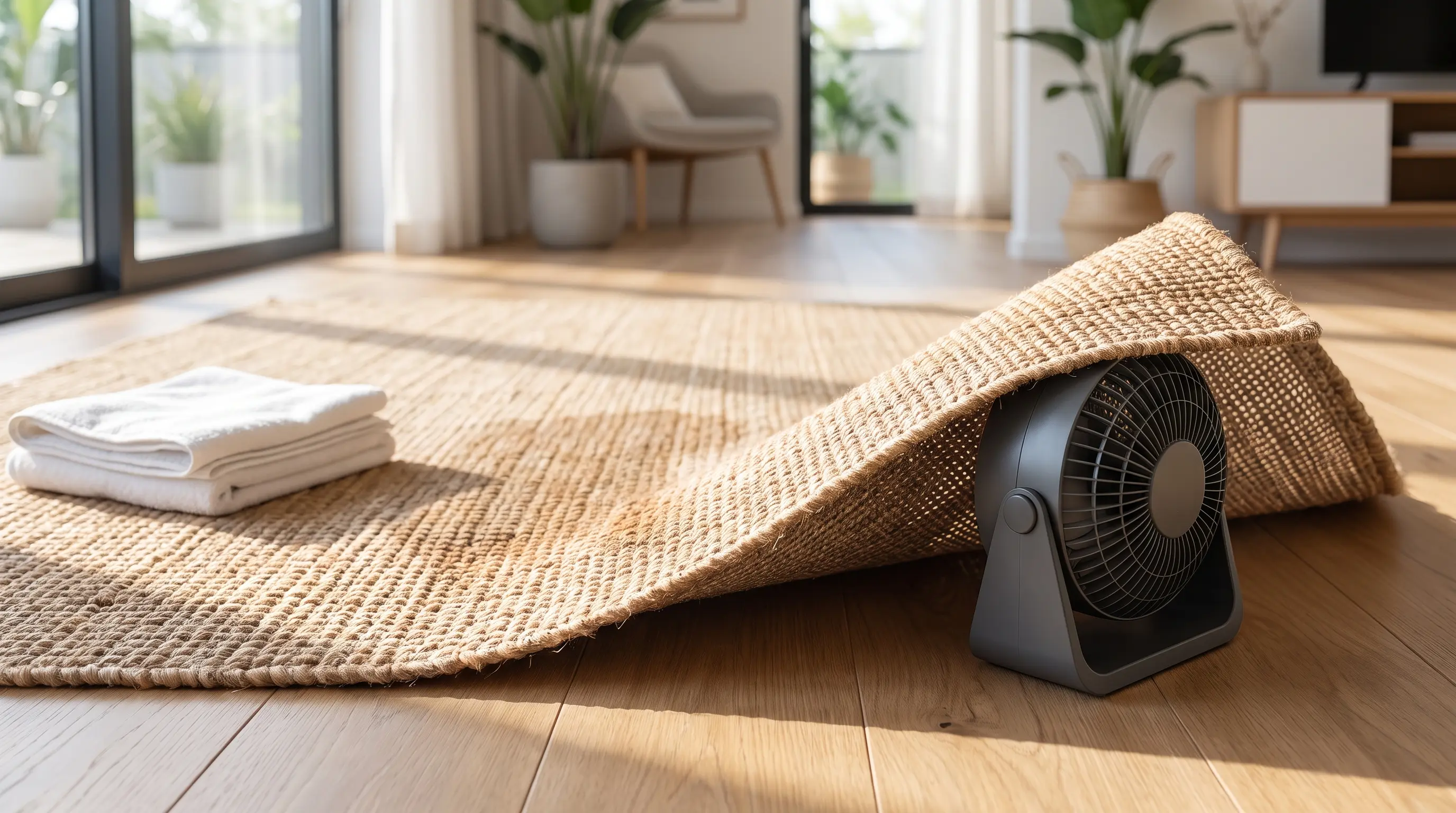
Proper drying is just as important as cleaning. Use a fan to improve airflow, lift the rug slightly if possible, and make sure both the surface and underside are completely dry before placing it back.
Step 5: Decide if the Pet Stain is too Deep
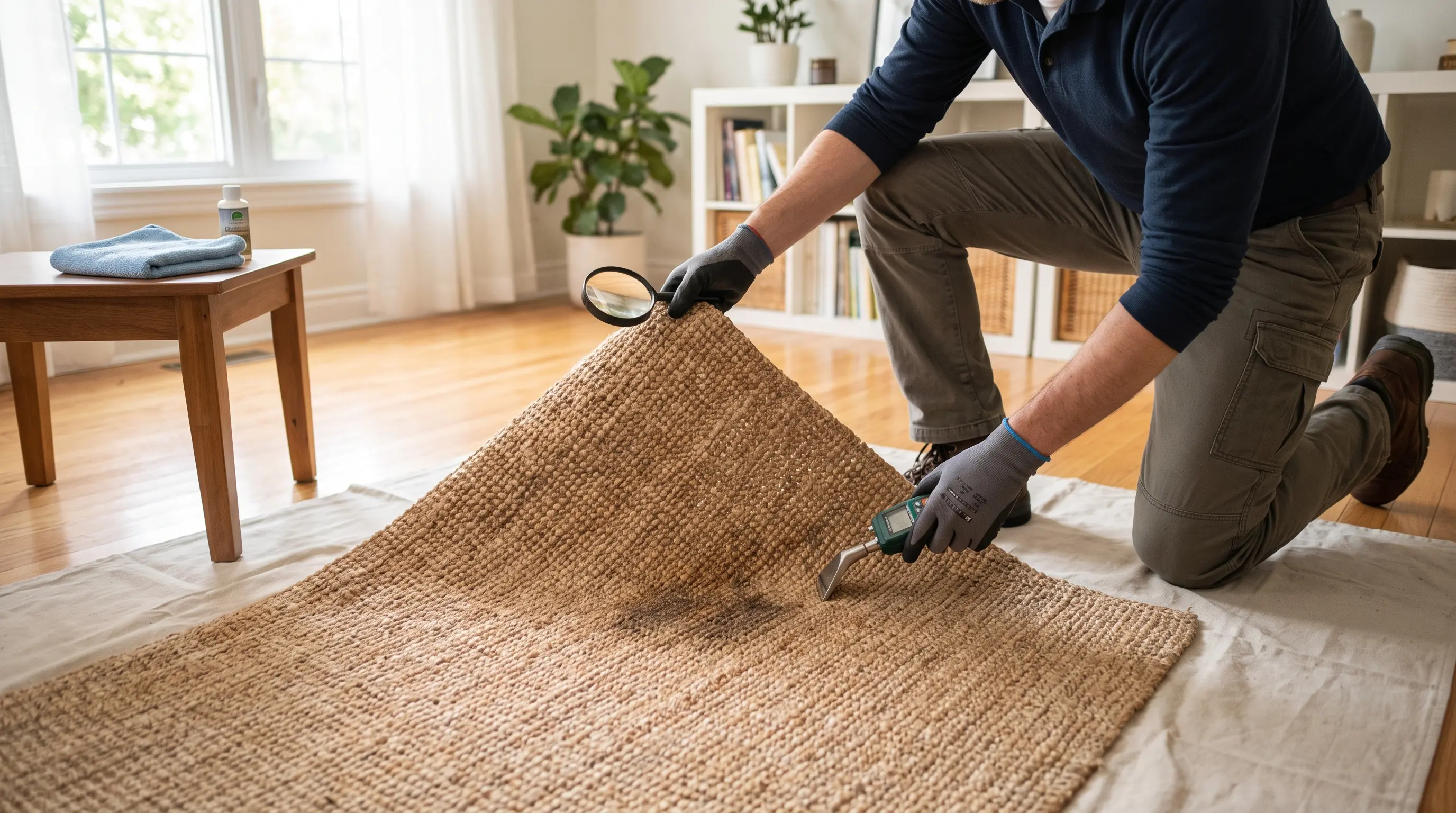
Some pet stains cannot be fully removed at home, especially when they reach the backing or rug pad.
Signs of more serious damage include returning odor after drying, permanent discoloration, affected backing, or weakened fibers.
A surface treatment may remove the visible mark, but hidden contamination underneath can bring the smell back. If the rug pad still holds odor, cleaning only the top layer will not solve the problem.
Pet odors may return if the source isn’t fully removed, such as urine trapped in the backing or rug pad.
Leftover moisture, old stains, or odor-masking cleaners can also cause smells to come back.
How to Remove Different Types of Stains From a Jute Rug
Different stains need different cleaning approaches to avoid spreading the mess or damaging the natural fibers. Learn the right methods for common jute rug stains, including mud, coffee, grease, food, pet accidents, and watermarks.
| Stain | Cleaning Approach |
|---|---|
| Mud | Let it dry fully, then vacuum. |
| Coffee | Blot quickly and spot clean |
| Grease | Absorb before treating |
| Food | Remove solids first |
| Pet urine | Blot and treat carefully |
| Vomit | Remove solids, clean lightly. |
| Water marks | Dry fully before treating. |
After treating the stain, always dry the area completely and avoid adding excess moisture. Quick action and gentle cleaning help prevent discoloration, odors, and long-term damage to the natural jute fibers.
Why Did My Jute Rug Turn Brown After Cleaning?
Browning is a common issue with jute rugs after cleaning and usually happens when excess moisture affects the natural fibers.
It can be caused by using too much water, dirt being moved to the surface as the rug dries, natural reactions within the plant fibers, soap residue, uneven drying, or moisture trapped underneath the rug.
Fresh brown rings may fade with careful treatment, but older marks that have set for weeks or months are often permanent.
To handle browning, let the rug dry completely, avoid adding more water, check the underside for hidden moisture, and try a gentle treatment only after the area is fully dry.
If the mark does not improve after one careful attempt, professional cleaning may be the safer option.
Why Does Your Jute Rug Smell or Feel Stiff After Cleaning?
A stronger smell or stiff texture after cleaning usually means the jute fibers absorbed too much moisture. Trapped dampness, a wet rug pad, old urine becoming noticeable again as the rug dries, mold or mildew growth, or leftover cleaner residue can all cause odor problems.
You can often identify moisture issues if the smell is stronger near the floor than on the rug’s surface, returns during humid weather, the rug pad feels different, or the flooring underneath has its own odor.
To restore a stiff jute rug, allow it to dry completely before taking further steps. Once dry, vacuum gently to loosen the fibers, brush lightly along the grain, and flex small sections by hand to soften the texture.
Avoid adding more water, as excess moisture can worsen stiffness and odor.
Severe stiffness or damage may not fully reverse, especially if the rug was soaked rather than carefully spot-cleaned.
Jute Rug Cleaning Mistakes to Avoid
Jute rugs require gentle care because common cleaning mistakes can cause stains, odors, and fiber damage. Regular vacuuming, rotating the rug, and treating spills quickly all help maintain its natural texture.
The most damaging mistake is using too much water, excess moisture soaks into jute fibers, leading to browning, stiffness, and musty odors. When a stain does appear, scrubbing will only spread it, roughen the fibers, and push it deeper, blotting is always the safer approach.
Standard carpet cleaners are another problem, as most are formulated for synthetic carpets and are too harsh for natural jute. Beneath the rug, an ignored pad can trap moisture and odors just as effectively as the rug itself, so checking and cleaning it regularly matters.
Finally, drying the rug flat after any cleaning restricts airflow and raises the risk of browning and mildew, the rug needs to dry with air circulating underneath it. For stubborn stains or persistent odors, professional cleaning is a safer option than repeated home treatments.
Should You Professionally Clean or Replace Your Jute Rug?
Professional cleaning is recommended when a jute rug has issues that are difficult to manage at home, such as large pet stains, mold growth, deep odors, major discoloration, or damage from repeated cleaning attempts.
Before hiring a cleaner, ask about their experience with natural-fiber rugs, cleaning methods, moisture control, drying process, and pet-odor treatments to ensure they can protect the delicate fibers.
However, some rugs may not be worth saving. Replacement may be a better option if the rug has extensive or repeated urine damage, active mold growth, badly broken or frayed fibers, permanent discoloration over a large area, or if professional cleaning costs nearly as much as a new rug.
A skilled cleaner can help restore a damaged jute rug, but severe issues may make replacement the more practical choice.
How to Prevent Future Jute Rug Stains
Keeping a jute rug clean starts with preventing spills, moisture buildup, and pet accidents before they become difficult stains. Simple habits like proper placement, quick cleanup, and using protective layers can help preserve the rug’s natural fibers.
- Use the Right Rug Placement: Avoid placing jute rugs in pet-heavy areas, bathrooms, damp rooms, or spaces with frequent food and drink.
- Use a Protective Rug Pad: A good pad protects the floor underneath, helps manage moisture, and is much easier to replace than the rug itself after an accident.
- Clean Small Messes Early: Treating a small spill within minutes almost always prevents the deeper staining and odor problems covered above.
Conclusion
Cleaning a jute rug comes down to one core rule: keep moisture to a minimum. Vacuuming, quick blotting, and careful spot treatment handle most everyday dirt and spills without harming the fiber.
Pet stains need extra care. Urine can settle into the backing and pad long before it shows on the surface. Catching accidents quickly and checking under the rug make the biggest difference in whether a stain fully clears or lingers.
Not every stain comes out, and that is worth accepting early. If a jute rug shows deep discoloration, mold, or a smell that will not lift, weigh the cost of professional cleaning against simply replacing it.
Frequently Asked Questions
How Long Does a Jute Rug Take to Dry?
A small spot usually dries within a few hours with a fan nearby. A thick rug section can take much longer. Always check the underside before assuming it is fully dry.
How to Remove Pet Odor from a Jute Rug?
Pet odors can linger even when a jute rug looks clean, because urine and other messes may penetrate the backing or rug pad. Use gentle, low-moisture methods to reduce smells without further damaging the fibers.
Can You Use an Enzyme Cleaner on a Jute Rug?
Enzyme cleaners break down organic pet residue at the source instead of just masking the smell. They usually need some moisture and time to sit on the stain. That is where the risk comes in for jute.