

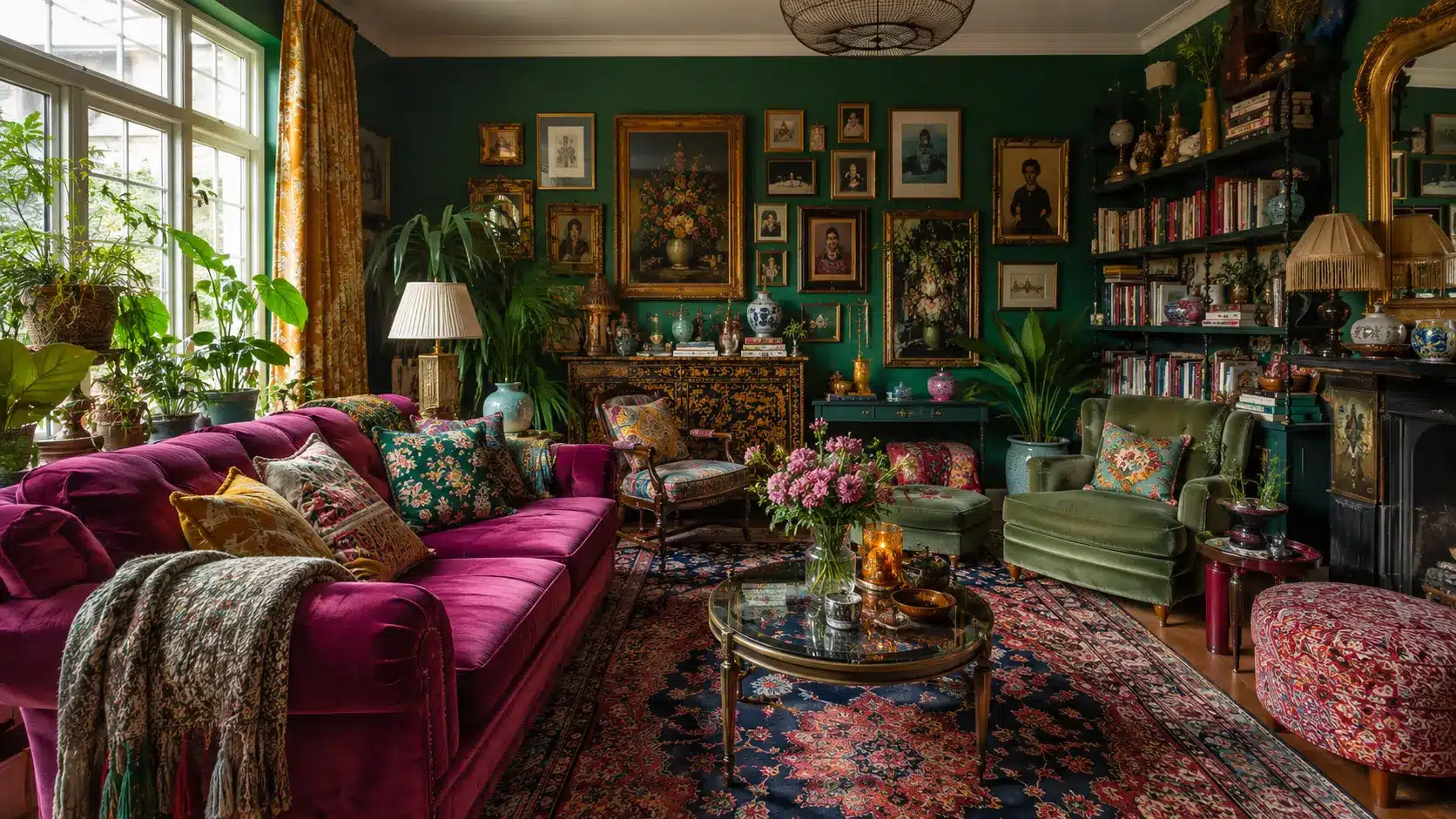


At some point, decorating started to mean taking things away. People were told to pare things back, stick to neutral colors, and hide their belongings. But for some homeowners, that approach never really felt right.
Maximalist interior design takes a different approach. The colors you love should be on display. Your books go on the shelves. Ceramics, souvenirs from your travels, and even that inherited lamp that does not match anything all have a place in this style.
The difference between a successful maximalist room and one that feels chaotic is all about intention, not just how much you have.
Repeating colors, paying attention to scale, and sticking to a loose but consistent palette help keep a busy room feeling balanced. In this blog, you will learn about the history of maximalism, what makes it work, and how you can bring it into your own home step by step.
What is Maximalist Interior Design?
Maximalist interior design is a style that uses color, pattern, furniture, art, lighting, books, and personal objects to build a full, expressive room.
It is often linked to the more-is-more idea, but the best maximalist rooms are still edited and thought through, with nothing added just to fill space.
Bold color plays a big part, with deep, rich shades used across walls, furniture, and decor. Layered patterns and room layout ideas help florals, stripes, checks, and prints work together in the same room.
Personal objects like books, art, and collections are displayed rather than hidden away. The result is a full room that still feels planned and intentional, never chaotic.
A Brief History of Maximalist Interior Design
Maximalist interior design is not new. Its roots can be traced to Victorian homes, Baroque interiors, Art Deco, and Hollywood Regency, where rich colors, ornate furniture, layered fabrics, and detailed artwork created dramatic spaces.
Modern maximalism keeps that love of detail but focuses more on personality than wealth. Custom furniture, vintage pieces, modern lighting, travel finds, family heirlooms, and meaningful decor often appear together.
The style made a strong comeback in the 1980s as bold colors and patterns returned to fashion. More recently, platforms like Pinterest and Instagram have helped popularize maximalism by showcasing colorful, layered homes to a wider audience.
Key Features of Maximalist Interior Design
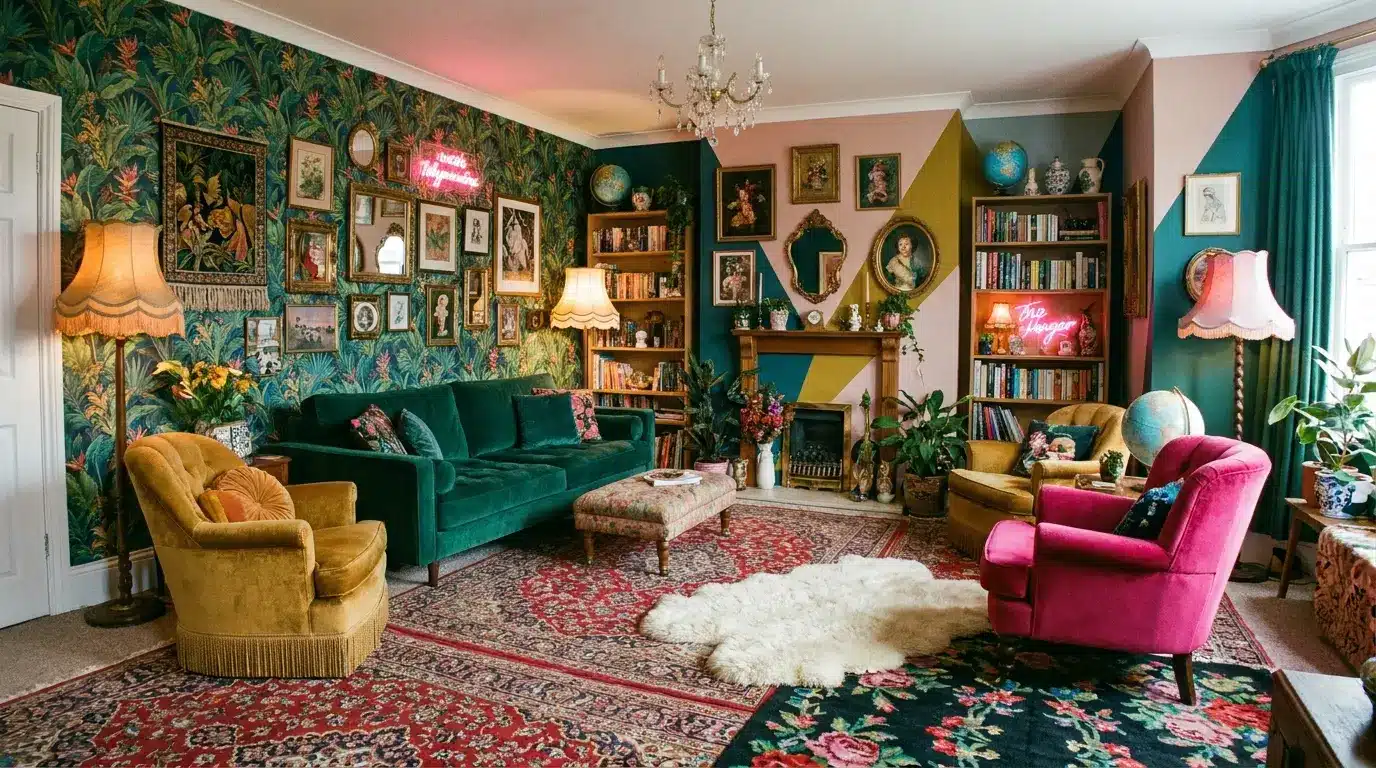
These are the building blocks that give a maximalist room its bold, layered look. Most maximalist spaces use a mix of the features below.
1. Bold Colors: Maximalist rooms lean on jewel tones, bright paint, and deep, saturated shades.
Some homeowners even paint the ceiling or a piece of furniture in a strong color to add contrast and make the room feel finished rather than flat.
2. Pattern Mixing: Florals, stripes, animal print, checks, and geometric patterns can all live in the same room. The trick is a shared color. When two patterns share at least one color, they read as a choice instead of a clash.
3. Layered Textures: Velvet, wood, metal, glass, wool rugs, cushions, wallpaper, curtains, and woven baskets all add texture. Mixing soft and hard materials gives a room depth, so it feels rich instead of flat.
4. Statement Furniture: A bold sofa, a patterned accent chair, a large coffee table, a vintage cabinet, or a sculptural side table can anchor an entire room. One strong piece often does more work than several small ones.
5. Gallery Walls and Art: Framed prints, paintings, mirrors, photos, and small wall objects grouped together build one of the most recognizable maximalist looks. A gallery wall turns empty space into a focal point.
6. Books, Collections, and Personal Objects: Shelves of books, ceramics, travel souvenirs, inherited decor, and plants give a maximalist room its personal feel. These pieces are what make the space feel like it belongs to one person, not a showroom.
7. Decorative Lighting: Chandeliers, colorful lampshades, table lamps, and wall sconces layered together add warmth and depth. Good lighting also keeps a full room from feeling dark or heavy.
Why is Maximalist Interior Design Popular?
Maximalist interior design is popular because it feels personal, warm, and creative. It gives homeowners permission to display what they love rather than hide everything away in storage.
This style works especially well for people who enjoy color, vintage finds, art, books, and rooms that feel lived-in rather than staged. It also appeals to those tired of matching furniture sets and bare walls.
Many people see their homes as a form of self-expression, and maximalism supports that idea. Social media has helped too, since bold, layered rooms tend to stand out and get shared more often.
Stunning Maximalist Interior Design Ideas
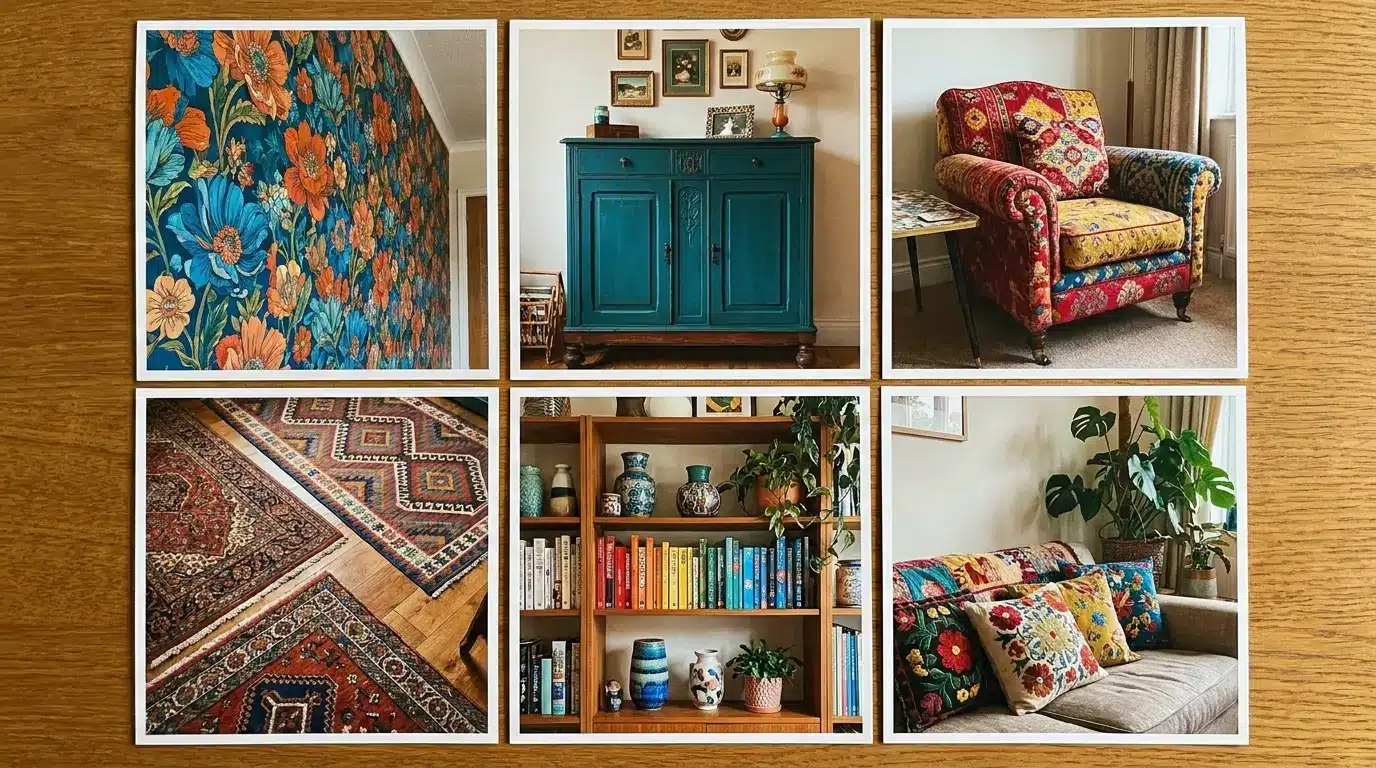
These ideas are an easy starting point if you want to bring maximalist style into a room without a full renovation. Each one works at a different budget, so you can pick where to start.
1. Use Bold Wallpaper
Floral, tropical, geometric, vintage, or mural-style wallpaper can transform a plain room into a statement space in one step.
Budget: Medium, averaging $50-$150 per roll of wallpaper.
2. Add Colorful Painted Furniture
A cabinet, dresser, or sideboard painted in a deep teal, blue, green, or another saturated shade can bring character to the room while making older furniture feel fresh.
Budget: Low to Medium, averaging $50-$300 depending on the furniture.
3. Mix Vintage and Modern Pieces
Old furniture, modern lighting, and new decor can sit together in the same room without clashing, as long as a color or material ties them together.
Budget: Medium, averaging $150-$600 per piece when buying secondhand or vintage.
4. Choose a Statement Sofa or Chair
A velvet sofa, a patterned accent chair, a curved silhouette, or a bold color instantly creates a strong focal point.
Budget: High, averaging $800 to $2,500 for a statement sofa, or $300 to $800 for an accent chair.
5. Layer Rugs, Cushions, and Curtains
Textiles make a room feel warmer and fuller. Stacking a patterned rug under a plain one or piling different cushion prints together creates that layered maximalist look.
Budget: Low to Medium, averaging $200 to $600 for a rug, cushions, and curtains combined.
6. Style Open Shelves
Arrange books, ceramics, plants, candles, and photos with care so the shelf feels curated, not cluttered.
Budget: Low, averaging $50 to $200 using items you already own plus a few new pieces.
How to Start with Maximalist Interior Design
Getting started does not mean redoing your whole home at once. These steps walk you through building the look gradually, so the room stays balanced instead of overwhelming.
1. Start with One Room
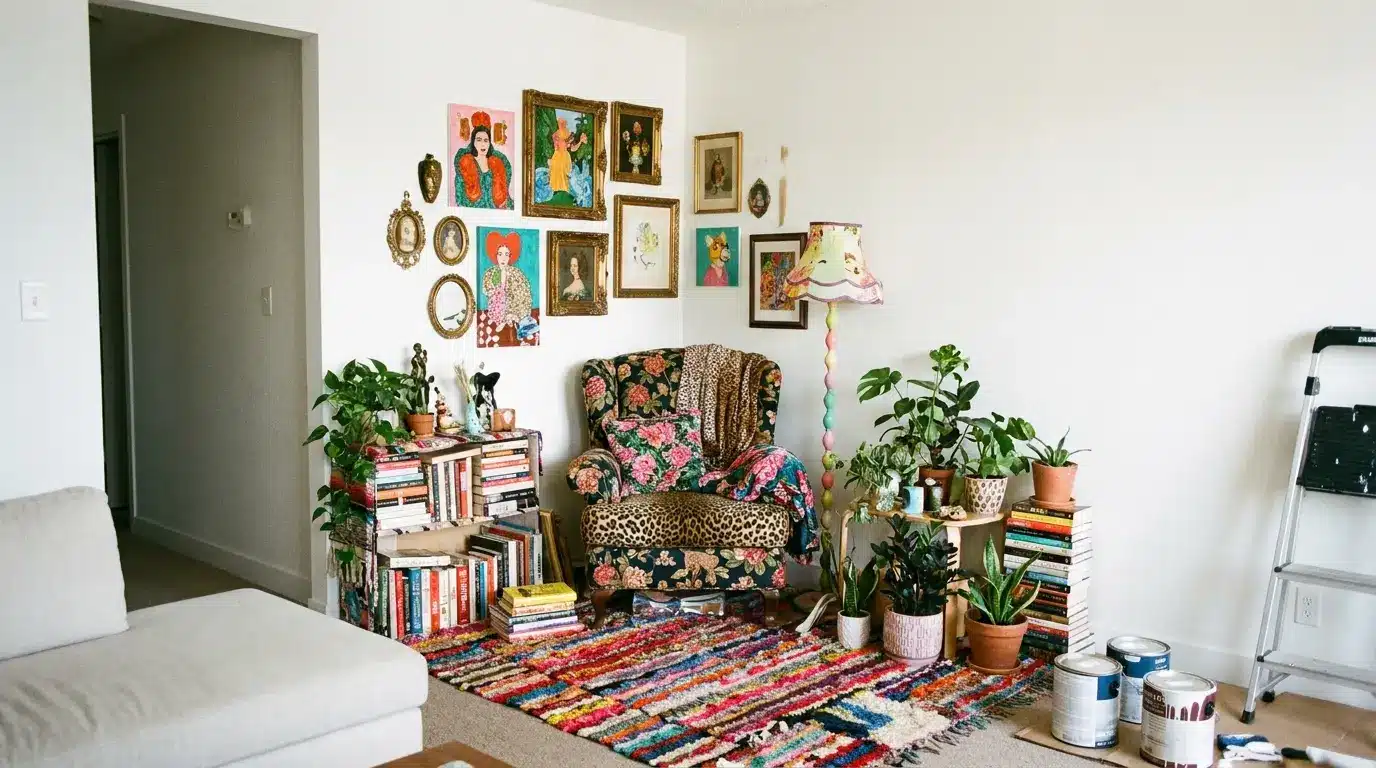
Begin with a bedroom, living room, powder room, or reading corner instead of the whole house at once. This gives you a low-pressure space to test colors and patterns before committing further.
2. Choose a Color Palette
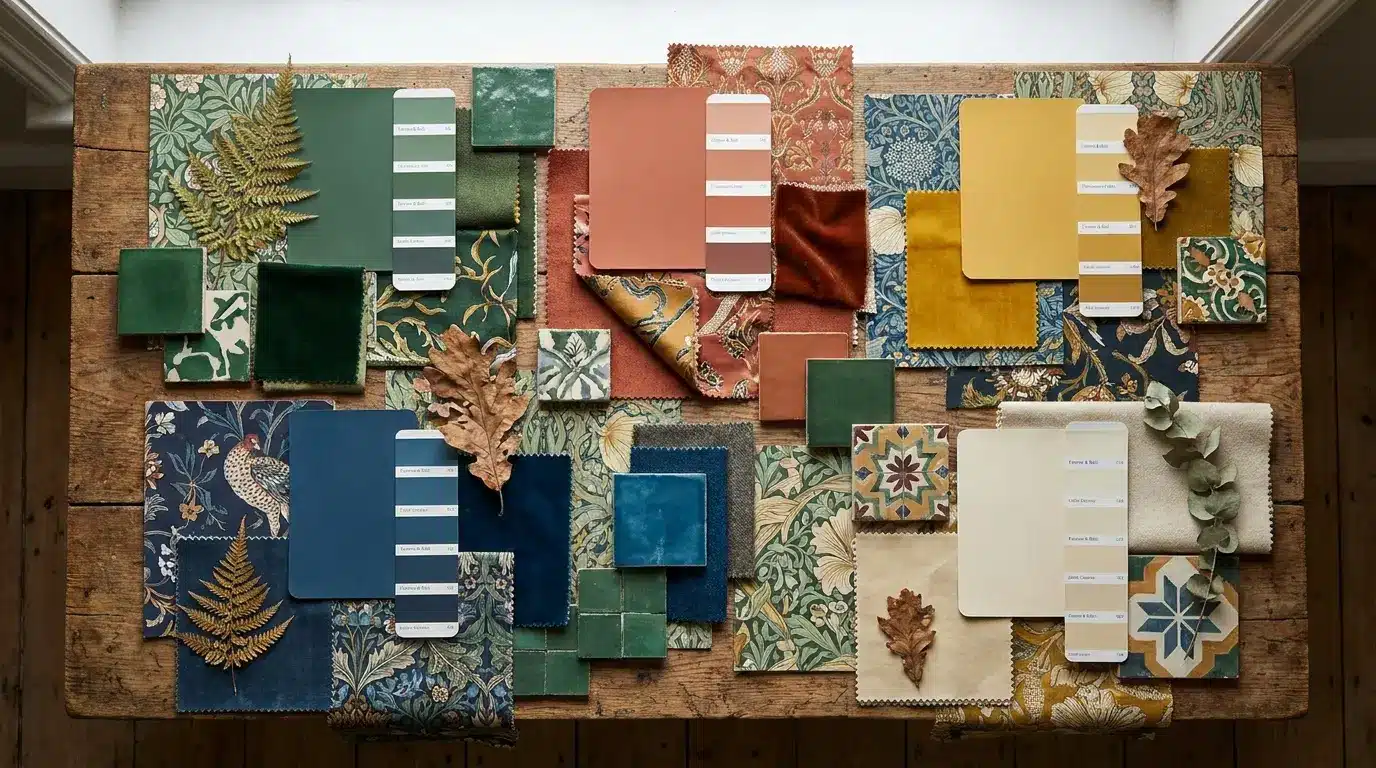
Pick three to five main colors so the room feels connected, even with lots of pattern and decor. Write the colors down and refer back to them before buying anything new.
3. Pick One Statement Piece
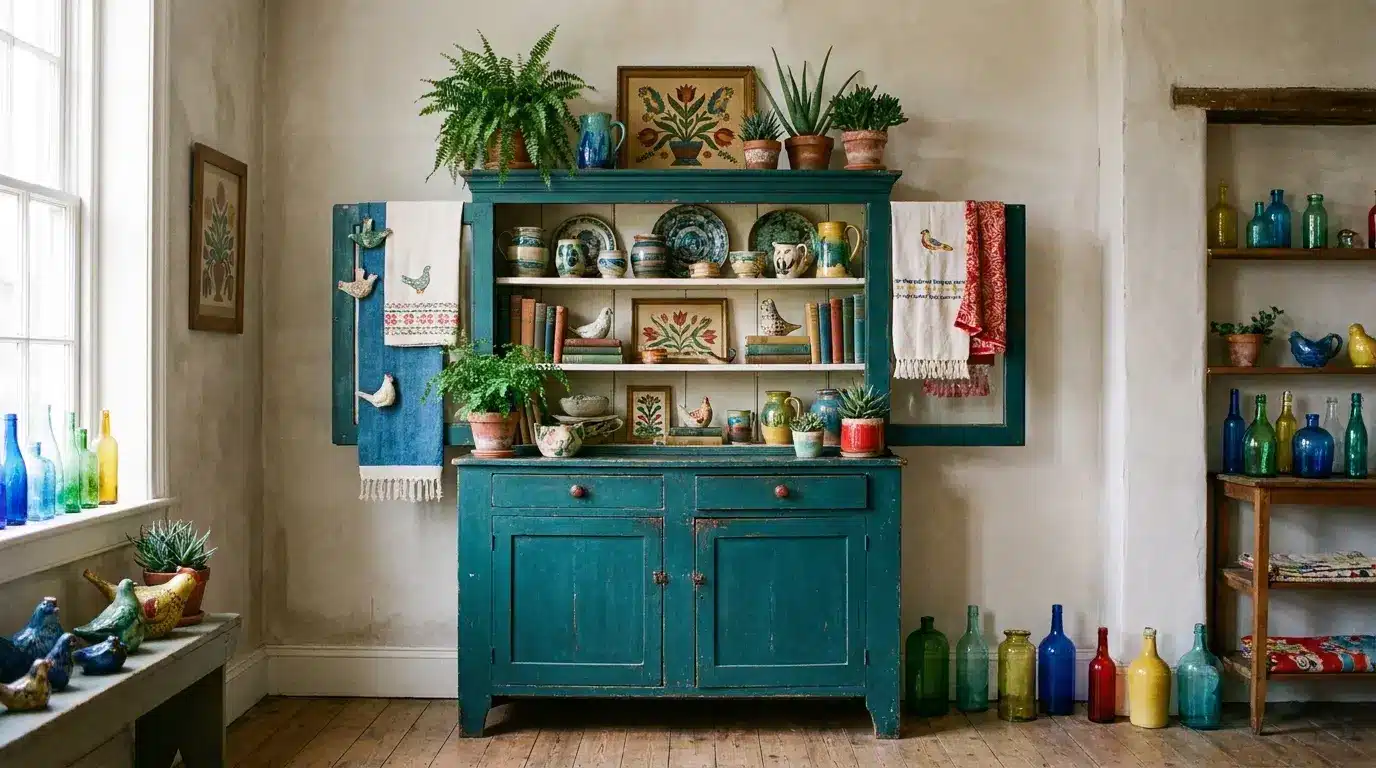
A large artwork, a bold rug, a patterned sofa, or a painted cabinet can serve as the anchor around which everything else builds. Choose this piece first, then build the rest of the room around its colors.
4. Add Layers Slowly
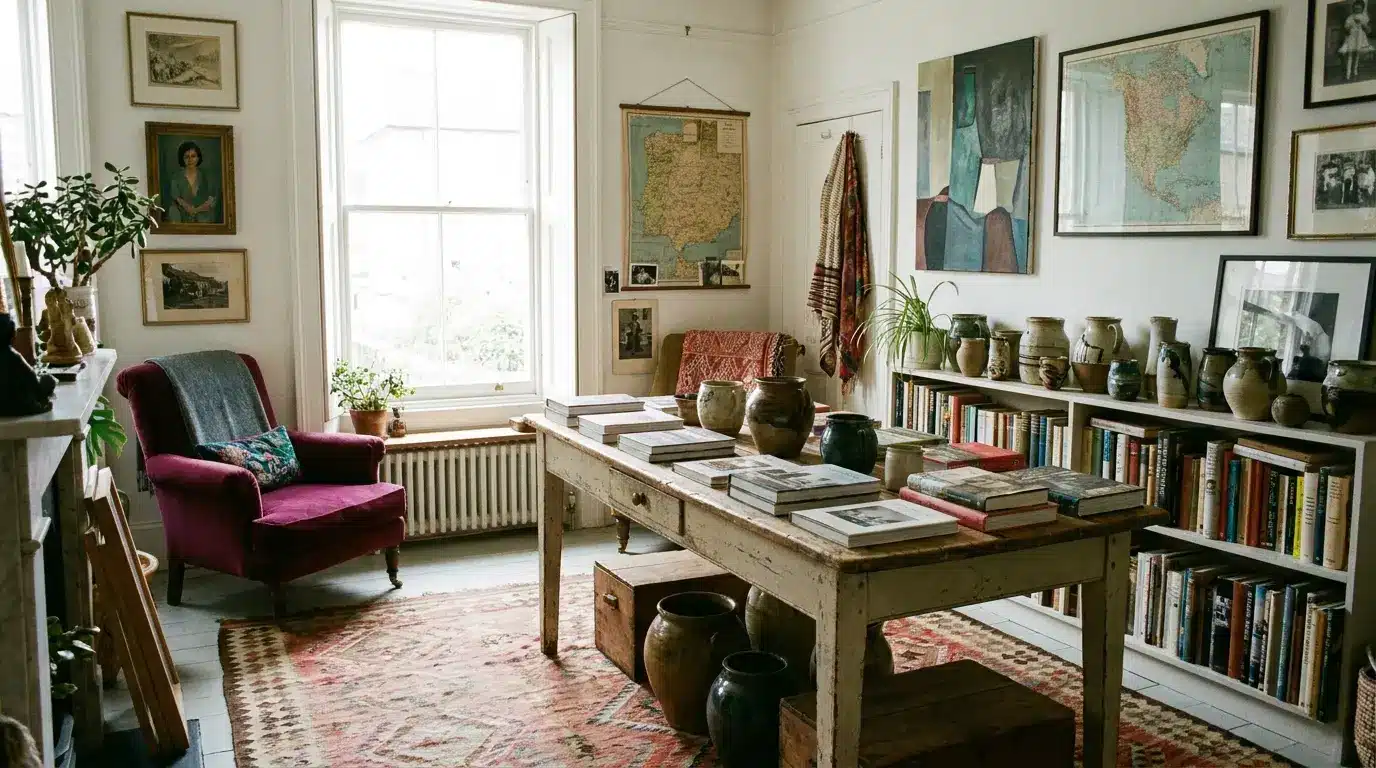
Maximalism works best when it is collected over time. Rooms that are bought all at once often feel less personal than rooms built piece by piece.
Give yourself permission to leave a corner unfinished while you look for the right piece.
5. Repeat Colors Around the Room
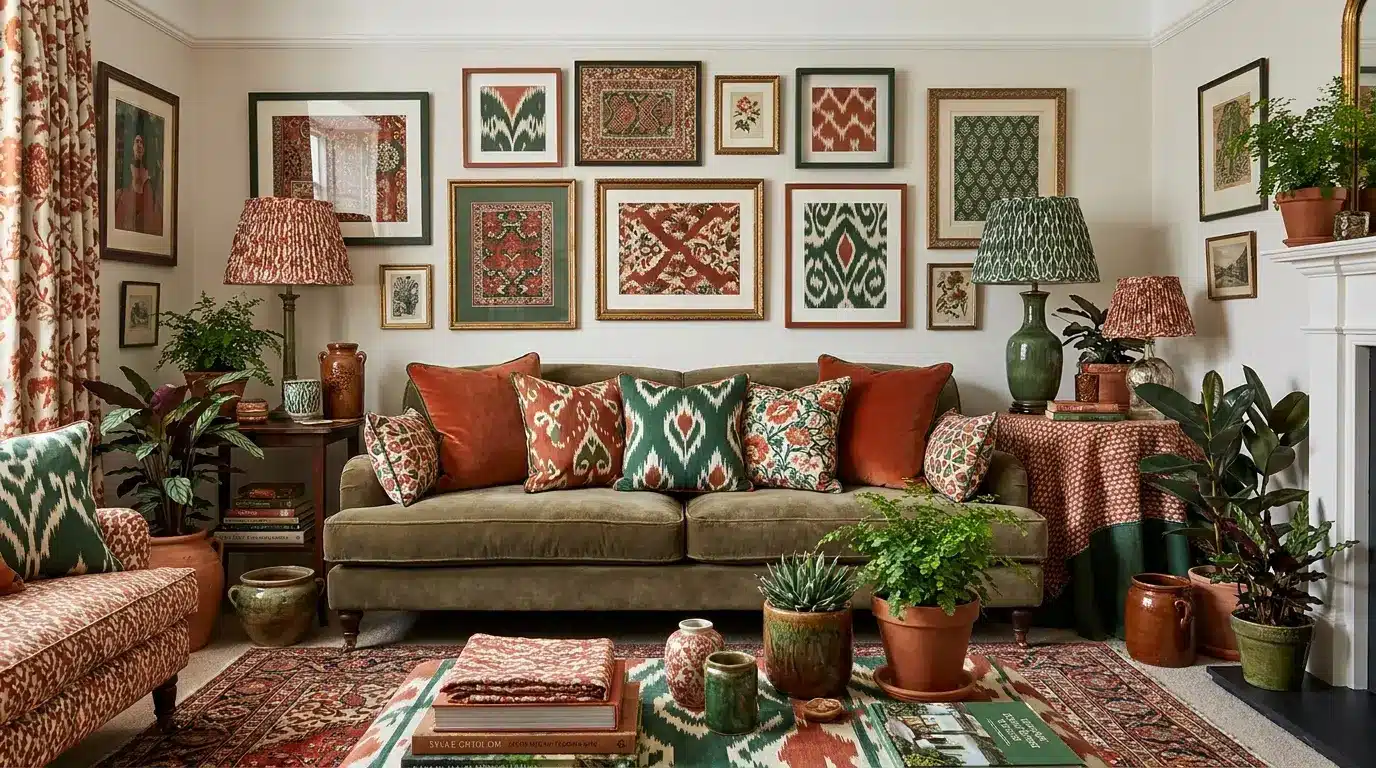
Carry the same one or two colors through pillows, art, rugs, and lamps so the space feels tied together rather than scattered. This repetition is what makes a busy room read as designed instead of random.
6. Leave Breathing Space
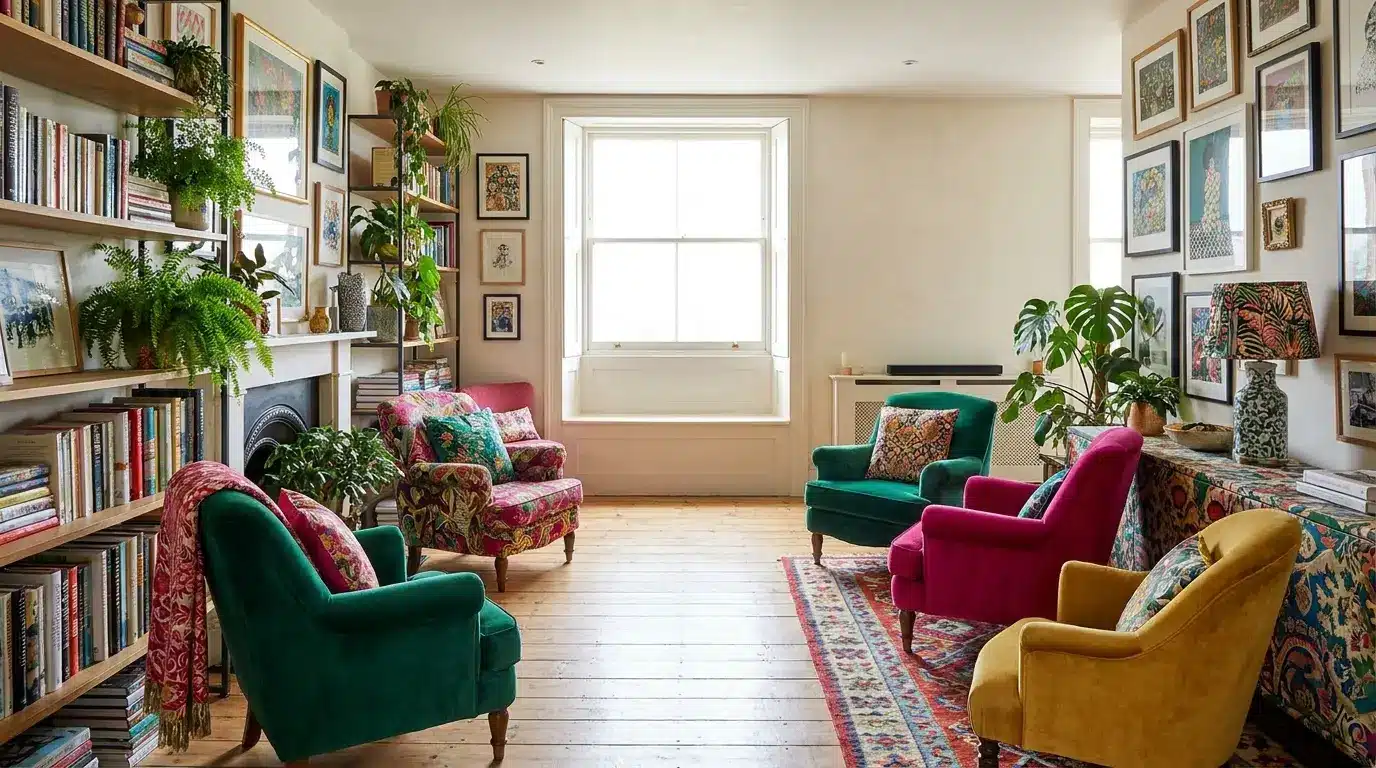
Keep walkways clear and avoid covering every surface. Empty space gives the eye somewhere to rest, which keeps a full room from feeling overwhelming.
The Best Spaces to Embrace Maximalist Design
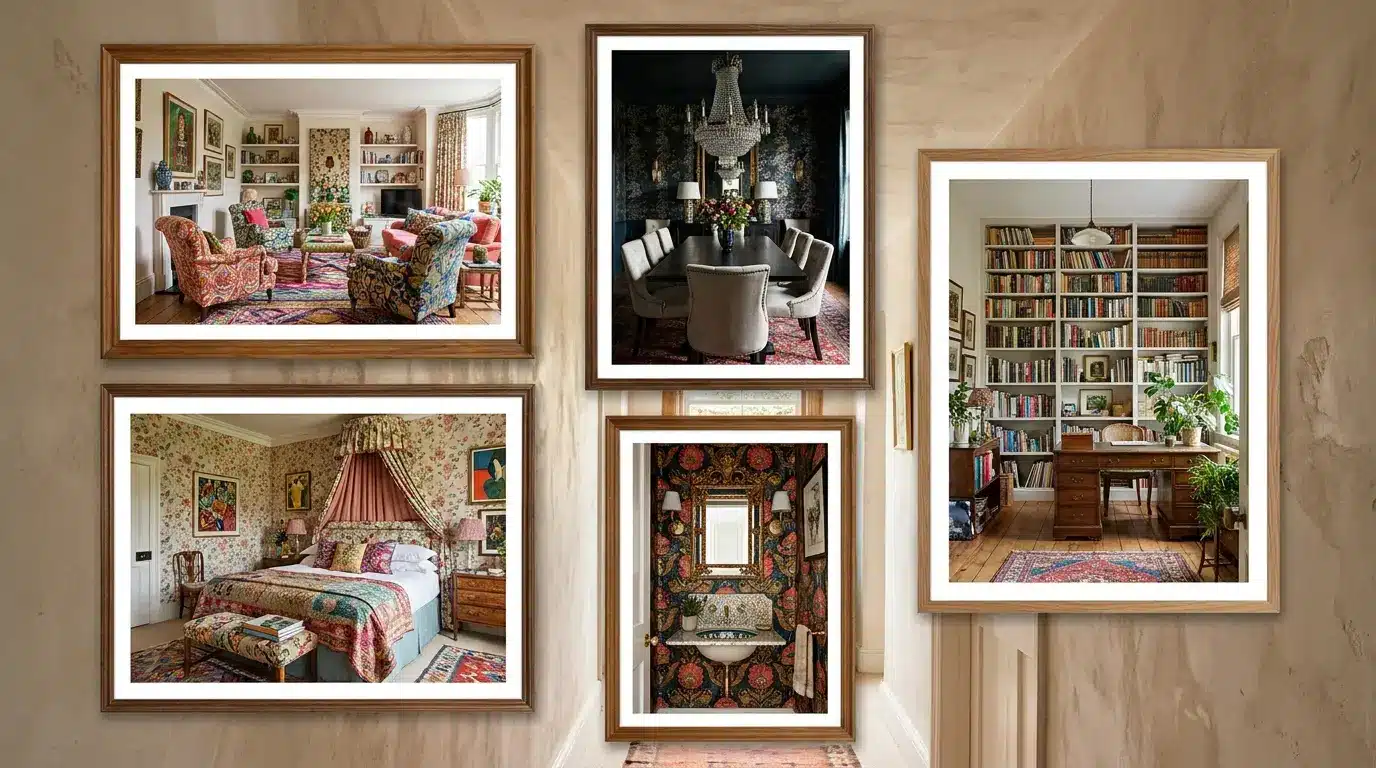
Maximalist style can work throughout the home, but some rooms offer more freedom for bold colors, layered patterns, artwork, and personal collections.
1. Living Room
Works well with gallery walls, patterned rugs, colorful sofas, books, plants, and layered lighting. This is often the room guests see first, so it can carry the boldest statement pieces.
2. Bedroom
Works well with bold bedding, wallpaper, painted furniture, table lamps, and cozy textures. Keep the palette a little softer here so the room still feels restful at night.
3. Dining Room
Great for statement lighting, dramatic wallpaper, mismatched chairs, and artwork. A bold dining room tends to feel more special for gatherings and meals.
4. Powder Room
A small space where bold wallpaper, mirrors, and color can make a big impact without a big budget. Since guests only pass through briefly, it is a low-risk place to try a daring pattern.
5. Home Office
Ideal for shelves, art, books, personal collections, and colors that feel creative rather than corporate. A layered, personal space here can make long work hours feel less sterile.
Maximalist vs Minimalist: Two Opposite Design Philosophies
These two styles sit at opposite ends of the interior design spectrum, so the differences are easy to see side by side.
- Style idea: Maximalism believes more is more, while minimalism believes less is more.
- Color: maximalism leans bold, rich, and mixed, while minimalism stays neutral, soft, and limited.
- Decor: maximalism is layered and personal, while minimalism is simple and reduced.
- Walls: maximalism favors art, wallpaper, and gallery walls, while minimalism keeps them clean, plain, and open.
- Mood: maximalism feels lively and expressive, while minimalism feels calm and quiet.
Best for: maximalism displays personality, while minimalism creates visual calm.
The Truth Behind Common Maximalist Design Myths
Maximalist interior design is often misunderstood. Here are some common myths, cleared up.
1. Maximalism means clutter: Good maximalism is still planned. Every piece earns its place, even in a full room. Nothing gets added just to fill space.
2. It’s only for wealthy homes: Modern maximalism focuses on personality, not wealth. Homeowners mix vintage furniture, travel finds, and family heirlooms instead of buying everything new.
3. Patterns always clash in a maximalist room: Patterns feel intentional when they share at least one color. Florals, stripes, and checks can sit together without looking chaotic.
4. You have to fill every surface: Maximalist rooms still need breathing space. Keep walkways clear and leave some areas empty so the eye has somewhere to rest.
5. You need to buy everything at once: Maximalism works best when collected over time. Rooms built piece by piece often feel more personal than rooms bought all at once.
Common Mistakes to Avoid with Maximalist Interior Design
These are the most common ways a maximalist room can tip from bold into overwhelming.
| Mistake | Why It Hurts the Room |
|---|---|
| Adding too many unrelated items | Every piece should connect through color, style, memory, or purpose |
| Ignoring scale | Too many oversized pieces can make a room feel cramped instead of full |
| Mixing patterns without a color link | Patterns feel intentional when they share at least one color |
| Forgetting function | A room should still be comfortable and easy to move through |
| Not using enough lighting | Layered rooms need enough light so they do not feel dark or heavy |
Final Thoughts
Maximalist interior design is about bold color, layered detail, and personal expression. It’s popular because it feels warm and creative, giving homeowners permission to display what they love instead of tucking it away in storage.
That’s why the style resonates with anyone drawn to color, vintage finds, art, books, and rooms that feel lived-in rather than staged.
The best maximalist rooms feel full but thoughtful, built around repeated colors, useful furniture, and meaningful objects that make a space feel like home.
Frequently Asked Questions
Why Does Gen Z Like Maximalism?
Gen Z likes maximalism because it supports self-expression, nostalgia, bold colors, and decorating with meaningful vintage or thrifted items.
Which Interior Style Is Currently Trending?
Maximalism is a leading 2026 interior trend, especially in spaces featuring layered patterns, rich colors, vintage details, and personal collections.
What Design Style Is Shea McGee?
Shea McGee’s “New Heritage” style combines classic architectural details, clean modern lines, warm materials, neutral colors, and layered textures.
What is Y2K Interior Design?
Y2K interior design recreates the late-1990s and early-2000s look using chrome, clear plastic, bright colors, curved furniture, and futuristic details.
What Design Style is Jonathan Adler?
Jonathan Adler is known for a playful modern style that blends mid-century furniture, bold colors, luxurious materials, and eye-catching decorative pieces.